
Wednesday, April 2, Folkston GA
What a glorious day!! Beautiful weather and great explorations.
Our breakfast at The Inn at Folkston was bacon,homemade banana nut waffles and fruit and granola. Plenty of energy for a full day of activities.

Okefenokee National Wildlife Refuge
The Okefenokee Wildlife Refuge was our destination for the day. The refuge protects the Okefenokee Swamp and covers 630 square miles in southeast Georgia. It extends 38 miles north to south and 25 miles east to west. There is no road through it. The terrain includes bogs, swamps, wetlands, lakes, uplands, etc. It is home to a vast array of animals and plant life. Much of the “bottom” is composed of peat; sometimes underwater and sometimes the peat has loosened and floated to the top where it acts like an island.
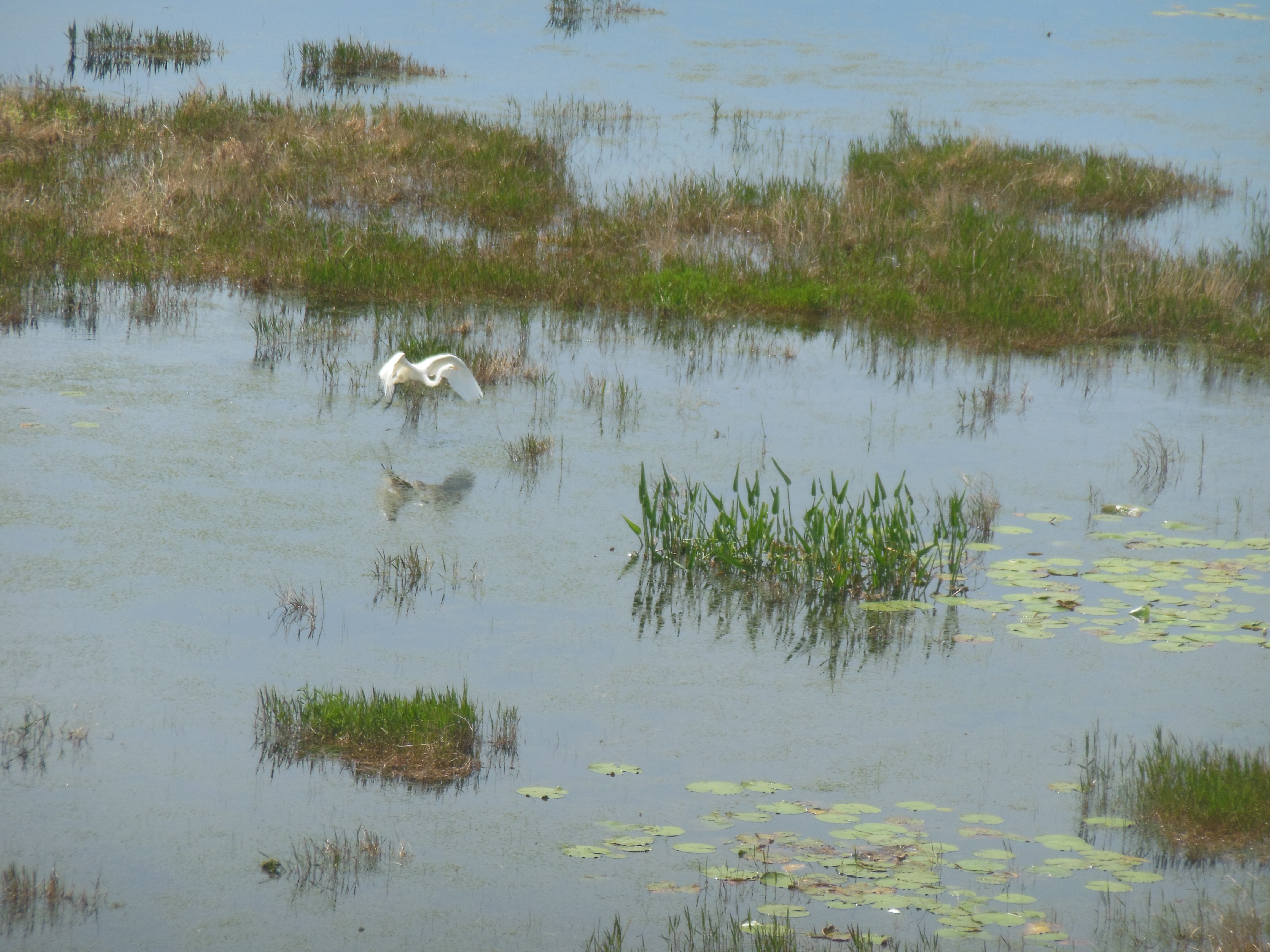
egret
The refuge was established in 1937, primarily to protect waterfowl and birds. There had been attempts going back to the 1890s to drain the entire swamp to provide agricultural land and to harvest timber. Luckily the swamp was tougher to conquer than the investors had imagined, their funds ran out. Over the years, most of the longleaf pine was cut down and replaced with slash pine, which is harvested quickly for pulpwood. The refuge is trying to replant the longleaf which is more favorable for the diverse plant and animal life here.
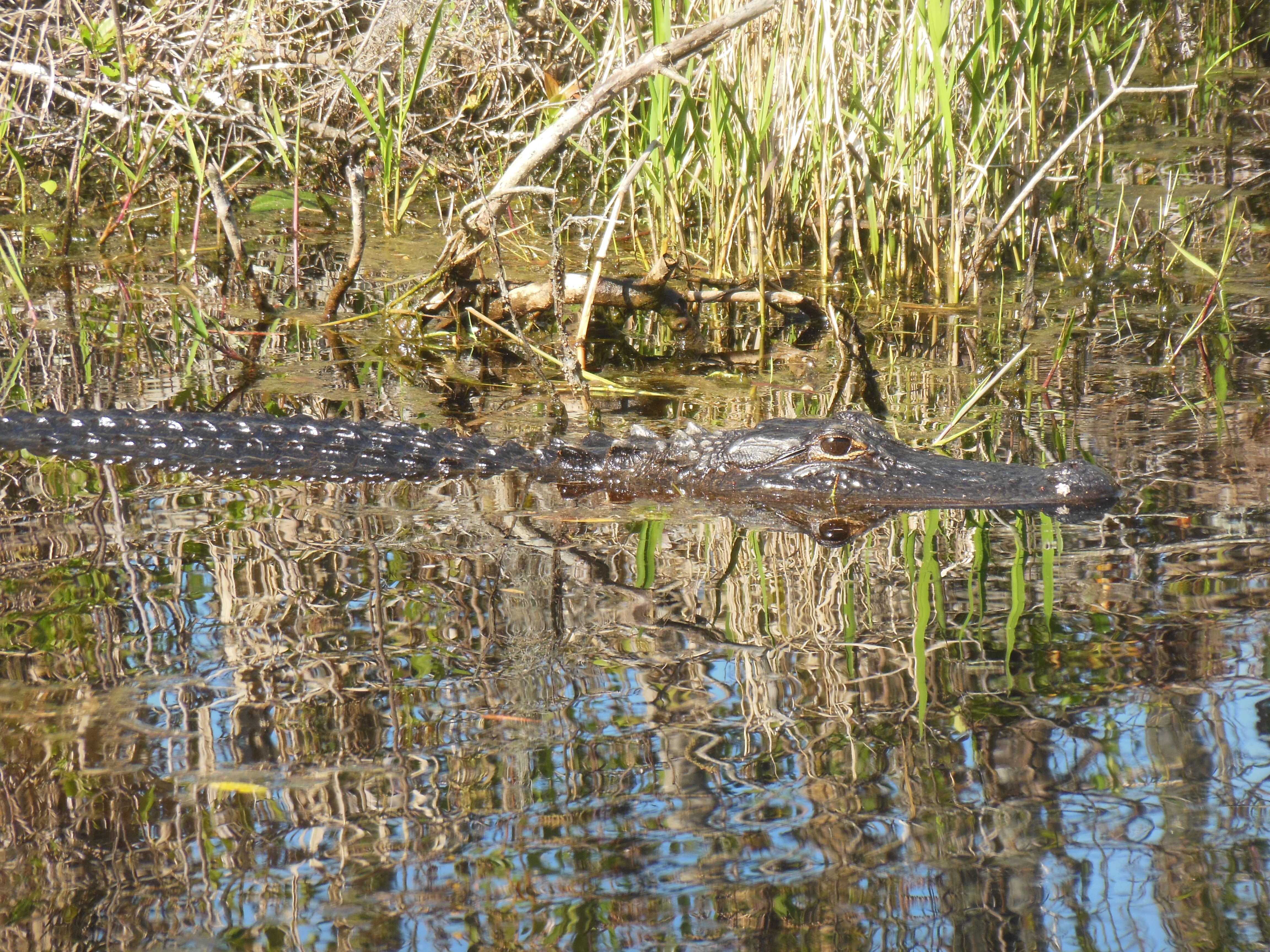
We started out on the Swamp Drive. At our first stop by a pond we saw our first alligators of the day. At the pond, we met two volunteers, one of whom is doing this full time for five months, then she will be off to a different wildlife refuge to repeat the process. We determined she was at the National Bison Refuge in Montana when we visited it in August of 2013. She also maintains a blog writing about her adventures as a vagabond volunteer.
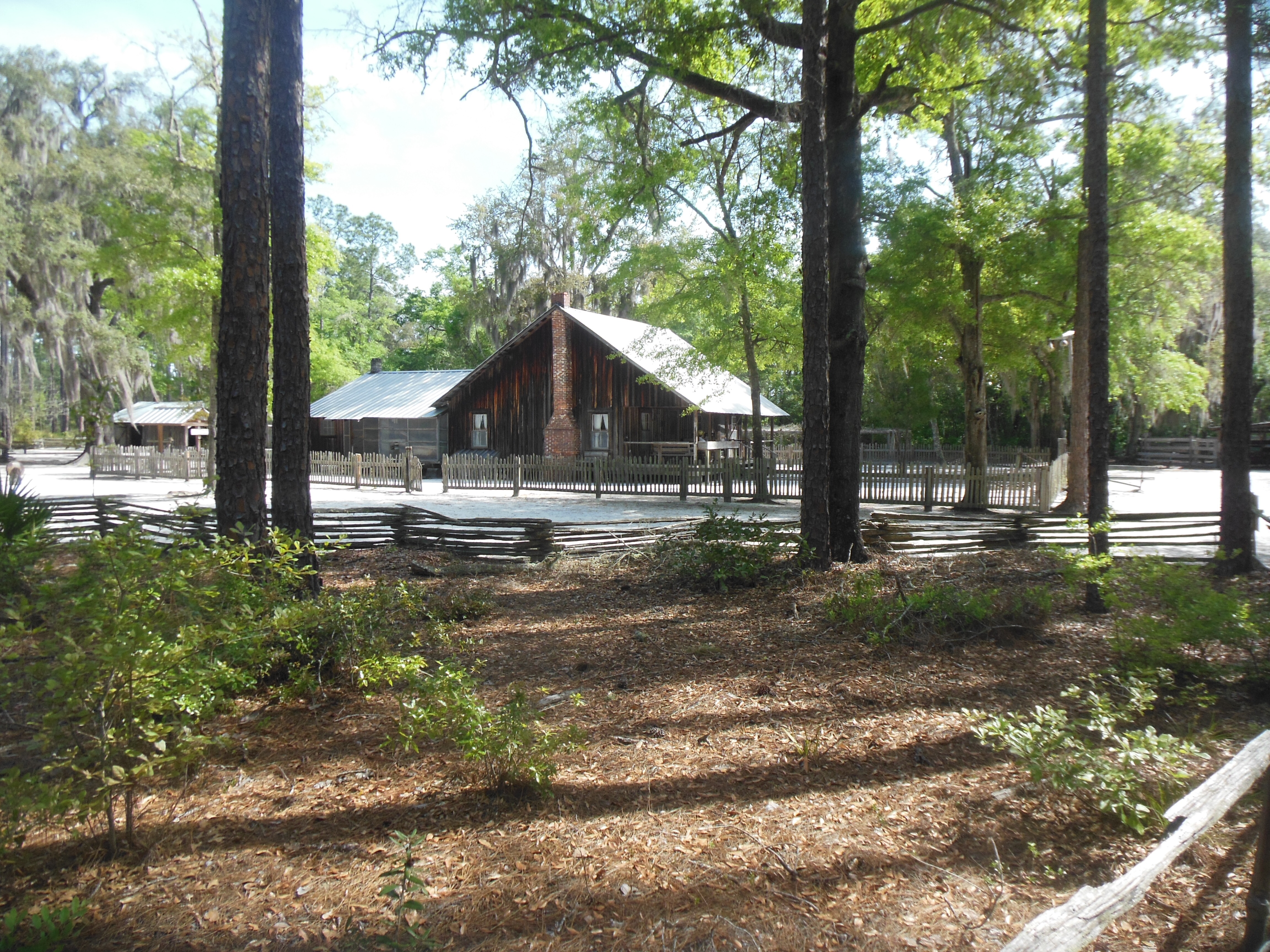
Chesser homestead
The Refuge maintains the original homestead of one of the families that lived in this part of the Okefenokee Swamp. The family moved out in the 1950s. They had 9 children and some of the extended family are employed or volunteer here. The yard was always sand swept very neatly. They kept it swept to reduce the fire hazard and to be able to observe any snakes or snake trails.

raccoon
A boardwalk runs out 3/4 mile to an observation tower. Along the boardwalk we saw various birds, a raccoon, a snake, and a slider turtle. The boardwalk was recently rebuilt; in 2011 there were major fires that destroyed the previous boardwalk. Fire is a major component of life in the swamp. Lightning is the historical cause and fire plays an important role in the rejuvenation of the ecosystem-something we have learned at national parks previously visited.

prescribed burn under way
The refuge management is frequently undertaking prescribed burns-although the 2011 fire was not prescribed. When we drove out for a late lunch, the area along the access road was being burned. The smoke and smell are noticeable for some distance even though the area involved was minor.
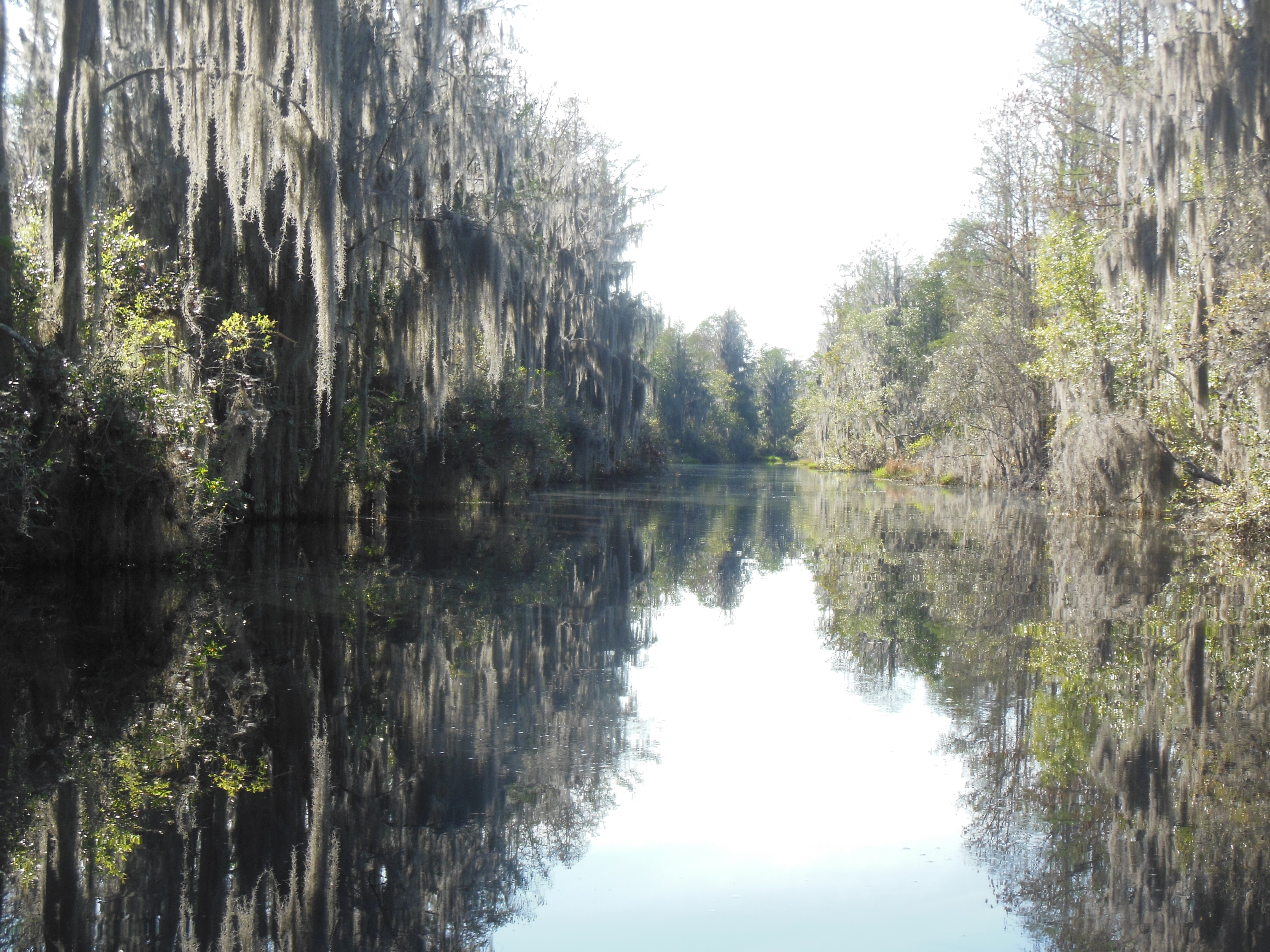
boat ride vista

thicket along the boat ride

swamp iris

swamp prairie
A four and a quarter hour boat ride on the swamp took up the late afternoon and early evening. Six of us went out on the swamp with a guide for an extended excursion. The guide turned out to be the co-owner of the concessionaire, Okefenokee Adventures. In a drawl that sounded like an backwoods swamper, he educated us for over four hours on a myriad of topics covering politics, ecology, geology, and biology. He identified plant life and birds, including the bittern which evidently is a rare sighting. He related tales of the Okefenokee, the role of fire, threats to the refuge driven by economics, etc. It was a fascinating and educational experience, compounded by the great weather, beautiful sunset, and almost complete lack of biting insects.
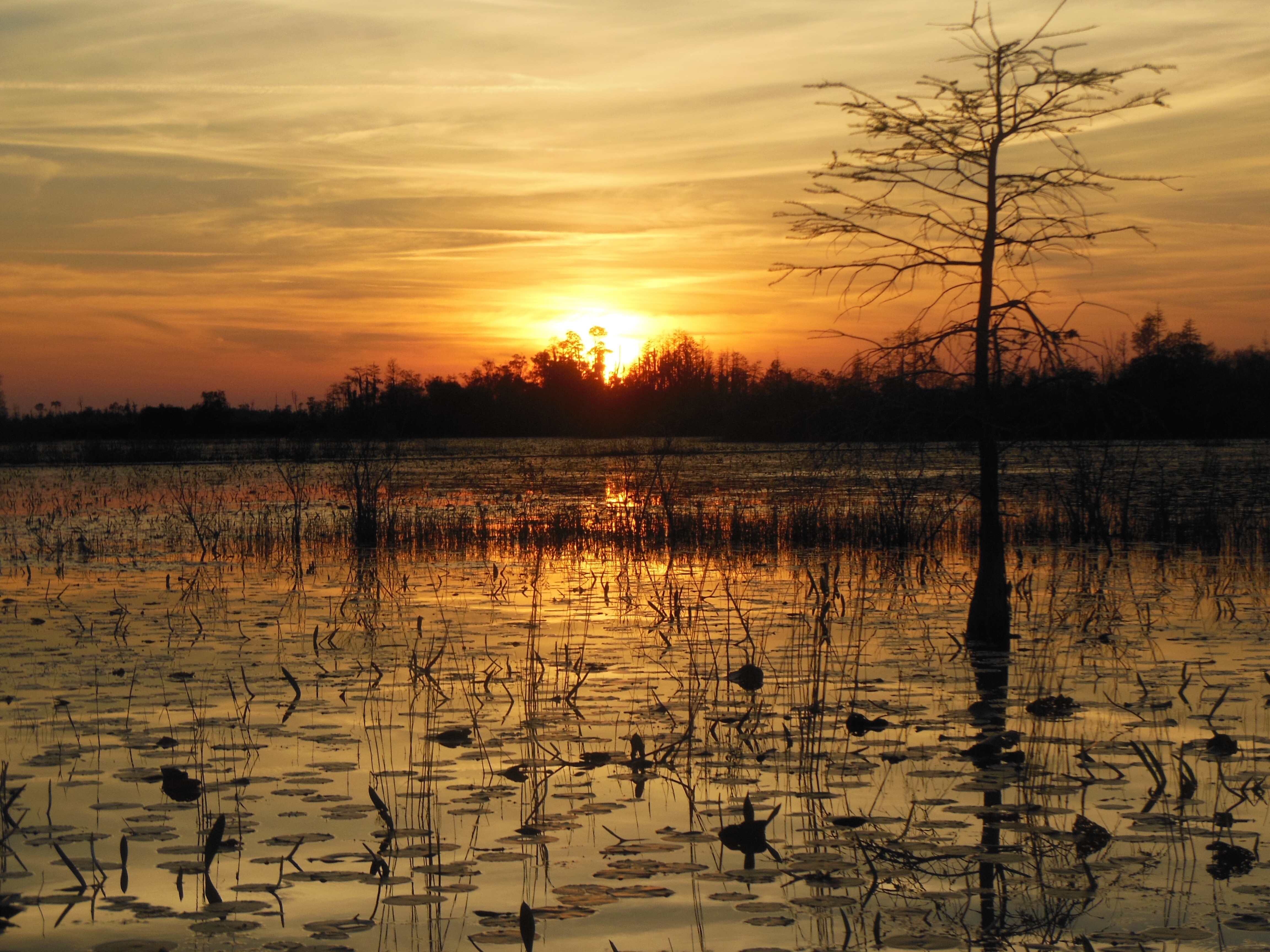
sunset on the swamp
Chris and Ed 11:45 pm


 Chris Klejbuk and Ed Heimel travel adventure
Great post!
Some really nice photos, Ed. Especially like the ‘gator photo with his reflection in the water. Swamps are amazing places. Glad the insects were not out and about. They can be quite challenging!