

Williston, ND Wednesday June 16, 2021
It was an initial surprise to observe a very busy parking lot at the Little Bighorn National Monument southeast of Billings Montana this morning. In retrospect, it should not have. The monument is right off of I-90, a major east-west corridor. The battle is probably still one of the well-known stories in American history, although for maybe the wrong reasons. Signs and exhibits here inform visitors that while it took a long time to cover both sides of the battle, the story now told is more accurate as to the long history of Native lands being taken and treaties broken.
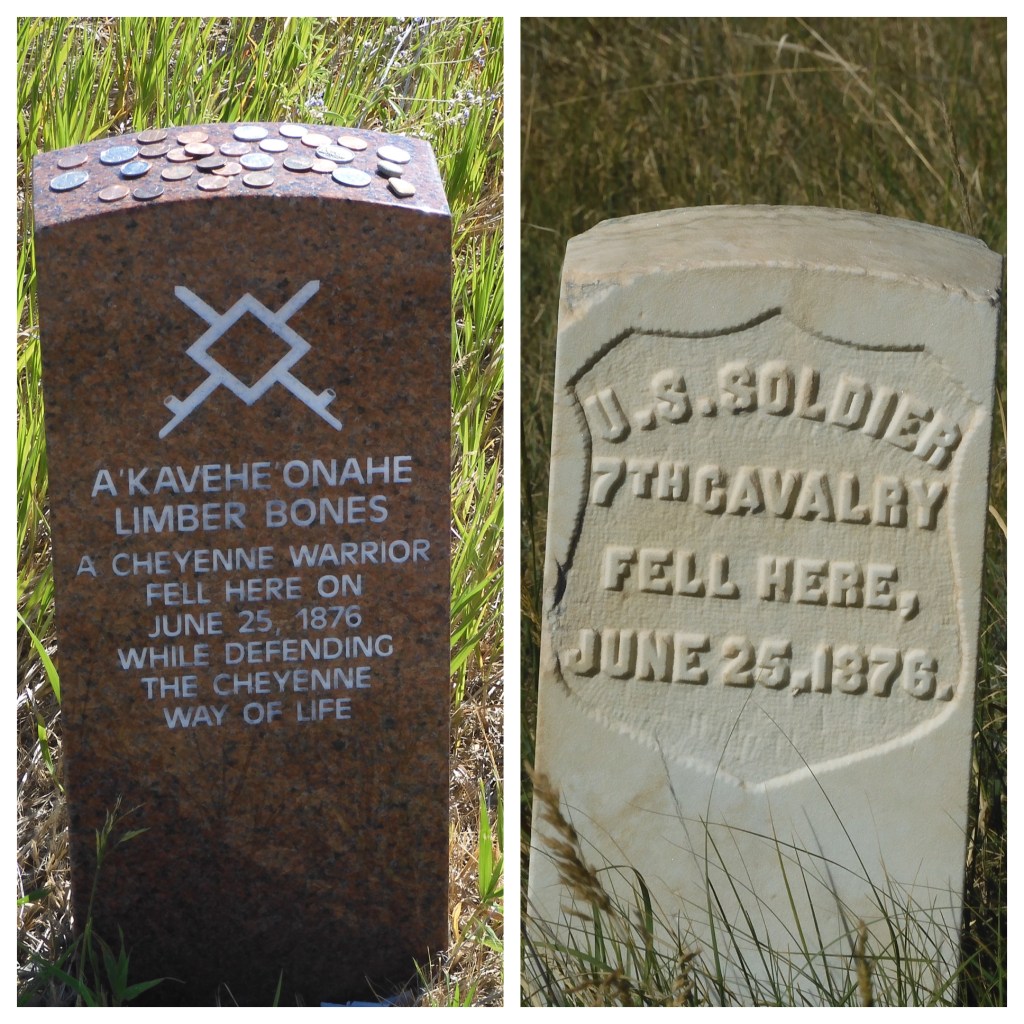
We were not in the mood to read all of the panels, particularly of the campaign detailing which cavalry units were where at what time. Instead we read selectively, walked to the top of the hill of “the last stand”, and drove the auto route over the battlefield. While quiet and peaceful today as one looks down at the rolling hills with horses grazing and trees outlining the banks of the river, it obviously was not peaceful on June 25, 1876 when Custer and his troops were defeated by the warriors of the Arapaho, Cheyenne, and Lakota tribes. While victorious here, the battle could not stop the final removal of Native Americans from their lands and onto reservations.
Instead of extra time here, we drove an hour south to the Yellowtail Dam of the Bighorn Canyon National Recreation Area. The dam visitor center had few visitors, it is remote and most people coming to this area do so for the fishing and boating. The dam was completed in the mid-60s and is part of the massive effort to control flooding on the Missouri River while also providing hydroelectric power, water for irrigation, and recreational uses. While not as tall as the Flaming Gorge dam, it is still impressive and also located in a red rock canyon. The reservoir it creates is 71 miles long.
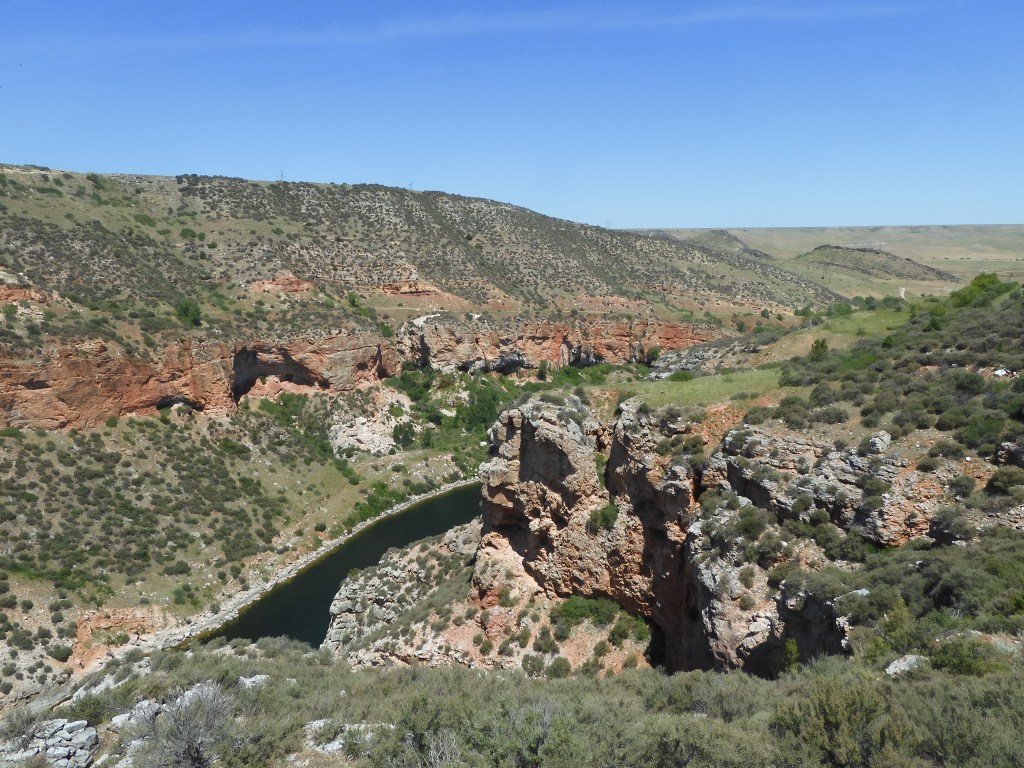

This dam is used for providing peak power, only turned on as needed. This creates a unique situation, water coming out of the dam could be minuscule or massive, disrupting lives and uses downstream. To remedy the issue, there is a second, smaller dam that creates a small reservoir between the two dams. Water is released on a a more continuous basis from the small(afterbay) reservoir. The afterbay reservoir is the location for the intake system for the irrigation water that created the green fields of crops we observed as we drove here through the Crow Indian Reservation. We had our lunch at a shady picnic table overlooking the area of the afterbay.

The Yellowtail Dam traps water from the Bighorn River. The Bighorn River is the same river we were sleeping next to in Thermopolis a few nights ago. We called it the Wind River because for some reason unknown to us, the upper reaches of the Bighorn River are called the Wind River. We followed the route of the Bighorn as we left Yellowtail Dam and drove north to where it meets the Yellowstone River. For the rest of the day, we followed the Yellowstone until it joined the Missouri River just miles from our overnight lodging in Williston, ND.
The eastern portion of Montana and the western portion of North Dakota are in the Bakken Formation, a geologic strata that is now a major oil producing area. The oil production is not without problems and issues. Williston doubled its population in just ten years, going from 14k to 29k during that time. Housing, infrastructure and municipal services have been strained. Much of the oil has been produced due to the use of fracking, a method of injecting water and chemicals into the ground to increase oil production. The rapid increase in oil drilling has outpaced the spread of water and the ability to utilize the natural gas found with the oil. While improvements have been made, flaring of natural gas is common. Transmission of the oil and gas still relies heavily on rail cars as pipelines have been delayed due to environmental concerns. We were constantly seeing long trains, oil drilling rigs, and drilling service equipment areas.

Ed Heimel, Chris Klejbuk June 17, 2021
 Chris Klejbuk and Ed Heimel travel adventure
Recent Comments