Posts Tagged With: travel

2025 Trip 3: California Zephyr

Sacramento CA, May 28

Can you imagine it?! Immigrants built the transcontinental railroad! Immigrants from all over the world! Immigrants worked in the California gold mines! Immigrants from Chile were among the first and arrived with extensive mining experience! Chinese immigrants took over mines Americans from the east coast abandoned and were very successful in extracting gold! Can you imagine that?? In case you could not tell, those sentences were meant as sarcasm in an America that once again is demonizing immigrants.

Today’s two museums, the Sacramento History Museum and the California Railroad Museum, were informative and interesting. Both were located in Old Sacramento. We started at the Sacramento History Museum and also took their underground tour.

Sacramento should not have been built where it stands. It was low lying land at the confluence of the American and Sacramento Rivers which flooded often. The first real settler, John Sutter, listened to the Native Americans and located his farm and property several miles away on higher ground. Once gold was found in the area, newcomers wanted to be near the river and its availability to shipping.

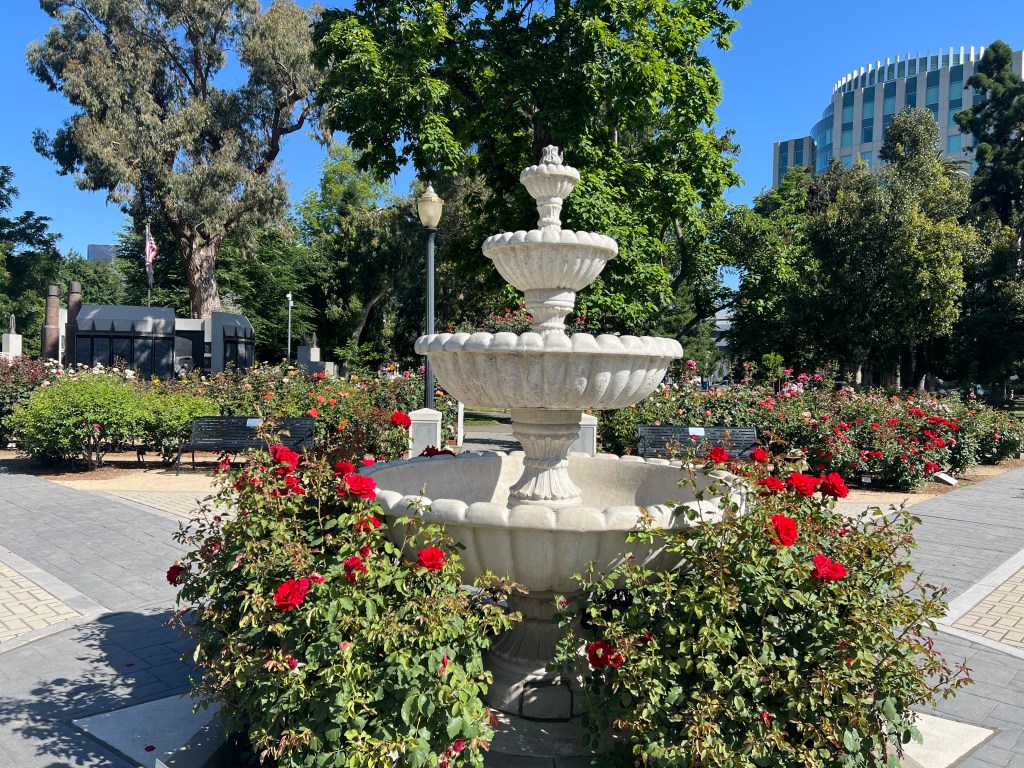
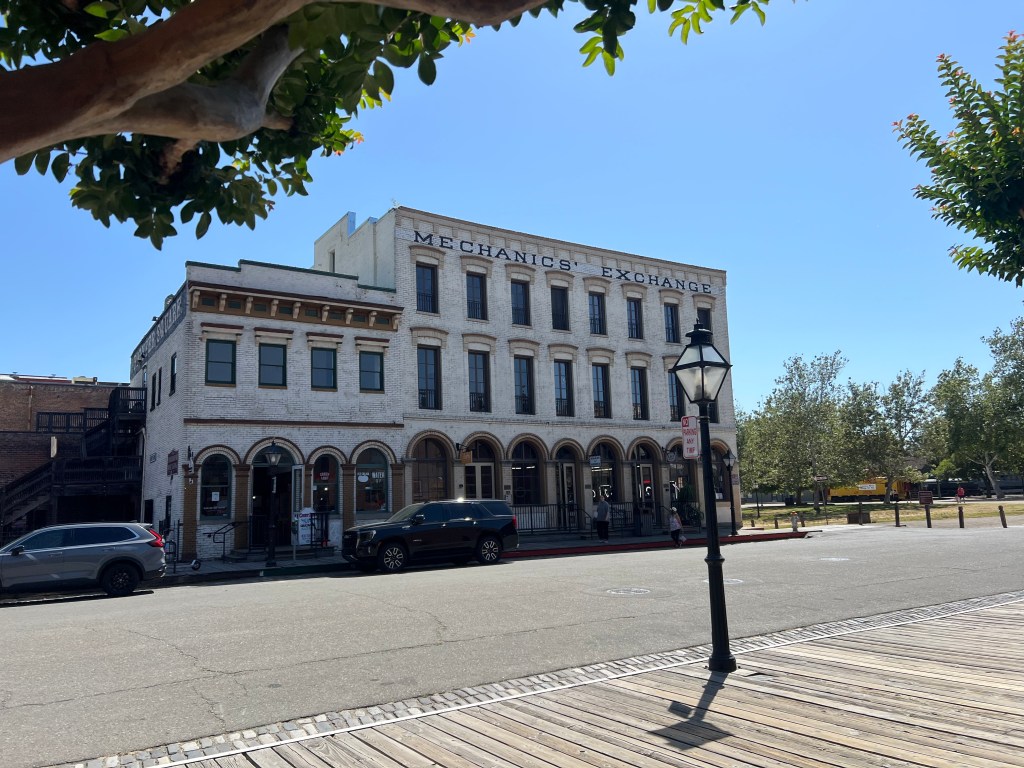
A scene from Old Sacramento
Early Sacramento suffered from a major conflagration that burned 90% of the town. Floods destroyed the town also. The levees that were built to protect it ended up later causing more damage when water from the next floods got behind the levees and had no way to return to the river.
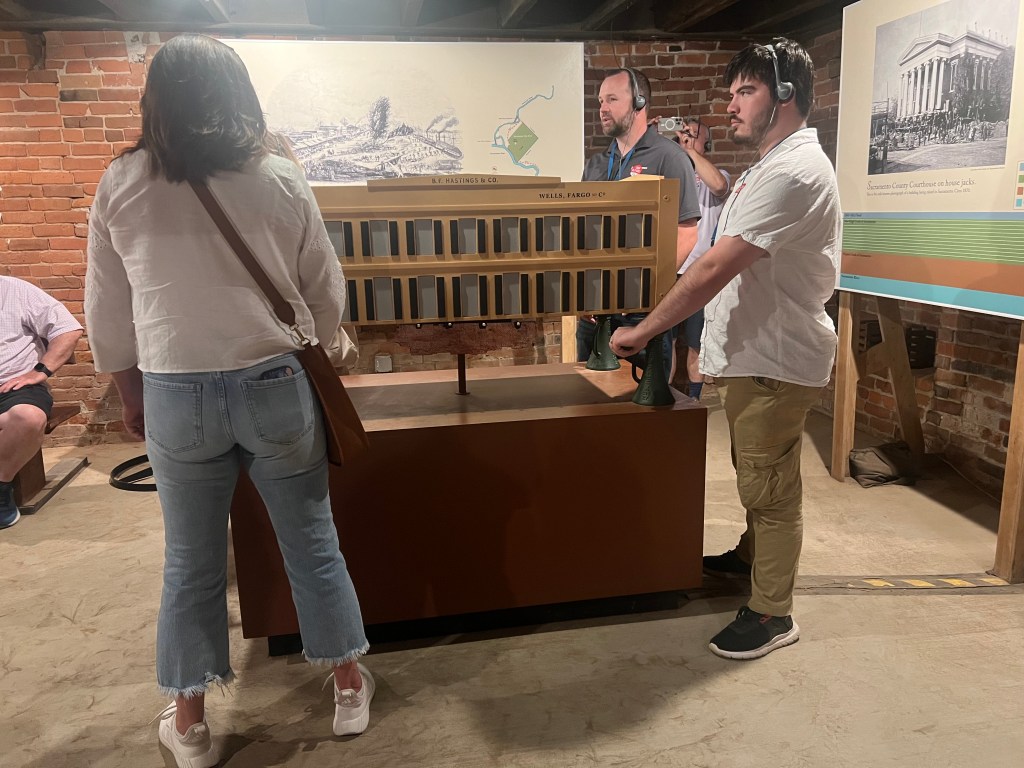
Tour participants doing a mock jacking up of a building

The people here did not want to move to higher ground so they did two things. They moved the American River channel so it met the Sacramento farther from the city center. Second, they raised the town. Yup, they raised most of the town about 23 feet. It took over a decade and was paid by each business. The tour explained the process of excavation, jacking up buildings, and constructing new foundations. Amazing. Sacramento has grown since then, protected partially by levees. Yet the chance of severe flooding still exists as this is lowland surrounded by mountains and traversed by numerous streams and rivers.

Other exhibits at the Sacramento History Museum explained the growth of agriculture, canning of food products, and the impact of railroads in encouraging the continued growth of agriculture, canning, and transportation. While not mentioned here, yesterday’s museum explained how the growers mandated the use of short-handled hoes in weeding fields of crops. The short handled hoe caused back pain and injury as the worker was forced to stoop continuously. The hoe was mandated because it made it easier for overseers to determine if a worker was vigorous enough in their tasks. If the worker was standing up, the overseer would be able to yell at them to get back to work. The short handled hoe mandate was not abolished until 1975.

A new exhibit focused on the role of Campbell Soup company, its employees, and its impact on the community. Sacramento made a concerted effort to attract Campbell’s to open a factory here. After all, this part of California is a major producer of fruits and vegetables. After WWII, Sacramento was successful and Campbell’s operated a major plant here for almost 70 years.

The California Railroad Museum exhibits numerous examples of locomotives and a few specialty cars such as a diner and a railway post office car. Exhibits once again discussed how the transcontinental railroad was built and displays one of the two golden spikes used at Promontory Point in Utah. The role of women and minorities in railroading was displayed frequently.
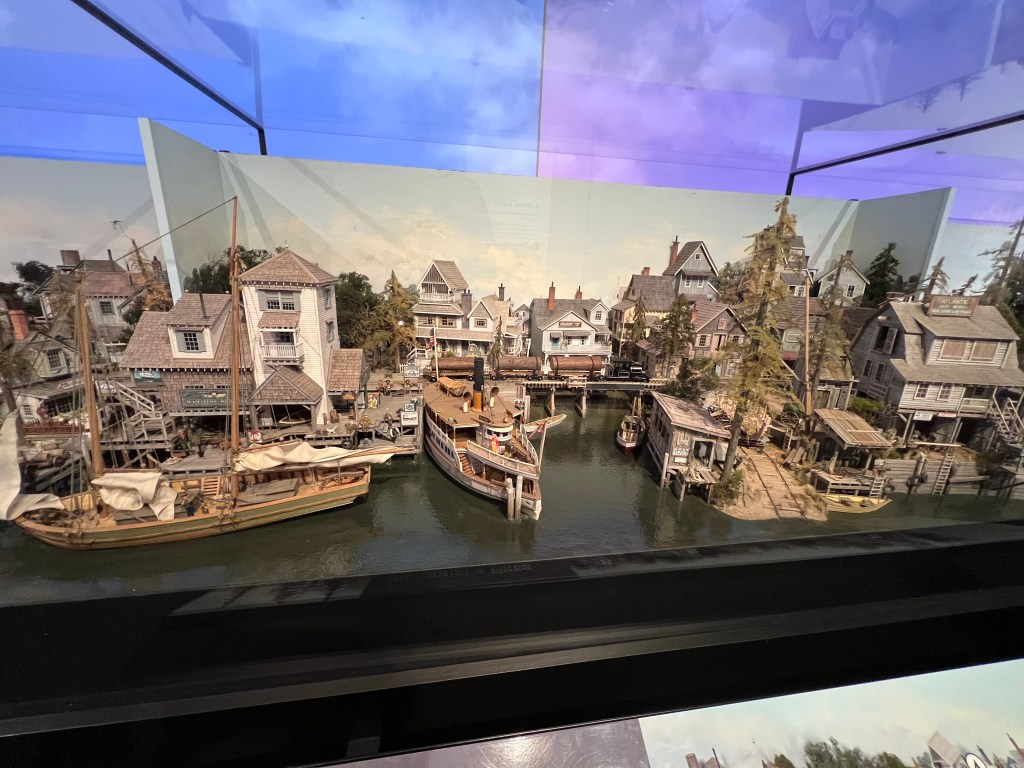
There was an area of model railroads, most of which was devoted to displays of collections of various model equipment. The sample of model railroads running was small. We have seen much better layouts. Their collection of hand constructed villages was impressive.

Tomorrow we fly back to St. Paul. There may not be a further blog post.

Sacramento, May 28

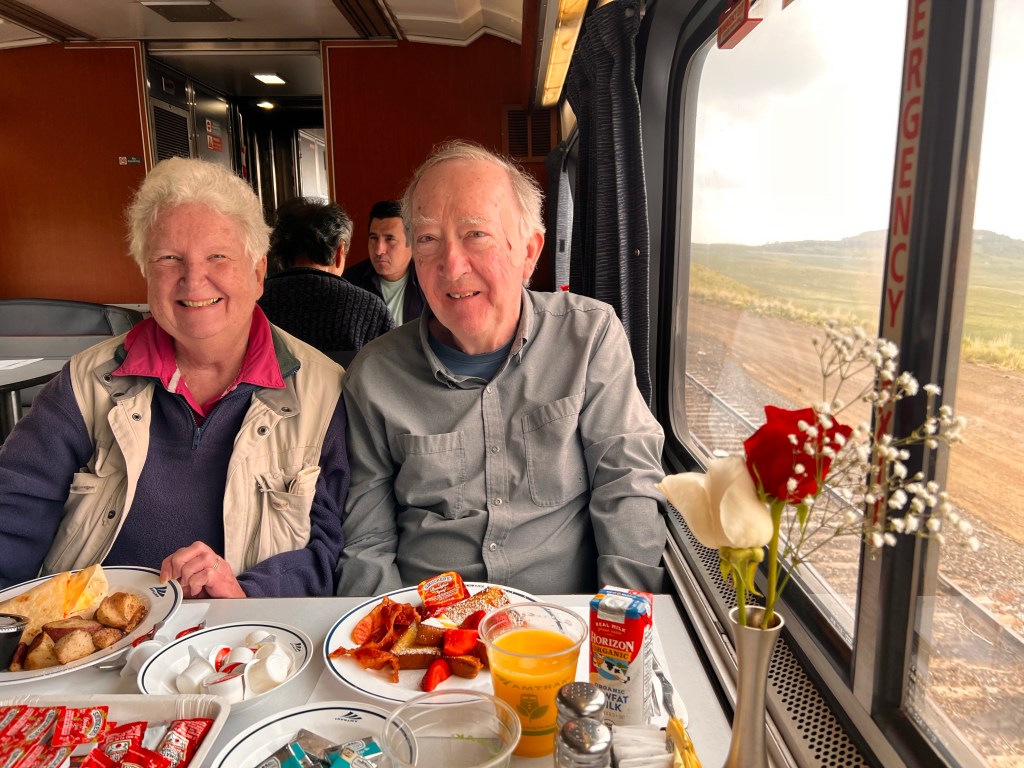
Ed and Chris
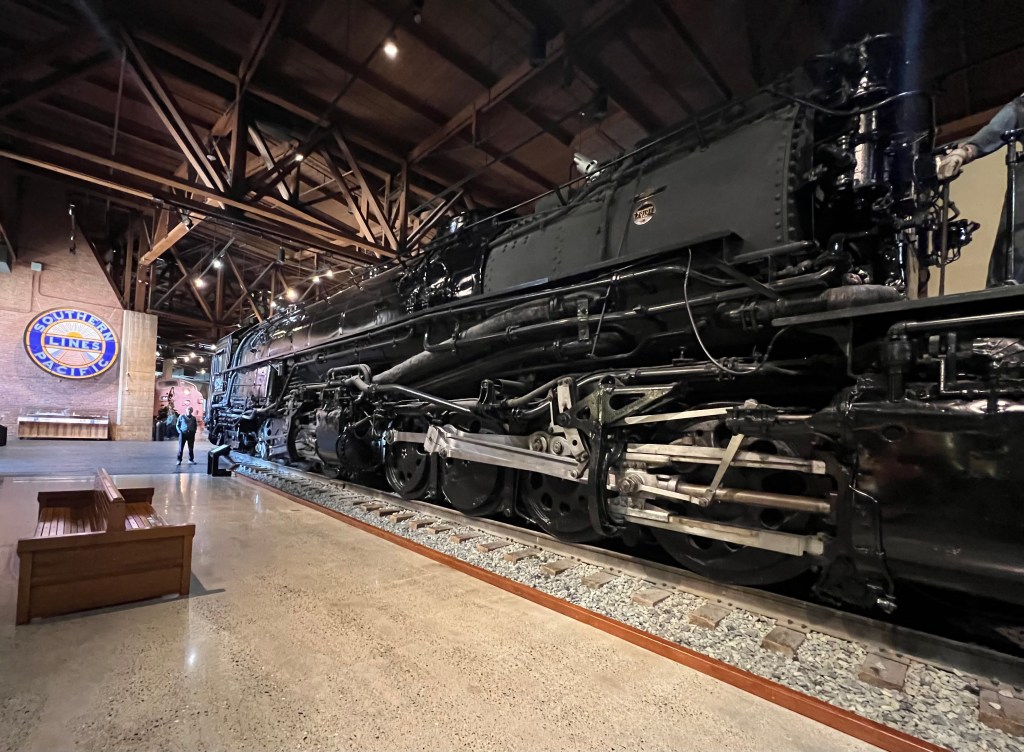
Ed and a Southern Pacific steam locomotive. The cab was in the front to shield the engineers from the smoke that would have choked them in tunnels

Categories: travel | Tags: , , , , , , , , | Leave a comment

2025 Trip 3: California Zephyr: May 26-27

Sacramento CA May 27

Our plans for Sacramento are to visit a few locations downtown. As in Denver, we have no car. We took an Uber to our Residence Inn seemingly near the State Capitol, one of our sites to visit. In retrospect, after walking to Old Sacramento and to the Capitol, other hotels may have involved less walking. Luckily, the temperature will not reach over 100 until Saturday, two days after we leave, so our walking has not been overly strenuous.

One note about Sunday. The train stopped a ways outside of the Roseville, CA station. The conductor announced we were stopped due to freight traffic ahead. Once we were moving and reached the Roseville Amtrak station, the train was met by three Roseville police cars and several police officers. They were concentrated around the coach cars. I believe they took a person off the train, if not into custody. I have observed this before, that Amtrak conductors will brook no misconduct and have no hesitancy in kicking people off the train and calling police if the conductor believes the actions of the passenger warrant it. It is my belief, with no specific knowledge, that the stopping of the train before Roseville was to allow time for the police to arrive.

We arrived at our hotel around 4 PM and took care of details. Chris did the wash, I worked on the blog, we ate at a Mediterranean restaurant around the corner from the hotel.

Monday, Memorial Day, our main activity was a boat ride on the Sacramento River. Both the Sacramento and the American River flow through Sacramento. Old Sacramento is the area along the river where the town began. We walked past the State Capitol to reach the river and discovered construction of a new Capitol Annex building had closed numerous walkways, making our journey a tad more complicated.

Old Sacramento’s historical significance derives from its geographical location. It was the western terminus of the Pony Express, the first transcontinental railroad, and the transcontinental telegraph. Old Sacramento covers almost 300 acres. It has over 50 historical buildings, more than any other area of similar size in the West.

We walked around the area and at the Visitor Center met the docent whose family goes back six generations here in Sacramento. He convinced us to try the Sacramento Underground tour which we were not going to take. Evidently the town buildings were raised about 15 feet to protect them from flooding. We will find out more on the Wednesday tour-which we booked after we returned to the hotel Monday afternoon.

Our river cruise lasted for an hour. We were surprised by several items. First, large numbers of people were fishing from boats and the riverbanks. Evidently, now is time stripers migrate up river to spawn. Second, there is a marker along the river indicating the height of the most notable floods. That marker gave me a better feel why the buildings in Old Sacramento were raised. Third, the water clarity where the American River joins Sacramento River clearly demarked cleaner water from the American. The water in the American generally comes from the mountains while the Sacramento picks up mud and contaminants from the valley.

Fourth, we saw sea lions by the port. Sea lions are not new to us, we just were not expecting to see them this far up the river. Fifth, an interesting sight was the original drinking water intake station just slightly upriver from the new, modern intake system. The juxtaposition made for a chance to reflect on the growth in population and in drinking water treatment over the years.

The river view was not that scenic. The breeze and the awning made the ride pleasant although I could have done without the background music that frequently blocked us from being able to clearly hear the captain’s presentation.

After walking to and around Old Sacramento, I had to wonder how St. Paul would have fared if I-94 had not cut off the State Capitol from downtown. In Sacramento, the state government complex blends into the city, the freeway separates this from Old Sacramento, but that area is more a touristy area than a living and working area. The California Capitol greenway and downtown make a favorable impression, although the Capitol is not a particularly attractive building in our opinion (more on that for Tuesday).As in Denver, neither downtown had many people out and about.

Sacramento’s population is over 500,000 with the metropolitan area around 2.6 million.

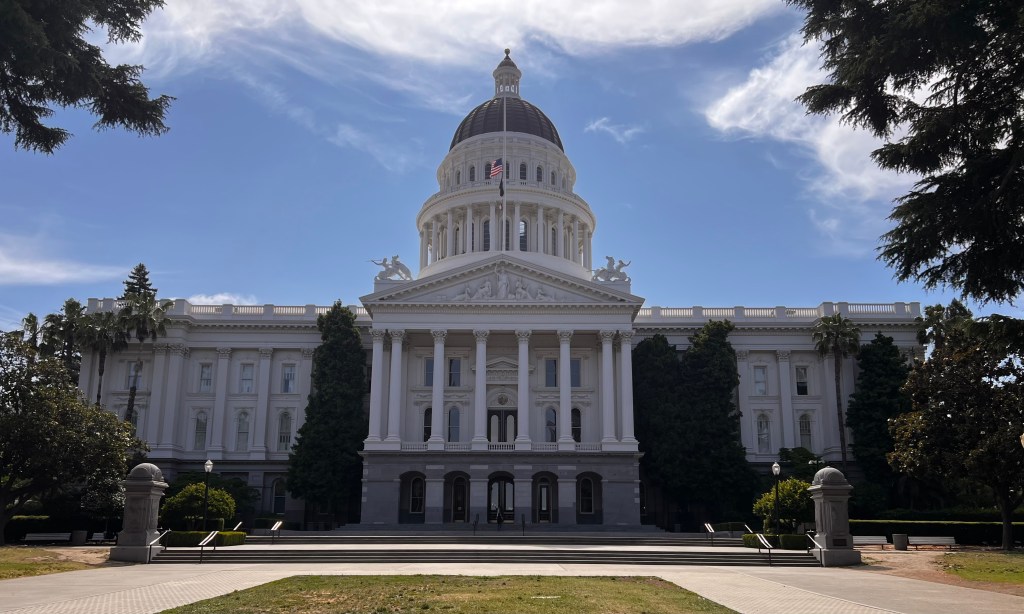
Monday the hotel pool called to us. We spent more time in the hot tub and resting our weary bones than in the pool. The hot tub’s rejuvenation was not long lasting. Tuesday we walked to the State Capitol for a one hour tour. This tour guide rarely commented on the architecture or building materials. Our guess-they were not that notable. I take that back, the Capitol is one of the oldest in the West, the guide mentioned the architect, and the same red and green motif in the two legislative chambers was covered. But our distinct impression was blah.

The one big deal was a series of murals depicting four periods of California history. What I thought was dark and foreboding, or simply a dirty canvas, was a result of “tonality”, an artistic method that is meant to contrast light and dark. This one came across as all dark.

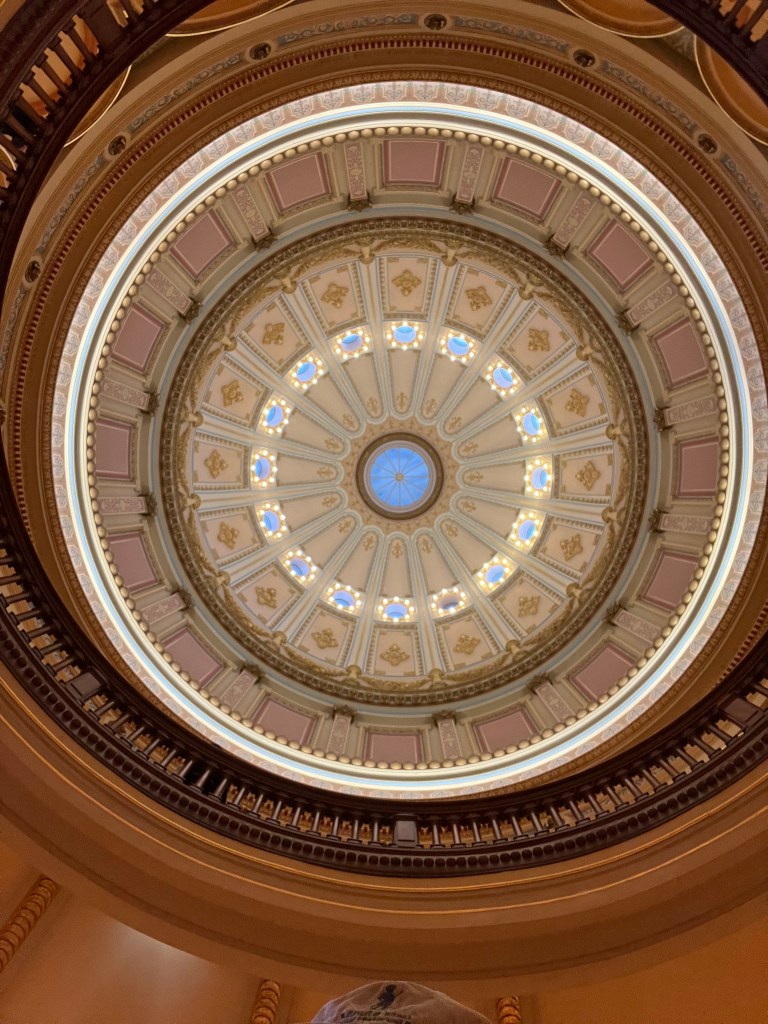
Ceiling mural in California Museum

Just a few blocks away is the California Museum. This museum focuses on commonly overlooked stories, reflecting the state’s diverse population and the cultural contributions of all Californians. It took me a little while to get used to its format, generally briefly highlighting people around specific topics. For instance, the second floor, the first section we visited, highlighted activism; people who made a difference in art, politics, sports, culture, etc.

The first floor focused on stories and people around four themes that particularly interested me: incarceration of Japanese Americans in WWII, California Indians, California missions, history and contributions of Chinese Americans. While many stories were uplifting, others honestly portrayed negative actions by government and people. I had to compare these displays to the anti-honesty of the Trump administration and its Interior Secretary mandating that historical information be presented in a positive light. “Negative” facts about our past are to be buried; with visitors to national parks and monuments actively encouraged to report on negative facts presented by Department of the Interior employees. Both Colorado and California are to be commended for accurate portrayals of their state’s history.

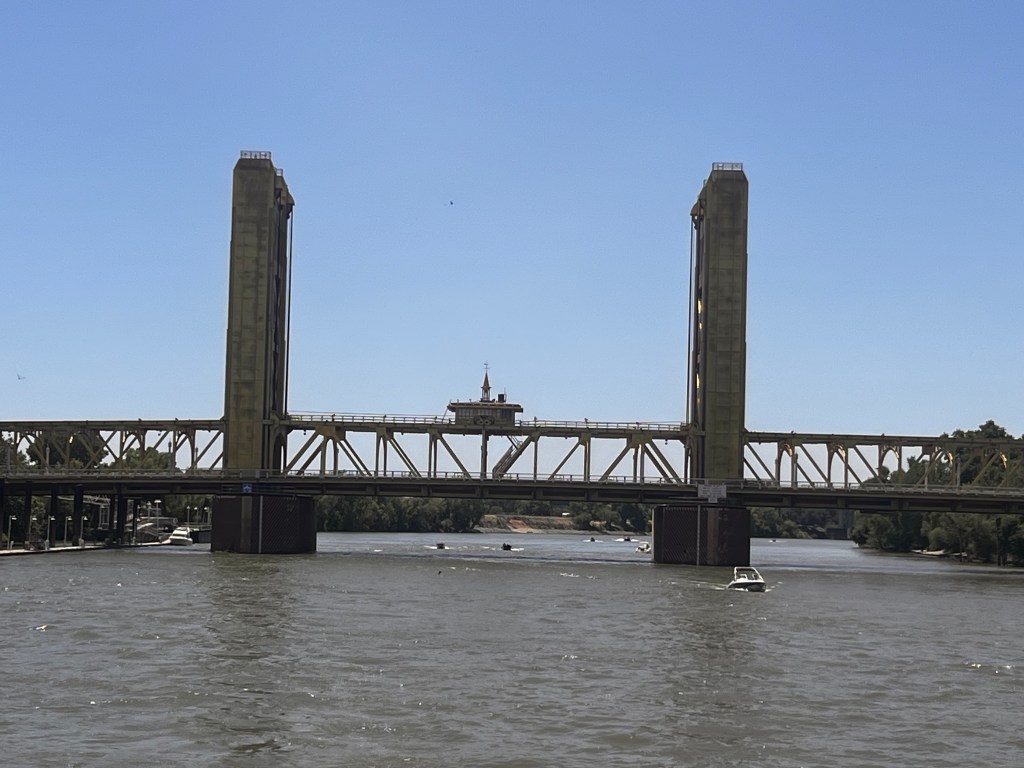
Tower Bridge along Sacramento River

Ed and Chris Sacramento CA May 28, 2025

Categories: travel | Tags: , , , , , , , , , , | Leave a comment

2025 Trip Three: May 24-25. The California Zephyr. 

Sacramento, California, May 26.

Well I lost several paragraphs from the beginning of this post. Hopefully I’ll remember enough of it to re-dictate. They are not showing up in back up either.

This post will be primarily pictures. I will start with narration to explain the trip and then finish with the pictures.

This journey is about the California Zephyr. Zephyr is one of Amtrak’s long distance routes, going from Chicago to Emeryville, California, which is across the bay from San Francisco. The stretch between Denver and Grand Junction Colorado is noted as particularly scenic. Since we have driven the flatlands of Illinois, Iowa, Kansas, Nebraska, we flew to Denver and skipped those sections.

We thought the journey would be important enough that I purchased a digital book that explains the scenery outside the window as a train travels west. Some of Amtrak‘s long distance routes have the Trails and Rails program that narrates that scenery to the people sitting in the observation car. The Zephyr no longer does.

Our train was on time and boarding began at 8:15 AM. We left our hotel early enough to make it via walking to Union Station. We’re in a family room, which is considered one of the sleeper units. The other sleepers are called roomettes and sleepers.All of the sleeper passengers boarded last in Denver. In this way, the crew has sufficient time to clean the rooms that were used last night and were vacated here in Denver. Our family room was the last of the sleeper suites available when we bought our tickets.

The family room is on the lower level and is the only unit that stretches the width of the train. It’s narrower, so the total size is not much bigger. Amtrak says it’s suitable for two adults and two children under 12. The family room does not have a private bathroom or shower. That is only available in the sleeper unit. The roomettes also do not have a shower or private toilet. While the communal toilets were clean enough, they could’ve have been enhanced by the judicious use of air fresheners. We chose not to shower on the train, it’s only one night.

Passengers traveling in the coach cars are given a ticket while on the platform by the conductor that indicates which car and which seat they will be in. This ticket is put above their seat and also has written on it their destination. This information is used by the conductor to make sure that people getting off the train in the middle of the night are awakened at the proper time.

Food on Amtrak trains is quite good. There’s no variation, the menu has stayed the same for several years. Meals are part of the package for those in sleeper units. For those of you who do not know, the equipment, (coaches, sleeper cars, observation car, and dining car) are all at least 30 years old.

Instead of going due west and following interstate 70 all of the way, the California Zephyr leaves Denver and goes northwest towards Winter Park and Granby before dropping down in the southwesterly direction to pick up Interstate 70. The California Zephyr picks up the Colorado River around Granby. We went through numerous canyons and tunnels, along rivers, and generally had great scenery.

One tunnel, the Moffat tunnel, is 7 miles long. I think in total we went through well over 50 tunnels. Being somewhat egotistical, while the scenery was very nice, it was not dramatically different from other locations we have visited around the US. The meals on the train were good. The sleeping arrangements, while tight, accommodated two people easily in the family room. Amtrak says the family room can accommodate four people, two adults and two children under the age of 12. However, neither one of us slept well or long. We are not anxious to repeat an overnight travel trip on Amtrak in the future.

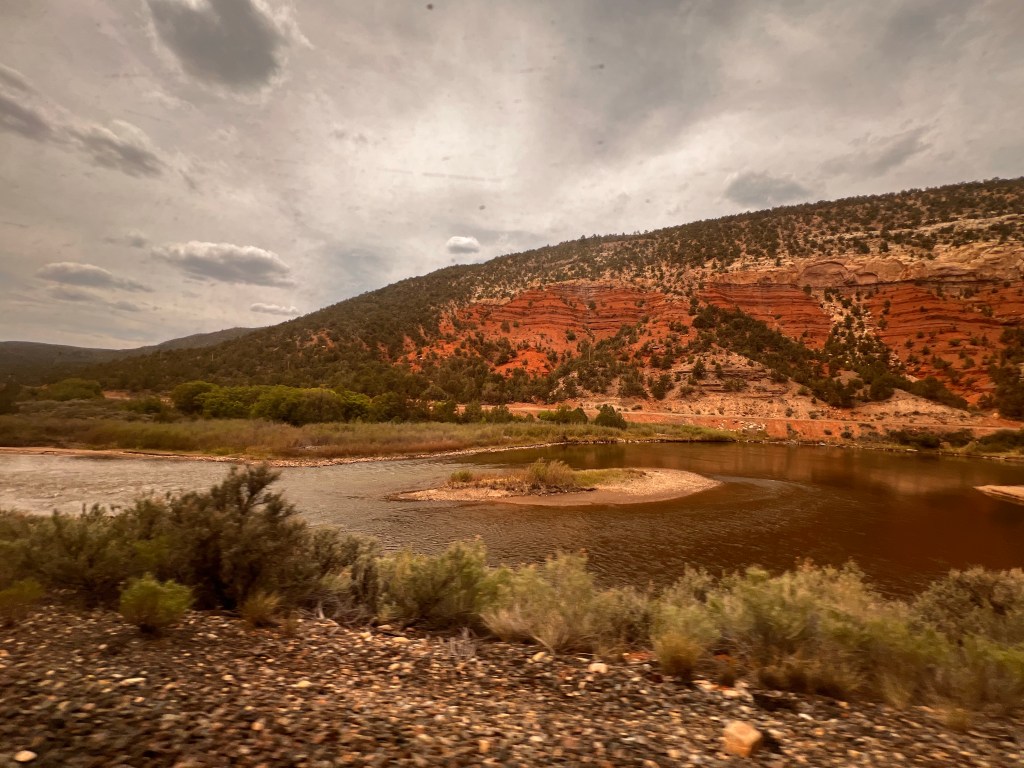
On a sidenote, I mentioned the digital book I had purchased. The book was written 15 or 20 years ago and it referred to a section of the Colorado River as Moon River. Along that section of the river, fishing and kayaking are popular activities. At the time of publication, it was not uncommon for these people to drop their drawers to moon the passengers on the Amtrak. I certainly thought the passage of time would have eliminated that tradition. However, the tradition is still alive and we were mooned four times during the trip. I did not take any pictures of that. 

As I mentioned, the train was full. This translated into a very busy observation car. For those of you who do not know, the observation car does not have assigned seats. People come to it from their regular seat. The advantage here is that the windows are twice as tall as the regular windows and go high enough to observe the sky and tall mountains. The conductor, every hour or so, would make an announcement that people in the observation car should leave in order to allow new people to come in and take advantage of it.

The observation car seats about 40 to 50 people. A coach car can hold over 70 and we had several of them. Sleeper cars can handle easily 30 and we had three of them. So it is not difficult to conclude, as the train travels through particularly scenic areas, it becomes difficult to snare a seat in the observation car. In this regard, the family room was an advantage, although even while at a lower level and with smaller windows, you could observe scenery on both sides of the train.

Enough with the narration. On to the pictures.

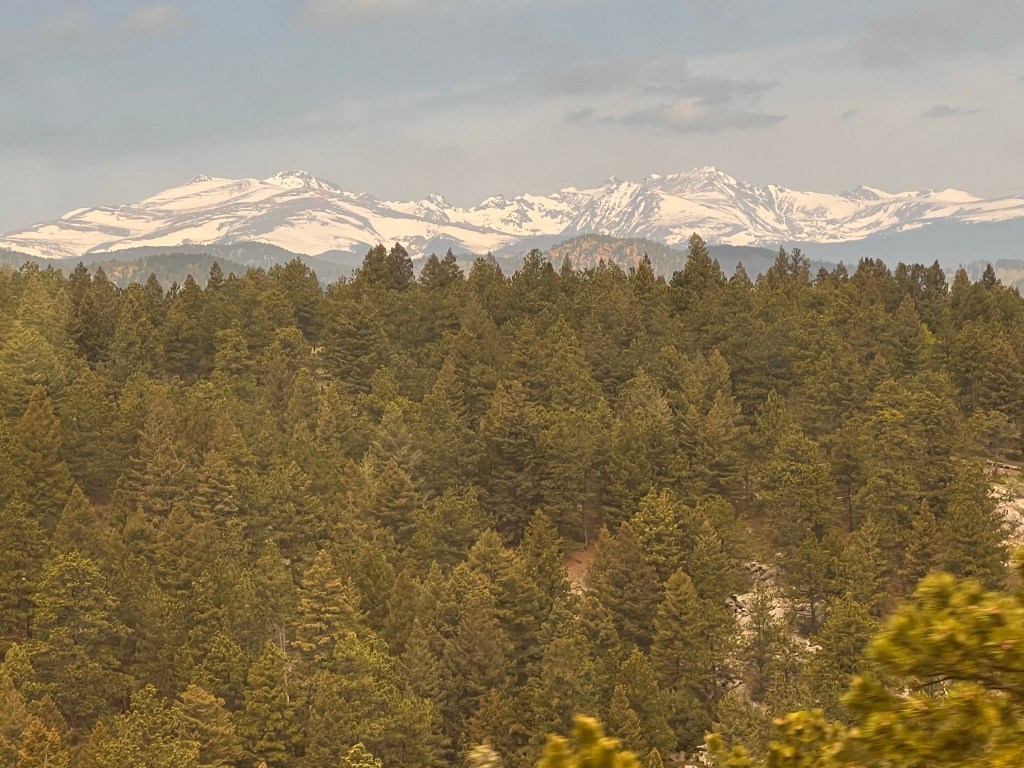
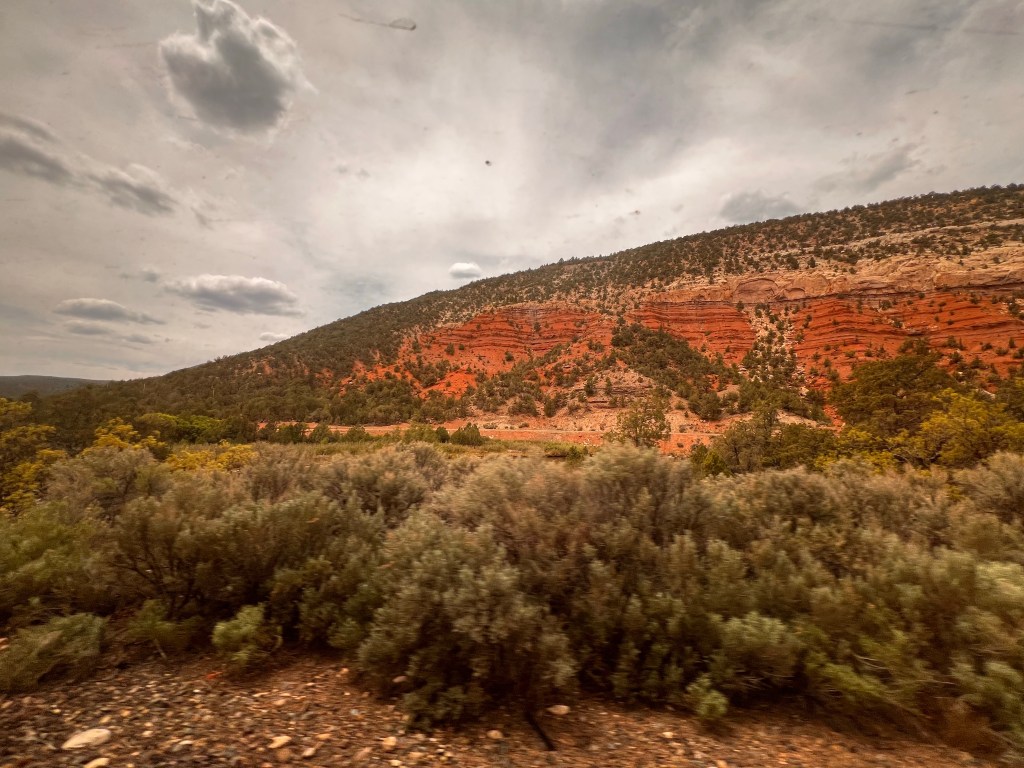
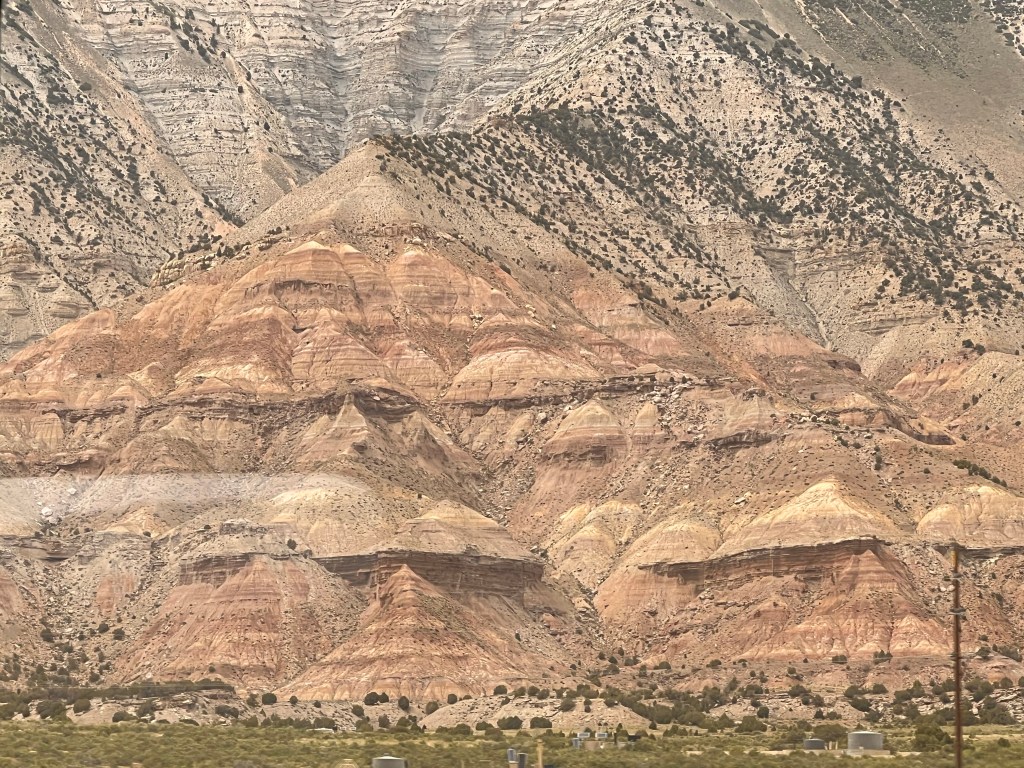
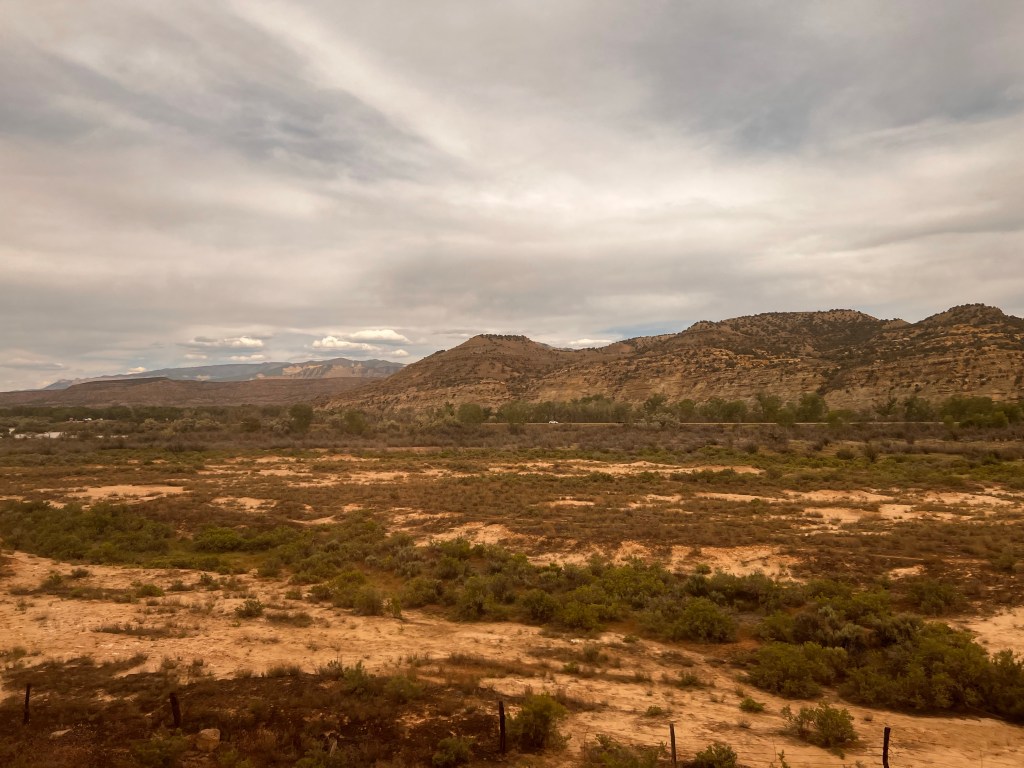
Starting to climb up to the Rocky Mountains 
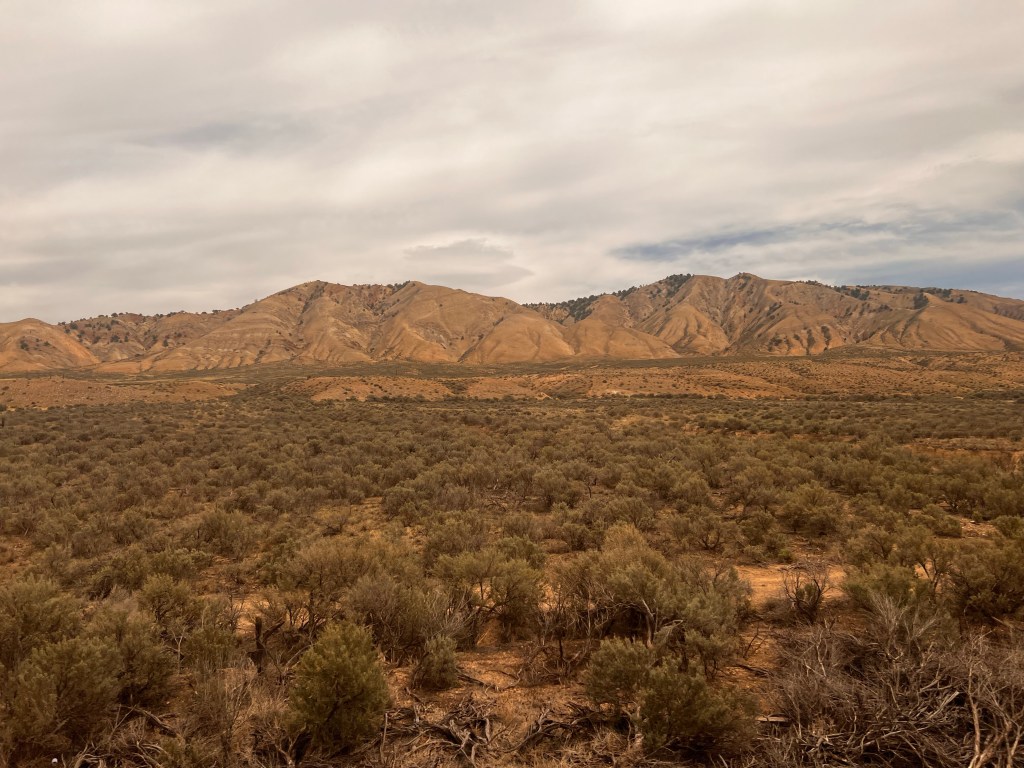
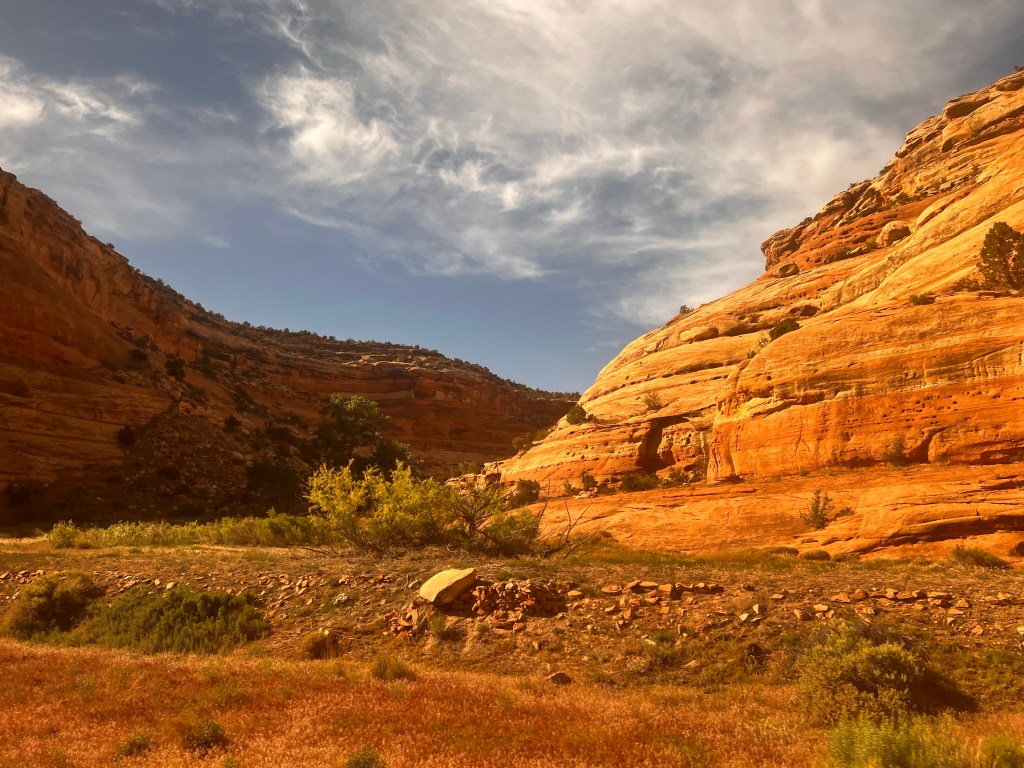
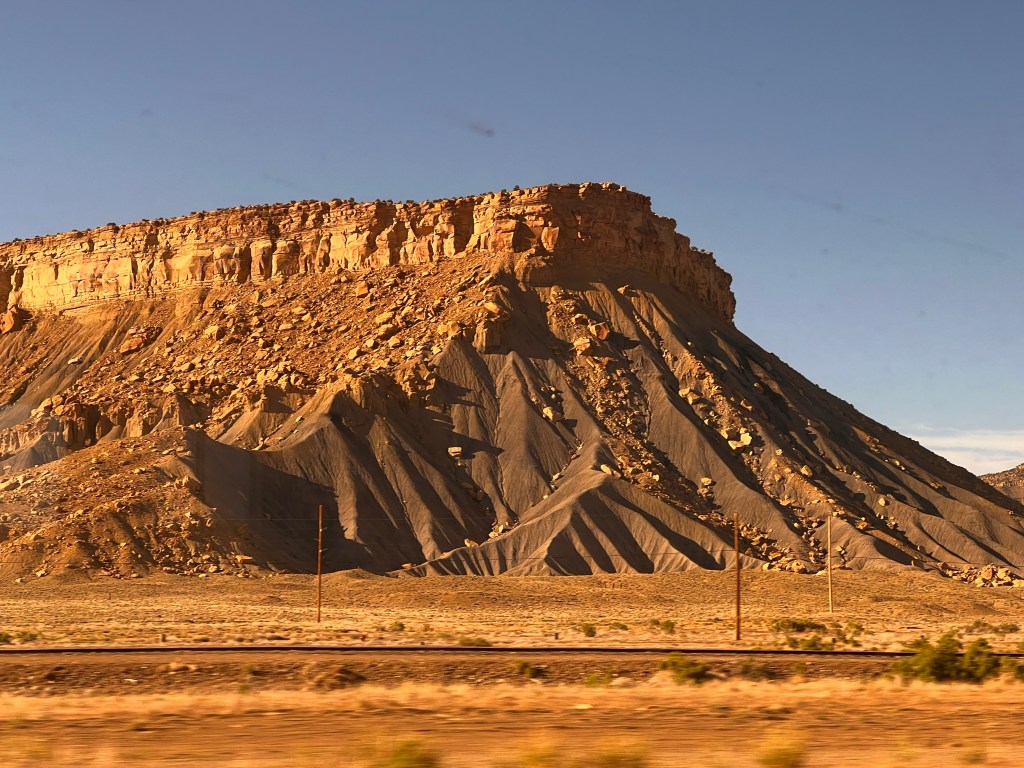
Rocky Mountains 
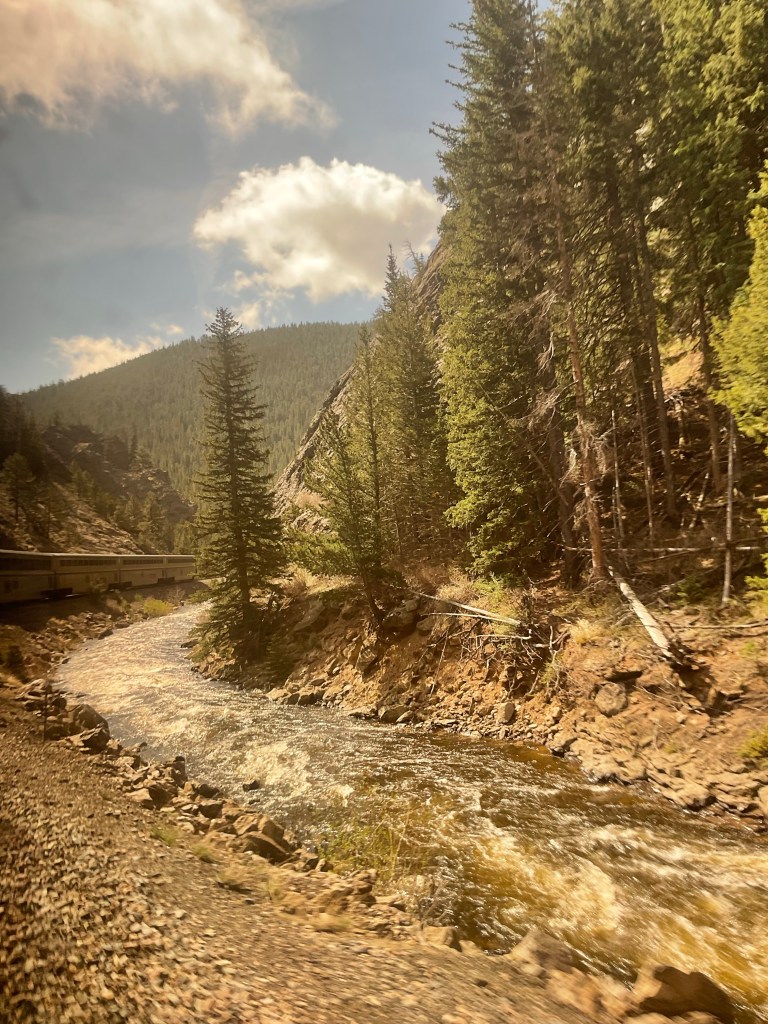
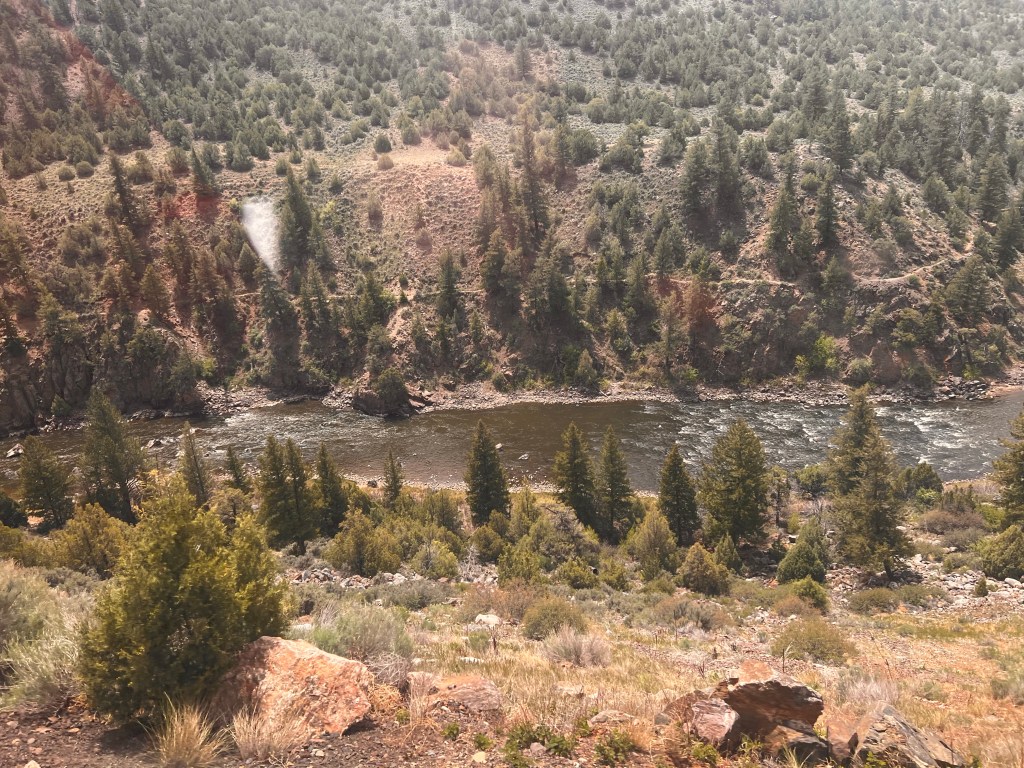
The moon River area 
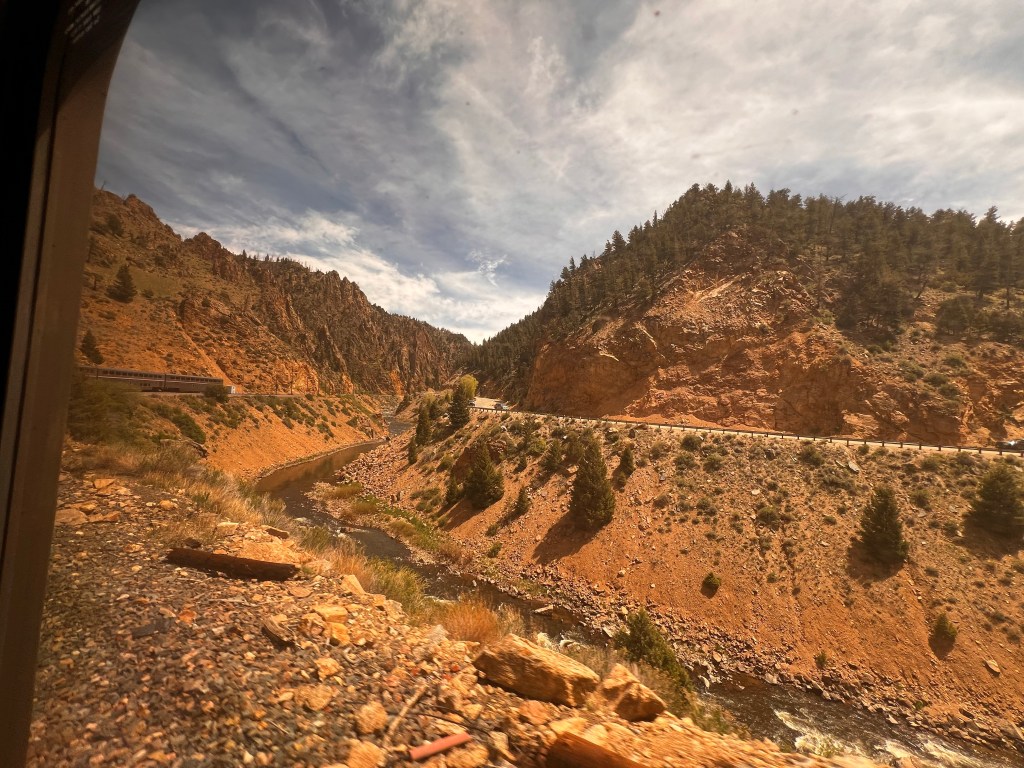
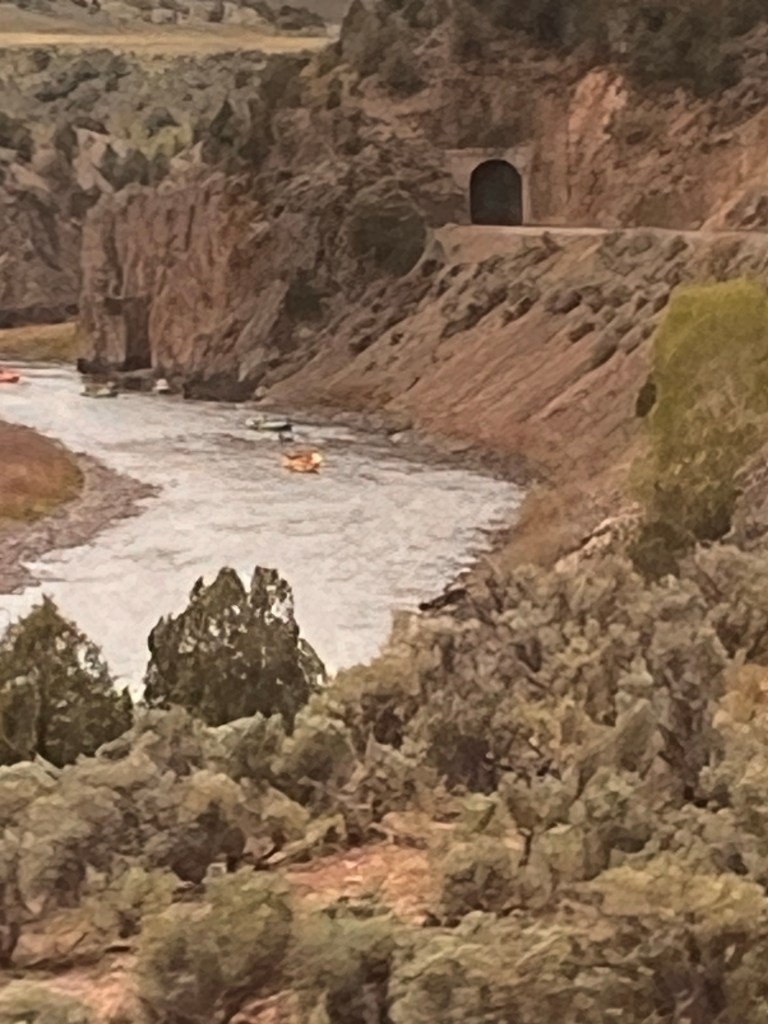
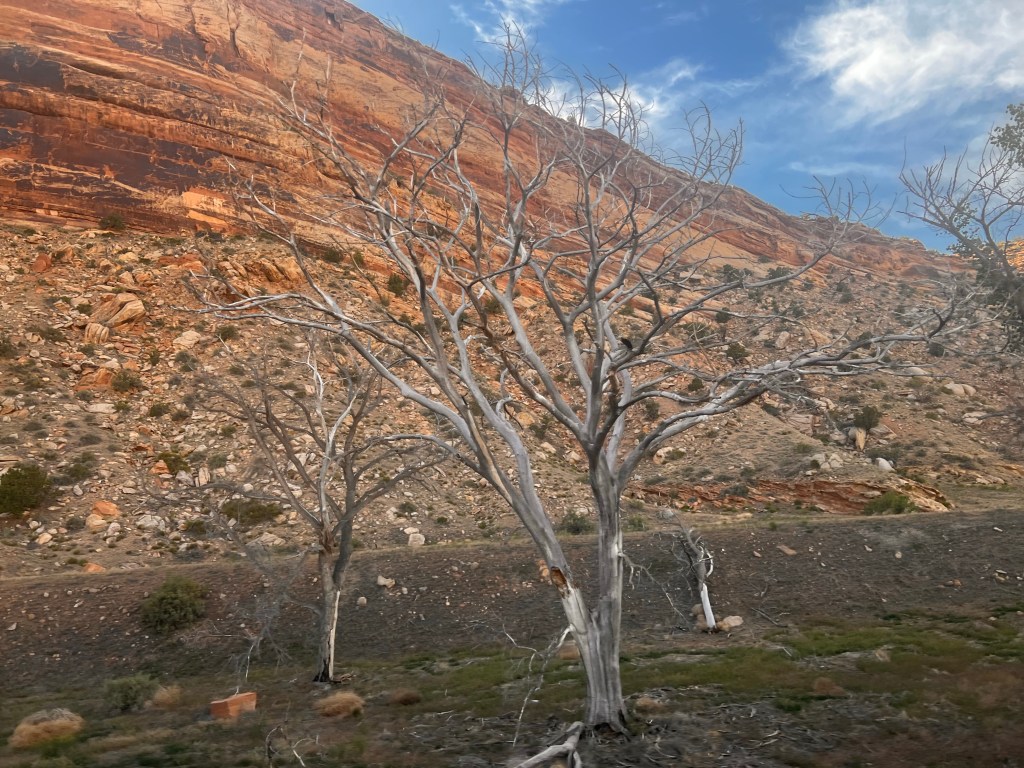
People on the river and one of the tunnels 

In the Sierra Nevada Mountains. Almost to Sacramento.

Ed and Chris, Sacramento, May 26.

Categories: travel | Tags: , , , , , , | Leave a comment

2014 Trip Two, April 6-7, Deep South

Sunday April 6 and Monday, April 7
Savannah and Pine Mountain GA

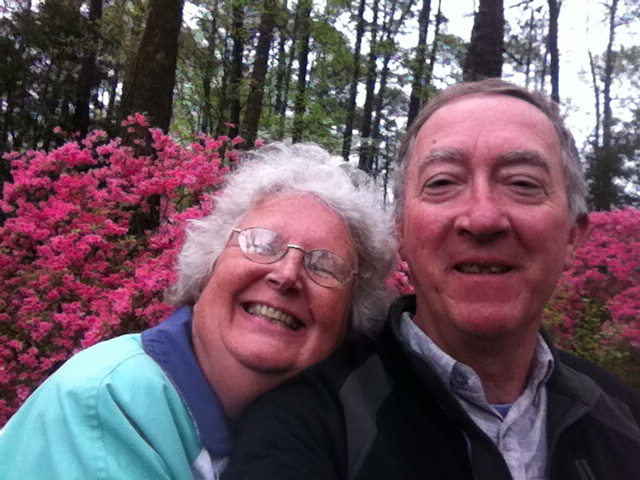
Chris and Ed at Calloway

Chris and Ed at Calloway

Well Sunday was Sunday and rainy. We took it easy. Even full time travelers need some down time. Although on reflection, with Destin and Miami Beach on this trip, we have had more relaxation days than usual.

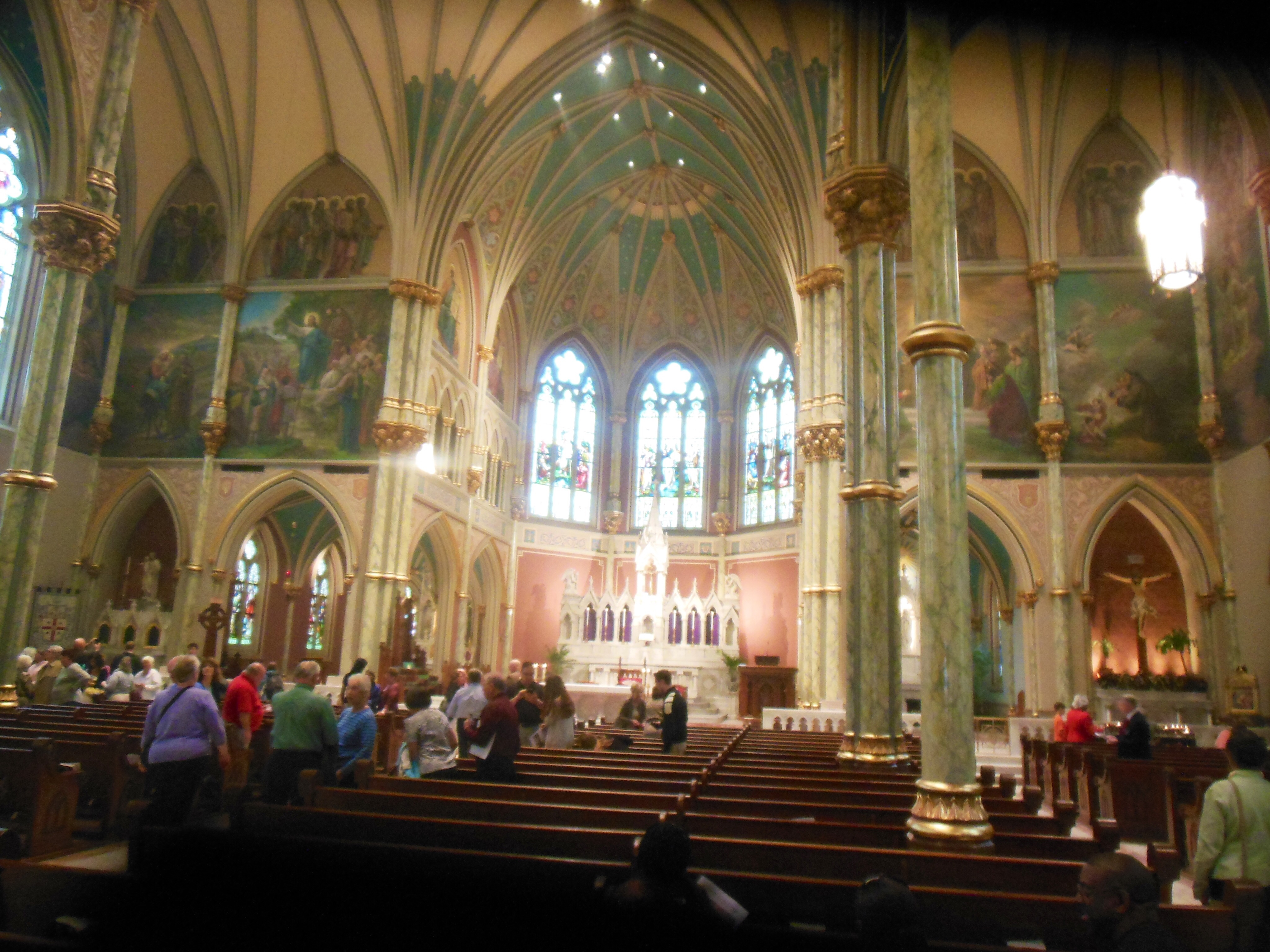
Interior of St. John the Baptist Cathedral

Interior of St. John the Baptist Cathedral

Sunday we went to the 10 AM Mass at the Cathedral of St. John the Baptist. It is a beautiful church and during our Saturday walks we had a brief tour with a docent who mentioned the 10 AM Mass would have the full choir. The music was very good and the church was crowded. Like a number of other buildings we have seen, paint was used to simulate marble (here on the columns). There is a painted cloth frieze along the top of the walls which looks like a painted mural.

After church we did some exciting stuff. Laundry. The Hampton Inn did not have guest laundry and we found a laundry in the outer portion of town run by a former Marine. Clean and well supervised and it did accept coins-unlike some nowadays where you buy a prepaid card to use which normally means you leave town with money still on the card.

After lunch we went back to the hotel and took the rest of the day off. It was still raining and we figured we had seen enough maritime museums, history museums, coastal fortifications, etc. I also put on several more doses of cortizone cream. Somewhere, probably on Friday at Fort Frederica, I must have run into a batch of no-see-ums; those almost invisible bugs that like to bite. Since I was wearing shorts and Chris pants, she has been spared. Major problem has been sleeping but I think the worst part is over.

View of Earthlodge reconstruction

View of Earthlodge reconstruction

The rain continued today (Monday) and at times was quite strong. We avoided driving during the worst parts by stopping at Ocmulgee National Monument and then having lunch at a local bar b q joint. Thus, the driving was fine but we could see swollen drainage ditches and ponding.

Ocmulgee National Monument is on Ocmulgee River by a ford and the area appears to have been habited as far back as 10,000 BCE. The main item(s) of interest here are mounds used for ceremonial and civic purposes by Indians of the Early Mississippian period. There are other examples of Mississippian mounds in the U.S. (we saw Emerald Mound along the Natchez Trace and there are older burial mounds in St. Paul).

Ocmulgee was made a national monument in 1936. Local efforts were critical in saving the area. The mounds had been reduced by construction of railroads, farming, use of the dirt to construct roads, etc. even though the uniqueness had been identified as early as 1774 by naturalist William Bartram. The earliest archaeological efforts were undertaken during the depression era by CCC/WPA workers supervised by an archaeologist from Harvard. It was the largest archaeological excavation ever in the U.S. up to that time.

The area and mounds were and are considered sacred by the Indians who lived in this area. Even as they were being pushed off their lands by Europeans in the early 1800s, this was the last piece of land the Indians gave up. We do not know the entire history of the area, several different cultures have lived here. The building at the national monument have detailed displays of items recovered and the best estimates of the various cultures that existed here. Since it was raining heavily, we did not go for any of the walks.

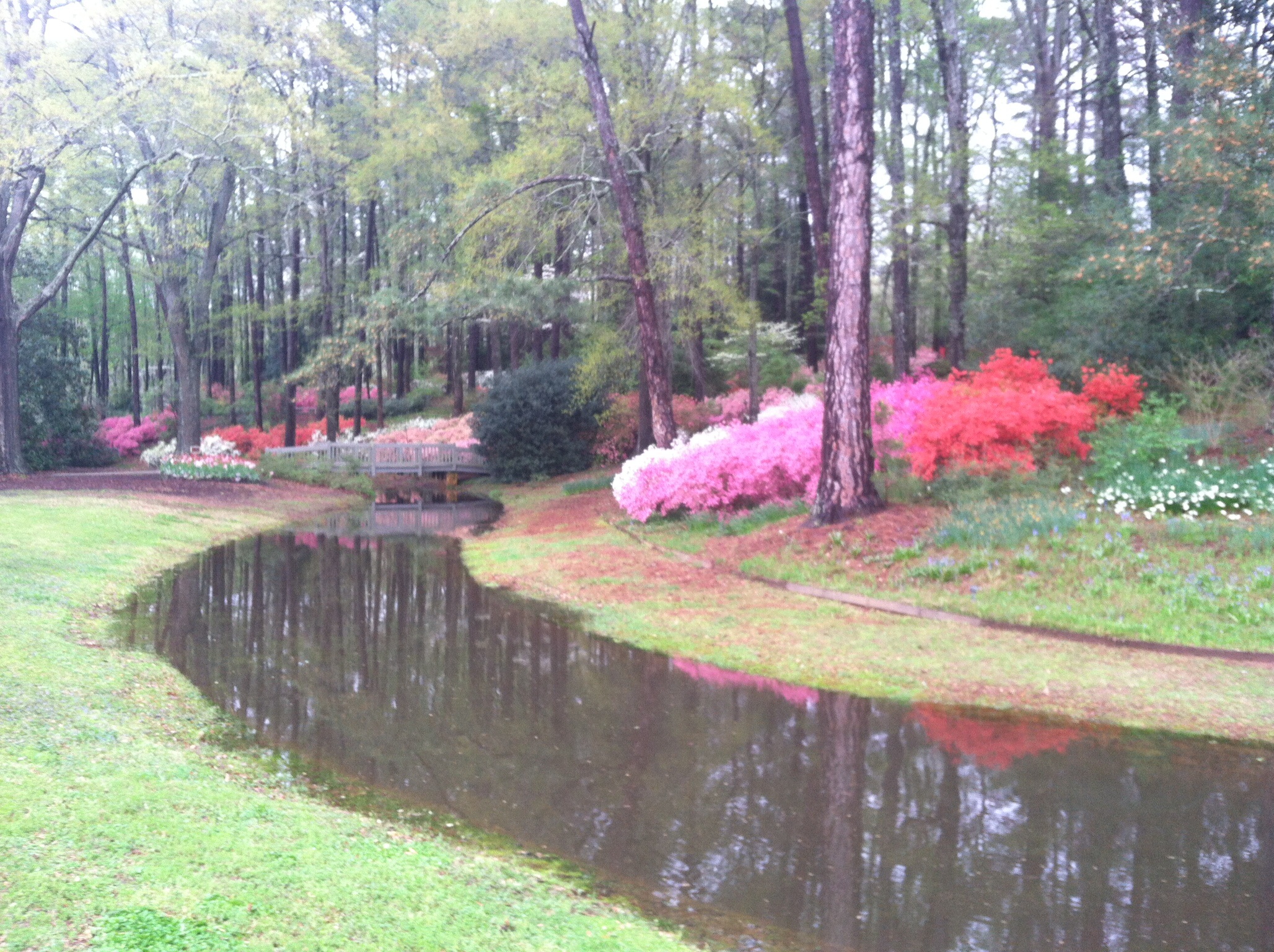
Callaway Gardens

Callaway Gardens

Callaway Gardens

Callaway Gardens

We arrived at Callaway Gardens a little after 4 pm. Our room, and many others, were not ready yet for check-in. Some computer/communications problem was the reason cited. We drove over and began our tour of Callaway Gardens. The rain had stopped and trails were wet. We started at the Butterfly House which is indoors.

At Ocmulgee it appeared that our camera had died so at Callaway we took photos only with the iPhone. The butterflies fly a lot and sit a little and I found taking close-ups a little difficult. The pictures are adequate but do not do justice to their diversity and color.

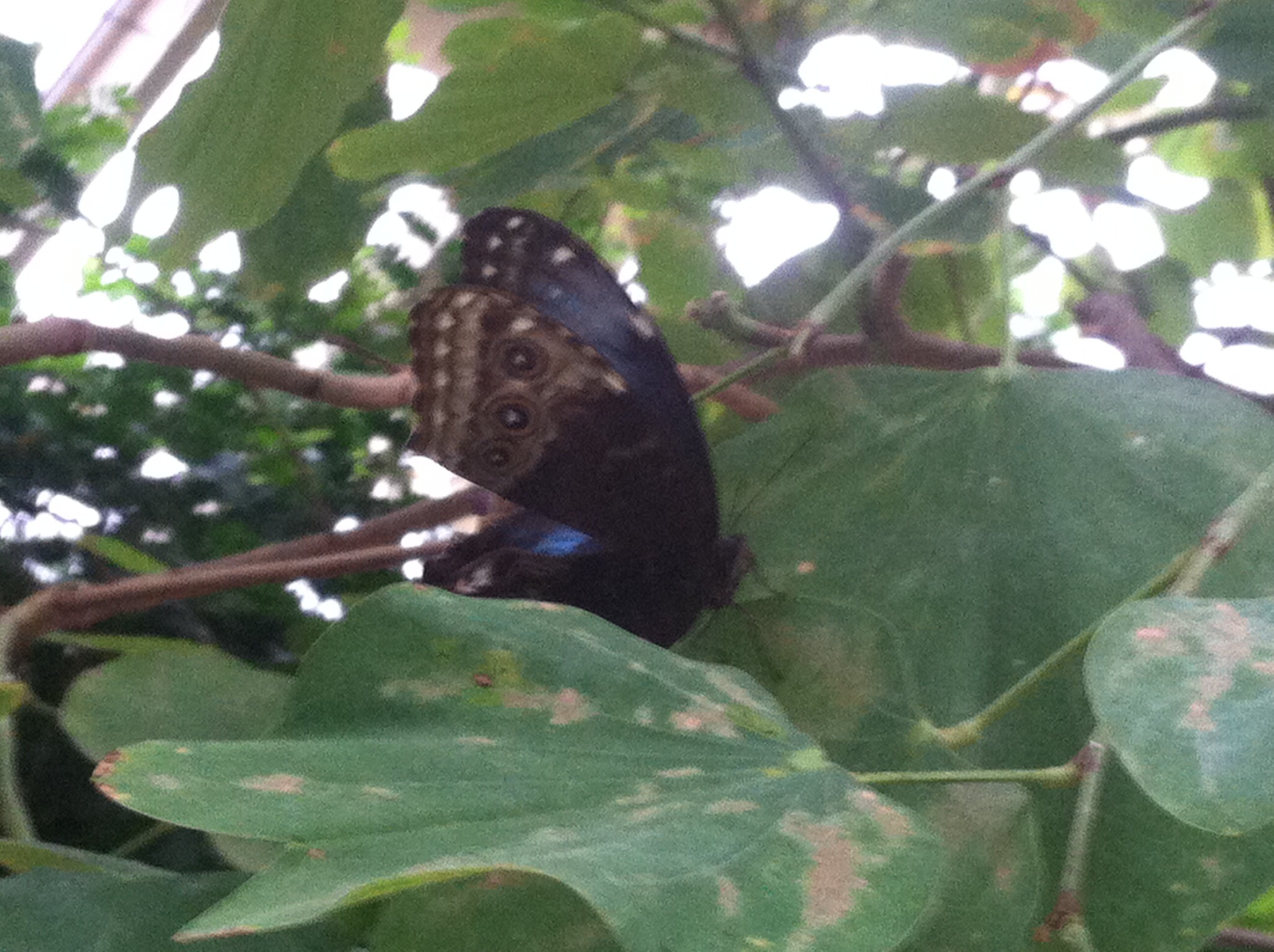
Butterfly at Callaway Gardens

Butterfly at Callaway Gardens


Buttetfly at Callaway

Buttetfly at Callaway

We had just enough time before the garden closed for the day to make one stop to view azaleas. The colors are still vivid and we have hopes that tomorrow will only be cloudy. I will save background data on Callaway for the next posting.

Butterfly

Butterfly

Side comment one: Is it just the South or have we not observed this elsewhere? The soda pop/water glasses are HUGE, like 64 oz size and then people when they leave get a to-go cup and take some more with them.

Side comment two: Now that restaurants seem to be uniformly suggesting tip amounts at 15-17-20% increments (is this a reflection on our lack of math savvy?); why is the percentage based on the food/drink amount PLUS the tax? What does the tax have to do with the quality of service?

Ed and Chris April 7 10:15 pm

Categories: road trip, travel | Tags: , , , , , | 2 Comments

2014, Trip Two, April 5, Deep South

Savannah, GA Saturday April 5

waving girl statue

waving girl statue

The rain has held off but we continued with our plans to visit historic buildings in Savannah. (No interior pictures allowed.) Along the way, we walked along the river front and observed the statue of a young girl who supposedly waved to every outgoing vessel from the harbor.

We went to a series of three buildings owned by one foundation. The Owens-Thomas house was one of the premier historic homes in Savannah, built in 1819. The architect, William Jay, incorporated numerous new ideas from England including indoor plumbing and cast iron. The design is of the Regency style.

Owens Thomas house

Owens Thomas house

This was the in town residence of a wealthy family. Within three years though, due to financial panic and epidemics the house was sold and the wife and two children dead. It passed through several hands until ending up in the Owens family who maintained it until the 1950s.

The house included separate slave quarters. The family had several plantations and got their money off the backs of enslaved people. Sorry, I get tired of hearing about these nice people whose wealth came this way. I asked the guide at the end of the tour if many black Americans tour the property and she indicated that no, but that this historic home saw more blacks due to their honest treatment of the slave issue.

Our next stop was at the Telfair Academy, also designed by William Jay. The Telfair’s were another aristocratic family, originally from Scotland, who had no difficulty owning hundreds of slaves. The group did not produce many progeny and eventually donated the property to create the first art museum in the South. It opened in 1886.

The museum has two recreated rooms from the house and the museum is in the balance of the mansion and an expansion. The art is basically 18th and 19th century American and European art. The basement has several sculptures. All in all, it was pleasant but nothing overwhelming. The only noteworthy item was the original sculpture of “Bird Girl” used on the cover of
the book, “Midnight in the Garden of Good and Evil”.

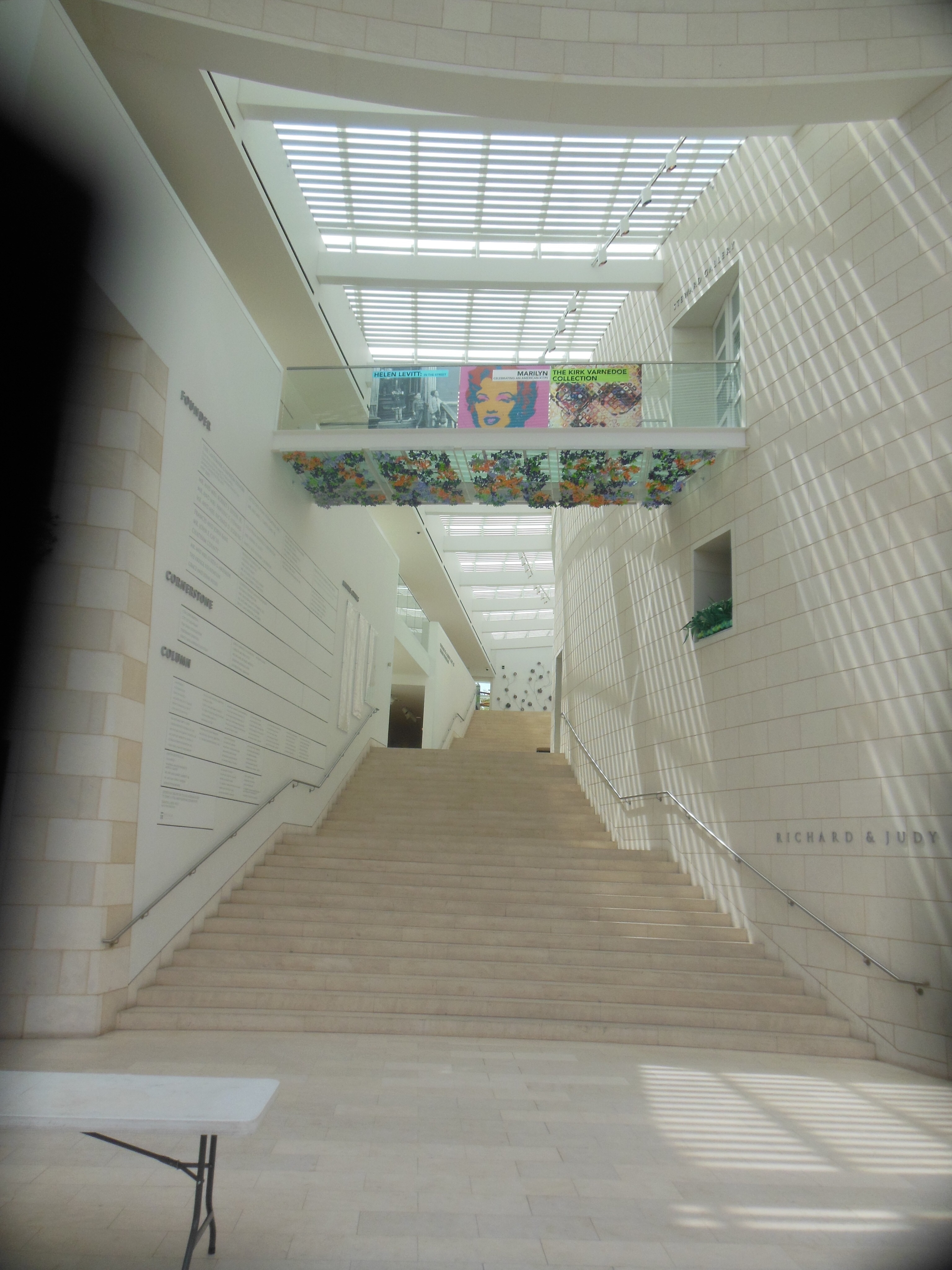
Interior staircase of Jepson Center

Interior staircase of Jepson Center

Our third stop was the Jepson Center, a new facility dedicated to contemporary art and art education. We had lunch at their cafe which had displays of docent art along the walls leading to the cafe. We met the owner of the cafe who has to make do without the use of an oven. The Jepson Center people were concerned about fire, smell, etc. Lunch was excellent, hope he can make a go of it without the oven.

The art here was so-so; an exhibit on Marilyn Monroe, a small room on digital art, a really boring exhibit of modern art, and a small room dedicated to slave history in Savannah-the best part of the center although it was mainly large boards of written history.

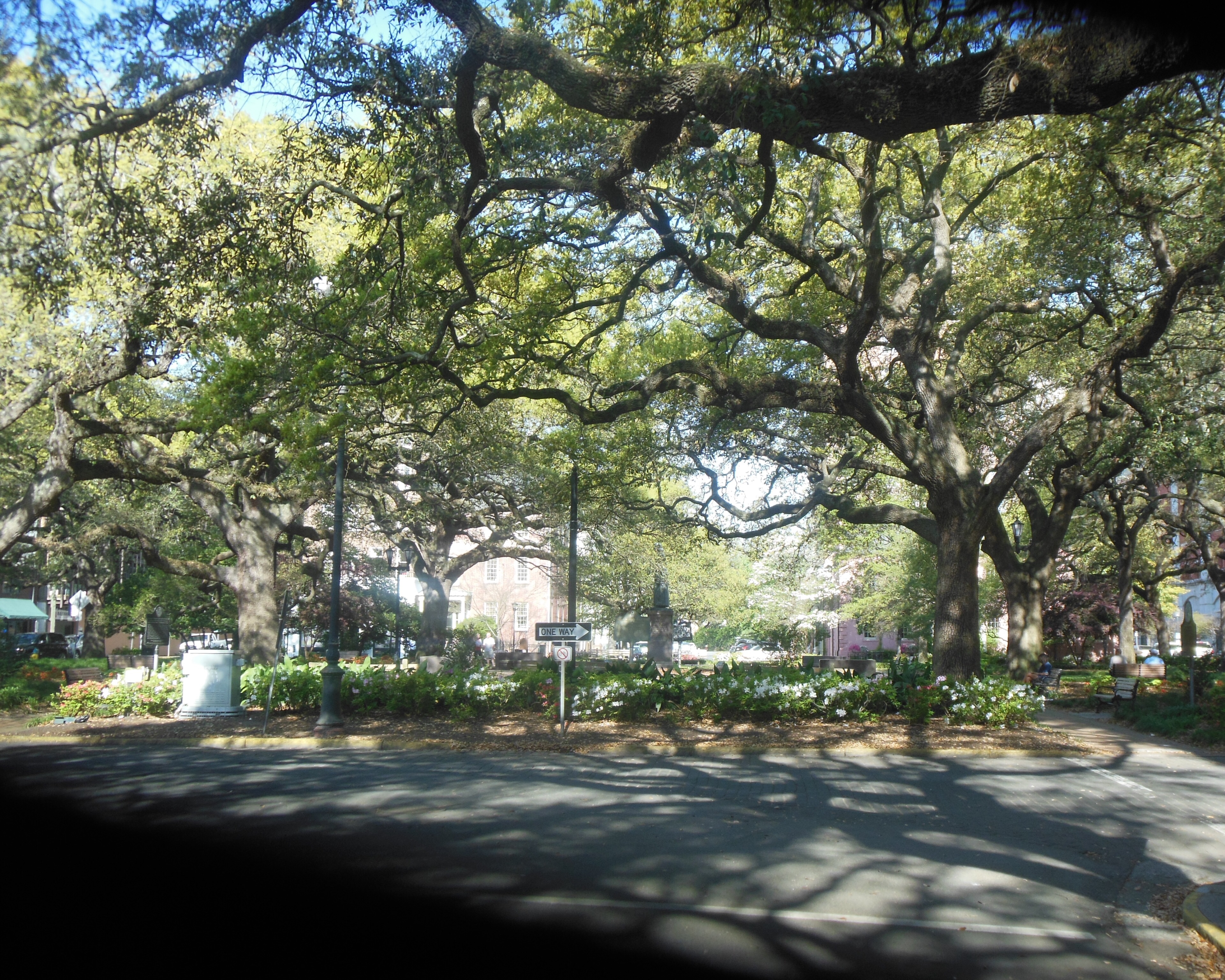
One of the squares in Savannah

One of the squares in Savannah

We left here and went walking for a while. As mentioned yesterday, the historic district is very walkable. The numerous squares have plenty of benches. People are out and about, even late in the evening. Tour trolleys are trundling around, horse drawn carriages are clip-clopping and pedi-cabs are waiting at most parks if you want to have someone take you directly to another location. Most squares have a buskar-musician playing an instrument, hoping passerbys will make a donation.

We stopped at Leopold’s, an ice cream establishment started in 1919. There was a long line, reminiscent of our experience at Stone Harbor on the New Jersey shore when the girls were still in school. We walked by later in the evening and they still had a long line.

Our evening entertainment was one of the functions of the Savannah Music Festival. This is its 25th year and is the largest musical arts event in Georgia. It offers an eclectic array including jazz, dance, chamber/symphonic, pop/rock, and American folk/traditional.

Stringband Spetacular

Stringband Spetacular

Our event was the Acoustic Music Seminar 2014 Finale: Stringband Spectacular. It was held at the Lucas Theater, one of those grand old theaters that had been renovated for $15,000,000 around the year 2000. The event featured 16 young adults aged 16-25 and their mentors playing mandolins, violins/fiddles, banjo, harp, guitar and bass. Many of the songs were composed by the students themselves and the group of players changed from composition to composition. The performance was excellent.

Ed and Chris April 6 12:10 am

Categories: road trip, travel | Tags: , , , , , , | Leave a comment

2014 Trip Two, April 2, Deep South

Wednesday, April 2, Folkston GA

What a glorious day!! Beautiful weather and great explorations.

Our breakfast at The Inn at Folkston was bacon,homemade banana nut waffles and fruit and granola. Plenty of energy for a full day of activities.

Okefenokee National  Wildlife Refuge

Okefenokee National Wildlife Refuge

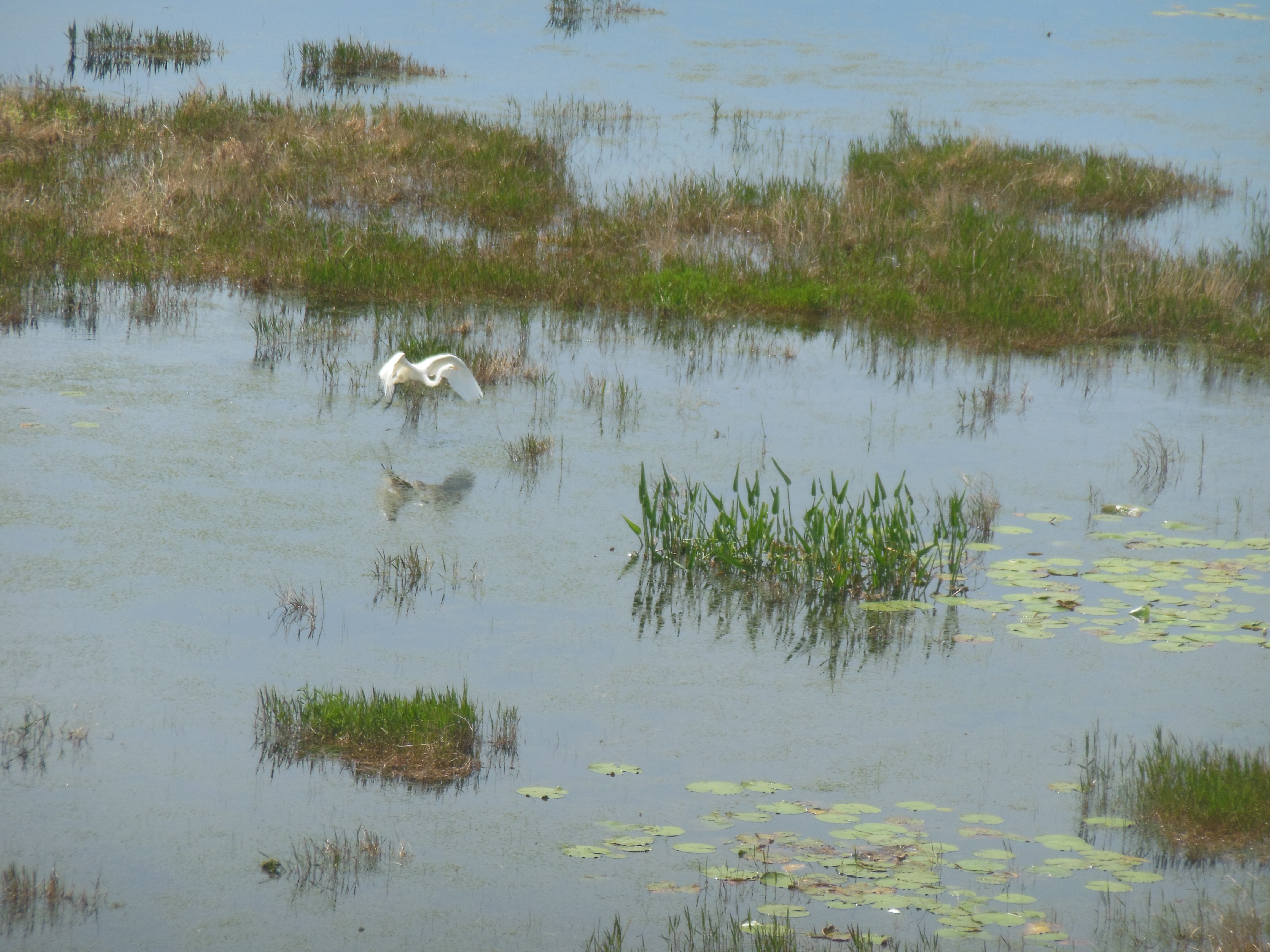
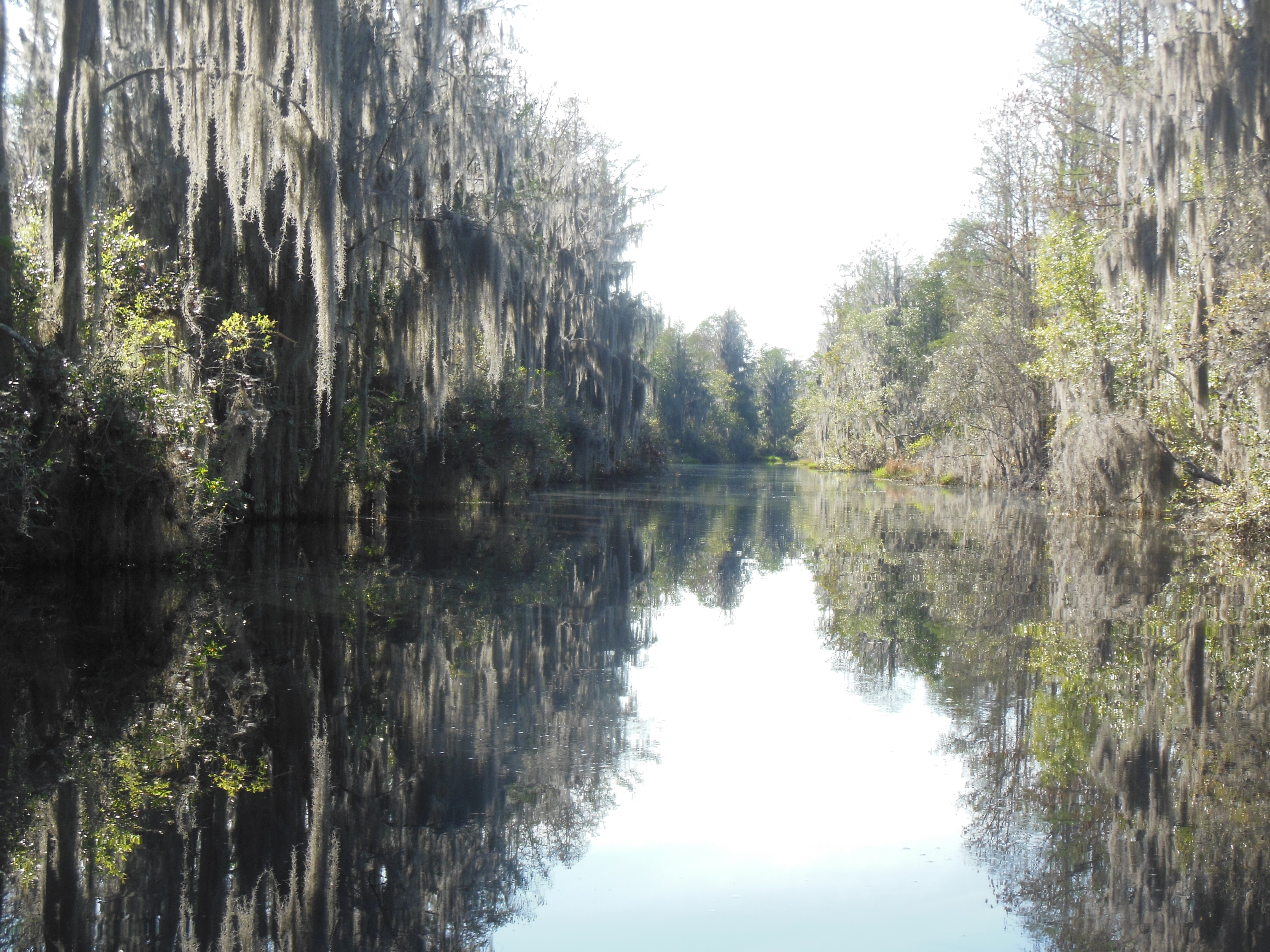
The Okefenokee Wildlife Refuge was our destination for the day. The refuge protects the Okefenokee Swamp and covers 630 square miles in southeast Georgia. It extends 38 miles north to south and 25 miles east to west. There is no road through it. The terrain includes bogs, swamps, wetlands, lakes, uplands, etc. It is home to a vast array of animals and plant life. Much of the “bottom” is composed of peat; sometimes underwater and sometimes the peat has loosened and floated to the top where it acts like an island.

egret

egret

The refuge was established in 1937, primarily to protect waterfowl and birds. There had been attempts going back to the 1890s to drain the entire swamp to provide agricultural land and to harvest timber. Luckily the swamp was tougher to conquer than the investors had imagined, their funds ran out. Over the years, most of the longleaf pine was cut down and replaced with slash pine, which is harvested quickly for pulpwood. The refuge is trying to replant the longleaf which is more favorable for the diverse plant and animal life here.

image

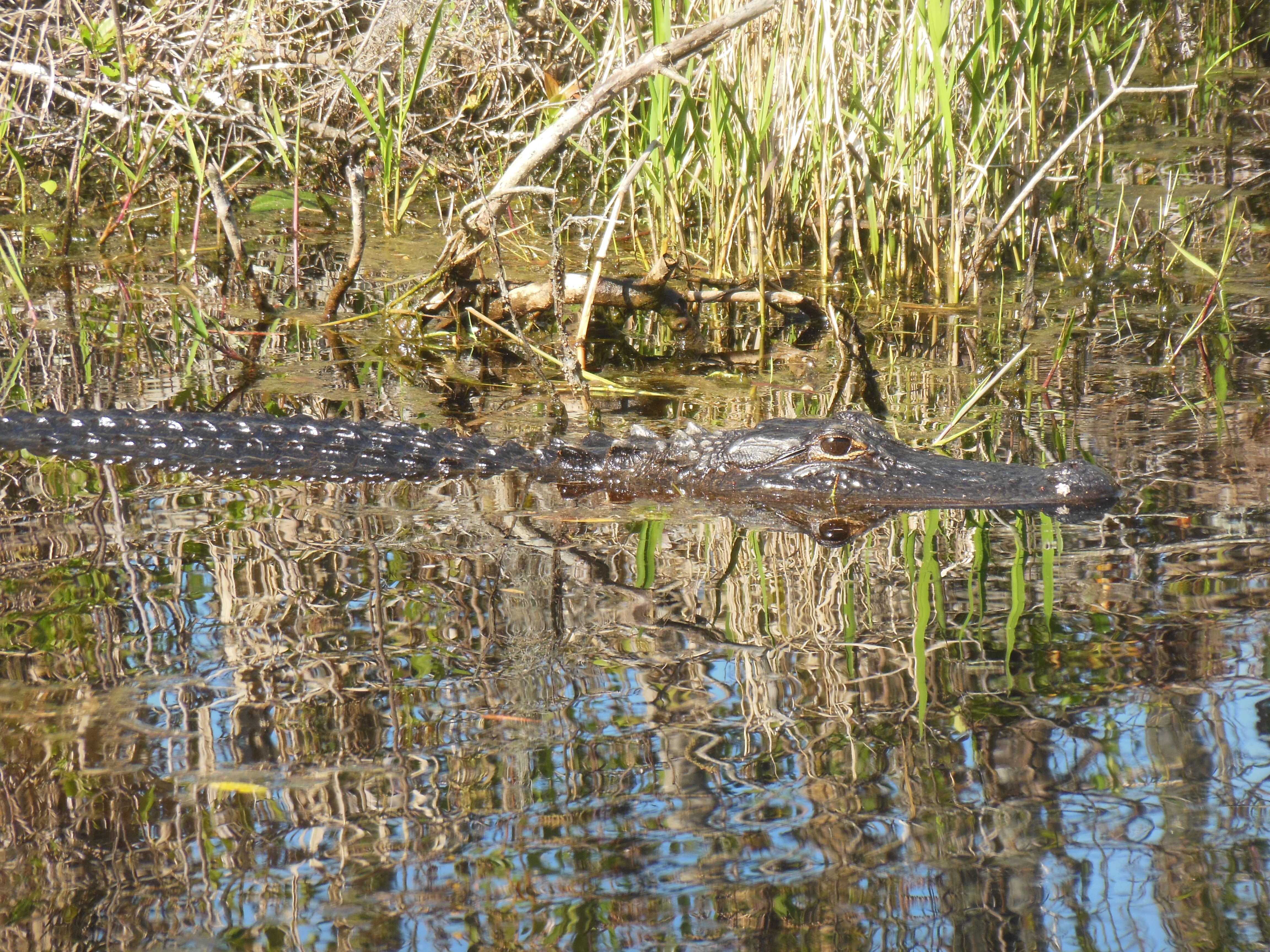
We started out on the Swamp Drive. At our first stop by a pond we saw our first alligators of the day. At the pond, we met two volunteers, one of whom is doing this full time for five months, then she will be off to a different wildlife refuge to repeat the process. We determined she was at the National Bison Refuge in Montana when we visited it in August of 2013. She also maintains a blog writing about her adventures as a vagabond volunteer.

Chesser homestead

Chesser homestead

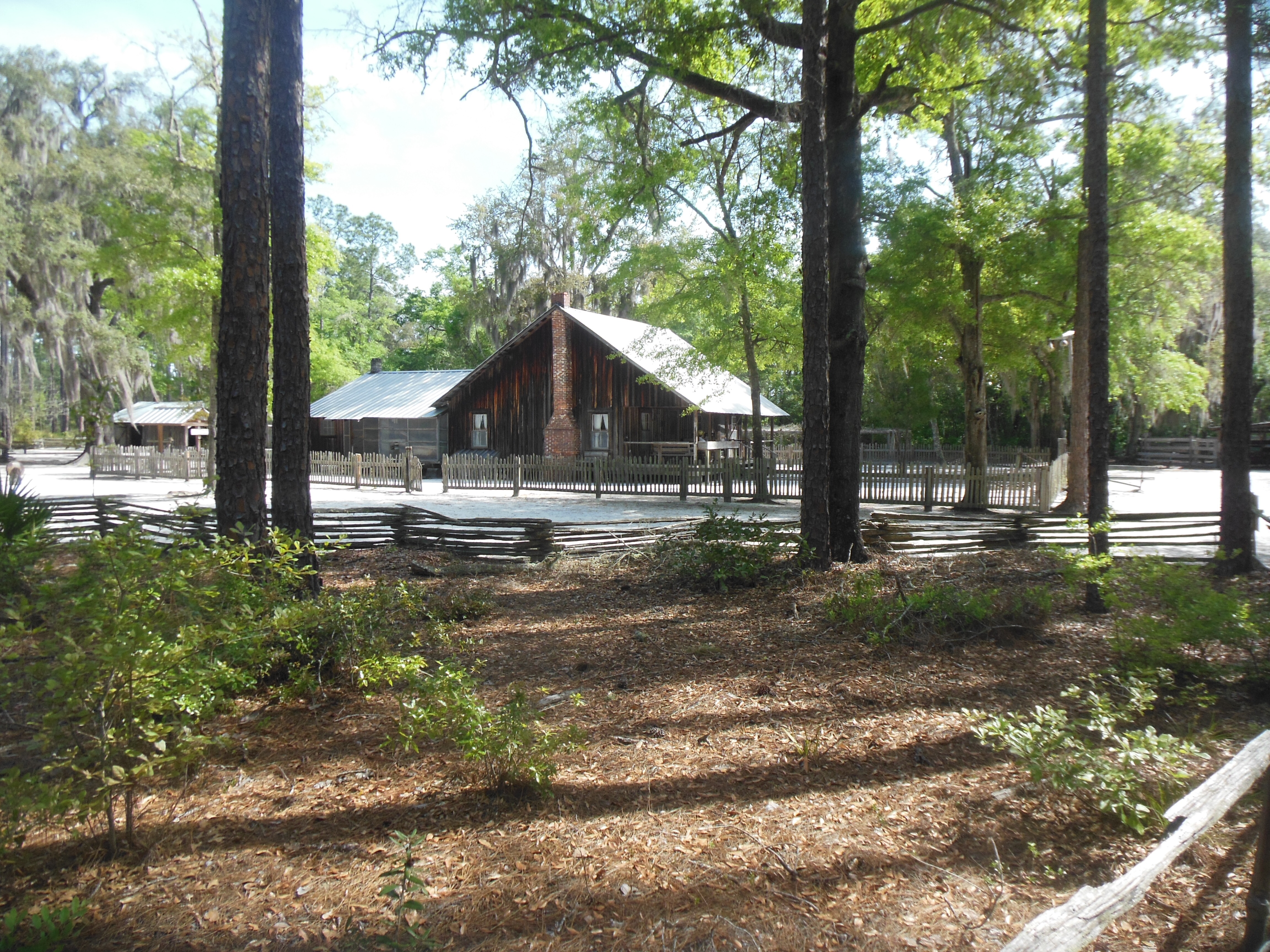
The Refuge maintains the original homestead of one of the families that lived in this part of the Okefenokee Swamp. The family moved out in the 1950s. They had 9 children and some of the extended family are employed or volunteer here. The yard was always sand swept very neatly. They kept it swept to reduce the fire hazard and to be able to observe any snakes or snake trails.

raccoon

raccoon

A boardwalk runs out 3/4 mile to an observation tower. Along the boardwalk we saw various birds, a raccoon, a snake, and a slider turtle. The boardwalk was recently rebuilt; in 2011 there were major fires that destroyed the previous boardwalk. Fire is a major component of life in the swamp. Lightning is the historical cause and fire plays an important role in the rejuvenation of the ecosystem-something we have learned at national parks previously visited.

prescribed burn under way

prescribed burn under way

The refuge management is frequently undertaking prescribed burns-although the 2011 fire was not prescribed. When we drove out for a late lunch, the area along the access road was being burned. The smoke and smell are noticeable for some distance even though the area involved was minor.

boat ride vista

boat ride vista

thicket along the boat reide

thicket along the boat ride

swamp iris

swamp iris


swamp prairie

swamp prairie

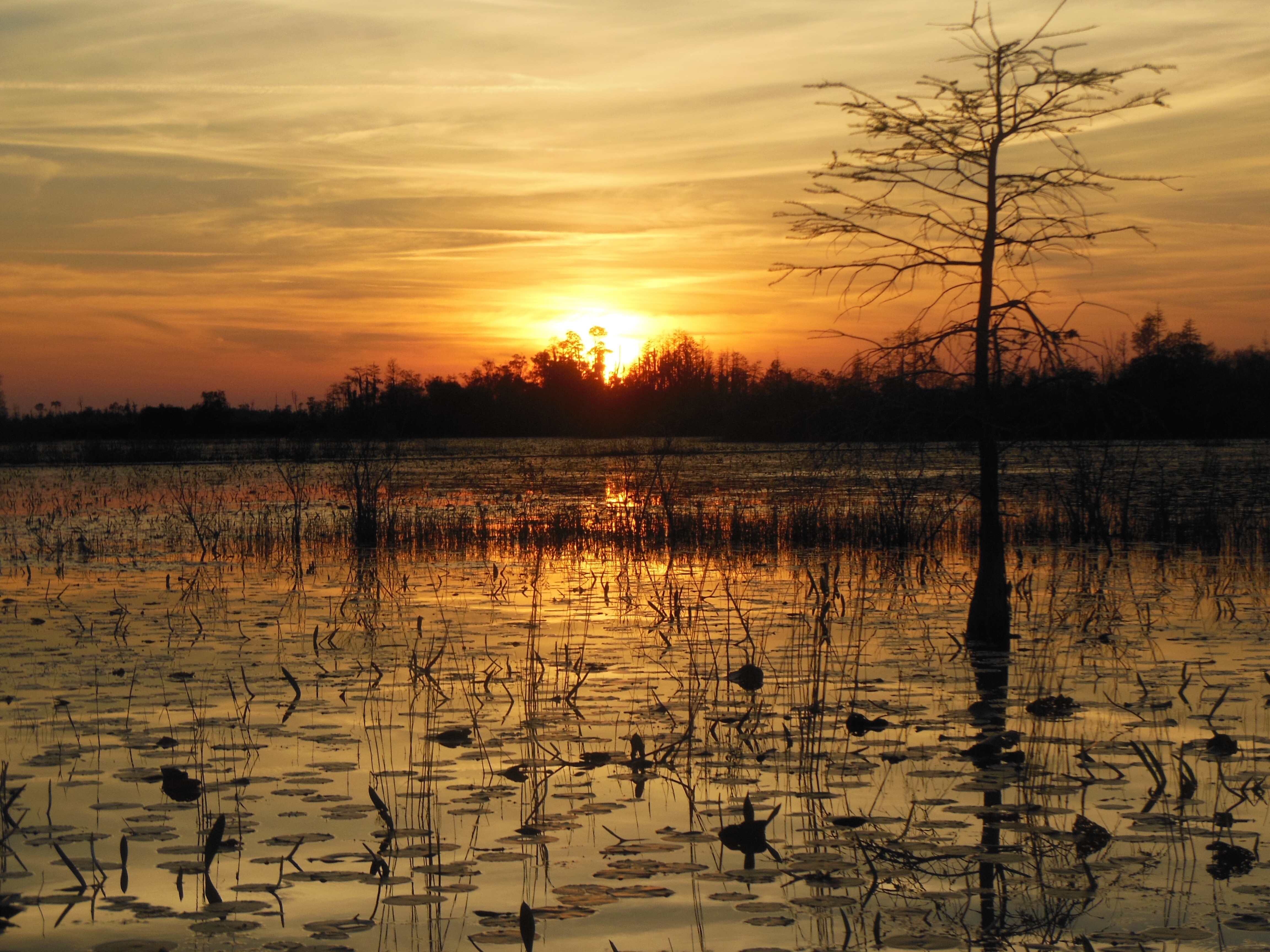
A four and a quarter hour boat ride on the swamp took up the late afternoon and early evening. Six of us went out on the swamp with a guide for an extended excursion. The guide turned out to be the co-owner of the concessionaire, Okefenokee Adventures. In a drawl that sounded like an backwoods swamper, he educated us for over four hours on a myriad of topics covering politics, ecology, geology, and biology. He identified plant life and birds, including the bittern which evidently is a rare sighting. He related tales of the Okefenokee, the role of fire, threats to the refuge driven by economics, etc. It was a fascinating and educational experience, compounded by the great weather, beautiful sunset, and almost complete lack of biting insects.

sunset on the swamp

sunset on the swamp

Chris and Ed 11:45 pm

Categories: road trip, travel | Tags: , , , , , | 2 Comments

2014 Trip Two, April 1, Deep South

Tuesday, April 1 Folkston, GA

The cabin at Stephen Foster Folk Culture Center State Park was quite nice. We would be willing to stay here again.

Suwanee River

Suwanee River

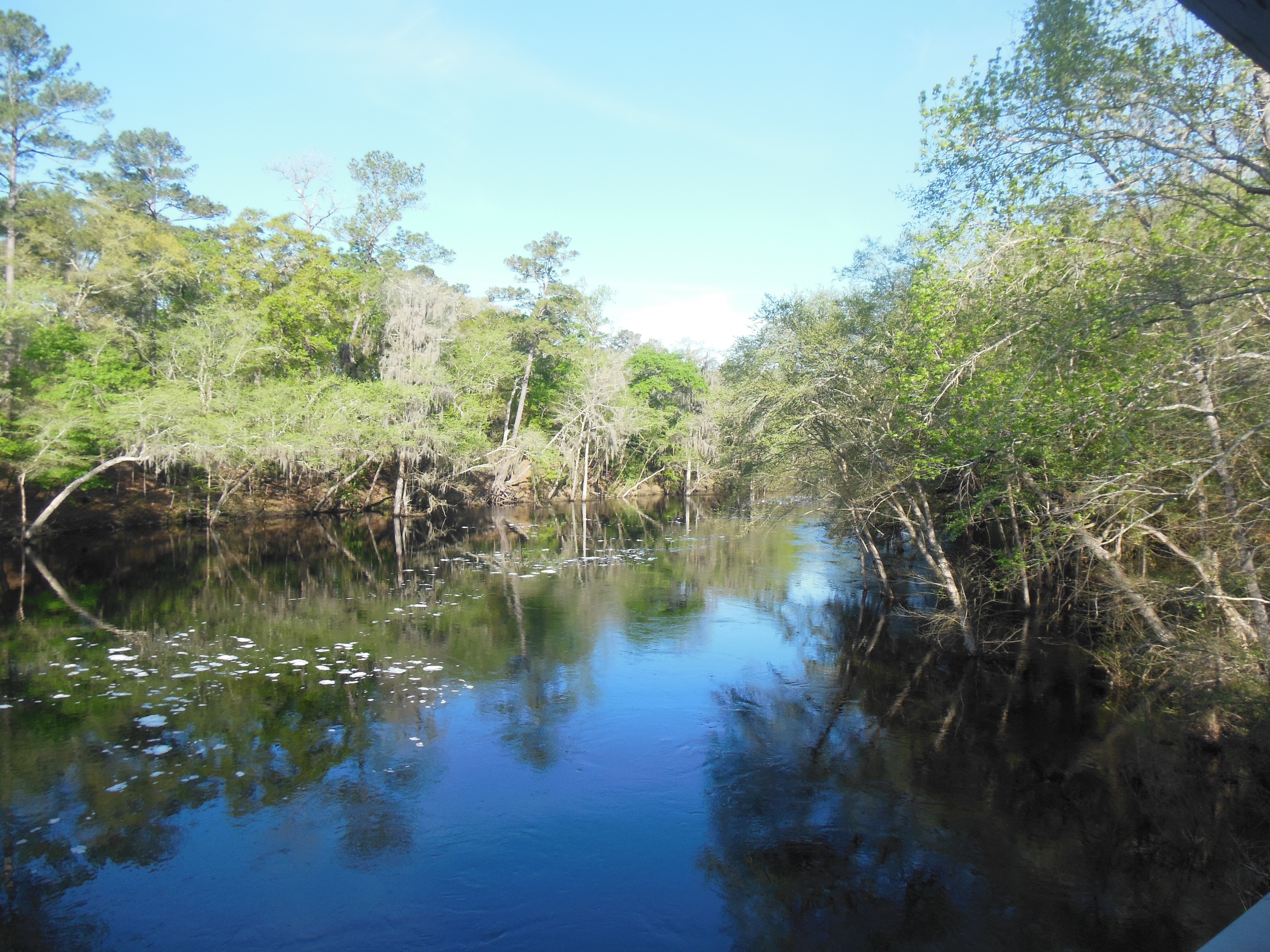
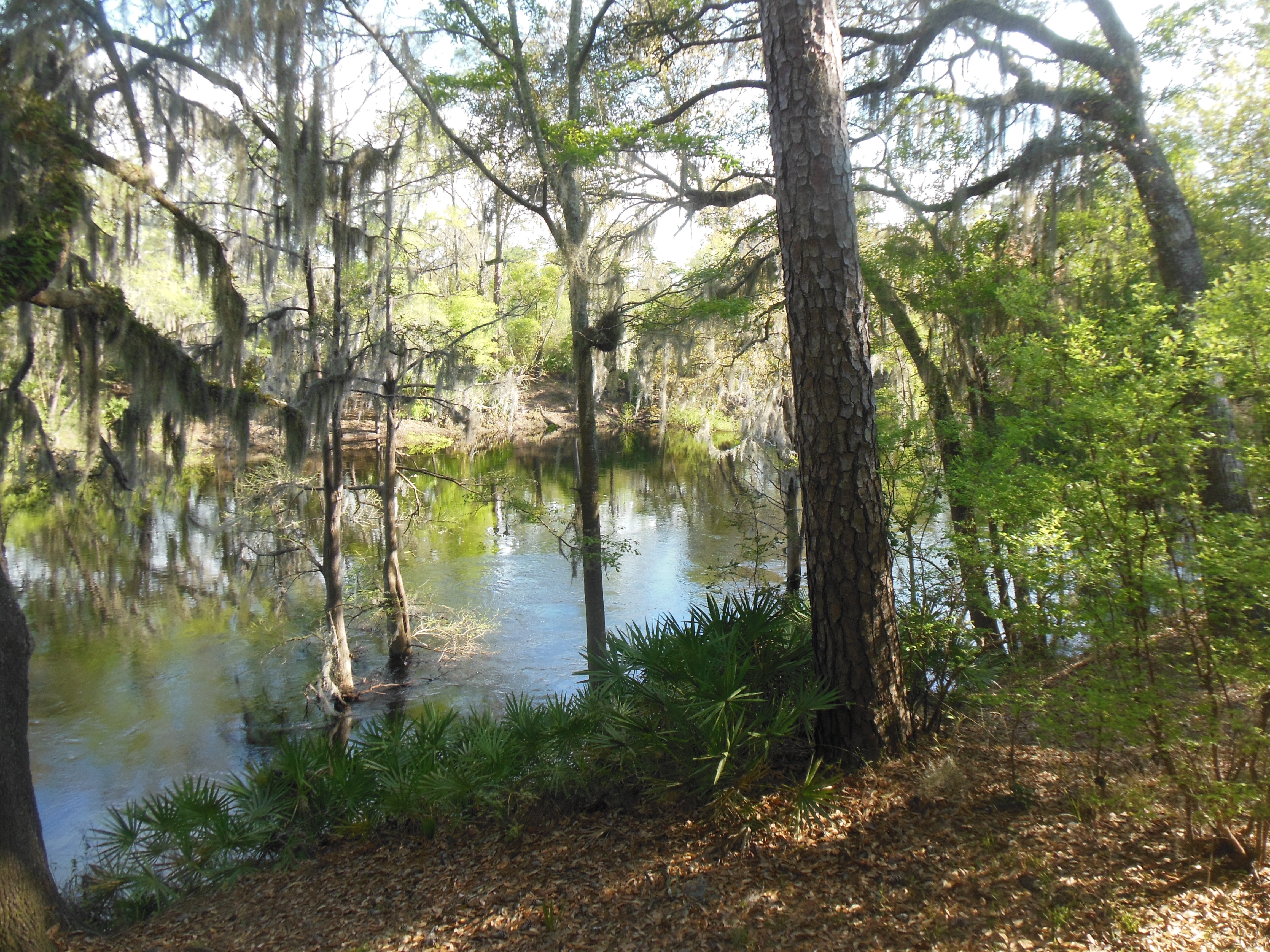
The Suwanee River starts at the Okefenokee Swamp in GA where we will be later today. The sulphur springs at the park add to the flow as it meanders to the Gulf of Mexico. We stopped at the springs area which had been a popular tourist attraction in the late 1800s. The spring now is pretty much enclosed and the town is trying to re-invent itself for biking/canoeing/kayaking adventures.

Suwanee River

Suwanee River

There is a visitor center in town that is being run solely by local volunteers due to budget cuts. The volunteer on duty when we arrived early this morning was very pleasant and informative about the town. She suggested several local restaurants that were not known to us and we had lunch at an old hotel restaurant that had re-opened recently.

walking in Stephen Foster Folk Culture Center State Park

walking in Stephen Foster Folk Culture Center State Park

However, she also informed us about the death of two canoeists on the Suwanee just a week ago. A couple from NY had come down to go canoeing but were told by the state park rangers that the canoe launches in the park were closed due to high water and they should not go canoeing. Evidently they decided to launch their canoe outside of the park. The cause is not known but they ended up in the water and their bodies were found a few days later.

walking in park

walking in park

So we listened to the rangers and went walking instead. The recent rains meant that several paths were water covered and we had to back track a few times. The park was not terribly busy today but a tractor show/festival will be occurring this weekend and they expect a full house. Each month the park has some festival scheduled. There is a folk music festival over Memorial Day weekend.

Flowers in the park

Flowers in the park

One of the craft stores was open and we chatted with the needle work person. She and her husband are from northern MA and have been volunteering here for 14 years. Her husband is a carpenter and his services have been used throughout the park. She makes crafts and sells them. They stay for four months and live in their RV along with other volunteers in a separate RV village in the park.

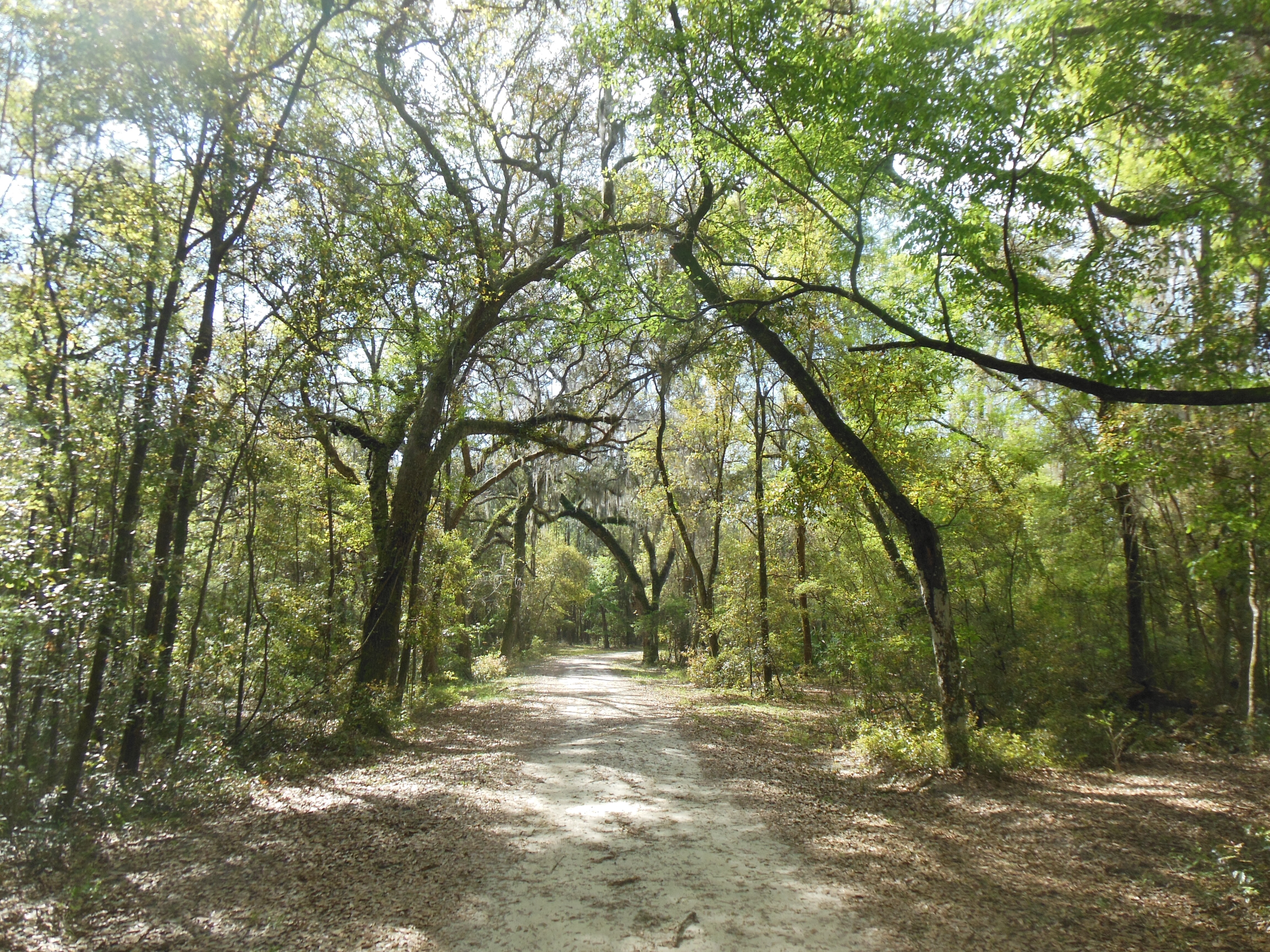
After lunch, we took two lane back roads to Folkston, GA where we will be visiting the Okefenokee Swamp. Wildflowers lined most of the roads. Azaleas were blooming profusely along road sides, in yards, and in the park. We passed several Florida correctional institutions and a large Waste Management landfill. Not everything is flowers and green trees.

The Okefenokee Swamp is a national wildlife refuge. Okefenokee means “land of the trembling earth”. Much of the park is built on peat bogs; walking on it is soft and wavy. We stopped at the visitor center but did not have time to do any hikes. Tomorrow we plan on hiking, driving and taking a four hour boat ride through the swamp.

image

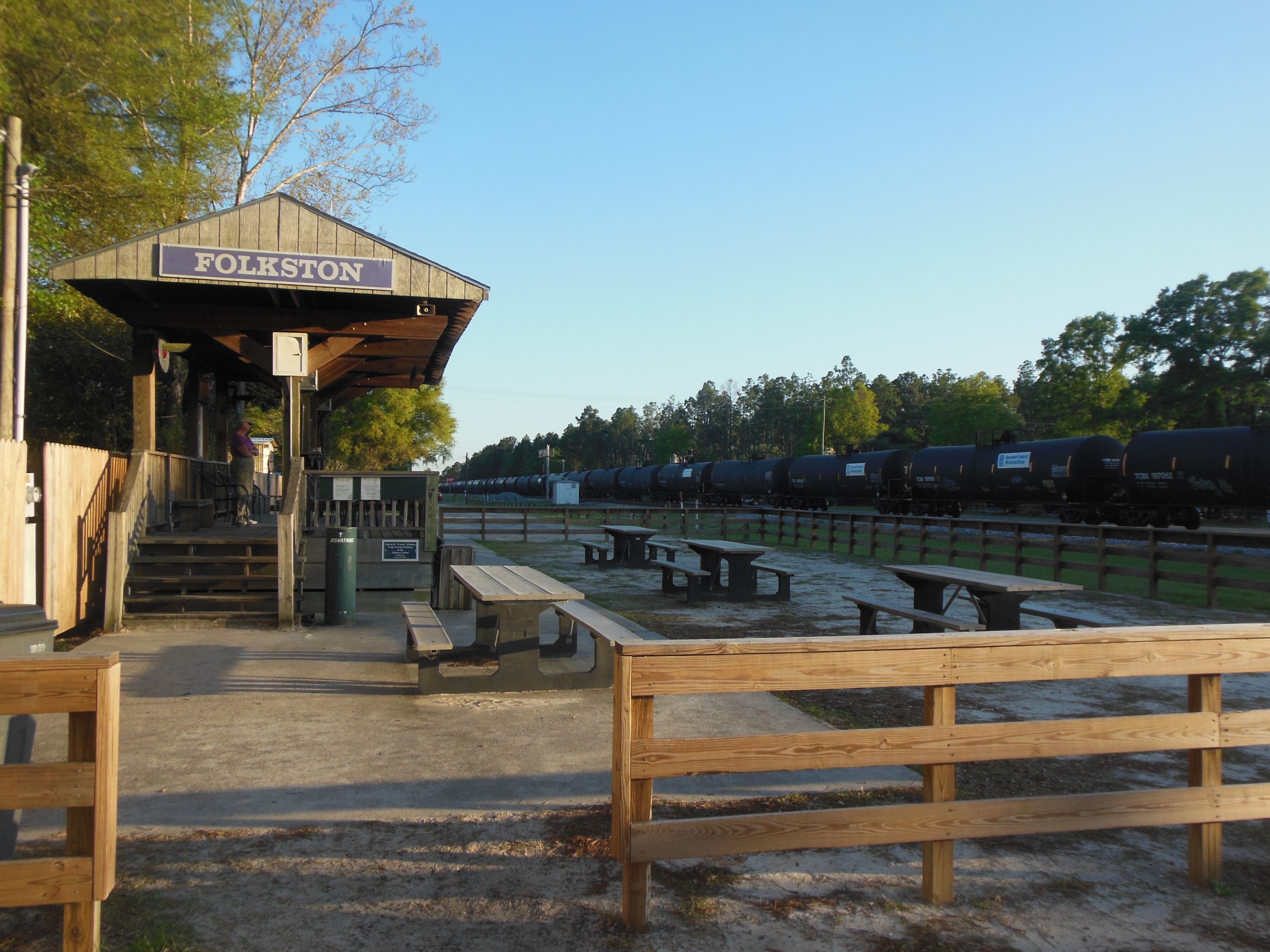
Tonight we are at the Inn at Folkston, a very nice B and B run by a retired railroad conductor and his wife. Dinner was in “downtown” Folkston at the one non-franchise, sit-down restaurant open. Folkston is a train watching town. The CSX railroad runs about 60-70 trains a day through the town on two tracks. It is a main line route in which 90% of the trains into Florida go through this town. On Saturday, the town is having “Train Watch”, a local festival where train aficionados spend the day watching trains and sharing their hobby with like-minded folks.

Folkston CSX train

Folkston CSX train

Ed and Chris April 1 10 pm

Categories: travel, Uncategorized | Tags: , , , , , | Leave a comment

2014 Trip Two, March 31, Deep South

White Springs, FL Monday March 31.

Let’s see. Population of Miami SMSA is about 5.5 million. Population of White Springs FL is about 775. Miami has the Atlantic Ocean, Intracoastal Waterway, and lots of beaches with jet skis and parasailing. White Springs has the Suwanee River which is currently flooded-no canoeing allowed. In the early 1900s, the town had over 2000 people and a thriving tourist trade revolving around sulphur springs. A 1911 fire destroyed most of the community. 400 miles brings us to a whole ‘nother world.

part of the porch at the cabin

part of the porch at the cabin

We are staying at the Stephen Foster Folk Culture Center State Park in White Springs, FL. There are five rental cabins here, we have cabin #1. It appears that two others are also rented. It is just a one night stand for us, most people stay a while. There is room for a family in the cabin and it is equipped with a fully equipped kitchen-but no washer/dryer. There is a long, screened-in, L-shaped porch. The screen is essential; even now the bees are out and flies are starting to be noticeable.

actual piano used by Foster

actual piano used by Foster

The state park was created to honor Stephen Foster (1826-1864). For young’uns and the forgetful, he was the composer of such songs as “Old Folks at Home (Way Down Upon the Swanee River)-Florida’s state song; “My Old Kentucky Home”-Kentucky’s state song; “Jeannie with the Light Brown Hair”; and “Beautiful Dreamer” (actually used in a Batman movie; “Camptown Races”. The movie “Gone with the Wind” has four of his songs in it. The correct spelling of the river is Suwanee; Foster abbreviated it for musical effect.

Flooded Suwanee River

Flooded Suwanee River

Foster never lived in Florida and may never have seen the river itself. However, the song became so connected with Florida that the state created a park just to honor Foster and his music. Foster lived most of his life in Pittsburgh where he was born. The park has a museum, a bell carillon, gift shop, and craft village with folk craft demonstrations and shops besides the normal camping, swimming, hiking, canoeing, etc.

Foster is described as a music pioneer. There was no real music business as there is today to make him a millionaire. He sold most of his songs to publishers; most songs were plagiarized with no fees received or acknowledgement as to the authorship. His songs became memorable descriptions of American life. He composed or collaborated on over 200 songs during his brief life and died at age 37 with 38 cents in his pocket. Foster sold many of his songs to Edwin Christy who ran a blackface performing group called the Christy Minstrels in the mid-1800s. The New Christy Minstrels, a folk group in the 1960s, tied in to that history.

Bell Carillon

Bell Carillon

We arrived in time to hear the carillon perform at 4 pm. It also sounds the quarter hours. The carillon is made of tubular bells, 97 of them. (Last November,we visited the School of the Ozarks which has a tubular bell carillon made by the same craftsmen, it is said to be larger although only 96 bells.) Supposedly tubular bells sound different from cast iron bells.
Stephen Foster museum

Stephen Foster museum

The carillon took more than a year to create, the tubular design was created by the company, the bell tower (campanile) is 200 feet high, and regular playing of Foster’s songs occur through live performances and through the use of an automatic electric player. (We heard the electric player.)

Tomorrow we will have to visit the crafts people since at this time of the year they are only here from 10-2. We were able to walk down to the river. Despite the signs, we did not see any alligators or poisonous snakes. The river is over its banks, but still short of the record flood that occurred here in 1973.

Suwanee River

Suwanee River

The song and the river were eloquently described many years ago by a New York editor as: “”The Real Suwanee River,” he wrote, “rises in the highest mountains of the human soul and is fed by the deepest springs in the human heart. It flows through the pleasant, sunny lands of memory; it empties into the glorious ocean of unfilled dreams..””

Ed and Chris March 31, 7:15 pm

Categories: road trip, travel | Tags: , , , , | 1 Comment

2014 Trip Two, March 28, Deep South

Friday, March 28, Miami Beach

Another windy day but we invested in an umbrella which was used to block the wind, not the sun. Nothing too unusual on the beach today, just a formation of five planes pulling large banners advertising Las Vegas locations and events.

planes pulling banners over South Beach

planes pulling banners over South Beach

The scene in South Beach is eclectic. Of course there is the usual mix of residents, flavored by its international mystique. The Sony Tennis Open is being played so you have tennis fans. Business people are here on expense accounts. Northerners and retirees like us. Spring breakers, although they do not predominate or overwhelm. For the first time in memory, we have seen a number of Buddhist monks-or at least guys who dress that way. In this town, who knows if they are or not. Plus the people attending the Miami Music festival.

Sidewalks and streets are crowded. Taxi drivers do their usual pull over and stop anywhere. So do all other drivers. So do delivery trucks. Scooters weave in and out of traffic. There is a new dimension this year as bike rental programs have proliferated adding more undisciplined drivers to the mix. Pedestrians cross against traffic and do not understand the concept of not taking up the entire sidewalk whether walking fast or slow. Sidewalk cafes are everywhere which also reduces the space for walking. People are dressed in suits and fancy dresses with stiletto heels, or swim wear, or mundane shirts and shorts with some place or cause plastered on them.

So back to the Music Festival. We saw 5 or 6 fancy sports cars driving around with the words “Afrojack” on them. Thank goodness for Wikipedia. I now know that EDM is Electronic Dance Music. Afrojack is a Dutch DJ performing a headlining act. Avicii is a Swedish DJ set to perform here except he had a gall bladder attack. Laidback Luke is here too, along with Dada Life. Over 150,000 people are expected for the festival over in Miami’s Bayfront park. South Beach hosts a number of parties that start at 11 pm or midnight and run until 5 AM or so. The cost is $60 to $80 so we decided to pass on going to them.

New World Symphony

New World Symphony

Instead we walked over to the New World Symphony. We usually manage to fit in one of their performances. This was titled “Ohlsson Plays Rachmanioff” (Concerto #2 in C minor). It was fantastic. We sat behind the musicians, a location we have preferred since the first time their new Frank Gehry designed building opened three years ago. We get to see the conductor face on. The musicians are very close, although we see more of their hair styles than their faces.

Two males had Mohawk cuts, one with the Mohawk portion colored red. One of the percussionists had a very minor role in the second piece, hitting the drum 4 or 5 times. Each time he got up from his chair to do his bit, he took a blanket-like cloth and placed it over his knee and then placed his knee against the drum. After he banged the drum, he carefully removed the “blanket”, folded it and replaced it on top of the drum.

New World Symphony

New World Symphony

The musicians are entirely in black except for one female violinist who had a white cloth over her shoulder where she placed the violin. Not sure how she got away with that spot of white. The other two pieces were Mikhail Glinka’s “Overture to Ruslan and Ludmilla” and Ottorino Respighi’s “The Pines of Rome”.

We have made some changes to our schedule. We had planned to visit some of Chris’ relatives on Sunday. Due to changes in their situation, they won’t be able to see us. So we are spending one more night in Miami Beach. Our HGVC timeshare is booked up Sunday night and we are moving half a block down to the Winterhaven. Monday we will continue our plans and drive 400 miles to the Stephen Foster Folk Culture Center State Park in White Springs, FL.

Ed and Chris March 28 11:35 pm

Categories: travel, Uncategorized | Tags: , , , , | Leave a comment

2014 Trip Two, March 6, Deep South

March 6, Keokuk IA

We spend much of the day seeing Green and Yellow. Green and yellow are the colors of the John Deere Company.

We toured the combine assembly plant in East Moline, IL. This is the largest combine manufacturing facility in the world. There are 73 acres under roof in this facility. John Deere has a major presence in this area and in the IA-IL region with numerous manufacturing plants around here to complement the overseas plants in Brazil, India, China and Germany.

John Deere combine and corn header

John Deere combine and corn header

John Deere was a blacksmith originally from Vermont. He manufactured the first steel plow back around 1830. A steel plow as smoother than the previous iron ones. Because of this smoothness, dirt did not adhere to the plow and plowing was faster and easier. From this humble beginning arose the manufacturing giant of today. Deere says almost half of the food harvested in the world is done with Deere products.

Our one and a half hour tour began at 8 AM. Chris was the only female. It seemed like all of the others were young men who farmed but we never did verify that. The tour is via a motorized tram and the guides are retired Deere employees. The tram takes you all over the facility and you observe the entire assembly and painting process. No pictures allowed on the tour.

Side view of combine

Side view of combine

Combines are not manufactured until an order has been placed. It takes 10-14 days to manufacture the combine. The plant operates 24 hours a day. For nine months of the year, there are shifts 7 days per week. For three months of the year, there are shifts 5 days per week. Deere does not reveal how many combines it makes but obviously it is quite a few.

In the visitor area is a combine with a corn header. The header or front attachment changes depending if you are harvesting corn, soybeans, rice, wheat, etc. The combine then separates the grain from the stalk and grinds up the stalk material. The combine on display cost $500,000. The corn header was $200,000.

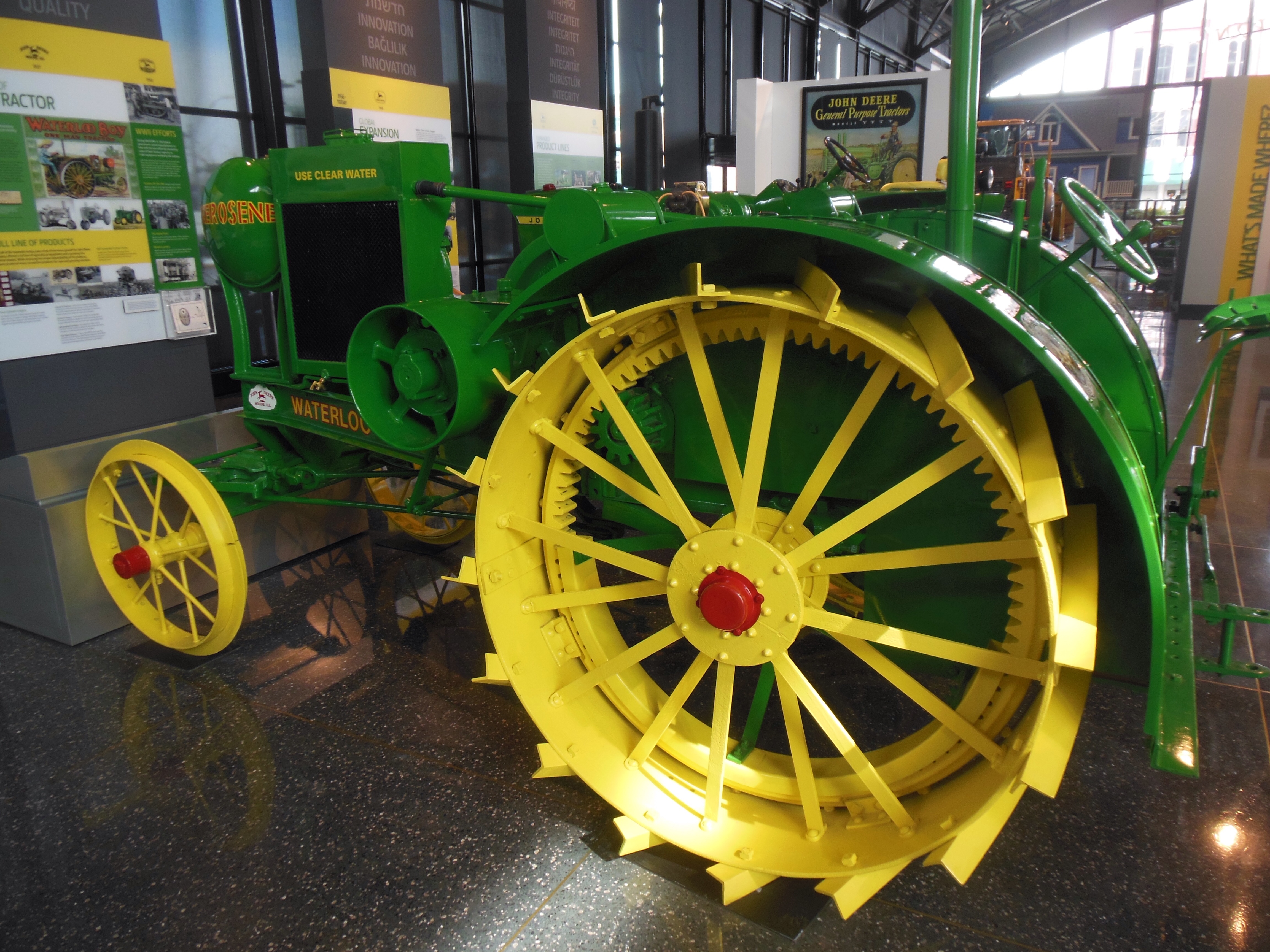
WWI era Deere tractor

WWI era Deere tractor

From the factory tour we visited the Deere World Headquarters where a few more implements were on display. Then we headed to downtown Moline and visited the John Deere Pavilion. This is the centerpiece of a downtown revitalization project on land that previously was used as a manufacturing facility.

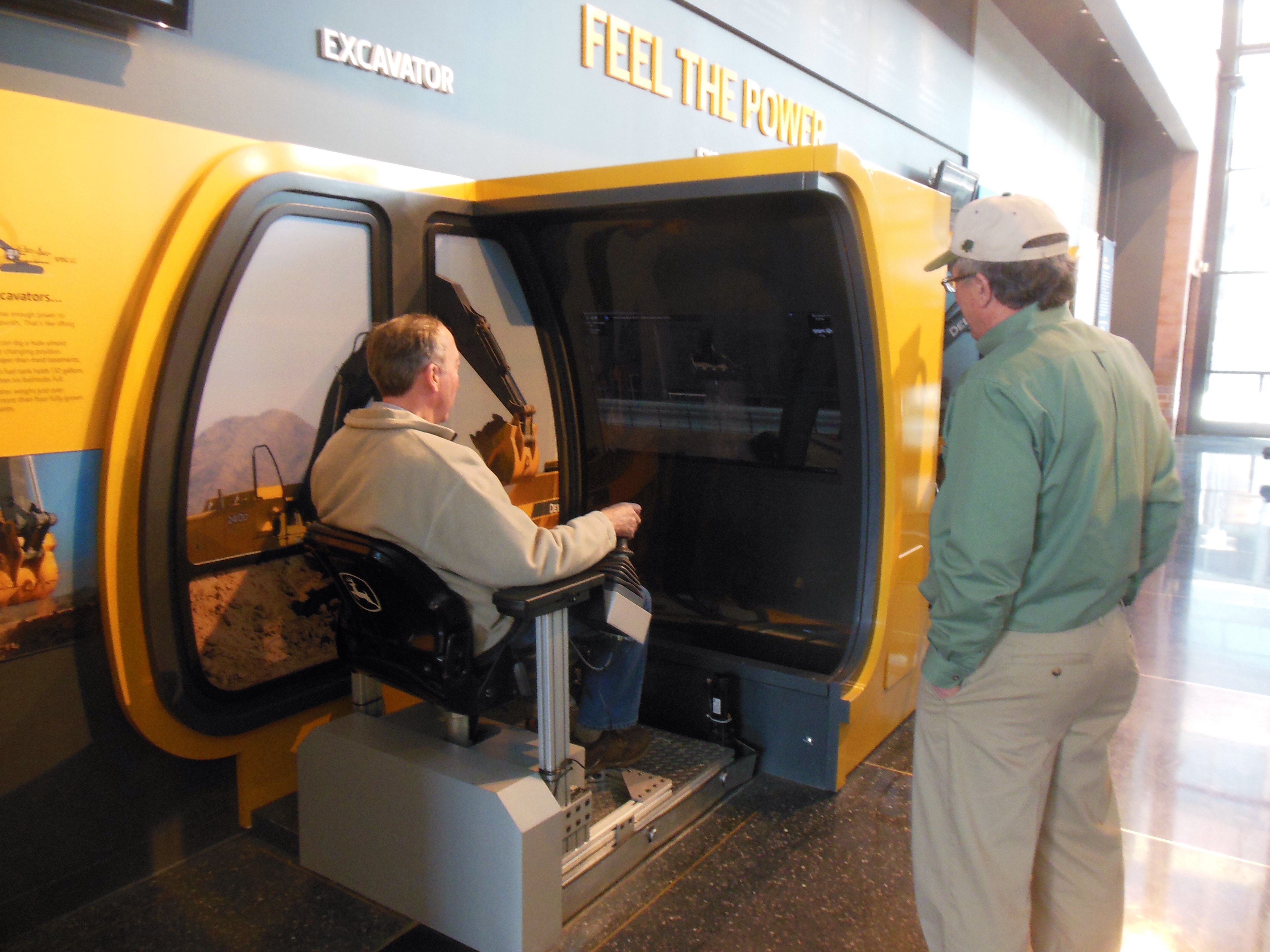
Don't hire Ed to operate your equipment

Don’t hire Ed to operate your equipment

The exhibits here discussed the history of the company with more displays. One interactive area allows you to operate several Deere construction machines. I was totally incompetent. It renewed my appreciation for the Public Works employees I used to work with and supervise decades ago.

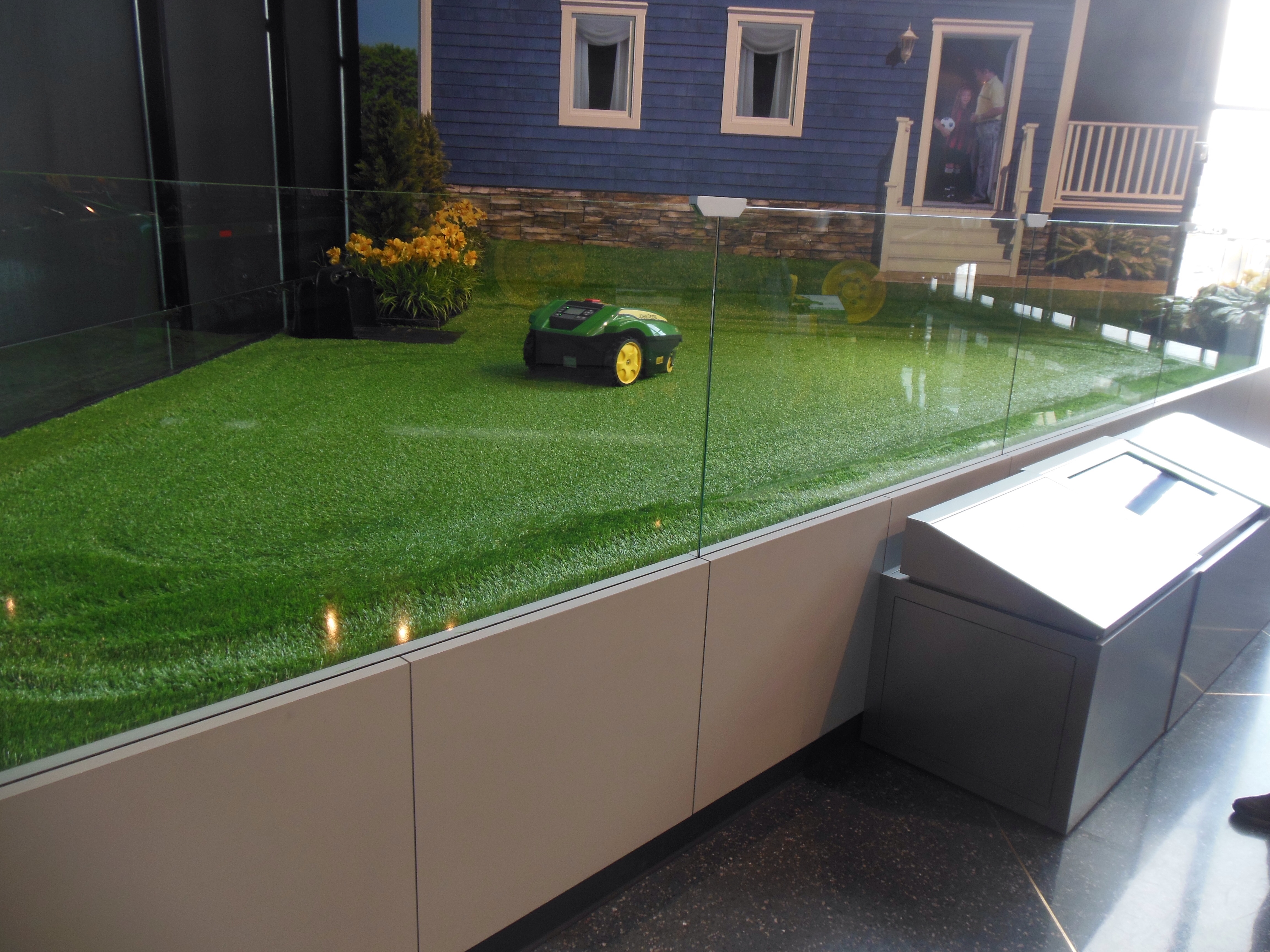
automatic lawn mower

automatic lawn mower

The displays included a robotic grass mower which mows your yard automatically, a automatic tractor for agricultural work,and a 6 legged robotic tree cutter. None of these are on the market in the US but it demonstrates their commitment to research and improvement.

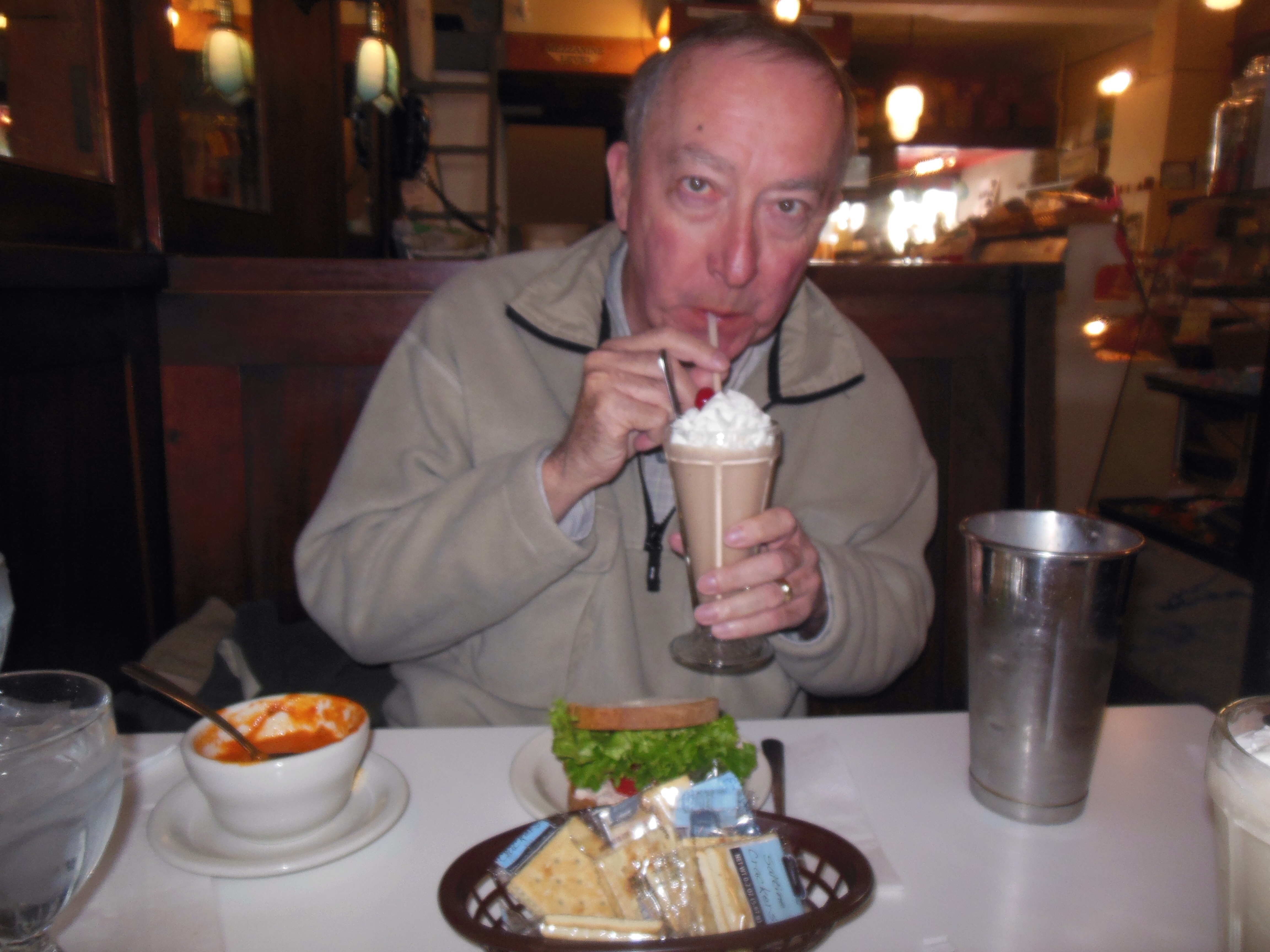
Lunch at Logamarcino's

Lunch at Logamarcino’s

We walked a few blocks to an ice cream/candy/sandwich shop in downtown Moline that has been in business for over 100 years. Besides testing their malts and shakes (very good), we had excellent soup (red pepper Gouda bisque) and sandwiches. We have been enjoying great soups lately; with the turkey/bacon/cheese bisque at the Grand Ely Lodge and the crab bisque yesterday with Shannon and Adam.

After lunch it was on to Nauvoo, IL. This town of just over 1100 souls (per the fantastic counting work of the U.S. Census Bureau) was once the second largest city in Illinois. As you may know, the vast majority of the Mormons left Nauvoo beginning in 1846 for Utah after founder Joseph Smith and his brother were killed by a mob in a local jail.

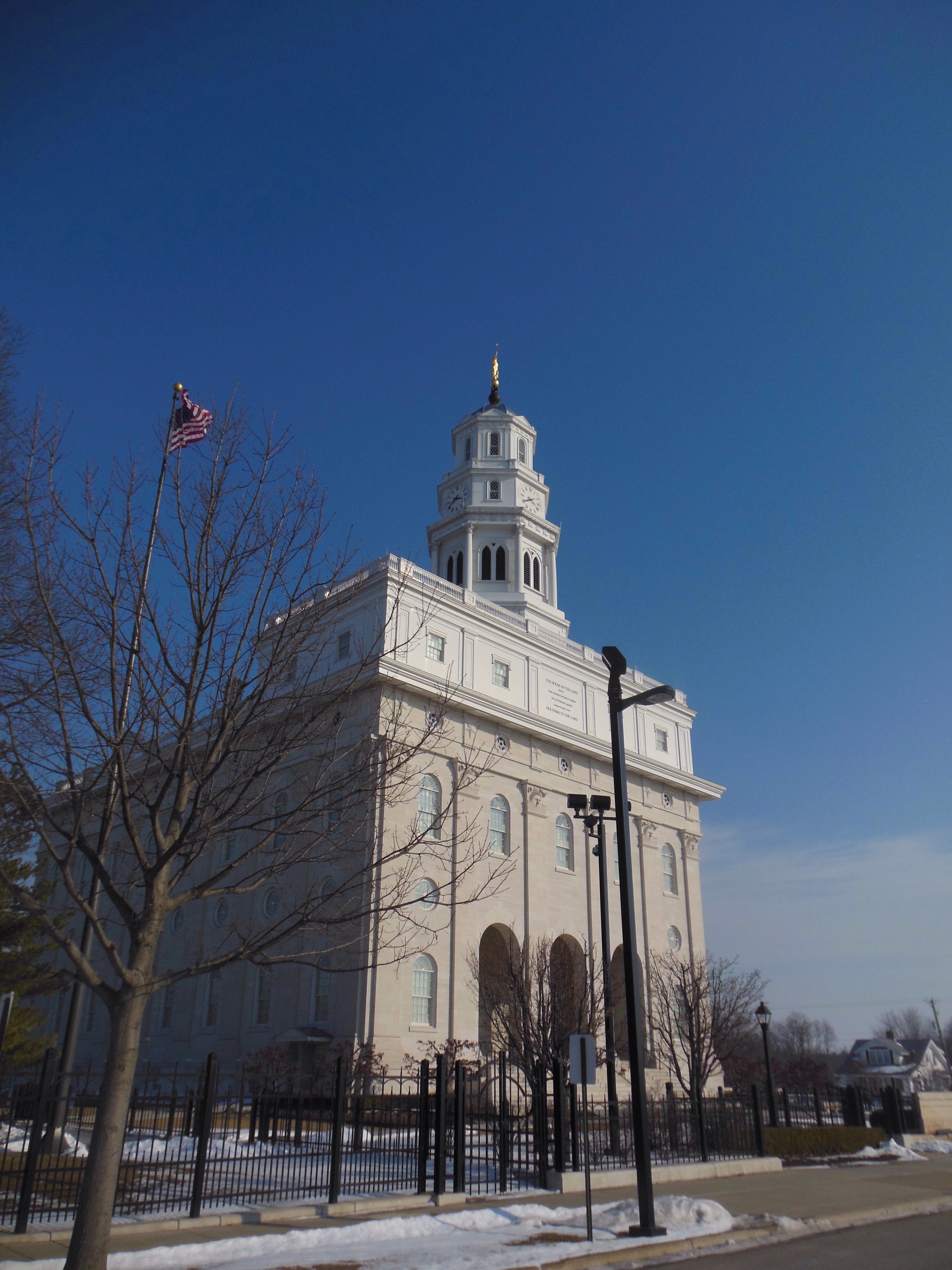
Nauvoo LDS temple

Nauvoo LDS temple

I am not going to try to cover the multitude of opinions and historical facts on this but certainly the locals disliked the Mormon united action that gave them control of the town. Their conservative beliefs were not popular in the frontier area, nor were their armed militia entirely passive either. In any event, Nauvoo became a much smaller town.

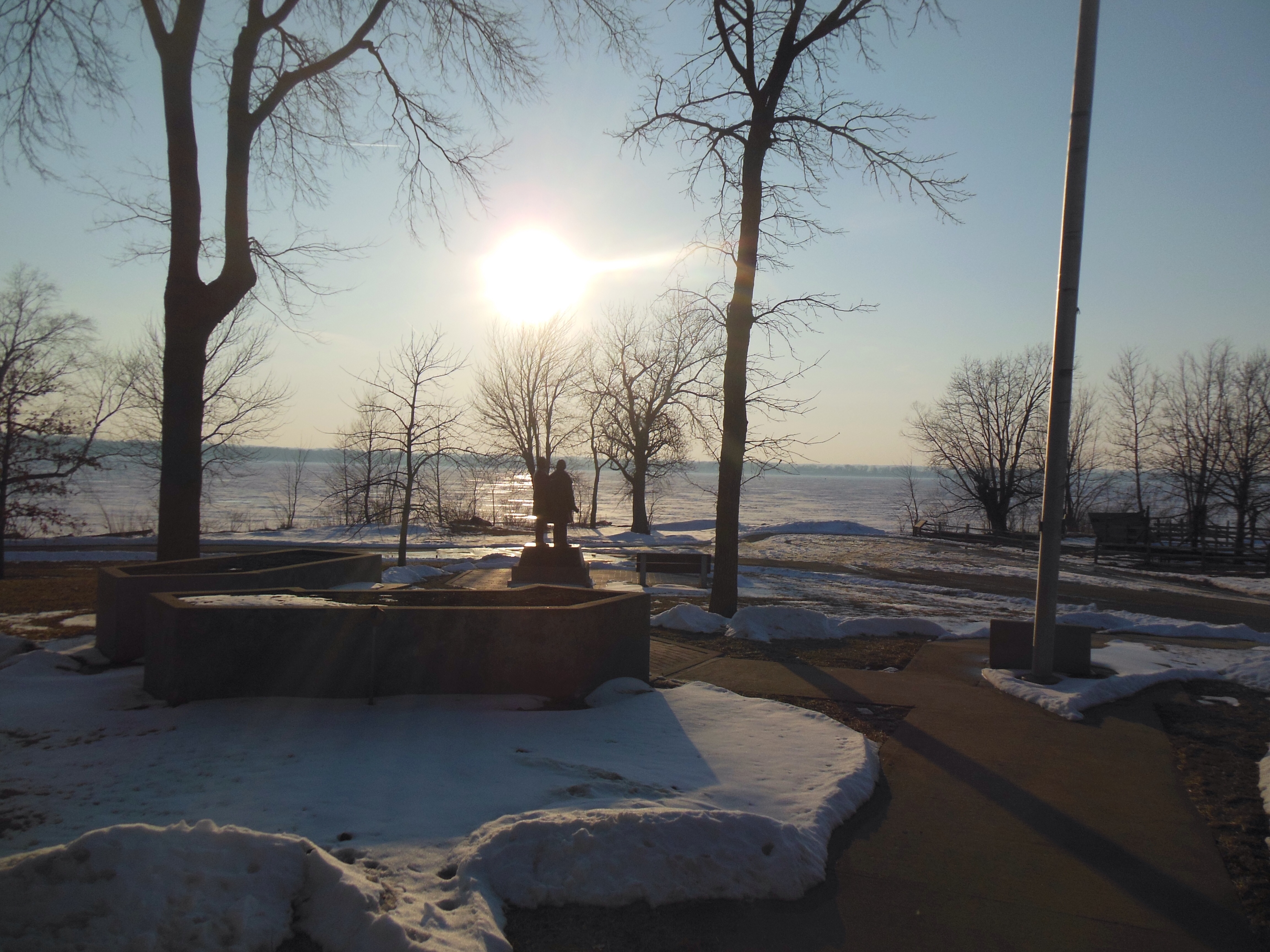
Statute of Joseph Smith and Brigham Young looking west across the Mississippi

Statute of Joseph Smith and Brigham Young looking west across the Mississippi

Today the old area is being re-constructed and the Church of the Latter Day Saints maintains a visitors center and gives tours of re-constructed buildings to demonstrate life as it was in the mid-1800s. We took in a video, read some historic accounts of the persecution and pilgrimage to Utah, etc.

As we were leaving, one of the docents invited us to the show this evening, titled “Rendezvous in Old Nauvoo”. So we came back for the hour long show at 7 pm. 35 cast members entertained the 25 of us in the audience. (Winter is not a big tourist time in Nauvoo. Summer must be better as there are numerous bus parking lots.) Chris and I were probably the only dis-interested audience members.

Some of the actors in the skit.

Some of the actors in the skit.

The show was a skit, maybe more of a morality play, depicting the persecution of the good people of Nauvoo and their decision to willingly take the 1300 mile “hike” to Utah. It was a different experience than coming back to the hotel and going for a swim.

We are starting to see patches of earth without snow on it. Friday-warmth???

Ed and Chris 11:20 pm

Categories: road trip, travel | Tags: , , , | Leave a comment

Blog at WordPress.com.