
Spencer TN. March 27

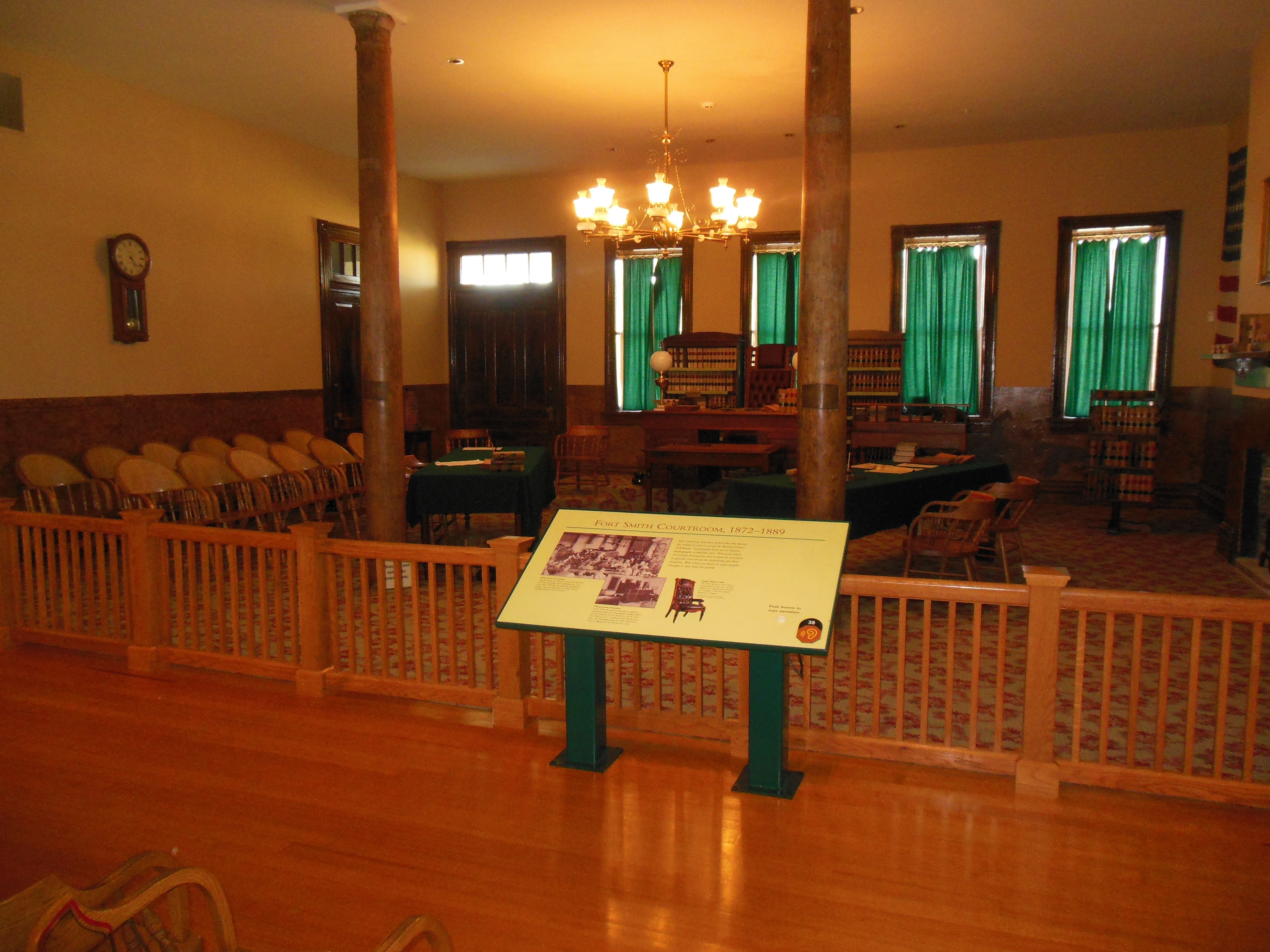
Rhea County Tennessee courtroom, site of the Scopes Monkey Trial of 1925
We woke up a little chilly this morning. During the night our room’s HVAC decided to not turn on the heat and to keep blowing cool air out constantly. At least the shower water was warm. At the front desk we explained our issue and were told maintenance would address it. Breakfast was a nice buffet and our server was chatty. She informed us, we had not known this previously, that this Sunday was the last day the restaurant and our lodging units would be open. The facility, excluding the campgrounds, cabins, golf course, etc. was to be destroyed and replaced with a new complex with less rooms and twice the nightly rate. Over 60 staff are being let go; in this depressed area, the impact will be severe. The new complex will take at least 18 months to build, probably longer. When completed, the current staff will be invited to interview for jobs with no guarantee of re-hiring.
Evidently, the TN Governor has tried unsuccessfully to privatize the park lodging system with no success. Twice bids to replace this lodge have been sent out and no private bidders have come forward to knock it down and build a new place at private expense. So evidently the state will re-build it and hope that they can encourage a private company to run it once a new facility is in place. Don’t know the economics or politics of the decision-making but on the surface it seems unwise for the state to go forward if no private enterprise thinks the idea will produce a profit. We left breakfast wondering if anyone would be bothering to fix our HVAC.
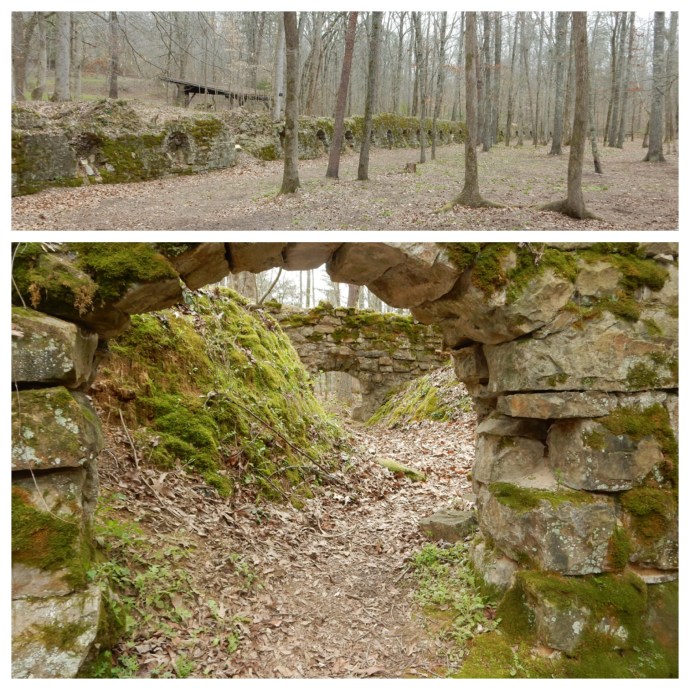
Dunlap Tennessee Coke Ovens
Since the day was predicted to warm up, we postponed hiking to the falls and headed out to Dunlap, Tennessee, an hour away. Dunlap is the site of a mine opened in 1899. Coal was mined out of Fredonia Mountain and at the base of the mountain, the coal was turned into coke for use in the iron and steel foundries of Chattanooga. The mine filed for bankruptcy in 1927 and the mines and coke ovens closed. They stood vacant for more than fifty years until local residents were able to organize and gain funds to restore the site.
Today, a restored commissary and museum (closed today) sit among the coke ovens, coal washer, and idled and rusted equipment in a 77 acre park. We hiked among the relics and the 286 stone ovens, some more deteriorated than others.

Part of the Trail of Tears
Towards the back of the park, there was a trail marker for the Trail of Tears. As we have reported previously, the Trail of Tears was a forced journey in 1838 moving Native Americans (Shawnee, Cherokee, Creek, Choctaw, etc.) from the Southeast U.S. to what would become Oklahoma. This location was on one of the trails as recorded by a missionary traveling with this group of approximately 1000 Cherokee. It is thought the spring in the park was the reason for stopping here.
After Dunlap, we drove through mountains (which would probably be more gorgeous with green leaves on the trees) to Dayton TN. Dayton was the site of the famous Scopes trial. Once again, our luck was not the best, the museum here was being refurbished and closed today. But we had wanted to see the original courtroom and knew it was open. The original judge’s bench, jury chairs, railing, spectator seats, etc. are still present. Part of the trial was held outdoors due to the temperature at the time of the trial.
For those of you unfamiliar with the Scopes Trial, here is a brief summary. Tennessee had passed a law forbidding the teaching of evolution in any school that received state funding. Locals in Dayton, including the head of the Cumberland Coal and Iron Company (part of which was the Dunlap Coke Ovens) convinced locals to contest the law in order to draw attention to Dayton. While local attorneys headed up the defense and prosecution, eventually William Jennings Bryan (three-time Presidential nominee) and Clarence Darrow (nationally known attorney) affiliated with the prosecution and defense respectively. The case did draw national attention. It is still commonly called the Scopes Monkey Trial. Scopes, the teacher, was convicted of teaching evolution.
On appeal to the Tennessee Supreme Court, the anti-teaching of evolution law was upheld but the conviction of Scopes tossed out on a technicality and the case was never re-tried. Tennessee repealed the law the following year.

Clockwise from upper left, Piney Creek Falls, Fall Creek Falls, and Cane Creek Falls at Fall Creek Falls State Park, Tennessee
The road back to Falls Creek Falls State Park took us over new mountain passes. At the park, we hiked several trails to view Fall Creek Falls at 256 feet, Piney Creek Falls at 85 feet, and Cane Creek Falls also at 85 feet. We kept running into a gentleman from New Orleans at the various sites who comes here every year, actually he visits Great Smoky Mountains and this park before returning home. He checked into the lodge this evening before returning tomorrow to New Orleans.
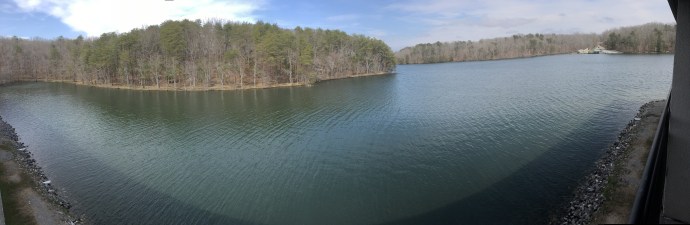
The view from our room at Fall Creek Falls State Park, Tennessee at a rare moment of some sunlight
After the hikes, we returned to our room, wondering: Fixed or Not Fixed? Turns out it was not fixed BUT luck was on our side. We checked in with the front desk, who was not even familiar with our request. She called the maintenance supervisor who showed up at our room. He also had never received any notice of an issue. Luckily the gentleman has worked here for 13 years and knew immediately what the problem was and how to fix it. We chatted some more about the closing of the lodge and restaurant. Personally his job will continue but many of his long-time co-workers will be out of work. Morale is lousy he said and the Governor would not win any votes in this county. One positive: the state will pay to the county the amount of hotel room tax to be lost. The tax revenues are dedicated to education and the loss of revenue would hurt the schools dramatically.
Ed and Chris. March 27


 Chris Klejbuk and Ed Heimel travel adventure
Recent Comments