
Wednesday, Oct. 23 Cedar Rapids, IA
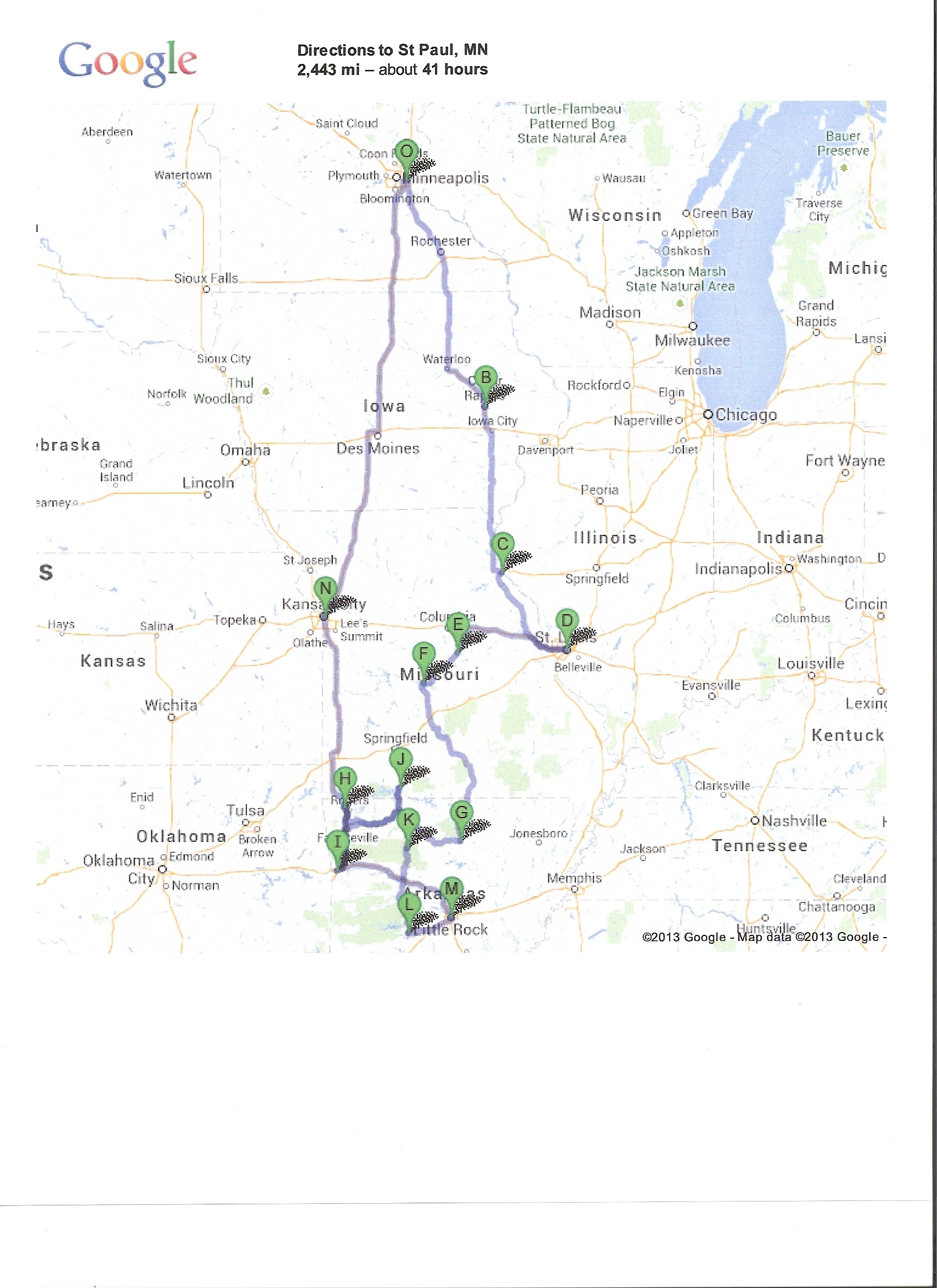
The Ozarks Trip map
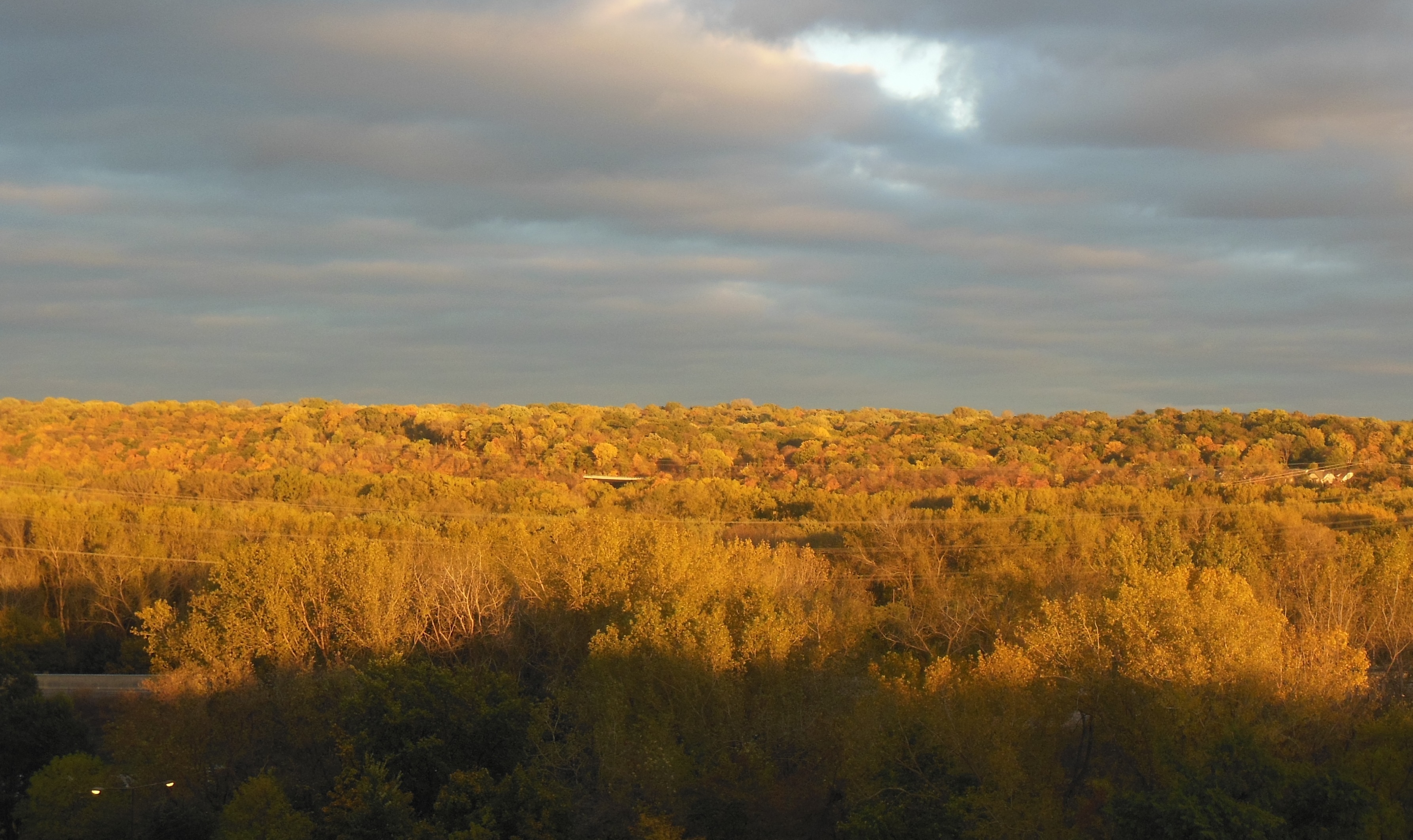
St. Paul fall colors a day or two before we left on Trip Eight.
We left St. Paul under cloudy skies and the temps in the 30s. We traveled through the Midwest farm breadbasket as we drove to Cedar Rapids Iowa. There were periods of sleet, hail, and the weather finished up with rain in Cedar Rapids. But, we also lucked out weather-wise. While this was a travel day, we were able to squeeze in some exploration and local education. For those experiences, the weather was reasonable enough.
As we drove through southeastern Minnesota, we experienced a small Amish farming area.
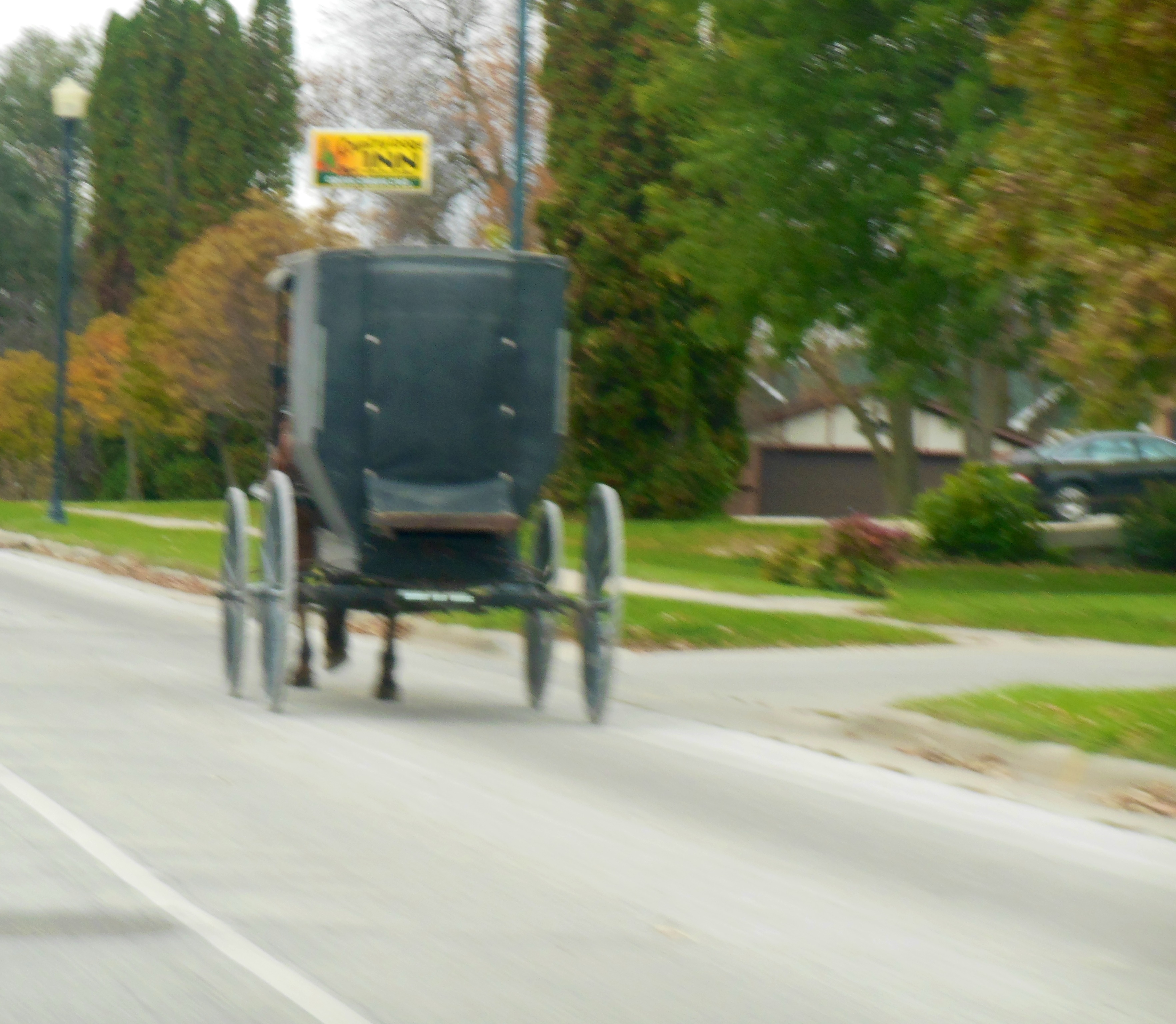
Horse and buggy in SE MN
This trip was not designed to see fall colors. However, we expect to experience fall leaf colors at least some of the time. The Twin Cities still had some color in the trees. As we drove south, the trees became grayer and had fewer leaves on the trees. Evidently, the Twin Cities are a slight anomaly. As we go yet further south, we expect to pick up on fall colors again.
There is no direct, easy interstate route to St. Louis from St. Paul. As we journeyed on back roads, we experienced numerous farm tractors and equipment on the shoulders of the two lane roads. Most of the modern farm buildings on either side of the border had PA Dutch like decorations. We passed through numerous small towns where the speed drops to 25 to 30 mph. It made for a slower but enjoyable drive.
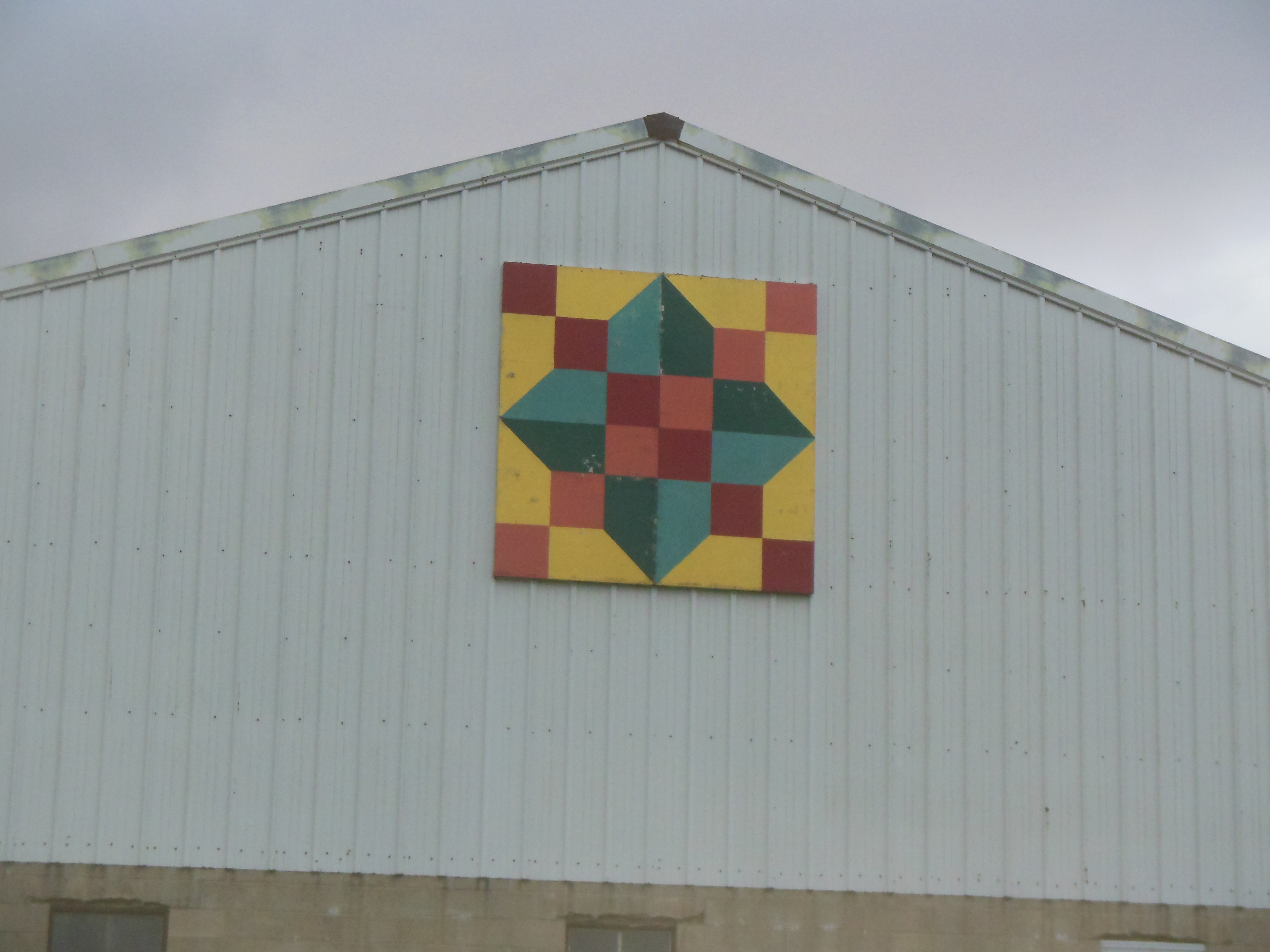
Typical decoration on farm buildings
We stopped in Spillville Iowa. This is the home of the Bily clocks and Antonin Dvorak Museum. Spillville is a Czechoslovakian immigrant town. Population 367 people. The Czech composer Antonin Dvorak spent the summer of 1893 in Spillville. His assistant had relatives here and Dvorak enjoyed the Czech flavor of the area and the rural nature as compared to New York City. He made corrections to his new world symphony and created two other works while here. He got up for walks at 4 AM and played the organ at the 7 AM church mass.
Frank and Joseph Bily made hand crafted clocks. This was their hobby during the winter while they farmed during the rest of the year. The clocks are dramatic with intricate carvings. They also made the timing mechanisms. The brothers had a fifth grade education. None of the clocks were ever sold or given away. Henry Ford in 1928 offered $1 million for one of their clocks. This clock, called the American pioneer history clock, was not sold to Henry Ford. They turned him down.
The two brothers had two siblings. None of the four ever married or moved from the area. Frank and Joseph never traveled farther than 35 miles from Spillville. When their mother died, they moved into town from the farm and remained there till they died, bachelors, in 1964 and 1965 in their 80s. The brothers made arrangements that the entire collection of clocks would remain in Spillville in the home Dvorak had summered in.
You’re not allowed to take pictures inside the Museum of the clocks. The pictures we include are photographs from the Bily clock book sold by the museum. They do not do justice to the intricate carvings but were the best we could provide you as an illustration.
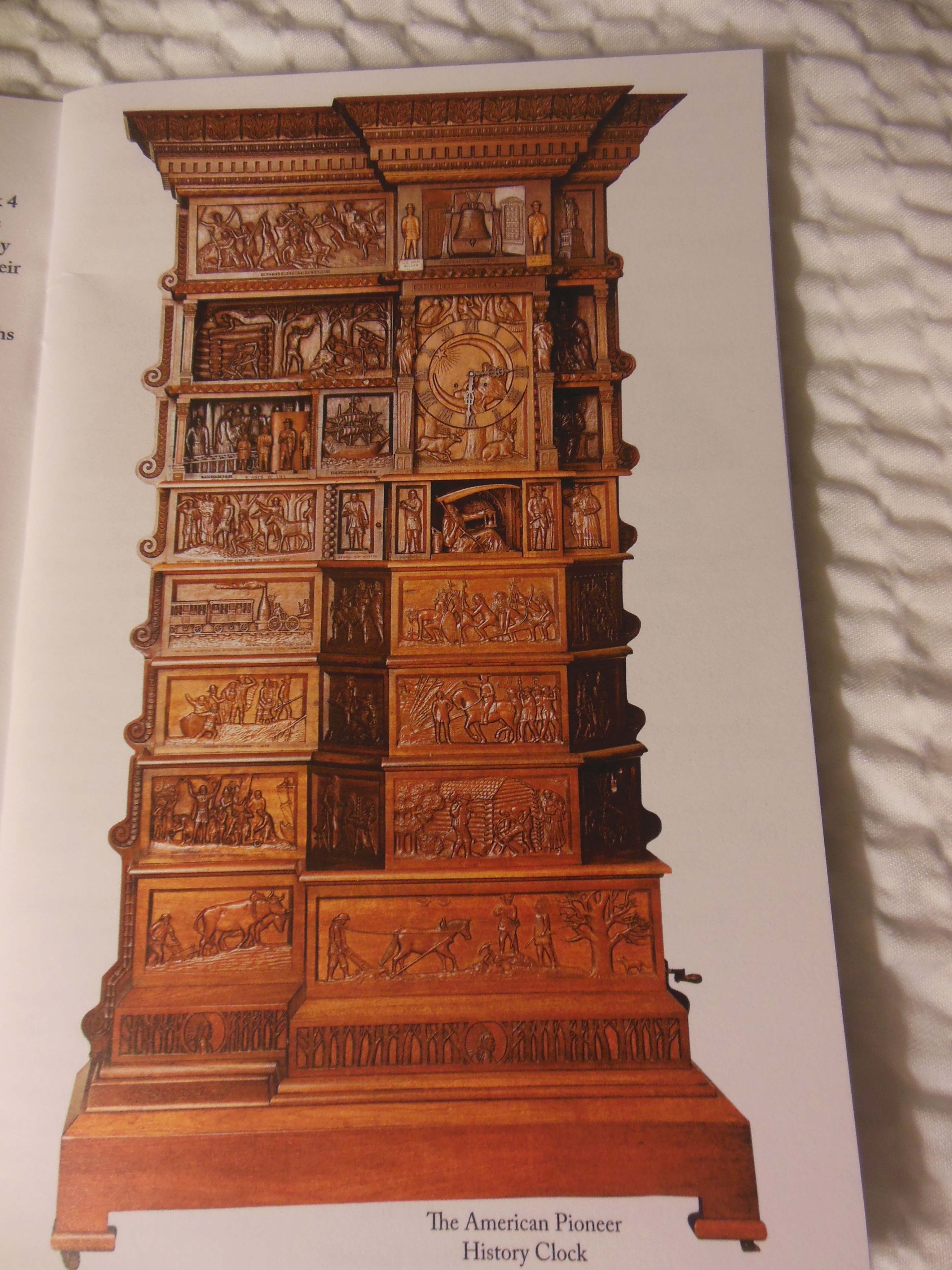
The $1,000,000 clock

Bily clocks
The brothers carved a few other items. One was a reproduction of the smallest church in the US. This 10 by 12 foot church is south of Spillville and we stopped there later. We were not able to get inside and see the four pews in the church. The maximum seating capacity is eight people.

Smallest church in America.
While in Spillville, we also stopped at St. Wenceslaus Catholic Church. It was built in 1860. The Czech community built the church while the Germans in the area built another one a mile south of town. St. Wenceslaus is reputed to be the oldest surviving Czech Catholic Church in America.

St. Wenceslaus Church
Continuing our Czech theme, we had dinner at the Blue Toad in Cedar Rapids. The Blue Toad serves Czech food and is located in the Czech Village area of Cedar Rapids.
Tomorrow we drive to St. Louis by way of Hannibal Missouri and visit the Mark Twain Museum.
Ed and Chris 10:30 pm Oct 23.
 Chris Klejbuk and Ed Heimel travel adventure
Recent Comments