
Sierra Vista, Monday May 21

The San Pedro River
What a day! We found both water and greenery in the deserts of southern Arizona. Our waitress last night bemoaned the absence of greenery; one of the items she missed from Minnesota. Today we walked along water, although not plentiful, and among green trees.
Our first wet/green area was at the San Pedro House, a trailhead in the San Pedro Riparian National Conservation Area. This area runs 40 miles along the San Pedro River. Formed in 1988, the conservation area is designed to overcome the negative impacts of overgrazing and mining and to allow the desert riparian ecosystem to regenerate. San Pedro House is run by volunteers and runs tours, greets visitors and sells related items. It provides a convenient trailhead for hikers.
The trail we took starts across grassland which probably serves as a flood plain during the wet season. This is not wet season, in fact the volunteer mentioned how Arizona is in a drought, the winter snows were low, and summer rains are forecast to be lower than normal. The rest of the year may be tough water-wise.
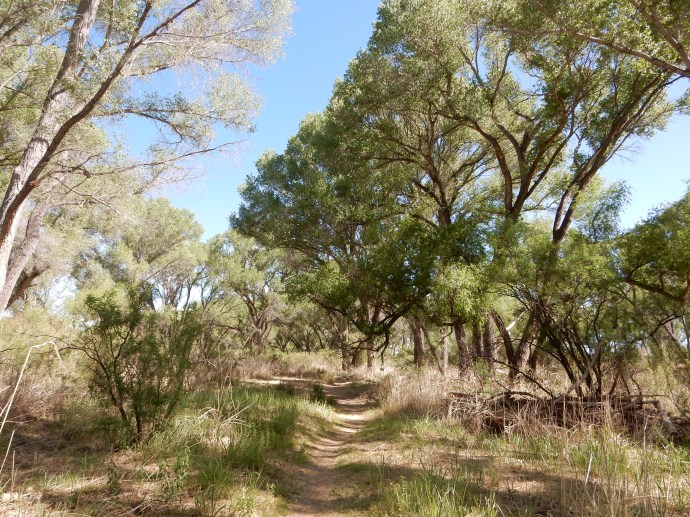
The trail at San Pedro Riparian National Conservation Area
As we approached the river, we could observe a small stream in the middle of the channel. It was flowing slowly but between the river and the water table it supports, substantial trees and shrubbery were prevalent. The width of the green area could not have been more than a thousand feet but the cool, fragrant air was a noticeable improvement. We heard more birds than we saw but evidently this area is a major wintering area for some birds and part of the migratory flight path for others. We made the two mile walk at a pleasant pace, enjoying the atmosphere and change of scenery.
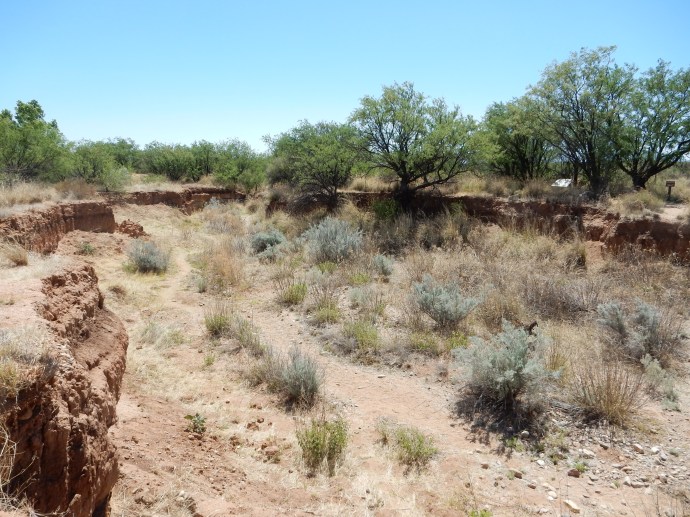
Murray Springs Clovis Site area
Our second stop was also within the San Pedro Riparian area. The Murray Springs Clovis site was discovered in 1966 and is named for two features: the stone spear points found here in 1966 that are dated back to the people who lived in the late Ice Age (the Clovis people) and the nearest natural feature to the area where the spear points were found (Murray Springs). This was a short hike and primarily in grasslands. The wash associated with Murray Springs was dry and the shrubbery here was fairly skimpy. They have installed signage to explain the people, the area, and the artifacts found here. The archaeological dig back in the late 1960s also found mammoth teeth.
After lunch we visited our third site. Ramsey Canyon Preserve is owned by the Nature Conservancy. It is 280 acres located in the Huachuca Mountains. Ramsey Creek flows through it on its way to join the San Pedro River. The Huachuca Mountains are to the west of Sierra Vista and will be our next mountain range to cross as we continue our trek from east to west across southern Arizona.
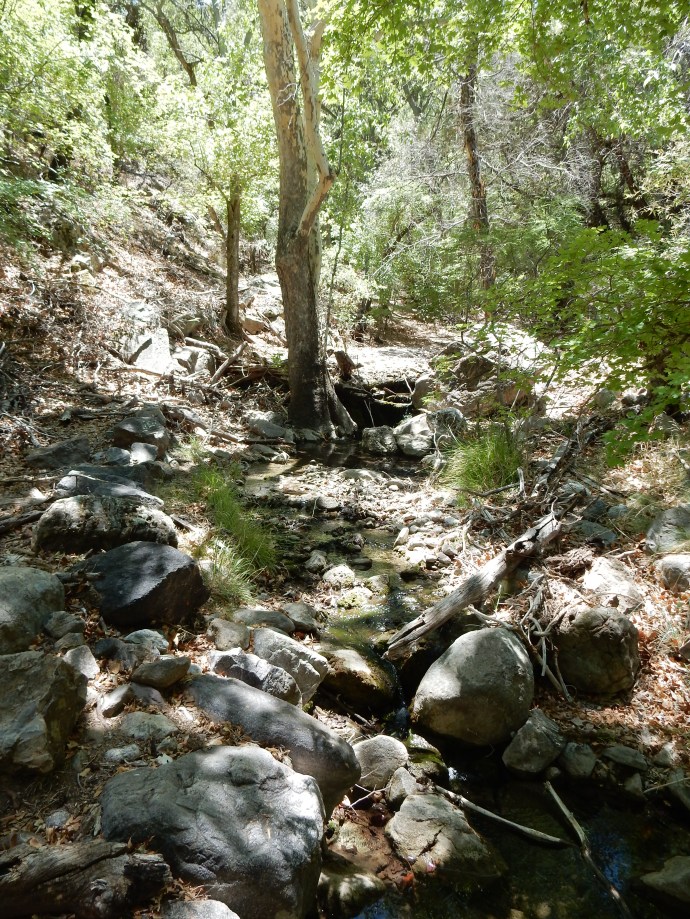
Ramsey Creek in Ramsey Canyon Preserve
The preserve has a visitor center and gift shop and charges a small fee to visit. We made this short one mile hike a slow and relaxing walk. While uphill, the path is fairly smooth with numerous benches. The creek is always visible but the flow was shallow and did not normally make any sound to accompany our walk. Even without the sound of water, the walk was cool, shady, and the sounds of birds were ever present.
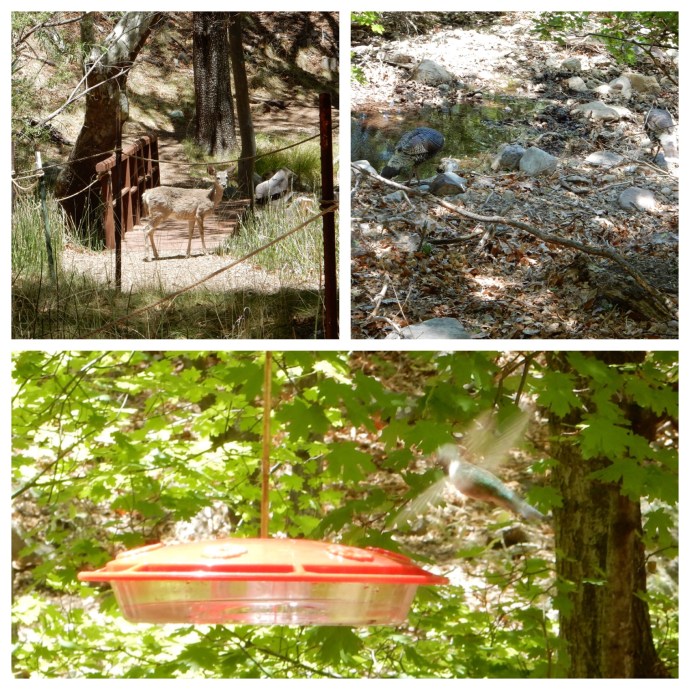
Ramsey Canyon Preserve
The canyon, as its name suggests, offers frequent views of steep mountain walls. The contrast between the green shady walk and the steep mountains with blue sky above made for numerous scenic images. We sat frequently, enjoying the atmosphere. At one location a group of ten deer were quietly grazing. At another, three wild turkeys were present.

Huachuca Mountains from Ramsey Canyon Preserve
This location is big for birders and hummingbirds are frequent here. The Nature Conservancy has added feeders to particularly attract hummingbirds for visitors to easily see and photograph at several spots close to the visitor center. We could have extended the hike to climb to Ramsey Overlook but today was just a day to relax and enjoy.
I have so far failed to mention one other stop. Actually our first stop of the day was the Environmental Opeations Center. This was promoted as a place where the wastewater treatment facility is environmentally discharging its waste and providing for a green oasis for birds to gather. Well, we remembered somethig like this in Florida where the treated water flowed into a marshland. The bird viewing there was spectacular. This one was not. Here instead of treated wastewater, the area has treated sludge land applied, allowed to dry and build up, then covered and grasses planted. There were some birds and there was some greenery and it was environmentally sound. However Chris did not enjoy the smell of the sludge and it really was nothing dramatic to view.
We wrapped up the day early, dinner being at a local restaurant where service groups meet. Food was good, staff pleasant but understaffed.
Ed and Chris. May 22
 Chris Klejbuk and Ed Heimel travel adventure
Recent Comments