

How can one visit southern New Mexico and not stop in Roswell, site of famous UFO and alien encounters? So we stopped there today, Tuesday, but first, we had to get there. We knew Monday would be a long day for us so we left Salina Kansas early on our way to Amarillo Texas. Kansas is relatively flat but we did run across one more “ hilly area” called the smoky hills. For us, we were mainly viewing slight variation of elevations of prairie grass and range land for cattle. I am not knocking it, it has a beauty of its own and I guess when you don’t have much elevation change, any change becomes a hill.
When traveling in an area like this, you appreciate attractive and well laid out farm complexes. Diverse landscapes across our country are a feature that you don’t see or appreciate unless you drive, particularly back roads. Little oddities stick out, sometimes we stop for them, sometimes we don’t. Three examples. First, we saw a concrete early style grain elevator that was unique to our previous experience.

Second, a grain kept appearing in farm fields that looked like miniature corn. Several pictures helped Chris determine that it was sorghum, a crop little grown in Minnesota. Third, we noticed a greater use of the old fashioned windmills to pump drinking water for grazing cattle. Frequently, a windmill provided an artistic picture of its own against the skyline. Sighting the windmills was quite a coincidence because today at the Roswell Art Center, we saw several photographs and drawings by Peter Hurd of windmills with a famous saying of his: ”I am just nuts for windmills.”
The bucolic countryside of central and southern Kansas of morning and mid-day Monday contrasted sharply with the ugly and smelly industrial complexes leading into and out of Amarillo Texas. Petrochemical, agricultural, and meat packing feedlots and processing plants gave off dust, odors, and an unsightly appearance that although the products may be necessary, there appears to be no concern for the environment or the neighbors. No desire to return to this area unless necessary for a quicker drive.
Our first major stop Monday was at Fort Larned National Historic Site. However, we added another national wildlife refuge before visiting the fort. Quivira National Wildlife Refuge seemed to offer an opportunity to see more waterfowl. There had even been sightings of whooping cranes here recently. Waterfowl were few and far between, whether flying or swimming around. No value received for the effort.

Fort Larned lasted for roughly 20 years from 1859 to 1878. Its mission was to protect mail service, keep peace on the plains, and protect overland trails that are the routes to move settlers from the east to New Mexico, Colorado, and points west. The famous Santa Fe Trail came right by the fort. The Trail actually began much earlier than Fort Larned, going back to 1821. Commerce and people on the trail moved both to and from Santa Fe. Supplying demands for products and movement of people, decades of heavy wagon traffic created ruts still visible in locations near to the fort.
The fort exhibits do a great job of explaining relevant portions of U.S. history. Many Americans conveniently forget that Texas, New Mexico, California, etc. were part of Mexico that we took from them. The Plains Indian Wars developed from stolen land, broken treaties and promises, and the eradication of a way of life and culture leading up to the Plains Indian Wars.

Leaving Ford Larned, we drove to Greensburg Kansas. This town was destroyed on May 4, 2007 when a rare and powerful EF5 tornado leveled the community, killing 12 people. There are still vacant blocks around the community although major efforts have been made to rebuild the town. New public facilities have been constructed, including a museum which features the history of the county, its people, and the tornado.
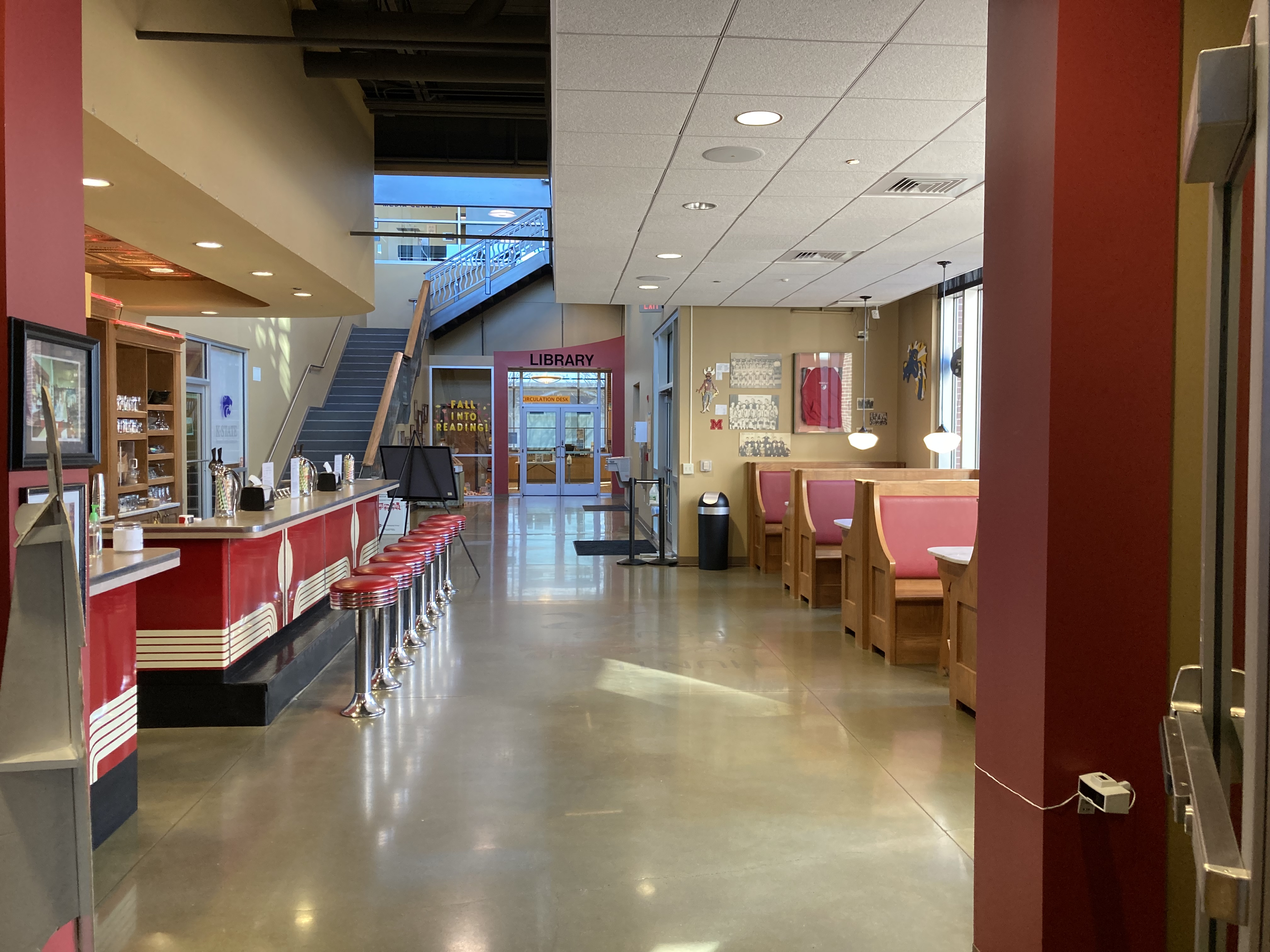
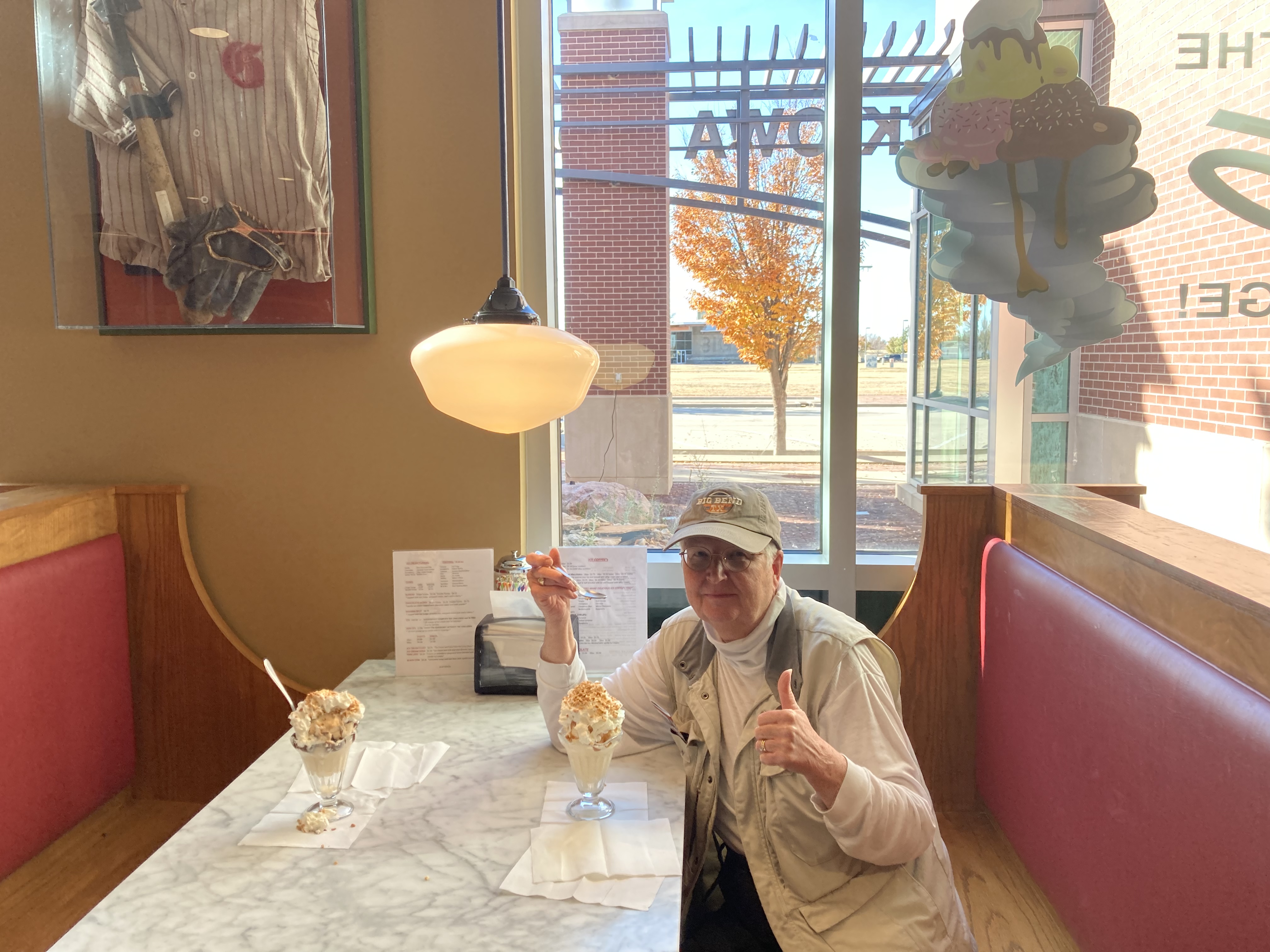
A part of the museum is a living history section, including an old-fashioned soda fountain. We just had to try out the ice cream which was very good. While we were there, a woman, even older than us, came in to get two milkshakes for herself and a friend. The woman had lived through the tornado although the tornado destroyed her family Chevrolet dealership. In her opinion, the town just has not come back to the way it was before.


In the town of Mullinville, just a few miles west of Greensboro, was an art museum devoted to the sculptures of M.T. Liggett. Liggett died in 2017 at the age of 83. He was known for creating politically charged metal totems and whirligigs. There is a line of his sculptural pieces stretching along two sides of the museum property. This museum is another effort funded by the Kohler Foundation. You may recall we saw two similar art endeavors in Wisconsin during our trip in early September. The docent at the Liggett Museum had known the artist and while liking much of his work, agreed that he could be abrasive and maybe even obnoxious. He enjoyed creating art that would stir discussion and controversy.
One Liggett story in particular stood out. Liggett was poor growing up. In third or fourth grade, his art teacher assigned the task of drawing a cow. Liggett only had a purple crayon so he drew a purple cow. The art teacher held up his work to the rest of the class and criticized it for its purple color. Liggett said he dropped art for years due to that. Eventually he returned to art and his property is proof of his prolific production.
Monday finished up with our drive to Amarillo, arriving around 8:30 pm with dinner being peanut butter crackers in the hotel room and off to bed. In contrast, Tuesday was set to be a shorter day. Roswell was our destination since there were two places we wanted to visit and hotel prices in Carlsbad, our Wednesday destination, were much higher.
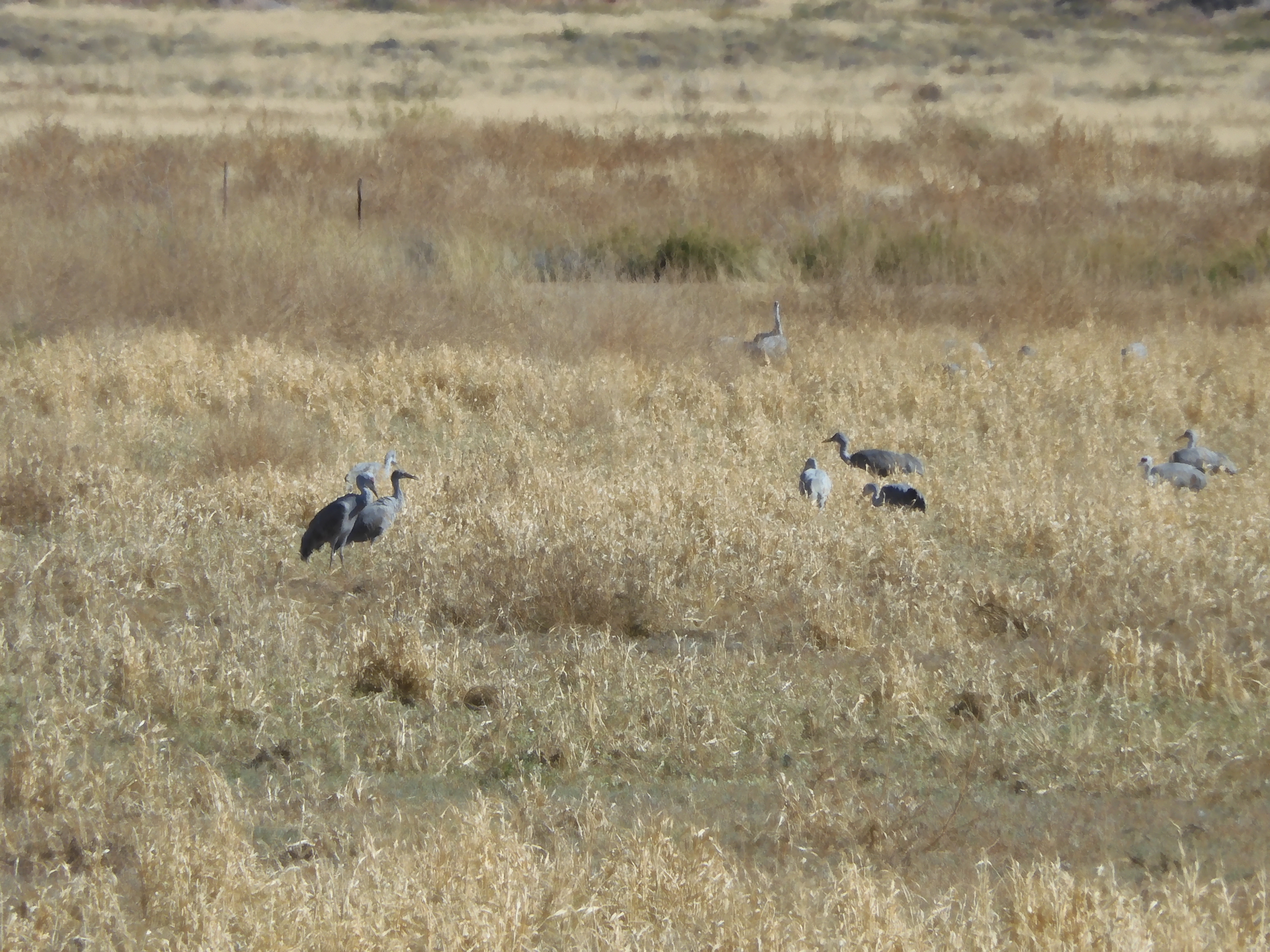


Just outside of Roswell was another national wildlife refuge, Bitter Lake. Sandhill cranes, Ross’s geese, and other waterfowl species were in abundance. We even spotted a hawk perched in a tree, then taking off intent on catching a meal.
Roswell is a town of 50,000 people and the fifth largest city in New Mexico. In popular lore, it is known for UFOs and aliens due to the 1947 reported sighting of a crashed UFO and the death of four aliens. The incident is well-known and heavily debated. The museum here presents the information strongly skewed to the side of it actually occurring with the narrative of a number of participants and witnesses being the strongest evidence. Government explanations appear convoluted and even ridiculous. We aren’t going to take a stand but enjoyed being able to say that we have been here.
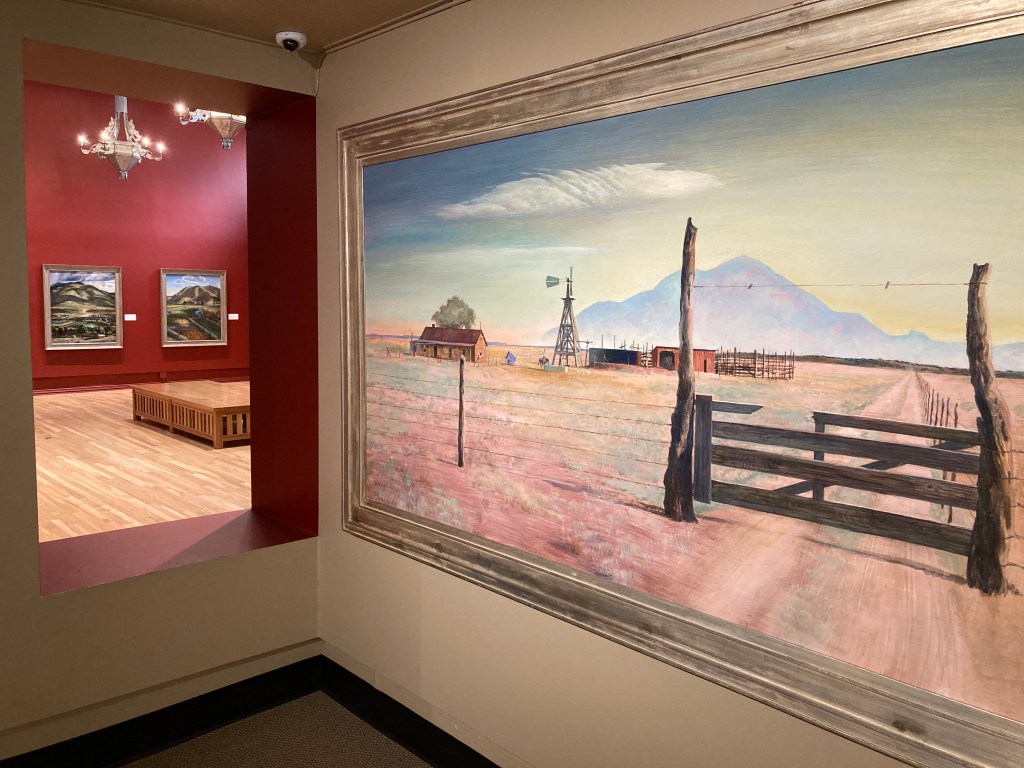
The Roswell Museum and Art Center was our second stop. Portions of the museum are devoted to the Southwest and to New Mexico art and life. Other sections focus on New Mexico artists. A section is devoted to Peter Hurd and Henriette Wyeth. Hurd is a native of Roswell and Wyeth is one of the Brandywine Wyeths. In 1940, the family made this area their home and their future artistic endeavors focused on the area and its people.
Robert Goddard, the rocket scientist, worked on his theories and experimented with rockets in the Roswell area from 1930 to 1941. WWII put a halt to his work and he died in 1945. The exhibit here showcases his research and the efforts of his wife after his death to obtain patents for the work he had conducted.
Roswell has an artist in residence program and art works from numerous participants hang in other galleries. Rogers Aston, a local rancher, oil man, collector and artist (Bronzes), has filled several display cases of southwestern life artifacts. Topics include ranching, spirituality, family life, trade and commerce, etc. The museum surprised us with its beauty and extensive collections on display.
Tomorrow, Carlsbad Caverns.

Ed and Chris, Tuesday November 16, 2021 Roswell New Mexico
 Chris Klejbuk and Ed Heimel travel adventure
Recent Comments