Posts Tagged With: Rocky Mountain National Park

2016 Trip Eight, The Rockies, Oct. 5-6

Estes Park, CO Thursday, Oct. 6

Sprague Lake, Rocky Mountain National Park

Sprague Lake, Rocky Mountain National Park

A good time was had by all. Our five day sojourn in Estes Park and Rocky Mountain National Park ends as we check out tomorrow morning from Crags Lodge. We were fortunate; Trail Ridge Road has been closed both days so our journey early Tuesday was the best time to make sure we could complete the drive over the top of the mountains.
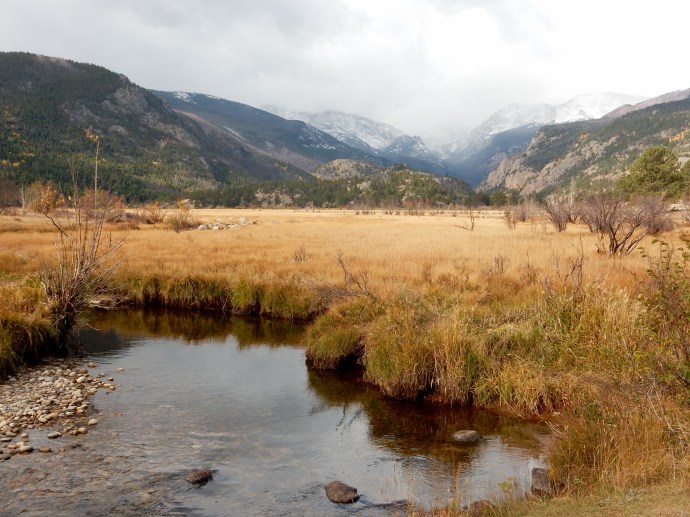
Towards the start of the Cub Lake Trail,  Rocky Mountain National Park

Towards the start of the Cub Lake Trail, Rocky Mountain National Park

Stellar jay and magpie along Cub Lake Trail
Stellar jay and magpie along Cub Lake Trail

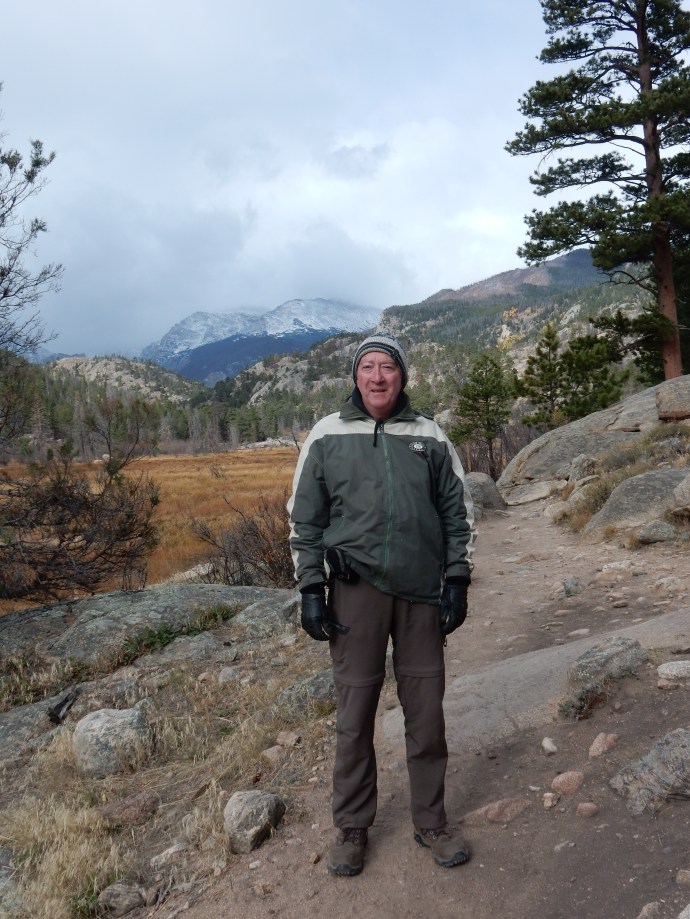
Ed on the Cub Lake Trail at Rocky Mountain National Park

Ed on the Cub Lake Trail at Rocky Mountain National Park

Snow occurred early both Wednesday (high up in the mountains) and today (down here at Estes Park also) and impacted on our choice of activities. Wednesday Chris and I went out for a morning hike along the Cub Lake trail. The trail starts out along meadows and creek as it heads back toward the mountains. We only had two hours to hike so we only completed a portion of the entire trail. It is a popular trail. We encountered a group preparing a video on the meadow and the impact created on the meadow when wolves and other predators were eliminated from the park. We observed more stellar jays and magpies on this trail than we had elsewhere in the park.
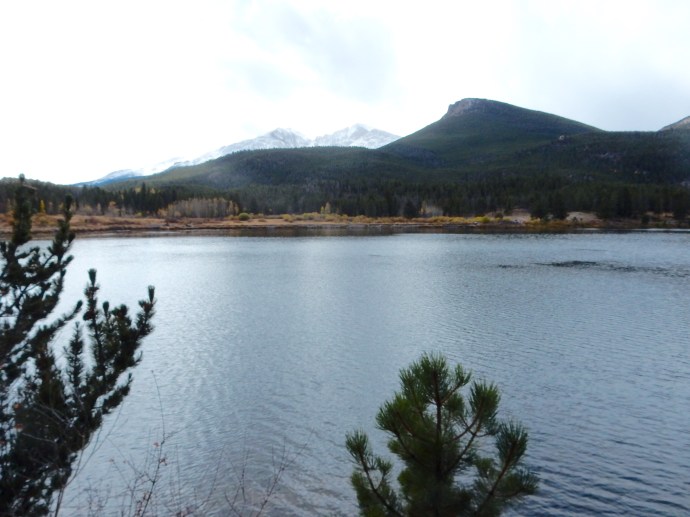
Lily Lake at Rocky Mountain National Park

Lily Lake at Rocky Mountain National Park

Jude, Tony, Bernie and Ed at Lily Lake, Rocky Mountain National Park.

Jude, Tony, Bernie and Ed at Lily Lake, Rocky Mountain National Park.

Bernie and Tony went out for breakfast and shopping while Jude took care of some personal needs. We regrouped for lunch and then the five of us hiked around Lily Lake. The wind was slower, the sun was out, and the temperature reasonable. Lily Lake is across from the trailhead for the Twin Sisters peaks that Chris and I had attempted years ago. We agreed there was no way we could attempt that this year.
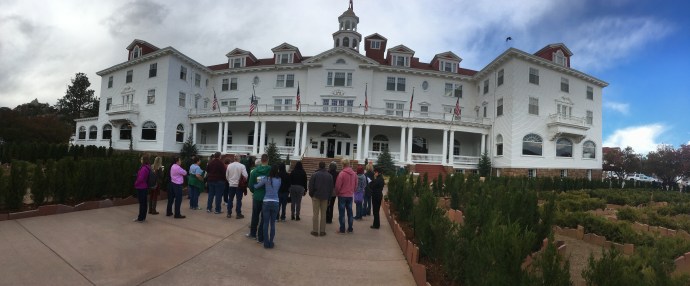
The Stanley Hotel, Estes Park CO

The Stanley Hotel, Estes Park CO

Late afternoon we toured the Stanley Hotel. The Stanley Hotel dates back to 1905. Twins F.E. Stanley and F.O. Stanley developed an early photographic process that they sold to Eastman Kodak and went on to also create and produce the Stanley Steamer Motor Carriage Company. The hotel grew out of the need for F.O. Stanley to gracefully die from tuberculosis. His doctor had little hope for him and recommended the Colorado air to ease his last days. Well, F.O.survived and many of the family friends and business acquaintances came from out East to visit them. From building a large enough place for them to stay for the summer developed the hotel.

The hotel has gone through rough times but its current owners have spent considerable sums to upgrade it and to allow it to attract clients year round. The tour discusses the history of the hotel and its tie-in to haunting. It is best known as the site for the inspiration for the book “The Shining” by Stephen King. King and his wife stayed here in 1974 during its run-down phase and that night was sufficient to provide the impetus for his novel. Portions of the hotel were also used for the movie “Dumb and Dumber”. The tour guide was happy to mention numerous paranormal experiences hotel guests have mentioned to staff. We finished up with an excellent dinner in the hotel dining room.
Starting our first time around Sprague Lake

Starting our first time around Sprague Lake

Second time around Sprague Lake, Rocky Mountain National Park

Second time around Sprague Lake, Rocky Mountain National Park

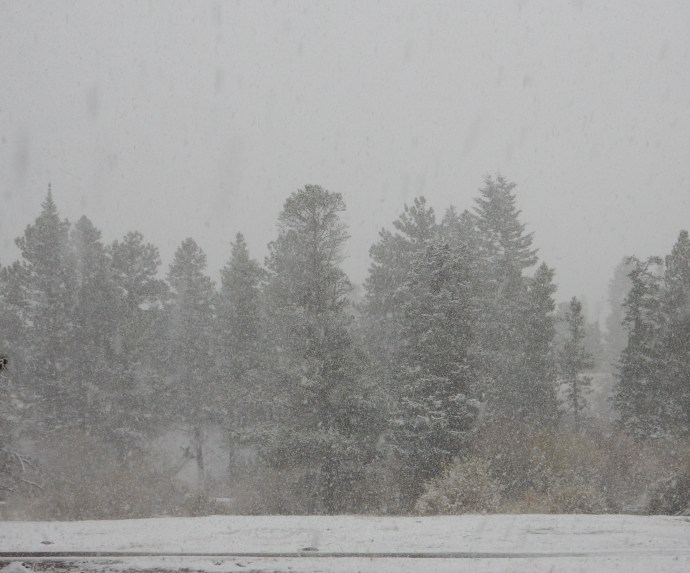
Today, Thursday, we woke up to the sound of rain and the sight of snow showers outside. We modified our hiking plans for the day. A morning hike to Sprague Lake seemed reasonable. It was flat, had a water view, and relatively short. We walked it twice, enjoying the falling snow the first time around and the slightly clearing skies the second time around.

After the hike, the adventure continued. This time we expanded our range and drove up to Cheyenne WY. Lunch was at the Albany Cafe. It has been in existence and owned by the same family for almost 75 years. Our waitress has been working there for 16 years. We could understand why it was still in business; the food (and desserts) were quite good.

A fancy saddle at the Nelson Museum of the West in Cheyenne WY

A fancy saddle at the Nelson Museum of the West in Cheyenne WY

Our afternoon exploration was at the Nelson Museum of the West. Founded by a local man, it focuses on numerous areas of western life. Nelson has been a major collector for years and most of the items here are from his collection. There are displays of western lawmen and outlaws, firearms, Native American art, saddles, military uniforms and stuffed animals from around the world. It was a pleasant diversion although not overwhelming.

Our evening was spent at the movies, viewing “Sully”. Crags Lodge was hosting a wedding this evening and festivities were likely to continue until 10 PM. Our rooms are directly underneath the party room so we thought it wise to make ourselves scarce during the main noise-making time.

Ed and Chris

Categories: road trip, travel | Tags: , , , , , , | Leave a comment

2016 Trip Eight, The Rockies, Oct. 4

Estes Park, CO. October 4, Tuesday

View along Trail Ridge Road

View along Trail Ridge Road

Trail Ridge Road (TRR) traverses Rocky Mountain National Park. It is US Highway 34. It is also stupendous. Today it was also windswept and snowy. TRR is only open from about June 1 to about Oct. 15, depending on weather conditions. We wanted to make sure we had an opportunity to drive it during our stay and before it was closed for the year. We knew the day would be windy; Estes Park weather conditions called for 20-25 mph winds and temperatures in the high 40s.

At the Alpine Visitor Center on Trail Ridge Road

At the Alpine Visitor Center on Trail Ridge Road

TRR goes from the city of Estes Park elevation of 7500 feet to 12,183 feet above sea level. Eleven miles of the road are above the tree line. The six of us (including Lacey) rode in the Subaru Legacy which was roomy enough for a journey of a few hours. The beginning of the journey was sunny but breezy. We soon encountered blowing snow and the road surface had a light covering of icy snow. It is always cooler and windier at the top. When we reached the Alpine Visitor Center at 11,796 feet, we do know the temperature was 19 degrees and could only guess that the wind was much stronger than what we experienced at Estes Park.

All six of us at the Alpine Visitor Center on Trail Ridge Road

All six of us at the Alpine Visitor Center on Trail Ridge Road

One view of the tundra environment

One view of the tundra environment

We were dressed for it but chose not to go on the walk at the visitor center which climbed higher still and which was completely exposed to the wind. Lacey enjoyed the snow and wind tremendously; the rest of us bundled up and alternated between enjoying the outside view and shopping at the visitor center. The views at the top were more limited due to the low cloud cover, snow, and blowing snow. The drive up and down offered more views as the clouds separated when we were at lower levels. There are not a lot of parking areas and there are no shoulders along the road. Later we found out that the road was closed at 3 PM today; evidently due to the weather and road conditions. I do not believe the road closing is for the rest of the year, guessing that it will be open again tomorrow.

Horseshoe Park, Rocky Mountain National Park

Horseshoe Park, Rocky Mountain National Park

On the way back down, we stopped at Hidden Valley to have a walk and a picnic lunch. The temperature had risen to 47 degrees and the wind was maybe half as strong as it had been at the top. After lunch we went to Alluvial Fan. This area also had elk herds visible but our reason for visiting was the fact that Alluvial Fan is the area where on July 15, 1982, a dam broke on Lawn Lake. Lawn Lake is a small lake up in the mountains that had been expanded in the early 1900s by a dam to act as a reservoir for the purpose of providing irrigation water to farmers in Loveland CO. Lack of repair and maintenance led to the failure. Three campers lost their lives and million of dollars of damage was done to businesses in Estes Park.

Ed and Chris walking on boulders at Alluvial Fan, Rocky Mountain National Park

Ed and Chris walking on boulders at Alluvial Fan, Rocky Mountain National Park

Alluvial Fan is the area below Lawn Lake where huge boulders settled over acres of land after being carried down the mountain by the flood waters. One can scramble over the boulders along the stream and walk along the wetlands below Alluvial Fan. There are aspen in the meadow area with a great view up into the mountains.

Looking downstream at Alluvial Fan

Looking downstream at Alluvial Fan

After Alluvial Fan we stopped in Estes Park for an afternoon snack of either a malt, pie, hot chocolate, or a smoothie. The owners of “Shakes Alive” are two brothers from the Champaign Illinois area who work dawn to dark for the six months from May 1 to Oct. 31 and then spend the next six months in the Caribbean recuperating. We did not get the story for the “You Need Pie” shop but the apple strawberry pie was excellent.

Relaxation time filled the last two hours of the afternoon before we headed back to Moraine Park Discovery Center for the 6 PM ranger talk on “Elk Echoes”. The ranger gave an excellent presentation (outside-we dressed warmly) about the habits of the elk. She provided interesting tidbits about the rutting season and the various bugle calls and behavior patterns used by bulls and cows. Just a few pointers:
Bigger is better-the bigger the bull elk’s rack of antlers, the more the cows are impressed.
The elk antlers are grown each year, dropping off in April and then growing until the October rutting season.
Elk antlers can grow at a rate of one inch per day.
The bull elk spend the spring and summer in the forest alone eating and resting to focus on growing their antlers.
The cows and calves spend their spring and summer in the meadows in groups that provide protection.

On the way back home, we saw even more elk along the road with cars pulled over in long lines to view them and take pictures. Back at Crags Lodge, the tasty chili Bernie and Tony made in the crock pot was waiting for us.

Ed and Chris

Categories: road trip, travel | Tags: , , , , , , | Leave a comment

2016 Trip Eight, The Rockies, Oct. 3

Estes Park, CO. Oct 3

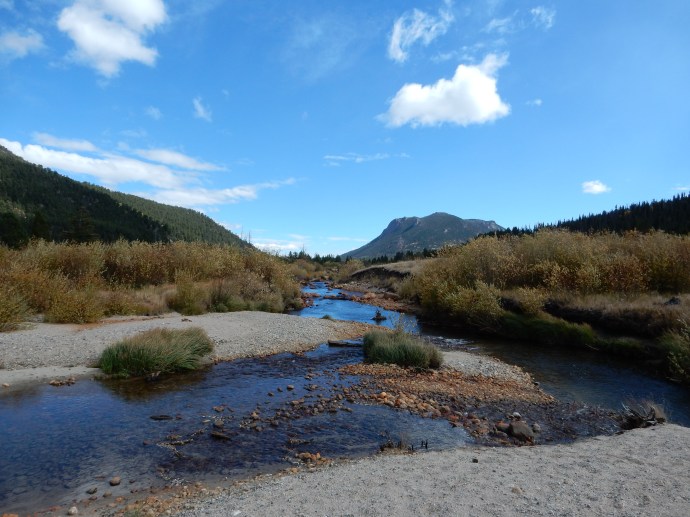
View of the Rocky Mountains from moraine park area along Big Thompson River

View of the Rocky Mountains from moraine park area along Big Thompson River

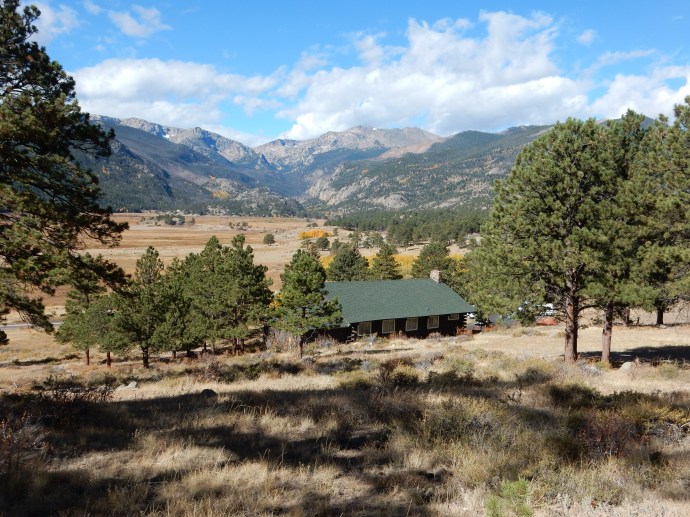
Our first day of seeing the park began with a ranger walk at the Moraine Park Discovery Center. Moraine Park is a meadow surrounded by glacial moraines backdropped by the mountains. Big Thompson River runs through the meadow. While this area normally receives 13 inches of rain per year, in 2013 13 inches of rain fell in four days and the river flooded out part of downtown Estes Park. It sure looked a lot quieter today.

View from Moraine Park during ranger walk

View from Moraine Park during ranger walk

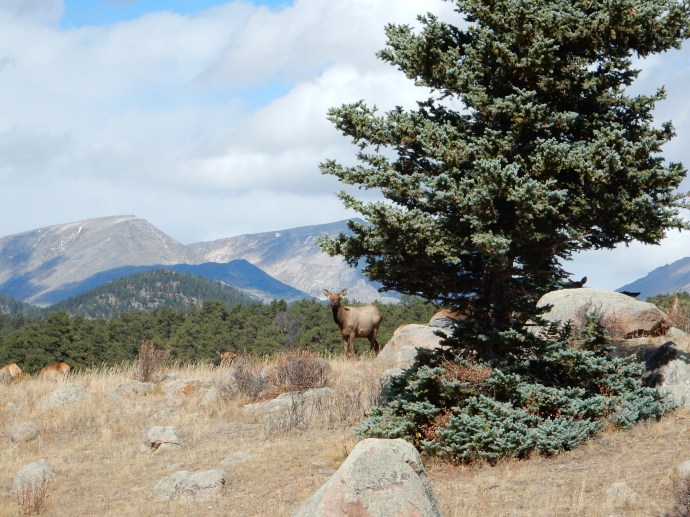
The park ranger gave us an hour discussion of Moraine Park, its geology, its wildlife, its weather, and its people. He did an excellent job; but we knew he would, he was from Minnesota. The walking portion of the ranger discussion was shorter than usual due to repair work affecting the trail. During the talk, we could see elk grazing in the meadows below us. After the talk, we drove closer to the elk area.

Just one shot of an elk in Moraine  Park

Just one shot of an elk in Moraine Park

Hopefully you recognize that elk are large and unpredictable. This is also rutting season, when the male elk compete to develop their own harem of cows and so the animals are more active than usual. Unfortunately, not all people are intelligent. We saw numerous people getting way too close to the animals. A theme to be repeated in this blog post.

The day had become quite windy, steady winds of 25 mph and gusts of 35 mph were the forecast. We took our lunch at a trailhead that was meant to be a little bit sheltered and enjoyed our sandwiches until the very end when it began to rain. The mountains create changing weather and we hoped our next hike at Lily Lake would be in a more favorable locale.

Tony, Chris, Bernie and Jude at Lily Lake--top. Lacey's fur blowing in the wind --bottom

Tony, Chris, Bernie and Jude at Lily Lake–top. Lacey’s fur blowing in the wind –bottom

When we pulled in to the parking lot, the wind had even picked up more. Frankly it was fierce. We walked a short way but headed back without doing the hike. This evening at our lodge, Chris ran into a young couple who had gone to Lily Lake and the woman had been pushed into the rock walls by the wind. We were just as happy to head back but we made one more stop.

Bull elk at golf course at Lake Estes

Bull elk at golf course at Lake Estes

Elk are native to this area. The elk herds live in the park and other elk live in the city. The golf course around Lake Estes is one of those places that elk enjoy city living. We drove by the golf course on our way to pick up part of dinner at the Safeway grocery store and, after seeing a large herd of elk, we stopped. There must have been 20 or more females being guarded by one bull elk. As we watched more closely, we observed the bull was laying down. Turns out he must have been hurt in a fight with another male since he was visibly limping. Our guess is that it was recent, that he was still “King of the Hill” but if another challenger came by, he might be dethroned. And of course, hordes of people were trying to get close to get pictures of themselves close to the elk. Even with young children!

I admit it. Some of us might not have been displeased to see the elk charge the people but it did not happen. BUT, back at the lodge, We were talking to three women from Louisiana. Turns out one of them had been charged by a bull elk and had the scars on her back to prove it. It did not sound like that action was going to change her actions in the future.

We had crock pot chicken for dinner in our room. We expect to take most meals here; the staff had some utensils to loan out and a crock pot was one of them. S’mores by the fireplace topped off the evening.

View from our room at Crags Lodge

View from our room at Crags Lodge

Ed and Chris

Categories: road trip, travel | Tags: , , , , | 1 Comment

2016 Trip Eight, Rocky Mountains, Sept. 28-29

Scottsbluff, NE. Thursday Sept. 29

Sun rise over a back water of the Platte River near the Archway in Kearney NE

Sun rise over a back water of the Platte River near the Archway in Kearney NE

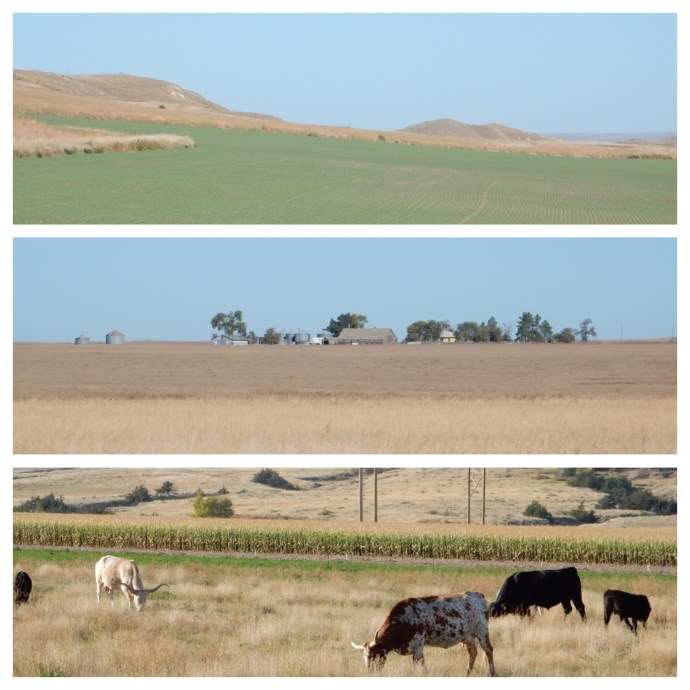
This trip is to spend five nights in Rocky Mountain National Park with my two sisters and a brother-in-law. Of course, we are spending several days to drive to Rocky Mountain National Park and then a week to drive home. Wednesday the 28th we left St. Paul and began the journey by driving to Grand Island, NE. The route went through southern MN, a fertile agricultural area with generally level plains to gently rolling land. The northern and central plains of Iowa are either flat or rolling hills. As you move to the west-central portion of Iowa, the gentle hills are a major source of wind power, with wind turbines as far as the eye can see. I am sure you have all seen them, each blade is 148 feet tall and weighs over 20,000 pounds. We passed, carefully, several oversize truck-trailer combinations on I-80 carrying turbine blades to make another wind turbine somewhere in the area.

Flat land in the center with the start of hills on top and grazing cattle at the bottom

Flat land in the center with the start of hills on top and grazing cattle at the bottom

As we drove into Nebraska, the land became flatter, more like central Illinois. In areas, we saw evidence of oak savannas, prairie like land with sporadic clumps of deciduous trees. We zipped through Omaha and Lincoln. In 2017, we hope to make a winter/spring journey to Kearney/Grand Island, NE; two towns along the Platte River where cranes, particularly sandhill cranes, roost as they begin their spring migration back to the north. Hundreds of thousands of cranes gather here, with their overwhelming raucous cries an experience to be seen and heard as a once in a lifetime occurrence. We expect in 2017 that we will be able to enjoy this region more fully.

Thursday morning we left Grand Island, back on I-80. At Kearney, we did stop to visit “The Archway”, an arch constructed over the freeway and next to the Platte River. Inside are displays about the pioneer experience; recognize that Nebraska’s early history was dominated by the march of Easterners trudging west. The Oregon trail, the California trail, the Mormon trail, the transcontinental railroad, all were formative in the development of the state. Unfortunately we were here at the archway too early to see the displays. Ah, well, the site was worth viewing anyway.

Hillside with ruts from settlers' wagons

Hillside with ruts from settlers’ wagons

Further west, the flat lands start to rise both in sporadic hills and then the plains start to rise as they get closer to the Rocky Mountains. Along the route, we visited a minor site showing an early settler route where ruts created by the settlers’ downhill wagons can still be seen.

Chimney Rock

Chimney Rock

Our first real stop was at Chimney Rock, a combined National Historic site and Nebraska state historic site. As pioneers trudged (yes,most of them walked all the way to their new homes in the West) through Nebraska, Chimney Rock was an unusual promontory that stood out 325 feet above the plains, not far from the North Platte River. From the review of numerous journals kept by settlers, Chimney Rock was the most mentioned landmark. The land consisting of the Rock was donated to the state of Nebraska; the grazing land around the Rock is still privately owned.

Scotts Bluff on right, Mitchell pass at center

Scotts Bluff on right, Mitchell pass at center

Our second stop was at another “westward ho” landmark, Scotts Bluff National Monument. The North Platte River Valley has been an important pathway for Indians, fur traders, and settlers. (Scotts Bluff gets its name from a fur trapper, who became ill, and was left by his companions next to these bluffs to die-which he did.) The river valley was a guiding light and source of water and grass to feed the settlers’ animals. But when they reached this point, the 800 foot bluffs block the path. Ravines and rugged topography blocked the way through the nearby Mitchell Pass and along the river banks. Settlers either forded the river or went miles south of the bluffs.

Scotts Bluff was well documented in writers’ logs and letters back home. It was also the subject of an artist named William Henry Jackson. Jackson was an early photographer of the Hayden explorations of Yellowstone and his pictures proved to a doubtful public that the grandiose comments about Yellowstone were truly accurate. Later in his career, he took up painting, usually the scenes he had observed out West. Scotts Bluff NM has a display of Jackson’s work in their gallery.

We drove to the top of Scotts Bluff, made possible by a road and three tunnels constructed in 1937, which stands at 4,659 feet above sea level. Several trails wind along the top. The view is great, demonstrating the prairies leading to this part of Nebraska, the rocky ridges and difficult terrain through Mitchell Pass, and the North Platte River running through the valley.

Looking west from the top of Scotts Bluff, North Platte River at right edge center

Looking west from the top of Scotts Bluff, North Platte River at right edge center

The river is central to this region as we learned when we visited the Legacy of the Plains museum close to the National Monument. Early settlers had difficulty growing crops due to the deep prairie grass roots and arid climate. Teddy Roosevelt signed legislation establishing the Platte River Project. This project began a series of dams, reservoirs and irrigation channels that allowed a larger and steadier supply of water for irrigation of farmland. Nowadays, the western Nebraska plains are great sources of wheat, millet, soybeans, sugar beets, corn, and potatoes. Farmers here practice both irrigated agriculture and dry farming. Dry farming is a process wrapped around crops and practices that enhance agriculture without overusing water resources.

We had lunch today at Runza’s, a local fast food chain. We hesitated at first becuase one of their signs was promoting a combination of chili and cinnamon buns. We put that aside and had their signature sandwich, a classic Runza that is similar to a pierogie or a pasty from the U.P. Very tasty.

Ed and Chris

Categories: road trip, travel | Tags: , , , , , , | Leave a comment

Blog at WordPress.com.