Posts Tagged With: road trip

2014 Trip Two, April 1, Deep South

Tuesday, April 1 Folkston, GA

The cabin at Stephen Foster Folk Culture Center State Park was quite nice. We would be willing to stay here again.

Suwanee River

Suwanee River

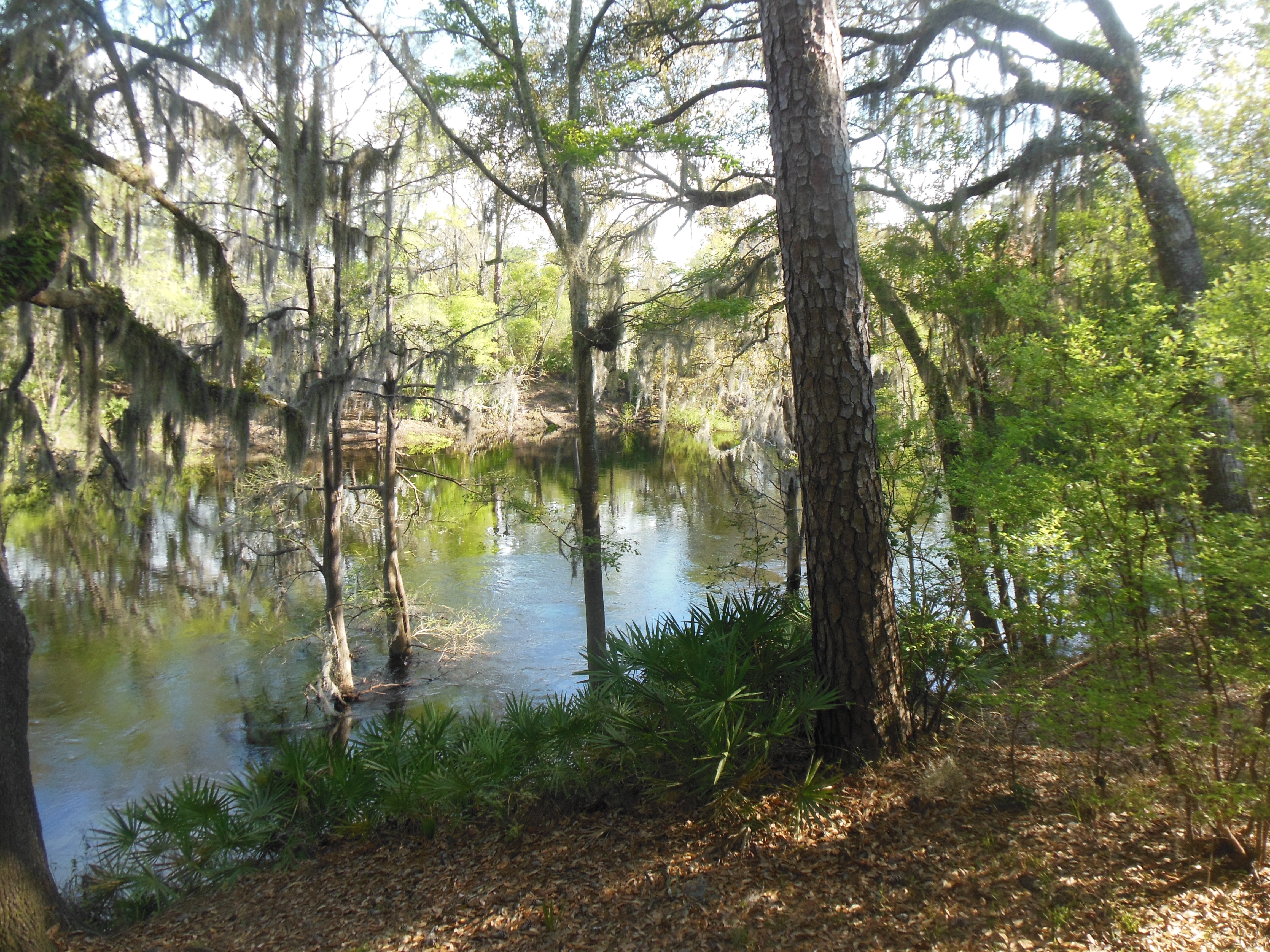
The Suwanee River starts at the Okefenokee Swamp in GA where we will be later today. The sulphur springs at the park add to the flow as it meanders to the Gulf of Mexico. We stopped at the springs area which had been a popular tourist attraction in the late 1800s. The spring now is pretty much enclosed and the town is trying to re-invent itself for biking/canoeing/kayaking adventures.
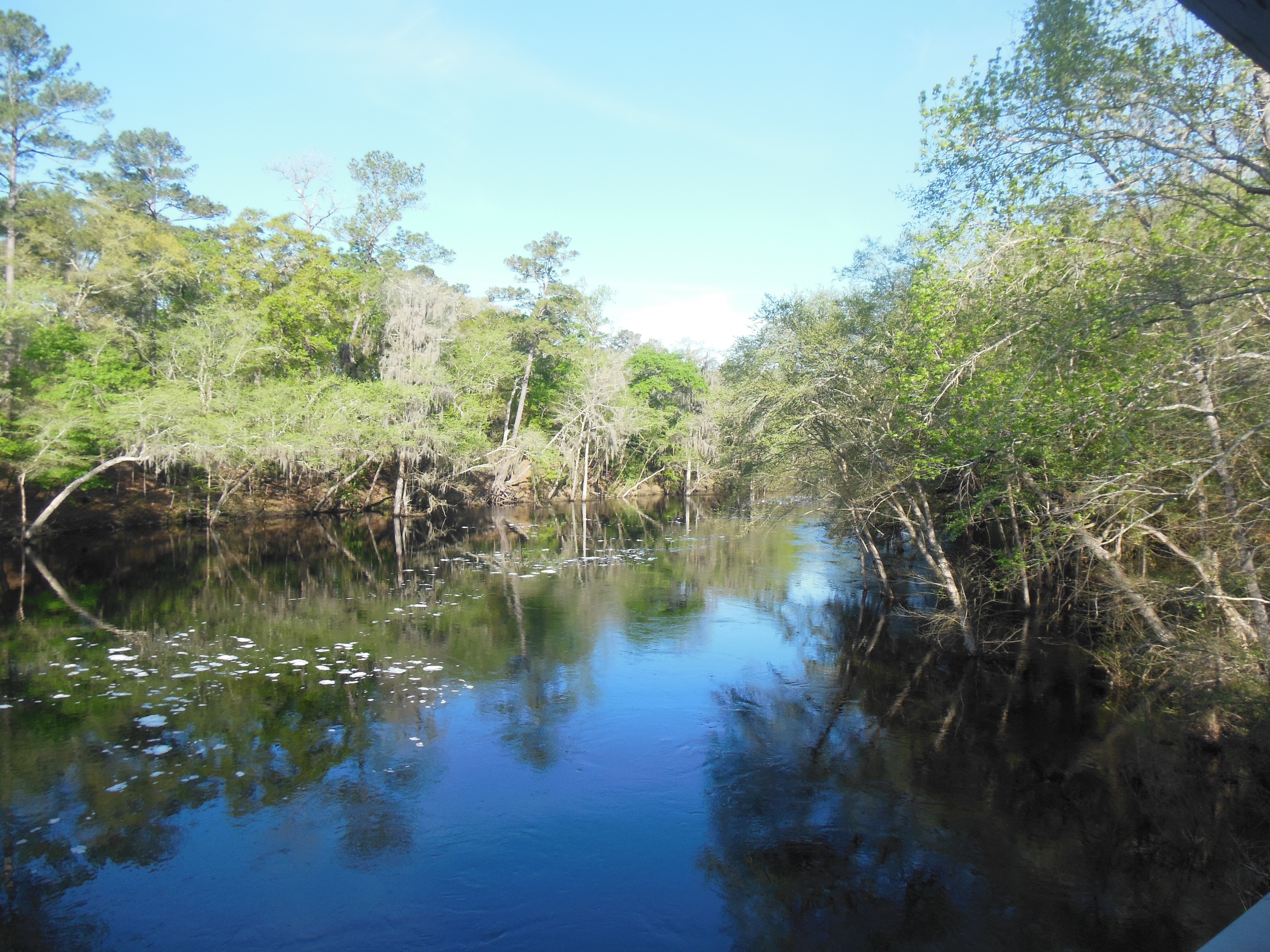
Suwanee River

Suwanee River

There is a visitor center in town that is being run solely by local volunteers due to budget cuts. The volunteer on duty when we arrived early this morning was very pleasant and informative about the town. She suggested several local restaurants that were not known to us and we had lunch at an old hotel restaurant that had re-opened recently.
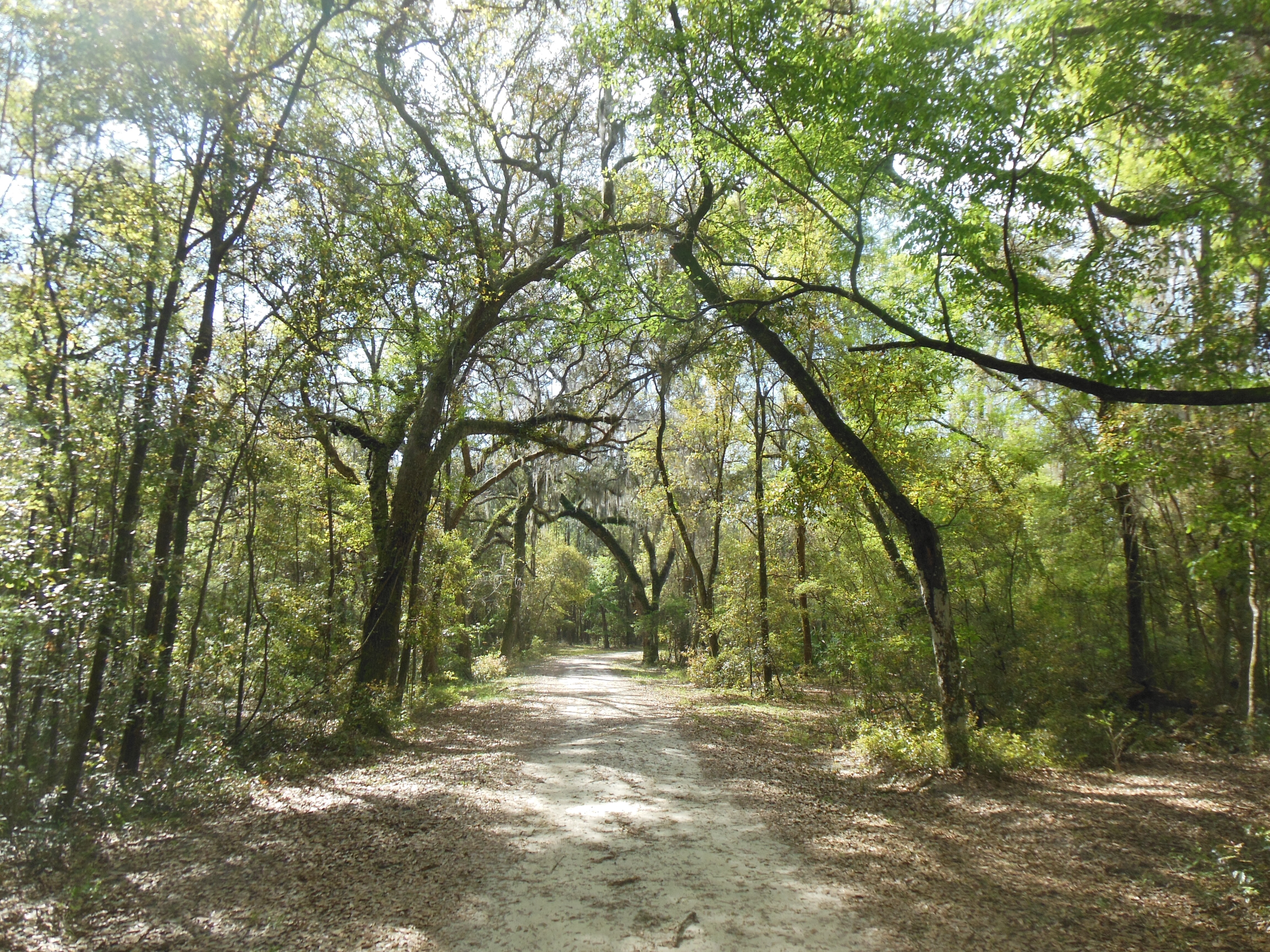
walking in Stephen Foster Folk Culture Center State Park

walking in Stephen Foster Folk Culture Center State Park

However, she also informed us about the death of two canoeists on the Suwanee just a week ago. A couple from NY had come down to go canoeing but were told by the state park rangers that the canoe launches in the park were closed due to high water and they should not go canoeing. Evidently they decided to launch their canoe outside of the park. The cause is not known but they ended up in the water and their bodies were found a few days later.

walking in park

walking in park

So we listened to the rangers and went walking instead. The recent rains meant that several paths were water covered and we had to back track a few times. The park was not terribly busy today but a tractor show/festival will be occurring this weekend and they expect a full house. Each month the park has some festival scheduled. There is a folk music festival over Memorial Day weekend.

Flowers in the park

Flowers in the park

One of the craft stores was open and we chatted with the needle work person. She and her husband are from northern MA and have been volunteering here for 14 years. Her husband is a carpenter and his services have been used throughout the park. She makes crafts and sells them. They stay for four months and live in their RV along with other volunteers in a separate RV village in the park.

After lunch, we took two lane back roads to Folkston, GA where we will be visiting the Okefenokee Swamp. Wildflowers lined most of the roads. Azaleas were blooming profusely along road sides, in yards, and in the park. We passed several Florida correctional institutions and a large Waste Management landfill. Not everything is flowers and green trees.

The Okefenokee Swamp is a national wildlife refuge. Okefenokee means “land of the trembling earth”. Much of the park is built on peat bogs; walking on it is soft and wavy. We stopped at the visitor center but did not have time to do any hikes. Tomorrow we plan on hiking, driving and taking a four hour boat ride through the swamp.

image

Tonight we are at the Inn at Folkston, a very nice B and B run by a retired railroad conductor and his wife. Dinner was in “downtown” Folkston at the one non-franchise, sit-down restaurant open. Folkston is a train watching town. The CSX railroad runs about 60-70 trains a day through the town on two tracks. It is a main line route in which 90% of the trains into Florida go through this town. On Saturday, the town is having “Train Watch”, a local festival where train aficionados spend the day watching trains and sharing their hobby with like-minded folks.
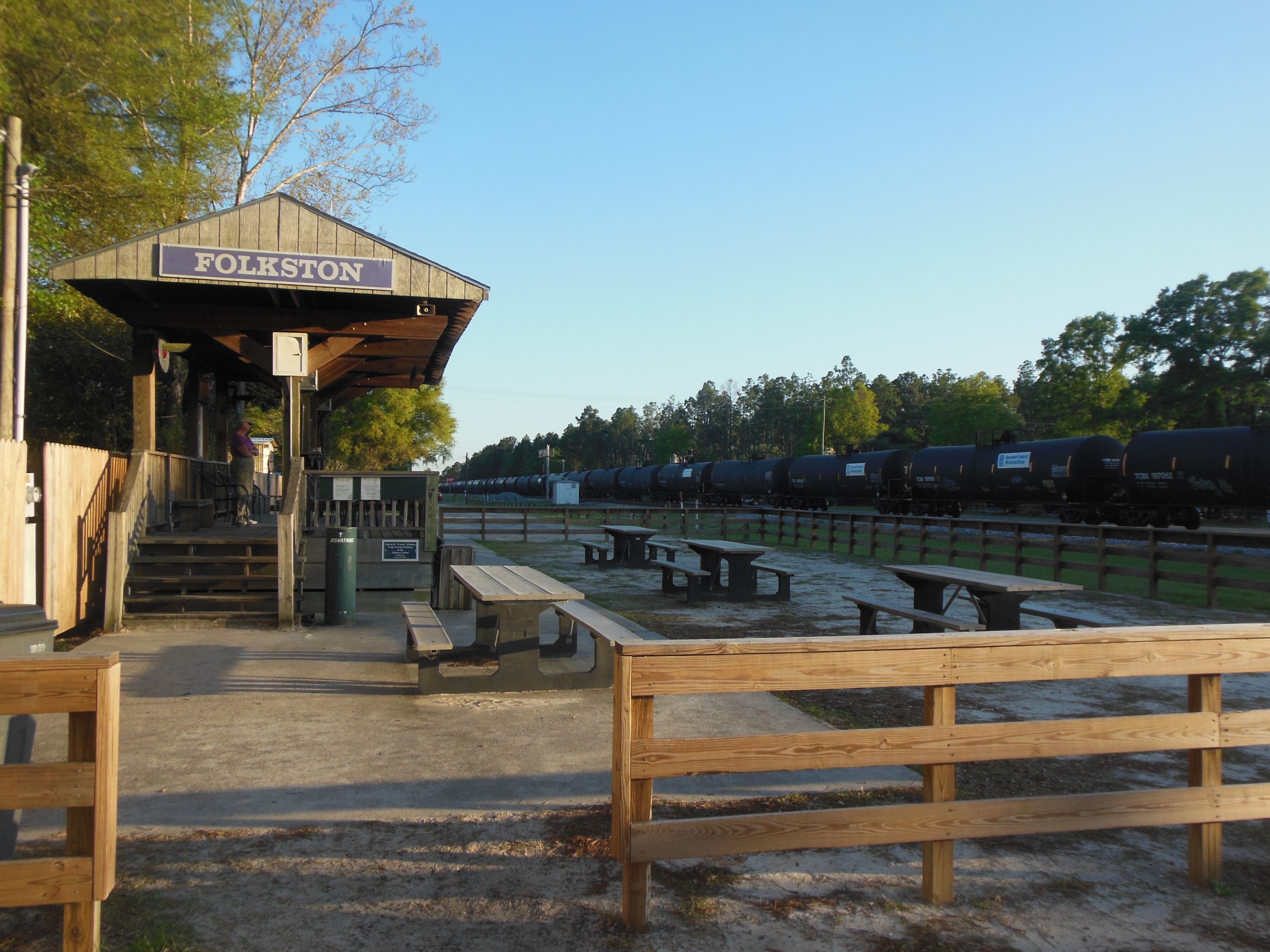
Folkston CSX train

Folkston CSX train

Ed and Chris April 1 10 pm

Categories: travel, Uncategorized | Tags: , , , , , | Leave a comment

2014 Trip Two, March 31, Deep South

White Springs, FL Monday March 31.

Let’s see. Population of Miami SMSA is about 5.5 million. Population of White Springs FL is about 775. Miami has the Atlantic Ocean, Intracoastal Waterway, and lots of beaches with jet skis and parasailing. White Springs has the Suwanee River which is currently flooded-no canoeing allowed. In the early 1900s, the town had over 2000 people and a thriving tourist trade revolving around sulphur springs. A 1911 fire destroyed most of the community. 400 miles brings us to a whole ‘nother world.

part of the porch at the cabin

part of the porch at the cabin

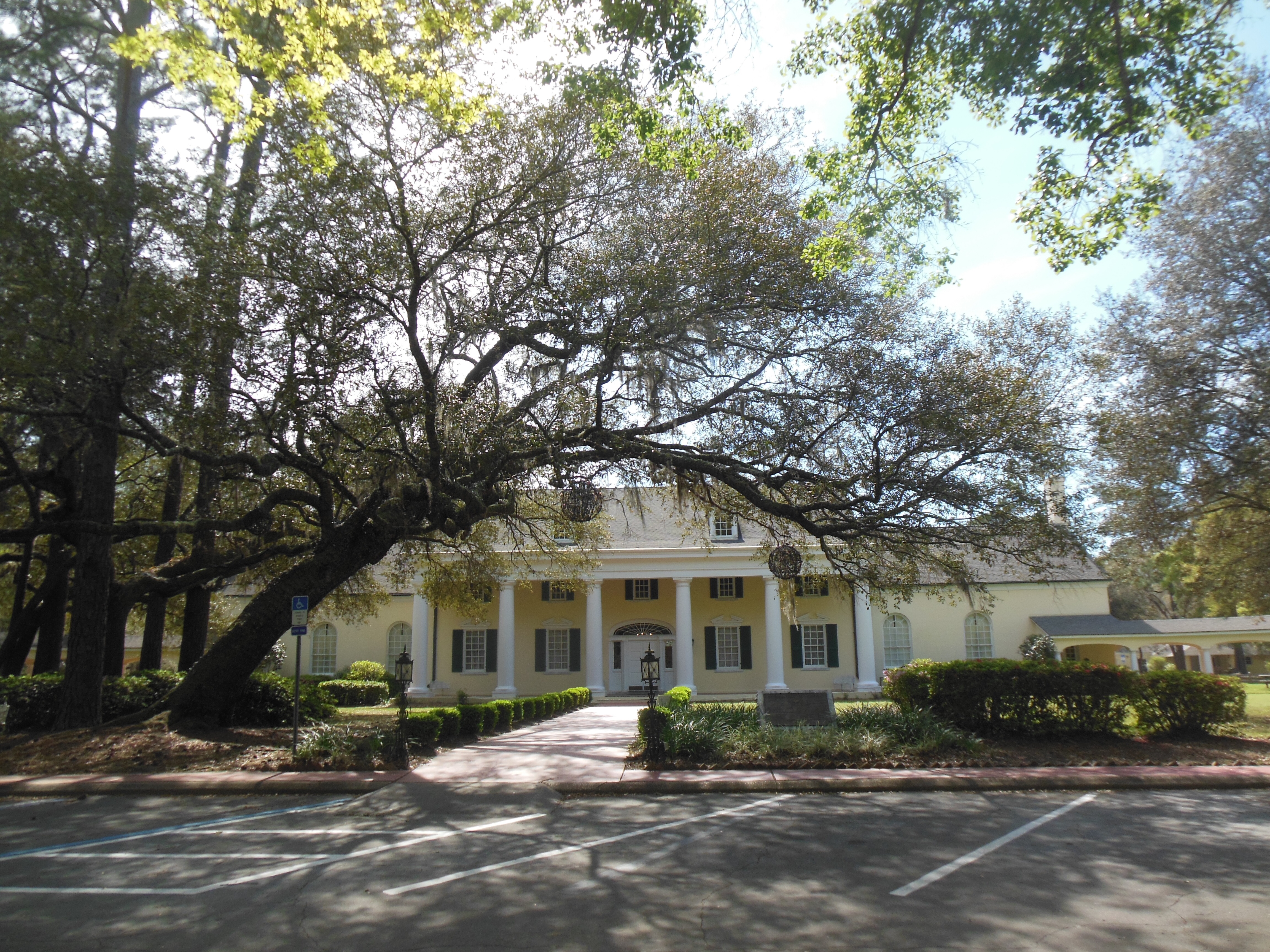
We are staying at the Stephen Foster Folk Culture Center State Park in White Springs, FL. There are five rental cabins here, we have cabin #1. It appears that two others are also rented. It is just a one night stand for us, most people stay a while. There is room for a family in the cabin and it is equipped with a fully equipped kitchen-but no washer/dryer. There is a long, screened-in, L-shaped porch. The screen is essential; even now the bees are out and flies are starting to be noticeable.

actual piano used by Foster

actual piano used by Foster

The state park was created to honor Stephen Foster (1826-1864). For young’uns and the forgetful, he was the composer of such songs as “Old Folks at Home (Way Down Upon the Swanee River)-Florida’s state song; “My Old Kentucky Home”-Kentucky’s state song; “Jeannie with the Light Brown Hair”; and “Beautiful Dreamer” (actually used in a Batman movie; “Camptown Races”. The movie “Gone with the Wind” has four of his songs in it. The correct spelling of the river is Suwanee; Foster abbreviated it for musical effect.

Flooded Suwanee River

Flooded Suwanee River

Foster never lived in Florida and may never have seen the river itself. However, the song became so connected with Florida that the state created a park just to honor Foster and his music. Foster lived most of his life in Pittsburgh where he was born. The park has a museum, a bell carillon, gift shop, and craft village with folk craft demonstrations and shops besides the normal camping, swimming, hiking, canoeing, etc.

Foster is described as a music pioneer. There was no real music business as there is today to make him a millionaire. He sold most of his songs to publishers; most songs were plagiarized with no fees received or acknowledgement as to the authorship. His songs became memorable descriptions of American life. He composed or collaborated on over 200 songs during his brief life and died at age 37 with 38 cents in his pocket. Foster sold many of his songs to Edwin Christy who ran a blackface performing group called the Christy Minstrels in the mid-1800s. The New Christy Minstrels, a folk group in the 1960s, tied in to that history.

Bell Carillon

Bell Carillon

We arrived in time to hear the carillon perform at 4 pm. It also sounds the quarter hours. The carillon is made of tubular bells, 97 of them. (Last November,we visited the School of the Ozarks which has a tubular bell carillon made by the same craftsmen, it is said to be larger although only 96 bells.) Supposedly tubular bells sound different from cast iron bells.

Stephen Foster museum

Stephen Foster museum

The carillon took more than a year to create, the tubular design was created by the company, the bell tower (campanile) is 200 feet high, and regular playing of Foster’s songs occur through live performances and through the use of an automatic electric player. (We heard the electric player.)

Tomorrow we will have to visit the crafts people since at this time of the year they are only here from 10-2. We were able to walk down to the river. Despite the signs, we did not see any alligators or poisonous snakes. The river is over its banks, but still short of the record flood that occurred here in 1973.

Suwanee River

Suwanee River

The song and the river were eloquently described many years ago by a New York editor as: “”The Real Suwanee River,” he wrote, “rises in the highest mountains of the human soul and is fed by the deepest springs in the human heart. It flows through the pleasant, sunny lands of memory; it empties into the glorious ocean of unfilled dreams..””

Ed and Chris March 31, 7:15 pm

Categories: road trip, travel | Tags: , , , , | 1 Comment

2013, Trip Seven, September 4, The Sarahs’ Wedding and UP of Michigan

Traverse City, MI Wednesday, September 4, 2013

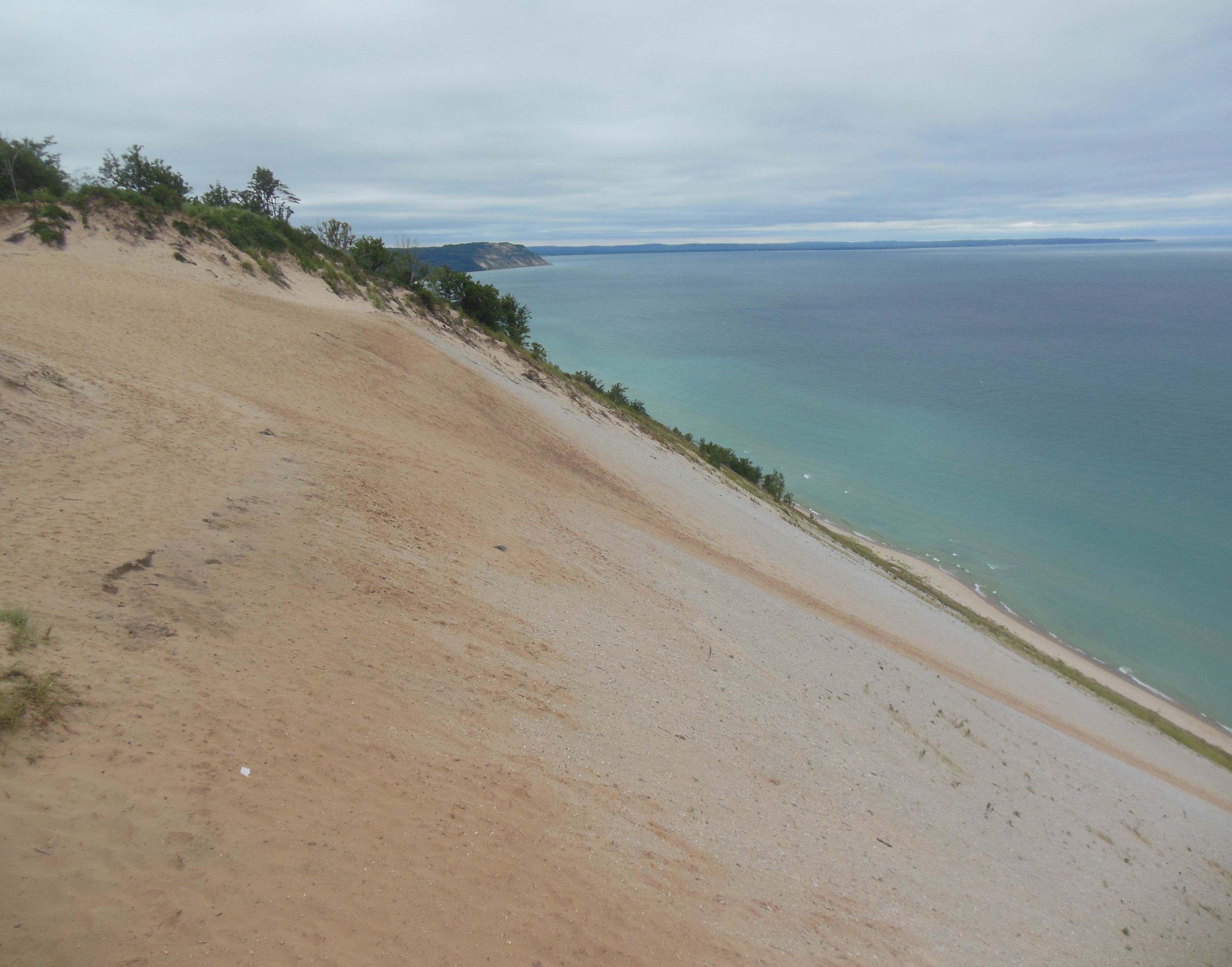
Well, most of the day was spent playing in the sand. Sleeping Bear Dunes National Lakeshore is about 25 miles west of Traverse City and was the main reason we decided to visit this section of Michigan before traveling north to the Upper Peninsula. Sleeping Bear is on the east coast of Lake Michigan. Traverse City is located at the lower end of Grand Traverse Bay which juts down into the state of Michigan from the Lake. (Go look at a map.)

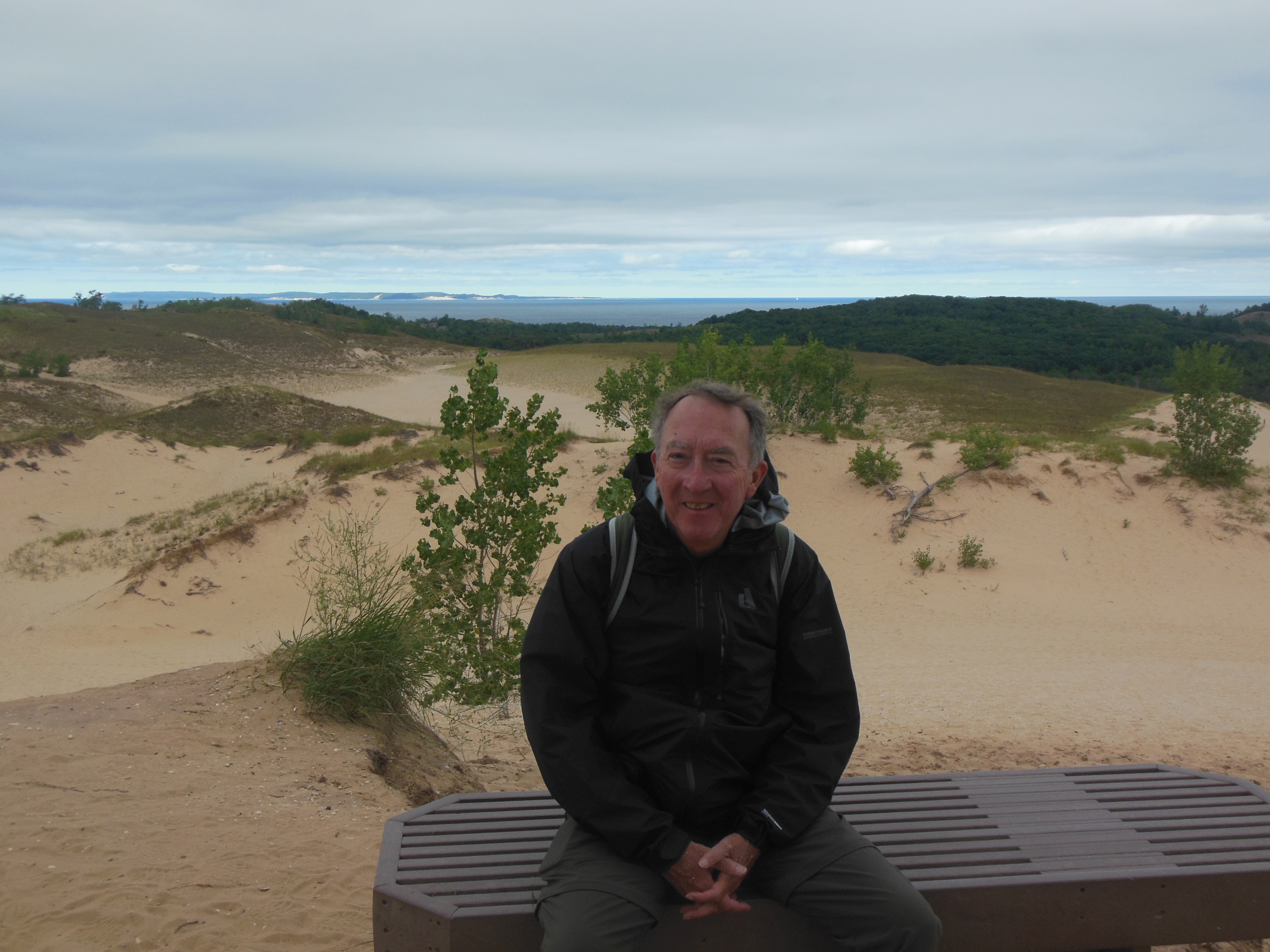
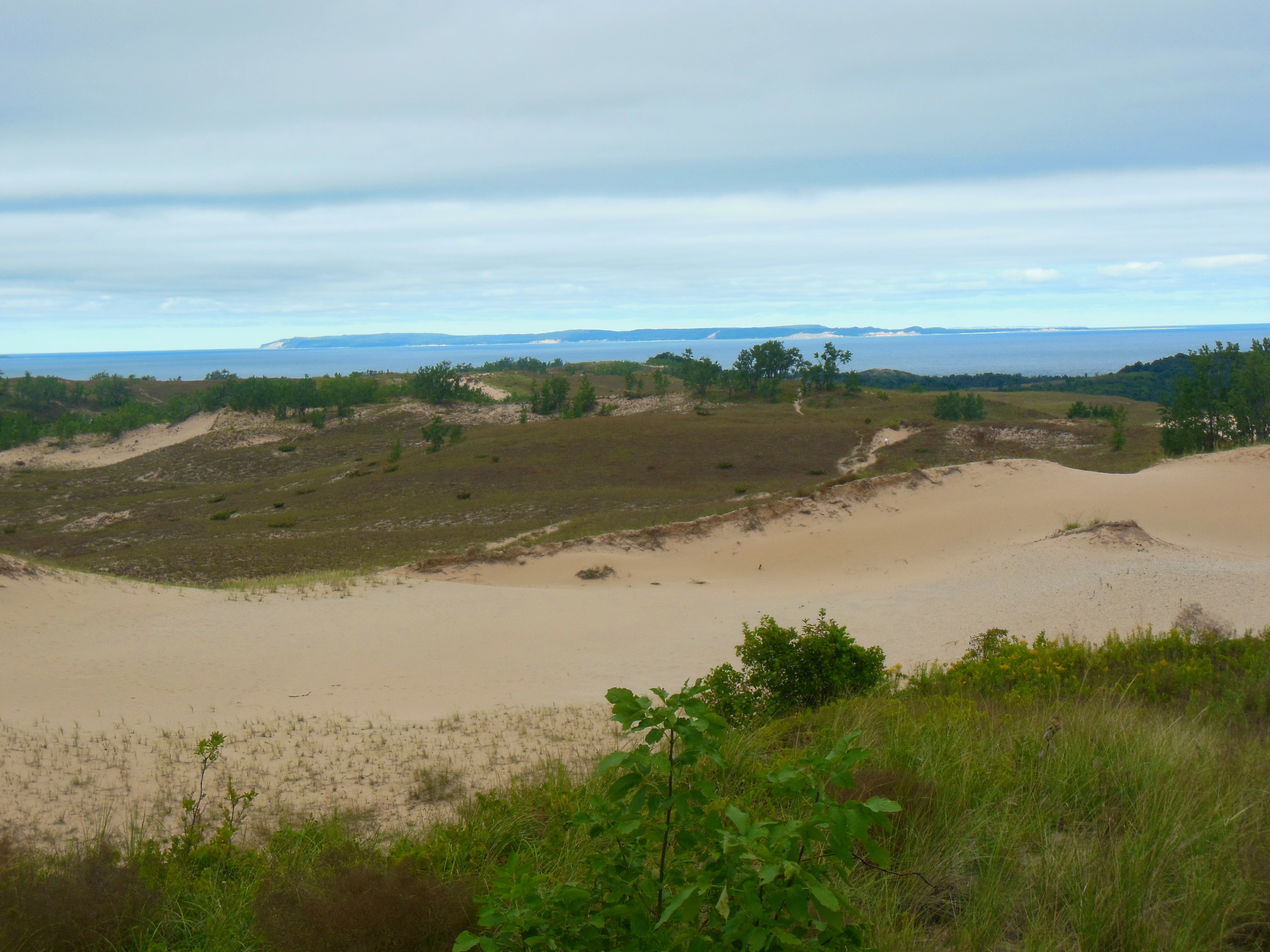
Sleeping Bear Dunes National Lakeshore

Sleeping Bear Dunes National Lakeshore

Sleeping Bear Dunes National Lakeshore

Sleeping Bear Dunes National Lakeshore

Sleeping Bear Dunes was voted the #1 Most Beautiful Place in America in a competition in 2011 held by ABC-TV’s Good Morning America show. The national lakeshoe is very nice but I would not place it number one. I am more partial to western U.S. views.

I wonder how many places are the “most” something. When Lake Michigan is written about here, they frequently mention that it is the largest lake entirely in the U.S.; dropping Lake Superior since it is partially in Canada.

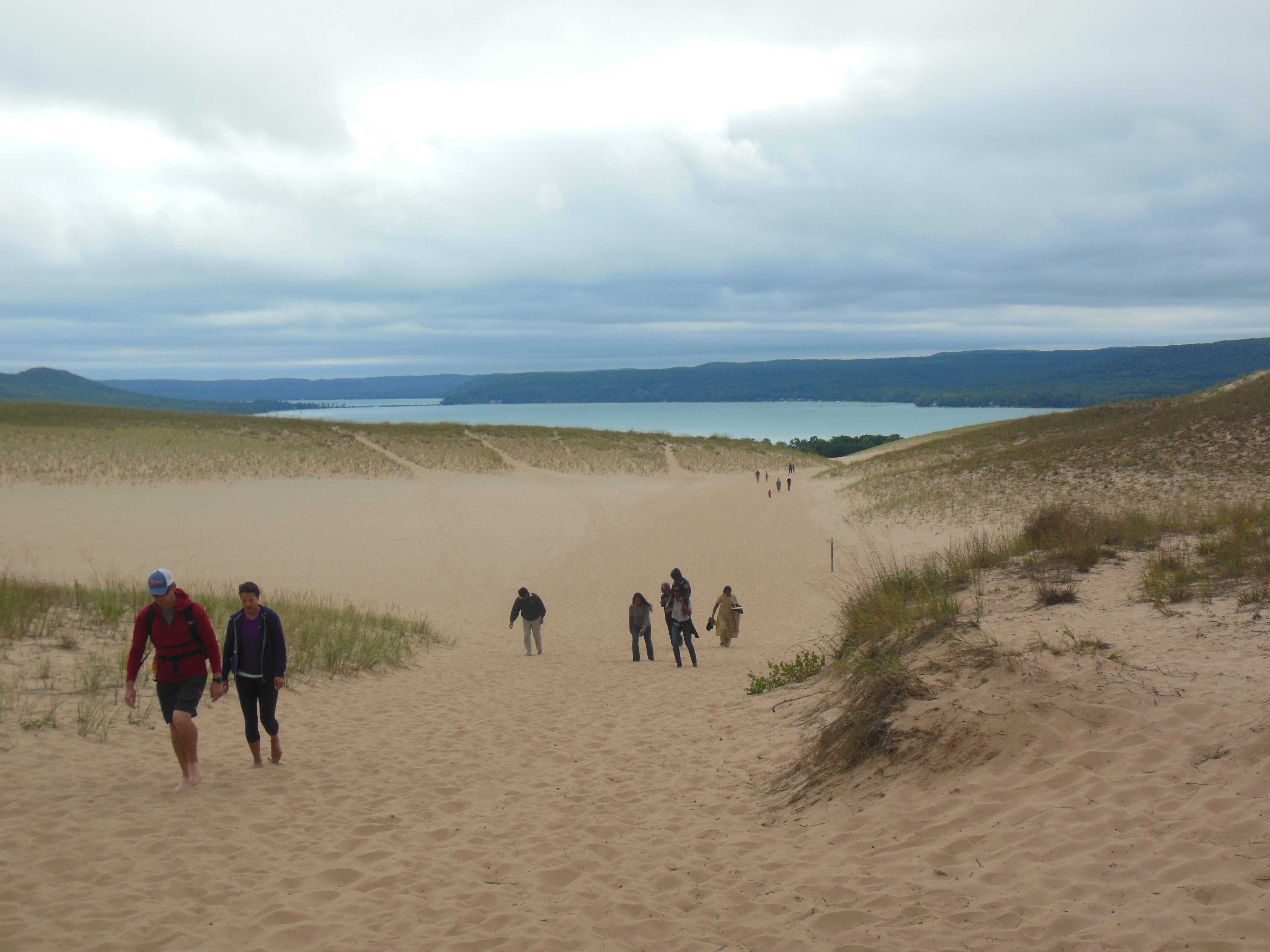
Until mid afternoon the day was cloudy, cool and breezy. This was advantageous as our first hike of the day was climbing up a 110 foot sand dune. The sand here is very fine, rivaling the best we have seen at Florida beaches. The wind is normally from the northwest and this evidently contributes to the sand dune formation.

Dune Hill Climb, 2nd phase

Dune Hill Climb, 2nd phase

Dune Hill Climb, phase one

Dune Hill Climb, phase one

In a few places we found rocks of varying colors but nothing as smooth as Lake Superior agates. Of course, The Minnesota shore of Lake Superior does not really have sand beaches and the water is always cold. Chris’ forays into the water found the water cool, but much warmer than Superior.

Running down the 110 foot dune was fun and easy. Going up was slow and challenging on the calf muscles. The dune climb is one of the major destinations within the national lakeshore. Families, couples (young and old), jocks, etc all were giving it their best effort. Most made it up, some continuing on to the next level of dunes which had a less intensive grade. Unfortunately, the shore is still quite a hike even after reaching the second set of dunes so we put off the beach until later in the day.

Glen Haven cannery

Glen Haven cannery

The  Beach at Glen Haven

The Beach at Glen Haven

Our second stop was at Glen Haven Historic Village. This locale developed due to lumbering and shipping. Off shore are two islands, North and South Manitou, which have sheltered and created the Manitou Passage on Lake Michigan. The Passage was used by ships in the 1800s to avoid the storms on Lake Michigan. However, shoals and rocks also contributed to making the Passage hazardous. Numerous light houses and rescue stations were located along the shore. Glen Haven was one of those sites.

Glen Haven was a port to ship local lumber. It later transformed into a fruit and cannery area. Times change and now it is just historic and recreated. The beach is part of Sleeping Bear Bay and sheltered by Sleeping Bear Point. You can still see the wooden piers used to support a long dock which train cars used to bring lumber and fruit out to ships.

Cottonwood Trail

Cottonwood Trail

Cottonwood Trail

Cottonwood Trail

Our third stop was the Pierce Stocking Scenic Drive. This 7.4 mile road goes through woods and along dunes. A dozen stops exist to access or view parts of the lakeshore. We took the Cottonwood Trail, a 1.5 mile hike up, down, and along the sand dunes that worked those calf muscles some more. Another stop was high along the bluffs, providing a view along the lake.

By now the afternoon was marching along. We stopped at the Maritime Museum that discussed the rescue stations work. We went off road on some back country dirt roads looking for a higher overlook of the lake. (Which we found but it was not as dramatic as I had hoped.)

Beach shot

Beach shot

We finished up by driving the rest of the shoreline road that spans the peninsula created by Grand Traverse Bay. The state of Michigan wanted $8 to let us enter for a brief look at a lighthouse. It was after 5 pm and we decided we would probably be seeing enough lighthouses during this trip and past that opportunity by. We did stop for ice cream in a small town along the way though. And we passed the 45th parallel, the halfway point between the North Pole and the Equator.

We had dinner at Grand Traverse Pie Company. Think of a blend of Panera and Bakers Square. The pies were very good although the choices were more limited than Bakers Square. As we returned to the Hampton Inn, the desk clerk was explaining to a couple that he was booked up for the next three nights. (We went out for a walk then to the beach across the street from the hotel for the sunset and when we returned he was saying the same thing to another couple that had not made advance reservations and were looking for lodging at the last minute.)

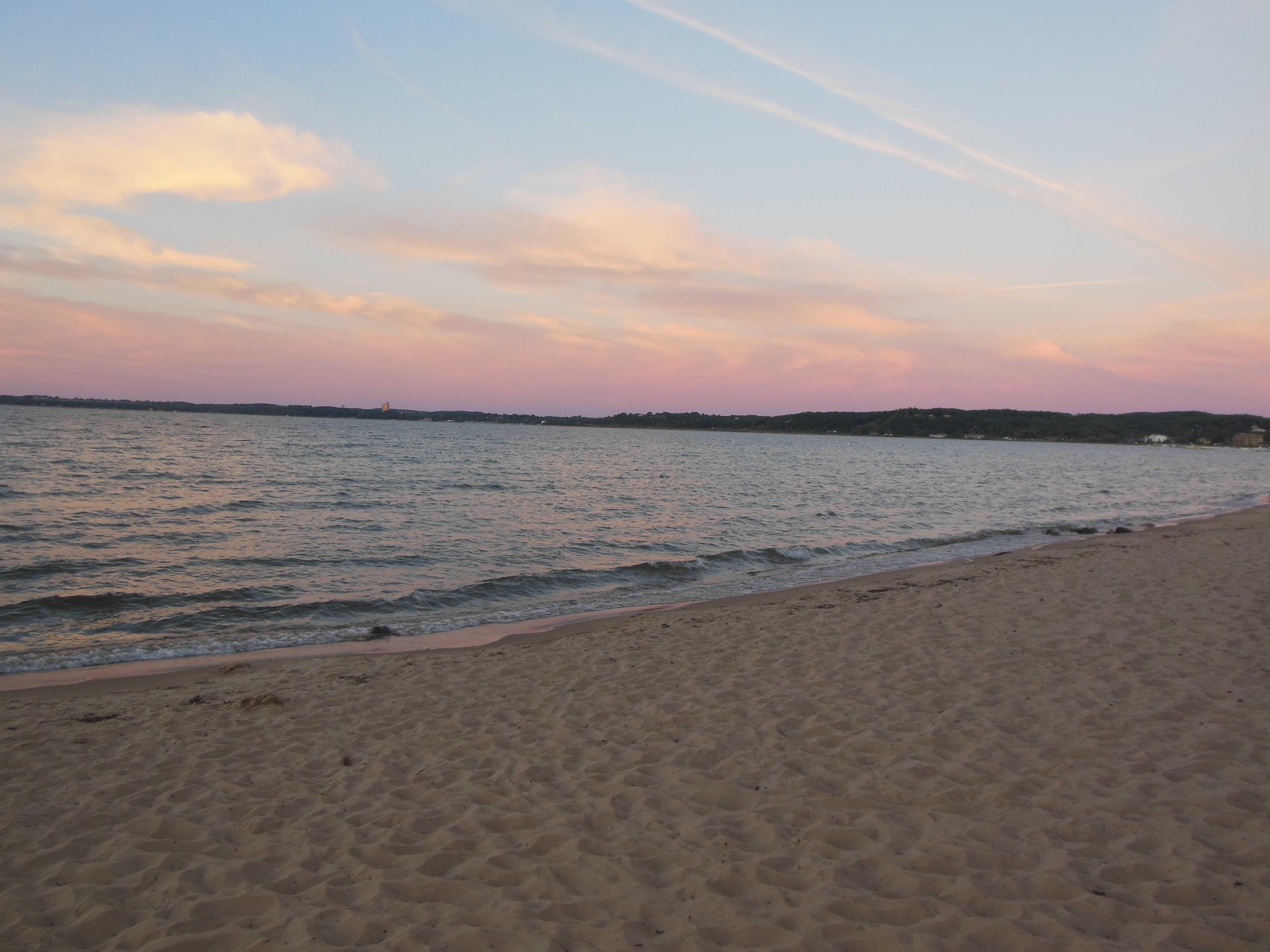
Grand Traverse Bay sunset across hotel

Grand Traverse Bay sunset across hotel

Ed and Chris Wednesday September 4 10:30 pm

Categories: road trip, travel | Tags: , , | Leave a comment

Blog at WordPress.com.