
Del Rio Texas, Dec. 28
The second phase of our trip has begun. Phase one was time with family in Flagstaff, Arizona. Now begins two plus weeks of travel to see 13 new (to us) National Park Service units.


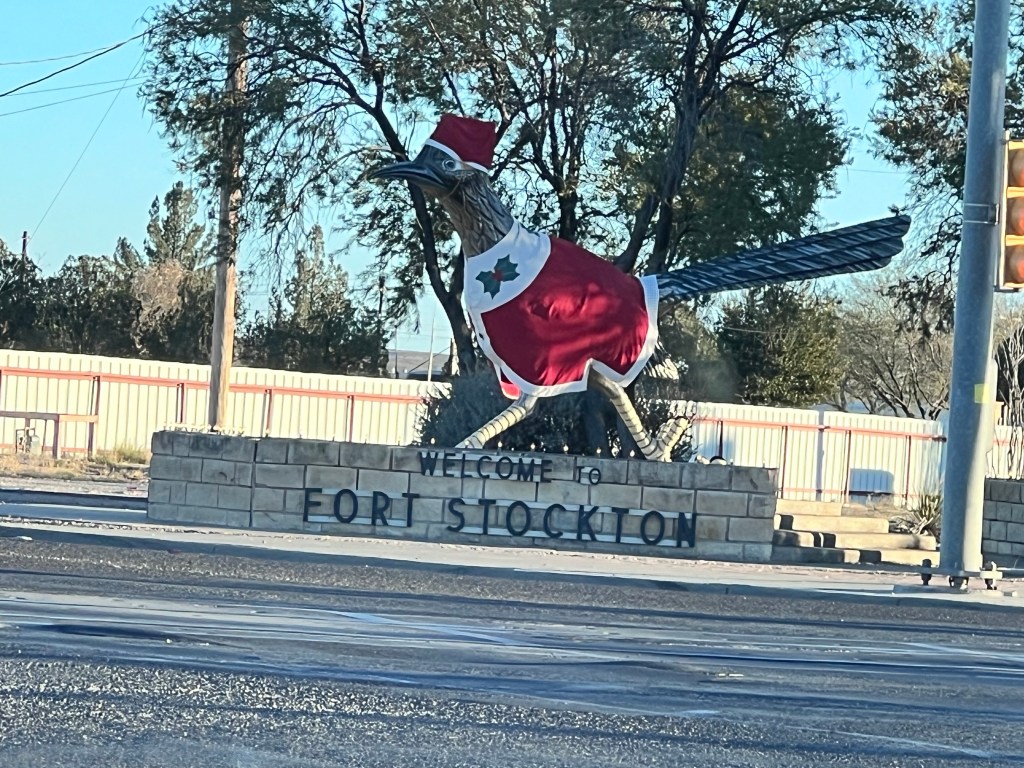
Yesterday, Wednesday, was driving all day. Flat scrub brush usually framed by mountains north and south. The day bookended by the largest road runner statute in the U.S. located in Las Cruces NM and the second largest road runner statue located in Fort Stockton TX (made by FastSign in Sparta WI).

Leaving Fort Stockton this morning, our destination was Amistad National Recreation Area. Amistad means friendship in Spanish, appropriate for this park named in 1990 but created by a joint U.S. Mexican dam on the Rio Grande. The dam was completed in 1969 to control flooding issues from heavy rain storms in the area.
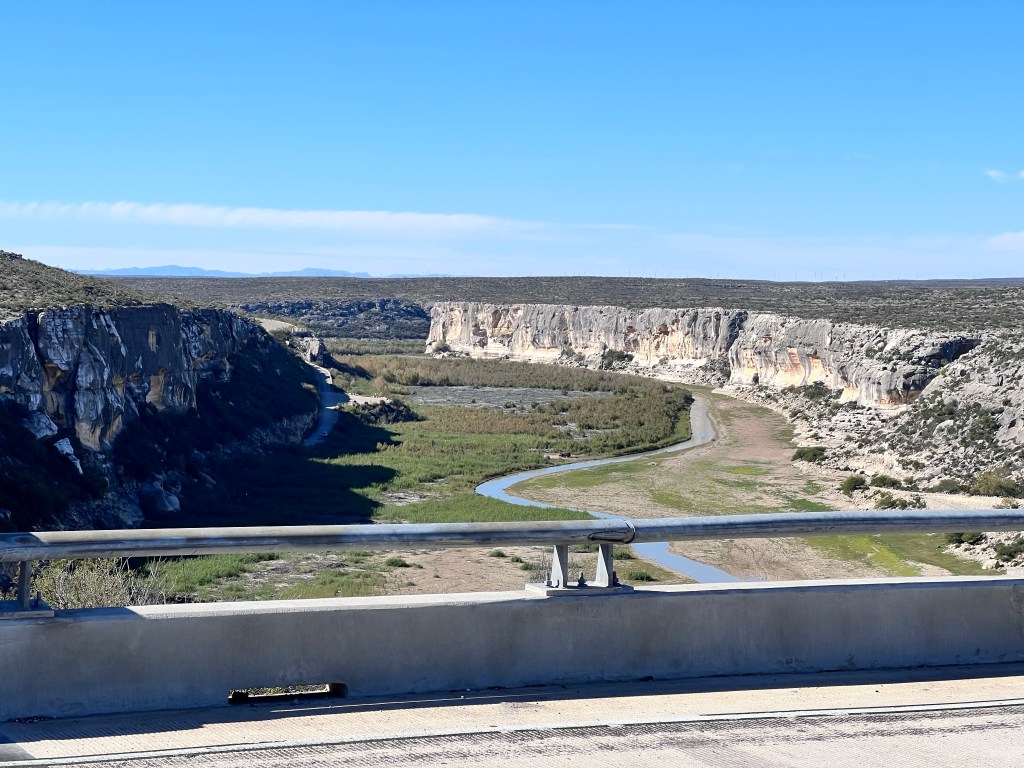
The park itself extends 81 miles up the Rio Grande River, 14 miles up the Pecos River, and 25 miles up Devils River. Water recreation is a main focus as Lake Amistad is the fifth largest lake in Texas.

We did not fish. We did not boat. However, Amistad and the state run Seminole Canyon State Park protect the Panther Cave archeological site, one of the largest collections of pictographic art in North America. We were unable to view the pictographs directly due to low water restricting NPS boat tours and limitations of the state park tours.
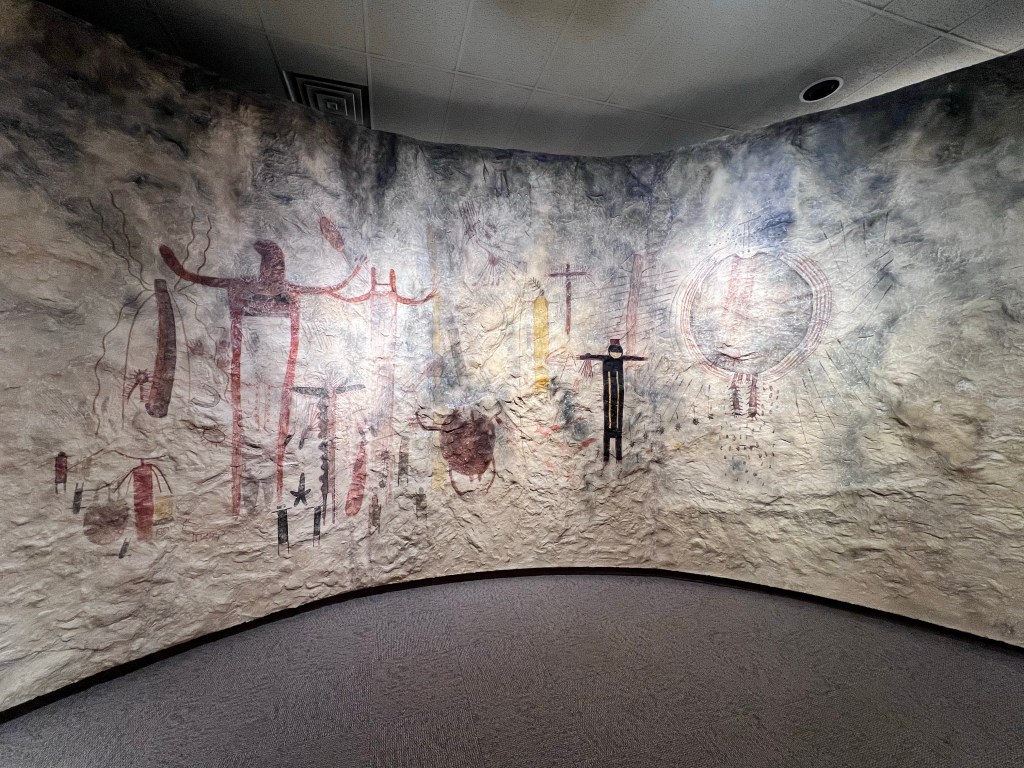
Exhibits at Amistad and Seminole discuss the pictographs and the development of the area, with an emphasis on the impact of ranching and railroads. Sheep and goat raising are important in this part of Texas, the largest wool raising state in the U.S., although we only saw two small herds as we zipped along US 90.
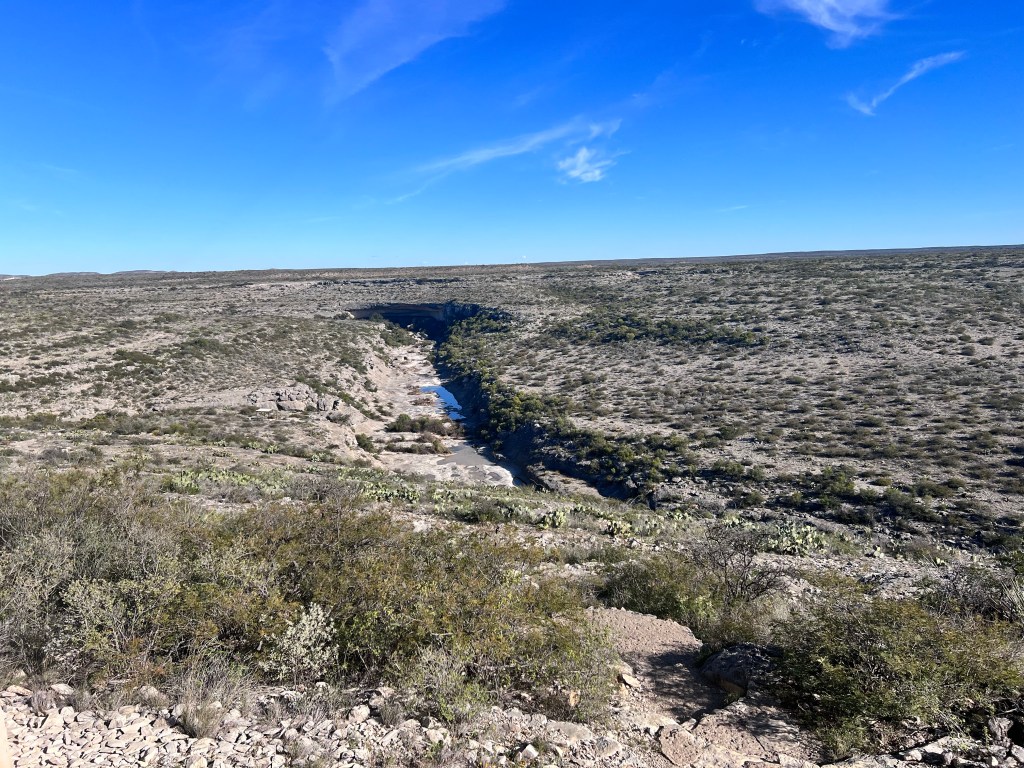
Seminole Canyon State Park was named after the U.S. Army’s Seminole-Negro Indian Scouts who, between 1872 and 1914, patrolled the western frontier. Seminole Canyon has impressive cliffs, formed solely by rain water erosion over the eons, it does not have a consistent water course.

On our way to Amistad, we broke our promise to skip the Judge Roy Bean museum in Langley TX due to the scarcity of rest room facilities along our route. We were pleasantly surprised by the modern museum, with its helpful and informative staff, and a modestly entertaining 1960s era video about Roy Bean and the completion of the Southern Pacific Railroad through this section of the country. The rivers and canyons and short mountains provided a challenge that was met by immigrant labor.
Tomorrow, driving day down to the tip of Texas at Brownsville.
Ed and Chris, Dec. 28
 Chris Klejbuk and Ed Heimel travel adventure
Recent Comments