Posts Tagged With: Quiet Walkways

2015 Trip Six, The Great Smoky Mountains, October 12-13

Gatlinburg, TN October 13

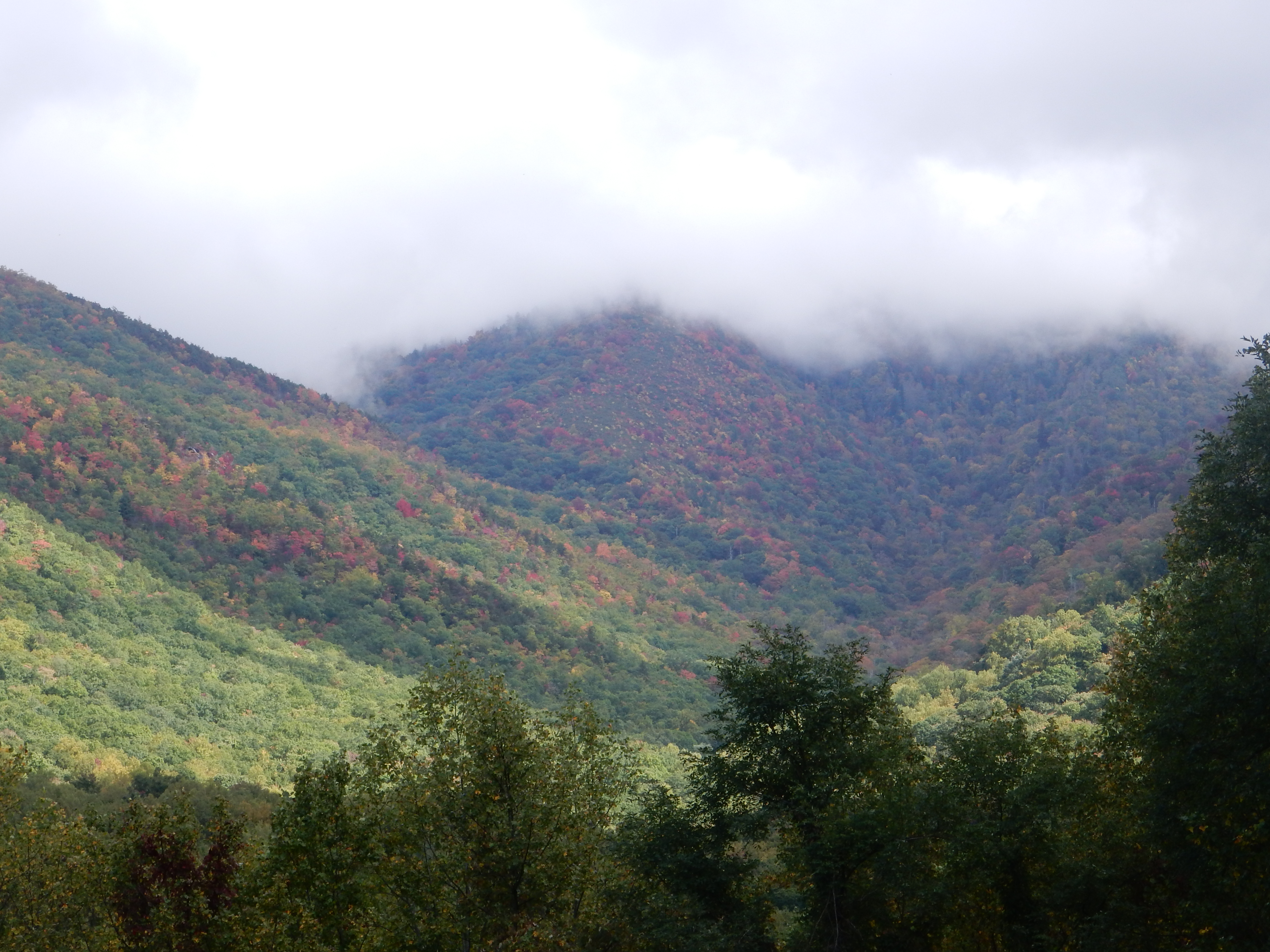
View from Newfound Gap Road

View from Newfound Gap Road

Beauty and tragedy were intermingled themes for the last two days. We continued our hiking in numerous areas of the park. We even managed to include two hikes that were primarily flat-quite an accomplishment.

Walking in the woods

Walking in the woods

Walking in the woods

Walking in the woods

Beauty first. The last two days have been clear with temperatures reaching the mid-70s, although elevation, wind and shade provide for an ever-changing temperature. One of our hikes took us to the top of Clingmans Dome where the park volunteer offered that the vista we saw is only this clear about 25% of the time.
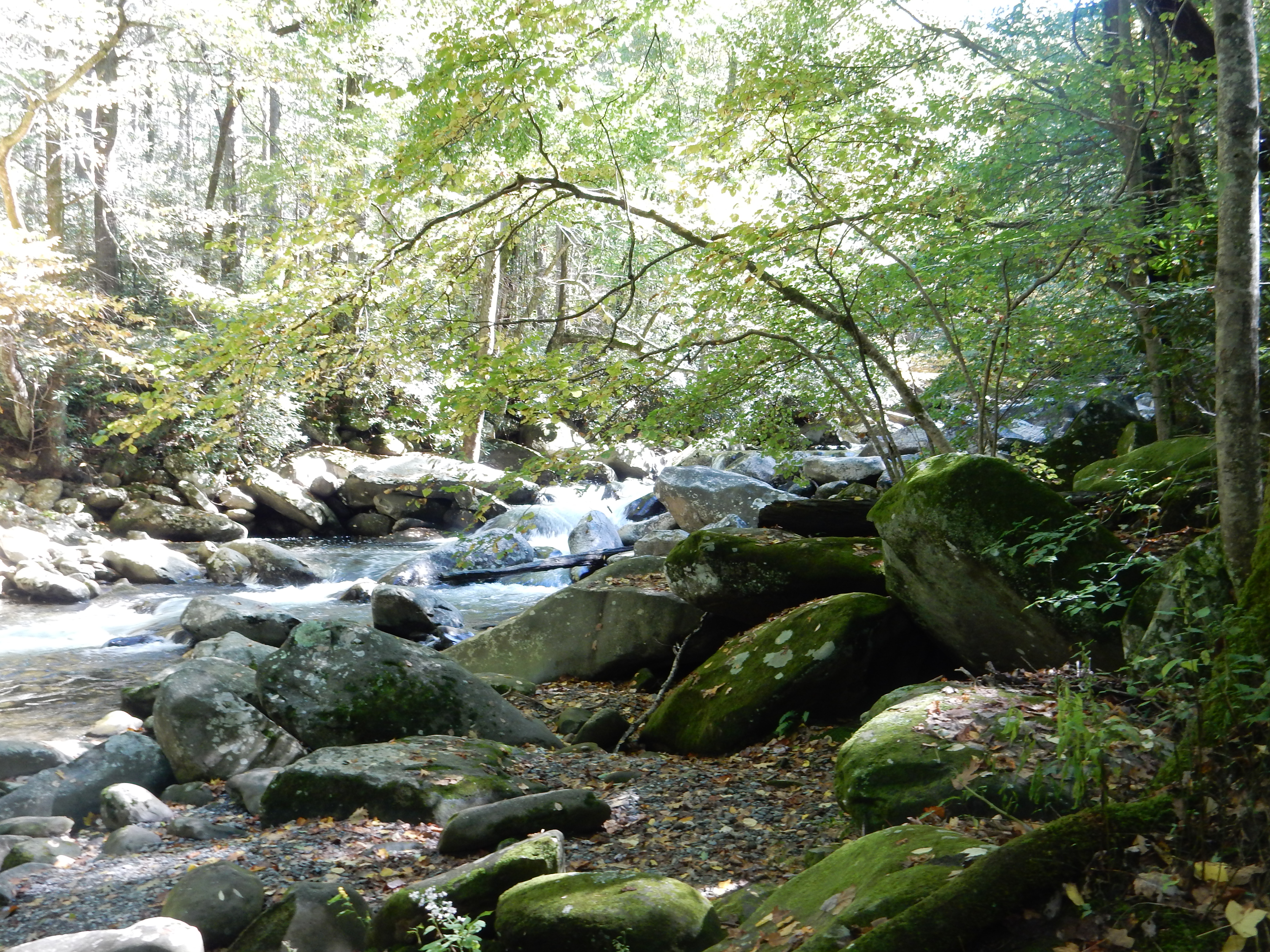
creek side ramble

creek side ramble

The park that we view, there are hundreds of thousands of acres that are remote and beyond our hiking skills, will have creeks and streams running at a fast pace. The geology is rocky (I will spare the details) so stream beds are dense with rapids and cascades as the water rushes over and around the rocks. The sound of rushing water is pleasant and near constant on hikes. Depending on the elevation, one is hiking in some combination of fir/deciduous trees. Pine smell, rustle of fallen leaves, mixed green/yellow and some red colors mingle among the pathways.

A restful lunch-of PBJ sandwiches
A restful lunch-of PBJ sandwiches

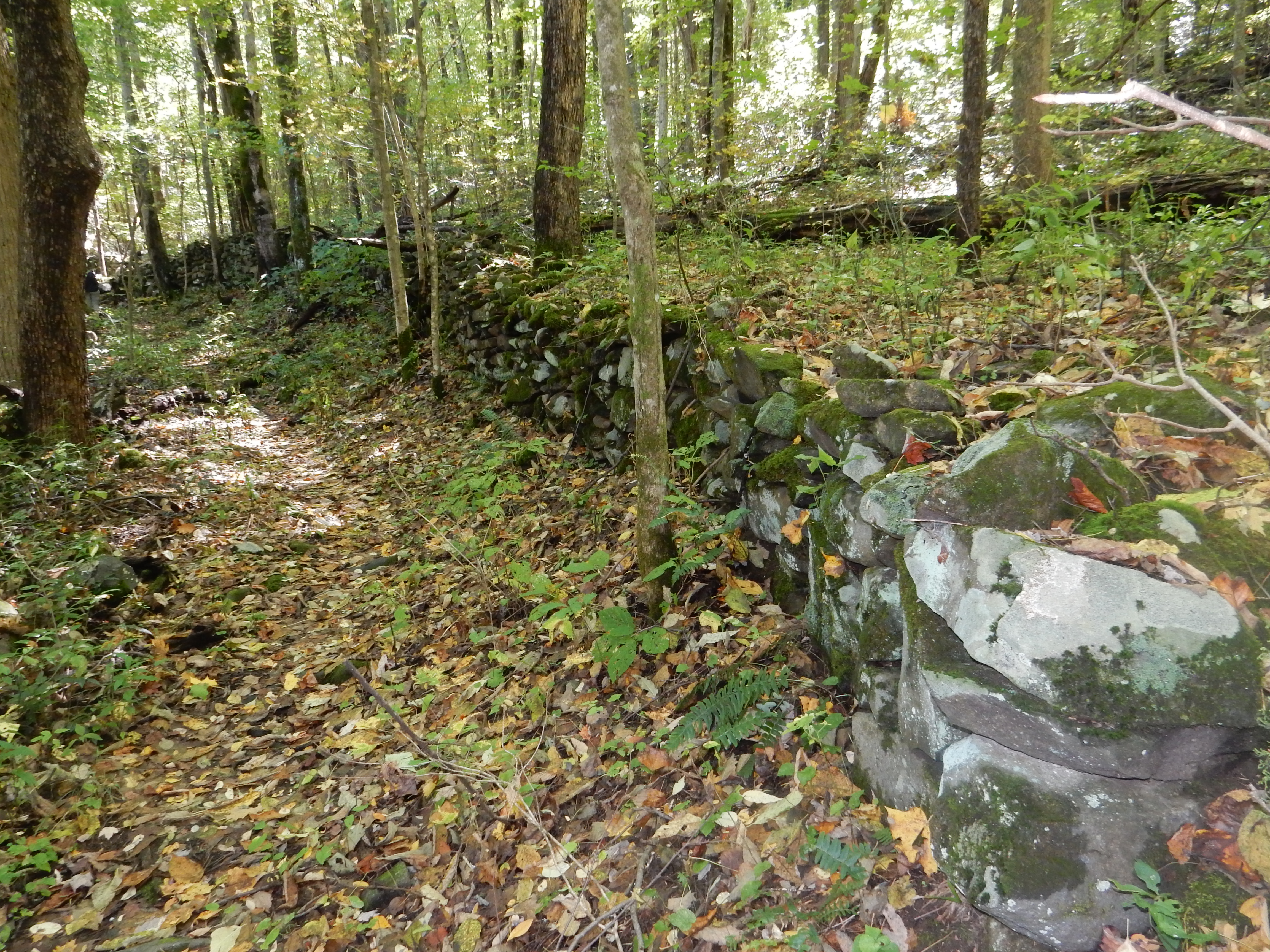
Best preserved stone wall still in the park

Best preserved stone wall still in the park

One of our destinations took us to the site of the best preserved stone fences remaining in the park. Lunch today was along the west prong of the Little Pigeon River. We stopped at the Newfound Gap Road overlook twice. Today’s stop at the overlook provided better pictures. At this overlook, you are on the Tennessee-North Carolina state line at just over 5,000 feet above sea level. (Gatlinburg is at about 1500 feet above sea level.) Several of the hikes took us to more waterfalls, pleasant but none of them overwhelming.

Clingmans Dome observation tower

Clingmans Dome observation tower

Clingmans Dome is the highest peak in Great Smoky National Park at 6,643 feet above sea level. It is the third highest peak east of the Mississippi River. Due to the boundary of the two states crossing the top of Clingmans Dome, it has the joint status of being the highest peak in Tennessee and the third highest in North Carolina. To reach the peak, one drives seven miles up past the Newfound Gap overlook. The last portion is walking one half mile which gains 330 feet in that short distance. Benches are provided for taking a break periodically. At the very top is a circular dome, reached via an inclined, spiral walkway to provide one with a view above the tree tops. You are also warned not to get your expectations too high for a great view as mist, fog, clouds, and rain are present more often than not.
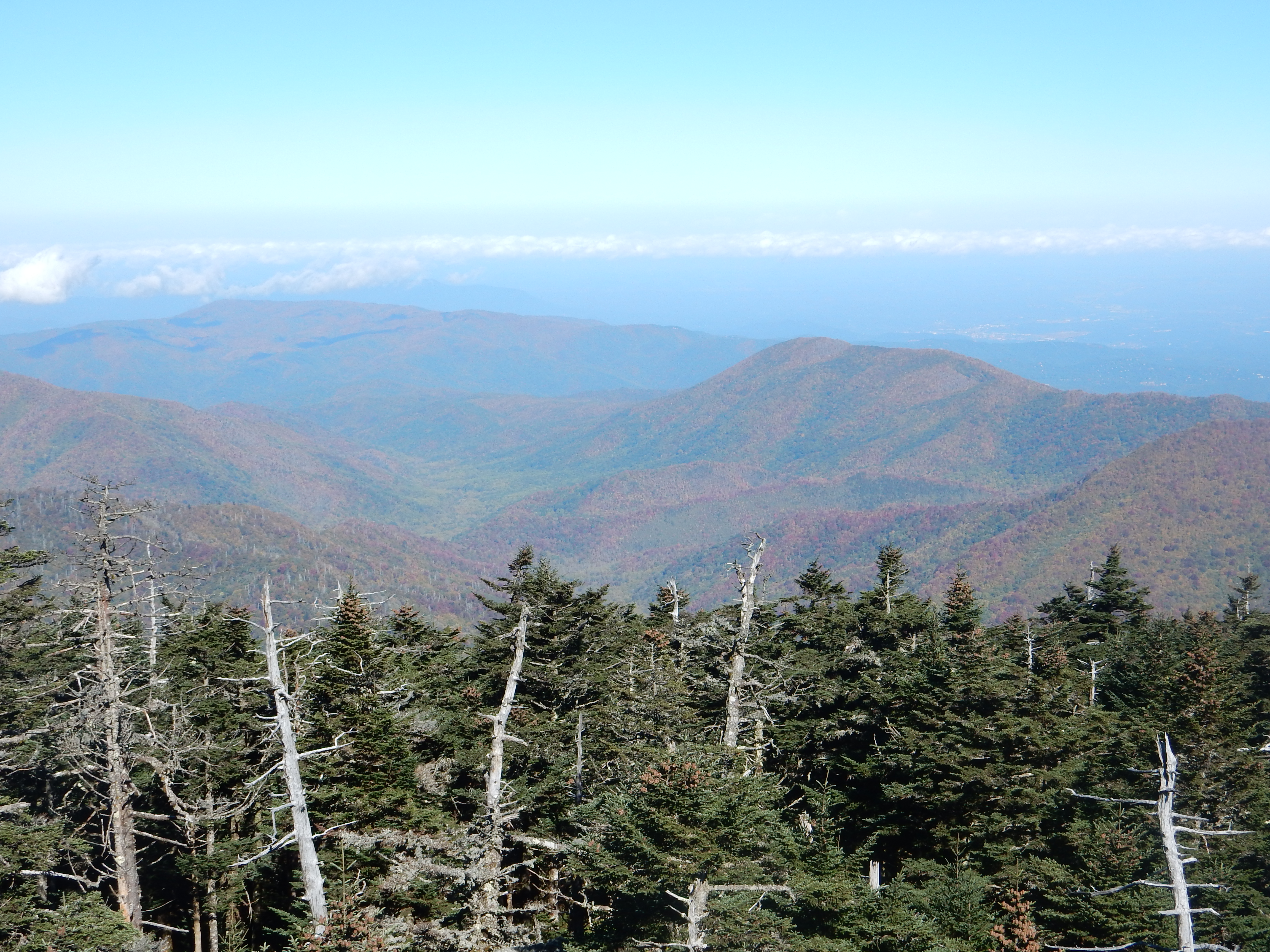
View from Clingmans Dome

View from Clingmans Dome

Chris at Clingmans Dome

Chris at Clingmans Dome

Today the 360 degree view was spectacular. Vistas in all directions. Some cumulus clouds in the distance. Fall colors visible in certain valleys. Also visible was the damage caused by the balsam woolly adelgid, an aphid like insect from Europe that is killing vast numbers of Fraser firs, one of the predominant trees at this elevation. The park is one of the few areas in the world where the Fraser fir trees grow wild.

Monday, we drove over the mountains completely to Cherokee NC. This entailed driving the Newfound Gap Road twice, usually at 35 mph. This is a 30 mile journey up and over the mountains but while curvy, most of the turns can be handled at 35 mph. The town of Cherokee is the home of the Eastern Band of the Cherokee Indians, and brought us into the tragedy portion of our two days.

The Cherokee Indians were one of five tribes (Choctaw, Cherokee, Cree, Seminole, and Chickasaw) that were forcibly relocated from the southeastern portion of the US to what is now Oklahoma. This forced relocation is called the “Trail of Tears” due to the number of Indians that died along the way and to the loss of their traditional homeland. (Previously mentioned by us on our Nov. 1, 2013 blog post at Fort Smith Arkansas, near the end of the Trail of Tears.)
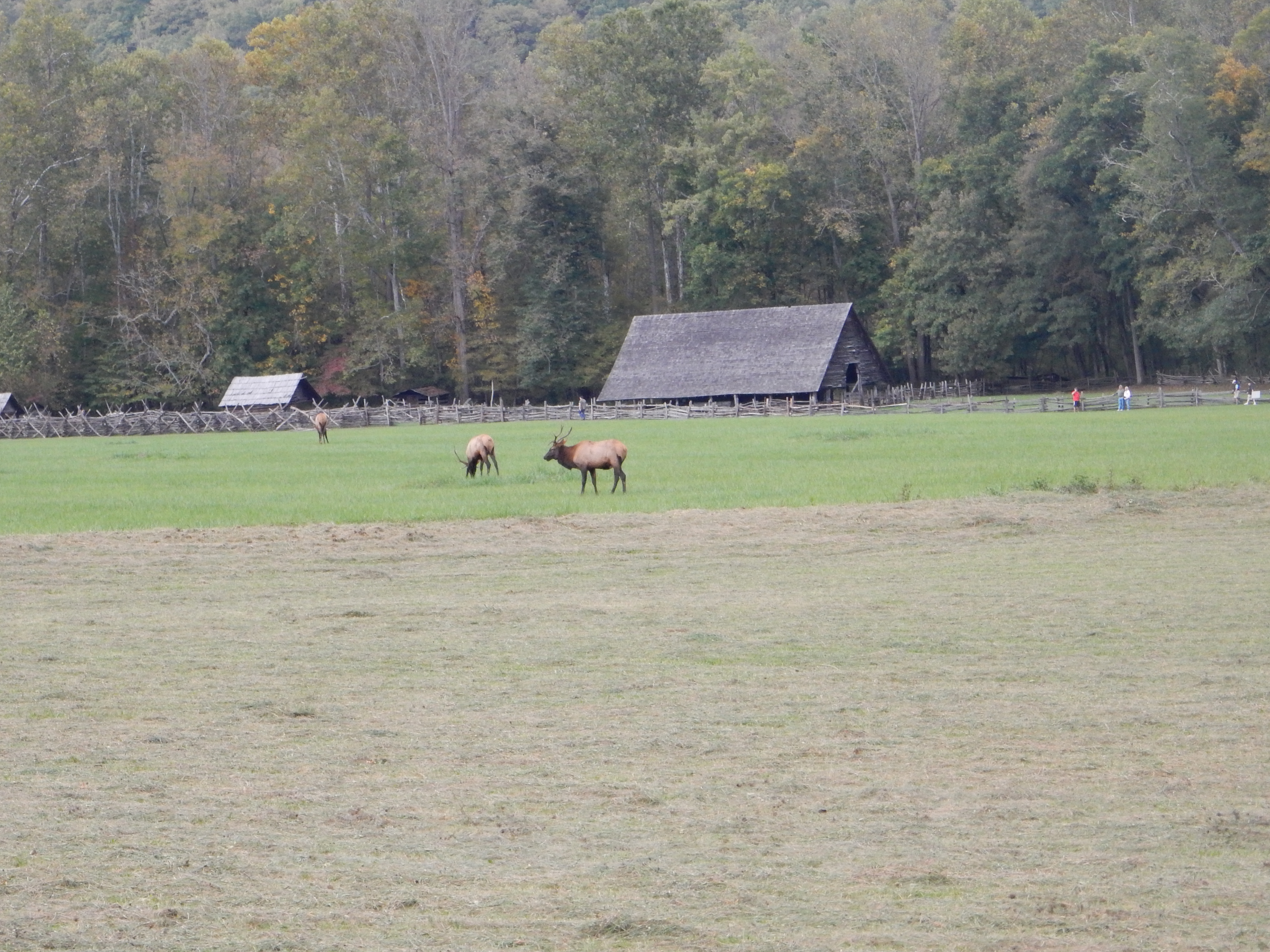
Elk near Cherokee TN

Elk near Cherokee TN

Some of the Cherokee managed to hide out here, some snuck back, and a few stayed after renouncing their tribal citizenship before the Trail of Tears took place in 1838. Over time, the US government began to recognize their rights and as they bought back land, a Cherokee reservation was borne in the East.

We stopped at the Museum of the Cherokee Indian, a well-done presentation that covers topics like Indian creation stories, life prior to the arrival of European immigrants, the Trail of Tears, and the development of the current reservation. One panel discussed the role of Indian schools that forcibly removed young boys and girls from their families and educated them to white civilization standards while forbidding Indian language and traditions from being practiced. This continued until the 1920s and 30s. This was a topic we have come across before, as well as understanding from having lived in Carlisle PA for 25 years, home to one of those Indian schools.

The Cherokees were divided among themselves as to the wisdom of accepting the move to Oklahoma. Many did not wish to leave, many others saw no chance to avoid being forced out, and some ended up signing away Cherokee rights even though under tribal custom they did not possess the authority to do so. This led to decades of conflict among the transplanted Indians living in Oklahoma. (Other Cherokee had moved across the Mississippi earlier in the 1800s.) A sad tale but unfortunately only one of many such tales in America relating to the treatment of Native Americans.

Ed and Chris 10 PM
Categories: road trip, travel | Tags: , , , , , , , , | Leave a comment

2015 Trip Six, Great Smoky Mountains, Oct. 10-11

Gatlinburg TN Sunday Oct. 11

View from Newfound Gap Road Sunday in Great Smoky Mountain Park

View from Newfound Gap Road Sunday in Great Smoky Mountain Park

“Whenever you travel in the Great Smoky Mountains, plan twice as much travel time as usual.” Amen! This is a very popular park. This is a popular time to visit. It was the weekend. The road network is limited so everyone has to drive the same roads. Of course, the roads are two lane and curvy. Then you have the vehicles we experienced today: A. bumper sticker on one-I brake for photo ops–it did. B. Bubba and the gang-a pick up with folding chairs in the bed of the truck so people can sit and view the countryside. C. On the one lane, one way road next to and after the sign that says “Do Not Stop. Use Pullovers. Be Courteous” is the vehicle that is constantly stopping-not even a view or wildlife in sight.

Blue heron in woods by Cades Cove

Blue heron in woods by Cades Cove in Great Smoky Mountain National Park

Foolish us. Our own notes said to avoid Cades Cove on weekends. But we thought by getting up early and out at sunrise we would avoid traffic problems. Well, we limited some problems but when you are out all day, you are bound to experience traffic. We spent two hours driving the loop road, wandering around Cades Cove, and hiking through the woods, finishing up before it really started to get popular. (P.S. A cove is a small valley surrounded by mountains)

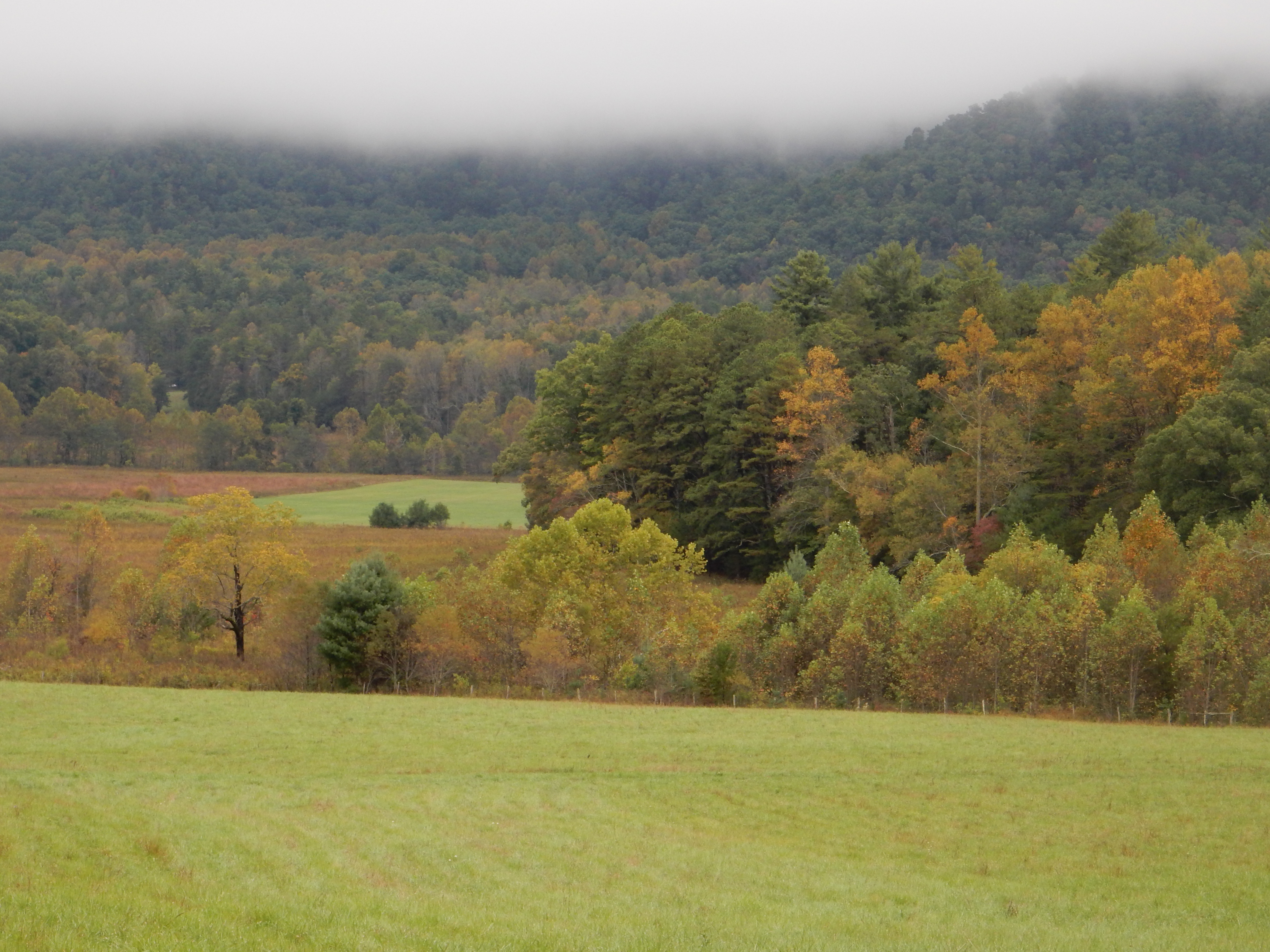
Part of Cades Cove area

Part of Cades Cove area

Cades Cove is one of the areas in the Great Smoky Mountain National Park that showcases the life of the European Settlers that lived here pre-national park. Native Americans hunted in this area, but their primary settlements were lower down along the rivers and valleys. In the 1820s European settlement began as Scots-Irish people from surrounding areas started to move in. The mountains are steep with few natural gaps and trails so settlement came later than surrounding areas. Subsistence farming was the main occupation.

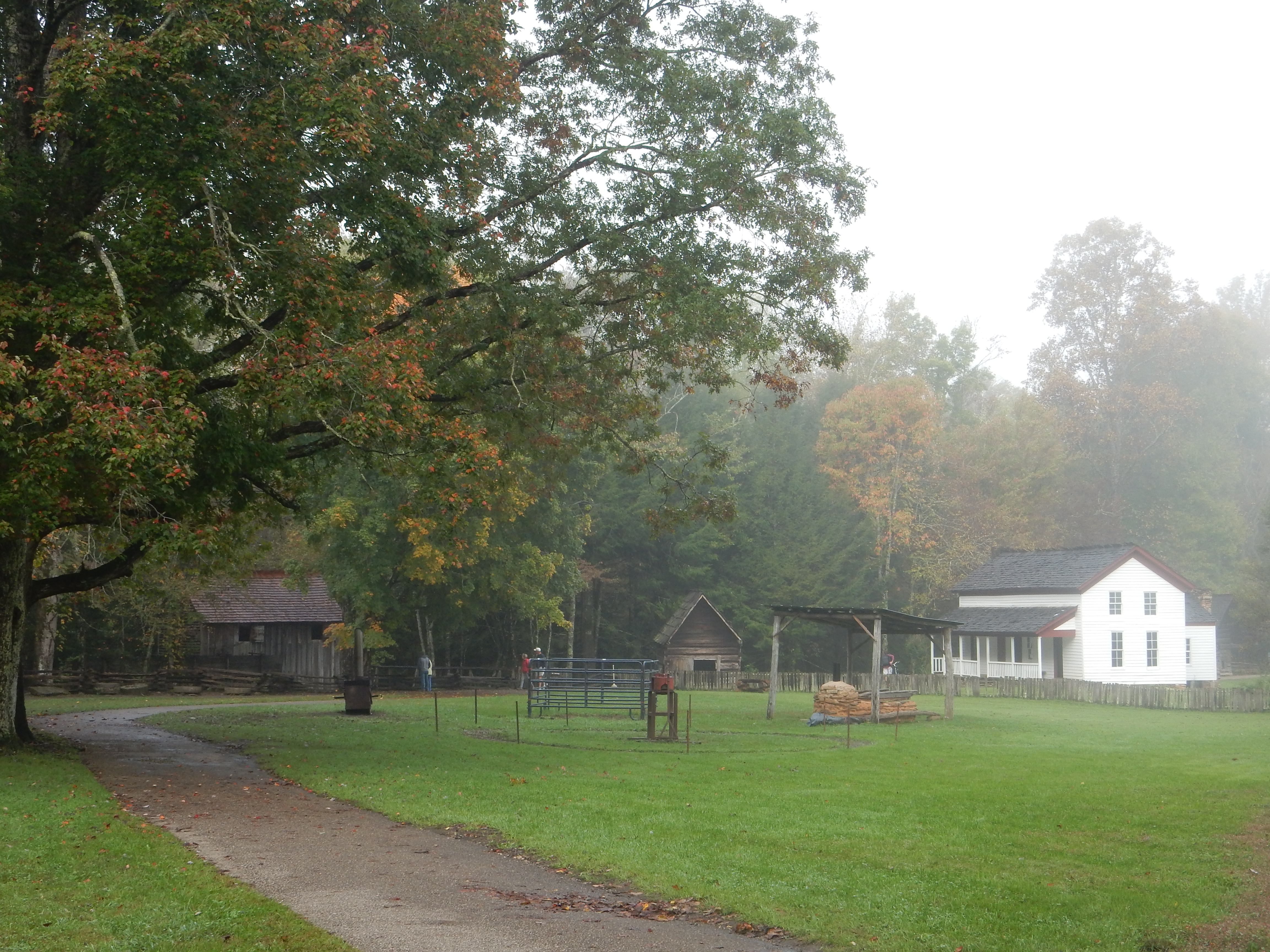
Cades Cove

Cades Cove

The current Cades Cove area highlights how the people lived. The population seesawed, increasing to 865 by 1850 and plummeting down to 275 in 1860 and back up to 700 in 1900. Cades Cover offered better soil for growing crops and grassy areas to fatten cattle. But the soil became worn out, and with larger families, each succeeding generation had less land to farm. More people moved out but the area still remained viable. When the national park was formed (we will discuss that further in later posts) people were still living here and were bought out or forced to move.

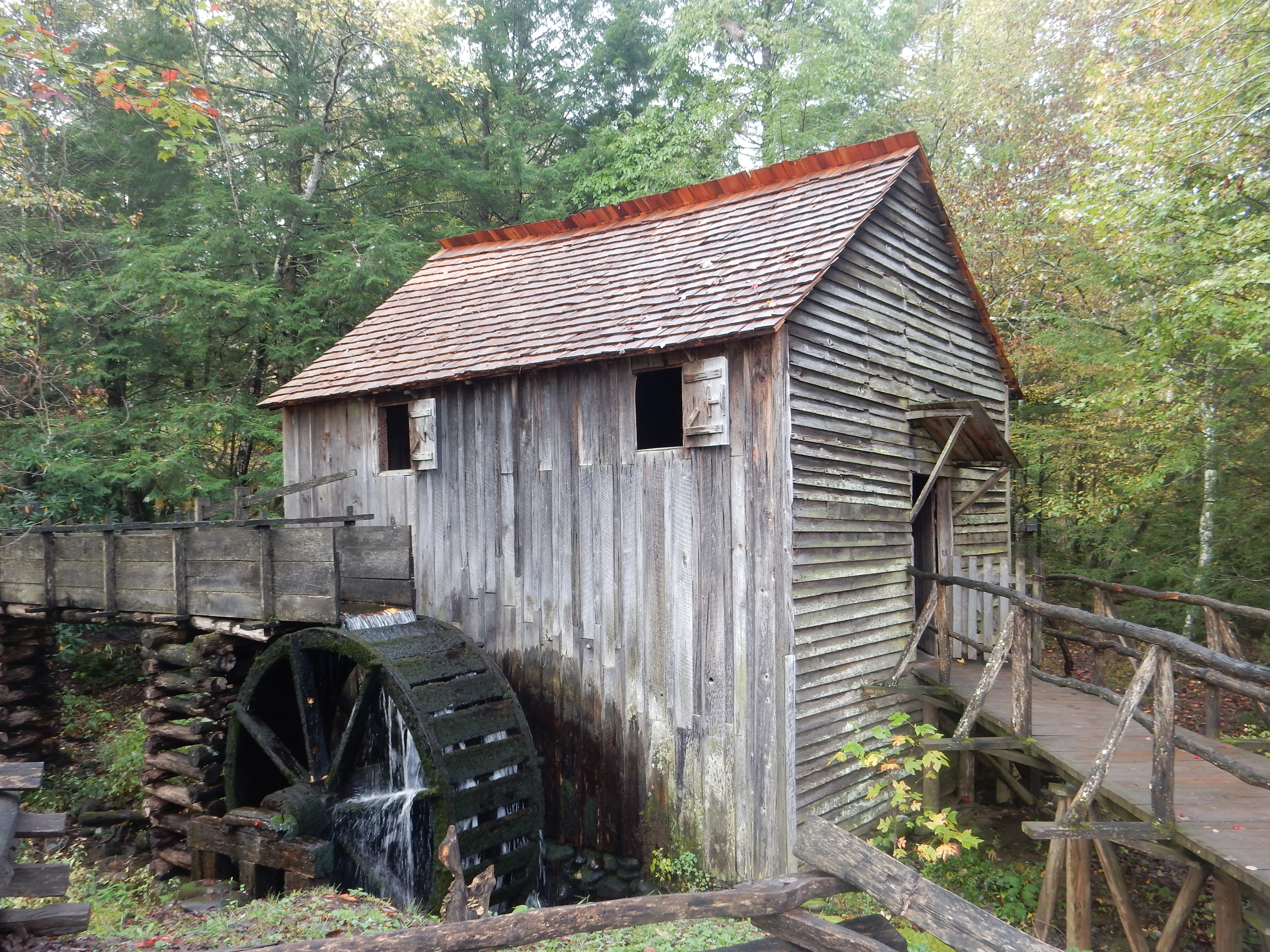
Gristmill at Cades Cove

Gristmill at Cades Cove

Cades Cove

Cades Cove

The buildings in Cades Cove include homes, a grist mill, blacksmith shop, barns, smokehouse, etc. There are three churches; the Methodist, Missionary Baptist, and Primitive Baptist. The Baptist churches split around 1840 due to a major disagreement over the literalness of the Bible and new “innovations of the day”. In the same vein, the Civil War caused deep divisions. The mountainous areas of Tennessee, North and South Carolina had Union sympathizers and deep family and neighbor conflicts occurred.

Laurel Falls

Laurel Falls in Great Smoky Mountains National Park

Today (Sunday) started out cloudy, with the rain that began Friday night continuing through all day Saturday. We only went on a few hikes Saturday. One was to Laurel Falls, an 80 foot waterfall that had high water volume due to the rain. The trail is one of the few paved trails but is steep and it took us over an hour to hike out and back the 2.6 mile trip. The Great Smoky Mountains usually receive 55 inches of rain per year. This makes for slick rocks and vegetation on the trails, but also translates into abundant vegetation. Mountain Laurel and Rhododendron are seen on most trails.

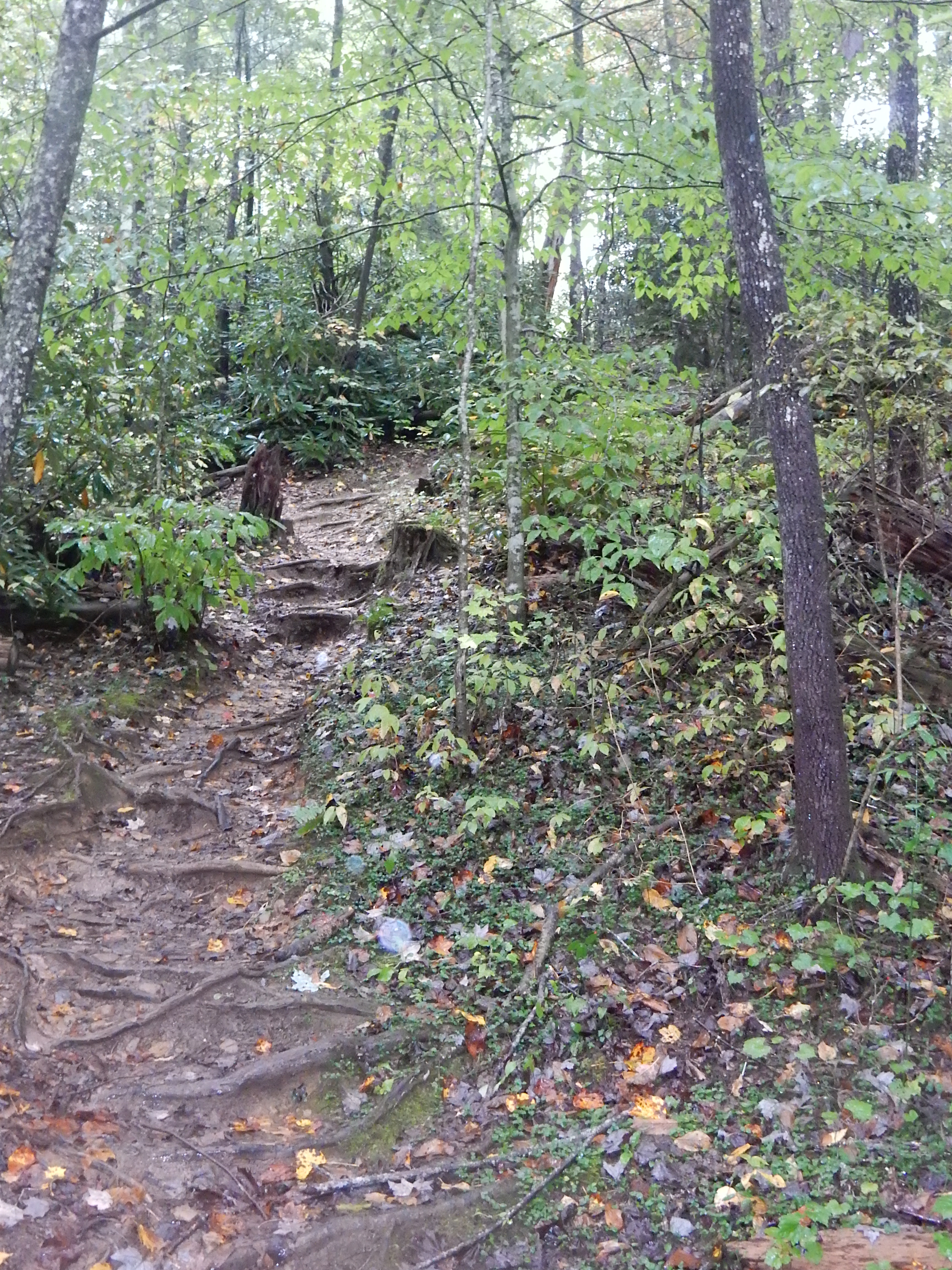
The Park Service also promotes trails called “Quiet Walkways”. These are trails that don’t go to any particular destination and you can hike along them and then return back whenever you like. These trails are designed just to let you get out and experience the woods. This park is actually an International Biosphere Reserve. The park literature states: “No place this size in a temperate climate can match Great Smoky Mountains National Park’s variety of plant and animal species.” Whew! You can be sure that when we are out hiking, we are not able to identify more than a few of the 1,500 flowering plants here.

After climbing up this hill, ...

After climbing up this hill, …

..we found this old cemetery

..we found this old cemetery

On one of the quiet walkways Saturday we scampered (well, sort of, for two people in their 60s) up a steep hillside path and were surprised to find an old cemetery hidden in the woods. In most cases, the grave markers were simply slabs of a shale like stone stuck in the ground. Only two or three had lettering that was still visible. None of the literature we read had mentioned this place.

Along the West Prong of the Little Pigeon River

Along the West Prong of the Little Pigeon River

Another quiet walkway on Sunday led to a valley along side the West Prong of the Little Pigeon River. This area had also been the site of a small gathering of settlers until the park came along. A few stone fireplaces were still standing. Since the park was established in 1934, the vegetation has sprung up and one is hard pressed to visualize how the homesteads and farms would have looked in what now seems to be a floodplain forest.

On the Cove Hardwood trail today, we did see relatively fresh bear scat but pushed on anyway. Luckily there was a family of four and one dog in front of us on the trail. We pushed ourselves to keep them in sight as a bear prevention device. This was a challenge, the hike was steep and slippery with rocks and roots just looking for a chance to trip us.

Just a small falls, Cataract Falls, near the visitor center at Great Smoky National Park

Just a small falls, Cataract Falls, near the visitor center at Great Smoky National Park

Meals the last two days have been in our unit. Frozen beef patties for dinner on both nights; cooking them created a smoke odor which managed to permeate the rooms with the smell of burnt meat.

Ed and Chris 9:30 PM

Categories: road trip, travel | Tags: , , , , , , | Leave a comment

Blog at WordPress.com.