
Chris and Joyce by Arizona Sycamores at Montezuma Castle National Monument
Prescott, Arizona February 12
Yes, there are still portions of Arizona we have not traveled to, through, or around. Prescott is one and Payson is a second. Hopefully this trip will cover both of them, although weather issues may derail Payson.
Tuesday, however, was glorious weather wise. Sunny and no wind. Prescott is north of Phoenix and our drives took us to elevations ranging from 3,000 to 7,000 feet. Prescott itself is at just under 5,400 feet above sea level. The temperature reached into the high 50s. We landed Monday night and I am sure we looked foolish to some since we were carrying a winter coat. Our car did not have a snow brush or ice scraper but you know, not everyone who lands in Phoenix stays there. Snow and ice and rain are all forecast for some time during the ten days of our trip.
But for Tuesday, we forgot about the future forecast and enjoyed the sun. We were not alone. After stopping in Scottsdale and picking up Joyce, Chris’ sister-in-law, our first stop was Montezuma Castle National Monument. The National Monument is a few miles east of Interstate 17 that traverses the mountains between Phoenix and Flagstaff. The drive there provides a pleasant view of the valleys between the mountains. The visitor center parking lot was almost full, including a cement mixer. Evidently many others took advantage of the weather and decided to visit this location, a national monument preserving the site of native peoples who lived in this Verde River valley.

Montezuma Castle National Monument, Arizona
The hike from the visitor center to the area of the cliff dwellings was short. Part of the walk was closed off as a crew was installing a concrete base for a new solar energy installation. Evidently, however, the contractor was too optimistic that the concrete could be pumped the 800 yards from the parking lot to the work site. Some of the concrete was being transported by a mechanized wheel barrow device while the rest of the crew was figuring out what to do next.
We discovered the construction issue during our pleasant and informative chats with park staff and volunteers. Yes, we also learned about the significance of the Sinagua people who built the five-story, 20-room dwelling during the period of time between 1100 and 1300. For unknown reasons, these people left the area in the early 1400s. Moving on, they populated other areas of Arizona. Numerous clans of Hopi Indians claim ancestry to the Sinagua and there are cultural and linguistic ties to others such as the Zuni, Yavapai and Pima.
The Sinagua are frequently separated by archaeologists into northern Sinagua, around Flagstaff and its related monuments, and the southern Sinagua. The southern Sinagua found the Verde River valley a good place to provide for themselves with running water and fertile land. The cliff dwelling at Montezuma was not the only location where they lived but this is one of the best preserved. The cliff here with its limestone base proved a reasonable location; living in the cliffs saved valuable agricultural land, and the cliff dwellings moderated the summer and winter temperatures.

Montezuma Well
Montezuma Well is a second section of the National Monument, about 10 miles away. The well site is a lake located in a limestone sink and fed by continuously flowing springs. The lake waters seep out into a nearby creek which passes Montezuma Castle on its way to the Verde River. The Sinagua people who lived in this area had constructed an irrigation system for farming. (See our earlier post about Casa Grande Ruins in Coolidge AZ from 2018 Trip 4.)
The well jumps out at you as you ascend a hill to the crest of the limestone sink. Several ducks enjoyed the water and easy feeding. Ruins of small houses and pueblos are nearby. The lake and creek seem out of place here in the desert but these creeks were a vital survival tool then and still are today as the Verde River is one of the few perennial streams in Arizona.

The largest Arizona Sycamore in the state, located at Montezuma Well
The two volunteers, husband and wife, staffing this site are part of the Volunteers in Park program. They live in their RV while volunteering here for three days per week. They have been here since August and then will move in May to North Cascades National Park. If it were not for the need to have an RV, Chris and I would have opted for that opportunity long ago. It was the husband who pointed out the largest Arizona sycamore tree in the state that had sprouted at the base of one of the cliffs where the water from the lake seeped into the creek. We found the bark of the tree stunning in its primarily white color and the form emphasized by the lack of leaves in winter. Arizona Sycamore trees were used by the Sinagua as the main beams in the Montezuma Castle dwelling and are still supporting the roof there after some 6-700 years.
One last comment about this national monument. The names Montezuma Castle and Montezuma Well were given by early American settlers who believed the structure had been constructed by the Aztecs. They were wrong but the name has remained.
Lunch was a choice between the casino and a Sonic. We opted for Sonic since this one had inside seating and I was hoping for a malt. My hopes were dashed as the powers that be had removed the malt option from the menu here, the manager did not know why. I did not complain, I saved a heap of calories.

A view of and from Tuzigoot National Monument
On to our third stop, Tuzigoot National Monument. Tuzigoot is located near the Verde River and consists of the remains of a 110 room pueblo with some second and third story rooms. The Sinagua who lived here also left the area around the 1400s. Excavation and refurbishment of the site led to the realization that the construction methods for the pueblo here differed from those used by the Northern Sinagua by Flagstone. No one knows why.
Tuzigoot is built into a hillside providing a great view of the surrounding area including the former gold mining town of Jerome built into the mountainside and the large cement factory owned and run by Salt River Pima-Maricopa Indian Community. The old mining operations left huge piles of tailings that polluted the water into azure blue. Not until the 1980s did residents have the ability to use new environmental laws to force compliance and begin remediation efforts. Phelps Dodge, the successor to the original mines fought the remediation efforts for two decades but in the early 2000s, the effort began.
The current owner, Freeport McMoRan Copper and Gold, has continued the remediation with numerous positive results. However, it takes decades at least to fully mitigate the damage and heavy metals continue to leach out of old mines and mine buildings. Slag from tailings piles still is being mined for minerals. The tailings ponds which covered acres of land leading to Tuzigoot have been covered but a visitor does not immediately recognize that the air pollution from the smelter which had been located in the air killed the native trees and the farming industry in the valley.

Near the top of Mingus Mountain Pass at 7,000 feet
Today we found the town of Jerome transformed into a cutesy shopping destination. Built on the mountainside, one named Cleopatra, Jerome went from nothing to a mining boom town of 15,000, to a ghost town, to a small community of 450 with artists, boutique shops and restaurants. We only drove through it today on our way over Mingus Mountain to our lodging in Prescott. Prescott has a population of 42,000.
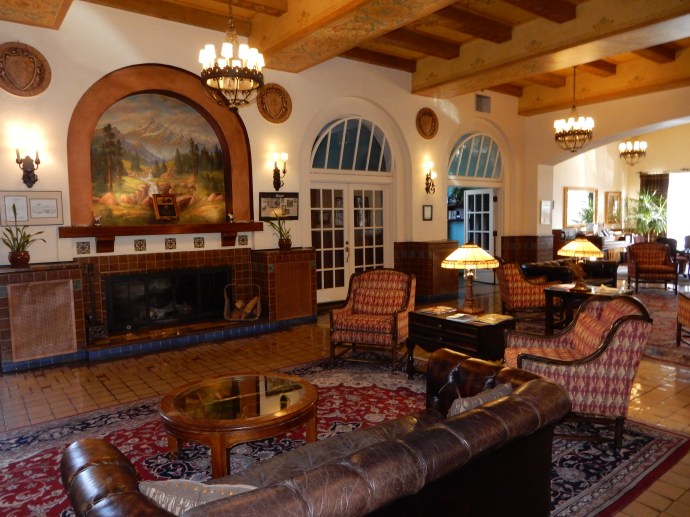
The lobby of the Hassayampa Inn
We are staying at the Hassayampa Inn, a historical hotel built in 1927 and restored in 1985. The vintage 1927 elevator has to be run by staff who helped us bring our luggage upstairs. After that, we walked the stairs although we were told that staff promptly answers the bell to operate the elevator as needed, or desired, by guests. The building still looks in good condition although rooms are small. Dinner was excellent.

The view partially up Mingus Mountain looking over the valley where Tuzigoot is located
Ed and Chris. Feb. 13




 Chris Klejbuk and Ed Heimel travel adventure
Recent Comments