

Pipestem WV April 26
Before we left West Virginia, we made one more visit to the New River. Sandstone Falls on the New River is 30 minutes north of Pipestem Resort State Park. The waterfalls are mentioned frequently and positively in travel literature about West Virginia and in NPS brochures. The falls extend across the New River, punctuated by rock outcroppings. The rock outcroppings have trapped fallen tree trunks on top of the rocks, waiting for the next high water level to push the tree trunks downstream to the next catch point.

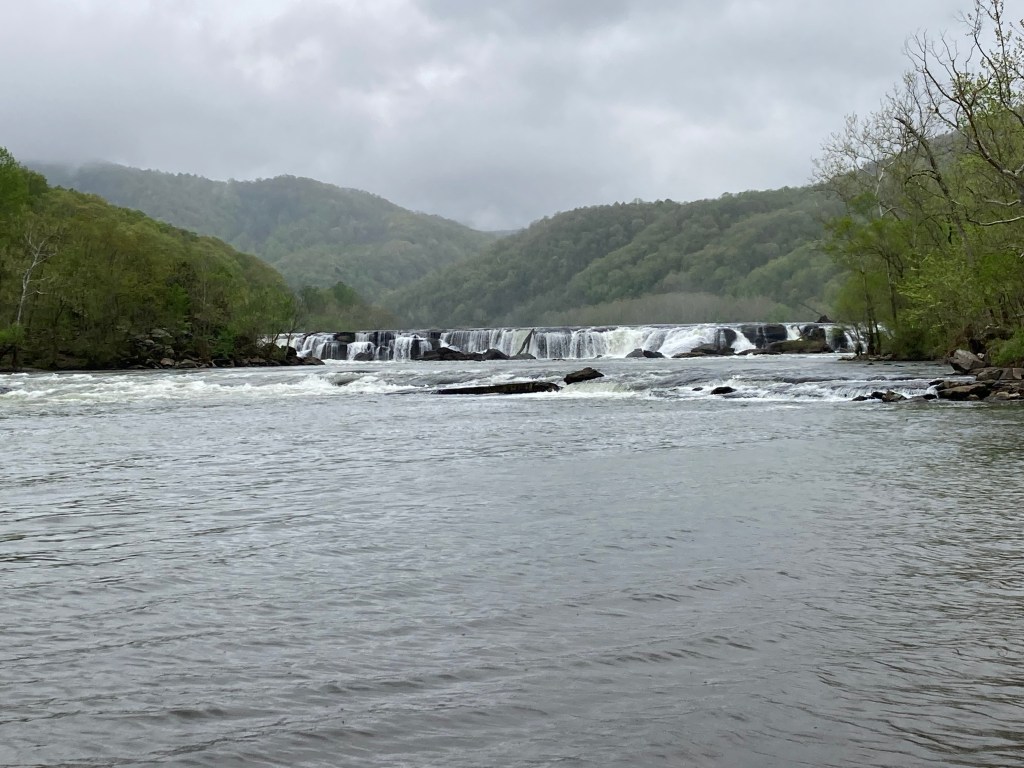
The literature indicates the height of the falls ranges from 10-25 feet. Not stunning in height, but the full river width of the falls lends to a greater majesty. The New River is one of the unusual rivers that flows from south to north. Here at Sandstone Falls, the river becomes more narrow, entering a gorge phase. The river drops 750 feet in the next 55 miles.
The day was rainy when we were at the falls, sunshine and reflections in the water would have made for a more impressive photo. Several people were out walking, taking photographs, fishing, etc. We had previously viewed the falls from above, this location places you at river level, at an island in the middle of the river just downstream of the falls. The river seemed shallow but with a fast current. As the signs advise, drownings are a major cause of death along the New River. The current can trap a person, even in very shallow water.
Dinner was back at Pipestem Resort State Park dining room. The menu is limited but the food has been quite good. Even the trashed food must be tasty as we saw raccoons each night who evidently go dumpster diving on a regular basis.
Wednesday morning we were gone by 7 AM; a real sacrifice since the dining room does not open until 7. The day would be longer than usual, over 600 driving miles plus a stop at our last NPS site for this trip. An early, long section of the road was along I-77 and I-64, the West Virginia Turnpike. The road was mountainous and curvy; the tolls on this road were 20% of the tolls we paid for the entire trip. Thankfully EZ Pass eliminates the old stop and pay method of gone by years.

Lincoln’s Boyhood National Memorial in Lincoln City Indiana was well done. It surprised us, not sure what exactly we were expecting. The site is a memorial to Abraham Lincoln’s formative years, from ages 7-21. This is where he matured, reading books, splitting rails, arguing politics, learning how to be a farmer and learning that was not the life he wanted in the future. His mother died after two years here from an illness frequent on the frontier, milk sickness. Cows eat the white snakeroot plant native to this area; it is toxic to them and to humans who drink its milk or eat its meat. Rarely a problem today, this disease claimed Nancy Hanks Lincoln’s life as well as many others in the little community here. The cause of the disease was not known at the time. She was buried on a knoll not far from the Lincoln farm.


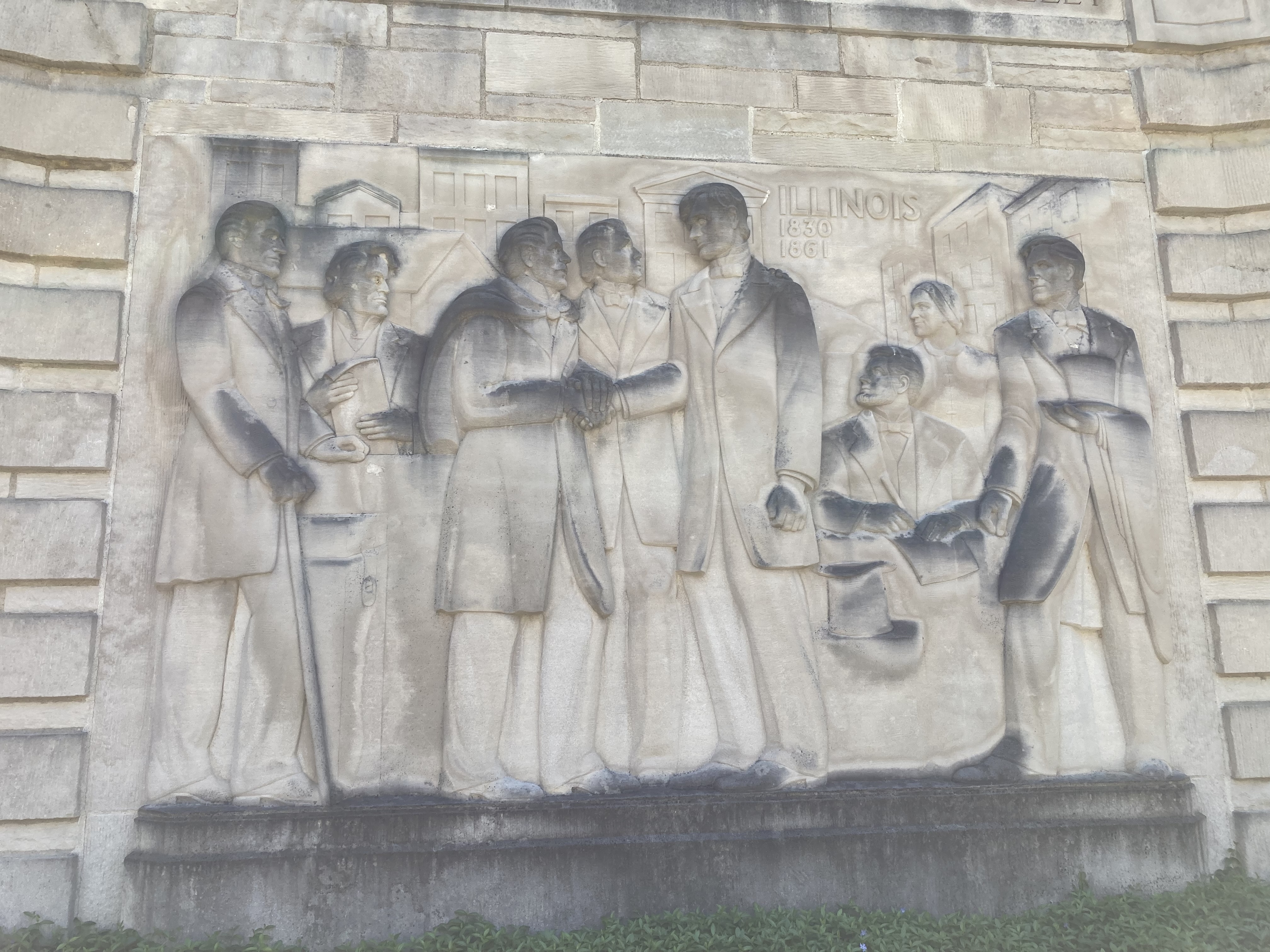
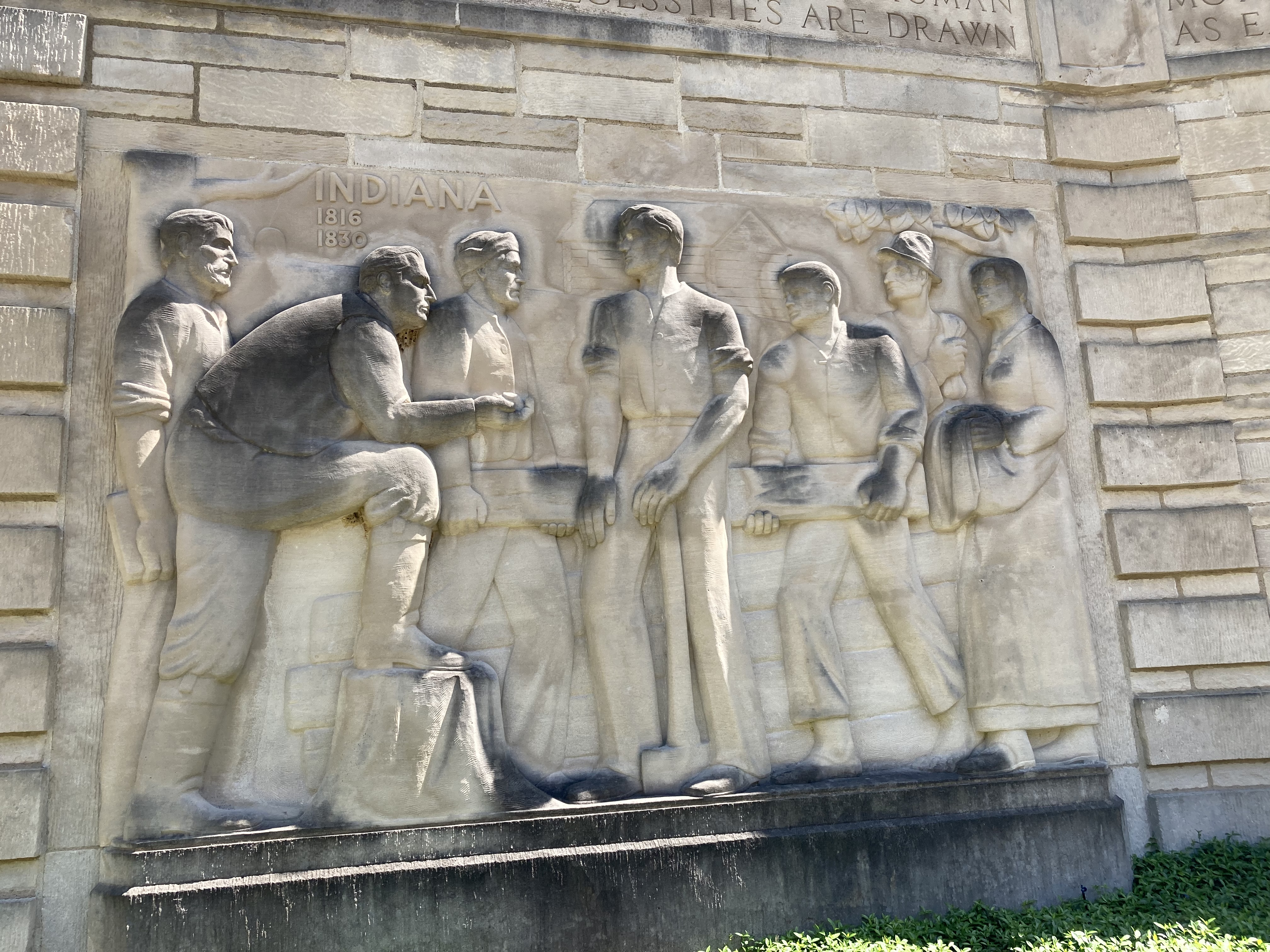

In 1943, the state of Indiana constructed the Lincoln Memorial Building to honor Lincoln and his mother. Materials are all native to Indiana. It was transferred to the National Park Service in 1962. The memorial building is a semi-circle with two large auditoriums at either end. One is dedicated to Abraham Lincoln, one to his mother, Nancy Hanks Lincoln. Between the two auditoriums are exhibits about his life in Indiana and his family while he was growing up. On the outside of the building are five sculptured panels of significant periods of his life: Kentucky childhood years, Indiana boyhood days, Illinois political ascendancy, Washington DC presidential years, and the central panel reflecting his place in history.
Besides the memorials for Lincoln and his mother, a living history farm is included on the land where the Lincoln farm was located. Foundation stones have been excavated and marked out while a split log fence and a reconstructed cabin indicate the type of home Lincoln would have experienced. Mary Hanks Lincoln’s actual grave site is not known precisely, but the approximate location is marked and memorialized.

Once again, our visit was enhanced by a friendly and knowledgeable guide, this time a volunteer rather than a park ranger. The rangers were busy getting ready for a huge throng of first graders who would be visiting on Monday. Today’s crowd was about a dozen people while we were there. Enough people to keep the volunteers busy answering questions but light enough to give a visitor personal attention.
We left southern Indiana for the Champaign-Urbana area of central Illinois, a drive of over 200 miles only partly on Interstates. Lodging was our final Hampton Inn of the trip with a Perkins across the parking lot. We managed to force ourselves to have a piece of pie each for dessert.
Thursday-last leg of the trip. 500 miles with rain for the first several hours. Construction continued being frequent but as was normal for the rest of the trip, usually only bridge work. Thus construction areas were short. Our final meal on the road was in the largest Culvers restaurant in Edgerton WI, just south of Madison. As we journeyed north and west, the trees no longer had their leaves and buds visible to us on the road. Probably another week will be necessary for this section to green up. Spring is a little later this year than last, at this time in 2021 the trees were in full leaf.
Last night we reflected on the highs and lows of the trip. The historical units we visited were most frequently the highs. The sites were well done and our knowledge of U.S. history enhanced. Certainly other interesting places could have been visited but our goal of the trip was to reach 300 National Park Service sites. Accomplished.

Ed and Chris, Saint Paul, MN April 30, 2022








 Chris Klejbuk and Ed Heimel travel adventure
Recent Comments