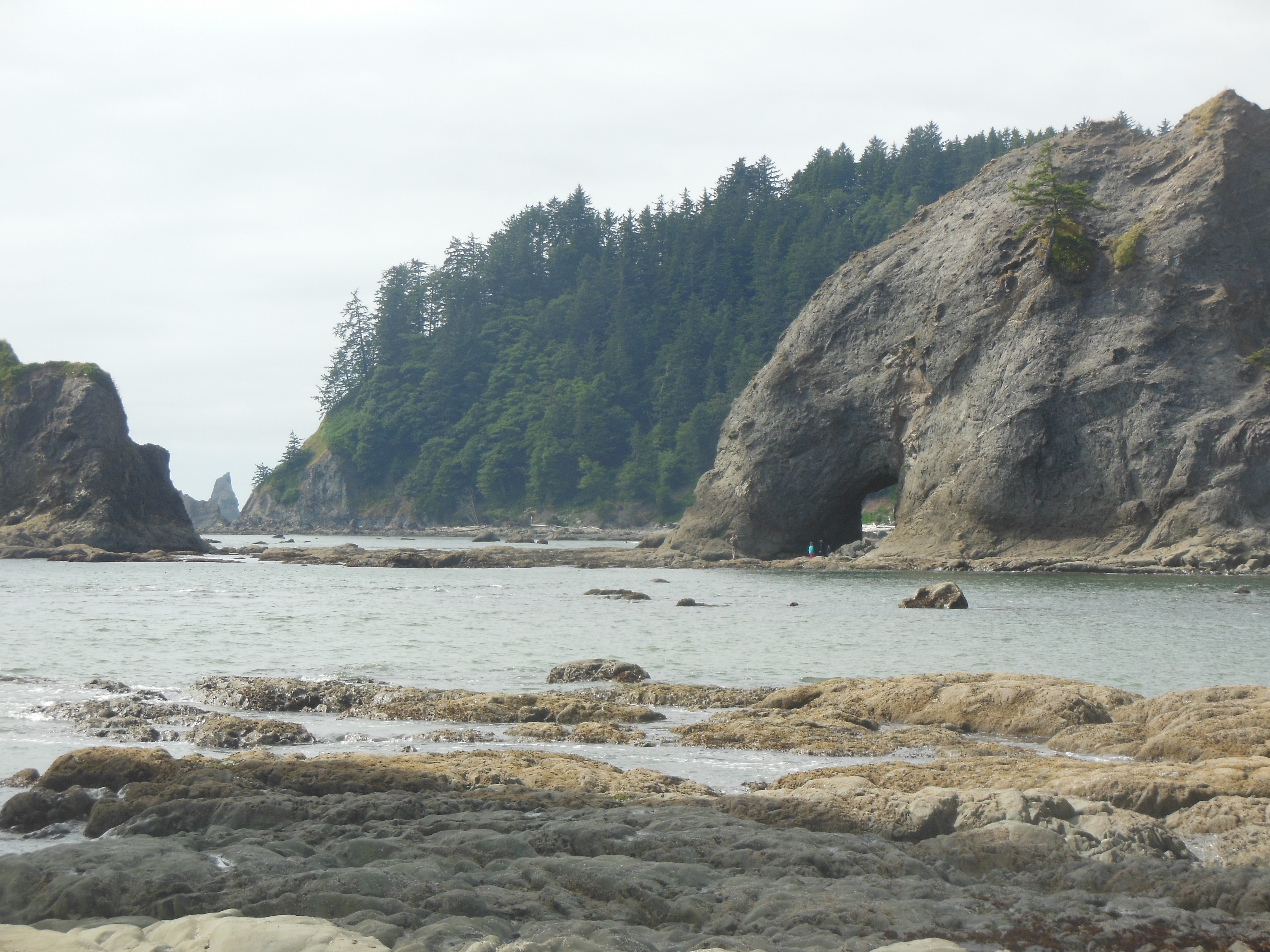
Posts Tagged With: Olympic National Park

2013, Trip Six, The Northwest, July 21

View from Hurricane Hill

View from Hurricane Hill

Sequim, WA July 21
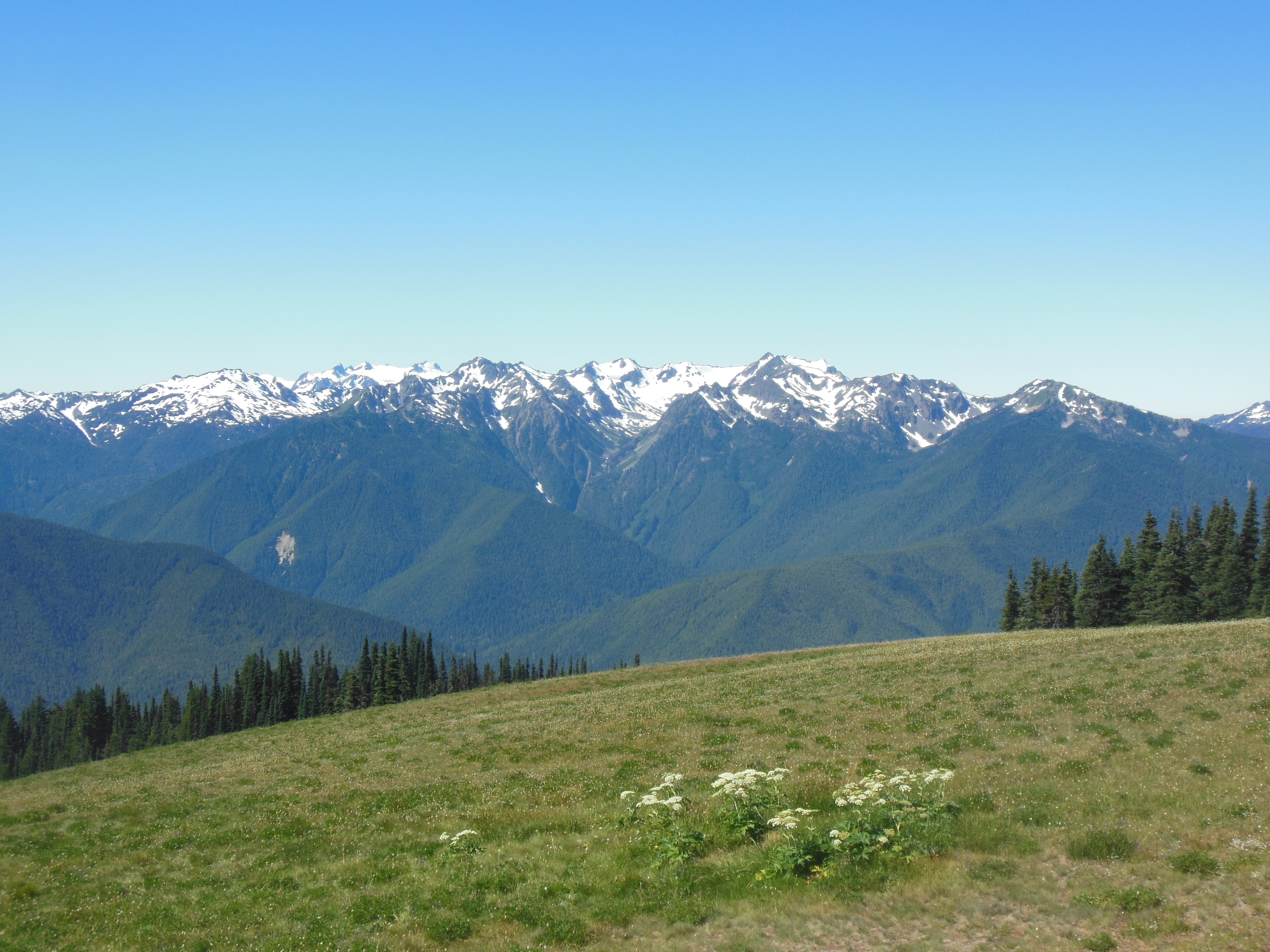
Olympic mountains from Hurricane Ridge

Olympic mountains from Hurricane Ridge


Hiking at Hurricane Ridge

Hiking at Hurricane Ridge


Hurricane Ridge

Hurricane Ridge

I forgot to mention,, Sequim is pronounced Skwim. Luckily Catherine Sweeney made us aware of this prior to arriving here Saturday night.

This was our fourth and last day in Olympic National Park and we focused on the mountains today. The morning in Sequim started out cloudy and we had to guess whether the clouds would be dissipated at our destination. We took a chance that they would be and concerned about Sunday crowds in the park, we headed for Hurricane Ridge first before visiting the lavender festival some more.
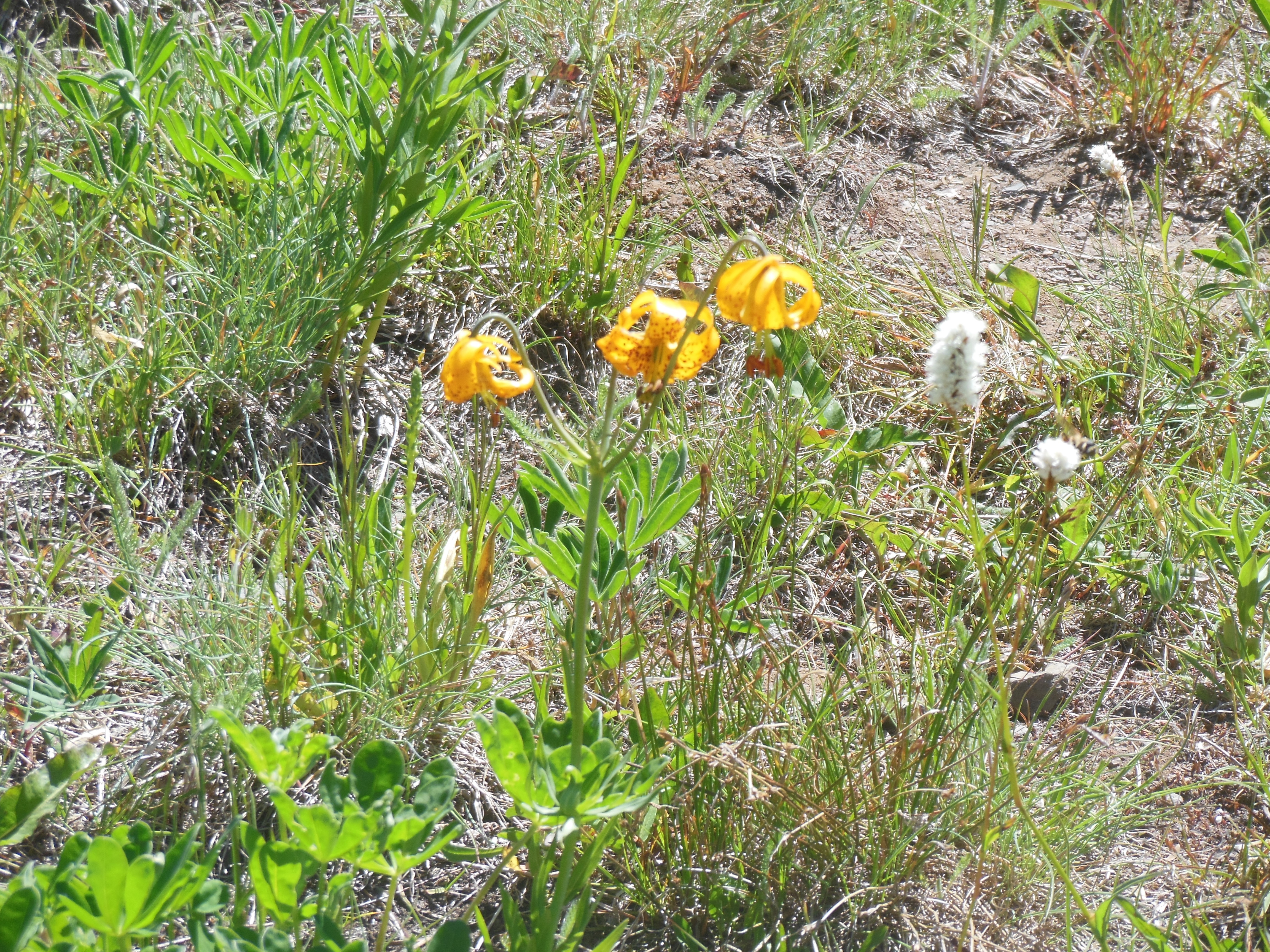
Wildflowers in Olympic  national park

Wildflowers in Olympic
national park


Wildflowers

Wildflowers

Our luck has been very good weather wise and today did not disappoint us. Hurricane Ridge is at 5200 feet, Sequim maybe 100 feet. The clouds started to dissipate as we began the climb up the mountain. Of course, our luck was not perfect. We were “fortunate” enough to practice our patience as we drove the 17 miles to the top behind a van going 5-10 miles per hour below the posted speed limit of 35 mph. The van saw no reason to pull over and let others pass so we enjoyed the view which was now cloud free on the mountains. (Clouds still socked in the ocean area.) But we did make it up to the top more quickly than the bike riders.

a cirque-bowl shaped depression caused by a glacier

a cirque-bowl shaped depression caused by a glacier

The highest mountain, Mount Olympus,is “only” 8900 feet but still has snow and glaciers. As with all of the mountains we have visited, pictures clearly show the decrease in glaciers, particularly in the last 30-40 years.

View from Hurricane Hill trail

View from Hurricane Hill trail

The wildflowers here were abundant. Which were spring flowers and which summer was not clear to me, I just took photos of flowers and will sort out details later.

The mountain hike traversed several ridges. Chris remarked that one should break out in singing Edelweiss from Sound of Music. She mentioned that to a family walking near us and several of the daughters did just that. Sounded pretty good.

We hiked on Hurricane Ridge and Hurricane Hill. The views are of the mountains, the valleys, and the ocean. On portions of several trails, I had to deal with vertigo and step back from the trail’s edge as the downward slopes are steep.

Leaving the mountains behind, we returned to Sequim and visited the lavender fest. There are huge quantities of various lavender flavored and scented products; drawer liners, sachets, bath salts, misters, soaps, etc. Sorry, but we did not buy anything to give away to our friends and relatives. We did have some local ice cream. Chris tried a sample of lavender flavored ice cream but chose strawberry instead for her cone.
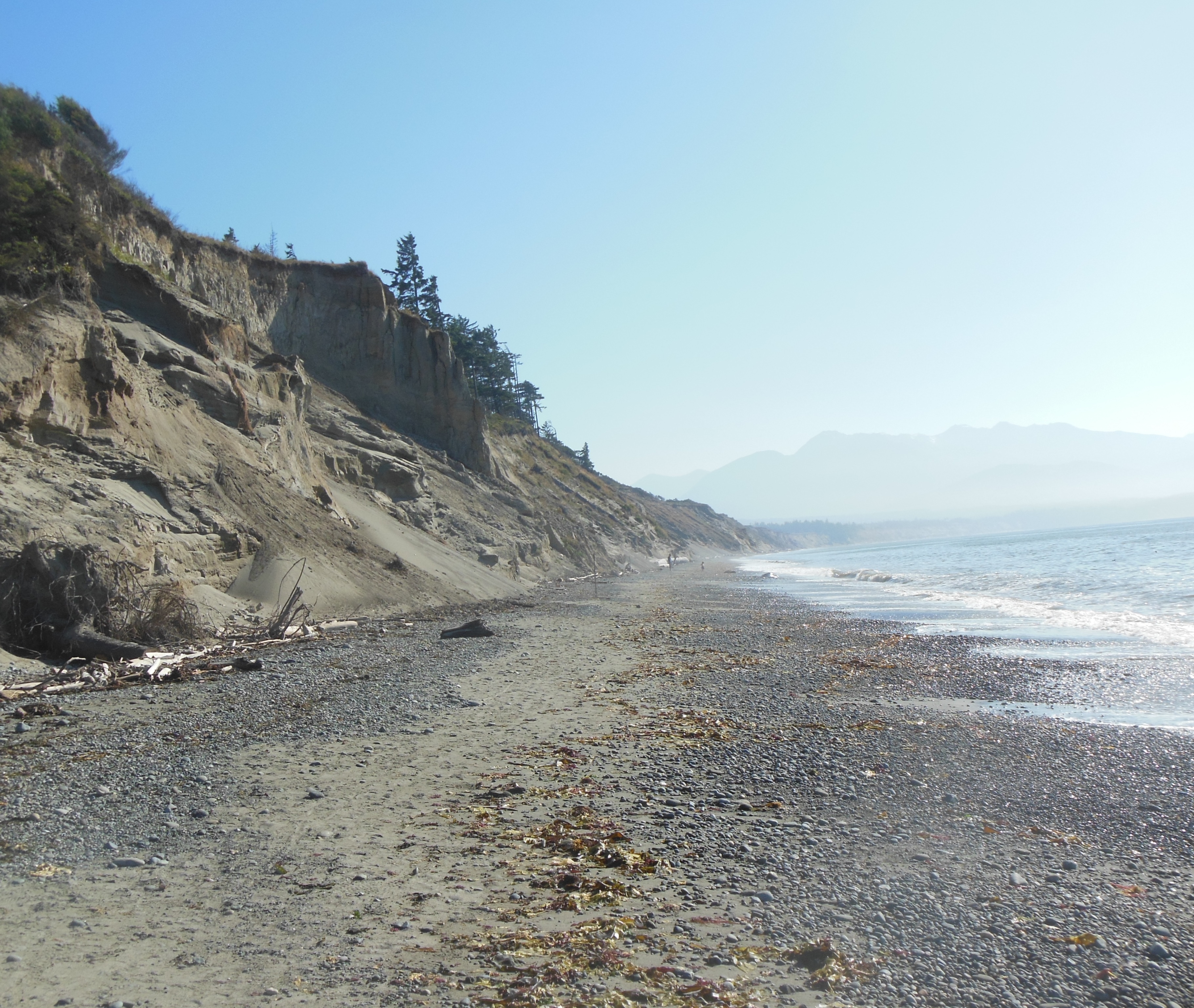
Beach at Dungeness Wildlife Refuge

Beach at Dungeness Wildlife Refuge

We did not see any lavender flavored hot chocolate but since we had tried that in Santa Fe when we visited Jude with Sarah and Deb a few years ago, we clearly knew that was not a winner.

Our next destination was the Dungeness National Wildlife Refuge. This has been around for 100 years and is right next to Sequim. Part of the refuge includes the longest natural sand spit in the U.S. There is a lighthouse at the end of the spit but it is a 10 mile long hike out to it. We were advised not to try it today since the high tide was coming in and we would be trapped or worse. Shucks, that 10 mile hike was the highest hope for the day! We had to settle for a one mile hike to the beach and back. You can feel sorry for us. This short walk had the highest concentration of mosquitoes we have experience yet this year-although the flies were pretty thick on Hurricane Hill.

Dungeness spit

Dungeness spit

Dinner was at a local restaurant and then we returned to our hosts to do a load of wash and more discussion. Interesting people who have an active life and gave us lots of ideas for own future and how to stay active once this year is over.

Monday we are up early to catch the 8:15 ferry to Victoria, British Columbia.

Ed and Chris July 22, 6 am

Categories: road trip, travel | Tags: , , | Leave a comment

2013 Trip Six, The Northwest, July 20

Sequim, WA July 20

Hiking to Sol Duc

Hiking to Sol Duc

Today’s theme in Olympic National Park was water, particularly waterfalls. Breakfast was a quick muffin as we headed out for the day. We hiked to three waterfalls and had lunch next to a lake.

Sol duc falls

Sol duc falls

Waterfall number one was Sol Duc. This one was my favorite; the entire walk had a great fragrance of pine or cedar. Scoff if you will, I could not tell the difference. But the scent was fresh airsy and wonderful.

We started to see more international visitors again as we hiked to the falls. We had more opportunities to take pictures for people again. This did not happen much at the beaches or rain forest.

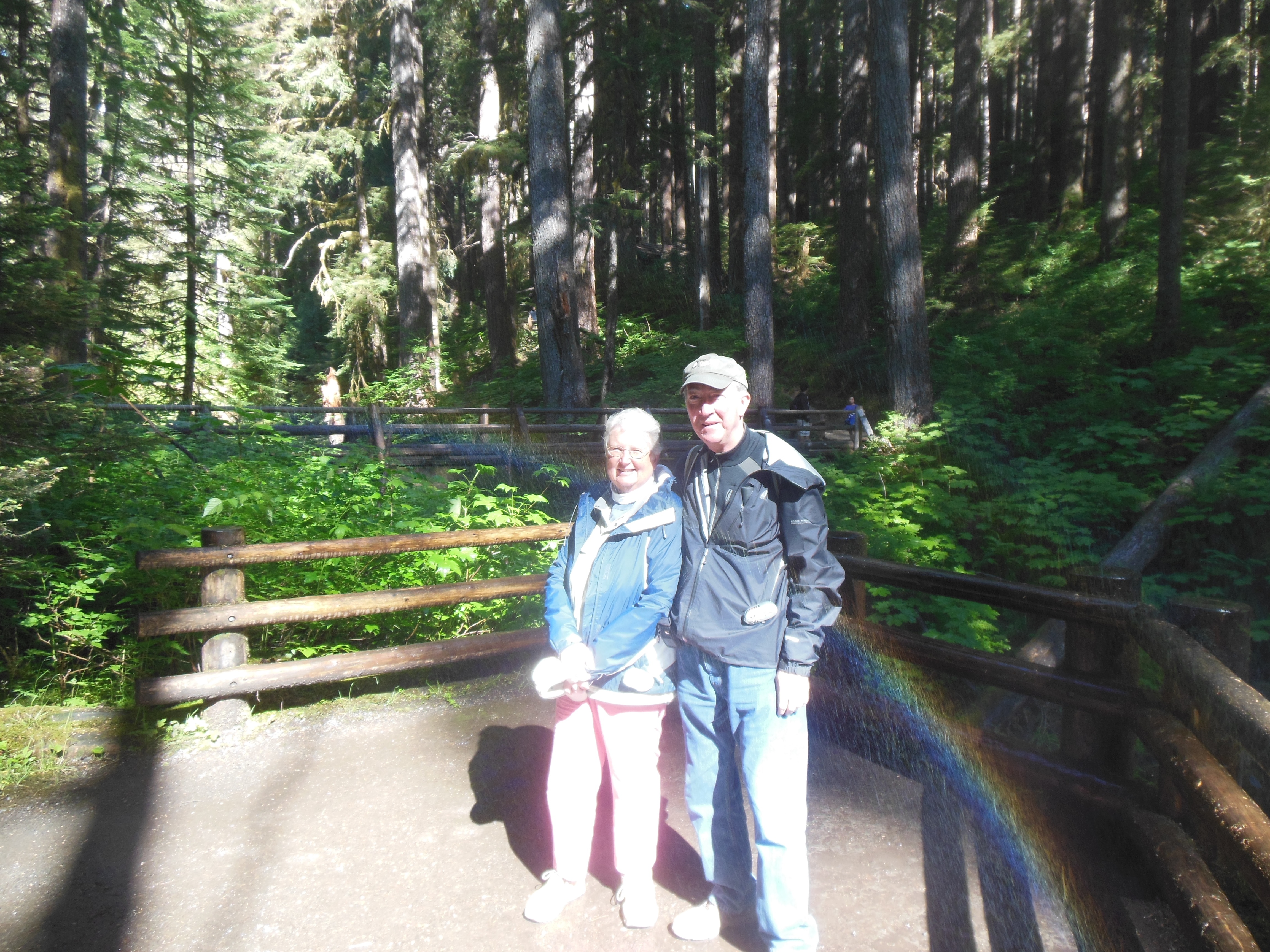
Chris, Ed and a little rainbow

Chris, Ed and a little rainbow

The trail was rocky but not steep. The falls are picturesque but not high. The forest still had thick undergrowth but less moss and ferns. They turn after a small drop and continue to fall in a narrow gorge. The falls created a mist that produced a small rainbow in one spot.

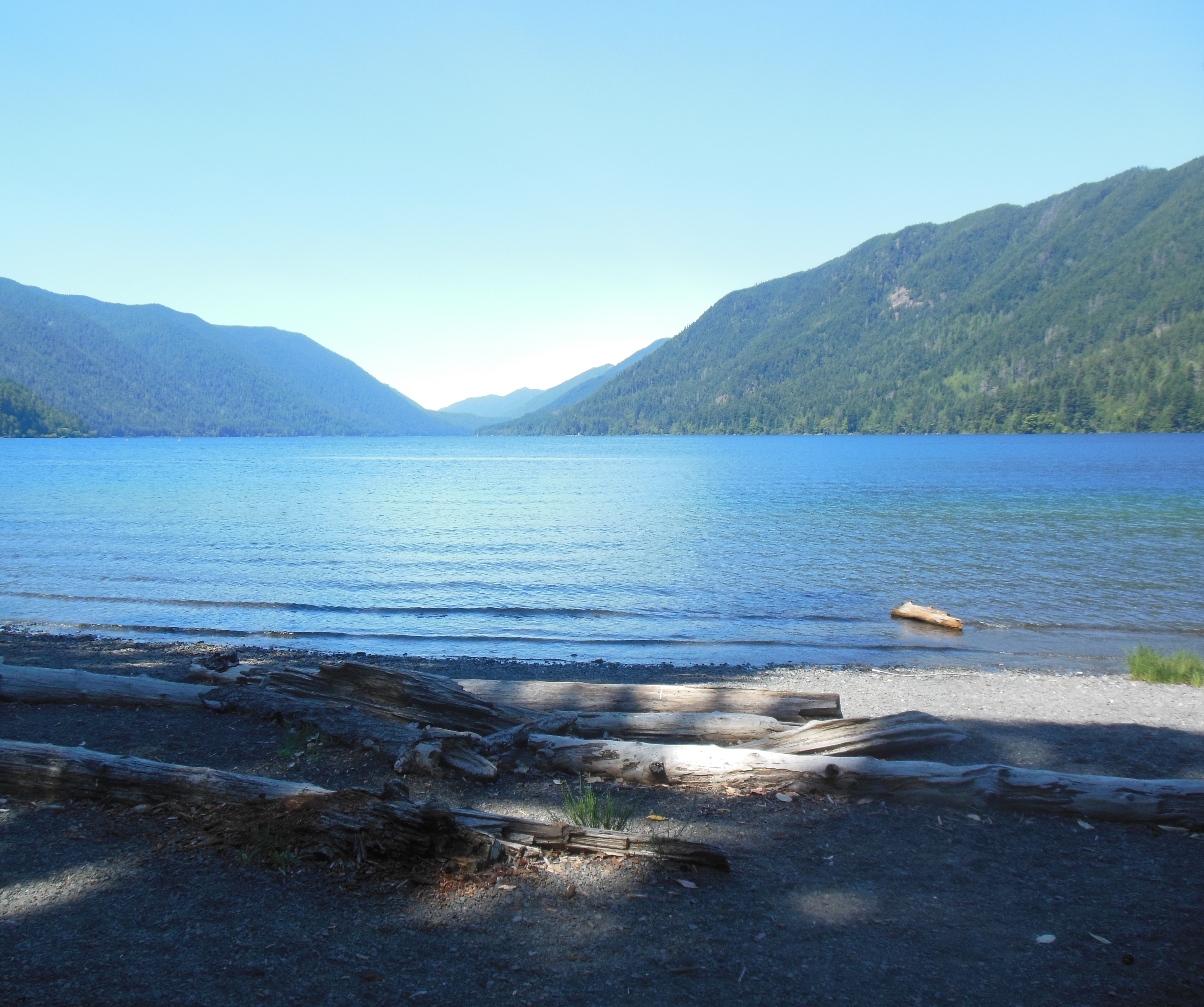
Lake Crescent

Lake Crescent

Lunch was at Lake Crescent Lodge. Lake Crescent has brilliant blue color and is very deep. The official depth has not been recorded, but is in excess of 600 feet. Some estimates are over 1000 feet. In any event, we only looked at it and used the trailhead located here to access Marymere Falls.

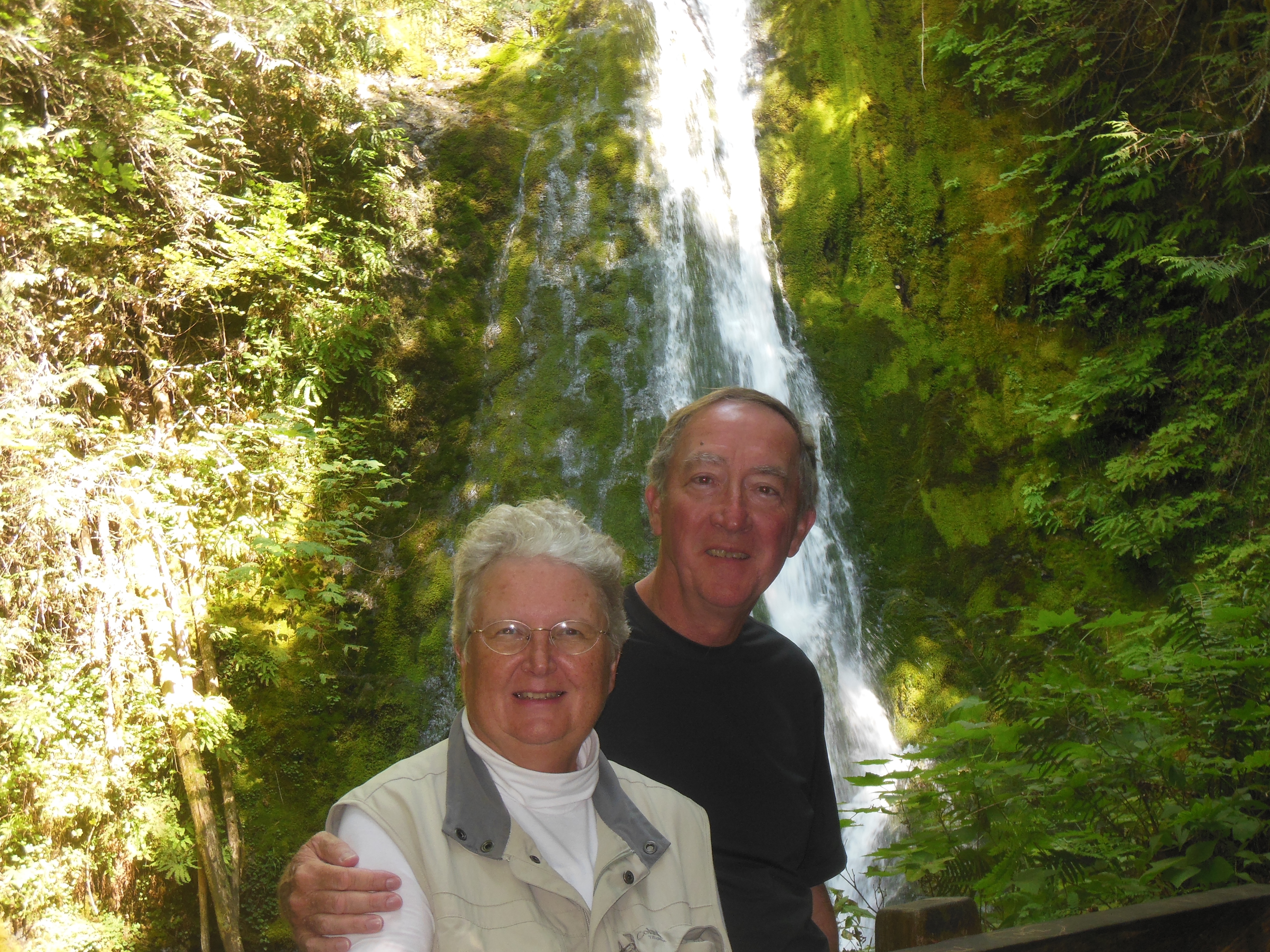
Marymere Falls

Marymere Falls

I was glad Chris had chosen this hike since the very last section of the trail leading to the falls are steep. If I had chosen the hike, we might not have completed it. The falls begin with a narrow band and then go into a classic bridal veil formation. After the climb, the falls were almost anti-climatic.

Madison Falls

Madison Falls

Elwha RIver

Elwha RIver

Our next stop was Madison Falls. This was only a short hike with the falls bursting upon you as you make a turn in the trail.

Madison Falls is in the area of the Elwha River and the largest dam removal project in U.S. history. After removal, salmon populations are expected to swell from 3,000 to 300,000. The natural flow of the river and the estuary at the bay are expected to improve.

The dam removal impacts are being studied by numerous academic and park groups. Restoration of the previous habitat is underway. The project began in 2010, dam removal in 2011 and will not be completed until next year.

Lavender field

Lavender field

As the afternoon moved on, we headed for Sequim. Our Evergreen hosts had indicated this weekend was the annual lavender festival. The Sequim area grows 80% of the U.S. lavender crop. We managed to visit one of the farms open for touring and pick-your-own lavender.

Lavender farm

Lavender farm

We had never been to a lavender farm before. The color is brilliant. The farm acreage under cultivation was not large and a portion of the rows had already been pretty well picked over. As you can see from the photos, the effect is mesmerizing though. A side factor we had not thought about was the presence of large quantities of bees. Given the number of flowers, the bees were not interested in humans.

After Mass and dinner we arrived at our Evergreen hosts where we will be staying for the next two nights. Once again, a pleasant evening of travel conversation was had.

Our education continues in other ways. Deb probably knows this but it was new to us. On 20 oz bottles of Coca Cola, the inside of the label has printing that is visible when you look through the bottle. The sayings are tied to Coke providing “Ahh” moments. There even is a web site. http://www.ahh.com

We are becoming so knowledgeable on so many different topics.

Ed and Chris July 21 7 AM

Categories: road trip, travel | Tags: , , , , , , | 1 Comment

2013, Trip Six, The Northwest, July 19

Forks, WA, Friday July 19

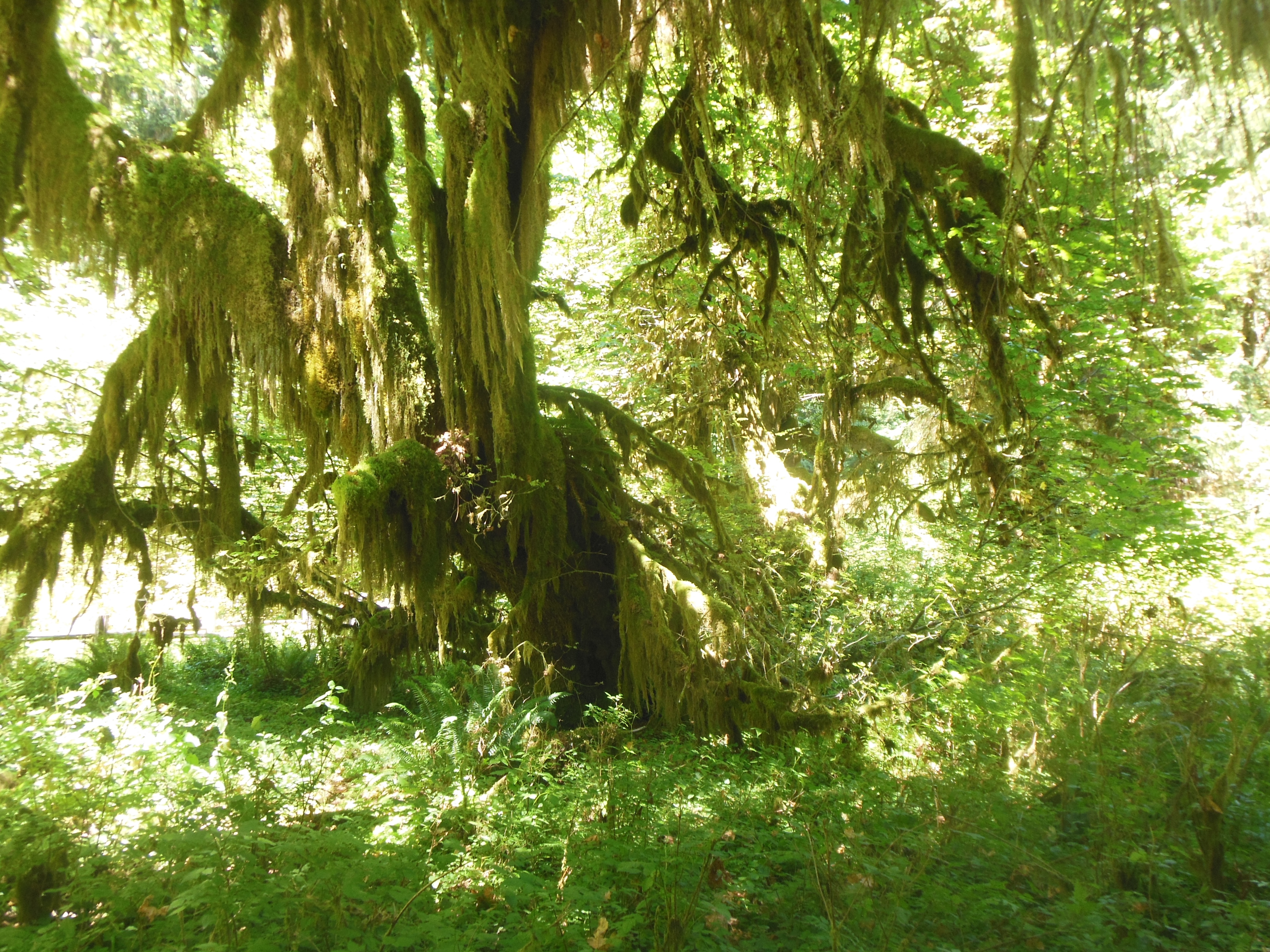
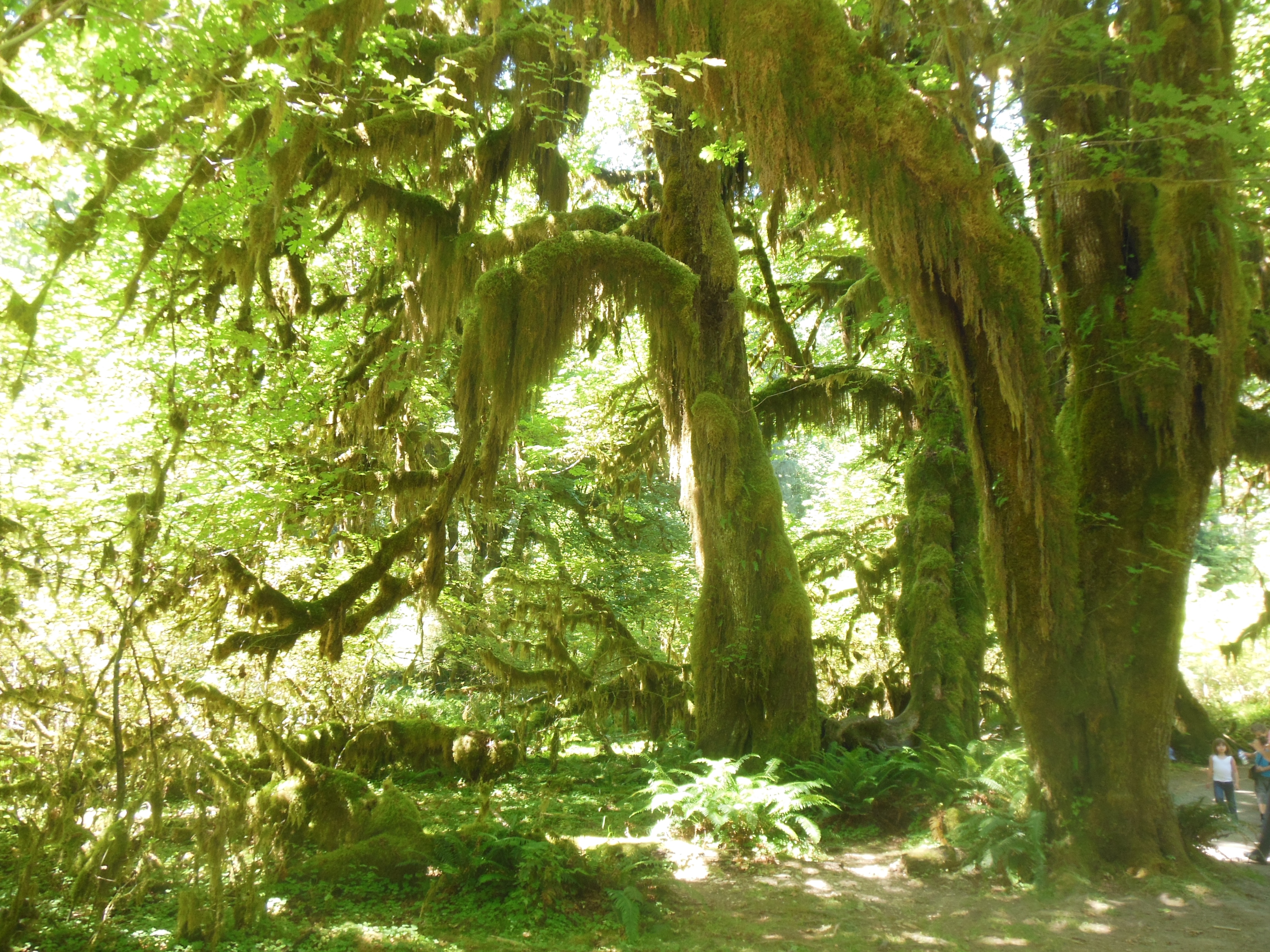
Hoh rain forest

Hoh rain forest

Hoh rain forest

Hoh rain forest

Today was our day to hike in the rain forest of Olympic National Park. First we had to have breakfast. We stopped at a small, small café just outside of the park boundaries. There was one table. There was the owner and a young woman cooking who had worked just two days besides today. The owner was called away on a 20 minutes errand. The young cook was nervous but the food tasted reasonable and we have not gotten sick yet.

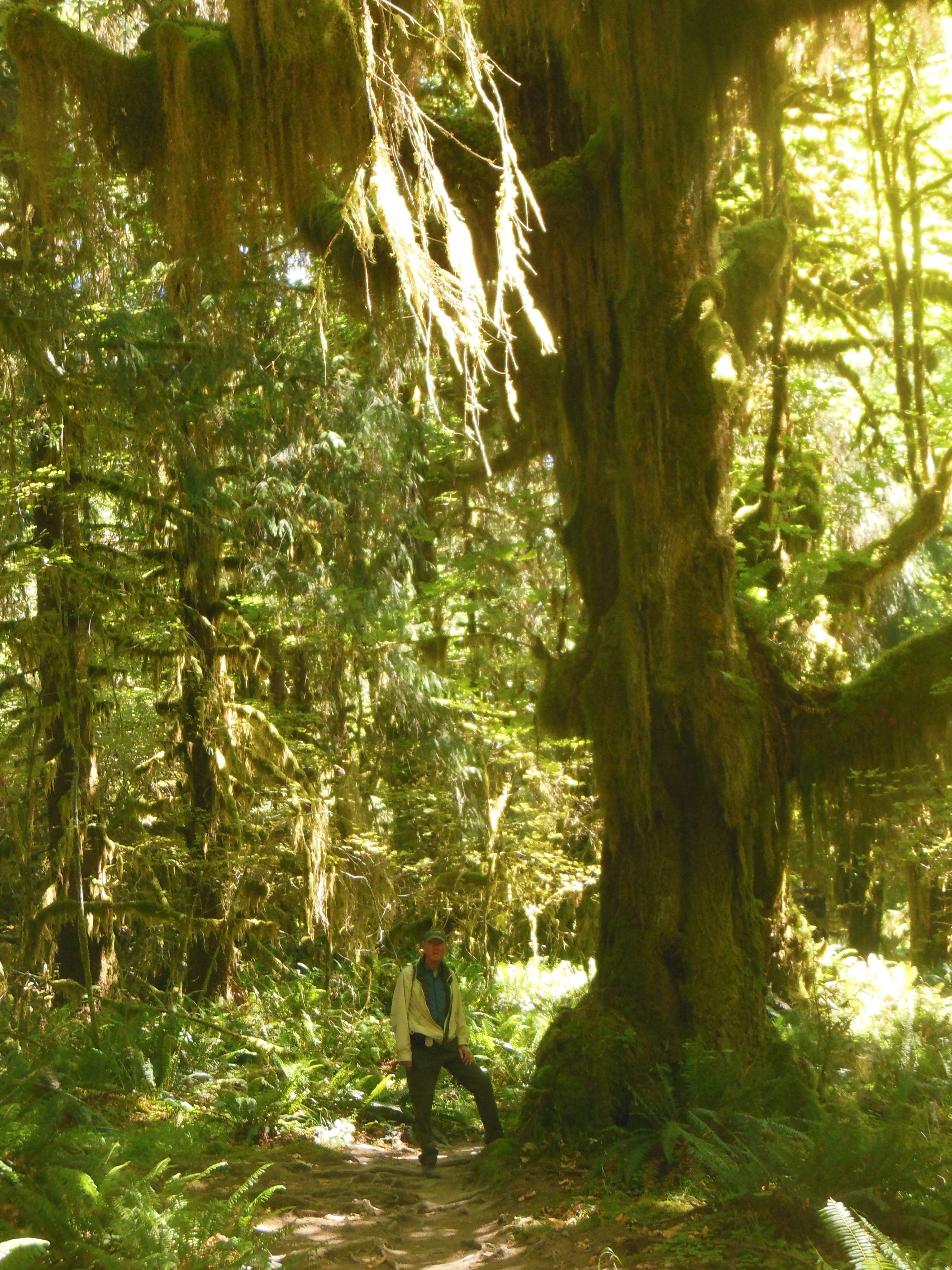
The Hoh rain forest is in the Hoh glacier and river valley. This part of the park receives 140 inches of rain per year on average. We went on a total of three hikes during the course of the morning and afternoon. This is old growth forest, so the trees are quite tall and old. The major difference in this area is the profusion of plants in the undergrowth.

Hoh rain forest

Hoh rain forest

Hoh rain forest

Hoh rain forest

Epiphytes such as moss and lichens are everywhere. Ferns grow abundantly. Sitka spruce trees grow extremely tall and thick due to the rain. Trees that fall over are allowed to decay naturally. When they fall, they provide additional sunlight to the forest floor and a different species of plant will sprout as compared to the shade loving previous plants.

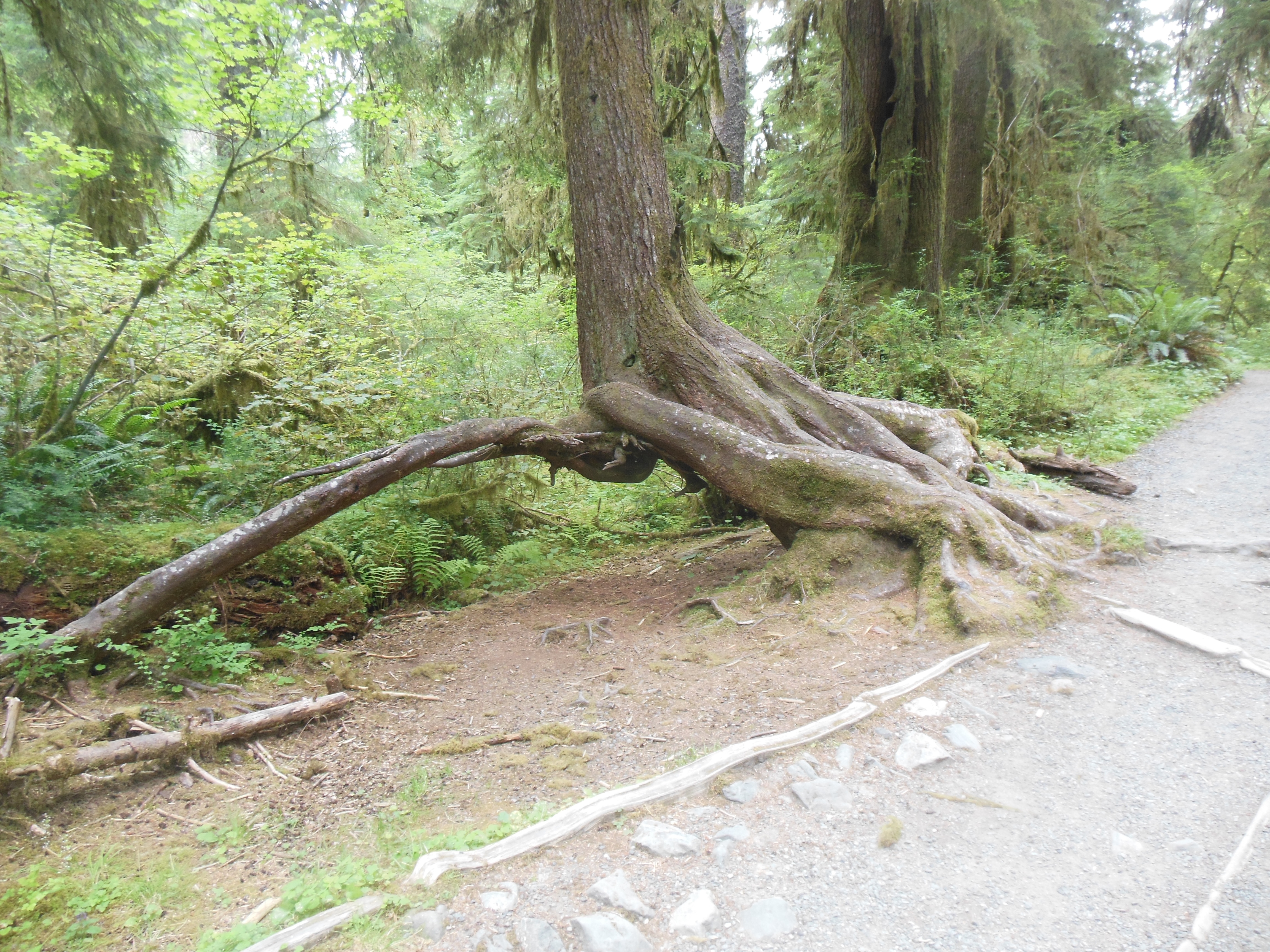
Nurse tree with early growth of new trees

Nurse tree with early growth of new trees

several trees growing around nurse tree

several trees growing around nurse tree


Nurse tree has rotten away

Nurse tree has rotten away

We observed numerous examples of nurse trees. This is a dead tree lying on the ground. Seeds from other trees and from plants land on the dead, nurse tree and begin to grow. This is extremely important for spruce and fir trees in this forest. They will begin growing on the dead, nurse trees. As they grow more, the roots reach the ground and then eventually the young trees grow over and around the dead tree. Eventually the dead tree rots away and the young tree becomes tall with a gap in its trunk and/or root system. (Hopefully the pictures will demonstrate this.)

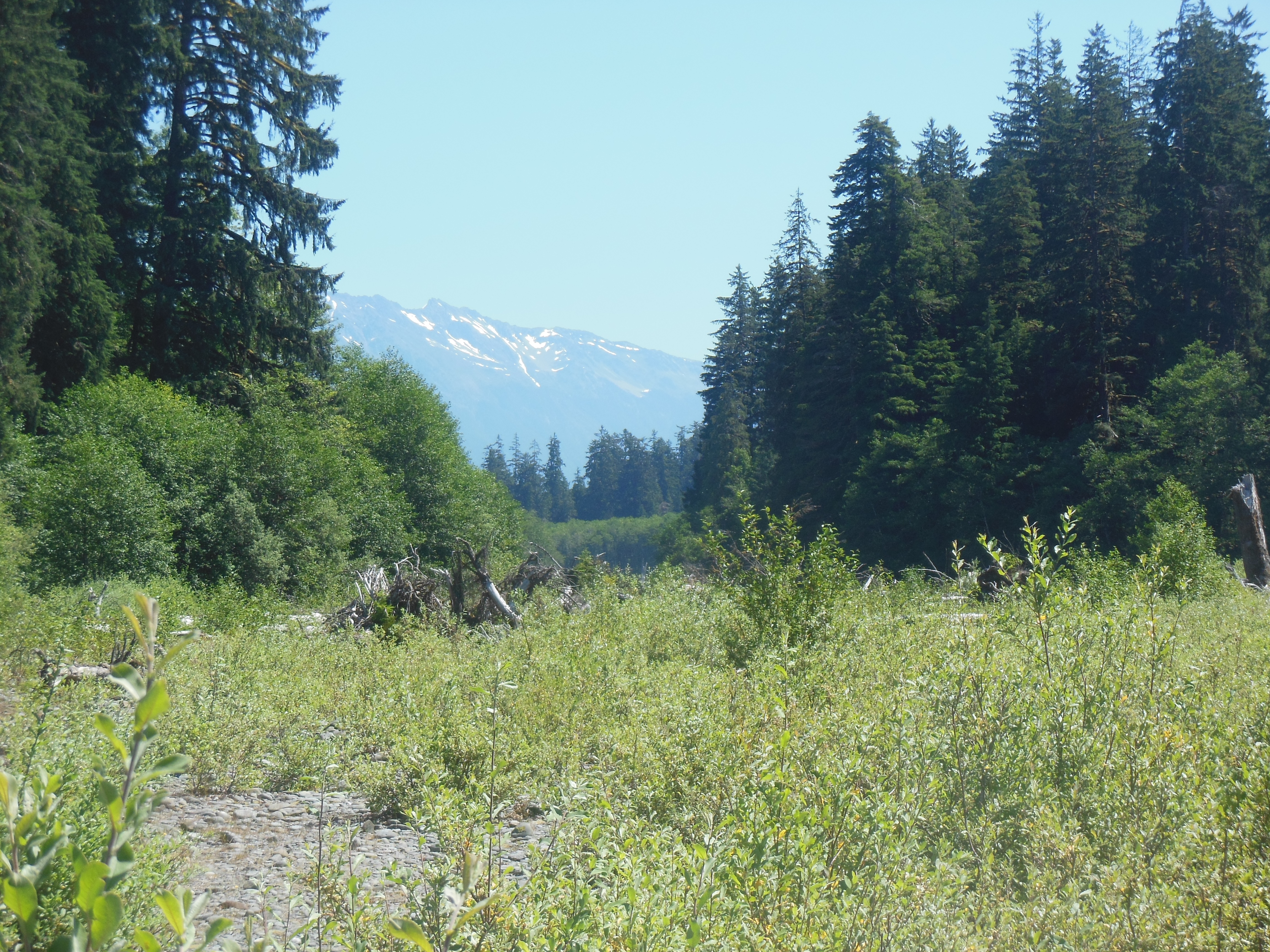
We only saw mountains a few times when we hiked directly next to the river and the gap in trees allowed an unobstructed view. Generally we were looking at: the ground so we did not trip on rocks and roots; straight out to observe ferns, moss, plants, etc.; and up to look at the tall trees.

View of Olympic mountains from Hoh river valley

View of Olympic mountains from Hoh river valley

After the hikes, we made two stops. One was at a huge Sitka spruce tree. The Sitka is the largest of the spruce trees and the ones growing in the narrow temperate rain forest band along the Pacific coast are the largest. The second stop was to view a large cedar tree. Neither stop tried to claim these were “THE” largest such specimen but they were big. Smaller than the sequoias in CA though.

We had a late lunch early dinner at Kalaloch Lodge close to Ruby Beach. Good food and excellent view directly on the ocean and beach.

View from Kalaloch Lodge

View from Kalaloch Lodge

Saturday we head out to cover Sol duc falls, Lake Crescent and Storm King areas of the park.

Ed and Chris July 19 9:30 pm

Categories: road trip, travel | Tags: , , | Leave a comment

2013, Trip Six, The Northwest, July 18

Forks, WA July 18, Thursday

wildflowers along highway 101

wildflowers along highway 101

Today was our Beaches Day even though we did not see Bette Midler (Heimel humor). We left Tacoma early after giving our good-byes to Pat and Harold. We were unable to see Mt. Ranier as we left, the sky was too overcast. It was weird, for us, to be able to see (on a clear day) a mountain looming high on the horizon, even though it was 45 miles from Tacoma.

We drove through Olympia and then west and north to Olympic National Park. Our plan is to visit the park from southwest to northeast before crossing the border into Victoria, BC. Like many national parks, the land intersperses with national forests and Indian reservations.

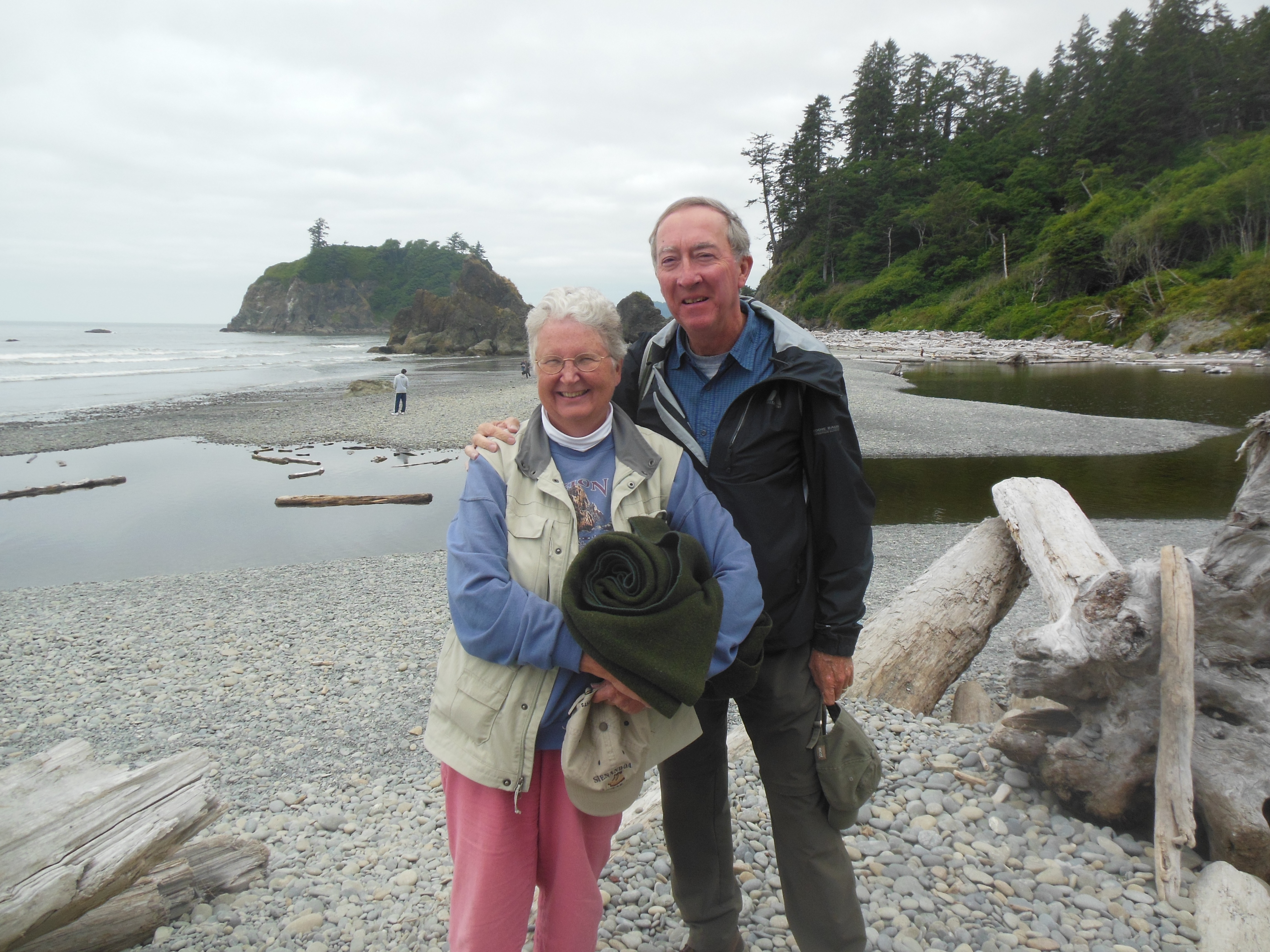
Ed and Chris at Ruby Beach

Ed and Chris at Ruby Beach

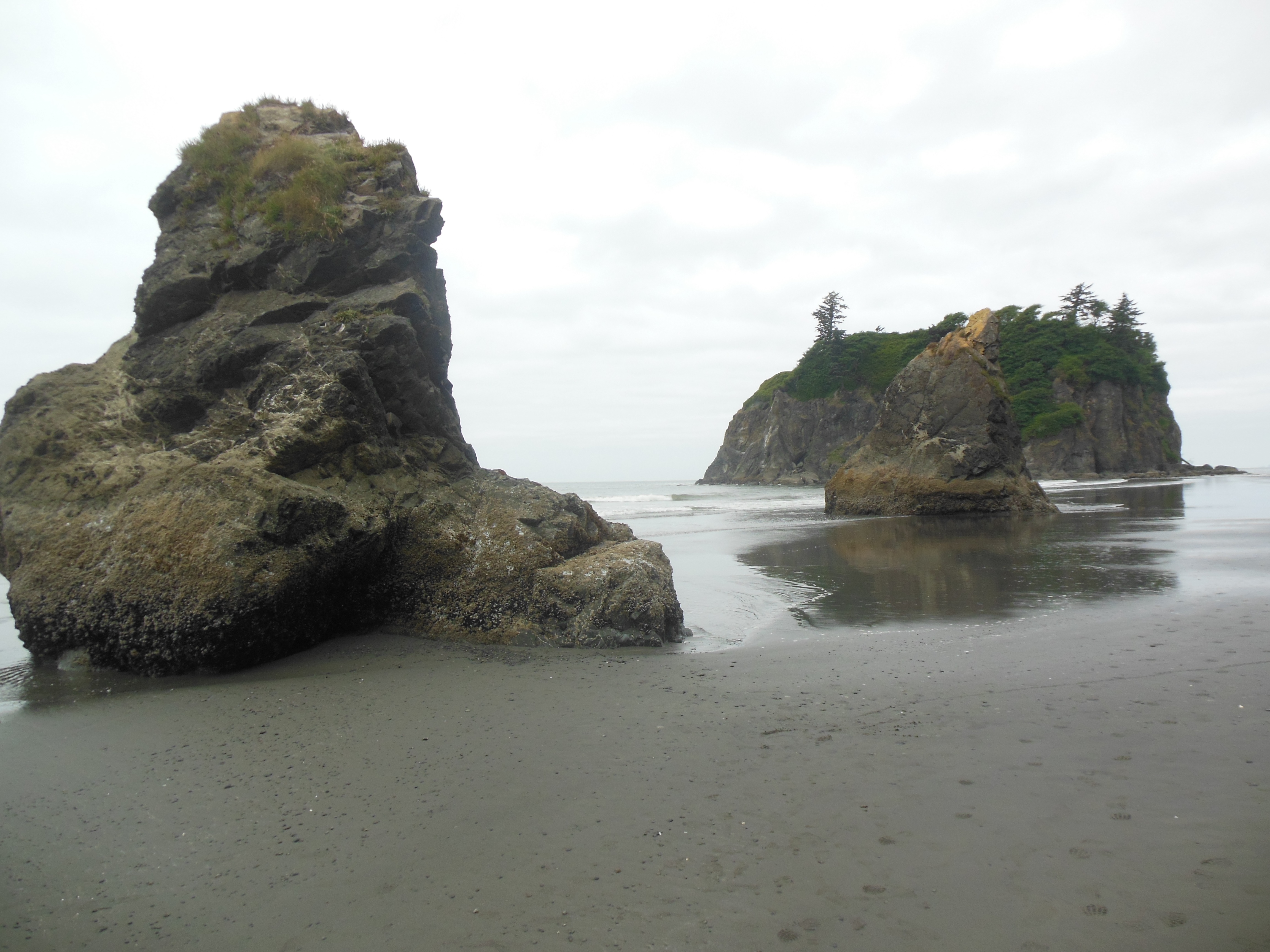
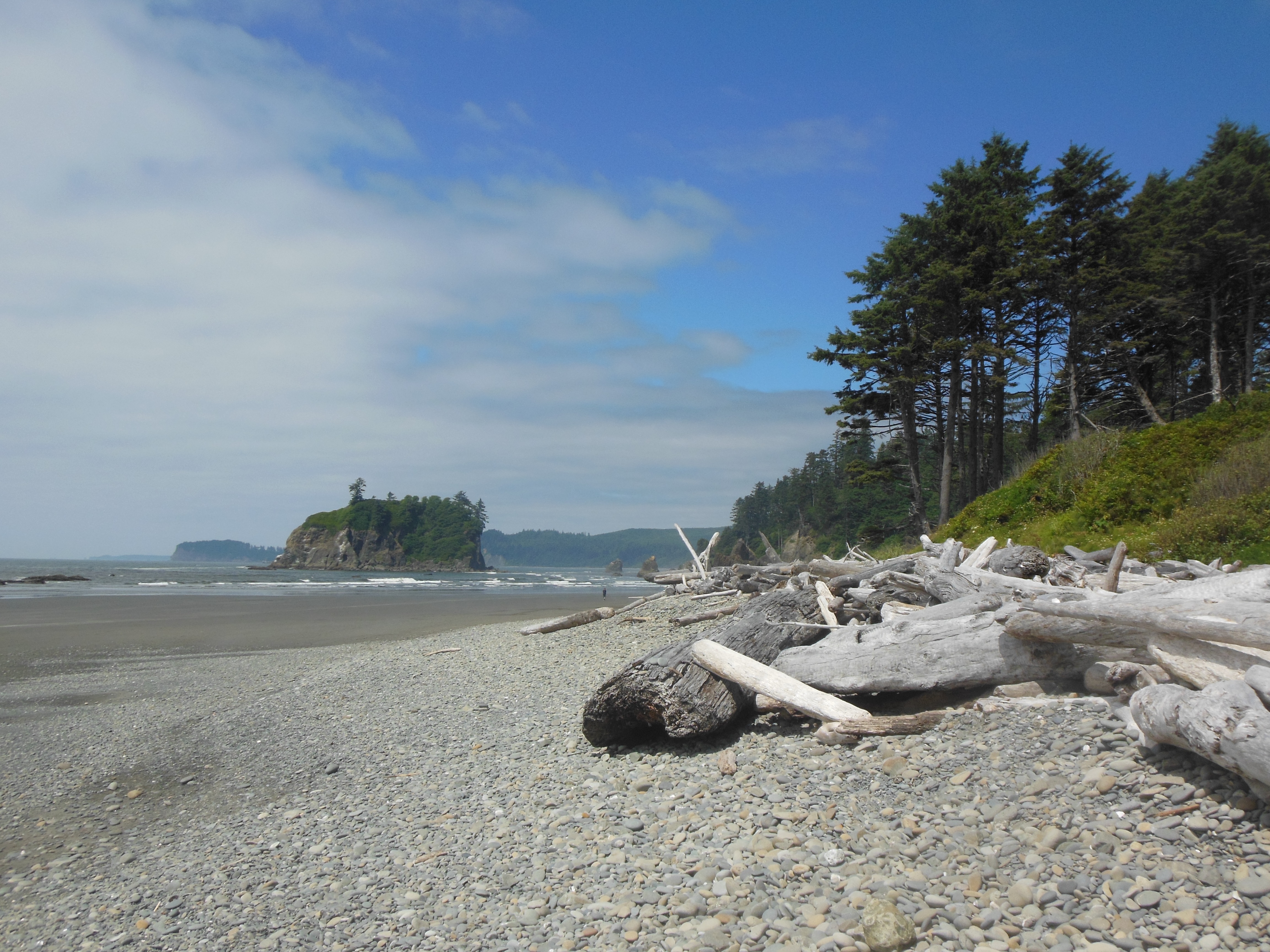
Ruby Beach

Ruby Beach

After Olympia, the road went through forests with four lane highway to Aberdeen, WA. After Aberdeen it was primarily two lane but now we picked up wonderful wildflowers along the side of the road. The Olympic mountains are not as high as the Cascades but supposedly Mt. Olympus does have snow year round. We will learn more about that later.

We did pass South Beach. It bore no resemblance to the one in Miami Beach. This one had cold water, chilly air, cold winds, no night life, and very little people watching. Instead we went to Ruby Beach and to Rialto Beach.

Ruby Beach

Ruby Beach

one of many rock cairns at Ruby Beach

one of many rock cairns at Ruby Beach

The day was overcast and cool. Around 3 pm the wind came from the east and pushed enough of the clouds just slightly out to sea. That gave us some pictures with sun in them to offset the numerous cloudy photos.

Olympic National Park has mountains, waterfalls, forests, tall trees, and ocean beaches. We picked two of the beaches to explore today. The first, Ruby Beach, is so named due to sand grains with a reddish tint to them. You have to look real close to see the tint.

We walked along the beach for a good distance and had brought along our blanket so we sat for a while and watched the birds and ocean waves. For both beaches, the sand portion is relatively minor, rocks are more pre-dominant. In this regard, the beaches bear a resemblance to the beaches along the MN side of Lake Superior. Visitors enjoy creating rock cairns along the beach. These beach rocks are smooth due to erosion and relatively easy to stack.

We have not yet noticed as many international visitors as in the more well-known parks like Yosemite and Yellowstone. People from northwest United States are in the majority.

Our second beach was Rialto Beach. The tide was now starting to come in. We walked about 1.5 miles to a rock outcropping called Hole in the Wall and had to make sure we left enough time to get back to the trailhead before incoming tide cut off the path.

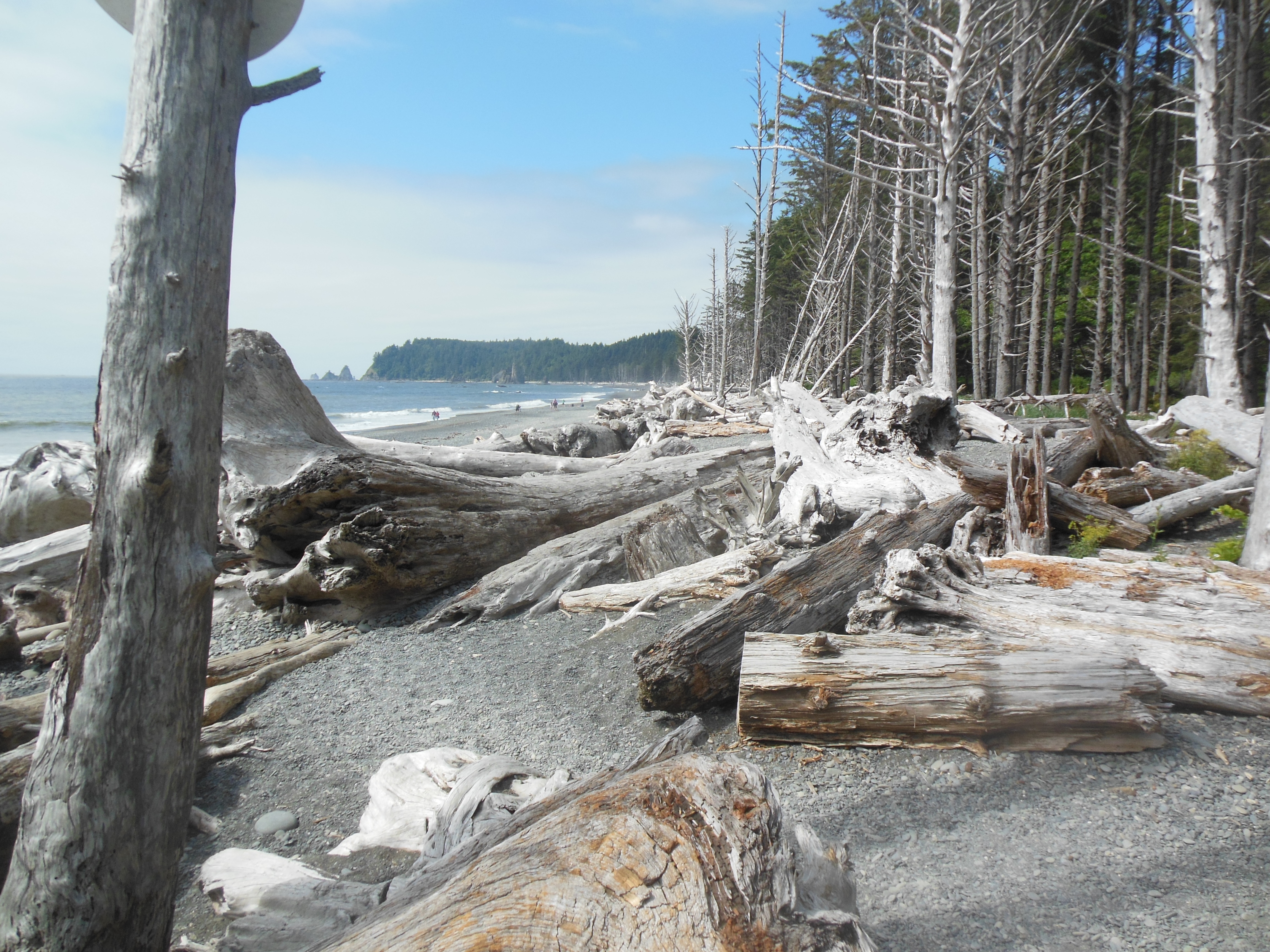
Rialto Beach

Rialto Beach

Rialto Beach

Rialto Beach

Besides the usual sea fowl like gulls and pelicans, we did observe two bald eagles. We have not seen seals or walruses; it is past the time when whales are migrating through the area.

Rialto Beach

Rialto Beach

Both beaches have rock outcroppings in the ocean close to shore called sea stacks. These are remnants of rock formations of harder basalt rocks and have eroded more slowly than the surrounding features. We had observed these before along the Oregon coast a few years ago. The sea stacks make for nice photo opportunities. At this beach, there were more people and more camping activities than at Ruby Beach.

Twilight sign at restaurant

Twilight sign at restaurant

Our lodging for the next two nights is in the town of Forks. Unbeknownst to us, this town is the home of Stephanie Meyer’s Twilight book series about teenage vampires-or so I believe.

The town is 14 miles from the ocean on a broad prairie. Several signs in town, including the burger joint we ate at for dinner, allude to the vampire theme of the books and movies. I believe tours of places mentioned in the books are offered but we intend to pass on this unusual treat.

Tomorrow we plan to visit a temperate rain forest section of the park.

Ed Heimel and Chris Klejbuk July 18 10 pm

Categories: road trip, travel | Tags: , , , | Leave a comment

Blog at WordPress.com.