Posts Tagged With: Old Sacramento

2025 Trip 3: California Zephyr

Sacramento CA, May 28

Can you imagine it?! Immigrants built the transcontinental railroad! Immigrants from all over the world! Immigrants worked in the California gold mines! Immigrants from Chile were among the first and arrived with extensive mining experience! Chinese immigrants took over mines Americans from the east coast abandoned and were very successful in extracting gold! Can you imagine that?? In case you could not tell, those sentences were meant as sarcasm in an America that once again is demonizing immigrants.

Today’s two museums, the Sacramento History Museum and the California Railroad Museum, were informative and interesting. Both were located in Old Sacramento. We started at the Sacramento History Museum and also took their underground tour.

Sacramento should not have been built where it stands. It was low lying land at the confluence of the American and Sacramento Rivers which flooded often. The first real settler, John Sutter, listened to the Native Americans and located his farm and property several miles away on higher ground. Once gold was found in the area, newcomers wanted to be near the river and its availability to shipping.

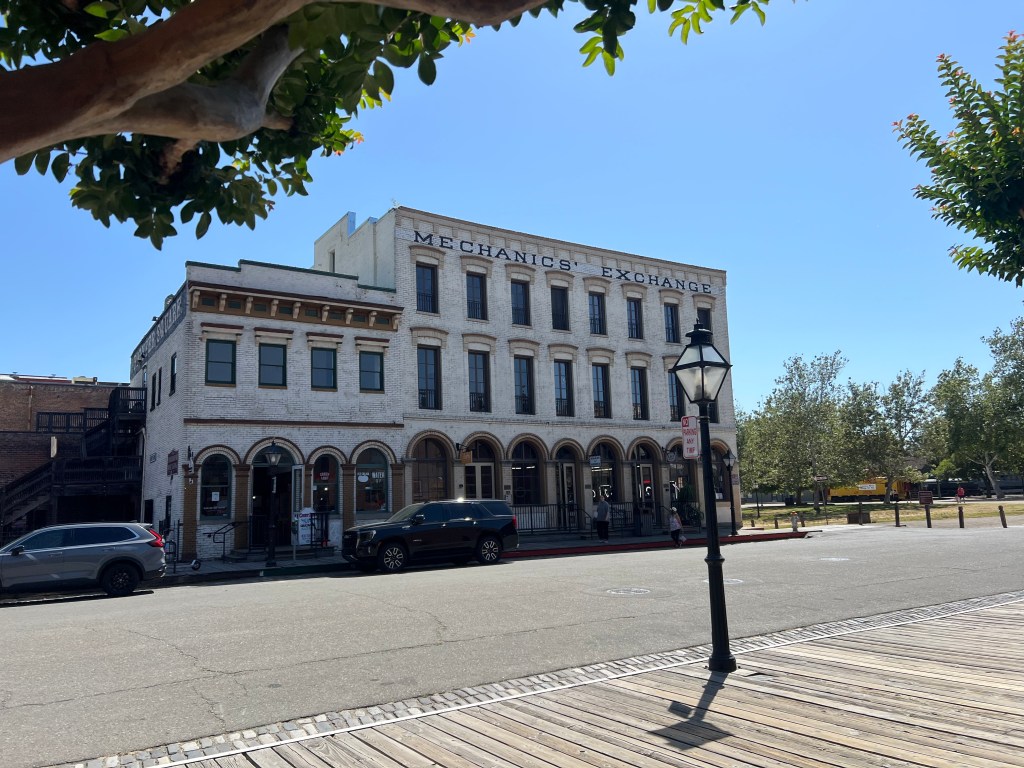
A scene from Old Sacramento
Early Sacramento suffered from a major conflagration that burned 90% of the town. Floods destroyed the town also. The levees that were built to protect it ended up later causing more damage when water from the next floods got behind the levees and had no way to return to the river.
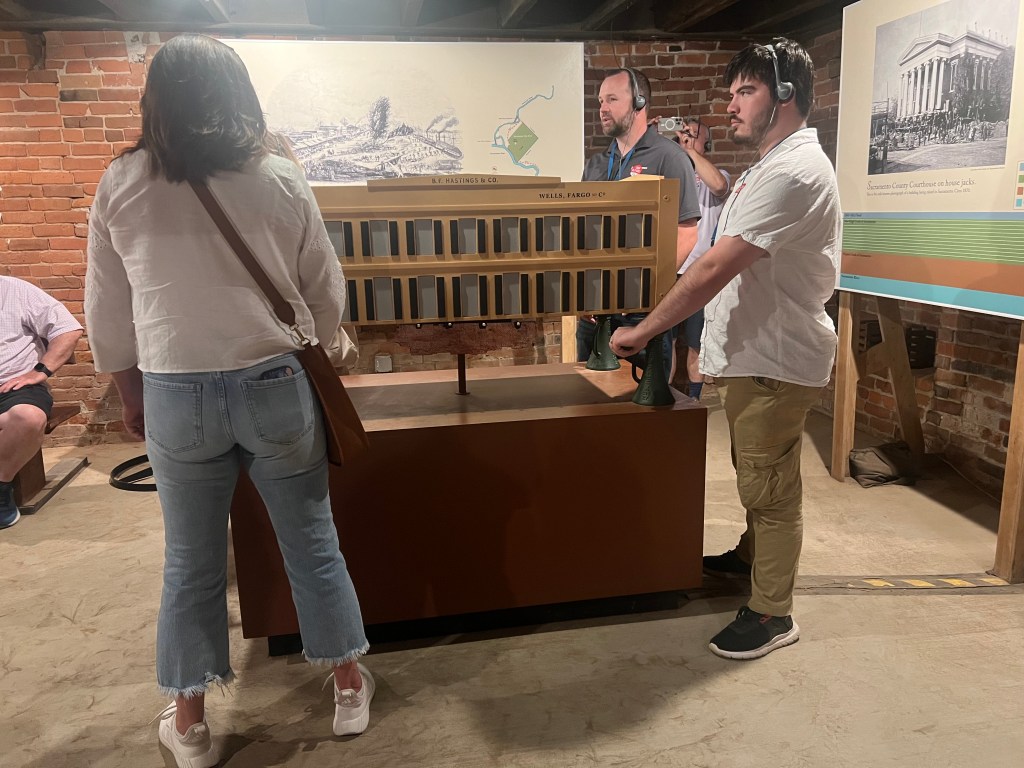
Tour participants doing a mock jacking up of a building

The people here did not want to move to higher ground so they did two things. They moved the American River channel so it met the Sacramento farther from the city center. Second, they raised the town. Yup, they raised most of the town about 23 feet. It took over a decade and was paid by each business. The tour explained the process of excavation, jacking up buildings, and constructing new foundations. Amazing. Sacramento has grown since then, protected partially by levees. Yet the chance of severe flooding still exists as this is lowland surrounded by mountains and traversed by numerous streams and rivers.

Other exhibits at the Sacramento History Museum explained the growth of agriculture, canning of food products, and the impact of railroads in encouraging the continued growth of agriculture, canning, and transportation. While not mentioned here, yesterday’s museum explained how the growers mandated the use of short-handled hoes in weeding fields of crops. The short handled hoe caused back pain and injury as the worker was forced to stoop continuously. The hoe was mandated because it made it easier for overseers to determine if a worker was vigorous enough in their tasks. If the worker was standing up, the overseer would be able to yell at them to get back to work. The short handled hoe mandate was not abolished until 1975.

A new exhibit focused on the role of Campbell Soup company, its employees, and its impact on the community. Sacramento made a concerted effort to attract Campbell’s to open a factory here. After all, this part of California is a major producer of fruits and vegetables. After WWII, Sacramento was successful and Campbell’s operated a major plant here for almost 70 years.

The California Railroad Museum exhibits numerous examples of locomotives and a few specialty cars such as a diner and a railway post office car. Exhibits once again discussed how the transcontinental railroad was built and displays one of the two golden spikes used at Promontory Point in Utah. The role of women and minorities in railroading was displayed frequently.
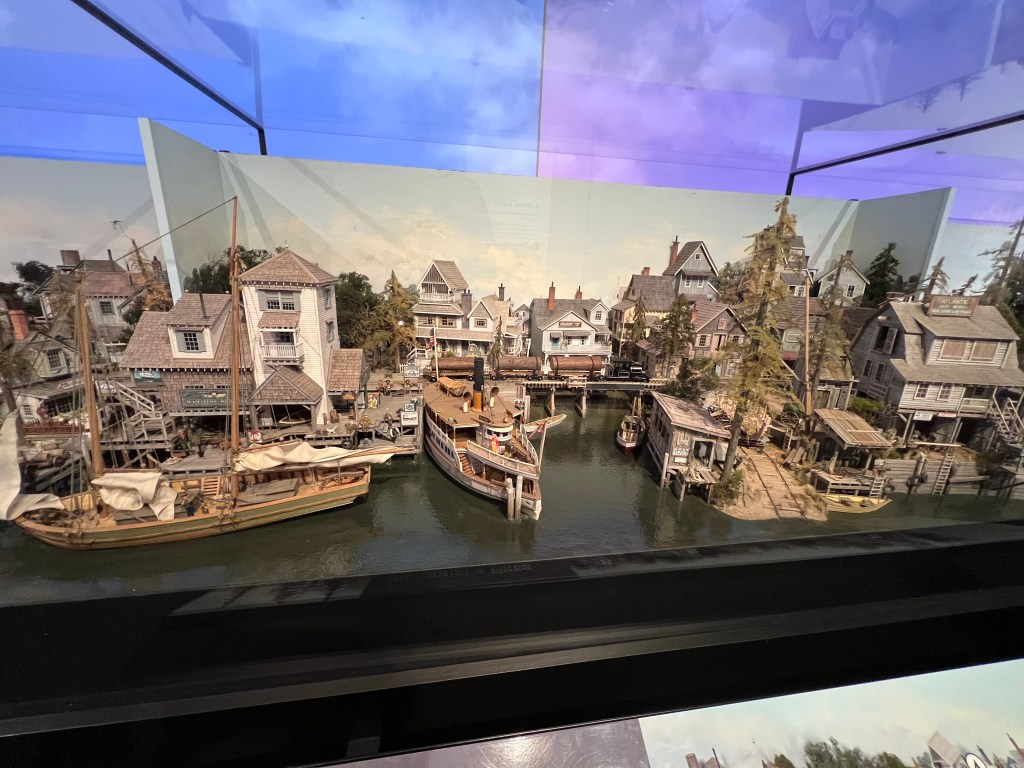
There was an area of model railroads, most of which was devoted to displays of collections of various model equipment. The sample of model railroads running was small. We have seen much better layouts. Their collection of hand constructed villages was impressive.

Tomorrow we fly back to St. Paul. There may not be a further blog post.

Sacramento, May 28

Ed and Chris
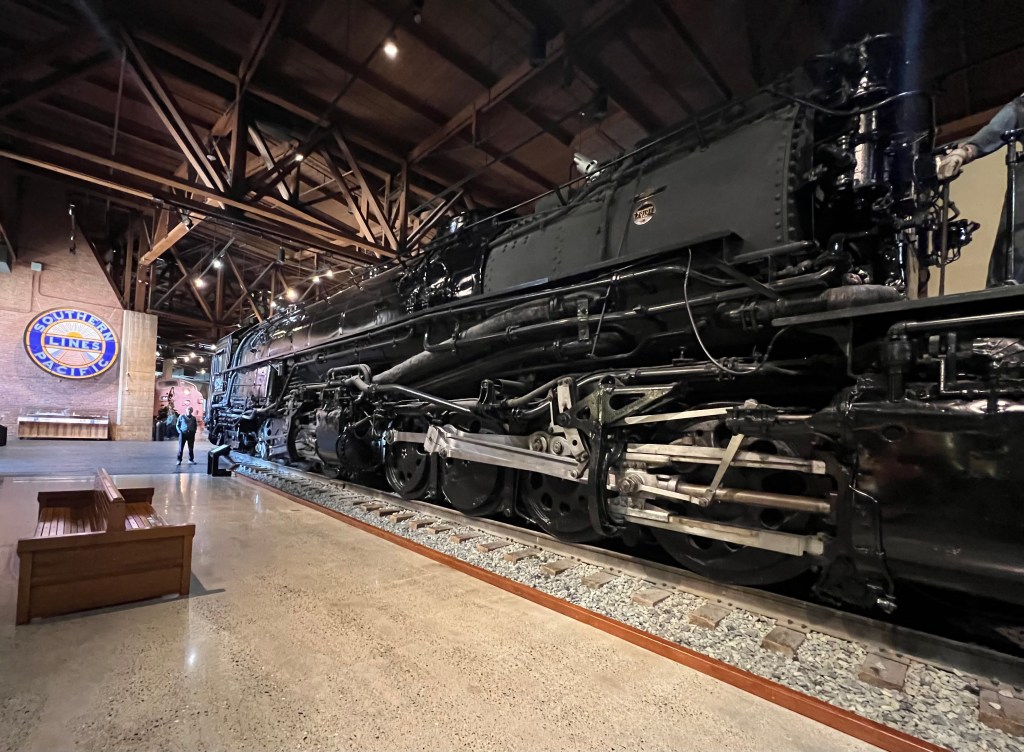
Ed and a Southern Pacific steam locomotive. The cab was in the front to shield the engineers from the smoke that would have choked them in tunnels

Categories: travel | Tags: , , , , , , , , | Leave a comment

2025 Trip 3: California Zephyr: May 26-27

Sacramento CA May 27

Our plans for Sacramento are to visit a few locations downtown. As in Denver, we have no car. We took an Uber to our Residence Inn seemingly near the State Capitol, one of our sites to visit. In retrospect, after walking to Old Sacramento and to the Capitol, other hotels may have involved less walking. Luckily, the temperature will not reach over 100 until Saturday, two days after we leave, so our walking has not been overly strenuous.

One note about Sunday. The train stopped a ways outside of the Roseville, CA station. The conductor announced we were stopped due to freight traffic ahead. Once we were moving and reached the Roseville Amtrak station, the train was met by three Roseville police cars and several police officers. They were concentrated around the coach cars. I believe they took a person off the train, if not into custody. I have observed this before, that Amtrak conductors will brook no misconduct and have no hesitancy in kicking people off the train and calling police if the conductor believes the actions of the passenger warrant it. It is my belief, with no specific knowledge, that the stopping of the train before Roseville was to allow time for the police to arrive.

We arrived at our hotel around 4 PM and took care of details. Chris did the wash, I worked on the blog, we ate at a Mediterranean restaurant around the corner from the hotel.

Monday, Memorial Day, our main activity was a boat ride on the Sacramento River. Both the Sacramento and the American River flow through Sacramento. Old Sacramento is the area along the river where the town began. We walked past the State Capitol to reach the river and discovered construction of a new Capitol Annex building had closed numerous walkways, making our journey a tad more complicated.

Old Sacramento’s historical significance derives from its geographical location. It was the western terminus of the Pony Express, the first transcontinental railroad, and the transcontinental telegraph. Old Sacramento covers almost 300 acres. It has over 50 historical buildings, more than any other area of similar size in the West.

We walked around the area and at the Visitor Center met the docent whose family goes back six generations here in Sacramento. He convinced us to try the Sacramento Underground tour which we were not going to take. Evidently the town buildings were raised about 15 feet to protect them from flooding. We will find out more on the Wednesday tour-which we booked after we returned to the hotel Monday afternoon.

Our river cruise lasted for an hour. We were surprised by several items. First, large numbers of people were fishing from boats and the riverbanks. Evidently, now is time stripers migrate up river to spawn. Second, there is a marker along the river indicating the height of the most notable floods. That marker gave me a better feel why the buildings in Old Sacramento were raised. Third, the water clarity where the American River joins Sacramento River clearly demarked cleaner water from the American. The water in the American generally comes from the mountains while the Sacramento picks up mud and contaminants from the valley.

Fourth, we saw sea lions by the port. Sea lions are not new to us, we just were not expecting to see them this far up the river. Fifth, an interesting sight was the original drinking water intake station just slightly upriver from the new, modern intake system. The juxtaposition made for a chance to reflect on the growth in population and in drinking water treatment over the years.

The river view was not that scenic. The breeze and the awning made the ride pleasant although I could have done without the background music that frequently blocked us from being able to clearly hear the captain’s presentation.

After walking to and around Old Sacramento, I had to wonder how St. Paul would have fared if I-94 had not cut off the State Capitol from downtown. In Sacramento, the state government complex blends into the city, the freeway separates this from Old Sacramento, but that area is more a touristy area than a living and working area. The California Capitol greenway and downtown make a favorable impression, although the Capitol is not a particularly attractive building in our opinion (more on that for Tuesday).As in Denver, neither downtown had many people out and about.

Sacramento’s population is over 500,000 with the metropolitan area around 2.6 million.

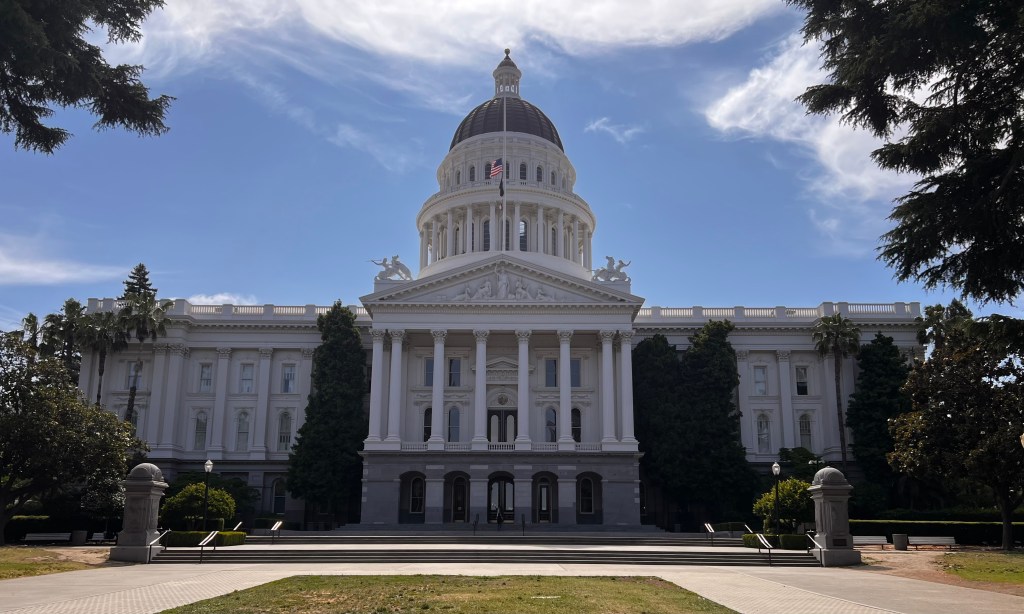
Monday the hotel pool called to us. We spent more time in the hot tub and resting our weary bones than in the pool. The hot tub’s rejuvenation was not long lasting. Tuesday we walked to the State Capitol for a one hour tour. This tour guide rarely commented on the architecture or building materials. Our guess-they were not that notable. I take that back, the Capitol is one of the oldest in the West, the guide mentioned the architect, and the same red and green motif in the two legislative chambers was covered. But our distinct impression was blah.

The one big deal was a series of murals depicting four periods of California history. What I thought was dark and foreboding, or simply a dirty canvas, was a result of “tonality”, an artistic method that is meant to contrast light and dark. This one came across as all dark.

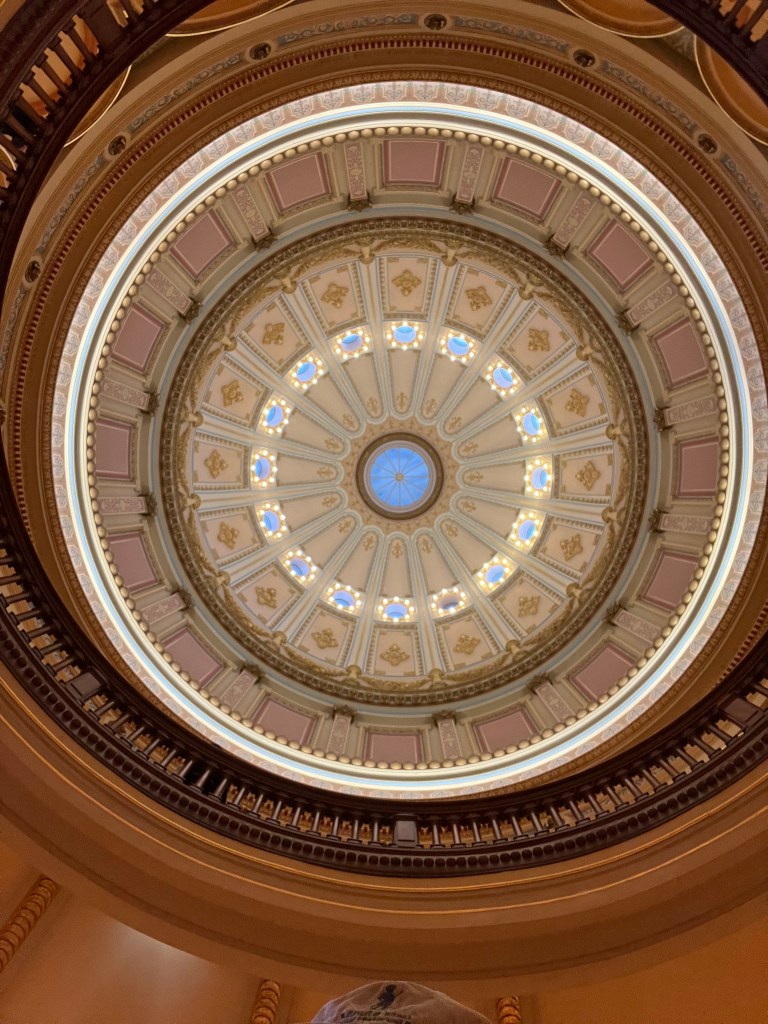
Ceiling mural in California Museum

Just a few blocks away is the California Museum. This museum focuses on commonly overlooked stories, reflecting the state’s diverse population and the cultural contributions of all Californians. It took me a little while to get used to its format, generally briefly highlighting people around specific topics. For instance, the second floor, the first section we visited, highlighted activism; people who made a difference in art, politics, sports, culture, etc.

The first floor focused on stories and people around four themes that particularly interested me: incarceration of Japanese Americans in WWII, California Indians, California missions, history and contributions of Chinese Americans. While many stories were uplifting, others honestly portrayed negative actions by government and people. I had to compare these displays to the anti-honesty of the Trump administration and its Interior Secretary mandating that historical information be presented in a positive light. “Negative” facts about our past are to be buried; with visitors to national parks and monuments actively encouraged to report on negative facts presented by Department of the Interior employees. Both Colorado and California are to be commended for accurate portrayals of their state’s history.

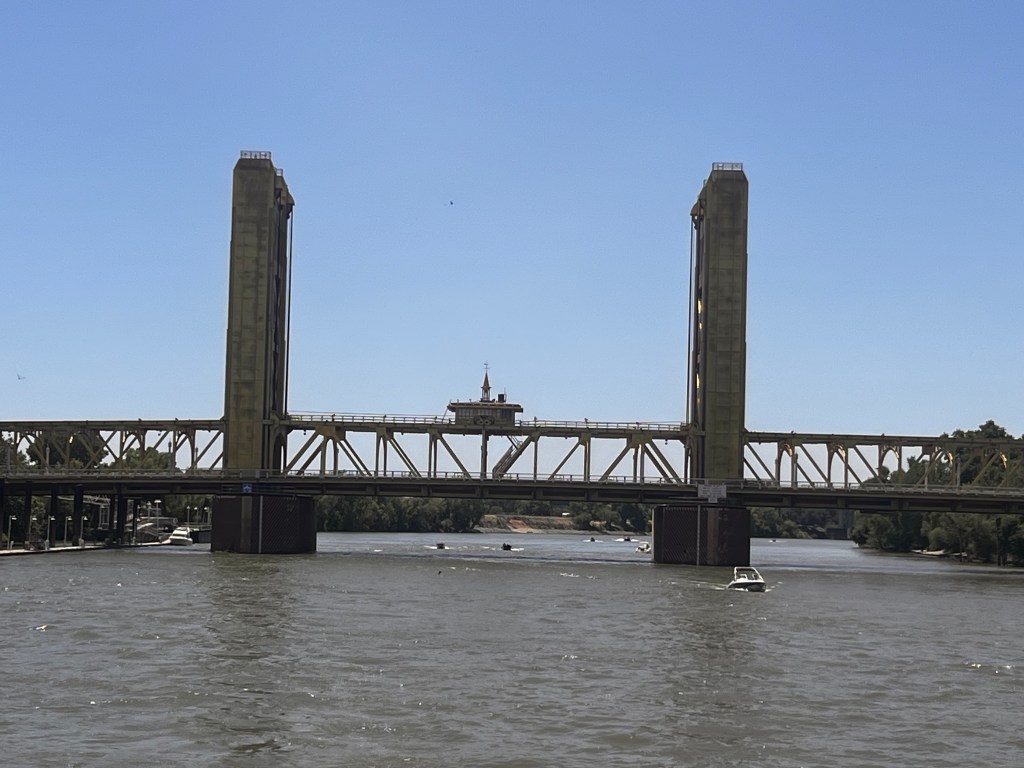
Tower Bridge along Sacramento River

Ed and Chris Sacramento CA May 28, 2025

Categories: travel | Tags: , , , , , , , , , , | Leave a comment

Blog at WordPress.com.