Posts Tagged With: Old Mill State Park MN

2015 Trip Five, Voyageurs National Park and N.W. MN, August 17

East Grand Forks, MN
Monday August 17th

Flat agricultural land as far as you can see

Flat agricultural land as far as you can see

We just had to throw another sunflower picture in.

We just had to throw another sunflower picture in.

The name Lars Larson today sounds like it is made-up but Lars Larson Sr. was a Swedish immigrant who homesteaded in MN in 1882. He also built a mill for grinding wheat into flour. That milling process frequently became a community gathering process. The Old Mill State Park near Argyle MN keeps that memory alive. It took us a little over an hour on two lane roads to reach the park. Yes, the roads were straight and flat; the agricultural lands brimming with crops starting to be harvested. No change from yesterday in that regard.

The Larson mill at Old Mill State Park

The Larson mill at Old Mill State Park

The mill is still there with some of the original grindstones still here. Placards in the shape of the mill describe how it operated and history of the area. One placard mentions how Lars brought Scotch pine seeds with him and how some of the trees from those seeds still exist in the park. We passed on going to find them, the mosquitoes were out again.

The mill is not a major tourist site. We stop at these places to get a sense of the land and its people. We find it more enjoyable than just reading a book about it and frankly also because we like to travel. The state park holds an annual grist mill festival Labor Day weekend to remember life and times from an earlier period in our history.
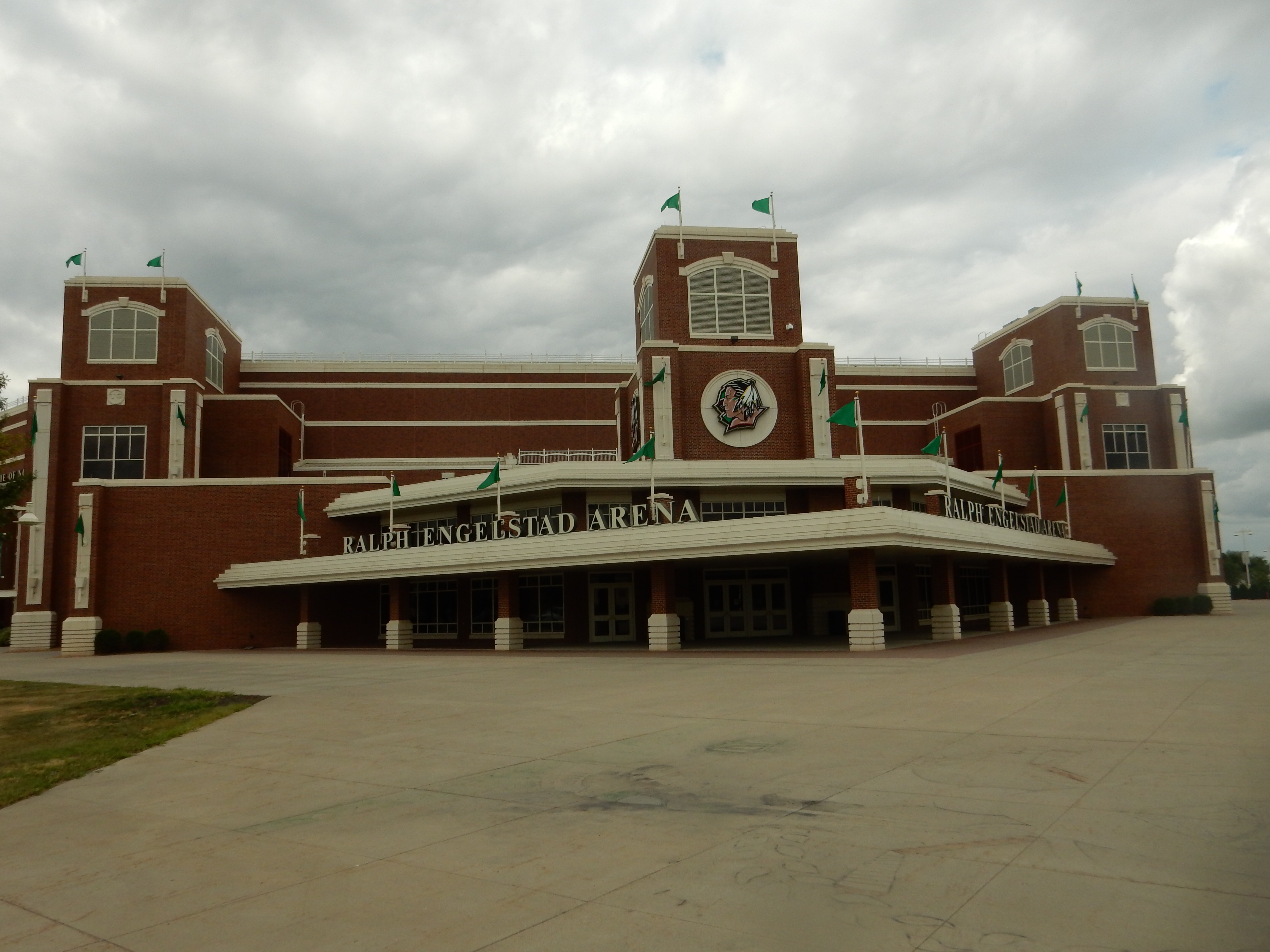
Ralph Englestad Arena in Grand Forks

Ralph Englestad Arena in Grand Forks

Grand Forks ND was our second stop of the day. Hockey is a big deal up here, as it is in many northern states. The hockey arena for the University of North Dakota here in Grand Forks is a BIG deal also. First, though, lets bring some of you up to speed on the UND nickname. Briefly, though and assuredly incomplete.

The University of North Dakota Ralph Engelstad Arena ice rink.

The University of North Dakota Ralph Engelstad Arena ice rink.

For years, the nickname of the university was the Sioux, then The Fighting Sioux. Supposedly this was done with approval of the Sioux tribes in North Dakota. Over time, attitudes changed about wording and what was offensive to Native Americans. The NCAA forced the issue and told UND the nickname had to go. Over much wrangling, debate with the Sioux, voting by the residents of North Dakota, the nickname and logo are officially gone. The replacement nickname has not been finalized although five substitutes have been proposed.

This is all brought up here because we took a tour of the Ralph Englestad Arena. Our 90 minute tour was run by a woman who has been doing this for years and is enthusiastic about the school and the arena. The arena has been held up as the exemplar of a modern collegiate arena with all of the bells and whistles. And I do mean all.

Ralph Englestad was born in Thief River Falls MN, played hockey at UND, and went on to develop real estate and two casinos; one being the Imperial Palace in Las Vegas. It was one of the very few independently owned casinos in the world. Englestad died in 2002 and the property now belongs to Caesars and is called the LINQ hotel and casino.

Before he died however, he committed to building UND a new hockey arena. He committed $100,000,000 for its construction and outfitting. He was heavily involved in the details of the design and overseeing the construction. The final cost for the 11,634 seat arena when completed in 2001 was $104,000,000 and he paid it all. In contrast, in 1994, the University of Minnesota built 10,000 seat Mariucci Arena at a cost of about $20,000,000. The Xcel Center in St. Paul, built in 2000, is a 18,000 seat NHL arena and cost $170,000,000.

The bar and Belgian Organ at the arena

The bar and Belgian Organ at the arena

Englestad Arena is a true American monument to athletics. There is a 1903 Belgian Organ. Floors have granite from Italy and accent granite from India. The seats are leather. There are 300 television sets so a spectator does not miss the action if they are in the restroom or at a concession stand. There are 2400 Fighting Sioux logos throughout the building. There are 48 private suites that go for $32,000 per season.

The men’s and women’s (hockey team only) shared weight room is 10,000 square feet, has an underwater treadmill, and a jacuzzi the entire men’s hockey team can fit into at one time. The men’s hockey locker room rivals those in NHL arenas and is off-limits to all but hockey team members and staff. There is a separate hockey stick room also off-limits to all but a few select hockey staff.

The arena has collegiate and Olympic sized rinks. It has three Zamboni ice making machines. It is faced with $1,100,000 in brick. It has room for four buses to drive inside, discharge passengers, and park until the hockey game is over and the visiting team has to leave.

Finally, it has a practice area open to camps and young people as well as UND hockey players. In this area is a treadmill with a non-ice skatable surface where athletes can practice skating-not running, or jogging. As one staff member said, “By high school, the young players should be able to skate on this treadmill at a speed of about 20 mph.” They do wear a safety harness, just in case.
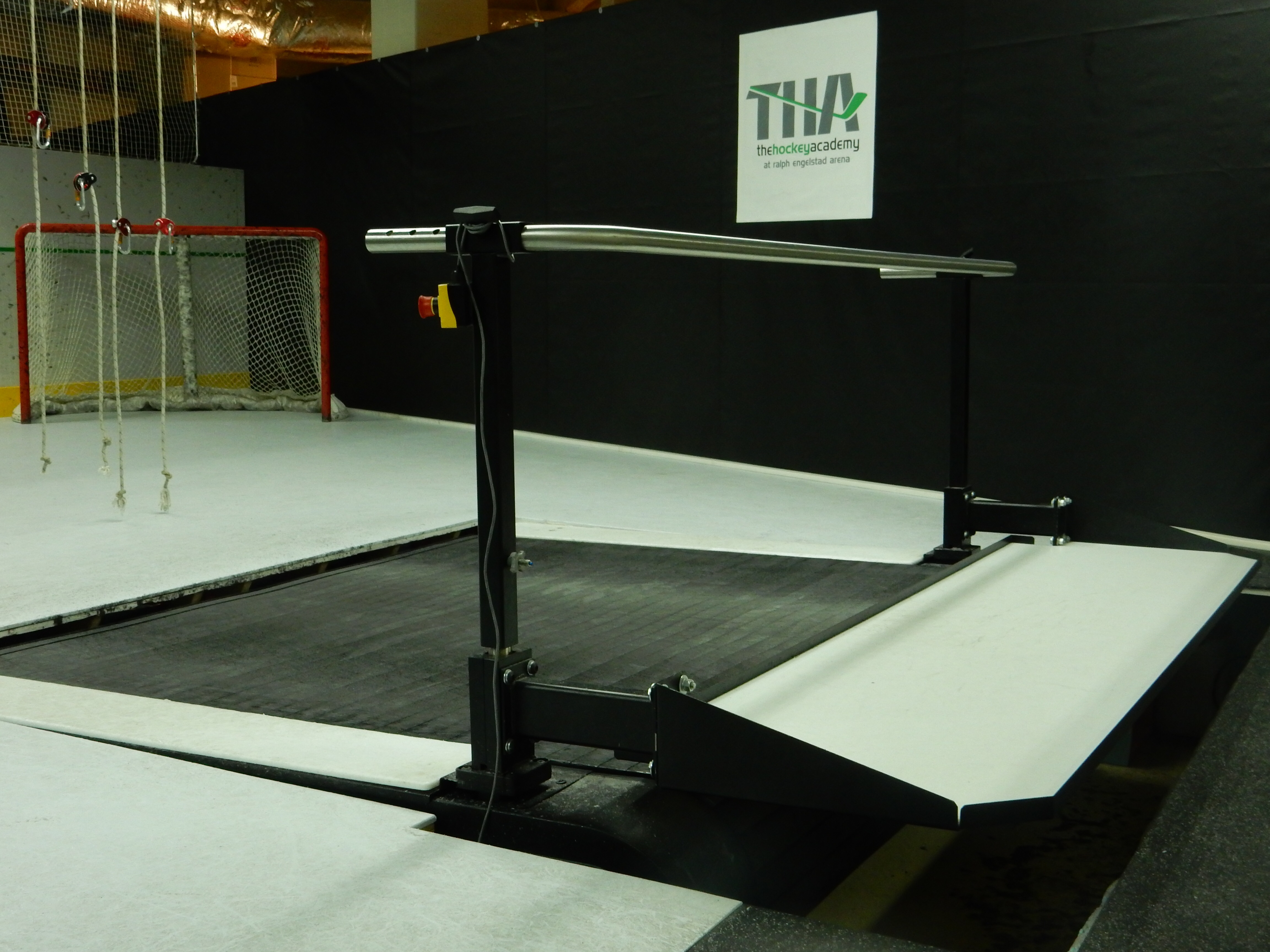
The skating treadmill at UND

The skating treadmill at UND

Well, I controlled myself and did not ask any questions about the balance between sports and academics. I avoided comments about the fact that the facility is not UND controlled but managed by an outside group on land donated so alcohol can be sold on the premises. I made no comment after learning that the arena makes a profit of $1,000,000 a year that is given to UND. I made no comment about the nickname controversy or the 2400 Fighting Sioux logos around the building. (Englestad fought to retain the logo and nickname, even threatening to pull out if it was changed.) Surprising behavior for me, yes?

All in all, an educational afternoon for us and 15 other people who took the tour.

Dinner was Italian, down by the waterfront. Mamma Maria’s and a good choice.

A short video on the treadmill.

Ed and Chris
Categories: road trip, travel | Tags: , , | Leave a comment

2015 Trip Five, Voyageurs National Park and N.W. Minnesota, August 16

East Grand Forks, MN Monday August 17

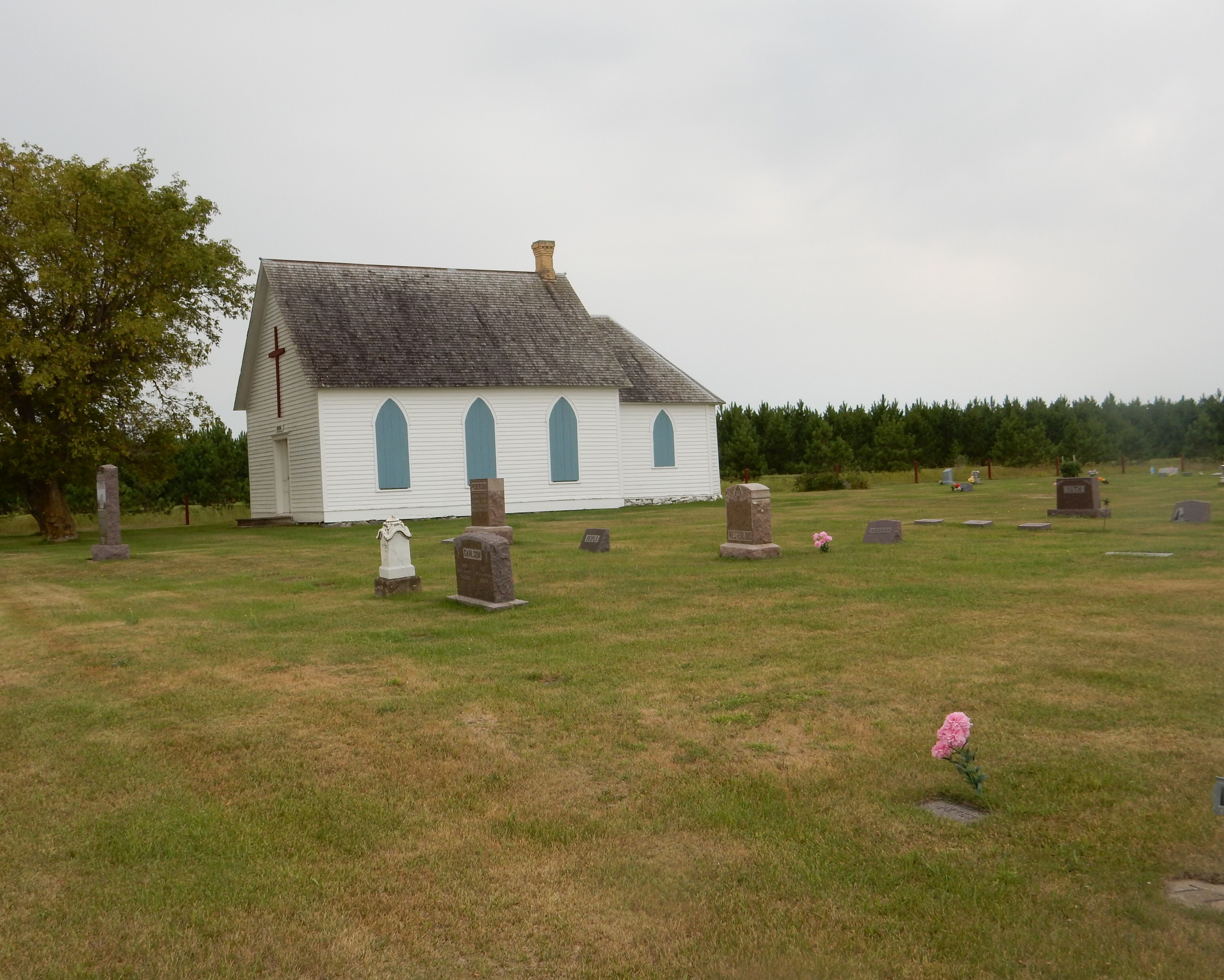
Old church by the side of the road in NW MN

Old church by the side of the road in NW MN

Minnesota has 11,842 lakes greater than 10 acres in size. Sunday morning we left the land of lakes and forests and headed over to the prairie land where there are very few lakes. The transition does not happen immediately but by Sunday afternoon we were in flat, flat, flat land. But first, we had three stops scheduled before our planned arrival in East Grand Forks Minnesota.

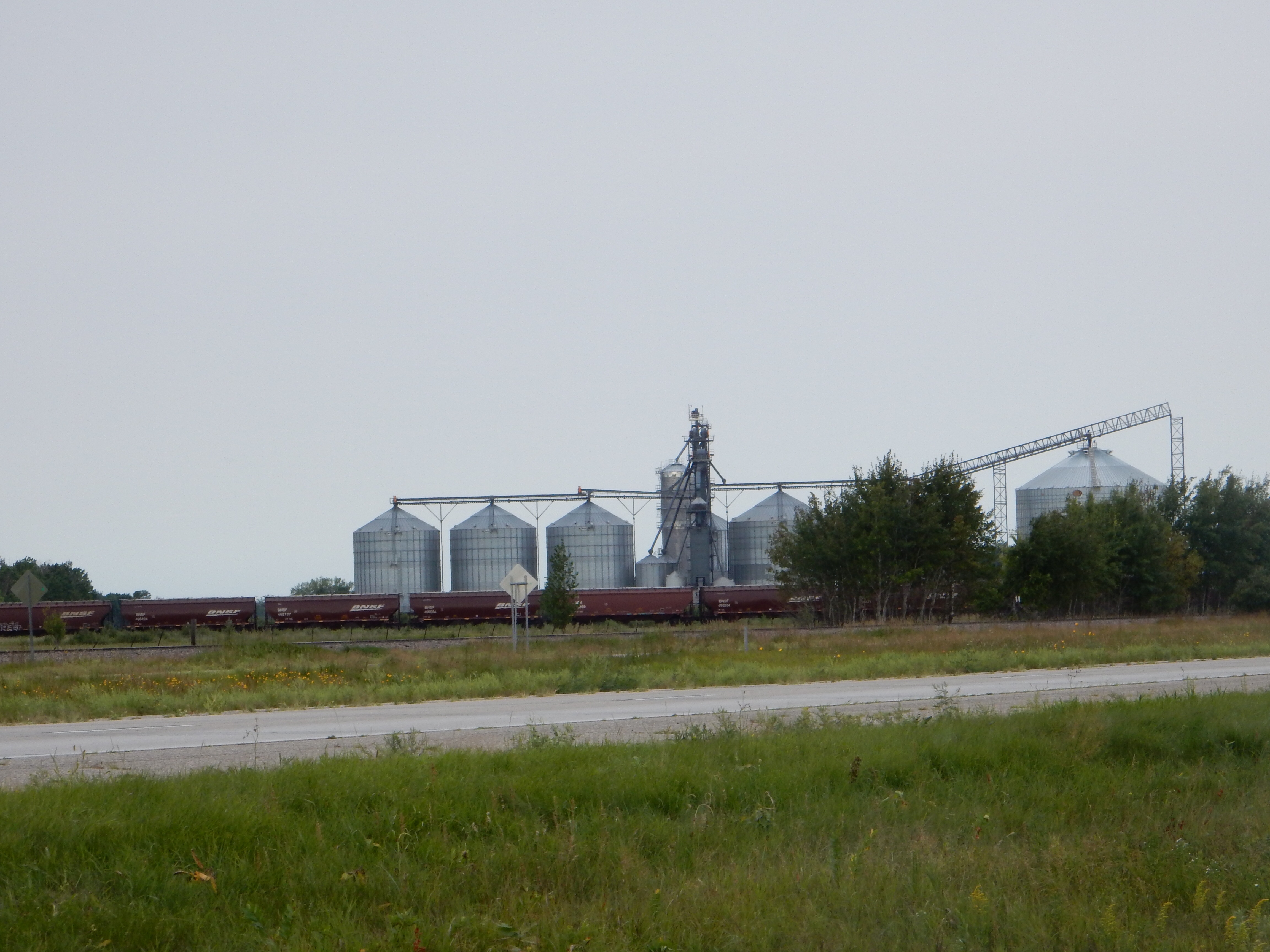
Silos,elevator and train along road

Silos,elevator and train along road

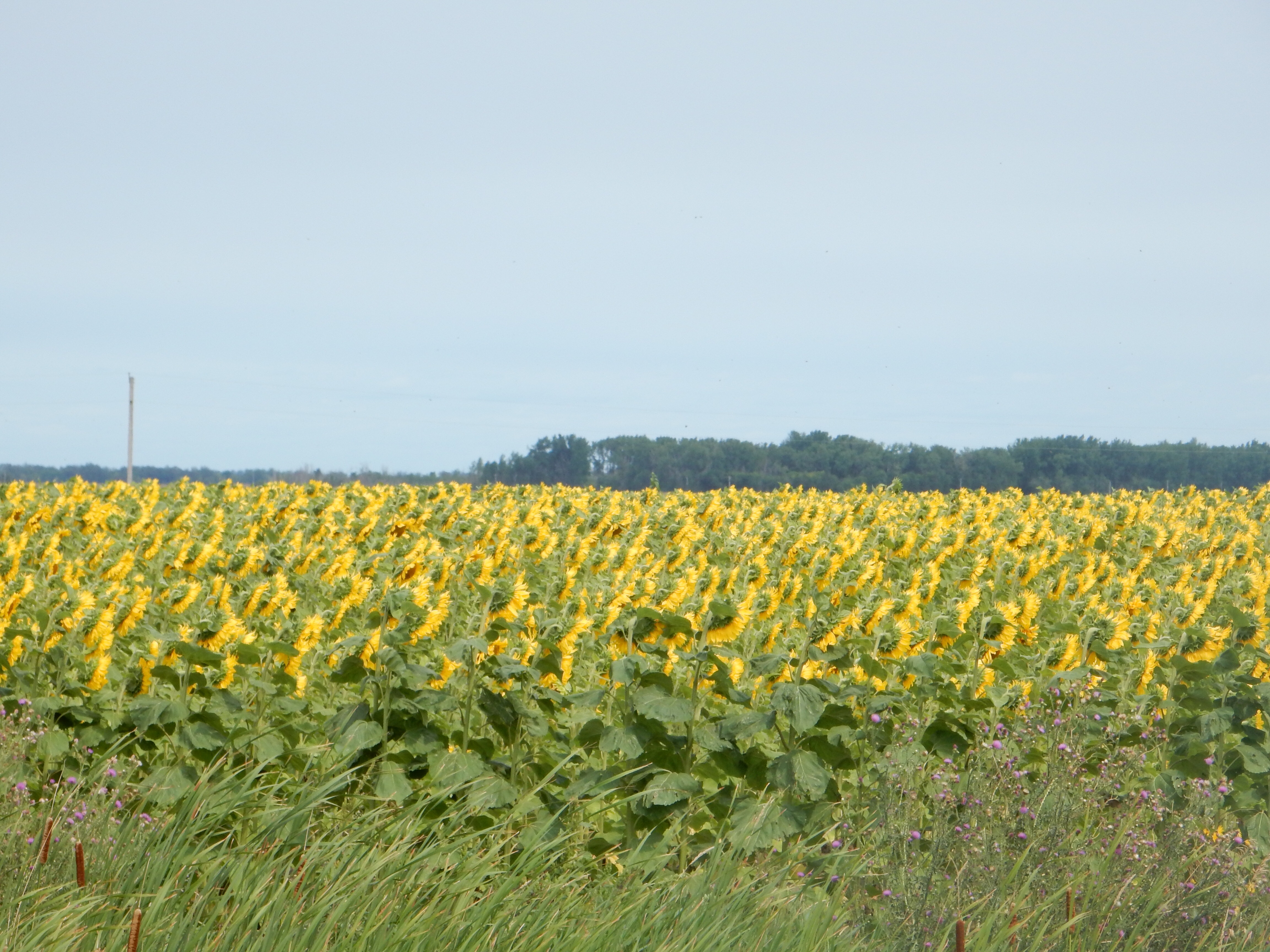
We left behind an area where every second vehicle was a pick-up or SUV pulling a boat and trailer. The road Sunday was straight with varying fields of sugar beets, corn, wheat, sunflowers, potatoes, and soybeans. Trees were planted as wind breaks, not as part and parcel of a forest. Every small town had its huge stack of elevators storing crops. Trains were comprised of hopper cars of coal or grains along with tanker cars we presumed with North Dakota oil but possibly other liquid goods. Small white-painted churches dotted the countryside.

Field of sunflowers

Field of sunflowers

Rydell National Wildlife Refuge was our first stop. Here we are out in the rural, sparsely populated area and we run into three women with their children going for a Sunday morning walk. The refuge office was closed but the trails were open. This refuge is still in the transition zone, so there were wetlands, small forest areas, ponds and grasslands. This part of MN was primarily prairie until the European settlers arrived and plowed up the land for agriculture. One can see the rich, black dirt that produces such good crops.

Wheat Field

Wheat Field

The railroads were the major driver of settlement in this part of the US. The railroads were given land by the federal and/or state government which they used to sell land to European immigrants. Other immigrants used the Homestead Act to gain their 160 acres of land at low cost. Towns were built along the railroad tracks where the crops were raised and then the crops sent back east on the same railroads that brought the immigrants out here to settle. Wheat was the primary crop planted by the settlers. That wheat was ground into flour in Minneapolis which was the flour milling capital of the world from 1880 to 1930. Even today, wheat is heavily grown in the Red River Valley of the North.

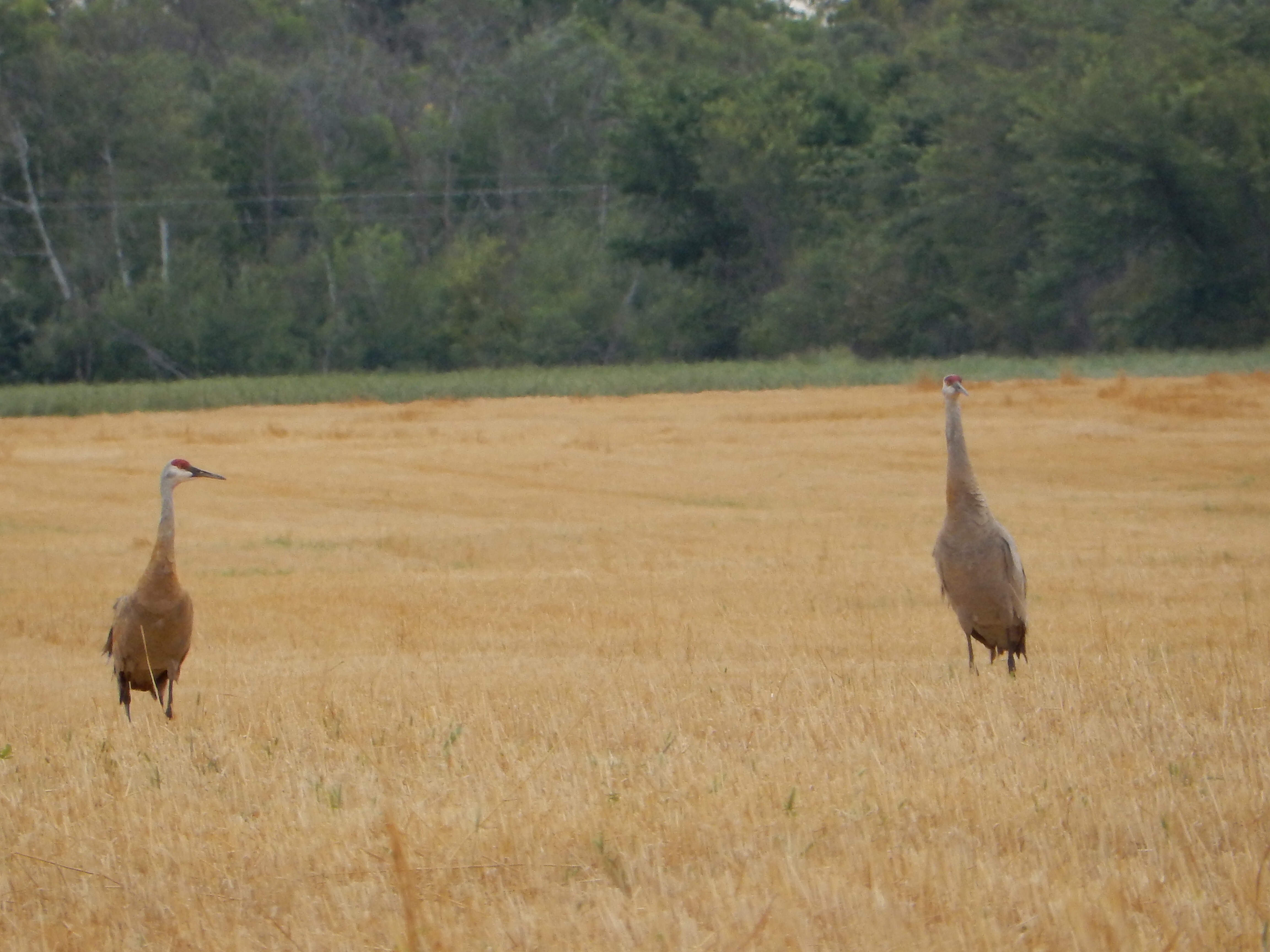
Two Sandhill Cranes

Two Sandhill Cranes

Part of Rydell National Wildlife Refuge

Part of Rydell National Wildlife Refuge

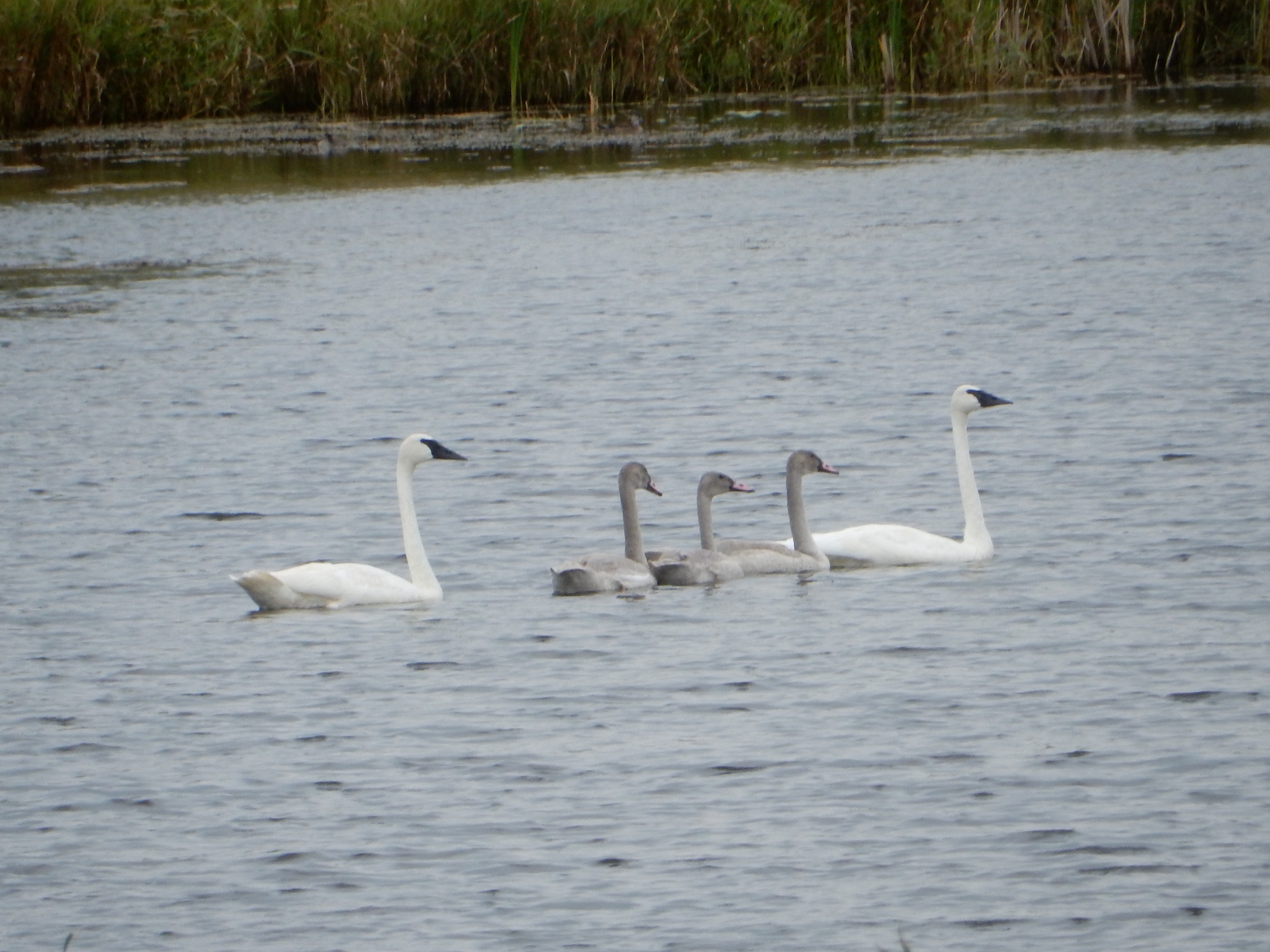
Swan family

Swan family

The Rydell National Wildlife Refuge was formerly home to 19 farmsteads. Its 2200 acres is bordered by land still being farmed. In one field located just across from the refuge entrance, we observed, and listened to the calls of, two Sandhill Cranes in a field where the wheat had just been harvested. In the refuge itself, we could view numerous prairie grasses and flowers. Trumpeter swans were swimming in two of the ponds.

Glacial Ridge Wildlife Refuge

Glacial Ridge Wildlife Refuge

A second stop was the Glacial Ridge National Wildlife Refuge. This one is so new that we drove past the small, off the road sign announcing it. Glacial Ridge is a partnership of over 30 agencies that hope to eventually make this the largest restored prairie in the U.S. Its goal is over 35,000 acres (Rydell is only 2,200 acres). There is only one short trail currently usable. We had hoped there would be more. We did drive past numerous signs indicating the refuge was located behind the fences, but only the one trail. One major goal for Glacial Ridge is the creation of sufficient habitat for prairie chickens which are dying out. The prairie chicken has a unique “booming” sound during its mating ritual.

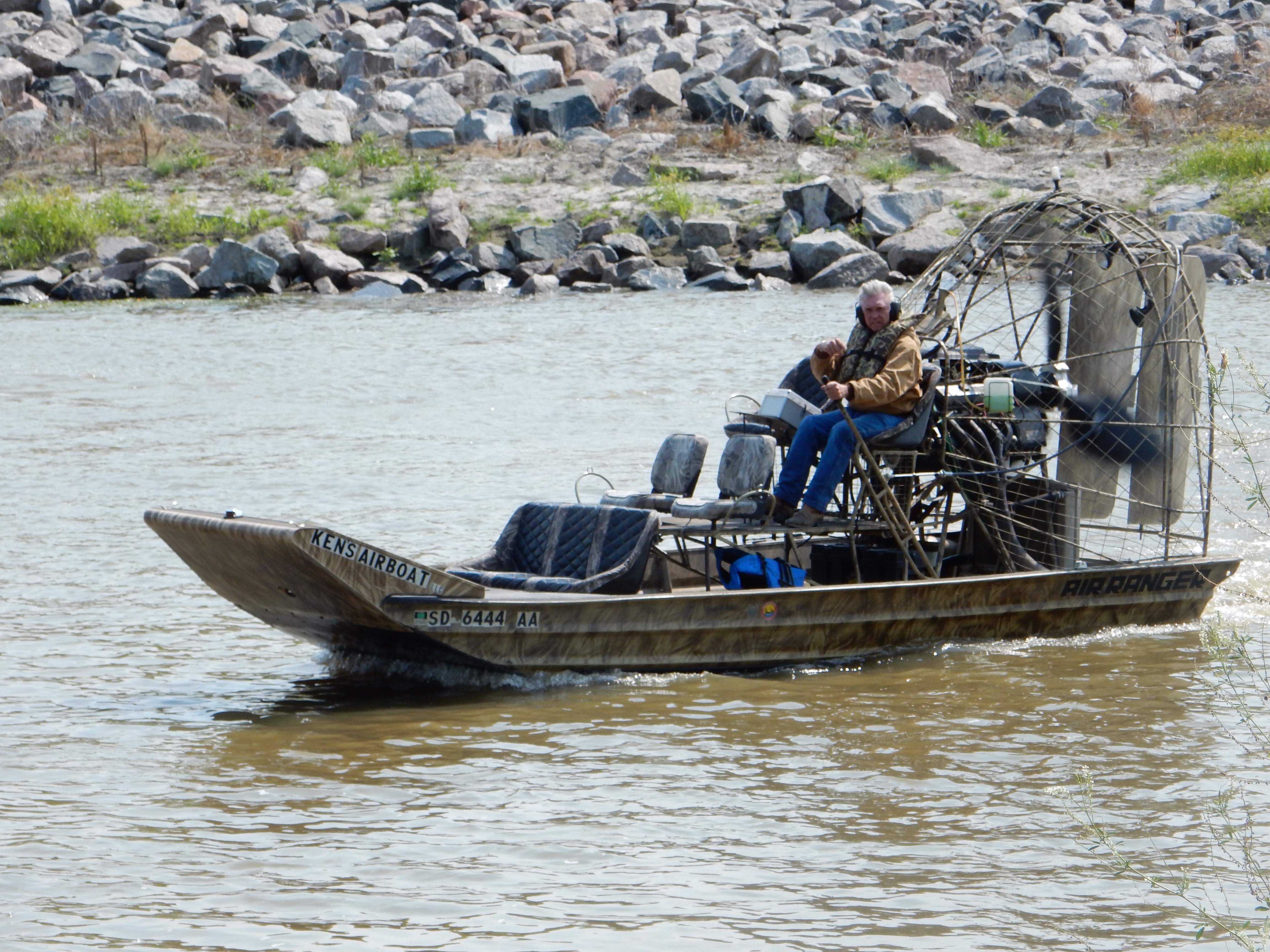
Airboat on Red Lake River

Airboat on Red Lake River

The city of Crookston MN was our third stop. The city was holding its annual Ox-Cart Days festival this weekend. Most of the festival was over by Sunday but we managed to go on an air boat ride on the Red Lake River. The river flows out of Red Lake which we visited on Saturday. Two of our companions were Bob and Joyce from Crookston who filled us in on the flooding history of Crookston. When you read of the floods in Grand Forks, Crookston was usually hit also. The Crookston/Grand Forks area is one of the few parts of the U.S. where the rivers flow north. This exacerbates the spring snow melt floods since the snows melts and then it has to flow north where the river is usually still frozen.

The old ox cart  used until the 1870s

The old ox cart used until the 1870s

Ox Cart Days are the town’s effort to remember its history. Way back when, even before the railroads, ox carts were the primary means of commercial traffic between Winnipeg and St. Paul. Ox carts, with large wheels to better handle the muddy roads, traveled in “trains” of several hundred at a time, and were pulled by one or two oxen. They moved at a slow pace of 20 miles per day. The train of carts had ungreased wheels which made a creaking sound that could be heard six miles away. It took hours for them to pass by a single location, leading to memories of “no other sound you ever heard in your life”. The ox carts were only able to make one or two round trips per year due to their slow speed and the short summer season. And I sometimes complain that Amtrak is an hour or two behind schedule!

One of the local churches was having a pizza and Celtic music picnic where we ended the day. The church had just built their own outdoor stove to make pizza. The wife of the stove builder explained to us that this was their public endeavor with it. We had three slices each. Good job folks.

The drive from Crookston to East Grand Forks was completely in the prairie area. Flat lands in every direction. I have not yet been able to differentiate between fields of potatoes, soybeans, and sugar beets. While Idaho and Washington produce over half of the U.S. crop of potatoes, this section of ND and MN rank sixth and seventh.

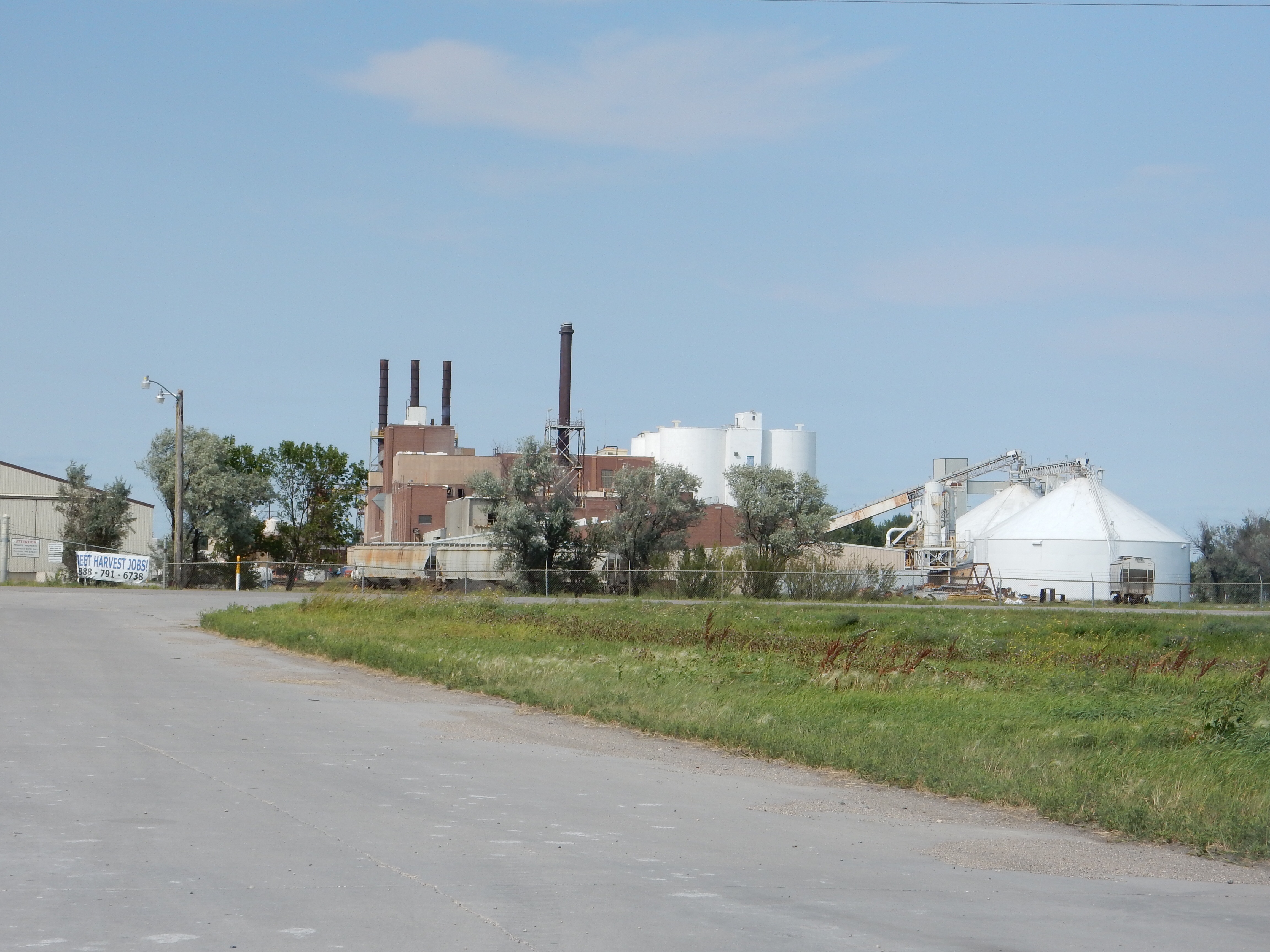
Crookston sugar beet facility

Crookston sugar beet facility

Sugar beets are a big deal up here; you may have read over the years of the impact the sugar beet lobby has in limiting imported sugar and in providing for strong sugar beets subsidies. We have seen two large sugar beet producing facilities, one in Crookston and one near our Fairfield hotel in East Grand Forks.

We had dinner Sunday night at the Blue Moose in East Grand Forks. It is located as close to the Red River of the North as a business can get nowadays. After the disastrous 1997 floods, much of the two downtowns (Grand Forks ND is on the west bank of the river) were destroyed. Instead of reconstruction, the properties were torn down and a park installed. On the MN side of the river, it is the Red River Recreation Area. The businesses were pushed back aways and dikes built to better protect the town.

We went walking through the river park. It has great bike and walking paths and some campgrounds. There are still plans to do more flood prevention work which is very controversial-and expensive. Since the land up here is so flat, any flooding back-up can impact miles of territory. Not sure how it will eventually be resolved.

Ed and Chris

Categories: road trip, travel | Tags: , , , , , , , | Leave a comment

Blog at WordPress.com.