
Steinhatchee, FL Friday Feb. 27
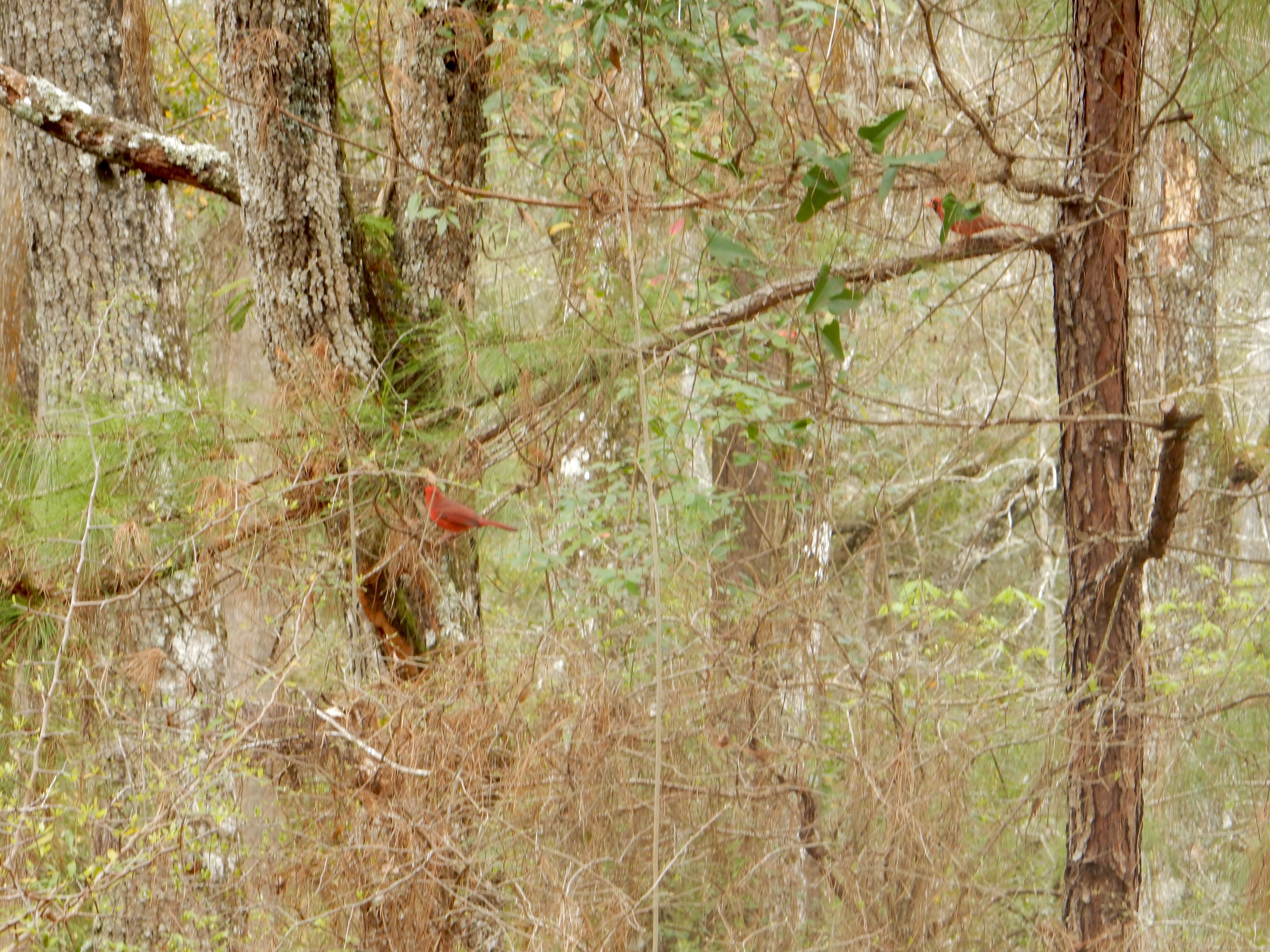
Two red birds along our North End Trail hike
All along Florida highways, we have viewed road signs indicating ” The Great Florida Birding and Wildlife Trail”. We are not “birders”, we can not identify most birds and have no special equipment to spot them. Yet, it is enjoyable to be in the woods with birds singing and flying around. Today, at Manatee Springs State Park, we seemed to see and hear more small birds than the other parks we have visited recently.

Manatee Springs
Manatee Springs is a first magnitude spring; that is, the springs pump out between 35 and 150 million gallons of water daily. In comparison, the City of St. Paul MN produces less than 50 million gallons of water per day for the city and suburban population of 450,000 it serves. Florida has more first magnitude springs than any other state or country in the world, 33. Of these 33, depending on calculation method, Manatee ranks 25th.
Manatee Springs State Park also frequently hosts manatees during the winter months. In fact, noted naturalist William Bartram, in his 1774 walk through Florida, commented on the manatees here. During our visit, we observed two manatees-and one snorkeler in the water with them. As noted in the last post, the constant 72 degree F water helps the manatees survive. The water from the spring flows into the Suwanee River, just a quarter-mile down stream from the springs.

Along the run leading to the Suwanee River

Cypress Trees
The area by the springs has swamps and bottomlands that had an abundant population of birds, mainly small birds, not the herons, egret, ibis, pelicans. We walked along the area enjoying view and sounds. Then we headed out to the North End Trail. We are beginning to observe trees leafing out and flowers beginning to bud.
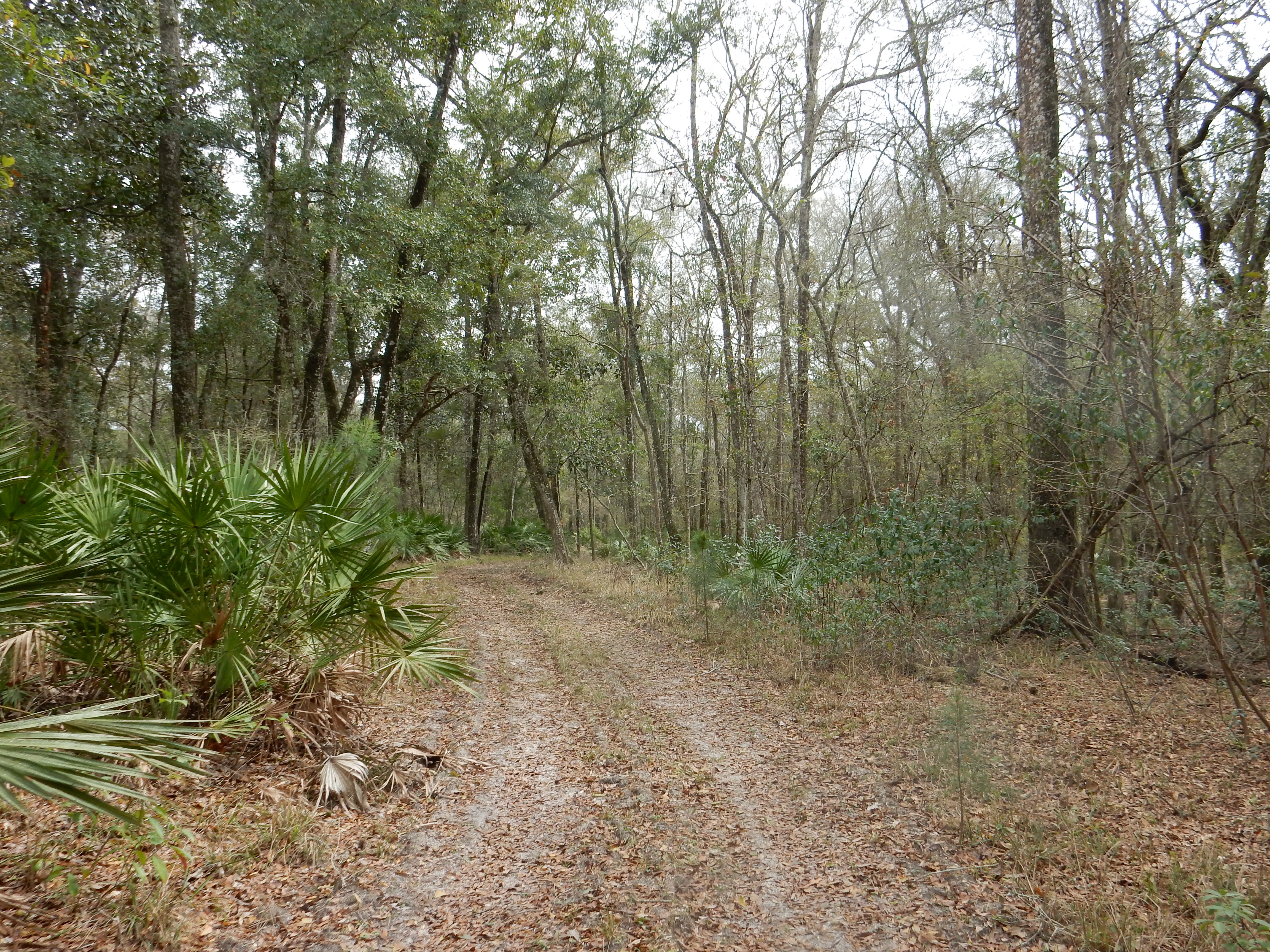
Along the North End trail
The North End Trail is a series of trails that wandered through wetter areas with saw palmetto and cypress to the “higher” elevations with numerous pines with oak and magnolia trees and various brush, shrubs, etc. Much of the undergrowth has been part of the prescribed burn process that the state uses to replicate nature’s frequent forest fires. It is interesting for us older folks to remember the days of Smokey the Bear and the thought that all forest fires were bad. Now we recognize the important role they play in maintaining certain ecosystems.

Replica of a chickee hut used by the Seminole Indians when they were pushed into the woods and swamps during the Seminole Wars
Early in the hike we encountered our first wild pig. This one came across our path from a group of saw palmetto thirty feet in front of us and kept moving into the vegetation on the other side of the trail. It happened so quickly I was unable to get my camera out in time to take a picture. In height, it would have been between my knee and my waist. When we got to the spot where it had crossed, it was already lost in the undergrowth. Wild pigs (also called wild hogs, feral pigs, or feral hogs) are almost universally disliked due to their rooting for food that destroys ground cover. These pigs were brought to the America by the Spanish. Of course the Spanish also brought over horses and cattle which are almost universally liked. We kept looking for more, but only saw the one.
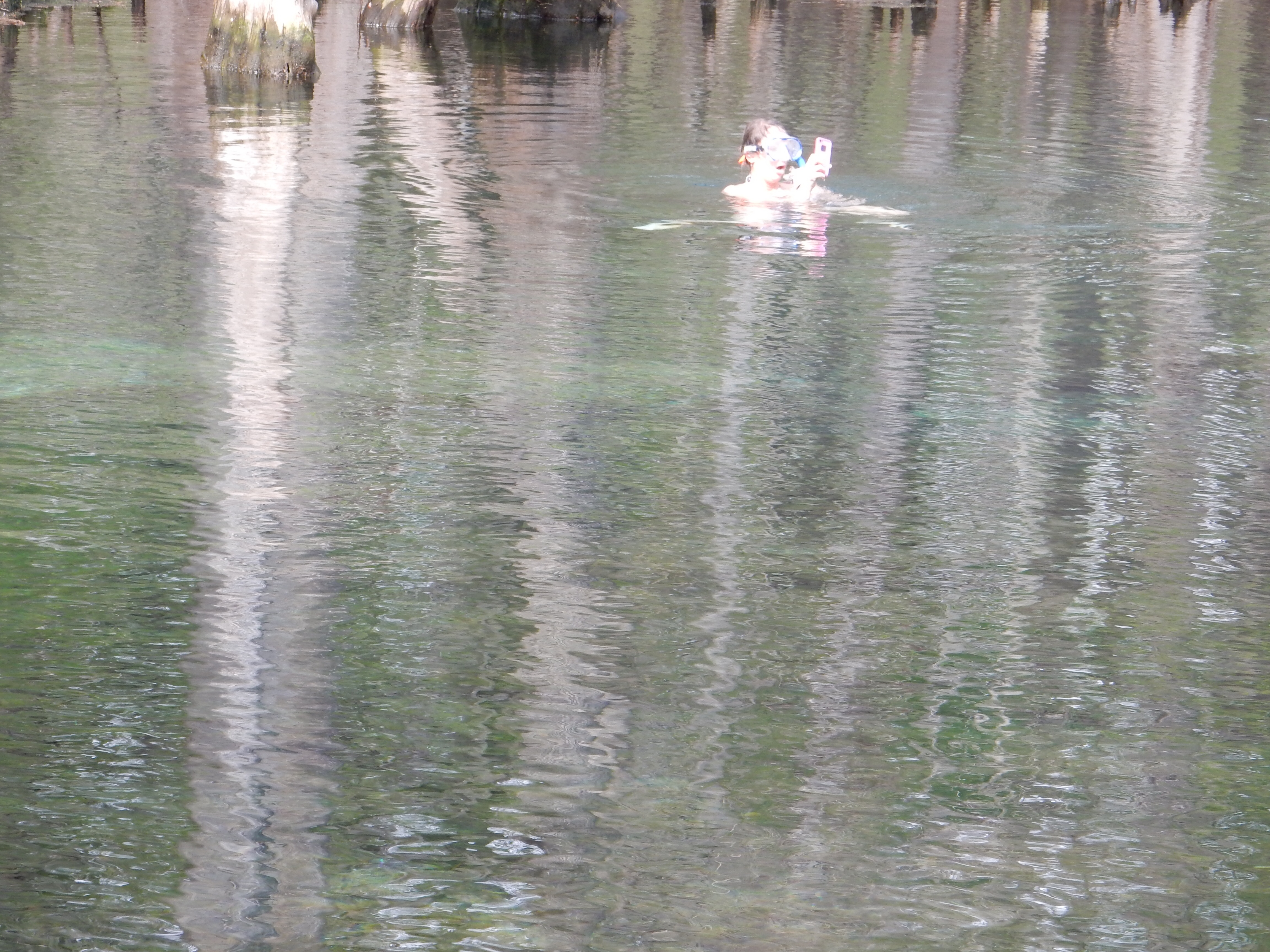
Snorkeler in Manatee Springs with two manatee
Our North End Trail hike was about 6 miles and a little over two hours. We returned to the manatee viewing area where the park concession stand was serving fresh roasted pork sandwiches. We assumed the pork was farm raised pig, not wild.
Tomorrow, we spend most of the day driving to, and getting settled in, our next location. Ruskin is in the Tampa/St. Petersburg/Clearwater/Sarasota area of Florida, on the southeast side of Tampa Bay. We will be there for three weeks.
Ed and Chris Feb. 27th 7 PM
 Chris Klejbuk and Ed Heimel travel adventure
Recent Comments