Posts Tagged With: National Park Service

2018 Trip 3, March 20, KY and TN

Munfordville, KY. March 20

Ed working on the blog at our B and B

As we sit in a B and B in Munfordville, KY, yesterday’s rain has now become snow. One to three inches by tomorrow noon. Luckily we should be underground for much of that time as we will be touring Mammoth Cave. A horse and carriage from a local Amish farmer drove by a few minutes ago, hopefully they will get home before snow accumulates-if it does. The temperature is around 35 degrees Fahrenheit.

We were able to sleep in today. Our first stop at the International Bluegrass Museum in Owensboro did not open until 10 AM. While there is a botanical garden in town, the weather did not portend a blooming sight for our eyes so we passed on trying to visit the garden first. Bill Monroe, considered one of the primary founders of bluegrass music, was born in Rosine KY, a short 35 mile drive from Owensboro so that seemed to be the inspiration for founding a museum here.

The museum opened in 1995 and has expanded once already. We were lucky to visit now; the museum will be opening a new facility around October of this year with three times the exhibit space. The current space is likely to close in May to accommodate the move to the expanded digs.

Inside the International Bluegrass Museum in Owensboro,KY

We spent an hour touring the museum. Displays are well done and cover such topics as the pioneers of the music genre; Bluegrass’ Classic Band of Bill Monroe, Lester Flatt, Earl Scruggs, Chubby Wise, and Howard Watts; historically significant bluegrass instruments, Hall of Fame, etc. They define bluegrass as “ bluegrass has a unique singing style. It is tight-throated, high-pitched, piercing and full of lonesome yearning for the good, simple life. In Bluegrass the bass fiddle typically thumps out a steady foundation rhythm and outlines the harmony. The mandolin, when not soloing, provides a characteristic chopping accent on the offbeat – called syncopation – giving the music rhythmic drive. Melody instruments such as bango, fiddle, mandolin, are free to layer new rhythmic patterns over this background pulse.” Numerous opportunities exist to listen classic songs. It was a reasonable introduction to bluegrass music.

Kentucky maps show 11 parkways. Coming in to the state, I did not know if these were toll roads or slow, scenic roads. It turns out the parkways used to be toll roads but as the bonds used to finance construction were paid off, the parkways converted to free roads. Normally, they match interstate standards as limited access highways. We discovered the quality of the roads by purposely choosing to drive two of the parkways instead of two lane roads as we headed to our second stop, the Abraham Lincoln Birthplace National Historical Park in Hodgenville, KY.

Hodgenville has a population of 3,200 and Chris managed to find a local restaurant with good food. Chain fast food places seem to be driving many of these out of business. We had lunch here, although the Hodgenville Grill is just over into the Eastern time zone so our lunch was almost a mid-afternoon snack. For $6.49 we had an entrée and two sides. We enjoyed the vegetable options choosing baked beans, lima beans, beets, and coleslaw from among about 16 or so choices. And yes, the food was good. In contrast, our evening meal at a different local restaurant was mainly fried food, the place could have been cleaner, and we heard one of the staff discussing how sick she was this weekend. Maybe there is a reason fast food chains with standardized quality and cleanliness are taking over.

The memorial at the Abraham Lincoln Birthplace National Historical Park

The replica log cabin inside of the memorial at Abraham Lincoln Birthplace National Historical Park

The Abraham Lincoln Birthplace National Historical Park is located on the site called Sinking Spring where Abraham Lincoln was born. The first U.S. memorial to Lincoln was constructed here in 1911. The neoclassical marble and granite memorial houses a simple, symbolic log cabin inside represent the humble beginnings with the monumental achievements of our 16th President. Lincoln was born on this site and lived here for three years. His family moved ten miles away to Knob Creek where he lived for five years before moving again to Indiana and later Illinois. Land disputes, due primarily to faulty or non-existent land surveys, caused the moves from Sinking Spring and Knob Creek.

We visited both sites, talked to rangers, watched a video and bought some souvenirs before heading to our B and B lodging for the next two nights.

Ed and Chris

Epilogue: Snippets on life in America from Chris.
Day 5: He was born in Kentucky. While not poor, Abe Lincoln had come from modest means with a young life marked with tragedies. He became one of our best Presidents as well as founding the Republican Party. And now we have Trump.

Categories: road trip, travel | Tags: , , , | Leave a comment

2017 Trip Two: Tour of Texas March 6

Topeka KS. Monday March 6

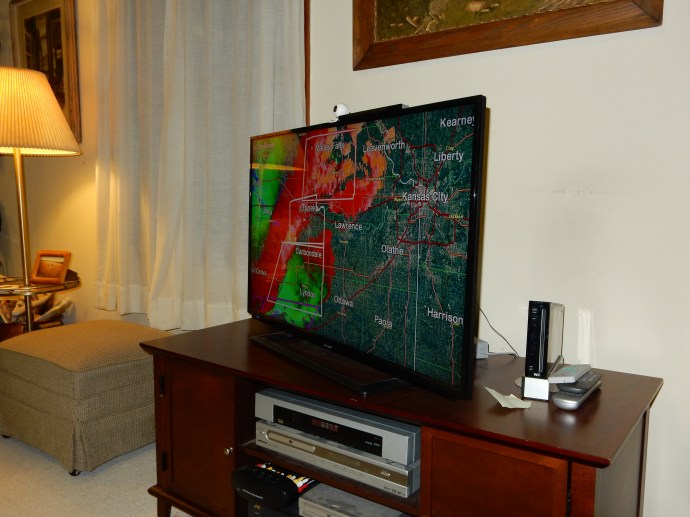
Our tornado warning on the TV screen

Shades of Dorothy and the Wizard of Oz. We experienced a tornado warning at dinner tonight in Topeka. The sirens went off, the emergency alerts rang on all of the phones in the restaurant where we were dining. People here take tornado warnings seriously. We and the other diners boxed up our food and headed back to our Evergreen host’s basement to finish dinner. The restaurant offered to have people move into their secure area but most of us chose to leave. Three tornadoes were spotted but it seems none landed or caused any damage.

That was an exciting end to a calm day touring Topeka. It was warm (80 degrees F) and windy today, fine for walking around. The Bradford pear trees downtown were already blooming. Our travels started with the National Historic Site of Brown v Board of Education. Hopefully at least the Americans reading this blog recognize Brown. This was the historic 1954 Supreme Court decision declaring that: “We conclude that in the field of public education the doctrine of ‘separate but equal’ has no place. Separate educational facilities are inherently unequal.”

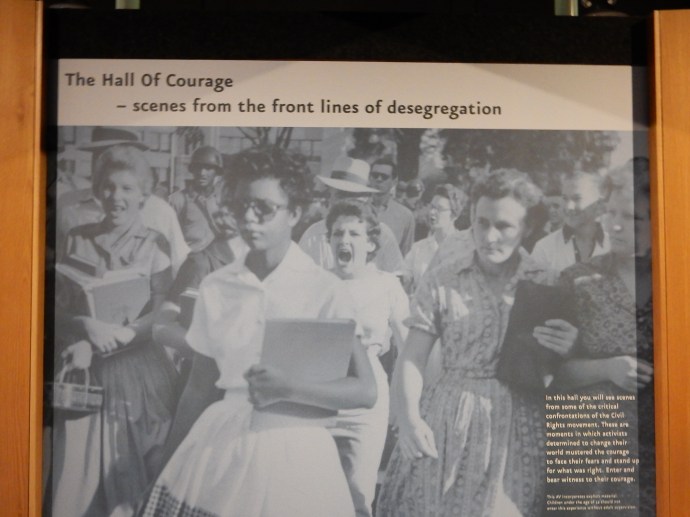
This National Park Service site had one of the most powerful videos I have experienced. A young black girl is talking to a long-time friend of her grandfather and is receiving a history lesson about the roots of segregation and the battle to provide freedom for all Americans. Her expressions of amazement conveyed clearly the wonder that people actually believed in this segregation stuff.

One display case at the Education exhibit at the NPS Brown v Board of Education National Historic Site

The building is in the former Monroe Elementary School, one of four segregated elementary schools for African-Americans in Topeka. This is the school Linda Brown attended instead of the closer white only elementary school. Other rooms in the building showcased exhibits on education and the battles fought to end segregation in the U.S.; a sample kindergarten room from that time period, and the actions that followed Brown v Board of Education to implement the Supreme Court decision. Amazing that government officials thought they did not have to obey the Supreme Court decision.

Once again, this NPS unit was staffed by a friendly and knowledgable ranger. Park rangers are just one of the reasons we like NPS sites so much.

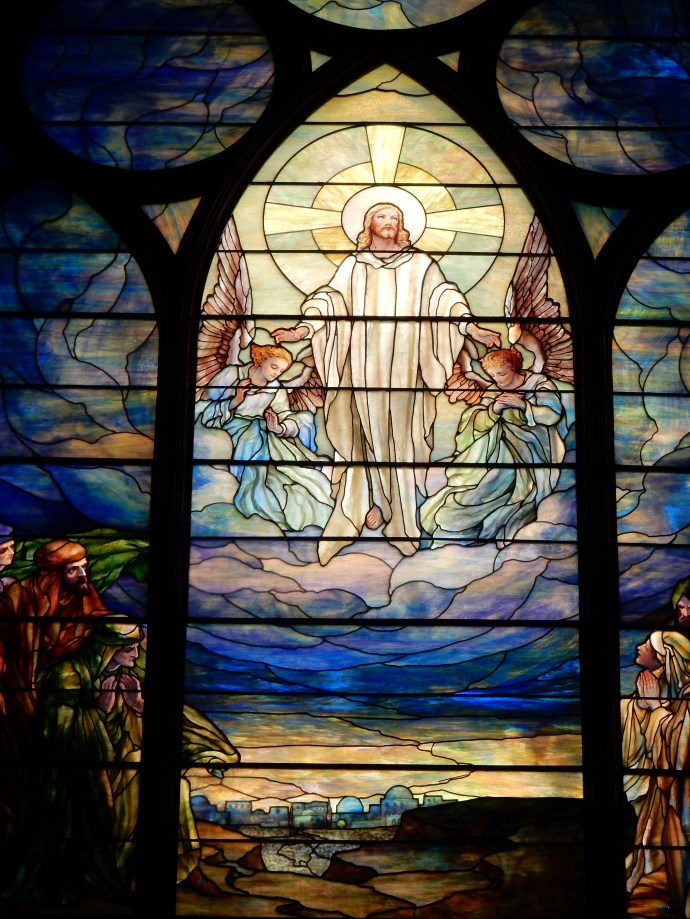
The Ascenson stained glass window by TIffany in First Presbyterian Church in Topeka

Our second stop was at the First Presbyterian Church across from the State Capitol. This church has a series of Tiffany prepared stained glass windows. Tiffany stained glass has gained its reputation because it is glass without paint,enamel, or stains. Instead, the color is produced using additives like cobalt,copper, gold, etc. Evidently, on Tiffany’s orders, the formulas to produce these colors were destroyed upon his death.

The Kansas State Capitol in Topeka

After a quick lunch, we took the 2 PM tour of the Kansas State Capitol. The guide was the husband half of our Evergreen host couple. He has been doing these tours for 18 years and part of his “Schtick” is that he sings several songs during the tour that relate to the story line. He got all of us to join him in singing the Kansas state song “Home on the Range”.

The actual sledge hammer used to break down the door to the Kansas House chambers.

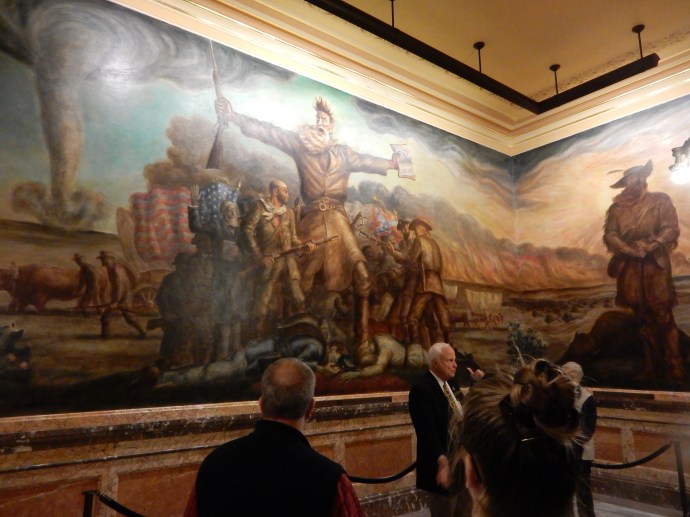
Two of his interesting stories. First, in 1893, there was a dispute between Republicans and Progressives over which party controlled the House of Representatives. The Progressives took possession of the building and locked the Republicans out. Eventually the Republicans got fed up and took a sledgehammer to the door of the chambers and got in. Eventually the matter was settled without the use of firearms which both sides possessed. Second, as we viewed a famous mural of John Brown titled Tragic Prelude by John Steuart Curry he pointed out several of the figures and which famous personages they represent.

“Tragic Prelude” mural in Kansas State Capitol

Another in a series of impressive and beautiful state capitols. Unlike Nebraska, the Kansas capitol is constructed in the dome style. With the statue of the Indian on top, it is taller than the U.S. Capitol. One could climb the 296 steps to the dome but with my vertigo, we passed on that opportunity.

Ed and Chris. March 6. Topeka

Categories: road trip, travel | Tags: , , , , , , | Leave a comment

2015, Trails and Rails-Amtrak and National Park Service

Saint Paul, MN

In July of 2012 I retired and, as readers of this blog know, began traveling extensively in January of 2013. I have also been seeking out volunteer opportunities that would still allow for travel. Periodically in 2013 and 2014 I would do some volunteer work for the Mississippi National River and Recreation Area, a unit of the National Park Service. As we cut back on our travels this year, I have been able to increase that volunteer work. In the words of the website for the Mississippi National River and Recreations Area, “In the middle of a bustling urban setting, this 72 mile river park offers quiet stretches for fishing, boating and canoeing. Other spots are excellent for bird watching, bicycling and hiking. And there are plenty of visitor centers that highlight the history and science of the Mississippi River. If you are interested in the Mississippi River, this is a great place to start your exploration.”
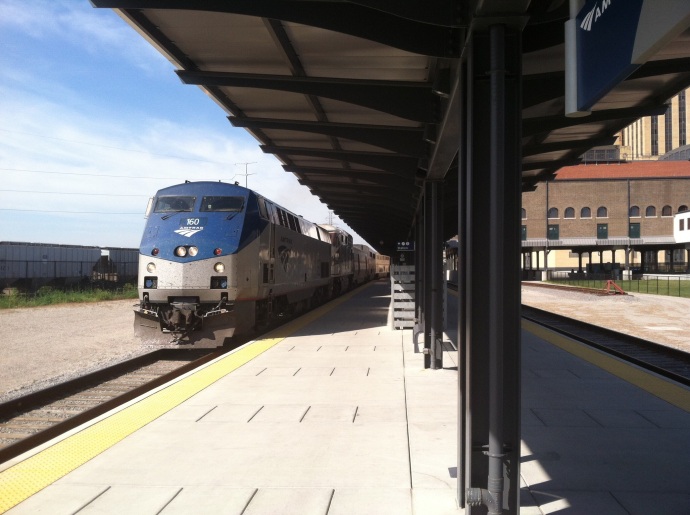
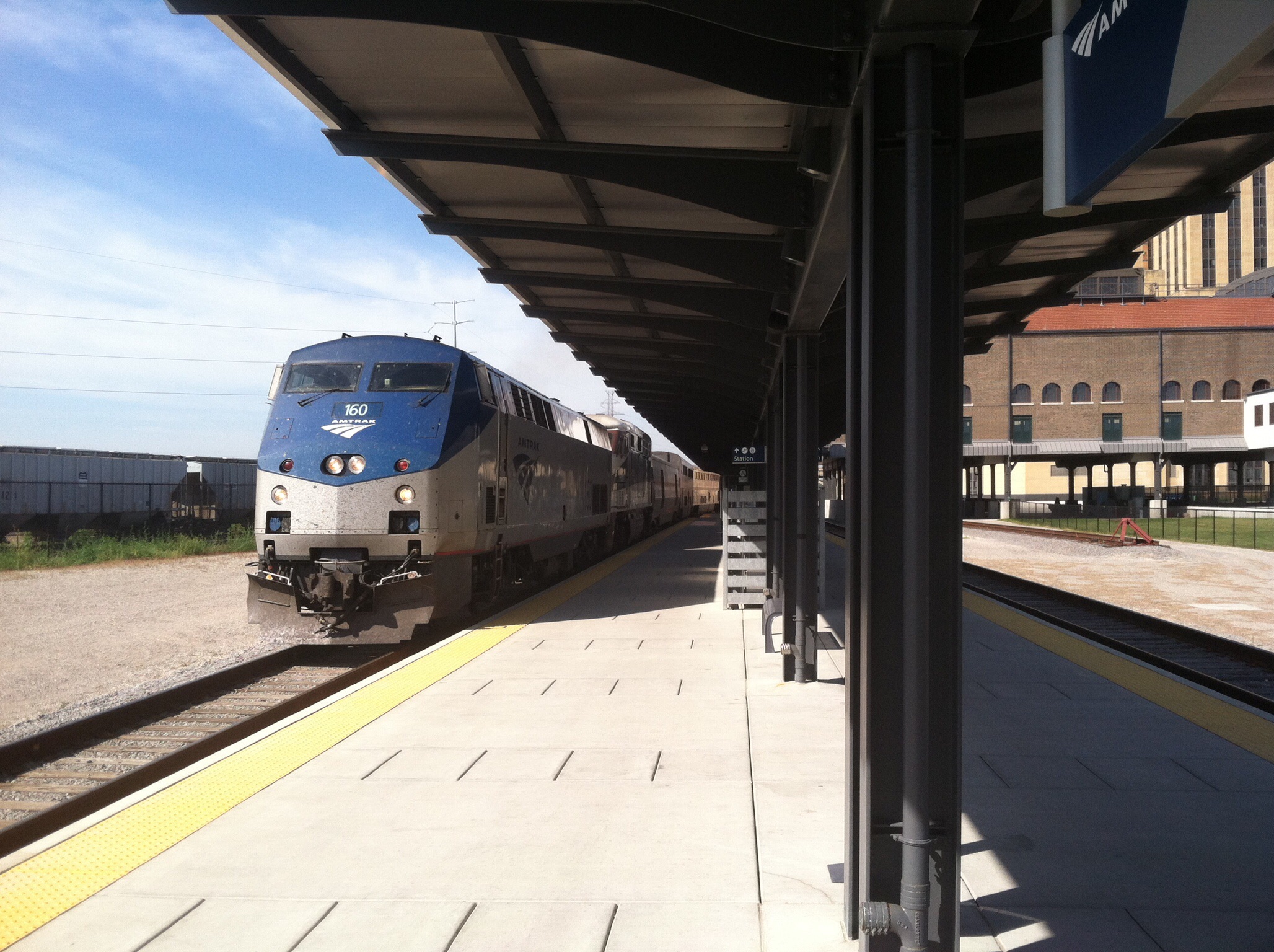
Empire Builder arriving at St. Paul's Union Depot

Empire Builder arriving at St. Paul’s Union Depot

The National Park Service and Amtrak cooperate on a program called Trails and Rails. In this program, volunteers from local national parks provide a combination of education, enlightenment, and entertainment on 25 to 30 Amtrak passenger routes around the United States. Our Amtrak passenger train travels between Chicago Illinois and Seattle Washington and is called the Empire Builder. The Empire Builder train is named after James J Hill, the founder of the Great Northern Railway. His efforts in making his railroad successful had a tremendous impact on the growth of the Midwest and Northwest. He was heavily involved in promoting Glacier National Park and his company ran the concession lodging there for many years. Here in St. Paul, our national park, the Mississippi National River and Recreation Area, is one of those sponsors with Amtrak for a Trails and Rails program.
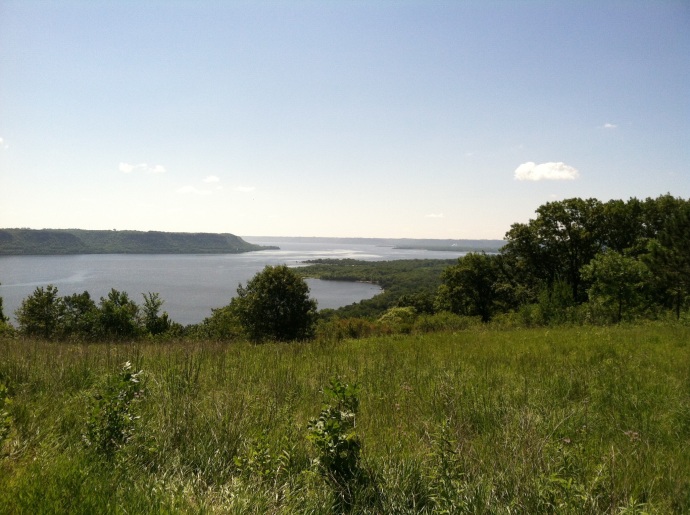
Mississippi River Valley from Frontenac State Park

Mississippi River Valley from Frontenac State Park

20 volunteers from the Mississippi National River and Recreation Area, myself included, take turns providing the service from May 1 to September 1, Monday through Thursday. The program here is in its seventh year. Two volunteers will ride each train going from St. Paul Minnesota to Columbus Wisconsin. The train leaves St. Paul Union Depot around 8:15 AM. The train normally will arrive in Columbus Wisconsin around 1:15 PM. The volunteers wait a few hours and then board the returning westbound train at Columbus around 5:15 PM and arrive in St. Paul around 10 PM. Volunteers must monitor the progress of the eastbound train before it arrives in St. Paul, since overnight lodging is not provided. If the train is too late, the volunteers will not be able to catch the return train. For instance, this year, forest fires in Washington closed down the tracks to all train traffic, not just Amtrak, for several days. When the train is too late, we do not make the trip, or get off prior to Columbus. The eastbound train will frequently encounter delays as it goes through the mountains. It does not get priority over freight traffic and may have to wait for freight trains, and particularly oil tanker trains to go through. Track maintenance work will also require slower speeds through construction zones.
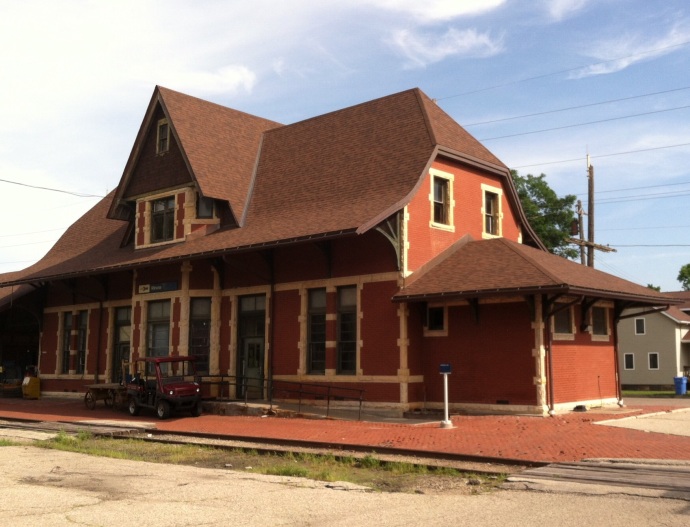
Winona MN Train Station
Winona MN Train Station

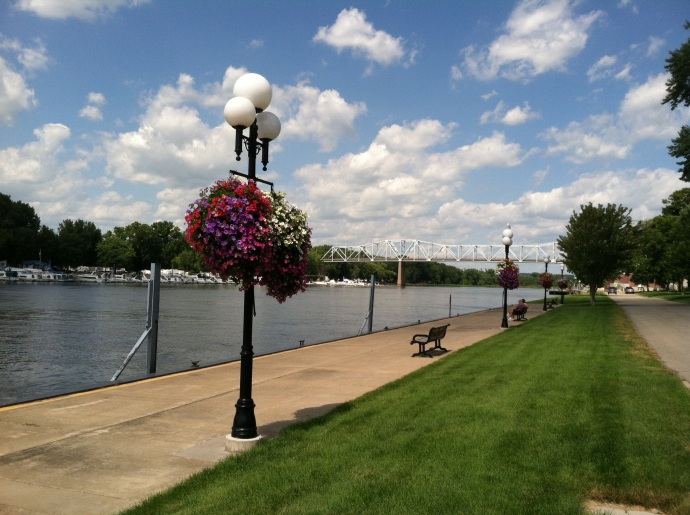
Mississippi RIver from downtown Red Wing

Mississippi River from downtown Red Wing, across the tracks from the train station

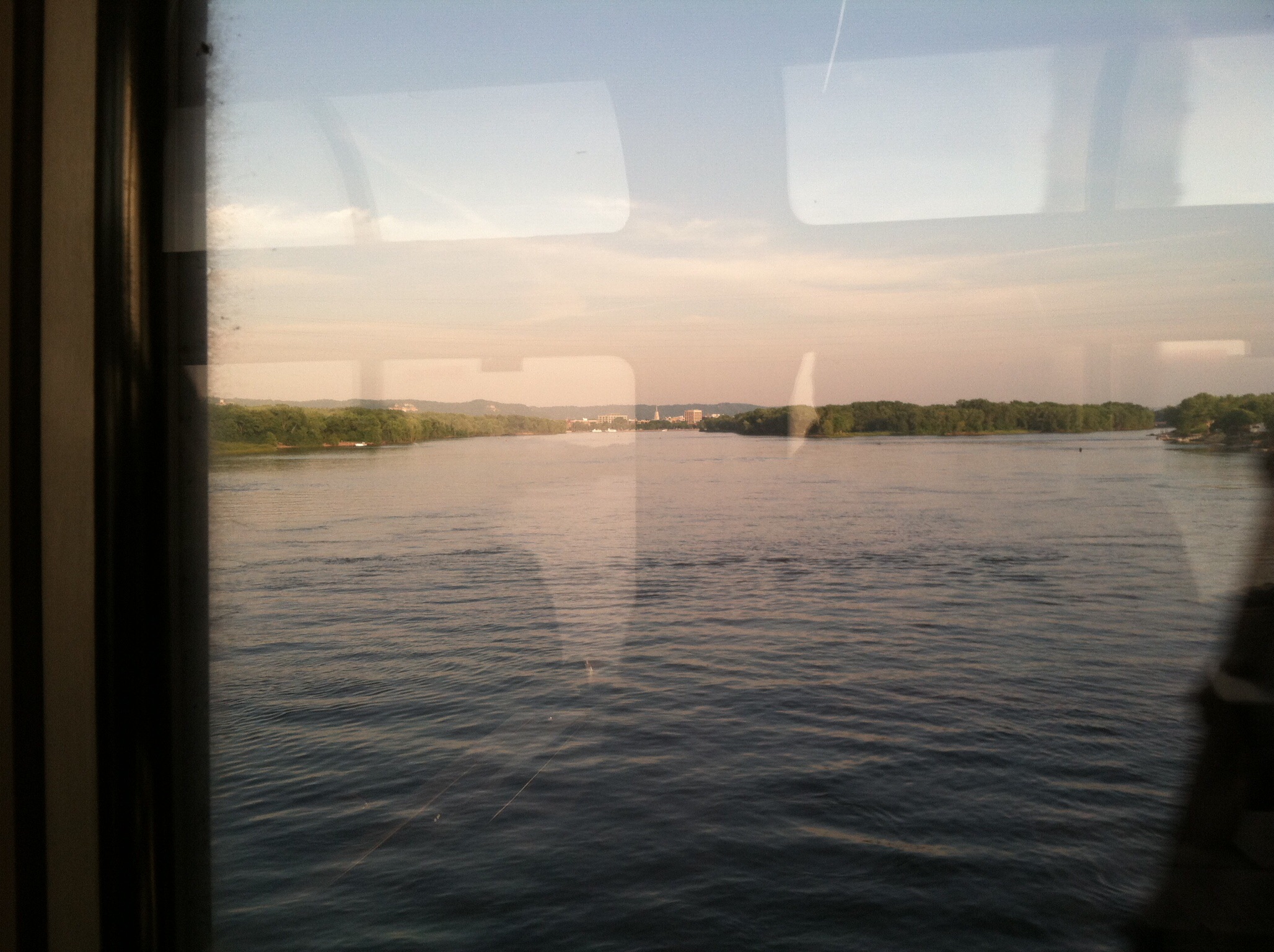
The Trails and Rails program out of St. Paul is dictated by the Amtrak schedule. There is no value in running a program at night when people are sleeping and no views outside the window are possible. The Empire Builder traveling between St. Paul and Columbus offers several hours of viewing of the Mississippi River, which is the purpose of our park here in St. Paul. The sights are beautiful, whether seeing a sunset over Lake Pepin or just viewing the river and farmlands. In the words of Mark Twain: ““Neither in this country nor in any other, have I seen such interesting scenery as that along the Upper Mississippi. One finds all that the Hudson affords-bluffs and wooded highlands-and a great deal in addition.. Every hour brings something new.”
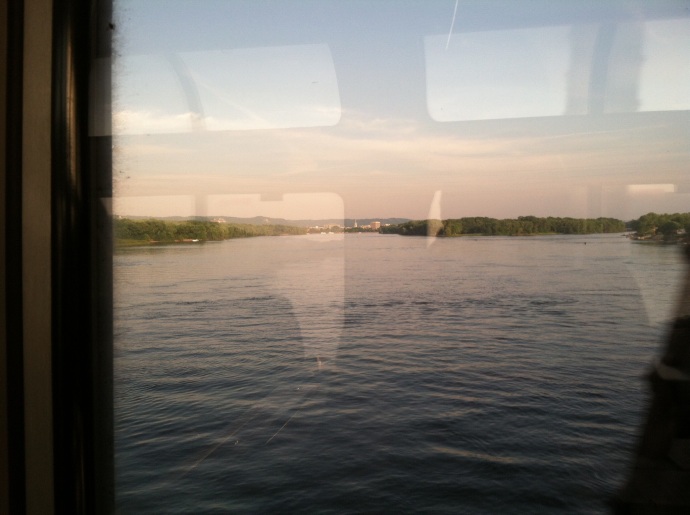
Crossing the Mississippi River at LaCrosse WI-LaCrescent MN on Empire Builder for Trails and Rails

Crossing the Mississippi River on Amtrak Empire Builder Trails and Rails at LaCrosse WI-LaCrescent MN

So this year, I began as one of the 20 volunteers on the Empire Builder Trails and Rails. Training includes a six-hour classroom session, a two-hour train ride introduction, two trips on the train from St. Paul to Columbus with experienced volunteers, and a package of information to provide the starting material for your own narration. We are expected to provide narration, not read the material in the handouts. Thus the volunteer has the requirement and the opportunity to personalize the presentation. I was reassured by the fact that two volunteers always travel together and that we are not expected to be talking constantly. The presentation is made in the upper level of the lounge car. This car has higher dome windows to provide a better view. This type of car is normally not seen in the eastern United States due to lower bridge heights the trains pass under in the eastern half of the U.S.
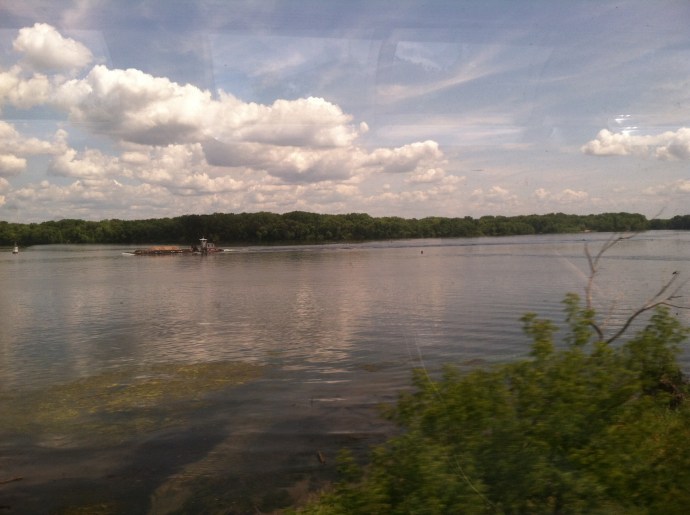
Tow boat with a single barge on Mississippi RIver

Tow boat with a single barge on Mississippi River

One of my initial concerns was whether the passengers in the dome/lounge car would be irritated by our conversation and how receptive they would be to the presentations. After the first several rides in which we were applauded when we got off in Columbus; or overhearing passengers say “I did not know that”; or hearing passengers discuss your comments by themselves later during the trip made me realize that the effort was worthwhile and well received. Personally, I still have some trepidation each time a new trip starts but these are starting to go away. I continue to add to my own narration copy and work on my ability to know when to present various topics. I have over 50 pages of narrative by now. I do not intend to try to put that all in this post. I will highlight a few comments as an example of the information types we present. Even during my presentation, not all material gets presented. Some of my narrative is a fuller background on a locale but in speaking, I summarize the material. Based on the audience, if the view is being blocked by other trains on neighboring tracks, or whatever, not all material is presented.
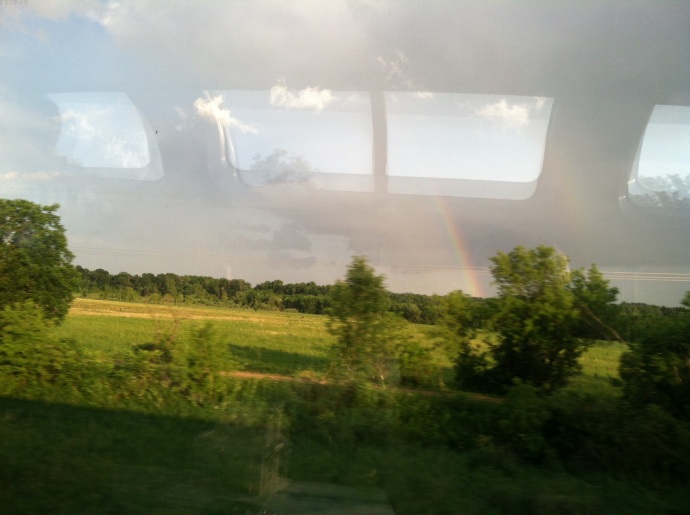
Wisconsin farmland with rainbow

Wisconsin farmland with bike trail and rainbow

First, we talk about geology; there are interesting examples along the way. One of the areas that is mentioned I was completely unaware of prior to this activity. This is the so-called famous Driftless Area, particularly of Wisconsin. The upper portions of the United States have been covered by several glaciers over the past millennia. However, the last, or fourth, glacier did not descend as far south as the previous ones. Glaciers move sediment and rocks along with them, this has been categorized as glacial drift. Since the fourth, and last, glacier did not descend as far south, this un-glaciated area of Wisconsin, and a small portion of Minnesota, is called the Driftless Area. It has impacts for landscape and produces different topography then the glaciated area.
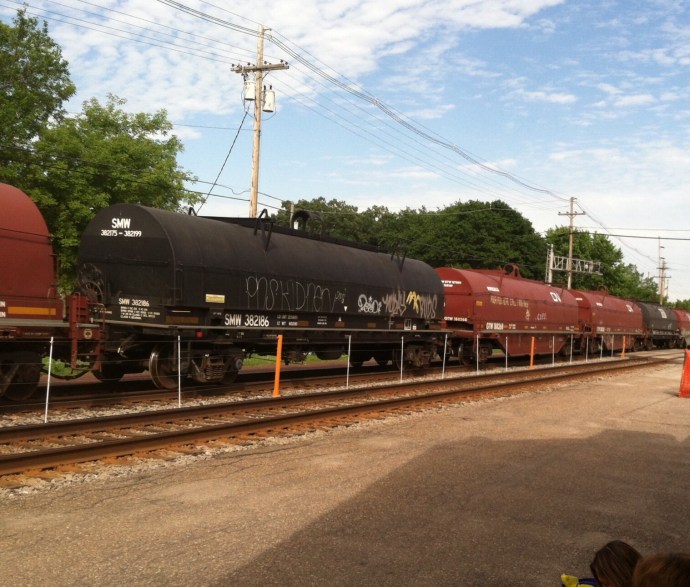
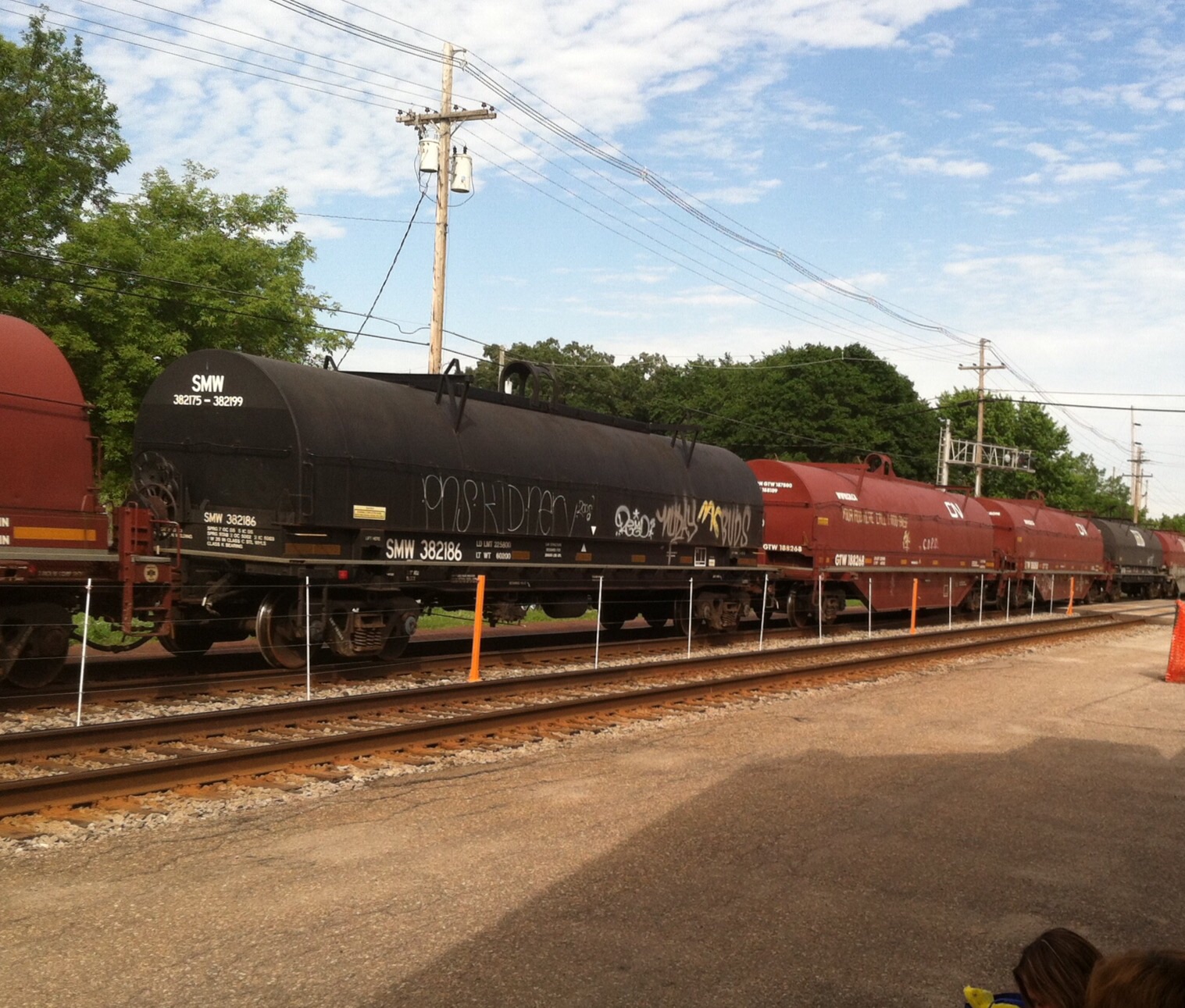
Standing in Columbus WI watching a freight train roar by

Standing in Columbus WI watching a freight train roar by

Second, we talk about the Mississippi River. We discuss its length, shipping in the 1800s, current barge traffic, wildlife along the river, and particularly, bald eagles. I mention the Upper Mississippi National Wildlife Refuge which is a major protective area for migratory birds. This wildlife refuge also has an interesting Facebook page.
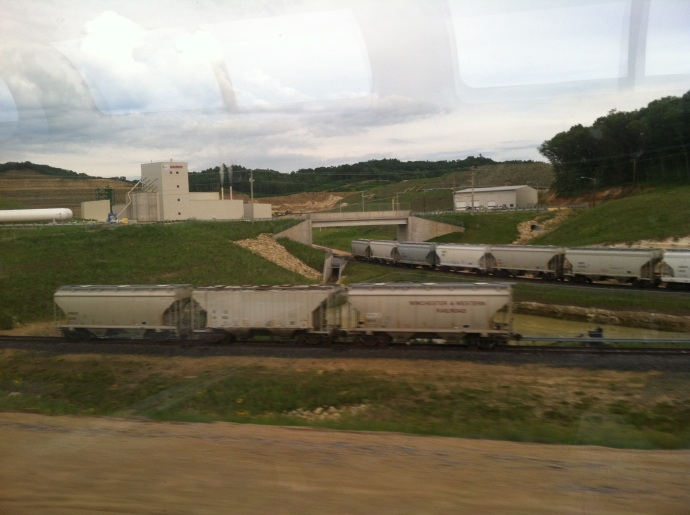
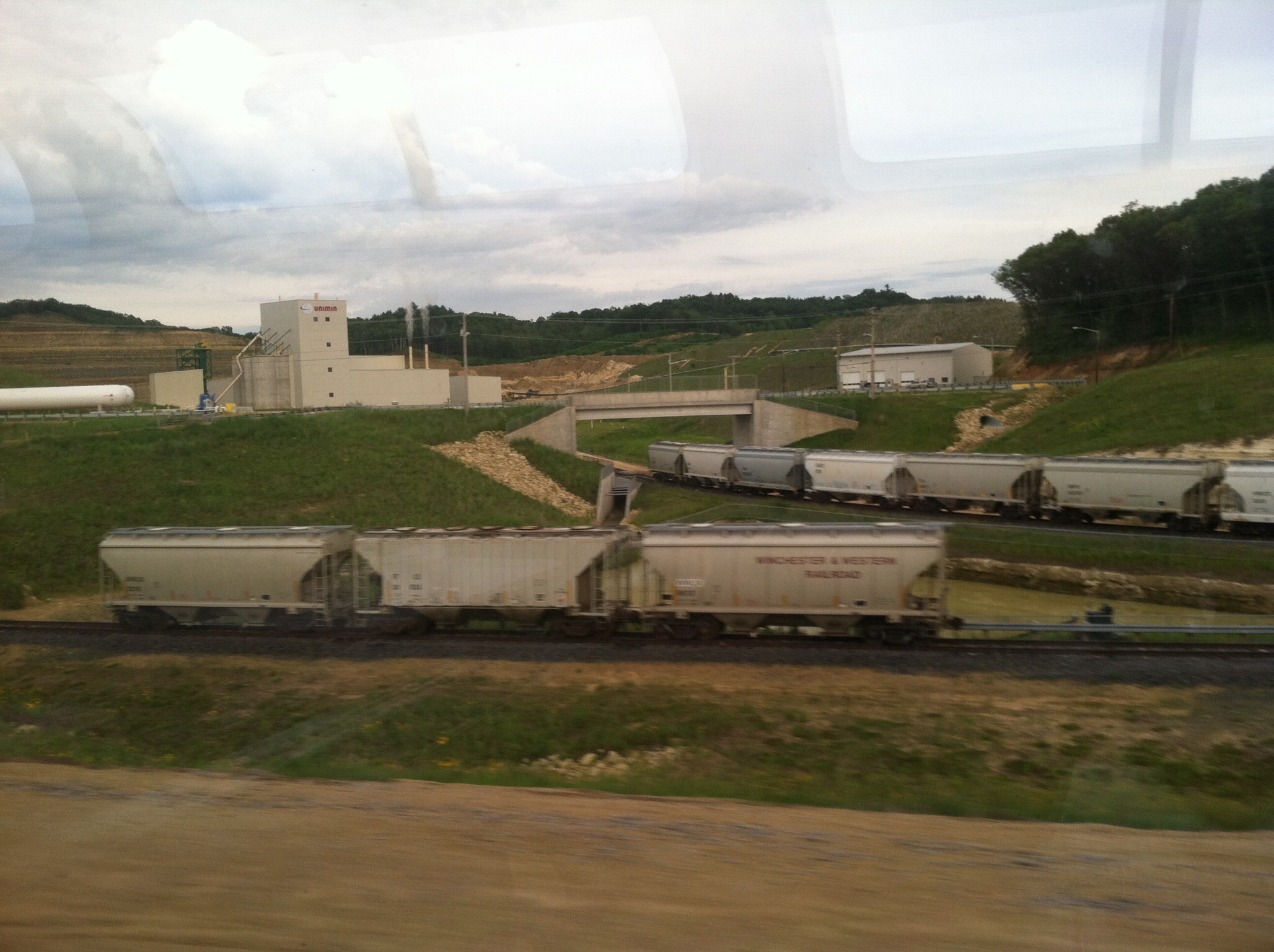
Frac sand mining operation just east of Fort McCoy, WI

Frac sand mining operation just east of Fort McCoy, WI from Amtrak Empire Builder Trails and Rails

Third, we pass Fort McCoy in Wisconsin. This is a large National Guard training base which was also used by the army for training troops prior to being sent to the Middle East. There is even a reproduction of a Middle Eastern village that is partially visible from the train.
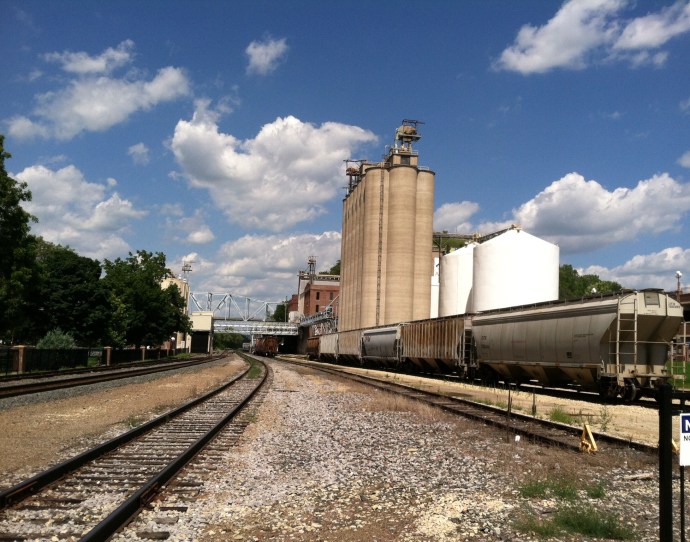
ADM mill and elevators in Red Wing MN

ADM mill and elevators in Red Wing MN

Fourth, we talk about the history of various times. For instance, Portage Wisconsin is a point where the early French explorers transferred from the Fox River to the Wisconsin River in their efforts to explore the Upper Midwest and discover a passage to the Pacific ocean. Lumbering, agriculture, shipping and railroads played important roles in the development of most of the communities along the route of the Empire Builder.
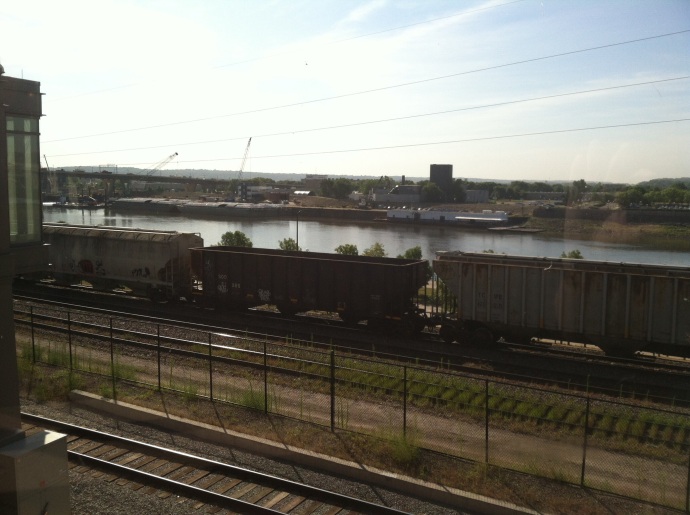
View of trains and barges on the Mississippi RIver at St. Paul from Union Depot platform.

View of trains and barges on the Mississippi RIver at St. Paul from Union Depot.

Fifth, miscellaneous bits of relevant trivia are scattered throughout. For instance; it takes 10 pounds of milk to produce one pound of cheese, 12 pounds of milk to make a gallon of ice cream, and 22 pounds of milk to make a pound of butter.

Sixth, we offer youngsters the opportunity to become Junior Rangers. There is a Junior Ranger booklet designed for this route and one of the volunteers normally walks the train, letting parents know the program exists and asking if they would like a booklet for their child(ren). Upon answering the questions, spotting various landmarks and items unique to this route, and completing some drawings, the child will be made a Junior Ranger with a badge. We normally announce their first name and ask the riders in the lounge car to join us in applauding them.
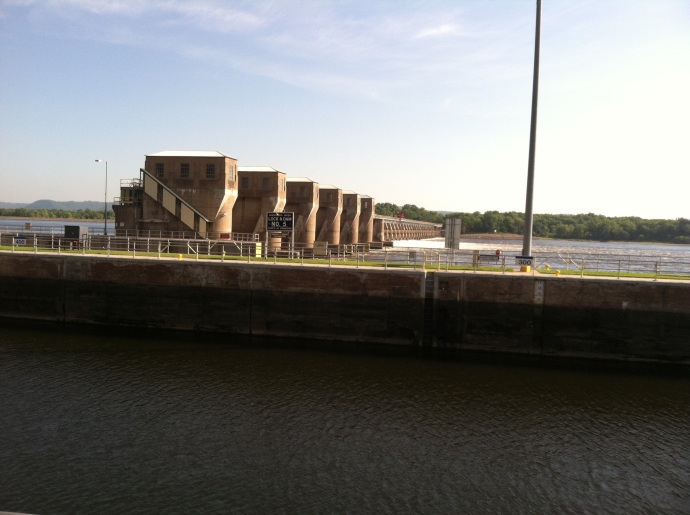
Lock and Dam number five just above Winona, MN

Lock and Dam number five just above Winona, MN

So who is riding the Empire Builder? Well, college students are one frequent group traveling to and from their school. International travelers are often on board, sometimes taking long journeys like the fellow who started in South America, came up the Pacific Coast to Seattle, and was heading towards Montreal. Families on vacation, such as the family from the Winona area, parents and three teenagers, heading down to Chicago for a surprise weekend vacation. Amish, sometimes traveling in groups to weddings and other family get-together. People who enjoy riding trains and who do not have strict timetables to meet like the couple traveling to a convention in New Orleans from Seattle. Less frequently at the moment, but still present, are workers in the North Dakota oil fields who stay there for months and then go home to see the family.

Those who start their journey in Seattle or Portland will be on the train for 48 hours. They board in Seattle or Portland around 4:40 PM, ride through the night, the entire next day and night, arrive in St. Paul around 8 AM of the following day and enter Chicago about 4 PM. 48 hours but parts of three days.
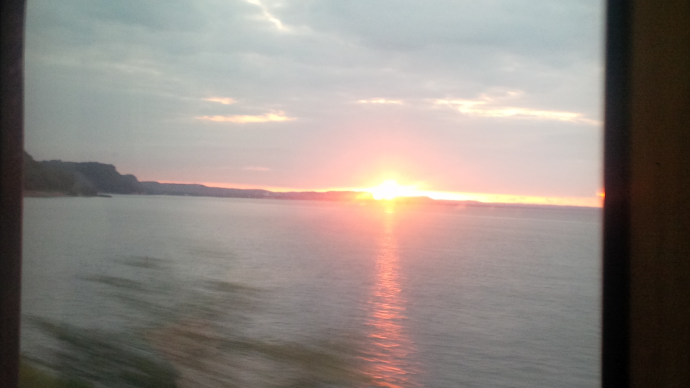
Sunset over Lake Pepin on Mississippi River

Sunset over Lake Pepin on Mississippi River from Amtak Empire Builder Trails and Rails

A final note. I am not a paying passenger but I will say that all of the Amtrak personnel I have encountered have been extremely kind and helpful. Thanks for making our work so pleasant.

For another perspective on the Trails and Rail program, read the article in the Minneapolis Star/Tribune of August 11, 2015 written by reporter James Walsh and photographs by Rachel Woolf.
http://www.startribune.com/amtrak-volunteers-tell-passengers-tales-in-trails-and-rails-program/321296911/

Other links:
Mississippi National River and Recreation Area: http://www.nps.gov/miss/index.htm

Upper Mississippi National Wildlife Refuge: http://www.fws.gov/refuge/upper_mississippi_river/

Ed Heimel St. Paul, August 10, 2015

Categories: road trip, travel | Tags: , , , , , , , , , , , , , , , | 1 Comment

2015 Trip 4, Boston, July 14-18

Boston-Saint Paul, July 18

This was a brief trip to visit Deb and Rebecca in Boston. It is a tribute to Boston and the eastern Massachusetts area that we still are able to find new places to visit despite our frequent trips there. We flew out on Sun Country Airlines, our first time using them. Seats are as cramped as other airlines but we liked their process to board the passengers. There is the usual first class, people who need help, parents with young kids, etc. But they then board passengers who have no overhead compartment luggage and passengers who have given up their overhead compartment luggage to be checked at the gate. This loads a group of people who can get into their seats quickly. Then the seating is more random, some up front and some from the back. It avoids the mad rush we have seen on Delta when passengers jam the front of the waiting area, hoping to get on early enough in their seating order to get their luggage up in the overhead compartments.

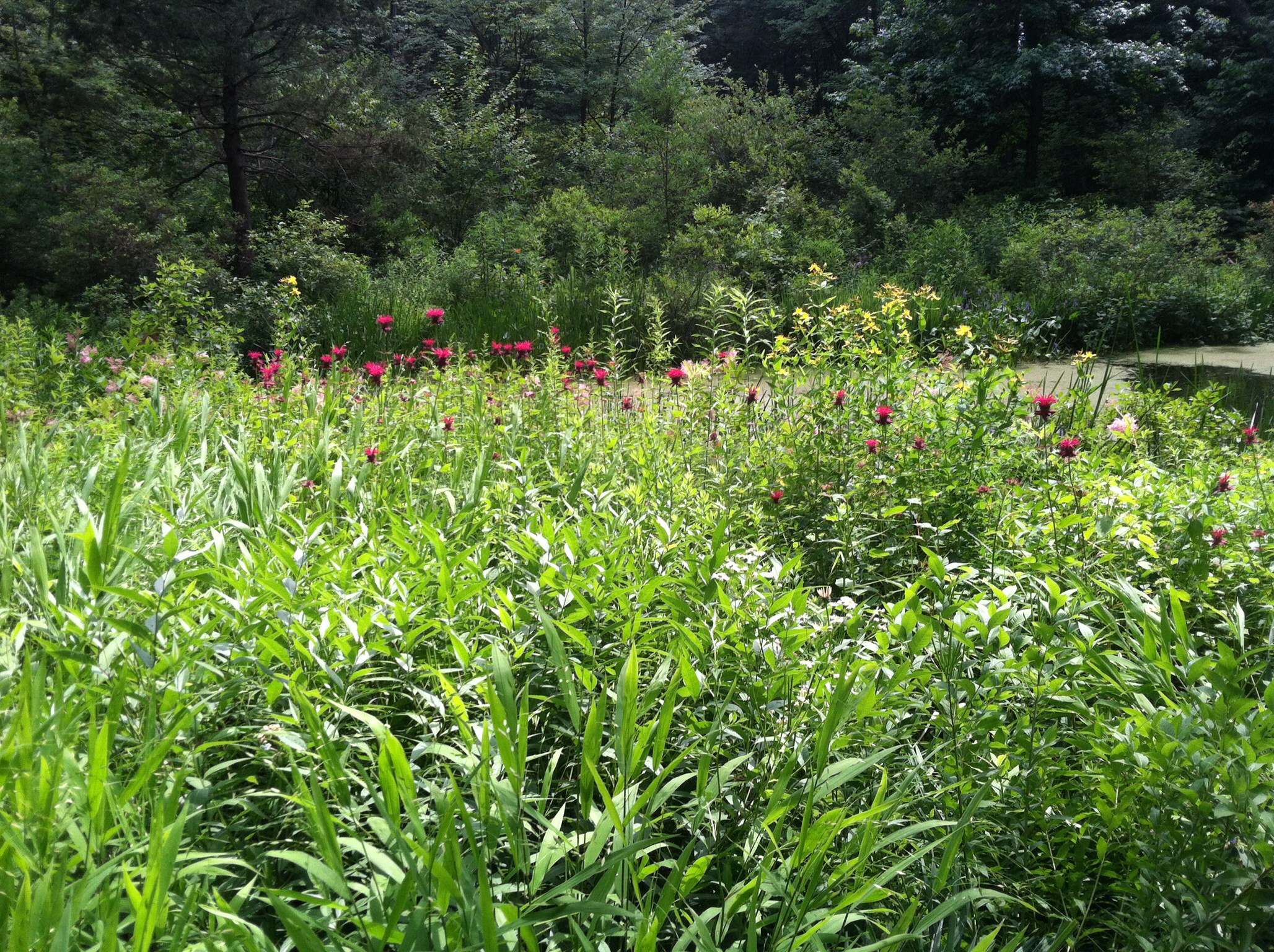
Garden in the Woods, Framingham MA

Garden in the Woods, Framingham MA

Deb picked us up at the airport and drove us to Waltham where we picked up our rental car, saving us the rental charges tacked on at airports. We only had one destination for the day, the Garden in the Woods in Framingham. This garden is sponsored by the New England Wildflower Society and was listed in a book we have, the National Geographic Guide to America’s Public Gardens.  The garden is home to the largest collection of wildflowers in New England. It was the dream and creation of one man, Will Curtis, beginning in 1931. The 45 acre garden was turned over to the New England Wildflower Society in 1965.

We found it a pleasant, although not overwhelming, diversion for the afternoon. This might be due to the fact that no one area was overwhelming in blooms or due to having seen so many wildflowers in the last few weeks that we did not dawdle and examine numerous smaller plants and flowers. In any event, our Como Park membership once again meant we did not have to pay an admission fee and maybe that allowed us to be more cavalier in our impression.

But the primary reason for the trip was to see Deb and Rebecca and while they had to be at work sometimes, tonight we were able to have dinner grilled on their deck. Chris got her burnt hot dogs and thus all was well with the world.

Longfellow House-Washington's Headquarters Cambridge MA

Longfellow House-Washington’s Headquarters Cambridge MA

Wednesday the 15th was my 65th birthday-Welcome to Medicare, Ed.  Chris and I drove and then rode the “T”- Boston’s subway – to Cambridge. Rain was  a likely possibility but we managed to avoid all but a few sprinkles. The Longfellow House-Washington’s Headquarters is a National Historic Site managed by the National Park Service.  The site’s history began with the construction of a country estate by a John Vassall in 1759. On the eve of the American Revolution, Vassall and his family fled to Boston, being Tories.  For nine months beginning in July 1775, Washington used the abandoned buildings as his headquarters during the battle of Boston until the British decamped and moved on to New York. In 1791, the property was purchased by Andrew Craigie and after his death in 1819, it was the property of his wife until she died in 1841. Craigie left his wife with many debts in 1819 and she rented out portions of the property to many tenants, one of them being Henry Wadsworth Longfellow, the poet.

The gardens at Longfellow House

The gardens at Longfellow House

After Longfellow’s marriage to Fanny Appleton in 1843, the couple were given the property as a wedding gift by his wife’s parents. Fanny and Henry re-planted the garden which then fell into dis-repair after his death; then restored in 1904 and 1924 by their daughter Alice. In 2003 another restoration took place. We were able to tour the garden with a park ranger and enjoy its renaissance.

We also toured the house with a ranger, the furnishings all belonging to Longfellow’s family. The house was the home for Longfellow during the most prolific and influential times of his life. He wrote his poetry here, he was a professor at Harvard,  he hosted many influential members of society here ( Emerson, Hawthorne, Oliver Wendell Holmes, Charles Sumner, Charles Eliot Norton, James Russell Lowell, etc.). His poetry included “Song of Hiawatha”, “Paul Revere’s Ride”, in 1842 he wrote a series of poems condemning slavery, and others.  His poetry informed Americans of their roots and he became an American hero. The last and somewhat diminished stage of Longfellow’s career began in 1861 with the tragic death of his wife Fanny. In the midst of melting sealing wax, she set fire to her own gauzy clothing and was enveloped in flames. She died the next day. In his futile efforts to put the fire out, Longfellow burned his hands and face. To hide his facial scars, he eventually grew the beard that gave him the sage, avuncular look reproduced in so many later paintings. It was during this time that he translated Dante’s Divine Comedy; the first American translation and still a solid classic available today.

After our time at Longfellow’s house, we headed over to Harvard and its Museum of Natural History. This museum had been highly praised and was a “GEM” in the AAA Tour Book. However, once again, maybe we have been traveling too long and visited too many museums.  We were not impressed; possibly the best section in my mind was the section on Native American cultures but even that struck me as so-so.

As stated earlier, this was my 65th birthday. Deb and Rebecca treated us to dinner at Jimmy’s Steer House in Arlington. Another place that had been recommended to us, this time accurately. The menu was extensive, reasonably priced and very good food. We could not finish all of our desserts, however, just too much food.

Saugus Iron Works National Historic Site

Saugus Iron Works National Historic Site

Thursday was our long day of touring. Our first stop was Saugus Iron Works in Saugus. This National Historic Site is the home of the first successful iron works in the United States, operating from 1646 to 1668. Saugus had ample quantities of timber to run the furnace, a quantity of iron ore in bogs nearby, water power, and access to the ocean for shipping the product. AND, I was amazed to find out, the Puritan government of Massachusetts  offered tax incentives to build and operate the iron works.  Even in the 1640s, tax incentives were being given out in America. The workers who ran the iron works were generally indentured servants from Wales and England. The Puritans ran the town, most of the iron workers were not assimilated into the Puritan society until the forge closed down and families moved elsewhere, their children became freemen and intermarried. The cause of the cessation of the iron works seems to be a combination of poor management and some bad years for river flow to provide power. The workers trained here were highly skilled and moved on to other iron works in New England.

The Iron Works as viewed by us are a reconstruction, the site had generally been destroyed over the intervening centuries. In 1943 the community formed a local group and with funding from the American Iron and Steel Association, began digging  through the site and cataloging their discovery. They uncovered the remains of the blast furnace, a large section of the waterwheel, a 500 pound hammer-head and the footprint of the principal structures. The lead archeologist was Roland Wells Robbins, a self-taught archeologist who also discovered the location of Thoreau’s Walden Pond cabin. Evidently his success and methods upset later, better educated archeologists who downplayed his role in helping to discover early American sites in New England. The National Park Service took over the site in 1968.

Thomas Hart Benton painting at Peabody Essex Museum in Salem MA

Thomas Hart Benton painting at Peabody Essex Museum in Salem MA

Our second and third stops were in Salem, the Peabody Essex Museum and the Salem Maritime National Historic Site. The Peabody was hosting a special exhibit on Thomas Hart Benton, the American painter and muralist we have come across before (2013 Trip 8, Missouri State Capitol). The exhibit here used as a theme Benton’s work for Hollywood movies. Once again, we took advantage of a docent’s tour through the exhibit and found it quite fascinating. The exhibit demonstrated his use of multiple sketches and three-dimensional plaster casts used as models and ideas before the painting of the final product. His realistic portrayal of working class people, Native Americans, and African-Americans was a delight to behold.

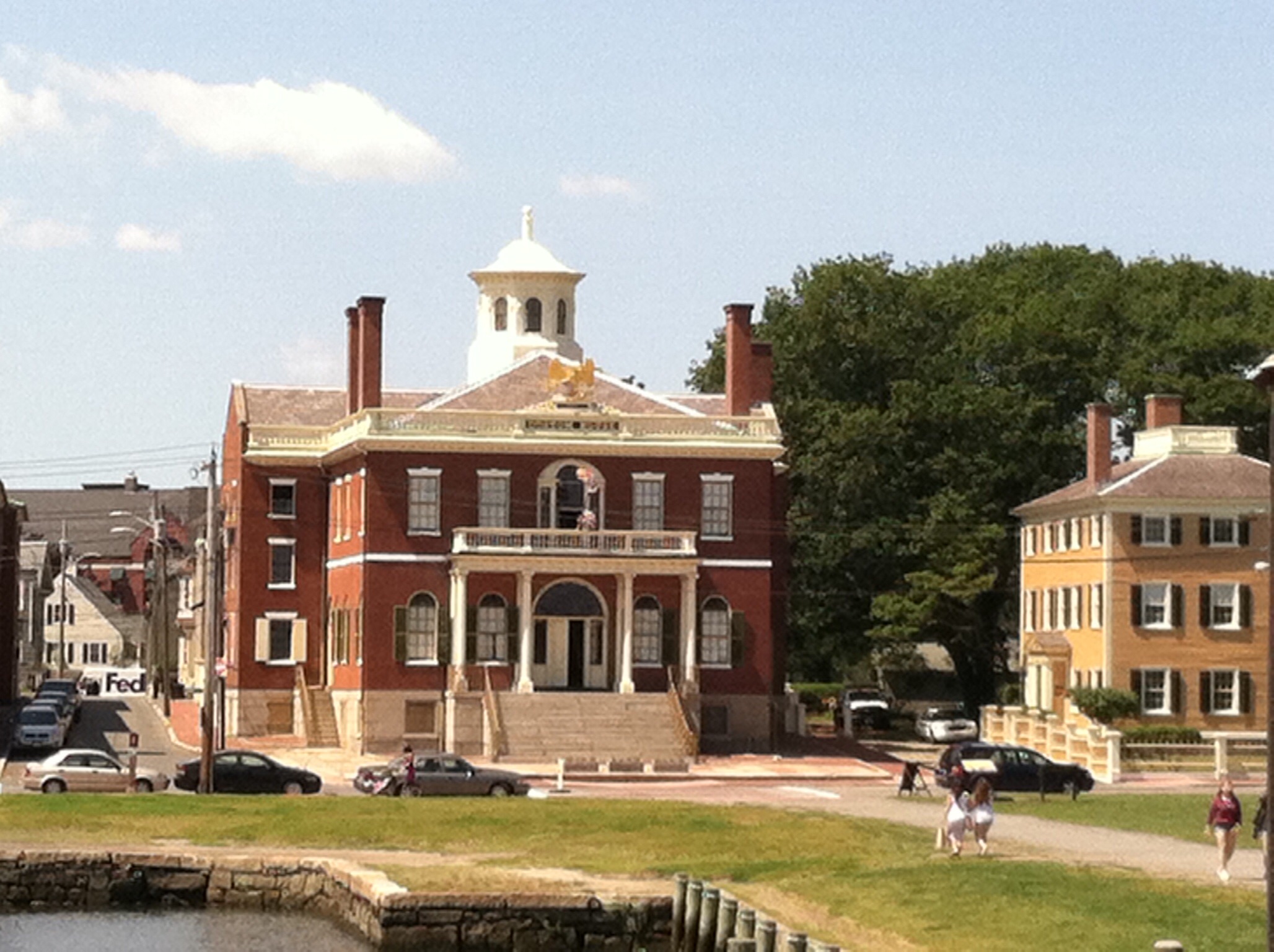
Custom House at Salem Maritime National Historic Site

Custom House at Salem Maritime National Historic Site

We then headed over to the Maritime Historic Site (note we made a conscious decision to ignore the Salem Witch Trial portions of town, particularly the commercial endeavors). Before the enactment of the income tax in America, tariffs (taxes on imported goods) provided the vast majority of the revenue to run the country. Thus, ports had a collection of buildings related to shipping and custom duties; wharves, warehouses, scales, the custom house to collect duties/tariffs, etc. Salem was at one time the nation’s sixth largest city and its port collected 17% of the nation’s tariffs. This was during its glory days from the Revolution to the War of 1812. Its ships sailed to the East Indies and the shipowners here were most likely the nation’s first millionaires. During our countries early days, private vessels operated as privateers, essentially government authorized pirates who captured enemy ships and warships for their own profit. Salem had a high percentage of these ships. The disruption of the War of 1812, an 1807 embargo on foreign trade, and better road networks in Boston and New York ended Salem’s dominance. Our visit included the Custom House, the Public Stores, the Scale House, and a recreated sailing vessel from that era.

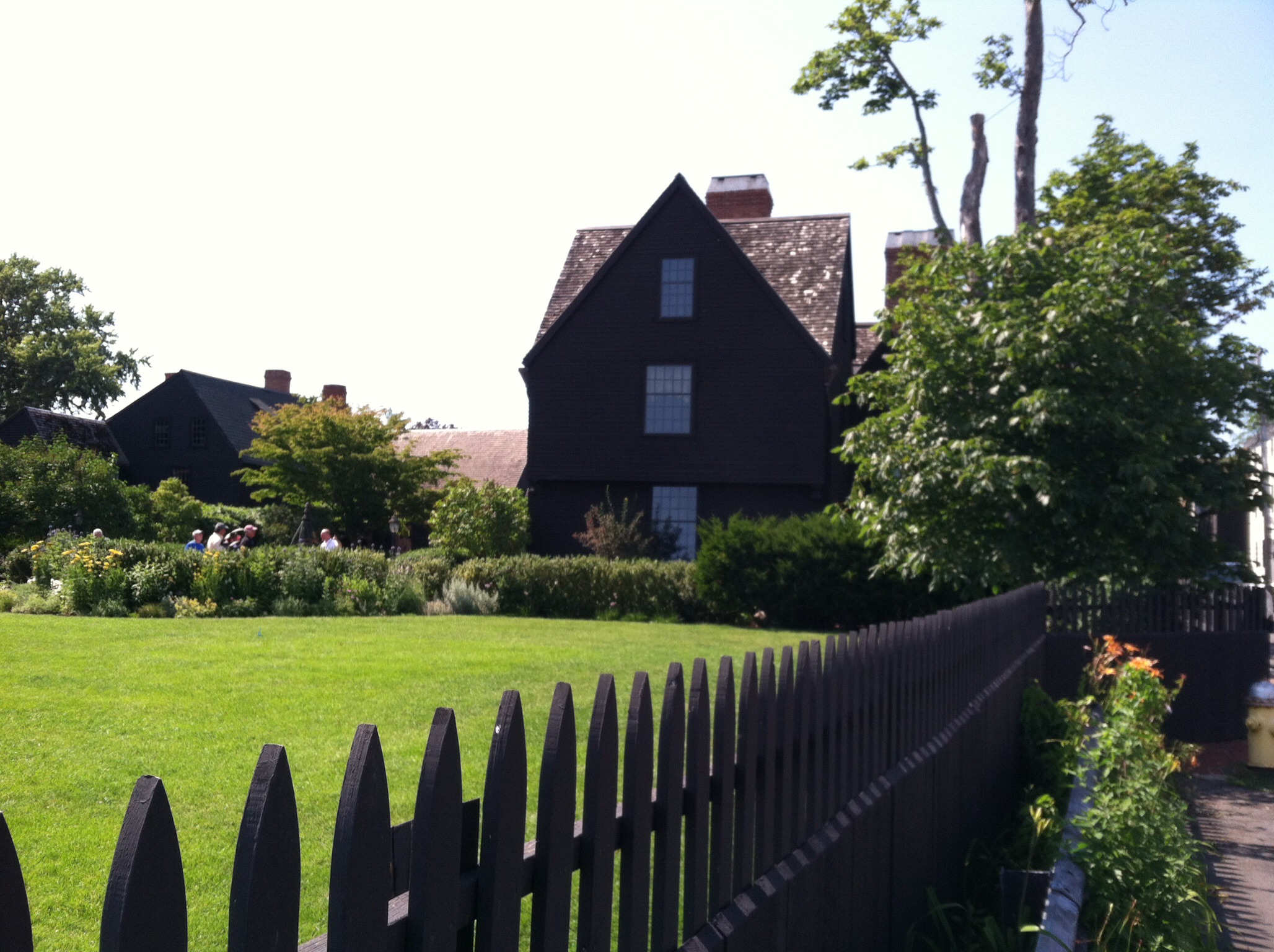
The House of Seven Gables in Salem

The House of Seven Gables in Salem

The House of Seven Gables is a classic American novel by Nathaniel Hawthorne, written in 1851, which is set in this town around an actual house erected in 1668 and which still exists. We walked by it but decided not to take the tour.  The first candy store in America was our last stop to purchase a few treats. Ye Olde Pepper Company dates back to the early 1800s. Their first product, a hard sugar candy called “Gibraltar” is still made although the taste did not impress us.

Dinner in Waltham

Dinner in Waltham

Friday was a day off for all of us. We stayed home, viewed the photos of Deb and Rebecca’s trip to Portugal and Spain, Chris went in the pool, and we walked to downtown Waltham for dinner. A very pleasant way to end a great trip.


Ed and Chris   St. Paul, Saturday July 18


Categories: road trip, travel | Tags: , , , , , , , , , , | 2 Comments

Blog at WordPress.com.