Posts Tagged With: MN

2015 Trip Five, Voyageurs National Park and NW MN, August 21-23

International Falls MN
Friday August 21

The sound of the calling loons is a clear indication that we are back up north in the land of woods and waters. We have left behind the primary agricultural use of the land and are now in the logging, fishing, and tourist activities. Two of our stops on the way to international Falls were at Minnesota State Parks.

On our way to Zippel Bay we came across this unique deer hunting stand

Road tripping in northern MN, On our way to Zippel Bay State Park, we came across this unique deer hunting stand

Friday morning we left Roseau Minnesota, driving again through Warroad on our friendly two lane roads. Our first stop was to be at Zippel Bay State Park. This park looks out onto Lake of the Woods, in that area of Minnesota that sticks out like a sore thumb at the top of the US border with Canada. Zippel Bay is primarily used for fishing, although camping is also possible. On this part of the lake, there is a sandy shoreline.

Lighthouse at Zippel Bay State Park

Lighthouse at Zippel Bay State Park

We hiked along the shoreline out towards the lighthouse sticking into the waters. The sun is starting to peek through the clouds, where it will remain out for just a brief portion of the day. At this park, as we have been doing previously, and as we will be doing for the remaining days of this trip, we keep looking for moose. Moose are declining in Minnesota although the reasons are not fully known. We keep hoping to see several, even just one, but our hopes are not to be fulfilled.

VFW fishing lunch for disabled vets

VFW fishing lunch for disabled vets at Zippel Bay State Park, MN

image

The fishing docks are busy as boaters arrive for the lunch hour. The local VFW post is sponsoring a luncheon. Numerous boat owners are taking disabled veterans out to fish for the day, with lunch provided here at the docks. These boats are much larger than most of the ones seen previously on the other lakes so far in Minnesota. It seems as if everyone knows each other as they yell back and forth as the boats come in. The food smells great.

Zippel Bay State Park

Zippel Bay State Park, lake shore view

This lake is large, the 100th largest in the world, stretches into Canada, and produces heavy wave action.The fishing is evidently quite good here, according to the head ranger who was here visiting with the anglers. He provided us with a luncheon suggestion in Baudette Minnesota, the next town on our way to International Falls.

In the town of Baudette, we came across a pharmaceutical manufacturing company, ANI Pharmaceutical, that employs 100 people. Amazing the variety of small businesses located in these smaller communities. Why we seem unable to get some of these small business locations on to the Indian reservations is beyond my knowing.

Willie Walleye in Baudette MN

Willie Walleye in Baudette MN

Baudette also had its local motto and mascot. “Walleye Capital of the World” and Chris took a picture of the statue of “Willie Walleye”. Every town wants to have some motto or claim to fame. How about “We are just normal”?

International Falls is our home for the next two nights. One of the three main entry points to Voyageurs National Park is located here. As is our custom, we stopped at the park today to check out the area prior to our boat ride tomorrow. Outside of the office is a park volunteer, tending the garden and talking to people like us.

This gentleman has been doing volunteer work here and at other parks for nine years. He lives out of his RV. On this trip, we also met a couple who sold their home and have been living out of an RV for 18 years. A third couple have been living out of an RV for three years. Makes our periodic vacation rambles minor in comparison. The three-year couple were from the Harrisburg, PA area and we knew several people in common.

We asked the Voyageurs volunteer, and have asked several other travelers, their impressions of Big Bend National Park in Texas. All of them have been universally in acclaim for the beauty of Big Bend, if you avoid the hot months. Chris has been resisting traveling there. It really is a long distance from anything else. Now however, it looks like she has agreed to add this to our list.

Looking north into Canada from the Rainy RIver at Franz Jevne State Park

Looking north into Canada from the Rainy River at Franz Jevne State Park

Voyageurs National Park is another water based park. The Minnesota border with Ontario from Lake Superior over to Lake of the Woods is a series of lakes and rivers nestled among land masses. Parks are located on both sides of the border. Due to the vagaries of land, water and international borders, you can view Canada from the Kettle Falls area of Voyageurs by looking south-, yes, south.
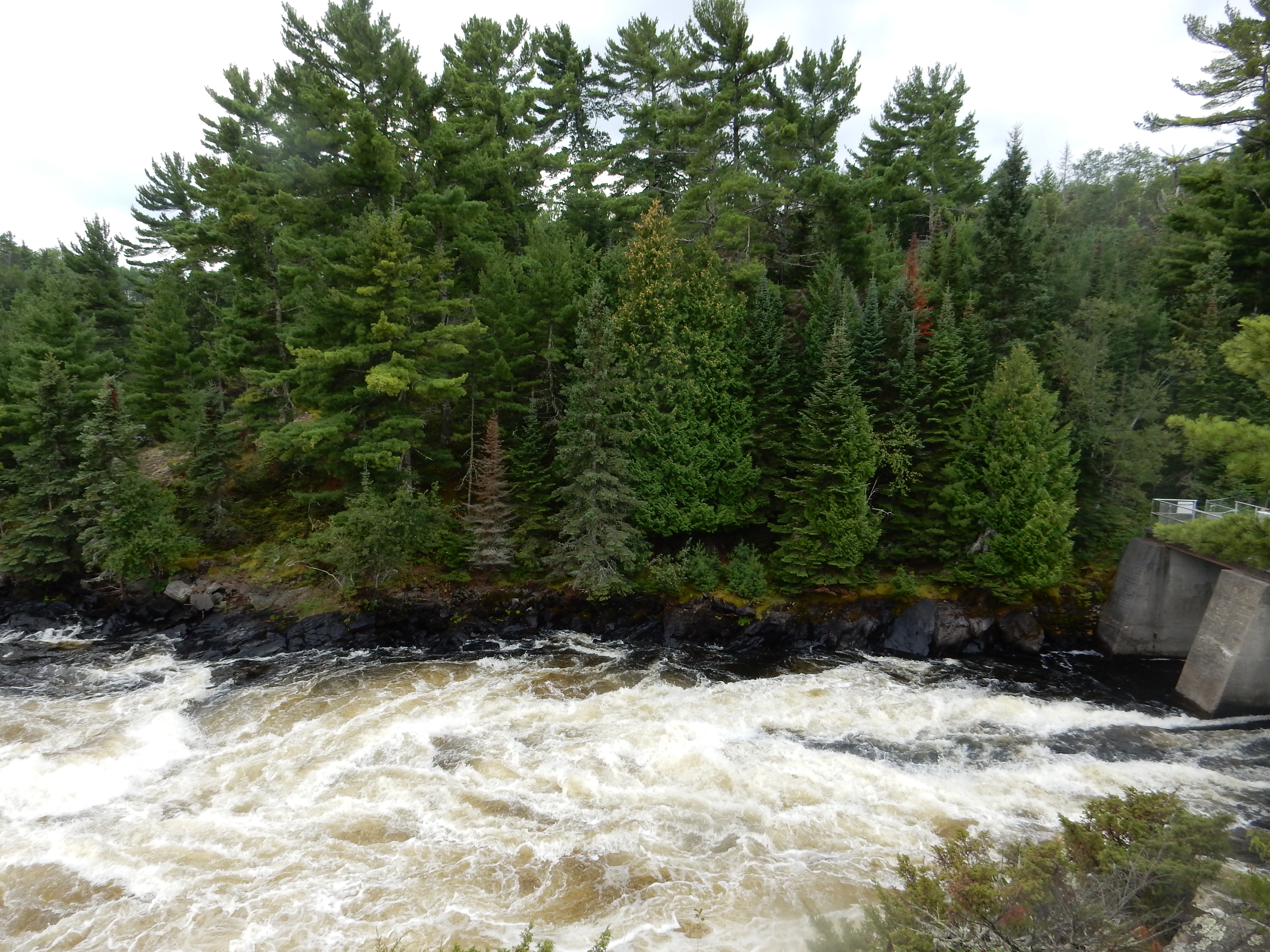
Looking SOUTH into Canada from Kettle Falls

Looking SOUTH into Canada from Kettle Falls in Yoyageurs National Park, MN

Lake of the Woods is primarily water, much of the land is privately owned. Voyageurs National Park has 218,000 acres which combine lakes, rivers, and land which is usually only accessible from water. The Boundary Waters Canoe Area is further to the east, and is a 1,000,000 acre wilderness within the Superior National Forest. There is a mosaic of green park land and blue water from International Falls to Grand Portage, MN/Thunder Bay, Ontario, a distance of about 200 miles.

Boating on Rainy Lake

Boating on Rainy Lake, Voyageurs National Park

As a national park, Voyageurs allows motor boats. Boundary Waters does not. We watched a constant parade of motorboats traveling along the lakes. Voyageurs National Park has four primary lakes; Rainy Lake, Namakan Lake, Sand Point Lake, and Kabetogoma Lake. Houseboats can be rented here and we saw numerous boats going in and out of port as well as along the various landing points allotted to them. The waters here flow primarily northwestward through International Falls, along Rainy River, to Lake Winnipeg and then out to Hudson Bay.

We are staying for two nights at the Thunderbird Lodge across the road from the Kabetogoma Lake visitor center. We had a great dinner at the lodge Friday night and at Saturday morning breakfast we met two other couples that were going with us on the 6 1/2 hour boat ride to Kettle Falls Hotel.

Saturday, August 22

Our boat for the trip to Kettle Falls Hotel at Voyageurs National Park

Our boat for the trip to Kettle Falls Hotel at Voyageurs National Park

This boat ride was much smoother and more comfortable than the ride to Isle Royale back in June. A park ranger accompanied us and provided information about the park and the history of this area. If you have read this blog previously, you may recall the history of the French-Canadian voyageurs. This park is named after them. The French-Canadian voyageurs were active in the 1700s and 1800s; collecting beaver and other animal furs and sending them back to Montreal to be shipped to Europe. Europe was in the midst of a beaver hat frenzy. The voyageurs brought European made products to trade with the Native Americans who hunted beaver and other animals. The route they followed also became part of the border between Canada and the U.S.
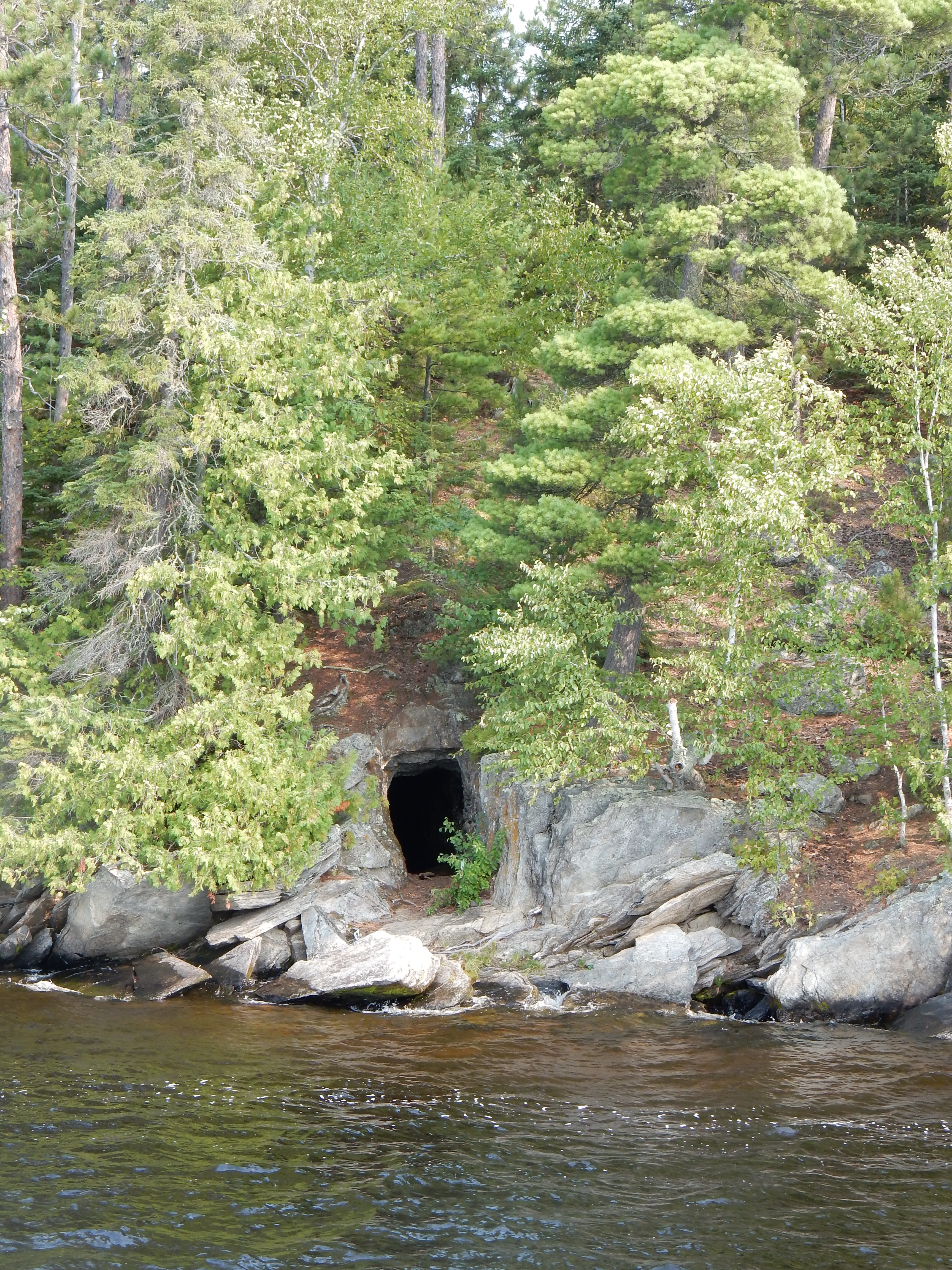
Mine shaft dug for gold rush in 1893 in Voyageurs

Mine shaft dug for gold rush in 1893 in Voyageurs

The Voyagers were not settlers, however. Settlement by European immigrants came late to this area. There was a brief gold rush in 1893 which did not last long. The Klondike gold rush started in 1896 and attracted most of the miners who came to this area with a greater promise of wealth.

Logging was the next economic driver for the area. The red and white pine would be cut down and sent along the lakes and rivers to International Falls where the hydropower drove saw mills and paper making plants. Some of that industry continues to this day. We were told that the paper plant in Fort Frances, the city across the Rainy River in Ontario, had shut down, while the plant in International Falls was operating, but on a reduced basis.

Kettle Falls Hotel

Kettle Falls Hotel in Voyageurs National Park

Commercial fishing was the third business in the area but was prohibited beginning in the 1930s. Tourism took over along with recreational fishing. The lumber industry wanted to build more dams but this was denied and in the 1970s, Voyageurs National Park was created as the 36th US National Park. Our boat ride mainly went through Rainy Lake to Kettle Falls Hotel. The hotel was begun in 1913 and continues to this day. Overnight lodging is still available here during the summer months. We had looked at that option but decided to pass on it. Instead the boat ride and lunch at the hotel took up our Saturday.
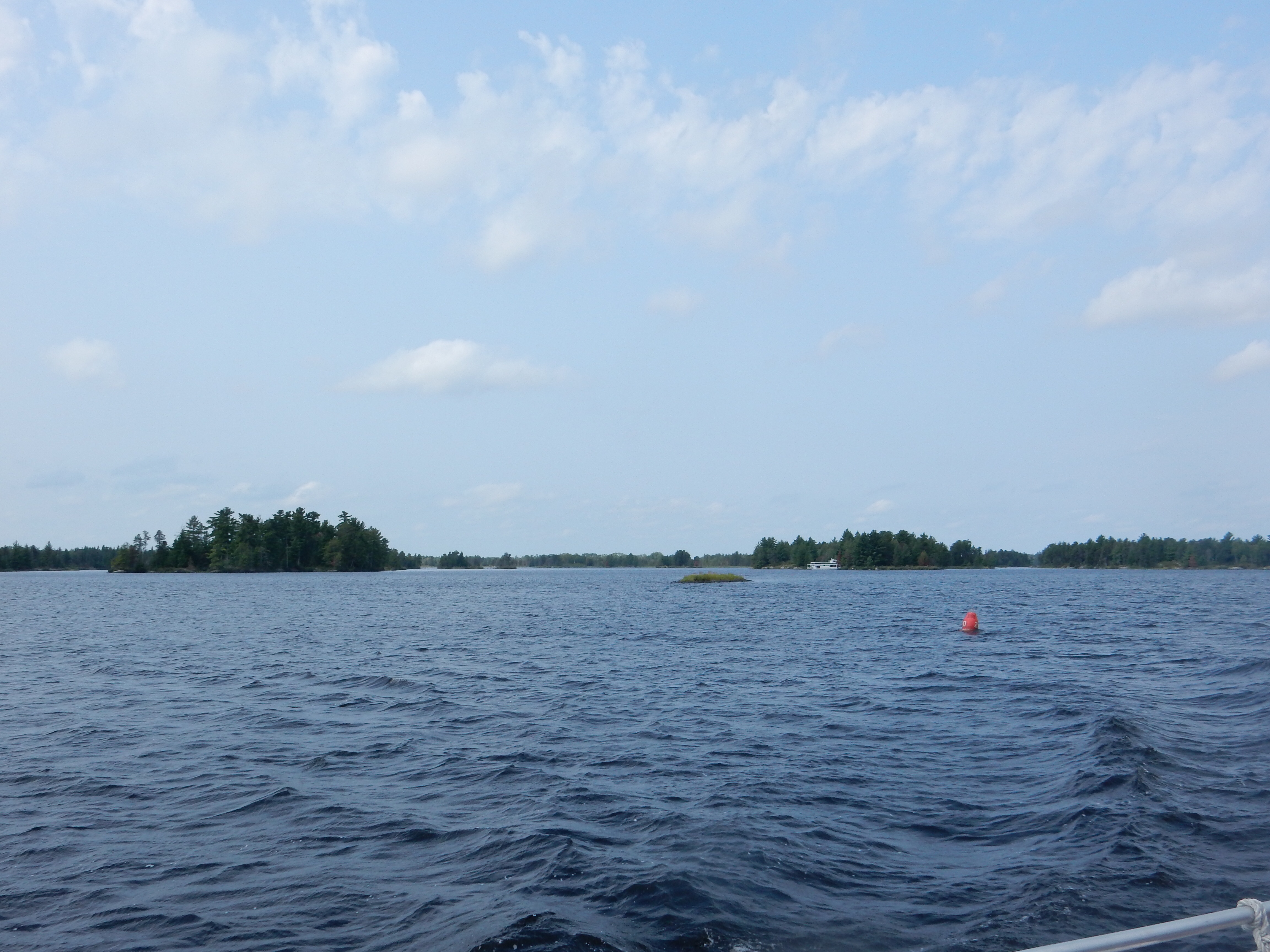
Rainy Lake
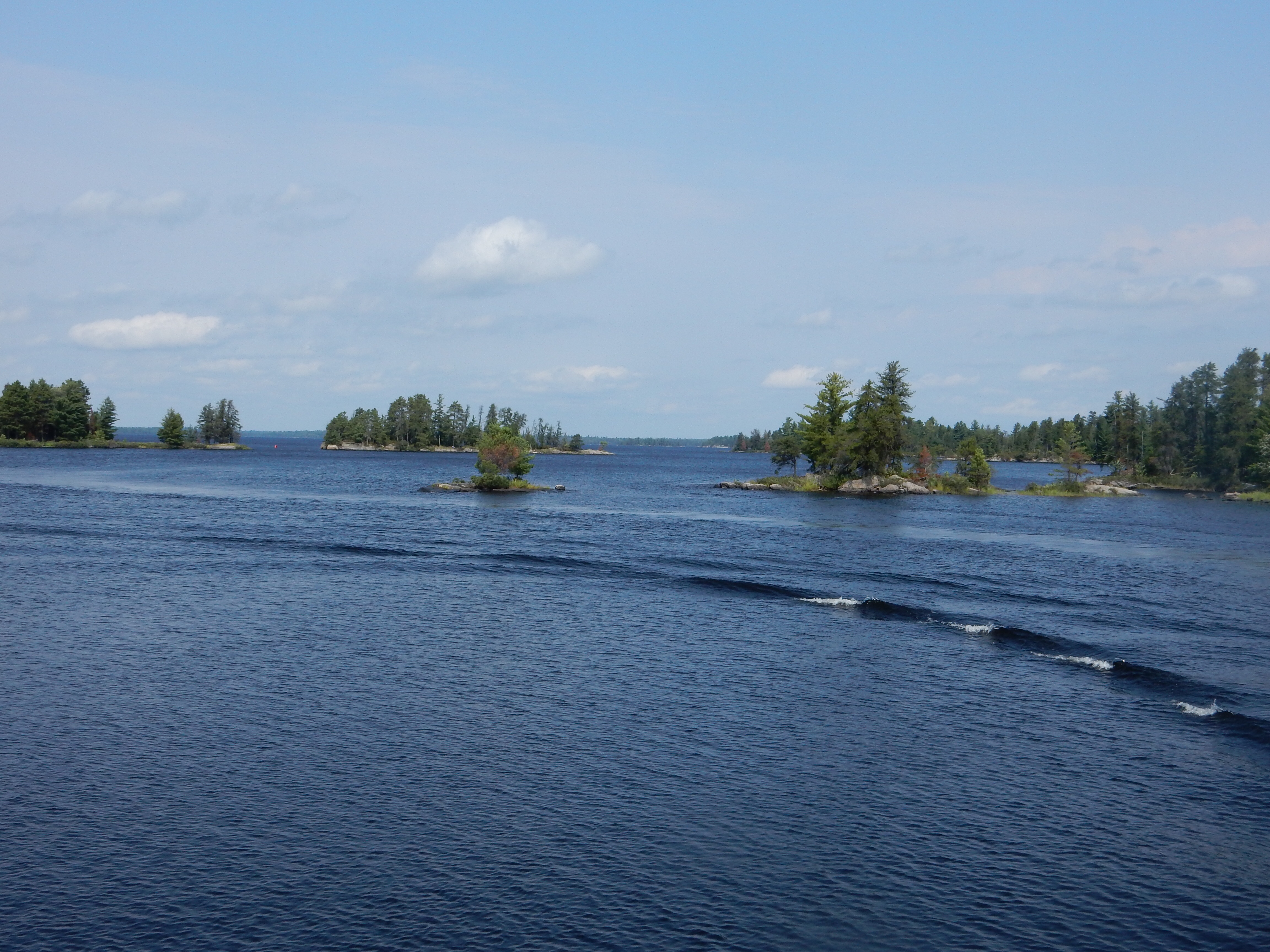
Rainy Lake

image

While Rainy Lake is large, we were normally in view of islands or the Kabetogoma peninsula. So land was normally a reassuring visage. People were out fishing and the houseboats here are tied up to trees or iron rods driven into the ground. None of that hole digging for anchors that we had to do at Lake Powell. The morning ride was generally with sunny skies. By the time of our afternoon return journey, the skies were dark, some rain came down, and the wind and waves had picked up, but still at a tolerable level.

Starting to get stormy

Starting to get stormy in Voyageurs National park

Houseboat heading out into stormy weather

Houseboat heading out into stormy weather

Sunday August 23

Driving the Edge of the Wilderness Scenic Byway

Driving the Edge of the Wilderness Scenic Byway, MN

International Falls is 300 miles from Saint Paul so our Sunday journey was able to allow us a few stops along the way. Chris wanted to stop at Scenic State Park. On the way there, we drove a scenic byway that was one of the first 20 created in the country. It is called the Edge of the Wilderness Scenic Byway. To be honest, we had driven this 47 mile route once before and while it is a pleasant drive, it is not spectacular.

Local history displayed at Bigfork MN

Local history displayed at Bigfork MN

It is well-marked and has story boards in several of the small towns along the route. Of course, the mosquito statue in Effie MN is always worth a look and a few comments. Again, lumbering and modest agriculture rules the area. Railroads used to come through here to transport the lumber, but they are long gone. Much of the road goes through the Chippewa National Forest and there are a plenitude of lakes on either side of the road, normally hidden by the forest of trees.

Scenic State Park shelter constructed by the CCC in the 1930s

Scenic State Park shelter constructed by the CCC in the 1930s

image

Scenic State Park is located just a few miles east of the road. It was created in 1921 after local residents asked the state to preserve the remaining pine and birch trees. The Civilian Conservation Corps created beautiful wood structures here in the 1930s which are still standing and in great shape. Our hike here was not long, Sunday was continuing the overcast, windy, and rainy conditions of Saturday afternoon. We had stopped at the park office and in talking to the ranger, learned that the clothing merchandise offered for sale was primarily created by a local guy who goes around to numerous local parks and businesses and creates unique designs for them. It was refreshing to hear that local business was involved; we were impressed with the designs available. However, there were no T-shirts with pockets being offered.

A late lunch in Grand Rapids, home of Judy Garland and Blandin Paper Mills, and then St. Paul by 6 PM. A pleasant visit to parts of our state we had not visited previously. We were able to obtain several more park stamps to add to our collection to eventually complete the Minnesota Department of Natural Resources State Parks Passport Club.

Ed and Chris
Saint Paul, Monday 10 pm
Categories: road trip, travel | Tags: , , , , , , , , , , , | Leave a comment

2015, Trails and Rails-Amtrak and National Park Service

Saint Paul, MN

In July of 2012 I retired and, as readers of this blog know, began traveling extensively in January of 2013. I have also been seeking out volunteer opportunities that would still allow for travel. Periodically in 2013 and 2014 I would do some volunteer work for the Mississippi National River and Recreation Area, a unit of the National Park Service. As we cut back on our travels this year, I have been able to increase that volunteer work. In the words of the website for the Mississippi National River and Recreations Area, “In the middle of a bustling urban setting, this 72 mile river park offers quiet stretches for fishing, boating and canoeing. Other spots are excellent for bird watching, bicycling and hiking. And there are plenty of visitor centers that highlight the history and science of the Mississippi River. If you are interested in the Mississippi River, this is a great place to start your exploration.”

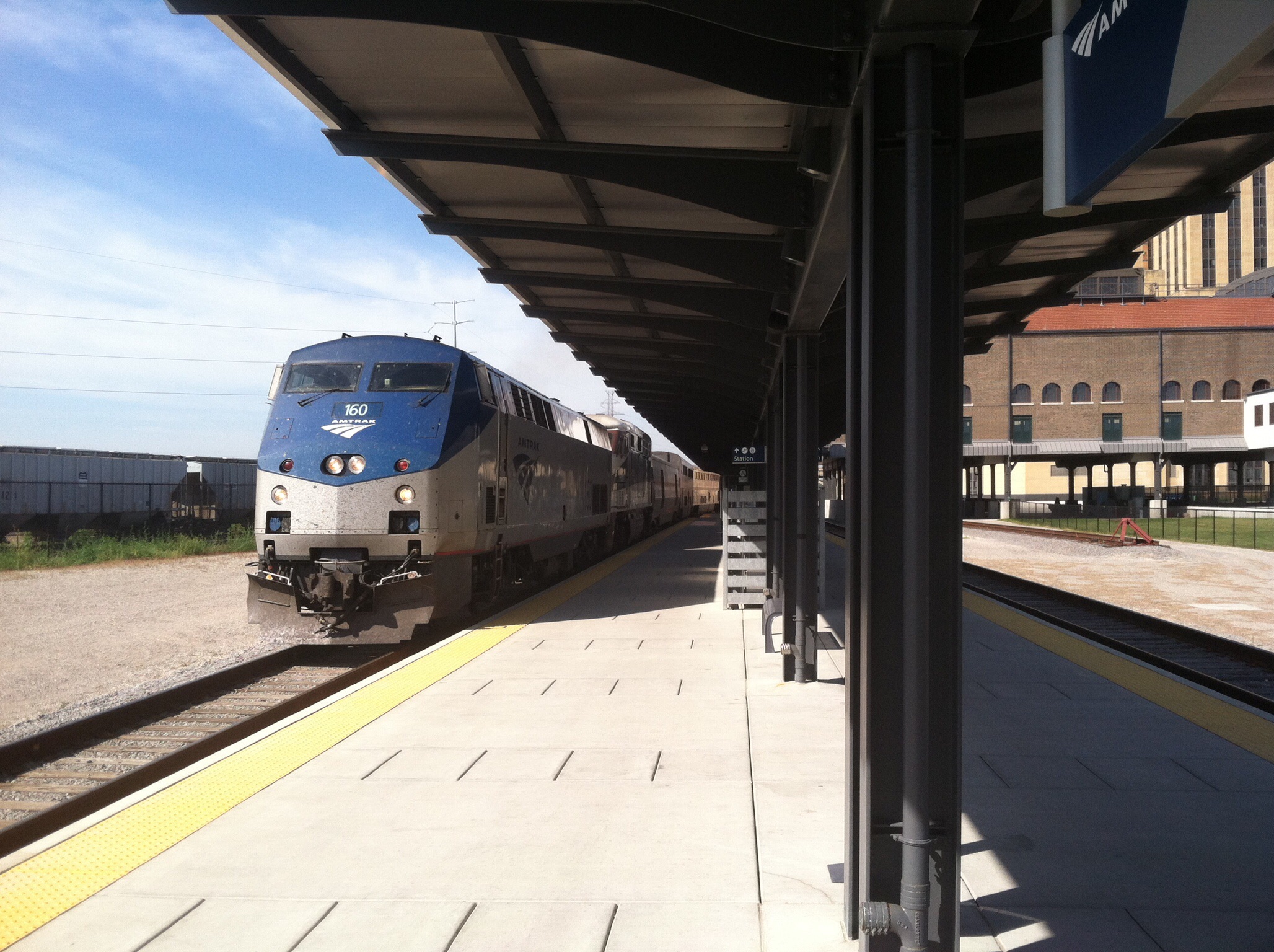
Empire Builder arriving at St. Paul's Union Depot

Empire Builder arriving at St. Paul’s Union Depot

The National Park Service and Amtrak cooperate on a program called Trails and Rails. In this program, volunteers from local national parks provide a combination of education, enlightenment, and entertainment on 25 to 30 Amtrak passenger routes around the United States. Our Amtrak passenger train travels between Chicago Illinois and Seattle Washington and is called the Empire Builder. The Empire Builder train is named after James J Hill, the founder of the Great Northern Railway. His efforts in making his railroad successful had a tremendous impact on the growth of the Midwest and Northwest. He was heavily involved in promoting Glacier National Park and his company ran the concession lodging there for many years. Here in St. Paul, our national park, the Mississippi National River and Recreation Area, is one of those sponsors with Amtrak for a Trails and Rails program.

Mississippi River Valley from Frontenac State Park

Mississippi River Valley from Frontenac State Park

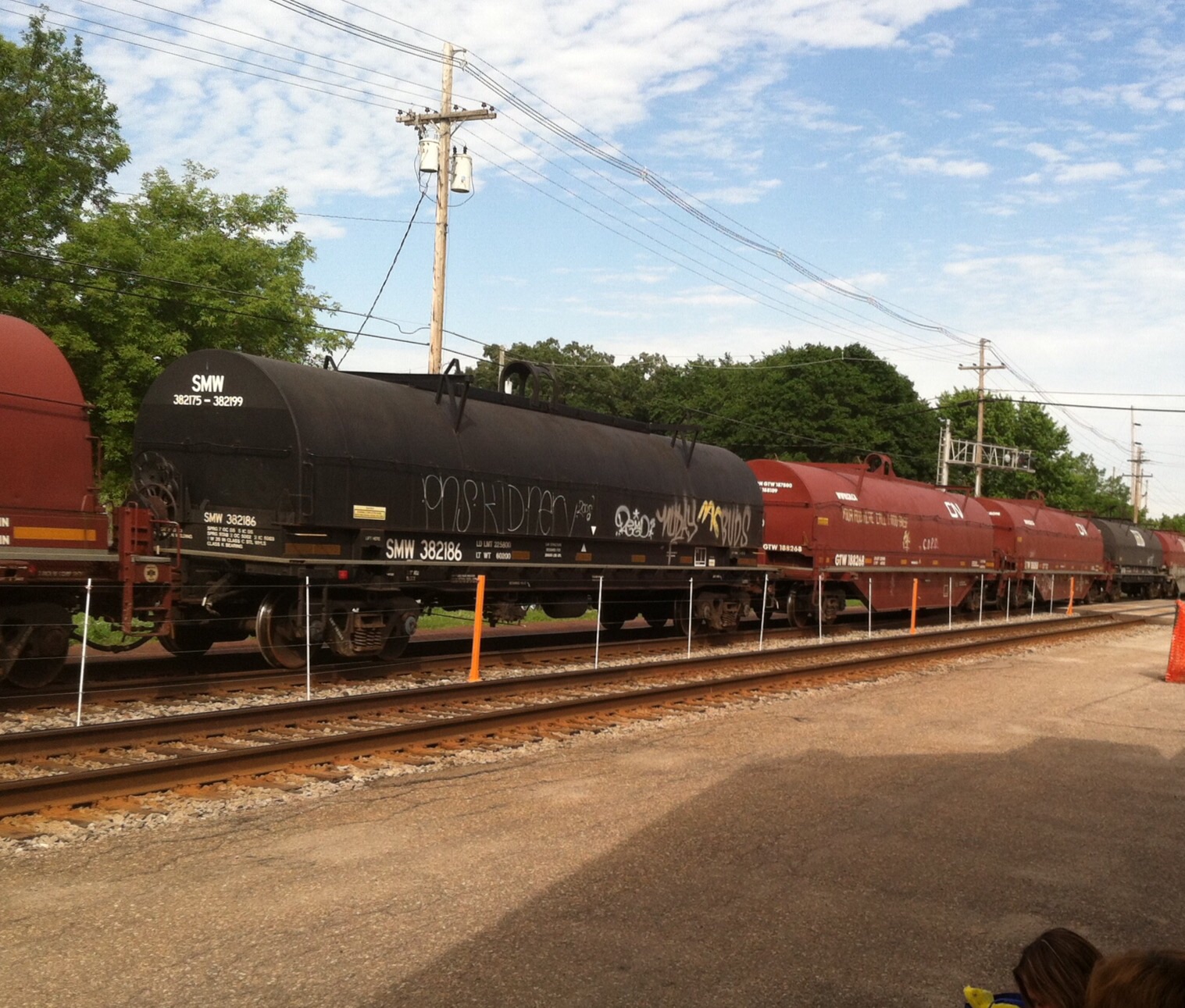
20 volunteers from the Mississippi National River and Recreation Area, myself included, take turns providing the service from May 1 to September 1, Monday through Thursday. The program here is in its seventh year. Two volunteers will ride each train going from St. Paul Minnesota to Columbus Wisconsin. The train leaves St. Paul Union Depot around 8:15 AM. The train normally will arrive in Columbus Wisconsin around 1:15 PM. The volunteers wait a few hours and then board the returning westbound train at Columbus around 5:15 PM and arrive in St. Paul around 10 PM. Volunteers must monitor the progress of the eastbound train before it arrives in St. Paul, since overnight lodging is not provided. If the train is too late, the volunteers will not be able to catch the return train. For instance, this year, forest fires in Washington closed down the tracks to all train traffic, not just Amtrak, for several days. When the train is too late, we do not make the trip, or get off prior to Columbus. The eastbound train will frequently encounter delays as it goes through the mountains. It does not get priority over freight traffic and may have to wait for freight trains, and particularly oil tanker trains to go through. Track maintenance work will also require slower speeds through construction zones.

Winona MN Train Station

Winona MN Train Station

Mississippi RIver from downtown Red Wing

Mississippi River from downtown Red Wing, across the tracks from the train station

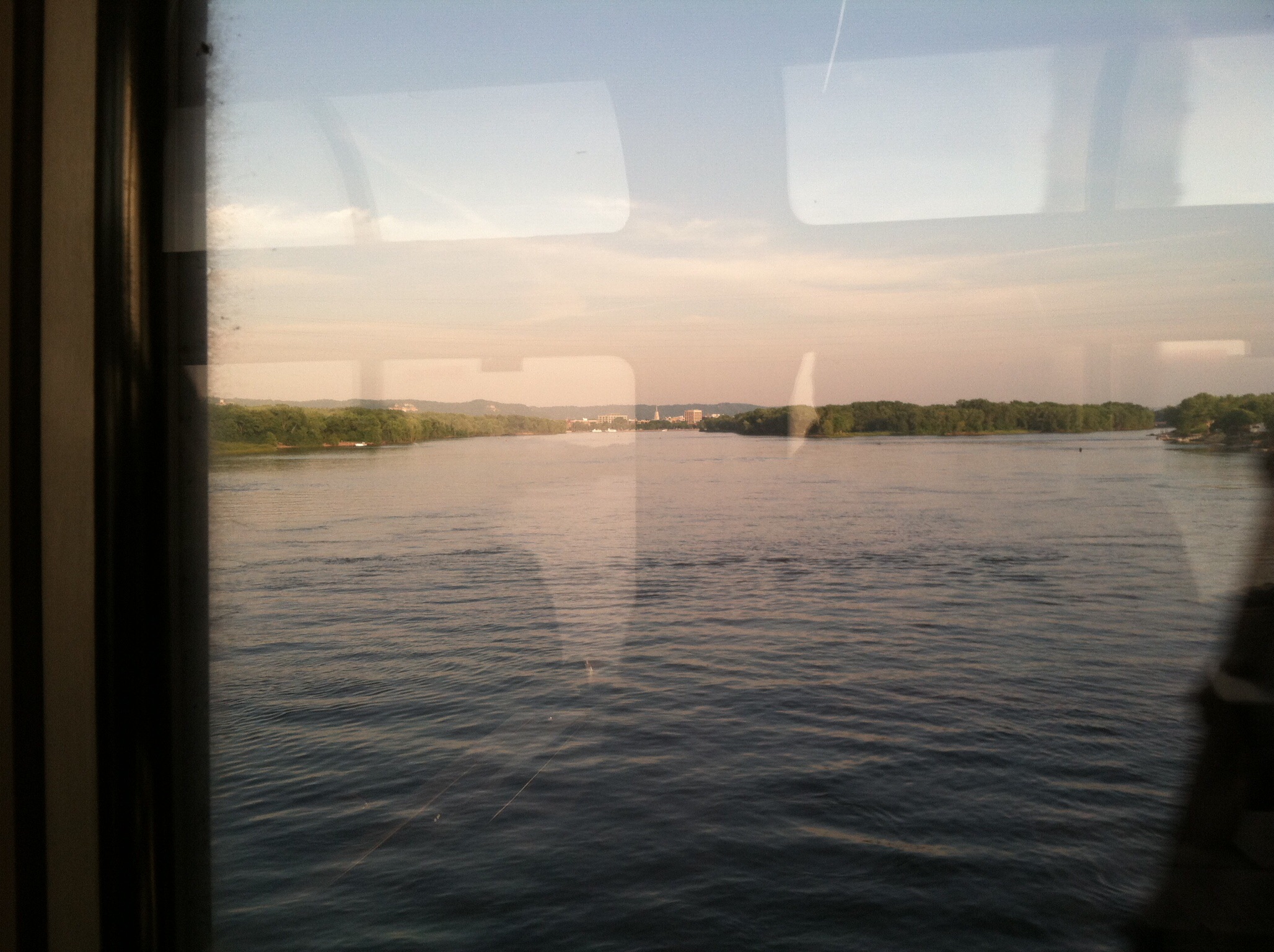
The Trails and Rails program out of St. Paul is dictated by the Amtrak schedule. There is no value in running a program at night when people are sleeping and no views outside the window are possible. The Empire Builder traveling between St. Paul and Columbus offers several hours of viewing of the Mississippi River, which is the purpose of our park here in St. Paul. The sights are beautiful, whether seeing a sunset over Lake Pepin or just viewing the river and farmlands. In the words of Mark Twain: ““Neither in this country nor in any other, have I seen such interesting scenery as that along the Upper Mississippi. One finds all that the Hudson affords-bluffs and wooded highlands-and a great deal in addition.. Every hour brings something new.”

Crossing the Mississippi River at LaCrosse WI-LaCrescent MN on Empire Builder for Trails and Rails

Crossing the Mississippi River on Amtrak Empire Builder Trails and Rails at LaCrosse WI-LaCrescent MN

So this year, I began as one of the 20 volunteers on the Empire Builder Trails and Rails. Training includes a six-hour classroom session, a two-hour train ride introduction, two trips on the train from St. Paul to Columbus with experienced volunteers, and a package of information to provide the starting material for your own narration. We are expected to provide narration, not read the material in the handouts. Thus the volunteer has the requirement and the opportunity to personalize the presentation. I was reassured by the fact that two volunteers always travel together and that we are not expected to be talking constantly. The presentation is made in the upper level of the lounge car. This car has higher dome windows to provide a better view. This type of car is normally not seen in the eastern United States due to lower bridge heights the trains pass under in the eastern half of the U.S.

Tow boat with a single barge on Mississippi RIver

Tow boat with a single barge on Mississippi River

One of my initial concerns was whether the passengers in the dome/lounge car would be irritated by our conversation and how receptive they would be to the presentations. After the first several rides in which we were applauded when we got off in Columbus; or overhearing passengers say “I did not know that”; or hearing passengers discuss your comments by themselves later during the trip made me realize that the effort was worthwhile and well received. Personally, I still have some trepidation each time a new trip starts but these are starting to go away. I continue to add to my own narration copy and work on my ability to know when to present various topics. I have over 50 pages of narrative by now. I do not intend to try to put that all in this post. I will highlight a few comments as an example of the information types we present. Even during my presentation, not all material gets presented. Some of my narrative is a fuller background on a locale but in speaking, I summarize the material. Based on the audience, if the view is being blocked by other trains on neighboring tracks, or whatever, not all material is presented.

Wisconsin farmland with rainbow

Wisconsin farmland with bike trail and rainbow

First, we talk about geology; there are interesting examples along the way. One of the areas that is mentioned I was completely unaware of prior to this activity. This is the so-called famous Driftless Area, particularly of Wisconsin. The upper portions of the United States have been covered by several glaciers over the past millennia. However, the last, or fourth, glacier did not descend as far south as the previous ones. Glaciers move sediment and rocks along with them, this has been categorized as glacial drift. Since the fourth, and last, glacier did not descend as far south, this un-glaciated area of Wisconsin, and a small portion of Minnesota, is called the Driftless Area. It has impacts for landscape and produces different topography then the glaciated area.

Standing in Columbus WI watching a freight train roar by

Standing in Columbus WI watching a freight train roar by

Second, we talk about the Mississippi River. We discuss its length, shipping in the 1800s, current barge traffic, wildlife along the river, and particularly, bald eagles. I mention the Upper Mississippi National Wildlife Refuge which is a major protective area for migratory birds. This wildlife refuge also has an interesting Facebook page.

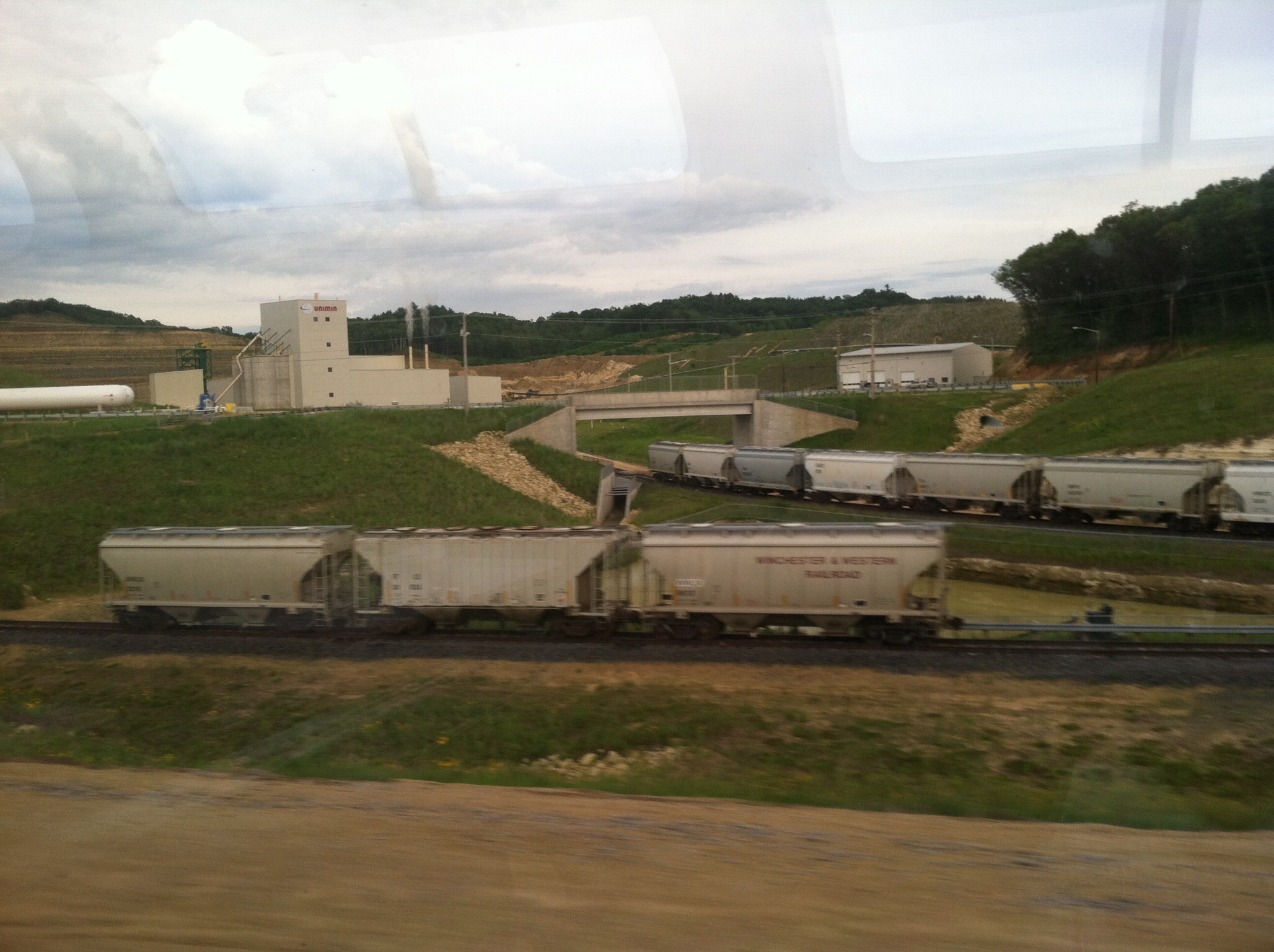
Frac sand mining operation just east of Fort McCoy, WI

Frac sand mining operation just east of Fort McCoy, WI from Amtrak Empire Builder Trails and Rails

Third, we pass Fort McCoy in Wisconsin. This is a large National Guard training base which was also used by the army for training troops prior to being sent to the Middle East. There is even a reproduction of a Middle Eastern village that is partially visible from the train.

ADM mill and elevators in Red Wing MN

ADM mill and elevators in Red Wing MN

Fourth, we talk about the history of various times. For instance, Portage Wisconsin is a point where the early French explorers transferred from the Fox River to the Wisconsin River in their efforts to explore the Upper Midwest and discover a passage to the Pacific ocean. Lumbering, agriculture, shipping and railroads played important roles in the development of most of the communities along the route of the Empire Builder.

View of trains and barges on the Mississippi RIver at St. Paul from Union Depot platform.

View of trains and barges on the Mississippi RIver at St. Paul from Union Depot.

Fifth, miscellaneous bits of relevant trivia are scattered throughout. For instance; it takes 10 pounds of milk to produce one pound of cheese, 12 pounds of milk to make a gallon of ice cream, and 22 pounds of milk to make a pound of butter.

Sixth, we offer youngsters the opportunity to become Junior Rangers. There is a Junior Ranger booklet designed for this route and one of the volunteers normally walks the train, letting parents know the program exists and asking if they would like a booklet for their child(ren). Upon answering the questions, spotting various landmarks and items unique to this route, and completing some drawings, the child will be made a Junior Ranger with a badge. We normally announce their first name and ask the riders in the lounge car to join us in applauding them.

Lock and Dam number five just above Winona, MN

Lock and Dam number five just above Winona, MN

So who is riding the Empire Builder? Well, college students are one frequent group traveling to and from their school. International travelers are often on board, sometimes taking long journeys like the fellow who started in South America, came up the Pacific Coast to Seattle, and was heading towards Montreal. Families on vacation, such as the family from the Winona area, parents and three teenagers, heading down to Chicago for a surprise weekend vacation. Amish, sometimes traveling in groups to weddings and other family get-together. People who enjoy riding trains and who do not have strict timetables to meet like the couple traveling to a convention in New Orleans from Seattle. Less frequently at the moment, but still present, are workers in the North Dakota oil fields who stay there for months and then go home to see the family.

Those who start their journey in Seattle or Portland will be on the train for 48 hours. They board in Seattle or Portland around 4:40 PM, ride through the night, the entire next day and night, arrive in St. Paul around 8 AM of the following day and enter Chicago about 4 PM. 48 hours but parts of three days.

Sunset over Lake Pepin on Mississippi River

Sunset over Lake Pepin on Mississippi River from Amtak Empire Builder Trails and Rails

A final note. I am not a paying passenger but I will say that all of the Amtrak personnel I have encountered have been extremely kind and helpful. Thanks for making our work so pleasant.

For another perspective on the Trails and Rail program, read the article in the Minneapolis Star/Tribune of August 11, 2015 written by reporter James Walsh and photographs by Rachel Woolf.
http://www.startribune.com/amtrak-volunteers-tell-passengers-tales-in-trails-and-rails-program/321296911/

Other links:
Mississippi National River and Recreation Area: http://www.nps.gov/miss/index.htm

Upper Mississippi National Wildlife Refuge: http://www.fws.gov/refuge/upper_mississippi_river/

Ed Heimel St. Paul, August 10, 2015

Categories: road trip, travel | Tags: , , , , , , , , , , , , , , , | 1 Comment

2015 Trip 3, Isle Royale, June 21

2015 Trip 3, Isle Royale June 21
Hovland, MN

This trip is to visit Isle Royale National Park, an island located in Lake Superior. Technically the park is in the state of Michigan although it is closer to Minnesota and to Ontario. We have never been to this park; it is remote and not heavily visited. One can take a day’s ferry ride over from Michigan or from Minnesota and spend a few hours on the island. We chose a second, longer option of taking the ferry over and spending three nights on the island. If you have read this blog previously, you can probably guess that we are not camping. There is a lodge at Isle Royale and we will be staying at one of their cabins.

The ferry leaves from Grand Portage MN, just a few miles south of the U.S.-Canada border. It departs at 7:30 A.M. (and arrives at our lodge around 3 PM) so we have driven up to the North Shore region of Minnesota on Sunday. These remote areas of the North Shore and Isle Royale itself have little or no Internet and cell coverage (or the cell coverage might be in Canada and extremely expensive) so this post may not see the light of day until Thursday when we return from Isle Royale and are lodging in Grand Marais MN, a little farther south of the border.

We left St. Paul at 8 AM. The first half of the distance brings us to Duluth MN at the SW tip of Lake Superior. The road is all Interstate and other than abundant wildflowers along the edge of the Interstate, nothing too dramatic to report. Duluth is a pleasant town of about 85,000 people and we have visited here often and do not plan to discuss much about it here. Except, this was the weekend for Grandma’s Marathon.

Grandma’s Marathon has been running for 39 years and was originally sponsored by a local Duluth restaurant (Grandma’s) which is still in existence. The marathon has grown dramatically and now large, corporate sponsors provide the primary funding for the marathon. It runs along the shore of Lake Superior and has spectacular scenery. Lucky for us it ran Saturday since our route and the marathon’s route overlap for a number of miles. The only evidence we saw were the hordes of teenagers picking up trash along the route and the list of finishers in the local Duluth newspaper.

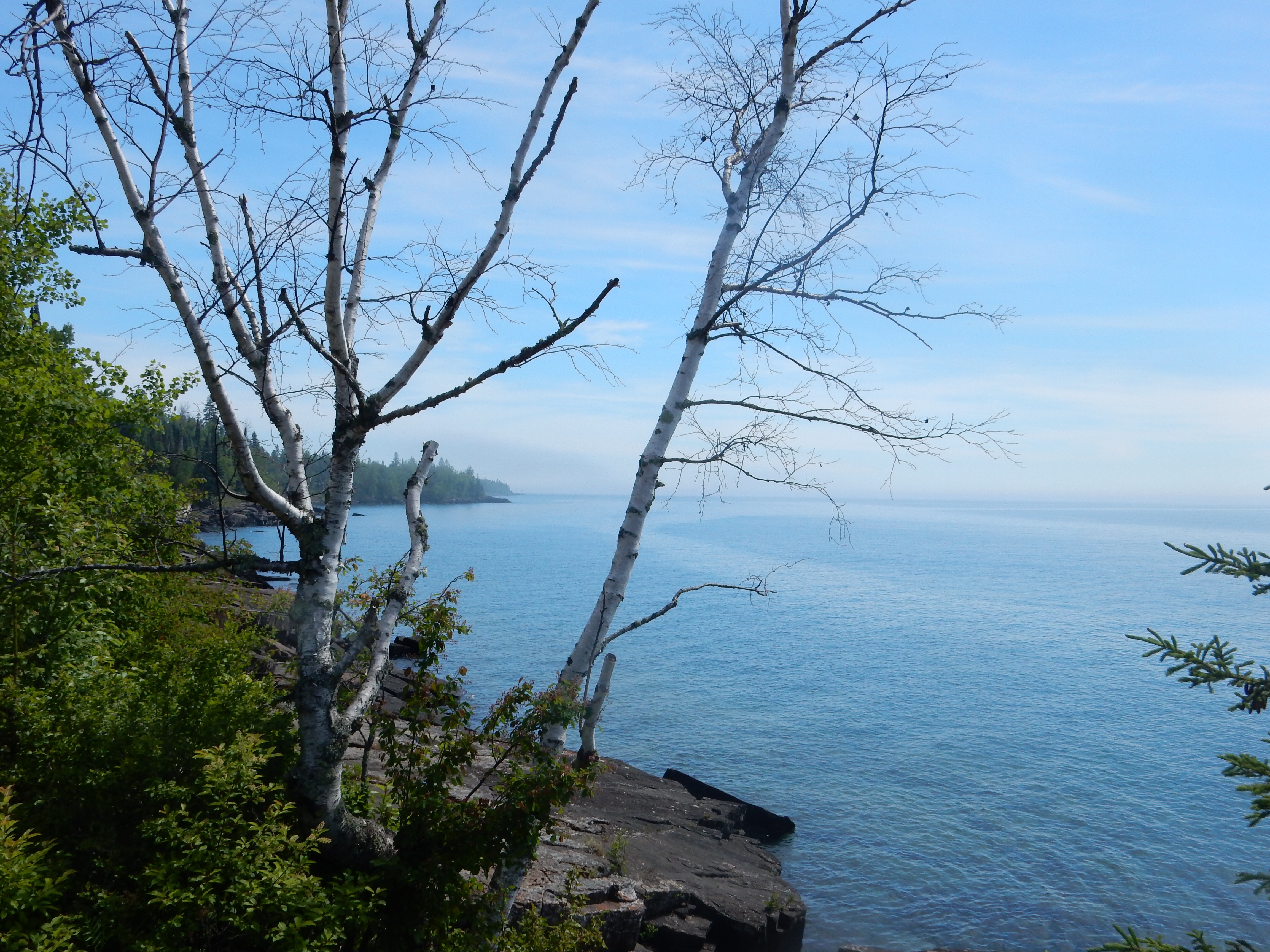
Minnesota's North Shore of Lake Superior

Minnesota’s North Shore of Lake Superior

The second half of the distance is on MN Highway 61 along the North Shore. This road is a scenic route with great vistas of the lake and of the “mountains” along the shoreline. Due to the mountains, there are over 20 waterfalls between Duluth and the Canadian border. As we drive farther past Duluth, the smell of pine trees is noticeable. Chris spotted a bald eagle just sitting in one of the trees. The drive here is slower but more enjoyable.

Bald Eagle along the North Shore

Bald Eagle along the North Shore

We stopped at an overlook north of Duluth and met a marathoner from Toronto. He has been trying to run marathons that are located around the Great Lakes. He has run 13 so far. He was taking pictures of the area and we took one for him with Lake Superior in the background. Another couple at the overlook were from Nebraska and we discussed with them the snow geese and sandhill cranes that throng the Kearney-Grand Island NE area in late March. We are contemplating visiting there next spring if we can figure out how to do that and make it to South Beach.

Brule River in Judge C.R. Magney State Park

Brule River in Judge C.R. Magney State Park

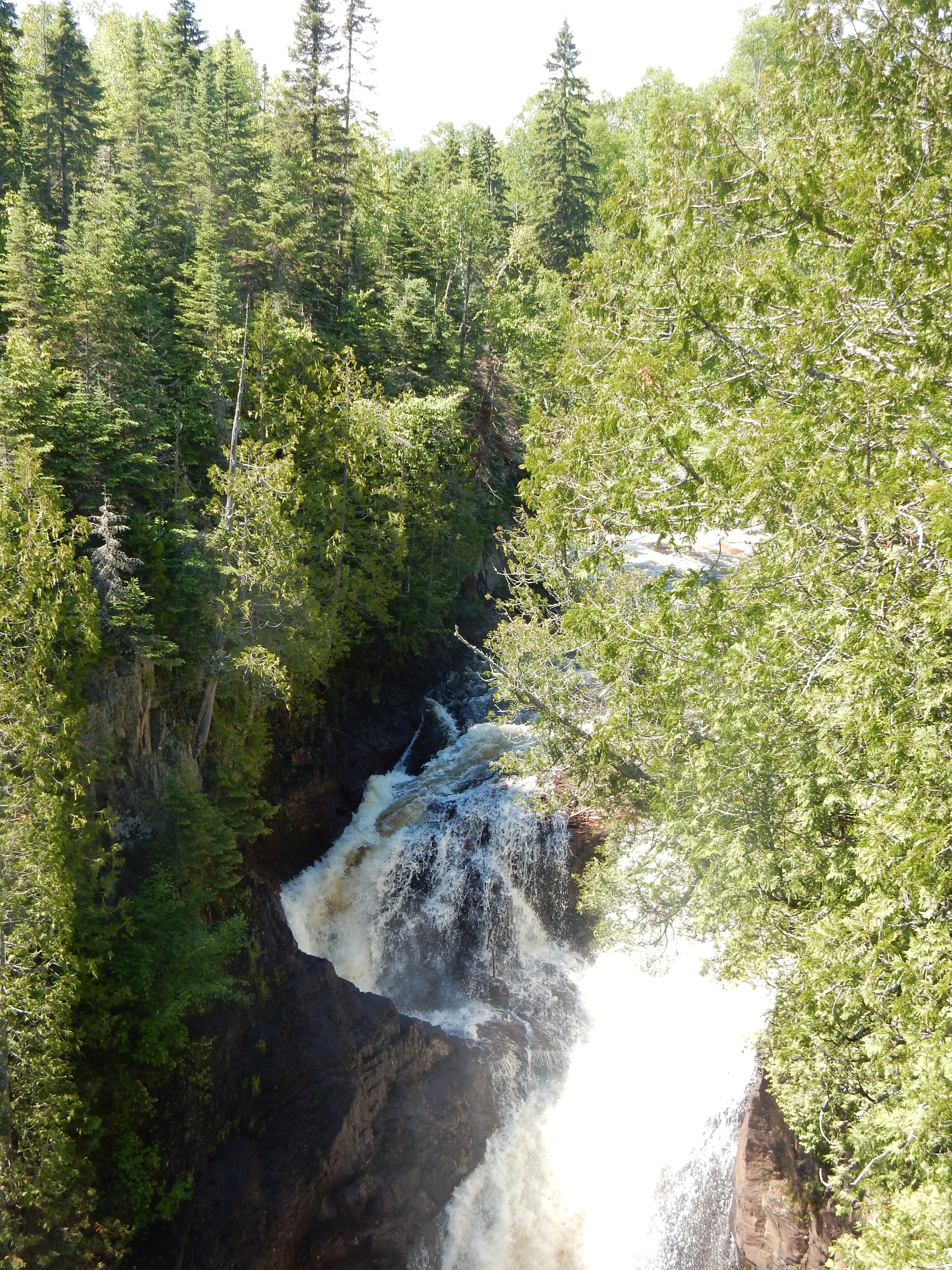
Our return journey starts Thursday and we will spend four more nights along the North Shore. This extended time will allow us to visit several of the waterfalls at that time. Today, we did visit one state park and its waterfall. Judge C.R. Magney state park is located along the Brule River (there also is a Brule River in Wisconsin.) We hiked the trail to Devil’s Kettle. (Atlas Obscura has an interesting video about Devil’s Kettle also. http://www.atlasobscura.com/places/devils-kettle)

Brule River falls

Brule River falls

Devil's Kettle; left side water disappears

Devil’s Kettle; left side water disappears

The Devil’s Kettle is a waterfall/rapids that is somewhat unique. As the river heads to Lake Superior, it passes a rapids where the north side of the river creates a water fall but the south half of the river falls into a pothole and the water disappears. Geologists have done various studies to figure out exactly where the water goes but no one has yet definitively answered the question.

Naniboujou  Lodge, view from Lake Superior

Naniboujou Lodge, view from Lake Superior

Our lodging for the evening is at Naniboujou Lodge, located across the street from the state park. The lodge was formed in 1929 by a group of wealthy men to create an exclusive hunting lodge. Original founders included Babe Ruth and Jack Dempsey. As you can imagine, the 1929 October stock market crash put the kibosh on the funding for the club. It changed hands over the years but the current owners have had it since the 1980s.

Naniboujou Lodge Dining Room

Naniboujou Lodge Dining Room


The dining room has the largest, free-standing native stone fireplace in the U.S. The dining room is painted in the Cree Indian style and the paint is as fresh and vibrant today as it was when it was originally painted in 1929-over 85 years ago. The food was excellent also; Lake Superior whitefish for me and spinach lasagna for Chris.

This far north the nights are longer and sunrise comes early. That won’t be a problem tomorrow since we have to be up early to make it to Grand Portage for the early departure of the ferry. There is a good potential for wind and rain-hopefully that won’t stop the ferry ride or make the journey too unpleasant.

Ed and Chris Thursday June 25

Categories: road trip, travel | Tags: , , , , , , , , | 1 Comment

Blog at WordPress.com.