
Saint Paul, MN. October 2017
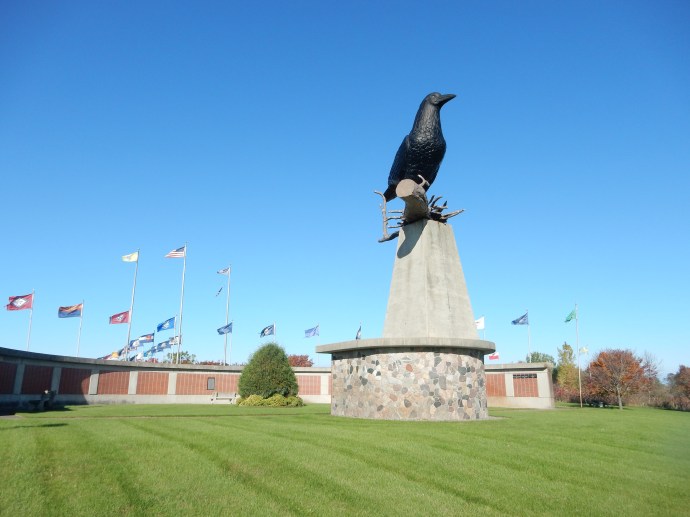
Belgrade Minnesota Memorial Park
Success! Two and one-half years ago, Chris had another travel idea. Join the Minnesota State Parks Passport Club with a goal of visiting all of the 76 Minnesota state parks. (Note: two parks have since been combined into one so there are now 75 state parks; you can waive four of the locations that are extremely remote, only accessible by water, or designed only for off-road vehicles.)
On April 12, 2015 we began the Passport Club by visiting Fort Snelling State Park. On Sunday, October 8, 2017 we visited park number 74, Glacial Lakes State Park. The only place we missed was Garden Island State Recreation Area, an island in the Northwest Angle of Minnesota that juts into Canada, north of International Falls. We set rules for ourselves; even if we had visited parks previously, we had to visit them again after April 12, 2015, and we had to take a hike of at least one mile in each park. Normally our hikes were much longer. There were two or three places where the bugs were too bad or the trails were lost in the snow that we did not hike a mile. During the last 2.5 years, we have documented in this blog a good number of the state parks as we have traveled around Minnesota.
What did we accomplish? Primarily, the Passport Club made us visit parts of Minnesota we had not seen before. In traveling to parks, we spent time driving on dirt roads, visiting very small towns, and talking to a wide range of people. We slept in B and B’s, in camper cabins at the parks, in small hotels, in a bunk house, at casinos and lake resorts. Note we are not campers; we do not own a tent or drive an RV and have no desire to do so. We ate at some nationally franchised restaurants but primarily at locally owned small town eateries.
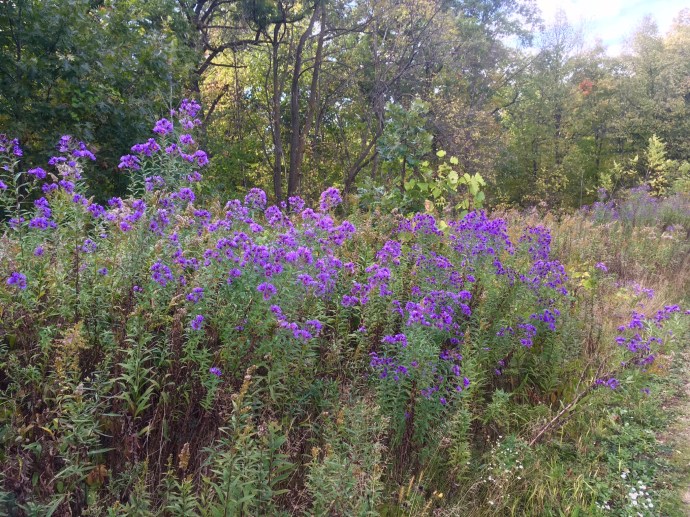
Wildflowers at Nerstrand Big Woods State Park
We observed fields of blooming sunflowers; took factory tours, hiked up mountains (Minnesota sized), saw innumerable waterfalls, gloried in fall colors and colorful prairie flowers. Most parks were immaculate and a treasure to behold, a few were more ramshackle and in need of visitors and maintenance. Oh yes, we saw lakes. Lot and lots of lakes. While the lakes almost always presented clear water, we understand phosphorus and nitrogen can be unseen problems. Invasive species did not jump out and say “Here we are”.
I was generally impressed with the quality of the roads in outstate Minnesota (or Greater Minnesota as it is frequently termed). Farm equipment was frequently encountered; we were amazed at the size and heft of some of the machinery. During this two and one-half years, we bought a new car and found the new one gave a smoother ride-even on dirt roads. Inside the parks, while we usually hiked, bike trails are numerous and located all over the state. Several times we rented bikes locally to enjoy the bike trails. A few other times we rented canoes and enjoyed the views from the level of the water.
Moose and wolves hid from us but numerous small mammals and tons of birds were viewed. We are not birders, so we will not bore you with an attempted list of all that we saw. On occasion we observed more birds here in St. Paul along the Mississippi River than we did along birding trails. We do not fish so don’t inquire about the quality of the fishing. There were plenty of people fishing though so it must be at least reasonable.
Only two parks were visited during the dead of winter (not counting winter hiking locally at parks like Afton and Fort Snelling which we visit frequently). La Salle Lake State Recreation Area which was one of the ones for which we could not find a winter trail and Lake Itasca to observe the headwaters of the Mississippi River in the dead of winter-gorgeous!
Are we going to do it again? Not really in this form. Since there are some parks that really were not that great, we expect to frequent parks that greatly appealed to us or which have sections we did not visit on our first time there. The list of parks to visit again is much longer now than I would have expected.
We agreed when this was over we would each make a list of the top 10% of the parks (seven each) that we enjoyed. The criteria are nebulous and changing, at least for me. I made myself limit the list to only one North Shore park, otherwise the waterfalls along Lake Superior would put every one of those parks on my short list. Surprisingly, our lists were quite different.
Chris: not in any particular order
Big Bog
Forestville/Mystery Cave
Red River
Hill Annex Mine
Nerstrand Big Woods
Tettegouche
Crow Wing
Ed: again not in any particular order
Big Bog
Judge C.R. Magney
Frontenac
Tower Soudan (and Lake Vermillion as combined park)
Blue Mounds
Interstate
Fort Snelling
To reach our final three parks, we left Saturday morning Oct. 7th under gray, rainy skies. As we drove west through Minnesota agricultural land, the skies cleared and the temperature hit the high 60s. On the drive we went through Cosmos MN, a new town for us. As its name implies, all of the streets have cosmic names-Mars, Vega, Libra, etc. We drove by a winery with music Sunday afternoons that we made a note of. We passed by the official location to obtain the stamp for Greenleaf State Recreation Area and we got our stamp. Actual visit will be on Sunday.

Monson Lake State Park
First real stop Monson Lake, a small state park dedicated to the memory of several European immigrants killed in the Dakota War of 1862. A story told before in our blogs, but this park was the site of the deaths of 13 members of two families. There is a small marker here. Fishing and camping are the highest uses here, not a memorable spot for our type of park activity. We drove the short distance to New London MN and had lunch at a downtown restaurant, McKale’s Family Restaurant.

View from Mount Tom at Sibley State Park
Sibley State Park was next, a park we had visited in the past. Notable for Mount Tom, a high point in the surrounding area, this park offers a fuller range of activities. As we went to the top with its viewpoint, we discovered biting bugs of some nature were out. Sunday when we visited Glacial Lakes, only fifty miles away and with the same weather, no biting bugs were encountered.This park offers nice hikes and the beach along the shore of Andrew Lake provides a pleasant respite to sit and watch the lake.The park was busy. The ranger signed our Passport Club book and filled out the paperwork for our plaque. She wanted to chat a bit more to congratulate us on completing the visit of parks but we did not want to slow down the campers waiting in line. (Technically we did not have to visit the park on Sunday to complete our Pasport Club Book, Sibley would have completed the requirements.)
While at Sibley, I saw this guy taking pictures of the bathrooms (from the outside) and he said I was probably wondering why he was doing so. I was. He organizes the Tour of Minnesota Bike Ride; as they state: “Welcome to the Tour of Minnesota formerly the Klobuchar Bike Ride. The Tour of Minnesota is in our 44th year and the ride will be June 15th – 22nd, 2018. We will start in Willmar, ride to Morris, Fergus Falls, Alexandria with a day off in Alexandria, Little Falls, St. Cloud and back to Willmar. We will meet on June 15th at the Willmar Civic Center. I would estimate the daily mileage will range from 45 miles to about 70 miles with an average daily mileage of about 55 miles even though the route is not complete.” He was at Sibley to plan the 2018 trip and the pictures become part of the tour guide to help him and riders know where they will be riding and what they will encounter. Chris and I are more recreational riders but any of you who might be interested should check out their website for the 2018 ride. http://www.tourofminnesota.com
Spicer MN was the site of our night’s lodging at a newly constructed Hampton Inn which offers bike rentals to its guests. Good information for next time. Both New London and Spicer were well-kept communities with a population of about 1200-1400. We have friends from our college days living in Spicer and had dinner at their home. They had previously been living in St. Paul but after retirement decided to move to Spicer; both have family connections in the area.
Sunday our destination was Glacial Lakes State Park. On our way there, we passed through Belgrade Minnesota and our attention was grabbed by a large statue of a crow. The Middle Fork of the Crow River rises near Belgrade and the town has constructed a memorial park to honor “who we are, what we are doing, and where we are going”. Each state’s flag flies, the picnic tables fly the flags of the seven countries (Germany, Norway, Sweden, Denmark, Ireland, Poland, and Czechoslovakia) sending early settlers to this area, and then the flags of Canada and local civic groups such as the Lions and VFW are flown. The walls have bricks memorializing local residents as well as school superintendents, local pastors, veterans, county road crew members, scouts, etc. The crow is 18 feet high and weighs 3,000 pounds.

Glacial Lakes State Park
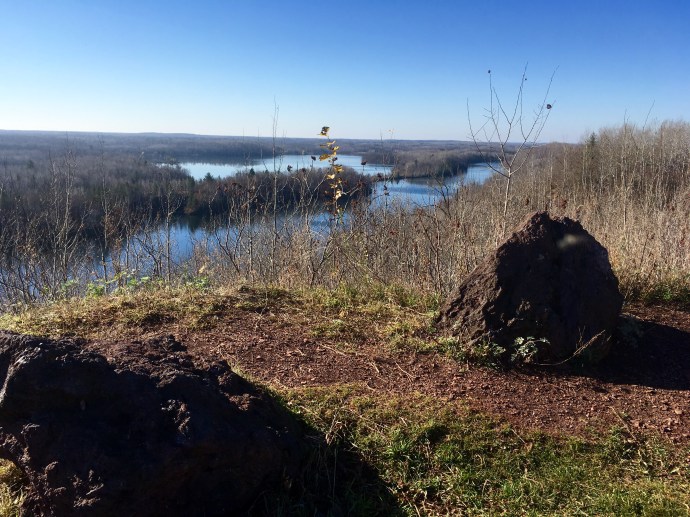
Normally when I think of Minnesota lakes, I think “Up North”, that area generally north of a line drawn through St. Cloud. However, this area of west-central Minnesota is south of that line and yet is well populated with numerous lakes, generally created by glacial action. The ranger at Glacial Lakes was not as busy and took our picture. I complained to her about the new MN DNR maps/descriptive handouts for each park that while providing larger and easier type to read, have deleted most of the background information about the park-its history, geology, wildlife, etc. They have dumbed down the information. Their new publication listing all MN State Parks is in a different format also. Rather than the 4″ x 9″ folded booklet, there is a large map with the location and list of the parks. I think it is a mistake, the map is difficult to read easily and again, has less information about each park on it. Oh, if I was in charge everything would be perfect. We hiked around a lake, noting kame (cone-shaped hills), kettles (water-filled depressions), and eskers (“a long ridge of gravel and other sediment, typically having a winding course, deposited by meltwater from a retreating glacier or ice sheet).
Fall foliage has been relatively poor. The greatest color has come from shrubbery. A few trees were brilliant, most had not changed or were a dull color. Once again, we are seeing better fall foliage here in the Twin Cities. Last weekend we visited Nerstrand State Park (not for the first time) and the colors there were blah. The brilliant colors at the heading for this blog were taken last fall in St. Paul.

Greenleaf State Recreation Area
After Glacial Lakes, we visited Greenleaf State Recreation Area. Greenleaf was authorized in 2003 but the property is small and development has been spotty due to low funding. It is only a day use area with no facilities but six other people were at the lake access area, more than we have seen sometimes at small state parks. We left Greenleaf in time to visit Crow Wing Winery just east of Hutchinson (14,000 people). The winery is heavy into Minnesota grapes; grapes developed by the University of Minnesota to fare well in our colder climate. A guitarist was playing and we had onion rings and a great pizza to go with our pop. Our final stop was at the Apple House affiliated with the University of Minnesota Arboretum. We picked up an apple pie to bake at home; I was not in the mood to make another apple crisp-maybe later this week.
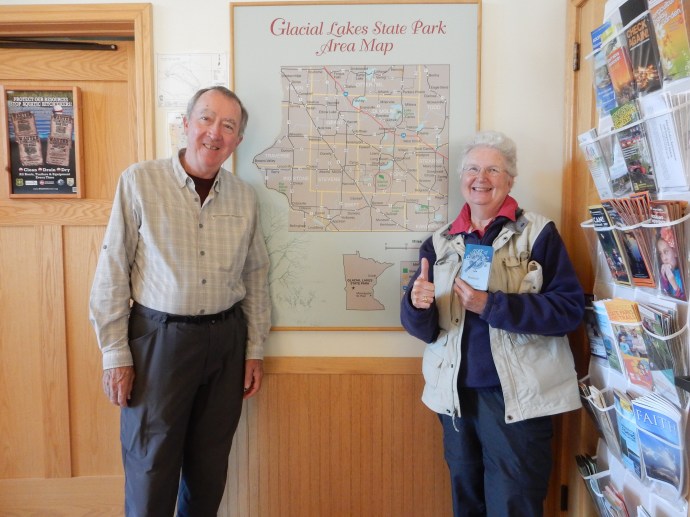
At Glacial Lakes State Park
Another good journey and a successful conclusion to our 2.5 year odyssey to visit all MN state parks. We would highly recommend the experience to others.
Ed and Chris October 10, 2017


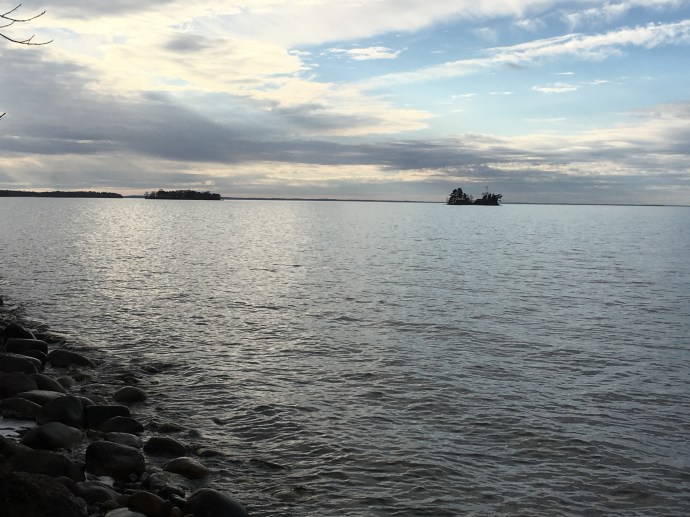


 Chris Klejbuk and Ed Heimel travel adventure
Recent Comments