

Traveling on a Sunday, particularly off-season, is always a challenge when one wants to visit places, not just drive. Today was a perfect example. Two places that might be open before noon, as noted on their websites, turned out that one was not open on weekends and the second was undergoing renovations. For both locations, we had checked several websites and they all indicated no problem in visiting today. Why have a website if you don’t keep it updated?
We pivoted to different options that Chris quickly located between the Rand McNally spiral US map book that we keep with us and Internet checking on the smart phone. We wrote off Omaha Nebraska for another time-maybe.
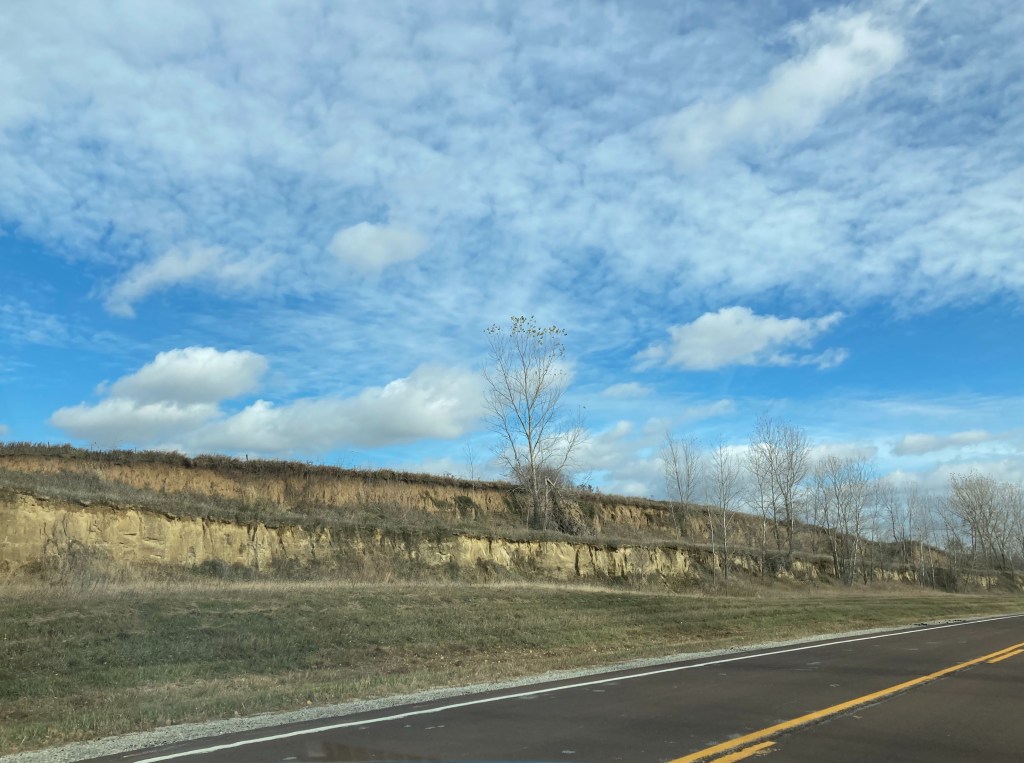
Our first new stop was the Loess Bluffs National Wildlife Refuge along the Missouri River in the state of Missouri. This required driving south by southeast ( I know, we should be going south by southwest.) along miles of the Loess Hills ( I have seen plenty of these hills by now.) On the way to Loess Bluffs, we stopped at a rest area in Missouri that featured information about the town of Rock Port. This farming community of 1300 people claims to be the first community in the U.S. whose energy is derived solely from wind power. Their wind farm was built in 2008.
The Loess Bluffs NWR is about 30 miles north of St. Joseph Missouri. We knew the visitor center was closed but the auto tour route was open. At the parking lot for the visitor center indoor restrooms, I talked to a gentleman from Missouri who wondered if we were here to look for eagles also. I informed him we were from Minnesota and see eagles all the time. He understood.


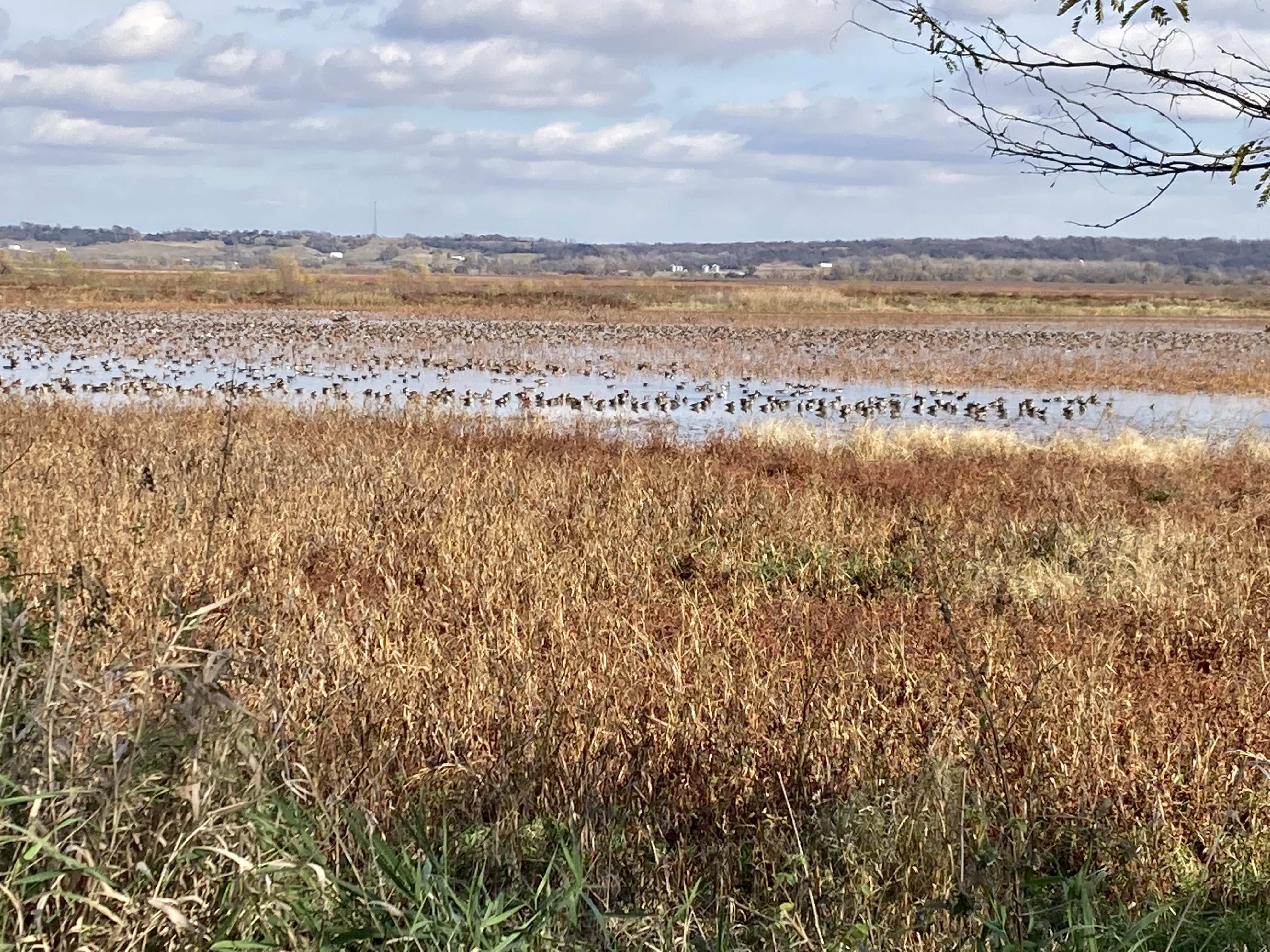


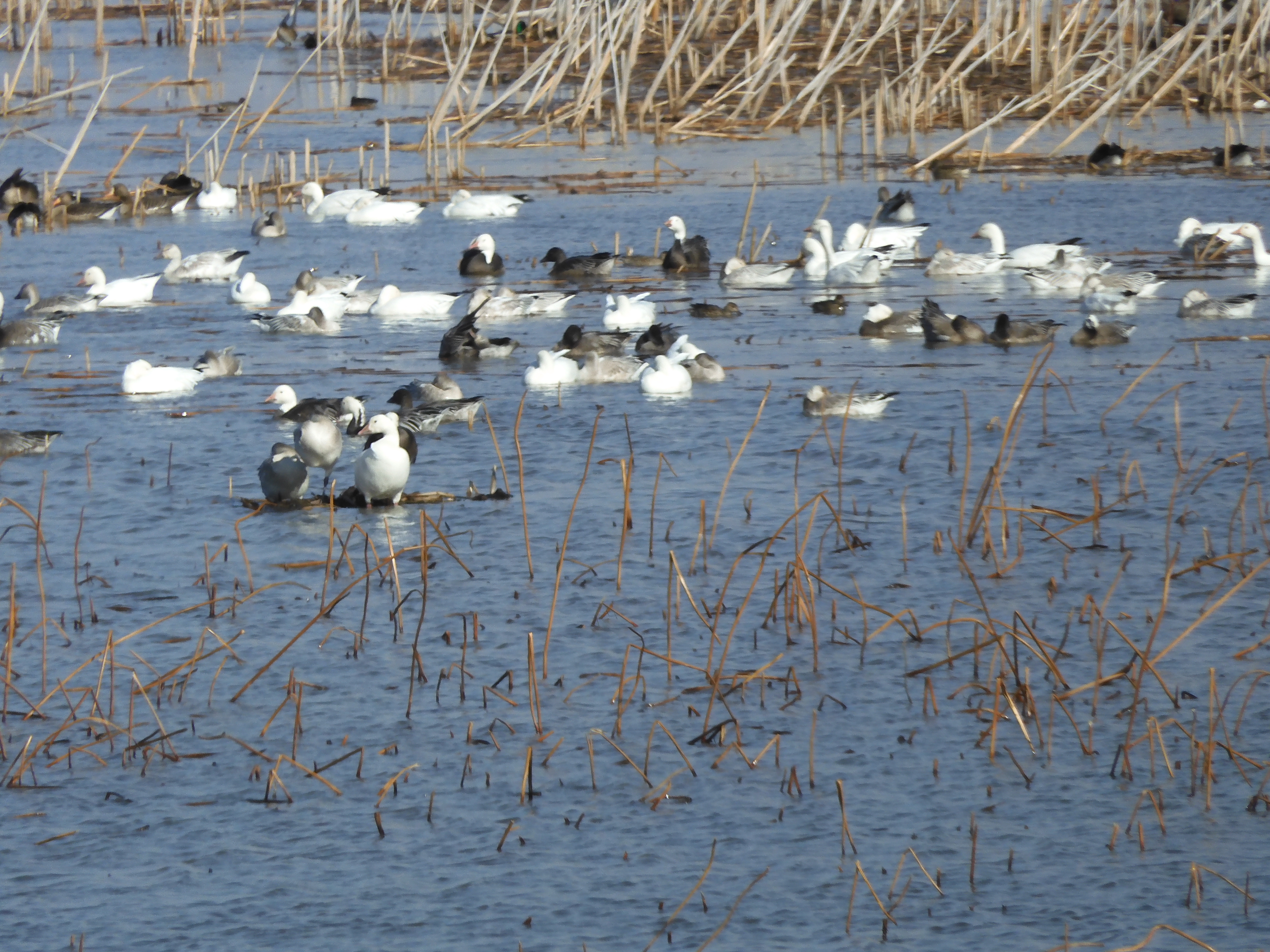
We did see a lot of ducks, and a huge flock of snow geese. Muskrat houses dotted the lakes and marshes, providing a perch for birds. But to give you a better idea of the number and types of birds present, we went to the Loess Bluffs eBird Trail Tracker. Here are some of the larger numbers observed in the last 24 hours.Snow goose-2600; Greater white fronted goose-2400; mallards-270; american coot-100; green winged teal-500;ring-necked duck-400; then there was one american white pelican, one downy woodpecker, one black-capped chickadee, one european starling, and one bald eagle plus a bunch of birds with numbers in between the two extremes. We actually saw two bald eagles. I hope the gentleman I met saw them also. Our stop today was just lucky; our visit to DeSoto National Wildlife Refuge on Saturday, while enjoyable, did not have the number of birds observed here.
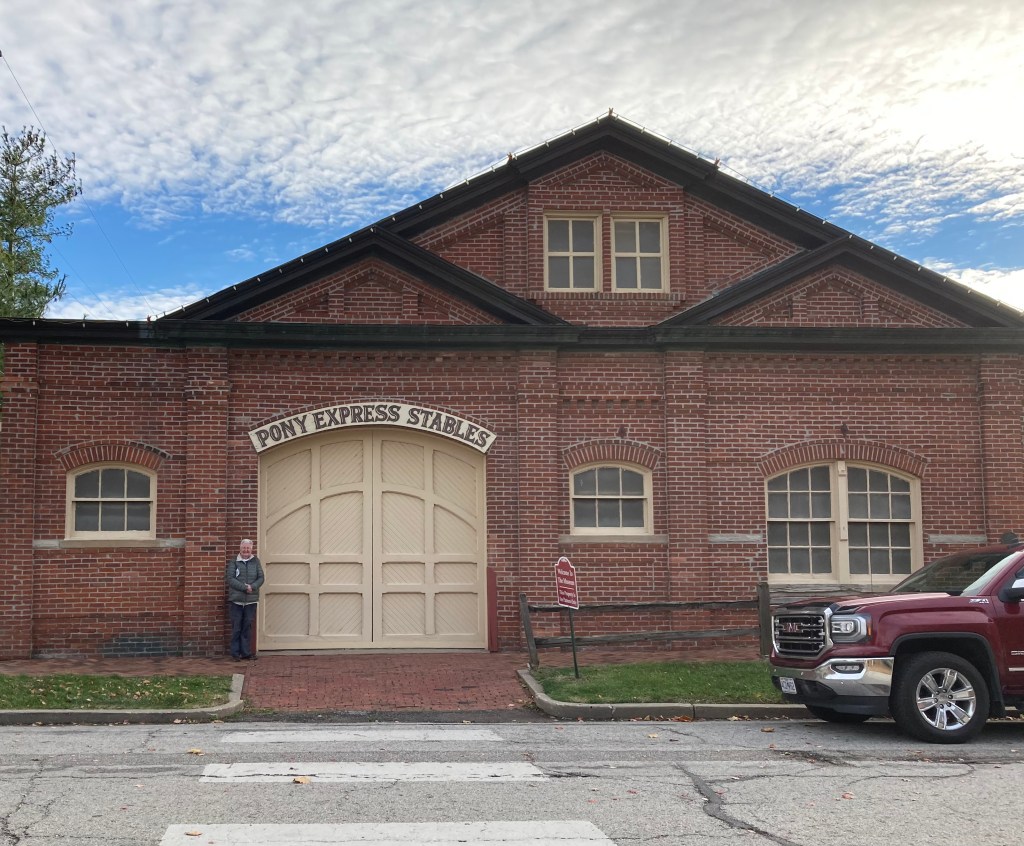
Our second stop was at a museum (The Pony Express National Museum) open on Sunday in November. The museum is housed in the original Pony Express Stables in St. Joseph Missouri. St. Joseph Missouri was a major ”jumping off point” for Americans headed for the gold fields or new homes on the prairies or west coast in the mid to latter 1800s. It was also the eastern terminus for the Pony Express, that short-lived but famous deliverer of the U.S. mail between the east and the west coast. The Pony Express traveled 1,996 miles in 10 days. That is 8.3 miles per hour.
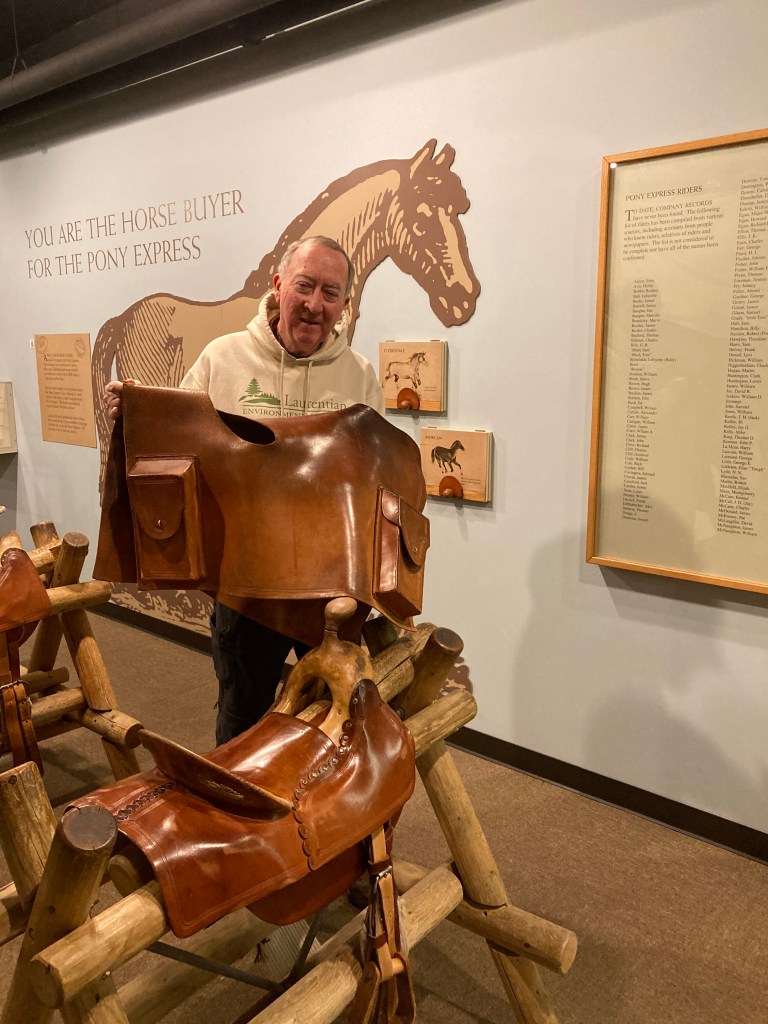
The Pony Express began on April 3, 1860 and ended when the transcontinental telegraph was completed on October 24, 1861. It was not profitable. The company opened about 160 relay/resting stations about 15 miles apart. Each station had to have stables, bunks, staffing, food and feed. A special mail pouch called a mochila was used which was thrown over very light weight saddles. They purchased 400 horses and hired 200 riders-usually young, wiry men good on horseback. They rode through blizzards, rain and tornadoes. They beat all odds in reducing the time to deliver mail from 25 days on stagecoaches and months on ships to just 10 days. The Pony Express has remained a legend in American folklore.
We thought the museum did a nice job. It is not flashy but has graphics, exhibits of saddles and blacksmithing, videos, recorded messages, etc. covering topics such as the origins of the Pony Express, detailed histories of numerous riders, model stations, large scale maps of the route, etc.
After leaving the museum, we drove 185 miles to our lodging in Salina Kansas. I found it amusing that we began the morning at the Loess Hills of Iowa and finished driving through the Flint Hills of Kansas. (Flint Hills are named for the abundant flint found along the top of the ridges in this area.) During the last hour, our westward journey allowed us to watch the sunset as the colors changed from yellow to orange to a mix of pink, rose, and purple. Scattered cloud cover gave the colors an opportunity to be reflected in a variety of patterns. It was a scenic end to the drive.
Dinner was at Popeyes Louisiana Chicken-our first time at a Popeyes.
Ed and Chris, Salina Kansas Nov. 14,2021
 Chris Klejbuk and Ed Heimel travel adventure
Recent Comments