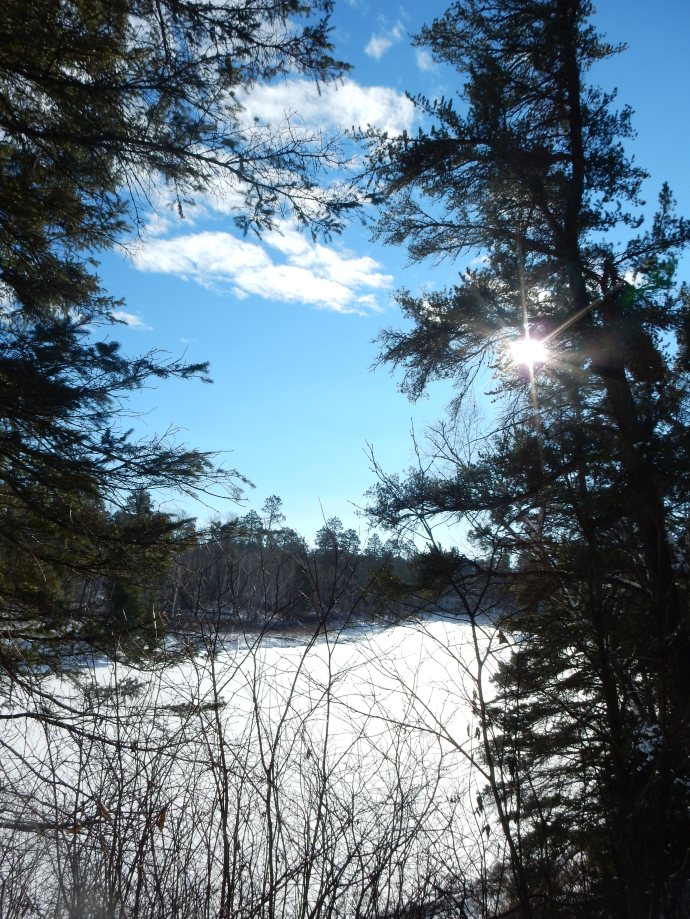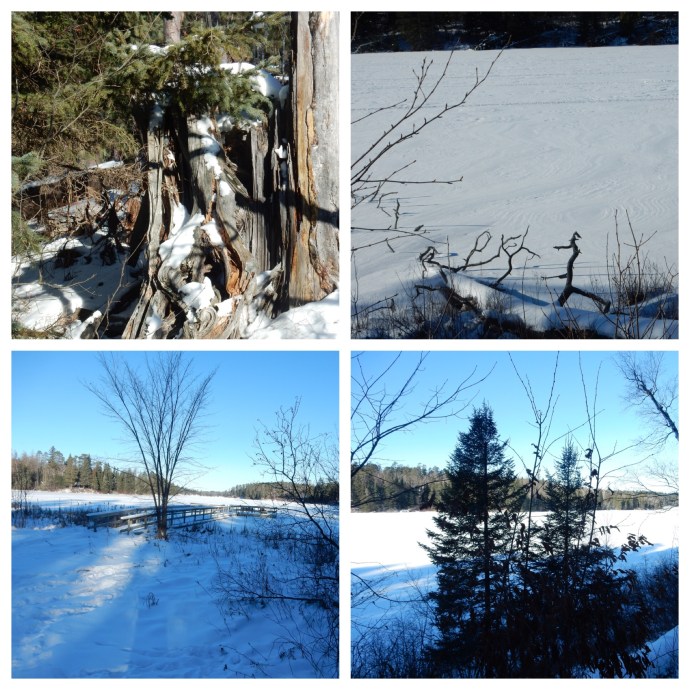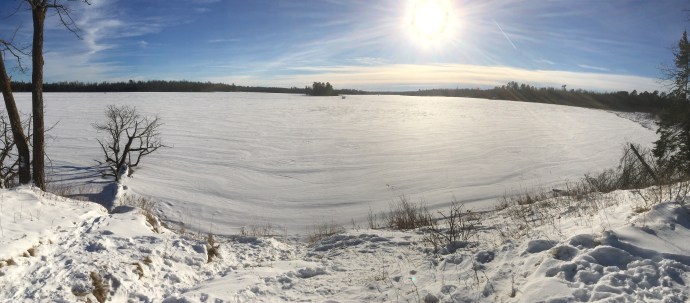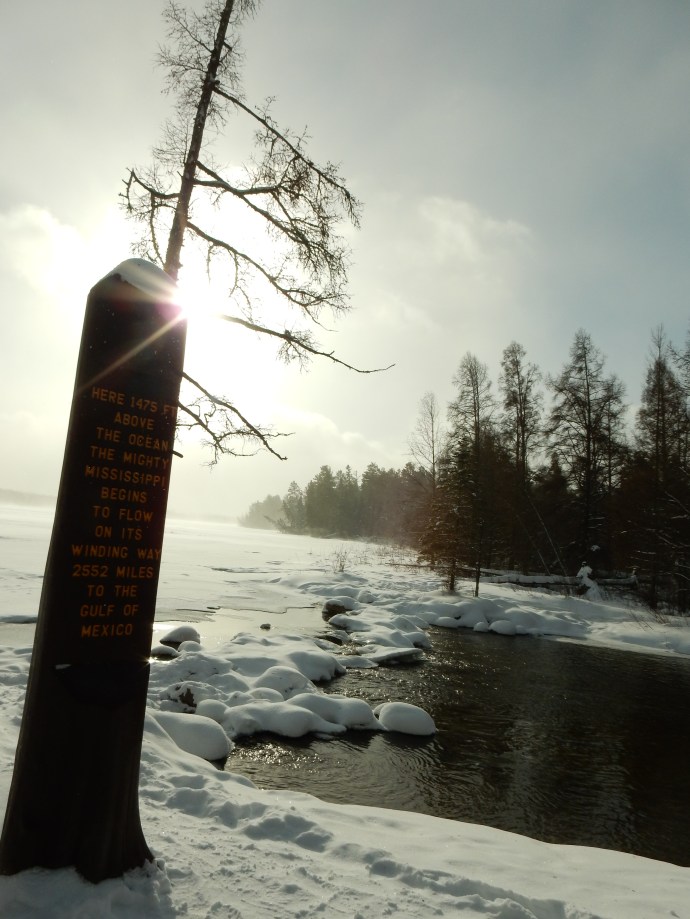
Posts Tagged With: Itasca State Park

Back on the road again-Finally #3

Itasca State Park, MN May 13, 2021

We have truly lucked out with the weather. Most of the day was sunny with a temperature in the 60s. It became a little cloudy in the afternoon with about a 10 minute brief shower after 4 PM. All of our walks today were within Itasca State Park. The park is over 32,000 acres in size with over 100 lakes. There is plenty of area to experience. We chose a variety of trails today. The first trail is part of the hiking club trail system within Minnesota state parks.

Previous readers of this blog will recall that in our travels around Minnesota, we obtain a stamp from each park to verify we have visited the park. We are currently in our second time through the list of state parks and we have been to 27 of the 75 state parks and recreation areas. Each park has had signs indicating a trail with the words Hiking Club. In our first go around, we were unaware of the “Hiking Club” and assumed it was a membership type group.

Later we discovered the Hiking Club is simply one recommended trail at each park to hike. There is a separate Hiking Club booklet where you enter the date you made the hike and you are rewarded with patches, etc. Well, the patches are not our motivation but since we plan to visit each park, we decided this time to walk the Hiking Club trail as we visit each park. To make sure one does not cheat, there is a password associated with each hike. Of course, you find the password at about the halfway mark of each designated trail. As we take the hike, Chris and I have been guessing what the password might be. It is usually related in some way to the park or the trail. Today’s password was Omushkos.

Omushkos is the Ojibwe word for Elk Lake which was the Ojibwe name for Lake Itasca. Itasca was given as its new name by Henry Schoolcraft who “discovered” the lake and named it for the Latin words for truth (veritas ITAS) and head (caput CA ). Of course, Schoolcraft only “discovered” the lake because a Native American leader named Ozaawindib guided him here.

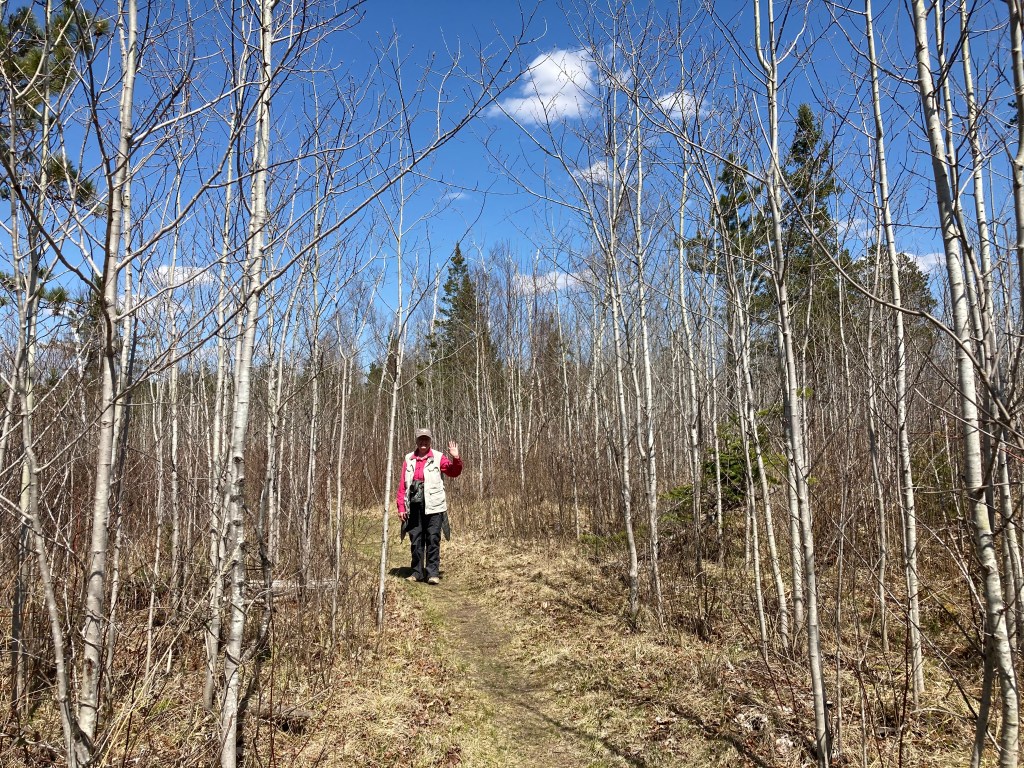
The trail today for the Hiking Club was 3.5 miles and traversed the Deer Park path, a crossover path, and the Ozaawindib path. In this part of Minnesota, glaciers did not leave the flat agricultural lands one finds to the south and west. Instead there is a series of hills, valleys, and indentations that created a hike of ascents and descents over terrain that varies between sand and rocks and tree roots.

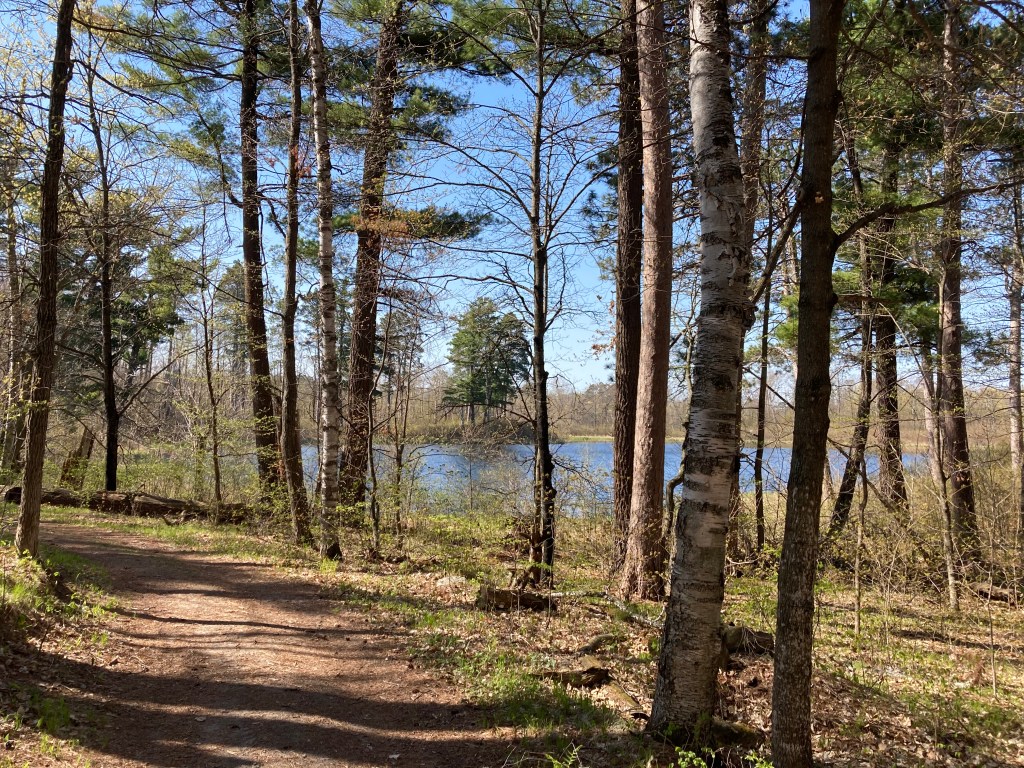
Luckily, we were able to be delighted by the vistas. Tall pines, new growth aspen and birch, blue lakes and skies, marshes and lovely wildflowers. The wind was loud but seemed to only blow at the level of the tree tops. We could hear it but rarely felt it. On the trails we took, the wildflowers were usually small and just starting to have fully emerged. White, yellow and blue blooms were abundant but no pink or red were to be seen.

After lunch of tuna salad and crackers back at our cabin, we tackled several smaller hikes located along the Wilderness Drive. Wilderness Drive makes a circle through part of the park and road can be used by cars and bikes. Each of the shorter hikes has a theme: trees blown down by wind, areas replanted by the CCC, etc. Frankly, the Hiking Club trail was more interesting and delightful; even if more tiring.

For dinner we ate at McDonalds as we returned to Park Rapids to upload photos. Just because I bought more data time did not mean the Internet speed out here at the park increased.

Tomorrow we return home with an intermediate stop at Charles Lindbergh State Park in Little Falls, MN. Our blog post from 2014 Trip Five, Aug. 14 discussed the Lindbergh home historic site. The state park is separate.

Ed Heimel, Chris Klejbuk May 13, 2021

Categories: travel | Tags: , , , , | Leave a comment

Back on the Road Again-Finally #2

Itasca State Park, MN May 12, 2021

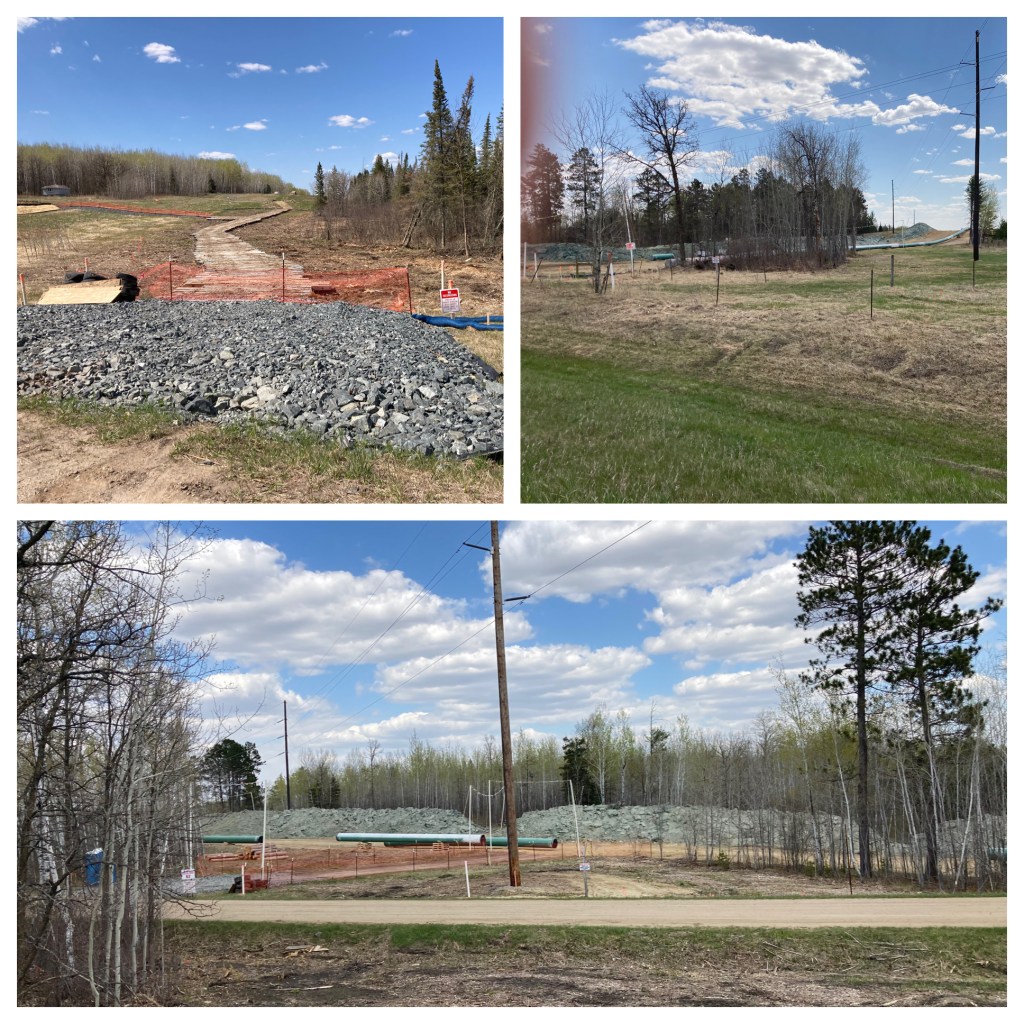
As one drives around this area with its mix of forests, water, agricultural land and small towns, you might think all is well with the world. Unfortunately, not so much. Enbridge Energy is constructing a replacement oil pipeline from Canada across Minnesota to Superior WI called Line 3. The line has been hotly debated and evidence of the construction is evident frequently as we drive through this area.

The most visible evidence we observe are the proliferation of yard signs saying: Minnesotans for Line 3. They are in yards throughout the area and along the many locations where the pipeline crosses roads or where access roads for construction have been built. The lure of jobs and a replacement oil transmission line that is promised to lessen the chances of an oil spill has them supporting the replacement line. We have passed numerous swaths of land with cleared land where the pipeline has already been built or staging areas with various construction materials stored.

Not as visible but vocal and with legal challenges outstanding are the concerns of the Ojibwe tribes of northern Minnesota. Remembering many lifetimes of broken treaties, land theft and failure of corporations to address environmental disasters and potential disasters, they believe this latest intrusion on their native lands threatens the environment and their traditional way of life. Pipeline oil spills could wreck havoc on the many marshes, streams, and lakes throughout the region.

It seems likely the Line 3 replacement will be going forward. In the years to come, we will find out if environmental damage occurs, and if so, how extensive the damage was and how well the clean up controlled environmental damage.

On a happier note, our lodgings at Itasca are sweet. The two pods of six year round cabins with heat, indoor plumbing, kitchen and linens for $105 per night are a great get away option. These units are newer. More traditional log style cabins, many without kitchens, are located around us and along the lake shore. The primary focus for lodging and eating at Itasca State Park is Douglas Lodge. (See picture at top. I have not yet figured out how to add captions to photos.) Douglas Lodge is seasonal and not yet open. Cleanup work is still going on of the grounds close to the lodge so everything will be looking immaculate for Memorial Day opening.

Some of the cabins here, the headwaters rock crossing, and many of the trees were planted by the CCC-recall that the loggers cut down most of the trees in the park back after Mary GIbbs was replaced as superintendent.). Itasca State Park is but one of many monuments to the work done by the Civilian Conservation Corps in the 1930s. Amazing how many of their structures are being used almost 100 years later and they are still in great shape. We have seen them in numerous parks throughout the state and throughout the country. Our state and national parks would be so much less well endowed with the facilities that enable us to enjoy the outdoors without the CCC.

Last night Chris and I walked down to the lake shore and just sat and listened to the silence. Periodically we would hear the call of a loon or other birds that we could not identify. https://loon.org/the-call-of-the-loon/ Hearing loon calls lets us know that we are truly Up North. Otherwise the silence was golden. It is not yet busy here, although I expect we will have more company as we get closer to the weekend. After the pandemic hit, we really cut back on talking to people walking along various trails we took in the Twin Cities. Thus it was refreshing to accept the offer to take the photo of the only other people walking along the headwaters of the Mississippi. After Chris took their photo, it turned the couple was from Red Wing MN. He works for an agency in Saint Paul and one of his co-workers lives in our condo. She just retired from a suburban government from a town where I lived as a child. Small world.

Today’s major outing was a drive over to Tamarac National Wildlife Refuge; it is about an hour west of Itasca. As we drove west, we left the forested areas and rejoined the richer agricultural farm lands of Minnesota. The soil is a rich dark color but irrigation was still obvious throughout the drive.

Minnesota has four biomes, or environmental regions of varying characteristics. The four are the Laurentian Mixed Forest, the Eastern Broadleaf Forest, the Prairie Parkland, and the Tallgrass Aspen Parkland. In this part of the state, the first three come together and you can come drive from one to the other without fully realizing it. (There are no boundary signs!!) Even the Tallgrass Aspen Parkland is just a short drive north of here.

Generally speaking, the Laurentian Mixed forest is in the northeast part of the state, the portion we call the arrowhead region, along Lake Superior. Here the forests are thicker, the coniferous trees are abundant, the ground is rocky and waterfalls and rivers are more abundant. The eastern broadleaf forest runs in a narrow band up near the north west corner of the state in a narrow swath until it widens at the south east corner of the state. The Prairie Parkland is wide at the southern and southwest corner of the state and narrows as it moves northward. The Tallgrass Aspen Parkland is a small rectangle near the northwest corner of MN but inland a bit from the North Dakota border.

Chris and I learned all this through a 12 week course that says we are now a Minnesota Master Naturalist. Believe me, the title has not gone to our heads. There is a lot to know and we have just started to scratch the surface. Our course only covered the eastern broadleaf forest, the area around the Twin Cities and NW and SE of them. This Zoom held course was one of the activities that we picked up during the pandemic. Sometimes the technology of handling the Zoom class and related breakout sessions was more challenging than we desired. However, we persevered.

Now when we walk and drive through a natural area, such as Tamarac National Wildlife Refuge, it takes a lot longer. We used to have to watch our footing so we would not trip on tree roots and stones as well as enjoying the vista in front of us. Now besides those, we have to listen and look for birds, look for the plants and wildflowers at our feet, as well as trying to guess what types of trees we are passing. We have given up for now trying to worry about what types of rocks and geology we are going through. We will save that for hikes with Chris’s brother.

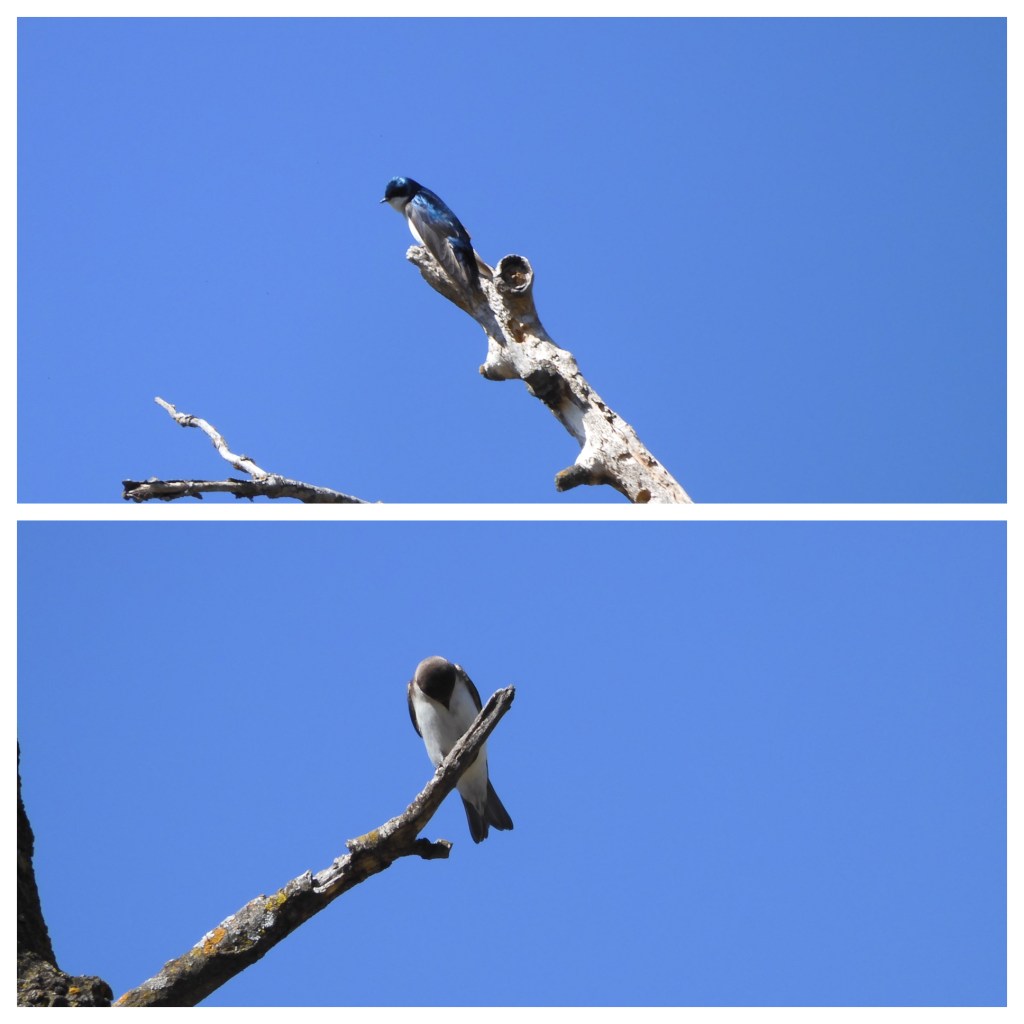
We saw a few new birds at Tamarac; we are still hoping other users of iNaturalist will come through and confirm their identities. (Thursday morning-iNaturalist people came through and identified several different types of swallows.) Otherwise old familiar friends such as Canada geese and Redwing blackbirds were abundant. For lunch we returned to our old standby of peanut butter and jelly sandwiches but were able to enjoy the view of the water and birds under blue skies and temperatures in the mid 60s. Visitor centers here at the park and at Tamarac were not open yet but we’re hopeful more will be as we undertake our driving journey to Arizona during June.

Dinner was hot dogs, baked beans, cole slaw and root beer. Great meal for being in the woods and traveling. After dinner it was back to the lake and listening to silence and watching the sunset. (Although we did meet and talk to one other person-back to post vaccination behavior.)

{break in time} So the new WordPress editor lost my first three paragraphs which were simply sublime. Under the old system, I knew how to find earlier versions. Then it would not let me enter pictures.{break in time} Okay so now I know where to find earlier drafts and have my first three paragraphs back but still no pics. Oops, there goes my Coke all over my papers, the counter top, and the floor. **&%)!**. {break in time} Now, since the free Internet is so slow, (we already stopped in Park Rapids to upload pictures from the camera knowing about the slowness) Verizon says I am about to run out of data. BUT, I can’t stay connected to the Internet to increase my data plan. **&%#!!**. {Overnight break in time} So, now refreshed, with more data and a sunny day ahead, lets try for pictures. Sometime I wonder why I bother with this blog. Anyway, here goes, you will know the results. Ed

Ed Heimel, Chris Klejbuk May 13, 2021

Categories: travel | Tags: , , , , , | Leave a comment

Back on the Road Again-Finally

Itasca State Park, Tuesday May 11, 2021

Well, it has been 15 months since our last post. This is a travel blog, so I don’t intend to relive our pandemic experience. We each have our own stories. Luckily for us, healthwise and moneywise, our families have done OK during this time period. During the course of the next blog posts, I’m sure I will squeeze in some various experiences and comments about the last 15 months, but they are simply an embellishment, not the storyline.

This trip will be to put our toes in the water and get used to travel again. It’s only three nights, spending time at Itasca State Park in Minnesota, the headwaters of the Mississippi river. On Sunday, May 30, we begin an almost 3 week trip down to Arizona in which we will stop at about a dozen units of the National Park system.

We left Saint Paul at 9 AM for the 4 hour drive to Itasca State Park. The city center blends into the suburbs which blend into the exurbs and finally to agricultural land. North of the cities, agriculture is large scale crop growing with big farm houses, barns, silos and related buildings. As we get farther north, the land is less rich. Pasturelands and grazing for cattle and dairy cows are inter-mixed with timbering operations. Farm houses and barns are smaller and less well-maintained.

Back in the Twin Cities, grass is green, most trees are in full leaf, and wildflowers are growing. As we reach the Itasca State Park area, the trees are just starting to bud and the only flowers are the early, small ephemeral wildflowers. It’s like we went back in time about four weeks.

The temperature was in the low 60s and sunny so we had our picnic lunch outside the visitors center at Itasca State Park. Then we headed to LaSalle Lake State recreation area. This area was established in 2011 around the deepest fully contained lake in Minnesota at 213 feet. A secondary purpose was to protect the rare plants and cultural resources in the forest and wetlands of the glacial valley. However, just after it was established, a heavy wind experience took a devastating toll on the area of old growth jack pine. There are very few remaining stands of old growth jack pine in Minnesota so the damage was particularly ruinous. After discussion and reflection, the Department of Natural Resources decided to replant the jack pine with the seeds from the fallen trees. A portion of the land was enclosed with 10 foot tall heavy duty fence to keep out deer and other animals that would eat the newly planted trees.

As we took our hike, we could see that the trees planted within the enclosure were doing much better than those outside the fence. Outside the fence, the aspen trees, which grow quickly in disturbed areas such as occurred here, have already created a dense area of young growth. While there are young jack pine trees, they are vastly outnumbered and look like they will soon be losing the battle for sufficient sunlight to thrive.

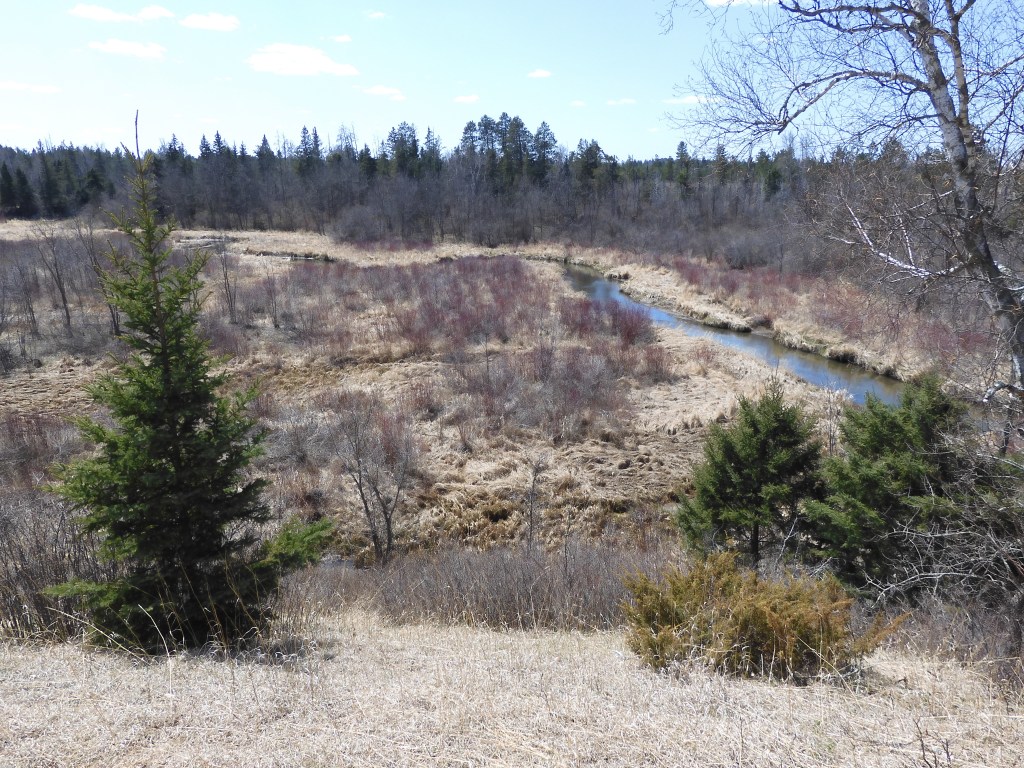
The hike was an out and back so at the turnaround point, one can look down on the Mississippi River. The mighty Mississippi is mighty minimal at this point. It is only a few miles from its headwaters-which was our next stop.

We have been here before, most frequently, but not only, in winter time. we have not told you the story of Mary Gibbs in previous blog post. For those who are younger and more hip, this is not the Mary Gibbs who asked for Disney programming. Or Mary Gibbs was born in 1879 and her father was the first superintendent of Itasca State Park, the first state park created in Minnesota. Mary gives work for her father as a secretary and he died when she was just 24 years old. She was appointed the park superintendent to replace him.

The logging industry was important and influential in the area. One of the logging companies attempted to lower the water level in the park area in order to facilitate its cutting of lumber. At a head to head confrontation at the dam involved, Mary Gibbs ordered the loggers to cease-and-desist and was successful. Briefly. Back in Saint Paul, The Minnesota State Attorney General reversed Mary’s order. Mary was demoted and a new park superintendent appointed, one friendly to the logging industry. Timber was cut in the park area until the supply was no longer financially viable. Mary left the state and moved to Canada where she raised a family and died at age 104 in 1983. There is even a You Tube short video about her.

Since our last posts in 2020, WordPress has instituted a new method of composing and editing. The learning process has grasped the basics and hopes to advance a bit more as time goes on. Maybe eventually the blog can have more graphics and include more creativity in design.

Ed and Chris, Itasca State Park, MN May 11, 2011

Categories: travel | Tags: , , , | Leave a comment

2018: Staying Home for Awhile, October

Headwaters of the mighty Mississippi River at Itasca State Park in MN

Saint Paul, MN October 26

We will be leaving tomorrow for a week’s trip to Florida. We will blog about our travels and adventures in Florida next week so we want to wrap up our fall “close to home” activities.

Minnesota, like many other states in our diverse and beautiful country, has an extensive state park system. There are 76 state parks in Minnesota. Many people, we included, visit state parks that are near to their home and/or have a unique feature. To encourage people to visit all of the Minnesota state parks, the Minnesota Department of Natural Resources (DNR oversees our state parks) has a program called the Passport Club. A person buys a booklet at a state park and then when they visit a MN state park, the booklet is stamped and dated from that park. In retirement, we decided to see how long it would take us to visit all the parks. We started in April 2015 and got our 74th stamp last October. (Two parks do not have to be visited since they can only be accessed by boat.). We picnicked, hiked and participated in programs at parks we never would have visited except for this passport challenge.

We have decided to complete a second MN State Parks Passport and have added the challenge of doing the Hiker’s Club hike that is identified at each park. These hikes range from 1 mile to 6 miles. We have already visited 9 parks on our road to complete our second passport book.

Itasca State Park

Hiking at Wild River (top), Lake Louise (Chris in pic) and Interstate State Parks in MN

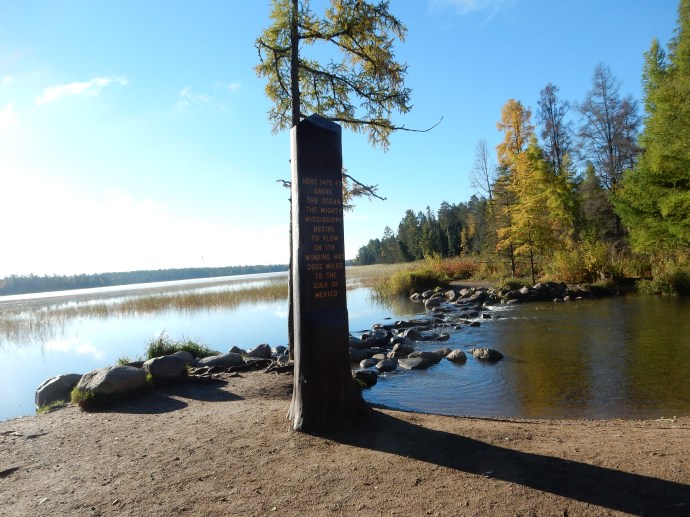
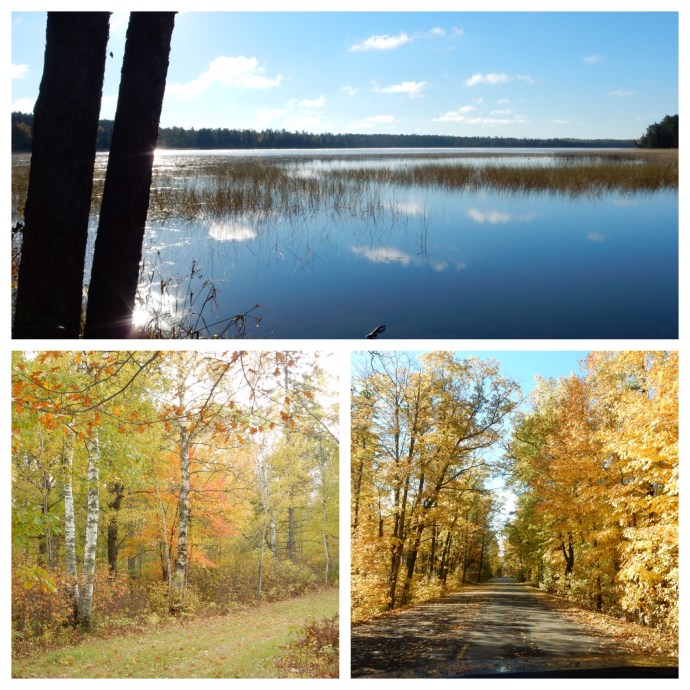
This month we visited Itasca State Park with Ed’s sister Jude. Itasca is the headwaters of the mighty Mississippi River. It begins its 2350 mile journey to the Gulf of Mexico as a small stream flowing out of Lake Itasca where flat rocks and a footbridge have been placed to allow people to walk across the Mississippi. Itasca is the second oldest state park in the nation, after Niagra State Park in New York. The park is home to over 100 lakes and thousands of acres of wetlands and forests. We also visited and hiked at Lake Louise, Interstate and Wild River State Parks this month.

The Nuns’ Bus in Cedar Rapids IA

Have you ever heard of the Nuns on the Bus? The advocacy arm of U.S. women religious (nuns) over the years has criss-crossed the country on a bus tour to talk about targeted political issues. This October a group started in California on a truth tour to talk about the Republicans’ tax policy. They hold town hall meetings, meet with members of Congress, have site visits and rally’s. Last week, they (and their bus) were in Cedar Rapids, Iowa for a town hall meeting on our nations’ recently enacted tax policies. We went down for the meeting, listened to the presentation and joined the small group discussions on what an individual can do (VOTE).

Prior to the evening gathering, we went to the National Czech and Slovak Museum and Library in Cedar Rapids. One gallery was a heart wrenching telling of Czechoslovakia during WWI and shortly thereafter. Czechoslovakia no longer exists; divided into the Czech Republic and Slovakia in 1993. If folks feel depressed about our current political climate, reflect on history, ours and that of other nations.

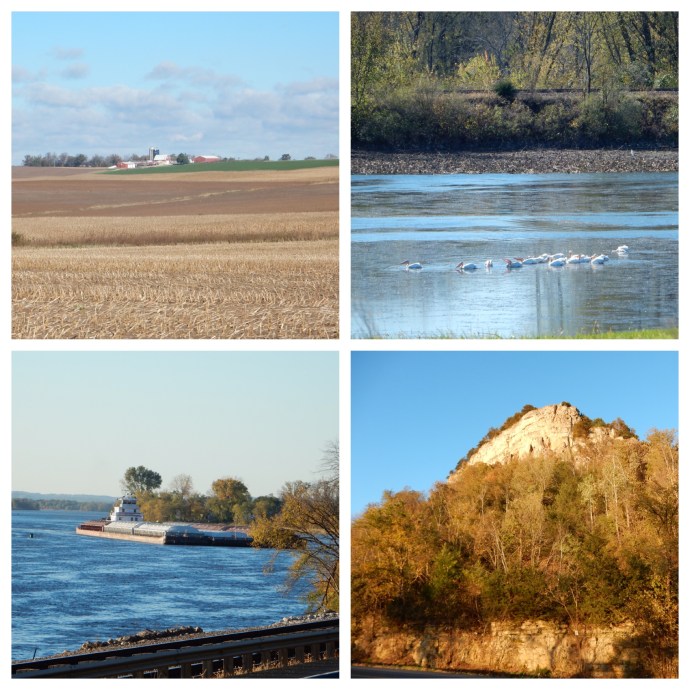
Returning to St. Paul from Cedar Rapids across IA farm land and along the Mississippi River

We stayed overnight in Cedar Rapids after the nuns’ program and since the next day turned out to be one of our rare (for this year) glorious fall days, we decide to take the long way back to St. Paul through western Wisconsin. We stopped at a wonderful conservation interpretation center in Clayton County, IA and were pleased to discover a new information center that opened this summer along the Great River Road in Genoa, WI by the U.S. Fish and Wildlife Service.

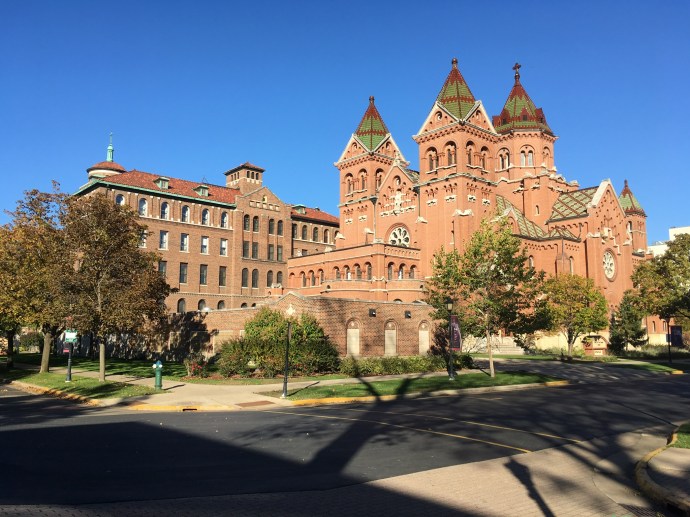
Mary of the Angels Chapel attached to St. Rose Convent

At the nuns’ program in Cedar Rapids, we met some nuns (Franciscan Sisters of Perpetual Adoration) who had come down from LaCrosse, WI. They invited us to stop at their convent, St. Rose Convent, if we had time; we did and were so glad we stopped. We had a tour, with historical commentary, of their chapel (located on the campus of Viterbo University) and their perpetual adoration chapel (a Catholic worship space) that has had uninterrupted prayers being said in it 24/7 since August 1878!

Sandhill cranes at Sherburne National Wildlife Refuge

Last weekend we participated in a bright and early (6:30 a.m.) activity at the Sherburne National Wildlife Refuge to watch the morning wake-up of about 9,000 sandhill cranes from their roost to forage in neighboring fields as they fatten up for their flight to Florida. It was 32 degrees out with 20 mph winds; there was no bird watching shelter, so were outside for 2 hours. We have seen 200,000 sandhill cranes in Kearney, Nebraska several years ago so this was a low-key affair but worth it. In an interesting fact (to us, at least) the Kearney sandhill cranes migrate north to Canada from Texas, going to the west of Minnesota. The Minnesota sandhill cranes migrate southeast to Florida. Maybe we will see some of the same birds next week, we did not check to see how long the cranes’ migration journey takes.

We continued this month our volunteer work with the Bell Museum of Natural History and Ed with the Mississippi National River and Recreation Area, including the annual volunteer dinner where Ed received a National Park Service backpack for exceeding 750 cumulative hours of service.

Did we mention to VOTE on November 6?!

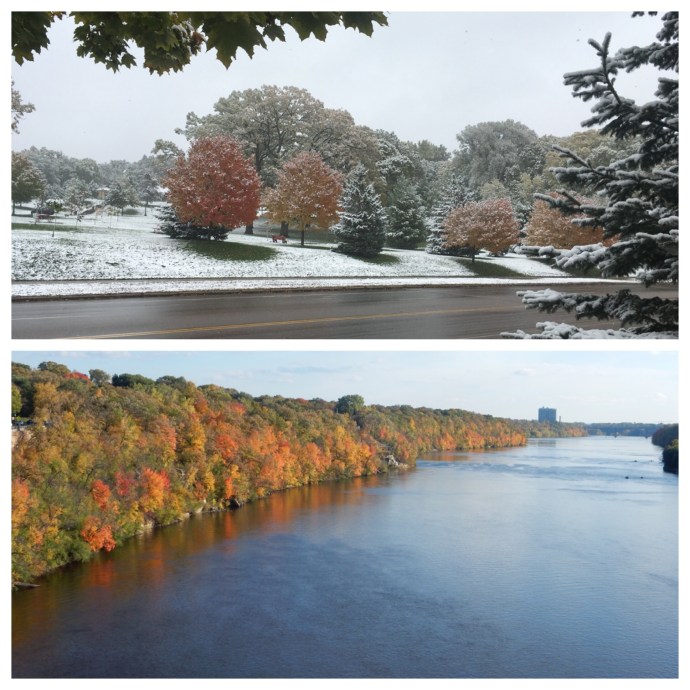
Fall in St. Paul, two days apart

Chris and Ed
October 26

Categories: road trip, travel | Tags: , , , , , , , , | Leave a comment

2018 Trip One: Return to Mississippi Headwaters; Jan. 7-10

Itasca State Park, Tuesday Jan. 9

Tired. Tired and Sore. Six more miles today along somewhat packed snow trails on top of the eight from yesterday equals tired legs and bodies. Yes it was glorious and quiet and all of that, but mainly right now I am thinking tired and sore. Is 8 PM too early to go to bed???

Our trip is being squeezed in between last week’s brutal cold and the expected snowstorm starting tomorrow night followed by more bone-chilling cold. We lucked out. Temperatures stayed in the high twenties and the overcast early morning skies gave way to bright sunlight by noon.

Morning hike

Our morning hike was on a portion of the North Country National Scenic Trail. When completed, this trail will be 4600 miles stretching from New York to North Dakota; longer than the Appalachian Trail or the Pacific Crest Trail. While sponsored by the National Park Service, most of the work to develop the Trail and to maintain it is accomplished by local groups of volunteers. The local group is composed of about 60 members maintaining a 75 mile stretch of the trail. Thank you Itasca Moraine Chapter of the North Country Trail Association.

Some views along the hike

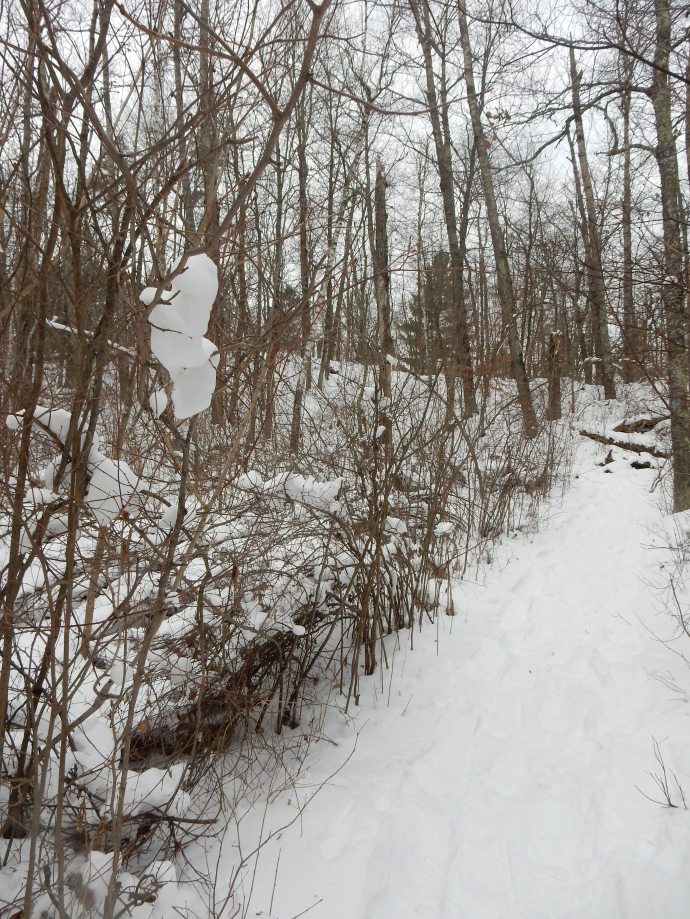
The hike was up and down hills, through woods, and past small lakes and wetlands. The color palette was mainly white and grayish brown. The green of the conifer trees was above us, closer to the blue or gray of the sky. Our eyes were normally on the path. We observed little wildlife, a few birds mainly, a squirrel here or there.

The sun comes out and brightens the hike

The suites we are staying in are two pods of 6 units. There have only been two other vehicles here. One of the vehicles belonged to a couple out cross-country skiing. We saw them yesterday at the headwaters. Today we ran into them in the later afternoon. They had run across a freshly killed beaver and a lot of wolf tracks on their ski journey.

The park naturalist had a children’s interpretative session this morning. We saw the 20 passenger bus that brought them here. Nothing scheduled for adults today. We also ran across a young man who was lost. At our afternoon hike, he was scanning one of the informational kiosks and looking for a trail. He was in the wrong area of the park. We directed him to the right area. However, when we completed our hike and on our way back to the cabin, we noticed him reading another kiosk in the general area but still not on the right trail. I got out and led him to the trail head about a 1/4 mile away. I hope he completed it before dusk. Apparently he was here to shoot some photos.

Tomorrow we leave and we have agreed three nights with two full days is about right for us. Assuming we are back here next January.

Ed and Chris

Categories: travel | Tags: , | 1 Comment

2018 Trip One: Return to Mississippi Headwaters: Jan.7-10

Looking at the headwaters of the mighty Mississippi River as it flows out of Lake Itasca in northern MN

Itasca State Park, MN

To start off the year 2018, Chris and I have returned to the headwaters of the mighty Mississippi River found in Itasca State Park near Park Rapids MN. 230 miles north of Saint Paul, we drove a slightly different stretch, one more westward than the usual U.S. route 10. I-94 took us to Sauk Rapids, scene of the Sinclair Lewis novel “Main Street”. U.S. 71, goes from Ely at the Canadian border to the Iowa border by Jackson MN and Spirit Lake IA. Our stretch took us through agricultural fields used for potato growing and turkey raising. In this stretch, we saw three Amish horse and buggy combos.

Along US 71 north of Sauk Centre MN

Towns like Wadena, Long Prairie, and Park Rapids have about 4,000 people each with thriving downtowns that support the smaller towns of 200-800 people. The agricultural lands closer to I-94 gave way to mixed hardwood fields and forests as we traveled north, with snowmobiles riding the roadside ditches instead of the buggies. In Long Prairie, we had a late breakfast at the Countryside Restaurant, a staple in town. Other than us, everyone seemed to know at least one other customer. The woman with the walker due to a broken pelvis took longer to leave the restaurant as she talked with people than it took her to eat her meal.

In Park Rapids, we stopped at the “Beagle and Wolf” bookstore. Family and friends were helping take inventory with newfangled optical scanners used here even in a small store. As visitors, we had numerous discussions with the staff as we purchased several books, just for the heck of it. We did already bring books to read along with us.

Last year about this time we spent two nights at Itasca. The all-season suites are heated, with well equipped kitchens and with linens. We are staying three nights this year and brought an extra blanket and slippers since last year the concrete floors, even with carpet, were cool to the touch. Wouldn’t you know it, the heaters were replaced this past summer so the cabin was toasty warm right off the bat.

The weather is cooperating. Last week, the temperatures at night were in the minus 30 to minus 40 degree range. Today the temperature during the day was in the mid to high twenties (F) with just a mild wind. Sunny, blue skies set off the snow. We had planned to do some snowshoeing but the snow amount is meager and better just for hiking. Last year the snow was much deeper.

Views from our morning hike at Itasca State Park

Our Monday morning hike was on a trail along Lake Itasca. The visitor center gave us a map since trails here during the winter are specified specifically for snowmobiling, hiking, skate cross-country skiing, or classic cross-country skiing. Our four mile hike took us about two hours, it is slow going on the uneven terrain. The park is quiet, some birds, a few snowmobiles, and periodic wind rustling the remaining leaves on bushes. The loudest noise has been the crunching of the packed snow under our boots.

Soup and crackers for lunch re-invigorated us and we went to the Headwaters of the Mississippi River for our afternoon hike. The Mississippi begins as a small stream leaving under the ice-covered lake at its northern end. The clear water ripples over the rocks as it heads northward before eventually beginning its southward trek. It is a much different river than what we are used to.

Back in St. Paul the Mississippi is already running strong and deep through the gorge area between Minneapolis and St. Paul. The river widens as new tributaries add muscle to its flow. We have viewed the river from locks and dams along the Wisconsin border; from a canoe south of St. Paul; from a 30’ x 100’ long car ferry with its deck just a few feet above the river south of St. Louis; from the painted murals along the levees at Vicksburg; and from the walkway along the river at New Orleans where it is 200 feet deep. Here the slight stream with the clear water seems a mystery from that which it becomes later.

Schoolcraft Island in Lake Itasca

Henry Schoolcraft is credited with the “discovery” of the headwaters. Before him, other European explorers believed sources south of here were the beginning of the river. Unlike those earlier explorers, Schoolcraft was humble enough to ask the Native Americans for assistance and an Anishinabe Indian named Ozaawindib led Schoolcraft’s team to the source of the river.

Our brief moment of fame on the Internet

The headwaters area has a web cam available for viewing over the Internet. We texted our daughters and Sarah was able to log in and view us at the site. Our two minutes of fame over, we headed out on the trail to visit Schoolcraft Island. The trail was snow packed but pleasant as we hiked through the woods along the western edge of Lake Itasca. It was another two mile hike out and back and we returned to our cabin around 4 PM, tired but satisfied and glad that we brought our crockpot to have dinner ready for us.

Ed and Chris Monday Jan. 8, 2018

Categories: road trip, travel | Tags: , , , , , , | Leave a comment

2017 Trip One; January 11-13: Mississippi River Headwaters

January 11-13, 2017

Mississippi River Headwaters marker as the river exits Lake Itasca

Mississippi River Headwaters marker as the river exits Lake Itasca

We live in Minnesota, right? And January is the month of Chris Klejbuk’s birthday, right? In Minnesota in January, you celebrate the experience of winter, right? Right.

So we are enjoying three days and two nights in northern Minnesota. We are staying at a winterized cabin at Itasca State Park, 20 miles north of Park Rapids Minnesota, and 250 miles north of the “Cities” (Minnesota speak for St. Paul, Minneapolis, and their suburbs.) Itasca was the first state park established in Minnesota, in 1891. It was the second state park to be created in the United States. It is large, at over 32,000 acres. And while it has over 100 lakes within its boundaries, one small stream is its main claim to fame.

The end of Lake Itasca and the start of the river

The end of Lake Itasca and the start of the river

Flowing out of Lake Itasca, the Mississippi River begins its 2500 mile journey to the Gulf of Mexico. The terrain up here has been formed from the glacial ages. Without being scientific, there are depressions and hillocks caused by glacial action and/or glacial melting that form wetlands and forest regions. This area was under threat of having its timber, primarily red pine, harvested in the late 1800s. By a narrow vote in the state legislature, the area was saved from timber harvesting and some of the areas here still have virgin red pine forest.
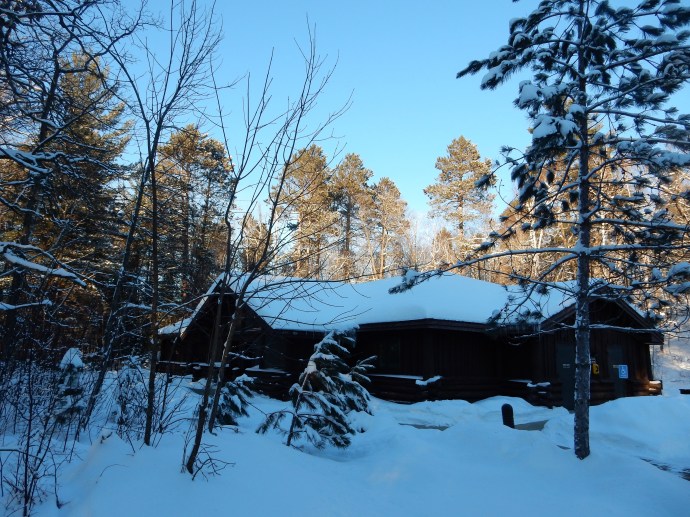
Four Season Suites at Itasca

Four Season Suites at Itasca

It has been several decades since Chris and I have been here. For her birthday, she likes to do something different. Her choice this year was to spend two nights in a cabin here at Itasca State Park. Luckily the cabin is insulated, winterized, and heated. The temperature for these three days will range from about five above to about 20 below. That is Fahrenheit, and not wind chill. The cabin is built on a concrete slab and while the temperature at head level is nice and warm, the floor is still a bit chilly. Shoes or two pairs of socks are required.

We left the Cities at the tail end of a minor snowstorm. The total was only about 4 inches but a fair amount of blowing accompanied the storm. The road surface was usually compacted snow into icy patches. For those of you not living in northern climes, road salt does not have much effect on clearing road surfaces at temperatures around 0° as we were experiencing.

We had lunch in Wadena Minnesota, a town of about 4000 people, at The BBQ Smokehouse. This is primarily a meat market with a side business of lunch and early dinner. We had the daily special, turkey sandwich with cowboy beans and potato salad for $6.50. The sandwich was huge and very tasty. The sides were great also.

Sunset walk at Itasca State Park

Sunset walk at Itasca State Park

We checked in around 4 PM. After unpacking, we had time for a sunset walk before settling in for the night. Wednesday, we slept in and then headed out for our first walk, to the headwaters of the Mississippi River. It took the European explorers several decades to agree on the source of the Mississippi River. One simple reason for the delay was that the first explorers never asked the Native Americans to help them. Once Henry Schoolcraft decided to ask for assistance from Ozawindib, a Ojibwe chief, the headwaters were “found” quickly. After all the Native Americans lived here for centuries and knew all about “Great River”.

The Mississippi River had great political significance to the United States. Primarily, it marked the early western boundary when the American people revolted against the British and won their independence. Yet the river had never been fully surveyed. The Mississippi was also one of the great trade routes for the new country. Rivers provided clearly marked and easily navigable transportation sources.

The Mississippi River starts flowing north as it leaves Lake Itasca.

The Mississippi River starts flowing north as it leaves Lake Itasca.

As we know now, the Mississippi River runs for 2500 miles from northern Minnesota to the Gulf of Mexico. It provides the boundary between numerous states along that route. While it runs primarily in a southern direction, from here it actually runs for 80 miles to the north, due to elevations created by the glacial age, before it starts its southerly course.

The headwaters are officially marked as the location where Lake Itasca drains into the creek beginning the Mississippi. There are scientific requirements to meet to designate the beginning of a river. While the lake and creeks draining into Lake Itasca stretch farther back from the official beginning, there has to be a sufficient flow to be considered as a river. This is what occurs at the northern channel of Lake Itasca where the Mississippi River begins.
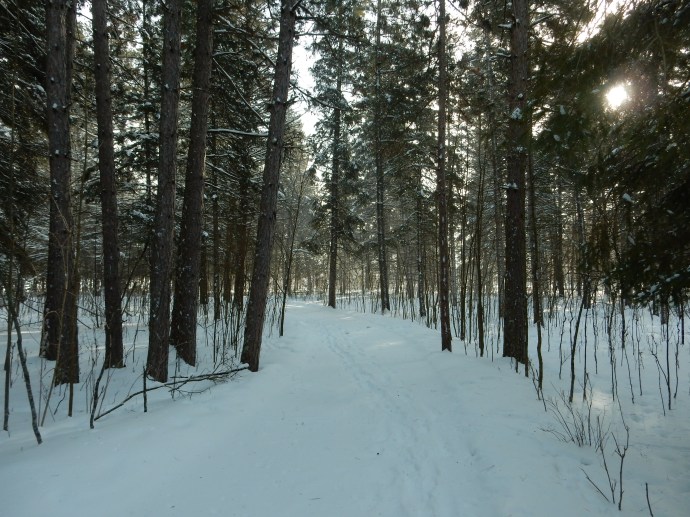
Walking in the woods

Walking in the woods

Lake Itasca with winds

Lake Itasca with winds

Today, the air temperature was about -5 F with a 15 mph wind. Wind makes the cold air worse. Standing by open spaces, like lakes, allows the wind to have full effect. Walking in woods, however, tends to minimize the wind. So we experienced both the full wind effect at the shore of Lake Itasca and its muted form in walking through woods to reach the headwaters. But the sun was usually out and we enjoyed the varied views provided by the park.

Itasca State Park includes both pine trees and mixed deciduous hardwood trees. The pine trees were here first but, like numerous other locations around the U.S., the loggers in the late 1800s cut the pine trees indiscriminately. The park was formed partially to save some of those virgin pine forests. Interestingly, the daughter (Mary Gibbs) of the first Itasca Park superintendent was named the interim superintendent when her father died. During her short term, she stood up to logging companies who while logging legally on private land, were illegally damming up the Mississippi River to aid in floating the cut logs downstream. They were not pleased by her courageous stand, and the new permanent superintendent that was appointed was more favorable to the logging interests.

Chris walking over the headwaters of the Mississippi River

Chris walking over the headwaters of the Mississippi River

After the headwaters, we made a brief stop at the visitor center to warm up (they have two fireplaces and heated restrooms that are open 24 hours a day) and to explore the interesting museum there. Then it was back to our cabin for lunch. The smell of apple cider with cinnamon sticks and brown sugar greeted us as we entered the cabin. Our afternoon walks were through the woods where the wind was quiet and the sun peered pleasantly through the tree trunks. A quick warm-up in the cabin was followed by another walk at sunset.

Tonight the full moon is out so we waited a sufficient period to make sure it was above the trees. We drove to the lake and watched the moon shining on the ice covered lake and the shadows cast by the trees. However, since it was now 13 below and heading down further, we did not take a long walk but headed back to the cabin.

Friday, January 13th.
Our final goal of this trip was to visit La Salle Lake State Recreation Area. It would be our 59th state park visited since we began that program in 2015. I took a wrong turn and added 20 miles on to what should have been a quick jaunt from Itasca State Park. But that time was justifiable to obtain the park stamp since this recreation area is basically closed during the winter. The web site does not state that DNR does not plow the access roads in the winter. Since we do not have a snowmobile, we just drove by and turned around to head home.

One last view of the headwaters.
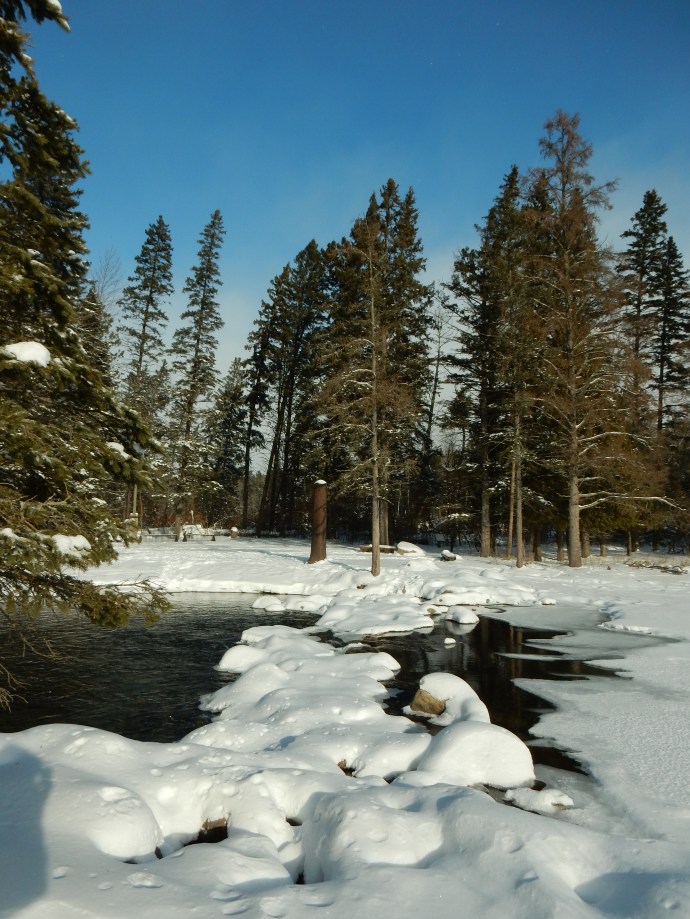
dscn3873

Trip One for 2017 completed. Just a teaser really before the first big one begins on March 1 and under current planning, will go for 63 days.

Ed and Chris.

Categories: road trip, travel | Tags: , , , , , , , | Leave a comment

Blog at WordPress.com.