Posts Tagged With: Great River Road

2021 Sept. 9 The Great River Road

What in the world is this? Answer in the blog

Buffalo City, WI

Today was a time to explore oddities and whimsical items in this section of Wisconsin. Nothing fancy. No major pieces of high art-Unless you consider delicious ice cream made in Madison Wisconsin but sold to us in downtown La Crosse Wisconsin.

The day began early as we walked along the river and snapped a picture of a, maybe, 20 foot tall sculpture of a Viking. It could use a little more paint to refresh it but it ties in with the types of outside art we saw during the course of the day.

Viking in Buffalo City WI

Just 5 miles down the road from our lodging is the Prairie Moon Sculpture Garden. Herman Rusch retired in 1952 at age 67. To kill old age boredom he began puttering around and created a local museum. More importantly, for us at least, after several years of this museum work he started creating huge sculptures.

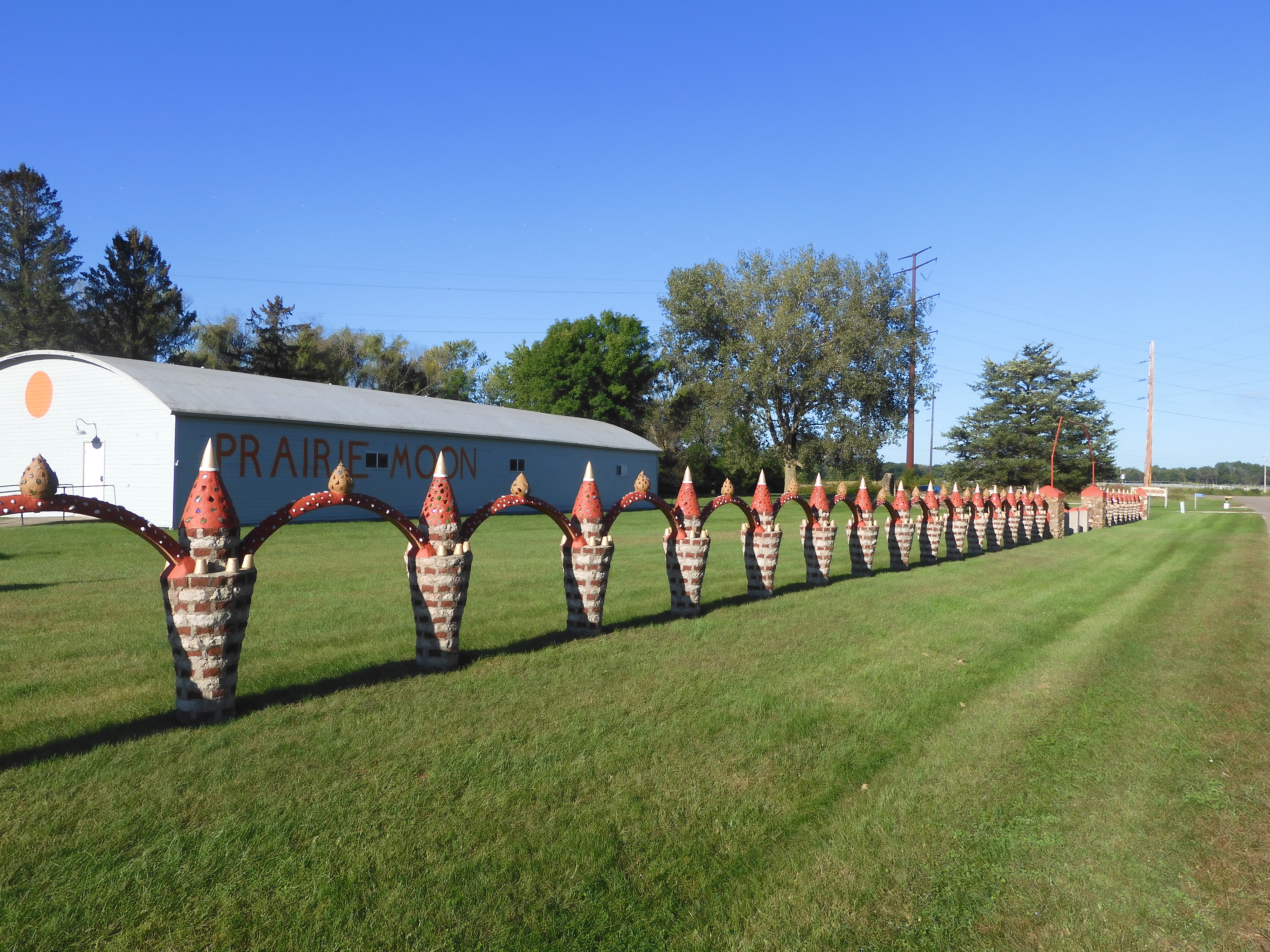
By the time Rusch reached age 89 he had created almost 40 sculptures. Normally they were made out of freshly mixed concrete but sometimes rocks, embellished with seashells, bits of broken bottles, and shards of crockery and mirrors. Rusch even created a 260 foot arched fence of the same type of material but with precisely aligned conical posts. The posts were made out of alternating bands of chiseled white rocks and pie shaped red bricks. The sculptures include bird houses, a watchtower, a teapot, and a painted self sculpture of him behind a podium gazing at the other sculptures.
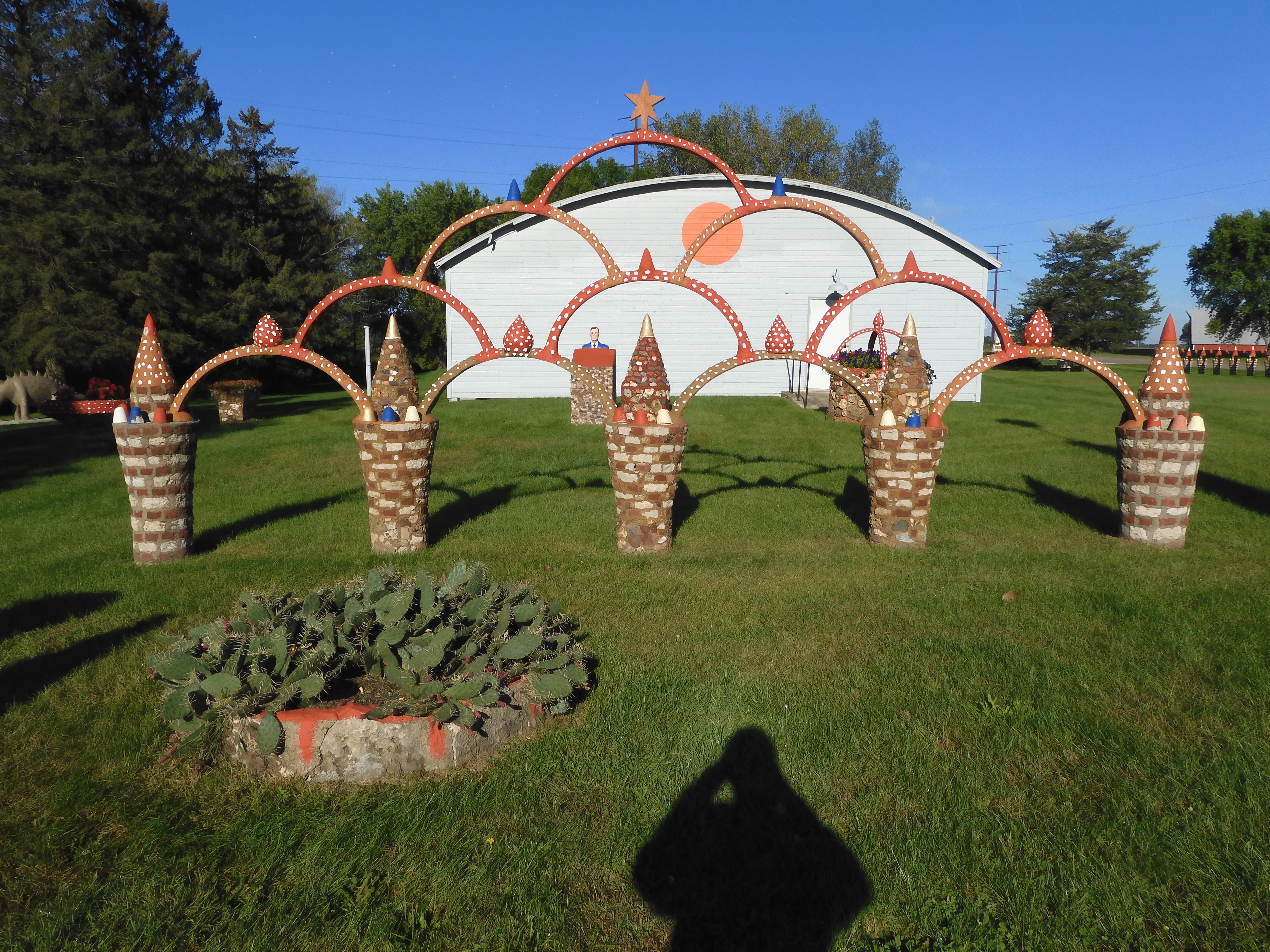
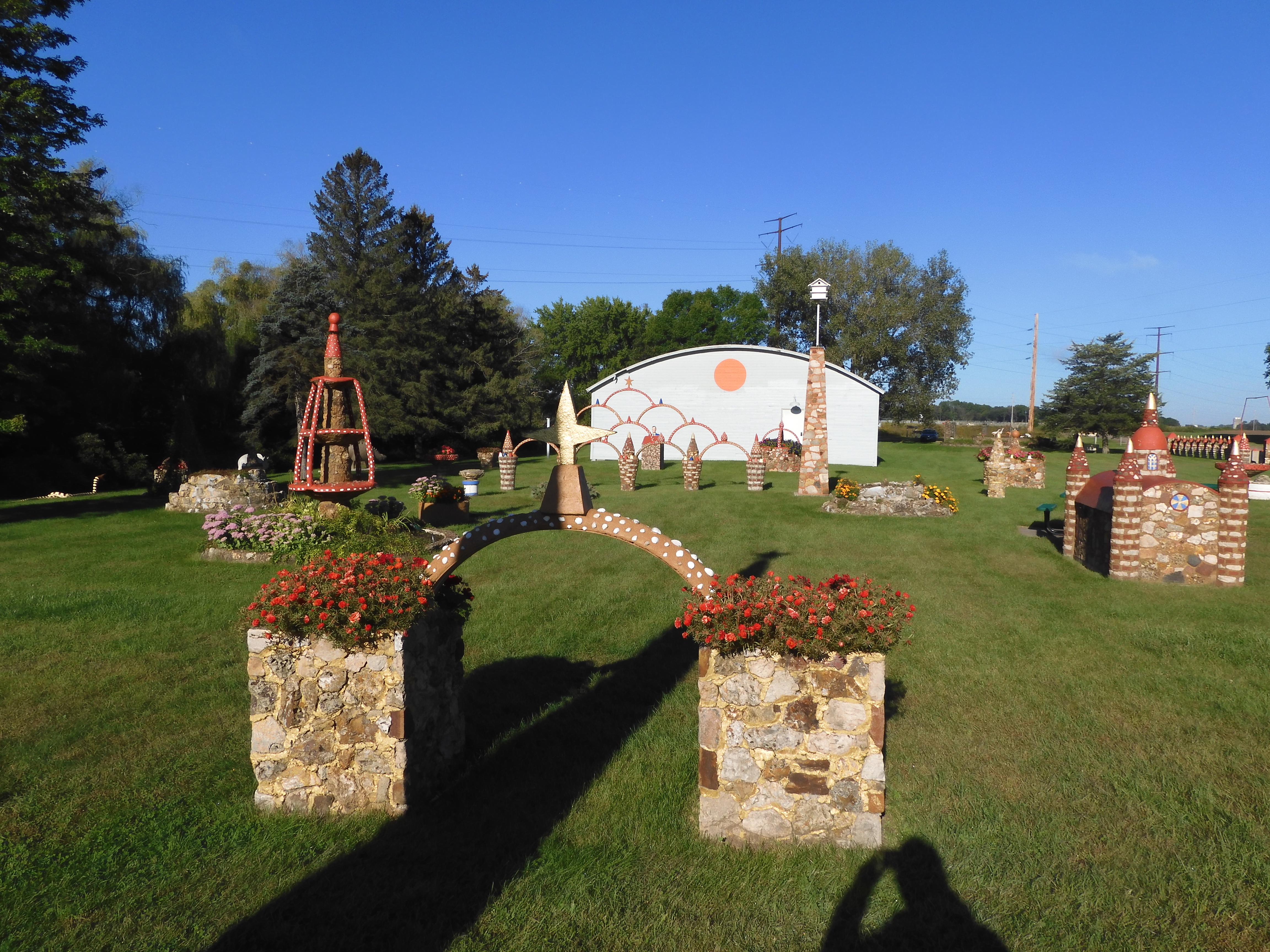
Rusch died just after he turned 100 years of age in 1985. The Kohler Foundation purchased the site and began restoration as part of its commitment to the preservation of significant art environments by self-taught artists. Prairie Moon Sculpture Garden was donated to the town of Milton which is nowhere near where the sculpture garden sits. I have no idea why that occurred but the sculpture garden looks well-maintained and is free to the public, dawn to dusk. In 2008 an additional series of sculptures modeled after buildings in Cochrane Wisconsin was added to the park. They were created by a different artist who was from Cochrane, which is just a few miles away.

We continued our back roads explorations. We drove by a local milling complex that creates oat flour and bran for food and animal feed companies. We drove through the driftless area of Wisconsin with its curvy roads and bluffs and valleys. We passed apple orchards, fruit stands, vineyards and wineries as well as small towns and out of the way manufacturing facilities. We passed the maintenance facility for the US Army Corps of Engineers as they dredge the Mississippi River for maintenance of the 9 foot channel for barge traffic. We passed a large solar energy site being developed that would tie in to the high-capacity powerlines in the area that now have excess capacity since a nearby coal power plant has been decommissioned. And, of course, we drove past fields and fields of corn and soy beans.

During our back road exploration, we passed the Trempealeau National Wildlife Refuge. We had not been here before and we found it impressive. The refuge has oak savanna prairies, river backwaters, woods and meadows. There is an observation deck at the river, an education center, several walking/biking trails and a four mile auto loop road.

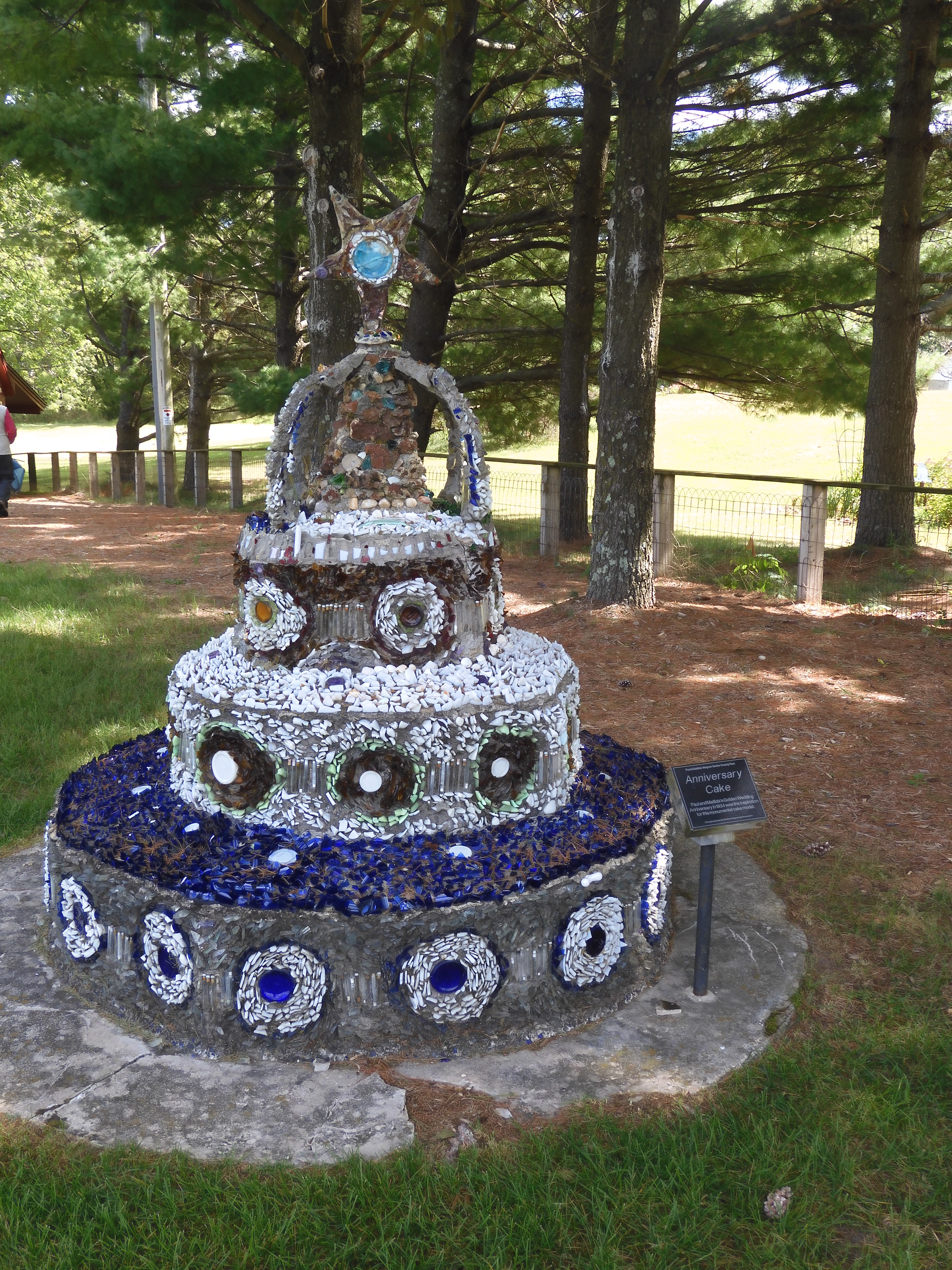
Our next stop for local, self-taught artists was at the Wegner Grotto Park. This was another retirement project. In this case, Paul and Matilda Wegner worked together. Many of their sculptures had a connection to their past history such as a reproduction of their 50th wedding anniversary cake. Others were religious, with a prayer garden, glass church, and peace monument. They also had fencing with a stone and glass motif.

Glass, particularly broken glass, is a major finishing touch on all their works. Besides broken, colored glass there are pieces of broken beer bottles, old heirloom china, some seashells and gun powder casings. These sculptures were built around their home which has since been demolished but the garden remains. Paul died in 1937 and Matilda in 1942. The family maintained the site until the mid 1980s. Once again, the Kohler Foundation was instrumental in restoring the site and then donating it to Monroe County for long-term maintenance.

Neither of these two sculpture gardens were crowded with visitors. In fact, we were the only people present the entire time we were at each location. However, both are well-maintained with mowed lawns and beautiful flower arrangements. It was a pleasure to stop at each as well as a surprise.

Lunch was a delicious cod dinner at Culver’s in Sparta Wisconsin. We were thinking of heading home afterwards but there were two other sites, not major, but located in Sparta that would be foolish to pass without stopping by. Sparta calls it self the bicycling capital of America. The Sparta Elroy bicycle path was the first in the country made from an abandoned rail line – according to Sparta. This section of Wisconsin has several connecting bicycle trails including one that goes through three tunnels. One of the tunnels is 3800 feet long and is unlit. Hopefully the bicycle riders remember to bring a light.

Fittingly, since 1995 Sparta has had a 32 foot tall sculpture of a bicyclist on the old penny farthing style bicycle. The bicyclist is named Ben Biken. (Get it?) Ben was created by the FAST company. This local Sparta company makes fiber class sculptures used in parks and for advertising purposes around the country. If you have seen a 30 foot fish, or a 20 foot bear outside a building or park somewhere in America, the FAST company probably made it. FAST stands for fiberglass animals shapes and trademarks.

Ben Biken statue in Sparta WI

Well, since FAST is in Sparta we just had to stop by and check out it’s mold graveyard. (See the beginning photo.) This is their backyard where they toss the molds made for various fiberglass sculptures just in case they might need it again sometime in the future. I could not find on their website if they ever did reuse some of the molds. There must’ve been several hundred of these in the backyard of the building. It is open to the public with warning signs that bees and wasps frequently make nests in the old molds. In addition the molds might have sharp edges so they warn you to keep off. With those admonitions in mind, we wandered around a bit and took some pictures of a few of the more interesting molds. Many, however, were unrecognizable as to their form or function.

By this time it was mid afternoon and it was time to head back to Buffalo City via an ice cream stop in downtown La Crosse Wisconsin. The Great River Popcorn Company also sells ice cream. The ice cream is made by The Chocolate Shoppe from Madison Wisconsin. The ice cream was great. I even tried different flavors instead of my usual vanilla or chocolate and their rhubarb crumble was fantastic. Chris was excited by her two flavors of Blueberry Cheesecake and one with caramel, pecan and Oreo cookies. We realized that we have had their ice cream before at a small ice cream store in Afton Minnesota and at the Grandview Lodge in Nisswa Minnesota. We have now noted their ice cream is sold at two locations in Saint Paul. I foresee more ice cream in our future. I purchased a bag of their cheddar cheese popcorn but it cannot compare with the cheddar popcorn of Candyland in Saint Paul.

One might think that we were now ready to finish our drive back to Buffalo City. However, I remembered that La Crosse is the home of the City Brewing Company. As part of their brewery, they have six silos used as part of the beer making process. A number of years ago they had the silos painted so City Brewing could call them the biggest six pack in America. Well, we just had to stop by and finish up with one last oddity for the day. Chris met a worker leaving his shift and asked him if the silos were still used and storing beer. He indicated they are critical to the beer making process but do not hold finished beer but part of a malting liquid used in their products. (If we understood him correctly.)
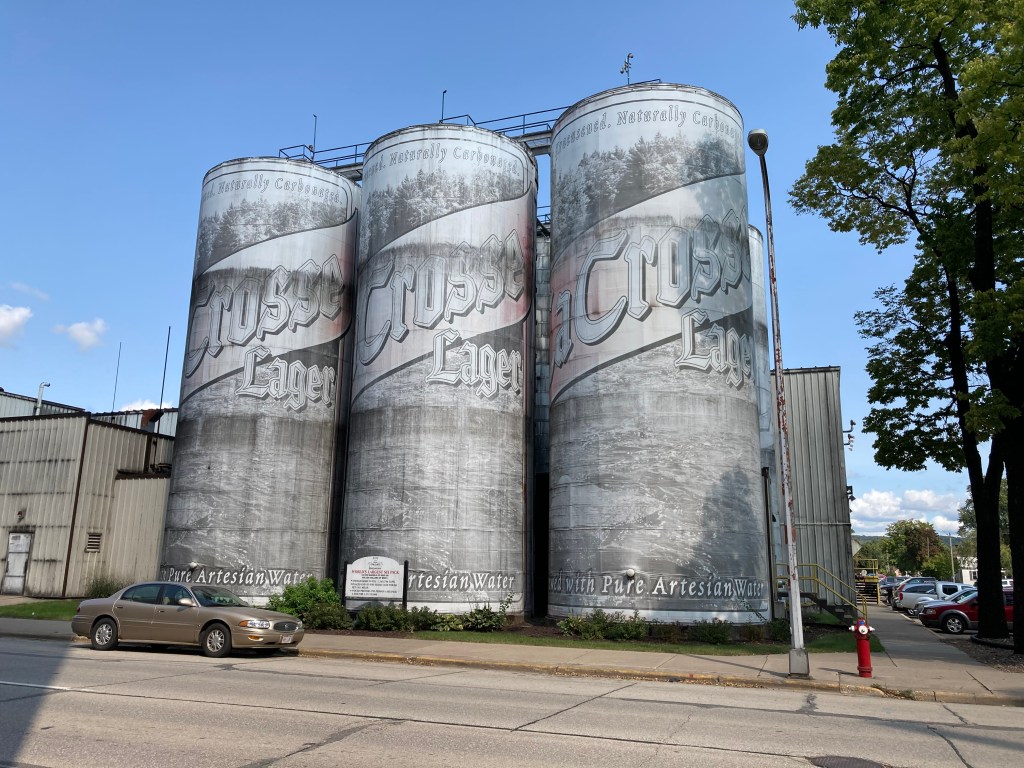
Biggest six pack in U.S.

Driving home, we were about 2 miles from our lodging when we remembered that our route would pass an elk breeding farm, not far from the oat milling company mentioned towards the beginning of this blog post. Since our cameras were in the front seat, we ended the day, we thought, with pictures of the elk.
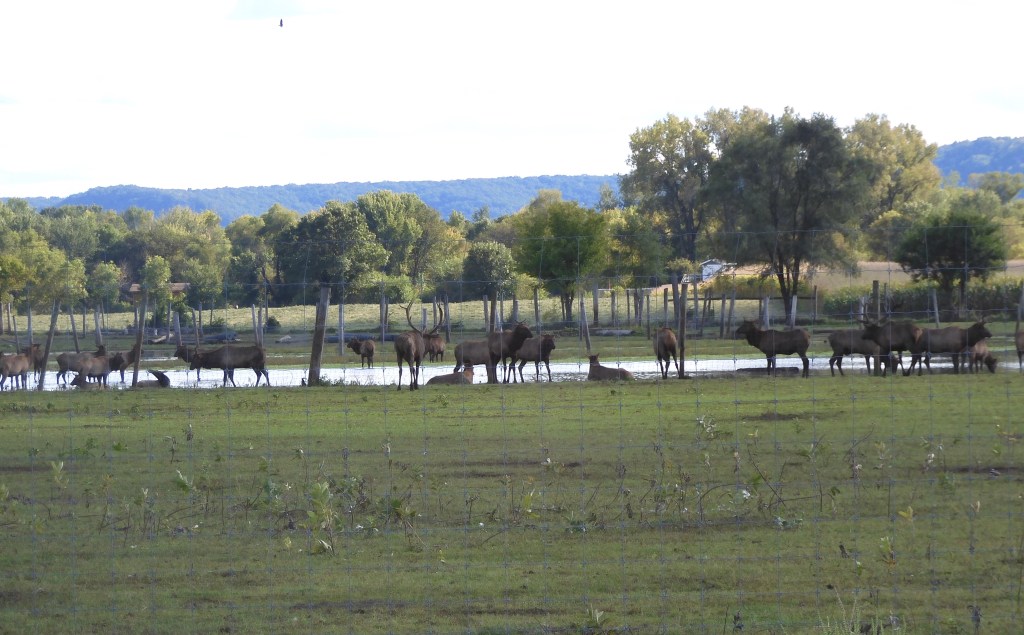
Elk farm in Cochrane WI

Dinner was Coke and popcorn and Fritos. Yes, a truly nutritious meal. By this time it was almost sundown so we meandered over to the river and took sunset photos. Not unusual type of day for two travelers even if it was their 49th wedding anniversary.

Sunset along the Mississippi River

Ed and Chris

Buffalo City WI, Thursday September 9, 2021

Categories: travel | Tags: , , , , , , , | 3 Comments

2021 Sep.8, The Great River Road

Buffalo City, WI Sept. 8

The Great River Road follows the Mississippi River from its headwaters at Lake Itasca in northern MN to the Gulf of Mexico. Other blog posts have discussed the river at Itasca, along the MN-WI border, down to Louisiana, etc. This entry is for a three day, two night trip along the river in MN-WI to celebrate our 49th anniversary.

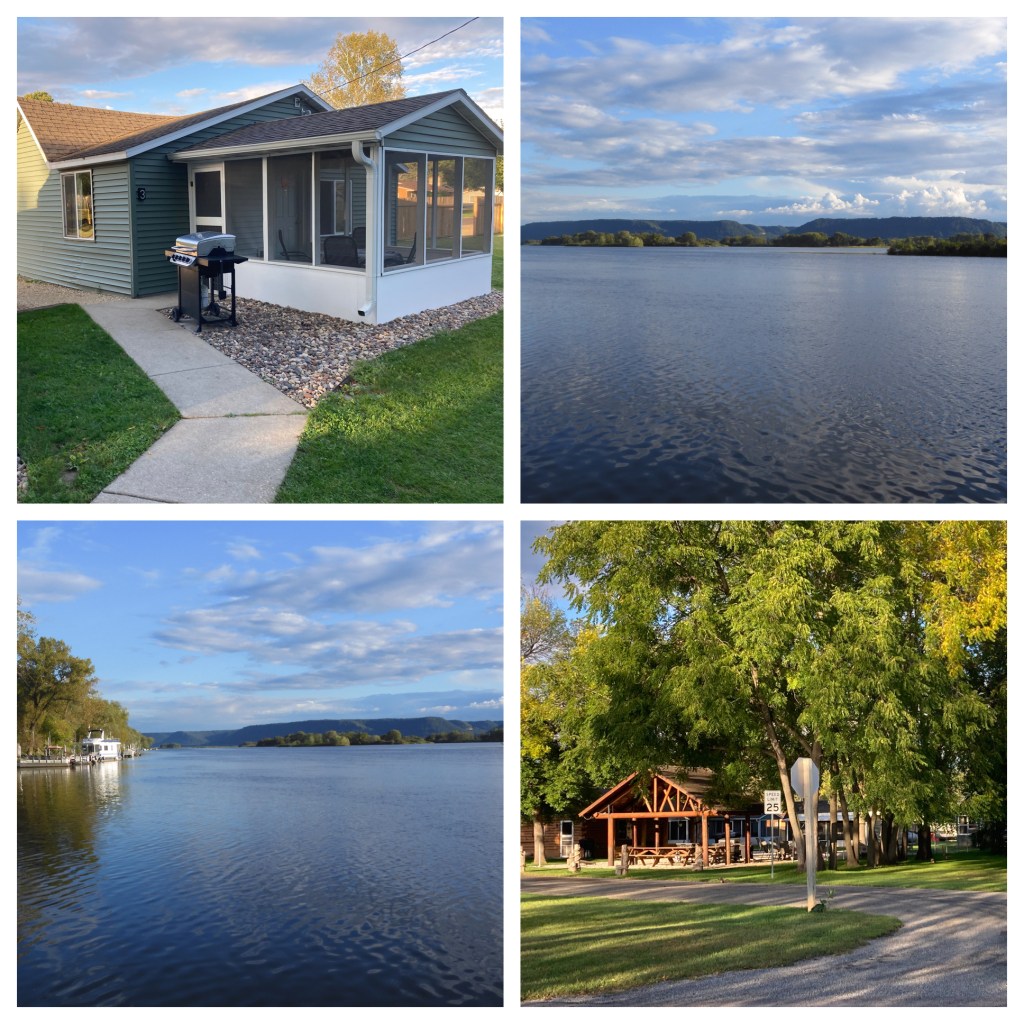
Buffalo City is not a tourist hot spot. Chris originally was planning on a camper cabin at Forestville State Park in southeastern MN. I upset her plans. A skin cancer surgery a week ago made her hesitant to stay at a camper cabin-no running water. This mom and pop small collection of cabins (Big River Escape Riverside Cabins) is right along the Mississippi River in a town of about 930 souls. Our cabin has two bedrooms with bathroom and kitchen and, importantly, a screened in porch. The Mississippi River’s main channel is closer to the Minnesota side; we have several backwater channels, islands, and sloughs between us and the main channel. The entire river complex is much wider here than it is in St. Paul.

Buffalo City is about 90 miles from St. Paul and yet a world away. Chris keeps saying: It is so quiet here. It is so quiet here. And it is-at least mid-week in September. The town is well-maintained, numerous parks, grass cut, houses neat. It has lost population in the last 10 years. We purchased milk and juice at a Dollar General-a chain we normally avoid but the best option we could see.

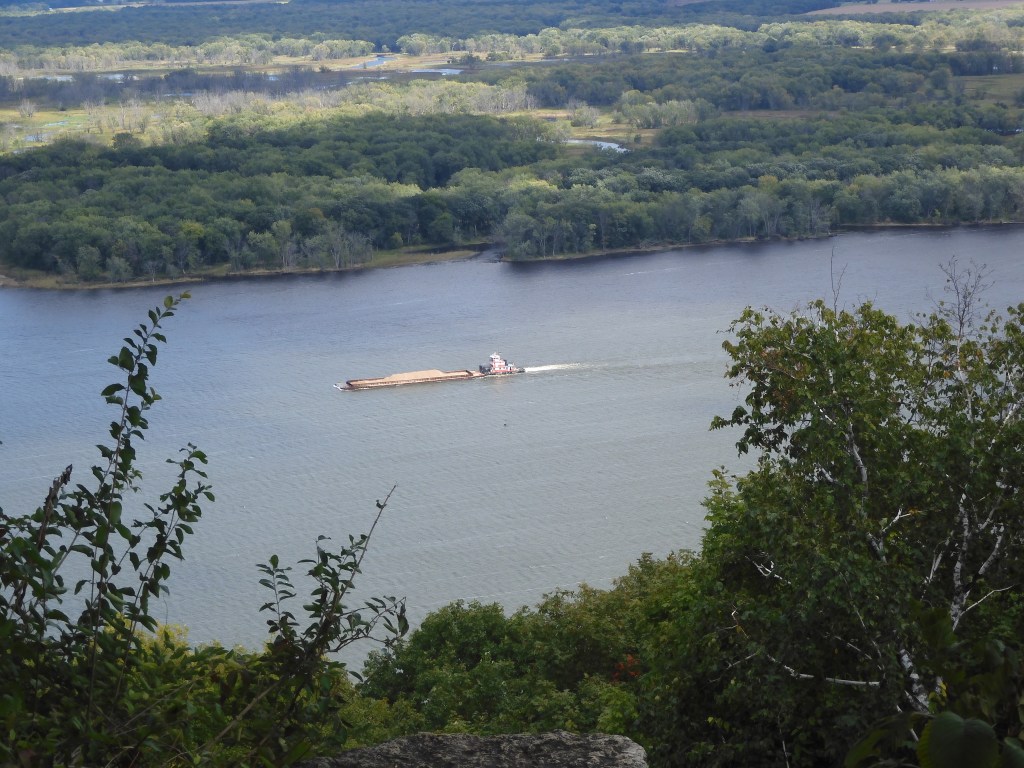
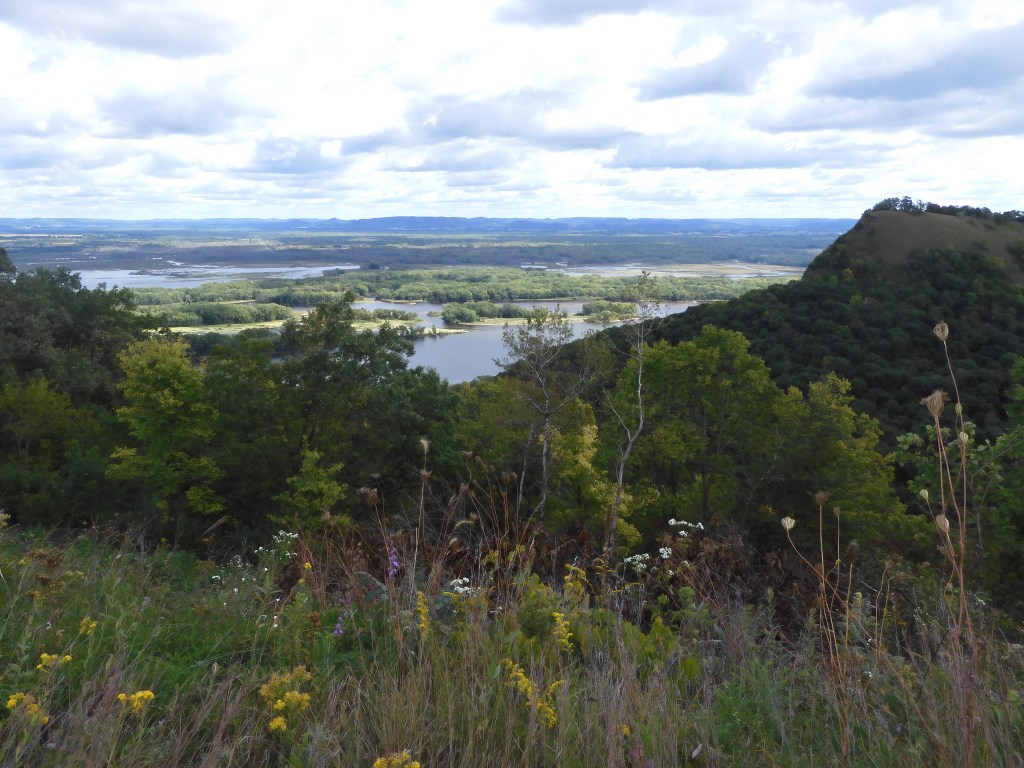
The day’s experiences began in Minnesota though. We drove down to Great River Bluffs State Park, a two hour drive, southeast of Rochester MN, along the Mississippi River. This part of MN is called the Driftless Area since the last glacial period (the Wisconsin) which ended 10,000 years ago skipped this area. The rest of MN was impacted though. The result is that the land drops down 500 or more feet to the river bed from the plains, prairies and pasture lands of Minnesota west of here. Limestone bluffs bracket the river on both the Minnesota and Wisconsin sides. The meltwater from Glacial Lake Agassiz (we will skip the details) 10,000 years ago carved out the Mississippi River that we viewed today.

Great River Bluffs State Park has a hiking trail that takes the traveler out to three overlooks which view the river from 500 feet above. The trail starts in a pine forest, not native to the area but which was planted by farmers. After a bit, the trail takes the hiker into the native hardwood forest of oak-hickory-basswood trees. The hard dolomite rock leaves tree roots exposed so a lazy hiker who does not lift their feet high will trip. The view over the river valley from up on high makes the tripping hazard worth the risk.

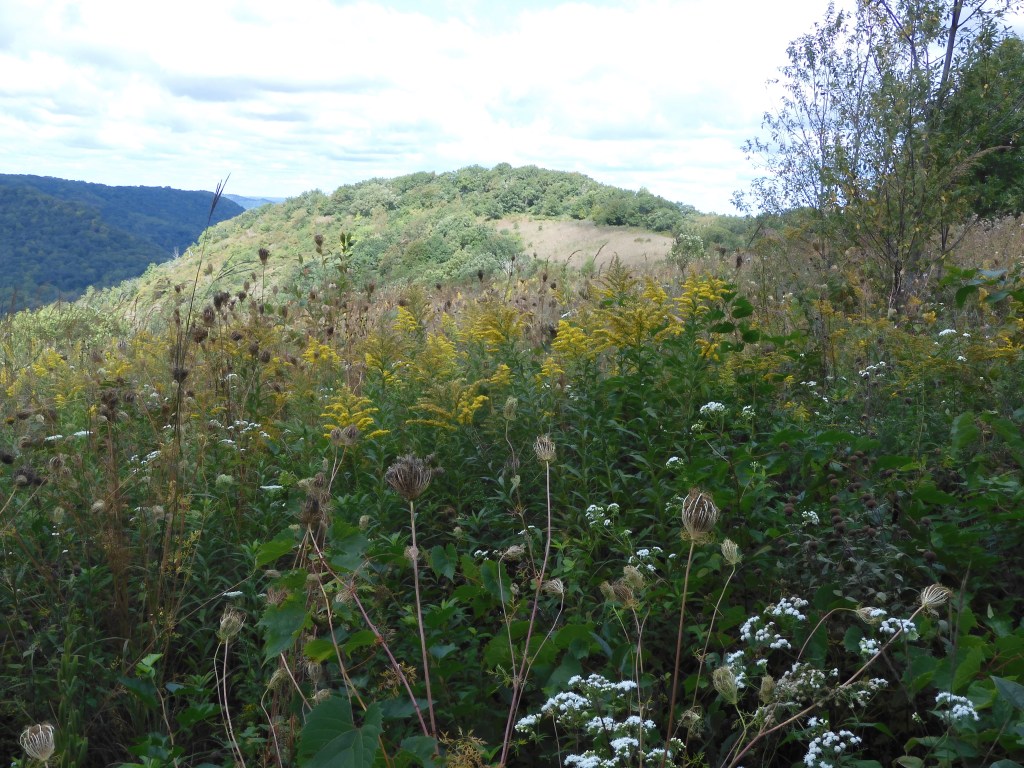
Unique to the area are ”goat prairies”, steep treeless patches of prairie high on the southwest side of the bluffs. The hot sun keeps the soil hot and dry, not suitable for the normal trees of the area. The name comes from the belief that only goats could survive on the steep slopes. The prairie today still had summer flowers predominantly of yellow, but with highlights of white and blue; the fall colors of red and orange have not arrived yet.

After lunch in the park, we drove 20 miles to La Crescent MN, a hot spot of apple growing. We picked up a bag of Zestar apples, fresh today from the orchard. Zestar is an early ripening apple with a sweet-tart taste. It was developed at the U of Minnesota Horticultural Resource Center.

It was an easy hour drive to Buffalo City, our cabin and a light dinner in our screened in porch. Tomorrow-another day of high excitement.

Ed and Chris

Buffalo City, WI Wednesday Sept. 8, 2021

Categories: travel | Tags: , , , , , | Leave a comment

2018: Staying Home for Awhile, October

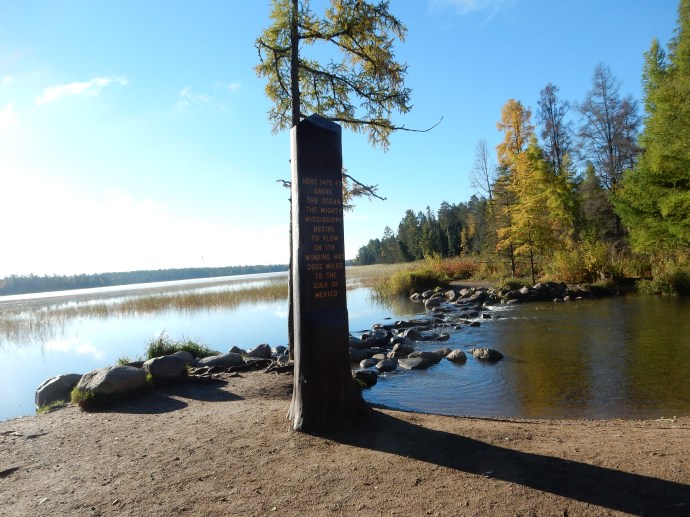
Headwaters of the mighty Mississippi River at Itasca State Park in MN

Saint Paul, MN October 26

We will be leaving tomorrow for a week’s trip to Florida. We will blog about our travels and adventures in Florida next week so we want to wrap up our fall “close to home” activities.

Minnesota, like many other states in our diverse and beautiful country, has an extensive state park system. There are 76 state parks in Minnesota. Many people, we included, visit state parks that are near to their home and/or have a unique feature. To encourage people to visit all of the Minnesota state parks, the Minnesota Department of Natural Resources (DNR oversees our state parks) has a program called the Passport Club. A person buys a booklet at a state park and then when they visit a MN state park, the booklet is stamped and dated from that park. In retirement, we decided to see how long it would take us to visit all the parks. We started in April 2015 and got our 74th stamp last October. (Two parks do not have to be visited since they can only be accessed by boat.). We picnicked, hiked and participated in programs at parks we never would have visited except for this passport challenge.

We have decided to complete a second MN State Parks Passport and have added the challenge of doing the Hiker’s Club hike that is identified at each park. These hikes range from 1 mile to 6 miles. We have already visited 9 parks on our road to complete our second passport book.

Itasca State Park

Hiking at Wild River (top), Lake Louise (Chris in pic) and Interstate State Parks in MN

This month we visited Itasca State Park with Ed’s sister Jude. Itasca is the headwaters of the mighty Mississippi River. It begins its 2350 mile journey to the Gulf of Mexico as a small stream flowing out of Lake Itasca where flat rocks and a footbridge have been placed to allow people to walk across the Mississippi. Itasca is the second oldest state park in the nation, after Niagra State Park in New York. The park is home to over 100 lakes and thousands of acres of wetlands and forests. We also visited and hiked at Lake Louise, Interstate and Wild River State Parks this month.

The Nuns’ Bus in Cedar Rapids IA

Have you ever heard of the Nuns on the Bus? The advocacy arm of U.S. women religious (nuns) over the years has criss-crossed the country on a bus tour to talk about targeted political issues. This October a group started in California on a truth tour to talk about the Republicans’ tax policy. They hold town hall meetings, meet with members of Congress, have site visits and rally’s. Last week, they (and their bus) were in Cedar Rapids, Iowa for a town hall meeting on our nations’ recently enacted tax policies. We went down for the meeting, listened to the presentation and joined the small group discussions on what an individual can do (VOTE).

Prior to the evening gathering, we went to the National Czech and Slovak Museum and Library in Cedar Rapids. One gallery was a heart wrenching telling of Czechoslovakia during WWI and shortly thereafter. Czechoslovakia no longer exists; divided into the Czech Republic and Slovakia in 1993. If folks feel depressed about our current political climate, reflect on history, ours and that of other nations.

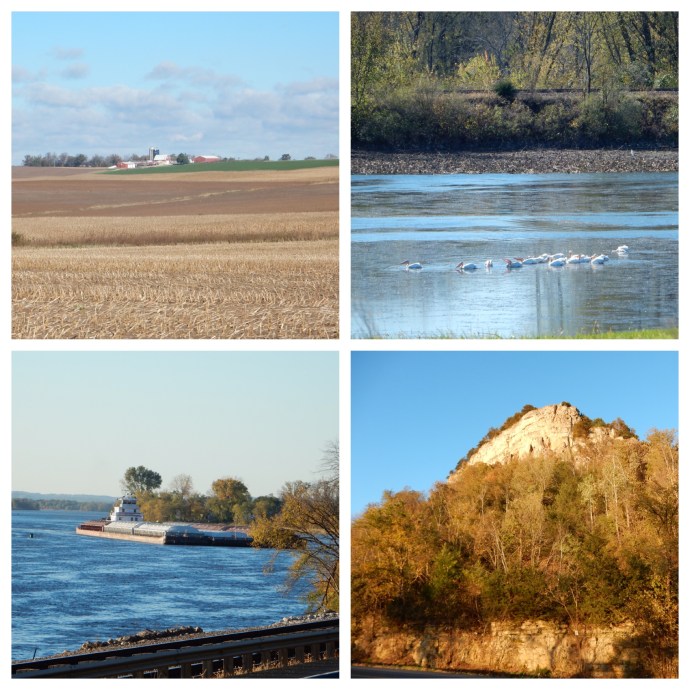
Returning to St. Paul from Cedar Rapids across IA farm land and along the Mississippi River

We stayed overnight in Cedar Rapids after the nuns’ program and since the next day turned out to be one of our rare (for this year) glorious fall days, we decide to take the long way back to St. Paul through western Wisconsin. We stopped at a wonderful conservation interpretation center in Clayton County, IA and were pleased to discover a new information center that opened this summer along the Great River Road in Genoa, WI by the U.S. Fish and Wildlife Service.

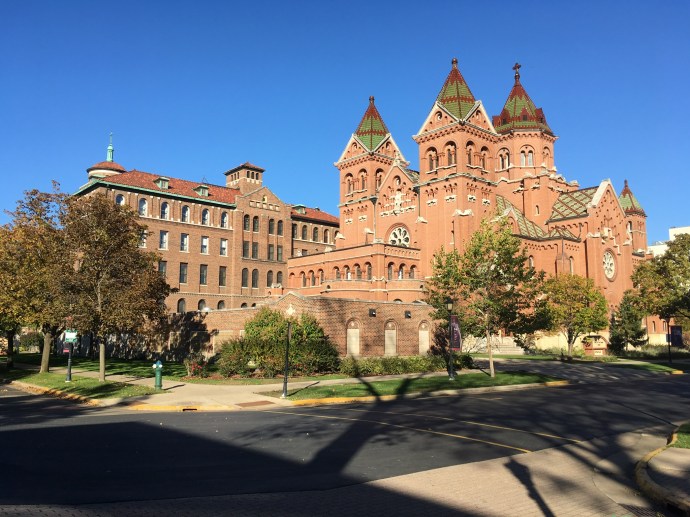
Mary of the Angels Chapel attached to St. Rose Convent

At the nuns’ program in Cedar Rapids, we met some nuns (Franciscan Sisters of Perpetual Adoration) who had come down from LaCrosse, WI. They invited us to stop at their convent, St. Rose Convent, if we had time; we did and were so glad we stopped. We had a tour, with historical commentary, of their chapel (located on the campus of Viterbo University) and their perpetual adoration chapel (a Catholic worship space) that has had uninterrupted prayers being said in it 24/7 since August 1878!

Sandhill cranes at Sherburne National Wildlife Refuge

Last weekend we participated in a bright and early (6:30 a.m.) activity at the Sherburne National Wildlife Refuge to watch the morning wake-up of about 9,000 sandhill cranes from their roost to forage in neighboring fields as they fatten up for their flight to Florida. It was 32 degrees out with 20 mph winds; there was no bird watching shelter, so were outside for 2 hours. We have seen 200,000 sandhill cranes in Kearney, Nebraska several years ago so this was a low-key affair but worth it. In an interesting fact (to us, at least) the Kearney sandhill cranes migrate north to Canada from Texas, going to the west of Minnesota. The Minnesota sandhill cranes migrate southeast to Florida. Maybe we will see some of the same birds next week, we did not check to see how long the cranes’ migration journey takes.

We continued this month our volunteer work with the Bell Museum of Natural History and Ed with the Mississippi National River and Recreation Area, including the annual volunteer dinner where Ed received a National Park Service backpack for exceeding 750 cumulative hours of service.

Did we mention to VOTE on November 6?!

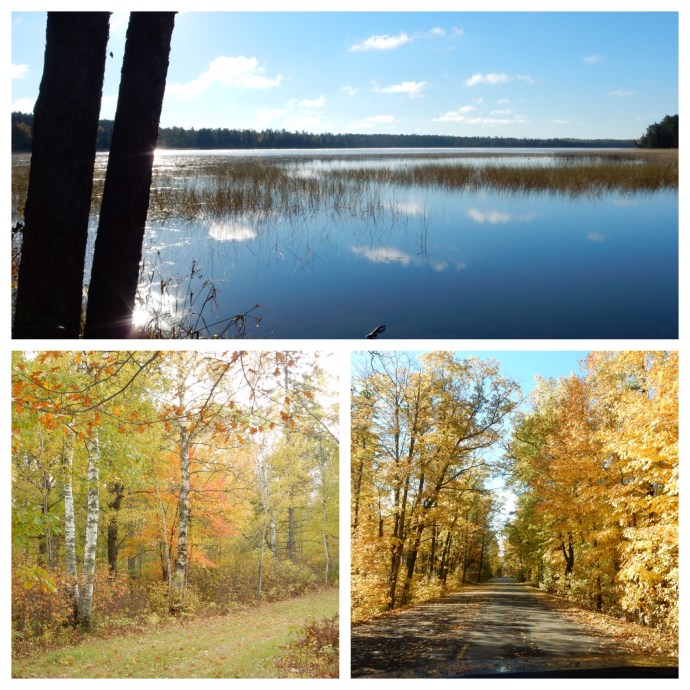
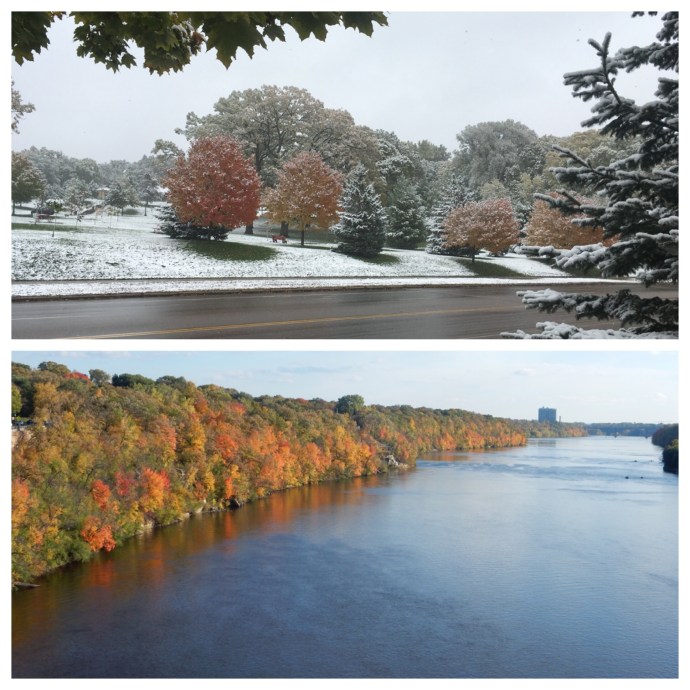
Fall in St. Paul, two days apart

Chris and Ed
October 26

Categories: road trip, travel | Tags: , , , , , , , , | Leave a comment

2014 Trip Five, June 25, Summer in the Cities

Fennimore, WI Wednesday June 25, 2014

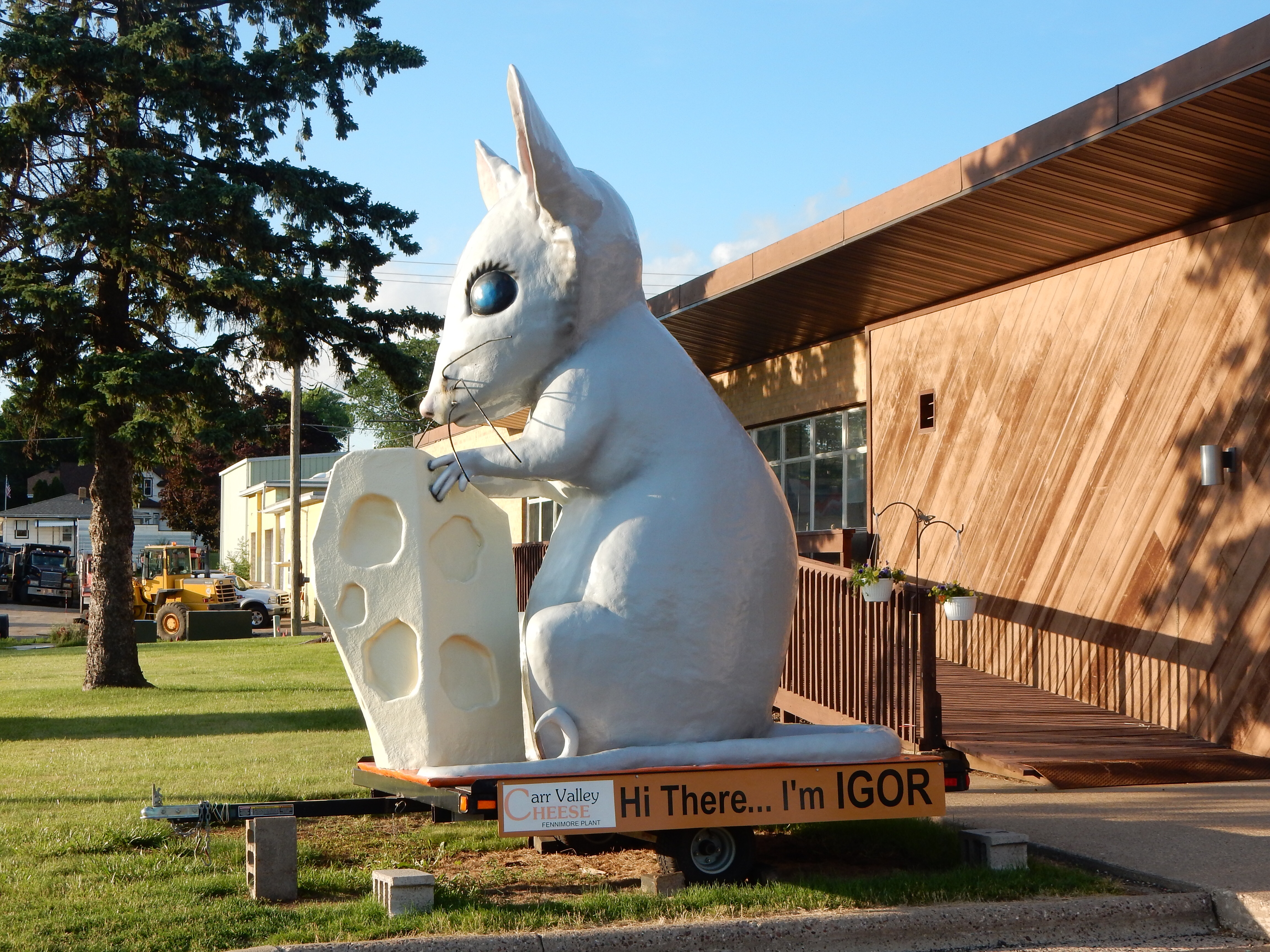
Igor, the official greeter in Fennimore WI

Igor, the official greeter in Fennimore WI

We are taking a little jaunt to Wisconsin. Through Sarah, we took advantage of a two night get away to the Fenway House Hotel and The Silent Woman Restaurant in Fennimore, WI. The town is about an hour west of Madison, WI. The population is 2,500 so the name may not spring to your mind immediately when you think of Wisconsin.

Of course, we made it into a road trip, driving along the east side of the Mississippi River and along the Wisconsin stretch of the Great River Road. One of the many travel brochures we saw at a tourist info center said: Visit the West Coast–of Wisconsin. They were advertising the Wisconsin river towns of the Mississippi River. (The west “coast” of Wisconsin.)

The drive took us through numerous, cutesy, small river towns. Speed limit 25 mph. Railroad tracks between the river and the town. The mining of sand for fracking has become big business and highly controversial in the area-on both sides of the Mississippi River.

We stopped in Stockholm WI and had some danish. Window shopped a few stores and talked to one woman running a cooperative craft store. She does needlepoint and her husband does wood working. They want to retire in a few years and spend the winter in the South so we told her about the Stephen Foster Cultural Center and state park in Florida that we wrote about in March. A good place for the two of them to volunteer and obtain free lodging in exchange for their craft work.

The fields looked green and lush. We did not observe ponds of standing water in the fields as there are in portions of southern Minnesota. Right now, the crops look to be in great shape. The homes and towns look prosperous, buildings not in disrepair.

Our major stop was at Effigy Mounds National Monument just north of McGregor/Marquette Iowa. This site preserves over 200 mounds built by Native Americans from about 500 B.C to about 1400 AD of the Woodland and Mississippian cultures. Little is known about why they were built, the cultural significance, and why they were no longer built. On our Deep South trip this spring, we visited two other national monuments for mounds along the Natchez Trace in Mississippi and near Macon Georgia.

Two of the mounds in Effigy Mound National Monument, IA

Two of the mounds in Effigy Mound National Monument, IA

Those Deep South mounds were more ceremonial; the Effigy Mounds appear to be heavily, although not completely, burial mounds. They are also smaller. The burial mounds in Indian Mounds Park in Saint Paul are also different, being fewer in number and larger in scope. The mounds we saw today were smaller although a number of them are in the shape of bears or birds. (Not always a clearly defined shape, though.) Like the mounds in St. Paul, a large number here were destroyed as they a.) got in the way of progress, and b.) were not fully understood in the 1800s.

Our history lessons for the summer are continuing. Here, we took a ranger led tour that educated us about the mounds and culture that consturcted them. One topic the ranger did not discuss was the evident mishandling of the site by a previous, and recent, park superintendent.

http://www.peer.org/news/news-releases/2014/05/12/park-service-circles-wagons-on-indian-burial-mounds-debacle/

In the last 10 days we also had a tour of the buildings along Rice Park in St. Paul and a tour of the new artists lofts that are going into the former Schmidt Brewery in St. Paul. We have more Twin Cities tours planned although one or two of them along the Mississippi back in St. Paul might end up being canceled.

View of the Mississippi looking south from Effigy Mounds  National  Monument in IA

View of the Mississippi looking south from Effigy Mounds National Monument in IA

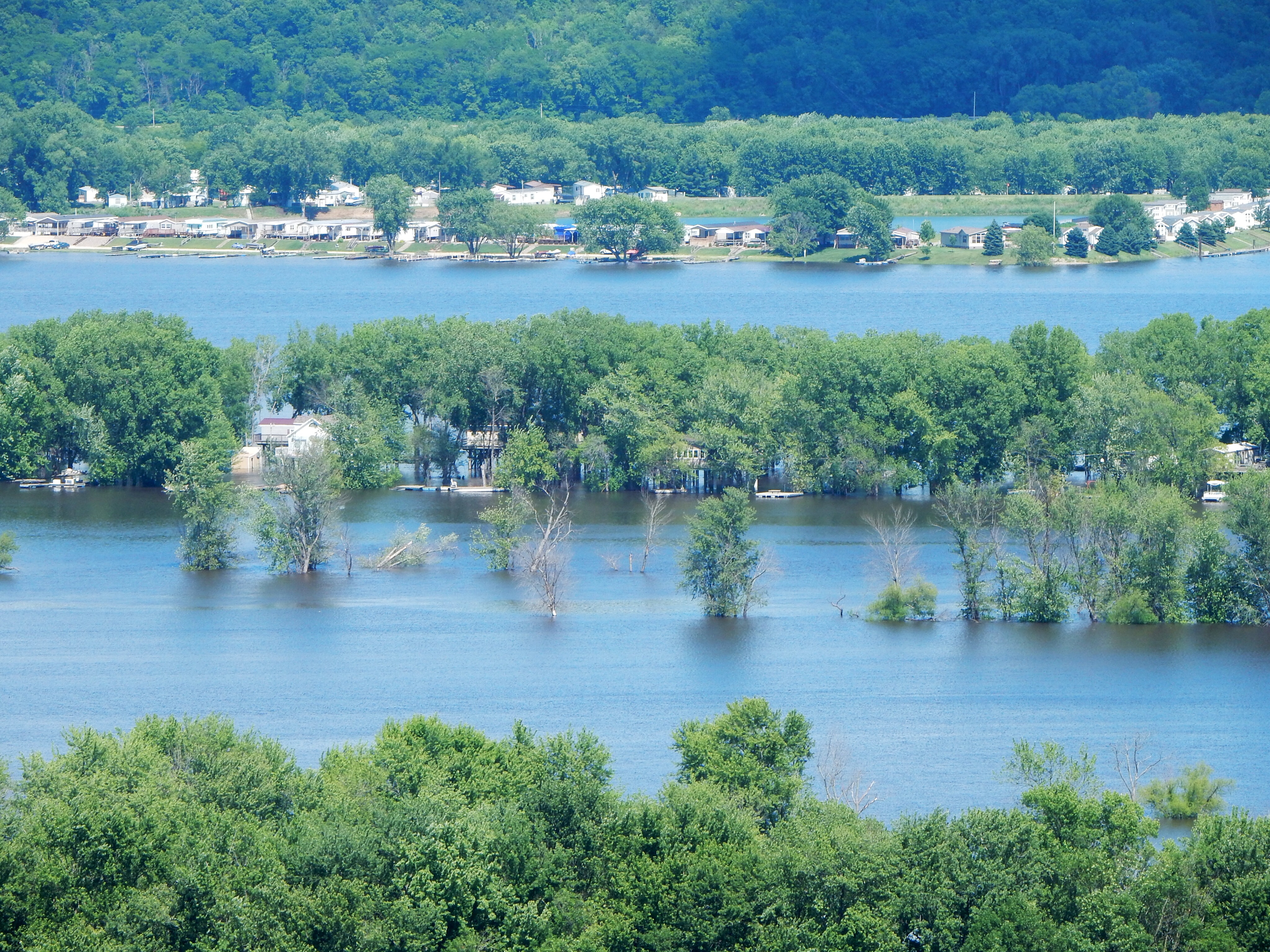
The Effigy Mounds are along the Mississippi and parts are high on the bluffs overlooking the river. Flooding is occurring here as it is back in the Twin Cities. St. Paul was predicting the flood crest would be its sixth highest. Most of the flooding in St. Paul and along the river here seems to be restricted to roads, parks, marinas, farm fields,etc. Over the years, it appears that most of the flood prone properties have been demolished or moved to higher ground except for a few vacation homes on an island in the river across from the National Monument.

View of river and vacation homes along Mississippi

View of river and vacation homes along Mississippi

As mentioned, our lodging is in Fennimore WI. The hotel is downtown and the building was built in 1918 and included a hotel, theater, restaurant, and commercial storage. Our room is nice and includes a jacuzzi tub. Dinner was downstairs at The Silent Woman restaurant. The food was excellent.

Ed and Chris June 25 9:15 pm

Categories: road trip, travel | Tags: , , , , , | 2 Comments

Blog at WordPress.com.