

Glenarden, MD Saturday April 9
Pleasant surprises awaited us today, particularly at Thomas Stone National Historic Site. We left the Hampton Inn around 8:30 for a day of NPS sites to the southeast of D.C. in Maryland. In less than an hour, we left densely built up towns with crowded roads, speeders, and long waits at traffic lights. We drove through suburbia with nice homes and yards. We entered into exurbia, that mix of some new housing developments, old stone houses dating back over a hundred years, hobby farms, modular homes and large, new mansions. We arrived at Thomas Stone National Historic Site before the gates were open.
Thomas Stone National Historic Site is situated along a creek leading to an arm of the Potomac River. The old town of Port Tobacco is nearby. Named after Native American terms, not the tobacco of smoking, the town was once a thriving port and the county seat. Today the town is basically deserted. Thomas Stone was born in 1743 near Port Tobacco and he settled nearby. His house was both a country home and a country plantation. The crops and animals were simple: hogs, sheep, cattle, flax, cotton and fruit trees. The soil was too depleted to be used for tobacco growing. So why do we care, why is this location a National Park site?
Well, certainly Stone was wealthy. He was a lawyer, his plantation grew from 442 acres to over 1,000 acres, and he owned slaves. His family spent generations in service to government and their community. But, more importantly, Stone was a member of the Second Continental Congress. Stone was a moderate, not a fire breathing radical hungry to leave England far in the distance. Stone spoke little at the congress, instead listening and writing. He began as a representative hoping for a rapprochement with England. He ended up agreeing to form a new country and signed the Declaration of Independence. This NPS site speaks to the uncertainty in the 13 colonies as to which path was best for the future. Maryland, for instance, was economically well off. Why throw off this certainty for a new, unproven arrangement?
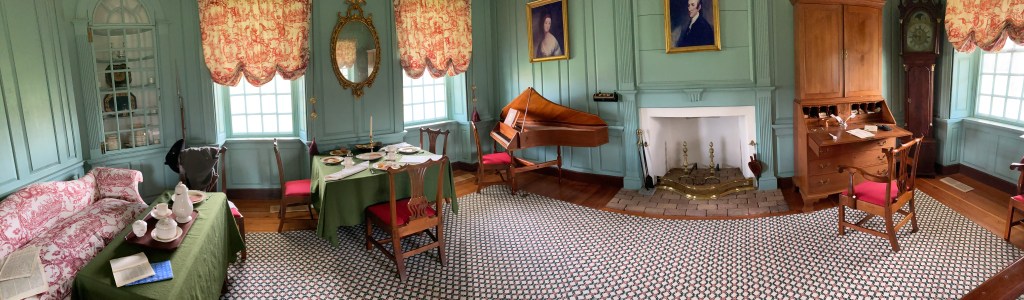
Thomas Stone NHS is staffed by only one ranger, indicative of the NPS underfunding. But Ranger Dave gave us and others a wonderfully evocative portrayal of Stone, his life, and the colonial times in which he lived. He has to close down the visitor center while he leads tours of the Stone home and interprets those times for us. I don’t intend to repeat his stories; it would do you well to visit here and learn more about our early era for yourself.

We left the Revolutionary time period and moved to the War of 1812 and the Civil War. Fort Washington Park preserves Fort Washington, the site of the first fort built to protect the capital city of this fledging country. In 1808 construction was begun on Fort Washington, initially Fort Warburton, on the Potomac River to the south of Washington D.C. The fort did little to stop the British and was blown up by our troops in 1814 to prevent if from falling into British hands.

It seems decision making was as muddled then as it is now. Progress on rebuilding Fort Washington had its ups and downs depending on federal budgets and prognostications about the need for defense. During the Civil War, it was the first fort protecting the Potomac River and a linchpin in the ring of forts built around Washington DC to protect the city from Confederate forces. After the Civil War, changes in the technology of warfare and budgetary issues kept the fort in operation and then decommissioned several times. Eventually in 1946, Fort Washington was turned over to the Department of the Interior and has been a public park ever since. It serves as a recreational area but also a public park to commemorate the long history of coastal fortifications.

We departed Fort Washington Park and made our way up the road a few miles to Piscataway Park and the National Colonial Farm. Piscataway Park is directly across the Potomac from Mount Vernon, the home of George Washington. Concerned citizens wanted to make sure that this area did not fall prey to suburban development and wanted it kept in the same natural state as when George Washington was living at Mount Vernon and looking east across the Potomac to this site. Those concerned citizens, the National Park Service, and several foundations along with local and state agencies worked to obtain the park’s 5000 acres stretching for 6 miles along the river.

One of the features at Piscataway Park is the National Colonial Farm. This reconstructed farmstead from the late 1700s presents the view of what life was like for typical southern Maryland tobacco planters. This was not a plantation of wealthy owners; but more average to slightly above average farmers of the time. The farm uses historically accurate varieties of field crops and livestock. They practice rotational grazing by the livestock and allow students to experience farm work first hand.
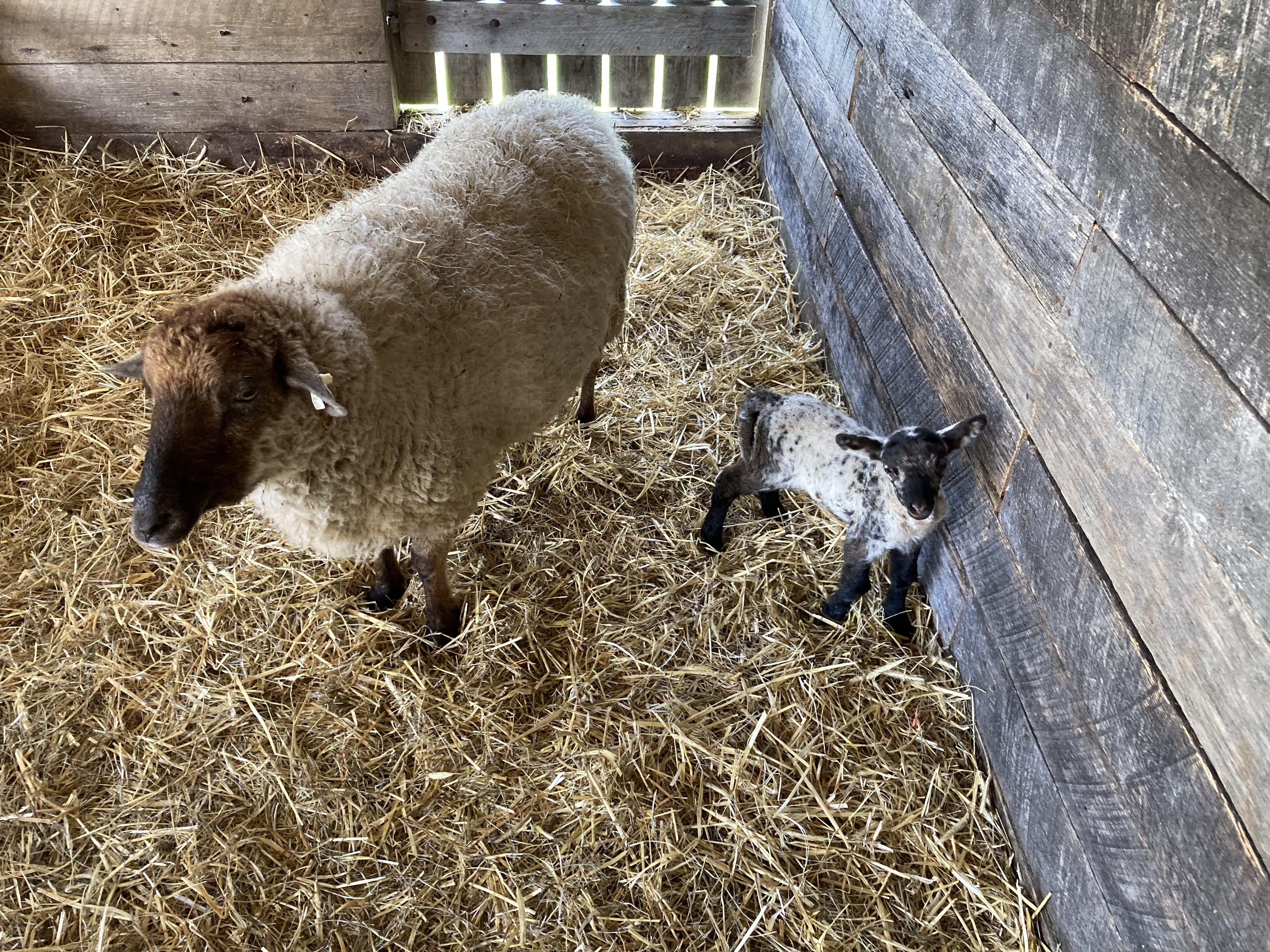
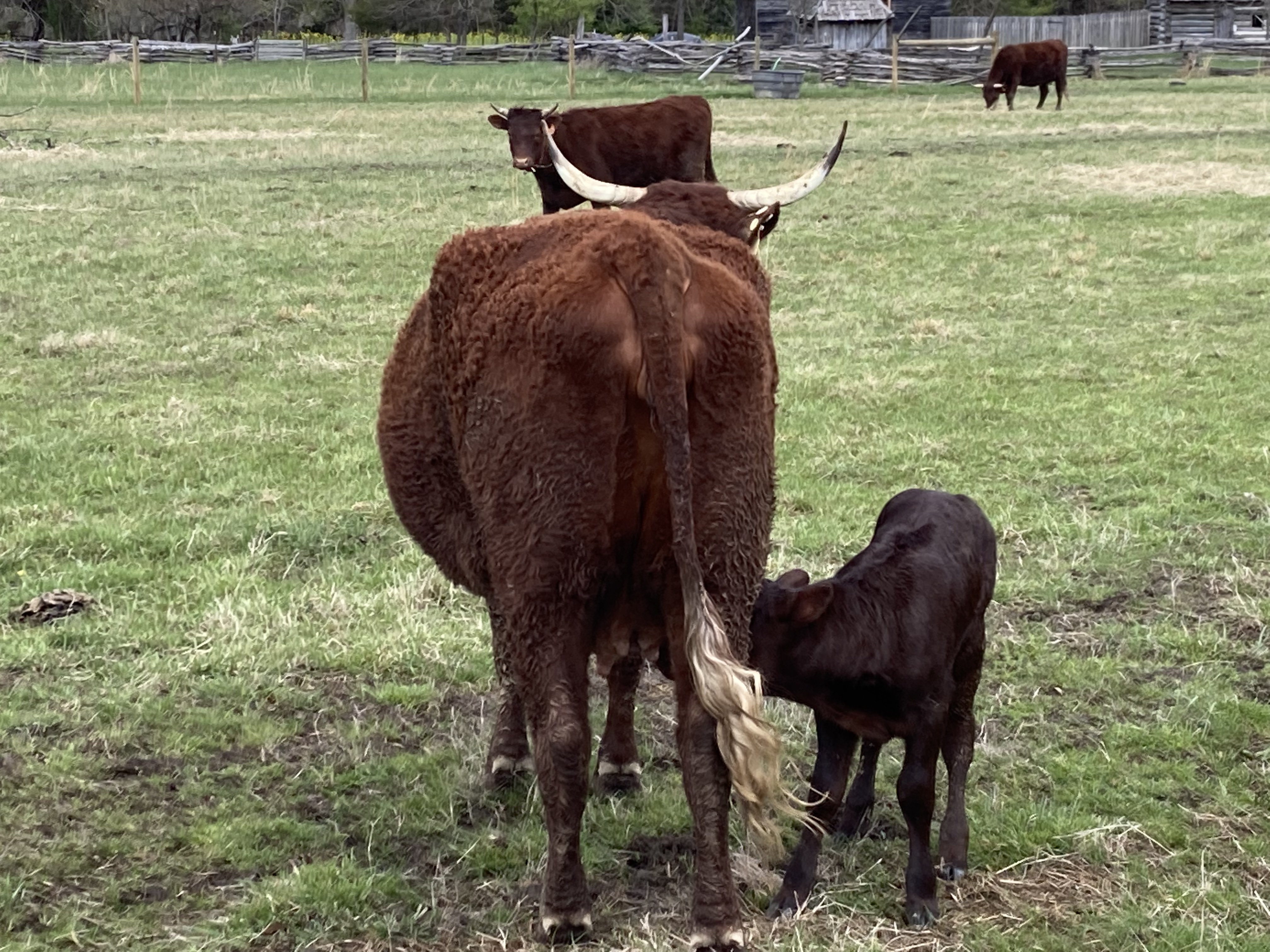

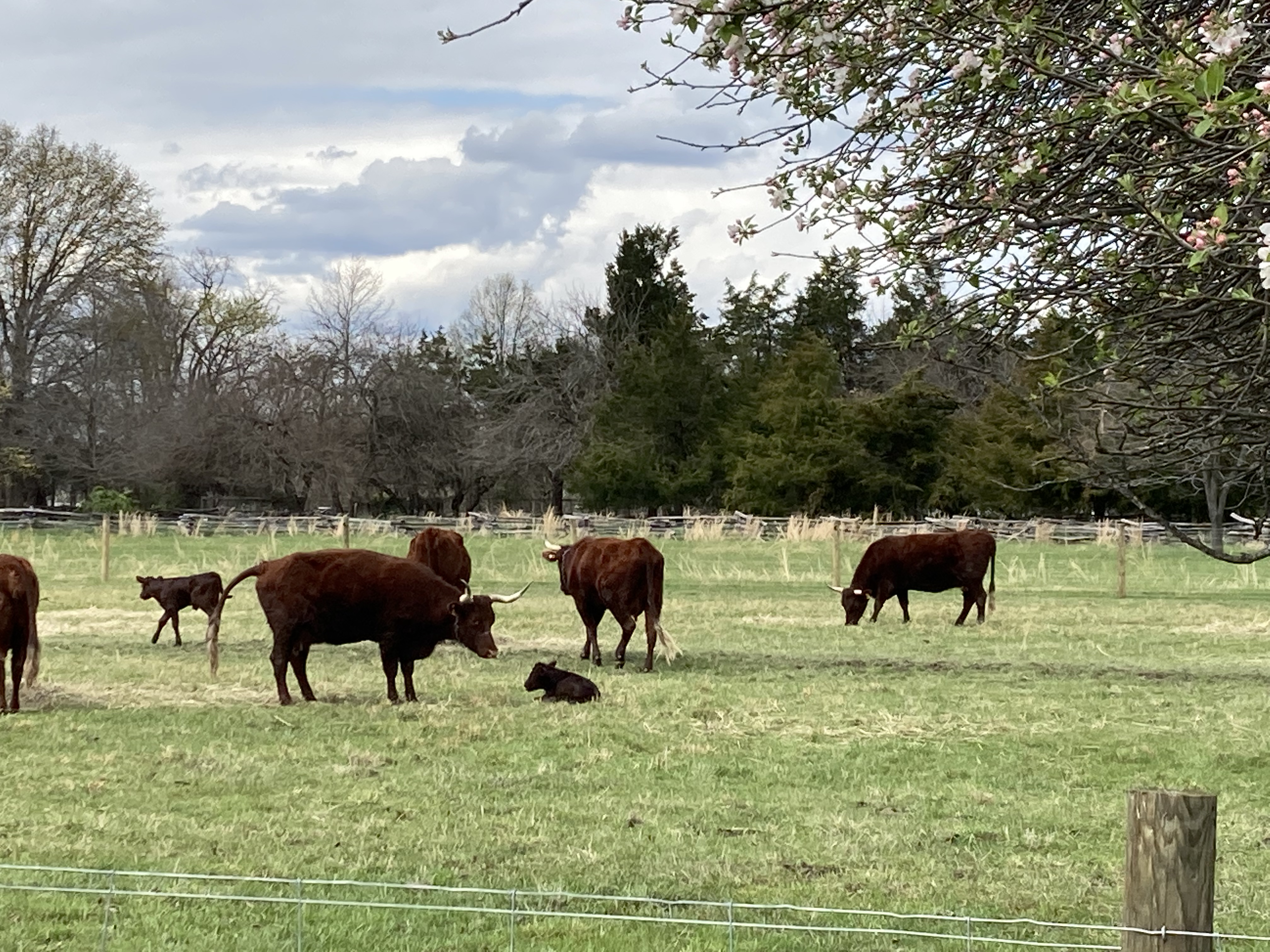
While we are not farmers, this type of exhibit is not unknown to us. We did enjoy observing the newly born lambs and calves as we walked around the farm. Other than that, we didn’t spend an extraordinary amount of time here. We also made a quick stop at Fort Foote, another of the ring of Civil War defense forts around Washington DC. A lack of parking was a determining factor in deciding not to do a major walk here.
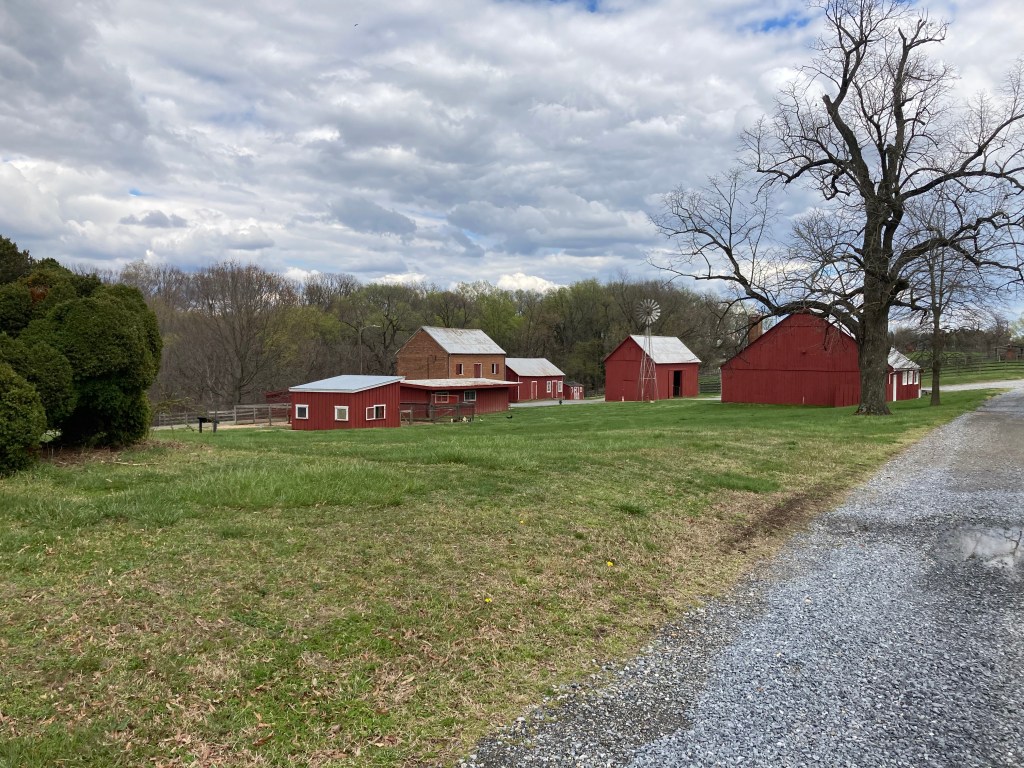
Our final stop of the day was at Oxon Hill Farm. This site is part of the Capital Parks East grouping of parks around the District of Columbia. Oxon Hill Farm represents farming in the early 1900s in comparison to Colonial Farm’s 1770s. Oxon Hill was used to raise cattle, wheat, corn, and fruit by private farmers until 1891 when the US government acquired the land. It established a farm for patients at Saint Elizabeth Hospital in DC. Saint Elizabeth’s Hospital was established as, and still is, the only national public health service hospital solely concerned with the recovery of the mentally ill. In the mid-1960s, the farm was entrusted to the National Park Service. Now it represents a working farm from the early 1900s when horses moved farm implements.
Dinner was the second half of the fish fry dinner purchased last night at the Wegman’s grocery store across the parking lot. Tomorrow we head for five nights in downtown D.C.
Ed and Chris, Glenarden MD, Saturday April 9
Current total of National Park Service sites visited: 290
 Chris Klejbuk and Ed Heimel travel adventure
Recent Comments