Posts Tagged With: Framingham MA

2022 Trip 1: Searching for our 300th National Park Site: March 31-April 5

Wilmington DE Tuesday, April 5

Well we are back on the road after five wonderful days in Framingham MA visiting family. Obviously part of the time with them is just being together, cooking, eating, talking, playing games. We do manage to squeeze in some activities, though.

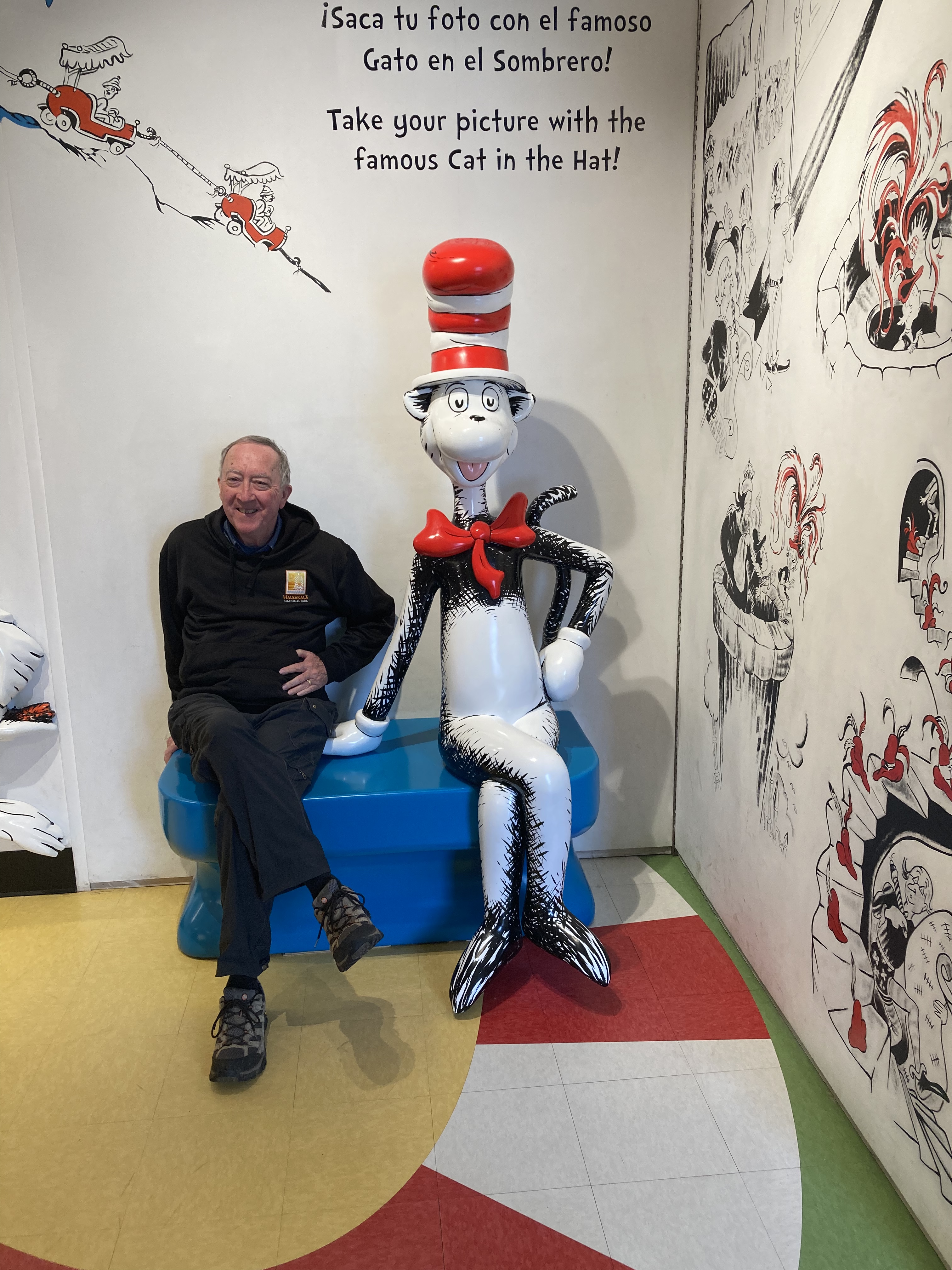
We took Deb down to Springfield to introduce her to a childhood friend-Dr. Seuss. Springfield has a museum quad with five different museums. Ted Geisel was born in Springfield and his life here directly impacted his imaginative books. Chris and I have been here before but the chance to share the Dr. Seuss museum with Deb was too great of an opportunity to pass by. Chris goes kind of nuts remembering various Dr. Seuss characters and books. At one stop, a Smart Board was set up for children, and not so young children, to doodle. Chris had a senior moment figuring out how to use it. A mother sitting nearby offered her eight year old daughter as a tutor. The daughter did a great job and Chris had a chance to enjoy her moment of creativity.

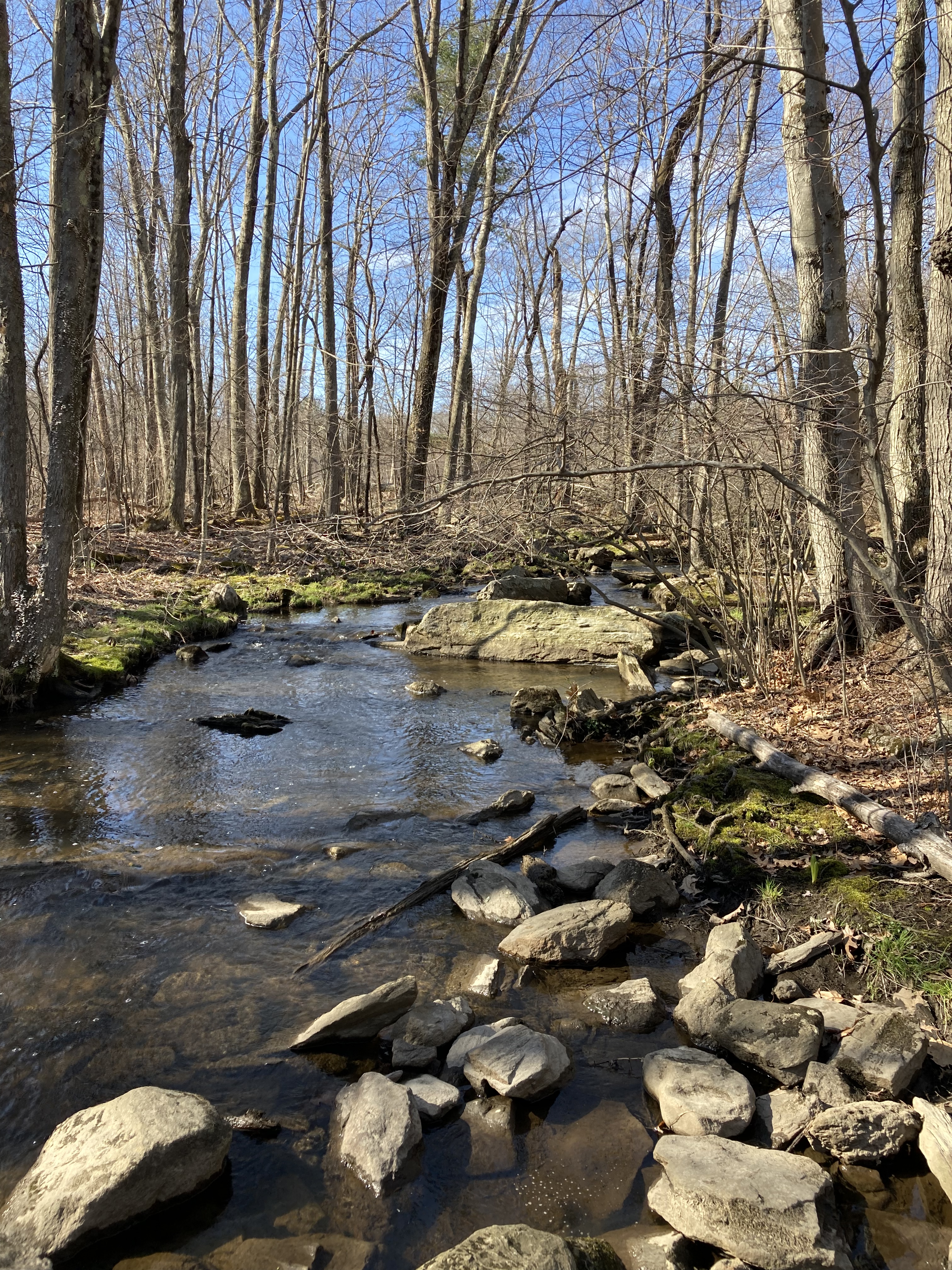
After some yard work Saturday, the four of us visited an Audubon sanctuary, the Broad Meadow Brook Conservation Center. Part of the trails were a little muddy but we managed to spot some skunk cabbage, an early blooming spring ephemeral. Spring ephemerals need to pop up quickly before trees leaf out and block the sunlight. Skunk cabbage are usually one of the first to be spotted in spring.

Sunday after church we visited the Mapparium which is part of the Christian Science complex in Boston. The Mapparium is a three story walk through globe built in 1935 showing nations as they existed at that time. I found it less interesting than I expected, even causing a little dizziness from looking up at the globe countries. Instead, I would recommend the map library at the Central Boston Public Library if maps interest you.

Deb was able to take Monday off from work so we visited the Commonwealth Museum. This is a MA state museum attached to the state Archives. The exhibit area is quite well done even though the quantity of the exhibits is small. The focus is on MA history and given Massachusetts’ role in establishing the United States, it includes national history. I found the exhibits even handed in their handling of state history. For instance, the Puritans had a positive impact on the development of democratic institutions even as their religious intolerance still has an impact on today’s society.

There was an educational chart contrasting Native American living and farming methods with those of the European colonists. It has taken 300+ years for us to acknowledge that many of the native agricultural practices are so less destructive on the land. Maybe if we spent more time trying to scale up their practices, we could have caused less damage to the land while still feeding many more people. One final note. Hopefully you recall that untold hundreds of thousands of Native Americans died from being exposed to European sicknesses for which the Native Americans had not developed any immunity. Many Indians converted to Christianity, believing that the Christian god must be better since the Europeans did not die of these diseases.

Massachusetts complicated history with slavery was covered. First, slavery was allowed, then prohibited. Shippers participated in the slavery trade. MA was a hotbed for abolitionists while the textile mills profited from Southern cotton grown with slave labor. Free blacks were accepted and integrated into the state militia before the Revolutionary War-but not after the Revolutionary War in the country which proclaimed: ”all men are created equal.”

In the afternoon, the three of us went hiking at Callahan State Park, not far from the Airbnb Chris and I were staying at. While the trails were easy to follow, there were no maps available. We managed to get in an hour hike without getting lost and made it safely back before dinner time. Dinner was take out from Bella Costa Ristorante Italian restaurant and dessert from Dulce D Leche Gelato Cafe.

Tuesday, today, we went back on the road where we will be for the next three weeks plus. Paterson Great Falls National Historic Site is a National Park Service site in progress. In other words, it still leaves a lot to be desired. The Great Falls on the Passaic River are impressive at 77 feet high. The Great Falls are the location of America’s first manufacturing center.

In 1792, Alexander Hamilton founded Paterson and for 150 years Paterson fulfilled Hamilton’s dream to wean America from foreign goods. When Paterson was created, England sold America its manufacturing goods. Even though we were an independent country, lack of a manufacturing base made us dependent on England. Paterson mills used the water power, and later hydropower, from the Great Falls of the Passaic River to manufacture textiles including cotton, flax, silk, and rayon, to build aircraft engines and railroad locomotives, and make paper.

Immigrants flocked to the city, creating a diverse culture and melting pot, and cheap labor. But in the early 20th century, workers realized they were getting a raw deal. They banded together and a six month strike eventually produced better working conditions, shorter hours, and higher pay.

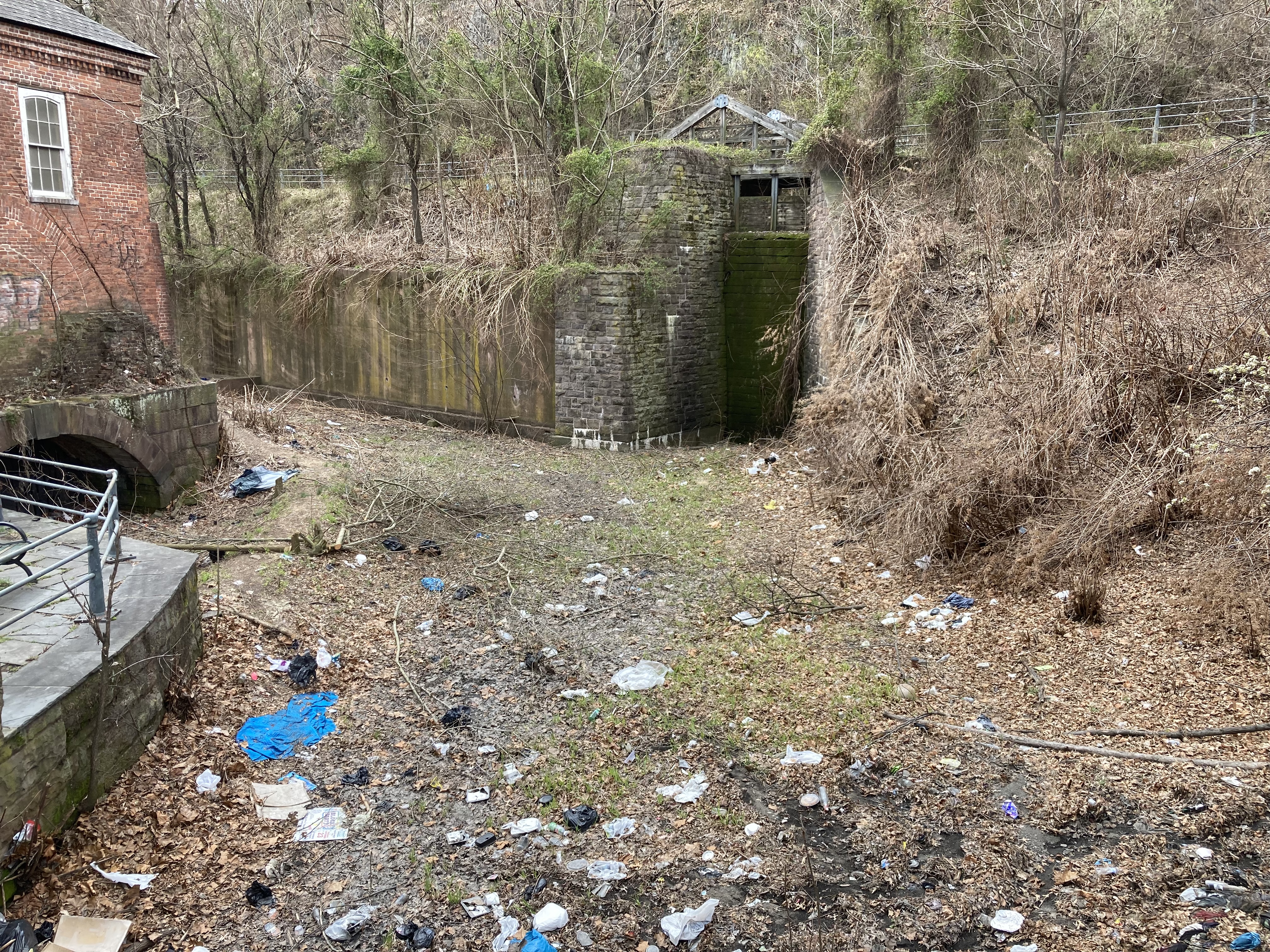
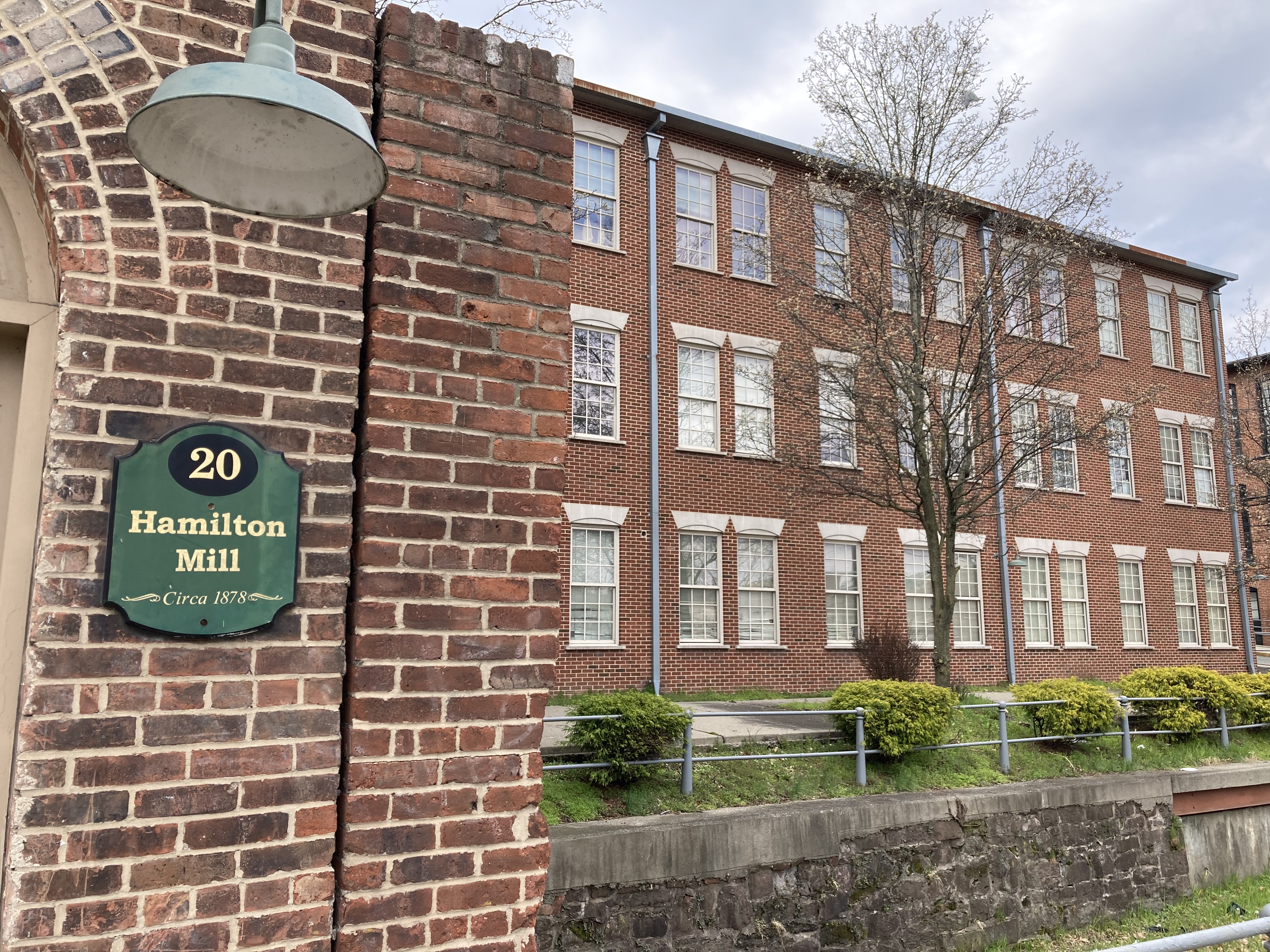
The view today around the falls is of a city struggling to reclaim its lost grandeur. Some of the mills have been rehabilitated and are economically productive once again. But across the street from one of those will be a mill with broken windows and fallen in roof. Trash and litter line several of the once mighty raceways that brought water power to the mills. The contrast between the Great Falls of the Passaic and St. Anthony Falls in Minneapolis (Mississippi National River and Recreation Area) is striking. Minneapolis is the clear winner with parklands lining the river, residential complexes created from rehabbed mills and newly built high rises. Offices and entertainment options create a vibrant community. Lets hope Paterson’s vision can be reached.

As for the national park, Paterson Great Falls National Historical Park does not have a functioning visitor center although a viewing overlook has been created. We had to knock on the locked door of the admin center to get our passport stamp. It works, but not so much that one wants to brag about it to others.
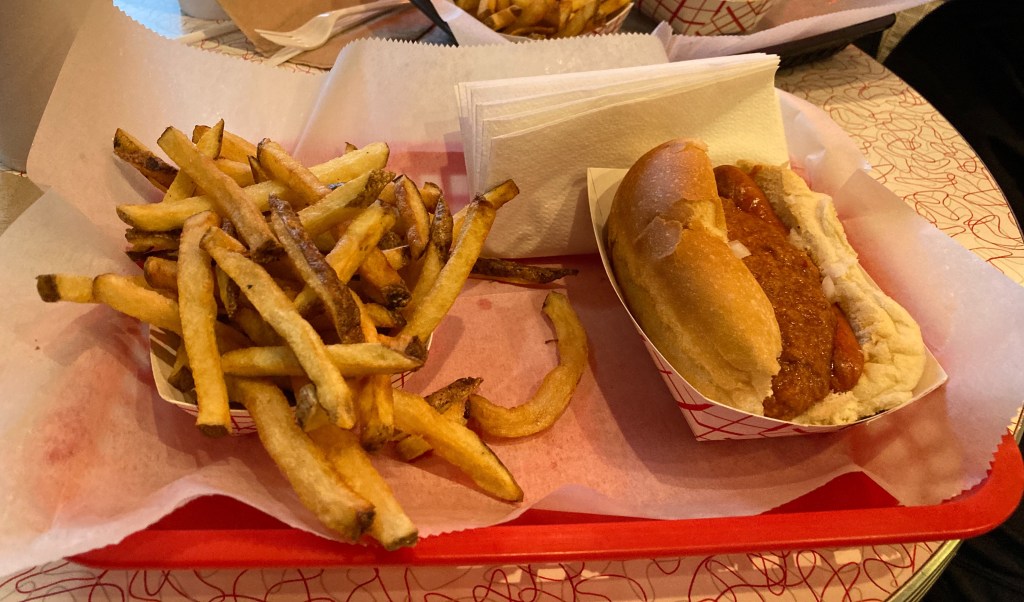
Tuesday night we ate hot dogs at a Wilmington DE landmark institution, Deerhead Hot Dogs. A special sauce is their signature dish. The sauce and restaurant date back to 1935. A local car club was having their monthly meeting while we were there. They took up 18 of the 24 seats in the restaurant.

Ed and Chris, Wilmington DE Tuesday April 5, 2022
Categories: travel | Tags: , , , , | Leave a comment

2022 Trip 1: Searching for our 300th National Park Site, March 30

Framingham, MA March 31

Wednesday started out lousy. Rain, 29 degrees F, driving over central Pennsylvania mountains with their curves and hills—and very aware of the crash on Interstate 81 Monday a little east of here with a 80 car/truck pile up that killed six people. Chris and I are very familiar with that stretch of I-81, we always knew that if fog was around, it could be found in that stretch. In Monday’s situation, though, it was a sudden snow squall. For us, our drive had no problems although we drove a bit slower and left later to try to reach above freezing temps. It was not until we reached Scranton, three hours later, that the temperature was above freezing.

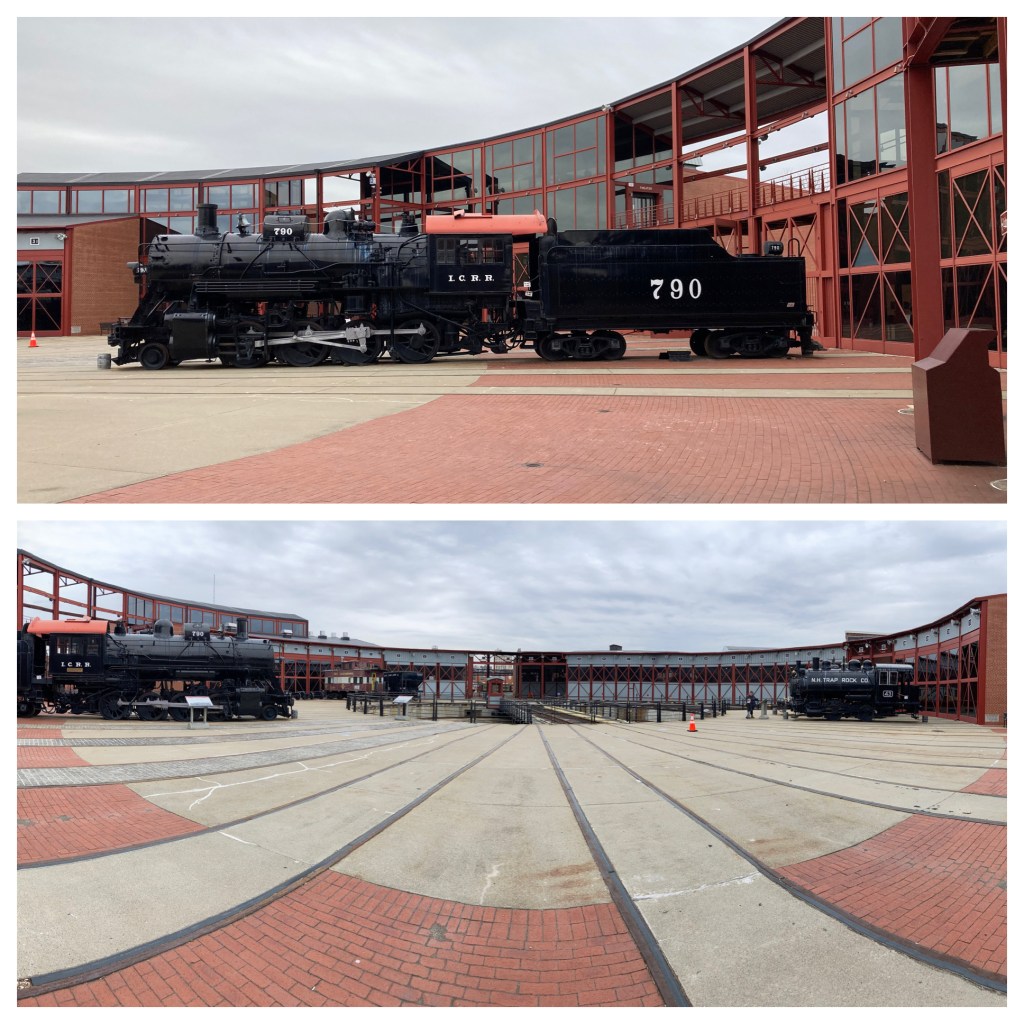
Our one stop of the day was at the Steamtown National Historic Site, a National Park Service (NPS) unit. I had thought we had been here before many years ago but it did not look familiar. Chris was sure she had never been here. In any event, the complex is large and impressive. The major focus of the exhibit is railroading, specifically the Delaware Lackawanna and Western railroad. This railroad was a major connector between New York and the anthracite coal mines of northern Pennsylvania. Like many other railroads, it was the result of the merger of several smaller, local rail lines.

The National Park Service’s role at this site is to interpret the role of railroads in the development of the United States. In particular, Steamtown focuses on the industrial development of the Lehigh Valley around Scranton, the steel factories and coal mines, and the role of immigrants newly arrived in the US who filled jobs in this location. Steamtown has a 18 minute video, and a wonderful series of exhibits surrounding a central Roundhouse. The buildings have been well restored, as have the railroad locomotives on display. During warmer times of the year, train rides are offered.

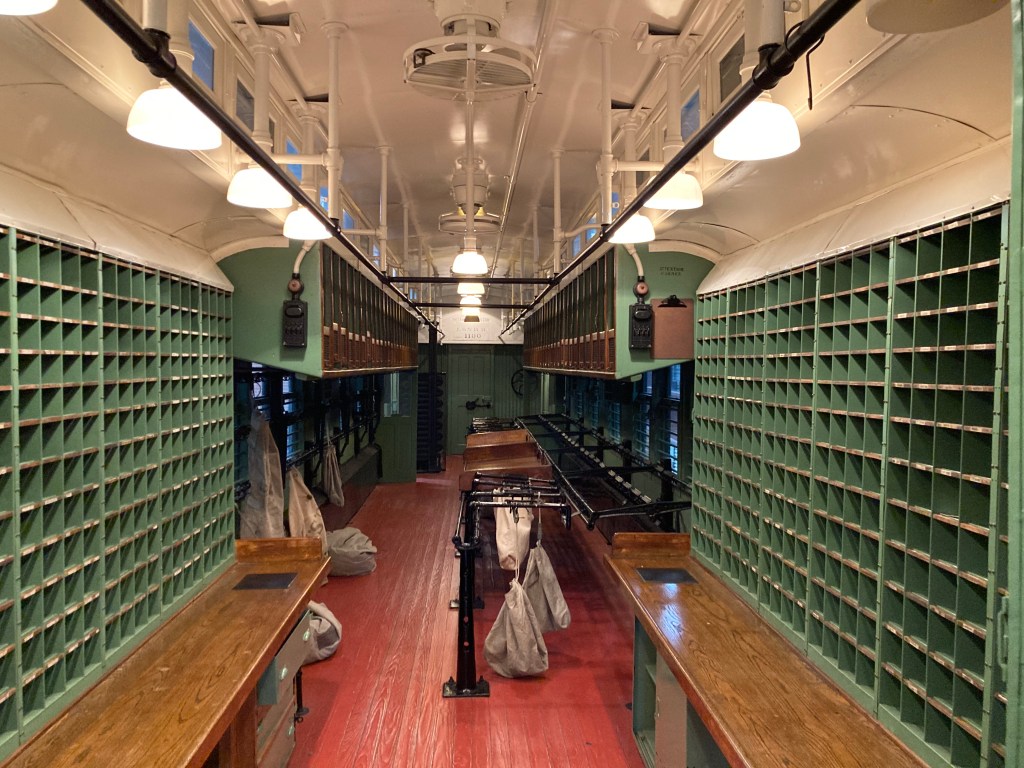
I found one display of particular interest. There was a Railroad post office car included in the collection of train equipment. These cars were used for sorting mail along the train route, even to the point of dropping off mail at locations without a formal stop by means of a bag tied to a hook. In my talks for the NPS Trails and Rails program on the Amtrak Empire Builder, I try to mention this old time process while speaking in the observation car.

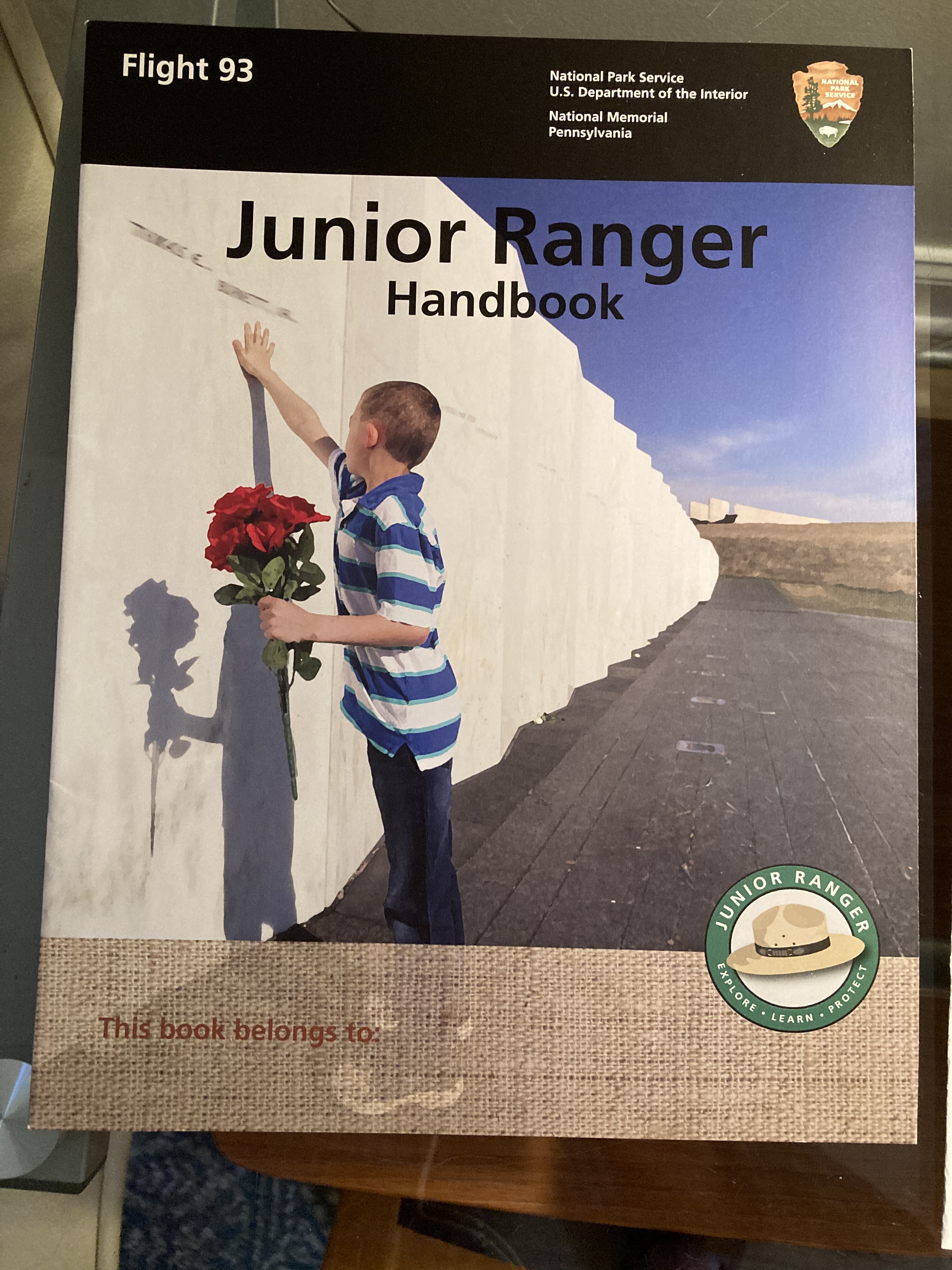
The park ranger we met, a woman originally from Hagerstown Maryland, was gracious and accommodated my request to pick up Junior Ranger booklets. If you are not aware of these, most National Park Service sites have a booklet designed for young visitors to help them explore and learn about the purpose of that specific NPS site. While called Junior Ranger booklets, they can be used by people of any age.

The Ranger responsible for these booklets at my park site, Mississippi National River And Recreation Area in the Twin Cities, will be receiving a packet of Junior Ranger booklets that I will be picking up as we visit 30 or so NPS sites during this trip. Here at Steamtown, the Park Rangers have developed a series of four booklets designed for different ages. One booklet is for ages five and under, one for ages 6 to 8, one for ages 9 to 12, and the last one for people like me, ages 13 to 130. The Steamtown booklets are less fancy, printed with a color printer. In contrast, the Junior Ranger book at Flight 93 National Memorial was printed by a commercial printer on heavy, glossy paper.

Each booklet requires the user to answer questions, draw pictures, and in general interact with the knowledge presented at the NPS site. Completion of the booklet allows the person to be sworn in as a junior ranger and receive a badge. We have found that it can be quite popular with people interested in learning about American history and culture.

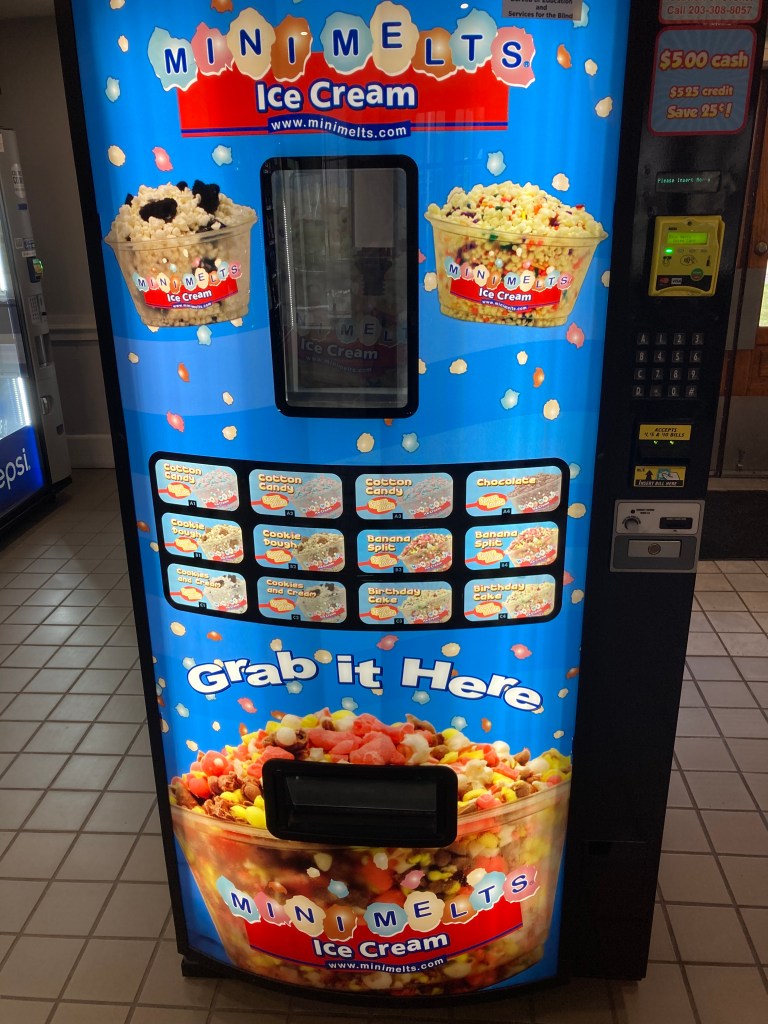
The rest of the drive was uneventful. Heavy traffic once we hit New York, then really heavy through the usual traffic jam around Danbury Connecticut. Over the years, most of our visits to Boston from Minnesota have been by air. It was nice to drive old familiar territory, even being surprised by local restaurants that are still in existence from 30 and 40 years ago. When we stopped at the first rest stop in Connecticut, we recollected that this was a dramatic improvement to the trip we used to take from Minnesota and then Pennsylvania to visit Chris’s parents in Connecticut. The rest stop was completed in 1971, a year before we were married. It has an older style than what is now common Interstate rest stops design, but it still was a nostalgic and useful stop. One new addition was a vending machine, see picture, that we have not come across previously. Either it is new or we are just out of touch.

For the next several days we will be in the Boston area. Lodging is a Airbnb, a former garage apparently converted into an attached dwelling unit. I still usually prefer a nice Hampton Inn. There are two people on this trip and cooperation in lodging choices must be made.. The Hampton Inn Monday night in Crawfordsville IN, offered dinner for guests from 5 to 7 pm. We took advantage of it. Over the course of this month, we will be staying at three Airbnb‘s, about a dozen Hampton Inns, a Hilton Grand Vacations Club offering in downtown Washington DC, and three nights at a West Virginia state park resort.

Ed and Chris, Framingham MA March 31.

Categories: travel | Tags: , , , , | Leave a comment

2015 Trip 4, Boston, July 14-18

Boston-Saint Paul, July 18

This was a brief trip to visit Deb and Rebecca in Boston. It is a tribute to Boston and the eastern Massachusetts area that we still are able to find new places to visit despite our frequent trips there. We flew out on Sun Country Airlines, our first time using them. Seats are as cramped as other airlines but we liked their process to board the passengers. There is the usual first class, people who need help, parents with young kids, etc. But they then board passengers who have no overhead compartment luggage and passengers who have given up their overhead compartment luggage to be checked at the gate. This loads a group of people who can get into their seats quickly. Then the seating is more random, some up front and some from the back. It avoids the mad rush we have seen on Delta when passengers jam the front of the waiting area, hoping to get on early enough in their seating order to get their luggage up in the overhead compartments.

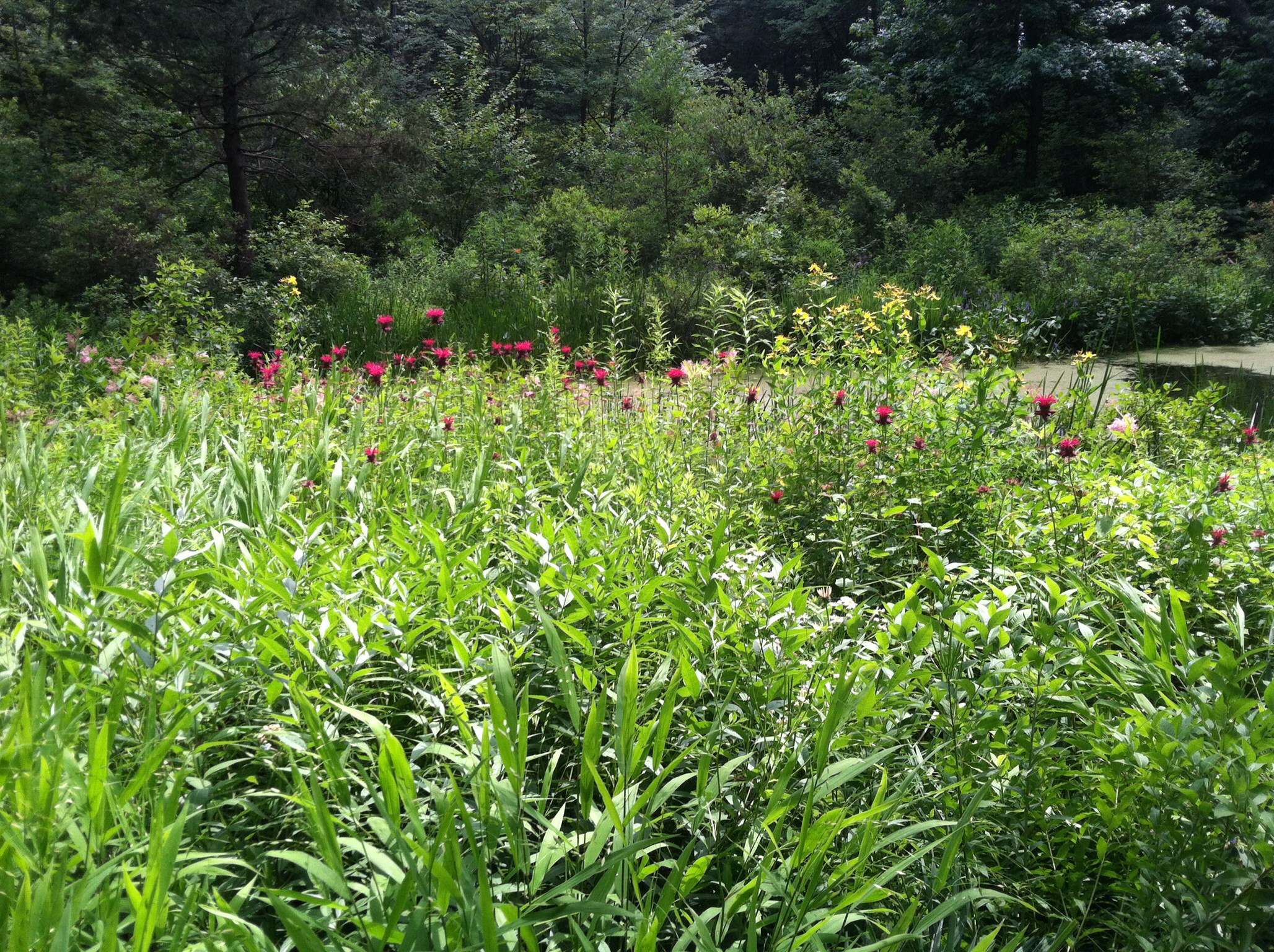
Garden in the Woods, Framingham MA

Garden in the Woods, Framingham MA

Deb picked us up at the airport and drove us to Waltham where we picked up our rental car, saving us the rental charges tacked on at airports. We only had one destination for the day, the Garden in the Woods in Framingham. This garden is sponsored by the New England Wildflower Society and was listed in a book we have, the National Geographic Guide to America’s Public Gardens.  The garden is home to the largest collection of wildflowers in New England. It was the dream and creation of one man, Will Curtis, beginning in 1931. The 45 acre garden was turned over to the New England Wildflower Society in 1965.

We found it a pleasant, although not overwhelming, diversion for the afternoon. This might be due to the fact that no one area was overwhelming in blooms or due to having seen so many wildflowers in the last few weeks that we did not dawdle and examine numerous smaller plants and flowers. In any event, our Como Park membership once again meant we did not have to pay an admission fee and maybe that allowed us to be more cavalier in our impression.

But the primary reason for the trip was to see Deb and Rebecca and while they had to be at work sometimes, tonight we were able to have dinner grilled on their deck. Chris got her burnt hot dogs and thus all was well with the world.

Longfellow House-Washington's Headquarters Cambridge MA

Longfellow House-Washington’s Headquarters Cambridge MA

Wednesday the 15th was my 65th birthday-Welcome to Medicare, Ed.  Chris and I drove and then rode the “T”- Boston’s subway – to Cambridge. Rain was  a likely possibility but we managed to avoid all but a few sprinkles. The Longfellow House-Washington’s Headquarters is a National Historic Site managed by the National Park Service.  The site’s history began with the construction of a country estate by a John Vassall in 1759. On the eve of the American Revolution, Vassall and his family fled to Boston, being Tories.  For nine months beginning in July 1775, Washington used the abandoned buildings as his headquarters during the battle of Boston until the British decamped and moved on to New York. In 1791, the property was purchased by Andrew Craigie and after his death in 1819, it was the property of his wife until she died in 1841. Craigie left his wife with many debts in 1819 and she rented out portions of the property to many tenants, one of them being Henry Wadsworth Longfellow, the poet.

The gardens at Longfellow House

The gardens at Longfellow House

After Longfellow’s marriage to Fanny Appleton in 1843, the couple were given the property as a wedding gift by his wife’s parents. Fanny and Henry re-planted the garden which then fell into dis-repair after his death; then restored in 1904 and 1924 by their daughter Alice. In 2003 another restoration took place. We were able to tour the garden with a park ranger and enjoy its renaissance.

We also toured the house with a ranger, the furnishings all belonging to Longfellow’s family. The house was the home for Longfellow during the most prolific and influential times of his life. He wrote his poetry here, he was a professor at Harvard,  he hosted many influential members of society here ( Emerson, Hawthorne, Oliver Wendell Holmes, Charles Sumner, Charles Eliot Norton, James Russell Lowell, etc.). His poetry included “Song of Hiawatha”, “Paul Revere’s Ride”, in 1842 he wrote a series of poems condemning slavery, and others.  His poetry informed Americans of their roots and he became an American hero. The last and somewhat diminished stage of Longfellow’s career began in 1861 with the tragic death of his wife Fanny. In the midst of melting sealing wax, she set fire to her own gauzy clothing and was enveloped in flames. She died the next day. In his futile efforts to put the fire out, Longfellow burned his hands and face. To hide his facial scars, he eventually grew the beard that gave him the sage, avuncular look reproduced in so many later paintings. It was during this time that he translated Dante’s Divine Comedy; the first American translation and still a solid classic available today.

After our time at Longfellow’s house, we headed over to Harvard and its Museum of Natural History. This museum had been highly praised and was a “GEM” in the AAA Tour Book. However, once again, maybe we have been traveling too long and visited too many museums.  We were not impressed; possibly the best section in my mind was the section on Native American cultures but even that struck me as so-so.

As stated earlier, this was my 65th birthday. Deb and Rebecca treated us to dinner at Jimmy’s Steer House in Arlington. Another place that had been recommended to us, this time accurately. The menu was extensive, reasonably priced and very good food. We could not finish all of our desserts, however, just too much food.

Saugus Iron Works National Historic Site

Saugus Iron Works National Historic Site

Thursday was our long day of touring. Our first stop was Saugus Iron Works in Saugus. This National Historic Site is the home of the first successful iron works in the United States, operating from 1646 to 1668. Saugus had ample quantities of timber to run the furnace, a quantity of iron ore in bogs nearby, water power, and access to the ocean for shipping the product. AND, I was amazed to find out, the Puritan government of Massachusetts  offered tax incentives to build and operate the iron works.  Even in the 1640s, tax incentives were being given out in America. The workers who ran the iron works were generally indentured servants from Wales and England. The Puritans ran the town, most of the iron workers were not assimilated into the Puritan society until the forge closed down and families moved elsewhere, their children became freemen and intermarried. The cause of the cessation of the iron works seems to be a combination of poor management and some bad years for river flow to provide power. The workers trained here were highly skilled and moved on to other iron works in New England.

The Iron Works as viewed by us are a reconstruction, the site had generally been destroyed over the intervening centuries. In 1943 the community formed a local group and with funding from the American Iron and Steel Association, began digging  through the site and cataloging their discovery. They uncovered the remains of the blast furnace, a large section of the waterwheel, a 500 pound hammer-head and the footprint of the principal structures. The lead archeologist was Roland Wells Robbins, a self-taught archeologist who also discovered the location of Thoreau’s Walden Pond cabin. Evidently his success and methods upset later, better educated archeologists who downplayed his role in helping to discover early American sites in New England. The National Park Service took over the site in 1968.

Thomas Hart Benton painting at Peabody Essex Museum in Salem MA

Thomas Hart Benton painting at Peabody Essex Museum in Salem MA

Our second and third stops were in Salem, the Peabody Essex Museum and the Salem Maritime National Historic Site. The Peabody was hosting a special exhibit on Thomas Hart Benton, the American painter and muralist we have come across before (2013 Trip 8, Missouri State Capitol). The exhibit here used as a theme Benton’s work for Hollywood movies. Once again, we took advantage of a docent’s tour through the exhibit and found it quite fascinating. The exhibit demonstrated his use of multiple sketches and three-dimensional plaster casts used as models and ideas before the painting of the final product. His realistic portrayal of working class people, Native Americans, and African-Americans was a delight to behold.

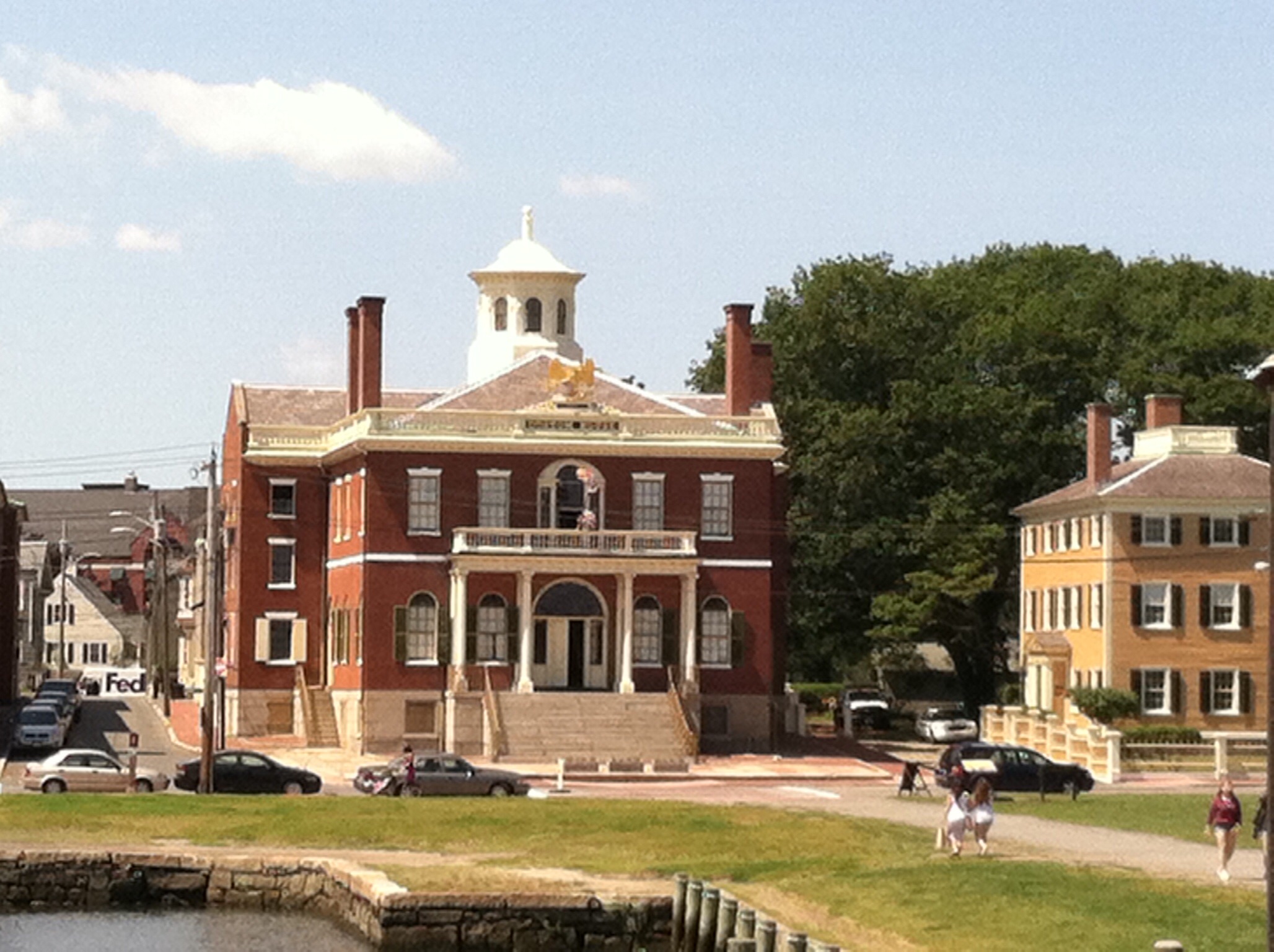
Custom House at Salem Maritime National Historic Site

Custom House at Salem Maritime National Historic Site

We then headed over to the Maritime Historic Site (note we made a conscious decision to ignore the Salem Witch Trial portions of town, particularly the commercial endeavors). Before the enactment of the income tax in America, tariffs (taxes on imported goods) provided the vast majority of the revenue to run the country. Thus, ports had a collection of buildings related to shipping and custom duties; wharves, warehouses, scales, the custom house to collect duties/tariffs, etc. Salem was at one time the nation’s sixth largest city and its port collected 17% of the nation’s tariffs. This was during its glory days from the Revolution to the War of 1812. Its ships sailed to the East Indies and the shipowners here were most likely the nation’s first millionaires. During our countries early days, private vessels operated as privateers, essentially government authorized pirates who captured enemy ships and warships for their own profit. Salem had a high percentage of these ships. The disruption of the War of 1812, an 1807 embargo on foreign trade, and better road networks in Boston and New York ended Salem’s dominance. Our visit included the Custom House, the Public Stores, the Scale House, and a recreated sailing vessel from that era.

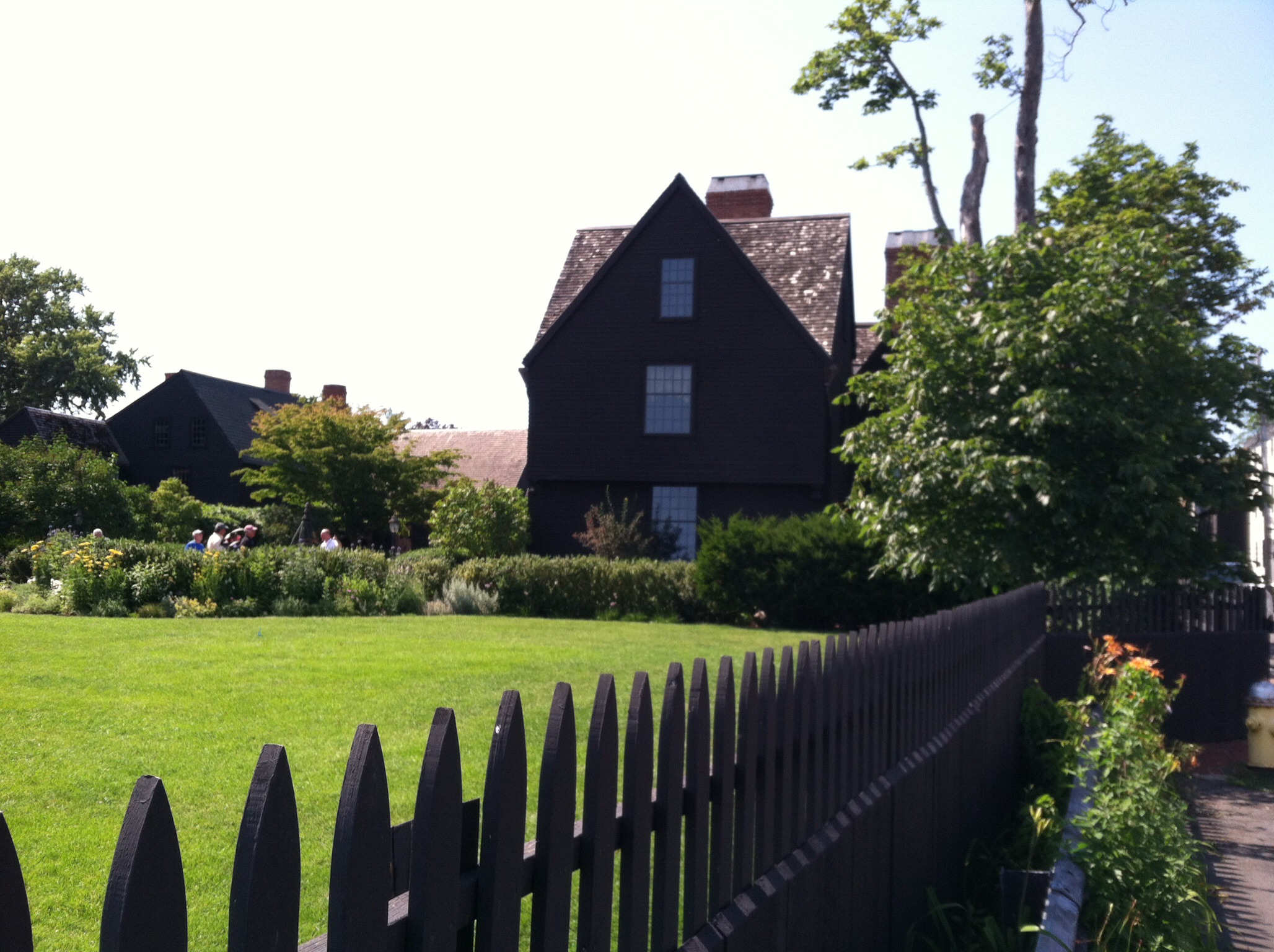
The House of Seven Gables in Salem

The House of Seven Gables in Salem

The House of Seven Gables is a classic American novel by Nathaniel Hawthorne, written in 1851, which is set in this town around an actual house erected in 1668 and which still exists. We walked by it but decided not to take the tour.  The first candy store in America was our last stop to purchase a few treats. Ye Olde Pepper Company dates back to the early 1800s. Their first product, a hard sugar candy called “Gibraltar” is still made although the taste did not impress us.

Dinner in Waltham

Dinner in Waltham

Friday was a day off for all of us. We stayed home, viewed the photos of Deb and Rebecca’s trip to Portugal and Spain, Chris went in the pool, and we walked to downtown Waltham for dinner. A very pleasant way to end a great trip.


Ed and Chris   St. Paul, Saturday July 18


Categories: road trip, travel | Tags: , , , , , , , , , , | 2 Comments

Blog at WordPress.com.