
Glasgow, Montana, Aug.28
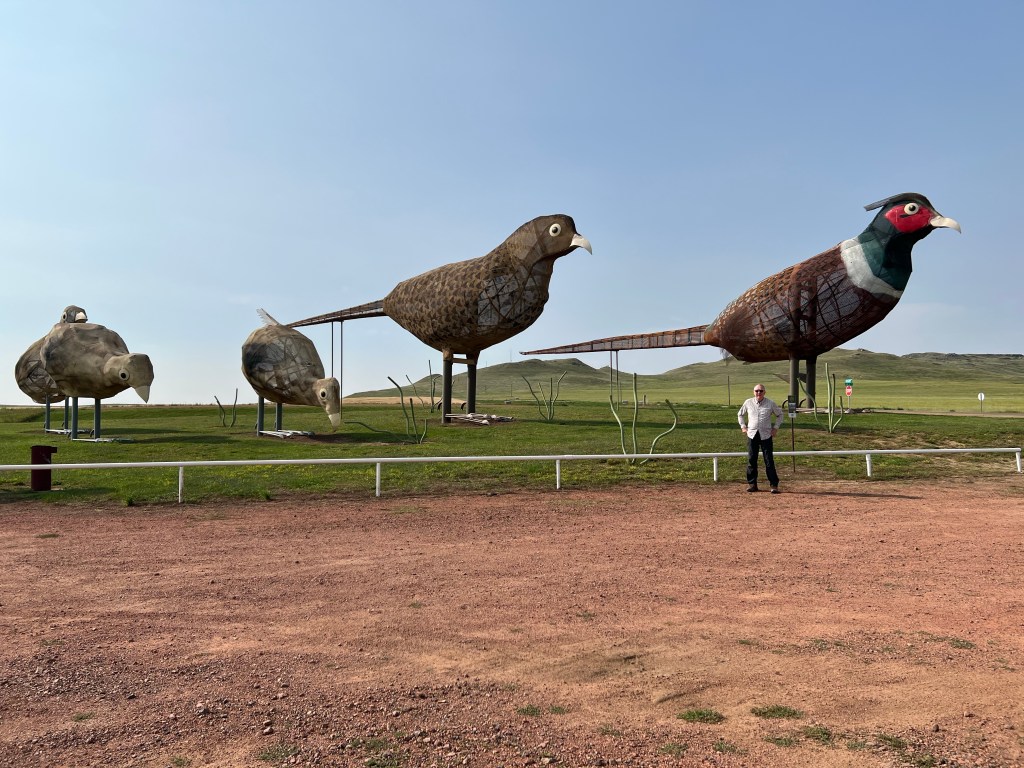
The Enchanted Highway was a spur of the moment diversion. We had left Bismarck and were heading west on interstate 94 when we saw small signs promoting the Enchanted Highway. Then we came upon a humongous (110 feet tall and 150 feet wide) scrap metal sculpture along one of the exits in sparsely populated western North Dakota. We pulled off the interstate to inspect the sculpture. A local artist, Gary Greff, had worked with numerous farmers in this area to create an attraction that would draw visitors to his small town of Regent North Dakota.(Population 170) The metal sculptures would utilize the welding skills so many farmers have developed.

We took a chance to follow this 30 mile, one way, diversion, hoping it was worth the time and would not make us reach Fort Peck dam and Charles Russell wildlife refuge interpretive center past its closing time of 4 PM. In the end, yes the 90 minutes or so it took us to drive to Regent and back was time well spent. Our photos of seven of the sculptures will bring back pleasant memories of this bit of quirky Americana. Greff’s goal was achieved, we gassed up in Regent and bought a memento or two. And we made it to Fort Peck at 2:45 pm.
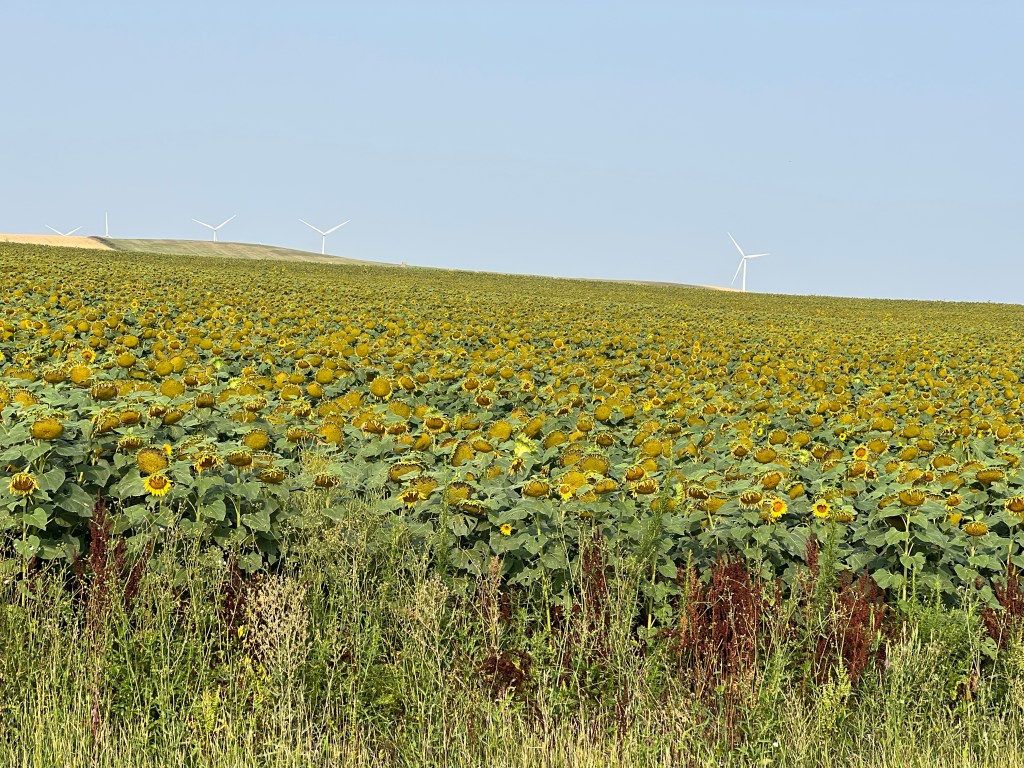

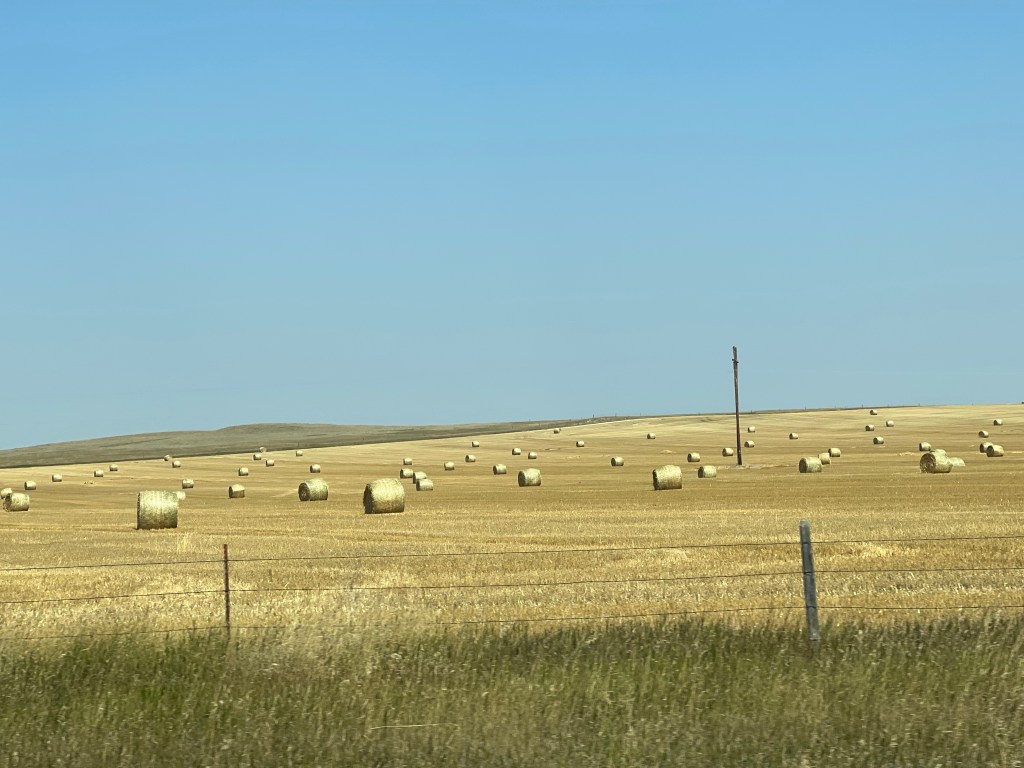


The drive to Fort Peck took us through portions of the badlands of North Dakota with its exposed rock formations, ridges and valleys. Fields of sunflowers were still curled up in the morning until unfolding later in the day as the sun brought forth the yellow flowers. Wheat fields were in the process of being harvested. Round bales of hay were lying in fields everywhere. Cattle grazed singly and in small groups on scraggly looking open pasture. Miles of empty hopper cars from BNSF Railway lined the tracks, possibly stored here until enough grains had been harvested for the cars to be useful.
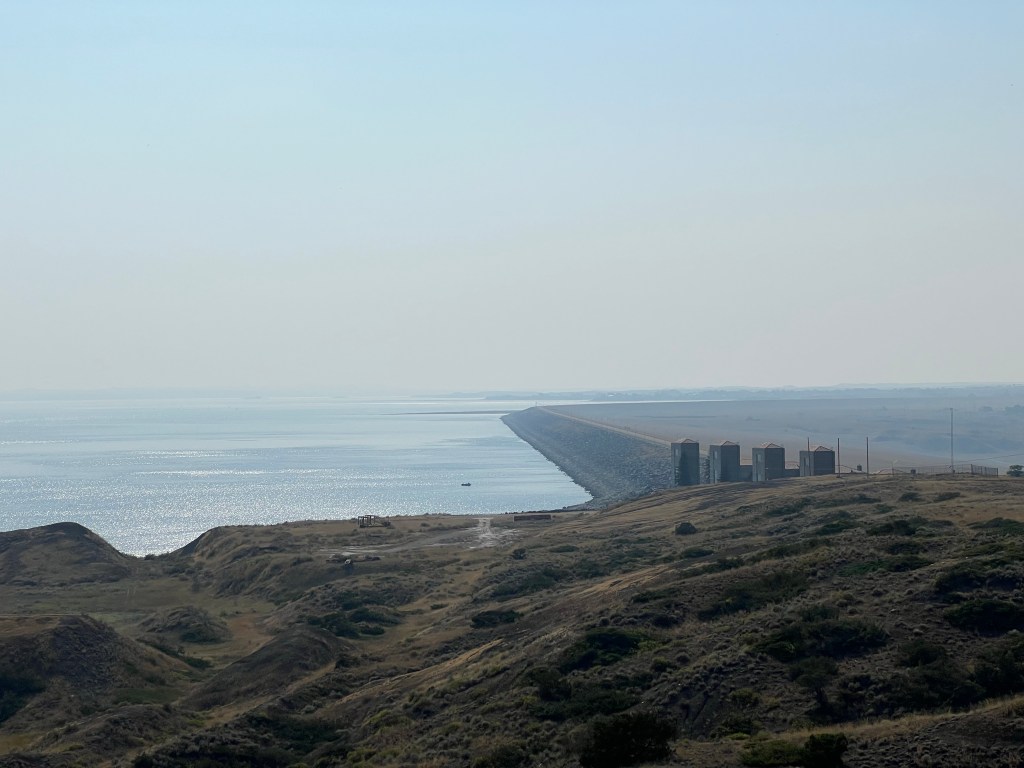
Our destination was the Fort Peck Interpretive Center, a joint project for the Forest Service and the Corps of Engineers. Fort Peck Dam was built during the Depression, damming the Missouri River and creating Lake Peck and later the Charles Russell National Wildlife Refuge. The dam is an earthen embankment dam, 250 feet high and just under four miles long. It took four years to build and the earth of the dam was dredged from the area, sent by a slurry pipeline to the dam site and dewatered and compacted. This is a frequent process for long dams filling a valley. Many people see the concrete spillway built to handle emergency overflows and erroneously believe that is the dam. The dam is the largest hydraulically constructed dam in the US and fifth largest reservoir in the US.
The Missouri River is frequently dammed. Six dams are in Montana and the Dakotas with two of those six creating reservoirs longer and larger than Lake Peck. The Corps of Engineers has to balance multiple and conflicting interests in managing the flows into and out of the reservoirs. Flood control, hydroelectric power, recreation, irrigation, water supply, water quality and fish and wildlife all have different constituents. It makes for a guaranteed conflict when water levels are high or low, and when the dam is built.

Lake Peck, the backed up Missouri River, is 134 miles long. The Charles Russell Wildlife Refuge dates back to 1934 and surrounds Lake Peck. Undergoing numerous changes over the years as to management, size, and designation, the refuge protects over 900,000 acres and is the second largest National Wildlife Refuge in the lower 48 states. Unfortunately for us, access is primarily by boat and we will not truly explore it. The interpretive center gave us the best feel for it that we are likely to experience.
Staff at the center were both helpful and knowledgeable. We took advantage of both of those attributes as we peppered them with questions. It took us a while to grasp the dam’s construction, how the river flows through it, and the location of the spillway versus the dam. I should have spent more time examining the fish displays. It would have helped me with my volunteer stints back at Mississippi National River and Recreation Area.

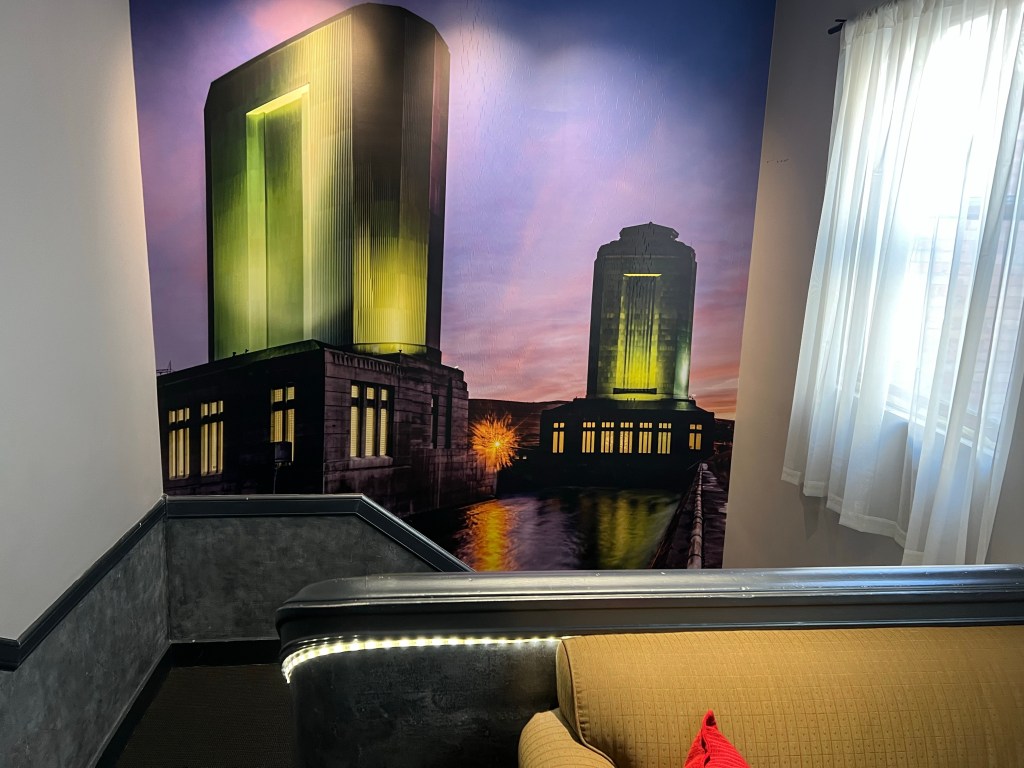
Glasgow Montana is the location of our overnight lodging. The town has 3200 people and is the largest city for 100 miles. We are staying in the Rundle Suites in downtown Glasgow. The building began its life around the time of WWI and has seen a variety of commercial and residential uses. The rooms are newly remodeled and other than a small and old fashioned elevator, the place is quite nice.
Small towns may not always have the widest variety of restaurants but over the years we have found the meals to be quite good. Glasgow did not disappoint. Eugene’s Pizza offered much more than pizza. Each dinner meal came with jo-jos; dressed up fancy potato wedges. Breakfast was at the Oasis, a small restaurant attached to a downtown casino that did not offer a lot of curbside appeal. However our breakfasts were large, tasty, and inexpensive. Plus the milk was cold and the waitress did not need to be told to bring the milk with the meal.
Ed and Chris, Fort Benton Montana August 29

 Chris Klejbuk and Ed Heimel travel adventure
Recent Comments