Posts Tagged With: Empire Builder

2025 Trip 2: Madison WI April 19-21

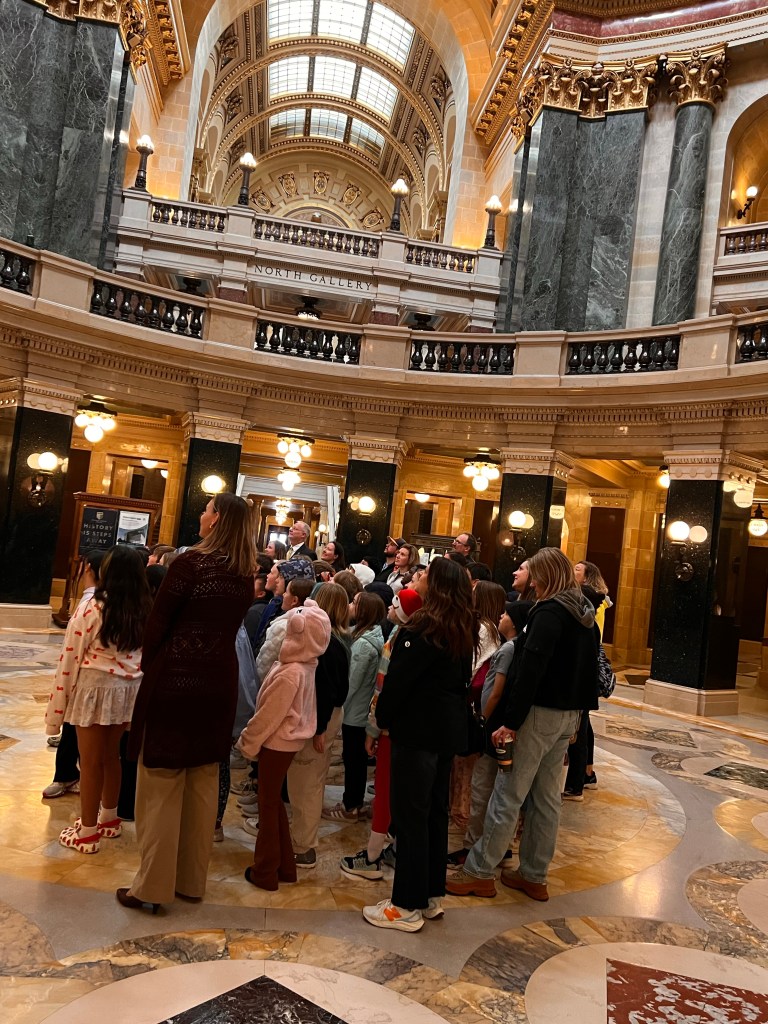
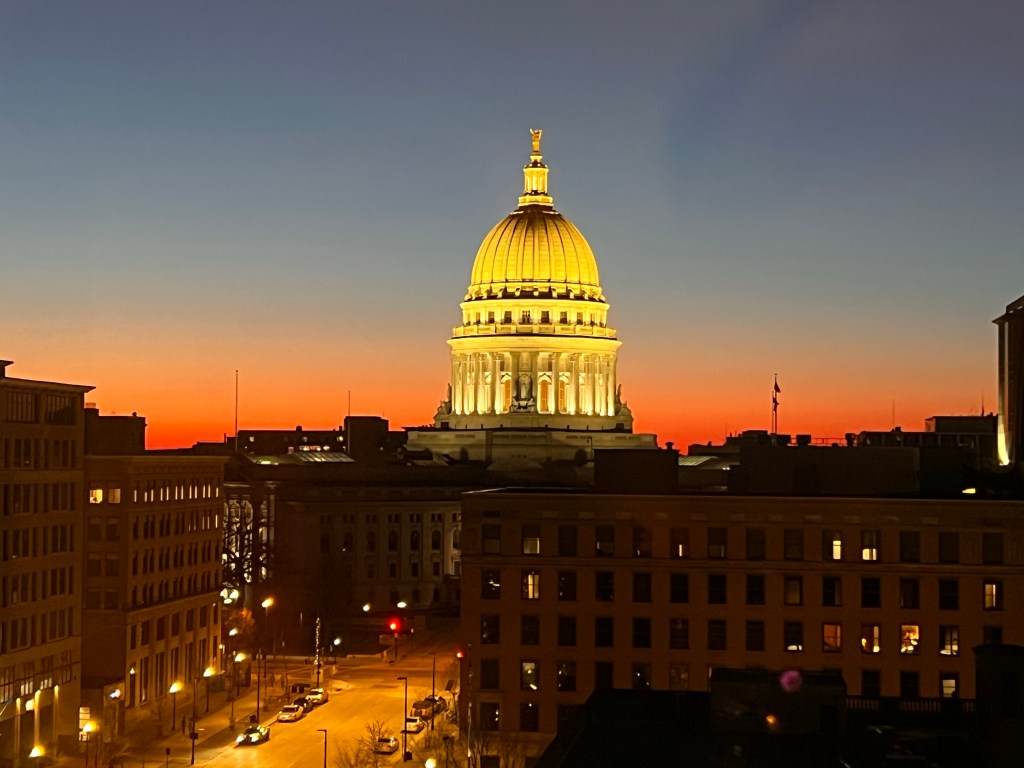
Wisconsin State Capitol

April 21, 2025

Another short trip to get back into the swing of things. We had believed we had never spent any time in Madison and wanted to visit the WI state capitol. (A week ago, in going thorugh some pictures, Chris saw that we had visited the capitol back in the late 1970s-but that visit certainly was not top of mind.) Two nights seemed sufficient.

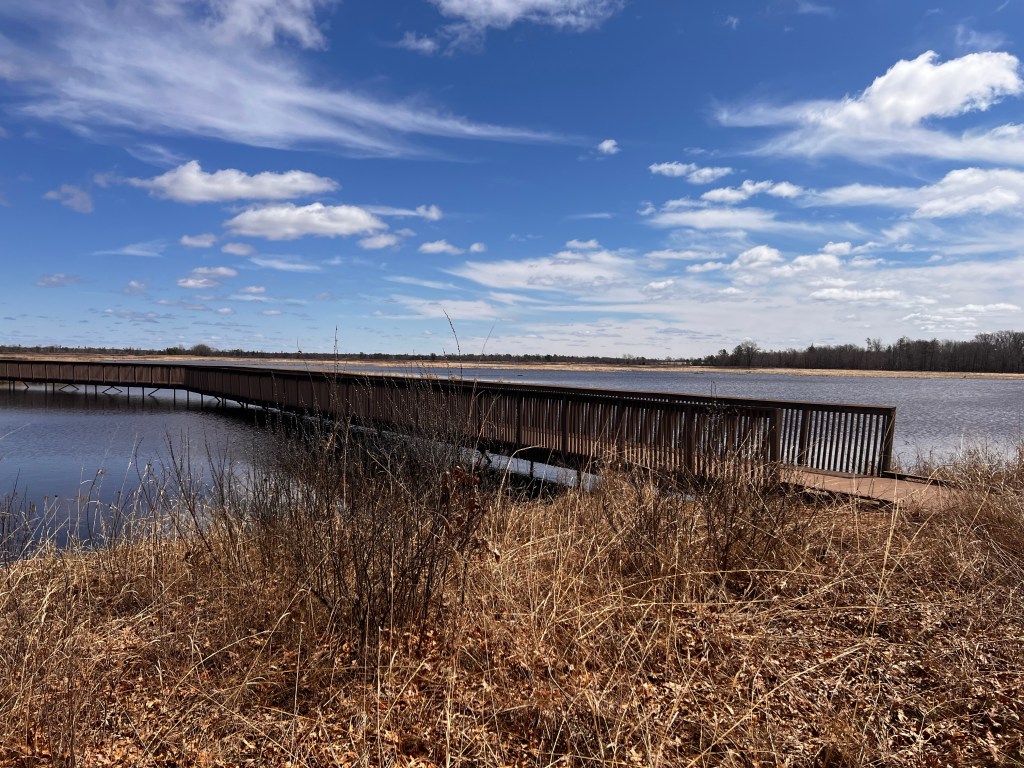
Necedah National Wildlife Refuge

On the way to Madison, we stopped at Necedah National Wildlfe Refuge. This gave us a chance to break up the drive with some walking. The visitor center was impressive, although closed. The center/HQ was constructed of various LEED type materials. The style reminded me of the large HQ at Voyageurs National Park in International Falls.

We made two short walks around the visitor center area. It is not prime time yet for migratory birds, but we saw Canada geese, swans, and some sort of ducks in the distance. We were impressed with the quality of the boardwalks used in the wet, marshy areas. Maybe not your most dramatic item on our trip, but it was nice to see boardwalks that were well made and maintained.

As we were driving, Chris was looking at the Rand McNally maps. She asked me how far Columbus, Wisconsin, was from Madison and if it was out of our way to visit it. Columbus, Wisconsin, is the turnaround point for the Trails and Rails program on the Amtrak Empire Builder. This is the volunteer program I do in the summer. The Trails and Rails program is a joint venture between Amtrak and the National Park Service.

We decided the detour to Columbus was relatively short and we could eat at one of the three places Trails and Rails guides frequent when we are in town. I showed Chris the highlights, and I was able to expand my knowledge. Having a car here was unusual for me and parts of town otherwise inaccessible to me were now discovered.

We ate at the bar with Mexican food, quite tasty. I stopped in at the Amtrak depot and learned that station platform repiars were not yet completed and would impact how the trains loaded. This information I later passed on to the other T and R guides. It seems like various repairs have been ongoing for several years. It might have been easier and quicker to knock it down and start over.

On the way to Columbus, on one of the back roads, we passed a shrine called Queen of Peace. Evidently back in the 1970s a local woman said she saw a vision of Mary, Mother of Jesus. The Catholic CHurch investigated and did not validate her claim. Despite that, others felt the woman’s vision was valid and built a shrine here. It is still going strong 50 years later and they have an elementary school also. The shrine was closed, even the gift store, so we just drove around and did a Google search about it.

After Columbus we made our way to Madison. We stayed at a Hilton downtown in a corner room with a great view of the Capitol and Lake Monona. Madison is built in an area the Ho-Chunk Indians called Four Lakes. Downtown and the University are built on an isthmus between two lakes, Lake Monona and Lake Mendota. The Madison Convention Center is on Lake Monona just a block from the Hilton.

Sunday was Easter. Before going to church, we had breakfast. Our deal at the hotel included a full, off the menu breakfast. It was quite good and we avoided the crowd that showed up for their Easter brunch. We went to church at the Catholic Church on the UW-Madison campus. We had arrived early, found a parking space, and were going to walk the campus for a while. Walking past the church, we saw people going in, 40 minutes prior to Mass starting. The person at the reception desk told us people were arriving early to get a seat. So we went in and waited along with others in order to have a seat. There were so many attendees that they ran out of Communion hosts.

A full size work by Esherick

The Chazen Museum of Art is on the campus and we visited there after church. Part of the building was being renovated so only a portion was viewable. I particularly liked an exhibit featuring works by Wharton Esherick from PA.

Easter was rainy but we took a chance and went to the Arboretum. The visitor center was open but really had no exhibits or flowering plants of any interest. Once we realized that, we left and went to The Chocolate Shoppe for an afternoon ice cream treat.
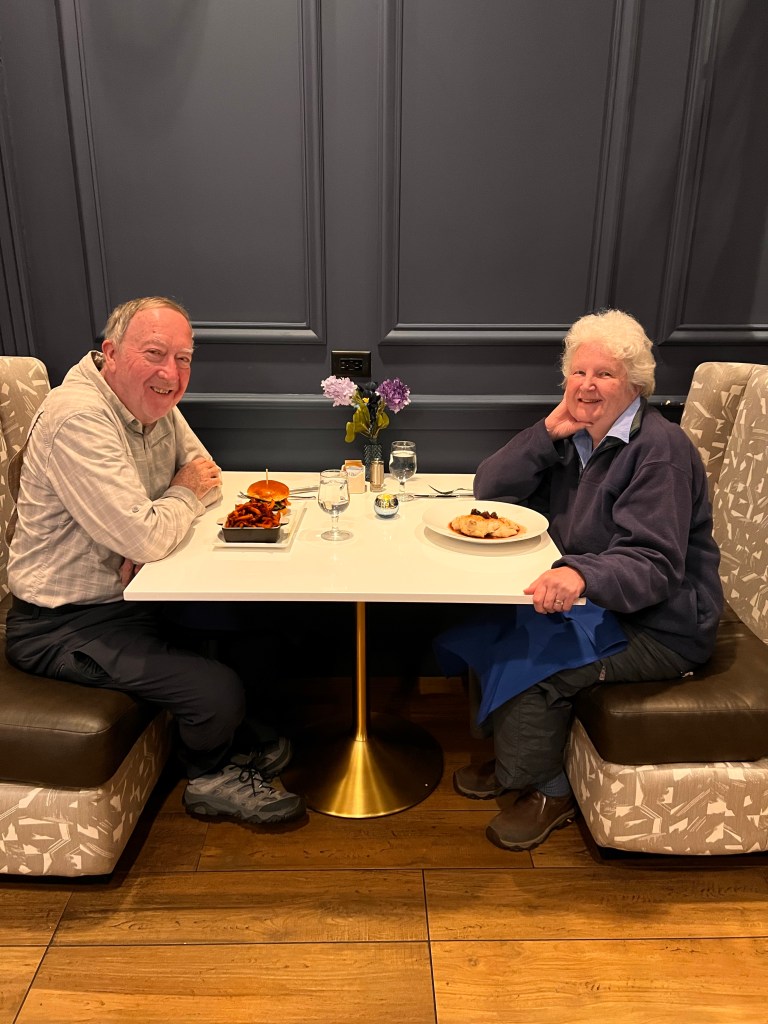
Returning to the hotel, we walked over to the Convention Center and enjoyed the lake view. Dinner was also in the hotel. It was not very crowded, I guess everyone had Easter brunch.

Monday was our busiest day. We started out with another full breakfast at the hotel, then over to the Capitol. Unfortunately, our tour was joined by children from two classrooms. Fortunately, they were well behaved.

The tour lasted an hour and included numerous steps to climb with the final climb up to the outside observation deck. The school kids had returned to their buses so the small space was uncrowded . Inside was a small museum of history about the Capitol, outside was a great view of both lakes and the campus.

After the tour we packed up and left the Hilton and Madison. Our next destination was Cross Keys, headquarters for the Ice Age Trail Alliance (IATA). IATA is an non-profit partner to the National Park Service Ice Age Trail. The Trail is 1200 miles, following the edge of the last glacier in North America in its journey through Wisconsin.

The Ice Age Trail is only in Wisconsin and the Trails and Rails program guides talk about it on our Amtrak Empire Builder journey. The people from IATA would be presenting a one hour Teams online training for the T and R guides on Friday. Since I was in the area, I thought it made sense to stop by and say hello. I picked up a few items for guides to distribute on the train.

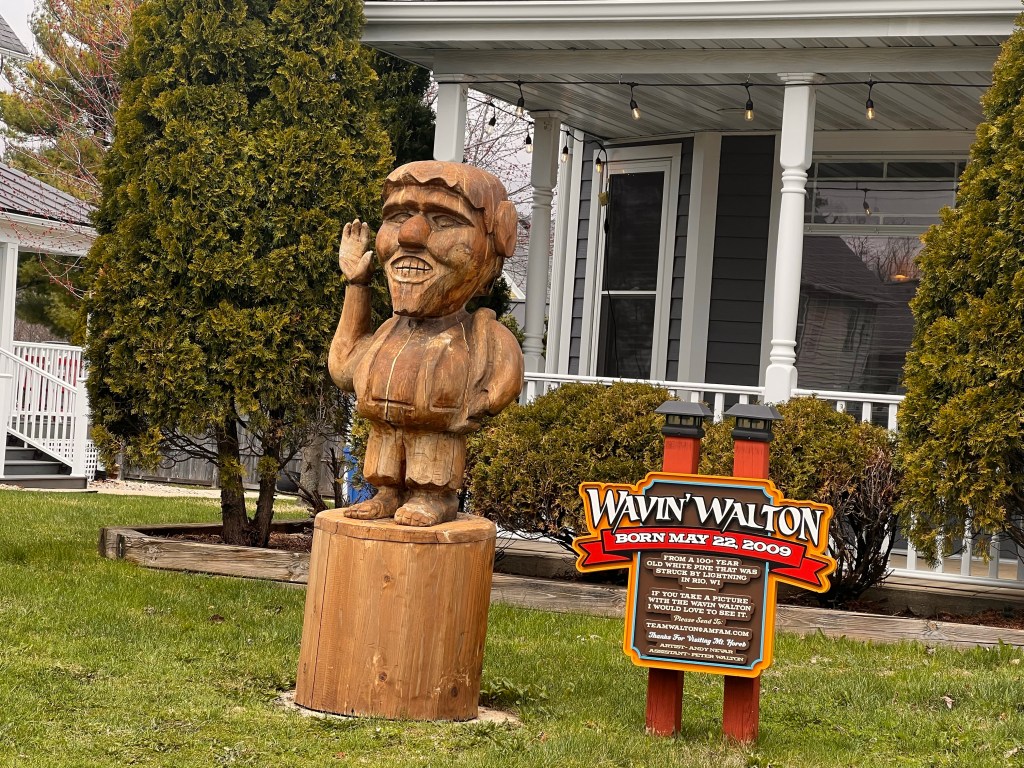
Leaving Cross Keys, we knew we had extra time before our last planned stop of the day so we made a side journey to Mount Horeb. This town has marketed itself around trolls. Norwegians had become the dominant immigrant group in the area and trolls seemed a natural fit for marketing. The local museum discussed the history both of the local area, the Driftless Region, as well as the troll theme. It was a pleasant and surprising diversion.

The Epic campus

Our final stop of the day was the campus of the company Epic. Epic develops “software to help people get well, help people stay well, and help future generations be healthier.” It is privately held and must make a lot of money. The campus is divided into six regions, each region consisting of a cluster of office buildings connected to each other.

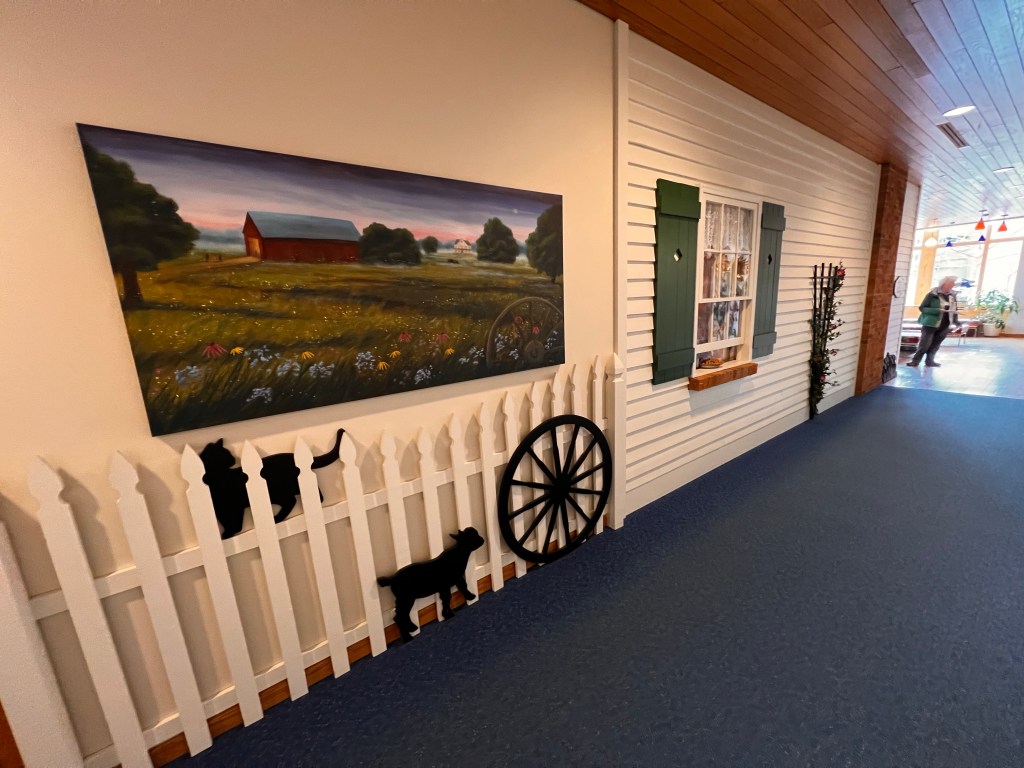
Epic allows visitors to wander around the campus area and inside the office buildings, starting at 2 PM each weekday. Each of the six campus areas has a self guiding tour, in a glossy written multi-page handout that highlights conference rooms, artwork, even hallways. It takes about one hour to tour each campus. We chose the campus titled “Prairie” since it is located right at the visitor check-in and we did not have to walk to another area. A mother and her three children were in front of us. This was their third time here, driving up from their home in Illinois each time.

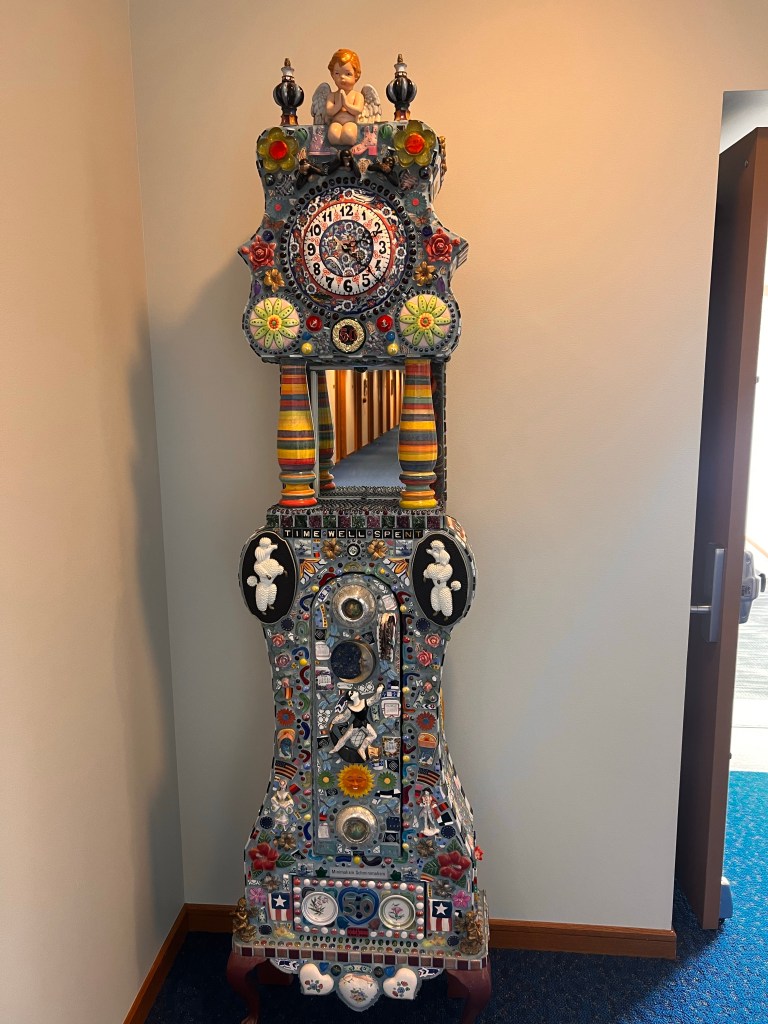
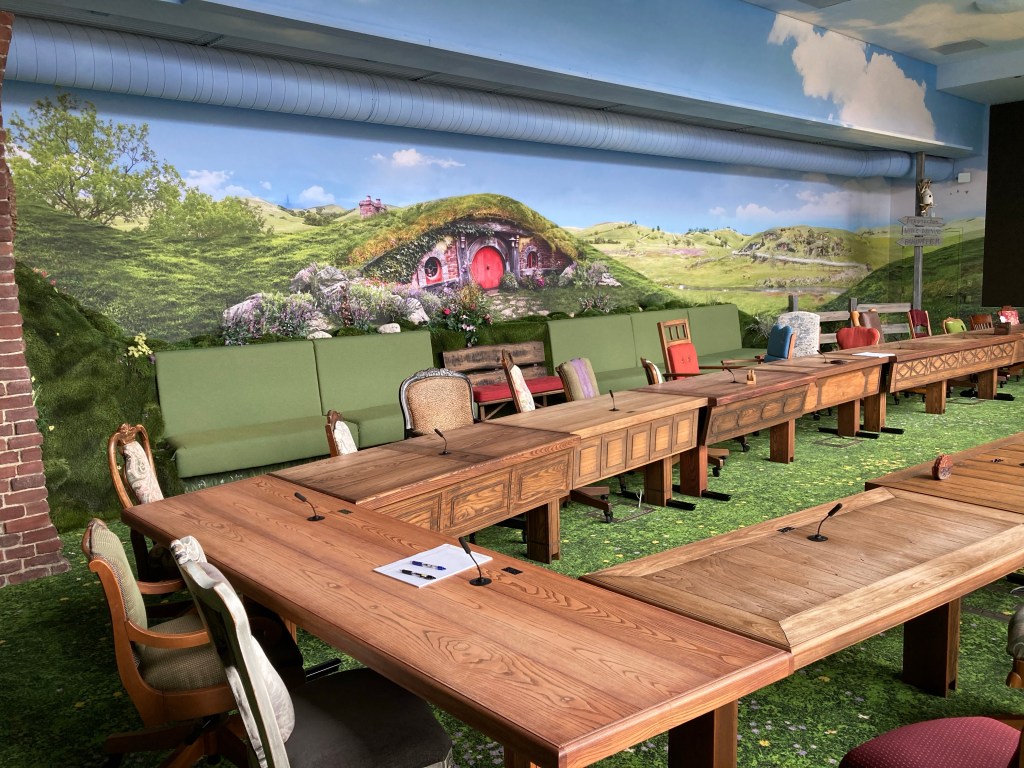
It is hard to describe everything we saw. We will put in some pictures to try. You might do an Internet search for Epic tours and see for yourself.
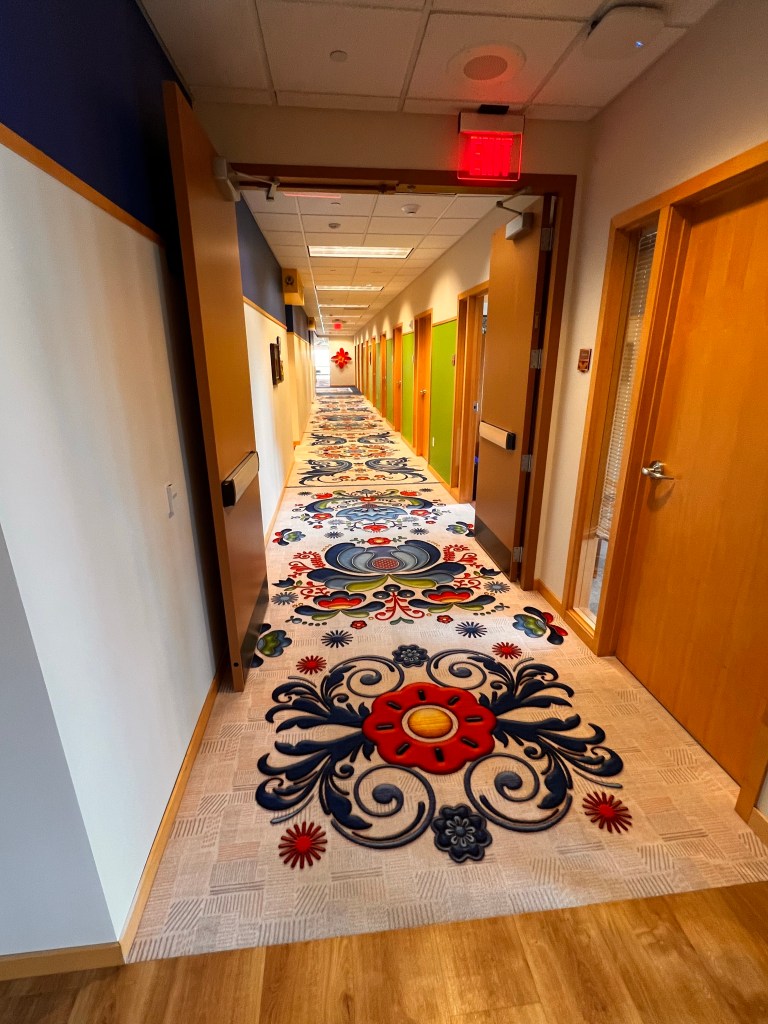
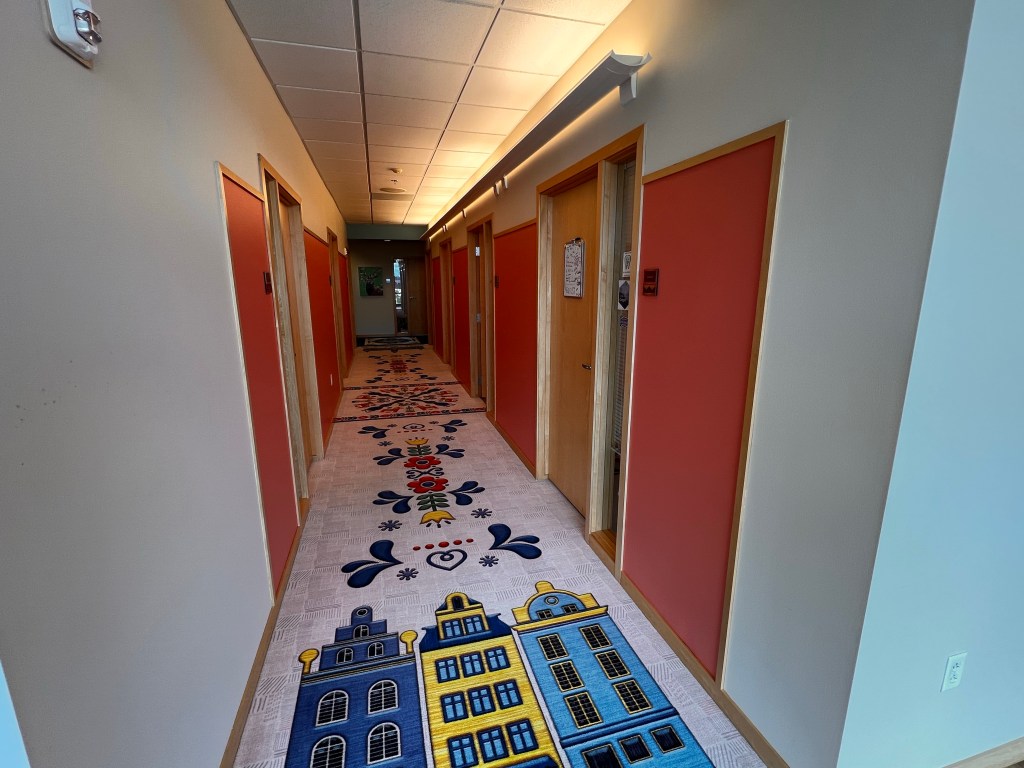
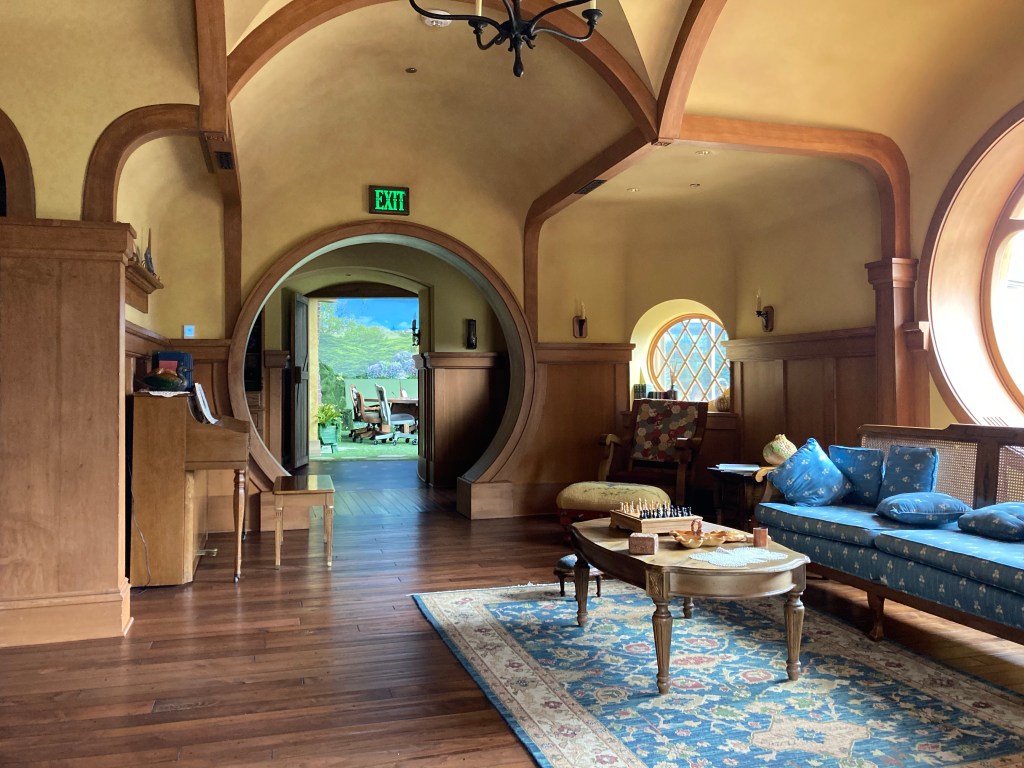
The door to the Shire (From the Hobbit and Lord of the Rings) Conference Room

We were astounded. While not knowing the Epic work culture, the setting made me think I would never retire if I worked here. Every person has an office with hallways that are not bland. There is a conference hall/amphitheater that seats 11,000. There are bikes and a tram to get around the campus. The artwork is from Wisconsin artists suggested by employees

Evidently the building design people went to Disney and to Microsoft to determine if creativity or efficiency is more important. One said creativity drives efficiency, the other said efficiency drives creativity. Epic tried to combine both.

Chris and I could only handle one tour, taking an hour to complete. The sensory overload made us think we could not handle a second one. Maybe during one of our driving trips to the South or East, we will stop in for a visit to another campus.

The drive home was uneventful. One more small trip under our belts. Next effort will be late May.

Ed and Chris, not finished until May 6.

Categories: travel | Tags: , , , , , , , , , , , | 2 Comments

2019 Trip 5: Alaska: Sept. 11-13

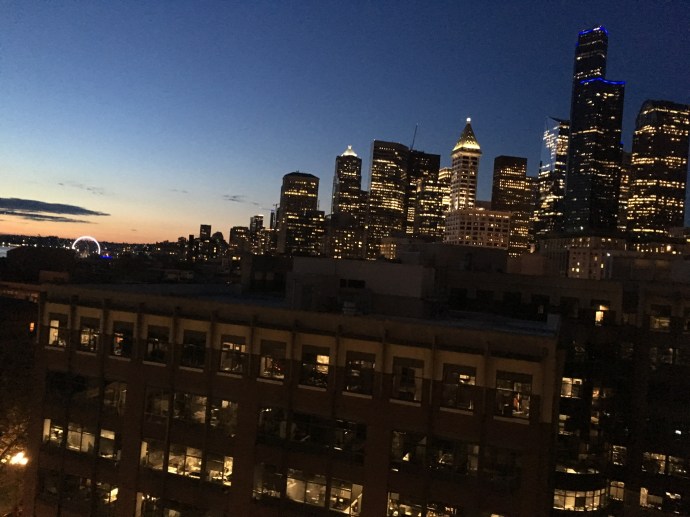
An evening Seattle shot

Havre Montana Thursday Sept. 12

King Street Station in Seattle

The Embassy Suites in Seattle was our overnight lodging Tuesday night. It is across the street from the Amtrak station and two blocks from the National Park Service’s Klondike Gold Rush National Historical Park. With the delay in leaving Anchorage airport, we only had time for dinner Tuesday night. Wednesday morning though we walked around the Embassy Suite area, very close to the football and baseball stadiums. After breakfast, we brought two of our bags over to the Amtrak station. We checked them through to St. Paul, and then stored the last suitcase and backpacks at Embassy Suites until later in the afternoon.

When we were in Alaska, Seattle and its businessmen were portrayed as feasting off the natural resources of Alaska without local decision making and certainly no plowing profits back into Alaska or its peoples. In Seattle, the portrayal was the ingenuity and entrepreneurial skills of Seattle in its dealing with Alaska caapualted the town into a major urban hub. Even before the gold rushes, the profits from Alaskan natural resources paid for the purchase price in under ten years. When the gold rushes occurred, Seattle’s population and importance surged.

Minot ND, 7 hours later

The Chilkoot Trail and imitation gold bars.

The gold of the Klondike Gold Rush was located in Canada but the “easiest” routes to the Klondike went through the U.S. The Klondike Gold Rush National Historical Park related the stories of the people who were adventurous enough to tackle the arduous journey. It is estimated that 100,000 prospectors started out for the Klondike and about 300 struck it rich.

The Canadian Mounties enforced a rule that each prospective prospector had to have a year’s worth of supplies before they would allow them access to the country. This meant each prospector had to carry about 2,000 pounds of miscellaneous tools, food, shelter, etc. This requirement necessitated multiple trips to move a portion of the supplies to a drop spot, or cache, and then return again and again until the full load was moved each short leg of the journey.

One optional route involved the Chilkoot Pass. It generally took each prospector three months of slogging to move the required 2,000 pounds of goods over the pass. The last obstacle on the Pass involved a quarter mile hike gaining 1,000 feet in elevation. Famous pictures show an endless line of people walking one behind the other to reach the top-only to return to the bottom and bring up another load. By the time most new prospectors reached the Yukon, the good claims were taken or used up.

Puget Sound

Seattle’s King Street train station has been renovated but is still relatively small and featureless. It is busier, however, than Union Depot in St. Paul. The Empire Builder left on time and first heads north along the Puget Sound. Around Everett the train moves east and we started going through mountains. Since we left at 4:40 P.M and sun sets at 8 PM, the view ended early. Luckily, tonight was almost a full moon and for several hours one could look out the windows and watch the moon shine on the hills and valleys.

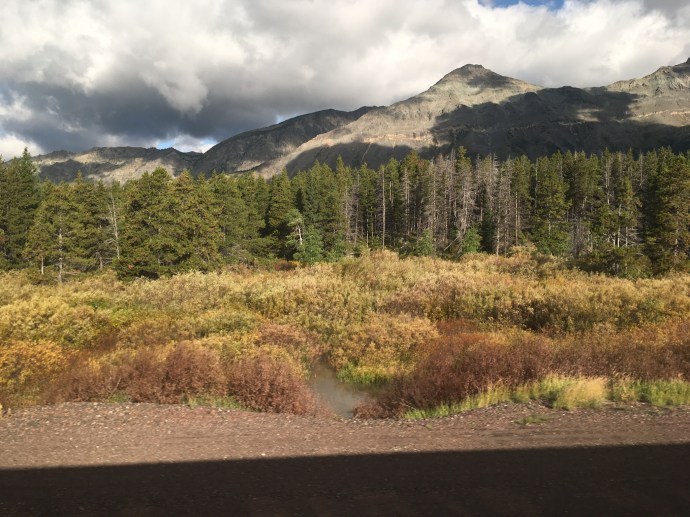
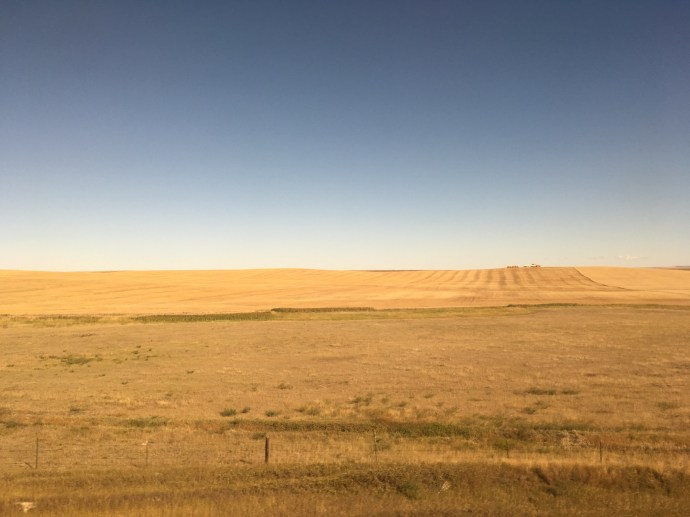
Some of the Thursday morning views

We selected a larger sized sleeper compartment, all meals are included as part of the package. Amtrak meals, I find, are reasonable and since the price is included, we made sure to partake of each one during our 40 hour journey. I had planned to spend time in the observation car and we did for an hour Thursday morning after breakfast. While those views are nice, they were not much better than the views from our sleeper so we returned to the sleeper and spent most of our tine there.

Napping in the sleeper car

Sleeping in the sleeper depends on the person. Neither Chris nor I were bothered by the rocking motion of the train. I found it difficult to fit into a comfortable position and did not sleep that well. When the lower bed is out, maneuvering around is very tight. If you are sleeping, not a problem. If you are awake and trying to do anything else, it is a challenge. when the bed is back into being a couch, there is plenty of room to stretch, nap, read, etc.

Big Sky Country-Montana

Thursday’s route took us around the boundaries of Glacier National Park and eastward through northern Montana and North Dakota. One understands the motto “Big Sky Country” for Montana after riding for hours along this route. Once you cross the border into ND, the oil wells, flares, and processing facilities are front and center.

Currently we are 30 minutes behind schedule but Amtrak has means to make up the time and I expect we will arrive on time in St. Paul Friday morning. We did some reading, some napping, some talking with fellow travelers, and a lot of just looking out the window. After all, if we were driving this would be pretty much the same route and I would not be as able to enjoy the view. So, we relaxed, enjoyed the ride, and ended another great trip seeing the U.S. Next scheduled experience: the month of October volunteering at Voyageurs National Park.

Outside Amtrak #8 in Havre MT

Ed and Chris. September 13. Somewhere between Grand Forks and Fargo ND. 2 AM

Categories: road trip, travel | Tags: , , , | Leave a comment

2017 Trip Four: Chicago July 25-28

St. Paul, MN July 31, 2017

For this short trip to Chicago we traveled light; no iPad so no blog while traveling. This is our fourth trip to Chicago in the last ten years or so and for the second time in a row, we rode the Amtrak Empire Builder from St. Paul’s Union Depot. Overnight parking ranges from $49 to $64 per night and our plans for the visit did not require a car. The Amtrak round trip fare for two was $234; it seemed like an easy decision to train it. Amtrak seats are roomy and comfortable, you can walk around, there is scenery to observe, and plenty of people-watching and listening. Amtrak is always an adventure though; you can not plan on it being fully on time. I have a habit of checking to see how the Empire Builder is doing, time-wise. Often it is 15-30 minutes early (it waits in St. Paul to depart on time if it arrives early). It can also be late. When it is late, it can be hours late. Of course, our train was one of those. The engine for our train broke down in the mountains out west and the train had to wait for a BNSF freight engine to arrive and pull it the rest of the journey to Chicago. We knew it was going to be late, so we had breakfast at the Buttered Tin in downtown St Paul while we waited.

Crossing the Mississippi River on Amtrak going from Minnesota into Wisconsin

The Empire Builder arrived in St. Paul three hours late. The freight engine goes slower than the Amtrak engine and we arrived in Chicago four hours late, 8 PM instead of 4 PM. The Empire Builder usually stops on the northern side of the depot, ours went further into the southern portion of the station, providing a shorter walk for passengers trying to connect with other trains. The ride was smooth, the views scenic. Many moons ago Mark Twain described the view along the Mississippi River in grandiose words. His words may have been a little over the top but the view does make for a relaxing and enjoyable trip. Chris and I split our time between our coach seat and riding in the observation car.

Readers of this blog may recall that I have been a volunteer docent on the Amtrak Empire Builder as part of the Trails and Rails program jointly sponsored by Amtrak and the Mississippi National River and Recreation Area (MNRRA), a unit of the National Park Service. Unfortunately, this year the program is in on hold. MNRRA lost two rangers, one was the supervisor for this program, and with the federal freeze on hiring they did not have enough staff to oversee our program. Hopefully it will return in 2018. I felt a little weird riding the train, particularly when in the observation car where we did our presentations, and not speaking or being able to listen to any speaker. Most passengers did not know the difference. On this train, I did not recognize any of the conductors or car attendants. On our return trip on Friday I recognized a conductor and he did indicate some people had asked why the Trails and Rails program was not being presented.

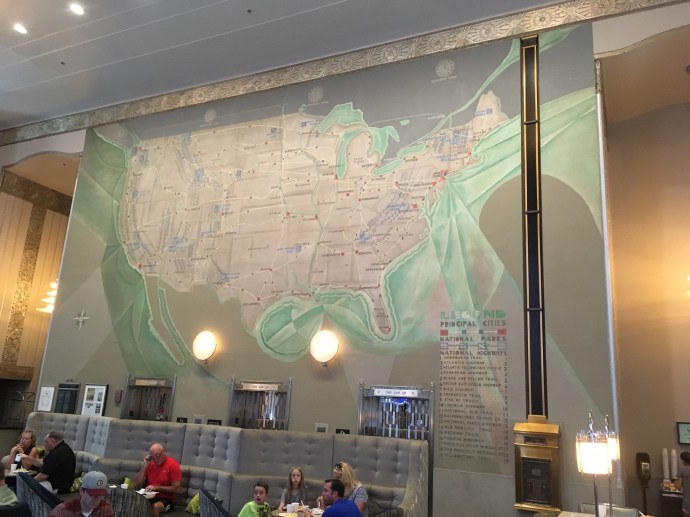
Mural dating back to the days of the Chicago Motor Association in our Hampton Inn Chicago

In Chicago, we stayed at a Hampton Inn at Wacker and Michigan, one half block from the Chicago River. It was a very convenient location. The hotel building originally was the home for the Chicago Motor Association (AAA) but had been vacant for many years. The renovation retained the Art Deco feel of the original building. Like many hotels in large cities, the rooms were small. Of our four stays in Chicago, three have been Hamptons and all have been a good choice. We walked the mile to the hotel from Union Station, once again enjoying the architecture of the buildings along the way. Dinner was across the street at a Jamaican bar/restaurant.

The “Bean”

Wednesday, our major activity was a bus tour of Chicago Historical Neighborhoods run by the Architectural Association of Chicago. This group organizes numerous architectural tours; we have been on three others before this one. All are well done and reasonably priced. The tour did not begin until 11 so we wandered around Millennium Park beforehand. Millennium Park was a project of the second Mayor Daley to take the northern section of Grant Park, cover over numerous unused railroad yards and make it into a spectacular park to celebrate the year 2000. Well, typical of many projects it came in over budget, past its scheduled completion date but wildly successful. It is full of notable scenes; the “Bean”, a cascading waterfall, a new garden, a kids play area which is spectacular, and another outdoor amphitheater.

The Crown Fountain in daytime, at night the towers change colors

We have been to Millennium Park before but Lurie Garden and the Maggie Daley kids play area were new to us. Millennium Park cost almost 500 million dollars and was a combination of city and private funds. It is always a pleasure to stroll around, particularly in pleasant summer weather. People gather at the Bean (technically titled Cloud’s Gate), a shiny structure shaped like a bean, that reflects the views of the spectators as well as the background of the Chicago skyscrapers. Others splash in the reflecting pool of the Crown Fountain, situated between two fifty foot towers with changing faces of people on them. Periodically the mouth of the person opens up and directs a spray of water onto the people, usually children, waiting underneath.

Grant Park as a whole is over 300 acres, over 1.5 miles long, provides scenes of the lakefront, is home to several museums, fountains, sculptures, etc. It is the site of large gatherings, such as an outdoor Mass by Pope John Paul II, Barack Obama’s 2008 Election Day victory speech, the celebration for the Bulls and Cubs national championships, and a riot during the 1968 Democratic National Convention.

But back to the tour. We were on a double-decker bus, with probably about 20 others. Many of the “Hop-on, Hop-off’ double decker buses that circulate around the downtown area were full. Our tour guide was a volunteer for the Architectural Association who was quite knowledgeable. We drove through Greektown, Little Italy, Pilsen, Chinatown, and Bronzeville. Most of these neighborhoods have changed from their original ethnic roots, although the architectural style may still survive. The 1960s and 1970s were particularly destructive as freeways were constructed and universities and hospitals expanded. This “modernization” destroyed neighborhood cohesiveness and scattered residents to new neighborhoods or suburbs as large, new buildings were erected. For instance, Bronzeville was once home to a major African-American community, located here as informal segregation limited where they could live. When the Illinois Institute of Technology came in with its brutalist, concrete style of buildings, many residents had to move and much of the original housing stock destroyed. We were able to view remnants of the homes from that era.

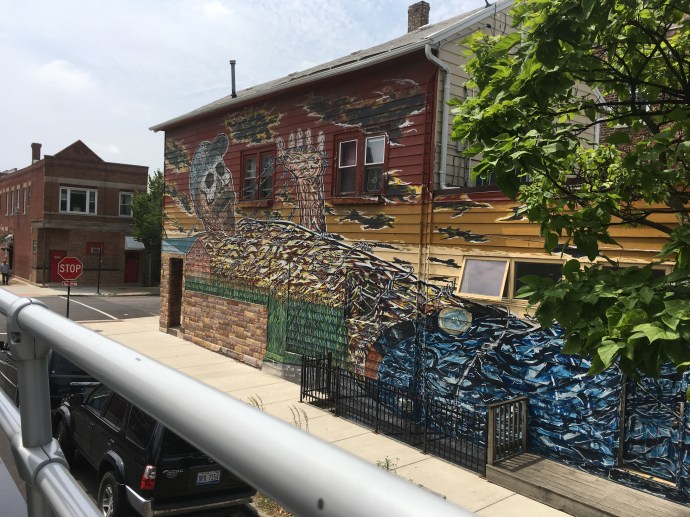
One of the murals in Pilsen neighborhood

Pilsen was originally a Czech neighborhood. Now it is central to Chicago’s Mexican-American heritage, with numerous wall murals decorating the community. Chinatown is actually expanding, unlike many other “Chinatowns” around the country. Chicago’s Chinatown originally developed when the Chinese who immigrated to the U.S. faced discrimination and violence on the West Coast. Several neighborhoods had homes where the first floor was below street level. Evidently much of Chicago was built on swamp land which has settled. Unlike downtown Chicago where fill was added and building were physically raised, these residences settled without any city intervention. When we visited the Pullman National Monument in Chicago last year, we learned that George Pullman was one of the contractors hired to raise downtown buildings.

We were only able to view these buildings due to the skill of our bus driver. The downtown “Hop-on, Hop-off” buses drive down wide streets with few trees. Our bus traversed narrow streets with tree branches and wires frequently threatening the people on the upper deck of the bus-us. He did a fantastic job; I escaped without any scrapes or bruises and we did not hit any pedestrians or cars. On the tour we saw the outside of the National Mexican-American Art Museum and the National Hellenic Museum; we will have to put them on our list for the next trip.

At the Grant Park Orchestra performance

Wednesday evening we went back to Millennium Park. This time my cousin Sue picked us up with picnic food. We met two friends of hers at the Jay Pritzker amphitheater. The Grant Park orchestra was playing to a crowd of several thousand. Actually, I have no idea of the number of people. The crowd was not announced but it is a large area and people were spread out everywhere. It was a pleasant evening, the music was enjoyable, and we had several hours to chat. Honestly, our talking very quietly during the orchestra did not interrupt or bother other people. It is a setting where you can talk quietly and still enjoy the music as a standard part of the audience participation.

Thursday was projected to be a rainy day but the rain prediction disappeared and we changed our plans. We took a bus north to Lincoln Park. Lincoln Park is 1200 acres and includes the Zoo, Conservatory, History Museum, beaches, playing fields, numerous statues, and nature museum. In the morning, we visited the Peggy Notebaert Nature Museum including its butterfly house, the Conservatory, and the lily ponds. At the Peggy Notebaert Nature Museum, we joined a throng of summer campers as the Nature Museum is free to residents of the state of Illinois on Thursday. Despite the kids, we were able to enjoy the exhibits and displays. Climate change is still alive there; displays showcased climate change, solar panels, green homes, purification of drinking water and the cleaning of waste water.

In Lincoln Park

Walking south, we encountered the conservatory with its glass domes and floral displays. The conservatory was not huge, probably no larger than the Como Park Conservatory here in St. Paul. We continued walking through the park, watching the maintenance crew repair the fountain, then we could observe the dogs and children play in the fountain. The flowers along the fountain area south of the conservatory were brilliant and well done. We even sat for a while and just enjoyed the view. Lunch was at a restaurant just 1/2 block west of the park.

In the Chicago History Museum

Our journey continued for several more blocks as we reached the Chicago History Museum. This was an excellently done. We spent several hours here until our bodies were tired of standing and reading and observing. One of their main exhibits is titled “Crossroads of America”. The displays highlight the role of Chicago in the development of the United States, touching on such topics as the stockyards, railroads, breweries, lumbering, medical advancements, etc. We spent probably two hours going through this one exhibit. The other exhibits we treated as more of a walk through for us since our energy was dwindling.

Walking down State Street

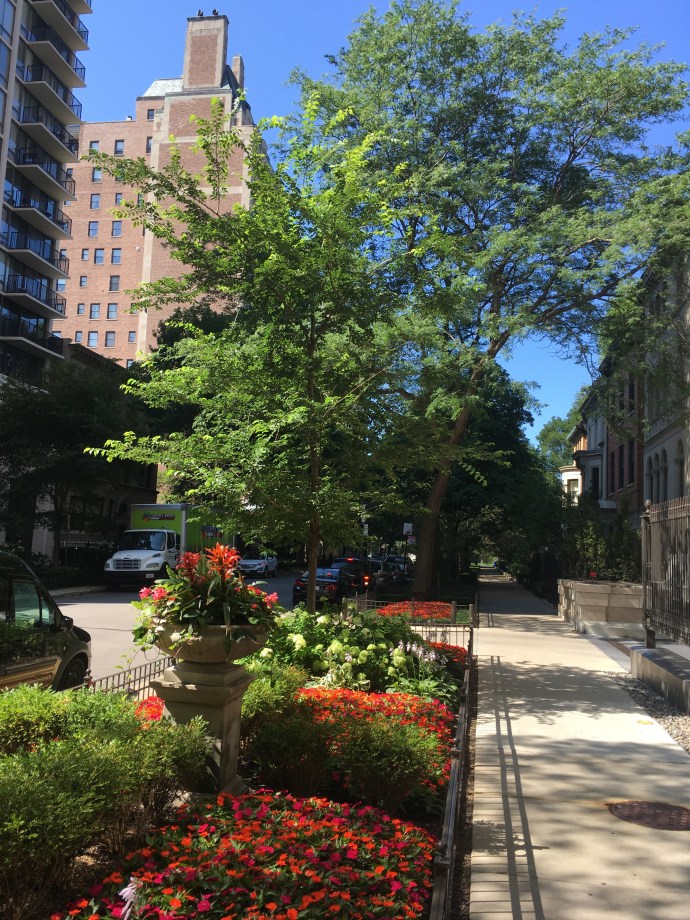
We decided to walk back to our hotel, choosing the quieter side street of State Street and Rush street. The first half of the walk was on quiet, tree-lined, flower-filled streets with probably expensive walk up residences intermingled among high-rise buildings. The final, more downtown section was still comparatively quiet as compared to Michigan Avenue just to our east. We congratulated the fact that we walked over 11 miles on Thursday with a stop at Ghiradelli Chocolate for some ice cream and sorbet refreshment.

Maggie Daley Park

Thursday evening we spent some more time at Maggie Daley park at Millennium Park. We were amazed at the variety, complexity, and beauty of the children’s play structures. There was even a climbing rock area, surrounded by a track where parents and children could rollerblade and ride on scooters. Even at 8 PM, there were a sizable crowd of parents and children utilizing the grounds and facilities.

As we returned towards the Pritzker amphitheater, we encountered the crowd for the live recording of the public radio show called “Wait, Wait, Don’t Tell Me”. The crowd was even bigger than the group present Wednesday night for the Grant Park Orchestra. We managed to wend our way through the park before the crowd left the performance.

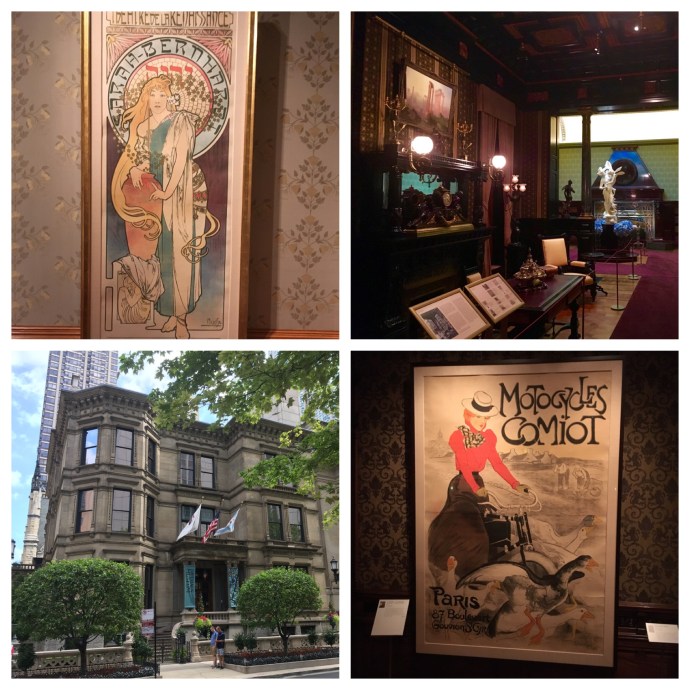
Driehaus Mansion Chicago

On Friday, our train was not scheduled to depart until 2:15 PM. We took a docent led tour of the Driehaus Mansion, a suggestion made to us by the friends of my cousin Sue who were with us at the Pritzker Wednesday evening. The mansion is one of the few remaining examples of the palatial homes erected by the wealthy of America’s Gilded Age. At its time, it was the largest private residence in Chicago. In the early 2000’s, it was purchased by a very wealthy investment manager (Richard Driehaus) in Chicago, renovated, and made available for tours. “The lavish interiors are complemented by stunning examples of furniture, decorative arts, stained glass, and period pieces selected from the Driehaus Collection.”

After the tour, it was time to walk over to Union Station to catch the Empire Builder home. The train left on time, but arrived ten minutes late due to slower speeds in areas of track construction work. We had an excellent dinner on the train. Our dinner companions were a couple spending several weeks touring the country, using the train to go from point to point. During our discussions we discovered we had been to many of the same places around the country, including lodging at the Duff Green B & B in Vicksburg. All in all, a pleasant journey.

Returning home along the Mississippi River Friday night

Ed and Chris, Saint Paul Minnesota July 31

Categories: road trip, travel | Tags: , , , , , , , , , , , , | Leave a comment

2016 Trip One, Chicago, Day Three

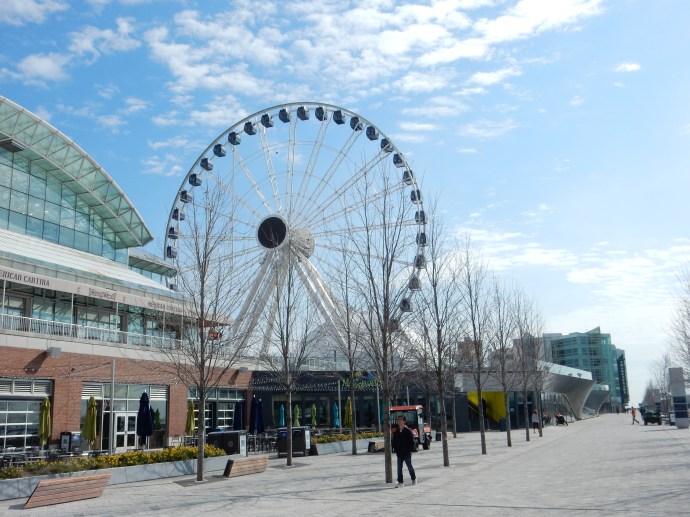
Navy Pier viewed looking out toward Lake Michigan

Navy Pier viewed looking out toward Lake Michigan

April 13, 2016
Chicago

Writing the last day of a trip always seems to get postponed, especially when you arrive home around 10:30 P.M. And frankly, the day, while enjoyable, was not that notable.

The morning was spent walking to and around Navy Pier in Chicago. The pier is about .6 mile long and juts out into Lake Michigan. It is one of the premier Chicago attractions with restaurants, Ferris wheel, sightseeing and excursions boats, etc. It began its existence as a shipping pier, one of the longest in the world, before WWI. During WWI and WWII, it was used as a naval training site. The name “Navy Pier” came after WWI in memory of the naval personnel who trained there.

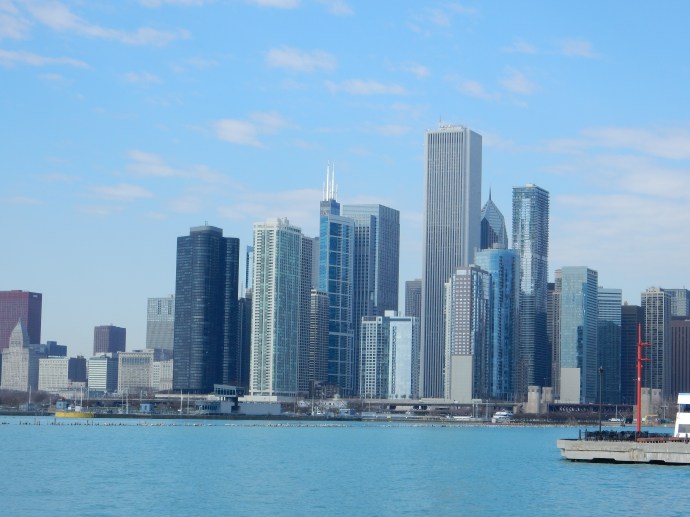
A portion of the Chicago skyline

A portion of the Chicago skyline

Because the pier juts out into the harbor, it presents an excellent opportunity to clearly see the Chicago skyline from a distance. That was our primary purpose for the walk. The day did not disappoint. Primarily sunny and warmer than Tuesday, it was a great way to spend the morning.

We checked out of our hotel at noon and walked back to Union Station. Amtrak and Metra (Chicago commuter rail lines) share the station and we managed to find our track and waiting area without major hassle.

The Empire Builder ride back was uneventful. We had one slight hiccup; the speaker in the coach car we were in did not work well. Evidently, it was announced over the speaker that dinner was by reservation and the Amtrak steward would come from car to car to take reservations. What we did not hear was that he did not take reservations for people in the observation car. I have no idea why that is an important distinction. Anyway, by the time he came through the cars, we were sitting in the observation car. It took some assistance from the assistant conductor to let us know how to make a reservation and the steward deigned to let us make a late reservation. Dinner was only so-so anyway. Not bad, just not memorable. The lunch burgers on the way down were a better choice.

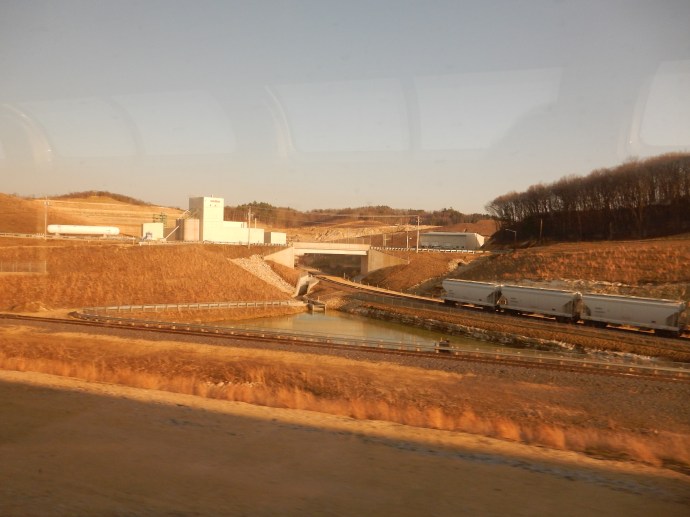
A frac sand mining operation in Wisconsin just west of Tomah

A frac sand mining operation in Wisconsin just west of Tomah

The scenery in Wisconsin is less dramatic than the portion of the trip riding along the Mississippi in Minnesota. However, it gets dark somewhere between Winona and Red Wing, depending on the time of the year, so book reading took up the last section of the journey.

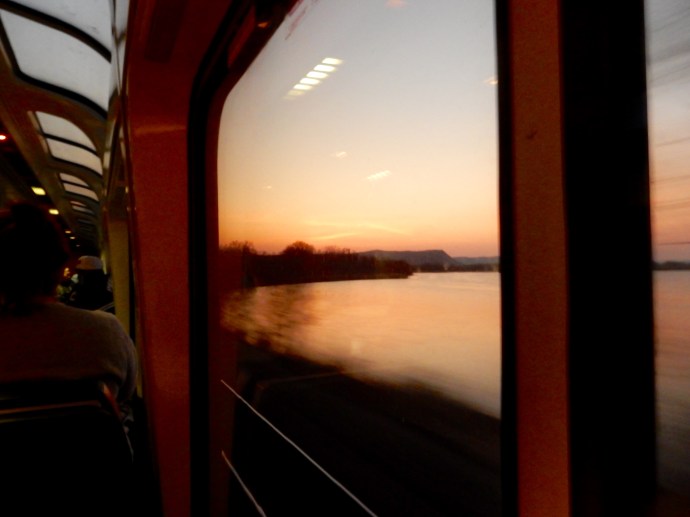
Sunset view along the Mississippi in Minneosta from the Empire Builder

Sunset view along the Mississippi in Minneosta from the Empire Builder

Ed and Chris
St. Paul
April 15

Categories: road trip, travel | Tags: , | 2 Comments

2016, Trip One, Chicago, Day One

April 10, 2016 Chicago IL

The first trip of 2016 is a short one. We have been on hiatus for a while, enjoying one of Minnesota’s milder winters by staying home. We made one or two short, local MN trips during the winter along with numerous MN activities, and, we have replaced our 2001 Saturn (226,000 miles) with a new Subaru Legacy. However, the Legacy will have to wait a while for a road trip.

Ed and Amtrak observation car at Union Depot in St. Paul

Ed and Amtrak observation car at Union Depot in St. Paul

This first trip was planned for us to ride Amtrak as paying passengers, something we have not done for probably 15 years. As readers of this blog know, Ed is a volunteer with the Trails and Rails program jointly offered by the National Park Service and Amtrak. His journey only goes 2/3 of the way to Chicago and Chris does not participate. So, we put our money down and headed out early this morning.

The Empire Builder arrived in St. Paul an hour early (6:43 AM), a real departure from its 2015 on time (not) performance. We had arrived around 7 AM by bus and were able to board the train by 7:10 to get our seats. Seating is on your own, not assigned seats. We grabbed two coach seats, left our jackets at the seats and snagged a table in the observation car on the river side for most of the trip and with Chris seated looking forward (an important priority). The Empire Builder left Union Depot in St. Paul at its scheduled departure time of 8 AM for the 8 hour trip to Chicago. We had three main goals; a successful train ride, a journey to the new Pullman National Historic Site in Chicago, and a visit with my cousin Sue.

Red Wing MN and the Mississippi River

Red Wing MN and the Mississippi River-not including the eagles

Goal one has been accomplished. Both of us enjoyed the ride. The MN portion (obviously) is more scenic than the WI portion as it parallels the Mississippi River most of the way. Trees are just beginning to leaf out although Chicago is a bit ahead of us on that score. Birds were everywhere, boaters were out on the river. In Red Wing there must have been 20 eagles roosting in trees in a small area near the local Marina. (Well maybe a few were turkey vultures but most were Eagles.)

I did not give my Trails and Rails “spiel” to Chris but instead noted the topics I present in various areas along the route. Most of the topics she is familiar with, having heard me discuss them, or going to some of the same lectures I attended, or read the same books.

Ed and Chris in the observation car

Ed and Chris in the observation car

The observation car was our home for 2/3 of the ride, with its expansive windows which are great for viewing up and down. The coach seats are comfy with plenty of leg room. The train was not crowded today and empty seats were frequent. The observation car, unlike in the summer, was never full.

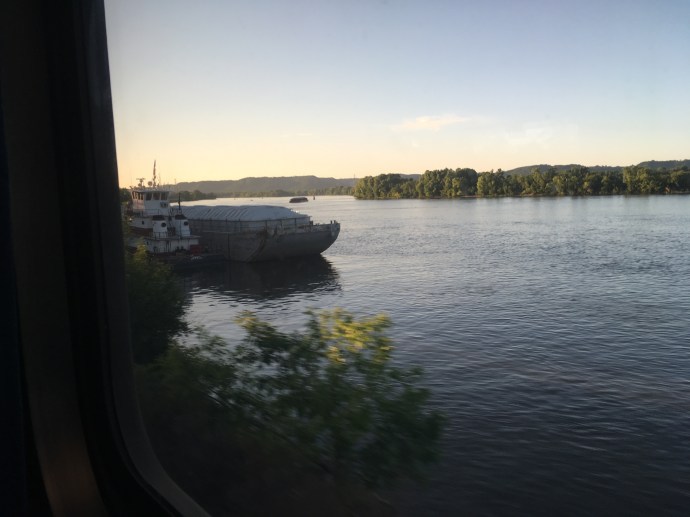
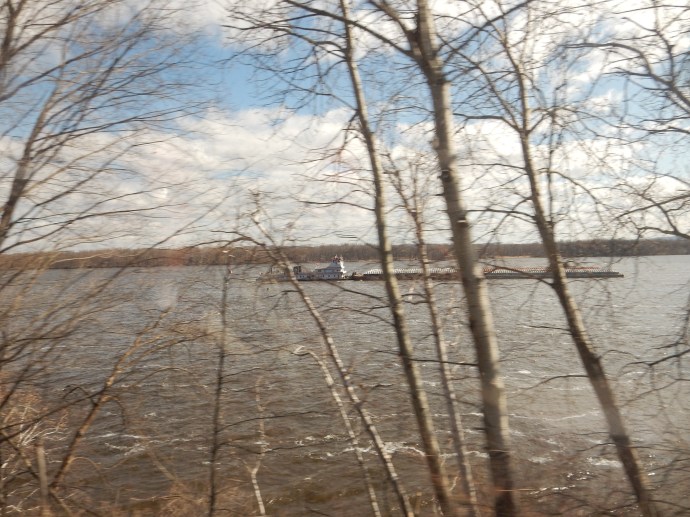
A tow along the Mississippi River

A tow along the Mississippi River

We spent more time observing than socializing. We did manage some conversation with a number of Canadians, from Saskatchewan and Winnipeg. Our lunch companions (you are seated to fill up tables and thus you automatically meet others) were from just north of Seattle. The two women are fans of National Parks. Their week-long journey will stop at numerous NPS units and will start off tomorrow at Pullman National Historic site. We may see them again. We swapped stories of parks we have seen and have yet to see. While the lunch menu is brief, our burgers were quite tasty.

Chicago River on our walk to the hotel

Chicago River on our walk to the hotel

Union Station in Chicago (the name is quite similar to Union Depot in St. Paul)is large with many Chicago commuter trains as well as Amtrak trains that head out all over the country. We decided to walk to our hotel, about 1.5 miles away. It was sunny and 48 degrees F-although Chicago is always windy with the numerous skyscrapers. We are staying at a Hampton Inn in the River North district.

Dinner was at Andy’s Jazz Club, with Dana Hall group playing.

Ed and Chris April 11, 9 pm
Chicago

Categories: road trip, travel | Tags: , , , | 4 Comments

2015, Trails and Rails-Amtrak and National Park Service

Saint Paul, MN

In July of 2012 I retired and, as readers of this blog know, began traveling extensively in January of 2013. I have also been seeking out volunteer opportunities that would still allow for travel. Periodically in 2013 and 2014 I would do some volunteer work for the Mississippi National River and Recreation Area, a unit of the National Park Service. As we cut back on our travels this year, I have been able to increase that volunteer work. In the words of the website for the Mississippi National River and Recreations Area, “In the middle of a bustling urban setting, this 72 mile river park offers quiet stretches for fishing, boating and canoeing. Other spots are excellent for bird watching, bicycling and hiking. And there are plenty of visitor centers that highlight the history and science of the Mississippi River. If you are interested in the Mississippi River, this is a great place to start your exploration.”

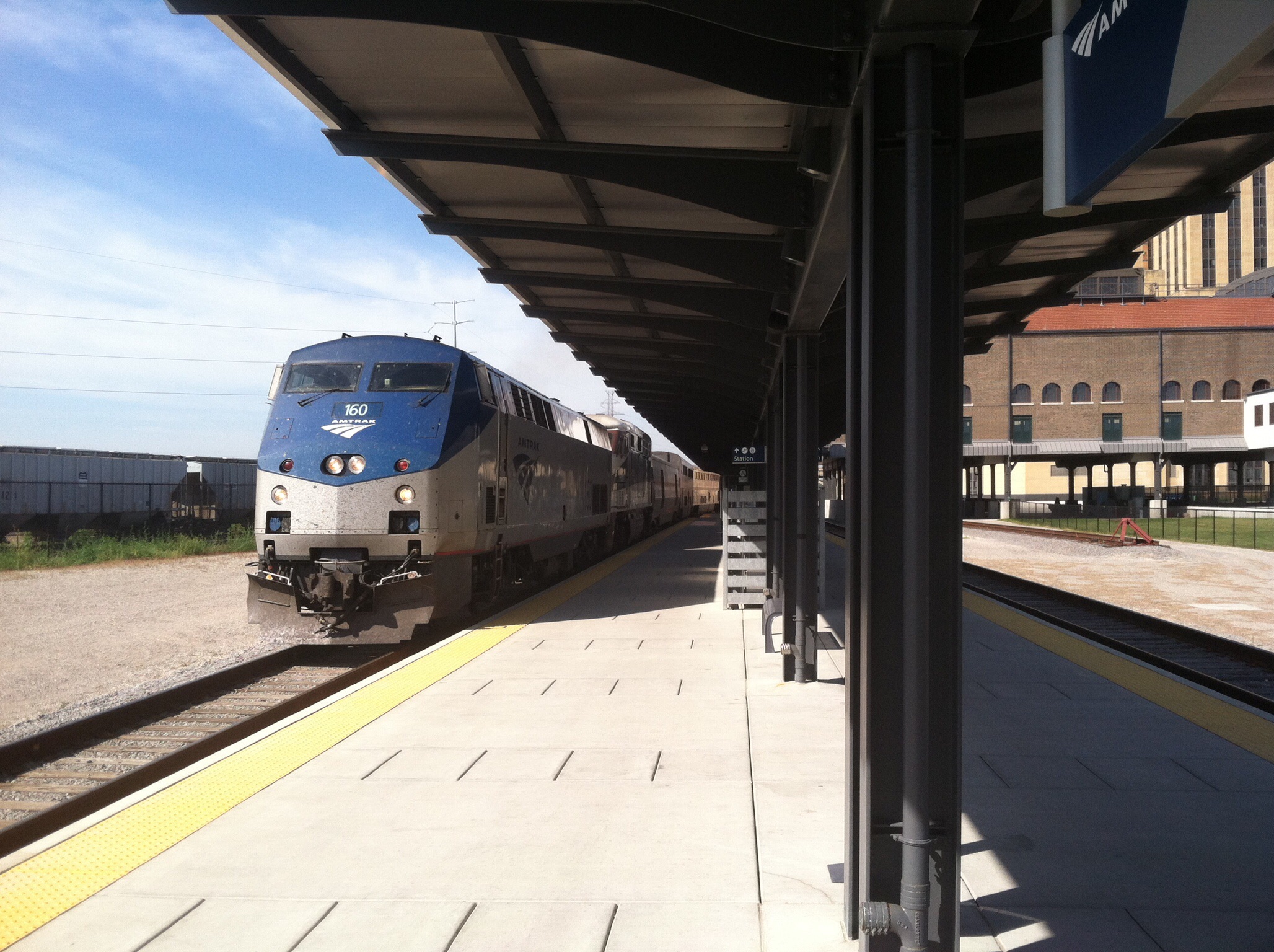
Empire Builder arriving at St. Paul's Union Depot

Empire Builder arriving at St. Paul’s Union Depot

The National Park Service and Amtrak cooperate on a program called Trails and Rails. In this program, volunteers from local national parks provide a combination of education, enlightenment, and entertainment on 25 to 30 Amtrak passenger routes around the United States. Our Amtrak passenger train travels between Chicago Illinois and Seattle Washington and is called the Empire Builder. The Empire Builder train is named after James J Hill, the founder of the Great Northern Railway. His efforts in making his railroad successful had a tremendous impact on the growth of the Midwest and Northwest. He was heavily involved in promoting Glacier National Park and his company ran the concession lodging there for many years. Here in St. Paul, our national park, the Mississippi National River and Recreation Area, is one of those sponsors with Amtrak for a Trails and Rails program.

Mississippi River Valley from Frontenac State Park

Mississippi River Valley from Frontenac State Park

20 volunteers from the Mississippi National River and Recreation Area, myself included, take turns providing the service from May 1 to September 1, Monday through Thursday. The program here is in its seventh year. Two volunteers will ride each train going from St. Paul Minnesota to Columbus Wisconsin. The train leaves St. Paul Union Depot around 8:15 AM. The train normally will arrive in Columbus Wisconsin around 1:15 PM. The volunteers wait a few hours and then board the returning westbound train at Columbus around 5:15 PM and arrive in St. Paul around 10 PM. Volunteers must monitor the progress of the eastbound train before it arrives in St. Paul, since overnight lodging is not provided. If the train is too late, the volunteers will not be able to catch the return train. For instance, this year, forest fires in Washington closed down the tracks to all train traffic, not just Amtrak, for several days. When the train is too late, we do not make the trip, or get off prior to Columbus. The eastbound train will frequently encounter delays as it goes through the mountains. It does not get priority over freight traffic and may have to wait for freight trains, and particularly oil tanker trains to go through. Track maintenance work will also require slower speeds through construction zones.

Winona MN Train Station

Winona MN Train Station

Mississippi RIver from downtown Red Wing

Mississippi River from downtown Red Wing, across the tracks from the train station

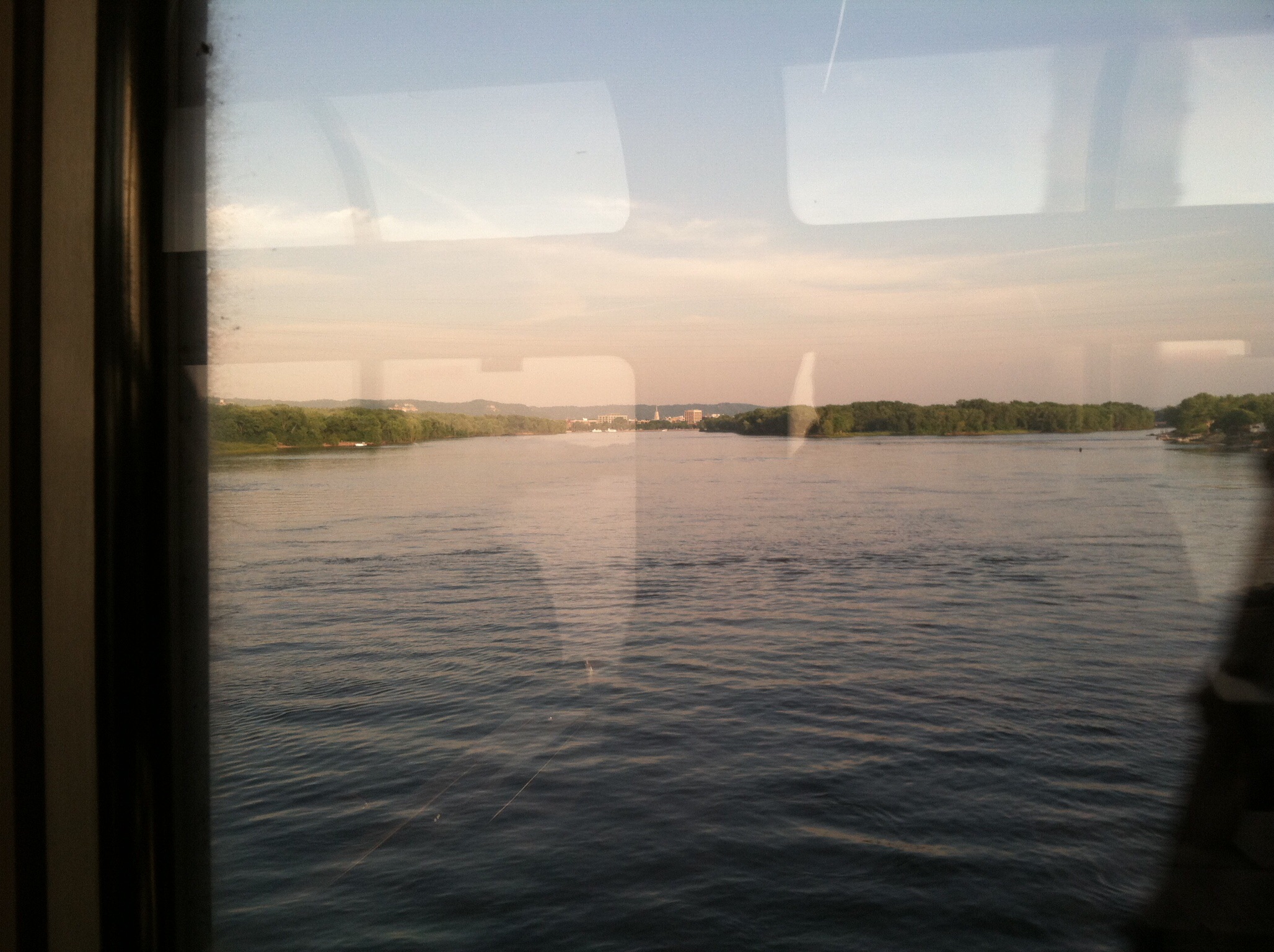
The Trails and Rails program out of St. Paul is dictated by the Amtrak schedule. There is no value in running a program at night when people are sleeping and no views outside the window are possible. The Empire Builder traveling between St. Paul and Columbus offers several hours of viewing of the Mississippi River, which is the purpose of our park here in St. Paul. The sights are beautiful, whether seeing a sunset over Lake Pepin or just viewing the river and farmlands. In the words of Mark Twain: ““Neither in this country nor in any other, have I seen such interesting scenery as that along the Upper Mississippi. One finds all that the Hudson affords-bluffs and wooded highlands-and a great deal in addition.. Every hour brings something new.”

Crossing the Mississippi River at LaCrosse WI-LaCrescent MN on Empire Builder for Trails and Rails

Crossing the Mississippi River on Amtrak Empire Builder Trails and Rails at LaCrosse WI-LaCrescent MN

So this year, I began as one of the 20 volunteers on the Empire Builder Trails and Rails. Training includes a six-hour classroom session, a two-hour train ride introduction, two trips on the train from St. Paul to Columbus with experienced volunteers, and a package of information to provide the starting material for your own narration. We are expected to provide narration, not read the material in the handouts. Thus the volunteer has the requirement and the opportunity to personalize the presentation. I was reassured by the fact that two volunteers always travel together and that we are not expected to be talking constantly. The presentation is made in the upper level of the lounge car. This car has higher dome windows to provide a better view. This type of car is normally not seen in the eastern United States due to lower bridge heights the trains pass under in the eastern half of the U.S.

Tow boat with a single barge on Mississippi RIver

Tow boat with a single barge on Mississippi River

One of my initial concerns was whether the passengers in the dome/lounge car would be irritated by our conversation and how receptive they would be to the presentations. After the first several rides in which we were applauded when we got off in Columbus; or overhearing passengers say “I did not know that”; or hearing passengers discuss your comments by themselves later during the trip made me realize that the effort was worthwhile and well received. Personally, I still have some trepidation each time a new trip starts but these are starting to go away. I continue to add to my own narration copy and work on my ability to know when to present various topics. I have over 50 pages of narrative by now. I do not intend to try to put that all in this post. I will highlight a few comments as an example of the information types we present. Even during my presentation, not all material gets presented. Some of my narrative is a fuller background on a locale but in speaking, I summarize the material. Based on the audience, if the view is being blocked by other trains on neighboring tracks, or whatever, not all material is presented.

Wisconsin farmland with rainbow

Wisconsin farmland with bike trail and rainbow

First, we talk about geology; there are interesting examples along the way. One of the areas that is mentioned I was completely unaware of prior to this activity. This is the so-called famous Driftless Area, particularly of Wisconsin. The upper portions of the United States have been covered by several glaciers over the past millennia. However, the last, or fourth, glacier did not descend as far south as the previous ones. Glaciers move sediment and rocks along with them, this has been categorized as glacial drift. Since the fourth, and last, glacier did not descend as far south, this un-glaciated area of Wisconsin, and a small portion of Minnesota, is called the Driftless Area. It has impacts for landscape and produces different topography then the glaciated area.

Standing in Columbus WI watching a freight train roar by

Standing in Columbus WI watching a freight train roar by

Second, we talk about the Mississippi River. We discuss its length, shipping in the 1800s, current barge traffic, wildlife along the river, and particularly, bald eagles. I mention the Upper Mississippi National Wildlife Refuge which is a major protective area for migratory birds. This wildlife refuge also has an interesting Facebook page.

Frac sand mining operation just east of Fort McCoy, WI

Frac sand mining operation just east of Fort McCoy, WI from Amtrak Empire Builder Trails and Rails

Third, we pass Fort McCoy in Wisconsin. This is a large National Guard training base which was also used by the army for training troops prior to being sent to the Middle East. There is even a reproduction of a Middle Eastern village that is partially visible from the train.

ADM mill and elevators in Red Wing MN

ADM mill and elevators in Red Wing MN

Fourth, we talk about the history of various times. For instance, Portage Wisconsin is a point where the early French explorers transferred from the Fox River to the Wisconsin River in their efforts to explore the Upper Midwest and discover a passage to the Pacific ocean. Lumbering, agriculture, shipping and railroads played important roles in the development of most of the communities along the route of the Empire Builder.

View of trains and barges on the Mississippi RIver at St. Paul from Union Depot platform.

View of trains and barges on the Mississippi RIver at St. Paul from Union Depot.

Fifth, miscellaneous bits of relevant trivia are scattered throughout. For instance; it takes 10 pounds of milk to produce one pound of cheese, 12 pounds of milk to make a gallon of ice cream, and 22 pounds of milk to make a pound of butter.

Sixth, we offer youngsters the opportunity to become Junior Rangers. There is a Junior Ranger booklet designed for this route and one of the volunteers normally walks the train, letting parents know the program exists and asking if they would like a booklet for their child(ren). Upon answering the questions, spotting various landmarks and items unique to this route, and completing some drawings, the child will be made a Junior Ranger with a badge. We normally announce their first name and ask the riders in the lounge car to join us in applauding them.

Lock and Dam number five just above Winona, MN

Lock and Dam number five just above Winona, MN

So who is riding the Empire Builder? Well, college students are one frequent group traveling to and from their school. International travelers are often on board, sometimes taking long journeys like the fellow who started in South America, came up the Pacific Coast to Seattle, and was heading towards Montreal. Families on vacation, such as the family from the Winona area, parents and three teenagers, heading down to Chicago for a surprise weekend vacation. Amish, sometimes traveling in groups to weddings and other family get-together. People who enjoy riding trains and who do not have strict timetables to meet like the couple traveling to a convention in New Orleans from Seattle. Less frequently at the moment, but still present, are workers in the North Dakota oil fields who stay there for months and then go home to see the family.

Those who start their journey in Seattle or Portland will be on the train for 48 hours. They board in Seattle or Portland around 4:40 PM, ride through the night, the entire next day and night, arrive in St. Paul around 8 AM of the following day and enter Chicago about 4 PM. 48 hours but parts of three days.

Sunset over Lake Pepin on Mississippi River

Sunset over Lake Pepin on Mississippi River from Amtak Empire Builder Trails and Rails

A final note. I am not a paying passenger but I will say that all of the Amtrak personnel I have encountered have been extremely kind and helpful. Thanks for making our work so pleasant.

For another perspective on the Trails and Rail program, read the article in the Minneapolis Star/Tribune of August 11, 2015 written by reporter James Walsh and photographs by Rachel Woolf.
http://www.startribune.com/amtrak-volunteers-tell-passengers-tales-in-trails-and-rails-program/321296911/

Other links:
Mississippi National River and Recreation Area: http://www.nps.gov/miss/index.htm

Upper Mississippi National Wildlife Refuge: http://www.fws.gov/refuge/upper_mississippi_river/

Ed Heimel St. Paul, August 10, 2015

Categories: road trip, travel | Tags: , , , , , , , , , , , , , , , | 1 Comment

Blog at WordPress.com.