Posts Tagged With: Ed Heimel Chris Klejbuk travel blog

2023 Trip 7: Northwest U S: Adventure and History: Sept. 29-30

Twin Falls, Idaho, September 30

Friday and Saturday were primarily days of natural beauty with a little bit of history tossed in for good measure. We retraced our steps from Mackey, Idaho, south through Arco, Idaho, and onto our first stop at Craters of the Moon National Monument and Preserve. All of the hype we had read about this place described its similarity to the surface of the moon. Not having been to the moon, we cannot attest to the accuracy.


Craters of the Moon

As we drove to the park, the terrain started to show evidence of lava. However, the impact increases dramatically once you enter the park’s boundary. The impact continues as you travel through the Loop Road demonstrating the impact of the lava flows over millenia. Yet we see only a portion of the park, much of it is protected as wilderness. However, the multiple types of lava were well represented in this huge park and preserve (750,000 acres). This is 30 times larger than Lava Beds National Monument in northern California, which we saw a few weeks ago.

The visitor center had a well prepared introductory video. However, I found more helpful the 3-D map in the visitor center showing the movement of the thermal hotspot underneath the earth’s crust that has moved from the south west Idaho border with Oregon to its with current location underneath Yellowstone National Park. The Snake River valley follows much of this path of the movement of the earth’s crust.

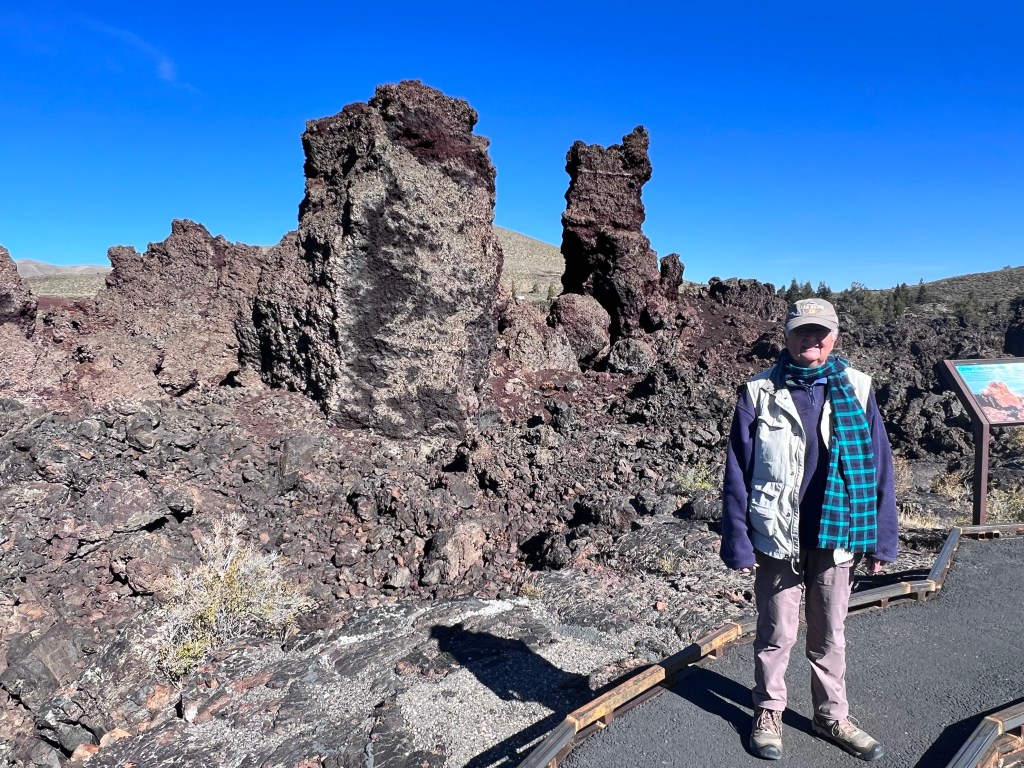
The loop road allows multiple opportunities to stop and take short hikes observing the various types of lava, its slow erosion, and the steady growth of small living plants which continue to break down the rock. Over time, enough soil is created to allow for the growth of trees and shrubs. We had our lunch surrounded by lava rocks and a few of those shade trees.
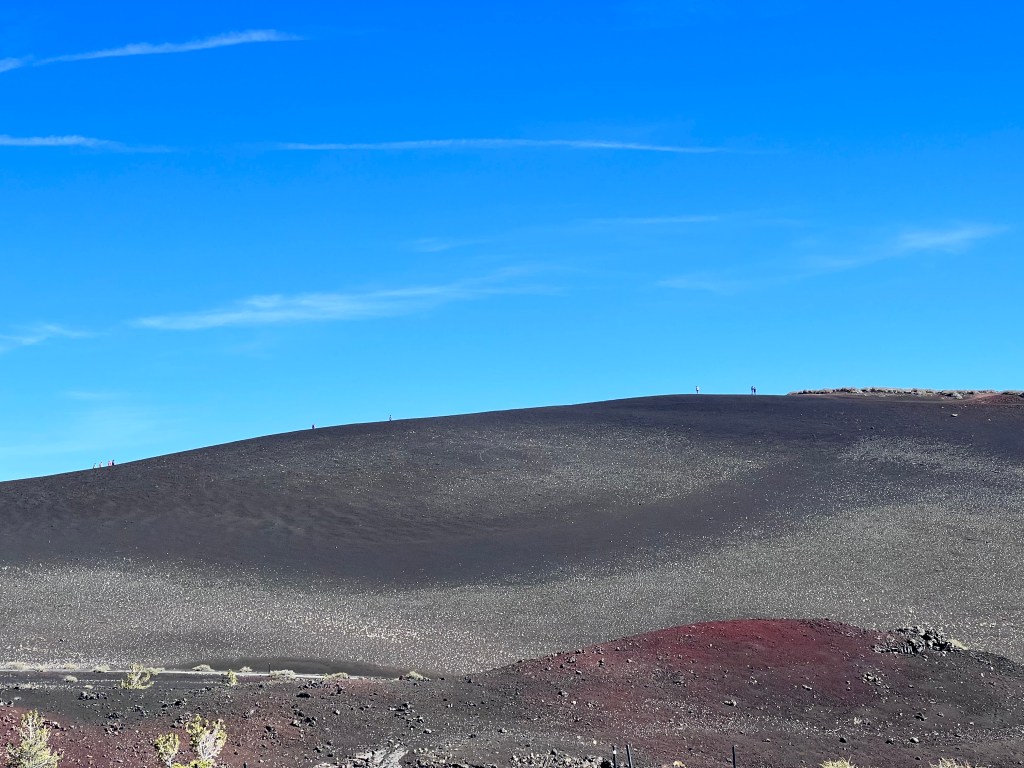
Inferno Cone, do you see the people on the hill?


A real highlight for us was climbing Inferno Cone, which has a steep grade to its top with a wonderful view of the surrounding area. Unfortunately, by that evening, I realized that the steep climb up and down the cone had a negative impact on my left hip. The result was unsteadiness in my step, which limited our hiking on Saturday.

Leaving Craters of the Moon, we continued our journey on our usual style of two-lane roads. We stopped for a popcorn and potato chips snack at a city park in Shosone. Next stop, Minidoka National Historic Site. At Minidoka, over 13,000 of the 120,000 people with Japanese ancestry who were imprisoned during WWII were housed. The Japanese American imprisonment is a sad and disturbing story during a shameful period of our history. However, the story needs to be presented so we can discuss and learn about its implications for the future as well as the past.

On our way to Minidoka, we had railroad tracks to the right of our car. It made me realize it was probably the same tracks used by the railroad to transport the Japanese Americans from the West Coast area to this eastern side of Idaho. As compared to Tulelake in northern California, the displays and residual buildings were much better preserved and presented. The visitor center was closed, only open during summer months, but the outdoor exhibits were available to be viewed.

Saturday morning, we stopped at the Perrine bridge over the Snake River here in Twin Falls. The canyon here presents a stupendous view of the river and its power to erode the basaltic rock of this area. The bridge is well known and its impact as a visual treat was exceptional. The Perrine bridge is 1500 feet long, nearly 500 feet tall, and is the fourth tallest arched bridge in North America.

We had not realize that the Perrine bridge is one of the countries only bridges where people can do BASE jumping without obtaining a permit throughout the year. BASE is an acronym that stands for each of the categories of objects people jump from: buildings, antennae, spans, and earth, such as a cliff. A simple explanation: it’s basically strapping a parachute on your back and jumping off a bridge with hope that you land safely down below.

We discovered this as we were looking at the bridge and walking to diverse viewpoints. At one viewing point a gentleman was sitting. OK, you know the rest of the story. Chris started talking to him, and we discovered that he and his wife are from Rochester, New York. That morning, his son, who lives in Medford Oregon, had done a tandem jump from the bridge. His 64 year old wife was scheduled to do it in the next 15 minutes. A tandem jump means that a novice holds on, and is harnessed, to an experienced jumper and they go down together. Of course we had to stay to watch this. We had not seen anyone else doing it that morning nor had we come to the bridge expecting to see such a spectacle.
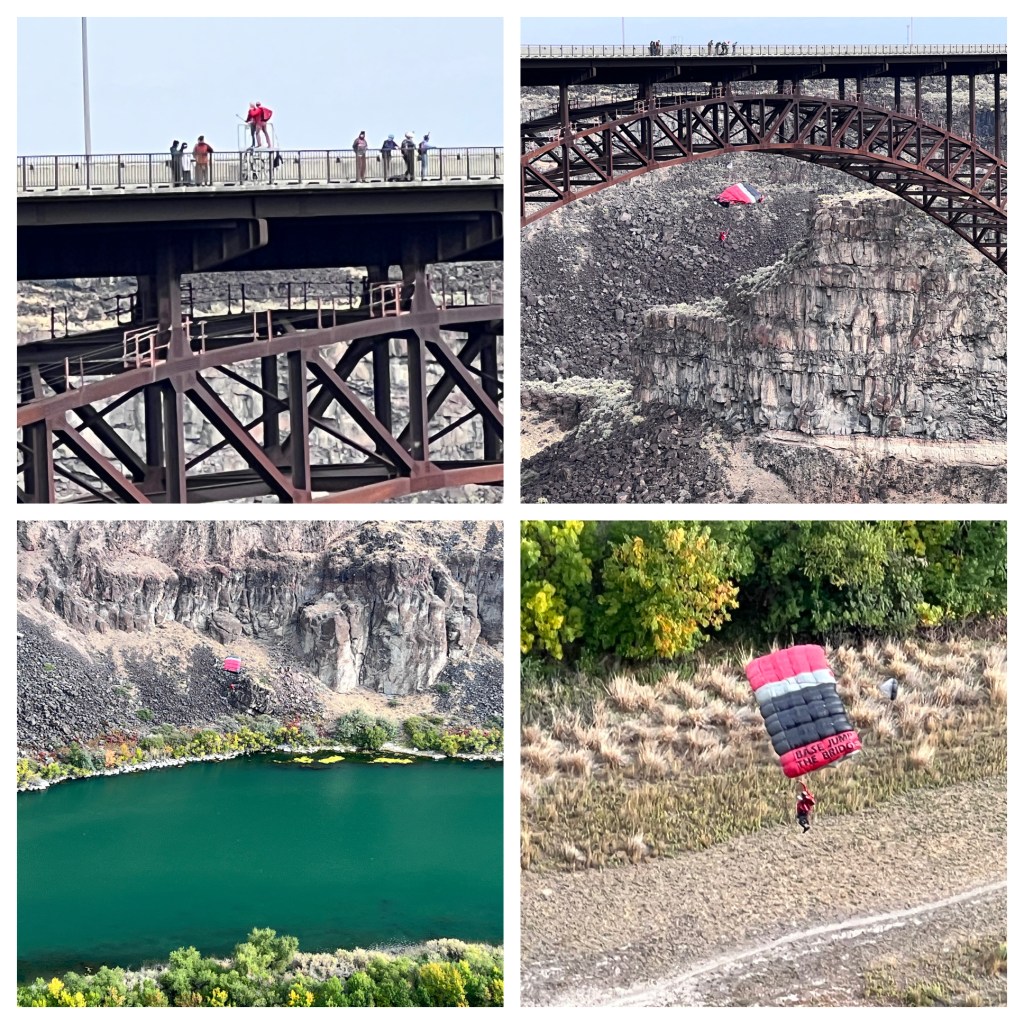
BASE jumping from Perrine Bridge

Well, the jump went great. We even took pictures for the couple since the husband’s camera was a bit shaky as he was trying to watch and not be nervous. After the wife jumped, there were four or five others making a jump, most of them as singles. They were the experienced jumpers who come here often.

Our next scene of adventure was 90 minutes away at City of Rocks National Reserve. Today is September 30 and when we were at City of Rocks, we did not know if the federal government would go into a shut down mode for lack of a budget. City of Rocks was our last Idaho National Park Service unit to visit. If there was to be a shut down, we would’ve been able to get all of the Idaho parks visited before the October 1 shut down date.
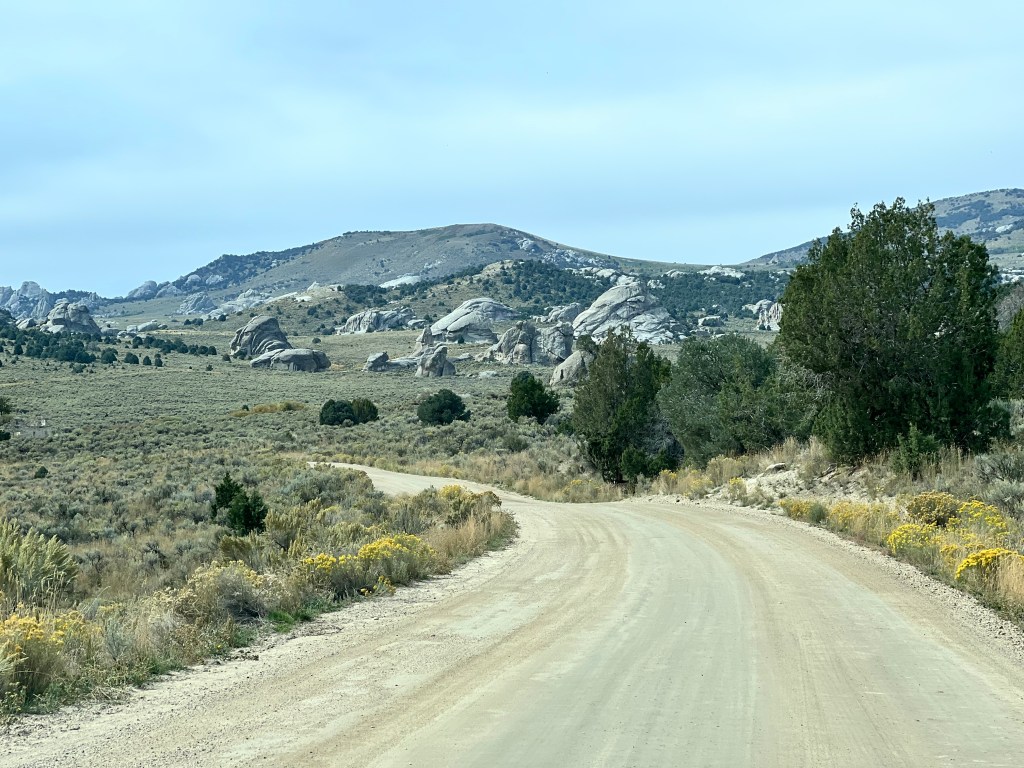
City of Rocks


Other than rocks, we had no idea what to expect when visiting this NPS unit. We did gain 3000 feet of elevation going from Twin Falls to City of Rocks. The road was not too curvy so the ride was pleasant. One half of the journey was on Interstate 80 so we zoomed along towards our destination. Of course, the final half of the trip was through high desert plains, or very small towns. When we arrived at the visitor center, we discovered it was like Hagerman Fossil Beds, that is, co-managed with the State of Idaho and a state park. City of Rocks would have remained open, even if the federal government had gone into a shut down mode.
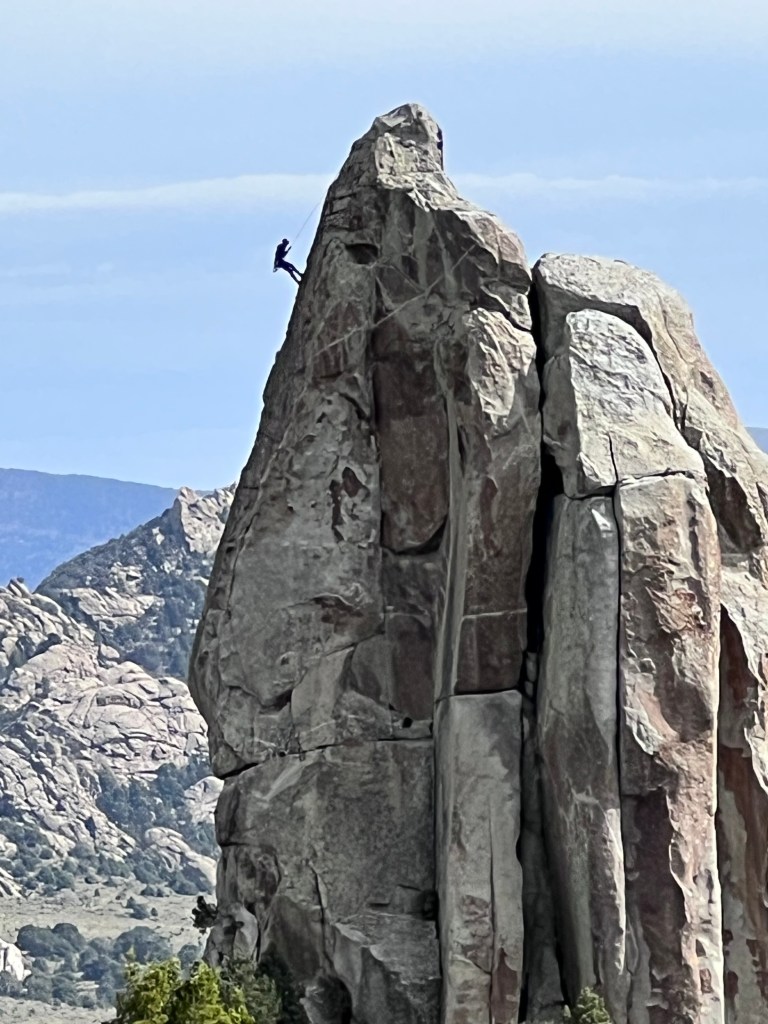


Driving into the park, we discovered huge granite rock monoliths littering the landscape. They stuck up like sore thumbs, with a swift transition from open fields to the rock monoliths. What we also discovered was that City of Rocks is a huge rock climbing location, even internationally renowned. Experienced rock climbers are able to tackle a large number of the rocks. There is even a training area for novices; sort of a bunny hill. As you can expect, we did not sign up for any training. There are many scattered, diverse campsites throughout the park. We observed more people camping and actively using this park than we had any of the previous parks. It is a well-known rock climbing destination among those who are interested in that. There are over 700 different climbing routes developed throughout the reserve and state park.

At lunch among the rocks and trees, we had a recurring happening. Just two picnic tables at the site and the other table had a gentleman who had grown up in Maple Grove, Minnesota. Only in this case, he approached us first once he saw the Minnesota license plate.

Our final adventure for the day was Shoshone Falls. This is hyped as a falls taller than Niagara. Well, we were disappointed. I’m sure the height is accurate. However, the falls have been so developed for hydro power and with low rainfall lately, that the view is less than impressive despite the wonderful canyon setting.


We did manage to rescue the day with sampling a new ice cream supplier- Reed’s Dairy. We tried their location in Twin Falls, although they have several in southern Idaho. The ice cream was fine, worthy of a stop, but maybe not quite up to par with our previous experiences on this trip.

Ed and Chris, Twin Falls Sept. 30

Categories: travel | Tags: , , , , | Leave a comment

2023 Trip 7: Northwest U.S. : History and Adventure: September 4

Northern Pacific Railroad

Kellogg, ID September 4

Staying in the Silver Valley, we journeyed a full 10 miles to Wallace Idaho, population 800. Over the next several hours we learned that Wallace is the Center of the Universe, a party town, and the town that fought the feds and won. Of course we only discovered this because the day was rainy and we dumped our planned bike ride to avoid being splattered with mud. The Ride the Hiawatha trail could have been amazing under better conditions. Possibly we could have completed this 14 mile, mainly downhill ride thru tunnels on a gravel trail, but it would have been something we endured, rather than enjoyed. The trail is an abandoned railroad line.

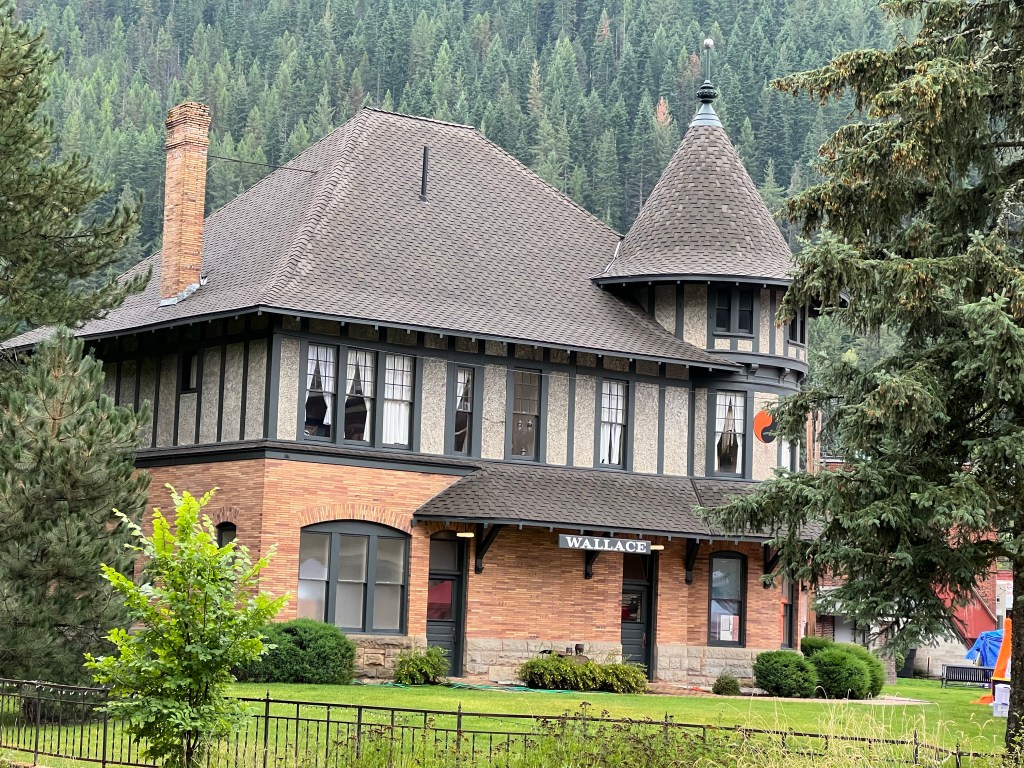
Our first stop was the Northern Pacific Railway Depot. The NP was a major player in the history of the West. The depot is now a museum with interesting displays on the Northern Pacific and life in Wallace. Several tidbits were picked up here. First, the term “closing the loop”. Telegrams for people on trains passing by, but which were not stopping in Wallace, were put on a pole with a loop on it, the train would slow down, and the message grabbed by a train employee and given to the passenger.

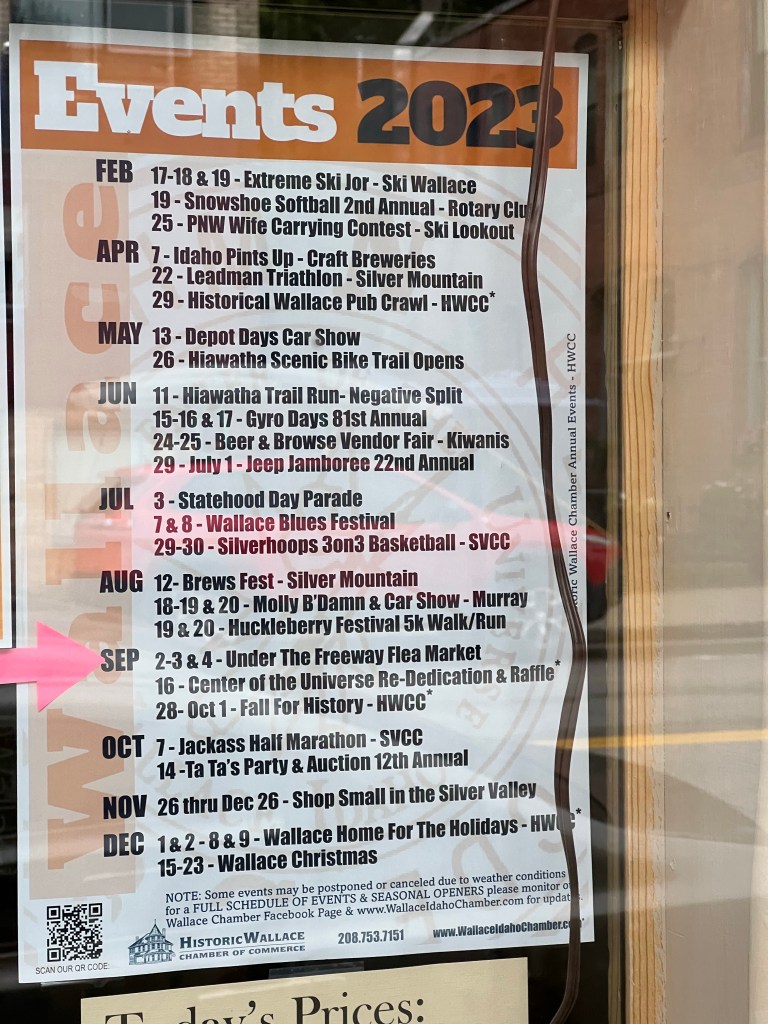
Wallace, with only 800 residents, sponsors 23 festivals and events during the year. The numerous events keeps the bars and restaurants hopping. This Labor Day weekend was one of them, The Under the Freeway Flea Market is a fund raiser for the NP Depot Foundation. Over 80 vendors were lined up underneath the Interstate 90 freeway bridge, which runs continuously for 4500 feet.

Under the Freeway Flea Market

We walked from one end of the vendor line up to the other. While we did buy a few minor items, the merchandise best reflected items from Grandma’s attic and Grandpa’s barn. Given the rainy weather, the viaduct was an appreciated protection from the elements.

The interstate highway system was authorized in 1956. Interstate 90 would run from Boston to Seattle, 3081 miles long. The initial planning for Interstate 90 through Idaho started in the 1960s. In 1970, construction was nearing both ends of Wallace. I-90 was originally planned to run right where Wallace is situated. The town would be bought out, probably not costing all that much. Residents would be relocated and most likely there would have been a nice plaque somewhere. People in Wallace were not pleased. They undertook a two pronged battle plan. First, lawsuits and injunctions were filed to give them some time to implement phase two.

Phase two was getting every single building in Wallace on the National Register of Historic Places. The Federal Highway Administration has to minimize impact to such places and the vast number of historic properties in Wallace resulted in an elevated highway that only needed one building to be moved- the Northern Pacific Depot. The people here are quite proud of that. Prior to the completion of the elevated highway in 1991, this one mile segment necessitated interstate drivers to exit the freeway, drive through town, probably stop at the only traffic signal on Interstate 90 between Boston and Seattle, and return to the interstate. That last traffic signal? It was removed in a grand ceremony involving pall bearers and a glass hearse is now on display in a local museum (which was closed today).

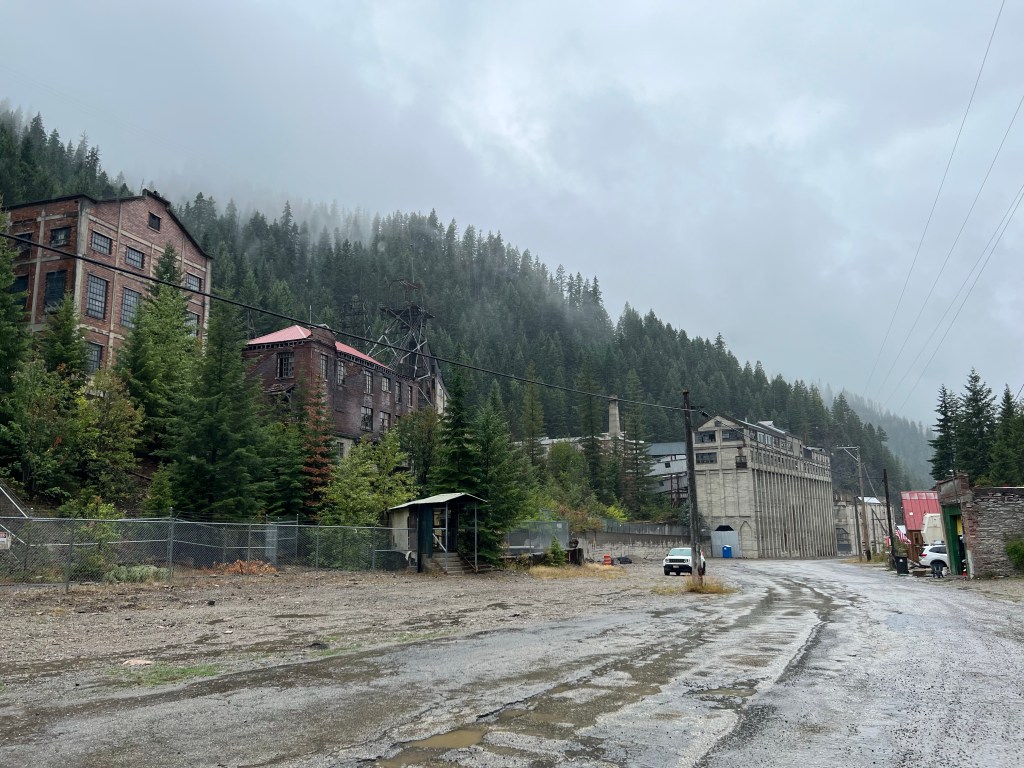
Wallace has two nearby ski resorts and numerous biking trails. I thought it was fascinating that one of them, the Trail of the Couer d’Alene’s, is quite clear that one should stay on the paved trail to be healthy. In their words: “Common industry practices of the time and natural processes like flooding, caused heavy metal contaminants to be spread throughout the Basin. Environmental cleanup has been ongoing for decades. … Heavy metals that pose a risk to human health are still encountered along shorelines, floodplains, and historic mine and mill sites.”

We had lunch at the Blackboard Cafe-and bakery and bookstore. Chris of course struck up a conversation with a Canadian woman who is doing some traveling after selling her home in Vancouver before settling down near her daughter in Edmonton.

Another unusual Wallace feature was the purple manhole in the intersection of two streets that is “The Center of the Universe”. In 2004, the Mayor of Wallace declared it to be the center of the universe because it can’t be proven otherwise. This little bit of whimsy is celebrated each year, In 2023 the celebration will be held Sept. 16.

Center of the Universe manhole

After lunch we drove along one short highway up into the mountains, Burke Canyon, where the reclamation process is still ongoing. The town of Burke is extremely narrow. During mining days in the late 1800s, the Tiger Hotel in Burke had to be built over the creek and a set of railroad tracks and the only highway had to be built through the hotel.

Burke Idaho

Returning to Wallace we viewed several of the wooden stairs that were constructed to allow people to reach homes built on the mountain sides where it was too narrow to construct streets. The public stairs were first constructed in 1909 and are still maintained and used today.

Wallace wooden stairs

Ed and Chris, Kellogg ID Sept. 4

Chris”closing the loop”
Categories: travel | Tags: , , , , , | Leave a comment

2023 Trip 4: Great Basin and Flagstaff: April 18-24

Great Basin National Park

Flagstaff AZ April 23

Two major objectives on this trip: Great Basin National Park and visiting relatives in Flagstaff Arizona. Great Basin National Park was established in 1986 and represents a small portion of the great basin area of the western US. The great basin area stretches from southern Idaho and Oregon to just north of Las Vegas and over into Zion national park area of Utah.

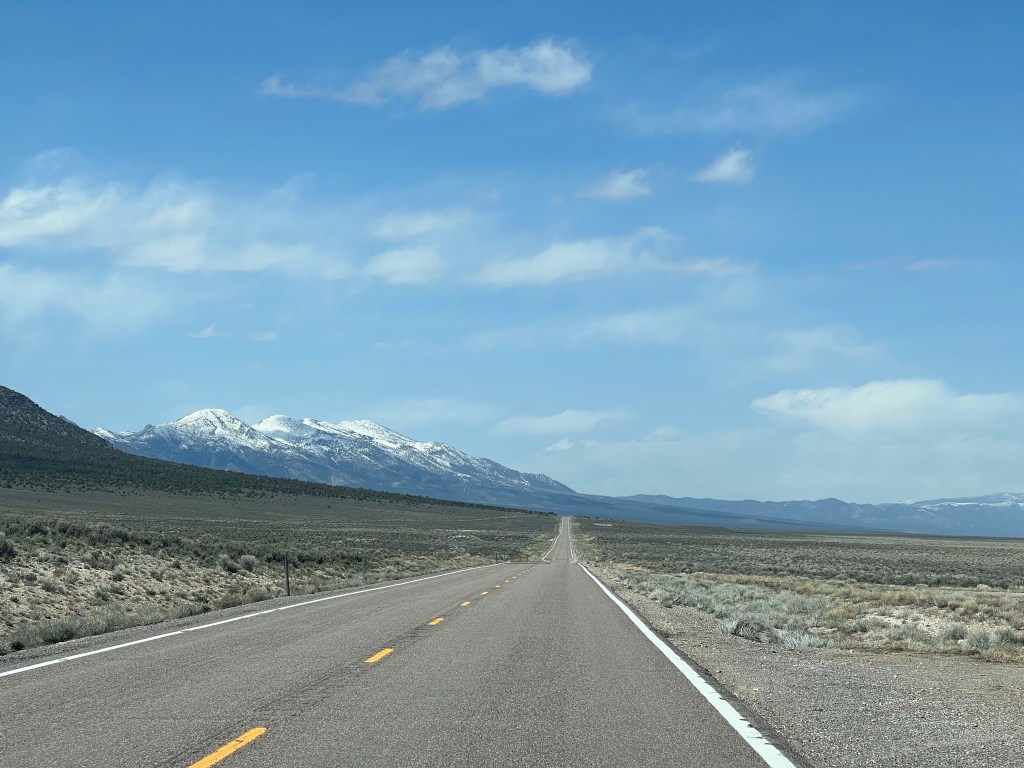
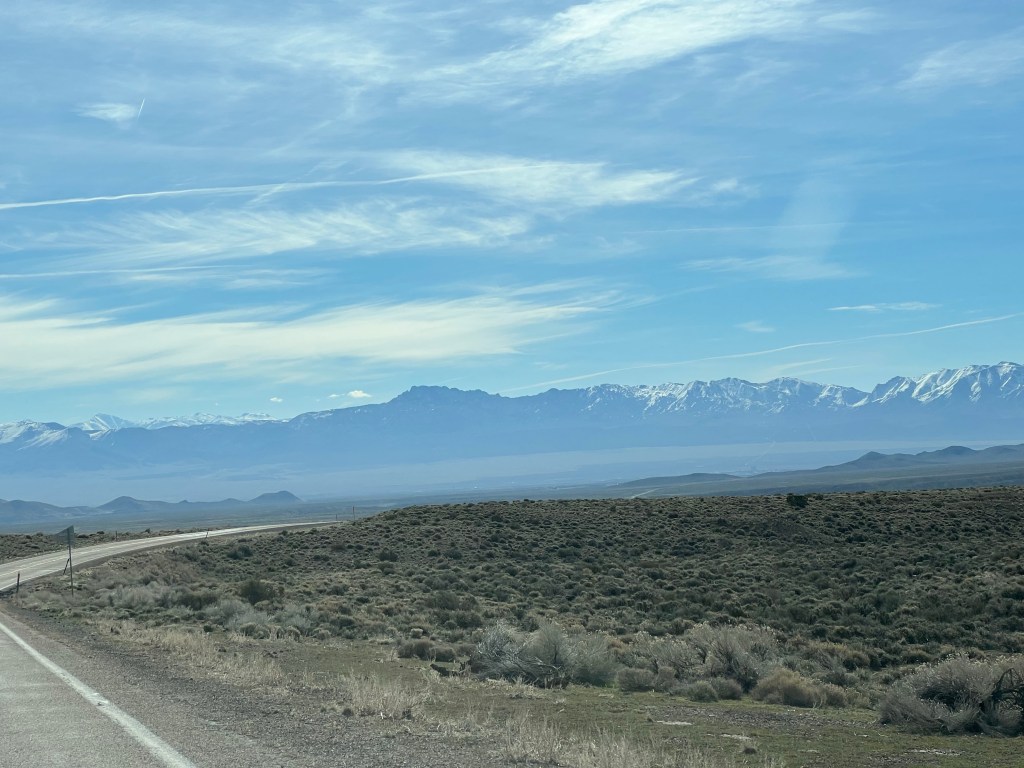
The great basin is marked by water courses that stay within the region. There is no outflow of water to any river that leads to an ocean. This huge geographic region is marked by multiple mountain ranges with valleys in between. Since it is a desert area, there’s not a lot of water. What do you do is see small rivers and lakes scattered throughout the region.

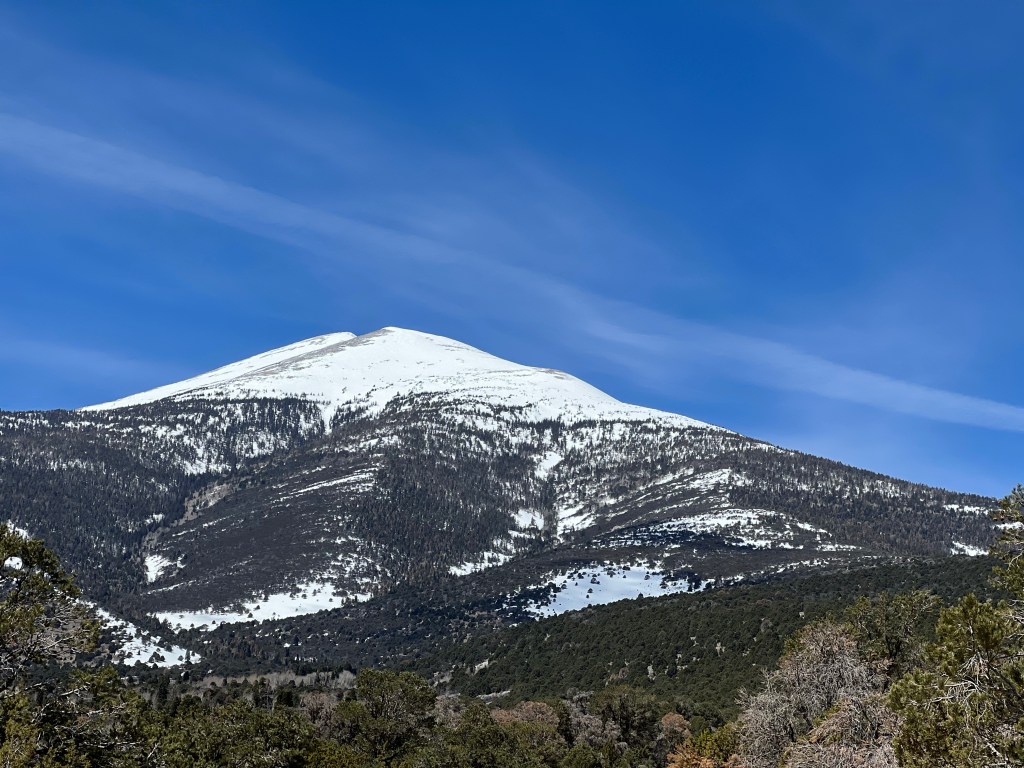
Thus, there is a wide diversity of topography, flora and fauna. However, the repetitive nature of going up a mountain side to a pass and then going down the other side of the mountain and through the valley up to the next mountain range, repeating that process again and again, is the common theme of this region.

Great Basin National Park is 300 miles from Las Vegas and about 250 miles from Salt Lake City. We chose to fly into Las Vegas as a cheaper flight alternative. Fying into Vegas also gave us the option to add on a quick trip, visiting Tule Springs Fossil Beds National Monument, just north of Las Vegas.

Tule Springs Fossil Beds National Monument does not have a visitor center. It does have some temporary trails. We were able to pick up the National Park Service passport stamp at Lake Mead national recreation area visitor center about 25 miles east of Las Vegas. We made stopping here on Tuesday afternoon our priority after landing at the airport.

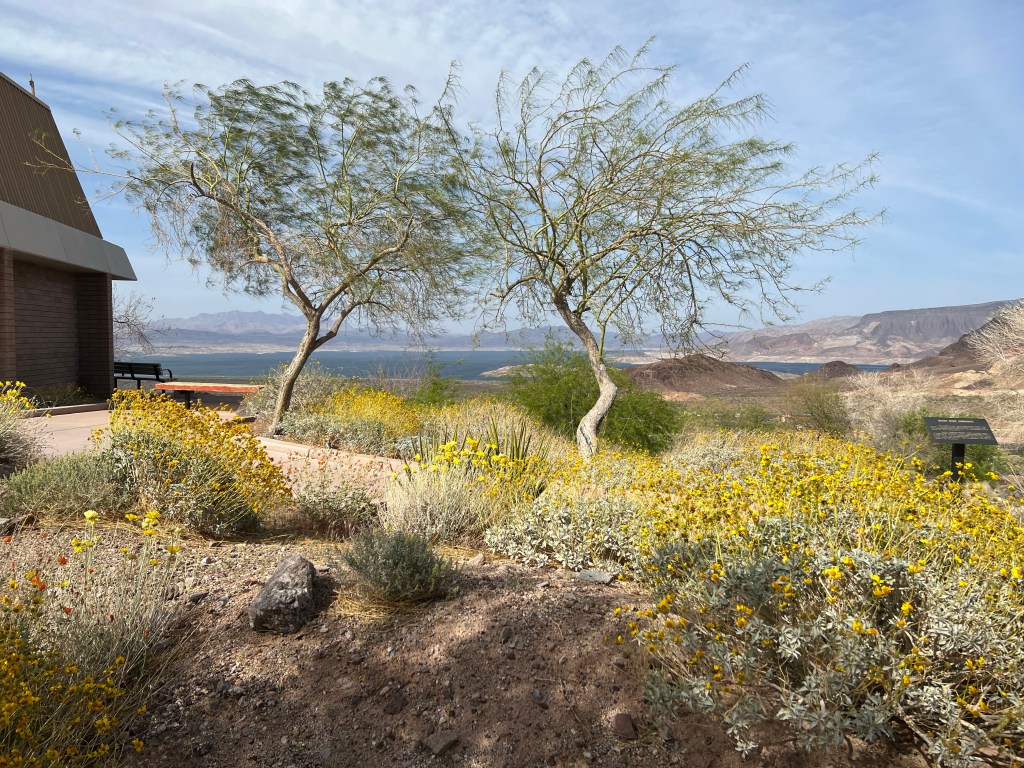
Lake Mead, national recreation area visitor center

The Lake Mead visitor center gave us an opportunity to observe the lowered water level of Lake Mead, see the visitor center film once again, and enjoy the profusion of wildflowers around the visitor center. We stopped in Boulder City for dinner, having a great barbecue meal at our second choice restaurant. The first choice was closed for the filming of some movie scene but we were very pleased with the Fox Smokehouse Barbecue. We spent the night at the Tru hotel located close to the airport, giving us easy access to Lake Mead, and to Tule Springs.

Tule Springs Fossil Beds National Monument

Wednesday morning we drove up to Tule Springs, leaving the hotel around 8 AM. There are no permanent trails established yet. Tule Springs Fossil Beds is going through the park planning program and the temporary trails are the best they have to offer at the moment.

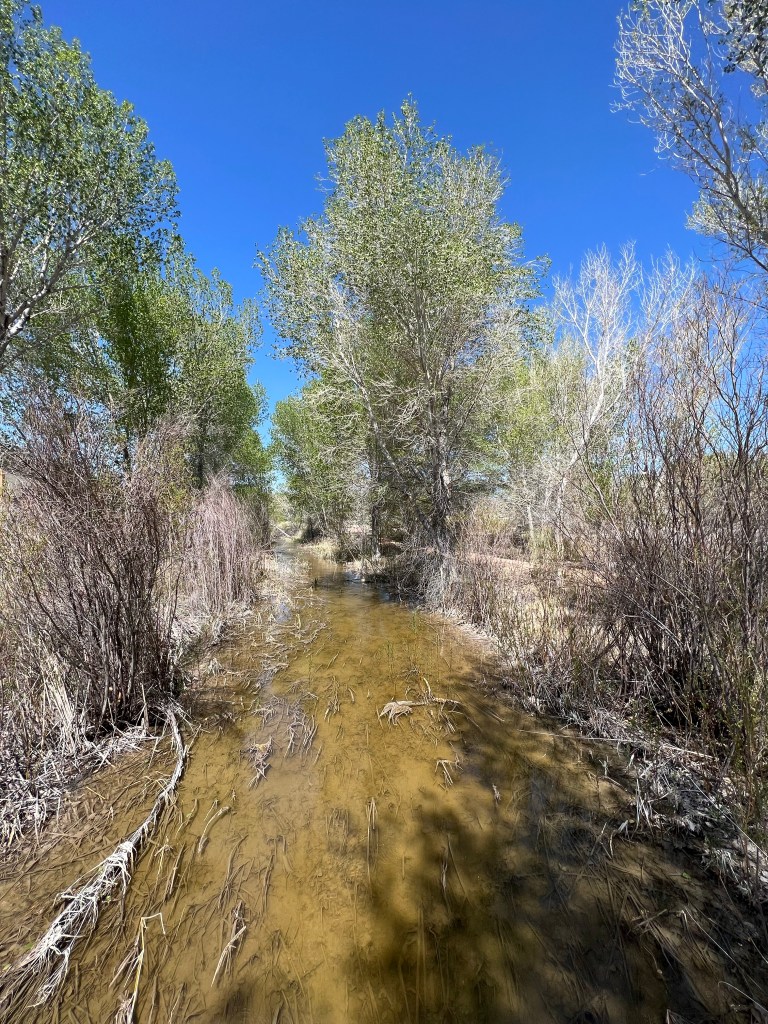
We rarely like to just drive from one destination to another so we stopped at Pahranagat National Wildlife Refuge. The wildlife refuge contains some of those streams and a small lake contained in the great basin area. There was a pleasant half mile walk along the water course, mostly in shade. The visitor center was closed on Tuesdays and Wednesdays so we had a snack outside on one of the benches.

Pahranagat national wildlife refuge

We stopped for lunch in the small town of Pioche, Nevada, population about 1400. The diner was empty when we walked in but 10 to 12 people came in while we were there, providing a bit of people watching opportunity. We gassed up once again, as we were leaving town, at the local Sinclair station, as Chris conversed with the owner, who came out to wash our windshield.

Hidden Canyon Retreat

Our lodging destination was Hidden Canyon Retreat, located about 10 miles outside of the almost deserted town of Garrison, Utah. Great Basin Park is in Nevada, Lodging opportunities are rare. Hidden Canyon retreat was a very pleasant find, located as the name implied down in a canyon by a stream just outside of the park boundary. We had a high clearance vehicle because the road to the resort is gravel, but was in good shape and could’ve been handled easily by a car, at least at this time of year. Hidden Canyon has a little store that provides basic food purchasing opportunities and we picked up our dinner for the two nights and breakfast in their store before proceeding to our room.

We drove to the national park the next morning. It’s the end of April, but the roads to the top of the 12,000 foot mountains are still closed due to snow. We spent the time before our 1 PM cave tour watching the video, reading exhibits, and going on two hikes located at two campgrounds not far from the visitor center.

Lehman cave is one of the star attractions of Great Basin National Park. Our 90 minute tour was led by a volunteer who did an excellent job explaining the cave and the various natural wonders one can observe in the cave.

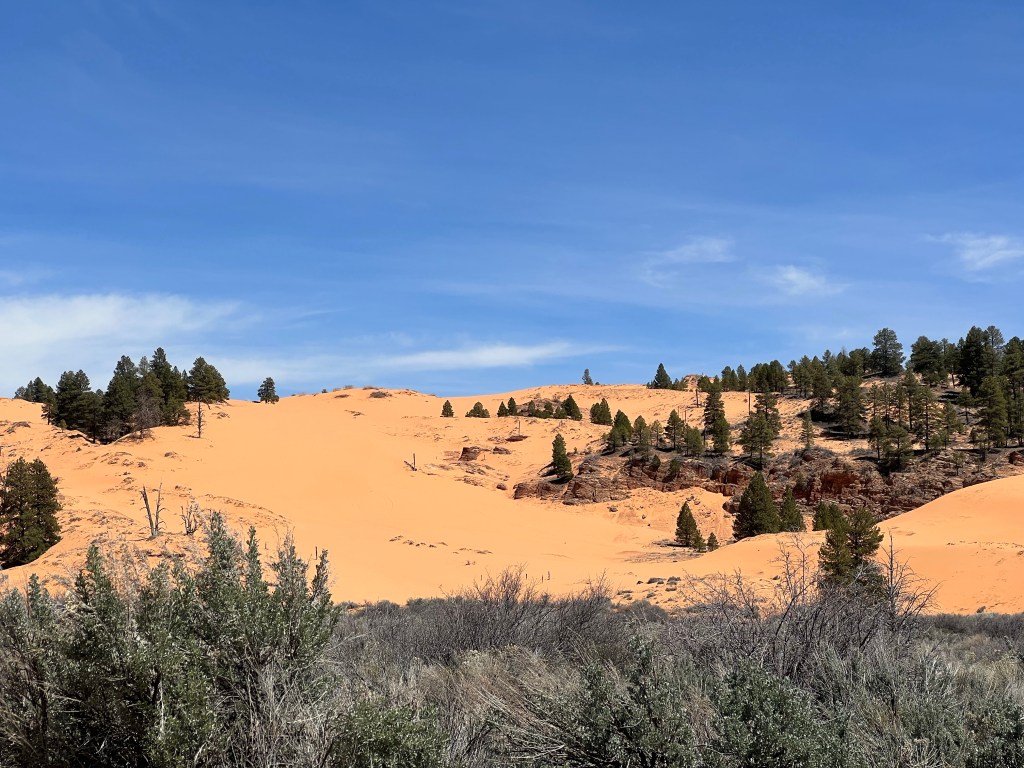
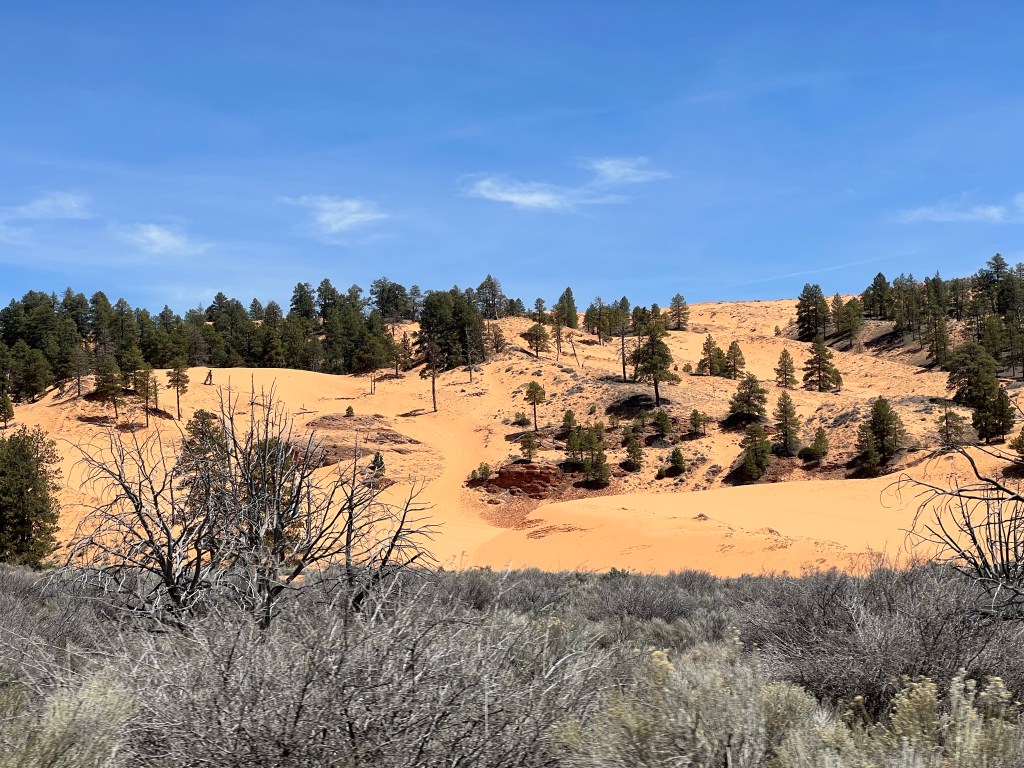
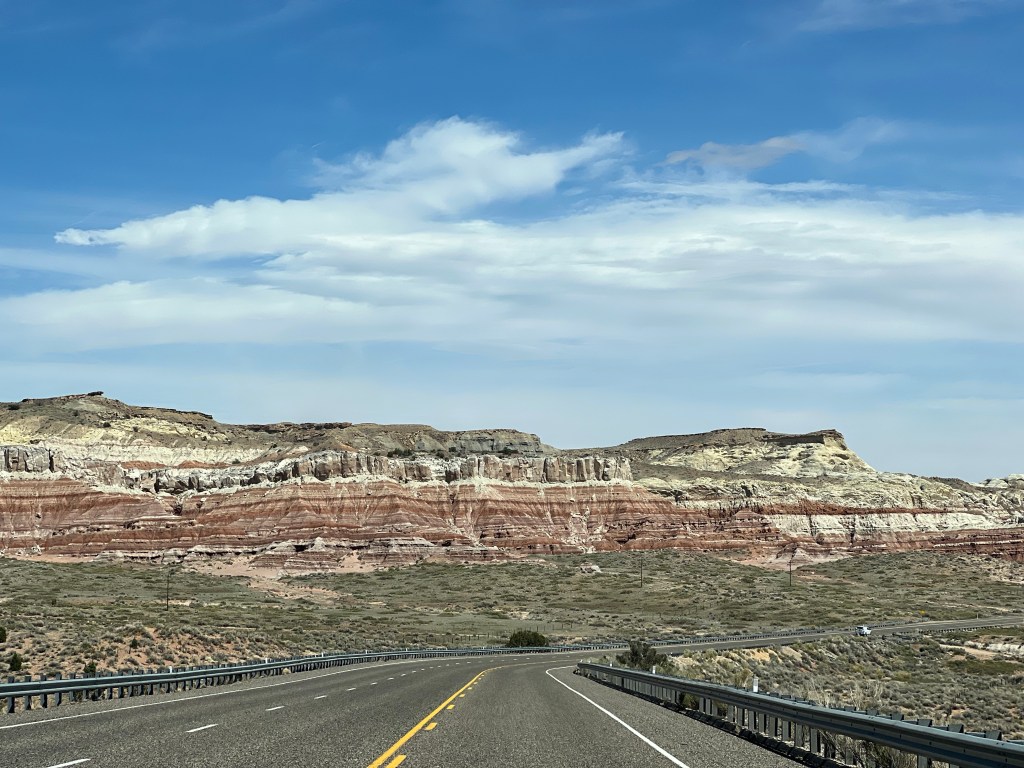
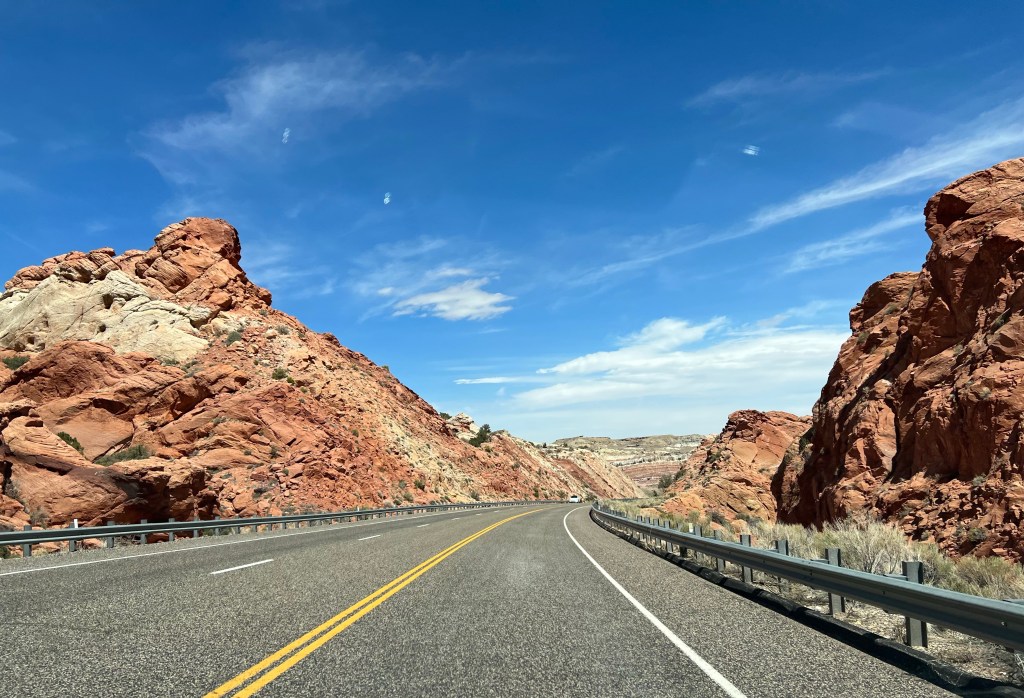
Friday we left the resort before eight in order to reach Flagstaff at a reasonable time. The first section of the drive continued the great basin topography of mountain ranges and valleys as we headed over to interstate 15 in Utah. From interstate 15 over to Flagstaff was territory we have experienced several times before. However, we managed to stop at one new spot, Coral Pink Sand Dunes State Park, in southern Utah.

Coral Pink Sand dunes was on our list, even though we have been to several other sand dune state and national parks, because of its name. I was hoping for more of a pink color to the sand dunes, but it was more in the coral range. 

The final drive was along US 89 past Grand Staircase Escalante National Monument with its colorful, extremely high ridges. We also stopped at Lake Powell and photographed the lower water level in this lake where we had houseboated for a week in 2015.

Ed and Chris. Flagstaff Arizona April 23

Categories: travel | Tags: , , , , , | Leave a comment

2022 Trip 5: Viking Grand European River Cruise: Sept 22-23

In Budapest on September 24

Vienna

Thursday and Friday September 22-23 we were in Vienna, Austria. The morning excursion was a combination bus and walking tour that provided an orientation to Vienna.

The tour guide gave a history of Austria with a heavy focus on the Hapsburg dynasty and WWII. All of our tours have been quite candid about the horrors committed during WWII especially against the Jewish community in each town.

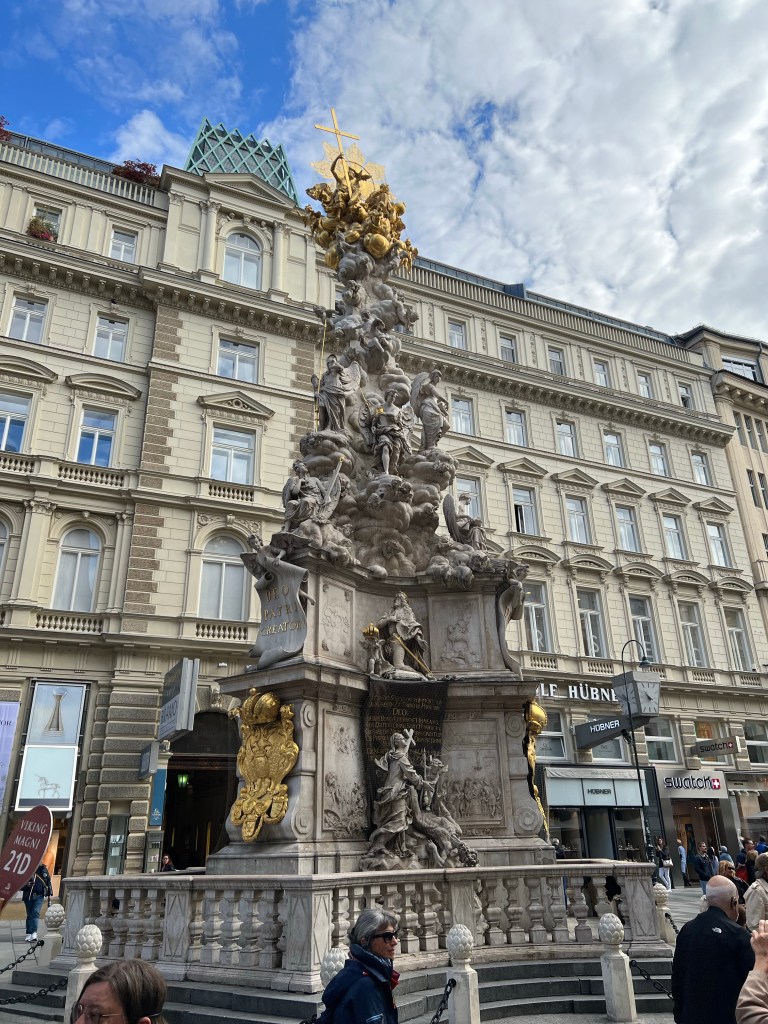
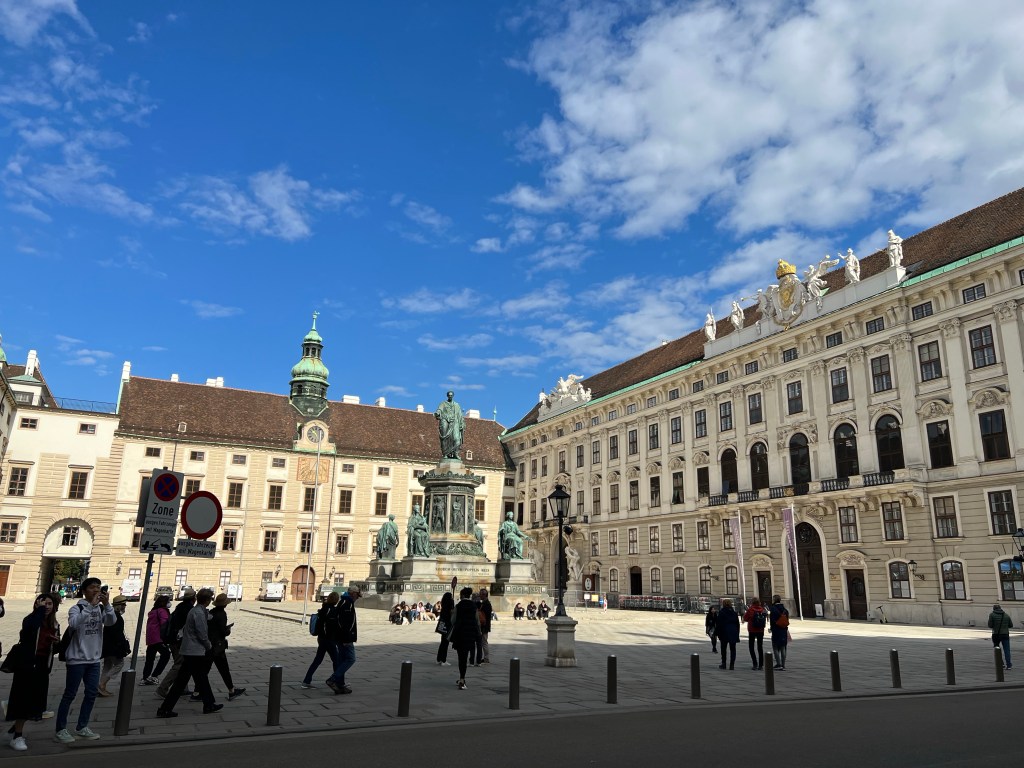
Vienna is a major metropolitan area with a high density, unlike much of the U. S. This density produces a vibrant active street scene with little car parking for the mass of 5-7 story buildings lining the roads. The architectural styles are quite attractive and pleasing to the eye.

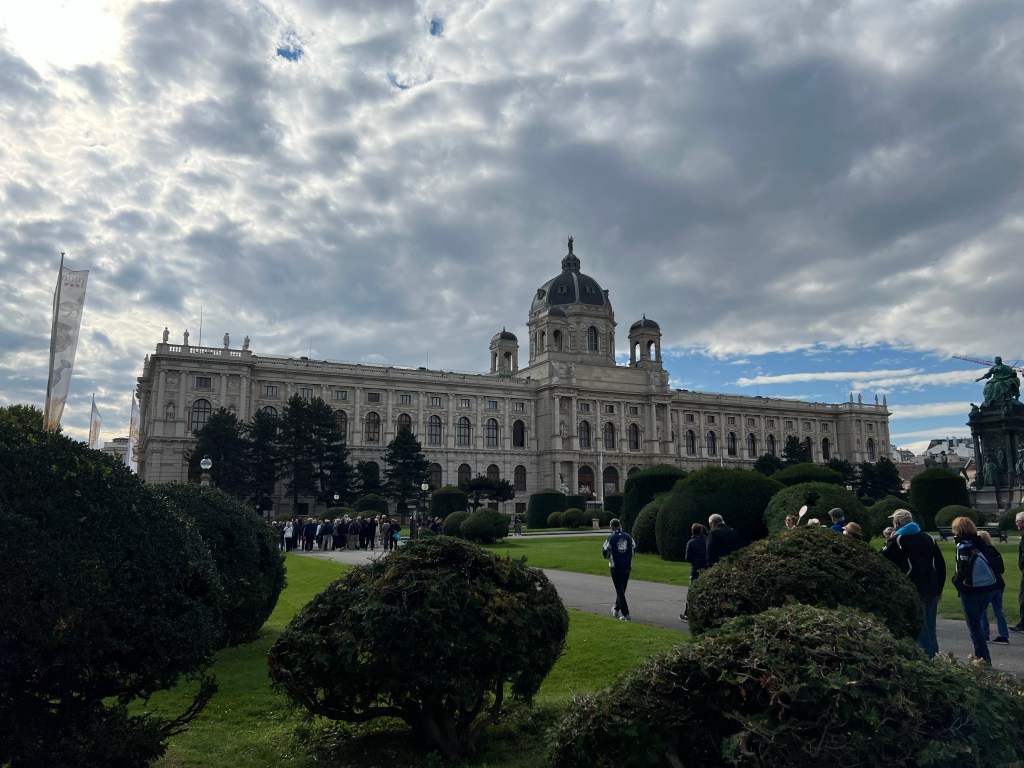
Of course the palace and surrounding historical buildings of the Hapsburg dynasty are overwhelming. The opulence and massive structures draw your eyes in 360 degrees to try to absorb it all. One tour only gives you an overview, it was impossible to fully grasp the background and function of each building.

Our tour took us around the magnificent Hapsburg Palace, the winter home of the Hapsburg and inside St. Stephen’s Cathedral. We were able to get a brief glimpse of the Spanish Riding School and its Lipizzaner horses which are inside the palace grounds.

The Magni was docked on the Danube in Vienna, downtown but not next to the palace and museum area. In the afternoon we walked along the Danube admiring the view and amazed at the number of cruise ships present. Viking alone had six.

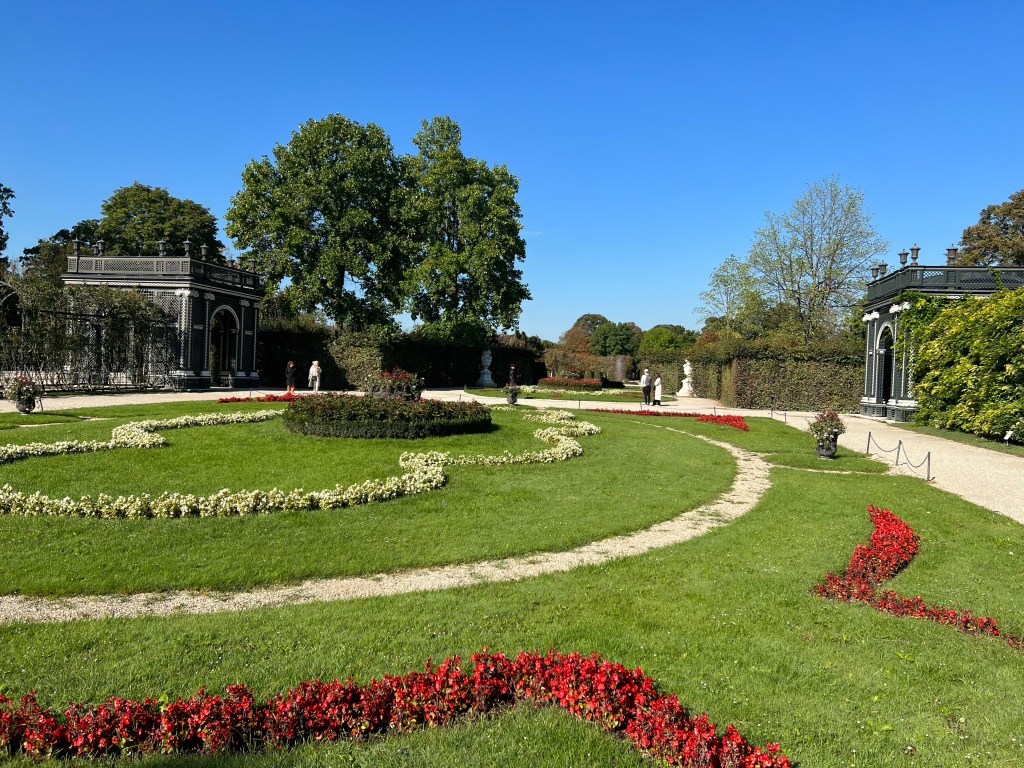
The Hapsburgs had a winter palace which we saw Thursday. On Friday we drove to their summer palace, Schonbrunn Palace. When the Hapsburg’s gave up the throne after WWI, the palaces became the property of the state. We only saw about 20 of the over 1400 rooms and got a glimpse of the huge gardens with its flowers, woods, lawns, sculptures and fountains. No pictures inside of course. The zoo and maze were another portion of the grounds we did not even consider trying to see. When you are on a tour, you follow their schedule.

Back side of Schonbrunn Palace

We returned to our ship for a late lunch since one of the passengers got lost and we left without him after waiting an extra 15-20 minutes. His wife and another couple stayed behind and were able to locate him and make it back to the ship before departure.

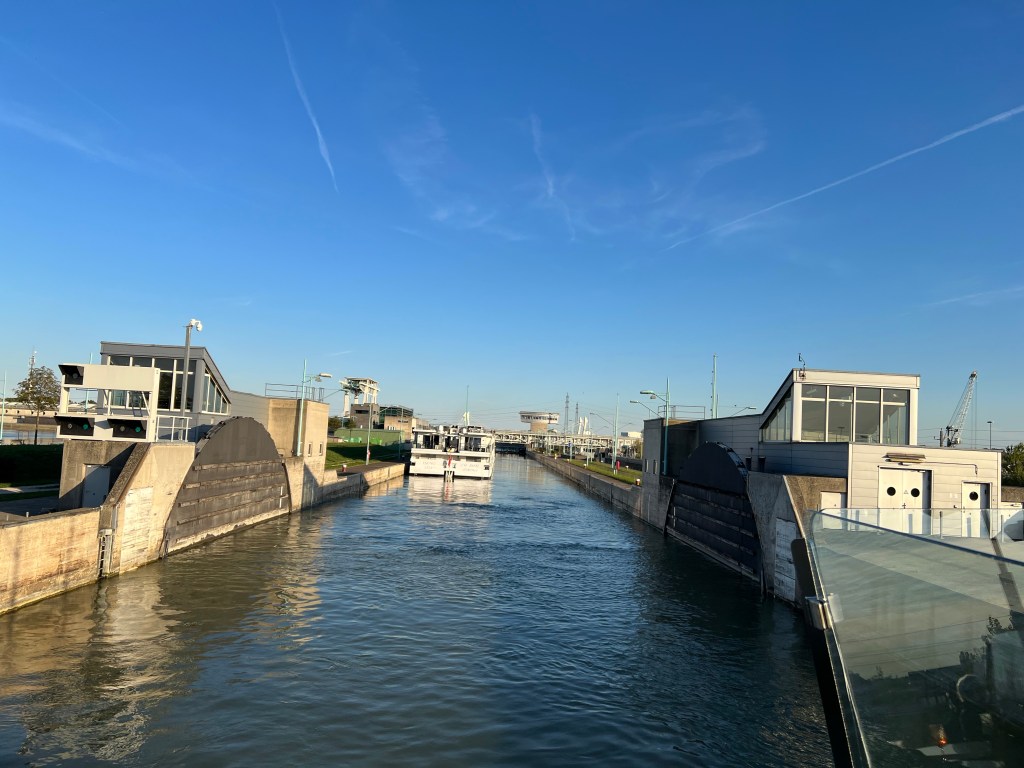
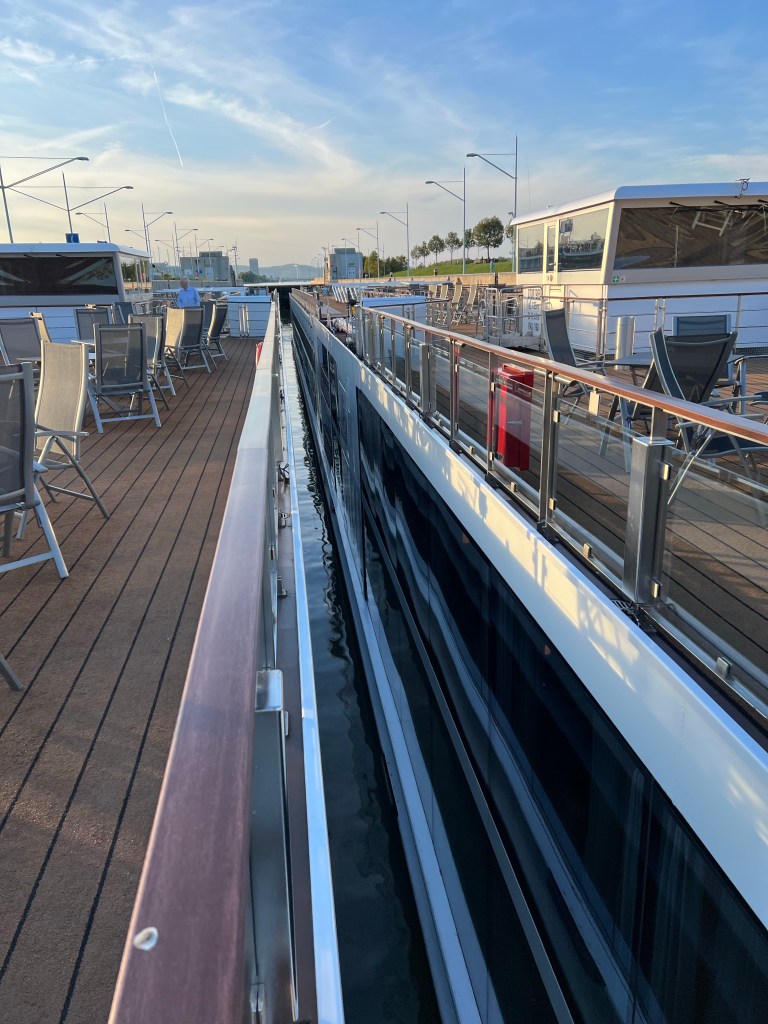
As we cruised to Budapest, we went through another lock on the Danube. This time it was daylight and I took a few pictures. The lock had two chambers, each holding two cruise ships, one lock had two ships coming up the Danube while our lock held another Viking longship also headed got Budapest. It was a little tight but both ships fit in the one lock chamber.

At Schonbrunn Palace

Ed and Chris

Categories: travel | Tags: , , , , | 1 Comment

Another 2022 Northern Minnesota Getaway, March 6-7

Sunday, March 6, 2022 Grand Rapids MN

Chris wanted to ”Get out of Dodge” one more time before we leave on a 30 day trip at the end of March. We settled on Grand Rapids, MN and the Green Heron B and B. Back in 2017 we had stayed at the Green Heron and found it enjoyable and memorable, so we booked it again. It is a delightful house with only two guest rooms. Our hosts, Johnnie and Chris, have been very accommodating. Our getaway started Sunday and we will return home Wednesday afternoon.
The journey Sunday started slowly as the weather had been a mix of rain and snow Saturday evening. The roads closest to the metro area were the worst. As we went north, the roads improved since there had been less rain and snow up there. Our path was circuitous as we wanted to enjoy the trip and not just drive the almost 200 miles. Our first stop, after a McDonalds breakfast, was at the Sax Zim bog.

Sax Zim is a well known birding area about an hour west of Duluth and an hour east of Grand Rapids. Birders visit here year round, it has a welcome center with naturalists on hand. Sax Zim is a mix of public and private land, totaling over 300 square miles. We have never been here before but have heard about and read about it extensively. Not being birders, we dabble in bird watching, just enjoying what we see rather than seeking out specific species. We are also not patient enough to be true birders.

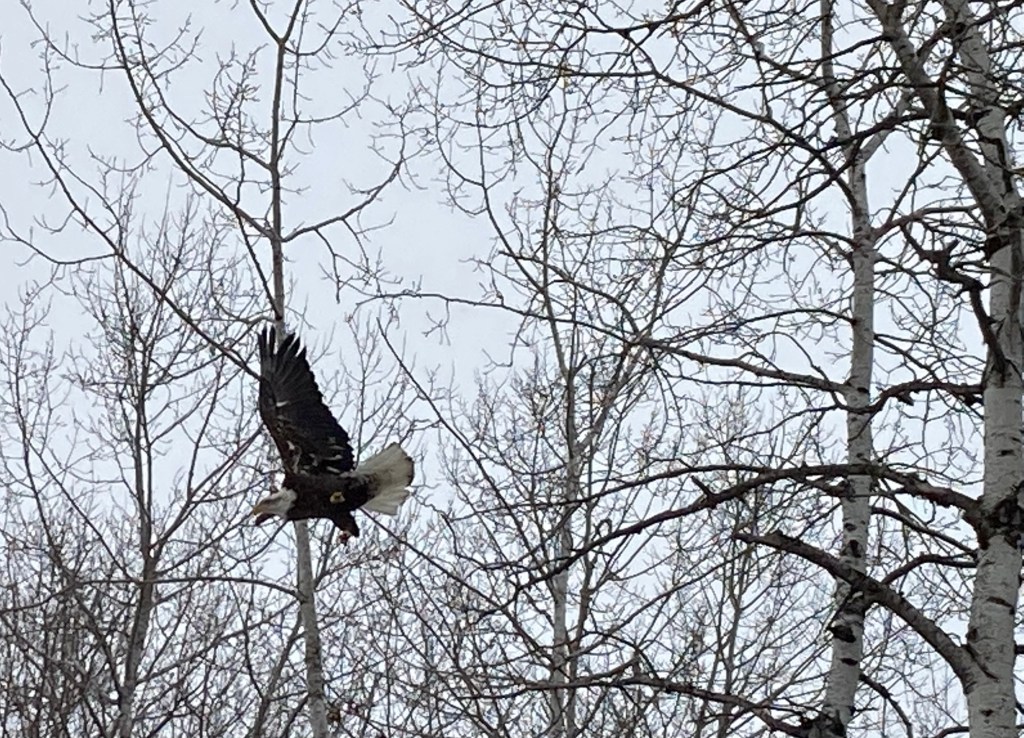
So what do we do? Well Sunday we drove a portion of the auto route. At one stop we saw our first redpolls-maybe. I say maybe because now that I saw them here, I have to recheck some of the birds that have been outside our condo recently. They might be the same species. We also saw one of the largest eagles we have ever seen. Finally, we stopped at the welcome center and met the naturalist. We did not spend time and effort trying to find great grey owls, a frequent visitor here. Then we left, thinking we might return in the future.

Just north of the Sax Zim Bog is the town of Eveleth. Eveleth is one of a series of mining towns on “The Range”. The Iron Range is, and was, home to the largest concentration of iron ore and taconite in the United States. Current operating and used up mines dot the region, one being in Eveleth. Previous blog posts have discussed and shown the mines on the Range, so I am not covering it again.

What Eveleth does have is the U.S. Hockey Hall of Fame. Hockey was big on the Range and in the early days of the Minnesota State High School Hockey Tournament, Range teams were frequent winners. Now as the population on the Range decreases and metro area high schools have more students than Range towns have population, state champions from the Range are few and far between. The Hockey Hall of Fame has been in Eveleth since 1972.

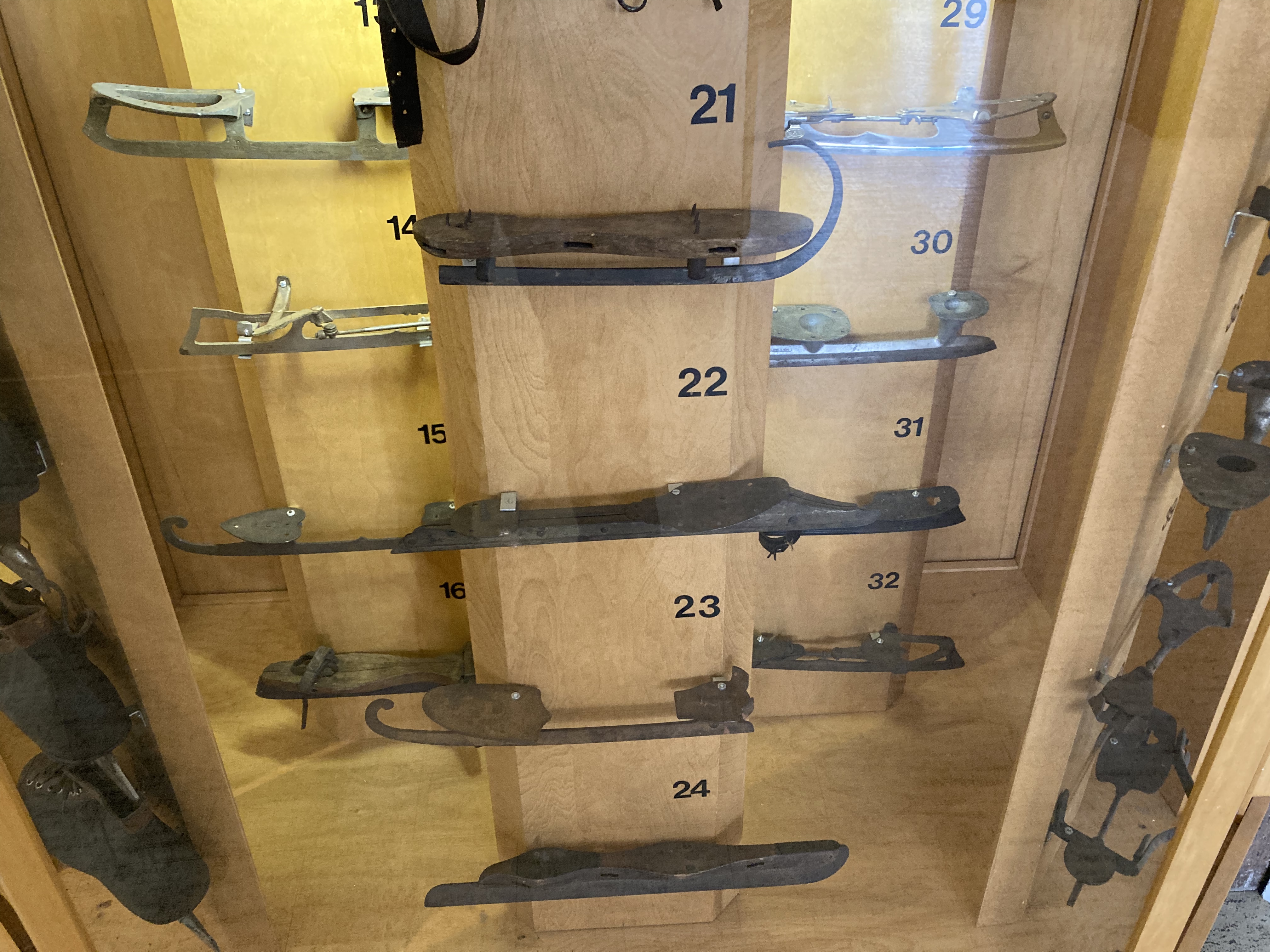
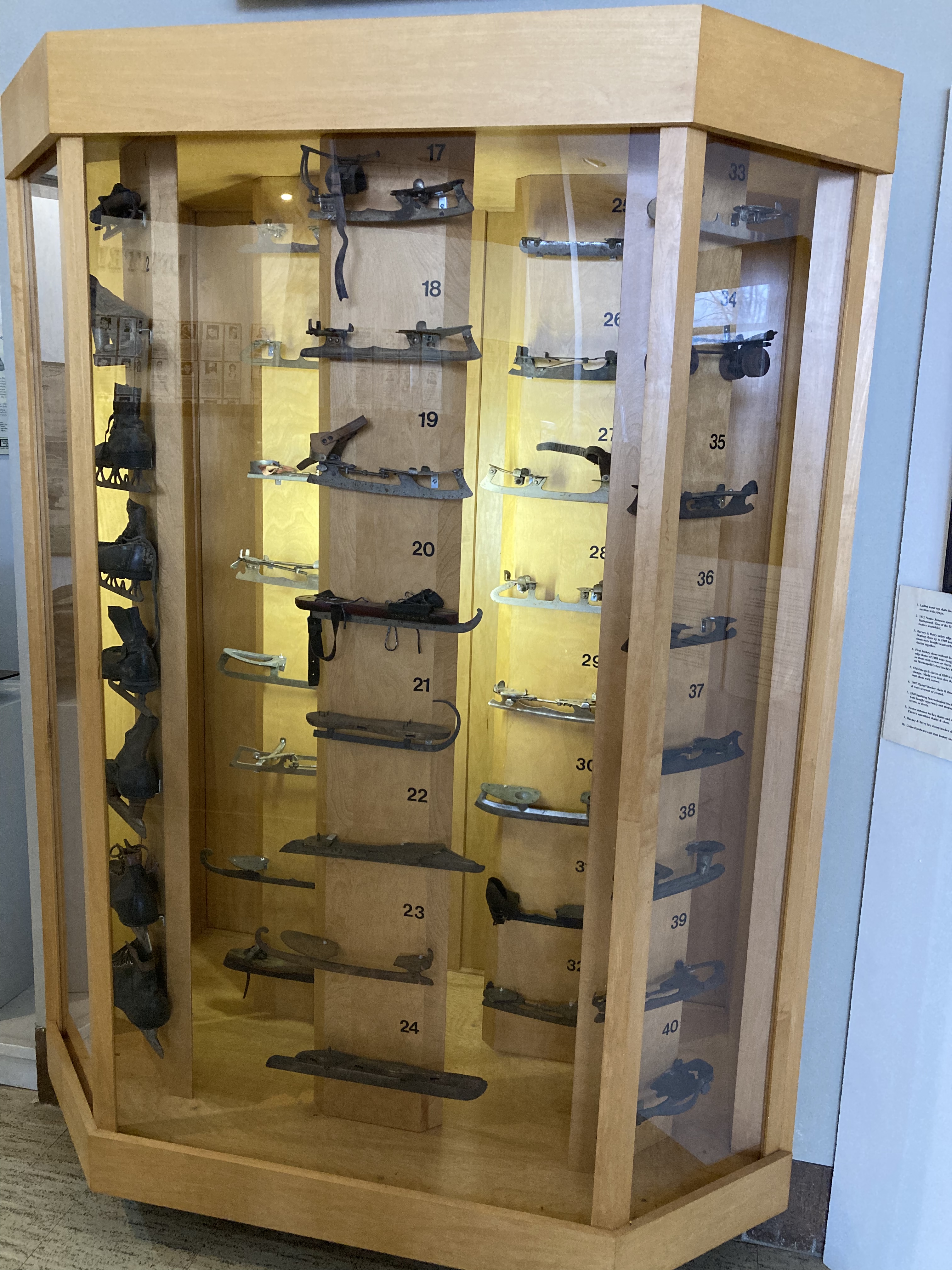
The museum showcases the history of hockey along with displays pertaining to high school, collegiate and professional teams. The 1980 ”Miracle on Ice” whereby the underdog U.S. team, comprised of collegiate players, defeated the USSR team, comprised of professional level players, on its way to winning the Olympic Gold Medal is prominently featured. The fourth Zamboni ice resurfacer ever made is on display here.

The museum is pleasant but probably more of interest to people in MN. Even though there are displays from around the country, there is no doubt there is a preponderance of items relating to MN. Of course, that may be appropriate since Minnesota is ”The State of Hockey”.

Monday morning our hosts made a fantastic breakfast with a fruit/yogurt/honey dish, multi-ingredient omelet, hash brown potatoes, thick bacon, and toast. Then we were off to Big Bog State Recreation Area, about two hours northwest of Grand Rapids. This was our second time here. We are making our second tour of all Minnesota state parks, having already been to each of them at least once. Minnesota is home to the largest peat bog (500 square miles) outside of Alaska. What is a bog? Generally speaking a bog is a wet, spongy area, poorly drained with acidic soil rich with accumulated plant material and having a specific flora.

There is not space here to cover all of this area’s interesting history. In brief, the Indian lands here were subject to various takings by which lies and broken promises were the main ingredients. The counties in the area borrowed money to drain the area to sell it to non-Indian settlers. The land did not drain and the soil is not good for farming. Since the land ended up being worthless, the counties defaulted and the State of MN bailed them out and took over ownership of the land.

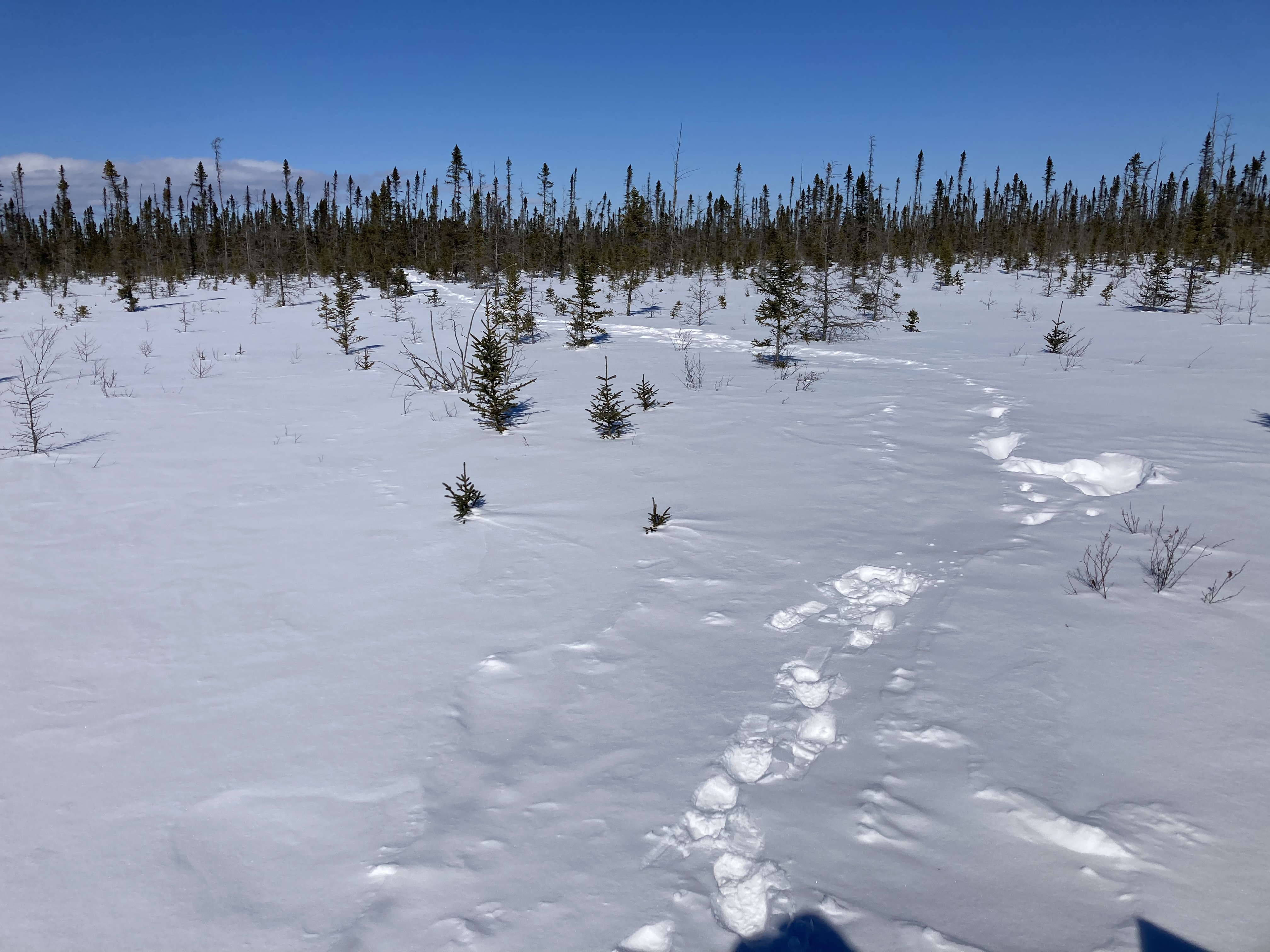
Now there is a state park here with camping by the shores of Red Lake and a boardwalk at this section of the park with its concentration of peat bog. The boardwalk is a mile long and we hoped that it would be reasonable to walk on. The first half of the boardwalk was not too bad, as the center part was pretty well packed down. This section of the bog is primarily black spruce trees of varying heights. As we reached about the halfway point where the drainage ditches had been 100 years ago, the trail disappeared. We decided not to continue on and risk stepping off the boardwalk into deep snow on the side. The second half of the bog is more tall grasses and sedges.

By this time it was early afternoon and we decided to have lunch in a small town of Waskish at a local bar and fishing resort. We had eaten here five years ago and repeated our menu choices of that time; wild rice soup, cheeseburger and onion rings. Our drive home continued our pattern of circuitous driving and we enjoyed the back roads with snow covered fields and forests with a mix of coniferous and deciduous trees. Generally the roads were clear with no snow but the best views were on the roads with snow and little traffic.

Ed and Chris, Monday March 7, 2022

Categories: travel | Tags: , , , , | 1 Comment

2021 Southwest Circle Tour-June 15, The Beartooth

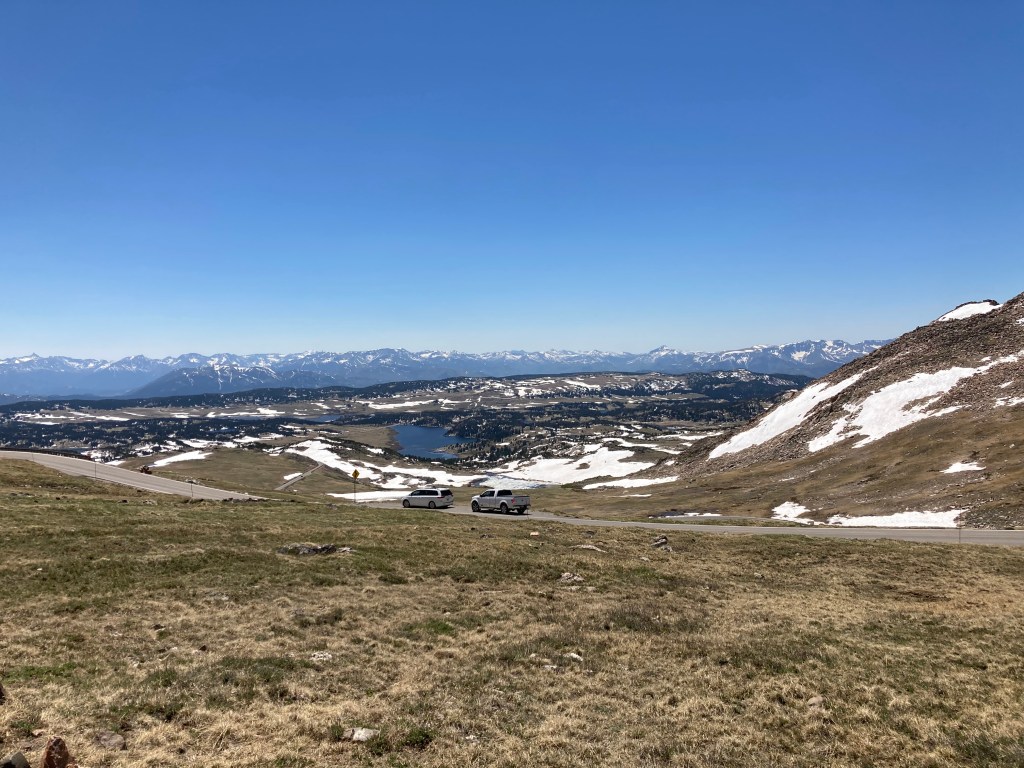
Along the Beartooth Scenic Highway

Billings,Montana Tuesday June 15,2021

(In honor of the Beartooth, we will insert numerous pictures at the end of the blog post.)

Today there was only one item on the agenda. Drive the Beartooth Highway. The Beartooth is a legendary scenic highway that opened on June 14, 1936. Technically it is U.S. Highway 212 and runs from Cooke City Montana (its western terminus), dips down southeasterly into Wyoming towards Cody, and then resumes its northeastward journey to Red Lodge, Montana. It is only 68 miles in total.

Almost exactly 8 years ago, on June 7, 2013, we took the westernmost portion of the highway as we were leaving Yellowstone National Park. The highest and curviest section of the road we passed by; it was out of our way and the road had just opened for the season. (The Beartooth stretch we took today is normally closed from November to early June due to snow.)

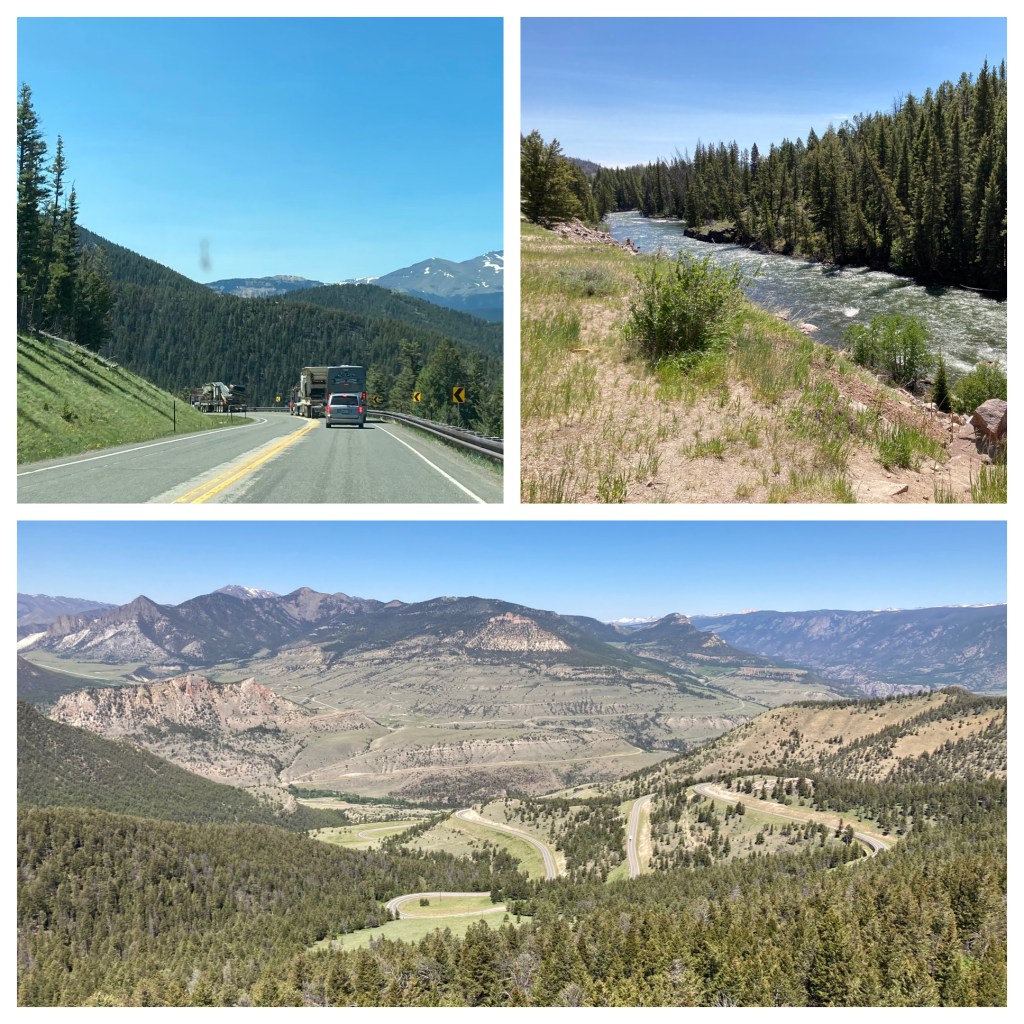
The road was even more spectacular than I had hoped. Chris was blown away by its rugged beauty. Deep canyons, alpine lakes and waterfalls, more switchbacks than one could count, and a variety of landscapes from wildflowers, green valleys, brown valleys, steep valleys, and snow capped mountain peaks. To top it off, there was a section of construction that narrowed the road even more and a forest fire was raging just over the next mountain peak.

Lest I forget it, we did make a driving mistake. Before we got to the Beartooth, we missed a turn-off and drove 15 miles in the wrong direction before we caught ourselves. I know, basic mistake for people who have driven over 100,000 miles on these trips. In our defense, the turn off was not marked well and was right in the midst of another construction zone. At that point, the landscape was still flat high desert plains and we started wondering, when does the good stuff start?

The highest point on the Beartooth is 10,947 feet above sea level. Just a few days ago we were at Cedar Breaks National Monument. The parking lot at Cedar Breaks is at 10,460 feet. But the two drives are like night and day. At Cedar Breaks the ascent is gradual and on a wide road. On the Beartooth, the road is narrow and steep drop-offs line much of the ascent/descent.

We took windshield pictures and also stopped frequently at scenic overlooks and informal pull-offs. We might even have stopped right in the roadway once or twice when no cars were in sight. I scared Chris once when I made a quick turn into an informal pull-off that she did not realize was there. Of course, it was not on the rock side of the road but the steep drop-off side.

It took us four hours to reach the beginning of the Beartooth from our Airbnb lodging along the Wind RIver in Thermopolis. We did take a mid-morning breakfast stop in Cody. The scenery was pleasant; the last portion before the Beartooth was along the Chief Joseph scenic byway we took back in 2013 instead of the Beartooth.

Views along the Chief Joseph Scenic Byway

Our lodging tonight is a Hampton Inn in Billings Montana. They are completely booked up and turning away callers who had not made an advance reservation. Our future plans have changed. In this heat, it was 107 degrees today in Billings, wildlife refuges in North and South Dakota are not particularly exciting. We are going to re-route ourselves further north to see the Fort Union Trading Post National Historic Site and the Knife River Indian Villages National Historic Site in North Dakota. We should still arrive home on Friday June 18.

In honor of the Beartooth, we are pleased to present numerous pictures of today’s scenery.

Along Beartooth Highway
Alpine ponds
Left, three skateboarders on the Beartooth; right, construction zone
Alpine lake still partially frozen
Top, forest fire around 11 AM; bottom,,forest fire around 3 PM

Ed Heimel, Chris Klejbuk Billings MT June 15

Categories: travel | Tags: , , , | 1 Comment

2019 Trip 5: Alaska: August 29

Alaska

Girdwood, AK. Thursday August 29

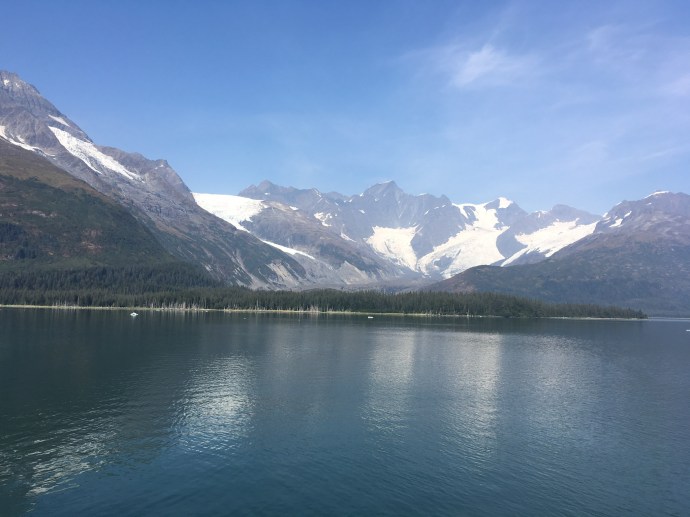
A most interesting day. You will get your fill of animal and scenery pictures. Thursday was dedicated to one activity, a five hour boat cruise out of Whittier in Prince William Sound. But first, we had to get there. As noted yesterday, Whittier was not inviting as a lodging option. We are staying in Girdwood, about 45 minutes west of Whittier. The challenge in reaching Whittier is that if you are coming by car, you have to use the Whittier Tunnel. There is no other option.

The tunnel was constructed during WWII for railroad traffic and only much later converted to combined rail and auto traffic. And I mean combined. It is one lane wide with trains and autos using the same path. To enter Whittier from the west, you line up and wait for the tunnel to allow east bound traffic at 30 minutes after the hour. To leave Whittier, you line up and wait to enter the tunnel at the hour. If you miss your time, you wait an hour.

It should take 45 minutes to reach the tunnel from Girdwood. We allowed an hour. But, experienced travelers that we are, we missed the turn-off! We were zipping along when suddenly the road signs just seemed wrong. No cell service to check on Google maps. We decided we had to re-trace our steps. Going speeds I have not reached since the wide open spaces of west Texas, we reached the line at 10:35. Luckily at that time there were enough cars that the line was long and the tunnel was still open. Close call.

Logistics of the day: Boat, Lunch (plus a kale salad not in the photo), Seats (Top deck, front row, right by window) Chris at the far right front

Our cruise was with Phillips Cruises for a five hour journey on a new boat. They assign seats and since we had booked back in March, we had prime seats in front, by ourselves, looking forward, right next to windows in front and to our right. For the next five hours we took in magnificent scenery and a long list of sea animals. Once out on the Sound, the smoky haze was minimal. Whittier and this area of Alaska receive huge amounts of rain and snow but today was clear. Temps were in the high 50s, we did not need the extra gear we brought to stay warm on the water.

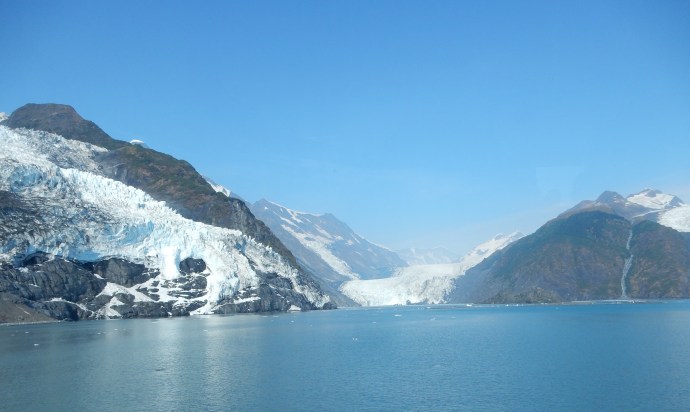
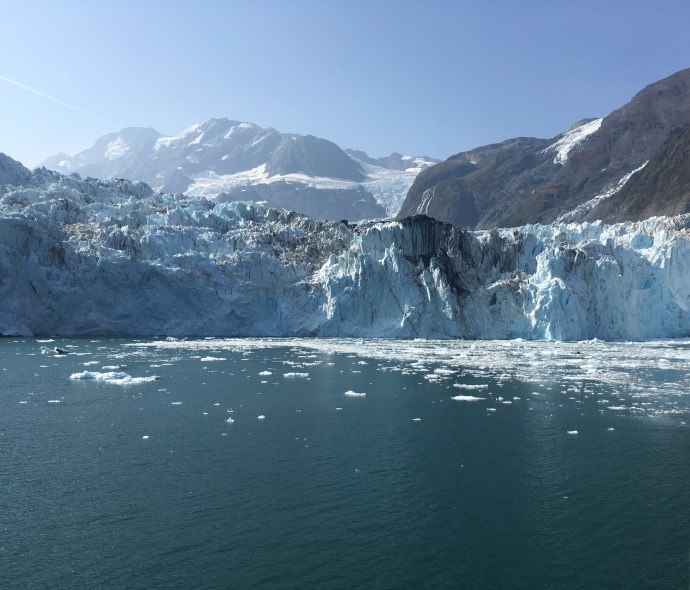
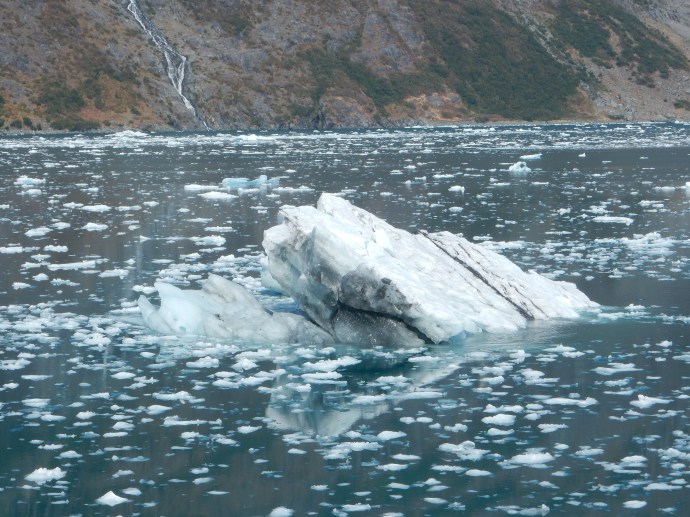
Glaciers

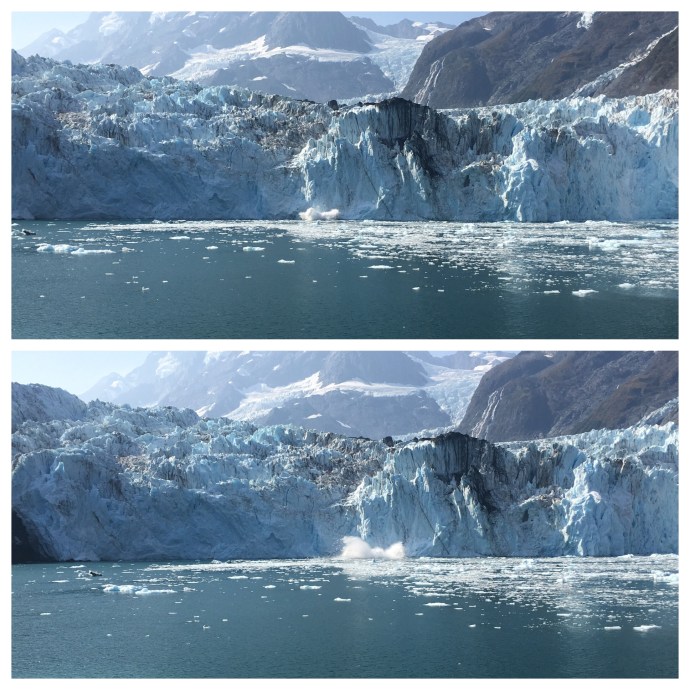
A U.S. Forest Service Ranger from the Chugach National Forest was on board providing narration. The Chugach is our second largest U.S. forest and includes huge swaths of water surface within its boundaries. He discussed glacier formation, the weather, the impact of climate change and the dramatic shrinking of the glaciers.

Glacier calving: Breaking off top, splashing bottom

Waterfalls

Alaska water falls that seemed so puny before were dramatic in height as water from melting snow and glacial ice poured down tall mountain sides.

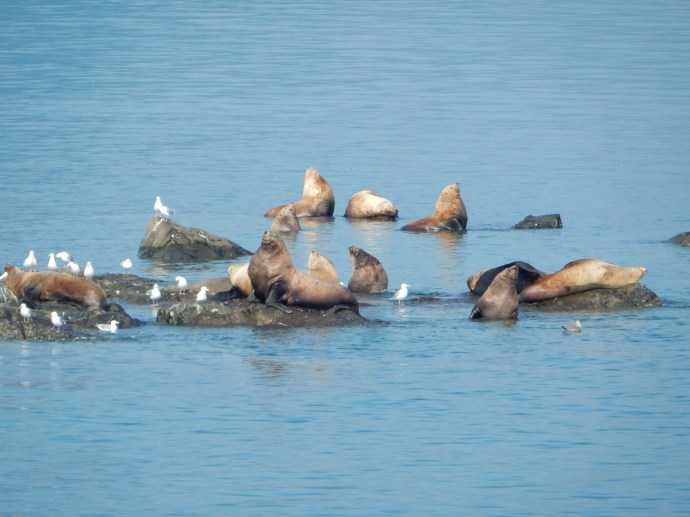
Stellar seal lions

I could discuss the habits of Stellar sea lions and the other animals; we picked up fact sheets on all of them. But I won’t except for a few brief comments here and there.

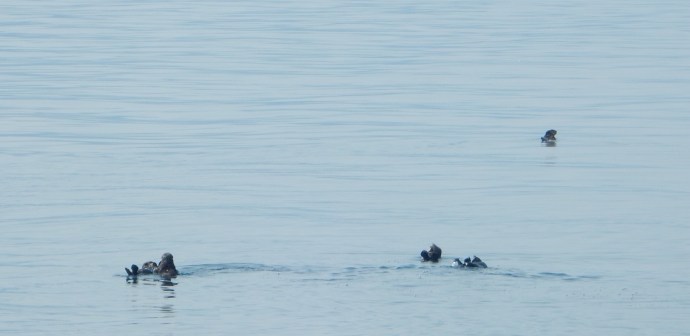
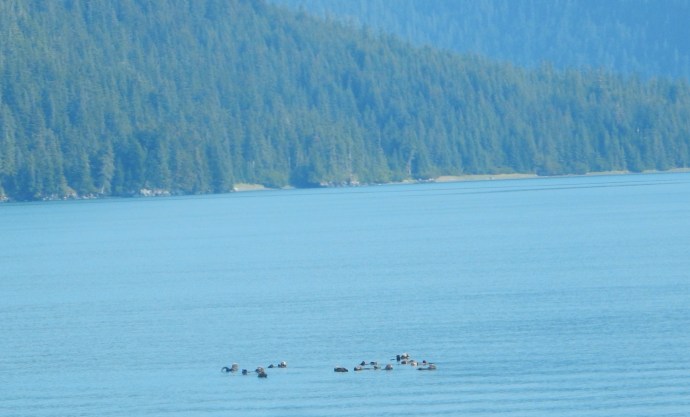
Sea otters at play

Sea otters in Prince William Sound

Sea otters were almost hunted to extinction. Their pelts are amazing in their ability to resist water and keep warmth. If you want to be disgusted, read a history of how they were hunted and natives here treated.

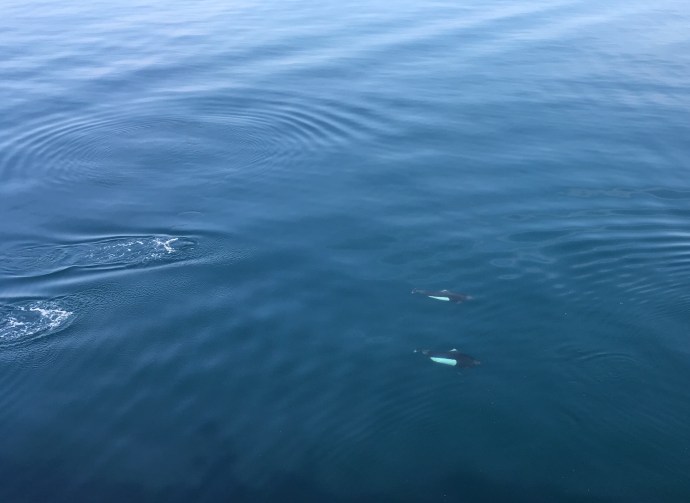
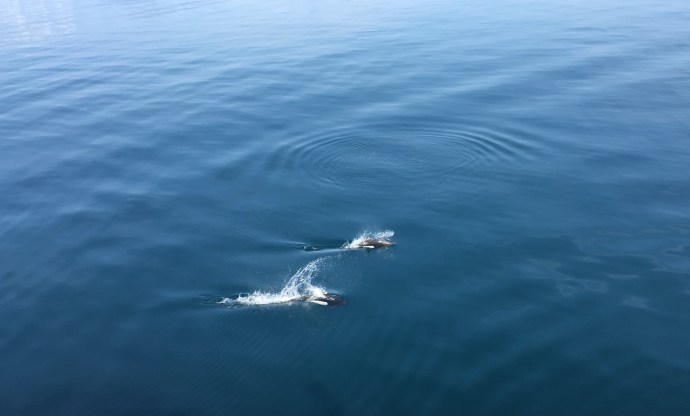
Dall’s porpoises

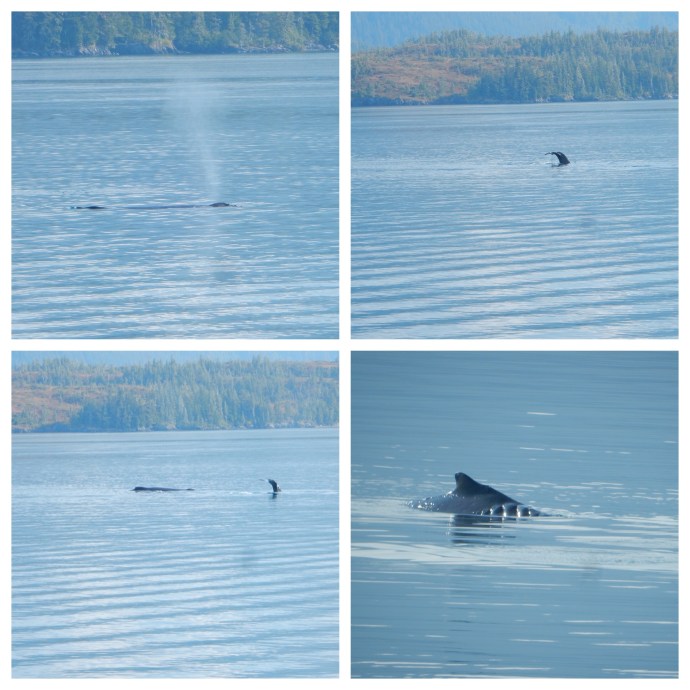
The porpoises were the highlight. They buzzed the ship. They dived and splashed. They went out and “played” with the humpbacks whales. There must have been at least ten of them. Porpoises are fast. It was hard to take a photo; by the time they jumped out of the water, they were gone again.

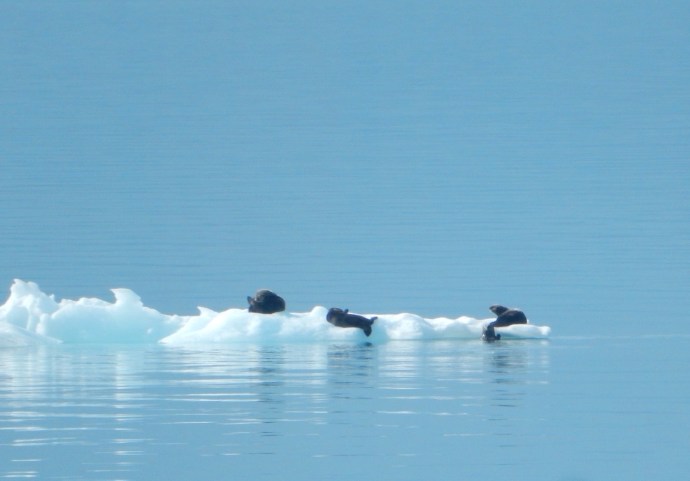
Harbor seals in Prince William Sound

Humpback whales

This is not the season for orcas, so humpbacks were the “only” whales we saw today.

We did not bother taking pictures of bald eagles. Kind of ho-hum for a couple from Minnesota.

This was the Alaska of our imagination. A great cruise. A lucky day weather wise. A wealth of wildlife to observe and glaciers to marvel at.

Oh, we have canceled our first night in Cooper Landing due to fire issues. Our river rafting excursion has been canceled also. Still debating the next two nights in Cooper Landing and our three days in Homer. A Homer cancellation will hurt; we had splurged on an air trip over Cook Inlet to Lake Clark or Katmai National Park. They are remote and only reached by air or boat.

Alaska

Ed and Chris August 30. 3:30 AM
Categories: road trip, travel | Tags: , , , , , , , , , , , , , | 1 Comment

2019 Trip 3: South Florida: April 13-18

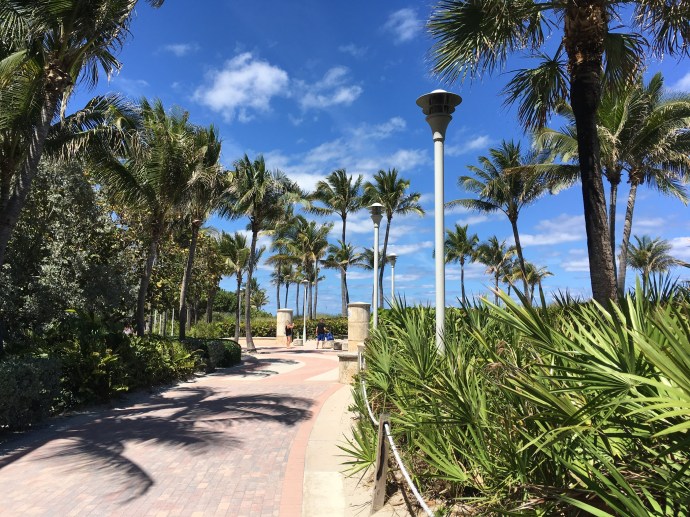
Taking the beach walk to the beach

Miami Beach, FL. April 18

Our old haunts awaited us as we returned to Miami Beach. We have been coming here almost every year since 2001-18 years. Some things change, Hurricane Irma closed down one hotel which had a restaurant we used to frequent. A new transit option appeared, free rides in an electric driven small open air van paid for by advertising. Some things are the same, Front Porch restaurant is still open after 25 years and just half a block north of our place as is La Sandwicherie, a famous hole in the wall sandwich shop we frequent.

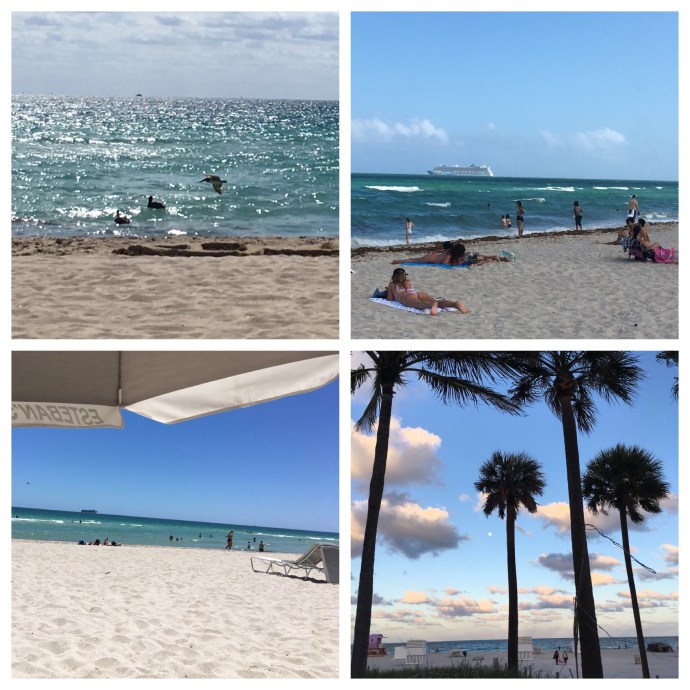
At the beach: pelicans, cruise ship in background and parasailing, typical beach scene, and moon rising over the ocean.

The people watching continues of course. A better writer than I could keep you spellbound with anecdotes of the various antics one sees on the beach and on the sidewalks. The family whose dad is complaining how the teenage daughters are whining about the experience and how much the parents are paying. We only heard the father’s many whines, few from the daughters. The people trying to open their less expensive store-bought umbrellas that turn inside-out in the strong wind. The woman and child walking down the middle of the street. You will have to use your imagination or your own experiences to expand the number of anecdotes.

Monday was supposed to rain and it was the day for our room to be cleaned so we went walking down to South Pointe, next to the ship channel that is the means for boats, cargo ships, and cruise ships to reach the ocean. We passed two hotels where, when we were working, we used to spend a night or two to extend our vacation. When we stayed at those hotels, we never went to the beach, just stayed at the hotel pool.

Wolfsonian examples of Art Deco inspired furniture: oven, dressing table, hutch,and desk.

The Wolfsonian Museum is a favorite of ours. Usually we go to the Friday night free admission and docent tour. Once we heard James Dyson talk about his revolutionary new vacuum cleaners. That gives you an idea of how long we have been coming here also. Monday we went and actually had to pay the senior admission rate of $8 each. While various exhibits come and go, the heart of the exhibits are items from the Art Deco period.

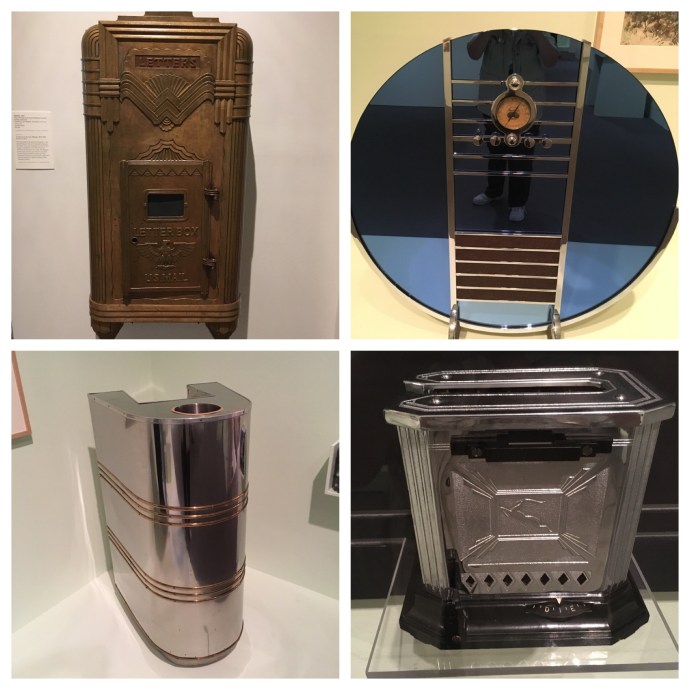
Wolfsonian: Art Deco in everyday life: mail box, radio, movie ticket taker booth, toaster

Art Deco was highlighted at a 1925 exposition in Paris and took off in the U.S. in the 1930s. Art Deco architecture was the driving style in Miami Beach’s expansion. But Art Deco took over in design for many everyday experiences. There are connections between styles and ornamentation visible on hotels from that period and furnishings and appliances created in the 1930s.

New World Symphony wallcast

The New World Symphony, started by Michael Tilson Thomas, is a post-graduate school training academy for musicians. For Wednesday night’s activity, its outdoor wall is used to simulcast some of their concerts and to host weekly outdoor movies during the winter season. We ambled over last night and watched “Won’t You Be My Neighbor”, the story of Fred Rogers. Besides enjoying the movie tremendously, we saw a new (to us at least) form of outdoor seating. The Porch Couch is a piece of plastic like material, open at one end, and you simply wave it around to fill it with regular air. It provides a couch like seating that held up well for the two groups we saw using it. When the event is over, let out the air and pack it up. Neat.

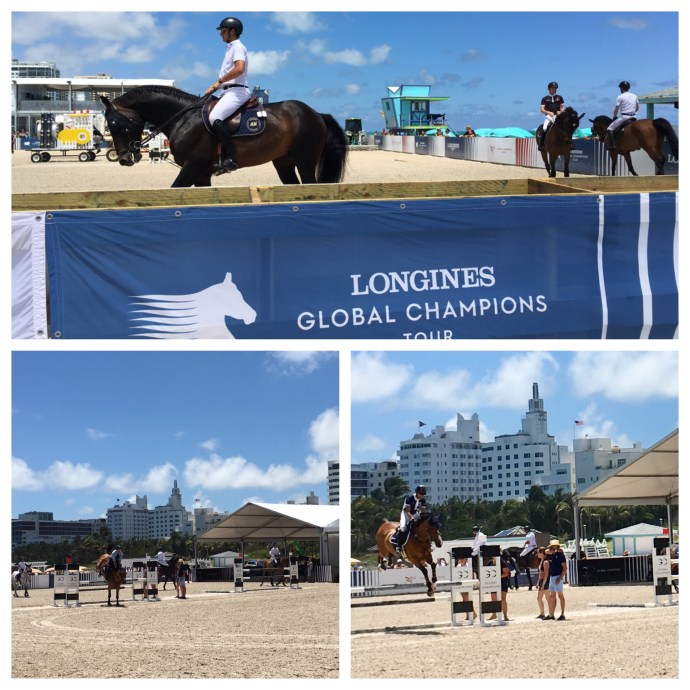
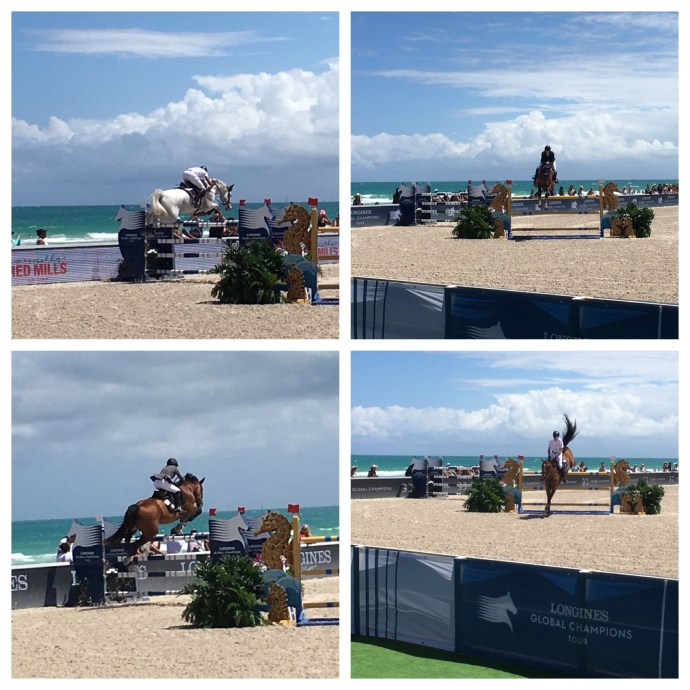
An unexpected experience wraps up our trip. When walking along the Beach Walk, I came across large tents being erected. Nothing unusual there, Miami Beach is host to many conferences and events. Upon closer perusal, I realized that the tents were for the Longines Global Championship, an international horse jumping competition. It runs Thursday (today) through Saturday on the beach. And attendance was free.

Preparing for the event, Longines Global Championship

Chris and I went to the opening day afternoon competition. Horse and rider teams from the U.S., Great Britain, Qatar, Sri Lanka, Czechoslovakia, Netherlands, Germany and Switzerland were represented. Several different levels of competition were scheduled, we have no clue as to the rules which determine who can enter each round. After two and half hours, our event winner was from the U.S. Listening to the announcers, it was evident that the competitors were top-level. This Global Championship has 20 events in cities like Mexico City, Shanghai, Montreal, Prague, London, Monaco, Stockholm, etc.

During the event.

I was surprised the horses were jumping outside in the heat, 86 degree Fahrenheit at show time. But the views of the ocean and the horses made for great viewing for the spectators. Given the high cost of the horses and of travel, I am sure the horses would not be jumping if it would harm them.

This will be the last post for this trip unless something unexpected happens in the next 24 hours. Friday we fly home.

Ed and Chris April 18 Miami Beach

Categories: road trip, travel | Tags: , , , , , , , , , , , , , | Leave a comment

Blog at WordPress.com.