
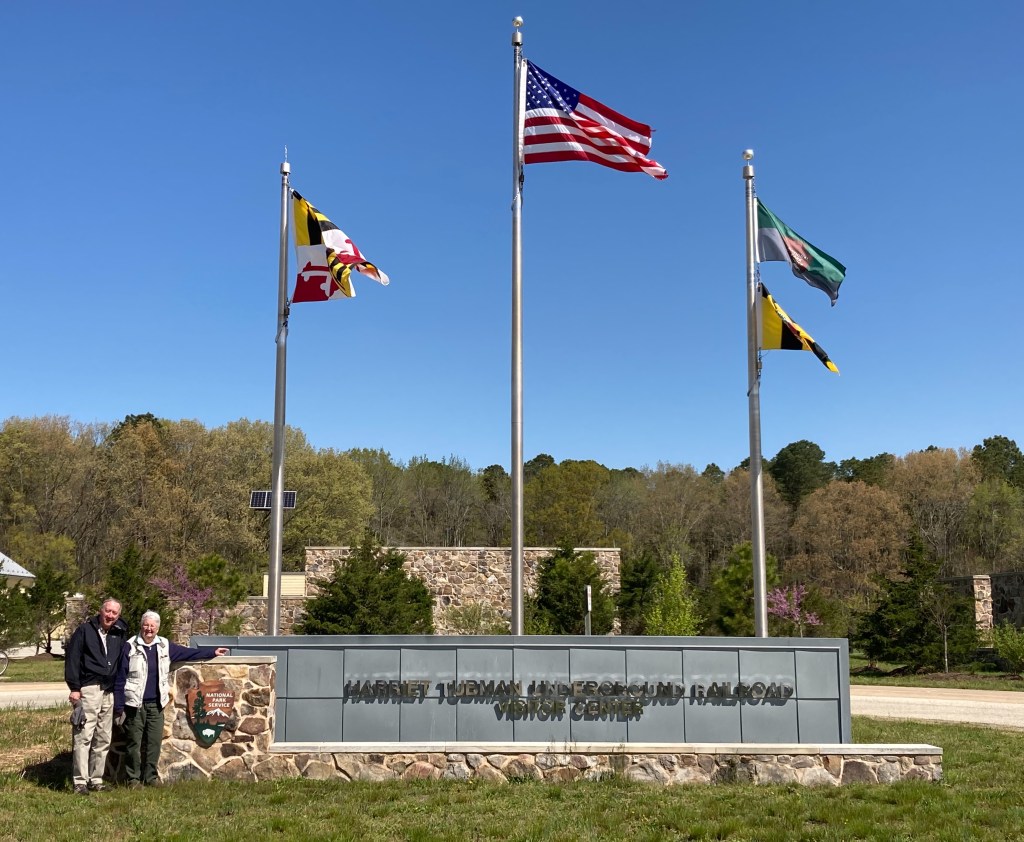
Salisbury, MD April 17
Our two and a half hour drive to Dover DE was much more relaxing than the Friday drive. There were fewer cars early in the morning so less congestion. Still plenty of high speed dragster type speeders to be seen though.
Our NPS destination was Dover Green and the Old State House, one of the sites constituting the First State National Historical Park. Delaware has an interesting history. The Dutch and the Swedes were two major immigrant groups that set up colonies in what is now Delaware. From 1638 to 1655, Sweden had a colony centered around present day Wilmington DE. The Dutch established a colony at Lewes DE and took over the Swede’s colony in 1655. The English kicked out the Dutch in 1664 and through a land grant gave Delaware’s three counties to William Penn and Pennsylvania. The Delaware people resented the Quaker control from Pennsylvania and depending on who you believe, either broke away or were allowed to leave Pennsylvania. (If you are looking for an interesting history to read, try Russell Shorto’s “The Island at the Center of the World”. The book tells the history of the Dutch colony of New York and how the Dutch customs had a lasting influence on America.)
Delaware’s claim to being the First State is rooted in the December 7, 1787 vote by the 30 delegates elected to a state convention to consider ratification of the U.S. Constitution. The vote to ratify was taken at the Golden Fleece Tavern on the Dover Green where they were meeting. Delaware was only one of three states where the vote to approve was unanimous. Delaware’s vote to approve beat Pennsylvania by five days.
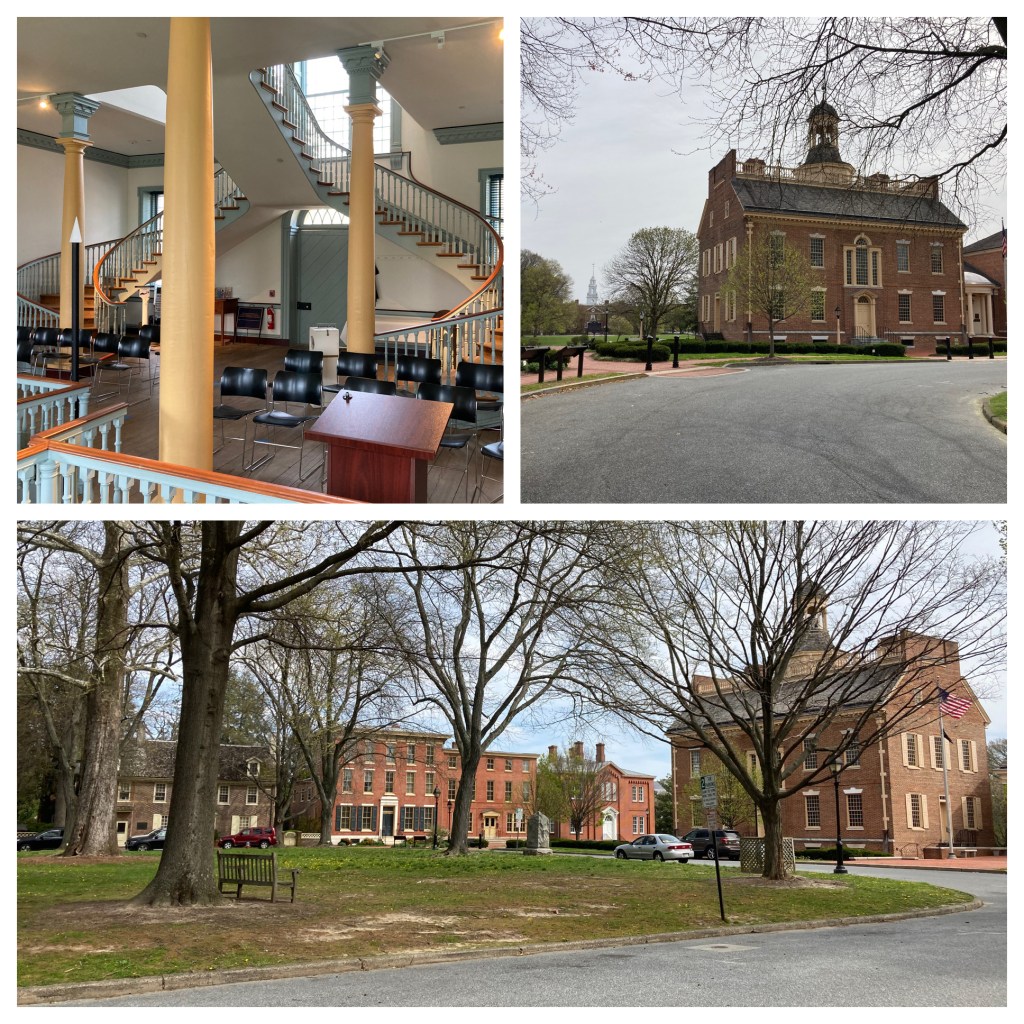
We walked around The Green, established in 1717 according to standards set by William Penn; had a tour of the Old State House; and walked by the site of the Golden Fleece. The Golden Fleece Tavern was demolished around 1830, evidently historic preservation laws did not exist then. One interesting factoid. The Old State House has two replica staves, poles with a wooden triangle at the top, one side red and one side white. When a decision was made by a court in the olden days, the staves were placed outside. If the white side was showing, the defendant was innocent. If red, guilty.
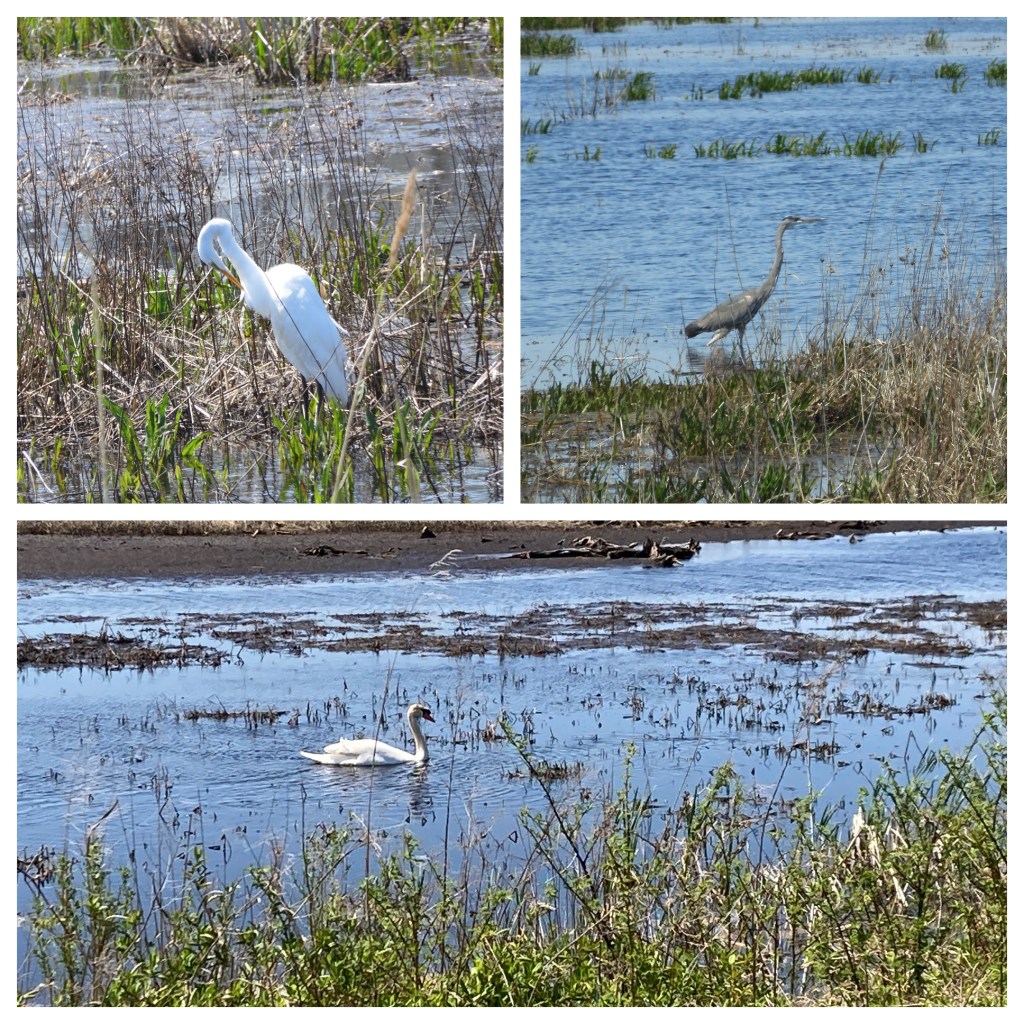
Hoping to not repeat the bust of viewing very few big birds at Mason Neck and Occoquan Bay wildlife refuges, we stopped at Bombay Hook National Wildlife Refuge. This refuge was established in 1937 and has 16,000 acres along the flyway for the Atlantic coast. The name comes from a poor translation of the Dutch “Bompies Hoeck” or little tree point. The Civilian Conservation Corps built dikes, cut timber, ran ditches for mosquito control, and generally built the first level of improvements between 1938 and 1942. Our luck improved, heron, egret and various and unidentified waterfowl were present.
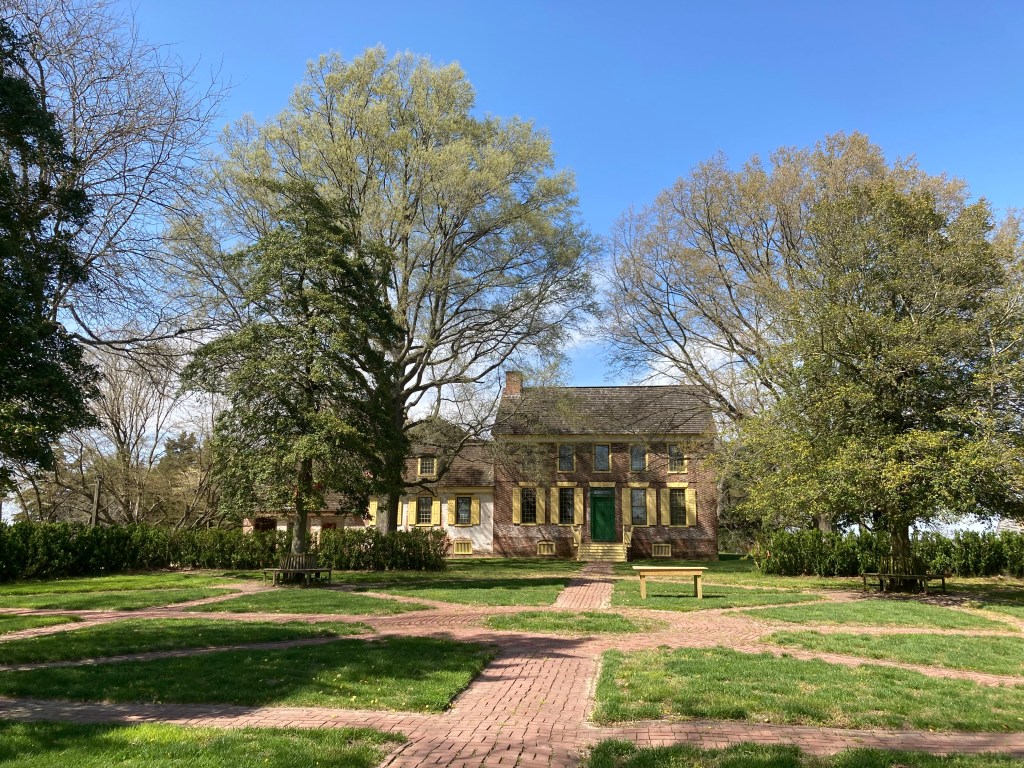
Our final stop of the day was another plantation owned by a wealthy founding father. John Dickinson was a delegate to the Continental Congress, primary author of the Articles of Incorporation, and drafter and signer of the U.S. Constitution. He had homes in Wilmington and Philadelphia and his plantation in Delaware. He served in both PA and DE legislatures depending on his residency at the time. His signing of the U.S. Constitution came as a delegate from Delaware. He authored numerous tracts that helped solidify support for the Union although he abstained from signing the Declaration of Independence. He was one of the moderates who was not sure if independence’s time had come. After the Declaration of Independence passed, he joined his local PA militia and reached the rank of Brigadier General.
When we toured the house, the front door was facing an empty field. The tour guide explained that in Dickinson’s day, the St. Jones River was just outside the house. Through the passage of time, the river changed its course and is now off in the distance. The river access was important, it was the means of transport to move the crops to market. Without having taken the tour, we would have been left wondering about the placement of the house.
John Dickinson always brought a sense of pride for us. We lived for several decades in Carlisle PA where Dickinson College is located. Although Dickinson was founded by Benjamin Rush, a signer of the Declaration of Independence, he had it named after John Dickinson, a good friend of his.
For three nights we are staying at a Hampton Inn located in Salisbury MD. It offers a central location allowing us to easily journey to our next planned stops.
Today started at the Harriet Tubman Underground Railroad National Historical Park-OUR 300TH National Park Service Site. A moving story of one amazing woman. Born into slavery; watched her sisters sold away and never saw them again; married to a free Black man but left him at age 27 to escape herself being sold to another owner; personally helped 70 enslaved people reach freedom through 13 return trips over 10 years including her parents and siblings while advising hundreds of other enslaved people; served the Union Army as a nurse and spy; worked for women’s suffrage; and founded a home for the elderly and disadvantaged. Whew! And what have you, and I, done to win or protect civil rights?
Even more striking to me was not her many accomplishments against much adversity but the realization once again that enslaved people just had no rights. How horrendous to watch your children beaten or sold away never to be seen again. You had no rights, no courts, no appeal to social media, no internet funding for your problems, not even the right to strike the hand of the person doing this to you.
Our next stop was the Blackwater National Wildlife Refuge. Here once again, in an area of natural beauty, we find man’s inhumanity to man. In 1642 Maryland Governor Cecil Calvert declared war against the Nanticoke Indian tribe. For the next 26 years, it was legal for any Englishman to shoot any Indian who got in his way.


Today most of the Nanticoke are long gone but this area along the Chesapeake Bay houses a wonderful visitor center to go with its 30,000 acres of wetlands, tidal marshes, crop lands and forests. Most wintering species of birds have left the area but we spotted great blue heron, great egrets, osprey, and the biggest thrill, a red eastern screech owl in a tree cavity. Okay, another person pointed out the owl to us but still we saw it. It almost looks like a small cat in a tree.
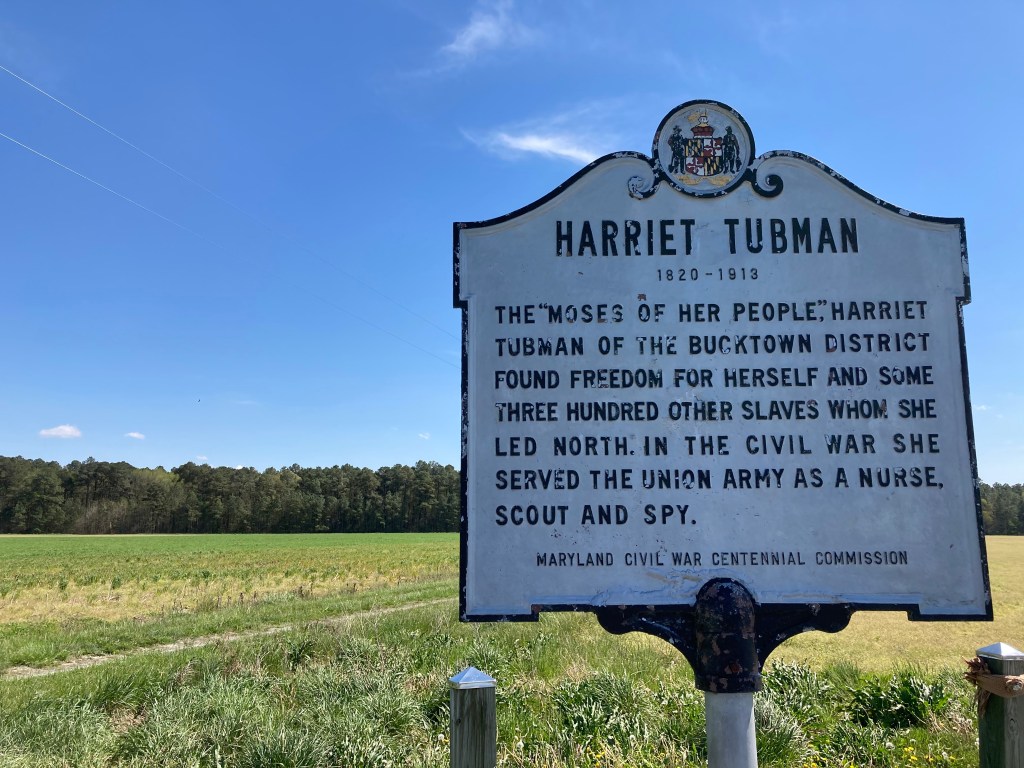
We spent the rest of the afternoon traveling back roads to visit locations along the Harriet Tubman Underground Railroad Byway. We saw where she is believed to have been born; the general store where she was hit by a two pound weight tossed by a white man at a fleeing slave; a church which housed a free Black preacher who helped Harriet Tubman escape (he served five years in prison for owning a forbidden copy of Harriet Beecher Stowe’s novel ”Uncle Tom’s Cabin); a grist mill functioning as a networking site for free and enslaved people, and a river location on the Underground Railroad.


On the right, the red eastern screech owl, on the left the tree cavity it was sitting in at the end of the diagonal tree trunk
Ed and Chris, Salisbury MD April 17
Yes, 300 National Park Service sites!!
 Chris Klejbuk and Ed Heimel travel adventure
Recent Comments