Posts Tagged With: Cambridge MA

2016 Trip Three, Boston, April 27-28

April 28, Boston MA

So when you visit a big city, where do you head first? A cemetery, right? Well that was our first stop Wednesday April 27th as we returned to visit Boston again. Well, technically we went to Cambridge.
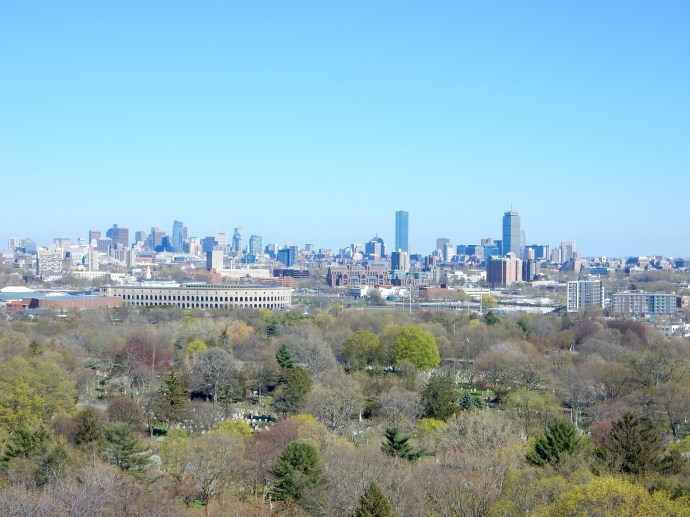
Boston skyline from Washington Tower at Mt. Auburn Cemetery

Boston skyline from Washington Tower at Mt. Auburn Cemetery

Mount Auburn Cemetery is ranked first on TripAdvisor for things to do in Cambridge, ahead of Harvard, MIT, the Peabody, Longfellow House, etc. Chris actually was searching re: spring flowers and the cemetery came up. I was checking Atlas Obscura for places to go and Mount Auburn came up. It is on the way from the airport to Deb and Rebecca’s so we made it our destination of the day for Wednesday after landing at 2 PM at the airport.
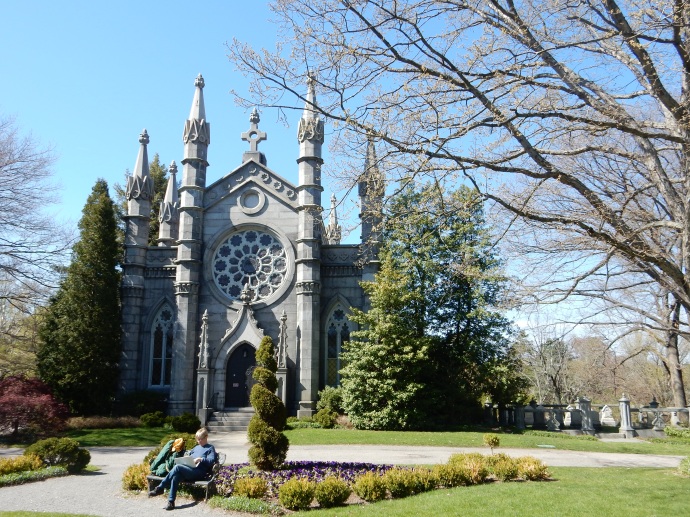
Bigelow chapel at Mt. Auburn cemetery

Bigelow chapel at Mt. Auburn cemetery

Mount Auburn is 175 acres of more than 98,000 dead bodies in a park-like setting. It was founded in 1831 as America’s first landscaped cemetery and the first large-scale designed green space that was open to the public. It creates a tranquil place where families could commemorate their loved ones in a natural setting in an urban area. The cemetery influenced the advance of art and architecture as families vied to erect suitable monuments to family members.
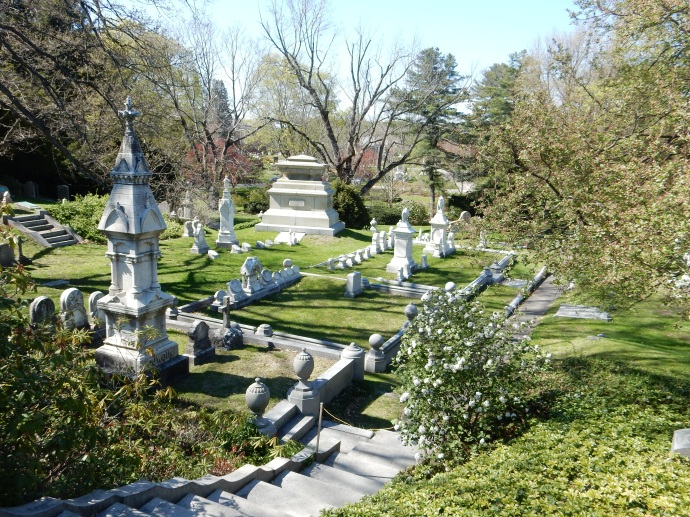
Family plot at Mt. Auburn cemetery

Family plot at Mt. Auburn cemetery

In early times, families bought a plot of land and were responsible for the design, erection of monuments, and maintenance of the plot. Later on, Mount Auburn pioneered the concept of perpetual care and later still, the requirement that the cemetery handle all arrangements and landscaping. Now the grounds are an internationally renowned arboretum and botanical garden. It is a bird sanctuary, is on the National Register of historic Places, and has over 60,000 monuments spanning three centuries. Some of the U.S.and Boston notables buried here include Henry Cabot Lodge, William Wadsworth Longfellow, Charles Bullfinch, Mary Baker Eddy, Buckminster Fuller, Isabella Stewart Gardner, B.F. Skinner, I.F. Stone, Julia Ward Howe, and many others.
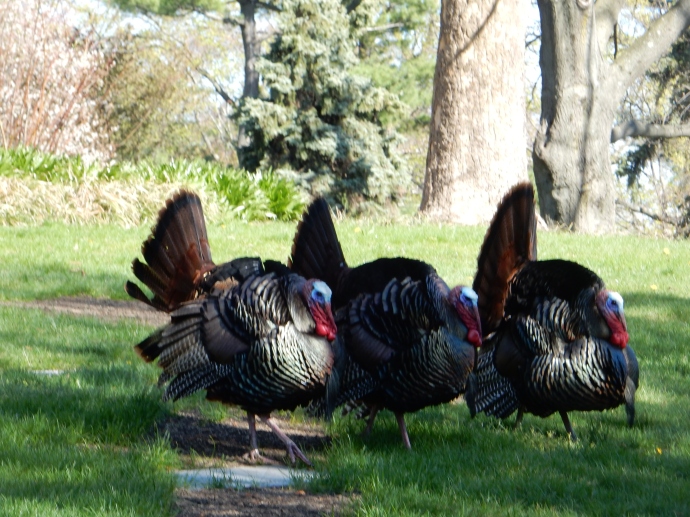
3 Turkeys strutting their stuff at Mt. Auburn cemetery
3 Turkeys strutting their stuff at Mt. Auburn cemetery

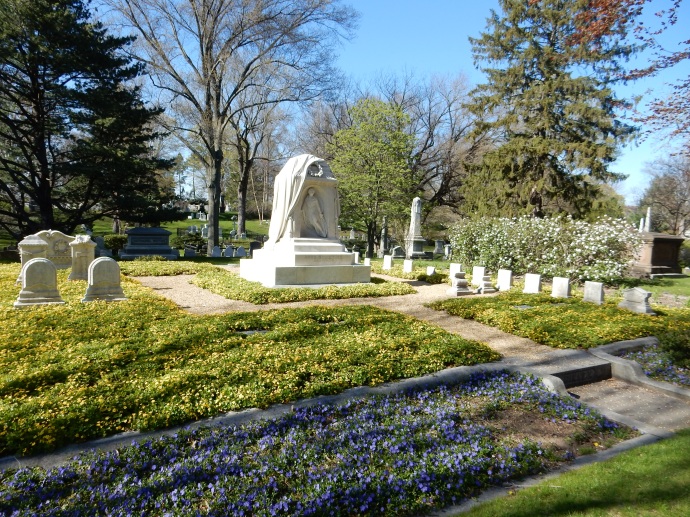
Mt. Auburn cemetery

Mt. Auburn cemetery

We spent two hours wandering the grounds. The only notable we really searched out was Longfellow. Otherwise we hiked around, saw birds, wondered at various family plots, admired sculptures, climbed Washington Tower, and generally enjoyed the day. First time I can remember us ever just walking through a cemetery without having a family member grave as a destination.

Deb and Rebecca were working late so we had dinner in Waltham at the Moody’s Delicatessen and Provisions. This place has been open about a year and specializes in preparing its own cheeses and cured meats. I had their pastrami sandwich and potato salad while Chris had their gnocchi. Each item was crafted with their own touch and was excellent.

Thursday morning, today, we headed 30 miles west to Blackstone River Valley National Historic Park. This is a new unit (2014) to the National Park Service. In my mind, it aims to enhance the previously existing Blackstone River Valley National Historic Corridor. National Corridors are a type of national historic site but are not part of the US National Park Service. Upgrading the Blackstone River Corridor to a national park gives it greater status but like the Pullman site we just visited, more money and time are needed before this national park really creates its own identity. For now, it is a partnership park and we set out to visit a few of the sites making up the partners.

The Blackstone River Valley illustrates the major revolution in America of the Industrial Revolution. America’s first factory was built on the banks of the Blacksone River which runs from Worcester Massachusetts to Narrangansett Bay in Rhode Island. The 46 mile corridor has a history of farming, water power, mills, and factories. The change from farming to wage labor began here as mill owners provided and controlled the jobs, housing, schools, roads and stores in exchange for 60 hour work weeks and more security.

Ethnic diversity followed. The first settlers were English and Anglican but were followed by Quakers, Puritans, Baptists, Catholics, and Jews. Later the English were joined by Irish, French Canadians, Germans, Dutch, and Swedes. The Blackstone River Valley was enriched in the latter part of the 1800s and early 1900s by Italians, Portuguese, Greeks, Ukranians, Polish, Armenians and Syrians. Finally after WWII, a new wave of African-Americans came with later immigrants from South and Central America and Southeast Asia.
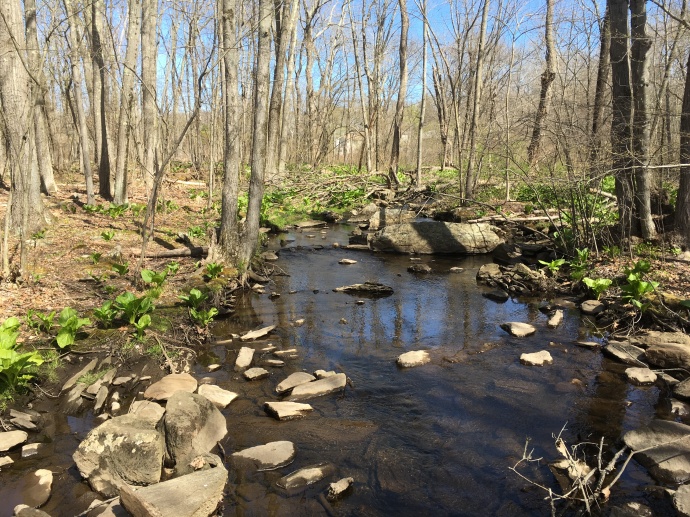
Broad Meadow Brook
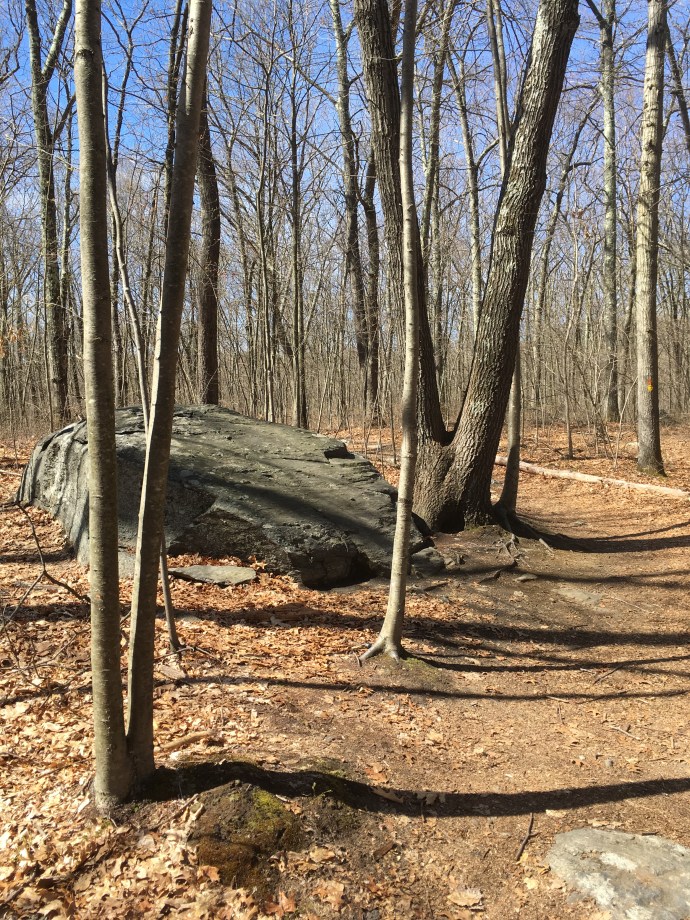
Broad Meadow Brook

Hiking at Broad Meadow Brook

Hiking at Broad Meadow Brook

The Broad Meadow Brook Conservation Center and Wildlife Sanctuary in Worcester is one of the partners and supposed to act as a visitor center. Well, they had one pamphlet and no NPS stamps. They did have trails and birds so we hiked for an hour.

We moved on to downtown Worcester and stopped at the Worcester Historical Museum. They were more aware of the NPS program but also did not have the “official” NPS stamp that Chris prefers. We exercised our flexibility and changed our plans; deciding to make a second visit to Worcester sometime in the future and visit the Historical Museum and Art Museum then. Instead, we had lunch at a nearby cafe and drove half an hour to Uxbridge and to the Blackstone River and Canal Heritage State Park.
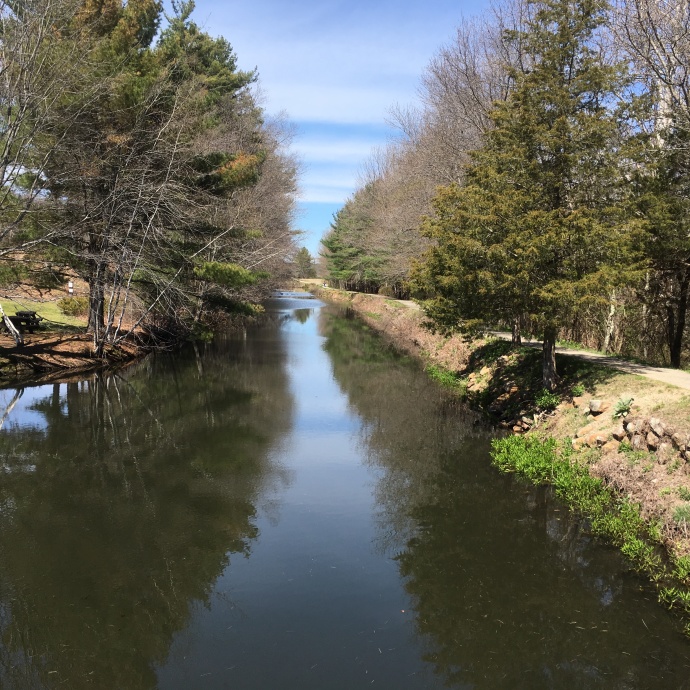
A remnant of the old canal at Blackstone River & Canal Heritage State park

A remnant of the old canal at Blackstone River & Canal Heritage State park

Here was nirvana: exhibits about the area, portions of the canal that connected Worcester and Providence, hiking trails, and the “official” NPS stamp. The exhibits discussed the change in transportation from mud roads, to improved roads, to canals, to railroads,and back to improved roads of today. Each new transportation improvement disrupted the old; changing habits, making some people wealthy and others bankrupt, allowing some towns to die and others to grow. Similar changes occurred in farming, industry, home-making, education, etc.
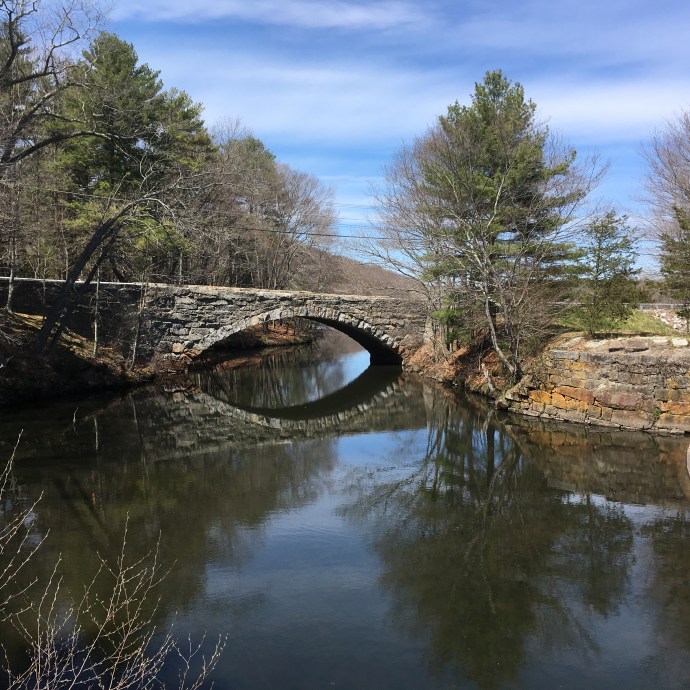
Stone arch bridge at Blackstone River

Stone arch bridge at Blackstone River

Chris and I hiked along the canal. Instead of the numerous birds we heard and saw at Mt. Auburn, the animal highlight was hordes of turtles sunning themselves on rocks and tree limbs suspended over the water.

In Sutton, we stopped at an old mill building that has been converted into offices and visited the Vaillancourt folk art shop. Here hand-painted collectible Chalkware figures are moulded from antique chocolate moulds. The originator of the business, Judi Vallaincourt, has a collection of antique European chocolate moulds that were used for making chocolate but now she uses them for making the Chalkware figures. The moulds are tin and brass and work well for this new purpose. The local artists paint the figures in the style designed by Vallaincourt. It was interesting but the figures did not appeal to me-and they were priced out of our comfort zone.

The excursion ended at Christopher’s Ice Cream Parlor in Millbury. Millbury was another farming community that saw changes due to the Industrial Revolution. It was a crossroads for traffic between Boston, Hartford, Worcester, and Providence. While its heyday was probably in the early to mid-1800s, it seems to be transforming again. Christopher’s was housed in another old mill that had been converted into offices abd retail.

Dinner was home-made chicken pot pie at Deb and Rebecca’s.

Chris and Ed. 11 PM
Categories: road trip, travel | Tags: , , , , , | 3 Comments

2015 Trip 4, Boston, July 14-18

Boston-Saint Paul, July 18

This was a brief trip to visit Deb and Rebecca in Boston. It is a tribute to Boston and the eastern Massachusetts area that we still are able to find new places to visit despite our frequent trips there. We flew out on Sun Country Airlines, our first time using them. Seats are as cramped as other airlines but we liked their process to board the passengers. There is the usual first class, people who need help, parents with young kids, etc. But they then board passengers who have no overhead compartment luggage and passengers who have given up their overhead compartment luggage to be checked at the gate. This loads a group of people who can get into their seats quickly. Then the seating is more random, some up front and some from the back. It avoids the mad rush we have seen on Delta when passengers jam the front of the waiting area, hoping to get on early enough in their seating order to get their luggage up in the overhead compartments.

Garden in the Woods, Framingham MA

Garden in the Woods, Framingham MA

Deb picked us up at the airport and drove us to Waltham where we picked up our rental car, saving us the rental charges tacked on at airports. We only had one destination for the day, the Garden in the Woods in Framingham. This garden is sponsored by the New England Wildflower Society and was listed in a book we have, the National Geographic Guide to America’s Public Gardens.  The garden is home to the largest collection of wildflowers in New England. It was the dream and creation of one man, Will Curtis, beginning in 1931. The 45 acre garden was turned over to the New England Wildflower Society in 1965.

We found it a pleasant, although not overwhelming, diversion for the afternoon. This might be due to the fact that no one area was overwhelming in blooms or due to having seen so many wildflowers in the last few weeks that we did not dawdle and examine numerous smaller plants and flowers. In any event, our Como Park membership once again meant we did not have to pay an admission fee and maybe that allowed us to be more cavalier in our impression.

But the primary reason for the trip was to see Deb and Rebecca and while they had to be at work sometimes, tonight we were able to have dinner grilled on their deck. Chris got her burnt hot dogs and thus all was well with the world.

Longfellow House-Washington's Headquarters Cambridge MA

Longfellow House-Washington’s Headquarters Cambridge MA

Wednesday the 15th was my 65th birthday-Welcome to Medicare, Ed.  Chris and I drove and then rode the “T”- Boston’s subway – to Cambridge. Rain was  a likely possibility but we managed to avoid all but a few sprinkles. The Longfellow House-Washington’s Headquarters is a National Historic Site managed by the National Park Service.  The site’s history began with the construction of a country estate by a John Vassall in 1759. On the eve of the American Revolution, Vassall and his family fled to Boston, being Tories.  For nine months beginning in July 1775, Washington used the abandoned buildings as his headquarters during the battle of Boston until the British decamped and moved on to New York. In 1791, the property was purchased by Andrew Craigie and after his death in 1819, it was the property of his wife until she died in 1841. Craigie left his wife with many debts in 1819 and she rented out portions of the property to many tenants, one of them being Henry Wadsworth Longfellow, the poet.

The gardens at Longfellow House

The gardens at Longfellow House

After Longfellow’s marriage to Fanny Appleton in 1843, the couple were given the property as a wedding gift by his wife’s parents. Fanny and Henry re-planted the garden which then fell into dis-repair after his death; then restored in 1904 and 1924 by their daughter Alice. In 2003 another restoration took place. We were able to tour the garden with a park ranger and enjoy its renaissance.

We also toured the house with a ranger, the furnishings all belonging to Longfellow’s family. The house was the home for Longfellow during the most prolific and influential times of his life. He wrote his poetry here, he was a professor at Harvard,  he hosted many influential members of society here ( Emerson, Hawthorne, Oliver Wendell Holmes, Charles Sumner, Charles Eliot Norton, James Russell Lowell, etc.). His poetry included “Song of Hiawatha”, “Paul Revere’s Ride”, in 1842 he wrote a series of poems condemning slavery, and others.  His poetry informed Americans of their roots and he became an American hero. The last and somewhat diminished stage of Longfellow’s career began in 1861 with the tragic death of his wife Fanny. In the midst of melting sealing wax, she set fire to her own gauzy clothing and was enveloped in flames. She died the next day. In his futile efforts to put the fire out, Longfellow burned his hands and face. To hide his facial scars, he eventually grew the beard that gave him the sage, avuncular look reproduced in so many later paintings. It was during this time that he translated Dante’s Divine Comedy; the first American translation and still a solid classic available today.

After our time at Longfellow’s house, we headed over to Harvard and its Museum of Natural History. This museum had been highly praised and was a “GEM” in the AAA Tour Book. However, once again, maybe we have been traveling too long and visited too many museums.  We were not impressed; possibly the best section in my mind was the section on Native American cultures but even that struck me as so-so.

As stated earlier, this was my 65th birthday. Deb and Rebecca treated us to dinner at Jimmy’s Steer House in Arlington. Another place that had been recommended to us, this time accurately. The menu was extensive, reasonably priced and very good food. We could not finish all of our desserts, however, just too much food.

Saugus Iron Works National Historic Site

Saugus Iron Works National Historic Site

Thursday was our long day of touring. Our first stop was Saugus Iron Works in Saugus. This National Historic Site is the home of the first successful iron works in the United States, operating from 1646 to 1668. Saugus had ample quantities of timber to run the furnace, a quantity of iron ore in bogs nearby, water power, and access to the ocean for shipping the product. AND, I was amazed to find out, the Puritan government of Massachusetts  offered tax incentives to build and operate the iron works.  Even in the 1640s, tax incentives were being given out in America. The workers who ran the iron works were generally indentured servants from Wales and England. The Puritans ran the town, most of the iron workers were not assimilated into the Puritan society until the forge closed down and families moved elsewhere, their children became freemen and intermarried. The cause of the cessation of the iron works seems to be a combination of poor management and some bad years for river flow to provide power. The workers trained here were highly skilled and moved on to other iron works in New England.

The Iron Works as viewed by us are a reconstruction, the site had generally been destroyed over the intervening centuries. In 1943 the community formed a local group and with funding from the American Iron and Steel Association, began digging  through the site and cataloging their discovery. They uncovered the remains of the blast furnace, a large section of the waterwheel, a 500 pound hammer-head and the footprint of the principal structures. The lead archeologist was Roland Wells Robbins, a self-taught archeologist who also discovered the location of Thoreau’s Walden Pond cabin. Evidently his success and methods upset later, better educated archeologists who downplayed his role in helping to discover early American sites in New England. The National Park Service took over the site in 1968.

Thomas Hart Benton painting at Peabody Essex Museum in Salem MA

Thomas Hart Benton painting at Peabody Essex Museum in Salem MA

Our second and third stops were in Salem, the Peabody Essex Museum and the Salem Maritime National Historic Site. The Peabody was hosting a special exhibit on Thomas Hart Benton, the American painter and muralist we have come across before (2013 Trip 8, Missouri State Capitol). The exhibit here used as a theme Benton’s work for Hollywood movies. Once again, we took advantage of a docent’s tour through the exhibit and found it quite fascinating. The exhibit demonstrated his use of multiple sketches and three-dimensional plaster casts used as models and ideas before the painting of the final product. His realistic portrayal of working class people, Native Americans, and African-Americans was a delight to behold.

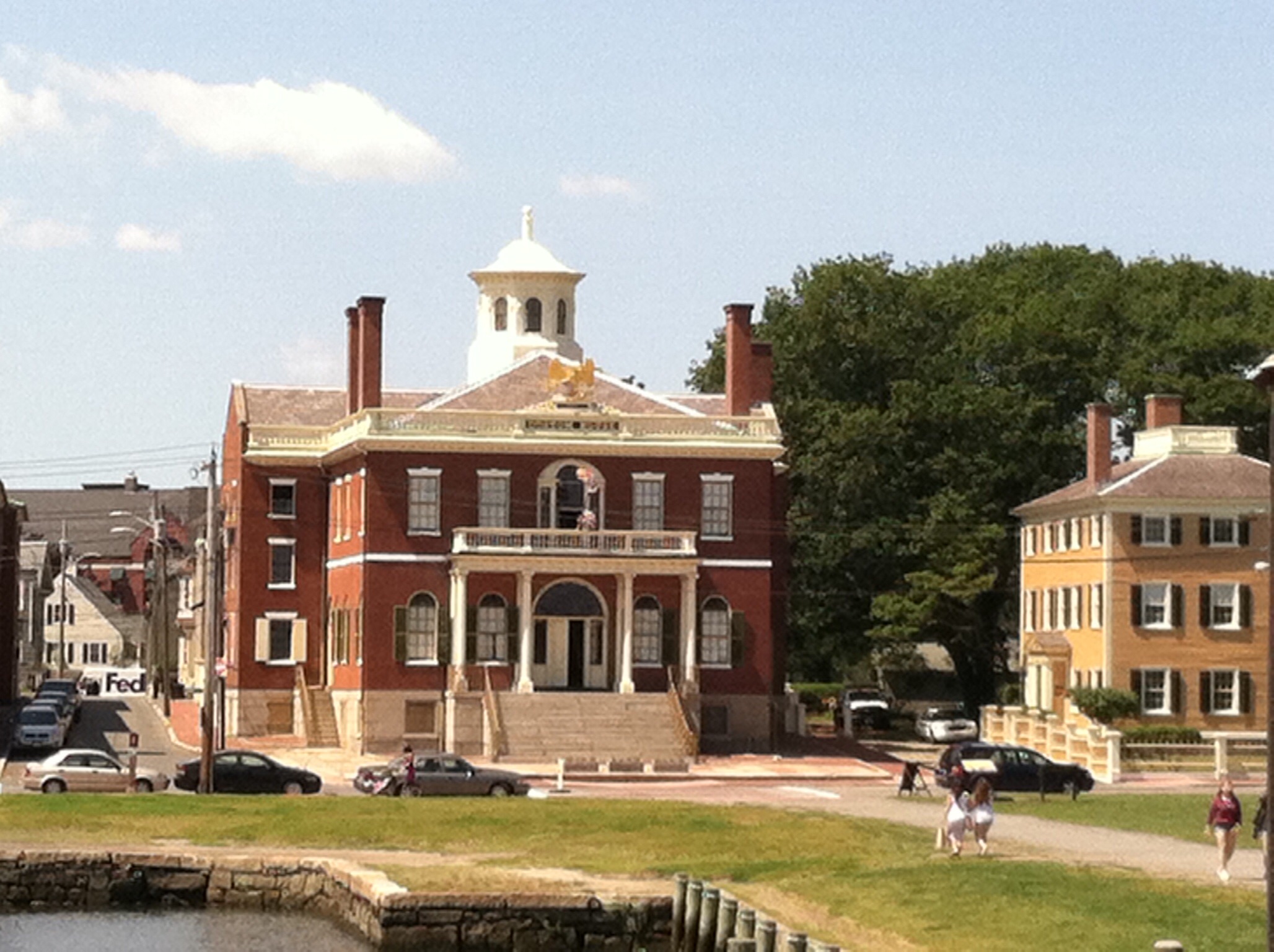
Custom House at Salem Maritime National Historic Site

Custom House at Salem Maritime National Historic Site

We then headed over to the Maritime Historic Site (note we made a conscious decision to ignore the Salem Witch Trial portions of town, particularly the commercial endeavors). Before the enactment of the income tax in America, tariffs (taxes on imported goods) provided the vast majority of the revenue to run the country. Thus, ports had a collection of buildings related to shipping and custom duties; wharves, warehouses, scales, the custom house to collect duties/tariffs, etc. Salem was at one time the nation’s sixth largest city and its port collected 17% of the nation’s tariffs. This was during its glory days from the Revolution to the War of 1812. Its ships sailed to the East Indies and the shipowners here were most likely the nation’s first millionaires. During our countries early days, private vessels operated as privateers, essentially government authorized pirates who captured enemy ships and warships for their own profit. Salem had a high percentage of these ships. The disruption of the War of 1812, an 1807 embargo on foreign trade, and better road networks in Boston and New York ended Salem’s dominance. Our visit included the Custom House, the Public Stores, the Scale House, and a recreated sailing vessel from that era.

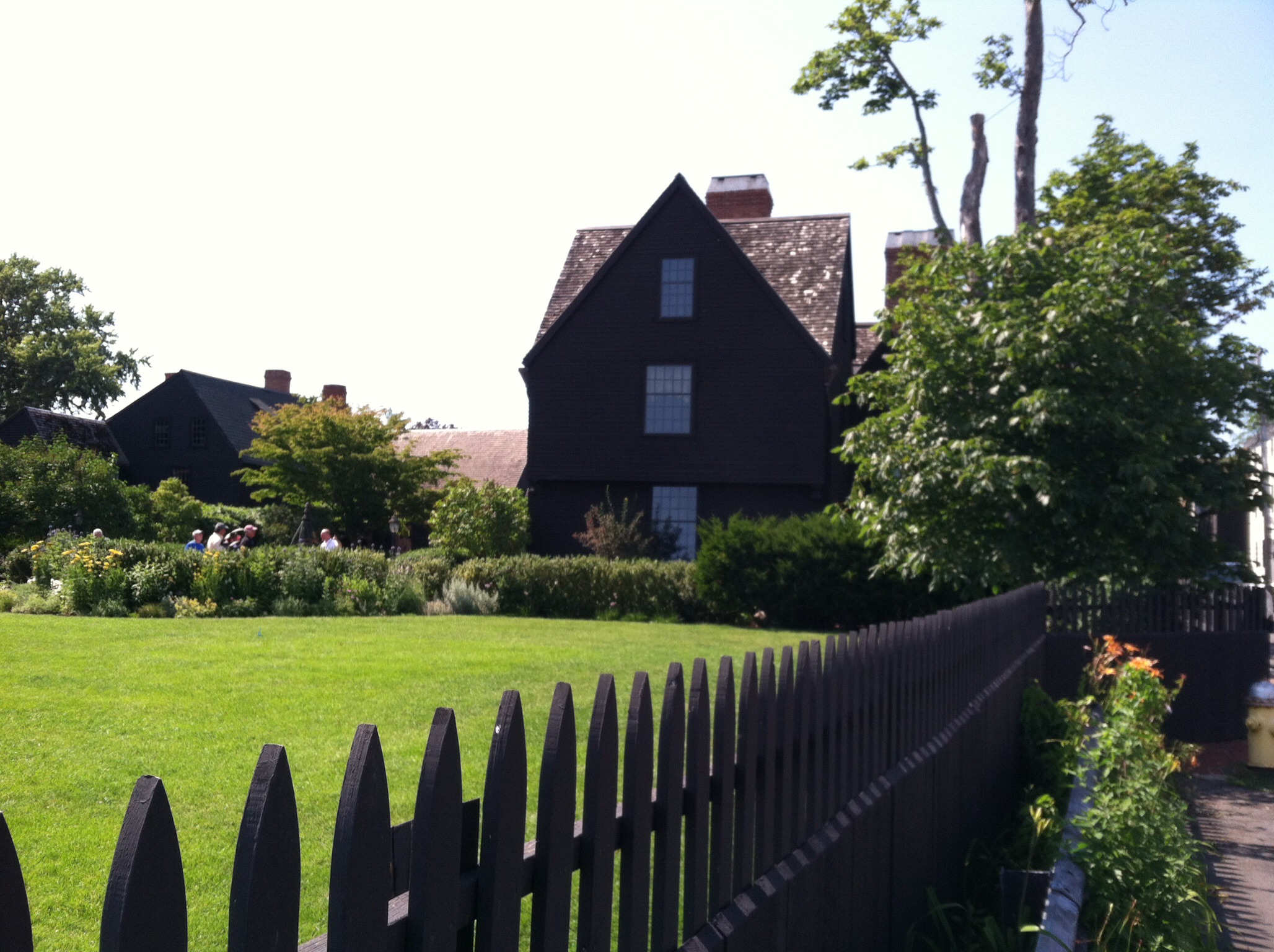
The House of Seven Gables in Salem

The House of Seven Gables in Salem

The House of Seven Gables is a classic American novel by Nathaniel Hawthorne, written in 1851, which is set in this town around an actual house erected in 1668 and which still exists. We walked by it but decided not to take the tour.  The first candy store in America was our last stop to purchase a few treats. Ye Olde Pepper Company dates back to the early 1800s. Their first product, a hard sugar candy called “Gibraltar” is still made although the taste did not impress us.

Dinner in Waltham

Dinner in Waltham

Friday was a day off for all of us. We stayed home, viewed the photos of Deb and Rebecca’s trip to Portugal and Spain, Chris went in the pool, and we walked to downtown Waltham for dinner. A very pleasant way to end a great trip.


Ed and Chris   St. Paul, Saturday July 18


Categories: road trip, travel | Tags: , , , , , , , , , , | 2 Comments

Blog at WordPress.com.