Posts Tagged With: Blue RIdge Parkway

2015 Trip Six, The Great Smoky Mountains, Oct. 20

Banner Elk, NC Oct. 20th

We had a few specific destinations in mind as we began the day. First and foremost were two sites showcasing religious frescoes. Ben Long is a North Carolina native who, among other achievements, served an apprenticeship under the Italian fresco master Pietro Annigoni. He returned to the US and his first fresco commissions were churches in Ashe County North Carolina (a county just northeast of Banner Elk and bumping up to the VA and TN state borders). Long has created numerous other frescoes, religious and secular.
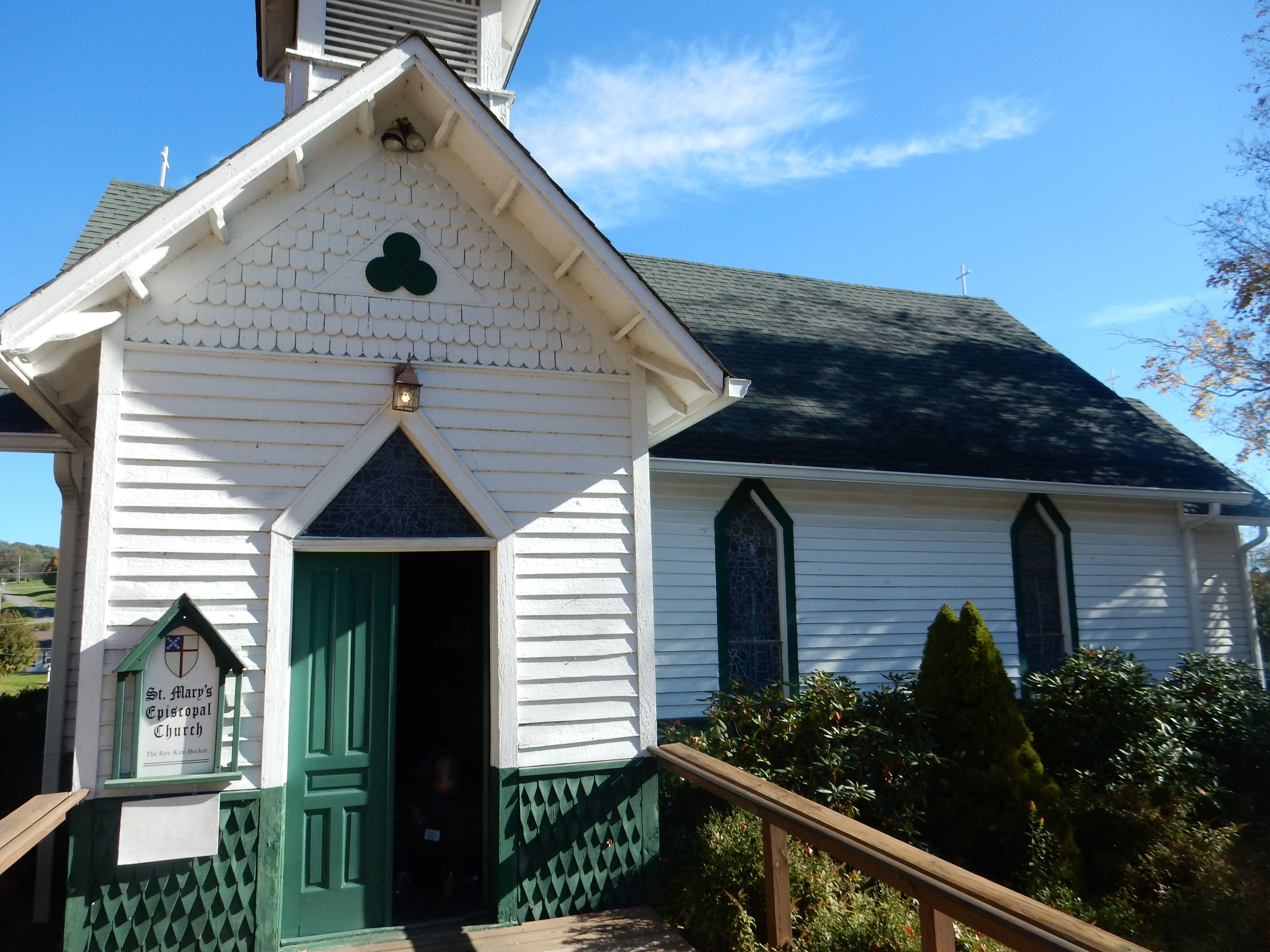
St. Mary's, home of three frescoes

St. Mary’s, home of three frescoes, West Jefferson North Carolina

Fresco painting involves a technique of applying paint directly to wet plaster, allowing the paint to become a portion of the material and enhancing the color of the fresco over the years, rather than having the paint diminish. The two churches involved, St. Mary’s Episcopal Church in West Jefferson and Holy Trinity Episcopal Church 10 miles away in Glendale Springs were mission churches dating from about 1900, but Holy Trinity was closed in 1946.

the three frescoes

the three frescoes in St. Mary’s church, West Jefferson, NC

In the early 1970s, a new priest re-invigorated St. Mary’s and through a meeting with Ben Long, the fresco mural project was begun. In 1980, Holy Trinity’s church was restored and a fresco added there. Ben Long created three frescoes at St. Mary’s; focused on salvation, the foreshadowing, the promise, and the fulfillment. A fresco of John the Baptist in the wilderness is the symbol of the foreshadowing. The promise is uniquely portrayed as Mary expectant with the child Jesus. The fulfillment is shown as Christ on the Cross with God the Father overlooking him.

The Last Supper fresco

The Last Supper fresco, Holy Trinity Church, Glendale Springs NC

At Holy Trinity, the one mural portrays “The Last Supper”. Long created this with assistance from students of his. The community became involved in this project, volunteering as models, making meals for the students, etc. The murals helped spark a revival of the churches as well as encouraging visitation from around the globe. (Today, while we were in attendance, we were the only ones at St. Mary’s. Holy Trinity must have had at least 20 people during our time there. We also gave directions back to St. Marys for a couple who were at Holy Trinity.)

The churches are small and, while well maintained, are modest. There are audio presentations at each church explaining the development and meaning of each fresco. We found those both well-written and well-spoken. The frescoes themselves are vibrant and moving. Seeing Mary portrayed as pregnant was an unusual presentation that completed the theme very nicely. A further unusual piece of art at St. Mary’s was a painting of Jesus titled “The Laughing Jesus”, again, not the normal portrayal one comes across.
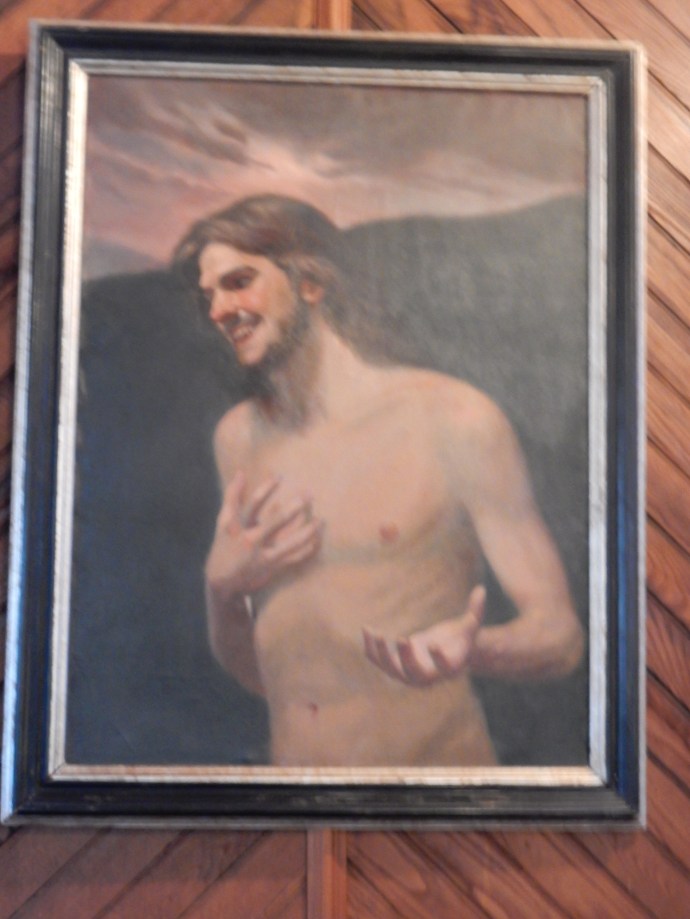
The "Laughing Jesus" painting

The “Laughing Jesus” painting

Along the Blue Ridge Parkway

Along the Blue Ridge Parkway

Our second stop was the Art and History Museum in Blowing Rock. Blowing Rock is the upscale, cutesy tourist town. We focused on the museum since it was featuring the work of female sculptors and other artists. The art exhibits were worth the visit.
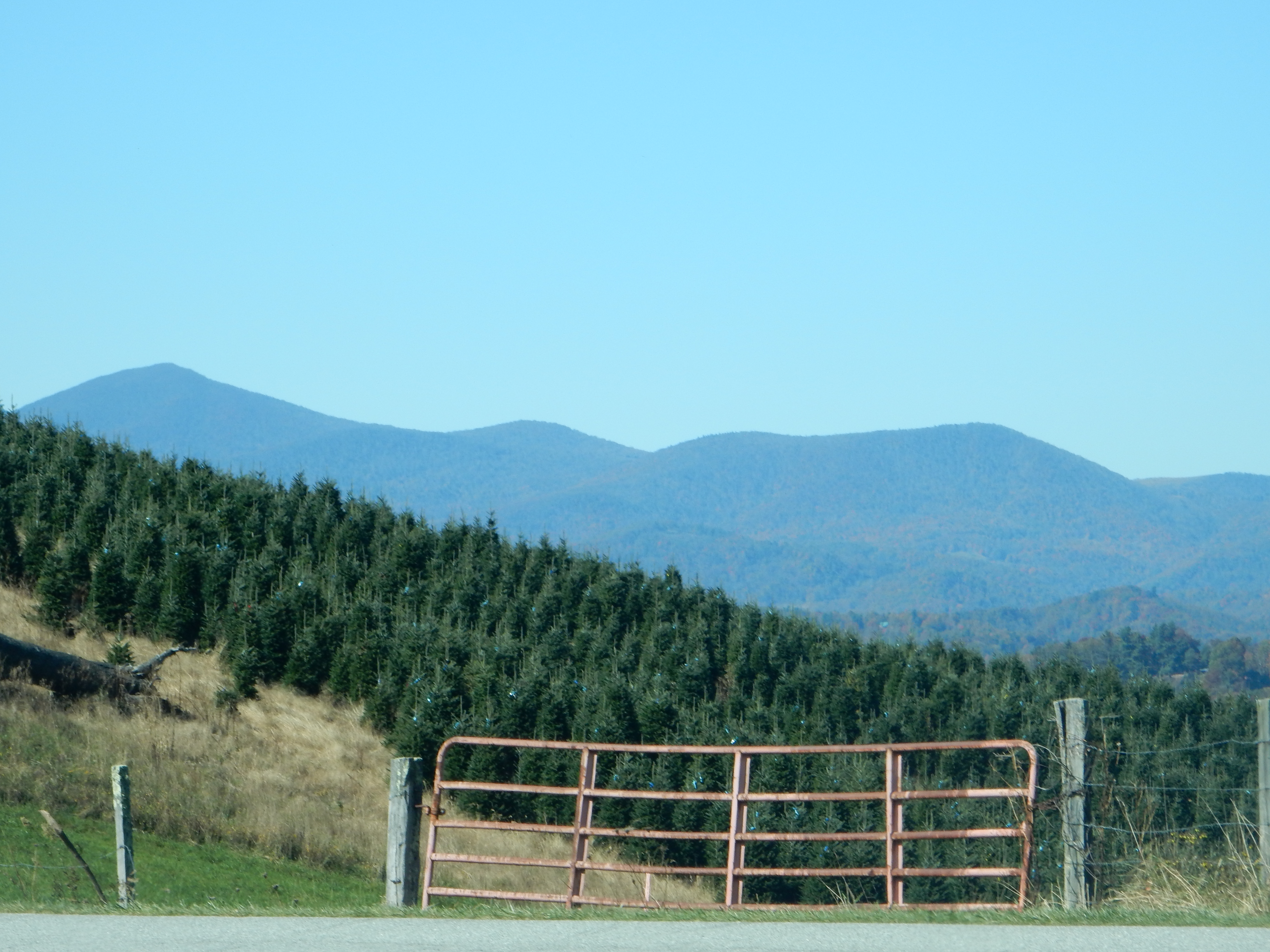
Christmas tree nursery

Christmas tree nursery

Blowing Rock and the drive to it from Glendale Springs along the Blue Ridge Parkway continued to educate us about the area. Boone is home to Appalachian State University with 17,000 students. The counties in the area are home to major Christmas tree nurseries, many with cut your own options. Gem mining is a major tourist attraction from here all the way down to Franklin, due to the geology underlying the Appalachians. Banner Elk is a ski resort area, with more visitors in the winter than in the summer.

Due to the elevation, these counties attract vacation home residents and visitors from Dallas, Florida, and the Carolina coasts here in the summer for the coolness and in winter for the skiing. Their influx enhances the economy and varies the diversity of the area.

Moses Cone Visitor Center

Moses Cone Visitor Center along the Blue Ridge Parkway

Finally we stopped at the Moses Cone Visitor Center. It too houses local handcrafts but the building was once the home of Moses Cone. Cone was the son of German Jewish immigrants, the family worked in the dry goods field and became successful. Eventually Moses set out on his own and with other partners became succesful in the textile business. He became known as the “Denim King” for recognizing and fulfilling the need of “regular” folk to have durable clothing. He began supplying denim to Levi Strauss and his company has been its main supplier to this day. He died in 1908 and his widow left the mansion they built and the 3500 acres of land they accumulated up in the hills to the local hospital which in turn sold it to the National Park Service with the proviso that it be named for Moses Cone. (Side note: Cone’s two sisters had money and became friends with Picasso and Matisse; their extensive art collection was donated to the Baltimore museum of Art.)

The Cone visitor center has 25 miles of roads to explore with forests planted extensively by the Cones with a variety of trees and plants. We were able to spend over an hour wandering among the woods along several trails. Once again, it would be nice to re-visit this area when the shrubs and plants are flowering. Maybe another time.

Ed and Chris 10:45 PM
Categories: road trip, travel | Tags: , , , , , , , , , , , , , | Leave a comment

2015 Trip Six, The Great Smoky Mountains, Oct. 19

Banner Elk, TN Oct. 19

Along the Blue RIdge Parkway

Along the Blue RIdge Parkway

Today was the quintessential road journey: the road was the journey in many ways. It is back to the Blue Ridge Parkway. We will have only traveled about one-third of the Blue Ridge by the end of tomorrow when we will leave it. Today we were back in mountains, but also began to view sections of the parkway with meadows, valleys and even human habitation. Once again, the skies are clear although it is cooler; at daybreak the temperature is close to the freezing mark. By noon it is in the 50s, much cooler than previous days.

Our first stop was to be the little town of Little Switzerland, supposedly postcard perfect. One way to reach it would have involved driving the “Diamondback”, a switchback frenzy road similar to “The Dragon”. We passed on it and took the parkway instead. Little Switzerland was not worth it and we said a quick good-bye and headed to Linville Falls.

Views from the overlook

Views from the overlook

view from overlook

view from overlook

Before we reached the Falls, we stopped at an overlook with great views. Well worth the time. However, we observed an unknown structure far off in the distance on top of one of the mountains. We later discovered that it was a condo building constructed in the early 2000s. Its construction created such a stir about how its size and location desecrated the mountain and the view for others. North Carolina then passed the “Ridge Law” prohibiting any future construction of buildings above a certain size and height on ridge tops.

Two perspectives on Linville Falls; from above including lower and upper falls, and a cclose up of lower twin falls

Two perspectives on Linville Falls; from above including lower and upper falls, and a cclose up of lower twin falls

image

Linville Falls is a NPS maintained site along the Blue Ridge. There is an upper twin falls and then a lower falls. The falls are located in a deep gorge and we were able to hike to a vantage point where we could look down on both the upper and lower falls. The Trail was busier than most of the trails since we left Gatlinburg. This is still the Appalachians so the trails continue to be rocky, with tree roots, and with elevation gain. The falls are not stupendously high, I believe the lower falls are 80 feet tall.

In the background, Grandfather Mountain

In the background, Grandfather Mountain

Grandfather Mountain was our next stop. Grandfather is well-known in the Southeast, it has been a destination for tourists for decades. In fact, when the Great Smoky Mountains National Park was being considered as one of the first national parks in the East, Grandfather Mountain was also a prime contender to be the first. The area is now in two sections; one is owned by a private family who has owned it for decades as a private entertainment/tourist site, the second portion is now owned by the state as a park from land first owned by the family who owns the private section. We spend the majority of our time with the private section.

Our first stop was the headquarters to watch their 27 minute video. It was extremely well-done; highlighting the geology, fauna, flora, and weather of Grandfather Mountain. It was produced recently by Clemson University, located not far from here in South Carolina. Part of the information was new, other sections we have been hearing several times recently.

For instance, rhododendron plant leaves curl up as the temperatures decrease. When the temperature reaches freezing, the leaves start to droop down. When the temps reach around 15 degrees, the leaves curl up in a fashion similar to a cigar.

As we may have mentioned previously, this area encompassing the Blue Ridge, Great Smoky Mountains, etc is extremely diverse in types of plants. One reason stems from the glaciers. As the ice age moved southward and southerly temperatures more closely approximated northern temps, many plants began to propagate at a more southerly location. The higher elevations also are cooler so plants once introduced here could continue to thrive at the higher elevation.

higher elevation rocks and flora

higher elevation rocks and flora

The mountains, with their range of elevation, produces varying weather conditions. Thus a lower elevation will be warmer and support plants and animals appropriate for that temperature and weather. We have read or heard numerous times lately that the diversity of flora and fauna in this mountainous section of the country is unparalleled anywhere else in the U.S.

Lunch was interesting. As we drove up to the gate to pay our admission, we got behind a tour bus. It was one of two buses, the other was already through the gate, full of school kids on an outing. Well, they got to the restaurant before us and that was the prime reason we saw the video first. By the time the video was over, the kids were just finishing up and tables were beginning to have a few open spaces. I asked one of the chaperones where the kids were going next and we managed to avoid them for the remainder of the afternoon.

The suspension bridge

The suspension bridge

After lunch we drove up to the top of Grandfather Mountain. Here at an elevation of 5278 feet above sea level is a suspension bridge hanging over a chasm 80 feet deep. Despite not liking to look down from heights, I managed to make it over the bridge-and back again. Chris has an easier time and was able to take the photos from the bridge itself.

In the distance the condo that inspired the Ridge Law in NC

In the distance the condo that inspired the Ridge Law in NC

We went back and viewed the museum at Grandfather Mountain and then headed out to Linn Cove viaduct. This viaduct was the last portion of the road constructed. (The general contractor was from Plymouth MN.) The road goes over the boulder field for Grandfather Mountain and environmentalists fought for years to either not have it built or to build it in a way that did not harm the environment. The roadway is cantilevered out over space. The bridge was eventually built using a European method of construction never previously used in the U.S. 193 concrete sections were put together, only one of them was straight. The bridge was built placing each new section at the end of the previous section. Not at all like the process used by the CCC crews in the ’30s when they pretty much just moved rock and paved.

Our last stop was at the Mast General Store in Vallee Crucis. This is one of those old-time stores now catering to tourists. We only visited a portion of it, the section devoted to outdoor clothing by Woolrich, Pendleton, Smartwool, Patagonia, etc.

We met our Evergreen hosts for the next two nights and had dinner at a local diner not far from their home. Another friendly couple with a very welcoming attitude.

Ed and Chris 10:30 pm

Categories: road trip, travel | Tags: , , , | 1 Comment

2015 Trip Six, Great Smoky Mountains, Oct. 18

Marion, NC Oct. 18

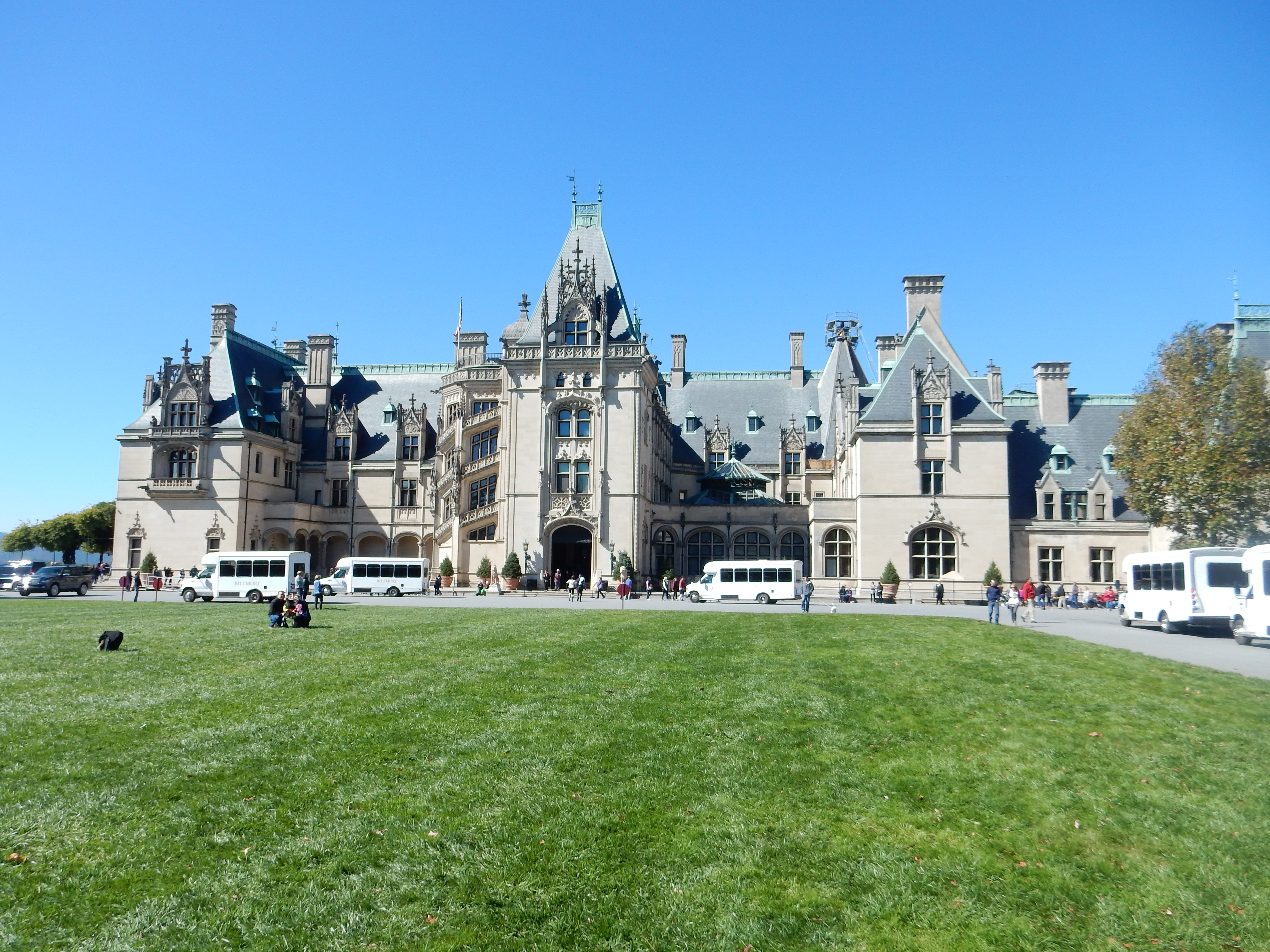
I had to bite my tongue and hold my biases in check for most of the morning. We were visiting Biltmore, the largest home in America at 250 rooms built by a grandson of Cornelius Vanderbilt, George Washington Vanderbilt. Cornelius had amassed an enormous fortune in shipping, railroads and other businesses back in the days when capitalism was unregulated.

Briefly: Cornelius left a fortune of $100,000,000 and his son Billy doubled it in less than ten years. Most of the $200,000,000 went to George Washington Vanderbilt’s two oldest brothers who ran the Vanderbilt family business. George inherited about $10,000,000 over a period of a few years in the 1880s.

Biltmore in Asheville NC

Biltmore in Asheville NC

Again, briefly, besides collecting art, George decided to amass land and build a personal mansion in Asheville NC. (Okay I am summarizing tremendously here but if you want more you will need to read biographies of the Vanderbilts.) He hired a top architect, Richard Morris Hunt, and the top landscape designer, Frederick Law Olmstead. The home took six years to build and opened officially on Christmas Eve 1895. (George died in 1914.)

Our tour time started at 9 AM. We had already calculated the amount of time necessary to reach the estate from our hotel. Good thing we added extra time. We had not calculated the ten minutes it took to drive from the entrance to the parking and the five minutes it took to walk from the parking lot to the entrance. 9 AM was the first starting time. We chose the self-guided tour, foregoing the audio wands that would go into the details of every stick of furniture, etc. (No internal photo taking is allowed.)

The next 90 minutes were spent following the tour book, staying behind the velvet ropes. The building is solid, the foundation alone took two years to build. The building is huge obviously with 250 rooms-we do not see all of them. The design, furnishings, artwork, and furniture are exquisite. Flemish tapestries, hand carved wood paneling, family paintings by John Sargent Singer, delicate figurines from Europe, etc. The guest rooms could house, feed and entertain whole families for a week or more. The mansion had indoor plumbing and electricity; it had its own indoor swimming pool and bowling alley.

walled garden at Biltmore

walled garden at Biltmore

The grounds are meticulously laid out and maintained, more in the manner of an English garden then just flowering gardens-although there are several. You may remember from yesterday’s post that Vanderbilt eventually owned 125,000 acres surrounding his estate. Much of that land had been clear-cut by lumber companies; Vanderbilt had the land replanted with over 3,000,000 plants and trees, all according to Olmstead’s master plan. After the house tour, we wandered through the formal gardens. They would probably be more stupendous during spring or summer flowering season.

The home was opened to tours in 1930, one branch of the descendants received the house and manage it as their business. They live somewhere else on the remaining 8,000 acres of the property. The estate employs 2,000 people to keep it going. We left the estate after lunch and went back on the Blue Ridge Parkway.

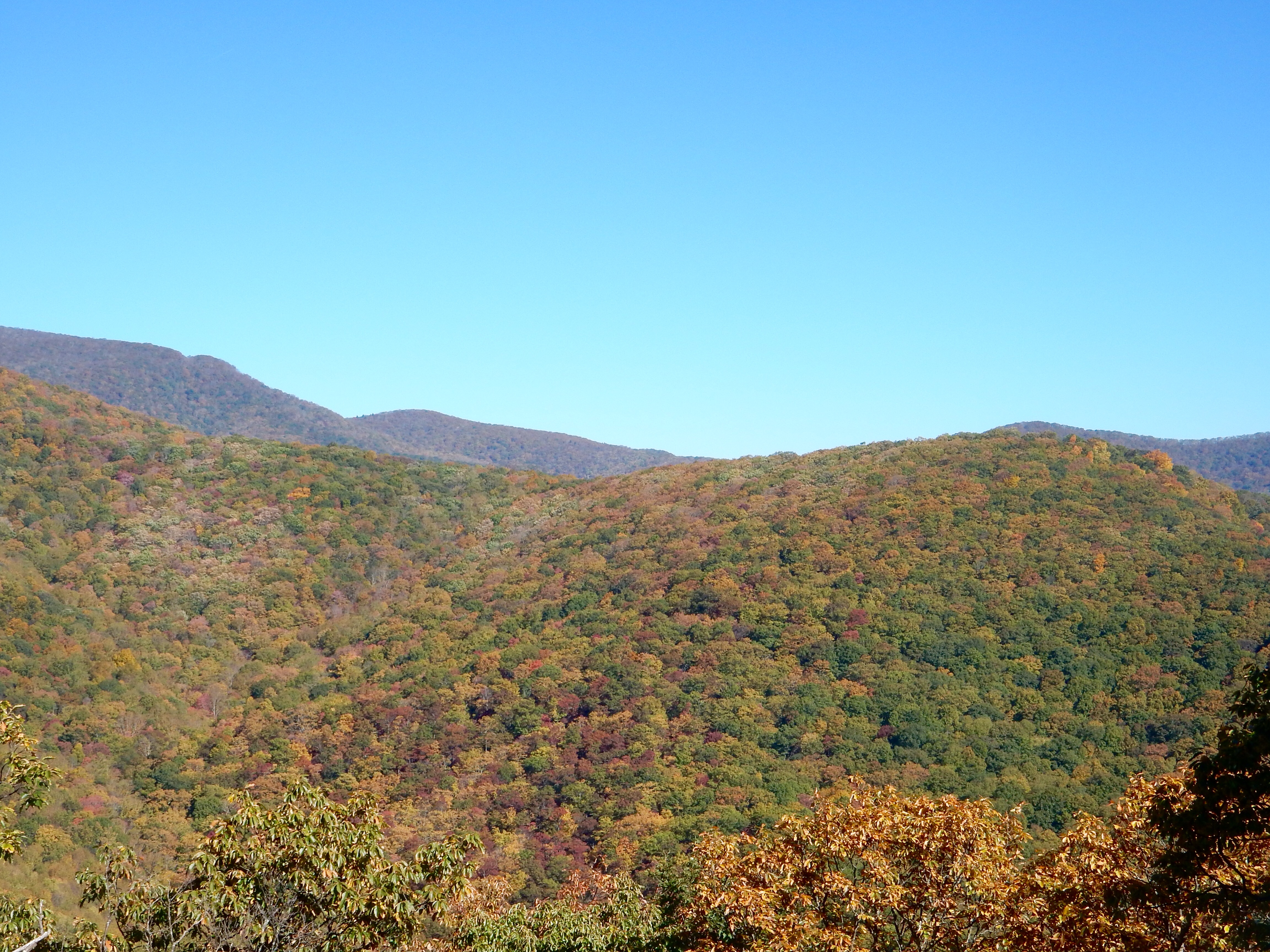
View from Blue Ridge Parkway

View from Blue Ridge Parkway

Along the parkway is The Folk Art Center, run by the Southern Highlands Craft Guild. It is a combination museum and gift shop, showcasing pottery,jewelry, quilts, wood working, toys, etc. The items are beautiful to look at. I can not judge the quality but I would imagine they are all top shelf. Numerous items struck our fancy and would look wonderful at home. Luckily we do not need, or have room for, any more items in our condo so we saved a bundle of money by not buying.

Further along the Parkway is Mt. Mitchell State Park. Mt. Mitchell, at 6,684 feet, is the highest point in North Carolina and the highest peak east of the Mississippi River. We had previously thought Mount Washington in New Hampshire was the highest. Wrong we were. Mount Mitchell is reached via a five-mile access road and then a steep hike for the last portion. The view once again was great, we have really been lucky with the weather. Similar to portions of the Great Smoky Mountains National Park, the Fraser fir trees on these slopes are usually dead.

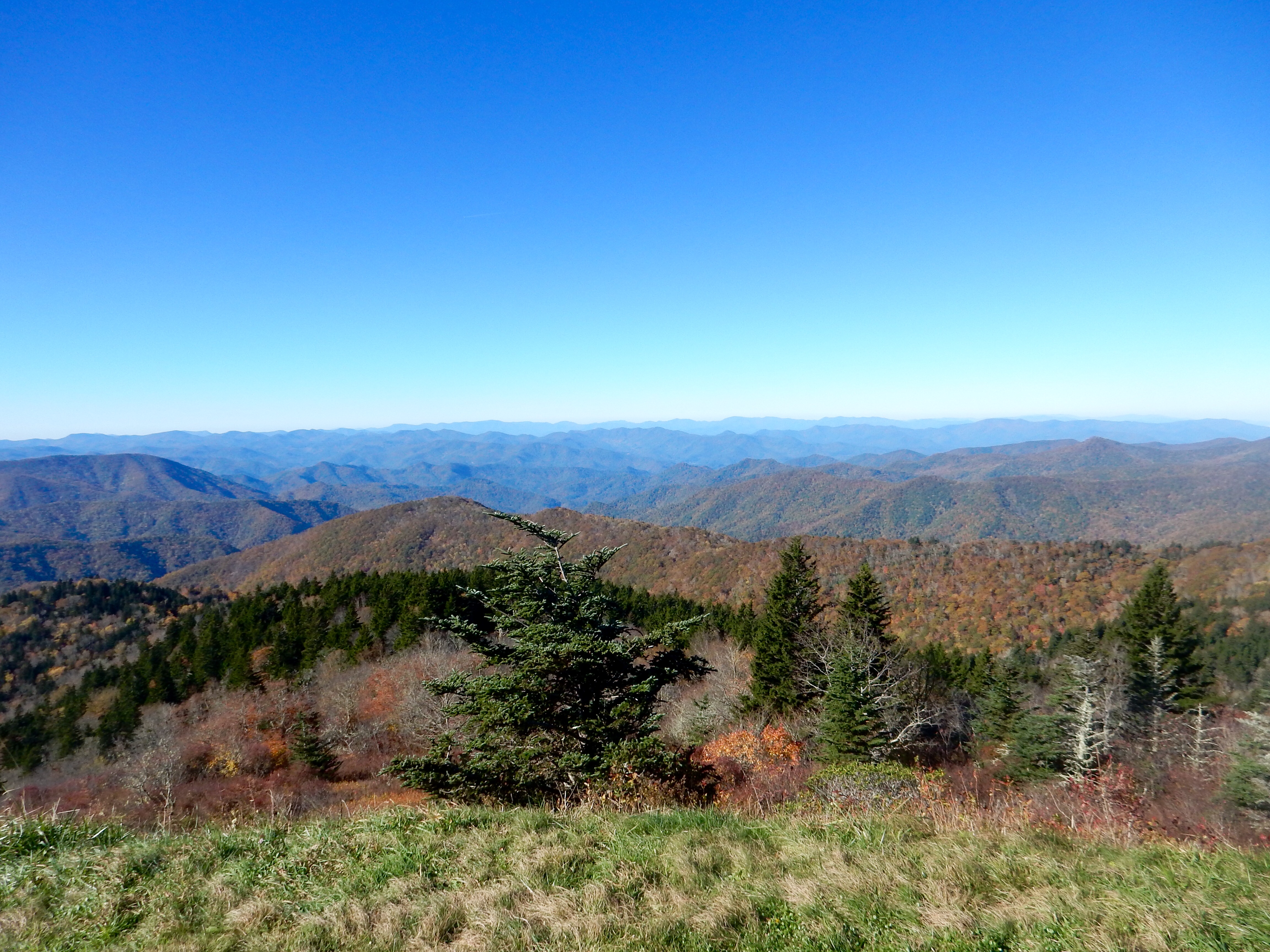
View from Mt. Mitchell

View from Mt. Mitchell

Mount Mitchell was the first state park in North Carolina, established in 1915. It preserved an area likely to be harvested for lumber and several other notable high peaks in North Carolina. North Carolina is the home to the largest number of peaks over 6,000 feet in any part of the Appalachian Mountain Range. Most of them are along the Blue Ridge Parkway. It makes for great viewing as we drive along or as we stop at any of the 400 overlooks along the 469 miles.

Our drive off the Parkway to our lodging tonight was along a road, while not quite as “bad” as the Tail of the Dragon, came close. I am hoping that our return Monday morning to the Parkway will be via a road a little less challenging.

Ed and Chris 11:45 PM

Categories: road trip, travel | Tags: , , , , , , | 2 Comments

2015 Trip Six, Great Smoky Mountains, Oct. 16-17

Asheville, NC Oct. 17

400

Indulge me in a few paragraphs of self-congratulation. This post is our 400th since we began in January of 2013. An expectation of one year off to travel has mushroomed to three years, although the weeks traveling have decreased from 35 in 2013, to 25 in 2014, and 15 in 2015. The posts are more often than not written nightly and cover one day; slower days get combined. Rarely do we make one entry cover three days. That does not allow for serious editing, hopefully the entries are written decently.

The blog was begun as a means to remember our trips and to let family know where we were and what we were doing. That is still the primary purpose but, although the blog has not gone viral, we now have followers in Europe, India, Japan, etc. We hope you are enjoying our description of a slice of American life.

Our first posts were generally about 500 words in length. For the last year or so they have been usually over 1,000 words. Ballparking the average at 750 words for 400 posts equals 300,000 words; enough words to have written 3-4 novels. Obviously there is no plot or character development involved.

Photos are taken with a Nikon point and shoot; easy to carry, simple to operate and to recharge batteries, pictures able to be quickly uploaded to our iPad. We shoot what we see, we rarely return to a location for better lighting or weather. Pictures are meant to remind us of what we saw, we are not aiming to be professional photographers. If the day was rainy and overcast, or if the only shot of a location or subject was into the light, well, so be it.

Our travels will likely continue to decrease. We will have to determine next year if we continue to pay for blog space. Thanks to Adam and Shannon we now have a printed version of years 2013 and 2014.

So enjoy! We have been blessed to be able to travel this extensively, to enjoy our time, and, yes, to stay married after all those weeks together on the road.

Ed and Chris

On to today’s post.

Last view as we leave Great Smoky Mountains behind

Last view as we leave Great Smoky Mountains behind

We left Gatlinburg Friday morning, again in great weather. Once again over the Newfound Gap Road through the heart of Great Smoky Mountain National Park. Cullowhee NC is home to Western Carolina University. (Its 500 member marching band was the lead band of the 2014 Macy’s Thanksgiving Day parade.) Our goal was to visit the Mountain Heritage Center.

This was mid-semester break, parking on campus was easy. Thankfully since the Heritage Center was not designed as a major tourist activity; it seems to be more of research arm. The Center had just moved to the library building and no center staff seemed to be working during break week.

There was an exhibit from the North Carolina History Museum available; one that brought back memories of difficult times. The photographs of Lewis Hine from the early 1900s documented the reality of child labor in the textile factories dotting the North Carolina landscape. Children under 10 working long hours. The lack of caring by factory owners, the acceptance of the “way it is” permeated the photos. His pictures were taken for the National Child Labor Council. There was a second small exhibit located on a different floor giving a brief history of North Carolina pottery.

Former Jackson County Courthouse in Sylva, now the library

Former Jackson County Courthouse in Sylva, now the library

Not exactly a home run event. Our second stop was the small town of Sylva, supposedly postcard pretty with lots of small shops. Well, you know we are not major shoppers but we gave it a try and did find a small gift for two family members. Lunch was hilarious though. The Coffee Shop (that’s its name) had been written up as THE place the locals eat at. Well they do because it is cheap and the waitresses recognize locals and serve them first. The visitors looked at each other and said “When do we get served?” It was cheap though.

Our third stop was a complete strike out. Supposedly there are more people of Celtic heritage in North Carolina than anywhere else in the world (even Scotland and Ireland??) We did not get a chance to find out. The Scottish Tartans Museum in Franklin-Franklin was the site of our evening lodging-was closed, according to the sign on the door and not mentioned on their website, so they could attend some Scottish Games in Atlanta. We ate ice cream at a local creamery instead.

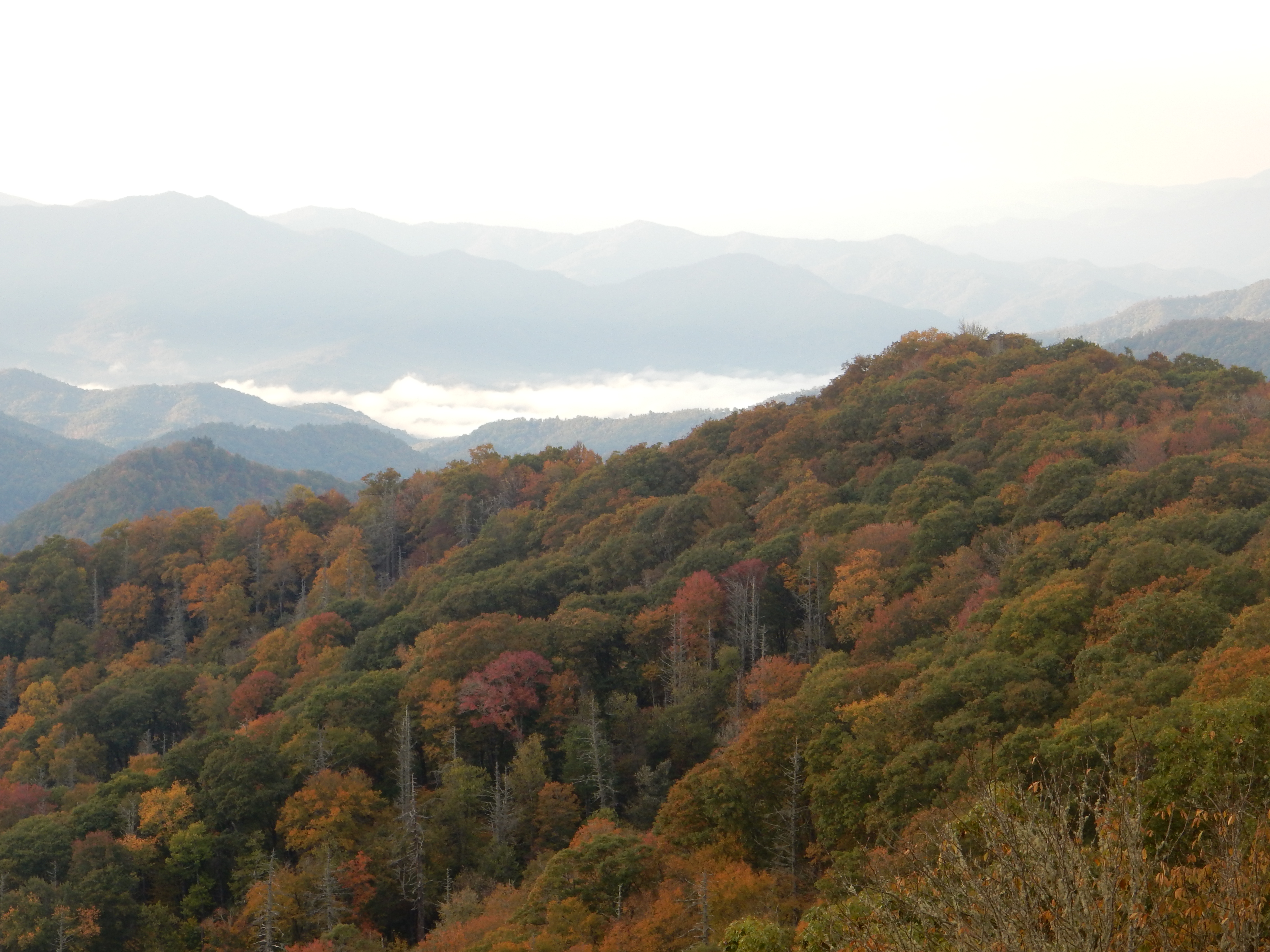
View from the Blue RIdge Parkway

View from the Blue RIdge Parkway

Saturday was our first Blue Ridge Parkway Day. We drove 70 miles along the southern end; the parkway extends from Cherokee NC (by the Great Smoky Mountain National Park entrance) 460 miles to Waynesboro VA where it connects with the Skyline Drive. The parkway was begun in 1932 and finally completed in 1987. The design was chosen to highlight views, thus there are lots of overlooks and in many areas, trees and brush are cut back so vistas can be seen by the driving public.

Blue Ridge Parkway

Blue Ridge Parkway

We drove, and stopped, and hiked, and took pictures. Due to its design, instead of focusing on managing tight corners, we were usually watching the North Carolina mountains and trees roll by. Our drive began before 9 AM (after leaving Franklin at 8AM) so initial traffic was not too heavy. By the end of the day it was heavy indeed.

School Building for the School of Forestry

School Building for the School of Forestry at Cradle of Forestry

Our major detour off the Parkway was to the Cradle of Forestry, a U.S. Forest Service sponsored site located in the Pisgah Forest east of Asheville. The Pisgah Forest was established in 1916 from the estate of George Vanderbilt who built Biltmore which we will be touring tomorrow. Vanderbilt wanted to own all of the land as far as he could see from his enormous mansion so he bought over 125,000 acres of land, including Mt. Pisgah (named after the mountain in the Bible from which Moses saw The Promised Land).

The name Cradle of Forestry is derived from the fact that Vanderbilt hired Gifford Pinchot and Frederick Law Olmstead to develop gardens and manage the forests on his estate. Eventually they turned the forestry portion over to Dr. Carl Schenck, a German. Schenck developed the first forestry school in the United States in 1896 at Biltmore, locating it in the forests among the land Vanderbilt purchased from small farmers and landowners.

The goal of the School of Forestry was to teach people who would understand “trees could be cut and the forest preserved at one and the same time”. As we saw in the Great Smoky Mountains, clear cutting was the standard lumbering practice with ruinous effects. The school operated for 15 years.I thought it was ironic that the School of Forestry was founded by the son of Cornelius Vanderbilt, the mega-entrepeneur that virtually dictated the spread of the railroads in the 1800s. The railroads used enormous amounts of wood for railroad ties and the railroad expansion across the country made lumbering large tracts of land feasible.

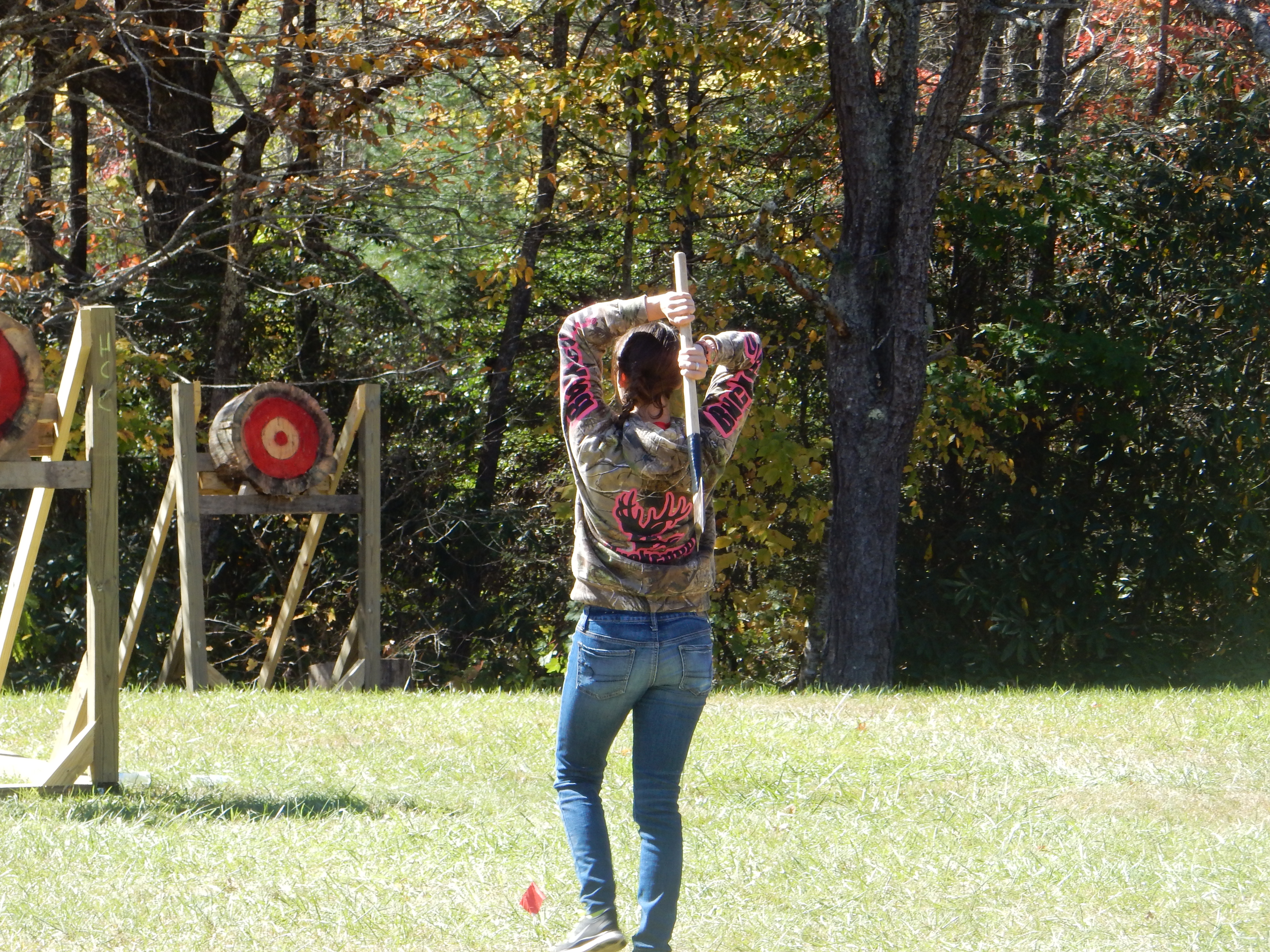
Axe hurling at Woodsmen Meet at Cradle of Forestry

Axe hurling at Woodsmen Meet at Cradle of Forestry

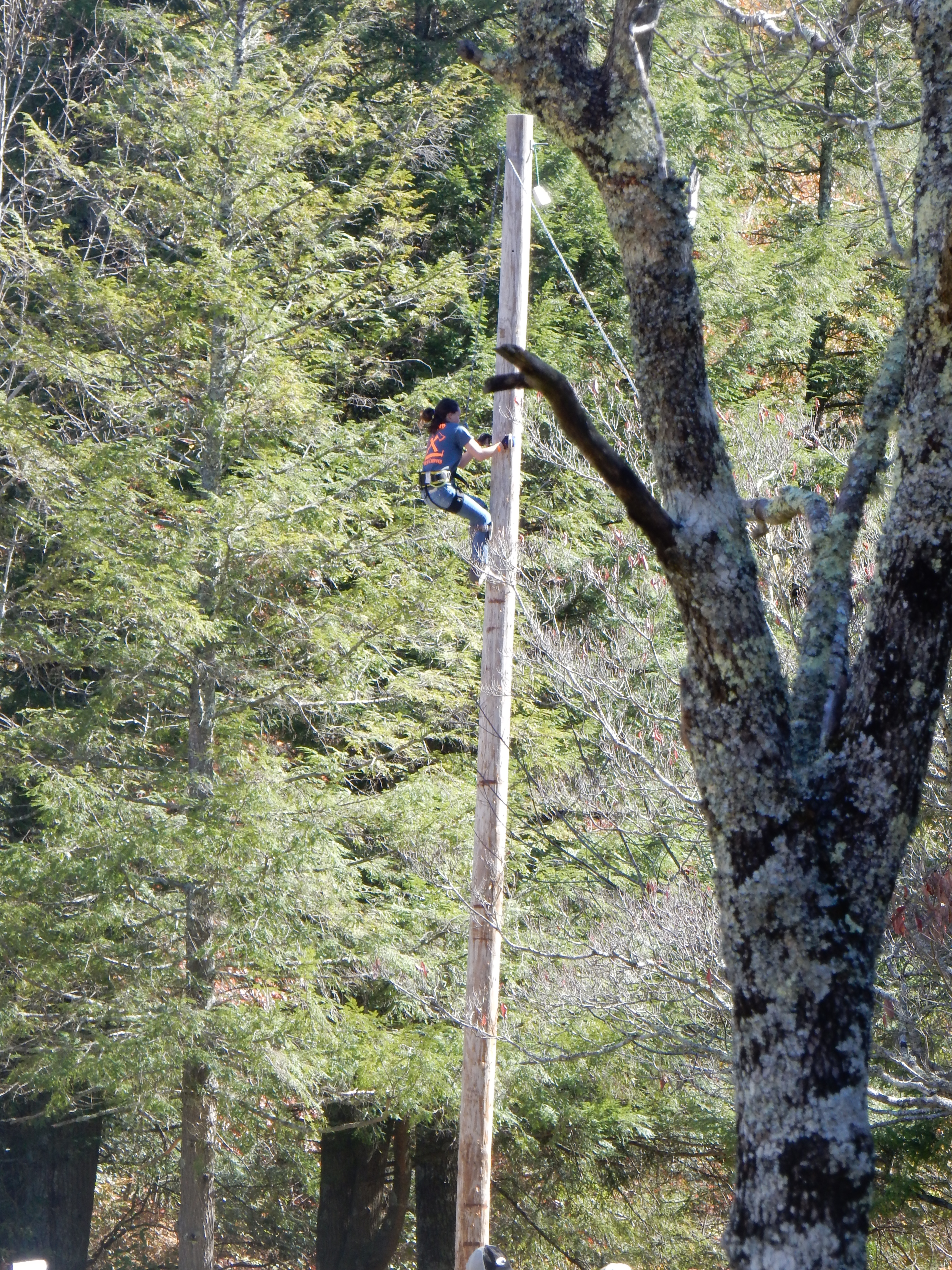
Pole climbing

Pole climbing

The Cradle of Forestry has several walks that wind among the school grounds and preserved school buildings. Our original plan was to tour them and the exhibits and move on. However, today was the re-scheduled date (from the “biblical” rains of two weeks ago) of the Woodsmens Meet. The Meet involved seven schools of forestry in team compettions in pole climbing, log cutting, axe hurling, chain saw cutting, etc. There were male and female contests. We spent an enjoyable bit of time watching several of the competitions.

Finally, we drove to Asheville and made 5 PM Mass at the Basilica of St. Lawrence. This church has the largest free-standing elliptical dome in North America. Lucky for us, a couple was celebrating their 50th wedding anniversary and we were able to spend a longer period of time in church than usual.

Ed and Chris 11:45 PM

Categories: road trip, travel | Tags: , , , , , , , , , | 2 Comments

Blog at WordPress.com.