Posts Tagged With: Big Bog State Recreation Area

Another 2022 Northern Minnesota Getaway, March 6-7

Sunday, March 6, 2022 Grand Rapids MN

Chris wanted to ”Get out of Dodge” one more time before we leave on a 30 day trip at the end of March. We settled on Grand Rapids, MN and the Green Heron B and B. Back in 2017 we had stayed at the Green Heron and found it enjoyable and memorable, so we booked it again. It is a delightful house with only two guest rooms. Our hosts, Johnnie and Chris, have been very accommodating. Our getaway started Sunday and we will return home Wednesday afternoon.

The journey Sunday started slowly as the weather had been a mix of rain and snow Saturday evening. The roads closest to the metro area were the worst. As we went north, the roads improved since there had been less rain and snow up there. Our path was circuitous as we wanted to enjoy the trip and not just drive the almost 200 miles. Our first stop, after a McDonalds breakfast, was at the Sax Zim bog.

Sax Zim is a well known birding area about an hour west of Duluth and an hour east of Grand Rapids. Birders visit here year round, it has a welcome center with naturalists on hand. Sax Zim is a mix of public and private land, totaling over 300 square miles. We have never been here before but have heard about and read about it extensively. Not being birders, we dabble in bird watching, just enjoying what we see rather than seeking out specific species. We are also not patient enough to be true birders.

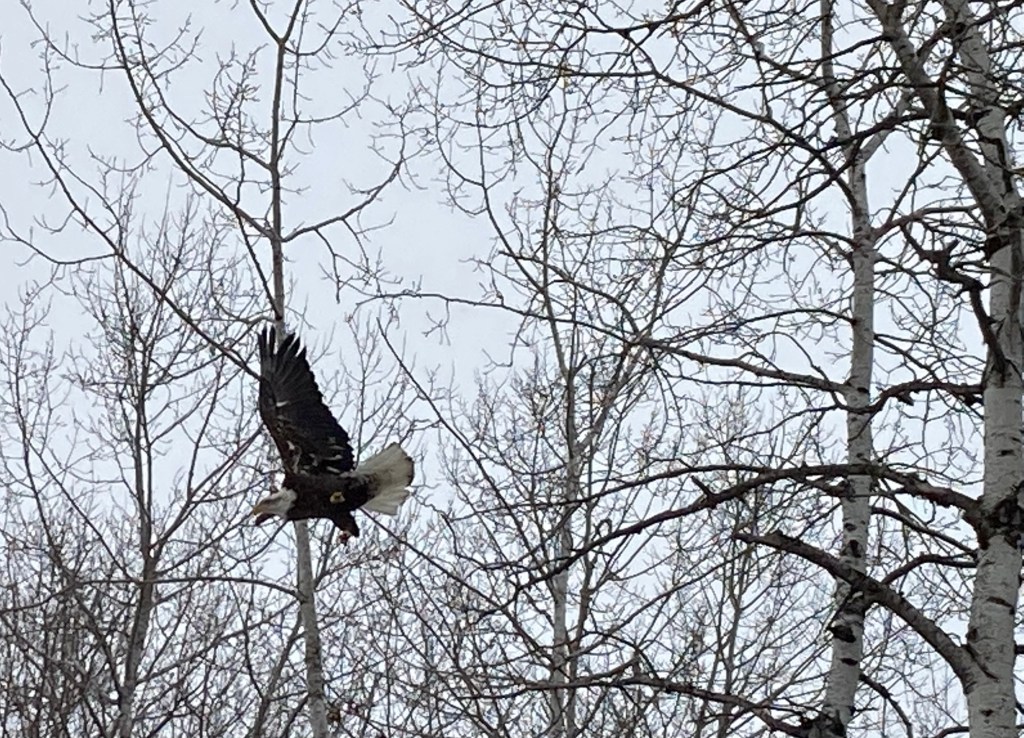
So what do we do? Well Sunday we drove a portion of the auto route. At one stop we saw our first redpolls-maybe. I say maybe because now that I saw them here, I have to recheck some of the birds that have been outside our condo recently. They might be the same species. We also saw one of the largest eagles we have ever seen. Finally, we stopped at the welcome center and met the naturalist. We did not spend time and effort trying to find great grey owls, a frequent visitor here. Then we left, thinking we might return in the future.

Just north of the Sax Zim Bog is the town of Eveleth. Eveleth is one of a series of mining towns on “The Range”. The Iron Range is, and was, home to the largest concentration of iron ore and taconite in the United States. Current operating and used up mines dot the region, one being in Eveleth. Previous blog posts have discussed and shown the mines on the Range, so I am not covering it again.

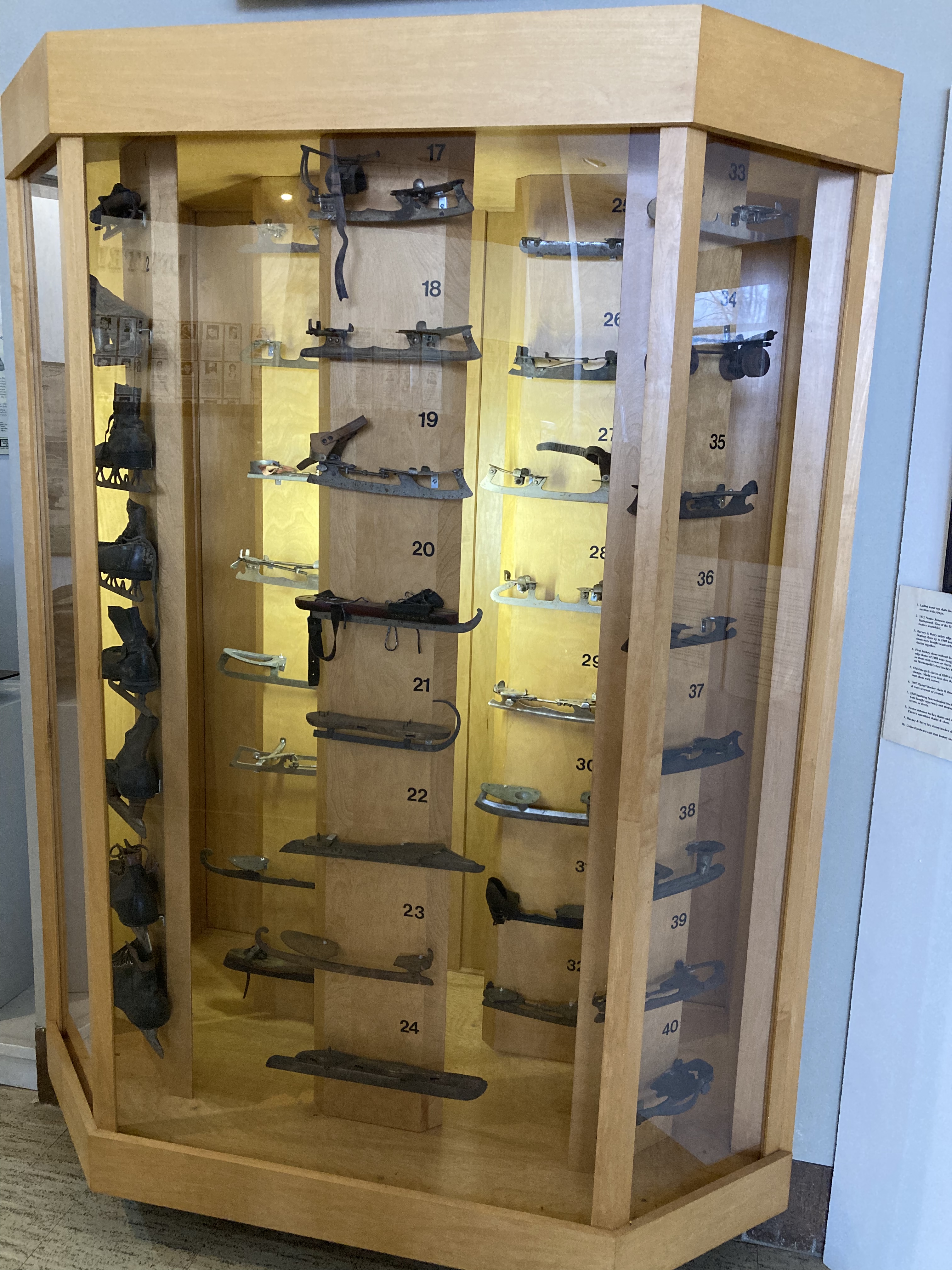
What Eveleth does have is the U.S. Hockey Hall of Fame. Hockey was big on the Range and in the early days of the Minnesota State High School Hockey Tournament, Range teams were frequent winners. Now as the population on the Range decreases and metro area high schools have more students than Range towns have population, state champions from the Range are few and far between. The Hockey Hall of Fame has been in Eveleth since 1972.
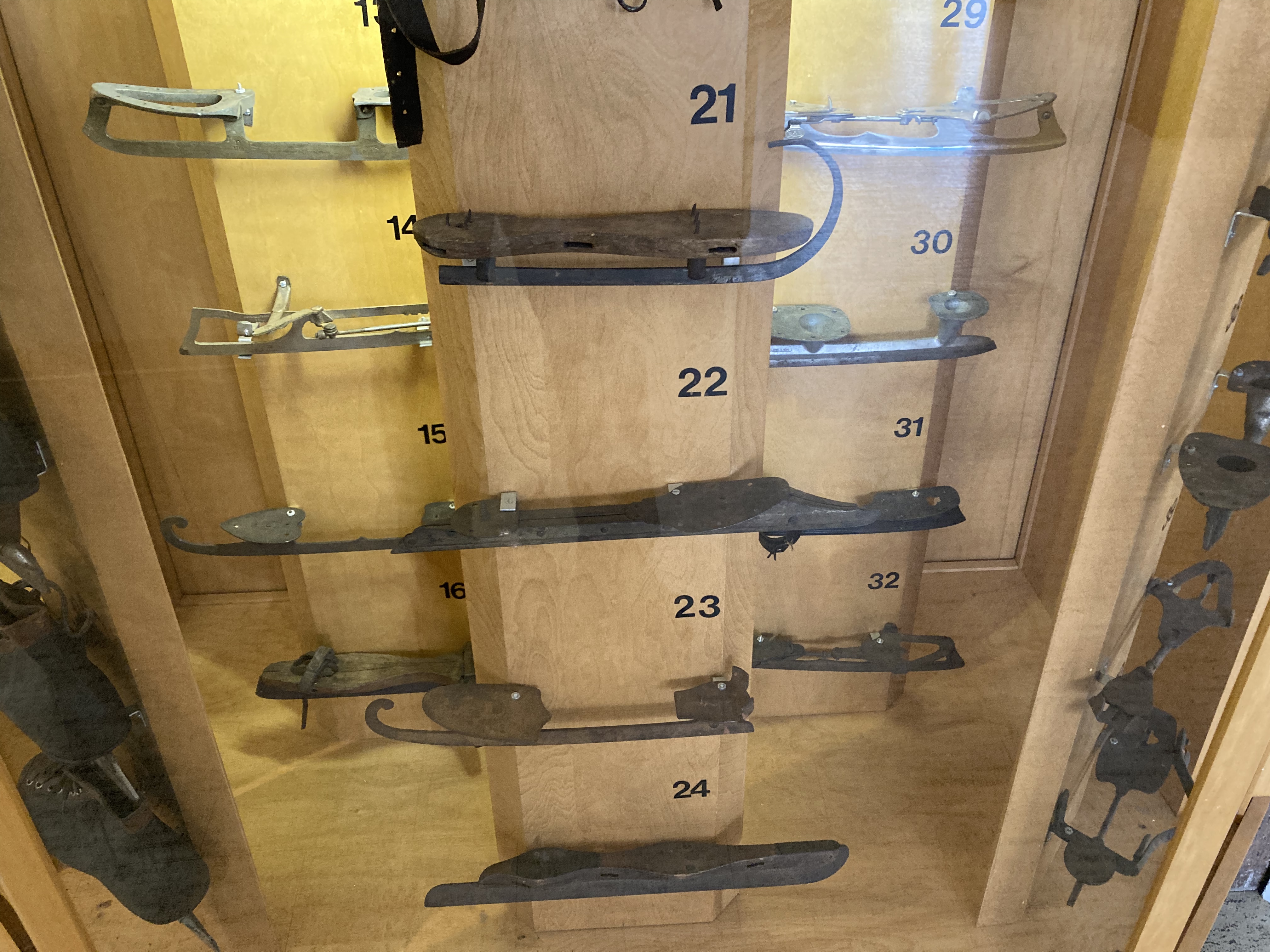
The museum showcases the history of hockey along with displays pertaining to high school, collegiate and professional teams. The 1980 ”Miracle on Ice” whereby the underdog U.S. team, comprised of collegiate players, defeated the USSR team, comprised of professional level players, on its way to winning the Olympic Gold Medal is prominently featured. The fourth Zamboni ice resurfacer ever made is on display here.

The museum is pleasant but probably more of interest to people in MN. Even though there are displays from around the country, there is no doubt there is a preponderance of items relating to MN. Of course, that may be appropriate since Minnesota is ”The State of Hockey”.

Monday morning our hosts made a fantastic breakfast with a fruit/yogurt/honey dish, multi-ingredient omelet, hash brown potatoes, thick bacon, and toast. Then we were off to Big Bog State Recreation Area, about two hours northwest of Grand Rapids. This was our second time here. We are making our second tour of all Minnesota state parks, having already been to each of them at least once. Minnesota is home to the largest peat bog (500 square miles) outside of Alaska. What is a bog? Generally speaking a bog is a wet, spongy area, poorly drained with acidic soil rich with accumulated plant material and having a specific flora.

There is not space here to cover all of this area’s interesting history. In brief, the Indian lands here were subject to various takings by which lies and broken promises were the main ingredients. The counties in the area borrowed money to drain the area to sell it to non-Indian settlers. The land did not drain and the soil is not good for farming. Since the land ended up being worthless, the counties defaulted and the State of MN bailed them out and took over ownership of the land.

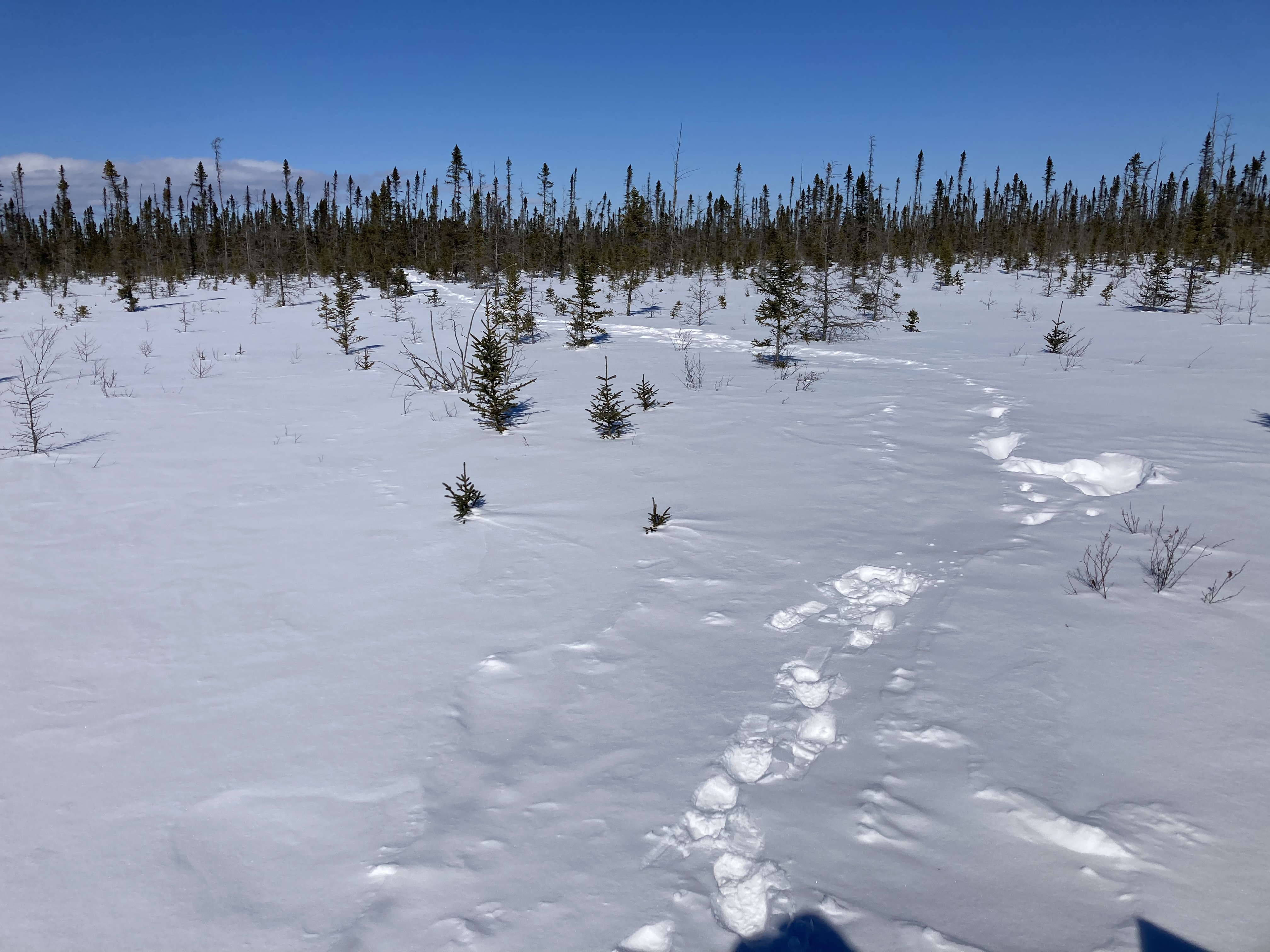
Now there is a state park here with camping by the shores of Red Lake and a boardwalk at this section of the park with its concentration of peat bog. The boardwalk is a mile long and we hoped that it would be reasonable to walk on. The first half of the boardwalk was not too bad, as the center part was pretty well packed down. This section of the bog is primarily black spruce trees of varying heights. As we reached about the halfway point where the drainage ditches had been 100 years ago, the trail disappeared. We decided not to continue on and risk stepping off the boardwalk into deep snow on the side. The second half of the bog is more tall grasses and sedges.

By this time it was early afternoon and we decided to have lunch in a small town of Waskish at a local bar and fishing resort. We had eaten here five years ago and repeated our menu choices of that time; wild rice soup, cheeseburger and onion rings. Our drive home continued our pattern of circuitous driving and we enjoyed the back roads with snow covered fields and forests with a mix of coniferous and deciduous trees. Generally the roads were clear with no snow but the best views were on the roads with snow and little traffic.
Ed and Chris, Monday March 7, 2022

Categories: travel | Tags: , , , , | 1 Comment

2015, Trip Five, Voyageurs National Park and Northwest Minnesota, August 14-15

Bemidji, MN August 14, 2015

Well we are “Up North” in Minnesota, currently in the lakes and forest region around Bemidji. Later on we will be out on the prairies of the Red River of the North, finishing up by following the Rainy River (the boundary between Canada and the US) over to International Falls, home to Voyageurs National Park. Voyageurs was our original destination but we thought we would include the NW corner of MN which we had not visited previously.

Lakes and trees and rivers are much of the beauty of the area. Most tourists fish and swim in the summer, hunt and ski/snowmobile in the winter. We will do our usual of hiking/biking, touring historic sites, go on a few industrial plant tours, and get out on the water at Voyageurs.

Paul, Ed and Babe in Bemidji MN

Paul, Ed and Babe in Bemidji MN

Bemidji is 225 miles from St. Paul and we arrived here just after lunch time. We sacrificed lunch to go on a 90 minute bike ride at Lake Bemidji State Park and on the Paul Bunyan State Trail. Bemidji is “Home” to Paul Bunyan and Babe, the legendary lumberjack and ox. It is also a town of 13,000 people; the largest northern MN town between Grand Forks at the ND border and Duluth at the WI border.

Part of the bike trail

Part of the bike trail

The sunny Paul Bunyan Trail

The sunny Paul Bunyan Trail

Lake Bemidji State Park has bike rentals which even include a helmet that you can keep. We took them, even though we had brought our own along with us. The weather today was hot (90 degrees) and sunny. We justified only biking for 90 minutes due to the heat. Dinner was at Brigid’s Cross Irish pub in downtown Bemidji, great food (hunger may have impacted on that evaluation) with a group of four local musicians providing entertainment.

This part of MN was settled by European immigrants late in the 1800s, around 1890. Logging was the first driving force for settlers, followed by the railroad (James J Hill’s Great Northern). Bemidji grew, partially due to lobbying to make it the county seat, and partially due to friendships between town settlers and James J Hill. The settlers convinced Hill to change his original planned route which would have gone south of Lake Bemidji to one directly through their town site. Then flour magnate John Pillsbury had lumber lands back north of the lake and they had to construct a feeder railroad to bring his lumber down to his mills in Brainerd and in Minneapolis.

In any event, there was enough lumber to make several people rich. Between lumber and railroads, the early town prospered. Today lumber is still a major economic force, along with higher education and tourism. The lakes in this region are home to numerous resorts and fishing is a major sport.

Well before the Europeans, the Dakota lived in this area. In the 1750s, the Ojibwe drove the Dakota south and west, taking over this part of MN until the Europeans arrived. Once again, through broken treaties and land fraud, the Native Americans were removed to reservation lands-much of which was later stolen from them. Today three main reservations are in this area, although much of the land is still owned by whites. The Leech Lake Reservation, the Red Lake Reservation, and the White Earth Reservation.

The Mississippi River flowing out of Lake Bemidji

The Mississippi River flowing out of Lake Bemidji

The Mississippi River headwaters are only 30 miles away at Lake Itasca. When the river reaches Bemidji, it flows through the lake, entering on the west side and exiting on the east side. Bemidji actually means lake with crossing waters in Ojibwe. The river is not dramatic in scope here, resembling many other small rivers.

August 15

We were wilderness hikers today, out in what may be Minnesota’s last true wilderness area. You were probably thinking of the Boundary Waters Canoe Area or maybe Voyageurs National Park. If so, you would be wrong. Big Bog State Recreation Area. More than likely you have not even heard of it. It took us over an hour to reach it from Bemidji.

Big Bog State Recreation Area

Big Bog State Recreation Area

Big Bog is 50 miles long, 12 miles wide and almost completely uninhabited. It is the largest peat bog in the continental United States; i.e., excluding Alaska. You might think of it as the Everglades of the North. It contains enough water to cover the entire state of Minnesota to a depth of two feet (per the Park Ranger).

The Big Bog dates back to Glacial Lake Agassiz 10,000 or so years ago. As this area warmed up and the glacial waters receded, the glacial drift left in this area was relatively flat. The vegetation here is primarily peat and sphagnum moss as the base material. Black spruce and tamarack trees are here, usually in stunted form due to the acidic water.

Our walk was primarily on a special boardwalk. Walking on the vegetation kills it and regrowth is slow. The boardwalk is about 10 years old and was experimental at its time of installation. The posts are drilled down into solid footing, which varies from 3 to 14 feet. The grates are a plastic material, and the construction was undertaken by extending out new portions from the section just completed. No construction equipment drove on the bogs.

Site of a failed canal in Big Bog State Recreation Area

Site of a failed canal in Big Bog State Recreation Area

Technically a bog is a nutrient poor, slightly acidic wetland characterized by sphagnum moss. It has less plant species than fens. (I hope that clarified things in your mind.) Our walk started in an area with enough short trees to be shaded. It progressed to being able to see the hillock areas covered in moss and grasses with fewer trees, until at the end, the view was primarily of waving grasses growing out of the soft moss/peat on undulating ground. Water was sometimes visible, many times not. Evidently the moss is like a huge sponge, soaking up the water.

Big Bog State Recreation Area

Big Bog State Recreation Area

At the park headquarters, there is an aerial map that was very helpful. From the air, one can see islands of slightly higher elevation where trees tend to grow. The flow of water is quite visible primarily in the wavy lines of vegetation but also in the flow of certain water channels. In between are lighter colored areas of grassy vegetation.

This area is uninhabited for a reason. Man could not conquer nature. Those European settlers thought this would make great farm land. Ha! Efforts to drain the bogs failed. Even today one can see where the failed drainage channels were dug. The acidic soil meant that the trees here were not valuable to lumberjacks. Individuals lost their shirts in homesteading and in major commercial ventures. Abandoned land went back to the counties for unpaid taxes.

The counties sold bonds to construct the drainage canals and hoped to repay the bonds from land sold for farming. Part of the area seceded from one county and set up its own in order to avoid the debt. When the canals did not work, the county debt was taken over by the state in exchange for the land so the state was stuck with it. It was not until the 2000s that the area was made into a park, partly to offset lost tourism when Upper Red Lake walleye fishing went into a slump-from which it has since recovered. Thus, the area is not agriculturally viable, not forestry viable, and not viable for much of anything but attracting people like us.

There is supposed to be wildlife like moose in the area. We did not see any. This is a major birdwatching area, sandhill cranes, eagles,etc; we did not see those and were not blown away by what we did see. We did see insect-eating pitcher plants. BUT, lest you misunderstand, the trip was great fun and amazing. We had no concept this existed. Seeing miles of waving grasses, the up close view of the moss, seeing man’s effort to conquer nature defeated (much like the Okefenokee Swamp in GA). If interested, I did find two other newspaper articles about Big Bog you might find more interesting than mine. The Star Tribune of July 24, 2014 and the New York Times of June 13, 2008.

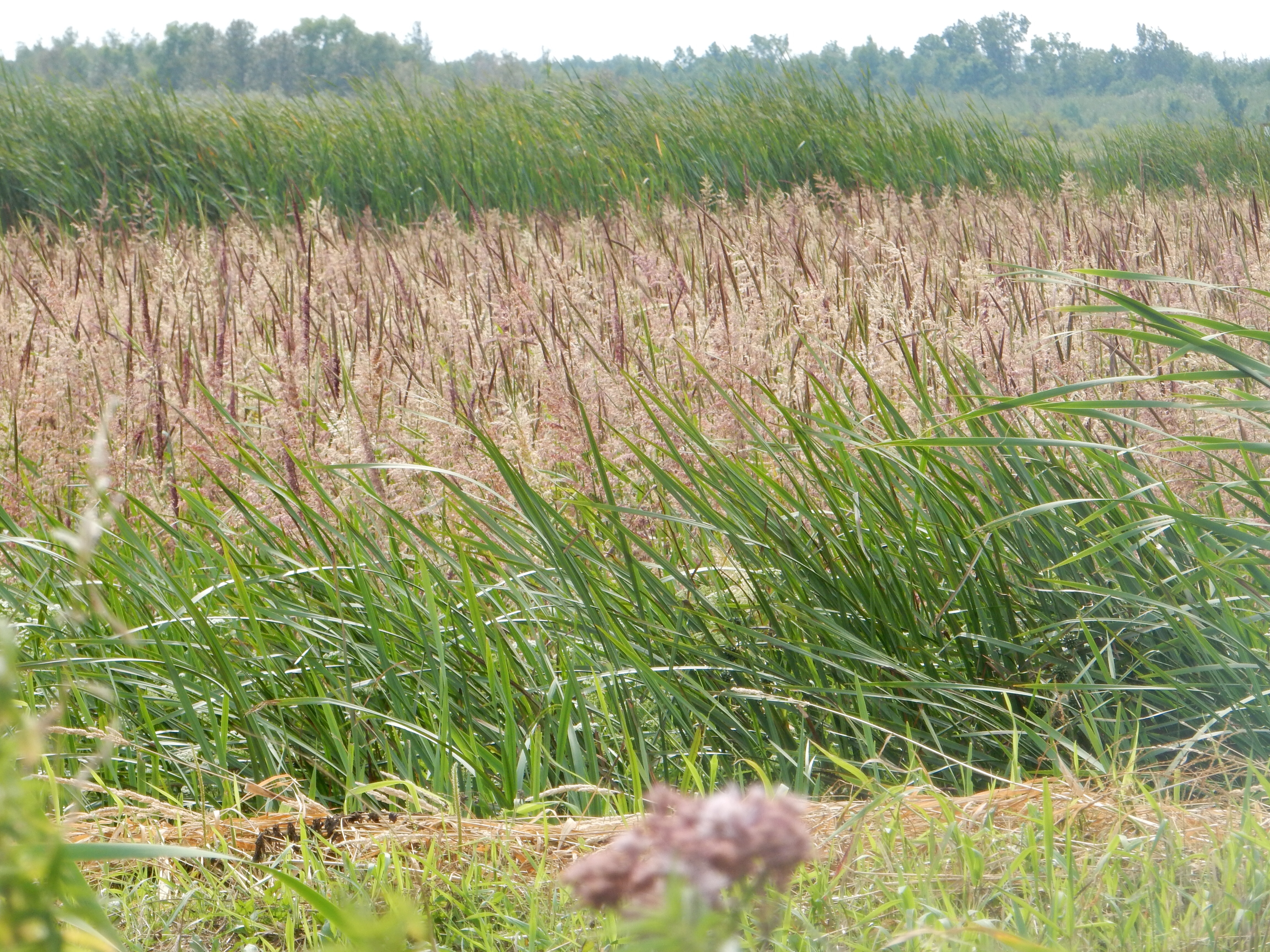
Wild RIce

Wild RIce

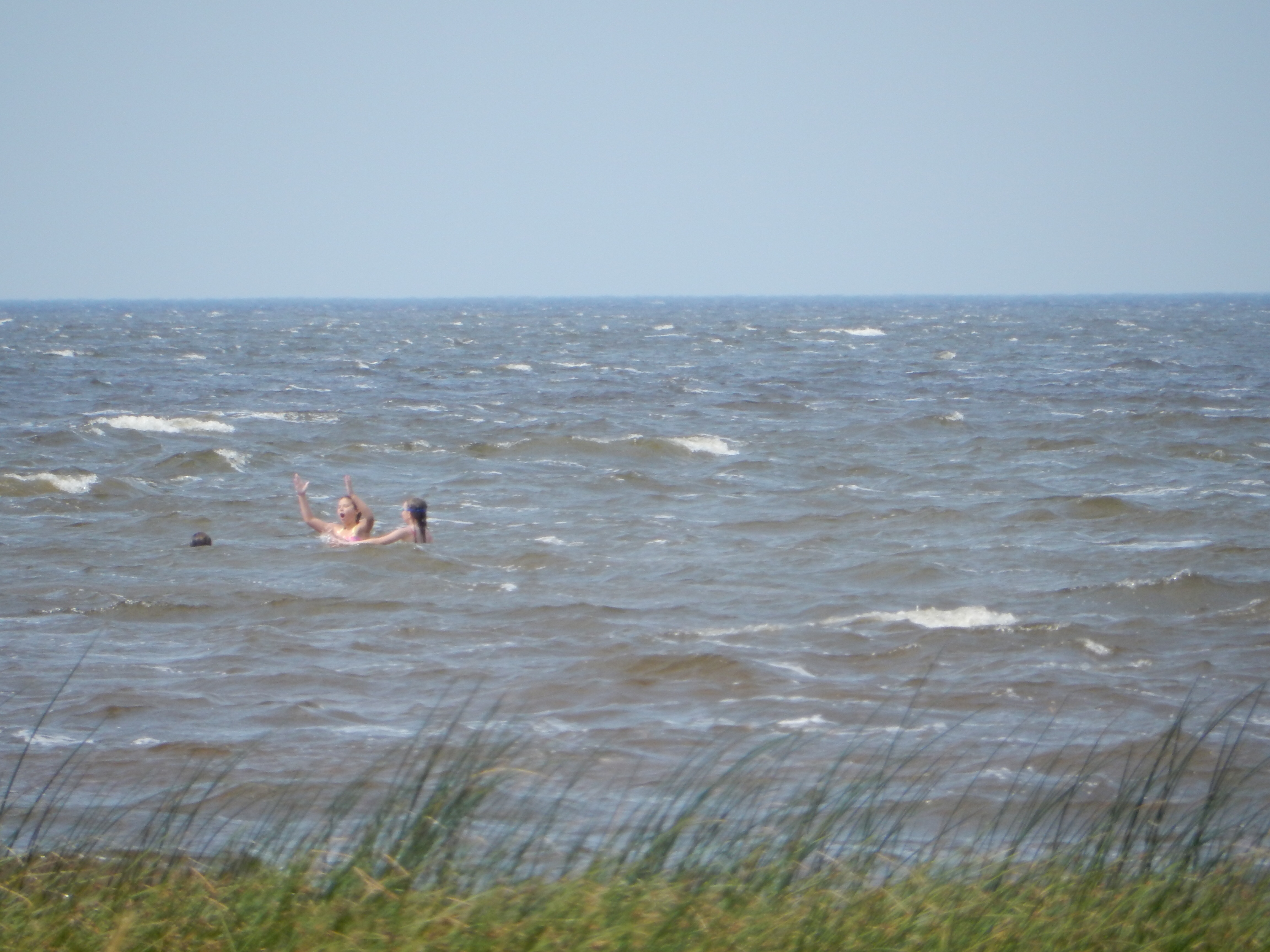
While in the area, we went out exploring on back roads and came across numerous fields of wild rice. This was our first time that we knew we were seeing wild rice growing. We stopped by the beach at Red Lake, the largest lake totally within the borders of MN and the 14th largest non-man made lake in the U.S. I climbed the fire tower at Big Bog (137 steps) for a view of the area.

People swimming in Red Lake

People swimming in Red Lake

Now remember we are in a remote area; this bog area is practically uninhabited. So for lunch our options were limited. We ate at the West Wind “Resort”, the only game in town, so to speak, of the town of Waskish, the nearest town to Big Bog. The interior was standard northern MN; log paneling, trophies mounted on the walls, Twins banners, and the bait shop was just across the parking lot. But the burgers were great, the onion rings and wild rice soup quite good.

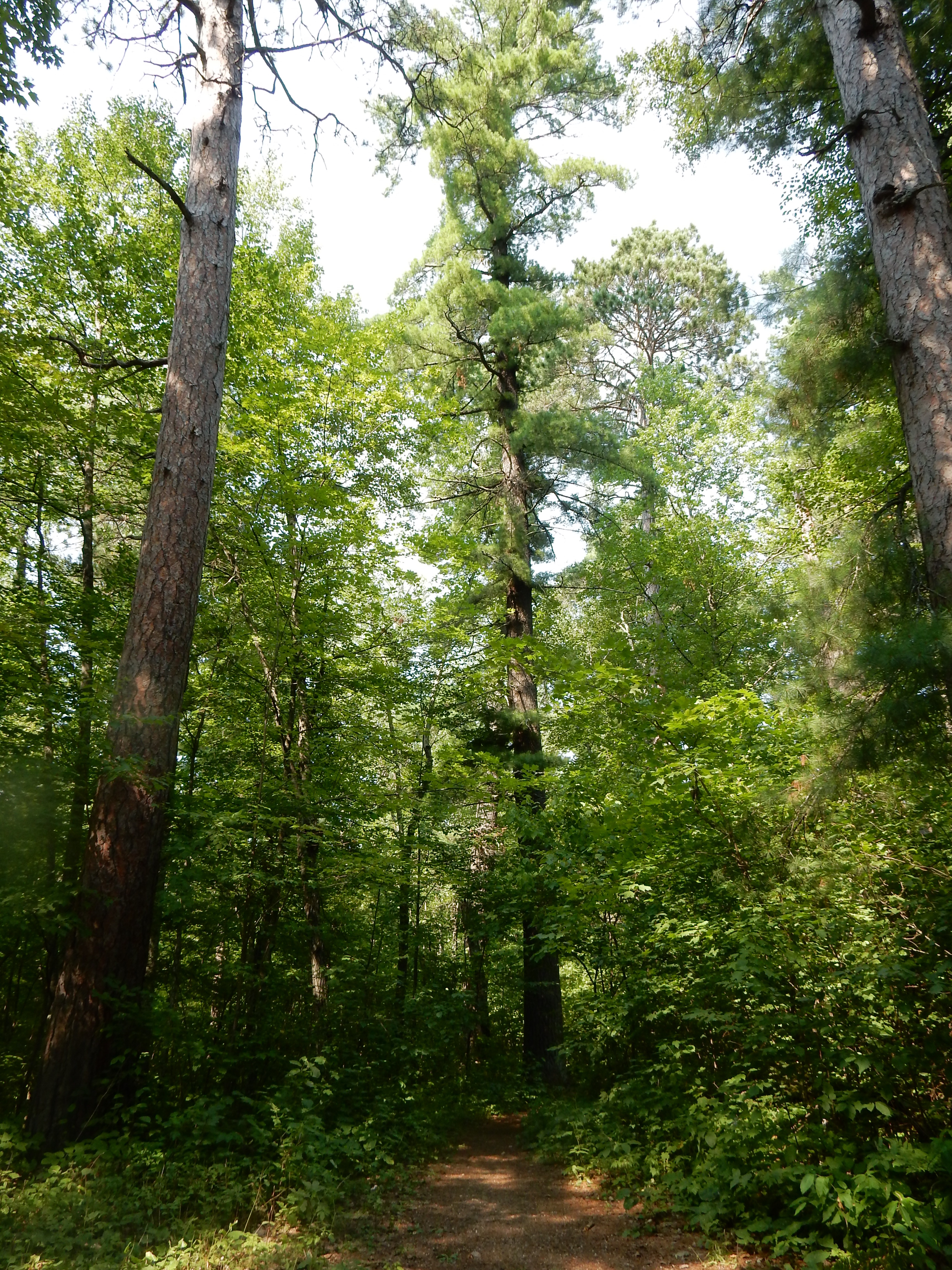
Part of the Lost 40

Part of the Lost 40

After lunch, we hit another remote area; a result of inaccurate surveying. The Lost 40 refers to an area where the lumbering whirlwind of the late 1800s missed some of the largest trees around. The surveyor for the area made a mistake and plotted this parcel of land as water and swamp, so no lumber company bought it. When all of the large red and white pines trees around were cut down, this area remained. Today it provides a rare glimpse into what old growth MN forests looked like over a hundred years ago. Not redwood or sequoia size, but impressive nonetheless.

After returning to the Doubletree here in Bemidji (very nice with a great breakfast) we showered and went to church. (A full house.) For dinner lets just say we did not make the best decision and leave it at that. The group at the next table complimented Chris on her dress (her Hawaii purchase) and then warned us that one of our next towns was a real “wasteland”. We will leave it nameless until we explore it in person.

Bemidji seems nice. I know, one makes these superficial judgments but that is all we have to go on. The town seems clean, there is sculpture on many corners in the business district, and Bemidji State University must be an economic engine to the area. There appear to be numerous cultural and social activities thriving. We made an early morning stop at the Bemidji Woolen Mills, a factory that still makes woolen products here in town and also sells other U.S. made clothing products on-line. Check ’em out. http://www.bemidjiwoolenmills.com

I do miss the longer days and earlier sun rises from June and early July. The Doubletree is on the water’s edge and sunrise and sunset views are wonderful. Families are out and about enjoying the water sports. Boats dot the lake. It all ends too soon each day.

Sunday we head out to East Grand Forks for three nights.

Ed and Chris
Saturday August 15

The Minneapolis Star Tribune featured Big Bog in this article: http://www.startribune.com/exploring-big-bog-state-park/268499352/
In addition, on December 11, 2015 the Outdoors section discussed the photographer and reporter that journeyed around the state ranked Big Bog as one of the special features of the state. http://www.startribune.com/state-of-wonders-lives-on-in-book/361435711/

Categories: road trip, travel | Tags: , , , , , , , , , | 3 Comments

Blog at WordPress.com.