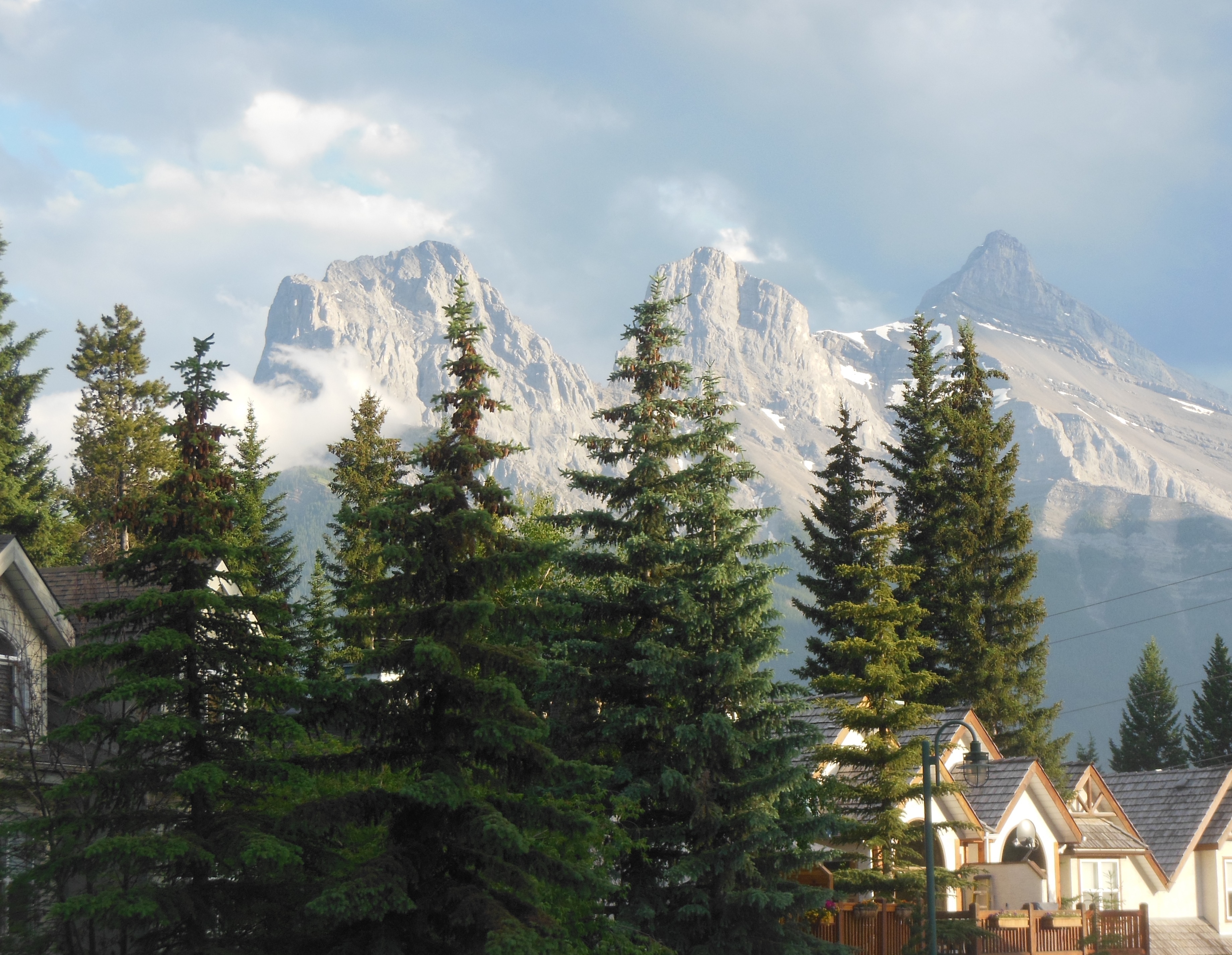
Posts Tagged With: Banff

2013 Trip Six, The Northwest, July 6

Canmore, July 6

Our last full day in the Canadian Rockies for a while. We went back to Banff and spent several hours in the Whyte Museum of the Canadian Rockies. The day started out cool and drizzly so the museum seemed a good idea. It was time well spent.

We did three half hour docent tours. One focused on the homes and lives of Catherine and Peter Whyte and of Philip and Pearl Moore. Both families came from money on at least one side and chose to spend most of their lives and energies in Banff, at the time, a very small town. The Whytes were also painters and some of their work is exhibited here.

Interior of Morse home showing Princeton memorabilia

Interior of Moore home showing Princeton memorabilia


Interior of Whyte home showing artist work space

Interior of Whyte home showing artist work space

Both homes were relatively small but very comfortable looking. They reflected the mountain style and the interiors fit together well.

The second tour was a history of how the Canadian Rockies were opened for development; through surveyors, the passage of the CP Rail trains, skiing, etc. Individuals with courage and foresight were able to make major impacts.

The third tour discussed the art of the Rockies. CP Rail sponsored artists to paint scenes they deemed suitable for use to market the area for tourism and development. The Railway was nearly bankrupt after completion of the Canadian intercontinental line in 1885 (U.S. line completed in 1869-see Trip Four)and needed revenue. The completion of the line was essential to keeping British Columbia in the Canadian Federation and its promised completion date was overdue by several years.
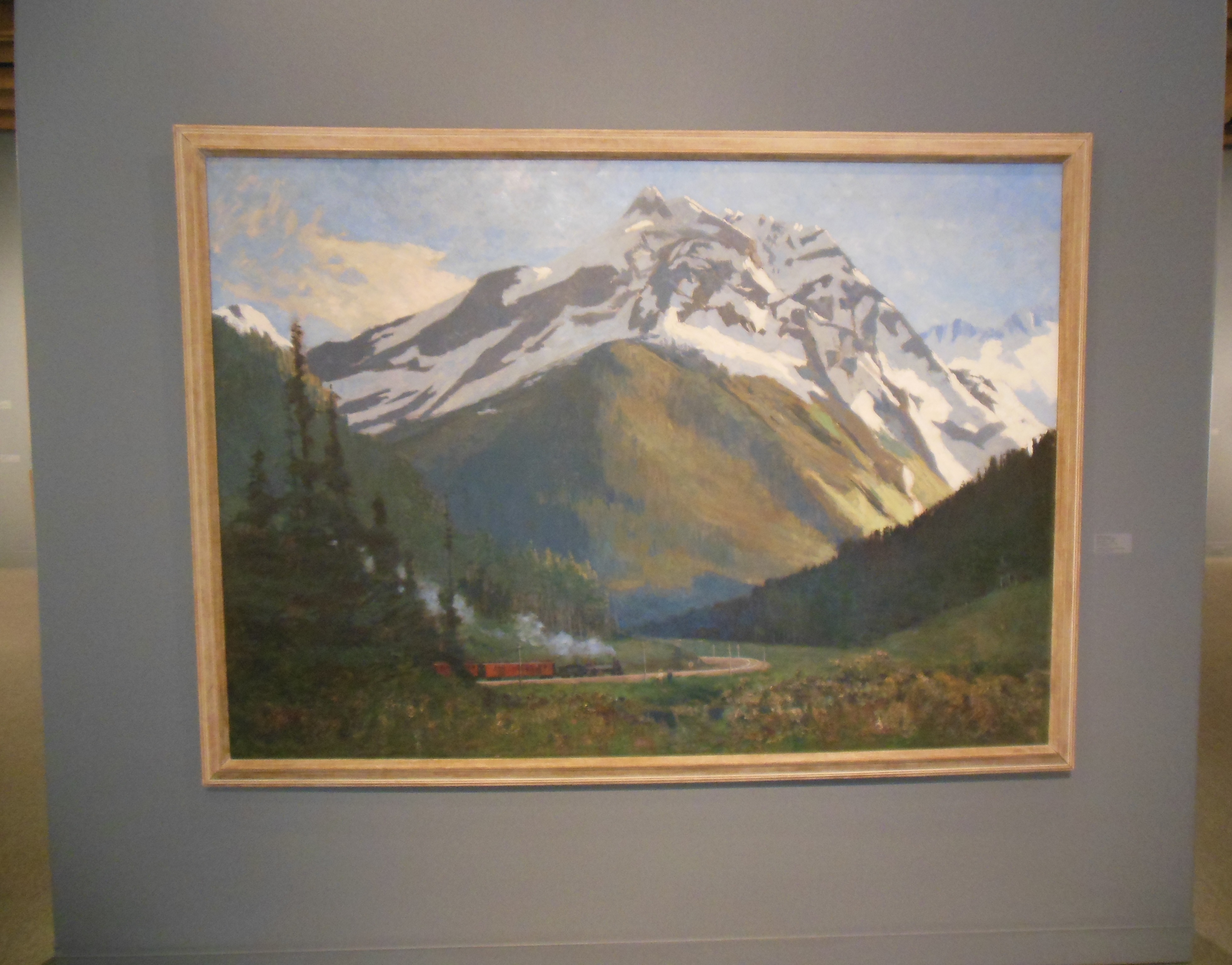
One of the CP Rail sponsored paintings

One of the CP Rail sponsored paintings

Similar to U.S. efforts, tourism along the rail lines was one method to gain dollars. Artists got a free pass on the railroad to paint, and later photograph, scenes that showed the majesty and none of the problems of the area.

After the museum we went to the local, downtown market and picked up food for a picnic lunch in the park along the river. We observed a wedding and a physical education class in the park. A walk along the Bow River worked off most of the calories consumed. The weather alternated between sunny hot and cool drizzly. We managed to avoid any major raindrops.

We went in to the Banff Park Museum, a national historic site. It was devoted primarily to the animals of the region, usually shown in dioramas. It did not take long to complete our tour.
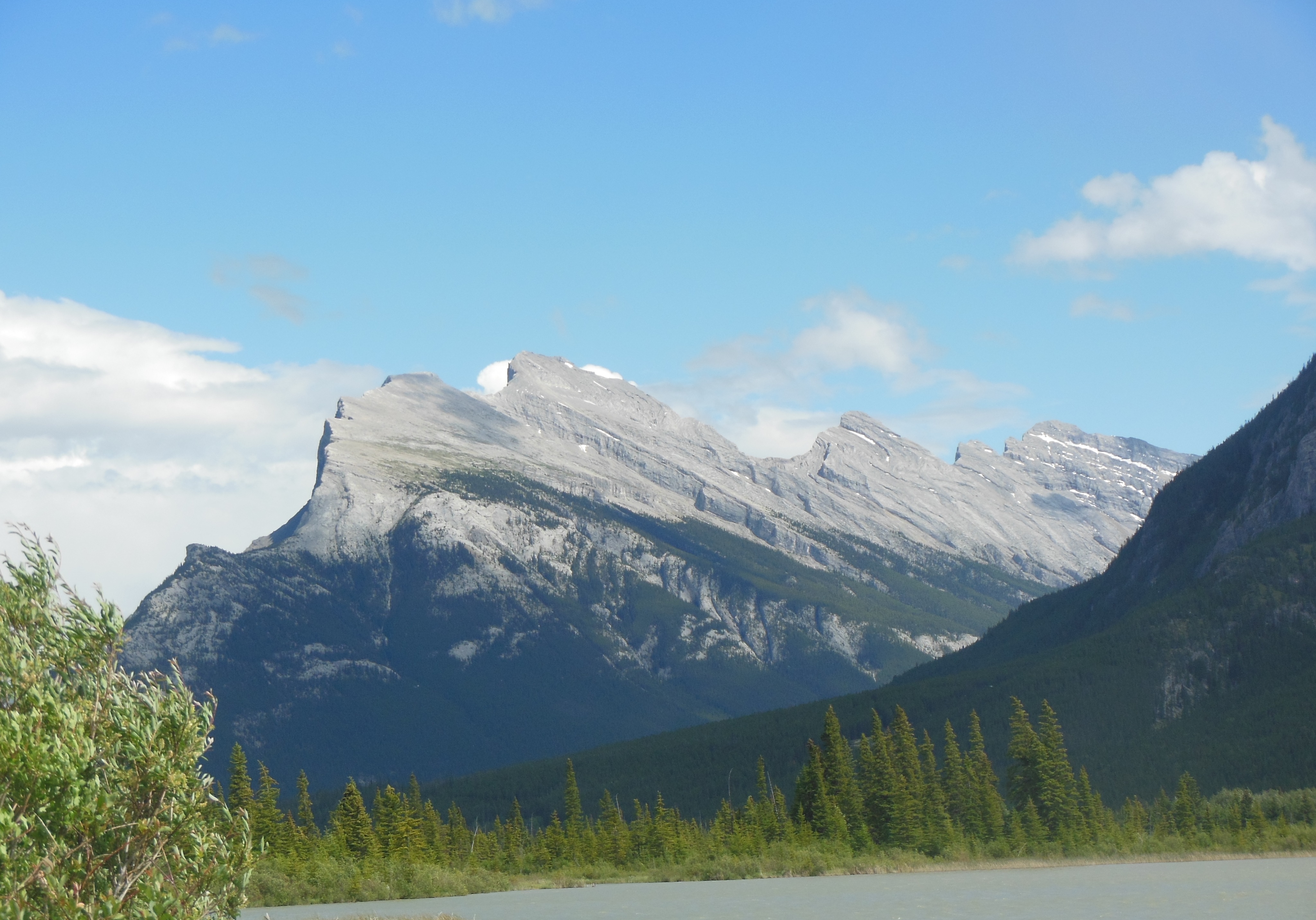
Mount Rundle and Vermillion Lake

Mount Rundle and Vermillion Lake

After some further walking in downtown we went to Vermillion Lakes, a highly touted scenic area. We took a few shots of Mt. Rundle but found the area less than spectacular.

So we leave Banff having seen most of the highlighted areas. Those we missed we will catch later (the balance of the Icefields Parkway), they were hikes in active grizzly bear areas, or they were still closed due to the flooding. The area is generally back to normal but almost all of the hotels had Vacancy signs showing; evidently many people cancelled their reservations after the flood.

We have completed one week at our first airbnb lodging. It has worked out well for us. We have a lower level unit to ourselves with kitchen and sitting area. It has plenty of windows looking out at the back yard and forest. We have three more airbnb lodgings on this trip; Vancouver, Whistler, Victoria in British Columbia and East Wenatchee, WA.

Tomorrow we pack up and drive to Calgary.

Ed and Chris, July 6 9:30 pm

Categories: road trip, travel | Tags: , , | 1 Comment

2013 Trip Six, The Northwest, July 4

Canmore, Thursday July 4

No holiday in Canada, just another work day. We spent most of the day around the town of Banff. We made a quick stop at the park information center in downtown Banff. It did not open until 9 AM so we had a few minutes to wait.

The downtown area is very attractive. We did not spend much time walking the streets, however, since we are not major shoppers. Instead, we headed out to the Lake Minnewanka area. Due to the recent flooding, several of the facilities were closed and the boat that travels on the lake was not operating. Unfortunately, this was not stated or listed at the park office before we headed out.

Lake Minnewanka

Lake Minnewanka

The lake was expanded after two dams were created here. A small town was covered by the rising waters. Scuba divers who are able to handle cold,murky water and high altitudes enjoy exploring here. We just took a short hike by the lake then continued on the Lake Minnewanka drive. As we toured the area, we came across more closed trails and closed roads. The three lakes that we saw in the area continued the green, cloudy color or muddy brown from the run-off. One of the lakes is normally used for swimming. There was no one there.

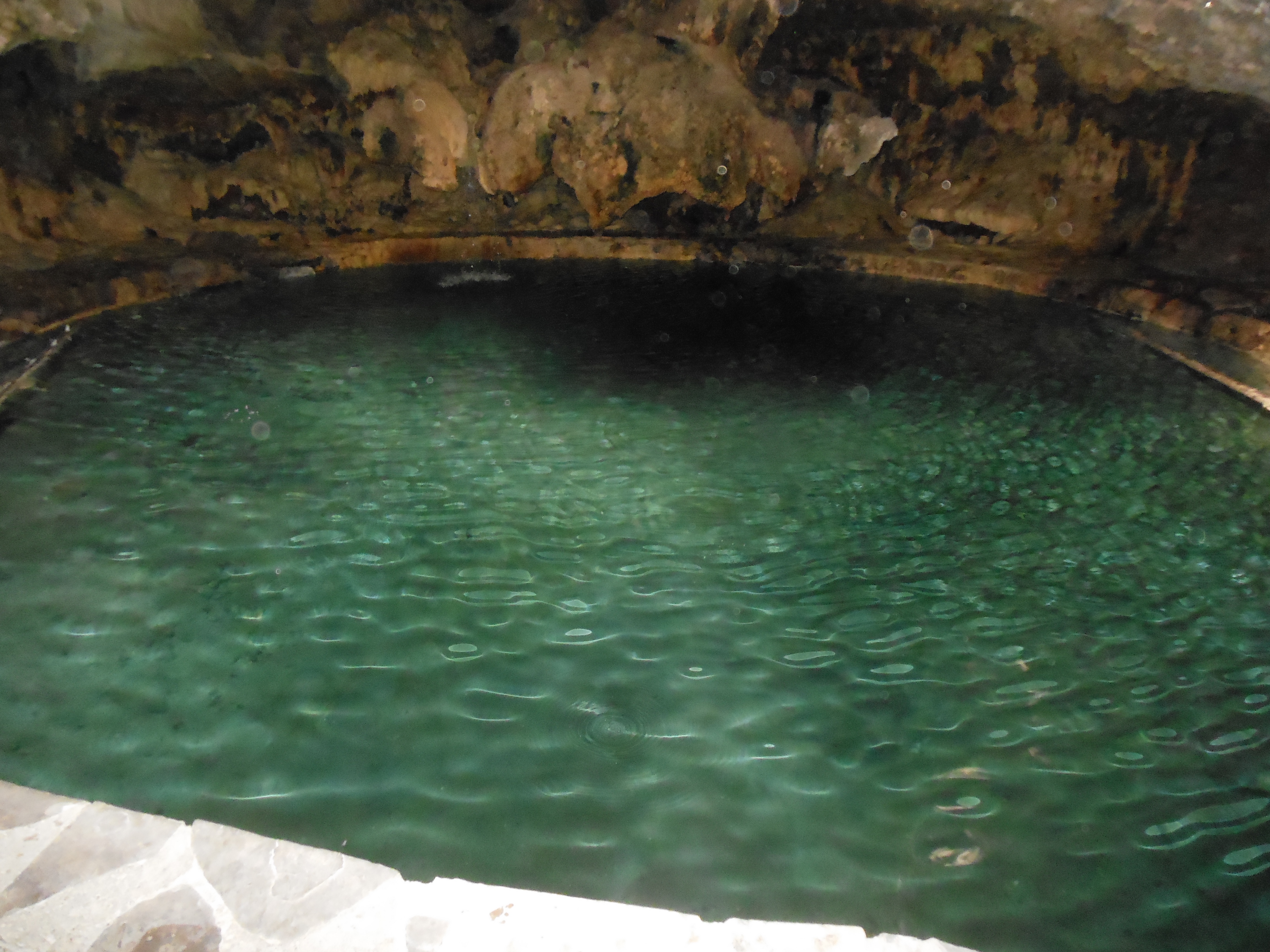
Thermal pool in cave

Thermal pool in cave

We returned to the town of Banff. We spent several hours at the Cave and Basin National Historic Site. At this location in 1883, three workers for the Canadian Pacific Railway found a hot springs and thermal pool in a cave. The timing was perfect for exploitation. Hot springs were in and the railway, like those in the U.S., worked hard to get tourists into the area. But of course there was controversy and issues over ownership rights.

The end result was the first national park in Canada created in 1885. It was the third national park in the world. First called Rocky Mountain Park, it was formed around the hot springs. This was a similar pattern to Yellowstone in the U.S. which was protected initially for the thermal springs. It took a while for other features to be treasured and added to the park property. Later on, Canada added Jasper, Waterton, Yoho, and Kootenay national parks in the Rocky Mountain area.

Canada instituted the first national park system with wardens/rangers, predating our park service by several years. Early years here demonstrated similar pressures to oust native Indians, mine natural resources, control predators and encourage tourism. During World Wars I and II, internment camps were established here and in Jasper National Park.

The Cave and Basin site was also used for swimming. A large swimming pool existed here for decades before closing permanently in 1994.

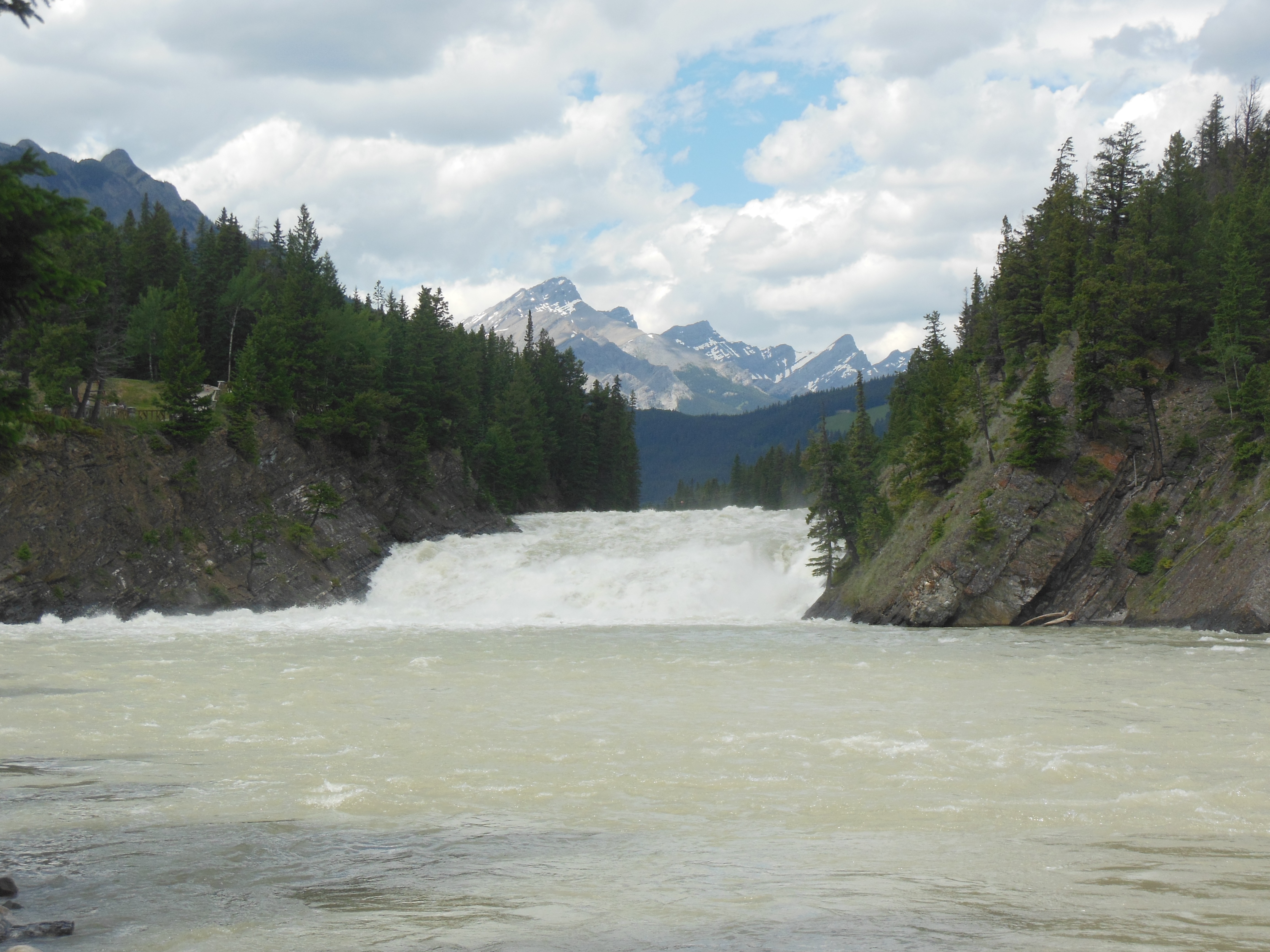
Bow River falls in Banff

Bow River falls in Banff

We spent time exploring the cave, reading about the parks system, hiking up to the springs and down to the marsh along the Bow River.

Our late lunch stop was at the Bow River falls. While not high, the strong flow and mountain backdrop make the falls attractive and a tourist hot spot. Part of the area was being re-built due to the flood.

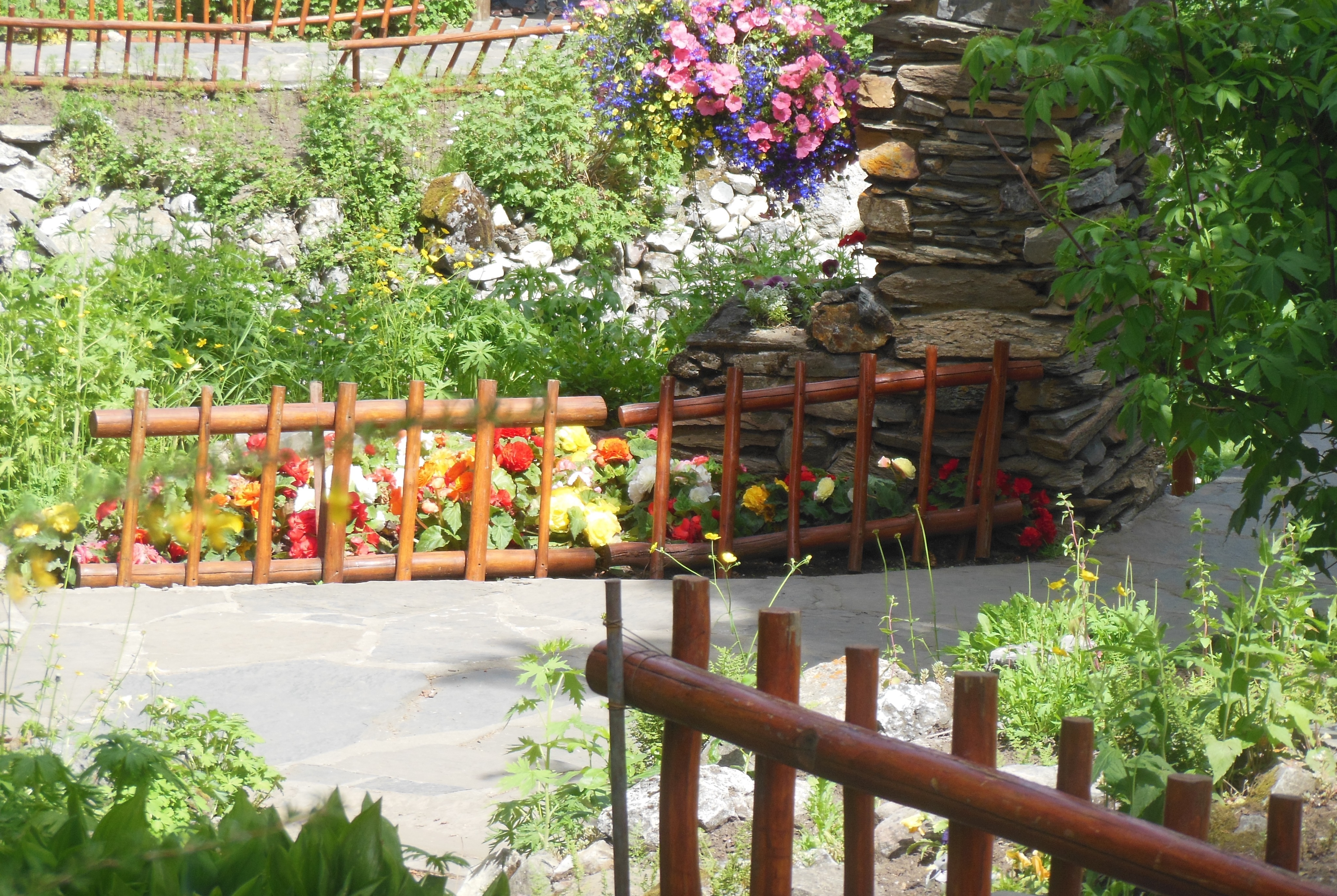
After lunch, we went to Cascades in Time garden located at the Parks Administration building. It was a relaxing way to spend part of the day. Here, at Cave and Basin, and in the back yard of our lodging, bloom the wild rose, which is Alberta’s official flower.

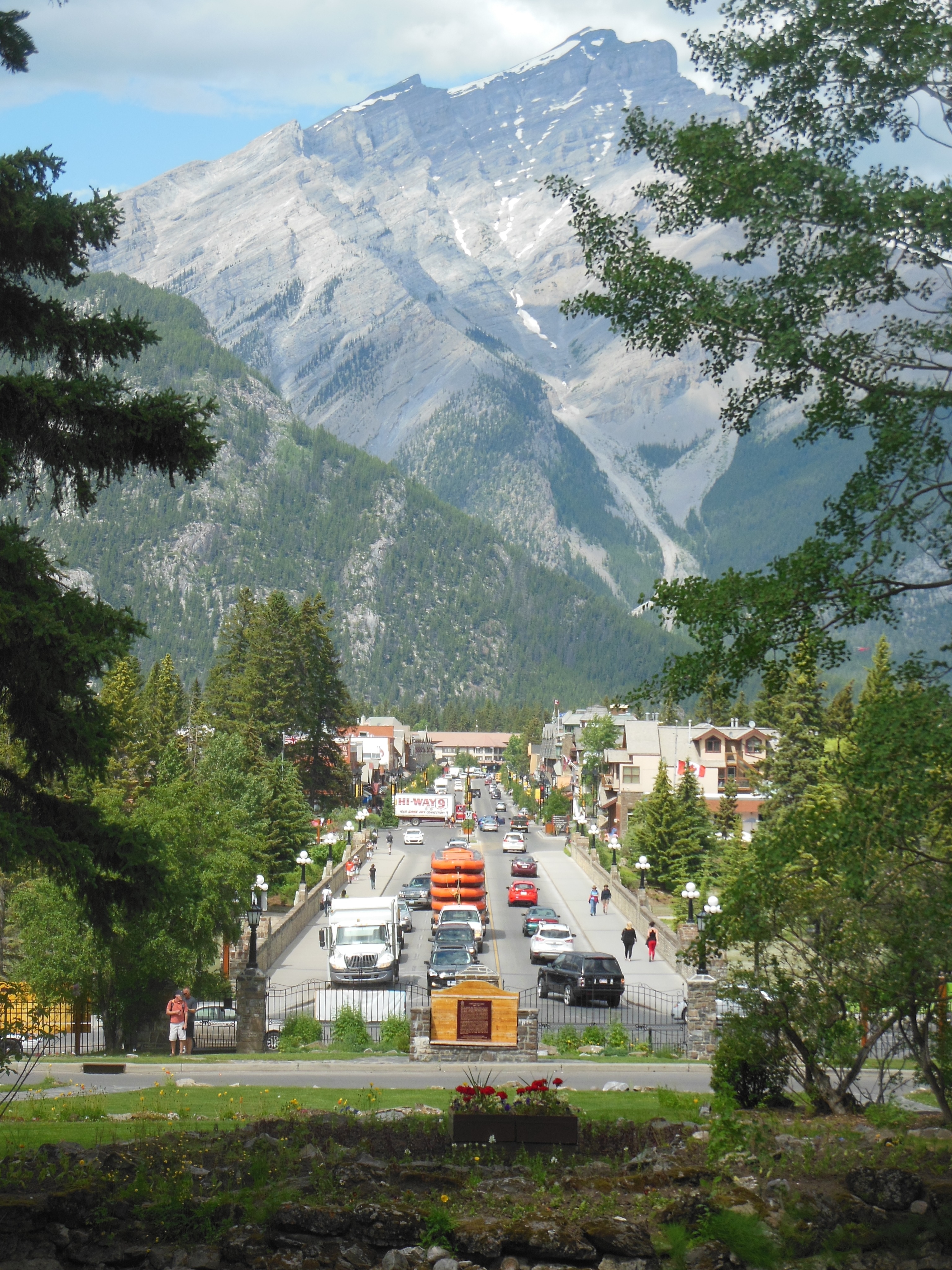
View of downtown Banff

View of downtown Banff


Cascade in Time Garden

Cascade in Time Garden


Our final stop was at the Hoodoos overlook. Hoodoos are tall, thin columns of rock formed because a protective cap of some nature drastically reduced its erosion in contrast to the surroundings. Bryce Canyon is a great example of numerous hoodoos. We saw a few in Colorado National Monument on Trip Four also.

Back in Canmore for dinner at a local restaurant, grocery shopping, and further planning. Tomorrow is tentatively scheduled for Kootenay National Park just over the border in British Columbia.

Another  shot of 3 Sisters mountains outside our door at 8:30 pm

Another shot of 3 Sisters mountains outside our door at 8:30 pm

Ed and Chris July 4 10:30 pm

Categories: road trip, travel | Tags: , | Leave a comment

Blog at WordPress.com.