Posts Tagged With: Anchorage Alaska

2019 Trip 5: Alaska: Sept. 7-8

Lake Hood Floatplane Base, Anchorage

Anchorage, AK. Sunday September 8

Saturday was the first day of consistent rain since we began this trip three weeks ago. Luckily Seward had a few options for indoor activities. The Alaska Sealife Center is basically an aquarium although one with a heavy research and conservation emphasis. The admission is pricey at $30 per person but again the Alaska Tour Saver Book came in handy with a buy one, get one coupon.
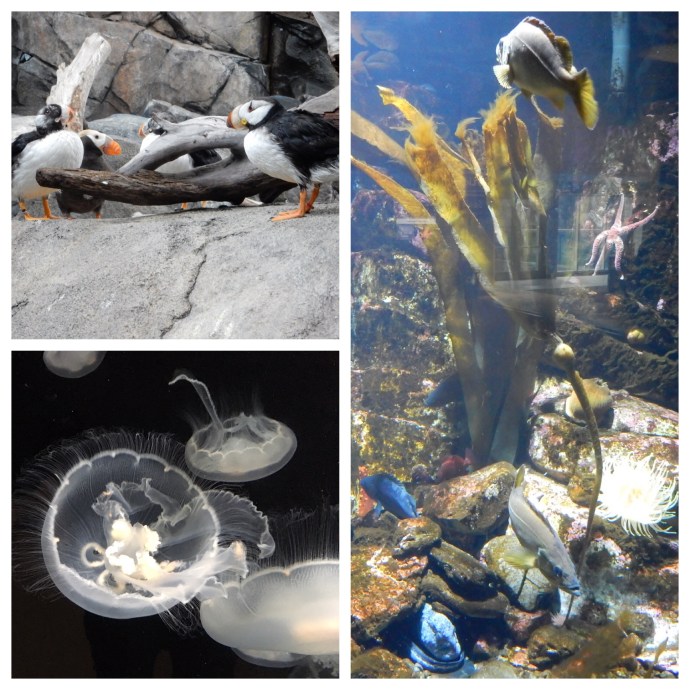
Alaska Sealife Center in Seward

Besides keeping us dry, the Sealife Center gave us an opportunity to closely observe some of the animals we have been seeing. The puffins, for instance, were much cuter when seen from a close distance. Although the fish were ugly, the underwater creatures like jellyfish, anemones, etc. are always cute and surprising.

Educating the visitor to climate change and pollution’s impact was a consistent, secondary theme presented by the Sealife Center. Given the importance of the Alaskan fisheries to the production of seafood supplies, the theme is timely. It has taken a while for the world to understand sustainable fishing, now it has to more fully practice it.

Two of the many murals in Seward Alaska

During our time in Seward, we had the occasion to enjoy the many murals painted on the walls of buildings. Seward has been proclaimed the mural capital of Alaska, with about thirty murals scattered around the community. Local artists paint local scenes and topics. I will admit some of our photos came while driving from place to place during rainy Saturday rather than walking all over town to observe them. Seward is not the first town we have visited using murals to make a statement about local history and pride, but whenever it is done, we have enjoyed it.

A second indoor stop was at the Seward Community Library and Museum. The museum is small but was a visual insight into life in early Alaska. Seward’s ice free port, Resurrection Bay is over 900 feet deep, had long been its claim to fame for fishing and shipping. The 1964 earthquake changed that into tourism as the destruction by the earthquake and tsunami wrecked the piers and railroad line. The lengthy rebuilding process and less severe destruction in Anchorage switched the shipping function to Anchorage harbor and to Anchorage’s airports.

Statue in Seward honoring the Iditarod Trail, dog and man

The library/museum hosts two half hour films daily which we viewed. The first recaps the severity and impact of the earthquake. The second discusses the Iditarod National Historic Trail. Not to be confused with the Iditarod race, the Iditarod Trail was a dog sled route that predated the railroad and provided a means of travel for the early gold rush. The almost 1,200 mile trail began in Seward and ended in Nome, utilizing many trails used by indigenous peoples. Later supplanted by the railroad and then highways, the Iditarod Trail was an important supply route in the early days of Alaska. It has been recognized as one of the first historic trails in the U.S. by the Bureau of Land Management.
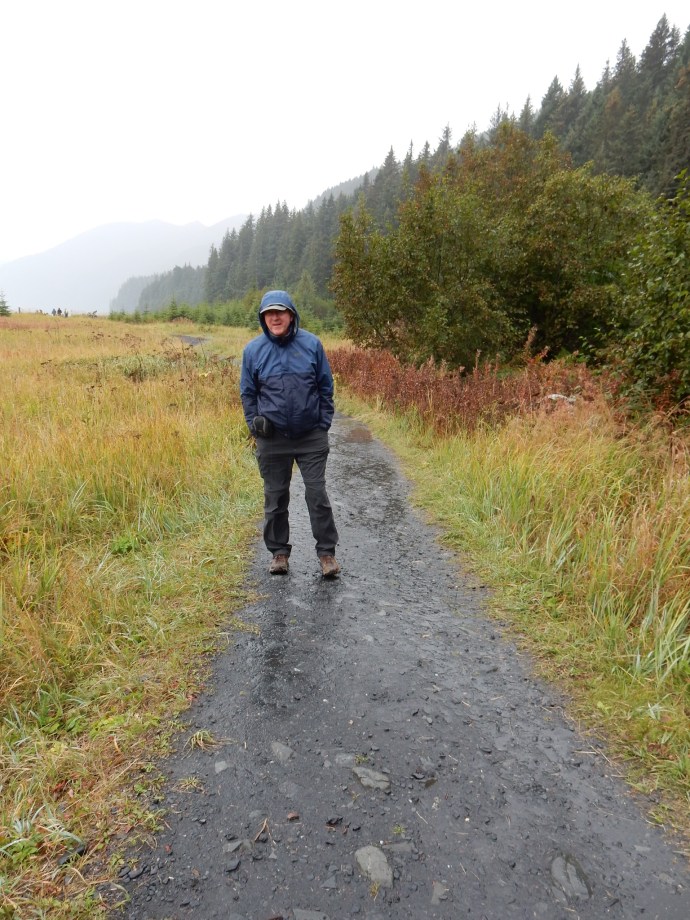
Fall in Alaska

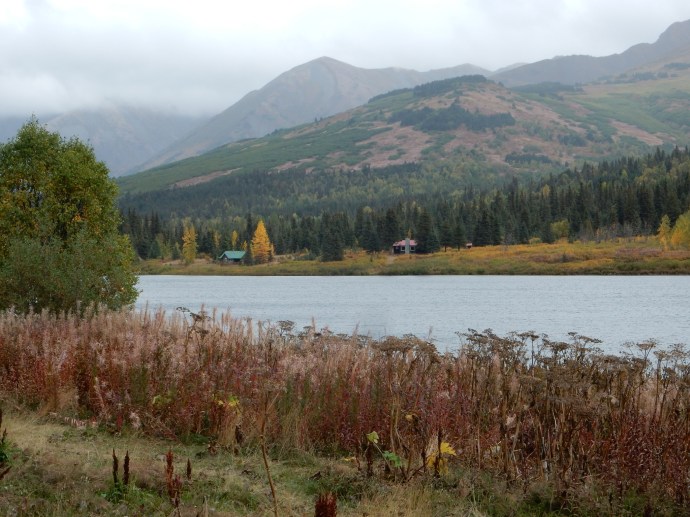
Fall in Alaska

After the videos, we left Seward for our last Alaskan destination, Anchorage. We will be here until Tuesday morning when we fly to Seattle. Sunday morning’s church service had another Minnesota connection as we met a woman who had recently been back there to visit family and had made sure she took in the Minnesota State Fair. It was a low-key day, still a bit drizzly. We walked along Earthquake Park, built around a portion of town that actually slid into Cook Inlet during the 1964 earthquake. The signs here confirmed the earthquake impact but that Anchorage was spared the tsunami that destroyed so much of Valdez and Seward.

Fixed wheel plane using road to reach runway at Lake Hood Floatplane base

The highlight of the day was time spent at Lake Hood Floatplane Base. This is the largest seaplane base in the world with over 2,000 take-offs daily. There is a runway for fixed wheel planes also so we were constantly turning our heads to determine if the sound of another plane’s engine came from the land runway, the water runway, or the skies. Besides large closed hangers, open storage of planes occurred at large marina like locations but also stacked alongside the roadway. Frequently a small building would be built alongside the planes along the roadway. Signs warn you to yield to planes on the road which we thought was cute until we actually observed a plane warm up and head down the road to the land runway.
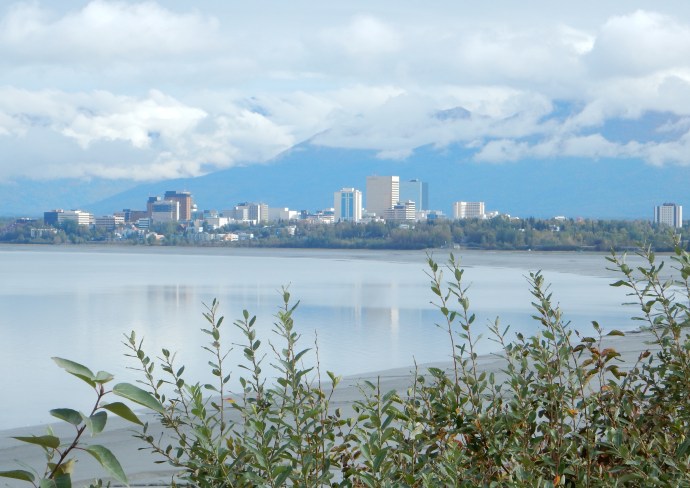
Anchorage Alaska skyline

Ed and Chris Monday September 9 4 AM

Categories: road trip, travel | Tags: , , , , , , , | Leave a comment

2019 Trip 5: Alaska: August 31

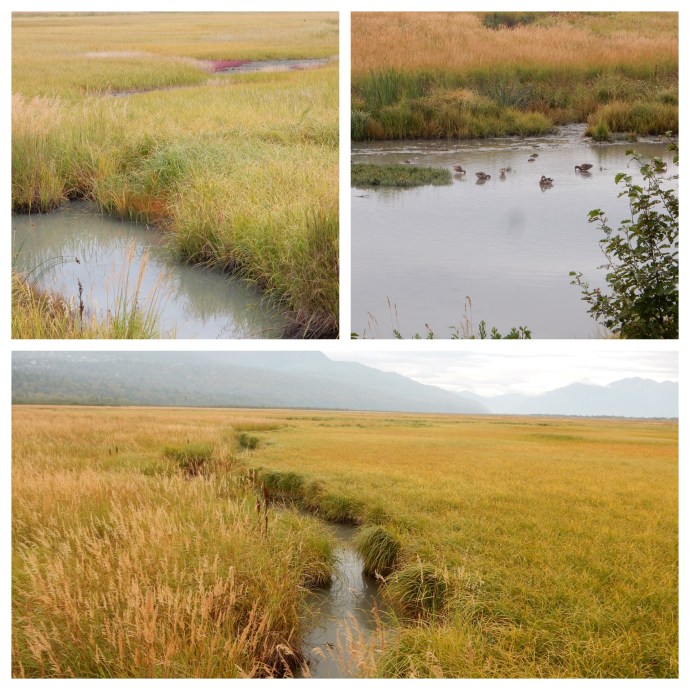
Potter Marsh, Anchorage Alaska

Anchorage, Alaska. Saturday August 31

While people back in Minnesota are thronging to the State Fair in record numbers, we are still exploring Alaska. Our current adventure has us in Anchorage for an alternate date, avoiding the town of Cooper Landing since the wildfire would not have allowed us to do the hiking and touring we had planned. It does appear that last night’s rain may make travel to Cooper Landing Sunday and Homer on Monday much more feasible.

Potter Marsh just south of Anchorage

The day started at Potter Marsh, a well-known and highly touted wildlife marsh just minutes from downtown Anchorage. The boardwalk at Potter Marsh takes you on several paths into the marsh. The marsh is partially salty with tidal influence. The day was windy with overnight rain and a promise of more rain to come. The birds did not cooperate. We saw a few ducks of some type and a magpie or two but that was it. The boardwalk was popular with humans; none seemed to be having better luck at finding birds.

Leaving the marsh, we went in to Anchorage and spent four hours at the Anchorage Museum. The museum is the largest in Alaska and focuses on Alaskan art, cultures, history, and science. We took advantage of two docent led tours although the one focusing on art was less worthwhile. The art collection focuses on images of Alaska and, where feasible, on art by Alaskans. Sydney Lawrence, probably the best known Alaskan painter, is heavily represented.

Chris and I were extremely impressed by the areas of the museum that focus on the various native groups of indigenous Alaskans. I used to wonder why there appeared to be so many different names; weren’t they all Eskimos or some such? The docent covered it nicely; as did James Michener in his novel “Alaska”. When the last period of glaciation occurred in North America and Europe, sea levels dropped dramatically exposing Beringia.

In very basic terms, Beringia is the land exposed by that sea level drop; extending from the McKenzie River in Canada to the Lena River in Russia. The Chukchi and Bering Seas were not seas then, but grassy steppes. Peoples from Asia migrated at many different times; each group of migration tended to end up as a different indigenous people. The indigenous peoples stayed in Alaska, developing their own history and culture since the glaciers in America and Canada blocked further southward movement until the glaciers receded, Each group developed according to its own locale; vast differences occur between the Tlingit people down along the southeast coast of Alaska from the Unangan people of the Aleutian Islands, as an example.

Child’s snowshoe hare parka

Somewhat similar to the museums in Flagstaff and in Fairbanks, each indigenous group is highlighted. The items in the displays have been selected by the elders of each group from items in the possession of the Smithsonian Institute. The exhibits are enhanced by video monitors that describe each specific item in greater detail. One can go online to see this at: http://Alaska.si.edu. A snowshoe hare child’s parka might only be made every few years; the snowshoe hare population has peaks and troughs. The peak years would produce enough hares for a parka, other years, no.

An example that the docent highlighted included a winter parka made out of the intestinal guts of seal and a winter parka made out of ground squirrel hides. Each used the wealth of resources Alaska makes available to them in the area in which they live. Each peoples had sufficient free time to create works of art, either for pleasure or for ceremonial purposes.

Of course, the coming of Russian and American explorers and settlers negatively brought disease and high rates of death, forced labor, forced loss of cultural habits, etc. Positively, it brought new materials and habits that made their life easier. The resources of the state were a prize to be extracted and shipped back to the parent country, whether that was furs, salmon, or gold and copper. The profits from the resources were not spent on local improvements.

A separate exhibit highlighted the past and current media representations of Alaskan indigenous peoples. “Molly of Denali”, a new PBS kids show, was highlighted as an example of improved accuracy in media presentation. Another exhibit demonstrated the role and importance of salmon. Hopefully we will not foolishly waste away that important resource in favor of indiscriminate mineral extraction. It took time for humans to acknowledge their overfishing of salmon threatened it with extinction. Reasonable safeguards and regulations seem to be keeping the salmon fisheries at a sustainable level.

AAA rates the Anchorage Museum a “Gem”, the top honor. We would agree and encourage others to take time to explore it in depth.

The rest of the afternoon was housekeeping; laundry, church, and dinner. Tomorrow, Cooper Landing.

Varied photographs by Fred Marchetanz of Alaskan scenes in the Anchorage Museum

Ed and Chris, Saturday August 31. 9 PM

Categories: road trip, travel | Tags: , , , | 1 Comment

Blog at WordPress.com.