travel

Our road trips around the U.S.

2016 Trip One, Chicago, Day Two

Chicago, April 12

Even good people do bad things, or dumb things, or patriarchal things, depending on your perspective. Our priority for the day was the Pullman National Monument here in Chicago. This National Monument is only one year old and it will take several years, and money, for it to be outstanding. However, the story it tells today is still impressive and enlightening.
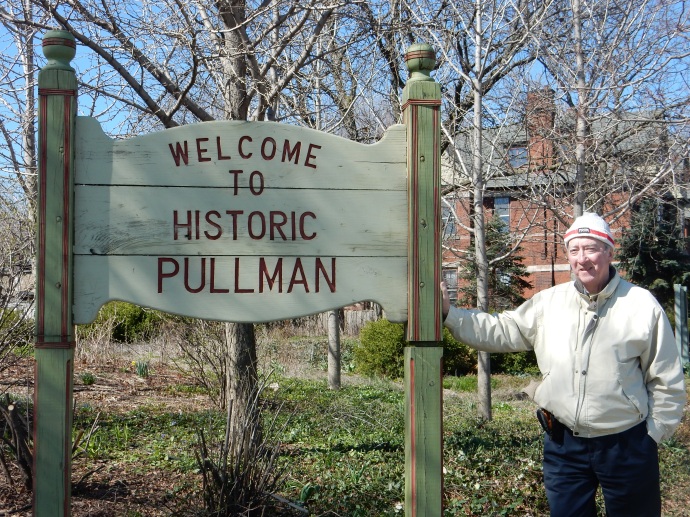
image

George Pullman was another of those American entrepreneurs of the 19th century that made a fortune through innovation and hard work. He took an idea gained from inconvenient and unpleasant rail traffic in the mid-1850s and produced a new type of railroad car that transported passengers in comfort. He was able to market it to passengers and railroads so that traveling in “Pullman” coaches was the only way to travel. Not only did he build the coaches, he rented them to the railroads and staffed them. In effect, the railroads outsourced their passengers’ comfort to the Pullman company.

In his desire to do things right, he believed that his product would be made better and more efficiently if his workers did not live in slums. He bought hundreds of acres of land south of Chicago (it is now part of Chicago proper) and proceeded to build his complete factory, a company town for his workers, a gas works to produce natural gas from coal, lumber yards to mill his own wood, rail yards to transport raw and finished products, etc.
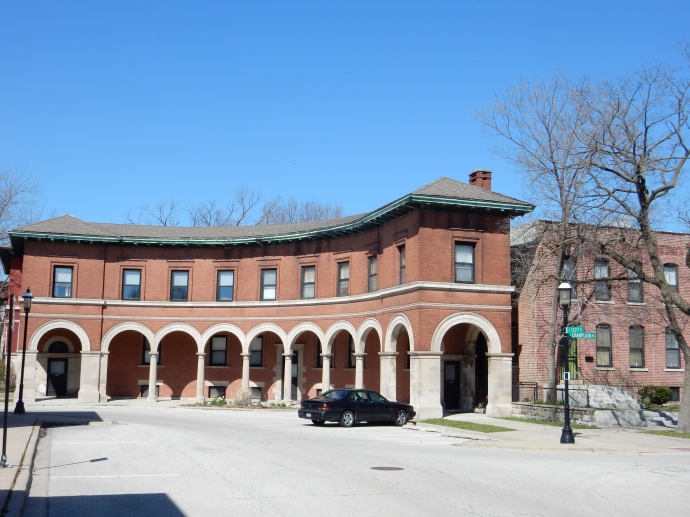
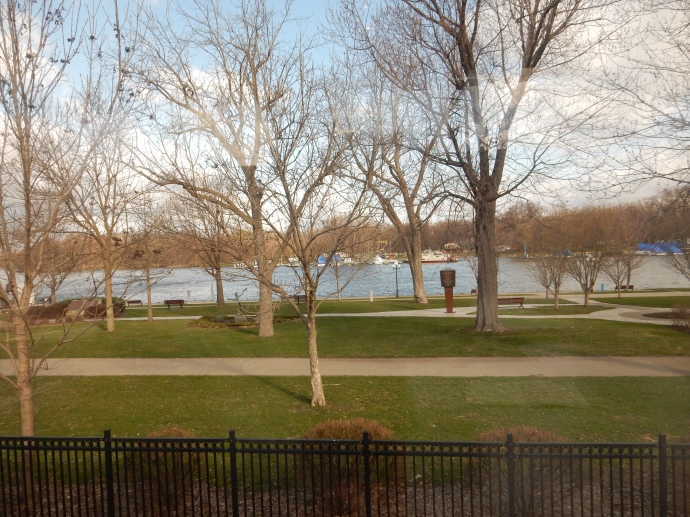
Part of historic Pullman
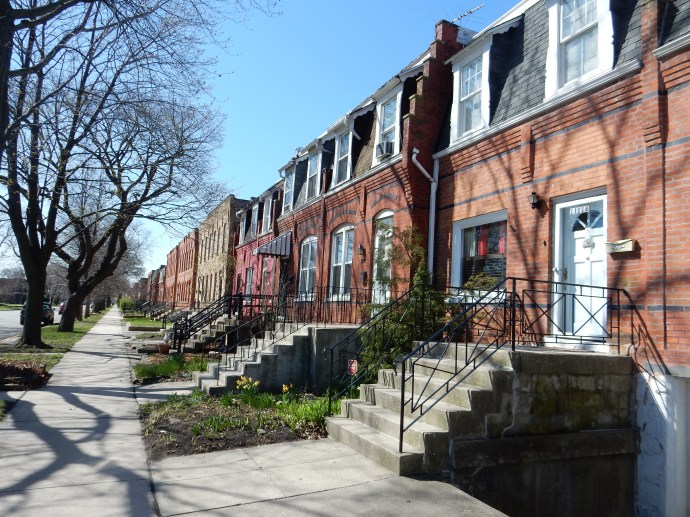
Part of historic Pullman

Part of Historic Pullman

Part of Historic Pullman

But it is the company town that we went to see in particular. The factory is no longer, most of the buildings were destroyed or derelict or razed and replaced with other large business operations. The last railroad car was made in 1981. The planned community was threatened with destruction and replacement with an industrial park but the residents rallied and it still exists.

However, our story has its focus on the 1880s and 1890s. The planned community provided a living environment vastly superior to the slums most factory workers lived in. The housing included indoor plumbing (rare for that time), schools, landscaped streets, shopping, a church, a hotel, parks and a lake. It was proclaimed the epitome of urban living and a model of enlightened manufacturers. Housing stock varied among apartments and a variety of row house options. Workers were paid in cash and not forced to shop at company stores like many other company towns. But beneath the veneer, the company was still in control and this lack of freedom would prove to be a problem. Most notably, homes could not be owned, only rented.

In 1893, the world and the U.S.endured a major depression, The Panic of 1893. Economies tanked, banks failed, companies went bankrupt, unemployment soared. Pullman’s orders for new cars plummeted. The company responded by cutting wages and workers and by accepting new orders for less than the cost of making the rail cars. Understandable from the owner’s perspective. However, Pullman owned the homes his workers lived in, and did not reduce the rent they owed. The frustrated workers’ grievance was ignored and led to the Pullman strike of 1894.

These early days of unionization were scary ones. Unions threatened owners long used to complete control. There were no safety nets for workers. The strikers were able to organize a nationwide boycott of railroads that used Pullman cars. Since most mail was transported by rail in those days, the mail delivery was severely impacted. Rail owners (very powerful people in those days) and the government reacted. Federal troops were called in to make sure trains were not hindered.
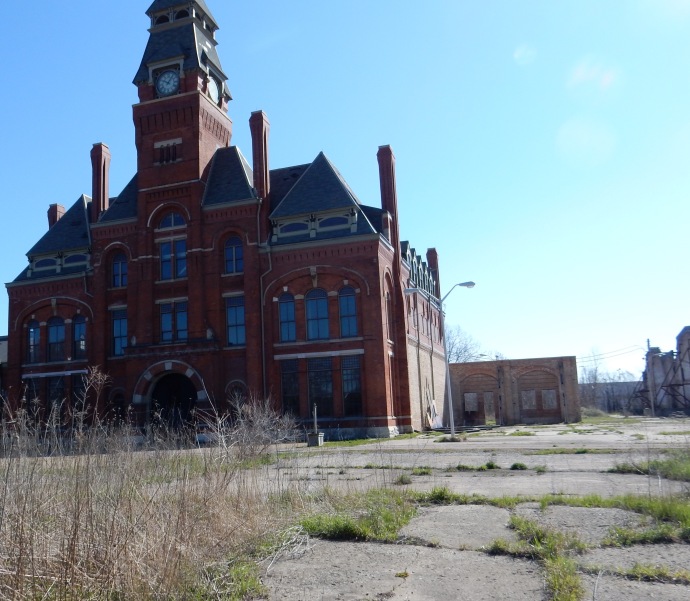
Pullman Administration Building-site of future Visitors Center

Pullman Administration Building-site of future Visitors Center

While there was no violence in Pullman itself, there was violence in other parts of the country. Strikers lost support and in a few months workers went back to work after pledging not to join a union. George Pullman remained aloof during the strike and made little or no effort to understand its cause. While no one was ever evicted from their home in Pullman city, the threat of eviction was always present. Relations between the company and workers turned frosty.

George Pullman died in 1897 and the Illinois Supreme Court ruled that his company charter did not really cover home ownership for his workers. Over time, properties were sold to individuals and the company town was no more. This experiment in social planning and manufacturing came to an end. (Side note: Exploration of other company towns is an interesting and worthwhile topic.)

George Pullman’s legacy lives on in many ways. Railroad cars were vastly improved. Town planning took a major leap forward. His use of African-Americans as porters in his cars opened up a major avenue of middle class jobs for black men-even though African-Americans were not allowed to live in Pullman. Those porter jobs led to the creation of the Brotherhood of Sleeping Car Porters, a union that played an integral role in the Civil Rights movement in the U.S. In addition, just as the strike was escalating in the summer of 1894, Congress declared Labor Day as a federal holiday.
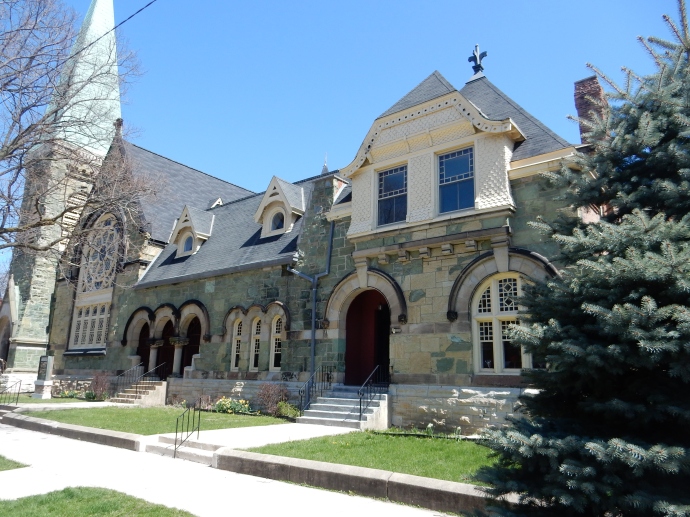
Greystone United Methodist Church

Greystone United Methodist Church

Pullman as a planned community no longer existed. Market forces determined its future. It was absorbed into the city of Chicago. However, as we walked the streets today, one can still see the homes neatly preserved. The area stands out as a more visually attractive neighborhood. The church is no longer Presbyterian but United Methodist. The hotel is in the process of being preserved. The Market is gone. The lake no longer exists but the Arcade Park is still a gathering spot. A new cafe (The Pullman Cafe) has opened (lunch was quite good). Some businesses have come and gone on the factory site. Recently a new business has developed; Gotham Grows has installed 75,000 SF of rooftop greenhouse to grow fresh produce.
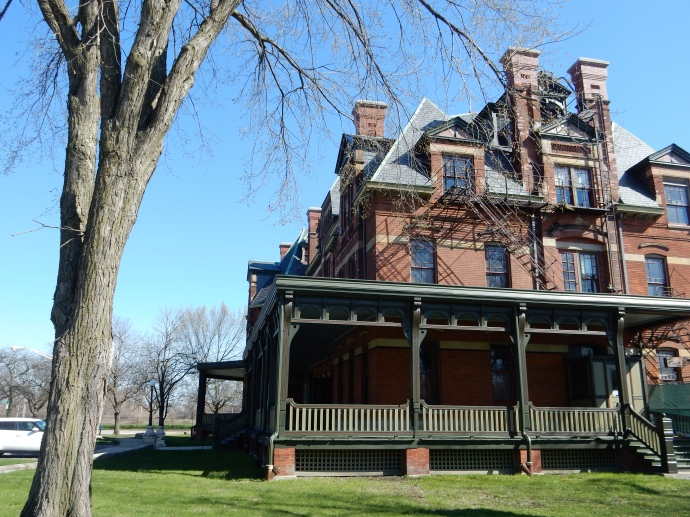
Old Florence Hotel under renovation

Old Florence Hotel under renovation

Plans are underway to convert the old Pullman Company Administration Building into the visitors center for the National Park Service with space for displays of Pullman cars. While these more dramatic surroundings are still a ways off, the area is still worth visiting with a compelling story line.

And yes, we did meet our two Amtrak lunch companions from Monday in Pullman. Our walk around Pullman introduced us to many residents who were always gracious and friendly. The custodian of the church was just leaving as we walked by and opened the doors for us to look inside and take pictures. The day was sunny, and while more warmth would have been nice, it was a pleasant day to re-learn some of our nation’s history. Over lunch in the Pullman Cafe, we wondered what George Pullman might have done differently to avoid the strike. To me, it seemed impossible. The same vision that led to the planning of the town led to an attitude that “Father Knows Best” and control of the town was essential to Pullman’s belief that he had created, and maintained, a marvel.

We took our first Chicago commuter ride, using the Metra line to get to Pullman and back. The site is only open from 11-3, and while we were there early to walk around the town, the Metra ride was easy since it was non-rush hour.

Walking around Chicago is always a pleasure, the architectural diversity and creativity is outstanding. We may have slowed down some workers as we walked slower,looked around more, and did not violate traffic laws as we explored the downtown. One intriguing store was a retail shop selling artworks (jewelry, photography, paintings, etc.) made by teenagers. Interesting concept but we did not buy anything.
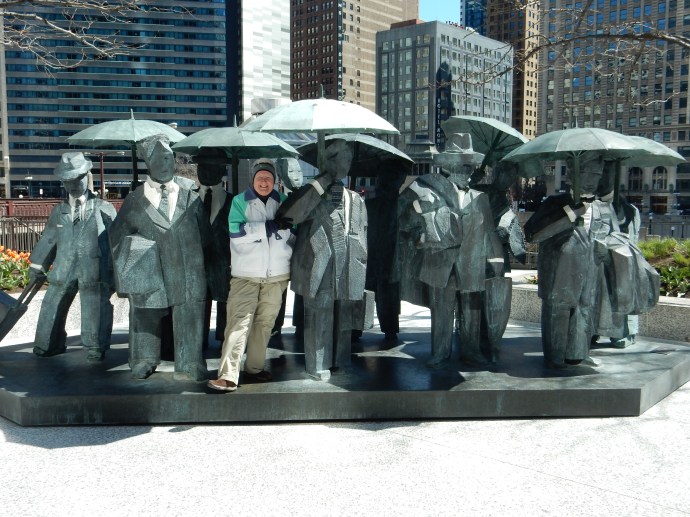
Walking around downtown Chicago

Walking around downtown Chicago

I have read that Chicago has over 7,000 restaurants. Our choice this evening was selected by my cousin Sue who met us for dinner at the Slurping Turtle for home made ramen. As Sue said, this is not your college ramen. It was quite tasty and we three had an enjoyable discussion and an opportunity to re-connect. Maybe it won’t be so long until we are back in Chicago again.
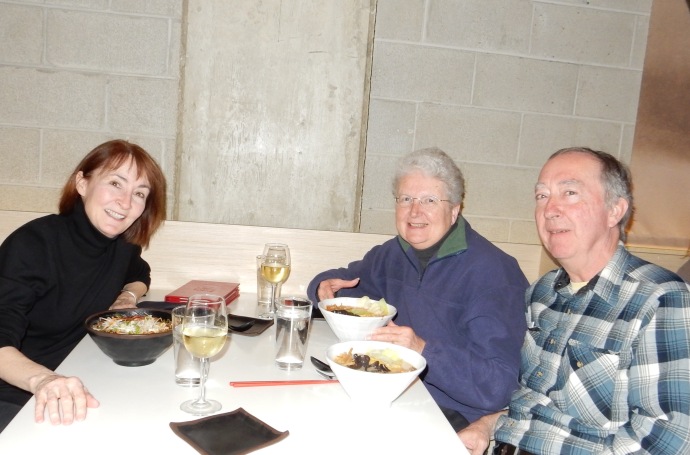
Sue, Chris and Ed and the Slurping Turtle

Sue, Chris and Ed at the Slurping Turtle

Ed and Chris
Chicago
10:15 PM
Categories: road trip, travel | Tags: , , , , , , , , | 1 Comment

2016, Trip One, Chicago, Day One

April 10, 2016 Chicago IL

The first trip of 2016 is a short one. We have been on hiatus for a while, enjoying one of Minnesota’s milder winters by staying home. We made one or two short, local MN trips during the winter along with numerous MN activities, and, we have replaced our 2001 Saturn (226,000 miles) with a new Subaru Legacy. However, the Legacy will have to wait a while for a road trip.

Ed and Amtrak observation car at Union Depot in St. Paul

Ed and Amtrak observation car at Union Depot in St. Paul

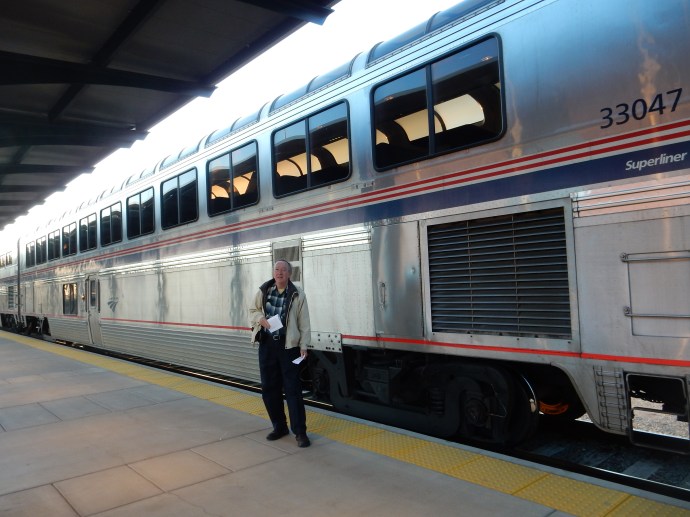
This first trip was planned for us to ride Amtrak as paying passengers, something we have not done for probably 15 years. As readers of this blog know, Ed is a volunteer with the Trails and Rails program jointly offered by the National Park Service and Amtrak. His journey only goes 2/3 of the way to Chicago and Chris does not participate. So, we put our money down and headed out early this morning.

The Empire Builder arrived in St. Paul an hour early (6:43 AM), a real departure from its 2015 on time (not) performance. We had arrived around 7 AM by bus and were able to board the train by 7:10 to get our seats. Seating is on your own, not assigned seats. We grabbed two coach seats, left our jackets at the seats and snagged a table in the observation car on the river side for most of the trip and with Chris seated looking forward (an important priority). The Empire Builder left Union Depot in St. Paul at its scheduled departure time of 8 AM for the 8 hour trip to Chicago. We had three main goals; a successful train ride, a journey to the new Pullman National Historic Site in Chicago, and a visit with my cousin Sue.

Red Wing MN and the Mississippi River

Red Wing MN and the Mississippi River-not including the eagles

Goal one has been accomplished. Both of us enjoyed the ride. The MN portion (obviously) is more scenic than the WI portion as it parallels the Mississippi River most of the way. Trees are just beginning to leaf out although Chicago is a bit ahead of us on that score. Birds were everywhere, boaters were out on the river. In Red Wing there must have been 20 eagles roosting in trees in a small area near the local Marina. (Well maybe a few were turkey vultures but most were Eagles.)

I did not give my Trails and Rails “spiel” to Chris but instead noted the topics I present in various areas along the route. Most of the topics she is familiar with, having heard me discuss them, or going to some of the same lectures I attended, or read the same books.

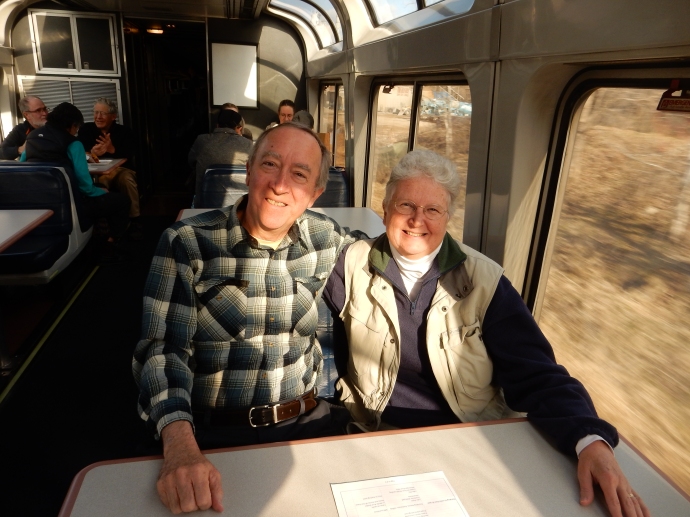
Ed and Chris in the observation car

Ed and Chris in the observation car

The observation car was our home for 2/3 of the ride, with its expansive windows which are great for viewing up and down. The coach seats are comfy with plenty of leg room. The train was not crowded today and empty seats were frequent. The observation car, unlike in the summer, was never full.

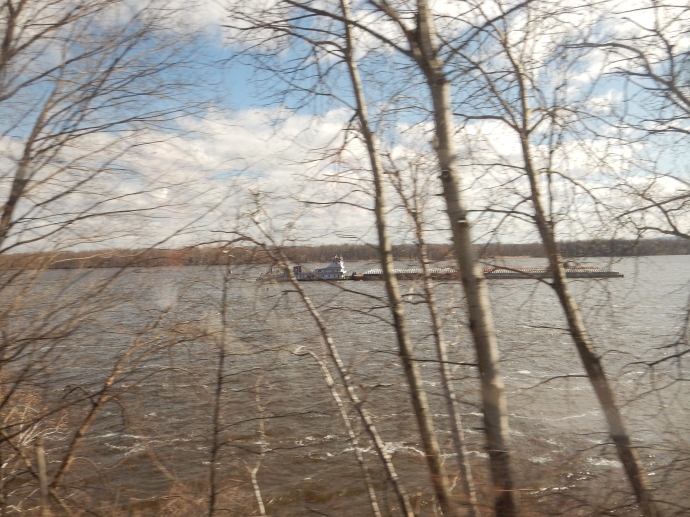
A tow along the Mississippi River

A tow along the Mississippi River

We spent more time observing than socializing. We did manage some conversation with a number of Canadians, from Saskatchewan and Winnipeg. Our lunch companions (you are seated to fill up tables and thus you automatically meet others) were from just north of Seattle. The two women are fans of National Parks. Their week-long journey will stop at numerous NPS units and will start off tomorrow at Pullman National Historic site. We may see them again. We swapped stories of parks we have seen and have yet to see. While the lunch menu is brief, our burgers were quite tasty.

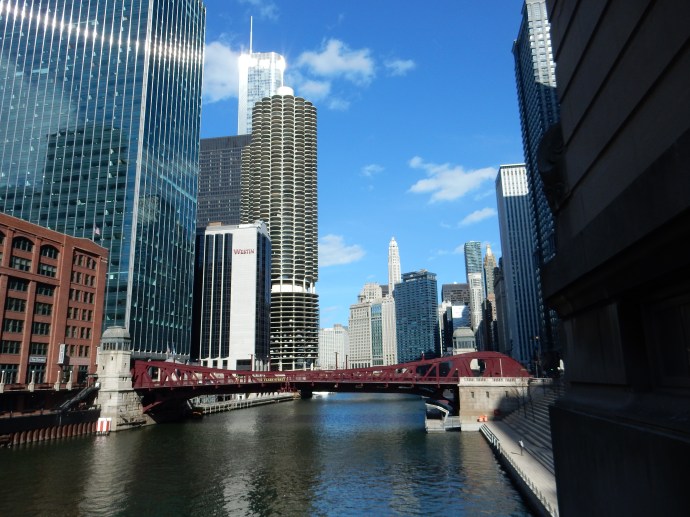
Chicago River on our walk to the hotel

Chicago River on our walk to the hotel

Union Station in Chicago (the name is quite similar to Union Depot in St. Paul)is large with many Chicago commuter trains as well as Amtrak trains that head out all over the country. We decided to walk to our hotel, about 1.5 miles away. It was sunny and 48 degrees F-although Chicago is always windy with the numerous skyscrapers. We are staying at a Hampton Inn in the River North district.

Dinner was at Andy’s Jazz Club, with Dana Hall group playing.

Ed and Chris April 11, 9 pm
Chicago

Categories: road trip, travel | Tags: , , , | 4 Comments

2015 Trip Six, The Great Smoky Mountains, Oct. 25-26

Dalton, GA Oct. 26

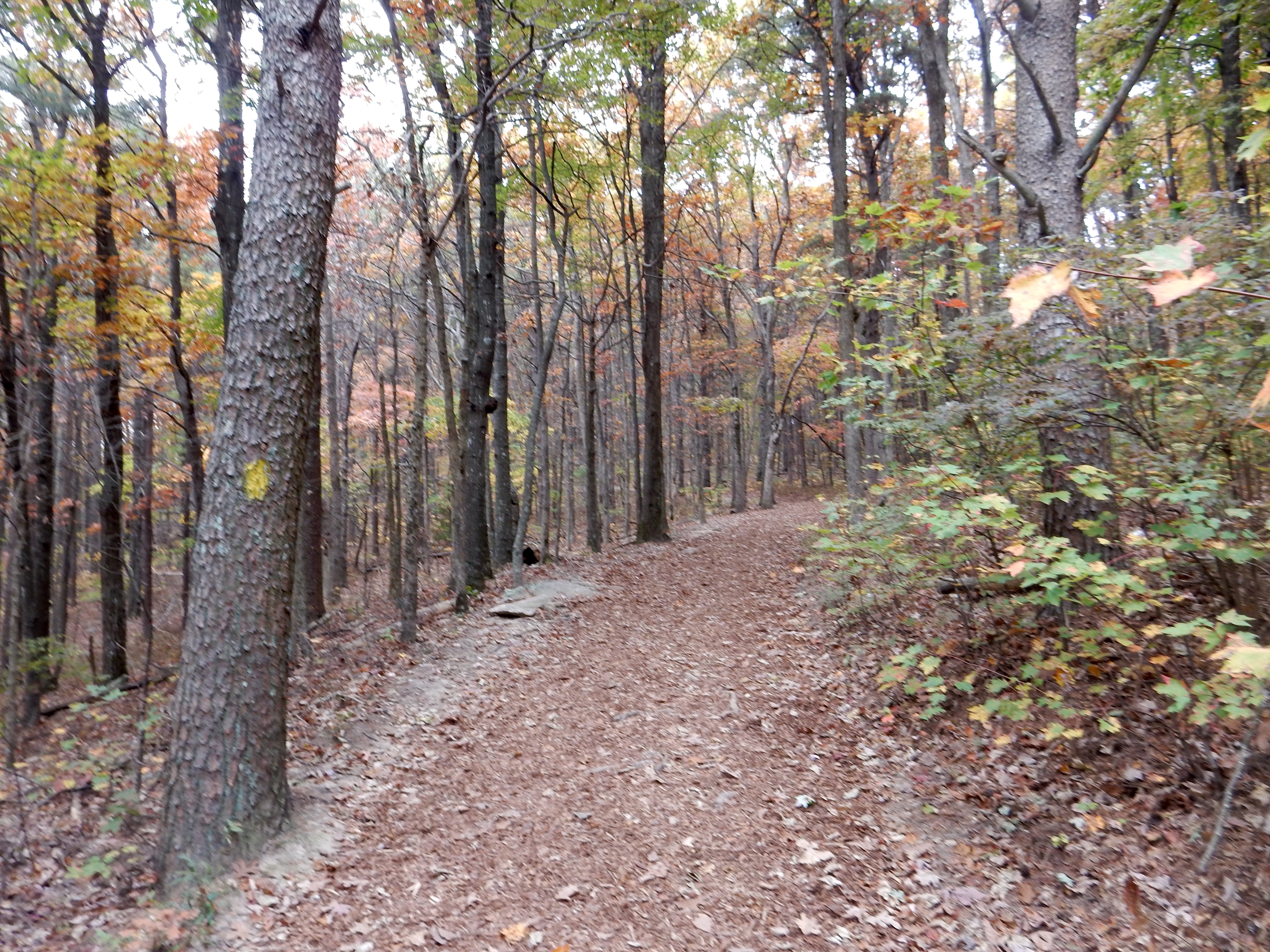
The deceptive path that sucked us in Fort Mountain State Park GA

The deceptive path that sucked us in

The smooth path of mulched wood chips along the trail sucked us in. We were at Fort Mountain State Park in northern Georgia. The park is noted for its overlook views and for a mysterious stone wall built around 500 AD. No one knows for sure who built the wall or why. But the path looked so nice that it seemed a great hike, sure to be easy on the feet and with few tripping hazards.

The view from Fort Mountain overlook

The view from Fort Mountain State Park in GA overlook

But we were wrong. Within a few hundred feet the mulched path gave way to the usual beaten down path littered with rock outcroppings and tree roots. Not that it was any different from so many other paths, it was just that the first hundred feet were so comforting and inviting. The mile long trail goes up and then down 200 feet in elevation, nothing dramatic. The overlook provides vistas of the Chattahoochee National Forest and the valleys down below. The fall colors were still vibrant in many places, going brown and bare in others. The weather continued as Saturday, overcast and cooler.

One view of the stone wall at Fort Mountain state park in GA

One view of the stone wall at Fort Mountain state park in GA

The stone wall runs east and west for 850 feet and ranges in height from two to six feet. It is constructed of loose stones without mortar or other sealing material. Most theories consider the wall built by some tribe of Native Americans but that is as unknown for certain as is its purpose, defensive or ceremonial.

We came to Fort Mountain as we are wrapping up this traveling road trip. Hayesville North Carolina was left behind Sunday morning with warm memories of another Evergreen couple who took us in and provided friendly lodging and conversation. The far western portion of North Carolina and Georgia continued the forested mountains of the Appalachians. Our journey continued on the Ocoee Scenic Byway in the Cherokee National Forest and, before Fort Mountain, brought us to the Ocoee National Whitewater Center in southern Tennessee.

Ocoee Olympic Whitewater course

Ocoee Olympic Whitewater course

The Whitewater Center began as part of the Atlanta 1996 Olympic Games to host the canoe and kayak slalom competitions. It is the only Olympic whitewater course built on a natural riverbed. The river was “enhanced” with man-made rocks and re-arranged stream beds and channels. The course is 1/4 mile long and was built by the U.S. Forest Service. The water comes from the TVA dams on the river which still provide power and flood control. On days that the dam releases water for recreational whitewater adventurers, the TVA is reimbursed for lost power revenue by a surcharge on the whitewater adventurers. When we were there on Sunday, the water was relatively low and kayakers were only doing their thing on a lower stretch of the Ocoee River past the Olympic course.

The Ocoee River has a sorry past. It is the drainage river of the Copper Basin in Southern Tennessee. Copper was discovered here in the 1840s and smelting and mining continued until the 1980s. The mining and smelting process resulted in forests being clear-cut, heavy metals deposited into rivers, and acid rain produced which furthered the devastation of the environment until almost a moon like appearance was the result. Some called the Copper Basin the largest man-made biological desert in the world. Revegetation and reclamation began in the 1930s and still continues to this day.

The Chief Joseph Vann House in GA

The Chief Joseph Vann House in GA

Our third stop was on the Trail of Tears, that forced removal of the Cherokees from their lands to reservations in Oklahoma in the 1830s. The house of James Vann is a restored GA Historic site. Vann was an influential and wealthy Cherokee. He sponsored the Moravians to come to the area, settle, and help educate Cherokee children. His son Joe Vann inherited the bulk of his father’s estate in 1814 and grew it even further. Joseph Vann evidently had a total of 8 consorts and 9 children. Cherokee life was matriarchal and women and men did not consider themselves bound to one spouse forever.

In 1832, the state of Georgia passed new laws that resulted in the loss of Cherokee lands which were given to white settlers through a lottery system which Cherokee were not allowed to enter. Joe Vann moved to Oklahoma, continued as a successful businessman, and eventually died, along with 60 others, in a boiler explosion on his steam riverboat, the Lucy Walker, in 1844. There are still Vann descendants in the area, along with others scattered throughout the U.S.

Interior room with original paint colors restored at Chief Joseph Vann Historic Site in GA

Interior room with original paint colors restored at Chief Joseph Vann Historic Site in GA

A wonderful state park ranger gave us a tour of the restored Vann estate. At one time, Vann controlled 800 acres, owned over 100 African slaves, and ran several taverns, sawmills, a grist mill, orchards, etc. His home was restored and still has its original woodwork in many rooms. No original furnishings exist.

This is likely to be our last post of this trip. Originally we planned to visit two Civil War battlefields. Chickamauga and Chattanooga National Battlefield Park to be visited on Monday and Kennesaw Mountain Battlefield Park on Tuesday. Chickamauga was the first national battlefield site, created five years before Gettysburg. Chickamauga was a Confederate victory in 1863 but not decisive enough to stop the Union march to Atlanta and then to the sea. We did make it to the visitor center today (Monday Oct. 26) and toured part of the battlefield before calling it quits.

Last night, after dinner, Chris tripped and fell in a parking lot. It resulted in five hours in the emergency room, a broken bone in her wrist, a temporary cast and sling. While not so serious as to make us fly home immediately, it meant we really are not in a mood to spend extensive time visiting historic sites. This is our third trip to be affected by some sort of injury or ailment. Tuesday we will be driving to Atlanta and then flying home.

Ed and Chris Oct. 26 7:15 PM
Categories: road trip, travel | Tags: , , , , , , , | 1 Comment

2015 Trip Six, The Great Smoky Mountains, Oct. 24

Hayesville, NC Oct. 24

Driving through North Carolina on a stretch on easy driving.

Driving through North Carolina on a stretch on easy driving.

Today, we lost the blue skies but gained a gourmet meal in a gas station. That was a fair trade-off.

The day started with a second effort to find the Tryon International Equestrian Center. Thursday’s post mentioned we tried to find it on our way up from Spartanburg, but got lost. Well it turns out our Evergreen hosts in Flat Rock went there Friday and gave us new directions and new enthusiasm to look again. The effort was worth it.

Tryon Equestrian Center

Tryon Equestrian Center

Tryon is a huge, new equestrian center. Tonight (Saturday) they are hosting a Grand Prix event for jumpers. They will have 800 horses in their stables this weekend. We did not count but Tryon must have a dozen rings for practice and for competition. The main ring has permanent seating with a jumbo screen similar to what you see at baseball and football stadiums. Vendors are housed in new wood cabin type shelters.

Tryon Equestrian Center

Tryon Equestrian Center

This morning we were able to observe some practice rounds and competitive events for amateurs. I never did ask if that meant amateur horses or amateur riders. In any event, it was enjoyable and impressive. We were able to walk around for free as long as we stayed out of the stables-which we did avoid. If we were not traveling, we would have stayed longer.

Whitewater Falls North Carolina

Whitewater Falls

The two hours it took to reach Tryon and to walk around it put a dent in our planned waterfall visits. Our road journey would be on our usual curvy, hilly, two lane roads so we prioritized. Whitewater Falls in the Natanhala Forest is supposedly one of the tallest falls in the East. Well, we have read similar claims before this but Whitewater was a gem. A tall falls gushes over the rocks down into the gorge below with forested woods all around. The fall colors were out in great force. A shining sun with blue skies might have made for slightly improved photos but we were impressed. The other people visiting the falls were equally positive. Everyone was in a friendly mood with temperatures in the high 50s and gorgeous fall colors. We conversed with numerous people, including a man raised in Breckinridge MN.

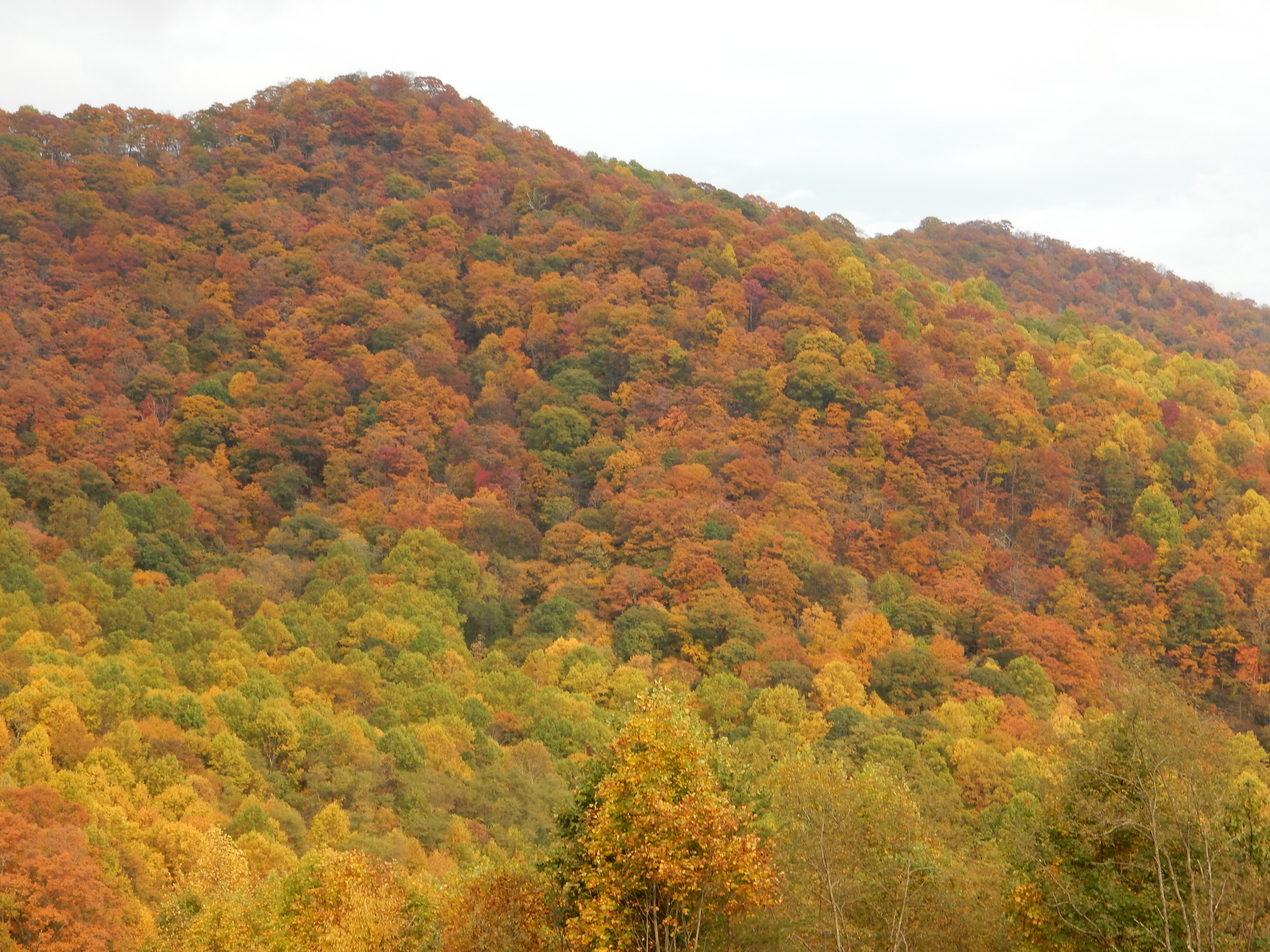
Along the drive in North Carolina

Along the drive in North Carolina

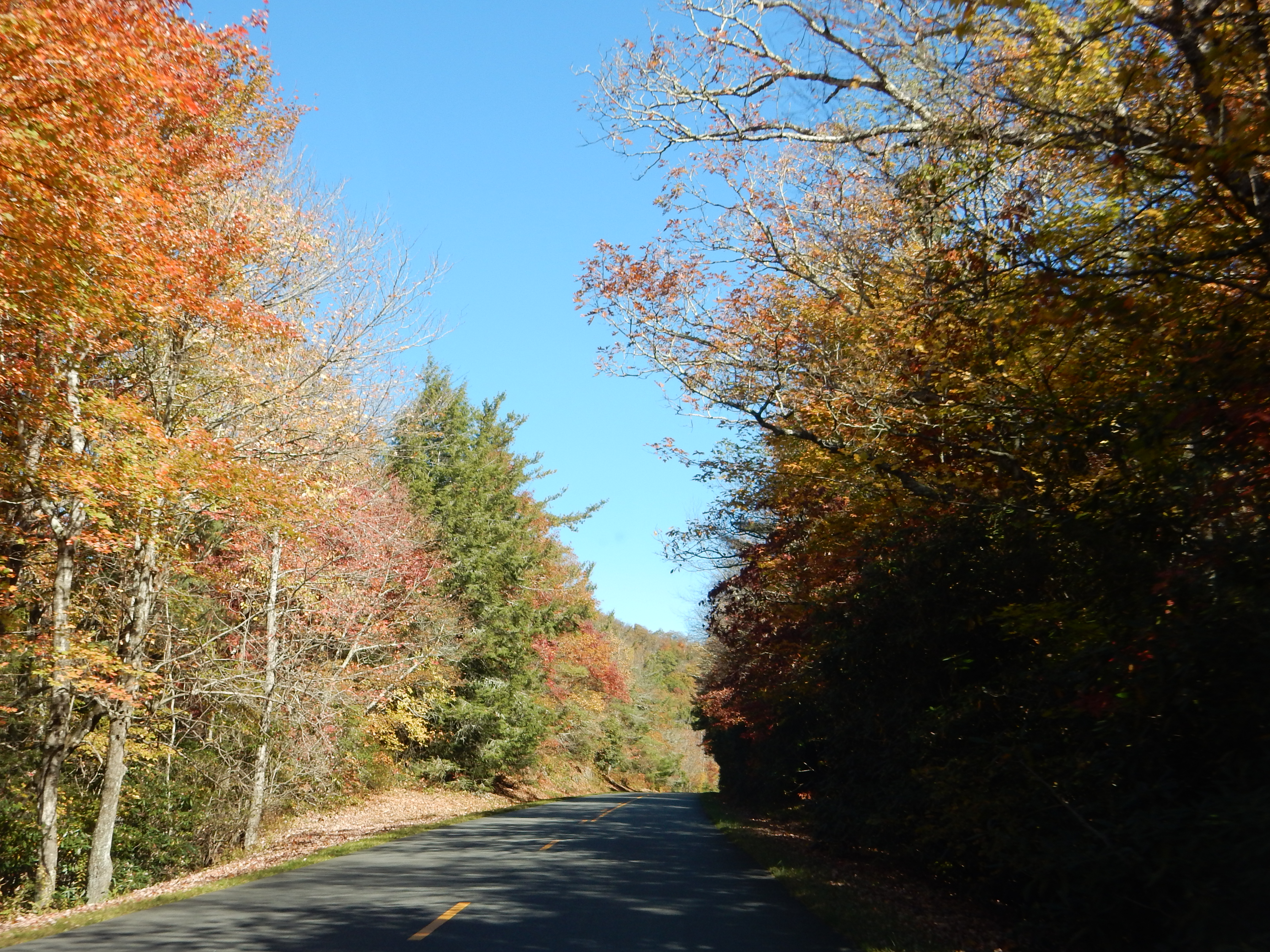
Today was probably the single day with the greatest concentration of fall colors. The reds were particularly numerous and vibrant. There are enough fir trees to provide green backdrop to the yellow, orange and red leaves. Everybody has their own opinion but most seemed to think that this fall the colors were later than usual and more vibrant than usual.

Along todays drive in North Carolina

Along todays drive in North Carolina

The drive through this western part of North Carolina has been simply gorgeous. This area, along with the other mountainous parts of North Carolina, have become the site of second homes and retirement locations. Some are quite expensive. We drove through Highlands, Cashiers, and Sapphire Springs where it seemed you just did not fit in if you were not driving a BMW or Mercedes. Okay, a slight exaggeration but certainly the greatest concentration we have seen. Highlands struck us a succesful small town tourist destination.

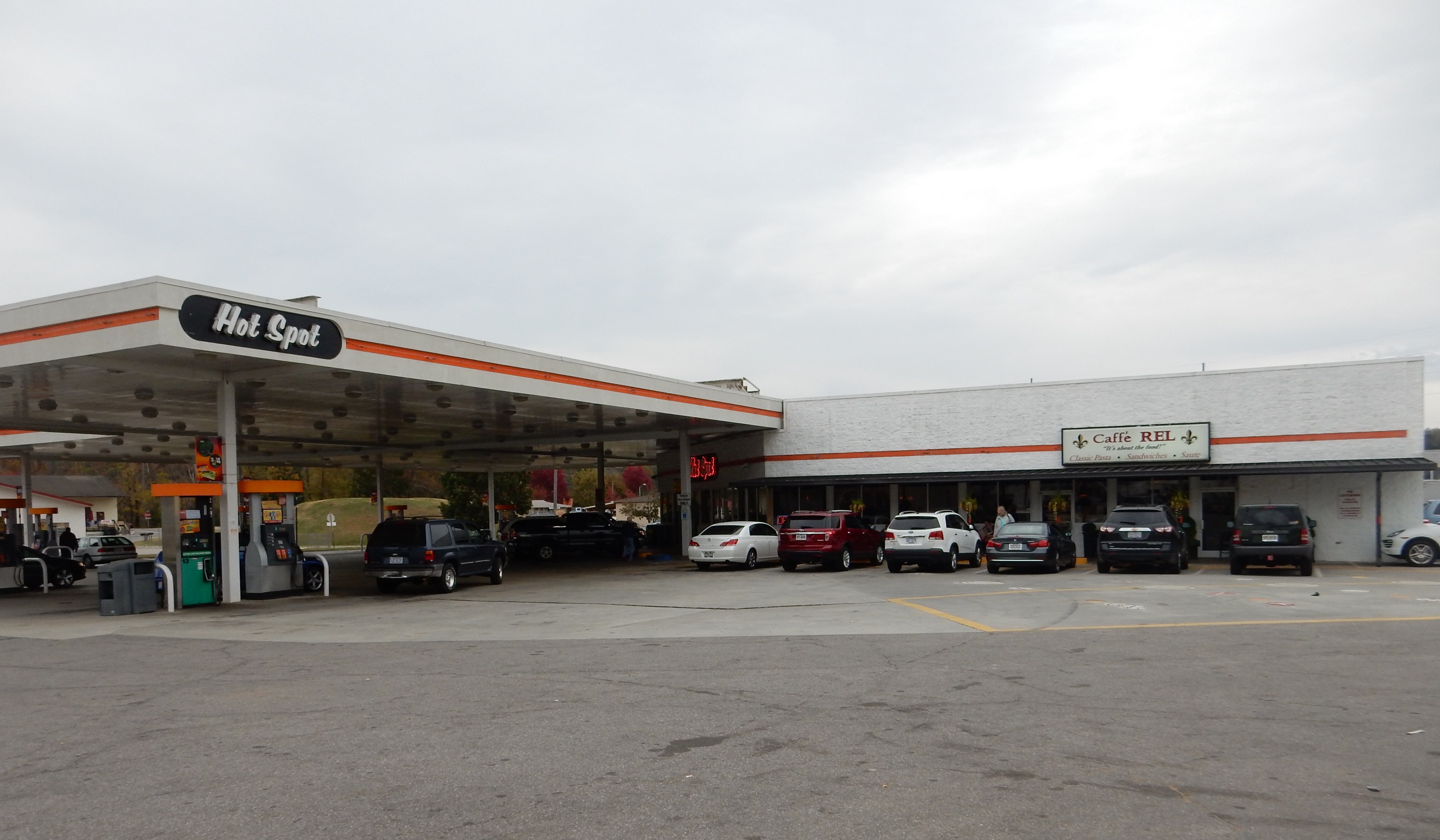
Cafe Rel in Franklin NC

Cafe Rel in Franklin NC

Lunch was in Franklin. Now, we had spent the night here a week ago. That day we ate by our hotel. Today we had our main mid-day meal at Cafe Rel, the meal mentioned in our opening paragraph. The cafe is in a local gas station. (Long time readers may remember Whoa Nellie, the cafe at the end of Yosemite’s Tioga Pass in Lee Vining CA similarly located in a gas station.)

There was a wait for a table at 3 in the afternoon but it was worth it. I had salmon and Chris had an English pot roast. Both were excellent. Even the prices were reasonable. How lucky could we get?

Back on the road, we reached our Evergreen hosts in the little town of Hayesville. Our hosts have roots in St. Paul and Hudson WI so we had many shared memories and connections. The Tennessee Valley Authority constructed a dam in Hayesville in 1942 for flood control, power generation, and navigational control of water depth on the Tennessee River. Their home overlooks the lake formed by the dam. Did you know the Tennessee River contributes as much volume to the Ohio River as the Missouri does to the Mississippi? True fact.

North Carolina mountains

North Carolina mountains

Tomorrow will be a day of mountain and forest driving ending up in north Georgia. It should not involve as many driving hours though. The trip is almost over. Tuesday night late we should be back in Saint Paul with this road trip behind us with many travel memories to cherish in future days.

Ed and Chris Oct. 24 10:45 PM
Categories: road trip, travel | Tags: , , , | 1 Comment

2015 Trip Six, The Great Smoky Mountains, Oct. 22 and 23

Flat Rock, NC Oct. 22

Who knew? Not us. Even with our travel planning in advance of each trip, we did not know that there were two pieces of the Berlin Wall in Spartanburg, SC. A local travel brochure mentioned it; evidently Menzel, the German manufacturer of textile manufacturing equipment, set up their U.S. operations in Spartanburg. After the fall of the Berlin Wall in 1989, they were able to obtain two portions of the wall in remembrance of the hardships endured and the American support of the Germans.

Two sections of the Berlin Wall in Spartanburg SC

Two sections of the Berlin Wall in Spartanburg SC

We found it fairly easily. We actually got directions from two Spartanburg police officers who were having breakfast with us at our B and B. The sections are about 12 feet high and maybe 3 feet wide. One has Reagan’s statement: “Gorbachev take this wall down”. The other has Kennedy’s statement: Ich bin ein Berliner”. Very moving.

Putting Spartanburg behind us, we returned to North Carolina. Chris had found a tidbit about a tall waterfall where the journey to find the waterfall was a big piece of the reward. Well, I’ll tell you; it was certainly a journey, not so sure about the reward.

While the road was paved, once again it was VERY steep, curvy, and narrow. One third of the way up, the road was completely blocked by Asplundh tree trimming equipment with no ability by the crew to forecast when we could continue the journey. The crew directed us to a road through a private housing community that was similarly steep, narrow, and curvy. Eventually we found the waterfall (not overly impressive) with no space to pull over so Chris snapped a quick photo and we continued up to the top of the mountain–and, of course, back down again.

A third stop was going to be an equestrian center in Tyron but we could not find it so we gave up and headed for Flat Rock. Our primary goal in Flat Rock was to see the Carl Sandburg Home National Historic Site. Now some of you, my daughters possibly included, could not tell you who Carl Sandburg was. So I will summarize. Sandburg (1878-1967) was a writer, poet, historian, and collector of American folk songs. He won the Pulitzer Prize three times, once for his history of Lincoln and twice for poetry. Sandburg spent years working odd jobs around the country and is credited for understanding the pulse of the everyday American.

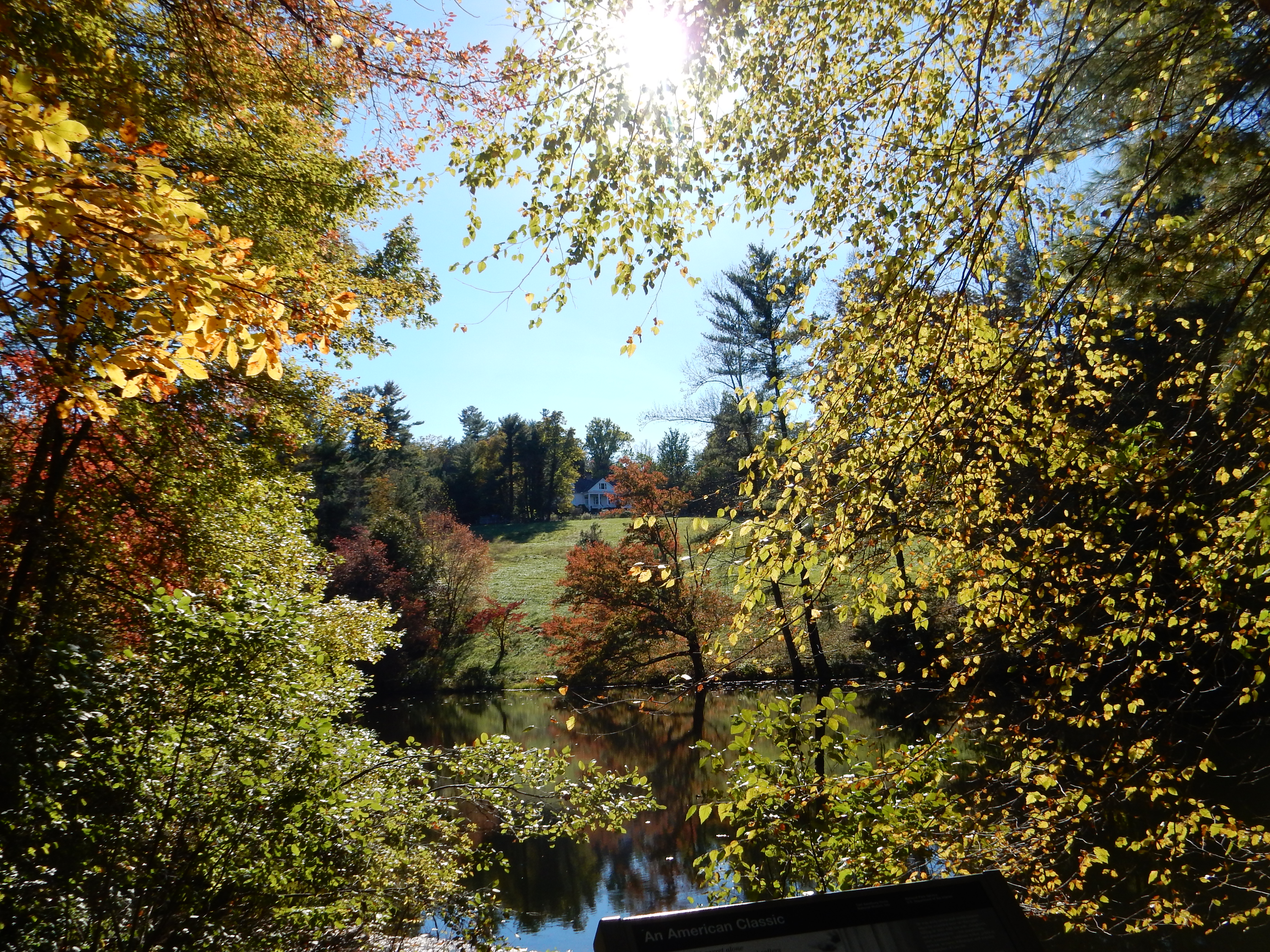
A view of Connemara from the lake

A view of Connemara from the lake

Sandburg and his wife Lillian moved to this estate, called Connemara, in Flat Rock in 1945 where he was 65. He completed one-third of his work after age 65 while living here at Flat Rock. Lillian was a force in her own right. Even though she was a college graduate and a teacher, she gave up those occupations to support Carl’s writing. However, she picked up raising goats, and at the estate, she was a prized goat breeder. She had nationally acknowledged champion goats and people frequently visited her, not knowing her husband was a Pulitzer Prize winning writer. Lillian would have the new-born goats bottle fed so they would relate well to their human handlers. (Note well Heimel family.

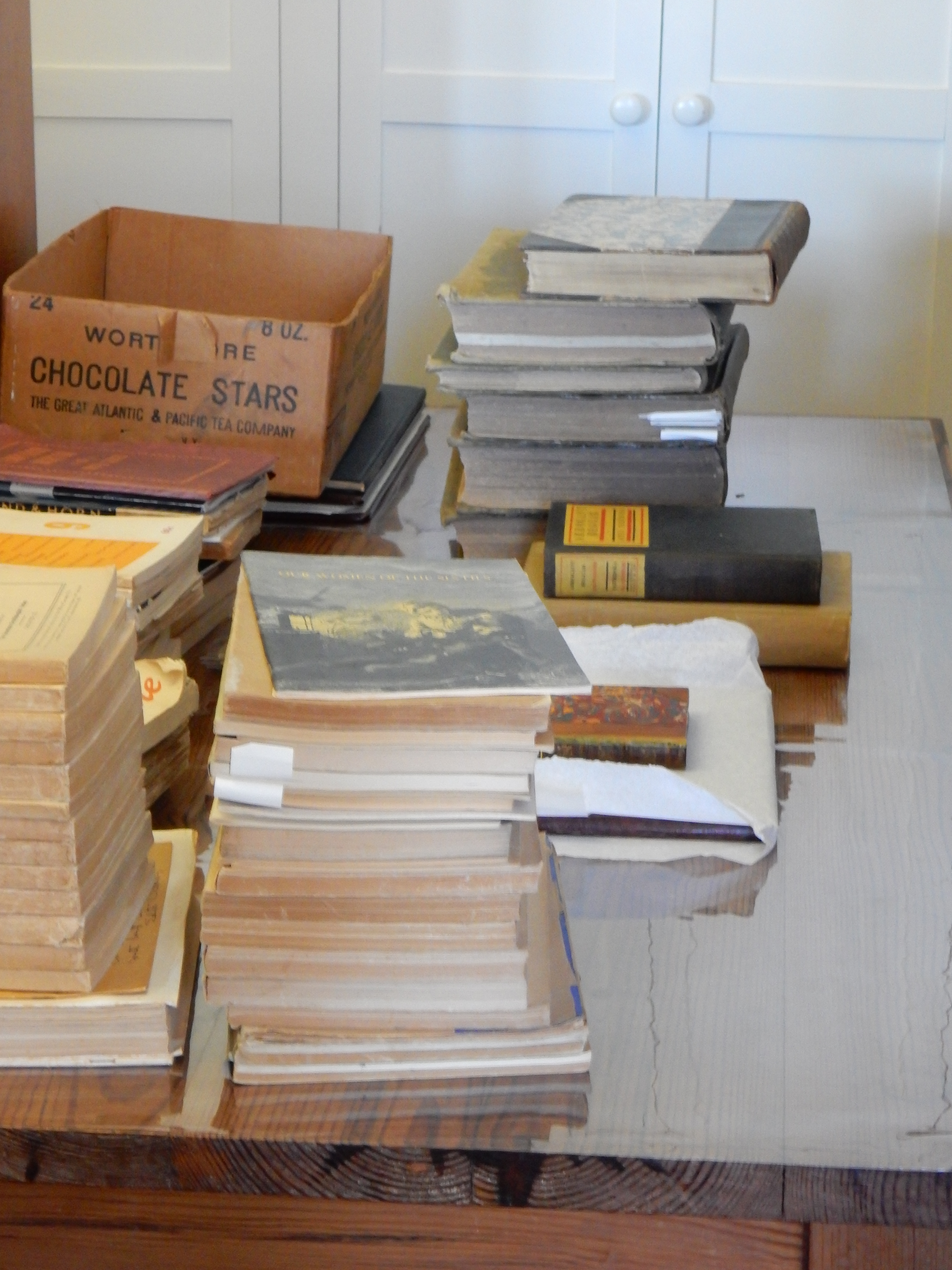
Some of the 17,000 books, note the slips of paper marking research items

Some of the 17,000 books, note the slips of paper marking research items

A docent gave us a tour of the home which is implementing an air handling system to protect the 17,000 books left when Sandburg died. Lillian offered the home to the National Park Service after his death, with all of the furniture, books, etc. Much of the furniture had been removed but we did see some of the books, with slips of paper still in them indicating specific research items Sandburg was working on at his death.

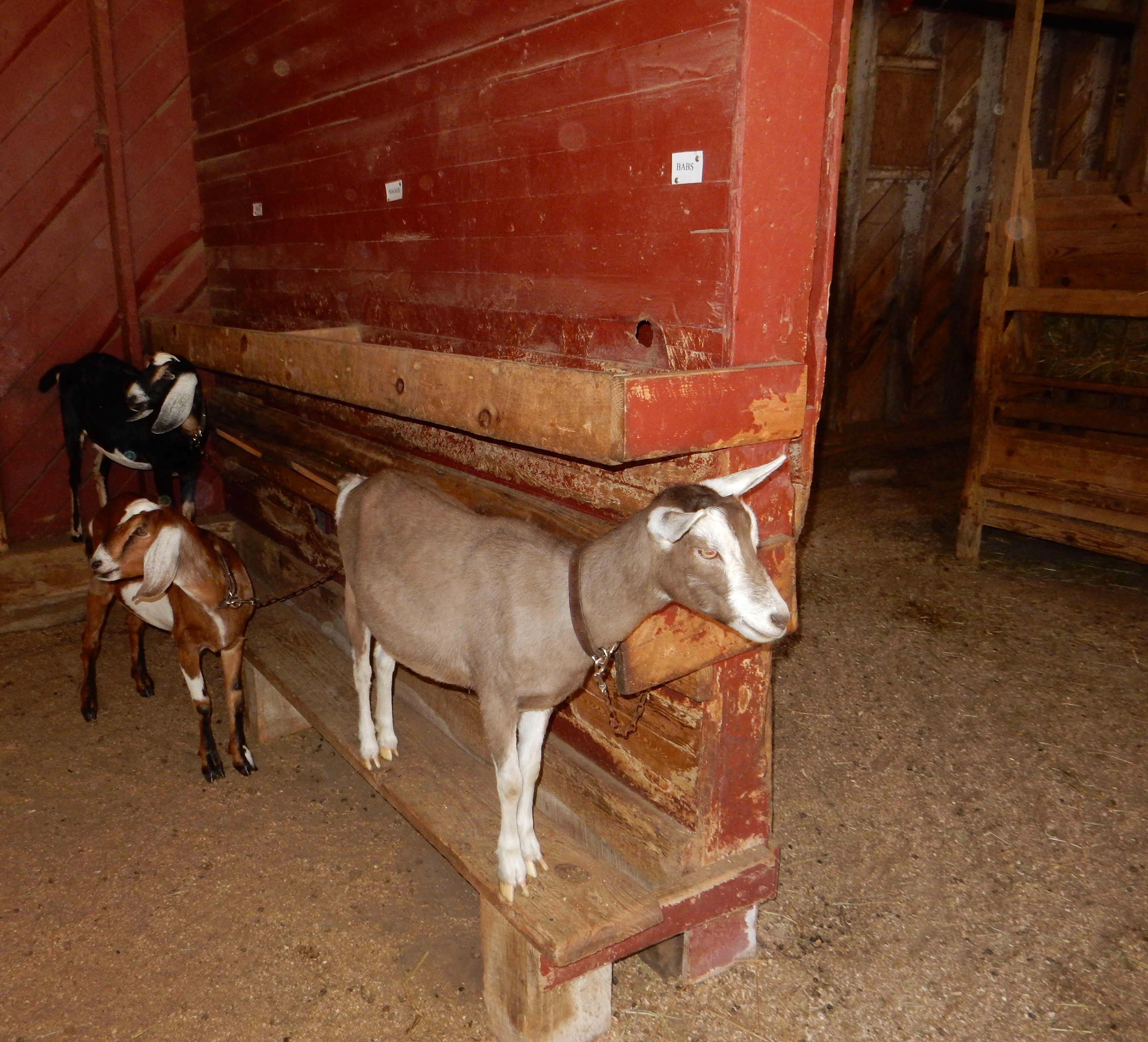
Goats at Connemara, descendants of the ones Lillian bred

Goats at Connemara, descendants of the ones Lillian bred

The site is situated on a lake, halfway up a mountain and still has goats in the original farm buildings. There is a system of trails and we spent time hiking up the mountainside before heading for dinner.

The town is also home to the Flat Rock Playhouse, a well-known theater. We did take in a performance of “Pump Boys and Dinettes”. It was nominated in 1982 for a Tony Award as Best Musical. The story revolves around four guys working in a gas station in North Carolina and two gals working in the coffee shop next door. We were not impressed but the rest of the theater seemed to be.

Our lodging tonight was with Evergreeners here and we have had a delightful time.

Oct. 23

Today continued the great weather and another day outdoors. We headed out to Dupont State Forest where we watched hordes of tripodders (people toting tripods to take pictures). The outdoors were also in view.

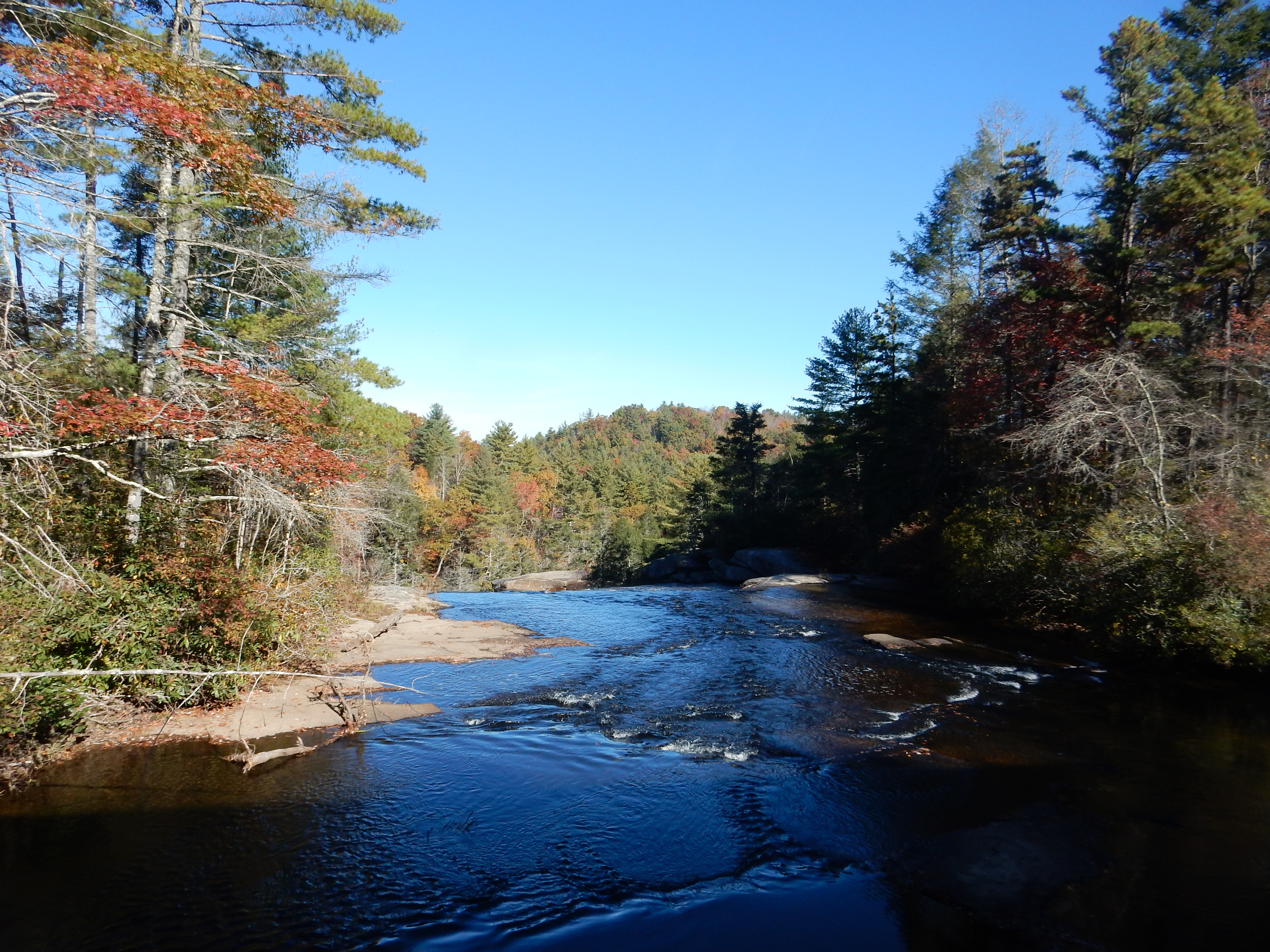
High Falls from above

High Falls from above

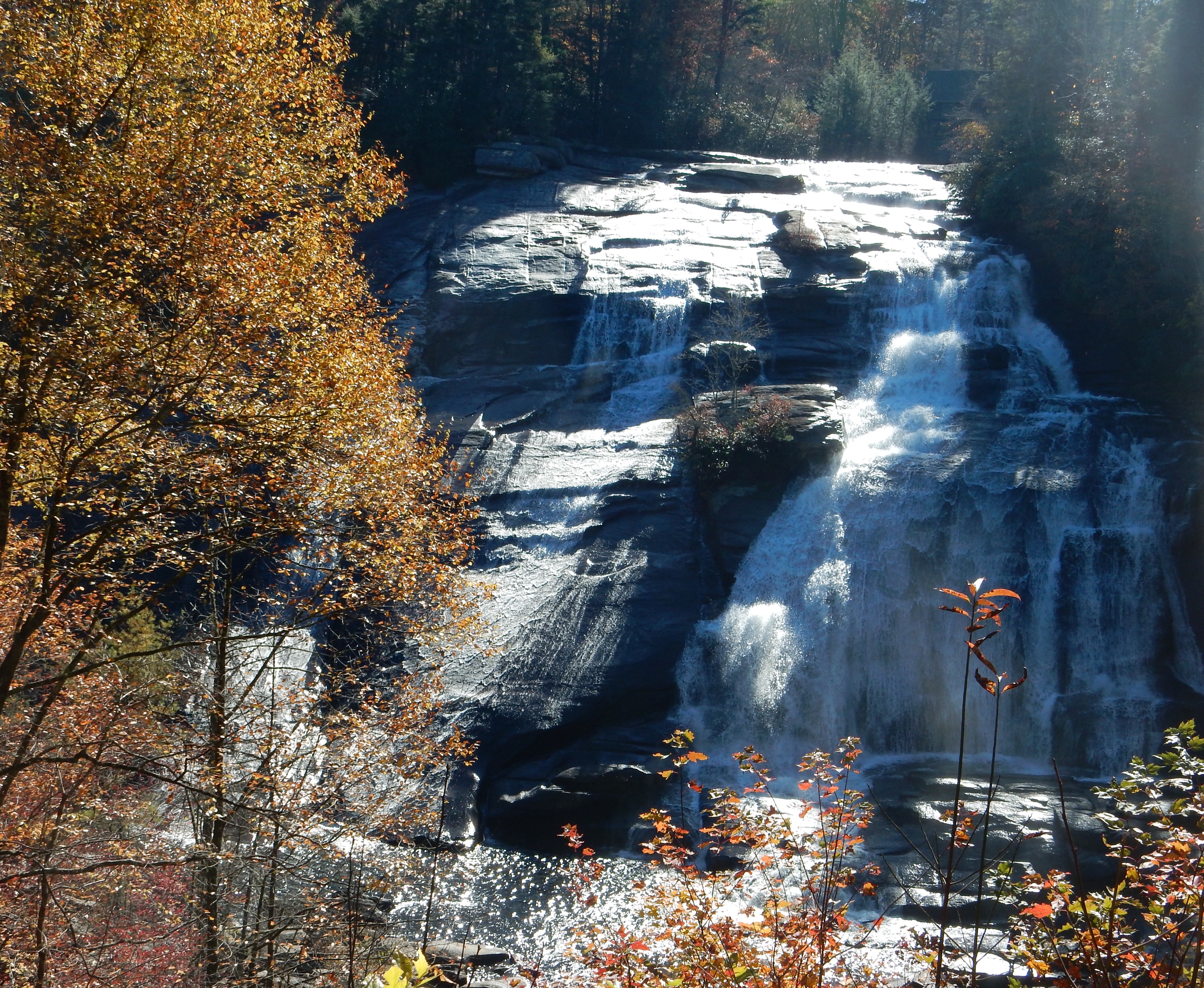
High Falls from below

High Falls in Dupont State Forest NC from below

Dupont is southwest of Flat Rock. Our hike was 1.5 hours and included a covered bridge, High Falls, and Triple Falls. The forest is a popular destination and all of the trails were busy. The hike to High Falls started out on smooth gravel paths and, for the most part, remained relatively smooth, although not level. High Falls is viewable from above and below. The trail continues on to Triple Falls and then back through the forest. None of the trails offered any long distance views. The parking lot, which was busy when we arrived, was jammed and cars were parking in both directions on the access road when we left.

Triple Falls in Dupont State Forest NC

Triple Falls in Dupont State Forest NC

Dupont Forest is tied to the Dupont Company of Wilmington Delaware. Dupont had a plant in the woods that manufactured silicon chips and later, Xray film. The plant was here due to clean air and water which was needed in the manufacturing process. The plant was eventually closed and most of the land went to the state. Dupont still retains a portion of the land where the Xray plastic had been landfilled. The plastic has been dug up and shipped to China to make into carpet. When the site is finally certified as being clean, it is hoped the remaining land will be added to the park.

We were going to drive down a few miles and have lunch at a small mountain cafe and then return for a second hike. No dice, the cafe parking lot was overflowing. We changed our plans and drove to the town of Brevard, home to a college and an annual music festival. Lunch was at the Hob Nob where we had a good Southern lunch of pulled pork, corn bread, collard greens, and mashed sweet potatoes.

Pisgah National Forest was our afternoon destination. We had been through here a week ago as we left Franklin and headed to Asheville. The forest is large though, and we took a hike in a portion of the forest that was new to us. It was still part of the Vanderbilt estate of the early 1900s.

Looking Glass falls along the road in Pisgah National Forest NC

Looking Glass falls along the road in Pisgah National Forest NC

After a quick stop at a roadside waterfall, we headed over to the state trout hatchery. The hatchery land includes an education center and trails. Another waterfall was our destination. The primary path was well maintined, although with tree roots, rocks and plenty of hills. Mountain bikers shared the trail with hikers.

Hidden Falls in Pisgah National Forest NC

Hidden Falls in Pisgah National Forest NC

The waterfall is off the maintained trail, along a path that hikers wear down but which the state does not maintain. We scrambled among the wet rocks, climbed over trees blocking the trail, and even followed the smooshed leaves marking this secondary trail. But we made it to the falls and were able to make our way back in just over an hour.

We did not wait around to check to see if a family made it back. We passed them on the way out to the falls, and the two young boys were willing to turn around then. As we came back and had just about reached the point where the secondary trail meets the primary trail, they were starting down. We warned them of the difficult nature and the mother, who was carrying an infant, thought she just might stop there.

It was 4 pm by then and dinner in Hendesonville was our goal. Thomas Wolfe is the author of “Look Homeward Angel” and Chris says we have seen the play. I do not recall it. Anyway, there is a statue in a cemetery here of the angel mentioned in the story and we drove by and viewed it.

The pizza dinner was great and we made it to the restaurant in downtown Hendersonville to eat before the rush arrived. We even had enough time to walk the downntown streets and have a dish of locally made ice cream.

Ed and Chris Oct. 23 11pm

Categories: road trip, travel | Tags: , , , , , , , | 2 Comments

2015 Trip Six, The Great Smoky Mountains, Oct. 21

Spartanburg, SC Oct. 21

Emotion Unleashed. Emotion Unchecked. That was one of the messages today as we did a history day, specifically a Revolutionary War history day. It took us two hours, on major highways for a change, to reach destination number one. Kings Mountain National Military Park is about an hour southwest of Charlotte NC, right on the NC/SC state line. We left the mountains and drove through the Piedmont region of NC, much more urban, hills and valleys, yet not as flat and hot as the coastal, low country. Technically piedmont means foothills.

Kings Mountain and Cowpens, our second history stop, were battles I was vaguely familiar with. In general, though, I usually associate the Revolutionary War with major pitched battles in the North and down to Virginia. So learning more about the southern campaign was a positive experience.

A bit of background. 1780 was not a good year. Washington did nothing positive; Benedict Arnold defected to the British; Charleston SC was taken by the British. The Carolinas were the source of the greatest number of battles and skirmishes. Great divisions existed with British Loyalists and American rebels living side by side-and fighting each other. Feuding was rampant with retribution paid back after each skirmish.

The British, under Tarleton, fought a battle at Waxhaws in May in which, after the British won, shot, rode down, and bayoneted the Americans who had surrendered. No quarter was given and few prisoners taken. The battle became a rallying cry and further inflamed feuding, plundering, looting, etc. on both sides.

The British warned the Americans that any effort by them to assist the rebels would mean the burning of their homes and lands and the hanging of their leaders. Well, that was enough to convince many settlers who had been uncertain of whom to back, particularly the frontier settlers from across the Blue Ridge Mountains (called the Overmountain people), that it was time to fight for their freedom and beat the British.

Most of these settlers were from Ireland, Scotland, and the north of England. They had no love for the British, were used to fighting, but until now, had basically stayed out of the revolution. They were new settlers to this region, having come in great waves in the years just prior to the American Revolution. To them,everyone was a foreigner except neighbors and family-as defined over generatins of conflict in their North Britain homelands.

Kings Mountain is 150 feet above the surrounding land and had a treeless summit affording good views. The hill was well-known to all locals. British Major Ferguson was expanding the British campaign across the Carolinas from Charleston to cut the colonies in half. The British had well-trained loyalist militia and Americans who were officially in the British Army. The British spies informed him of rebel groups gathering to attack him. He waited for them on Kings Mountain.

A portion of Kingss Mountain, one of the slopes the rebels had to climb

A portion of Kingss Mountain, one of the slopes the rebels had to climb

The Americans were a mixed group. A strong section were the “Over-mountain” troops from the hills and valleys of the Blue Ridge, including many who came from the Tennessee region. Others were local militia, defending their homes in the Carolinas. The battle was fought on October 7th after a heavy rain had allowed wet leaves to muffle the sound of the approaching rebels. In less than an hour, the rebels from overmountain and from local militias had defeated the British, including facing down several bayonet charges. British attempts to surrender met the same reaction received by the Americans at Waxhaws in May. Most of the British attempting to surrender were killed by the emotional patriots before the carnage was finally stopped.

This battle was not a minor skirmish. It forced the British to reconsider their plans to control the Carolinas. The American army re-groups and the British lick their wounds. Cornwallis changes his plans and starts to move up the coast, eventually landing at Yorktown. All because of 1000 emotionally charged rebels, defending their homes and freedom, incensed at the British massacre at Waxhaws, and just plain pissed off at British attempts to threaten them.

Our second history stop was at Cowpens National Battlefield. Here in January 1781, three months after Kings Mountain, Brig General Daniel Morgan (who had fought at Boston, Quebec, and Saratoga) was operatinng in the south to harass the British rear. His charge was to give “protection to that part of the country and to spirit up the people”.

Standing where the rebels stood looking toward where the British came from

Standing where the rebels stood looking toward where the British came from

Morgan was out numbered and out weaponed. Morgan was facing General Tarleton (he of the Waxhaws massacre). Morgan called again on local militias, experienced but pretty much defenseless against British cavalry and bayonet charges. Morgan developed a strategy to use the militia sharpshoters to kill British officers, and to then fall back, encouraging the British to move forward into other lines of defense Morgan had prepared.

Morgan’s strategy worked perfectly, although partially due to luck. The British were caught in a cross-fire, the cavalry cut them down, and the British retreated. Similar to Kings Mountain, the battle lasted less than an hour. 110 British killed, 229 wounded, and 600 captured or missing. This time the prisoners were sent to Winchester VA rather than being slaughtered.

When Cowpens was over, the lower South had become the decisive battleground of the Revolutionary War. War in the North was a stalemate. Cornwallis was planning to sweep across the South. Instead, the British had to take protective actions to save their troops. Moving north, they eventually surrendered at Yorktown in October 1781.

Tonight we are staying at a bed and breakfast in Spartanburg SC. Irony: We are staying in the Revolutionary War Room featuring Daniel Morgan.

Ed and Chris 9:30 PM

Categories: road trip, travel | Tags: , , , | Leave a comment

2015 Trip Six, The Great Smoky Mountains, Oct. 20

Banner Elk, NC Oct. 20th

We had a few specific destinations in mind as we began the day. First and foremost were two sites showcasing religious frescoes. Ben Long is a North Carolina native who, among other achievements, served an apprenticeship under the Italian fresco master Pietro Annigoni. He returned to the US and his first fresco commissions were churches in Ashe County North Carolina (a county just northeast of Banner Elk and bumping up to the VA and TN state borders). Long has created numerous other frescoes, religious and secular.

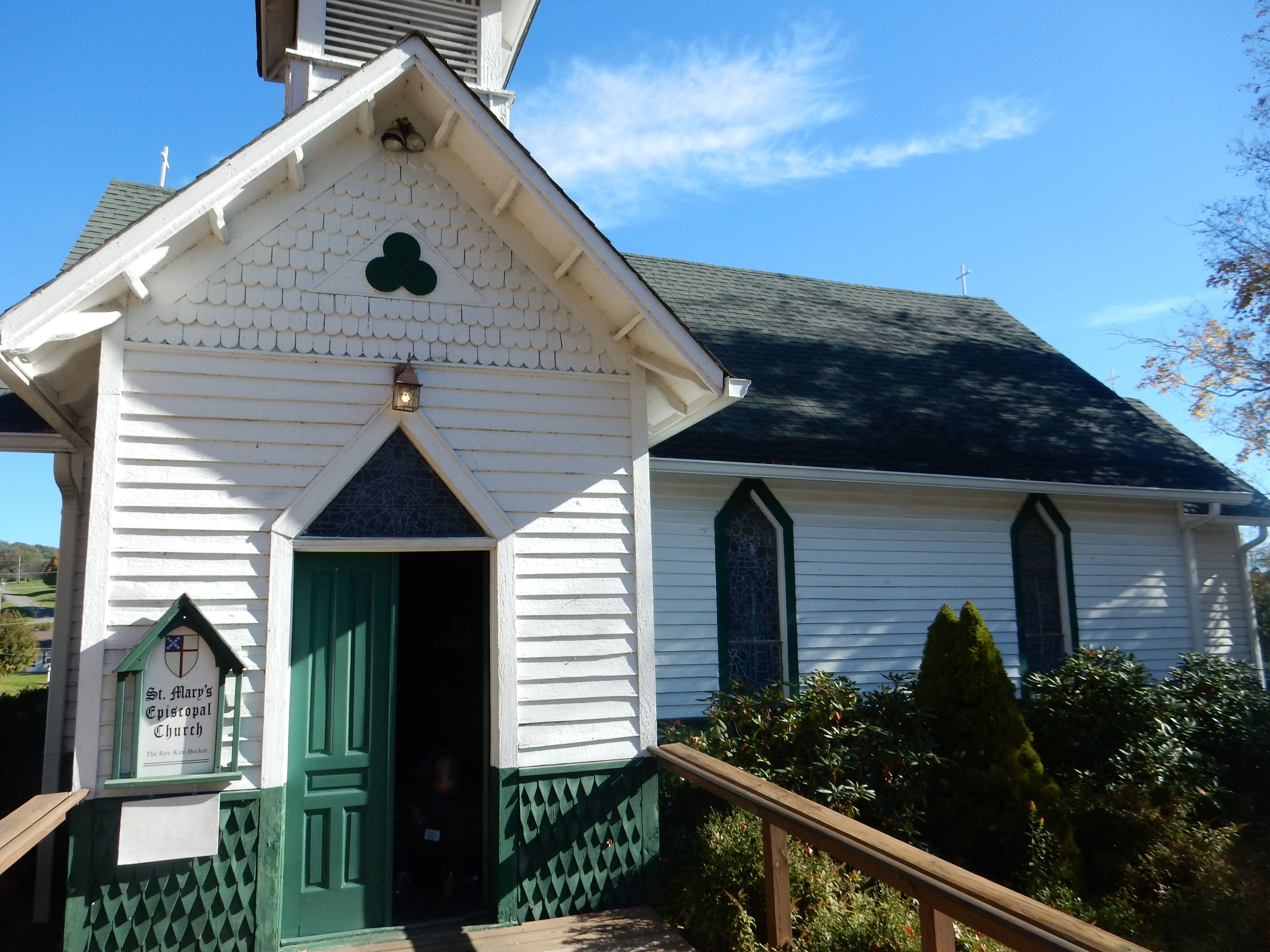
St. Mary's, home of three frescoes

St. Mary’s, home of three frescoes, West Jefferson North Carolina

Fresco painting involves a technique of applying paint directly to wet plaster, allowing the paint to become a portion of the material and enhancing the color of the fresco over the years, rather than having the paint diminish. The two churches involved, St. Mary’s Episcopal Church in West Jefferson and Holy Trinity Episcopal Church 10 miles away in Glendale Springs were mission churches dating from about 1900, but Holy Trinity was closed in 1946.

the three frescoes

the three frescoes in St. Mary’s church, West Jefferson, NC

In the early 1970s, a new priest re-invigorated St. Mary’s and through a meeting with Ben Long, the fresco mural project was begun. In 1980, Holy Trinity’s church was restored and a fresco added there. Ben Long created three frescoes at St. Mary’s; focused on salvation, the foreshadowing, the promise, and the fulfillment. A fresco of John the Baptist in the wilderness is the symbol of the foreshadowing. The promise is uniquely portrayed as Mary expectant with the child Jesus. The fulfillment is shown as Christ on the Cross with God the Father overlooking him.

The Last Supper fresco

The Last Supper fresco, Holy Trinity Church, Glendale Springs NC

At Holy Trinity, the one mural portrays “The Last Supper”. Long created this with assistance from students of his. The community became involved in this project, volunteering as models, making meals for the students, etc. The murals helped spark a revival of the churches as well as encouraging visitation from around the globe. (Today, while we were in attendance, we were the only ones at St. Mary’s. Holy Trinity must have had at least 20 people during our time there. We also gave directions back to St. Marys for a couple who were at Holy Trinity.)

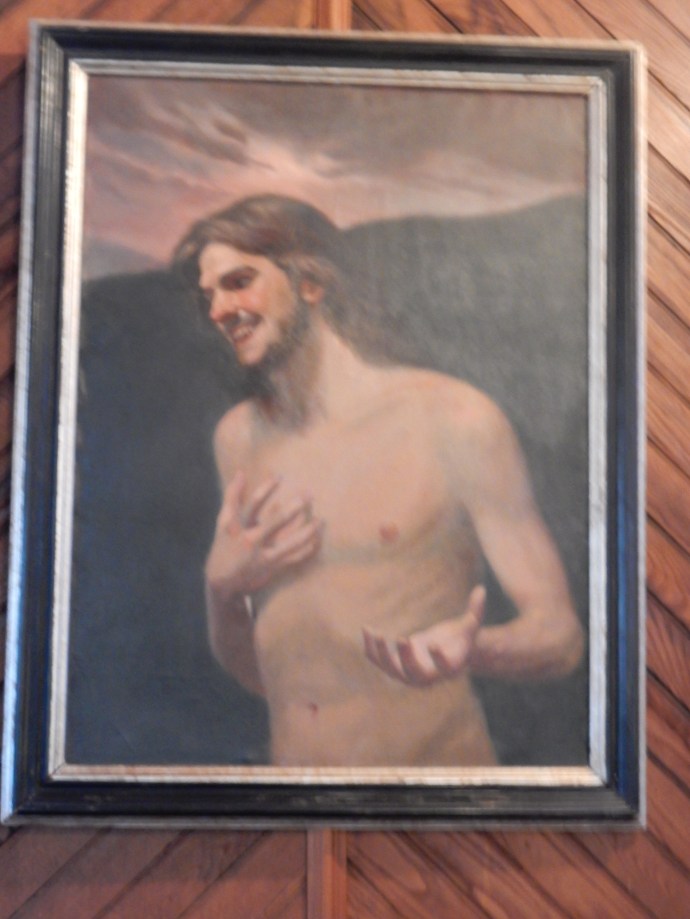
The churches are small and, while well maintained, are modest. There are audio presentations at each church explaining the development and meaning of each fresco. We found those both well-written and well-spoken. The frescoes themselves are vibrant and moving. Seeing Mary portrayed as pregnant was an unusual presentation that completed the theme very nicely. A further unusual piece of art at St. Mary’s was a painting of Jesus titled “The Laughing Jesus”, again, not the normal portrayal one comes across.

The "Laughing Jesus" painting

The “Laughing Jesus” painting

Along the Blue Ridge Parkway

Along the Blue Ridge Parkway

Our second stop was the Art and History Museum in Blowing Rock. Blowing Rock is the upscale, cutesy tourist town. We focused on the museum since it was featuring the work of female sculptors and other artists. The art exhibits were worth the visit.

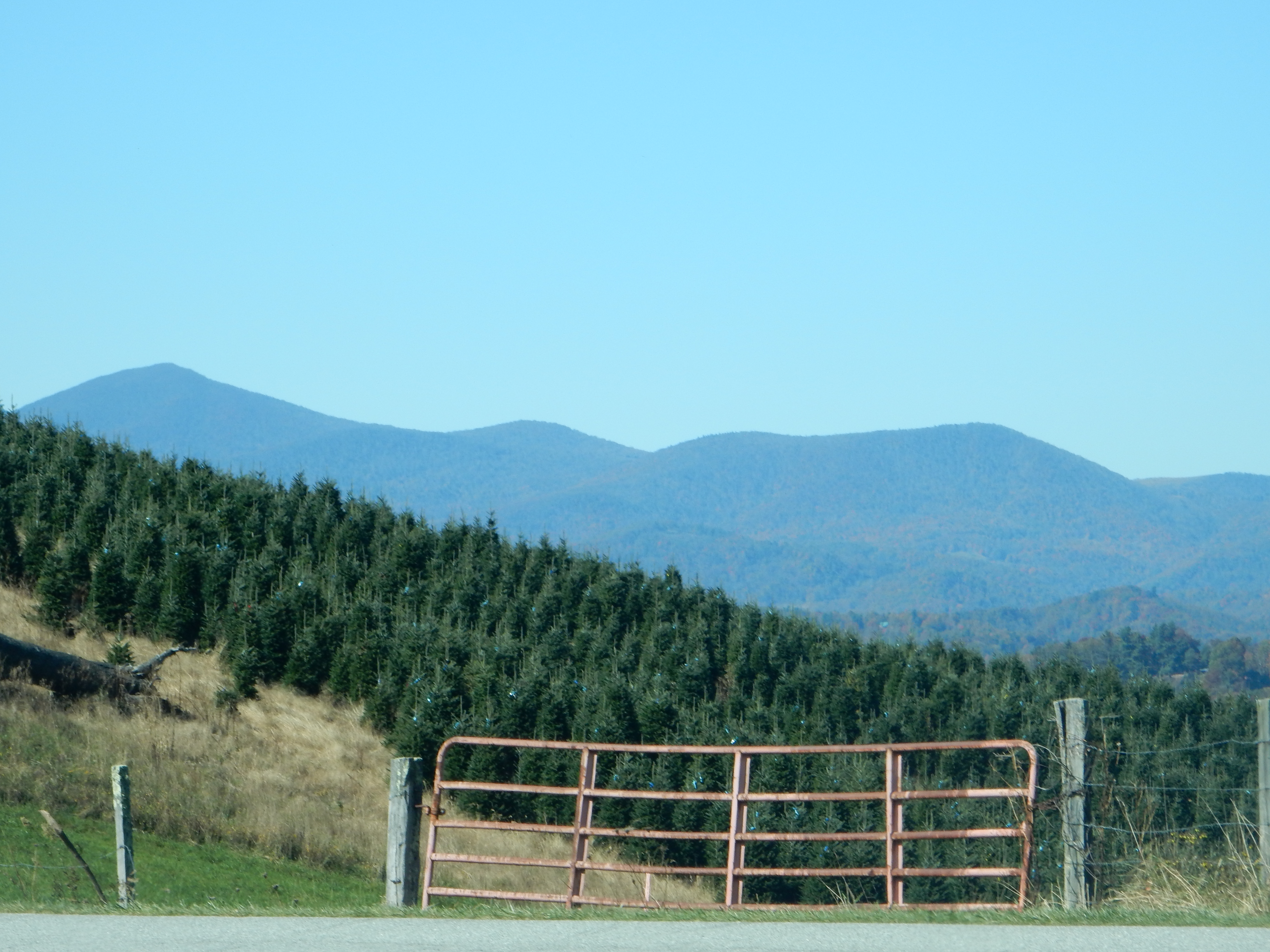
Christmas tree nursery

Christmas tree nursery

Blowing Rock and the drive to it from Glendale Springs along the Blue Ridge Parkway continued to educate us about the area. Boone is home to Appalachian State University with 17,000 students. The counties in the area are home to major Christmas tree nurseries, many with cut your own options. Gem mining is a major tourist attraction from here all the way down to Franklin, due to the geology underlying the Appalachians. Banner Elk is a ski resort area, with more visitors in the winter than in the summer.

Due to the elevation, these counties attract vacation home residents and visitors from Dallas, Florida, and the Carolina coasts here in the summer for the coolness and in winter for the skiing. Their influx enhances the economy and varies the diversity of the area.

Moses Cone Visitor Center

Moses Cone Visitor Center along the Blue Ridge Parkway

Finally we stopped at the Moses Cone Visitor Center. It too houses local handcrafts but the building was once the home of Moses Cone. Cone was the son of German Jewish immigrants, the family worked in the dry goods field and became successful. Eventually Moses set out on his own and with other partners became succesful in the textile business. He became known as the “Denim King” for recognizing and fulfilling the need of “regular” folk to have durable clothing. He began supplying denim to Levi Strauss and his company has been its main supplier to this day. He died in 1908 and his widow left the mansion they built and the 3500 acres of land they accumulated up in the hills to the local hospital which in turn sold it to the National Park Service with the proviso that it be named for Moses Cone. (Side note: Cone’s two sisters had money and became friends with Picasso and Matisse; their extensive art collection was donated to the Baltimore museum of Art.)

The Cone visitor center has 25 miles of roads to explore with forests planted extensively by the Cones with a variety of trees and plants. We were able to spend over an hour wandering among the woods along several trails. Once again, it would be nice to re-visit this area when the shrubs and plants are flowering. Maybe another time.

Ed and Chris 10:45 PM
Categories: road trip, travel | Tags: , , , , , , , , , , , , , | Leave a comment

2015 Trip Six, The Great Smoky Mountains, Oct. 19

Banner Elk, TN Oct. 19

Along the Blue RIdge Parkway

Along the Blue RIdge Parkway

Today was the quintessential road journey: the road was the journey in many ways. It is back to the Blue Ridge Parkway. We will have only traveled about one-third of the Blue Ridge by the end of tomorrow when we will leave it. Today we were back in mountains, but also began to view sections of the parkway with meadows, valleys and even human habitation. Once again, the skies are clear although it is cooler; at daybreak the temperature is close to the freezing mark. By noon it is in the 50s, much cooler than previous days.

Our first stop was to be the little town of Little Switzerland, supposedly postcard perfect. One way to reach it would have involved driving the “Diamondback”, a switchback frenzy road similar to “The Dragon”. We passed on it and took the parkway instead. Little Switzerland was not worth it and we said a quick good-bye and headed to Linville Falls.

Views from the overlook

Views from the overlook

view from overlook

view from overlook

Before we reached the Falls, we stopped at an overlook with great views. Well worth the time. However, we observed an unknown structure far off in the distance on top of one of the mountains. We later discovered that it was a condo building constructed in the early 2000s. Its construction created such a stir about how its size and location desecrated the mountain and the view for others. North Carolina then passed the “Ridge Law” prohibiting any future construction of buildings above a certain size and height on ridge tops.

Two perspectives on Linville Falls; from above including lower and upper falls, and a cclose up of lower twin falls

Two perspectives on Linville Falls; from above including lower and upper falls, and a cclose up of lower twin falls

image

Linville Falls is a NPS maintained site along the Blue Ridge. There is an upper twin falls and then a lower falls. The falls are located in a deep gorge and we were able to hike to a vantage point where we could look down on both the upper and lower falls. The Trail was busier than most of the trails since we left Gatlinburg. This is still the Appalachians so the trails continue to be rocky, with tree roots, and with elevation gain. The falls are not stupendously high, I believe the lower falls are 80 feet tall.

In the background, Grandfather Mountain

In the background, Grandfather Mountain

Grandfather Mountain was our next stop. Grandfather is well-known in the Southeast, it has been a destination for tourists for decades. In fact, when the Great Smoky Mountains National Park was being considered as one of the first national parks in the East, Grandfather Mountain was also a prime contender to be the first. The area is now in two sections; one is owned by a private family who has owned it for decades as a private entertainment/tourist site, the second portion is now owned by the state as a park from land first owned by the family who owns the private section. We spend the majority of our time with the private section.

Our first stop was the headquarters to watch their 27 minute video. It was extremely well-done; highlighting the geology, fauna, flora, and weather of Grandfather Mountain. It was produced recently by Clemson University, located not far from here in South Carolina. Part of the information was new, other sections we have been hearing several times recently.

For instance, rhododendron plant leaves curl up as the temperatures decrease. When the temperature reaches freezing, the leaves start to droop down. When the temps reach around 15 degrees, the leaves curl up in a fashion similar to a cigar.

As we may have mentioned previously, this area encompassing the Blue Ridge, Great Smoky Mountains, etc is extremely diverse in types of plants. One reason stems from the glaciers. As the ice age moved southward and southerly temperatures more closely approximated northern temps, many plants began to propagate at a more southerly location. The higher elevations also are cooler so plants once introduced here could continue to thrive at the higher elevation.

higher elevation rocks and flora

higher elevation rocks and flora

The mountains, with their range of elevation, produces varying weather conditions. Thus a lower elevation will be warmer and support plants and animals appropriate for that temperature and weather. We have read or heard numerous times lately that the diversity of flora and fauna in this mountainous section of the country is unparalleled anywhere else in the U.S.

Lunch was interesting. As we drove up to the gate to pay our admission, we got behind a tour bus. It was one of two buses, the other was already through the gate, full of school kids on an outing. Well, they got to the restaurant before us and that was the prime reason we saw the video first. By the time the video was over, the kids were just finishing up and tables were beginning to have a few open spaces. I asked one of the chaperones where the kids were going next and we managed to avoid them for the remainder of the afternoon.

The suspension bridge

The suspension bridge

After lunch we drove up to the top of Grandfather Mountain. Here at an elevation of 5278 feet above sea level is a suspension bridge hanging over a chasm 80 feet deep. Despite not liking to look down from heights, I managed to make it over the bridge-and back again. Chris has an easier time and was able to take the photos from the bridge itself.

In the distance the condo that inspired the Ridge Law in NC

In the distance the condo that inspired the Ridge Law in NC

We went back and viewed the museum at Grandfather Mountain and then headed out to Linn Cove viaduct. This viaduct was the last portion of the road constructed. (The general contractor was from Plymouth MN.) The road goes over the boulder field for Grandfather Mountain and environmentalists fought for years to either not have it built or to build it in a way that did not harm the environment. The roadway is cantilevered out over space. The bridge was eventually built using a European method of construction never previously used in the U.S. 193 concrete sections were put together, only one of them was straight. The bridge was built placing each new section at the end of the previous section. Not at all like the process used by the CCC crews in the ’30s when they pretty much just moved rock and paved.

Our last stop was at the Mast General Store in Vallee Crucis. This is one of those old-time stores now catering to tourists. We only visited a portion of it, the section devoted to outdoor clothing by Woolrich, Pendleton, Smartwool, Patagonia, etc.

We met our Evergreen hosts for the next two nights and had dinner at a local diner not far from their home. Another friendly couple with a very welcoming attitude.

Ed and Chris 10:30 pm

Categories: road trip, travel | Tags: , , , | 1 Comment

2015 Trip Six, Great Smoky Mountains, Oct. 18

Marion, NC Oct. 18

I had to bite my tongue and hold my biases in check for most of the morning. We were visiting Biltmore, the largest home in America at 250 rooms built by a grandson of Cornelius Vanderbilt, George Washington Vanderbilt. Cornelius had amassed an enormous fortune in shipping, railroads and other businesses back in the days when capitalism was unregulated.

Briefly: Cornelius left a fortune of $100,000,000 and his son Billy doubled it in less than ten years. Most of the $200,000,000 went to George Washington Vanderbilt’s two oldest brothers who ran the Vanderbilt family business. George inherited about $10,000,000 over a period of a few years in the 1880s.

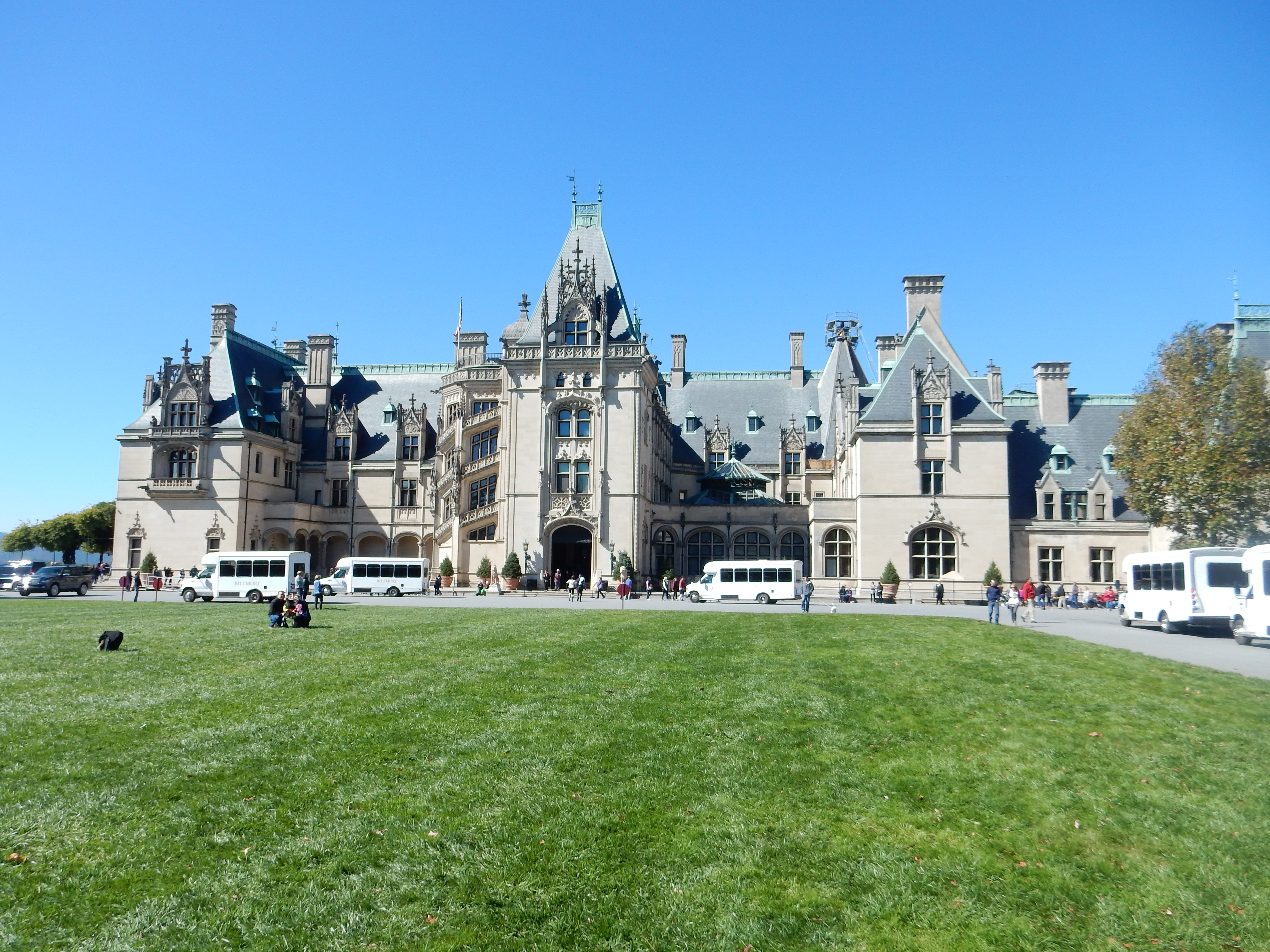
Biltmore in Asheville NC

Biltmore in Asheville NC

Again, briefly, besides collecting art, George decided to amass land and build a personal mansion in Asheville NC. (Okay I am summarizing tremendously here but if you want more you will need to read biographies of the Vanderbilts.) He hired a top architect, Richard Morris Hunt, and the top landscape designer, Frederick Law Olmstead. The home took six years to build and opened officially on Christmas Eve 1895. (George died in 1914.)

Our tour time started at 9 AM. We had already calculated the amount of time necessary to reach the estate from our hotel. Good thing we added extra time. We had not calculated the ten minutes it took to drive from the entrance to the parking and the five minutes it took to walk from the parking lot to the entrance. 9 AM was the first starting time. We chose the self-guided tour, foregoing the audio wands that would go into the details of every stick of furniture, etc. (No internal photo taking is allowed.)

The next 90 minutes were spent following the tour book, staying behind the velvet ropes. The building is solid, the foundation alone took two years to build. The building is huge obviously with 250 rooms-we do not see all of them. The design, furnishings, artwork, and furniture are exquisite. Flemish tapestries, hand carved wood paneling, family paintings by John Sargent Singer, delicate figurines from Europe, etc. The guest rooms could house, feed and entertain whole families for a week or more. The mansion had indoor plumbing and electricity; it had its own indoor swimming pool and bowling alley.

walled garden at Biltmore

walled garden at Biltmore

The grounds are meticulously laid out and maintained, more in the manner of an English garden then just flowering gardens-although there are several. You may remember from yesterday’s post that Vanderbilt eventually owned 125,000 acres surrounding his estate. Much of that land had been clear-cut by lumber companies; Vanderbilt had the land replanted with over 3,000,000 plants and trees, all according to Olmstead’s master plan. After the house tour, we wandered through the formal gardens. They would probably be more stupendous during spring or summer flowering season.

The home was opened to tours in 1930, one branch of the descendants received the house and manage it as their business. They live somewhere else on the remaining 8,000 acres of the property. The estate employs 2,000 people to keep it going. We left the estate after lunch and went back on the Blue Ridge Parkway.

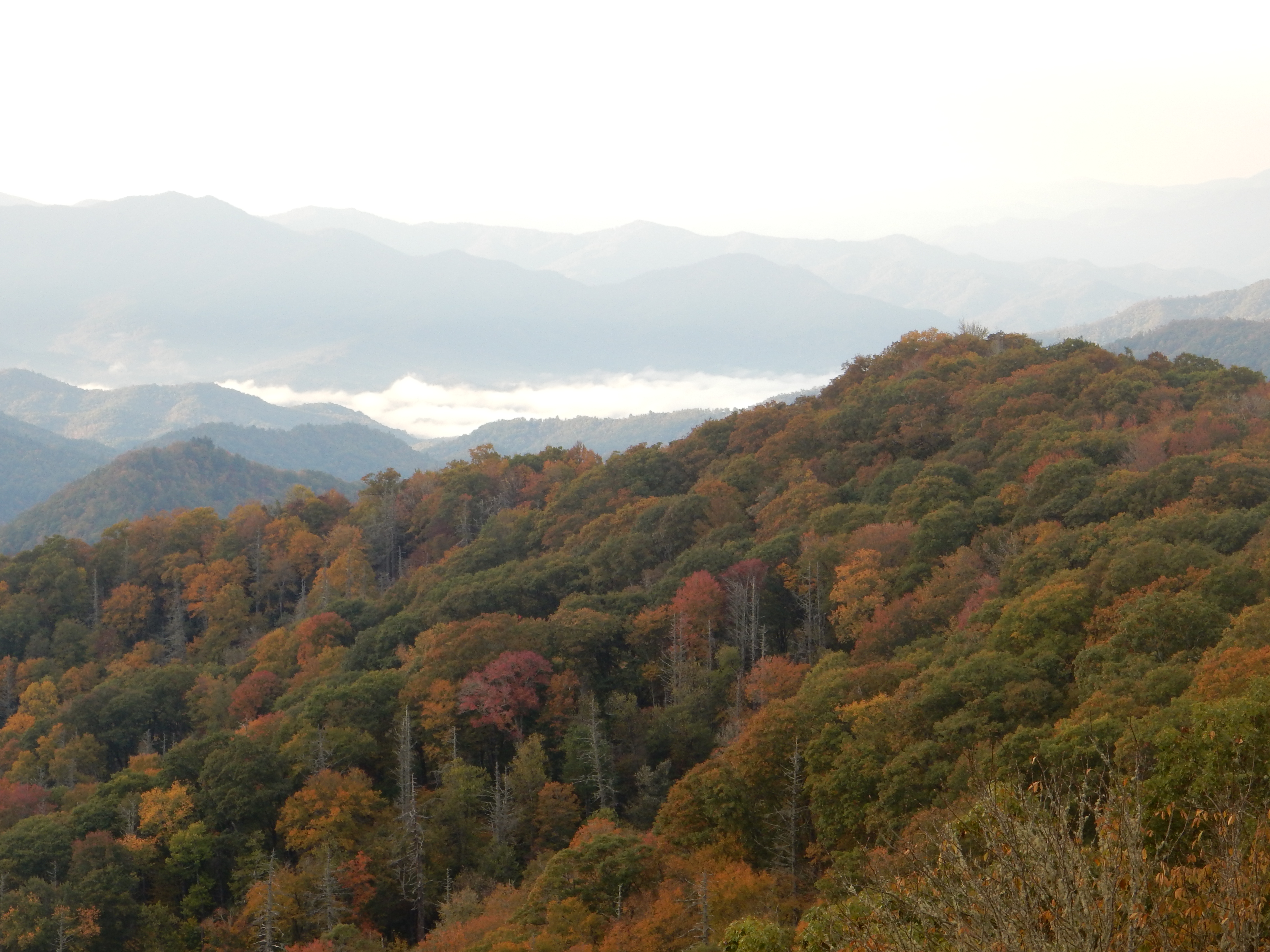
View from Blue Ridge Parkway

View from Blue Ridge Parkway

Along the parkway is The Folk Art Center, run by the Southern Highlands Craft Guild. It is a combination museum and gift shop, showcasing pottery,jewelry, quilts, wood working, toys, etc. The items are beautiful to look at. I can not judge the quality but I would imagine they are all top shelf. Numerous items struck our fancy and would look wonderful at home. Luckily we do not need, or have room for, any more items in our condo so we saved a bundle of money by not buying.

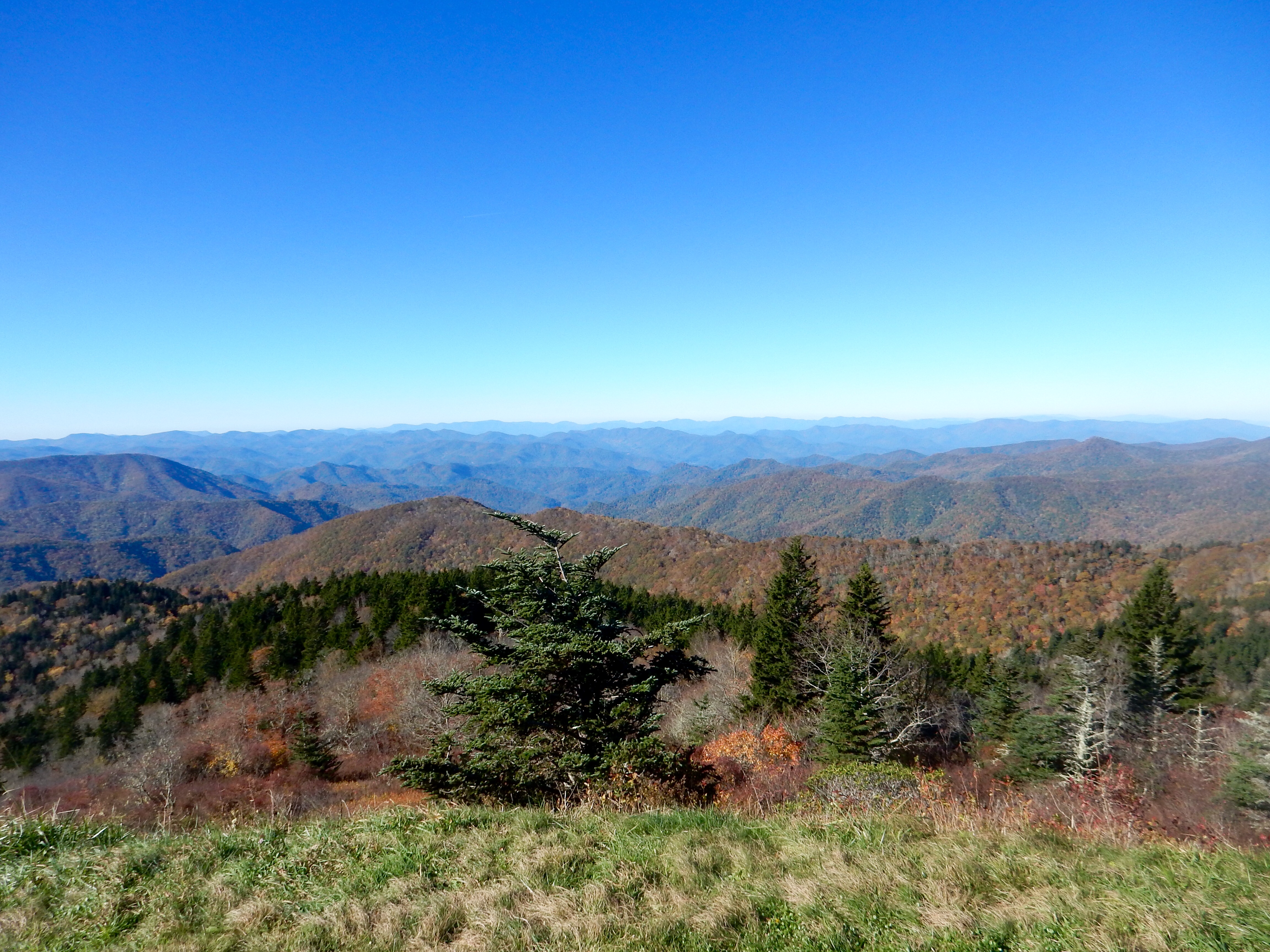
Further along the Parkway is Mt. Mitchell State Park. Mt. Mitchell, at 6,684 feet, is the highest point in North Carolina and the highest peak east of the Mississippi River. We had previously thought Mount Washington in New Hampshire was the highest. Wrong we were. Mount Mitchell is reached via a five-mile access road and then a steep hike for the last portion. The view once again was great, we have really been lucky with the weather. Similar to portions of the Great Smoky Mountains National Park, the Fraser fir trees on these slopes are usually dead.

View from Mt. Mitchell

View from Mt. Mitchell

Mount Mitchell was the first state park in North Carolina, established in 1915. It preserved an area likely to be harvested for lumber and several other notable high peaks in North Carolina. North Carolina is the home to the largest number of peaks over 6,000 feet in any part of the Appalachian Mountain Range. Most of them are along the Blue Ridge Parkway. It makes for great viewing as we drive along or as we stop at any of the 400 overlooks along the 469 miles.

Our drive off the Parkway to our lodging tonight was along a road, while not quite as “bad” as the Tail of the Dragon, came close. I am hoping that our return Monday morning to the Parkway will be via a road a little less challenging.

Ed and Chris 11:45 PM

Categories: road trip, travel | Tags: , , , , , , | 2 Comments

2015 Trip Six, Great Smoky Mountains, Oct. 16-17

Asheville, NC Oct. 17

400

Indulge me in a few paragraphs of self-congratulation. This post is our 400th since we began in January of 2013. An expectation of one year off to travel has mushroomed to three years, although the weeks traveling have decreased from 35 in 2013, to 25 in 2014, and 15 in 2015. The posts are more often than not written nightly and cover one day; slower days get combined. Rarely do we make one entry cover three days. That does not allow for serious editing, hopefully the entries are written decently.

The blog was begun as a means to remember our trips and to let family know where we were and what we were doing. That is still the primary purpose but, although the blog has not gone viral, we now have followers in Europe, India, Japan, etc. We hope you are enjoying our description of a slice of American life.

Our first posts were generally about 500 words in length. For the last year or so they have been usually over 1,000 words. Ballparking the average at 750 words for 400 posts equals 300,000 words; enough words to have written 3-4 novels. Obviously there is no plot or character development involved.

Photos are taken with a Nikon point and shoot; easy to carry, simple to operate and to recharge batteries, pictures able to be quickly uploaded to our iPad. We shoot what we see, we rarely return to a location for better lighting or weather. Pictures are meant to remind us of what we saw, we are not aiming to be professional photographers. If the day was rainy and overcast, or if the only shot of a location or subject was into the light, well, so be it.

Our travels will likely continue to decrease. We will have to determine next year if we continue to pay for blog space. Thanks to Adam and Shannon we now have a printed version of years 2013 and 2014.

So enjoy! We have been blessed to be able to travel this extensively, to enjoy our time, and, yes, to stay married after all those weeks together on the road.

Ed and Chris

On to today’s post.

Last view as we leave Great Smoky Mountains behind

Last view as we leave Great Smoky Mountains behind

We left Gatlinburg Friday morning, again in great weather. Once again over the Newfound Gap Road through the heart of Great Smoky Mountain National Park. Cullowhee NC is home to Western Carolina University. (Its 500 member marching band was the lead band of the 2014 Macy’s Thanksgiving Day parade.) Our goal was to visit the Mountain Heritage Center.

This was mid-semester break, parking on campus was easy. Thankfully since the Heritage Center was not designed as a major tourist activity; it seems to be more of research arm. The Center had just moved to the library building and no center staff seemed to be working during break week.

There was an exhibit from the North Carolina History Museum available; one that brought back memories of difficult times. The photographs of Lewis Hine from the early 1900s documented the reality of child labor in the textile factories dotting the North Carolina landscape. Children under 10 working long hours. The lack of caring by factory owners, the acceptance of the “way it is” permeated the photos. His pictures were taken for the National Child Labor Council. There was a second small exhibit located on a different floor giving a brief history of North Carolina pottery.

Former Jackson County Courthouse in Sylva, now the library

Former Jackson County Courthouse in Sylva, now the library

Not exactly a home run event. Our second stop was the small town of Sylva, supposedly postcard pretty with lots of small shops. Well, you know we are not major shoppers but we gave it a try and did find a small gift for two family members. Lunch was hilarious though. The Coffee Shop (that’s its name) had been written up as THE place the locals eat at. Well they do because it is cheap and the waitresses recognize locals and serve them first. The visitors looked at each other and said “When do we get served?” It was cheap though.

Our third stop was a complete strike out. Supposedly there are more people of Celtic heritage in North Carolina than anywhere else in the world (even Scotland and Ireland??) We did not get a chance to find out. The Scottish Tartans Museum in Franklin-Franklin was the site of our evening lodging-was closed, according to the sign on the door and not mentioned on their website, so they could attend some Scottish Games in Atlanta. We ate ice cream at a local creamery instead.

View from the Blue RIdge Parkway

View from the Blue RIdge Parkway

Saturday was our first Blue Ridge Parkway Day. We drove 70 miles along the southern end; the parkway extends from Cherokee NC (by the Great Smoky Mountain National Park entrance) 460 miles to Waynesboro VA where it connects with the Skyline Drive. The parkway was begun in 1932 and finally completed in 1987. The design was chosen to highlight views, thus there are lots of overlooks and in many areas, trees and brush are cut back so vistas can be seen by the driving public.

Blue Ridge Parkway

Blue Ridge Parkway

We drove, and stopped, and hiked, and took pictures. Due to its design, instead of focusing on managing tight corners, we were usually watching the North Carolina mountains and trees roll by. Our drive began before 9 AM (after leaving Franklin at 8AM) so initial traffic was not too heavy. By the end of the day it was heavy indeed.

School Building for the School of Forestry

School Building for the School of Forestry at Cradle of Forestry

Our major detour off the Parkway was to the Cradle of Forestry, a U.S. Forest Service sponsored site located in the Pisgah Forest east of Asheville. The Pisgah Forest was established in 1916 from the estate of George Vanderbilt who built Biltmore which we will be touring tomorrow. Vanderbilt wanted to own all of the land as far as he could see from his enormous mansion so he bought over 125,000 acres of land, including Mt. Pisgah (named after the mountain in the Bible from which Moses saw The Promised Land).

The name Cradle of Forestry is derived from the fact that Vanderbilt hired Gifford Pinchot and Frederick Law Olmstead to develop gardens and manage the forests on his estate. Eventually they turned the forestry portion over to Dr. Carl Schenck, a German. Schenck developed the first forestry school in the United States in 1896 at Biltmore, locating it in the forests among the land Vanderbilt purchased from small farmers and landowners.

The goal of the School of Forestry was to teach people who would understand “trees could be cut and the forest preserved at one and the same time”. As we saw in the Great Smoky Mountains, clear cutting was the standard lumbering practice with ruinous effects. The school operated for 15 years.I thought it was ironic that the School of Forestry was founded by the son of Cornelius Vanderbilt, the mega-entrepeneur that virtually dictated the spread of the railroads in the 1800s. The railroads used enormous amounts of wood for railroad ties and the railroad expansion across the country made lumbering large tracts of land feasible.

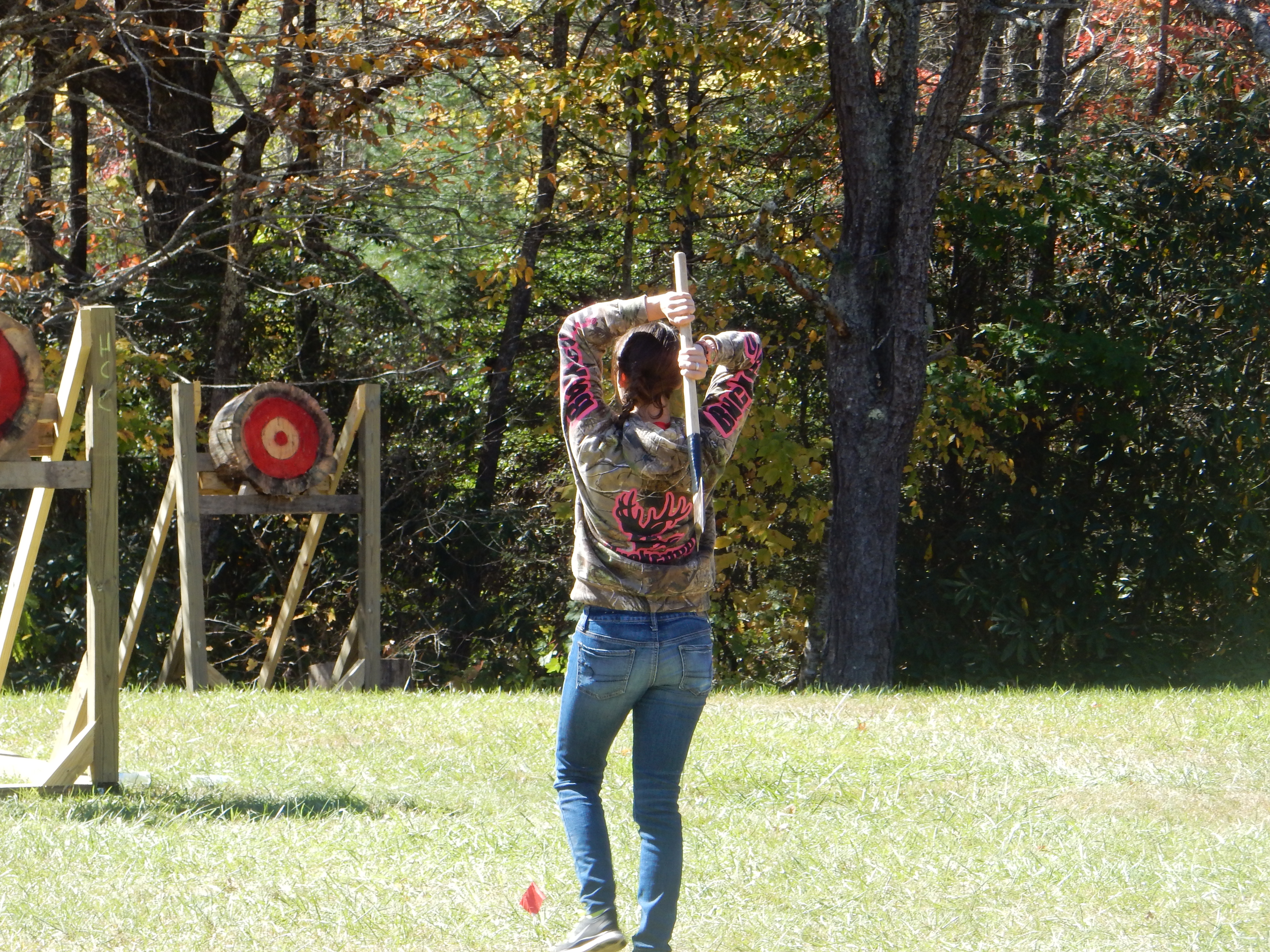
Axe hurling at Woodsmen Meet at Cradle of Forestry

Axe hurling at Woodsmen Meet at Cradle of Forestry

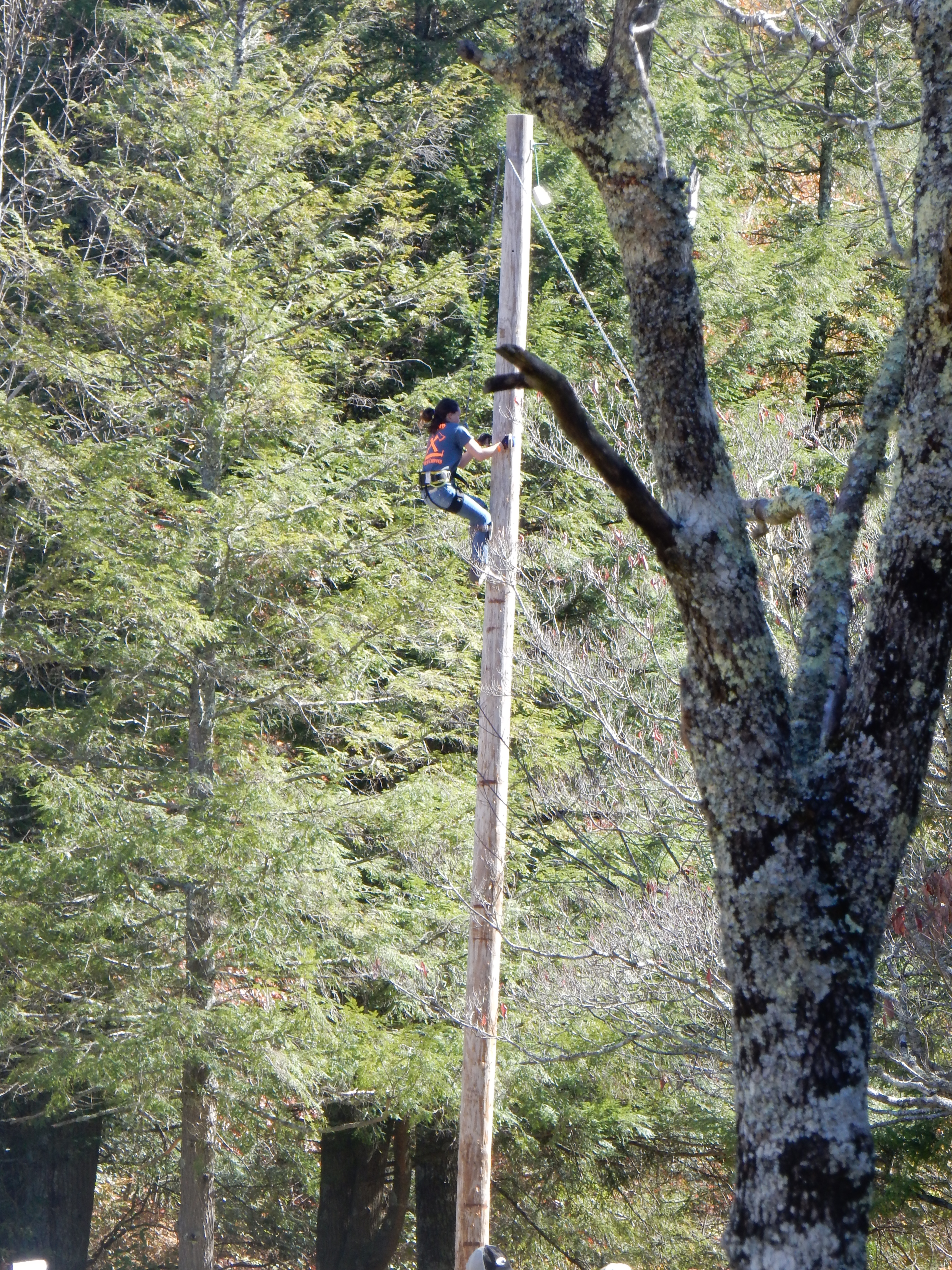
Pole climbing

Pole climbing

The Cradle of Forestry has several walks that wind among the school grounds and preserved school buildings. Our original plan was to tour them and the exhibits and move on. However, today was the re-scheduled date (from the “biblical” rains of two weeks ago) of the Woodsmens Meet. The Meet involved seven schools of forestry in team compettions in pole climbing, log cutting, axe hurling, chain saw cutting, etc. There were male and female contests. We spent an enjoyable bit of time watching several of the competitions.

Finally, we drove to Asheville and made 5 PM Mass at the Basilica of St. Lawrence. This church has the largest free-standing elliptical dome in North America. Lucky for us, a couple was celebrating their 50th wedding anniversary and we were able to spend a longer period of time in church than usual.

Ed and Chris 11:45 PM

Categories: road trip, travel | Tags: , , , , , , , , , | 2 Comments

Blog at WordPress.com.