road trip

2013, Trip Nine, Christmas in Santa Fe, New Year’s in Flagstaff

Santa Fe, Thursday Dec. 19

Ed and Jude in Santa Fe

Ed and Jude in Santa Fe

The morning started with domestic activities. While Chris did laundry, I made the first batch of Russian tea cakes. This was my first time with high altitude cooking and discovered the cookies took about 30% longer to bake than usual. The results were still great, though.

Second powdering of Russian Tea Cakes

Second powdering of Russian Tea Cakes

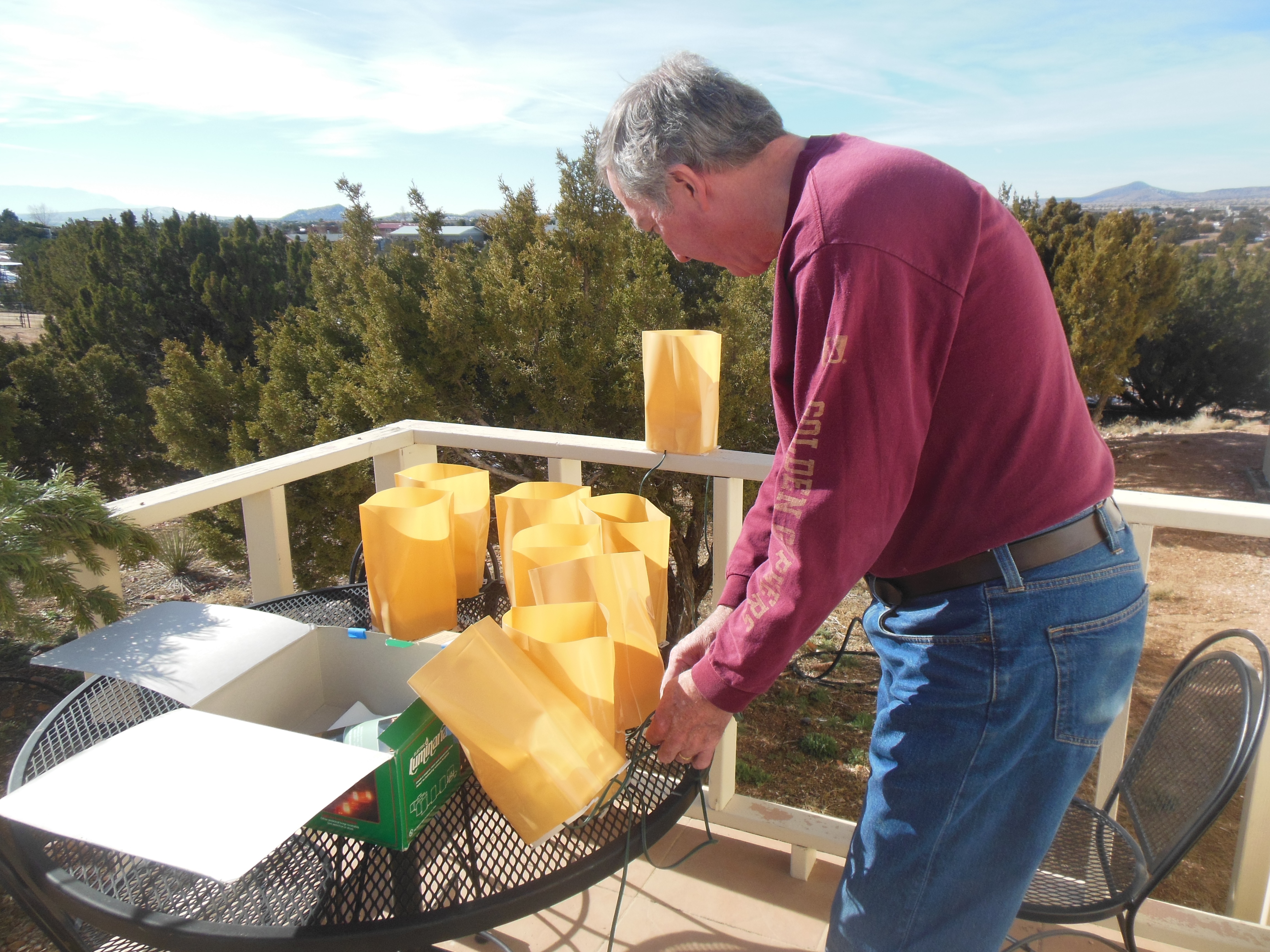
I installed our luminaria outside Jude’s house. Since we were not going to be home for Christmas, it seemed reasonable to set them up here. After all, Santa Fe is the home of luminaria.

Luminaria set up

Luminaria set up

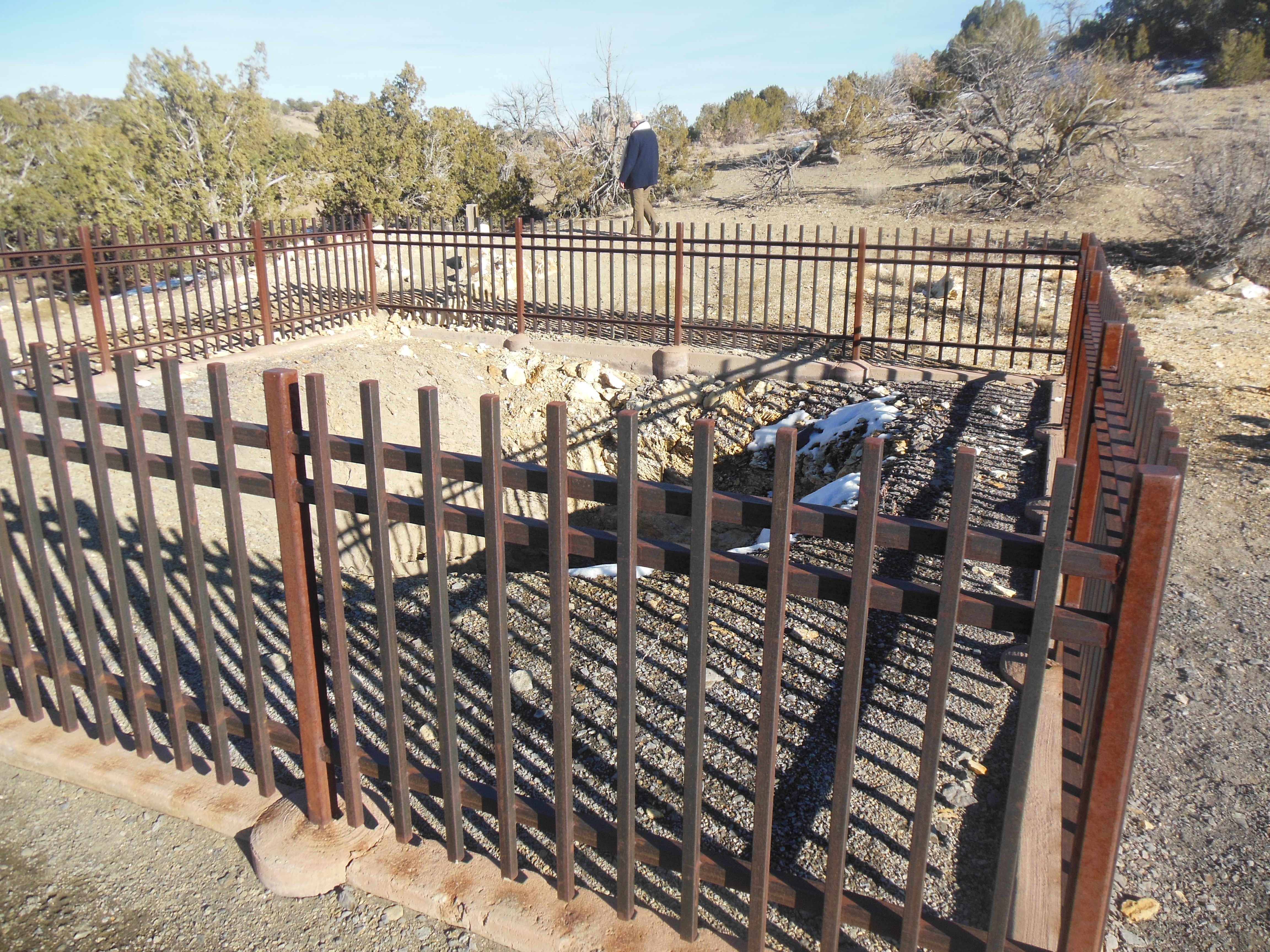
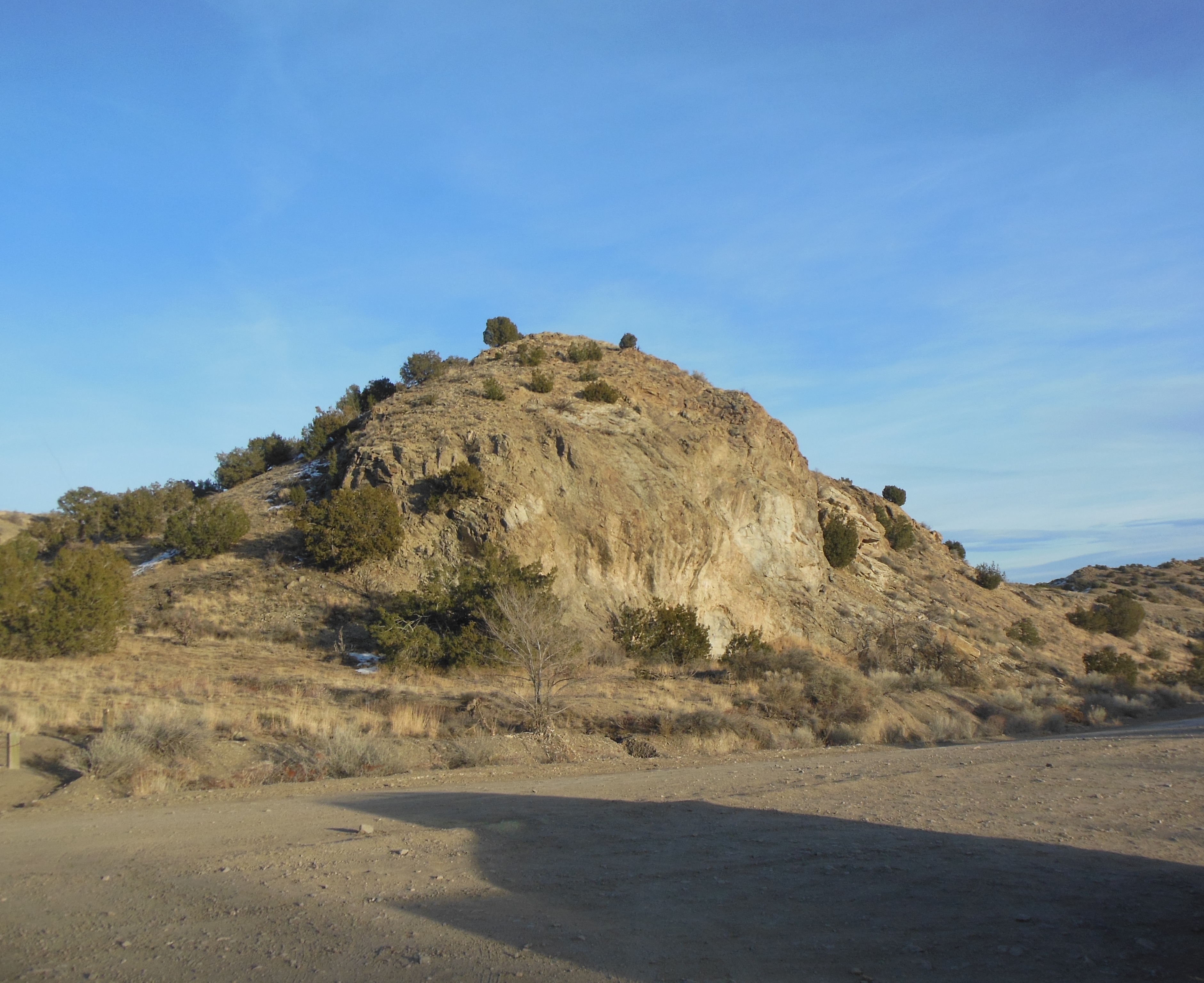
Chris and I returned to Cerillos Hill State Park and went hiking. One of the trails goes by three closed mines. Mines in this area were one man with a pick and shovel-none of the large, commercial mines around here.

Closed mine at Cerillos Hills State Park

Closed mine at Cerillos Hills State Park

A rest area in the park had displays created by a local school group. Besides art work, the students had created a sun dial that is calculated for the various sun angles throughout the year. It only works for noon of each day but it still well demonstrates the students’ research.

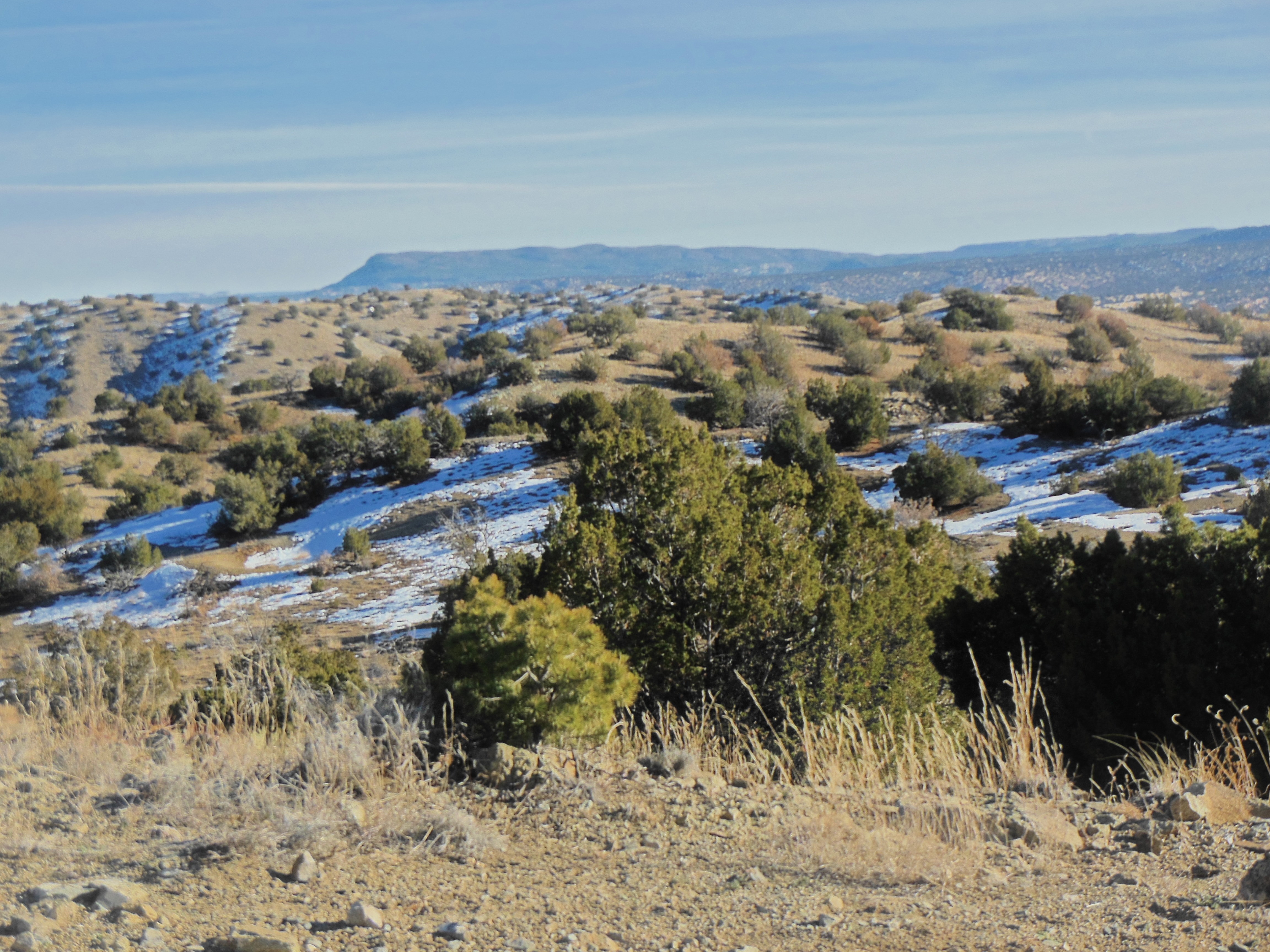
View from Cerillos Hills State Park

View from Cerillos Hills State Park

After dinner we headed to downtown Santa Fe for a concert by the Santa Fe Women’s Ensemble. The ensemble has been around for 33 years. This is a group of 12 women who sing a capella. One of the songs they sang was a world premiere of a new arrangement of “Salve Regina Mater”. Supposedly this was being filmed and it will be on YouTube sometime in the future. We made sure we applauded extra loud for this work.

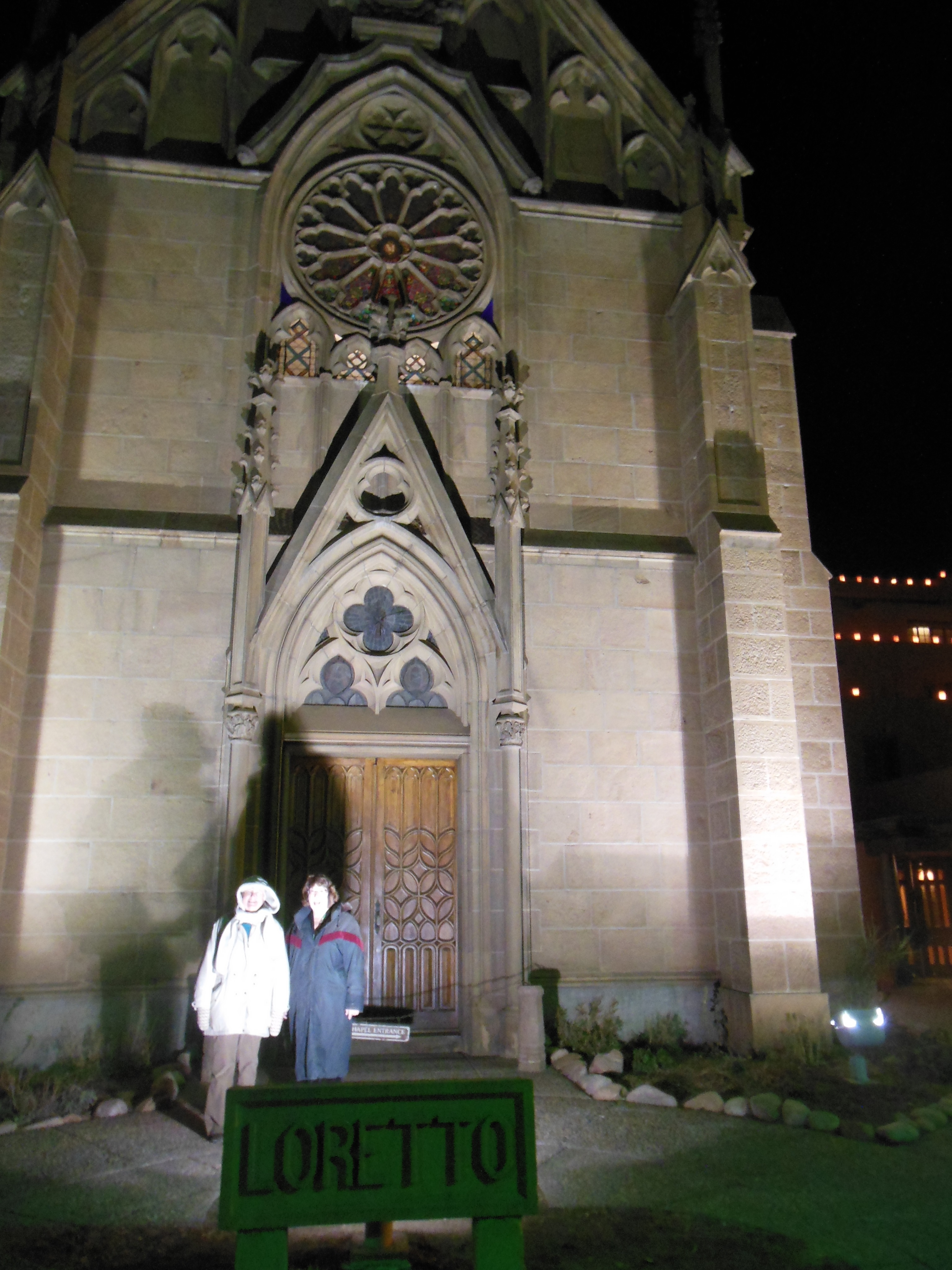
Chris and jude outside Loretto Chapel

Chris and Jude outside Loretto Chapel

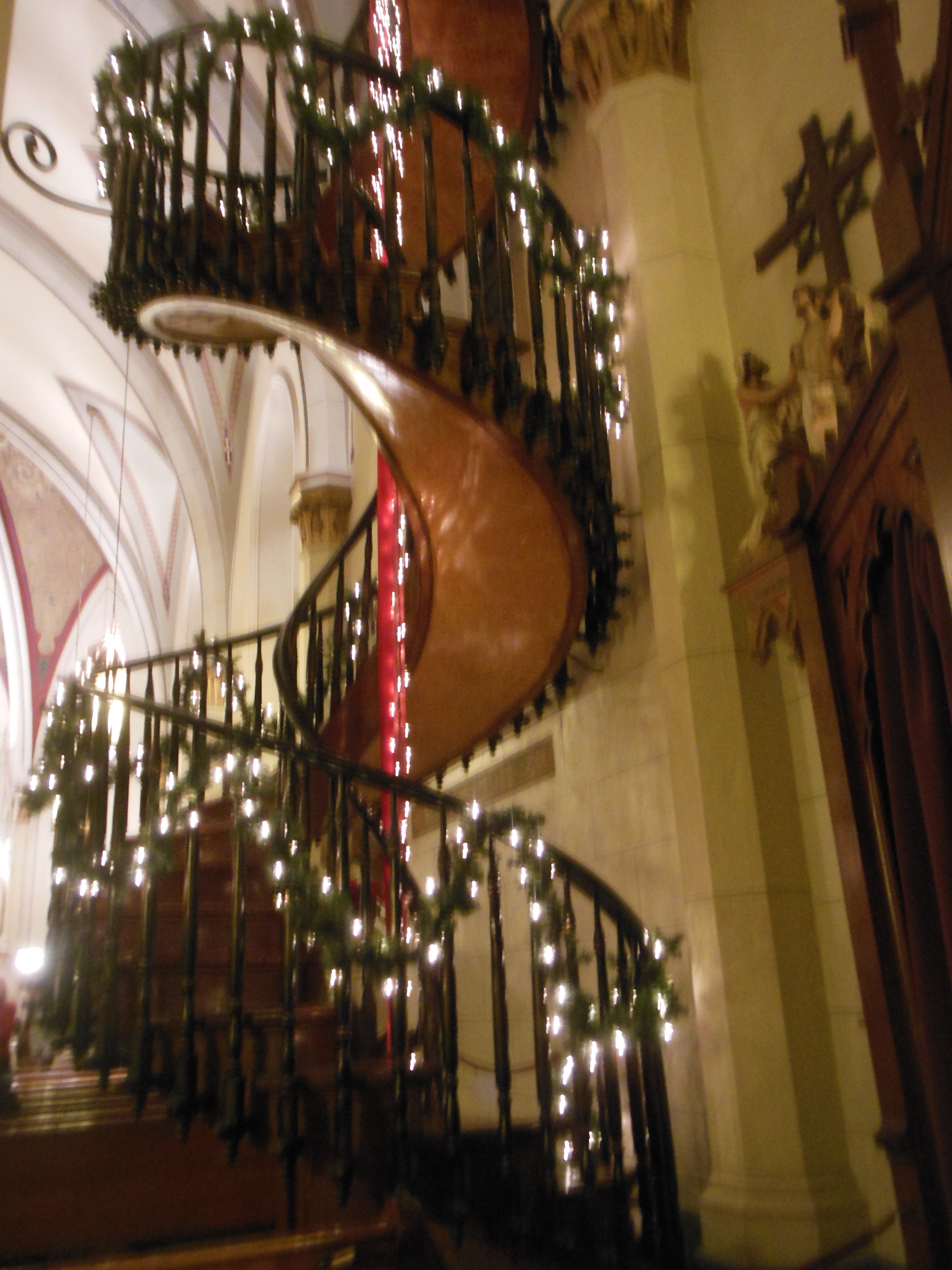
The concert was held in Loretto Chapel. Loretto Chapel (www.lorettochapel.com) is famous for its spiral staircase created by a simple workman and is constructed without any visible means of support with two, 360 degree turns. The chapel had been built without a way to access the choir loft and carpenters of the day were called in but no one could figure out how to build a staircase in the narrow confines of the chapel. The unknown workman showed up on the last day of the Loretto nuns finishing a rosary to pray for an answer. When the staircase was completed months later, the workman left without pay or thanks.

Staircase at Loretto Chapel

Staircase at Loretto Chapel

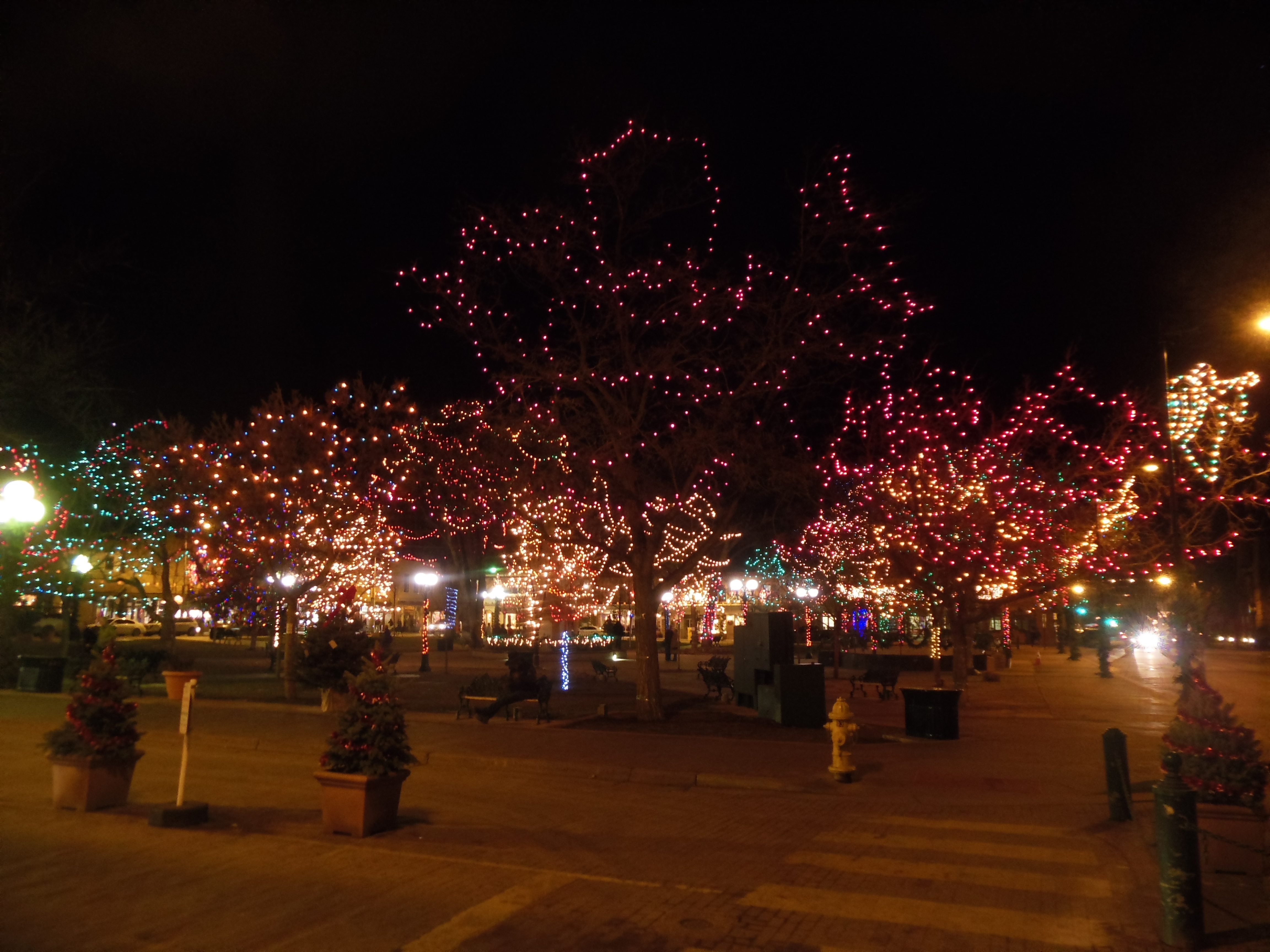
Santa Fe Plaza lights

Santa Fe Plaza lights


Ed Heimel and Chris Klejbuk
Thursday December 19th 11 pm

Categories: road trip, travel | Tags: , , | 5 Comments

2013 Trip Nine, Dec. 18, Christmas in Santa Fe and New Year’s in Flagstaff

Wednesday, Dec. 18 Santa Fe NM

This route is bringing back memories. We traveled I-40 last spring. We ate at a nice BBQ place in Amarillo. This time around it was closed, owner was deep in debt from multiple, failed investments. We ate at a local steakhouse next door to it (Saltgrass Steakhouse) and had a great meal, well worth the 30 minute wait.

Driving through New Mexico

Driving through New Mexico

As we drove this morning, we passed the “Cadillac Ranch”, a place west of Amarillo where the owner has planted old Cadillacs, about a dozen of them, nose first into the ground. We did not stop and take pictures this time. No one else appeared to be gazing on them either, unlike last April when numerous people were exploring the site.

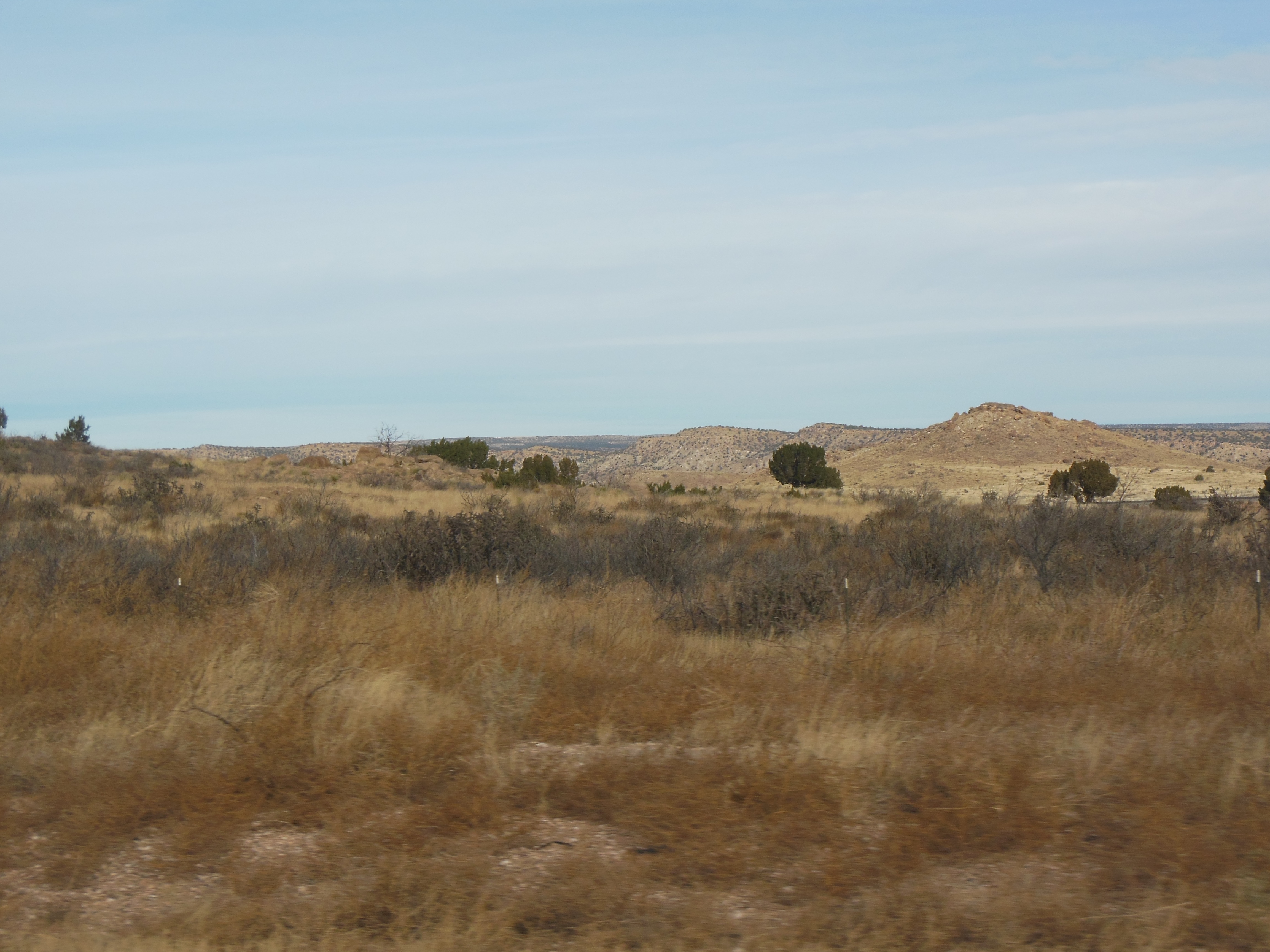
The western end of Texas has some rolling, eroded hills and then New Mexico starts to have mesas and buttes and finally mountains. A little snow on the ground in the shade and on top of the mountains in the distance.

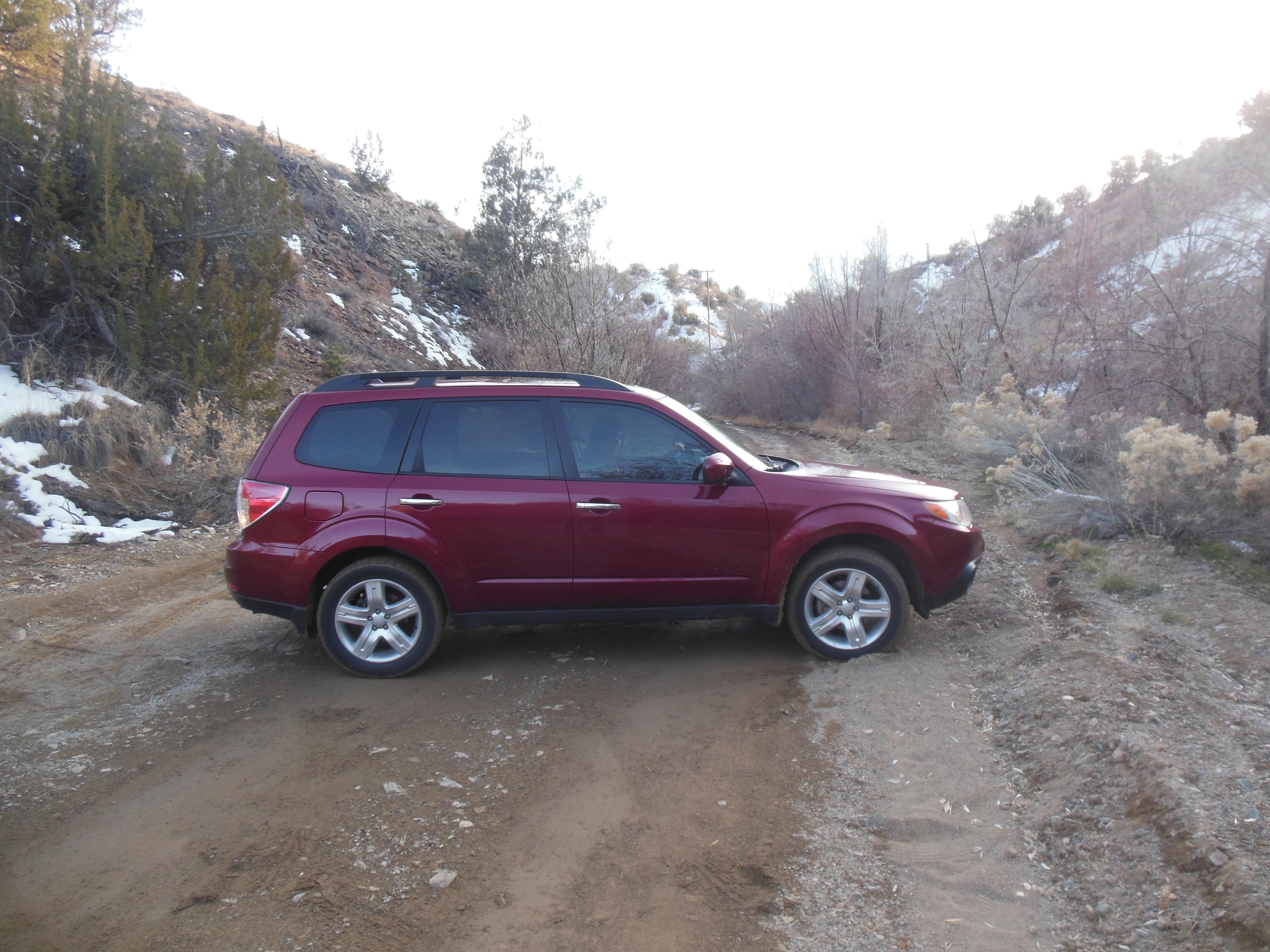
Getting turned around in Cerillos Hills State Park

Getting turned around in Cerillos Hills State Park

We tried to have lunch in Santa Rosa NM on the old historic Route 66 but the place we were looking for was hiding from us so we kept on going. Lunch ended up being just outside Santa Fe in a local place, Harry’s Roadhouse.

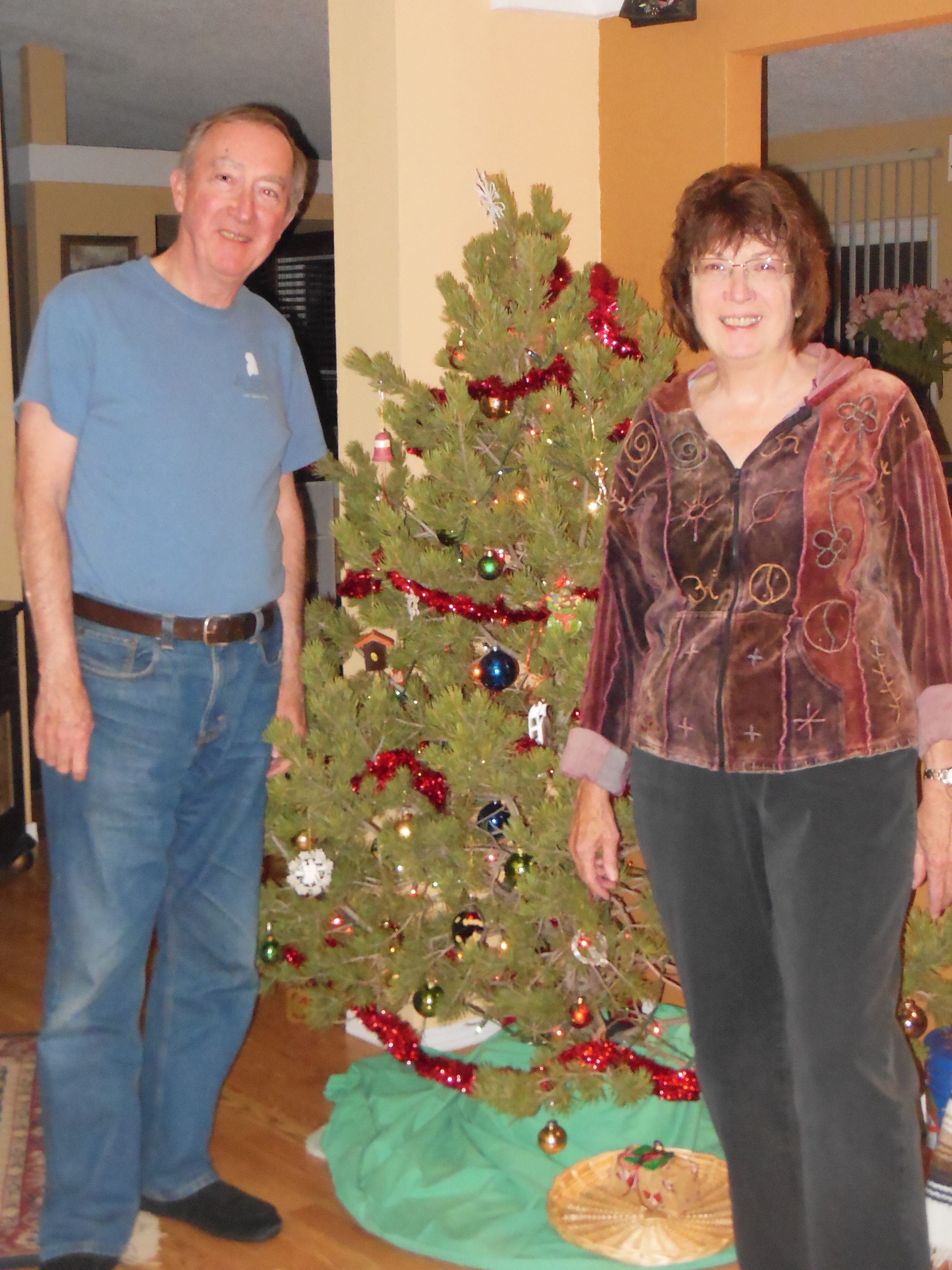
Jude has her Christmas tree up and decorated. Dinner was cooking in the crock pot so we headed out for an adventure. Cerillos Hills State Park became a state park in 2009 and Jude had not been here yet. The drive only took about 20 minutes and the park was having a Christmas open house, cookies and coffee, etc.

Cerillos Hills State Park

Cerillos Hills State Park

It was too late in the day to go hiking on any of the trails so we will have to return at a later time. The park commemorates the mining done in the this area in the late 1800s. Turquoise was one main mineral but others included galena, copper, iron, etc. Of the estimated 5,000 small mines in this area, it is thought that only 12 were profitable.

The town of Cerillos has dramatically shrunk from its heyday when mining was popular. The park service has a new visitor center with a few displays. We talked to two of the park rangers and promised to come back again.

After a short drive to the town of Madrid, we headed back to Jude’s for dinner.

Ed and Chris December 18, 8:30 pm

Categories: road trip, travel | Tags: | Leave a comment

2013 Trip Nine, Dec. 17, Christmas in Santa Fe, New Year’s in Flagstaff

Amarillo, TX Tuesday Dec. 17th

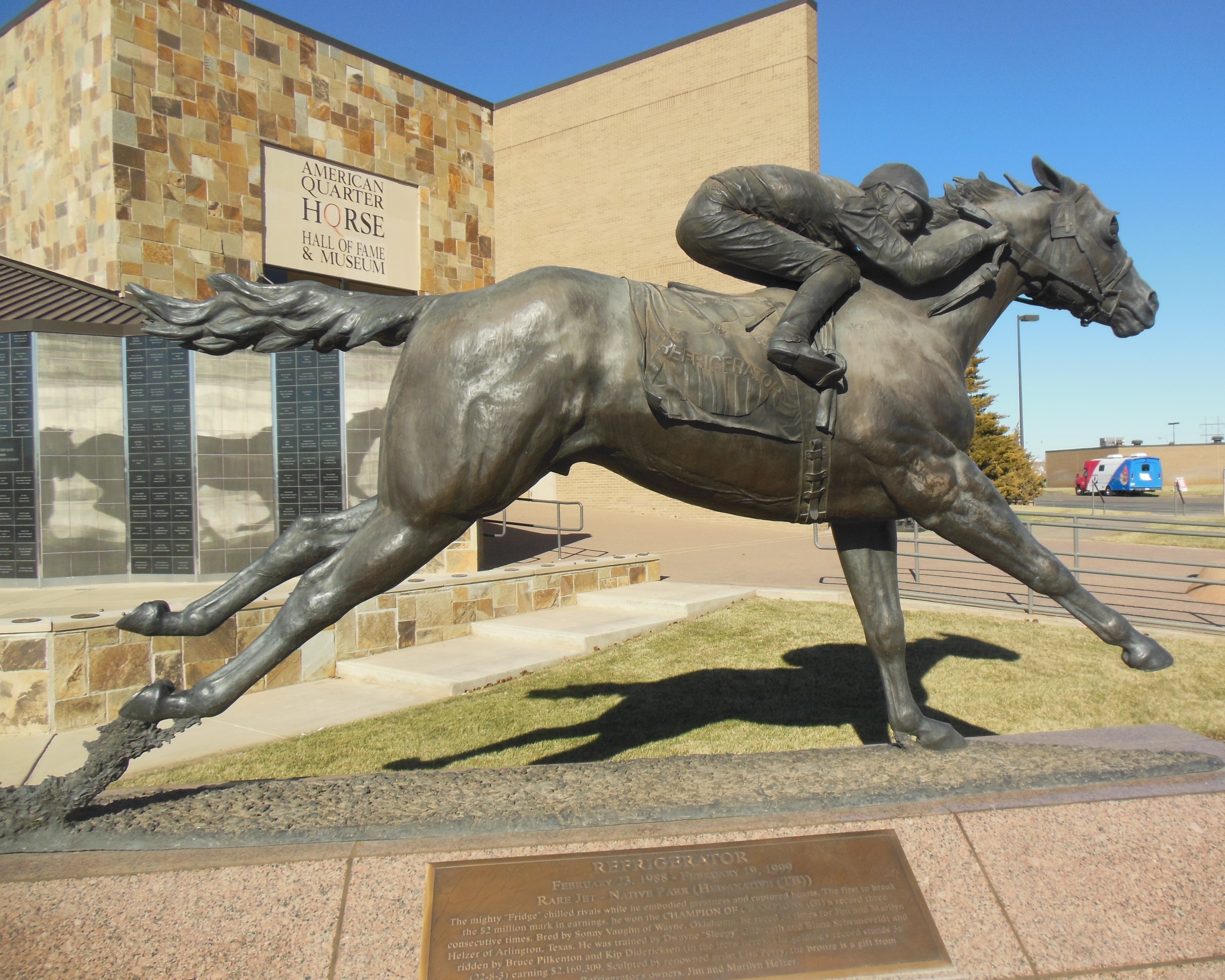
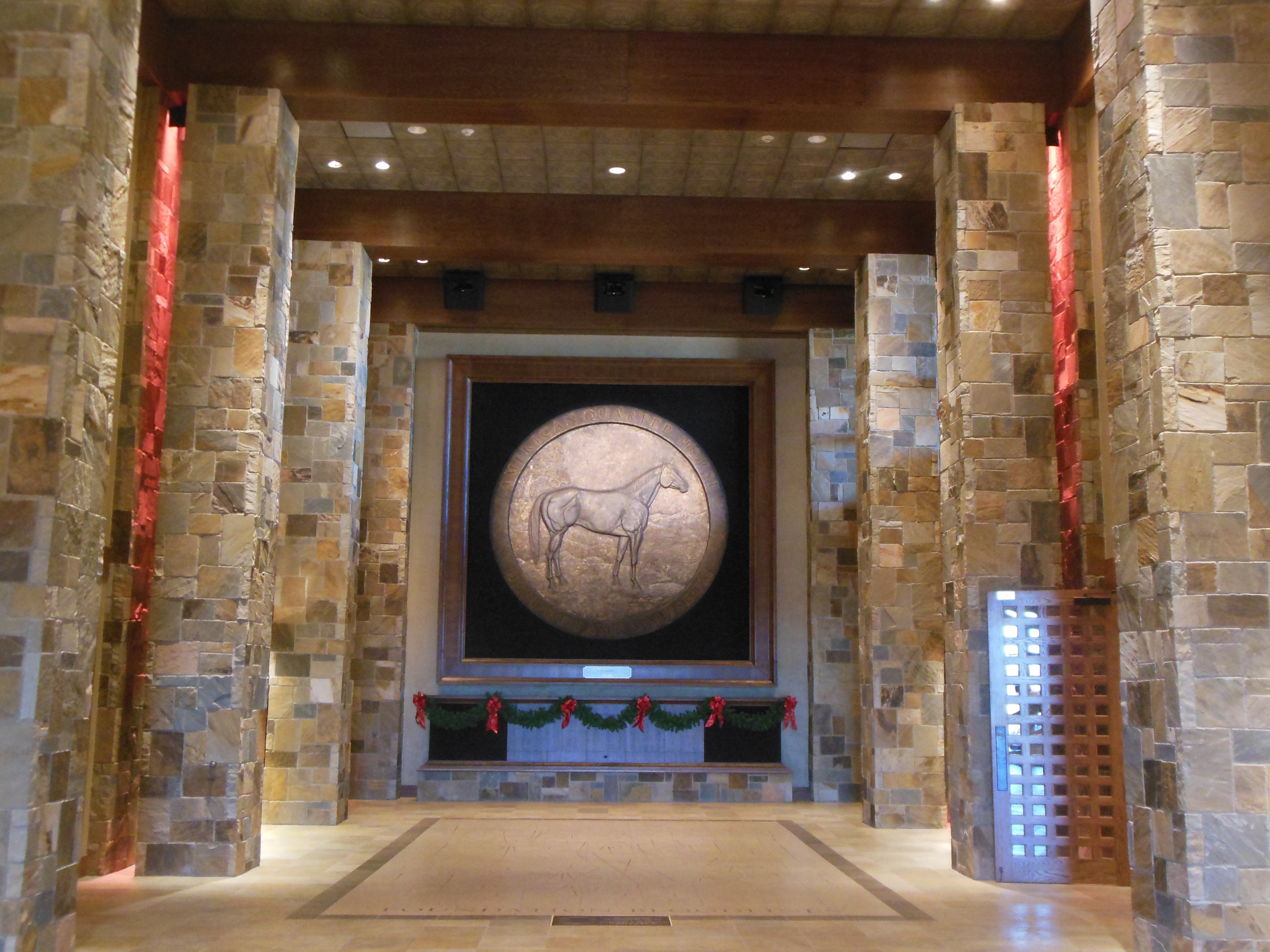
American Quarter Horse Museum and Hall of Fame,,, Amarillo

American Quarter Horse Museum and Hall of Fame,,, Amarillo

The weather has been favorable with an unusually warm and sunny period so our short drive to Amarillo was easy. Lunch was in a small, local restaurant in Shamrock, TX. The decor was done in old time tables and booths with crucifixes all around. It seemed a place where you wondered if the food inspector ever made it out here. But the buffet food was very tasty with a nice apricot cobbler for dessert.

Quarter Horse museum

Quarter Horse museum

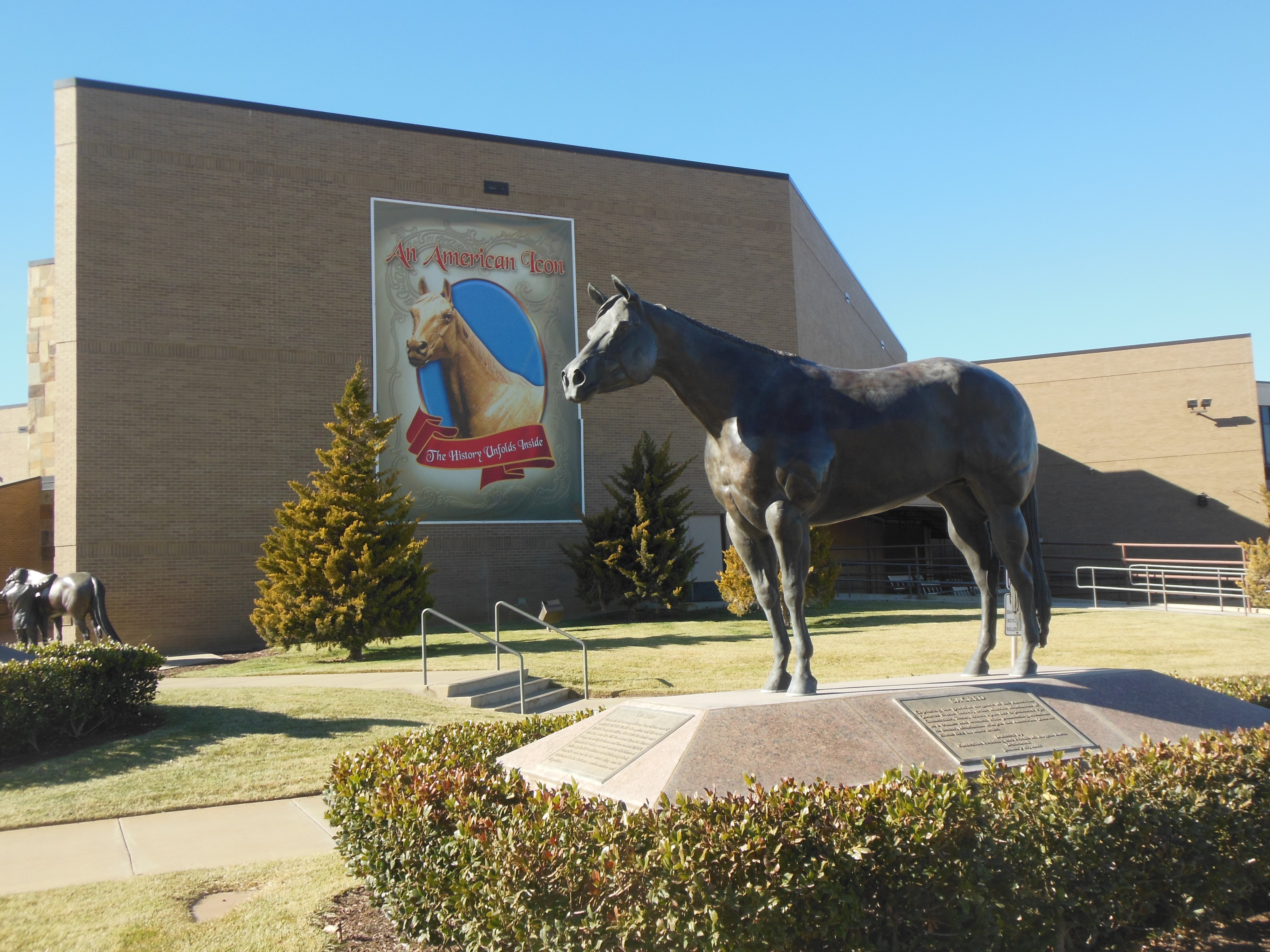
We took advantage of the short drive to spend time at the American Quarter Horse Museum and Hall of Fame in Amarillo. It is located next to the American Quarter Horse Association Headquarters.

Quarter Horse Museum

Quarter Horse Museum

It was a pleasanat experience but it seemed more of a tribute to its members than a museum. The museum did discuss the development of the quarter horse as a specific breed unique to the U.S. The quarter horse specializes in both work (cattle ranching) and show/racing.

The quarter horse racing is focused on shorter races, dating back to early American days when “tracks” were just short straight aways in small towns. One of the major races is held in south central New Mexico at Ruidoso Downs.

American Quarter Horse Museum

American Quarter Horse Museum

The cattle focus occurs because the horses are able to cut quickly and react intuitively to cattle movement.

Most of the display is brief individual snapshots of horses, trainers, owners, jockeys, etc along with a timeline of the Association’s activities. There are some interactive displays with snippets of races, etc.

Still it was a pleasant interlude on our drive to Santa Fe.

Ed and Chris Dec. 17th

Categories: road trip, travel | Tags: | Leave a comment

2013, Trip Nine, Dec. 16, Christmas in Santa Fe and New Year’s in Flagstaff

Oklahoma City, Monday Dec. 16

Along Interstate 35 in Kansas and Oklahoma, we saw numerous raptors, (black with white bellies) individually, perched in trees and on fence posts. We thought, oh, maybe these are jayhawks. But no, Wikipedia says jayhawks is a term assigned, for unknown reasons, to a band of outlaws going back to the Kansas-Missouri conflicts around the Civil War. Eventually it lost some of its negative connotations and now is the mascot name for the Kansas state university teams. So, since we are not birders, we have no idea which birds we were constantly seeing.

Another minor tidbit. Knute Rockne, the famous Notre Dame coach of the 1920s era, is memorialized at a rest stop along the Kansas Turnpike. We thought, wrongly again, that he must have been born in Kansas. Instead, he died in 1931 in an airplane crash a few miles from the rest stop. Icing on the wings caused the crash and lead to airplane innovations to reduce the issue in the future.

Rockne was a Norwegian immigrant to America who worked to gain enough money to go to Notre Dame. He began school there at age 22, was a football star and chemistry major, and later came back to coach. He is credited with popularizing the shift and the forward pass in football and still has the winningest percentage of any Division I college football coach.

We were pleasantly surprised to find a Dunkin Donut at the rest stop. We just had to pop in and have a donut to keep them in business for any return trip we make along this route.
In Oklahoma City, we spent two hours at the National Cowboy and Western Heritage Museum. (I wonder what one must do to include the term “National” in a museum title?) Started back in 1955, it now has over 200,000 square feet of display space.

End of the Trail sculpture by James Earle Fraser at the National Cowboy and Western Heritage Museum

End of the Trail sculpture by James Earle Fraser at the National Cowboy and Western Heritage Museum

They have a replica of a frontier town with full size buildings. The museum has special exhibits, currently they were displaying art from members of the Cowboy Artists of America and the Traditional Cowboy Arts Association. Boy, the prices of some of the items exceeded our annual budget. One saddle was already sold for $74,000. Numerous paintings were over $10,000 and many of them sold. I thought maybe I was in Santa Fe, given the prices.

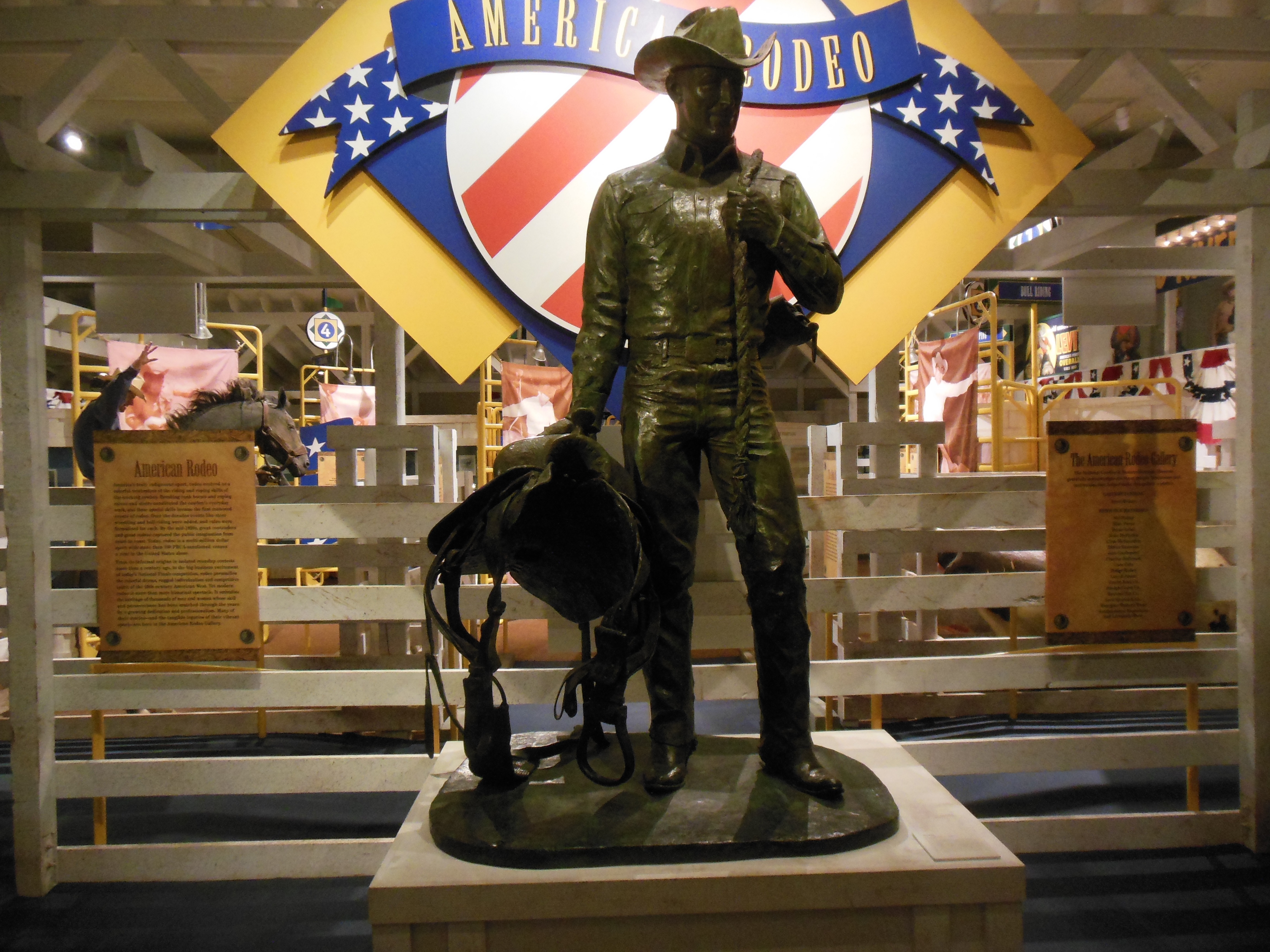
Entrance to rodeo display at National Cowboy and Western Heritage Museum

Entrance to rodeo display at National Cowboy and Western Heritage Museum

The museum collection includes numerous items from Frederic Remington, Charles R. Russell, Albert Bierstadt and other early American artists. Contemporary painters have work displayed, some of the figures in the paintings just leap out and seem to be right in the room with you. The landscapes of the West are to die for.

Other display areas include firearms, rodeo, western movies, Native American crafts, and several halls of fame. Two hours were not sufficient to see everything, we did pretty much skip the firearms section completely.

Moon rise over parking lot Oklahoma City

Moon rise over parking lot
Oklahoma City

Our final experience was with the Oklahoma toll roads. We had to take one to reach our hotel. Exact change only. $1.15 which they tell you when it is too late to exit the road. BUT, at the cash payment booth the toll road has installed a $1 and $5 bill changer so you can get coins to pay the toll. They have an “EZ Pass” like system but evidently it does not have reciprocity with other states like Kansas, Texas, EZ Pass, etc. But MN is no better, their local program is unique to MN also. So much for encouraging travelers. Lets just heavily tax the hotel room rates and forget about any services for visitors. (So much for the rant and rage.)

Ed and Chris 10 pm.

Categories: road trip, travel | Tags: , , , , | Leave a comment

2013 Trip 9, Christmas in Santa Fe and New Year’s in Flagstaff

Sunday, December 15 Kansas City, MO

St. Paul view December 15

St. Paul view December 15

Well we are back on the road again where we are sure to find a variety of weather conditions. We left St. Paul with temps just below zero and arrived in KC with no snow on the ground and a temp of 40 degrees (above zero).

Country Club Plaza, KC

Country Club Plaza, KC

Our car is packed with slightly different items. A sleeping bag replaced a light blanket. Extra windshield de-icer fluid and kitty litter for traction on ice. Christmas decorations. Big boots and heavy jackets. Since Santa Fe and Flagstaff are at higher elevations, going south does not necessarily equate to warm. But, we expect it to be warmer than St. Paul has been.

Country Club Plaza with Cinderella Pumpkin horse drawn coach

Country Club Plaza with Cinderella Pumpkin horse drawn coach

The drive down went smooth, light flurries around Des Moines but not a major issue. We arrived in Kansas City in time to walk around Country Club Plaza which is decorated for Christmas. On the way home from our Ozarks’ trip, we spent three days in Kansas City and had visited this area. The fountains it is known for were generally off for the winter at that time. Seeing the lights up this time around was a pleasant touch.

Country Club Plaza

Country Club Plaza

This Fairfield Inn is a step above the normal ones, more spacious and well decorated. Just a pleasant interlude on our way to Santa Fe.

Ed and Chris 8:45 pm

Categories: road trip, travel | Tags: , | 2 Comments

2013 Trip Eight, Nov. 15, The Ozarks

Kansas City, MO Friday November 15

Overview of downtown K.C.

Overview of downtown K.C.

Well, Kansas City is a keeper. We have enjoyed what we have seen, people we have met, and there are places we have yet to encounter. We have realized that Kansas City is not much further than Chicago which has always seemed to be a good weekend getaway. KC just might get added to our list for future getaways. A slightly warmer period of the year might be better.

The Time Tower at Country Club Plaza

The Time Tower at Country Club Plaza

The day’s activities began with a walking tour of Country Club Plaza, an outdoor shopping area developed back in the 1920s as the first outdoor shopping center in the U.S. This concept is not unusual now but was ahead of its time. It has a Spanish motif with numerous fountains and sculpture. KC is known for its fountains, among other items. The Plaza area has a large number of fountains but due to the time of the year, most of them had been turned off for the winter.

Fountain of Neptune with water turned off

Fountain of Neptune with water turned off

Early morning weather was cool and cloudy so the pictures may not be dramatic. As the day went on, it warmed up and the sky cleared up. Most of the stores were not open yet, but since we do not shop much, that was not a problem for us.

Spanish motif on buildings at Country Club Plaza

Spanish motif on buildings at Country Club Plaza

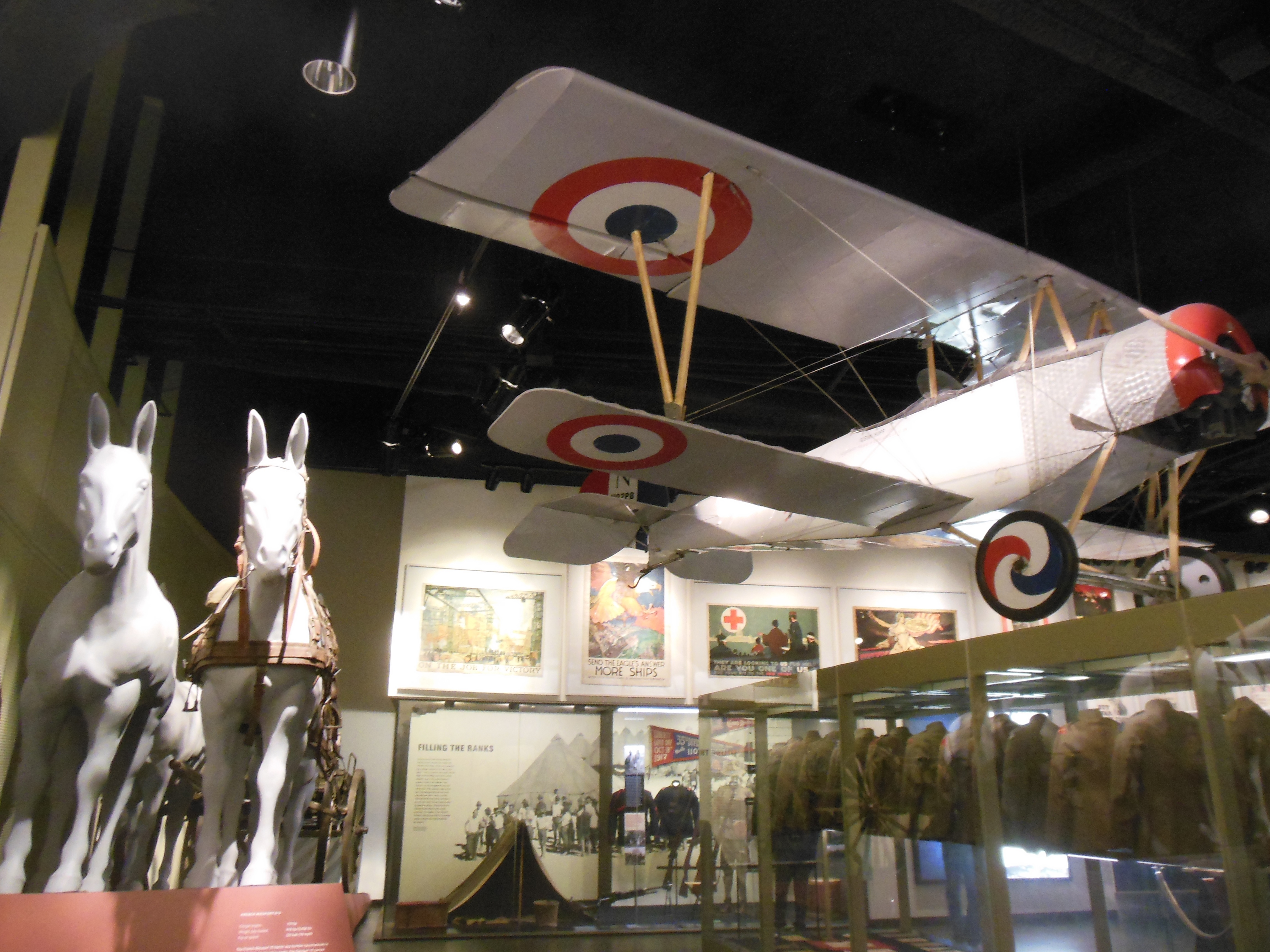
It was back to museums for our second stop. KC is the home of the only major museum in the U.S. devoted to the First World War. The museum (www.theworldwar.org) has been renovated in the last 10 years after first opening in 1921. It is spectacular and very well laid out.

National World War I Museum in Kansas City

National World War I Museum in Kansas City

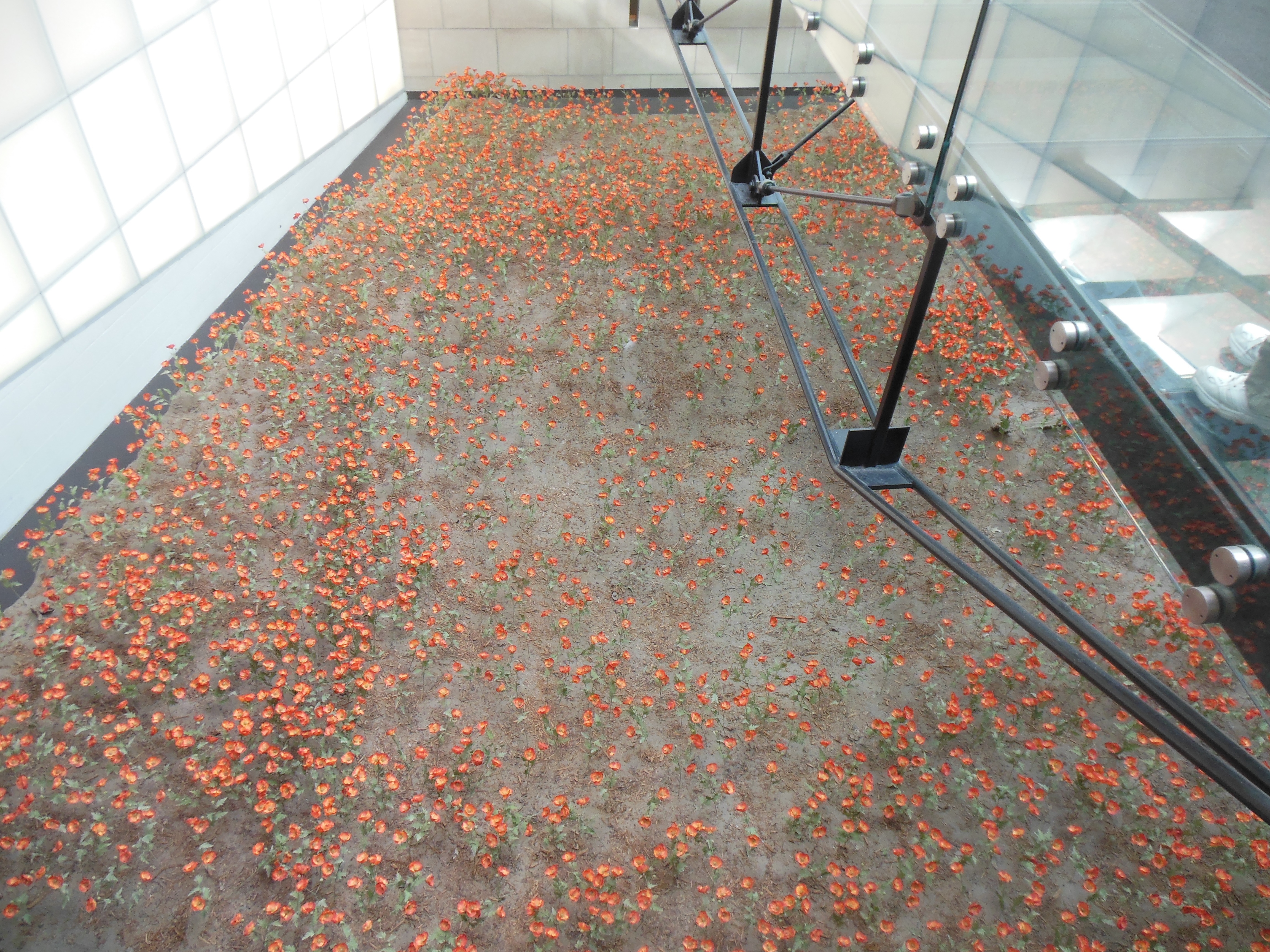
You enter the museum over a clear glass floor overlooking a field of 9,000 poppies. Each poppy represents 1,000 combatant deaths. (There were tremendous civilian deaths also, many from starvation and disease caused by the first claim on resources by the military for the war.) The museum exhibits begin with a video explaining the world setting prior to WWI and closes with information about why the “peace” really only set the stage for WWII.

Field of Poppies

Field of Poppies

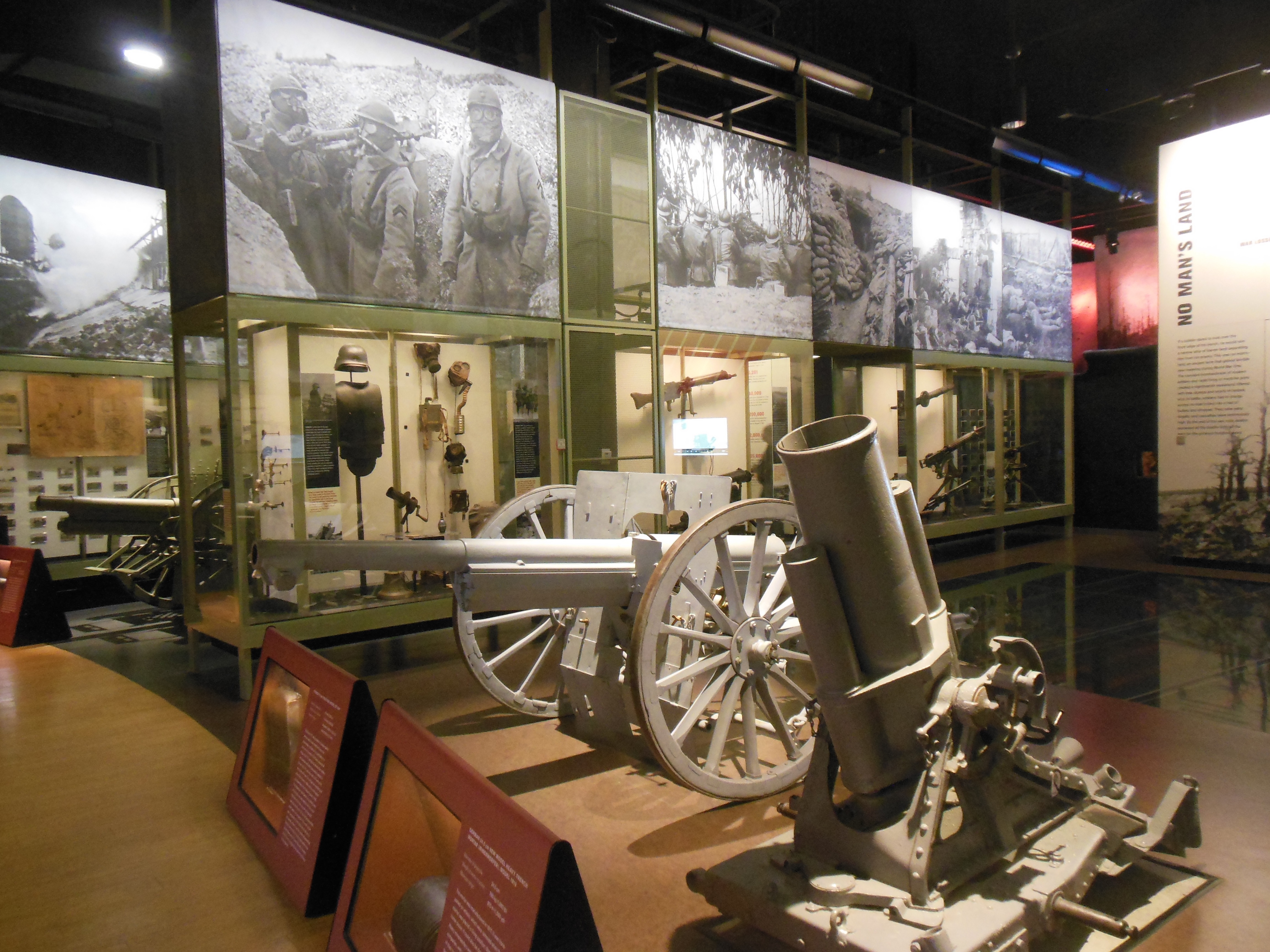
Inside are numerous displays and audio recordings discussing the timeline of the war and specific aspects. We found particularly intriguing the juxtaposition of new and old. Hand digging of trenches and the use of horses to pull artillery into the field alongside the introduction of machine guns, aircraft, tanks, and chemical weapons.

Exhibit at WWI Museum

Exhibit at WWI Museum

Propaganda was heavily used to focus on “us” as the good guys versus “them” as the bad guys. Us of course was your home country, which ever one that might be. The U.S. was not exempt from this and major efforts were devoted to rooting out those who might dare to question the standard line.

Exhibit with airplane and horses

Exhibit with airplane and horses

Our last portion of the museum to view was the observation tower providing an outstanding view of Kansas City. A gentleman from KC was there with his young daughter and kindly pointed out various landmarks to us.

Christmas tree and fountain at Crown Center

Christmas tree and fountain at Crown Center

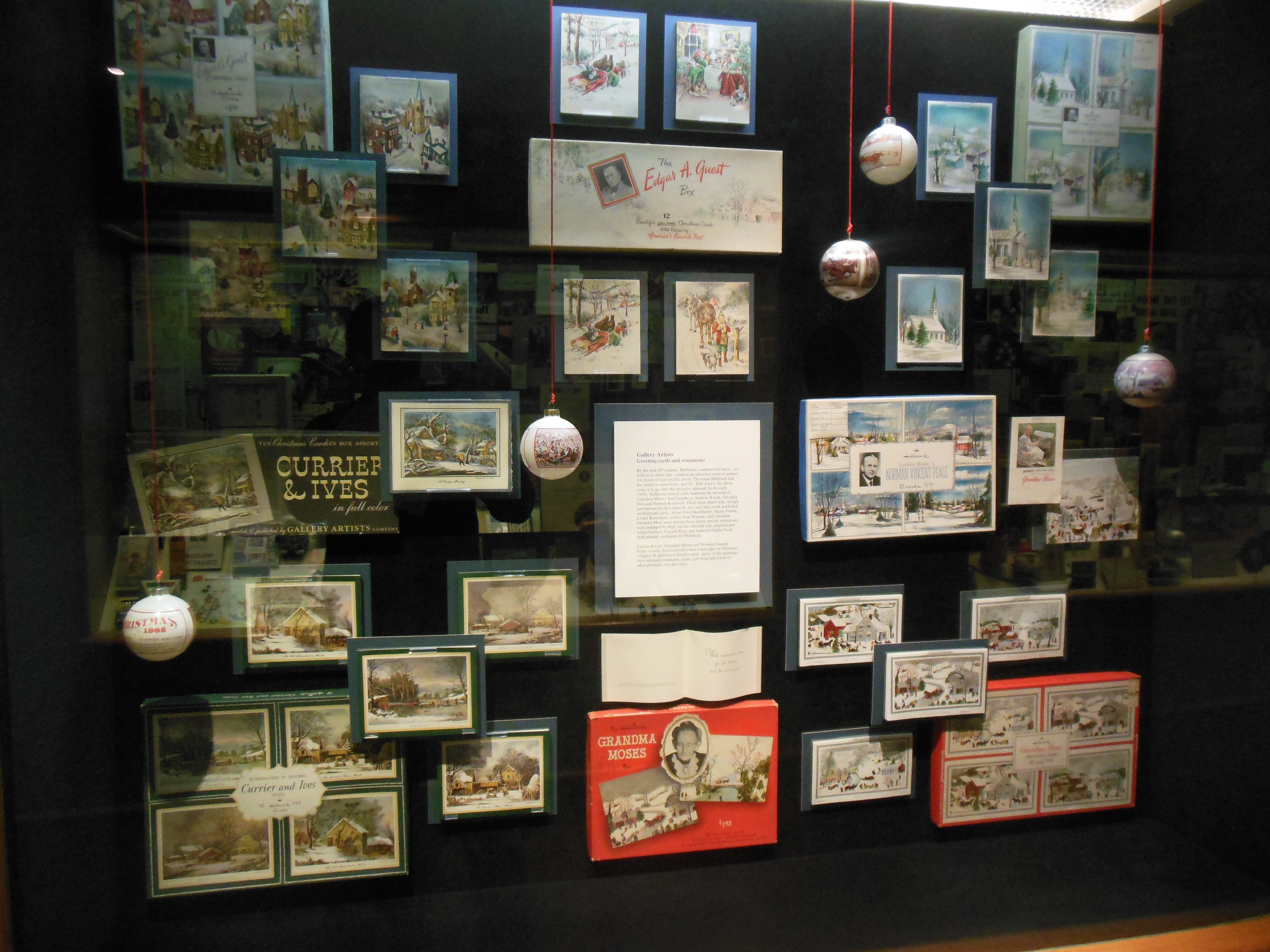
From the museum we went down to Union Station, their renovated railroad depot and then over to Crown Center. Crown Center is a large commercial complex anchored by Hallmark Cards. We visited the Hallmark Visitor Center. This was a delight. Of course we got teary eyed reviewing the Hallmark commercials. Viewing the Hallmark Keepsake ornaments made me want to purchase a couple hundred more.

Display at Hallmark Visitor Center

Display at Hallmark Visitor Center

They have an art gallery which was showcasing several paintings by Winston Churchill-yes, that Winston Churchill. The founder of Hallmark got to know him and purchased the right to use some of his drawings on Hallmark cards decades ago.

One of the Hallmark employee created Christmas trees.

One of the Hallmark employee created Christmas trees.

While we have not double checked the facts, Hallmark appears to be an early adopter of employee health care, pensions and employee stock ownership. There was an exhibit of creative Christmas trees made each year by employees in honor of the initial founder of Hallmark.

As we left, we received a gift of Recordable Artwork canvas art kit made by Hallmark. Will have to decide how best to use it.

Dinner was out with our Evergreen hosts at a delightful local restaurant. Tomorrow is back to Saint Paul.

Ed and Chris November 15 10 pm

Categories: road trip, travel | Tags: , , | Leave a comment

2013 Trip Eight, Nov. 14, The Ozarks

Kansas City, MO Thursday Nov. 14th

What an enriching and educational day! I just hope we can remember more than snippets of it as time goes on. But pictures were not allowed at two of our stops and museums are not known for the most notable photo ops. You will get mainly narrative today.

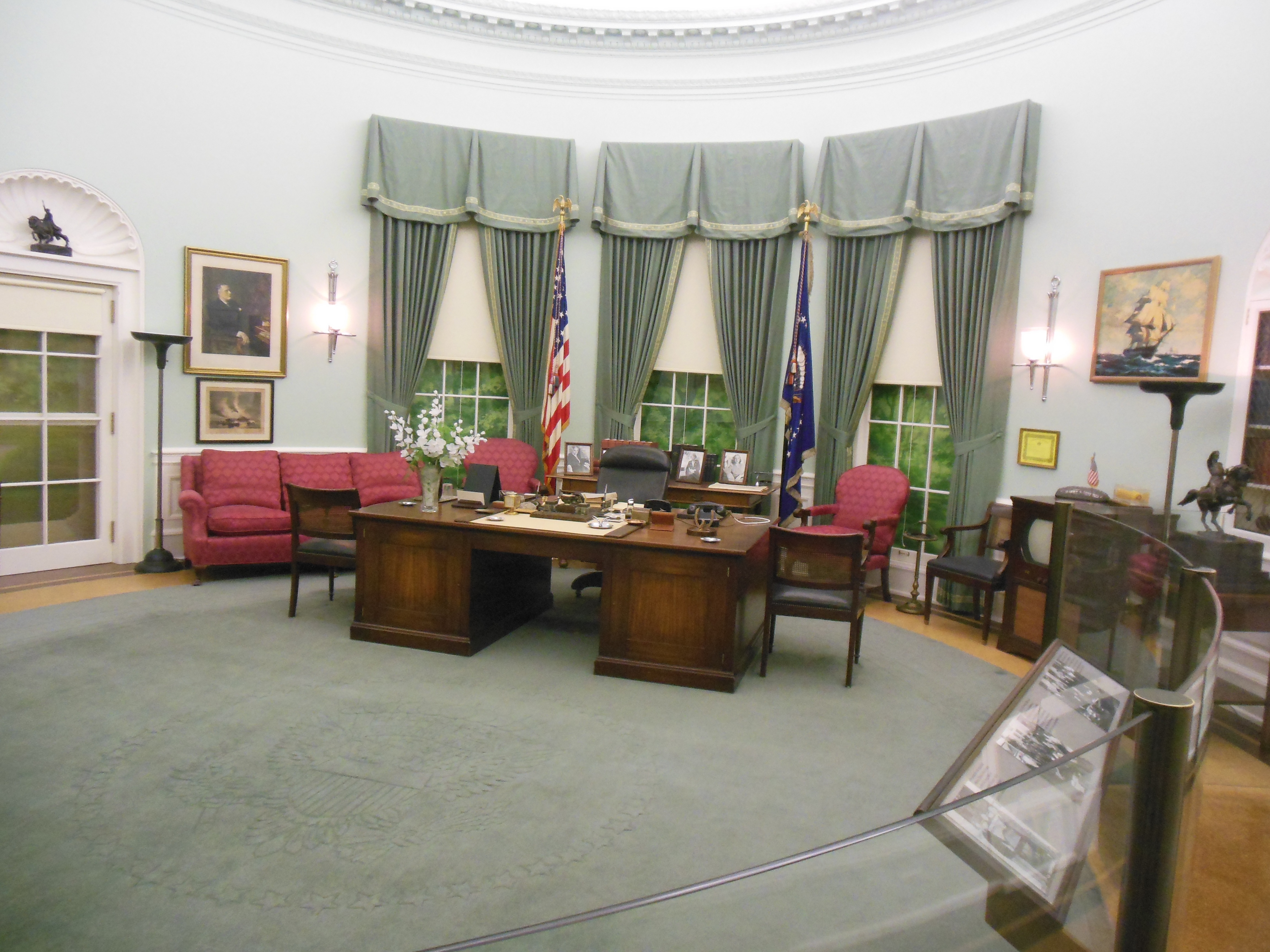
Our first stop was in Independence MO where we visited the Harry S Truman Visitor Center, Home, and Presidential Library and Museum. Independence is now a town of 115,000 but was only about 10,000 in the early 1900s. President Truman grew up here, married, raised a family, and came back here to live for another 20 years after he left office.
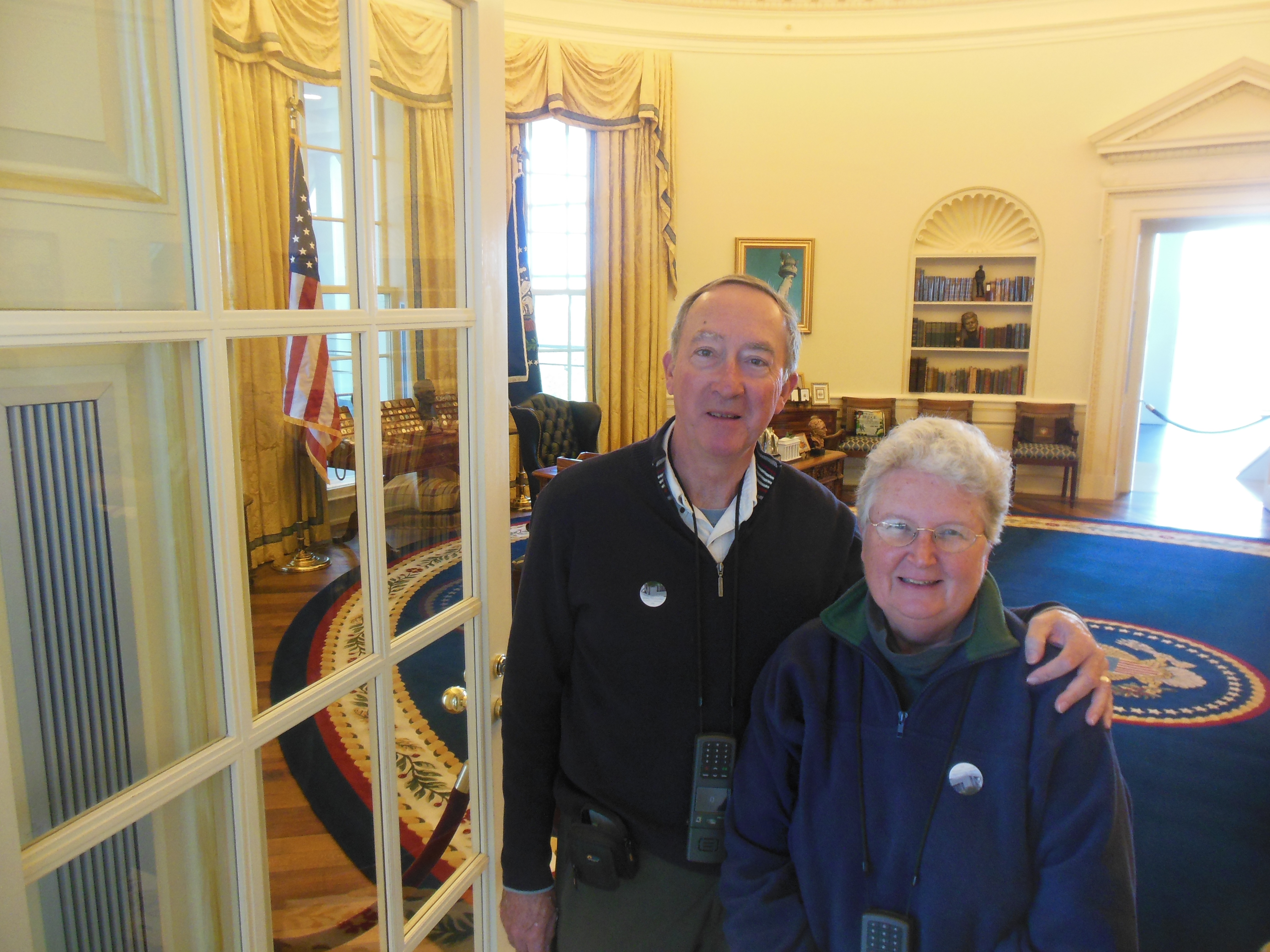
Oval Office replica at Truman Library

Oval Office replica at Truman Library

Continuing our theme of human complexity, Truman has different facets. He grew up in a small town, farming, and working at local businesses. He met his future wife at an early age, courted for a long time, but they did not marry until their mid-30s. She came from the local upper crust and marrying a farmer did not make her family happy. He came back from WWI where he had proved himself as a captain and they finally married. They were a devoted couple until his death at age 88. Bess died 10 years later at age 97. Part of his political success came from his ability to relate to farmers and other “normal” Americans.

Another facet was his early election results were heavily dependent on the Democratic machine in Kansas City run by the Pendergasts, a well-documented corrupt city boss. Truman’s first position, essentially county commissioner, resulted in numerous civic improvements but Truman’s own notes reflect his concern over the corruption he had witnessed. Truman’s election as Senator (two terms) also owes a lot to the turnout orchestrated by the Democratic machine.

His early time in the Senate was marked by a need to overcome the moniker of “Senator from Pendergast”. During his second term, he gained recognition for ferreting out corruption and waste in defense contracts during WWII. When FDR ran for a fourth term in 1944, Henry Wallace, a liberal who had upset Southern Democrats and others, was dumped despite being very popular. Truman was selected in his place. Democratic officials believed FDR unlikely to survive the full term and did not want Wallace to be president. (Wallace went on to run in 1948 as a Progressive for President but was never a real threat.)

As President, Truman faced many important decisions and events, serving while Republicans frequently had control of Congress. He proposed several “liberal” ideas, including national health insurance, that were not enacted. He did, by presidential decree, desegregate the armed forces and opened federal employment to blacks. Other civil rights proposals did not make it through Congress. His background from a town that practiced segregation might have made one think his positions here would not be so enlightened.

He is well known for his decision to drop the two nuclear weapons on Japan that is still debated to this day as whether it was ethical and/or necessary. He also faced the Soviet blockade of Berlin and used a successful 12 month airlift of supplies to keep Berlin operating until the Soviets backed down. Truman was responsible for getting the Marshall Program to rebuild Europe under way.

Truman was President during the Korean War and made the hugely unpopular decision to fire General Douglas MacArthur for his unwillingness to take orders from the civilians in government (the President). (MacArthur, as I recall from another recent museum, had disobeyed orders in dispersing veterans along the D.C. Mall in the 1930s). MacArthur was not only a WWII hero, he had reversed the North Korean success and seemed the savior of the war. After the U.S. advances, MacArthur said the Chinese would never get involved and was proven wrong. MacArthur then wanted to expand the engagement to the Chinese mainland but Truman wanted a limited engagement, not WWIII. When MacArthur was too publicly vociferous, Truman sacked him. MacArthur got the hero welcome when he returned to the U.S.

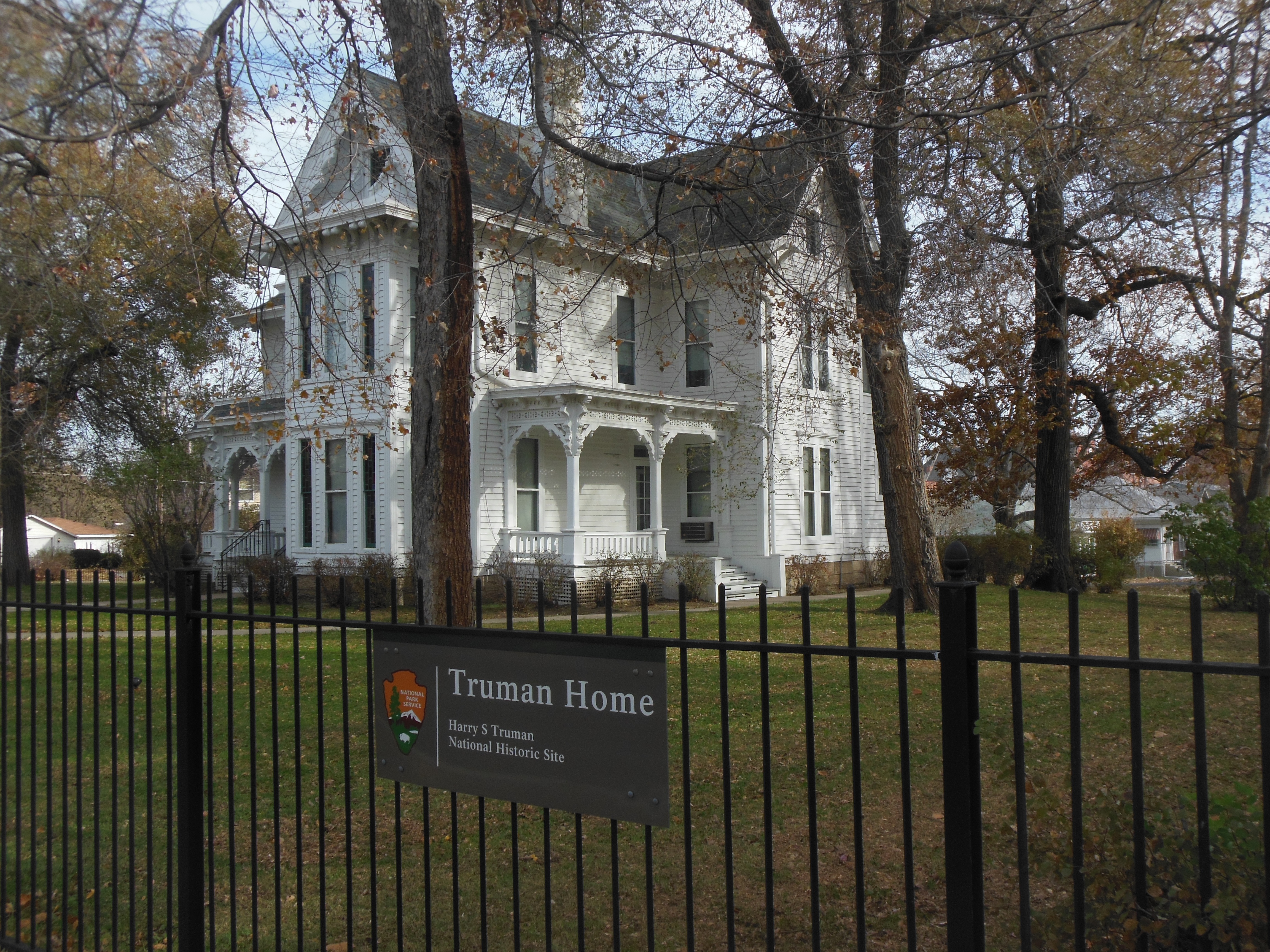
Truman home in Independence, MO

Truman home in Independence, MO

The Truman home was the childhood home of Bess Wallace Truman. When he left office, the two of them returned here to live on his military pension of $112 per month. No Secret Service protection. No fancy entourage. Much unlike Bill Clinton who goes about giving speeches for huge sums of money. The home is large due to Bess’s family and their wealth in the late 1800s. There was no major trust fund or ongoing family money though. A tour of the house today shows it preserved pretty much in its 1950s style with some turn of the century hand-me-downs. It reminded me of my Grandmother Lynch’s home in New Richmond WI.

We continued this mid-America theme with a lunch of hot dogs and Coke from one store and ice cream from the soda where Harry worked as a kid. Then it was on to the Museums at 18th and Vine in Kansas City; the Jazz Museum and the Negro Baseball Leagues Museum.

The Negro Baseball Leagues Museum documents the role of separate black baseball leagues that existed due to a “gentlemen’s agreement” in the major leagues going back to the 1880s that no team would employ African-American ball players, coaches, etc. This continued on until 1947 when Jackie Robinson was signed by the Dodgers. But even then, it took years before all teams in the major leagues were regularly using black players. As one display in the museum noted, the leagues seemed not to have a problem with players from Latin American, most of whom had African roots in the genealogy due to European importation of slaves to South American also.

The leagues were frequently owned by whites, continuing the oppressive nature of American society. The ball players faced discrimination in being served in hotels and restaurants when they traveled. But the teams existed for decades, providing entertainment to black and white communities. The level of play in the majors improved dramatically when integration succeeded, as demonstrated by the disproportionate number of MVPs, Cy Young award winners, batting champs, etc who were African-American. Once integration was complete, the Negro leagues went away.

American Jazz Museum in Kansas City, MO

American Jazz Museum in Kansas City, MO

The Jazz Museum shares one half of the museum building at 18th and Vine. The history of jazz in America is documented. Opportunities to play music from well-known jazz musicians and singers exist throughout the museum. One could spend more than a day just listening to the various recordings available.

Dinner was at a local barbecue restaurant in K.C. I might not get out enough in the Twin Cities. We have observed that most restaurants serve your beverage (water, pop, iced tea-but not milk) in jumbo sized 32 oz cups. Less time spent refilling it, I guess. They even offer to fill it up and let you take it out of the restaurant in a styrofoam cup.

More touring tomorrow.

Ed and Chris Nov. 14th 10 pm

Categories: road trip, travel | Tags: , , | Leave a comment

Trip Eight, Nov 12 and 13, The Ozarks

Kansas City, MO Wednesday Nov. 13

This post will cover Tuesday and Wednesday. Last night was a rare day off from blogging. Our traveling profession is time-consuming, usually no days off. (I hear you crying for us.)

Tuesday we went to the Clinton Presidential Library. It took us over three hours to review the displays. Eight years of presidential history takes a long time to review. There are portions devoted to Bill’s early life and Hillary’s work. A traveling exhibit seemed out-of-place, it focused on their friend Oscar de la Renta. We saw the replica of the Oval Office and of the Cabinet Room. We finished up with lunch in their cafe.

Oval Office replica at Clinton  Library, Little Rock

Oval Office replica at Clinton Library, Little Rock

Even at three hours, the mass of detail seemed overwhelming and difficult to absorb fully. Each year of the presidency had a separate area. Other displays covered topics such as the economy, the budget, world affairs, education, the two elections and inaugurals,etc. The impeachment was included.

The place was busy. School buses brought high school students. Numerous adults were touring. The staff was helpful but we purchased the audio guide which was wise given the number of students present. I can’t say we walked away profoundly awed. We are both in favor of Clinton but we like our politicians squeaky clean. The Lewinsky, et al incidents tarnish the image while reminding us that people have multiple facets, some good and some not so good.

Arkansas State Capitol

Arkansas State Capitol

We returned to the Arkansas State Capitol after Clinton’s Library. The Capitol has the usual adornment of granite and marble with wide staircases, etc. However, it lacks the adornment of several recent capitol visits such as Utah, Virginia, and Missouri. This may well be due to the relative income in the state versus other states, particularly at the time of building.

Arkansas today is the 12th most rural state in the union. I don’t have stats for the early 1900s when the building was being built but from the little information available in the few displays, it was poor and rural then. Basically, the only tour is a self-guided one. It did not take long. Cass Gilbert who designed the Minnesota Capitol was called in to complete the work of the first architect. Corruption and poor quality worked plagued the first effort.

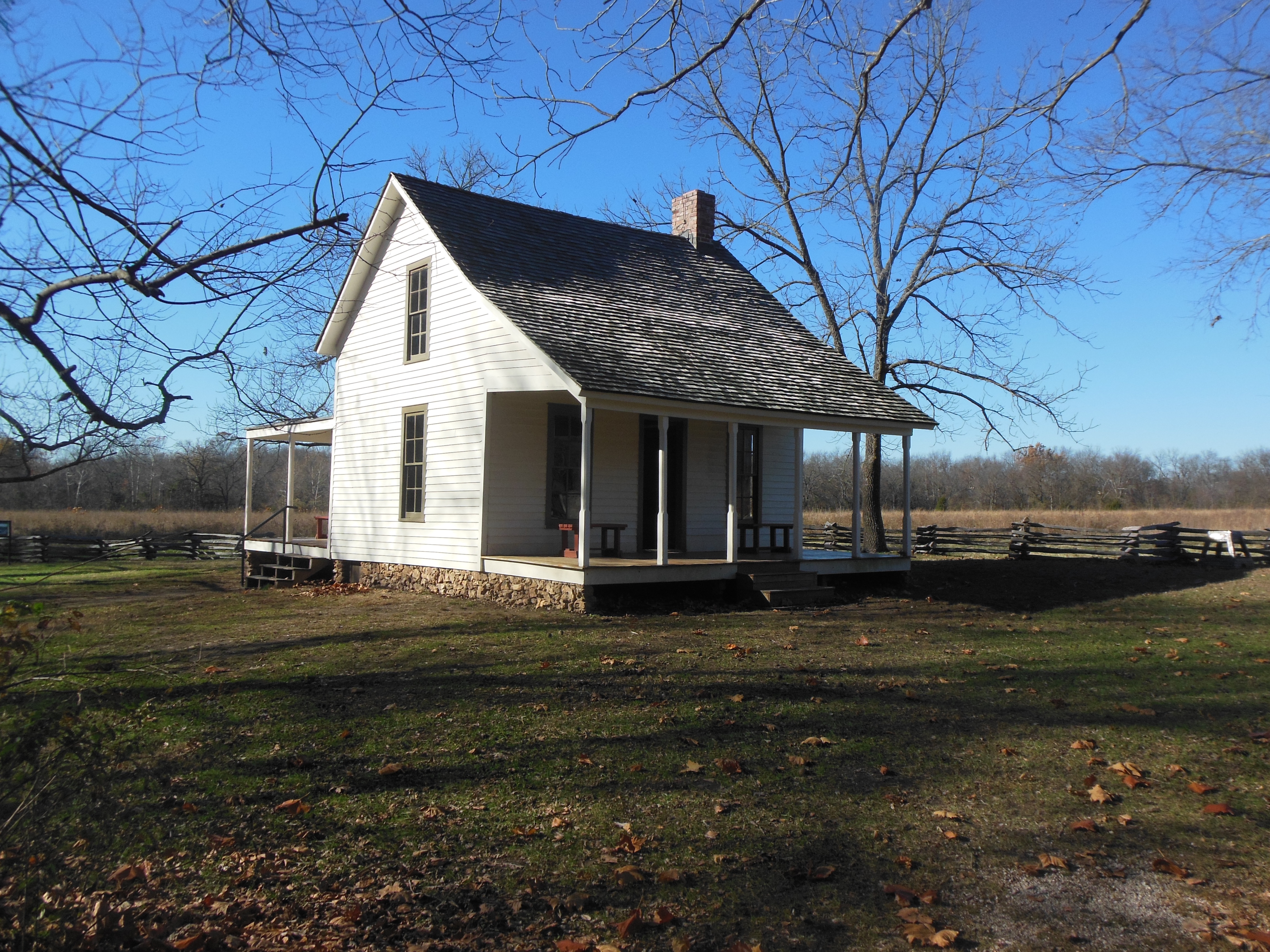
George Washington Carver's home as a child

George Washington Carver’s home as a child

Today was a driving day from Little Rock to Kansas City. The distance was about 420 miles but we had good Interstates most of the way. The George Washington Carver National Historic Site in Diamond MO was our only detour. Hopefully you recall the story. GWC was born a slave, had to go to several locations to obtain an education after the Civil War due to poor or non-existent education for blacks and discrimination by several schools.

GWC ended up getting his B.A. and M.A. from what is now Iowa State University. He had numerous offers for jobs but spent the rest of his life teaching and researching at Tuskegee University in Alabama. His life was a series of success in helping to recreate the agricultural ability of the South after its soil was decimated by decades of cotton growing.

He never applied for patents on any of his inventions. He wanted the people to be able to use his methods and creations to improve the South. He was a genius and great teacher motivated by his religion to help others. This National Monument is the first birthplace monument to anyone other than a U.S. President; the first dedicated to an American for services in agriculture; the first established for an African-American; the first for an educator; and the first for an American scientist. He died in 1943.

So, Kansas City is our home for the next three nights. Probably off to the Truman Library in Independence tomorrow.

Ed and Chris Nov. 13 9 pm

Categories: road trip, travel | Tags: , , | Leave a comment

2013 Trip Eight, Nov 11, The Ozarks

Little Rock, AR Monday, November 11

Lake Catherine hike

Lake Catherine hike

We finished up our stay at Lake Catherine State Park with a two-mile morning hike. It was back to the stony, boulder, exposed tree roots path up and down the holler. Weather was great, it is supposed to be cold (relatively speaking) and wet tomorrow so we enjoyed the day.

Remmel Dam power plant

Remmel Dam power plant

As mentioned before, Lake Catherine was formed by a dam back in the 1920s. Our walk today brought us to see the dam and power plant from the other side of the lake. The water level is down, on purpose. Every fall they lower the lake level by five feet to help control algae and allow for dock maintenance.

Lake Catherine hike

Lake Catherine hike


Lake Catherine hike

Lake Catherine hike

Then it was on to Little Rock. We had lunch at a local chain, the Dixie Cafe. Reasonable food and low prices. The Capitol was our afternoon destination, we thought it was more likely to benefit from an outdoor picture than our other destinations. We had checked and it was supposed to be open on holidays. We arrived and the Capitol building was open but no tours were being given. We took our photos and will plan to return Tuesday after we tour the Clinton Presidential Library.

Arkansas State Capitol

Arkansas State Capitol

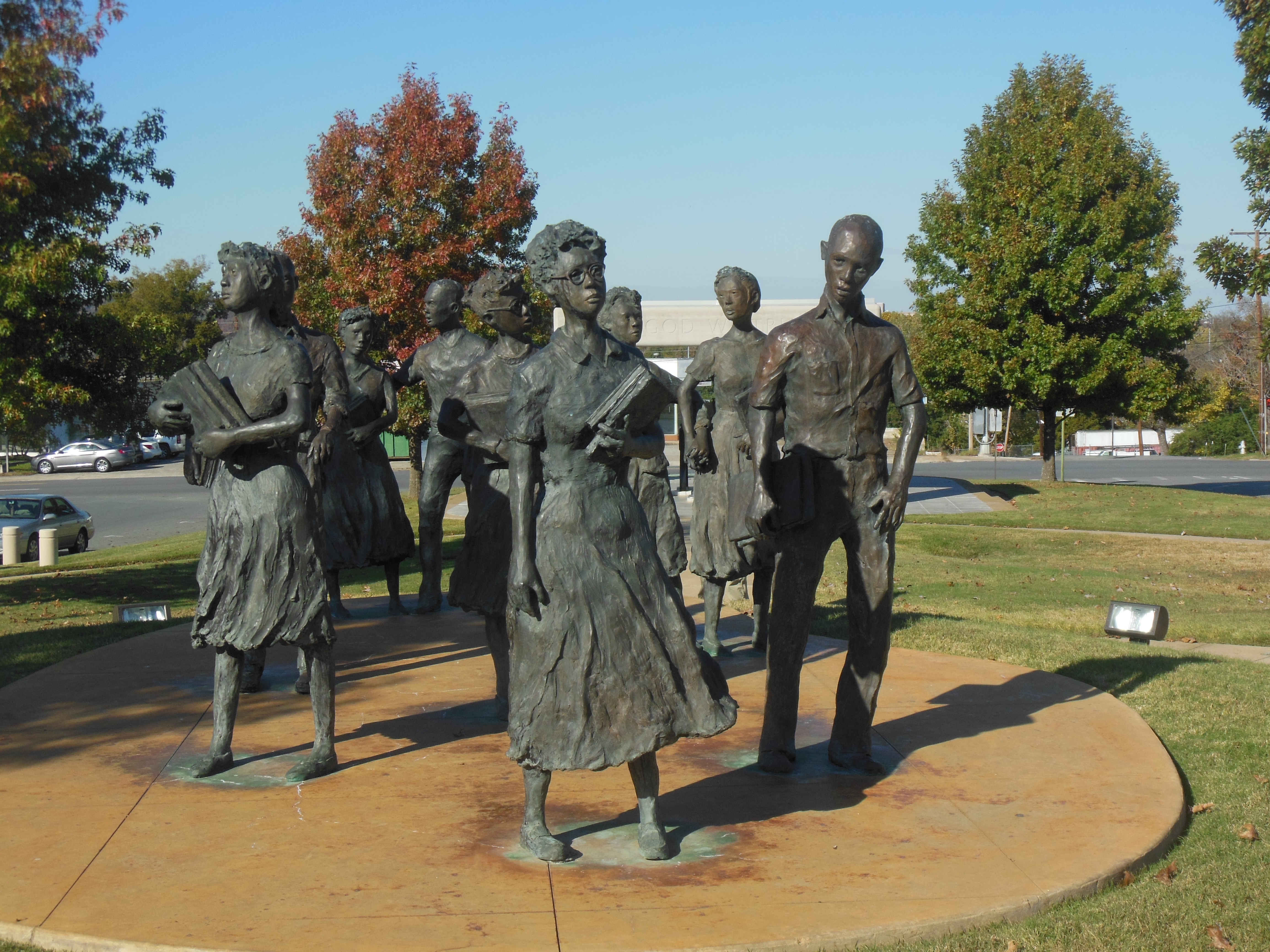
Little Rock Central High School National Historic Site was our next destination. Now I hope our younger readers covered civil rights in their American History classes. It is too complex to cover or summarize briefly in this posting. Suffice it to say, in 1957 nine African-American students were to be the first to integrate Little Rock’s Central High School. It did not go well.

Sculpture of the Little Rock Nine

Sculpture of the Little Rock Nine

The historic site is located across the street from the high school which is still functioning. There are multi-media displays depicting the events, the media coverage, details about the nine students and their lives after 1957, and how people reacted individually to the situation. Some coverage of other civil rights actions was also presented. It was powerful and sad.

We are at a Residence Inn for two nights. Tonight and tomorrow the hotel offers a manager’s reception from 6 to 7:30 so we receive free dinner along with the normal free breakfast.

Ed and Chris Nov. 11 8 pm
Categories: road trip, travel | Tags: , , | Leave a comment

2013 Trip Eight, Nov 10, The Ozarks

Hot Springs, AR Sunday November 10

Chris and Ed at Garvan Woodland Gardens

Chris and Ed at Garvan Woodland Gardens

Just another delightful day. Weather was in the 60s by the afternoon. The sun did not really appear until late in the day, several hours after predicted but still it was a great fall day. Two major activities took up our day; Hot Springs National Park and Garvan Gardens of the University of Arkansas.

View of Lake Catherine from back  porch

View of Lake Catherine from back porch

Actually the first order of business was to officially check in since we arrived late last night. Lake Catherine State Park dates back to 1935. It offers campgrounds and 20 cabins. The lake came before the park, created when the Remmel Dam was constructed in 1924, the first dam in Arkansas used to generate hydro power. The lake is relatively small and like most dam created lakes in this area, rather serpentine. There is another dam created lake nearby (Lake Hamilton) and the two boost tourism in the area. We did stop by the second dam which created Lake Hamilton.

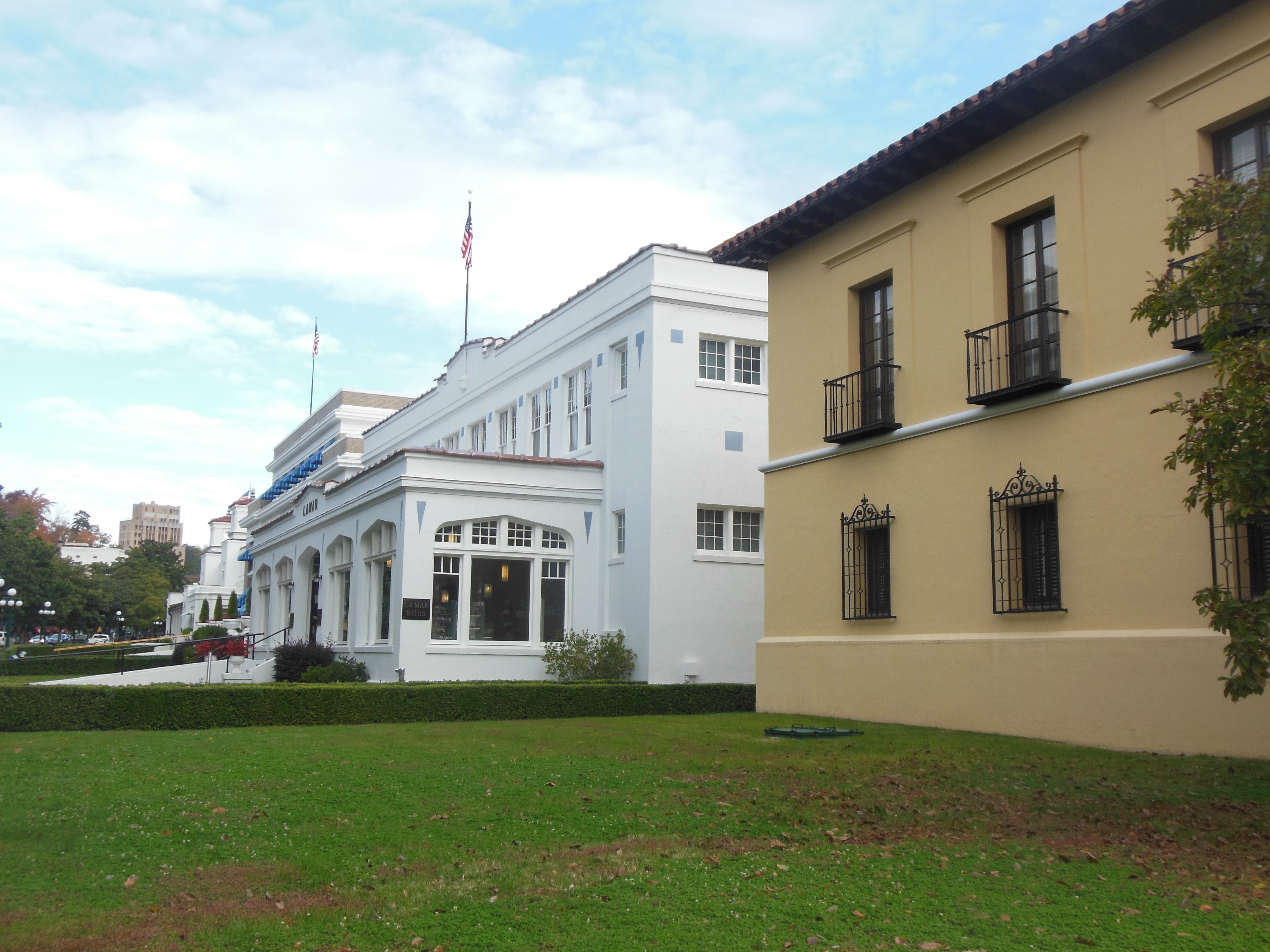
Bathhouse Row, Hot Springs National Park

Bathhouse Row, Hot Springs National Park

Hot Springs National Park was extremely interesting and enjoyable. The 10 AM ranger led tour was well done. Hot Springs National Park was the first tract of land officially set aside for preservation as a national park (details later). Bill Clinton spent much of his childhood here. The resort has been a draw since Native American days, thanks to the 47 thermal springs that give the city its name.

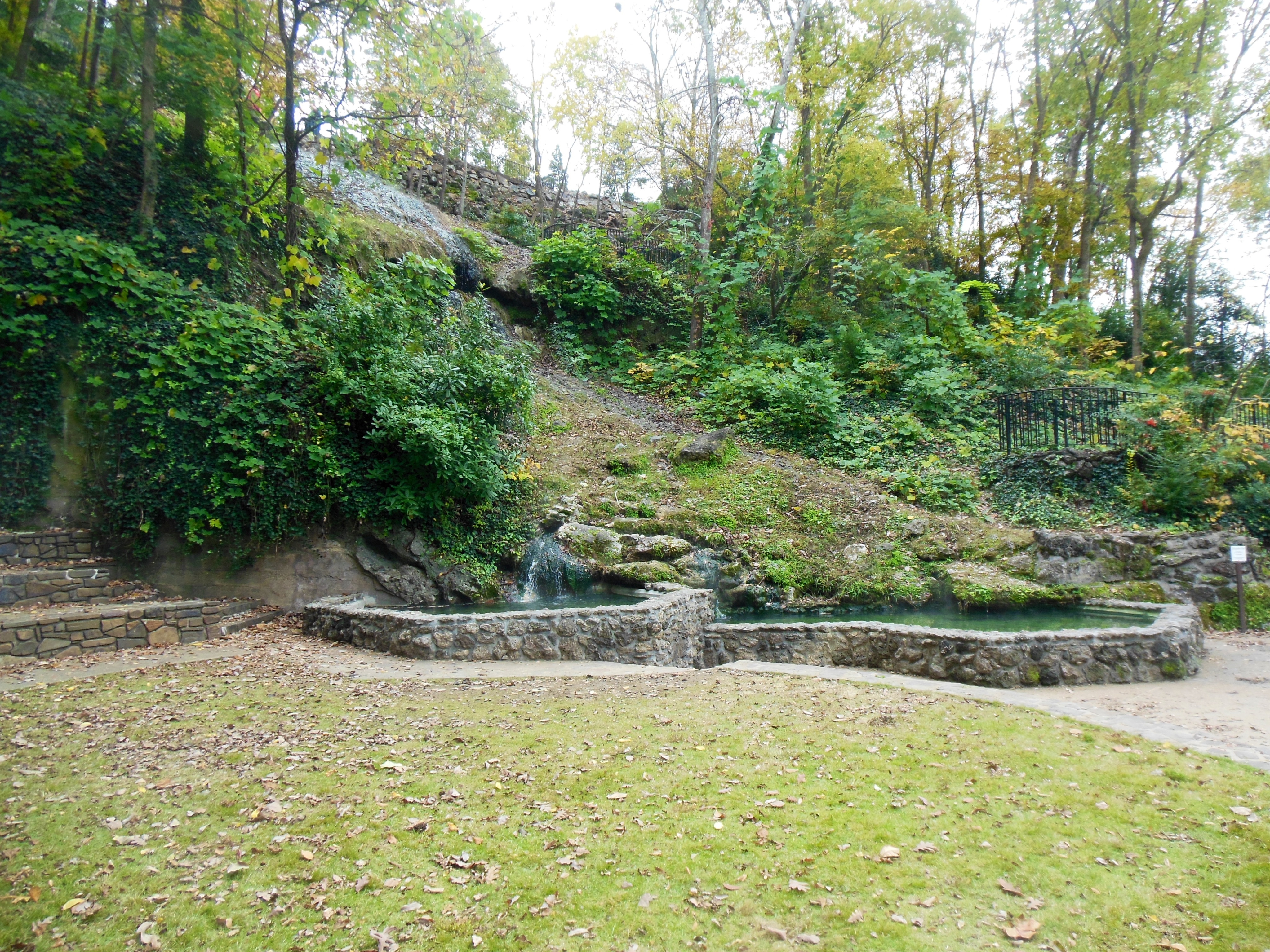
One of the springs able to be viewed

One of the springs able to be viewed

Hot Springs was used by Native Americans but “discovered” by explorers set out by President Jefferson after the land was purchased as part of the Louisiana Purchase of 1803. In 1832, part of the land was set aside by the U.S. government to preserve the springs. The country had learnt from bad experience at Saratoga Springs in New York where open access and no limits had led to pollution of the waters. The term in those days was a reservation. National Parks had not been created. In 1921 Hot Springs was declared the 18th national park.

Scientists have estimated that the waters percolating here are at least 3500 years old. Rain water seeped into the ground and worked its way down into the earth’s crust where it was heated by the hot rocks. Heated water moves back upward where it surfaces at openings throughout the area. Springs here are capped with locked covers to prevent direct contamination.

An operating bathhouse

An operating bathhouse

The National Park Service collects the thermal water and distributes it to several bath houses and hotels. There are also cooler springs. Water is made available free of charge at several locations in town where people bottle it and take it home.

Early on the medicinal value was understood. The waters are high in magnesium, potassium, calcium and sodium. The first three in particular are now understood to be critical parts of our diet. We take vitamins, they took the springs elixir. Unlike the Eureka Springs which were high in zinc, these waters healed ailments, not infections. The initial users just set up tents. Soon wood hotels were erected and when fires kept burning them down, stone and other non-wood construction materials were used.

The springs here were medicinal. Doctors prescribed a certain treatment protocol. Visitors not only drank the water, they underwent a series of set regimens including soaking, massage, rubs, exercises, etc. This area actually practiced better medicine than hospitals until the 1920s when penicillin and other drugs were discovered and widely used.

One of the soaking tubs

One of the soaking tubs

People came here to be treated for such ailments as syphilis, gastrointestinal problems, polio, etc. In the early years, mercury was used for several of the body rubs, including syphilis. It was one of the few treatment processes for that until penicillin. Unfortunately, the people applying mercury might get sick also.

Men's locker room

Men’s locker room

The exercise regimen included walking and physical workouts in the gymnasium. In the 1850s, mechanical workout equipment was manufactured and looked like early models of the fitness machines you might see today. The Promenade was constructed, a paved walkway above bathhouse row, where people took their daily constitutional.

The Grand Promenade, Hot Springs National Park

The Grand Promenade, Hot Springs National Park

Much of the clientele here was high society. Fancy hotels and fancy bathhouses were constructed, frequently vying with each other to snare the top echelon. It was the place to see and be seen. Gangsters and Presidents came here. Some facilities were provided for the indigent. This is in Arkansas. Jim Crow laws were in existence and the free bathhouse was segregated. For some of the time until desegregation in 1965, there did exist a private bathhouse for blacks as the only option to the bathhouse for the indigent.

Services for men vastly outnumbered those for women and were fancier. But times change and as medicine improved, bathhouses slowly declined. New ways came into play; spas for women, fitness centers for both sexes, hydro therapy at the Y, etc. Hotels and bathhouses declined. Two bathhouses still operate today, one building is an art museum, and others are maintained but not used. Still, the day was interesting and illuminating as we explored more of early Americana.

Garvan Garden

Garvan Garden

Garvan Gardens

Garvan Gardens


Garvan Gardens

Garvan Gardens


The latter part of the afternoon was spent at Garvan Woodland Gardens. Somewhat similar to the U of M Arboretum, it consists of 210 acres. We took a two-mile hike through and along most of its length, admiring the gardens and foliage. They even have a chapel for weddings; it looks very similar to Thorncrown Chapel back in Eureka Springs.

Garvan Gardens

Garvan Gardens


Garvan Gardens

Garvan Gardens

The Gardens will be opening their holiday light display (4,000,000 lights) on Nov. 23rd. Construction of the display is well underway and it appears to be well done. Unfortunately we will miss it.

image

Ed and Chris Nov. 10 10:45 pm

Categories: road trip, travel | Tags: , , | Leave a comment

Blog at WordPress.com.