road trip

2014 Trip Two, March 14, Deep South

Friday, March 14 Montgomery AL

Not much dramatic scenery today. We drove from Jackson MS to Montgomery AL. Logging and agriculture primarily along the road.

After a great breakfast at the Old Capitol Inn, our first stop on the route was in Selma, Alabama. It was already lunchtime so we stopped at the Downtowner restaurant where I am sure we were the only non-locals. In that regard, it reminded me of the social ambience of “Cheers” where everybody knows your name. The interior was 1950s lunchroom; the food was good, quick, and inexpensive.

For the young’uns reading this post, I hope you know why we stopped in Selma. It was the site of both tragedy and victory. This part of Alabama in the 1960s was still markedly racist. Voting rights were violently repressed. Only 156 of the county’s 15,000 voting age African-Americans were registered to vote.

Local voter registration efforts were thwarted, frequently violently. The Southern Christian Leadership Conference and the Student NonViolent Coordinating Commission undertook marches and Dr. Martin Luther King Jr. came in to help coordinate and publicize the marches. Police violence, mass arrests, refusal to allow registration, and a murder drew nationwide attention to the Selma efforts. We actually parked our car 50 feet from the murder site.

The bridge which was at the beginning of the marches.

The bridge which was at the beginning of the marches.

On March 7, 1965, a march was planned to go from Selma to Montgomery, a distance of 54 miles, to protest in front of the MS capitol. The marchers were met and blocked by state troopers and county sheriffs at a bridge over the Alabama river. The marchers did not return to their homes as ordered and the police used whips, nightsticks, horses and tear gas and chased and beat the marchers through the streets of Selma for hours.

In the next two weeks, several intermediate actions incurred including a murder, more beatings, and nationalization of the Alabama National Guard to protect marchers for a planned March again from Selma to Montgomery.
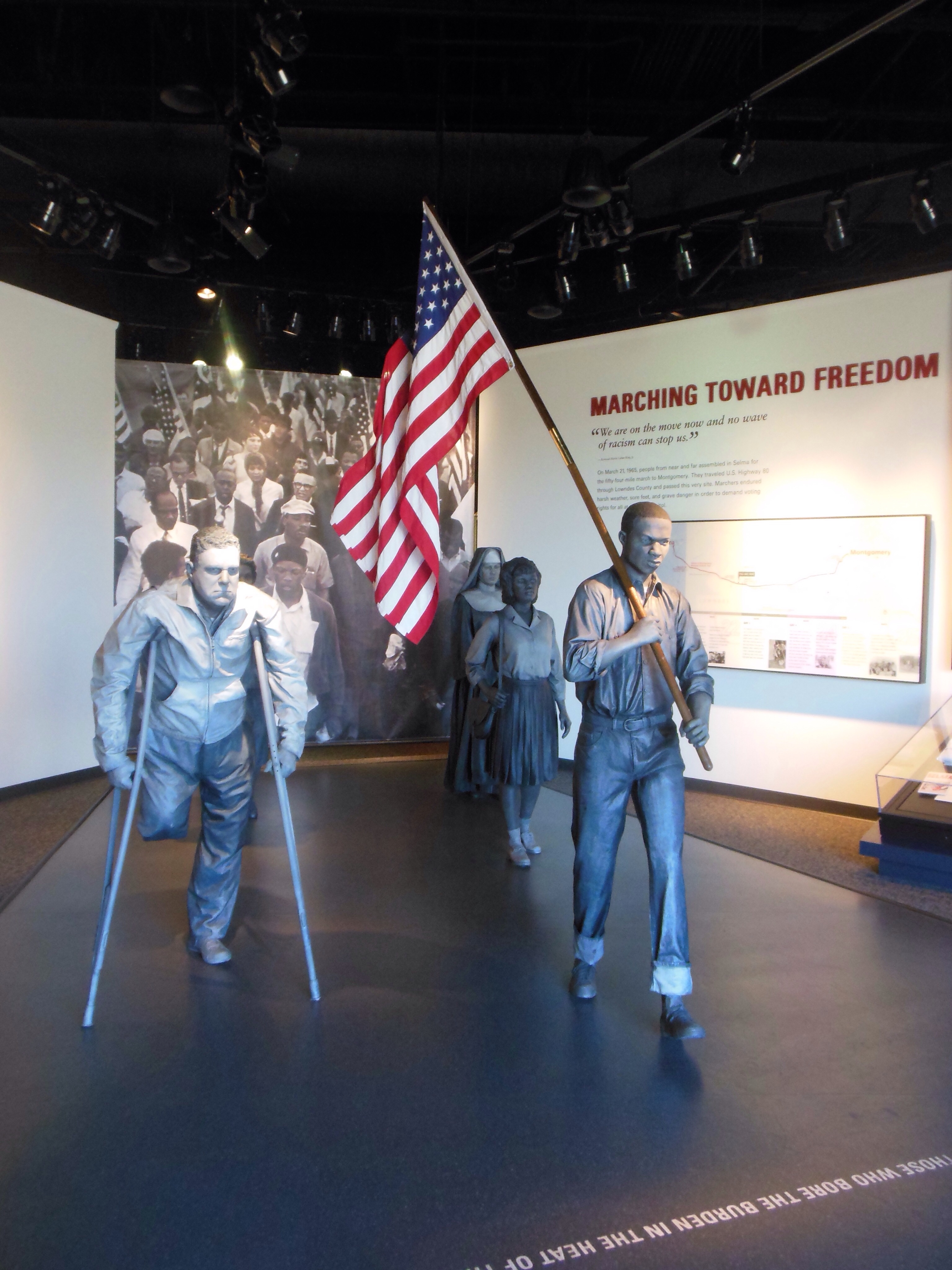
Portrayal of the March 21-25 Selma to Montgomery march

Portrayal of the March 21-25 Selma to Montgomery march

On March 21 began the five day march to Montgomery. It was limited in numbers for part of the route by court order but by the end of the march on the 25th, the crowd had grown to 25,000 including religious from around the country.

National attention to the march and the continued non-violent response of the marchers despite the violence of the police provided great strength to the adoption of the federal voting rights bill in August of 1965.

We made two stops in the Selma area. The National Park Service maintains a visitor center in Selma with exhibits and a video. We walked to the Edmund Pettus Bridge where the marchers were beaten on March 7th.

Our second stop was at the Lowndes Interpretive Center about halfway to Montgomery where there are further exhibits. Lowndes County is the next one to Selma and in 1965, 86 white landowners owned 90% of the land and even fewer blacks were registered to vote.

Bust of Rosa Parks

Bust of Rosa Parks

The Rosa Parks Museum in Montgomery was our final stop of the day. This exhibit documents the 1955 bus boycott in Montgomery sparked by the refusal of Rosa Parks to give up her seat for a white person on a crowded city bus. The museum does an excellent job, including a holographic depiction of the bus incident.

The boycott lasted over a year and the exhibit detailed a lot of information that we did not know-or forgot. For instance, the actual Supreme Court case that forbade the segregation of the buses was based on three other women who were denied service. Mrs Park’s case sparked the national attention that was essential to providing support and initiating the successful boycott.

Dexter Avenue Baptist Church

Dexter Avenue Baptist Church

We drove by the Dexter Avenue Baptist Church where Dr. Martin Luther King Jr. was pastor from 1954-1960. It was the base for the boycott planning. Lodging tonight is at the Red Bluff Cottage B and B. It is very nice and uniquely (for us) it offers 24 hour coffee, tea, pop, snacks and candy. So far I am not doing well in resisting the jars of M and M’s.

Ed and Chris March 14. 10 pm

Categories: road trip, travel | Tags: , , , | Leave a comment

2014 Trip Two, March 13, Deep South

Thursday, March 13, Jackson MS

A great spring day and a delightfully nice place to stay in Jackson. A boutique type hotel, it is set up like a suite, has a patio-garden-pool on the ground level and a garden on the roof. Next time you are in Jackson, MS, try out the Old Capitol Inn. In its former life, it was the YWCA.

The Natchez Trace is a 440 mile long parkway extending from Nashville, TN to Natchez, MS. It was an Indian path for the Natchez, Choctaw and Chickasaw nations. It gained “fame” as the path used by men from the Ohio River valley who floated crops, livestock and other material from that area down the Ohio and Mississippi to Natchez and New Orleans.

Natchez Trace Parkway

Natchez Trace Parkway

Since steamboats did not go into wide use until the 1815 or later, these men walked or rode horses back to their homes along the Natchez Trace. Today it is a smooth auto route controlled by the National Park Service. Biking and walking are allowed but we did not see much, no separate trails exist and shoulders are non-existent.

Elizabeth Female Academy

Elizabeth Female Academy

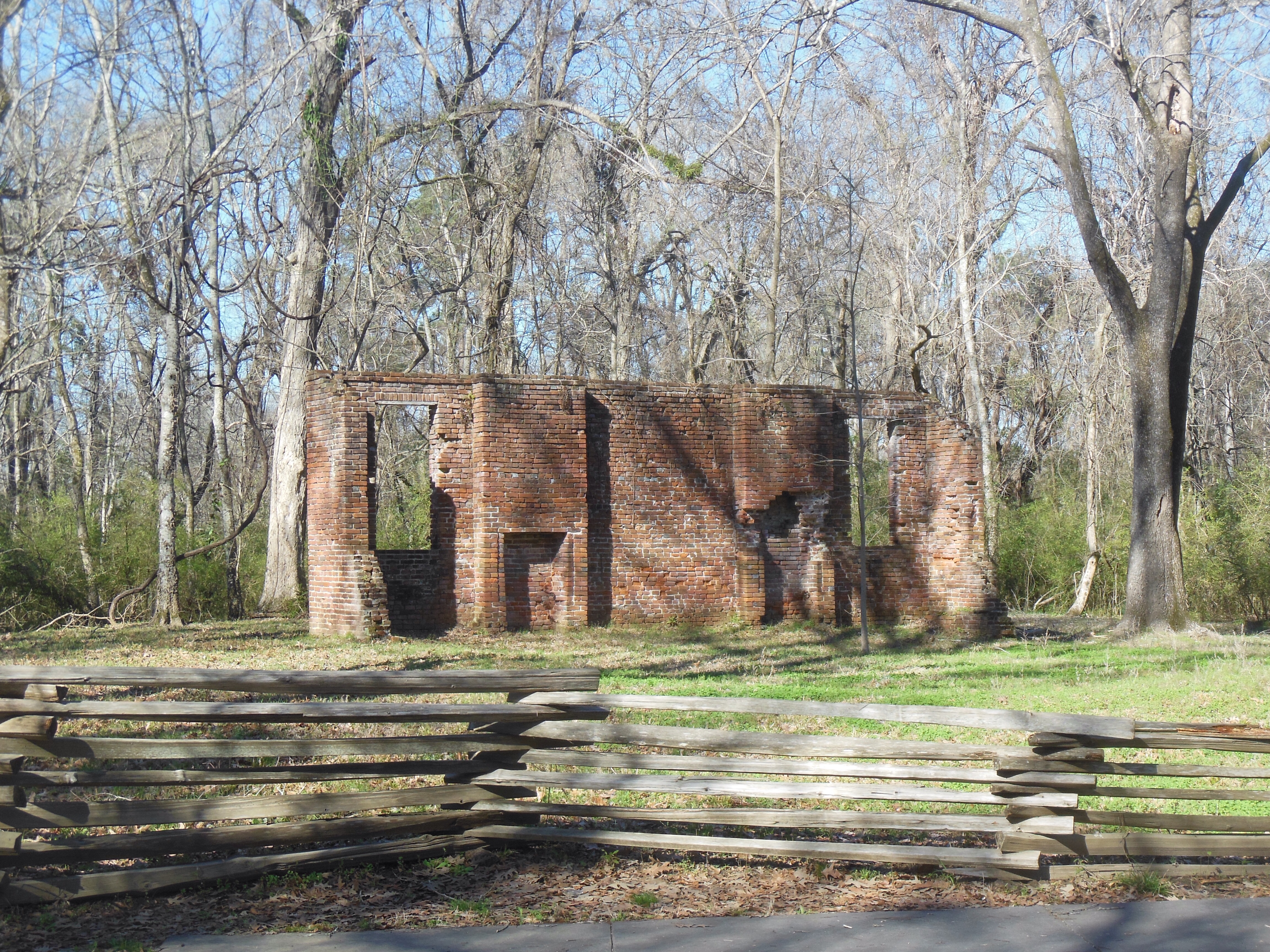
Our experience with the Natchez Trace was only from Natchez to Jackson, about 100 miles. The first stop was at the site of the first female academy in Mississippi. The Elizabeth Academy was chartered in 1811 and only lasted until 1845. One wall of one building still stands.

Emerald Mound

Emerald Mound

We stopped at Emerald Mound. Emerald Mound is the second largest Mississippian Period ceremonial mound in the U.S. Built and used between the years 1200 and 1730 AD, the mound covers eight acres and is 35 feet high at its tallest point.

These mounds were still in use when the Spanish explorer DeSoto came by in mid 1500s. By the late 1600s, they were pretty much abandoned. The best guess is that European introduced disease and internal strife led to the decline in numbers of the Indian cultures.

Mount Locust

Mount Locust

Another stop was at Mount Locust. This is the last remaining inn on the Natchez Trace. Inn may be a strong word, but it was a log building constructed in 1779. Travelers could obtain a covered place to sleep and a bit of food before continuing their journey back north. We took a walk along a portion of the original trace which still exists in many areas. A little farther along we hiked a portion of the “Sunken Trace”, a bit of the trail that is about 10 feet below the surrounding area. The trace here was located on deep deposits of sand blown in from the Great Plains and it was easily eroded and worn down.

Our final stop was at the “town of Rocky Springs”. Its population in 1860 was 2600. It was unclear from the signs if this number included 2000 slaves or if the 2000 slaves were in addition to the 2600. In any event its population today is zero. A Methodist church still stands here but the congregation has shrunk and no longer uses the building for church services. Over use of the land, yellow fever, cholera, boll weevil infestations and other problems led to its demise.

Back of the Old Capitol

Back of the Old Capitol

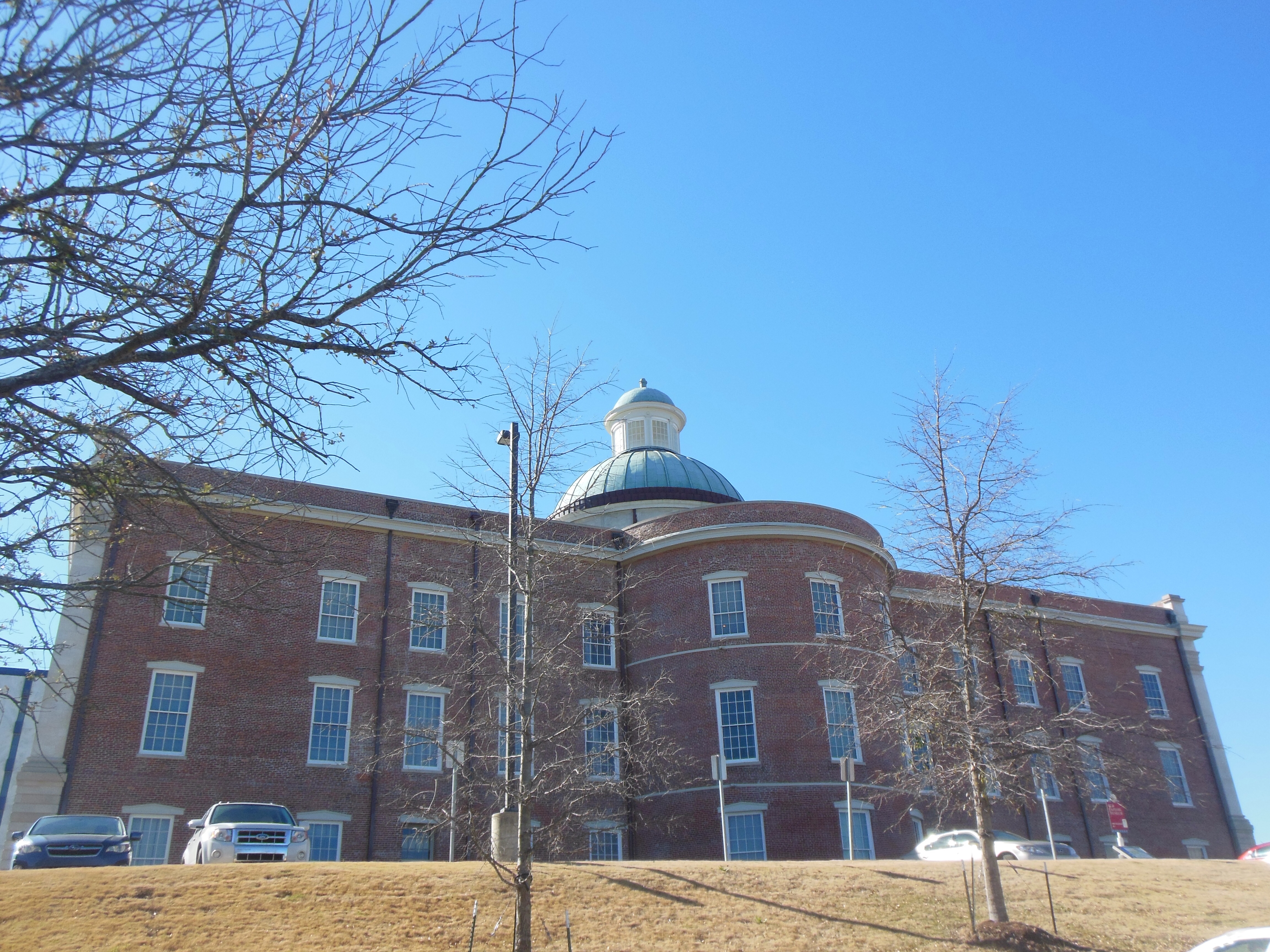
We had lunch at the Froghead Grill outside Jackson and proceeded to the Old Capitol. This was Mississippi’s first capitol, constructed 175 years ago and replaced about 110 years ago. Maintenance and upkeep had been spotty over the years but it has been improved nicely and now houses some history exhibits. The building is not beautiful but stately. The state wanted a prestige look but it also was thrifty and used convict labor and construction methods that took plain materials and made them appear to be fancier stone or marble.

Front of the Old Capitol

Front of the Old Capitol

The state displays are clear about the denial of voting rights to blacks and also the ejection of the Indian tribes from their lands here. This state, like many others, endured debates from competing factions over the location of the capitol. In the end, the capital was located in the center of the state as it existed at the time. Indian lands were not factored into the calculation. The later assumption of their lands placed Jackson not in the actual center of the state.

As mentioned at the beginning, our lodging for this one night in Jackson is at the Old Capitol Inn. Our dinner was at the Underground 119 with live music, folk instead of blues, but the female musician had a nice voice and I recognized the songs.

Ed and Chris 10 pm
Categories: road trip, travel | Tags: , | 2 Comments

2014 Trip Two, March 11, Deep South

Tuesday, March 11 St. Francisville, LA

Well, we are not in Minnesota anymore. Short sleeve shirts, humidity, my first mosquito, and flowers. The joys of staying at Bed and Breakfasts pales a bit when once again you are on floor 2 or 3 and there is no elevator. I asked Chris “Now when do we sleep in a regular hotel again???”

Today began in Vicksburg MS as we toured the Lower Mississippi River Museum. I found it not quite as exciting as hoped for given the number of museums we have been to. Part of the exhibit discusses the history and role of the Corps of Engineers-which is not new to us. Part of the exhibit talks about the ecology and species of the Lower Mississippi. Only a small portion discusses the floods and development along the Mississippi which interests me the most.

MV Mississippi IV at Lower Mississippi River Museum

MV Mississippi IV at Lower Mississippi River Museum

The flood of 1927 (which we read about when visiting the Herbert Hoover Museum in Iowa) was featured. This devastating flood lasted for months, resulting in large-scale evacuations. It is said that the flood accentuated the movement of blacks from the South to northern cities to find work. Hoover was the head of the Commerce Department and was instrumental in providing relief efforts. However, discrimination and inequity in relief camps were covered up at Hoover’s request,leading to his loss of the black vote in his presidential campaign.

The 1927 flood led to further powers given to the Corps of Engineers to improve flood control. Decades of levee building and river channel changes have followed. The Corps of Engineers eliminated many horseshoe bends in the Mississippi, speeding up river flow and shortening the length of the river by over 150 miles.

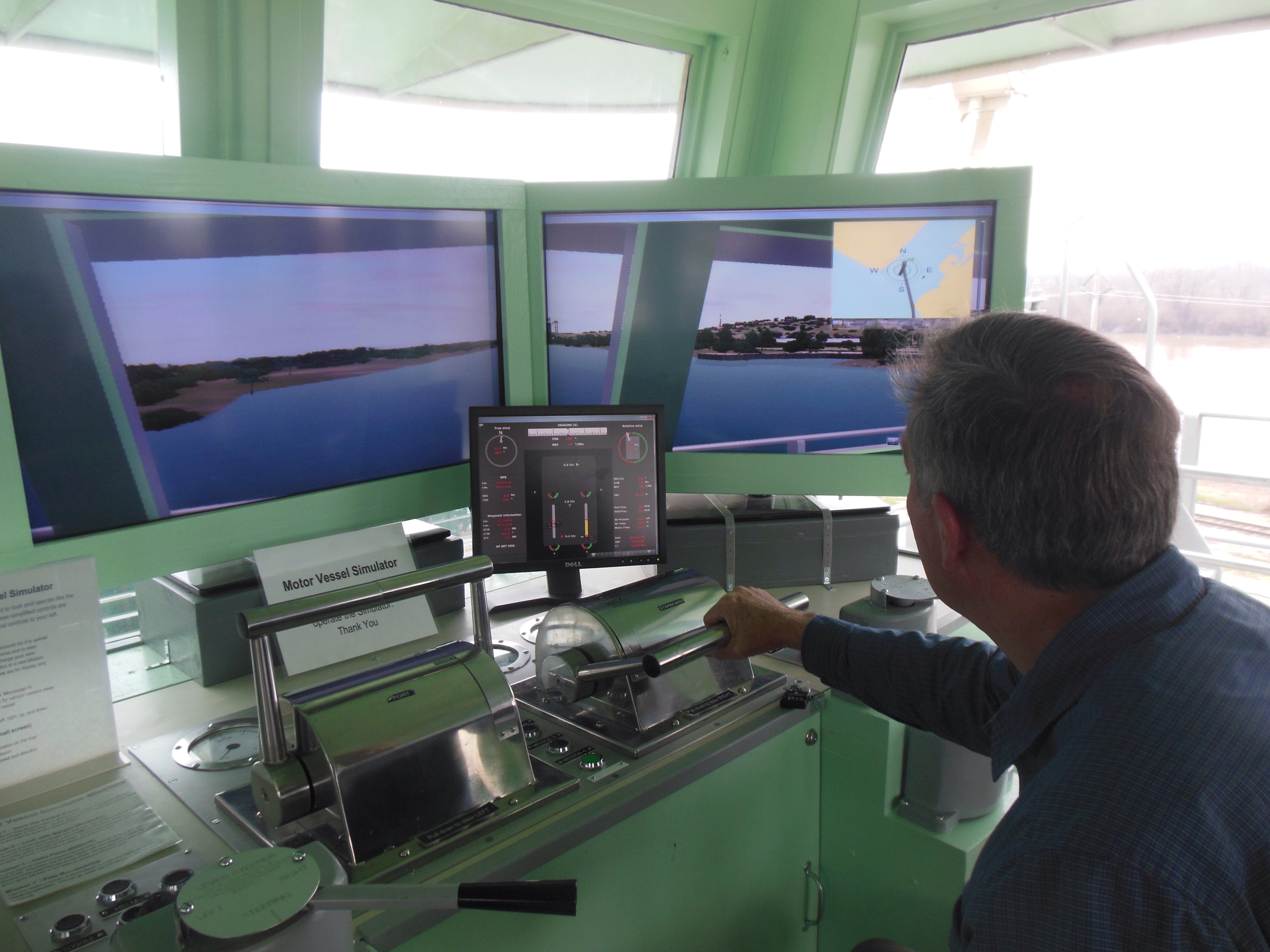
Ed inside the MV Mississippi. This time I did not destroy anything.

Ed inside the MV Mississippi. This time I did not destroy anything.

A river ship retired from service is located next to the museum. The MV Mississippi IV. This vessel served as a work horse tug for the Corps, delivering equipment and materials to Corps projects up and down the river.

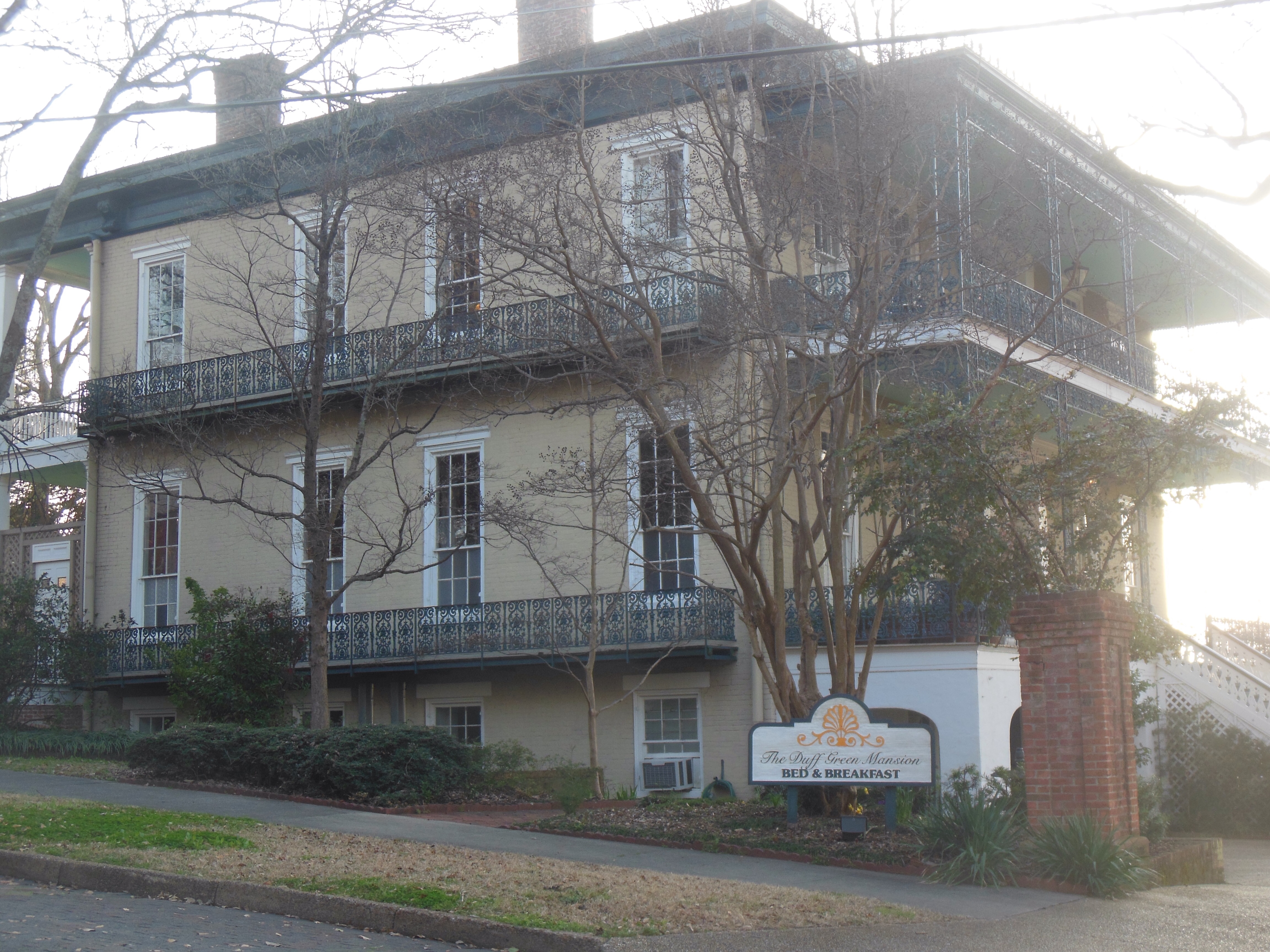
Our lunch was at the Old Country Store in Lorman, MS, a true gem. The two couples at the Duff Green Mansion had mentioned it to us. We were not really hungry to we only had cobbler instead of the chicken buffet. Mr. D, the owner, was quite the character. He opened the restaurant after retiring from a Florida utility company. The restaurant gives him full rein to express his outgoing personality, singing, and to showcase his fried chicken recipe.

Rosedown Plantation house

Rosedown Plantation house

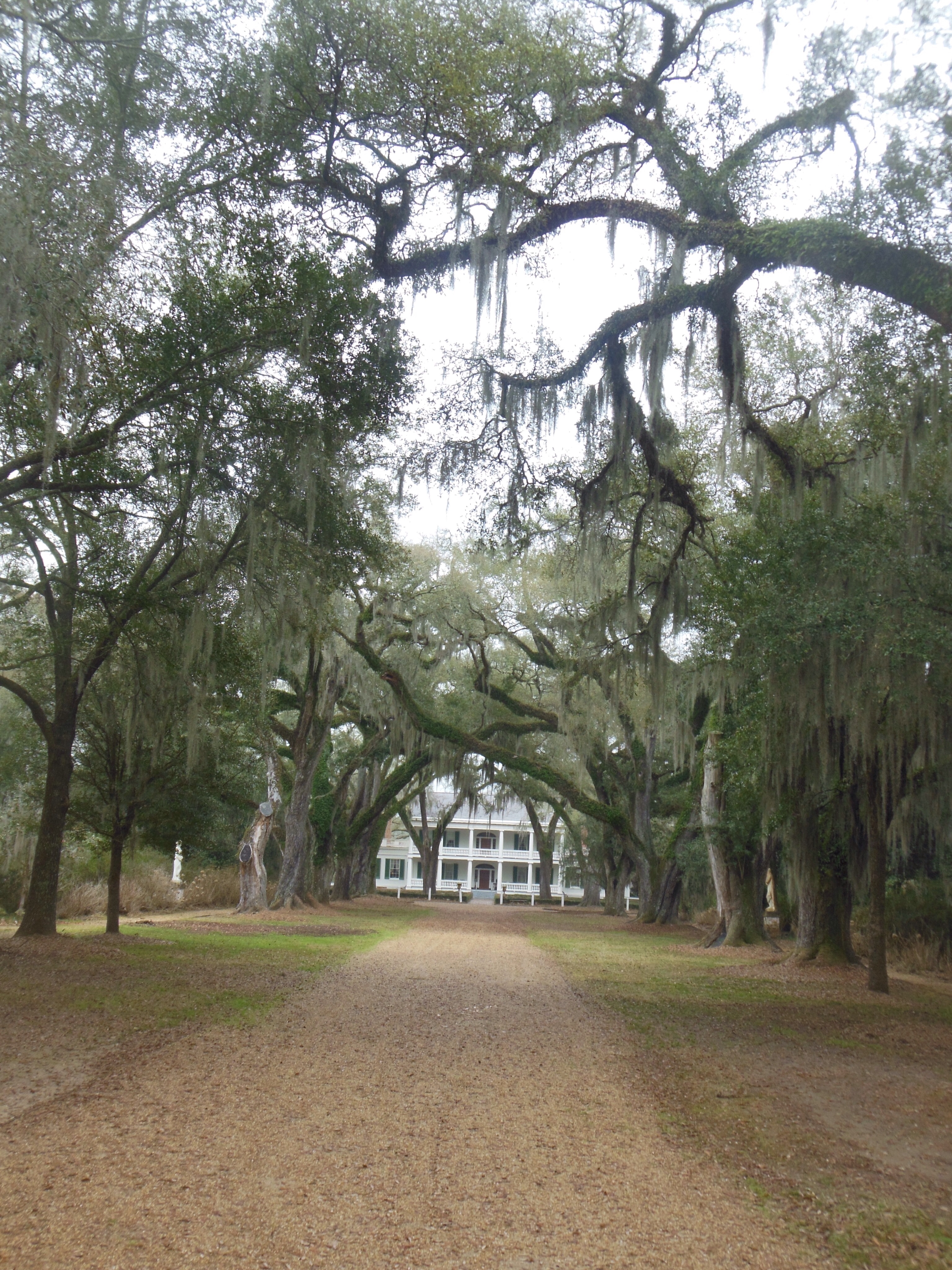
Now we are over the LA-MS border in St. Francisville. This is another small town featured in National Geographic’s Best Small Town book. We spent an hour and a half touring the Rosedown Plantation. Even though one can not agree with the slavery aspect of plantation life, it is part of our history so we believe visiting a limited number adds to our understanding of life in the Deep South.

Front entry at Rosedown

Front entry at Rosedown

This plantation had 250 slaves and 3500 acres. The owner and his wife owned a total of four plantations. After the Civil War, some of the former slaves continued working the land as sharecroppers until the boll weevil devastated cotton crops in the U.S. It was not until recently that efforts have been successful in eradicating the insect in much of the U.S.

Part of the grounds for Rosewood

Part of the grounds for Rosewood

The last of the descendants lived in the house until 1955. This was an unmarried daughter and she used the “ladies outside privy” until the very end. In the 1950s, a wealthy couple from Houston bought the plantation and spent $10,000,000 to restore it. It became a state historic site in 2000.

The St.  Francisville Inn, our B and B

The St. Francisville Inn, our B and B

Dinner in St. Francisville was initially a challenge. One recommended place had closed, another was not open on Tuesdays. Finally we went after a place based solely on the name, The Bluffs. It turned out to be at a golf course in what seemed to be the middle of nowhere. However, it is a community planned around an Arnold Palmer designed golf course with expensive homes. But the clubhouse restaurant is open to the public and had a pot roast buffet for a reasonable price so we lucked out.

St. Francisville started as a Spanish town. When the U.S. purchased the Louisiana Territory, West Florida, the area along the Gulf Coast, was retained by Spain. Governmental dithering kept the confusion going as to where the boundary line was. In 1810, a group of Anglo-Saxon planters attacked the fort at Baton Rouge, captured the Spanish governor, and set up their own republic. After 2 1/2 months, the U.S. Army marched in and said okay this area is part of the U.S.

Barge traffic in the mist on the Mississippi

Barge traffic in the mist on the Mississippi

Ed and Chris 8:30 pm

Categories: road trip, travel | Tags: , , , , | 3 Comments

2014 Trip Two, March 10, Deep South

Monday, March 10, Vicksburg MS

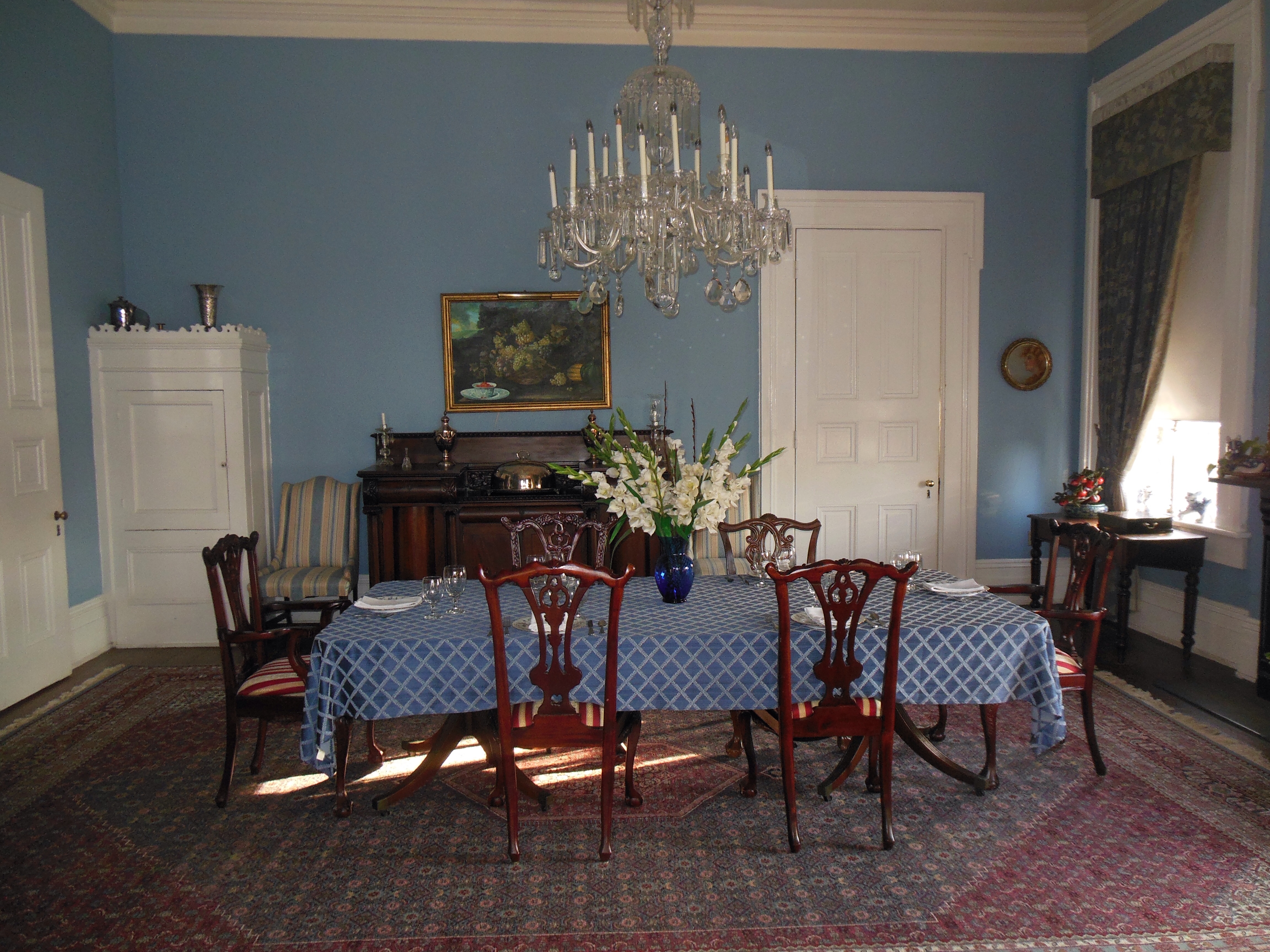
We are staying two nights at the Duff Green Mansion, a B and B in Vicksburg. It was built in 1856 by a wealthy businessman as a wedding gift for his daughter. After being hit by at least five Union cannonballs during the siege of Vicksburg, the owners decided to offer the building for use as a hospital for soldiers. It served that purpose for the remainder of the siege. Our sleeping room was supposedly the place where amputated arms and legs were stored.(I have no idea of the eventual disposal of the limbs.)

dining room Duff Green Mansion

dining room Duff Green Mansion

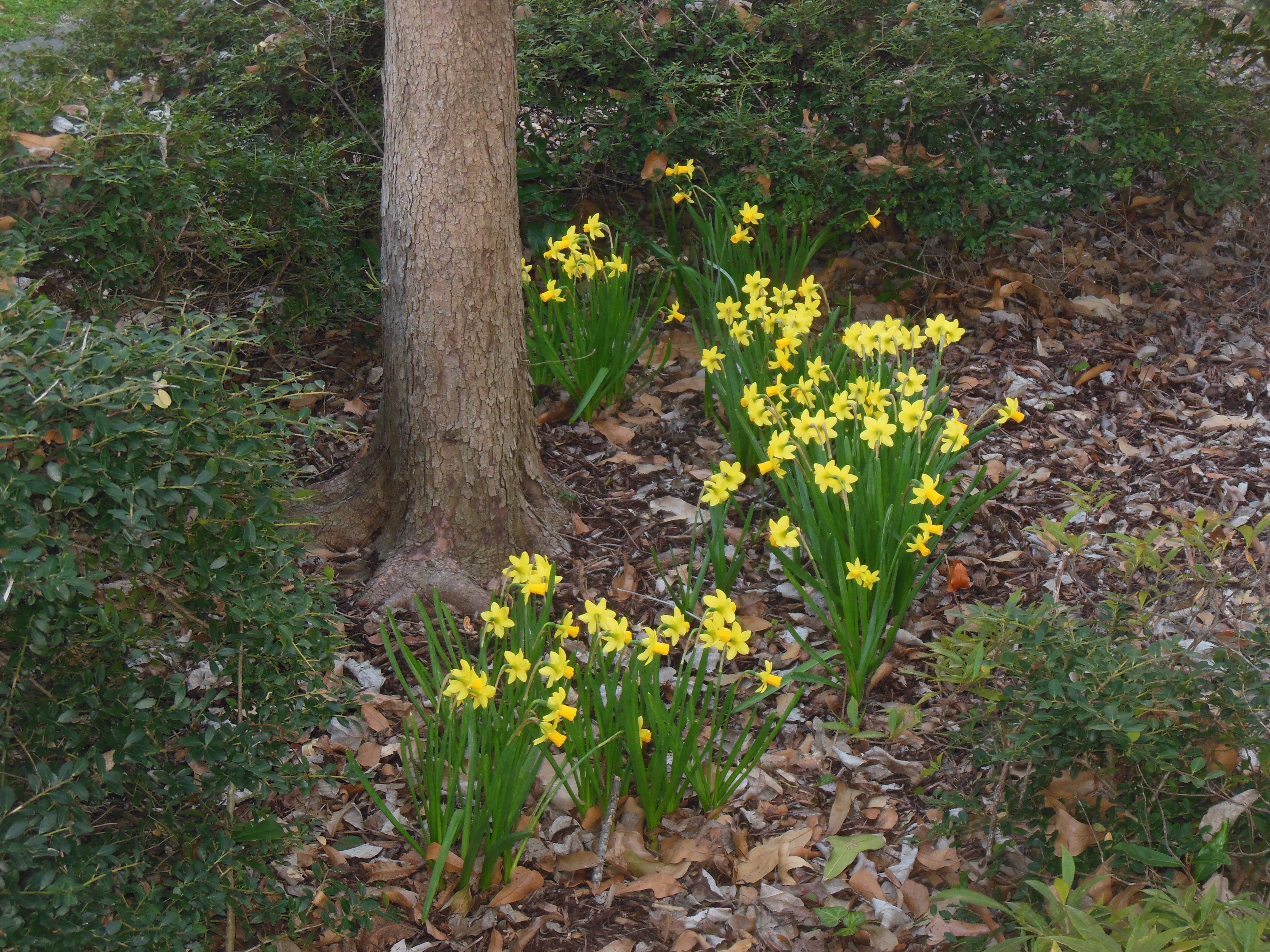
All four of the sleeping rooms were occupied Monday night. Breakfast this morning was fine, a full hot breakfast. Spring has been late here also but flowers are starting to bloom. The inn is undergoing some minor painting type maintenance.

Biedenharn Coca Cola  museum

Biedenharn Coca Cola museum

After breakfast we went downtown and visited the Biedenharm Museum of Coca Cola. The claim to fame here is that this drug store/candy company was the first place to bottle Coca Cola (in 1894). Prior to that time, Coke (which nick name was not accepted by the company until the Second World War) was only dispensed at soda fountains since the product was produced solely as a syrup. The Biedenharns went on to own several regional Coca Cola bottling companies.

early bottling process

early bottling process

The museum is definitely not in the top tier of historical attractions. It is more of a collection of memorabilia with a limited number of explanatory displays.

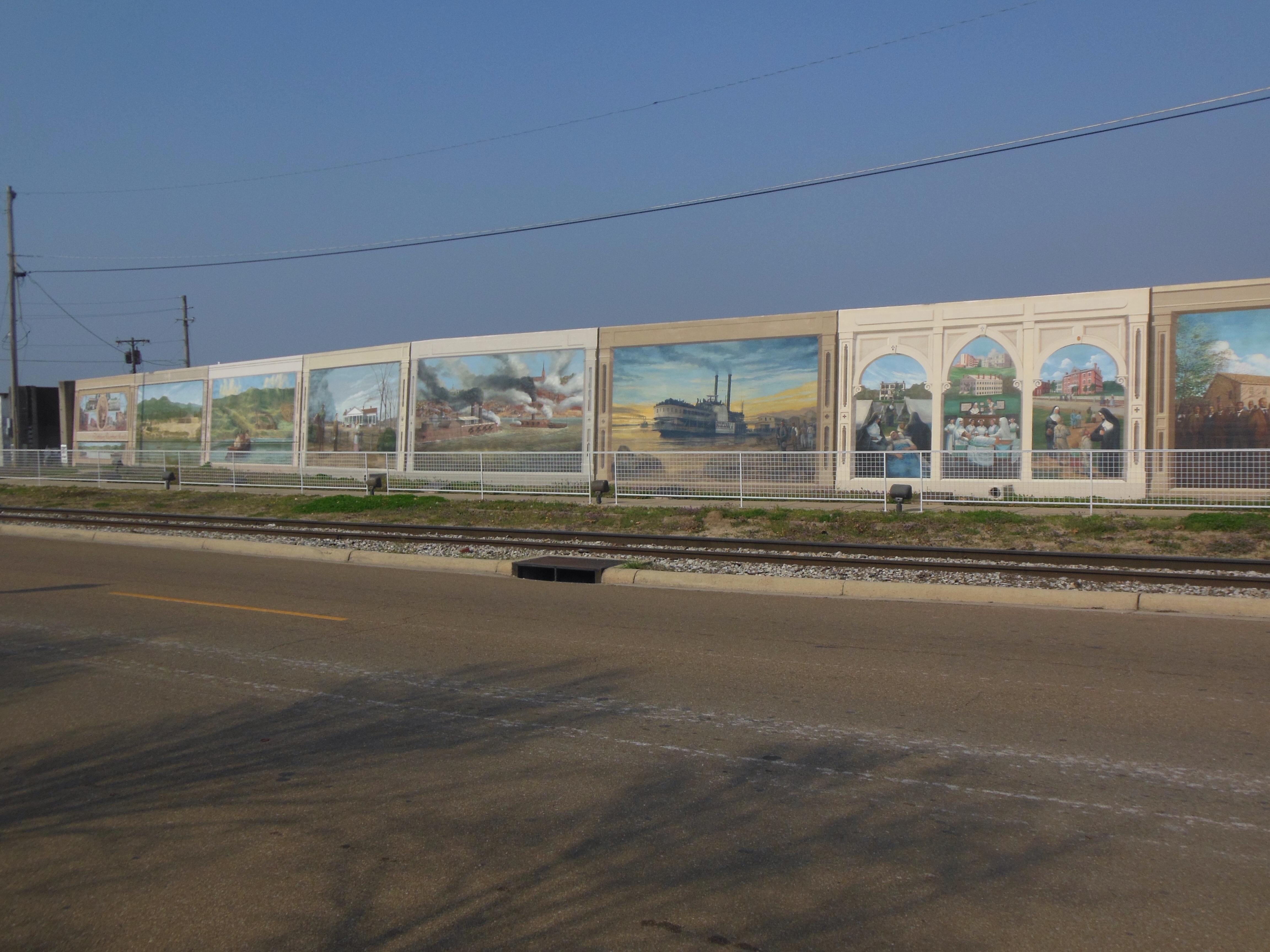
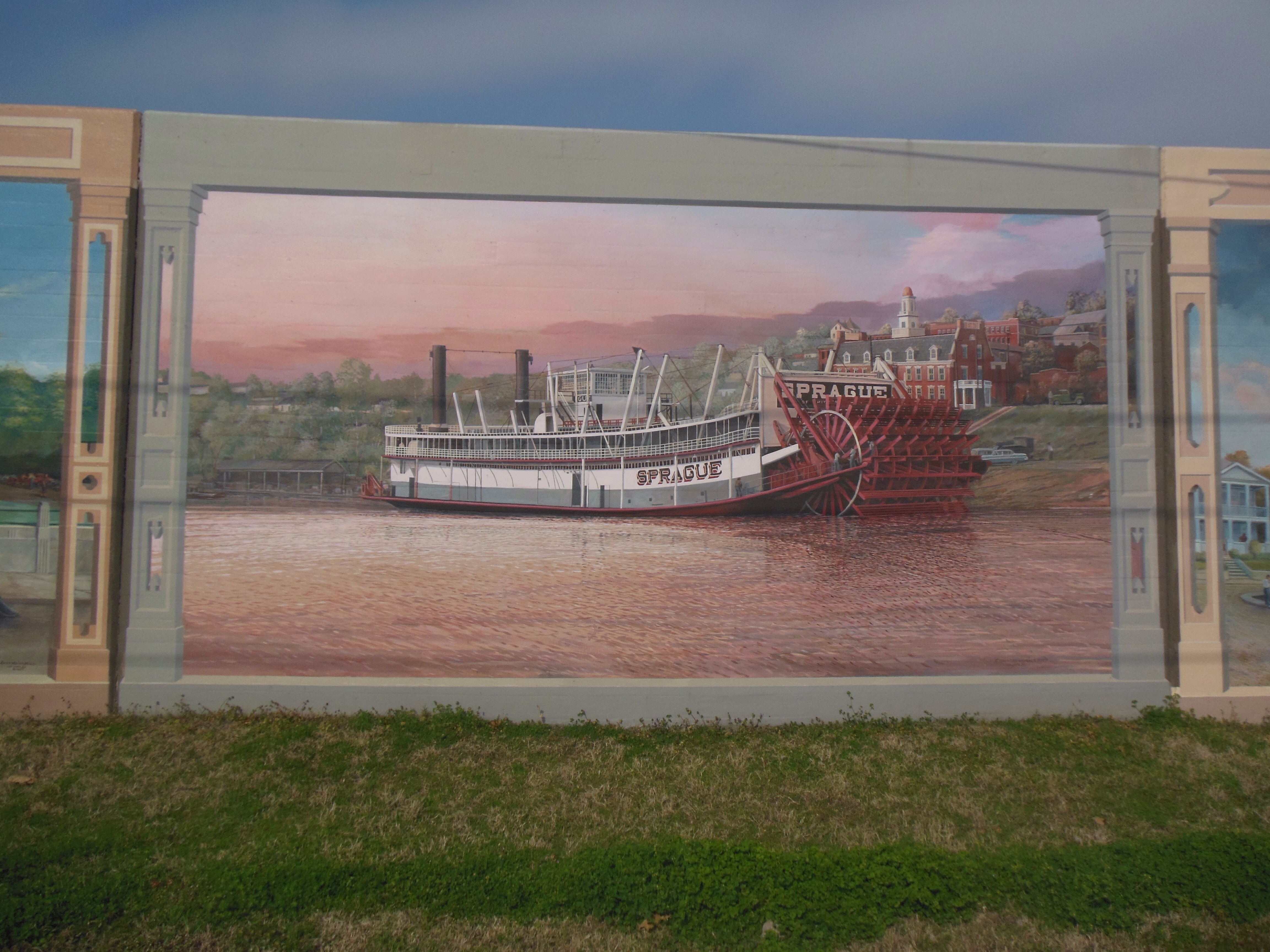
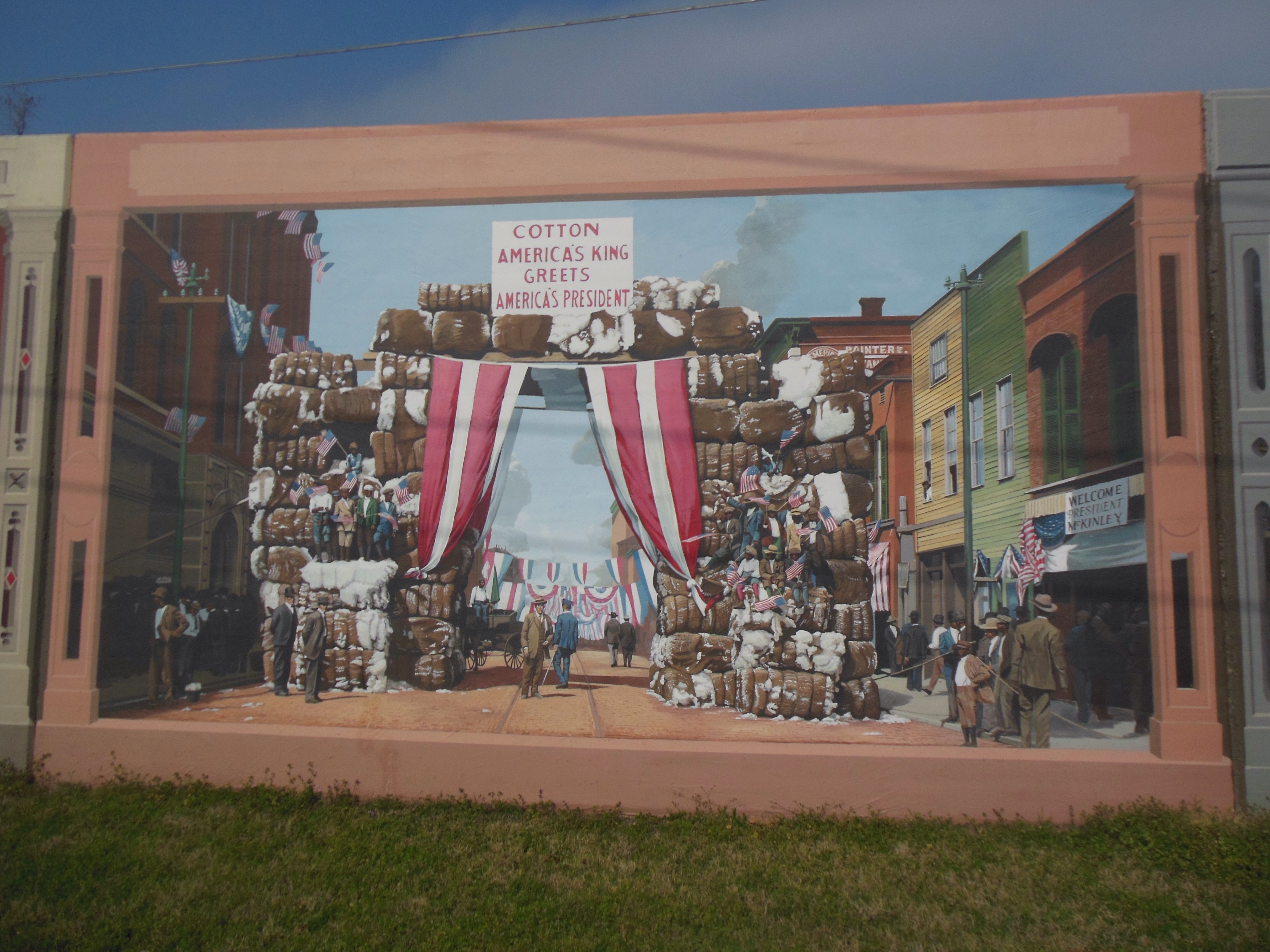
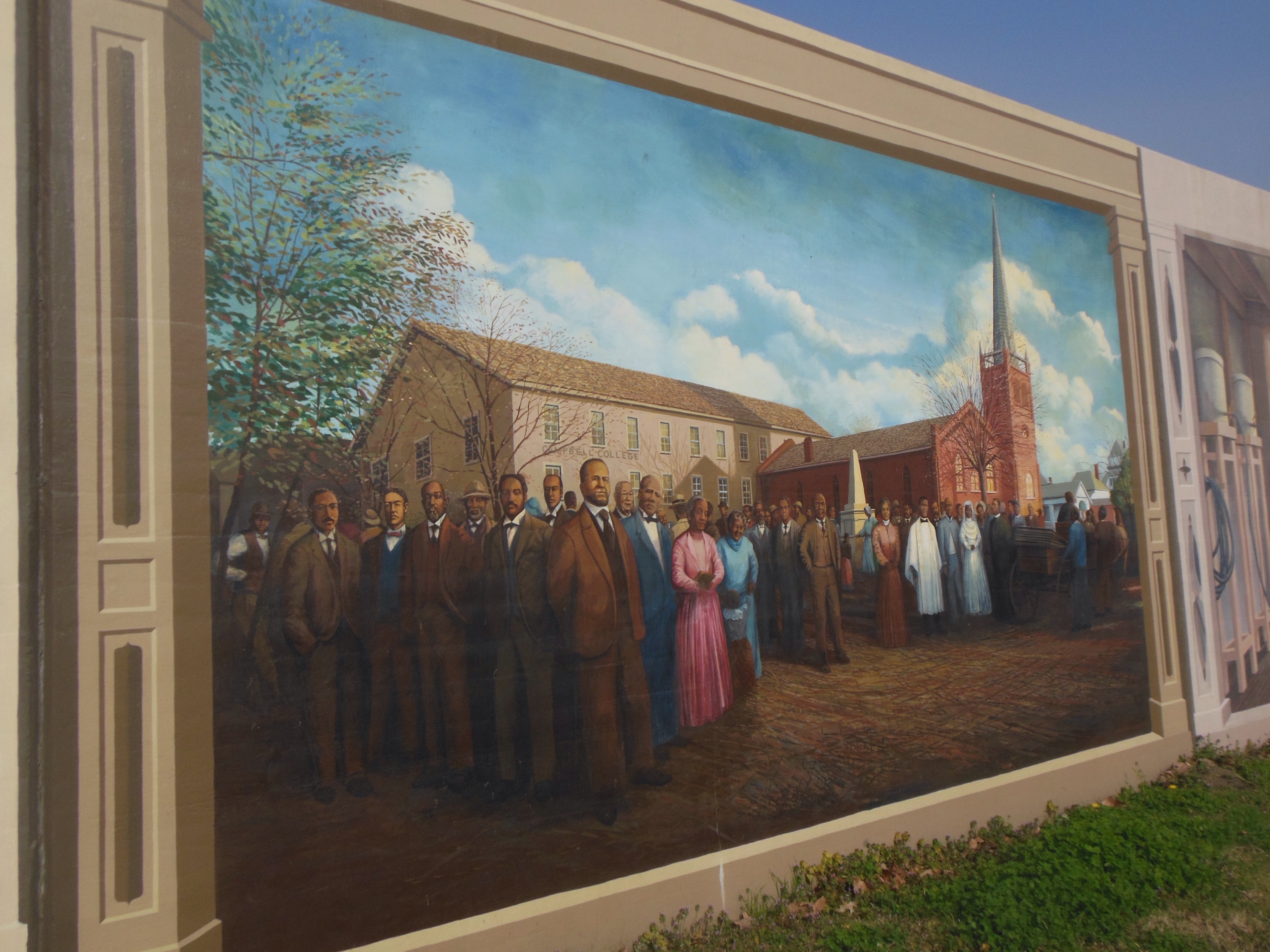
Vicksburg  flood wall murals

Vicksburg flood wall murals

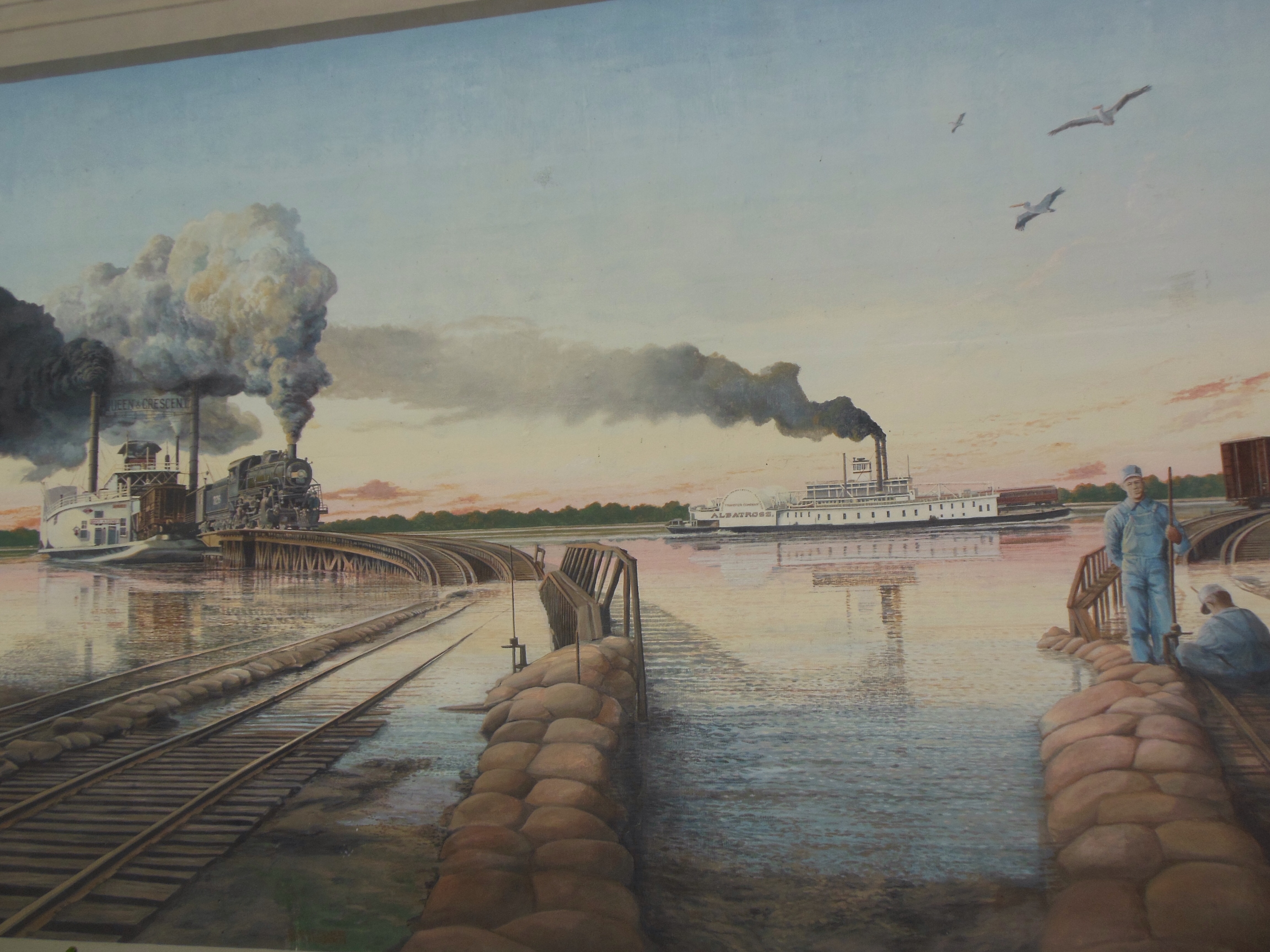
Our next stop was the riverfront, home to 34 murals painted on the flood walls from 2002 to 2009. Like most flood walls, they are basic concrete. The 34 murals present various scenes from the history of Vicksburg. I have inserted at the end of this blog additional murals in a smaller picture format. If you wish to see them in more detail, clicking once or twice on the picture should bring up the full size photo. The murals are well done and each one has a plaque describing the background of the mural and the significance to Vicksburg of the scene.

Trains were ferried across the river before  bridges were built across the Mississippi

Trains were ferried across the river before bridges were built across the Mississippi

Lunch was at a restaurant that has been in town for over 50 years and then on to the Vicksburg National Military Park. We spent four hours here, having purchased the two CD audio tour that explains the siege in great detail. Two of the couples staying at the Duff Green Mansion yesterday had hired a guide to ride in their car and provide historical background. We opted for the less personal touch.

Minnesota monument at Vicksburg

Minnesota monument at Vicksburg

Vicksburg was one of the most critical Civil War Battles. Vicksburg was the last holdout preventing the Union forces from controlling the Mississippi River and dividing the Confederacy into two sections. Vicksburg was a critical rail and river transport center serving the Confederacy.

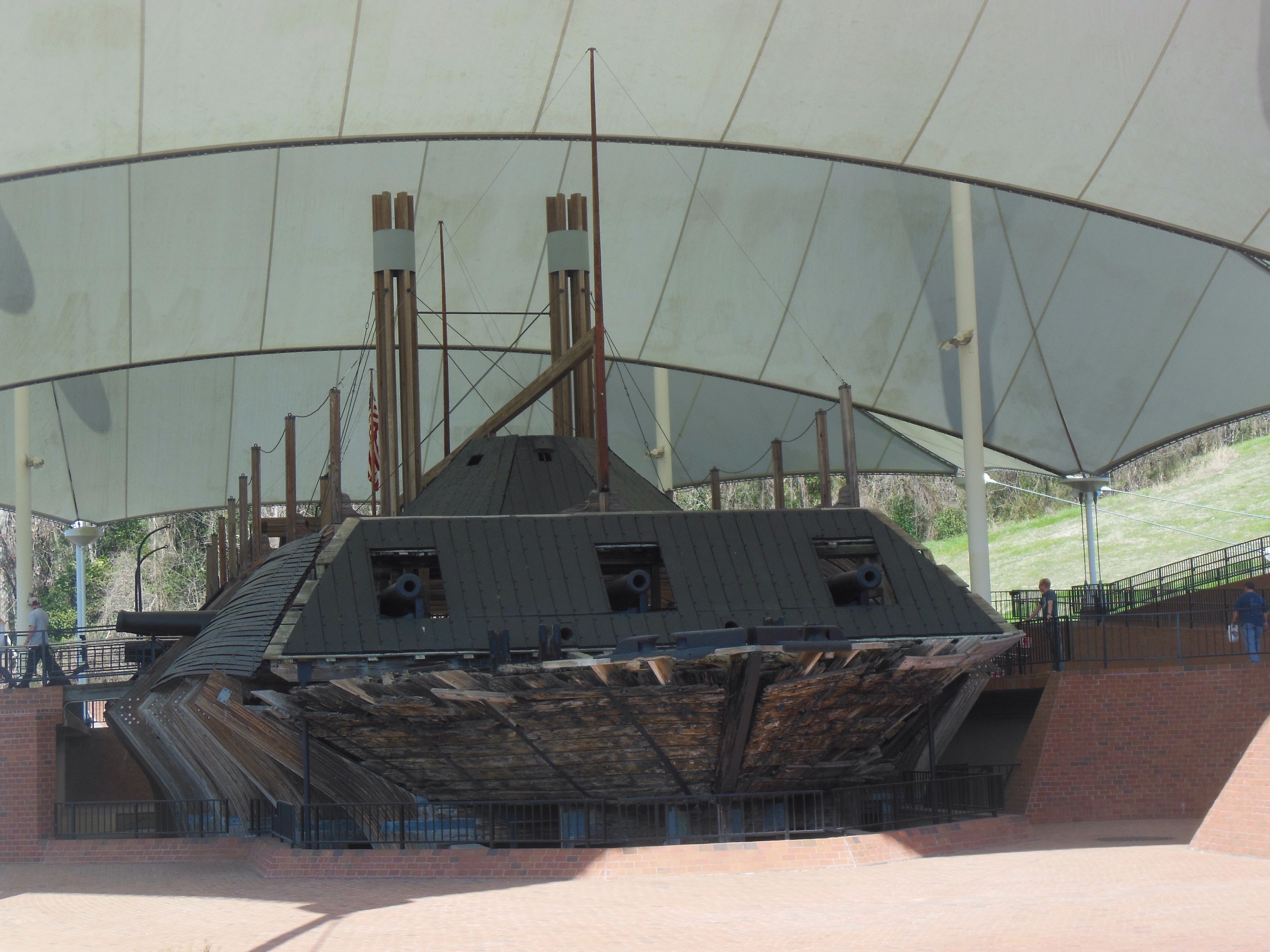
USS Cairo gunboat

USS Cairo gunboat

U.S. Grant was the union commander and operations against Vicksburg began in Oct.of 1862. Vicksburg was well defended and located on a bluff above the Mississippi giving it a naturally defensible position. Grant’s efforts to capture the city kept being repulsed by the Confederates. Finally in the spring of 1863 a 47 day siege resulted in the surrender of the city and Confederate forces on July 4. The surrender of Vicksburg coupled with the Union victory at Gettysburg PA on July 1-3 together sealed the Confederate defeat although the war dragged on until April of 1865.

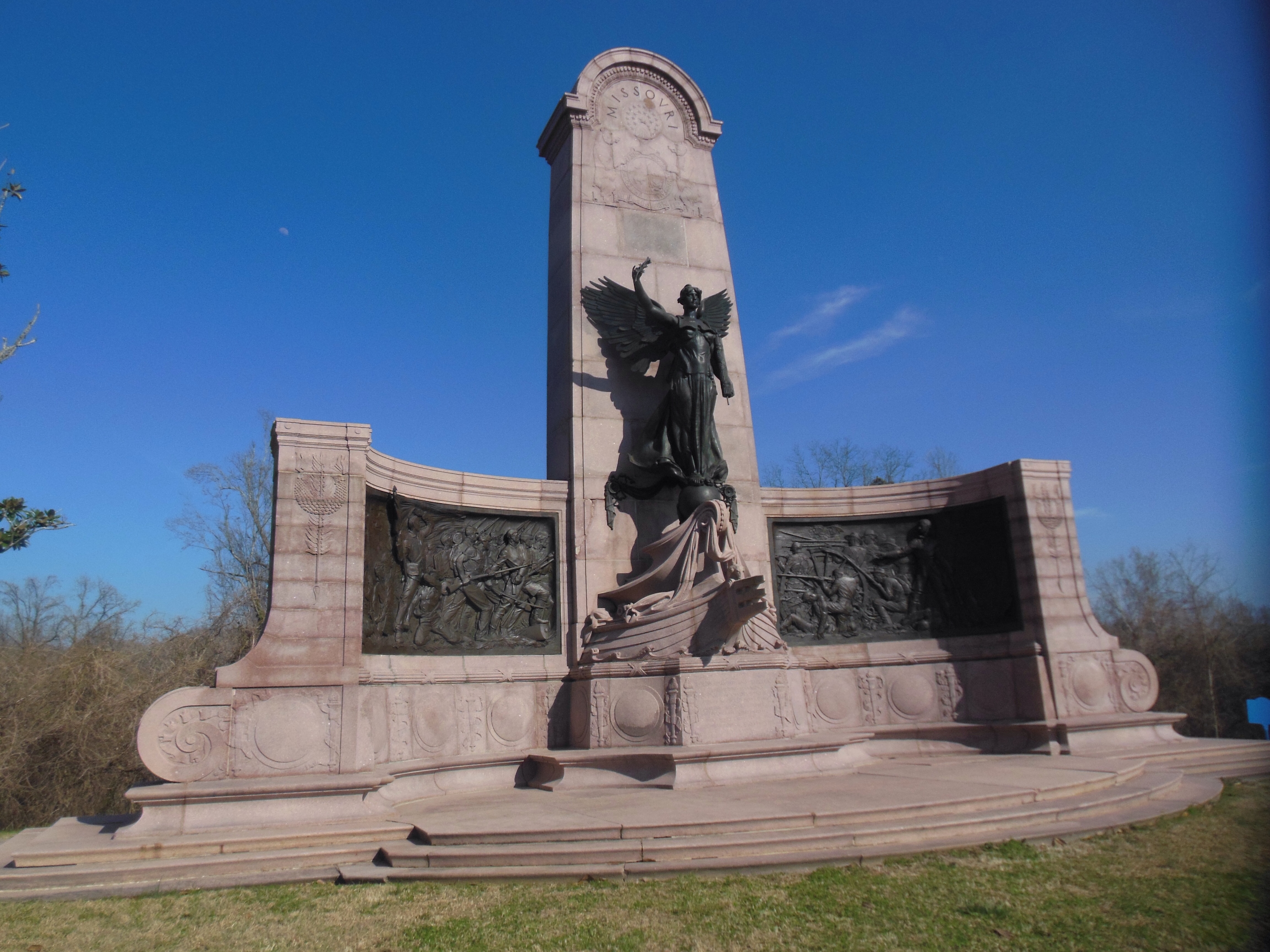
Missouri brothers vs brothers monument: MO had many troops on each side of the battle

Missouri brothers vs brothers monument: MO had many troops on each side of the battle

Our audio tour presented a detailed description of the siege. An unexpected highlight was the restored Union ironclad gunboat, the Cairo. This gunboat, one of 7 that helped control the Mississippi for the Union, was sunk by mines on Dec. 12, 1862. Its remains were discovered in 1954 and finally raised in December of 1864. The exhibit was completed and given to the Vicksburg National Military Park in 1977. The exhibit allows one to see clearly now the extent of the damage caused by the mines, the inner workings of the paddlewheel, the cannon, the iron plating, etc.

Dinner was in another local restaurant. Tomorrow we hope to see the Lower Mississippi River Museum before heading to St. Francisville, LA.

Ed and Chris
Tuesday morning 9:30 AM
image

image

image

image

Categories: road trip, travel | Tags: , , , , , | Leave a comment

2014 Trip Two, March 9, Deep South

Vicksburg, MS Sunday March 9

As “professional travelers” we work on Sundays. Not so much for many of the places we wanted to see or local restaurants to dine in. This impacted on our day’s options.

We left Memphis after church and breakfast and headed for Mississippi. U.S.Route 61 in this area was described in one of the resources we used as “Not much to write home about”. The source was correct and so we won’t. The weather was overcast and foggy but the snow has completely disappeared. I think we have turned the corner. Green fields are starting to pop up. The weather is warm; time to put the fleece and heavy socks away, break out the windbreakers and light shoes.

Route 61 was our major road all day long. It is publicized as the part of the “Blues Trail”; a series of historical markers detail significant places and times in the lives of numerous blues musicians who are from Mississippi. Clarksdale MS was planned to be our first, and brief, stop.

Cutrer Mansion in Clarksdale, Tennessee Williams knew the family here well.

Cutrer Mansion in Clarksdale, Tennessee Williams knew the family here well.

Tennessee Williams spent most of his childhood here. Like Hannibal and Sam Clemens, many people he encountered in his childhood turned up later in his novels. Clarksdale is also noted as one of many towns that had an important role to play in the development of the blues. But the town sidewalks were rolled up tight, few people about, and many, many storefronts boarded up. It was depressing and we just kept moving on.

We had lunch in Cleveland MS. Downtown was deserted. Local restaurant options were closed. Luckily Cleveland is the home of Delta State University so chain restaurant options were available. We chose Back Yard Burgers, a regional chain. Good food, but the money spent on interior aesthetics must have been miniscule.

B.B. King museum in Indianola MS

B.B. King museum in Indianola MS

Indianola MS was our major stop of the day. Getting there continued the drive through farm lands that looked rich and fertile. Our destination was the B.B. King Museum. It was excellently done and we spent several hours enjoying the displays.

In the B.B. King Museum

In the B.B. King Museum

The museum presents many aspects of B.B.Kings life. One theme I am sure we will experience frequently in the first part of this trip is the change in the U.S. from the brutal segregation actions and policies of the first half, or more, of the 20th century to the much improved current status. It is difficult to read the displays describing the lynchings, murders, almost non-existent schools for blacks, etc. Then you realize you are standing in the heart of that part of the country.

BB King was born Riley B King and learned his musical skills from a variety of self taught sources. The displays describe the other musical influences on him and how he grew from playing the “Chitlin Circuit” of African-American clubs in the late 1940s and early 50s to becoming a world renowned blues musician and ambassador of American music by the end of the 70s.

Kermit the Frog in Leland MS

Kermit the Frog in Leland MS

After Indianola, we made a quick stop in Leland MS. Leland is the birthplace of Jim Henson, creator of the Muppets. Leland does not have a major Muppet museum but the visitor’s center (closed on Sundays) does have a logo of Kermit the Frog on the building.

Our B and B in Vicksburg

Our B and B in Vicksburg

Vicksburg is our home for the next two nights and the scene of the first flowers we have observed.

FLOWERS

FLOWERS

Ed and Chris Vicksburg 10:30 pm

Categories: road trip, travel | Tags: , , , | Leave a comment

2014 Trip Two, March 8, Deep South

Saturday March 8, Memphis TN

Memphis is not on our tour schedule for 2014, we plan to visit longer in 2015. Today Memphis just fits nicely into our travel schedule en route from Ste Genevieve, MO to Vicksburg, MS.

Our B and B in Ste Genevieve, Inn Ste Gemme Beauvais, offered an excellent breakfast this morning. Last night we chose from among the eight entree choices so our breakfast could be ready for us this AM. I had the fruit (baked apple slices nicely spiced), an oatmeal that was not Quaker Oats from the box, French toast stuffed with a cream cheese and spices combination and topped with a fruit sauce, bacon, OJ, and milk-with refills. Chris had a home made sweet bread, 3 cheese quiche with spinach, bacon, OJ, and coffee. Very nicely done.

Chandelier in B and B

Chandelier in B and B

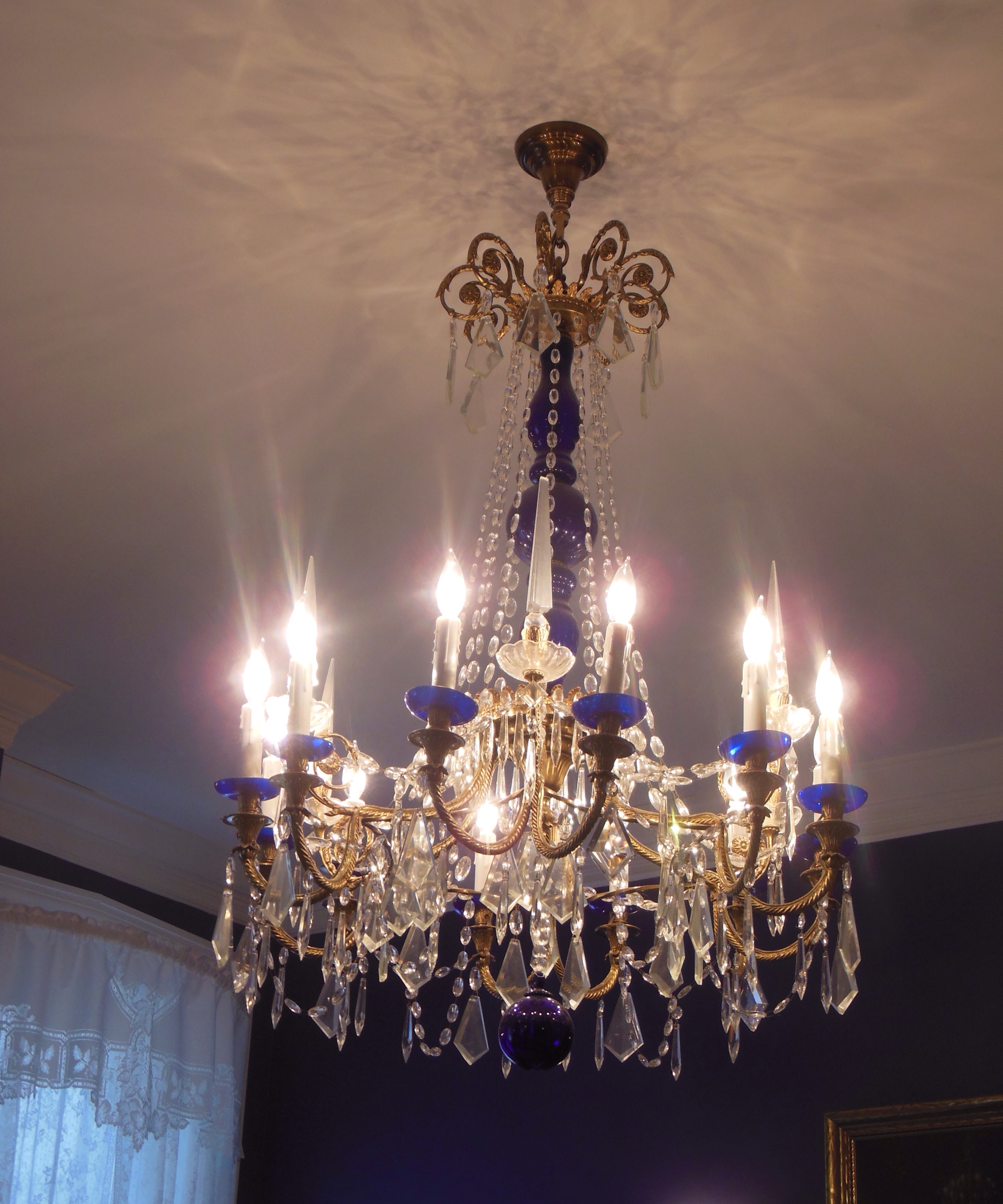
We were on the third floor of the B and B. It goes back to 1848 and is the oldest continuously operated B and B in MO. Unfortunately, it had a fire several years ago but has been restored. The beautiful chandelier was saved and still hangs in the dining room. Railroad tracks run behind it but the trains did not wake us from our sleep.

Bolduc House front-fence kept animals out

Bolduc House front-fence kept animals out

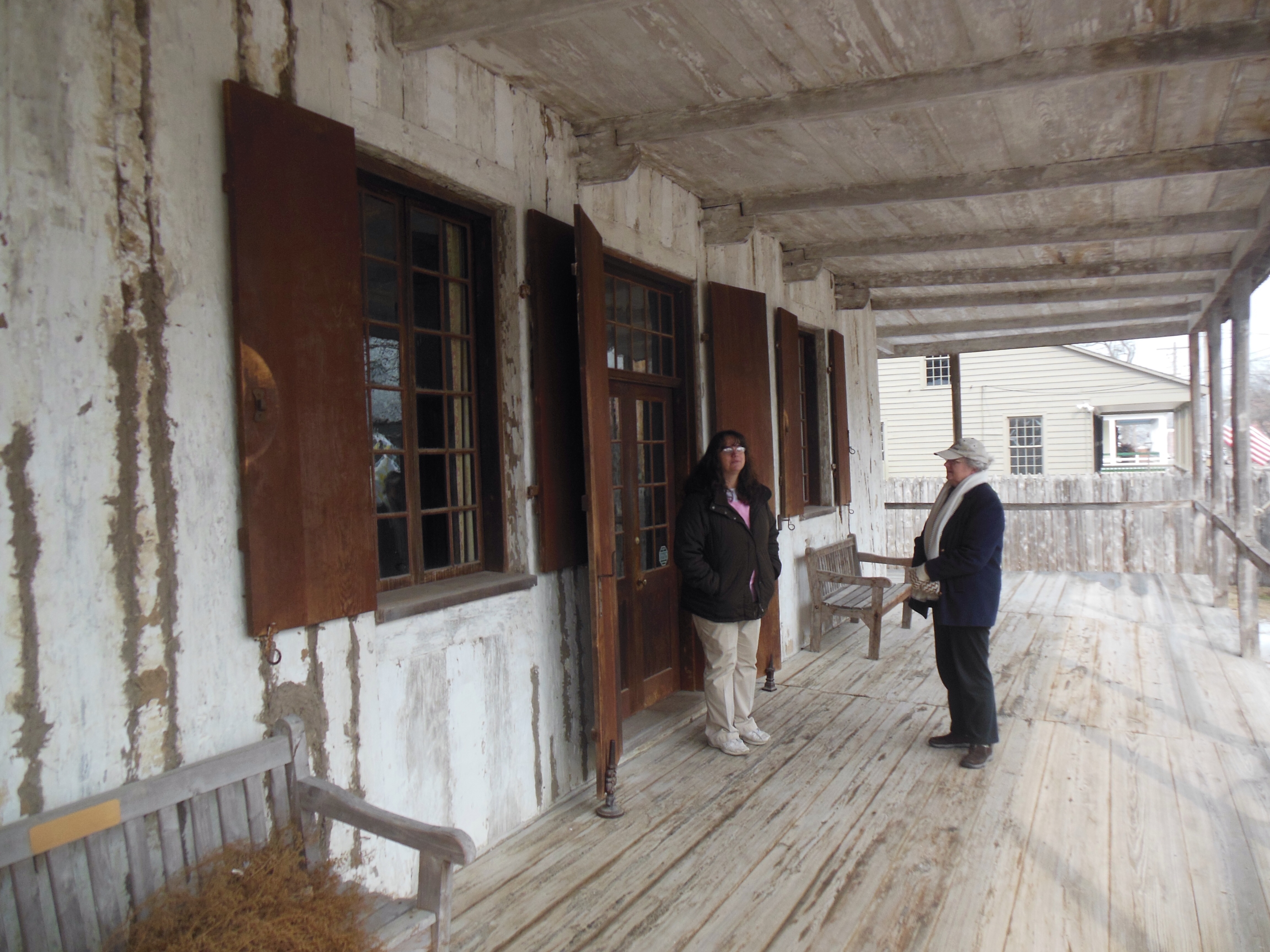
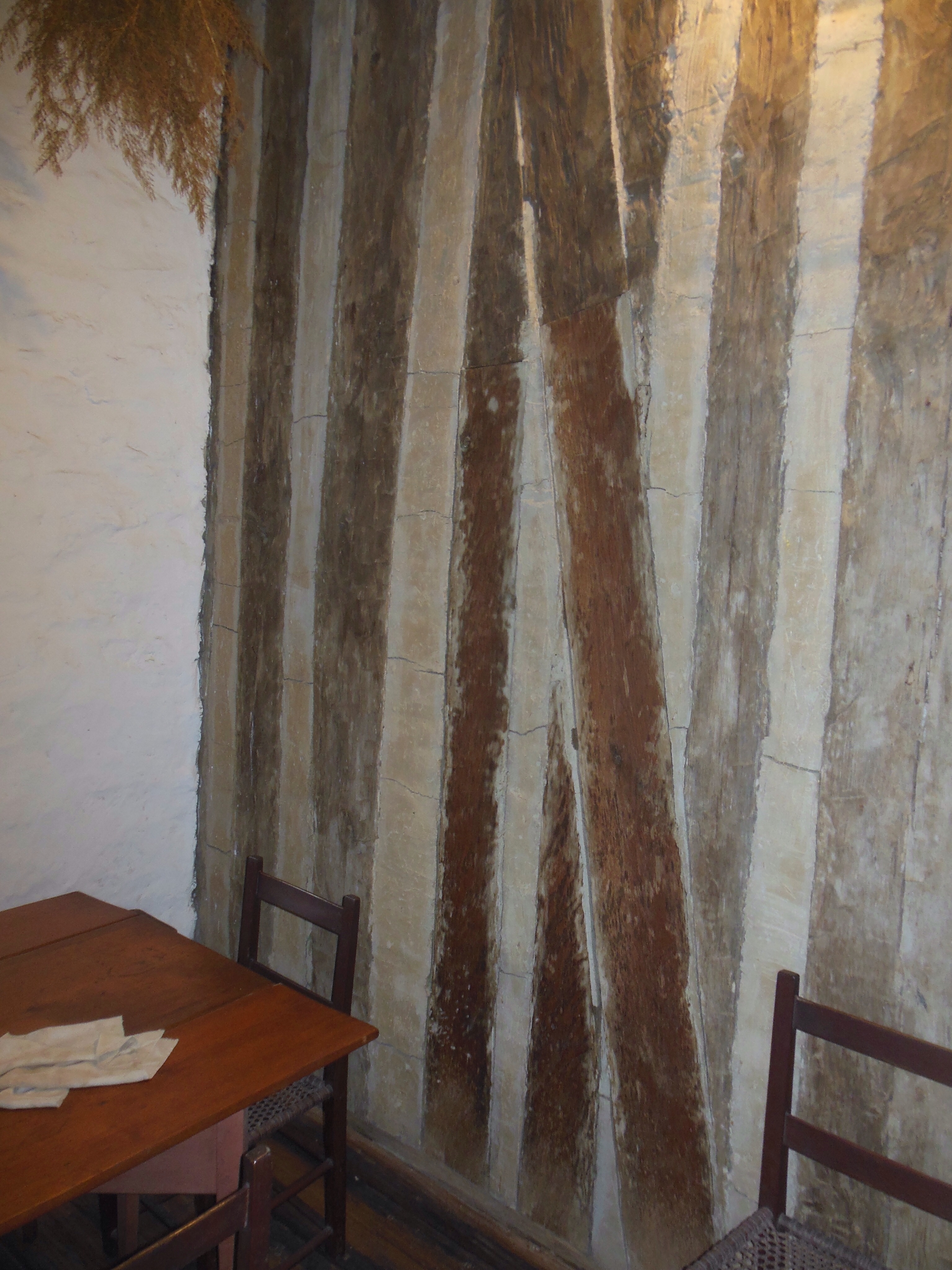
After breakfast we toured the Bolduc House built around 1792. This building and several others in town feature vertical log construction, instead of the usual horizontal construction process. This process stems from French Normandy and Ste Genevieve has the most (and best) examples of this rare construction style.

Vertical log construction

Vertical log construction

Many of the earliest settlers came from Quebec. The rich farm land bottoms along the Mississippi River attracted them. The hills just west of town have been mined for lead since the 1720s and were another drawing card. Bolduc was both a mine owner and a merchant. The last Bolduc family member died in the 1940s and the building and lands were purchased for historical display.

Front porch of Bolduc House

Front porch of Bolduc House

Besides being a historical town, Ste Genevieve is the site of a lime mine and manufacturing facility. We were told that at times the white lime dust provides a thin coating on stationary objects. We were spared the opportunity to observe this. Mining tunnels are under the town and air shafts periodically stick out of the ground.

The morning was turning drizzly and blustery so we headed over to IL to continue our drive along the river. We took a ferry instead of driving miles to a bridge. On the way to the ferry we passed the three mile long levee and dike. The original town site was flooded in the 1785 and the current site is located on higher ground. This did not prevent floods in 1973, 1993, and 1995 from doing great damage so a levee system was finally constructed. Now they just worry about flash floods from the creeks leading to the Mississippi.

Ste Genevieve-Modoc ferry

Ste Genevieve-Modoc ferry

The Ste Genevieve-Modoc ferry seemed even less sturdy than the one we took over Bull Shoals Lake in Arkansas last fall. We did make it across the mighty Mississippi without incident, though. On the IL side, we drove south along river flatlands edging the timeworn hills of the Shawnee National Forest.

We passed through Chester IL. This town is the birthplace of the cartoon character “Popeye” and the town is in the process of creating a trail with several statutes. Since this is river territory, Chester is one of many areas where barges load and unload their cargo onto trucks or trains.

Our initial thoughts had been to drive back roads all the way to Memphis. But the day was still gray and we switched back to the MO side and Interstated (a word??) it most of the way to Memphis. At the AR welcome center on I-55, the staff person informed us that the Interstate was closed completely to southbound traffic down the road and gave us directions to a detour.

So we were back on two lane roads, US 61 again, and visited more small towns. Snow has been covering about 50% of the fields and the warm weather has created fog banks as the snow has been melting and evaporating. Fields not covered in snow are wet or under water.

Once back on I-55, we came upon a major back-up for northbound traffic. The backlog was for miles and hundreds of trucks were moving inch by inch. Finally we reached the Memphis area and the snow disappeared completely.

Dinner tonight was supposed to be at a barbecue place we had researched before we left town. It did not take reservations. I called when we arrived to inquire as to the best time to arrive to avoid long lines. But best laid plans… It was an hour wait when we got there. We were hungry so we decided to try another place. Another hour wait. Third time was a charm, no wait, good food. Well at least downtown Memphis is not deserted.

Ed and Chris 9:15 pm before daylight savings time kicks in

Categories: road trip, travel | Tags: , , | Leave a comment

2014 Trip Two, March 7, Deep South

Ste. Genevieve, MO Friday March 7

While not exhaustive and certainly not in-depth, this early part of the trip is giving us a flavor of Mississippi River towns. They share a common link of early rise due to water power and river and railraod transportation. Transportation led to the development of industry. Early fortunes were made and lost. As time and circumstances passed, the cities rose or fell according to local temperament and opportunities for change.

While the Illinois cities of Moline, East Moline, ad Rock Island are larger than the later towns we visited and seem to have more large employers, the housing stock and towns seemed more run-down and depressing.

A Grand Ave house in Keokuk IA

A Grand Ave house in Keokuk IA

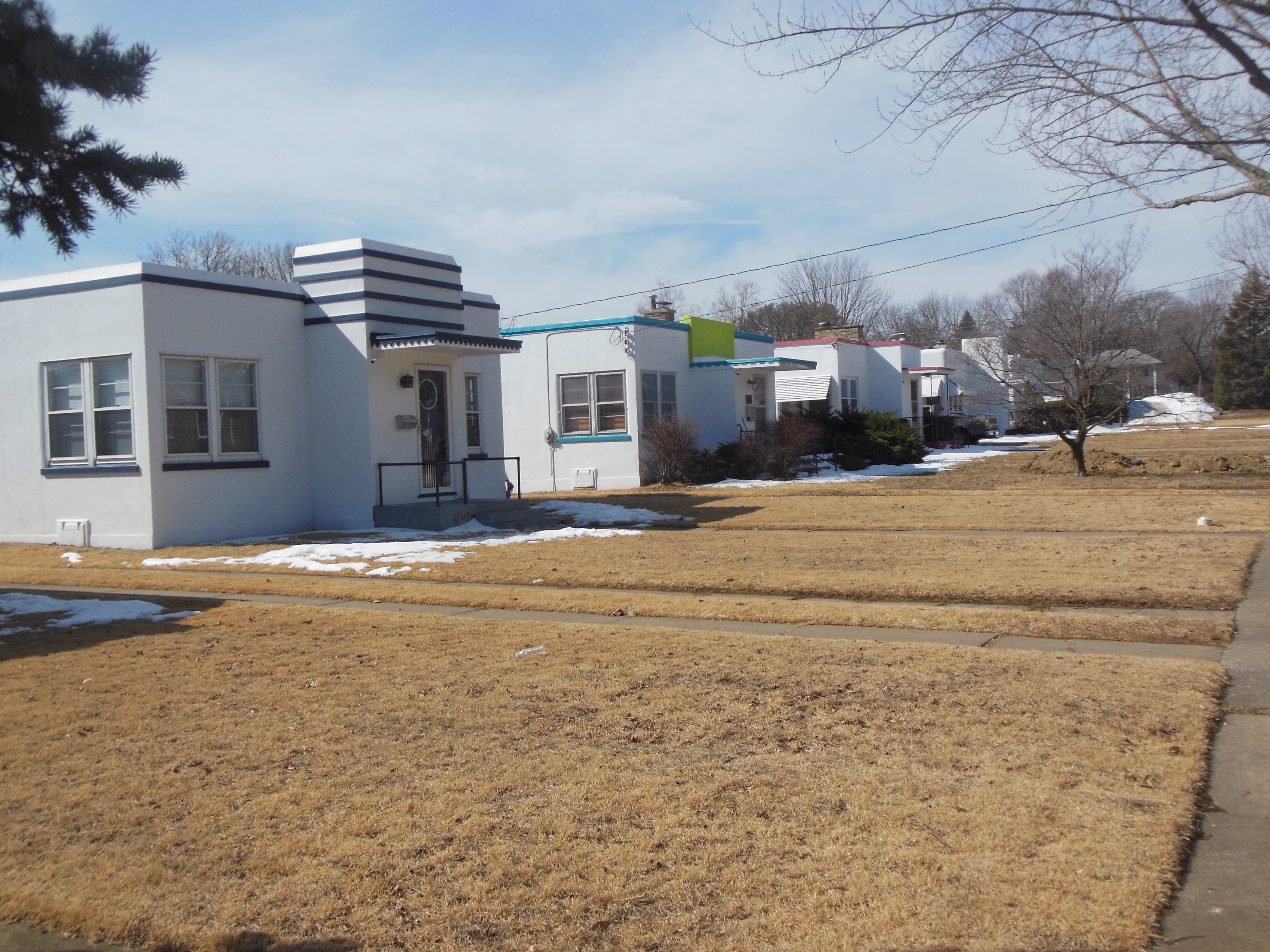
Keokuk IA (about 10,000 people) came across as a reasonably suitable town in comparison. Homes are still small and older. Their upscale street, Grand Avenue, has grandiose homes but many looked in need of re-furbishing. Maby it is just that time of the year when everything looks gray. It has one large employer we noticed but it had a 10 month lockout a few years ago.

Visitor center in Quincy IL

Visitor center in Quincy IL

Quincy IL (40,000) was one step up. Still not glamorous (sorry Chammber of Commerce), it boasts of a large heritage of architecturally significant homes. However, the architecture museum we planned to visit closed 6 months ago due to a lack of funds.

Interior of visitor  center

Interior of visitor center

We stopped at the visitor’s center housed in a mansion built in 1900 and styled after Moorish architecture the owner grew fond of during a two year stint abroad. His tenure here was less than 15 years. The property was then sold and to be used as a railroad staging area. That never came to fruition and like many large mansions, passed through numerous owners and periods of neglect before preservationists and infusions of large sums of taxpayer funds restored it.

one of the buildings at 16th and Maine in Quincy,IL

one of the buildings at 16th and Maine in Quincy,IL

The visitor’s center had a driving tour of several types of architecturally significant homes so we whiled away some time viewing old Quincy. National Geographic named the corner of 16th and Maine as “one of the most architecturally significant corners in the U.S.” Nice but without further information, I can not tell you why. The four buildings did not overwhelm me.

A different style of home in Quincy

A different style of home in Quincy

Lunch was at a restaurant overlooking the Mississippi. After the lock and dam at Keokuk, the portions of the river we could see had open water in the main channel.

A view of the Mississippi River

A view of the Mississippi River

As we drove to Hannibal MO from Quincy, the farm fields were flat. River flooding, if not for the Corps of Engineers, would inundate land for many miles. I am sure that is how the land became fertile in the first place. We passed towns so small there wasn’t even a bar.

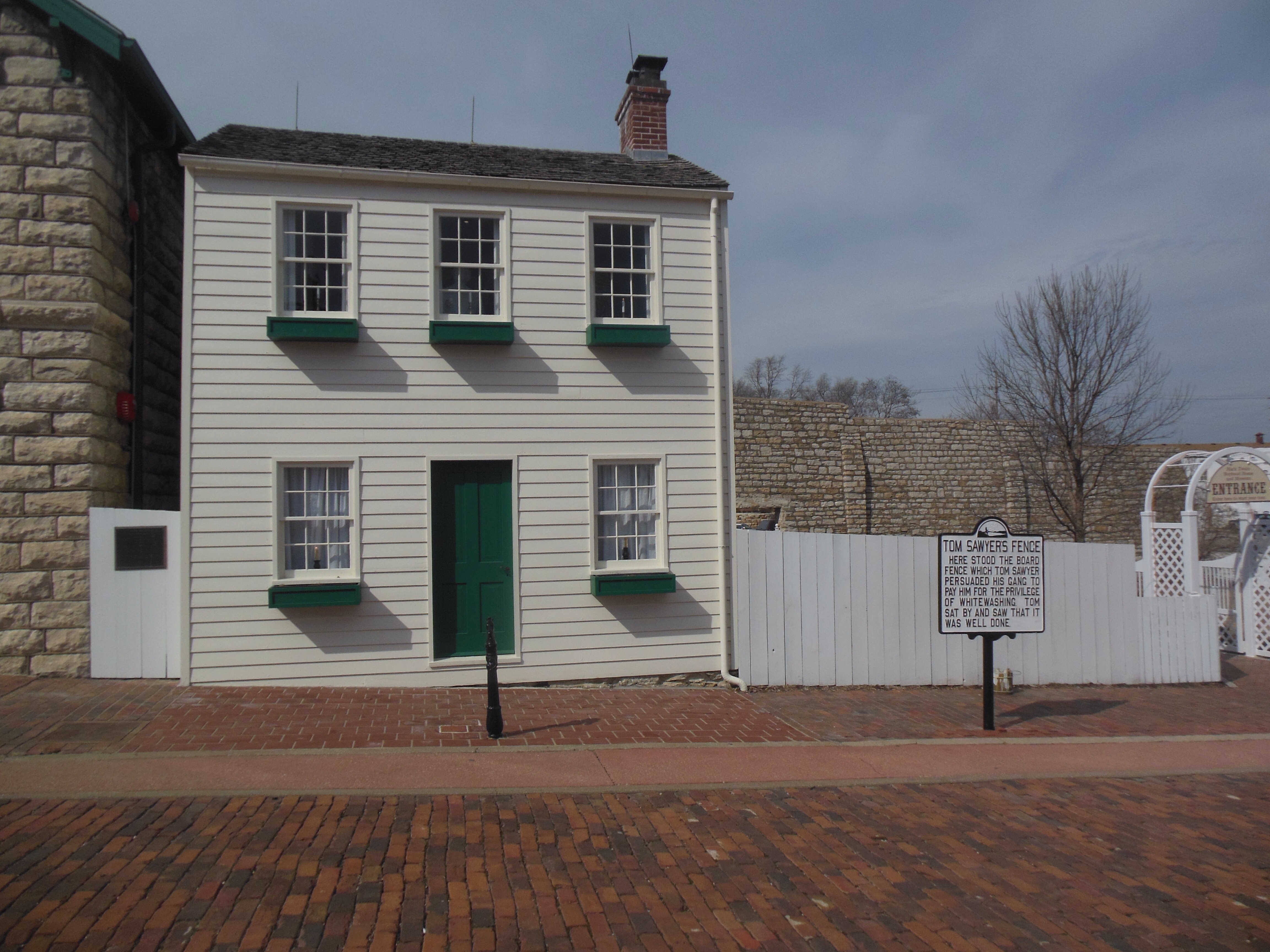
Hannibal is Mark Twain on steroids. It is Huck this, Tom that and a few Beckys tossed in here and there. AAA rated the Mark Twain boyhood home (reconstruction) museum as a must see. We spent time perusing the multiple buildings and the museum’s gallery recap of Twain’s novels. We avoided the cave, the trolley, the lighthouse (not sure why that is here), the model trains, etc. March is not a peak tourist time here either but it was open and we enjoyed it. I did wonder if his books are still being covered in schools today.

Mark Twain boyhood home,Hannibal MO

Mark Twain boyhood home,Hannibal MO

As we drove to Ste. Genevieve MO for the evening, the snow disappeared-until we actually got to the town. Then there was snow. I guess it snowed last weekend and it is still around. Warmer temperatures are here and I doubt the snow will be here after the weekend.

Tourist literature states that Ste. Genevieve is the first town established west of the Mississippi-except we all know of Spanish towns in Texas and New Mexico that predate the 1740 French founding of this town. It is supposed to have the highest concentration of French colonial buildings in the U.S. More about Ste. Genevieve tomorrow.

Jerry at the Anvil  Saloon, Ste Genevieve, MO

Jerry at the Anvil Saloon, Ste Genevieve, MO

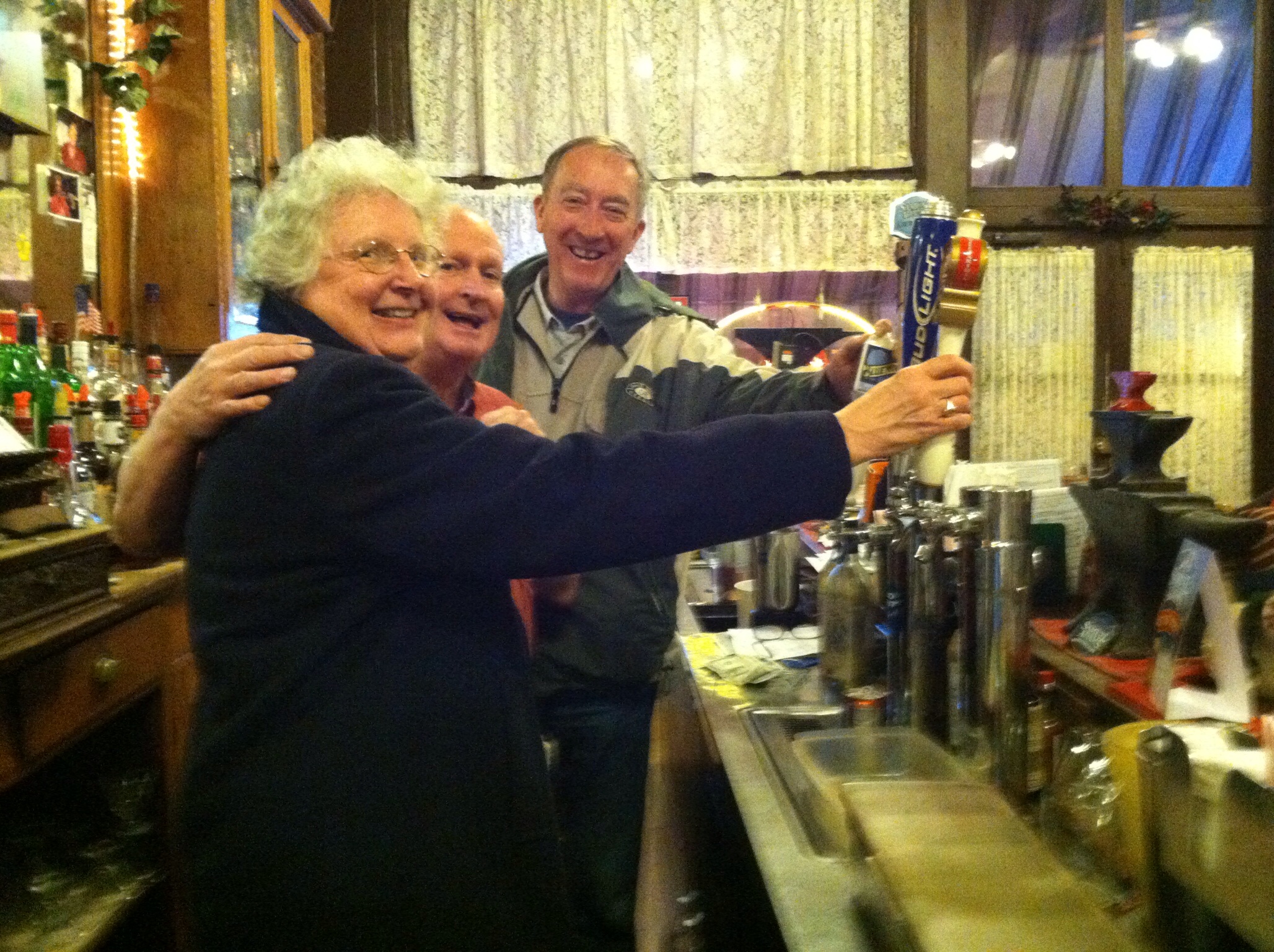
Dinner was at the Anvil Saloon located in a buidling from 1855 and used as a saloon for the vast majority of its life. The bartender reminded me of my Dad’s outgoing personality with customers.

Ed and Chris 10:30 pm

Categories: road trip, travel | Tags: , , , , , | 1 Comment

2014 Trip Two, March 6, Deep South

March 6, Keokuk IA

We spend much of the day seeing Green and Yellow. Green and yellow are the colors of the John Deere Company.

We toured the combine assembly plant in East Moline, IL. This is the largest combine manufacturing facility in the world. There are 73 acres under roof in this facility. John Deere has a major presence in this area and in the IA-IL region with numerous manufacturing plants around here to complement the overseas plants in Brazil, India, China and Germany.

John Deere combine and corn header

John Deere combine and corn header

John Deere was a blacksmith originally from Vermont. He manufactured the first steel plow back around 1830. A steel plow as smoother than the previous iron ones. Because of this smoothness, dirt did not adhere to the plow and plowing was faster and easier. From this humble beginning arose the manufacturing giant of today. Deere says almost half of the food harvested in the world is done with Deere products.

Our one and a half hour tour began at 8 AM. Chris was the only female. It seemed like all of the others were young men who farmed but we never did verify that. The tour is via a motorized tram and the guides are retired Deere employees. The tram takes you all over the facility and you observe the entire assembly and painting process. No pictures allowed on the tour.

Side view of combine

Side view of combine

Combines are not manufactured until an order has been placed. It takes 10-14 days to manufacture the combine. The plant operates 24 hours a day. For nine months of the year, there are shifts 7 days per week. For three months of the year, there are shifts 5 days per week. Deere does not reveal how many combines it makes but obviously it is quite a few.

In the visitor area is a combine with a corn header. The header or front attachment changes depending if you are harvesting corn, soybeans, rice, wheat, etc. The combine then separates the grain from the stalk and grinds up the stalk material. The combine on display cost $500,000. The corn header was $200,000.

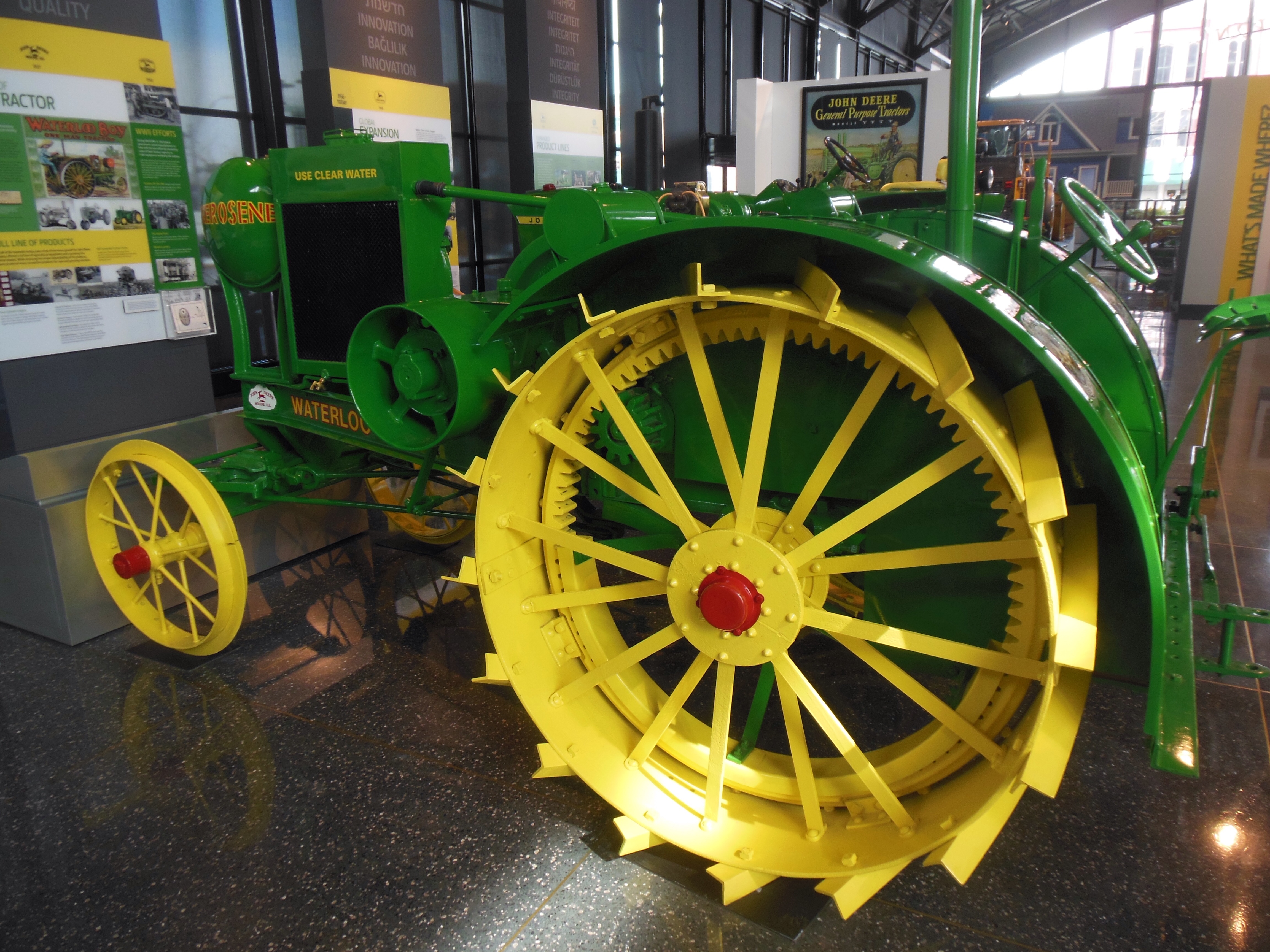
WWI era Deere tractor

WWI era Deere tractor

From the factory tour we visited the Deere World Headquarters where a few more implements were on display. Then we headed to downtown Moline and visited the John Deere Pavilion. This is the centerpiece of a downtown revitalization project on land that previously was used as a manufacturing facility.

Don't hire Ed to operate your equipment

Don’t hire Ed to operate your equipment

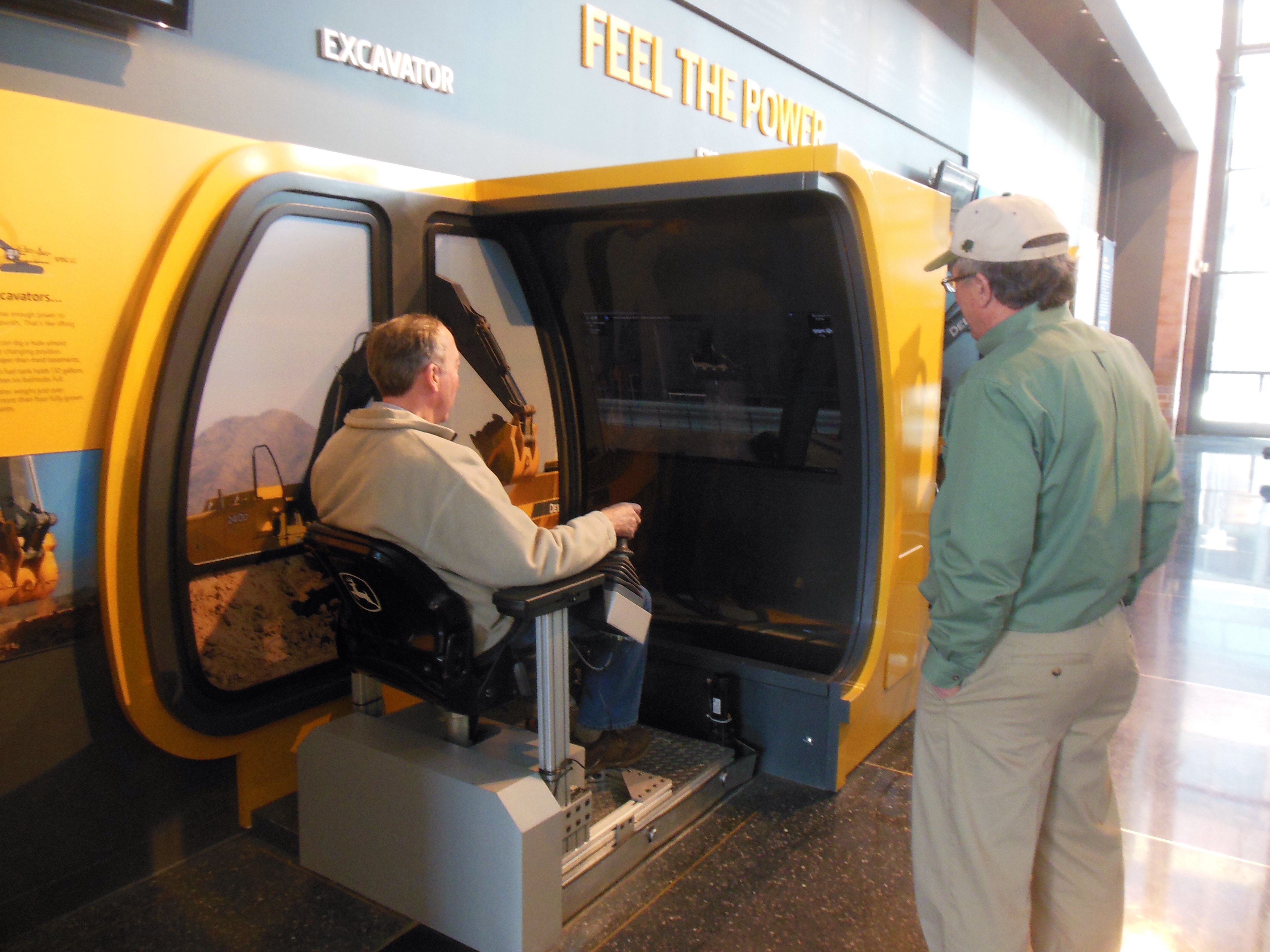
The exhibits here discussed the history of the company with more displays. One interactive area allows you to operate several Deere construction machines. I was totally incompetent. It renewed my appreciation for the Public Works employees I used to work with and supervise decades ago.

automatic lawn mower

automatic lawn mower

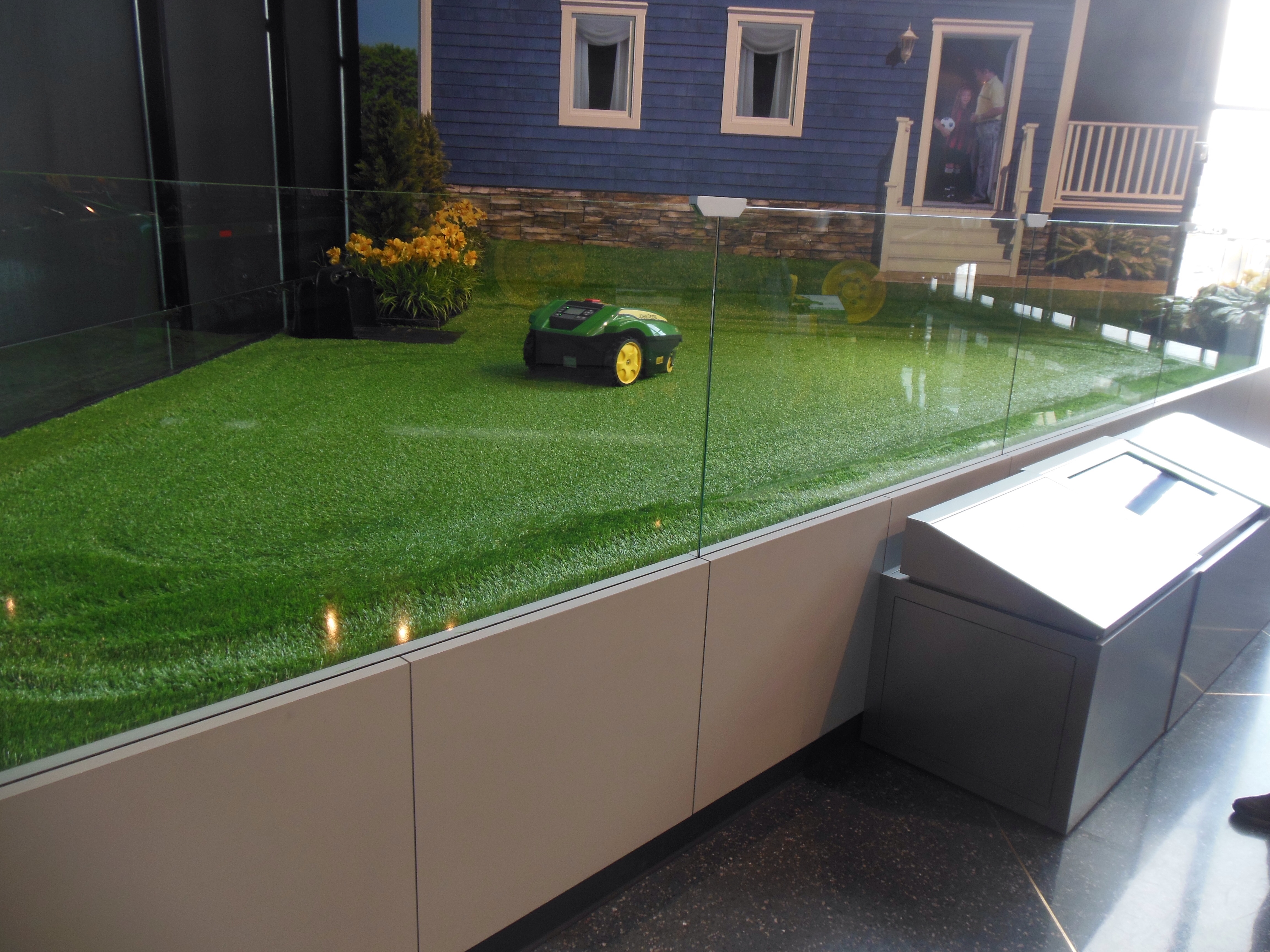
The displays included a robotic grass mower which mows your yard automatically, a automatic tractor for agricultural work,and a 6 legged robotic tree cutter. None of these are on the market in the US but it demonstrates their commitment to research and improvement.

Lunch at Logamarcino's

Lunch at Logamarcino’s

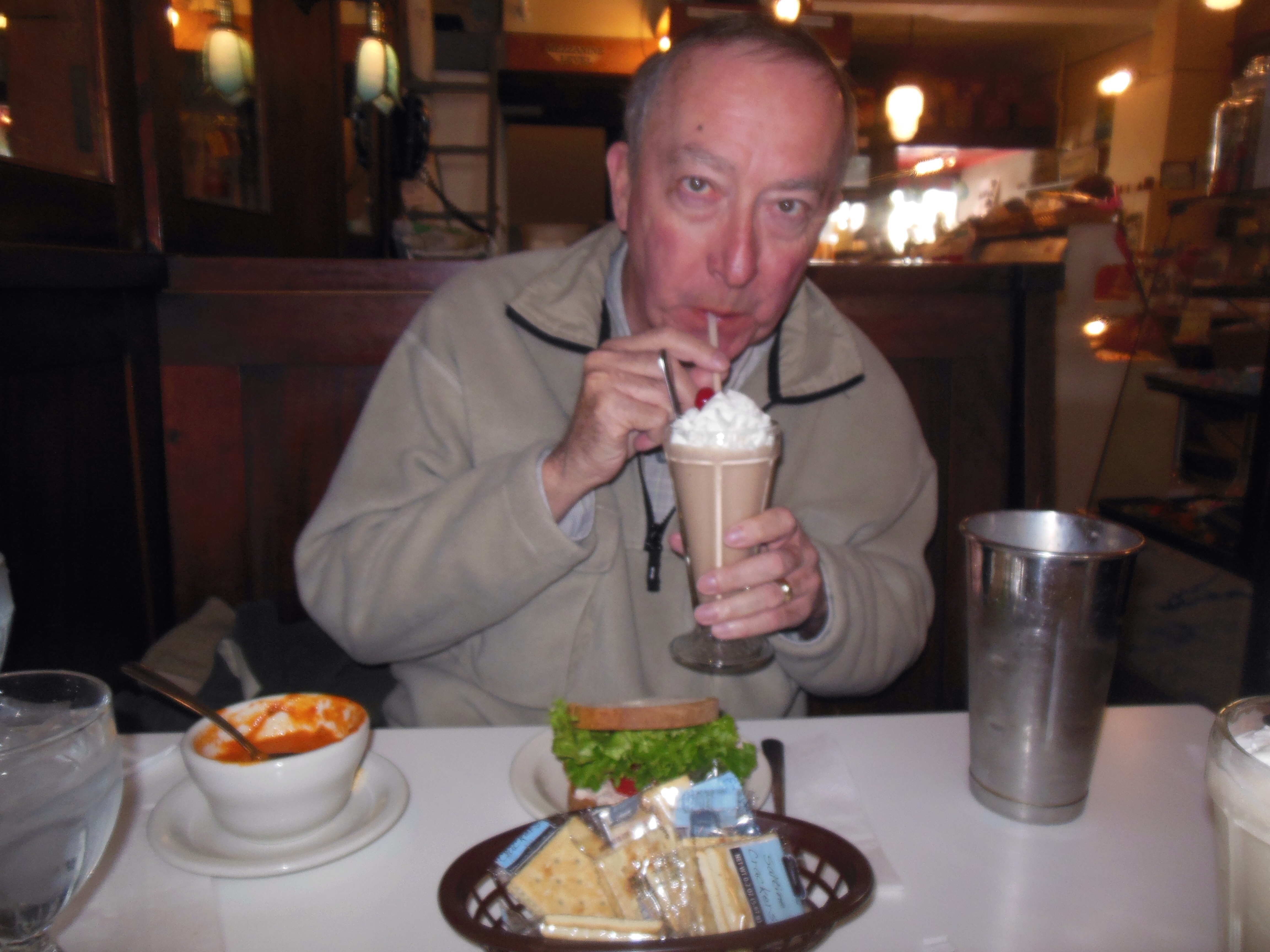
We walked a few blocks to an ice cream/candy/sandwich shop in downtown Moline that has been in business for over 100 years. Besides testing their malts and shakes (very good), we had excellent soup (red pepper Gouda bisque) and sandwiches. We have been enjoying great soups lately; with the turkey/bacon/cheese bisque at the Grand Ely Lodge and the crab bisque yesterday with Shannon and Adam.

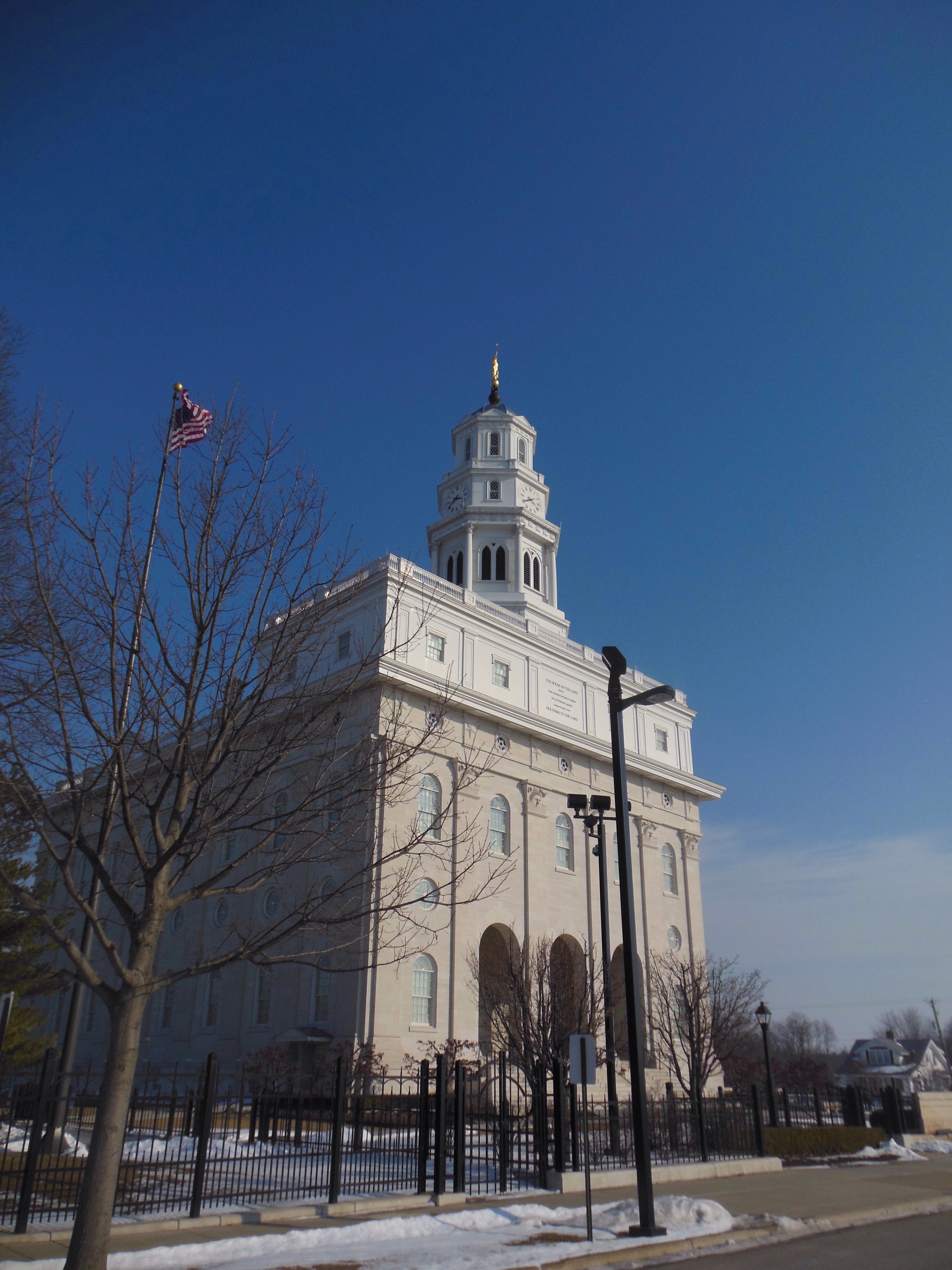
After lunch it was on to Nauvoo, IL. This town of just over 1100 souls (per the fantastic counting work of the U.S. Census Bureau) was once the second largest city in Illinois. As you may know, the vast majority of the Mormons left Nauvoo beginning in 1846 for Utah after founder Joseph Smith and his brother were killed by a mob in a local jail.

Nauvoo LDS temple

Nauvoo LDS temple

I am not going to try to cover the multitude of opinions and historical facts on this but certainly the locals disliked the Mormon united action that gave them control of the town. Their conservative beliefs were not popular in the frontier area, nor were their armed militia entirely passive either. In any event, Nauvoo became a much smaller town.

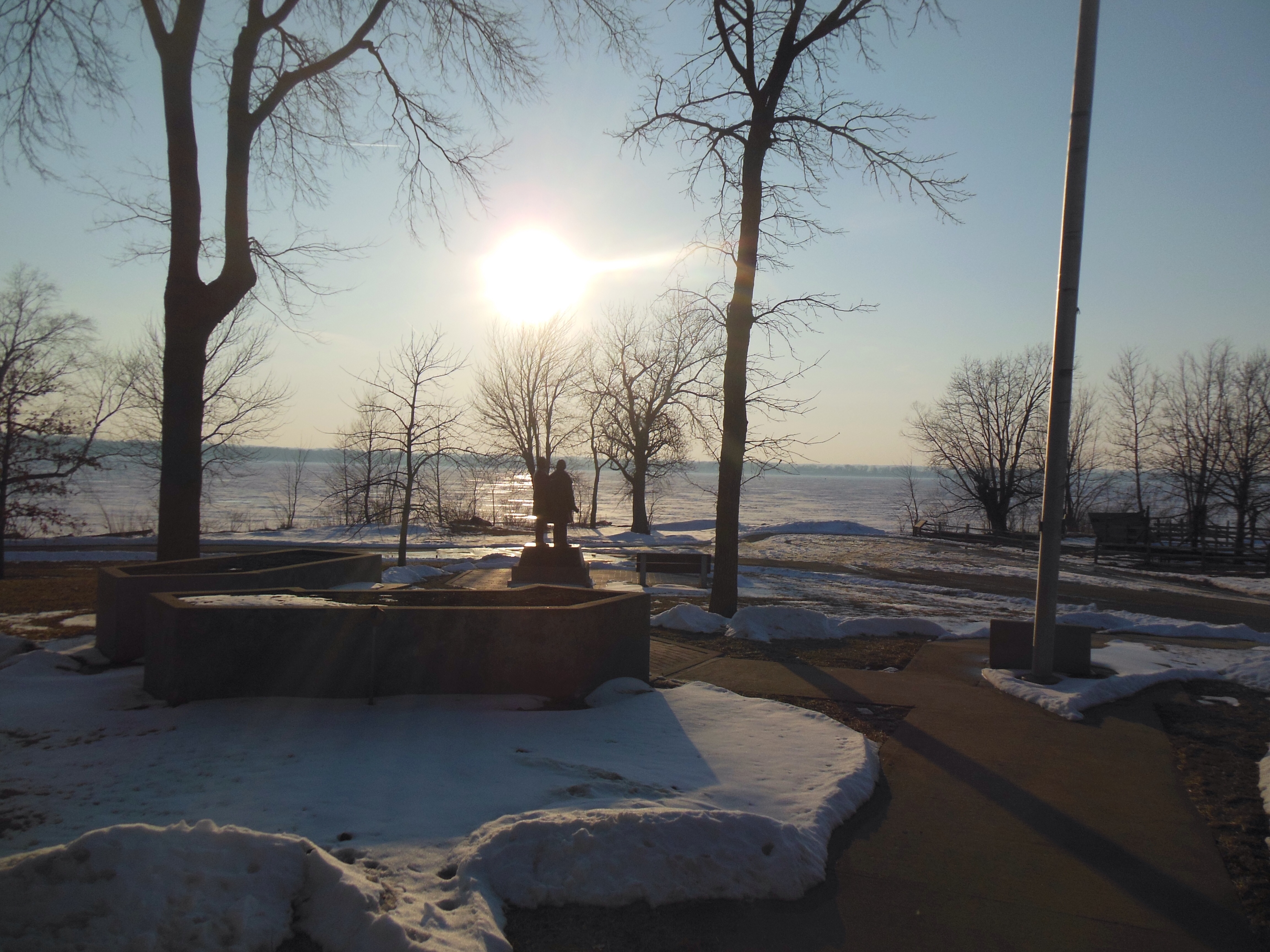
Statute of Joseph Smith and Brigham Young looking west across the Mississippi

Statute of Joseph Smith and Brigham Young looking west across the Mississippi

Today the old area is being re-constructed and the Church of the Latter Day Saints maintains a visitors center and gives tours of re-constructed buildings to demonstrate life as it was in the mid-1800s. We took in a video, read some historic accounts of the persecution and pilgrimage to Utah, etc.

As we were leaving, one of the docents invited us to the show this evening, titled “Rendezvous in Old Nauvoo”. So we came back for the hour long show at 7 pm. 35 cast members entertained the 25 of us in the audience. (Winter is not a big tourist time in Nauvoo. Summer must be better as there are numerous bus parking lots.) Chris and I were probably the only dis-interested audience members.

Some of the actors in the skit.

Some of the actors in the skit.

The show was a skit, maybe more of a morality play, depicting the persecution of the good people of Nauvoo and their decision to willingly take the 1300 mile “hike” to Utah. It was a different experience than coming back to the hotel and going for a swim.

We are starting to see patches of earth without snow on it. Friday-warmth???

Ed and Chris 11:20 pm

Categories: road trip, travel | Tags: , , , | Leave a comment

2014 Trip Two, March 5,Deep South

Wednesday, March 5, East Moline, IL

Basic trip outline for Deep South Trip; March - April 2014

Basic trip outline for Deep South Trip; March – April 2014

This journey to the Deep South should bring us from the frigid tundra to warm sand beaches. But not yet. The cold continues with blowing snow in southern MN and northern IA and again here around Moline.

Ed, Chris, Adam, Shannon

Ed, Chris, Adam, Shannon

The only warmth we saw today was from my niece Shannon and her husband Adam when we visited them for lunch in Mason City. Adam gave us a tour of the sprawling and expanding facility for their company, The Dimensional Group. Then they treated us to lunch in downtown Mason City which is home to the last Frank Lloyd Wright designed hotel and the site of the last bank robbed by John Dillinger. The bank was also designed by Wright.

City National  Bank, Mason City IA

City National Bank, Mason City IA

The lunch was tasty and filling and we thought we would pass on dinner. However, tonight the hotel had their manager’s complimentary dinner; hamburgers, baked beans, salad and butterscotch pudding. Not as tasty as lunch but we did not want the hotel to think we did not appreciate their efforts so we dined again.

For those of you unaware of the ending to Trip One, our car did not start Sunday morning in Ely MN despite starting each of the three previous days. Repeated attempts to start/jump the car were unsuccessful and destroyed the starter. We finally arrived home Tuesday night, instead of Sunday night, after a new starter was ordered, delivered, and installed. We spent Tuesday night re-organizing for this trip and made it out of town Wednesday morning by 10.

The Deep South journey will explore areas we have never experienced before (except for South Beach). This trip will probably involve more B and B’s than all of the other trips combined. We thought it might help us experience the flavor of the south.

Ed and Chris 3/5/14 8:15 pm

Categories: road trip, travel | Tags: , | Leave a comment

2014 Trip One, March 2, Ely Dogsledding

Sunday March 2, Ely MN

The adventure continues. Today was to be our drive back home day. But the car could not deal with another frigid night. It would not start and in the process of trying to jump it, we seemed to have damaged something. Tony’s Towing (a AAA affiliate) came and towed the Saturn to a local shop whose mechanic will be in Monday morning at 8.

Chris,  Colin, Greg, and Ed

Chris, Colin, Greg, and Ed

Tony’s Towing also dropped us off at the Grand Ely Lodge, a place recommended by the Wintergreen people. It has a pool, whirlpool, sauna, and restaurant on site. Our room overlooks Lake Sagawa.

So despite the proactive steps of dumping a can of Heet in the gas tank, having the car serviced before the trip, a new battery in December, and starting, and running, the car Thursday, Friday, and Saturday, Mother Nature (or maybe Ol’ Man Winter) won out.

Video below shows what happens to hot water when it meets cold air.

The car belonging to one of the guides had to be jumped also. The WI women were able to start their car and make it up the hill but within a mile or so got a flat tire. We believe the unsuccessful effort Thursday to make it up the hill and the tire spinning that occurred then contributed to the flat tire. Tony’s Towing put their doughnut spare on the car and they drove into town where it should have been possible to repair/replace the tire.

We will discover tomorrow what the damage is, how soon it can be fixed, and how much it will cost. But we remain in good spirits and look forward to trip 2 starting on Wednesday.

Ed and Chris 8:15 pm

Categories: road trip, travel | Tags: , , | Leave a comment

Blog at WordPress.com.