road trip

2014 Trip Three, April 16-17, Boston

Boston, Friday April 18

We are in Boston to visit Deb and Rebecca for the Easter weekend. This will likely be the only trip this year by air and will be the shortest at 6 days. Trip One, Dogsledding in Ely was planned to be only five days but stretched to seven due to the winter car problems.

We had good news yesterday. Silver, our 2001 Saturn with 194,000 miles on it (50,000 in the last year) only needs minor maintenance work to put it ready for the next 8,000 or so miles. The brakes were acting up a bit towards the end of the trip but minor tweaking will resolve that.

Our Nikon camera has been replaced. It is still just a point and shoot but a slightly upgraded version. This one has a flash that pops up automatically when needed. Deb and Rebecca say it reminds them of Wall-E, from the movie of the same name. So it has been christened. The other camera was not unique enough to be named.

I had packed the camera in my suitcase for the flight. Would you not know that this is the first flight we can recall to Boston in which we arrived during daylight hours without cloud cover. The view of Boston Harbor and its island was great. You will have to take my word for it.

This trip will be more relaxing and less rushing around. We have been to Boston many times. The roads are still confusing and the drivers still aggressive. But we made it to Deb’s without getting lost.

Walden Pond

Walden Pond

Thursday we went on just one little jaunt, out to Walden Pond, site of Henry David Thoreau’s famous book. It is a state park today. By the way, he was originally named David Henry Thoreau. We walked around the lake on a chilly but sunny day. The pond was not frozen although there were a few patches of icy snow deep in the shade. Grass is green but most trees have not leafed out yet, not much different from St. Paul. You can see the lake and train tracks from his cabin area. The train tracks were here when he was here in the 1840s, today Amtrak zips along them.
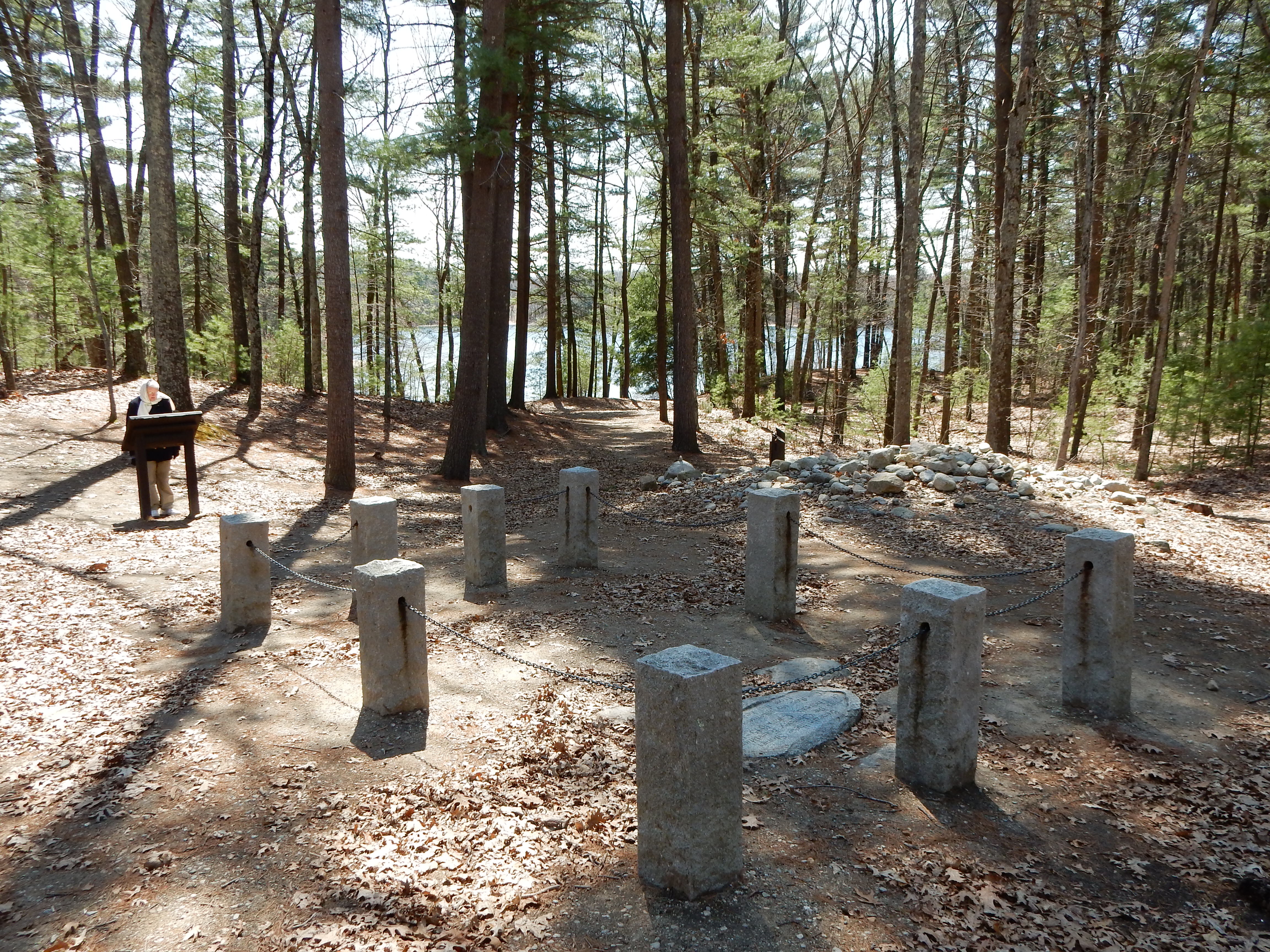
View of Walden Pond from Thoreau's cabin site

View of Walden Pond from Thoreau’s cabin site

The Civil Rights theme from Trip Two, Deep South, seems to want to keep us thinking. In the bookstore at the State Park are numerous books about slavery and the abolitionist movement that was prominent in the Boston area. There were also two books about slavery in this area. I did not buy any, I am still reading “The Warmth of Other Suns” picked up in Birmingham about black migration from the South to the North during the period form WWI to the 1970s.

Deb

Deb

In the evening we went to Maundy Thursday services at the Paulist Center in downtown Boston where Deb and Rebecca go. The Mass includes the ritual of washing of feet as Christ did. Unlike Pope Francis who only washed the feet of twelve men and women in Rome, anyone in the church could come up and have their feet washed and then wash those of the next person in line. While we passed, many people participated which of course adds to the length of the service. My dad and Chris’s dad would have fretted at the length of time the service went on. I only got antsy.

Monday is Patriots Day in Boston and the Boston Marathon will be run. We saw numerous signs of the preparation for it. “Boston Strong” signs and colors are numerous. Boston Commons
had numerous tents up though the finish line is a few blocks away near the Convention Center. Chris and I had observed one marathon many years ago when we were here for a legal administrators conference.

Ed and Chris Friday April 18

Categories: road trip, travel | Tags: , | 1 Comment

2014 Trip Two, April 10, Deep South

Thursday, April 10 Birmingham

In Birmingham, we set several targets of places we wished to visit and managed to complete them today. Like many towns, Birmingham has multiple attractions but we have started being more selective as over time we have been able to observe many facets of American life. We have considered this trip our Civil Rights and Civil War trip with a few beaches and gardens included.

Our first stop was at the Birmingham Civil Rights Institute. Back in the 1950s, Birmingham was called the most segregated city in America. Great improvements have occurred over the last 60 years but just like visiting Revolutionary War sites, we believe it important to learn or re-learn aspects of American history that may be painful but are still instructional.

The Birmingham Civil Rights Institute (again no interior pictures allowed) does a fantastic job of education without rancor. The facts are startling to recall; the violence and hatred, the legally mandated segregation of the races in all aspects of life, the disparate educational and housing opportunities, etc.

Yet over time, small steps to fight segregation gained momentum. Setbacks sparked renewed efforts. Violence was responded to with non-violence, public attention was gained across the country, and while Birmingham is not perfect, neither is America. But you can visibly see the differences and feel the attitudinal changes. While white flight in response to desegregation may have contributed, Birmingham (like many other towns) has black elected officials at all levels of government. The institute has numerous sections that recall life in the first half of the 20th century; the voices of individual blacks and whites sharing personal thoughts; the Montgomery March; the Birmingham protests and violent police responses; and the successful effort to gain voting rights and the result it brought about.

16th Street Baptist Church

16th Street Baptist Church

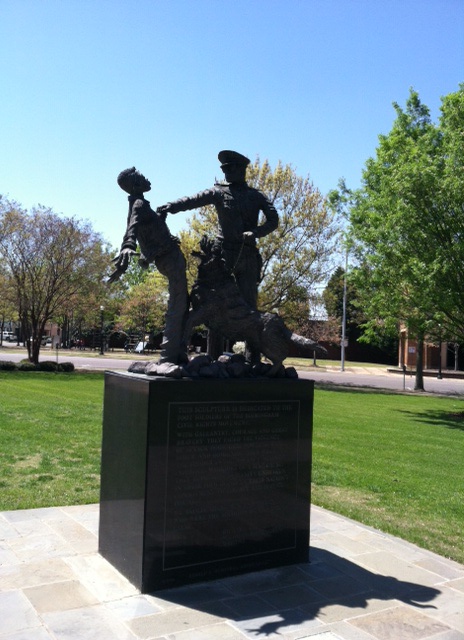
Across the street from the Institute is the Sixteenth Street Baptist Church. It was one of the starting places for the marches and protests of the 50s and 60s. It is also the location where four young girls were killed in a Sunday morning bomb blast in September 1963. On the other side of the Institute is Kelly Ingram Park, the site where many of the marches were met by police with dogs, water cannons, and clubs. Several memorable statutes in the park remind one of those times.

Statute in Ingram Park,  Police, dog and marcher

Statute in Ingram Park, Police, dog and marcher

For lunch we walked over to the Birmingham Museum of Art and ate in their cafeteria. We passed on the exhibits and went to see the Alabama Jazz Hall of Fame. Not so great. Both the B.B.King museum and the American Jazz Museum in Kansas City are much better.

The third item on our list was the peanut depot, a small shop by the railroad yards that roasts peanuts. Just a whole in the wall but a piece of Birmingham tradition. I tried the boiled peanuts I had read about frequently. They taste like a cooked bean, which they kinda are. We stuck with the tried and true roasted salted peanuts.

After sampling the local ice cream store, we headed over to Aldridge Gardens. This had been described as a local, hidden gem. It is a small, newer park. Chris had pushed for this, I wanted to try the Birmingham Botanical gardens. Aldridge turned out to be a good selection.

Aldridge Gardens

Aldridge Gardens

We arrived at 3:50 p.m. Our advance planning had not made us aware that they closed at 4 pm. The security guard took pity on us and let us enter, noting that the park would be open for members only tonight until 7 pm and we could relax and walk around. We thanked him for his kindness and entered the garden.

Not more than a few hundred feet into the garden we met the executive director who also welcomed us and we explained our situation. He also invited us to stay past the normal closing hour and we discussed with him the founding of the gardens and part of Birmingham’s history. It turns out his father used to own the land and run a golf driving range where the Birmingham Botanical Garden is now located. The city acquired it, probably improperly during the tumult of civil rights era due to his employment of blacks. This was a time when Birmingham closed its public parks and facilities rather than desegregate them. Later the first black mayor of Birmingham reached out to his father to express his sorrow at the losses his father and others endured during those decades.

The gardens have a focus on hydrangeas which are not ready to bloom yet. The owner that turned over the land to the City of Hoover had a nursery and had maintained this property for the previous owners. When it came up for sale, he purchased it and developed it as a garden. He and his father discovered the Snowflake Hydrangea and spent years propagating it and making it well known. Since the hydrangeas are not out, we just walked the trails and enjoyed the blossoms of other shrubs and trees.

Dinner was at a local and small Bar B Q; this may be our last southern food for a while. Tomorrow we start the trek back north.

Ed and Chris 8:30 April 10

Categories: road trip, travel | Tags: , , , | Leave a comment

2014, Trip Two, April 9, Deep South

Wednesday, April 9, Birmingham AL

We walked out of our lunch restaurant today. Okay, it is not as dramatic as I am trying to make it. We were at Cheaha State Park in NE Alabama. Cheaha is the highest point in Alabama at 2407 feet above sea level. To reach the park, we took two-lane back roads out of our direct line of travel. We threw in a longer trip to include driving on the Talladega Scenic Byway. The byway was alright, not a lot different in appearance from the Shenandoah Drive. It is only 29 miles long, much shorter than Shenandoah Drive.

observation tower at Cheaha

observation tower at Cheaha

This part of Alabama does have hills (they call them mountains). It is more like the foothills of the Appalachian Mountains. Cheaha has an observation tower constructed at the top. The view is obstructed by wires in most directions. We met a couple there from Las Vegas who had decided on a last minute road trip and they like to reach the highest point in states. They were on their way to GA and SC after this. (They have not been to MN yet.)

After climbing the observation tower here, we went for lunch at the restaurant in the park. It was only 11:15 AM but it was 12:15 for us since the GA/AL line is the break for Eastern and Central time zones. The restaurant opens at 11:30. So we waited. Once seated, the waitress gave us the menus and then we heard her say to another couple that she was the only person working today. She was the waitress, receptionist, cashier, and cook. Since there were already several tables ahead of us, we decided there was no way she could take the orders and make the meals in a timely fashion. So we headed out.

Our next destination was Birmingham but along the way we passed the Talladega Speedway. On the spur of the moment, we decided to take a tour of the speedway. We have never been to a NASCAR race although we have tried, unsuccessfully so far, to fit one into our various trips.

Talladega Speedway

Talladega Speedway

The Speedway offers a 30 minute van tour that includes driving on the speedway-well, the portion on the inside of the yellow line that separates us from where the race drivers will race. It was fascinating. We did not understand everything our driver said as he was speaking as fast as the cars must go but we got the gist of it.

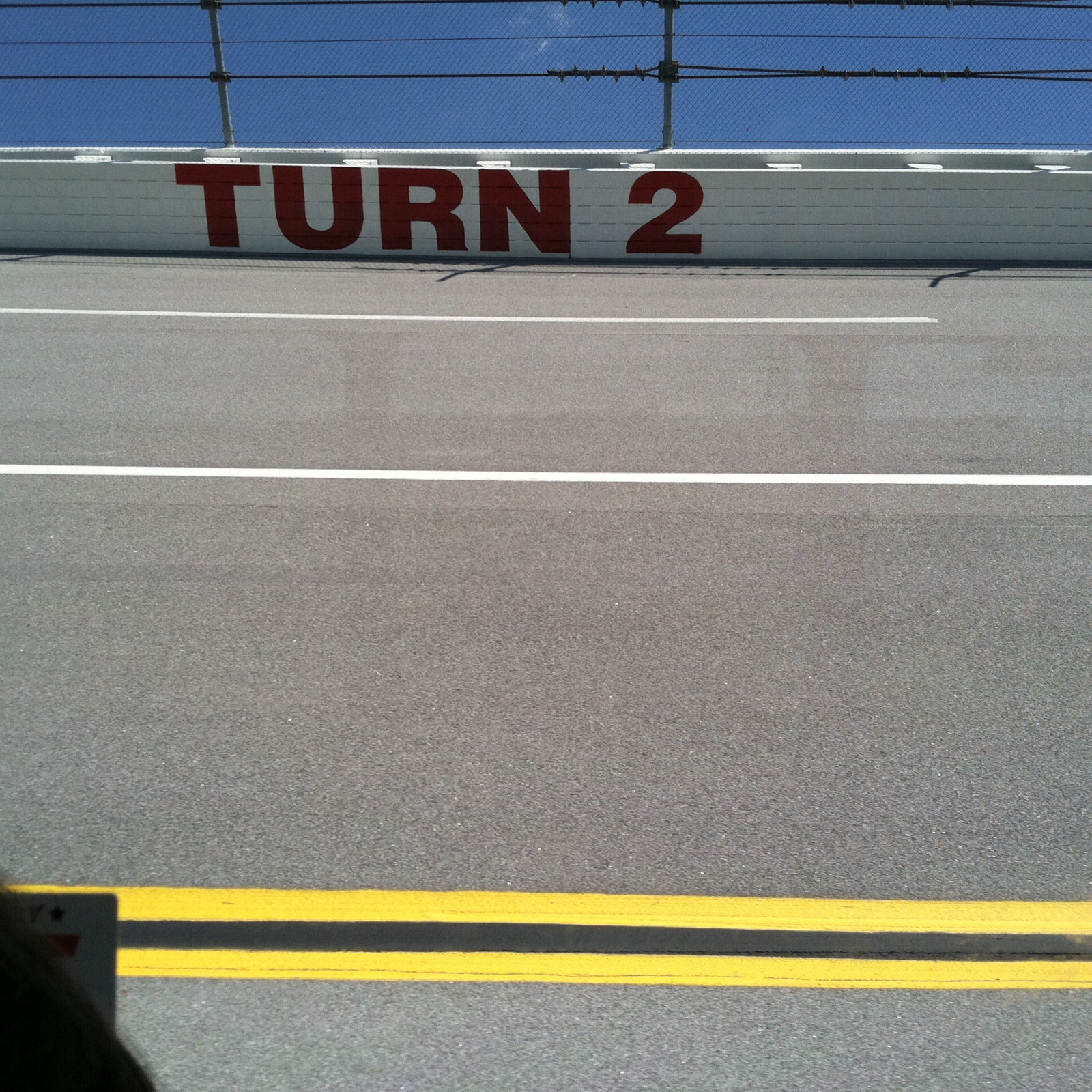
33% grade on turn two at Talladega

33% grade on turn two at Talladega

The speedway is located on a former Air Force base and is the longest in the U.S. at 2.66 miles. Unknown to us, turns two and three are banked at a 33% grade. This means that the turn is actually 5 stories tall and a car must go at least 85 mph just to stay on the turn and not roll off. Our photo does not give a great perspective but it was the best we could do. A delightful little unexpected gem to our day.

Our third stop was Vulcan Park in Birmingham. Birmingham is a newer Southern city, developing primarily after the Civil War. In Birmingham could be found iron ore, coal, and limestone; these are the primary ingredients for the making of iron. The closeness of the raw materials allowed Birmingham to develop vertically integrated companies that controlled the entire steel and iron making process.

Other factors combined to make Birmingham metal the lowest priced in the U.S. for a period of time. Alabama had a convict leasing system that put convicts to work for private business. In addition, the racial attitudes created a divide and conquer work force that separated whites and blacks into strictly defined job categories and discouraged unionization.

Vulcan Statute

Vulcan Statute

Time has marched on and while foundry work is still important in Birmingham, the industry is not as dominant as it had been. Vulcan Park is a reminder of those days and provides a museum dedicated to its history. A statute of the Roman god Vulcan dominates the park and the city’s skyline. The statute had been created to advertise Birmingham at the St. Louis Exposition of 1904. It has been rehabilitated and is perched on a 124 foot pedestal atop Red Mountain (site of mines dating back to the late 1800s). The observation tower near the top of the pedestal provides a great view of Birmingham.

Our fourth stop was going to be Aldridge Gardens on the south side of Birmingham. It was after 4 pm and we got caught in a major traffic jam, as bad as the Pennsacola bridge traffic earlier on this trip. We later learned a mudslide from the rains earlier this week was the major cause. In any event, it just took too long to make the drive so we had a quick bite to eat before meeting our Evergreen host for the next two nights

Ed and Chris 10 pm

Categories: road trip, travel | Tags: , , | Leave a comment

2014 Trip Two, April 8, Deep South

Tuesday, April 8 Pine Mountain GA

This trip is winding down, we should be home by Saturday night. In the meantime we are enjoying the improvement in the weather. Today was in the mid-60s and morning clouds gave way to sunny skies this afternoon.

Breakfast was at the local dive but the food was good and inexpensive. A 16 oz glass of cold milk was $1.95. It made me recollect on the 6 oz glass for $3.50 last year in Escalante UT at some upscale foodie restaurant. The men in the booth behind us were complaining about Obamacare and how our forefathers would be rolling over in their graves if they could see how our country is doing now.

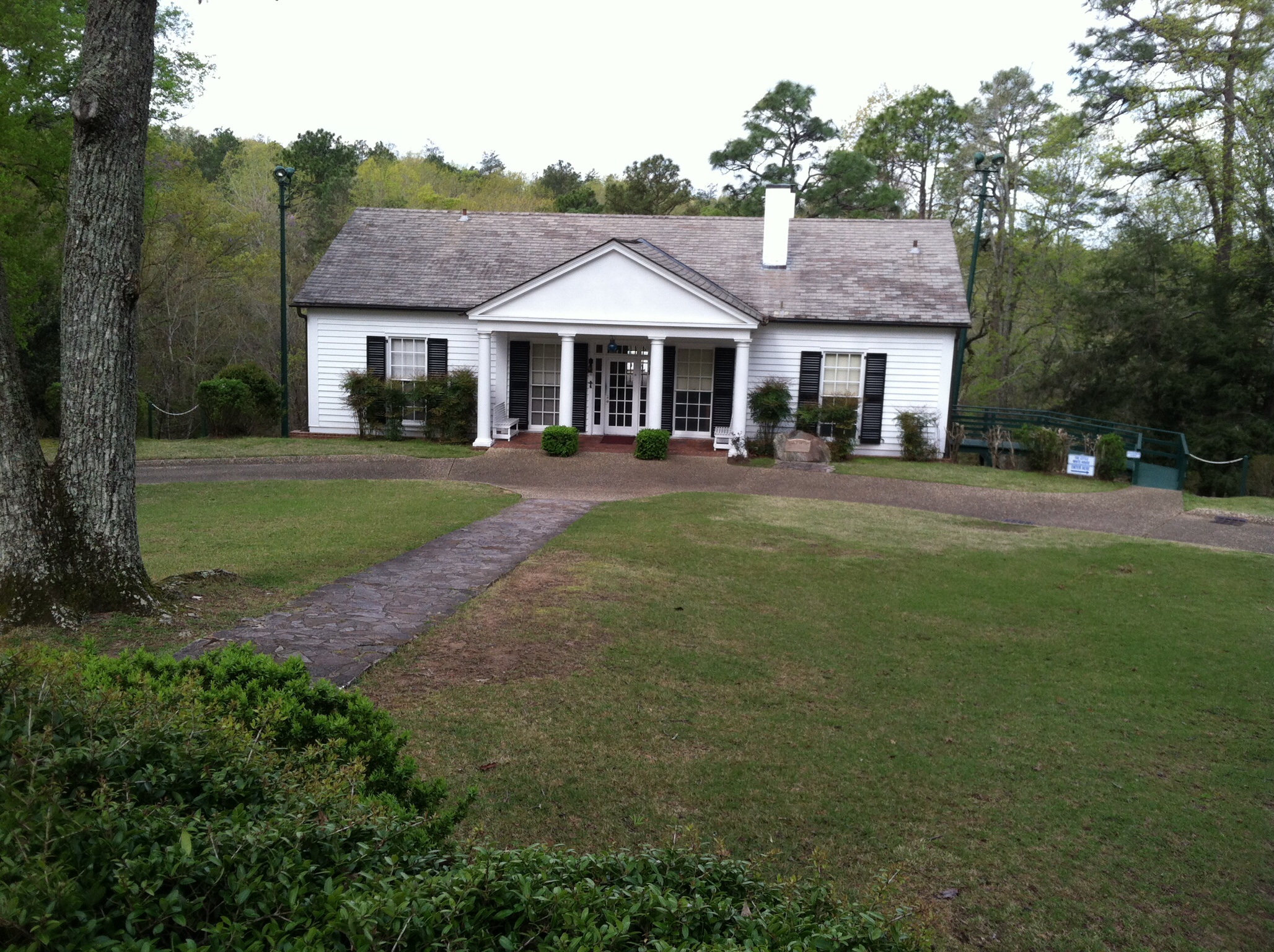
Roosevelt's Little White House

Roosevelt’s Little White House

Since the morning started cool and cloudy, we drove over to Warm Springs, the site of FDR’s “Little White House”. Franklin D. Roosevelt was stricken with polio in 1921 at age 39. There was no known cure at that time. Wealthy and active in politics, the disease put him out of public sight for several years. In 1924 he was informed of a “cure” that had helped numerous people at a facility in Warm Springs, GA.

At Warm Springs he found a facility using natural warm spring water rich in minerals. Exercising in the warm spring waters did not cure him, but gave him renewed energy and a place to exercise. He came here frequently and upon strong encouragement from his wife Eleanor and a friend Louis Hobbs, he returned to politics. (His mother, Sara, had a strong, domineering personality and opposed it but on this issue she lost out.) The facility at Warm Springs was not doing well financially and FDR ended up buying it and making it a permanent polio treatment facility.

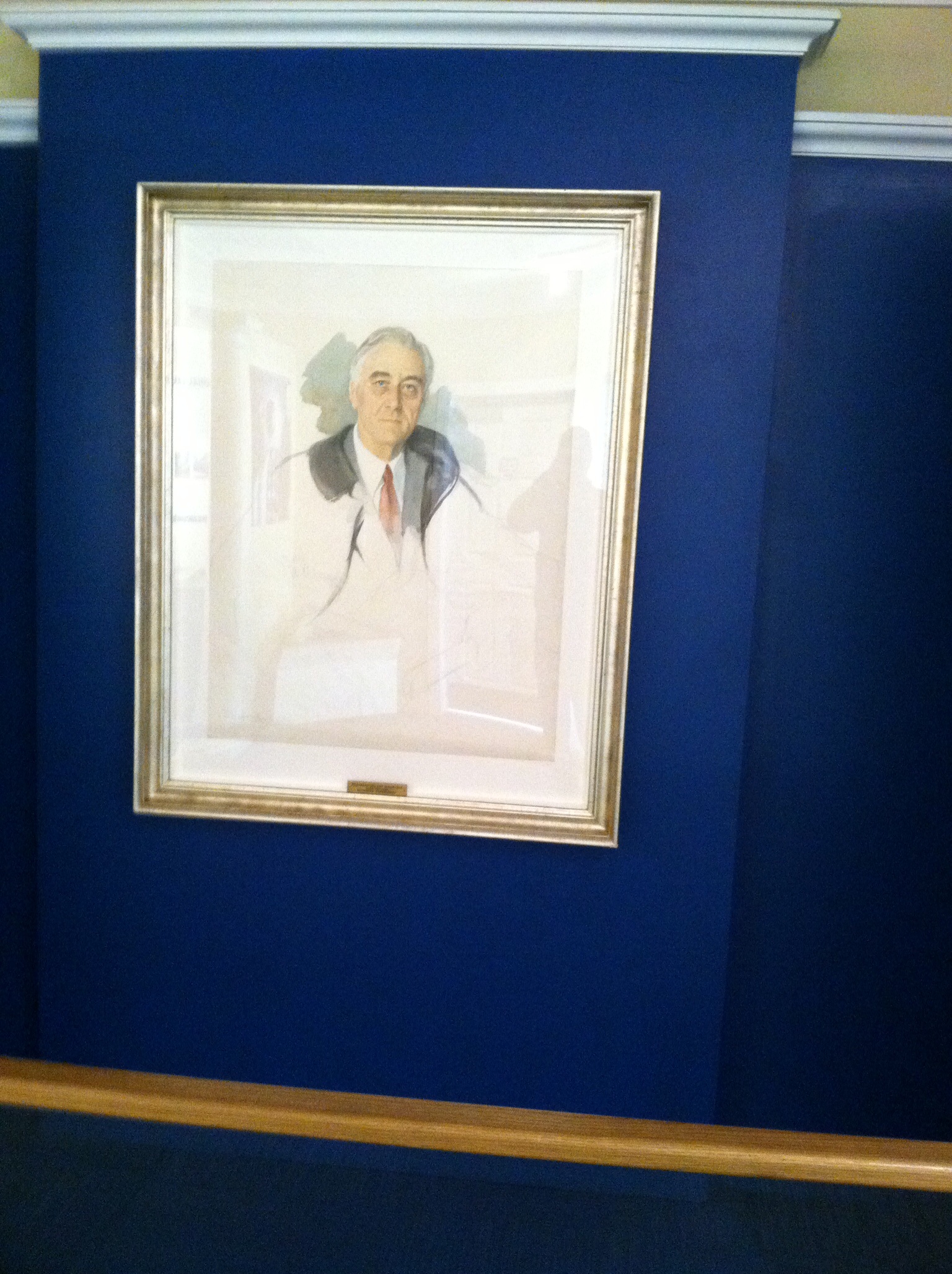
The Unfinished Portrait

The Unfinished Portrait

The site is a state park with a detailed display area and the home itself. The house is modest and plainly furnished, FDR had it built to suit his needs. You can see the seat where FDR was sitting when he suffered his stroke on April 12, 1945. There is a minor reference to the presence at the home of Lucy Mercer Rutherford, the woman supposedly his mistress for many years. She had brought a painter friend to the Little White House to paint FDR’s portrait. When FDR had his stroke, Lucy and the painter friend left immediately and the unfinished painting is now hanging in the state park museum.

The day was warming up and the sun started coming out. We came back to Callaway Gardens. Callaway was begun by a family that made a fortune in textiles; at least this wealth was not based on slave labor. The family bought land in the area, surrounding a lake. Over time, they developed a large home and gardens and later made it into a public garden. Of course, the gardens today are run as a non-profit. Calloway Gardens added golf courses, resort homes, zip lines, the world’s largest, man-made, white-sand beach, and of course, more gardens and open space.

Brightly blooming azaleas

Brightly blooming azaleas

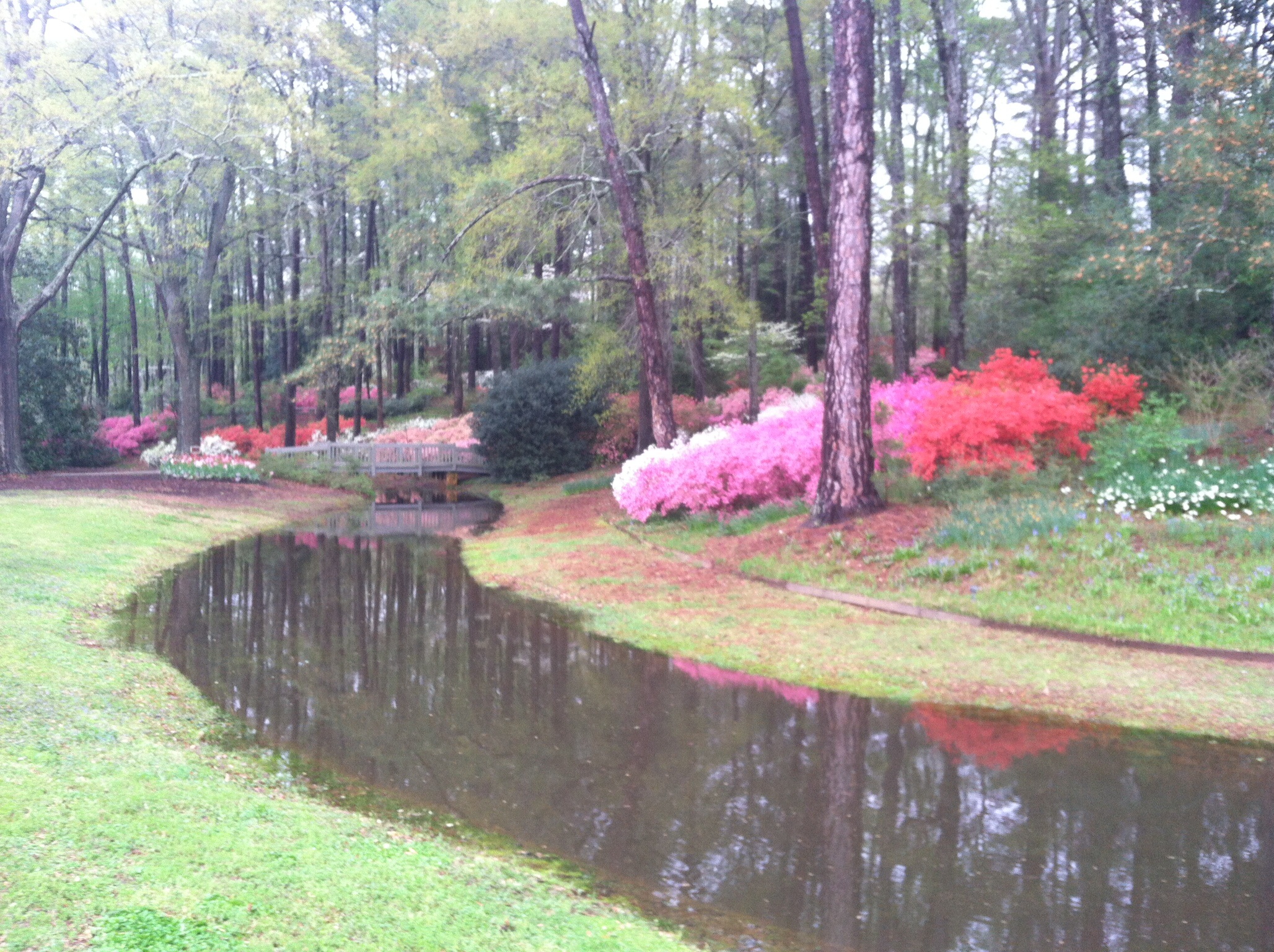
The gardens are more of an open space planted with various flowering shrubs and trees than acres of blooming plants. Thus, we observed azaleas and flowering white and pink dogwood. Callaway does not have rose gardens and only small beds of flowers. There is a horticultural center with blooming plants and a butterfly center.

azaleas at Callaway Gardens

azaleas at Callaway Gardens

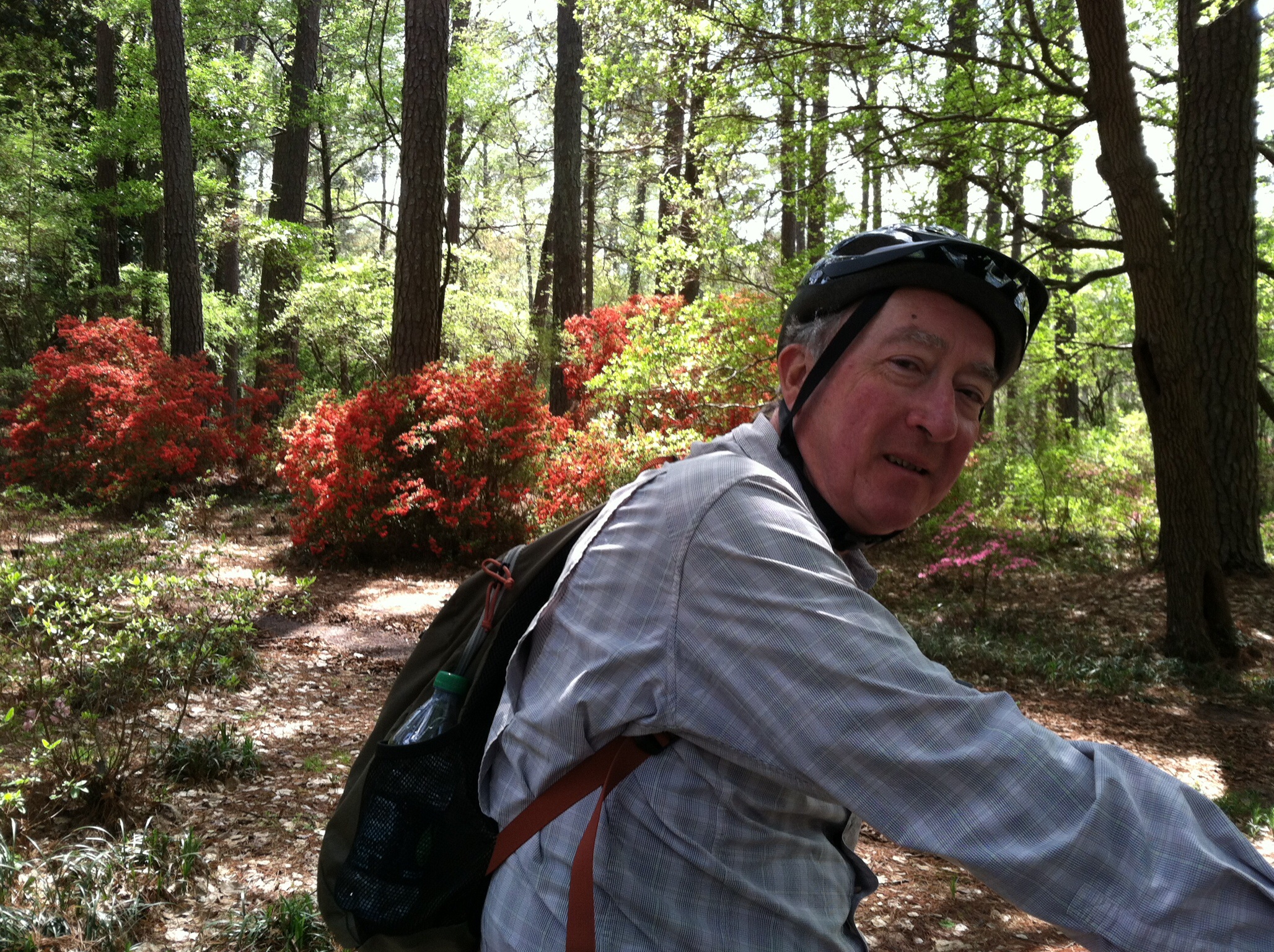
The azaleas are gathered in several areas, enhancing the impact of the multiple colors. We are able to enjoy the azaleas, walking from area to area. The dogwood are more spread out. A two hour bike ride allows us to both get exercise and view the dogwood as we ride through the forest. The ride was pleasant, not too hilly and the wind was almost non-existent. With the rain Monday, streams leading to the lakes were running fast. Even with tour buses, the crowds were sparse.

Biking at Callaway

Biking at Callaway

It has been a pleasant experience. Not as spectacular as Buchart Gardens or Norfolk Gardens, but beautiful nonetheless.

Ed and Chris April 8 8:30 pm

Categories: road trip, travel | Tags: , , | Leave a comment

2014 Trip Two, April 6-7, Deep South

Sunday April 6 and Monday, April 7
Savannah and Pine Mountain GA

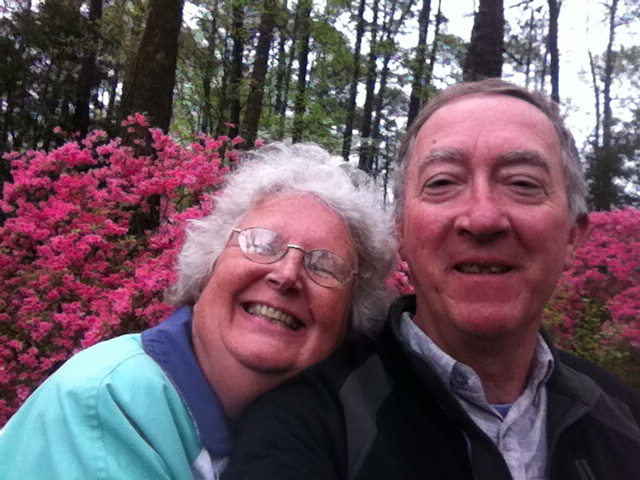
Chris and Ed at Calloway

Chris and Ed at Calloway

Well Sunday was Sunday and rainy. We took it easy. Even full time travelers need some down time. Although on reflection, with Destin and Miami Beach on this trip, we have had more relaxation days than usual.

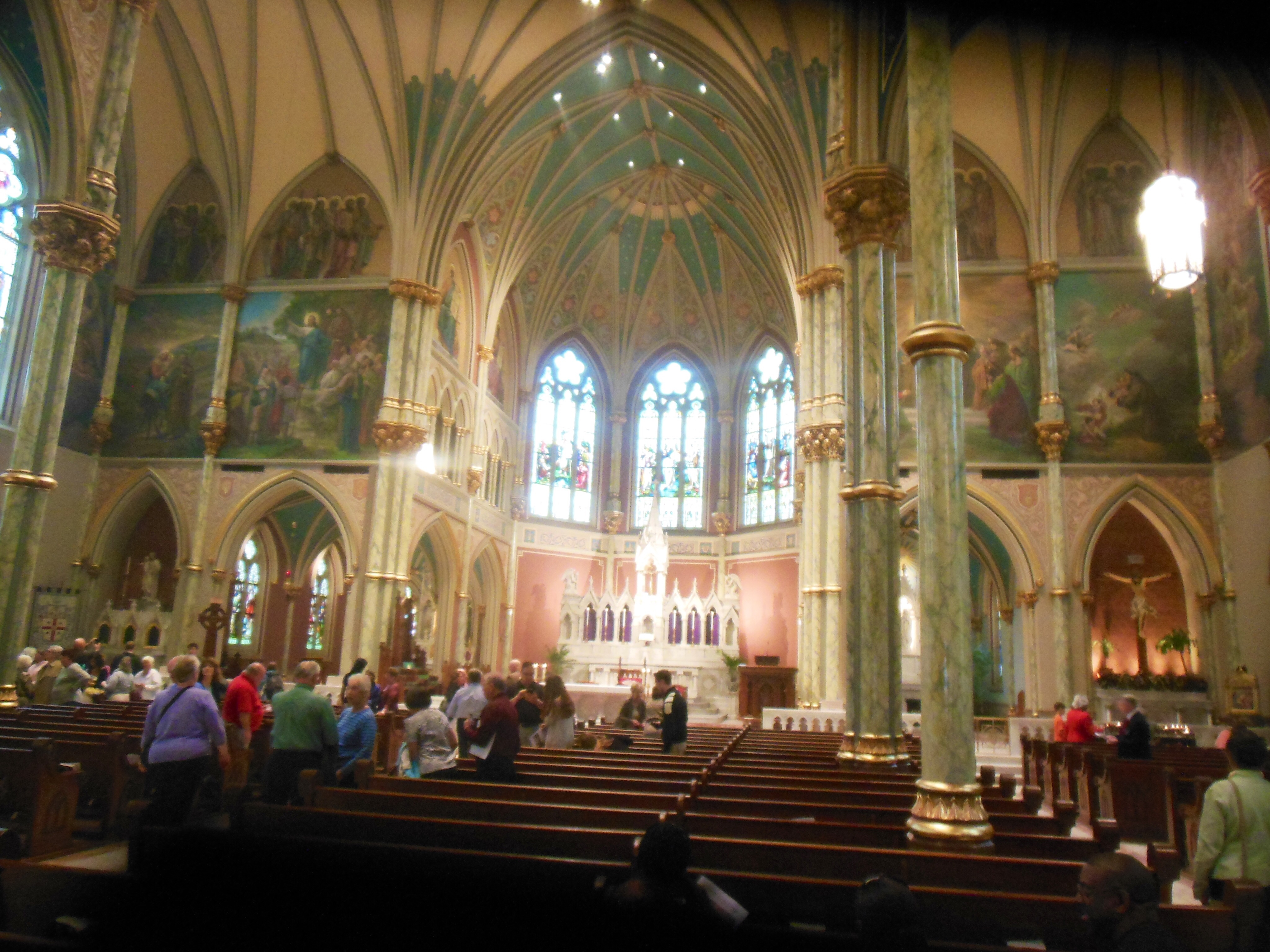
Interior of St. John the Baptist Cathedral

Interior of St. John the Baptist Cathedral

Sunday we went to the 10 AM Mass at the Cathedral of St. John the Baptist. It is a beautiful church and during our Saturday walks we had a brief tour with a docent who mentioned the 10 AM Mass would have the full choir. The music was very good and the church was crowded. Like a number of other buildings we have seen, paint was used to simulate marble (here on the columns). There is a painted cloth frieze along the top of the walls which looks like a painted mural.

After church we did some exciting stuff. Laundry. The Hampton Inn did not have guest laundry and we found a laundry in the outer portion of town run by a former Marine. Clean and well supervised and it did accept coins-unlike some nowadays where you buy a prepaid card to use which normally means you leave town with money still on the card.

After lunch we went back to the hotel and took the rest of the day off. It was still raining and we figured we had seen enough maritime museums, history museums, coastal fortifications, etc. I also put on several more doses of cortizone cream. Somewhere, probably on Friday at Fort Frederica, I must have run into a batch of no-see-ums; those almost invisible bugs that like to bite. Since I was wearing shorts and Chris pants, she has been spared. Major problem has been sleeping but I think the worst part is over.

View of Earthlodge reconstruction

View of Earthlodge reconstruction

The rain continued today (Monday) and at times was quite strong. We avoided driving during the worst parts by stopping at Ocmulgee National Monument and then having lunch at a local bar b q joint. Thus, the driving was fine but we could see swollen drainage ditches and ponding.

Ocmulgee National Monument is on Ocmulgee River by a ford and the area appears to have been habited as far back as 10,000 BCE. The main item(s) of interest here are mounds used for ceremonial and civic purposes by Indians of the Early Mississippian period. There are other examples of Mississippian mounds in the U.S. (we saw Emerald Mound along the Natchez Trace and there are older burial mounds in St. Paul).

Ocmulgee was made a national monument in 1936. Local efforts were critical in saving the area. The mounds had been reduced by construction of railroads, farming, use of the dirt to construct roads, etc. even though the uniqueness had been identified as early as 1774 by naturalist William Bartram. The earliest archaeological efforts were undertaken during the depression era by CCC/WPA workers supervised by an archaeologist from Harvard. It was the largest archaeological excavation ever in the U.S. up to that time.

The area and mounds were and are considered sacred by the Indians who lived in this area. Even as they were being pushed off their lands by Europeans in the early 1800s, this was the last piece of land the Indians gave up. We do not know the entire history of the area, several different cultures have lived here. The building at the national monument have detailed displays of items recovered and the best estimates of the various cultures that existed here. Since it was raining heavily, we did not go for any of the walks.

Callaway Gardens

Callaway Gardens

Callaway Gardens

Callaway Gardens

We arrived at Callaway Gardens a little after 4 pm. Our room, and many others, were not ready yet for check-in. Some computer/communications problem was the reason cited. We drove over and began our tour of Callaway Gardens. The rain had stopped and trails were wet. We started at the Butterfly House which is indoors.

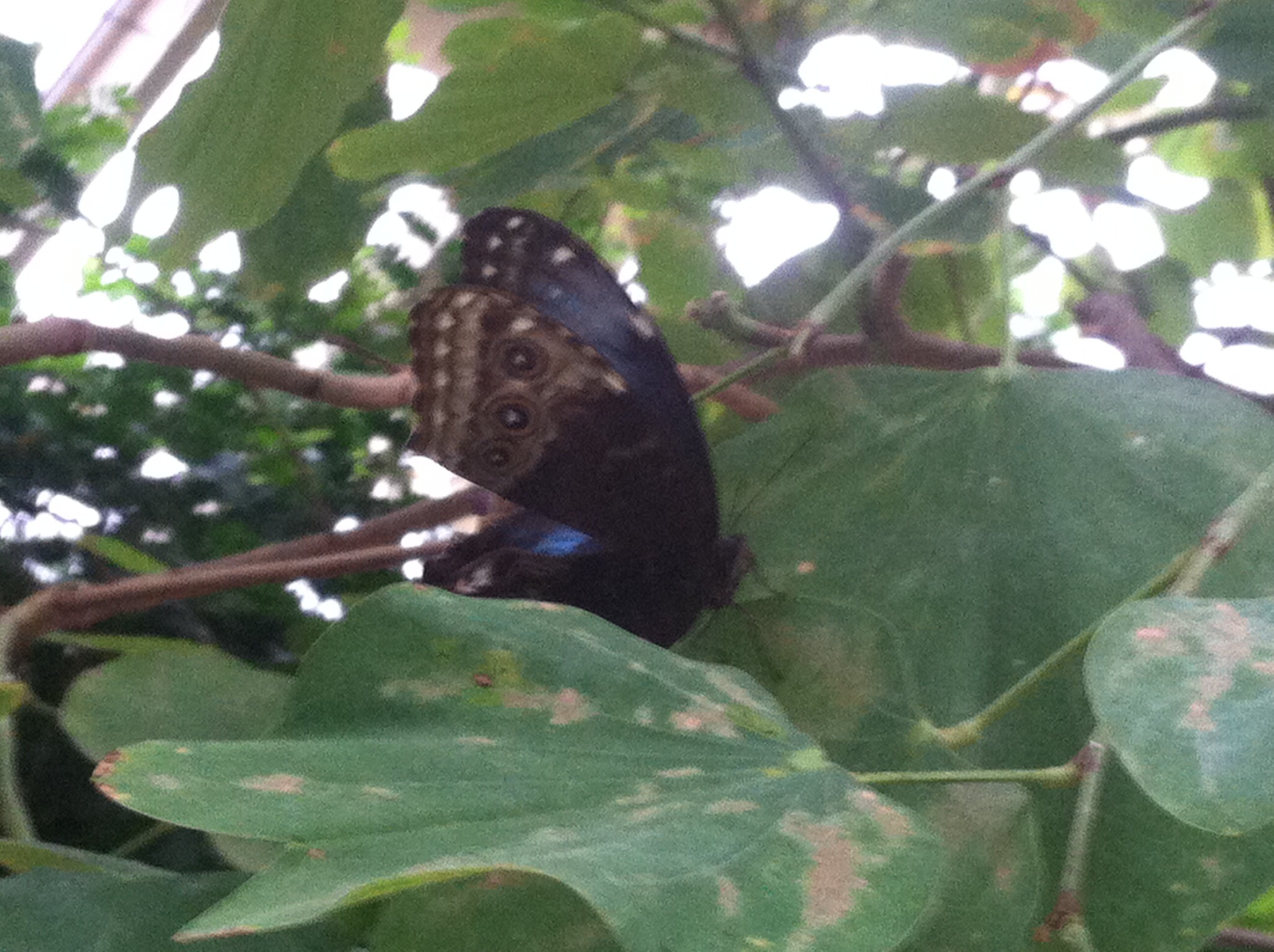
At Ocmulgee it appeared that our camera had died so at Callaway we took photos only with the iPhone. The butterflies fly a lot and sit a little and I found taking close-ups a little difficult. The pictures are adequate but do not do justice to their diversity and color.

Butterfly at Callaway Gardens

Butterfly at Callaway Gardens


Buttetfly at Callaway

Buttetfly at Callaway

We had just enough time before the garden closed for the day to make one stop to view azaleas. The colors are still vivid and we have hopes that tomorrow will only be cloudy. I will save background data on Callaway for the next posting.

Butterfly

Butterfly

Side comment one: Is it just the South or have we not observed this elsewhere? The soda pop/water glasses are HUGE, like 64 oz size and then people when they leave get a to-go cup and take some more with them.

Side comment two: Now that restaurants seem to be uniformly suggesting tip amounts at 15-17-20% increments (is this a reflection on our lack of math savvy?); why is the percentage based on the food/drink amount PLUS the tax? What does the tax have to do with the quality of service?

Ed and Chris April 7 10:15 pm

Categories: road trip, travel | Tags: , , , , , | 2 Comments

2014, Trip Two, April 5, Deep South

Savannah, GA Saturday April 5

waving girl statue

waving girl statue

The rain has held off but we continued with our plans to visit historic buildings in Savannah. (No interior pictures allowed.) Along the way, we walked along the river front and observed the statue of a young girl who supposedly waved to every outgoing vessel from the harbor.

We went to a series of three buildings owned by one foundation. The Owens-Thomas house was one of the premier historic homes in Savannah, built in 1819. The architect, William Jay, incorporated numerous new ideas from England including indoor plumbing and cast iron. The design is of the Regency style.

Owens Thomas house

Owens Thomas house

This was the in town residence of a wealthy family. Within three years though, due to financial panic and epidemics the house was sold and the wife and two children dead. It passed through several hands until ending up in the Owens family who maintained it until the 1950s.

The house included separate slave quarters. The family had several plantations and got their money off the backs of enslaved people. Sorry, I get tired of hearing about these nice people whose wealth came this way. I asked the guide at the end of the tour if many black Americans tour the property and she indicated that no, but that this historic home saw more blacks due to their honest treatment of the slave issue.

Our next stop was at the Telfair Academy, also designed by William Jay. The Telfair’s were another aristocratic family, originally from Scotland, who had no difficulty owning hundreds of slaves. The group did not produce many progeny and eventually donated the property to create the first art museum in the South. It opened in 1886.

The museum has two recreated rooms from the house and the museum is in the balance of the mansion and an expansion. The art is basically 18th and 19th century American and European art. The basement has several sculptures. All in all, it was pleasant but nothing overwhelming. The only noteworthy item was the original sculpture of “Bird Girl” used on the cover of
the book, “Midnight in the Garden of Good and Evil”.

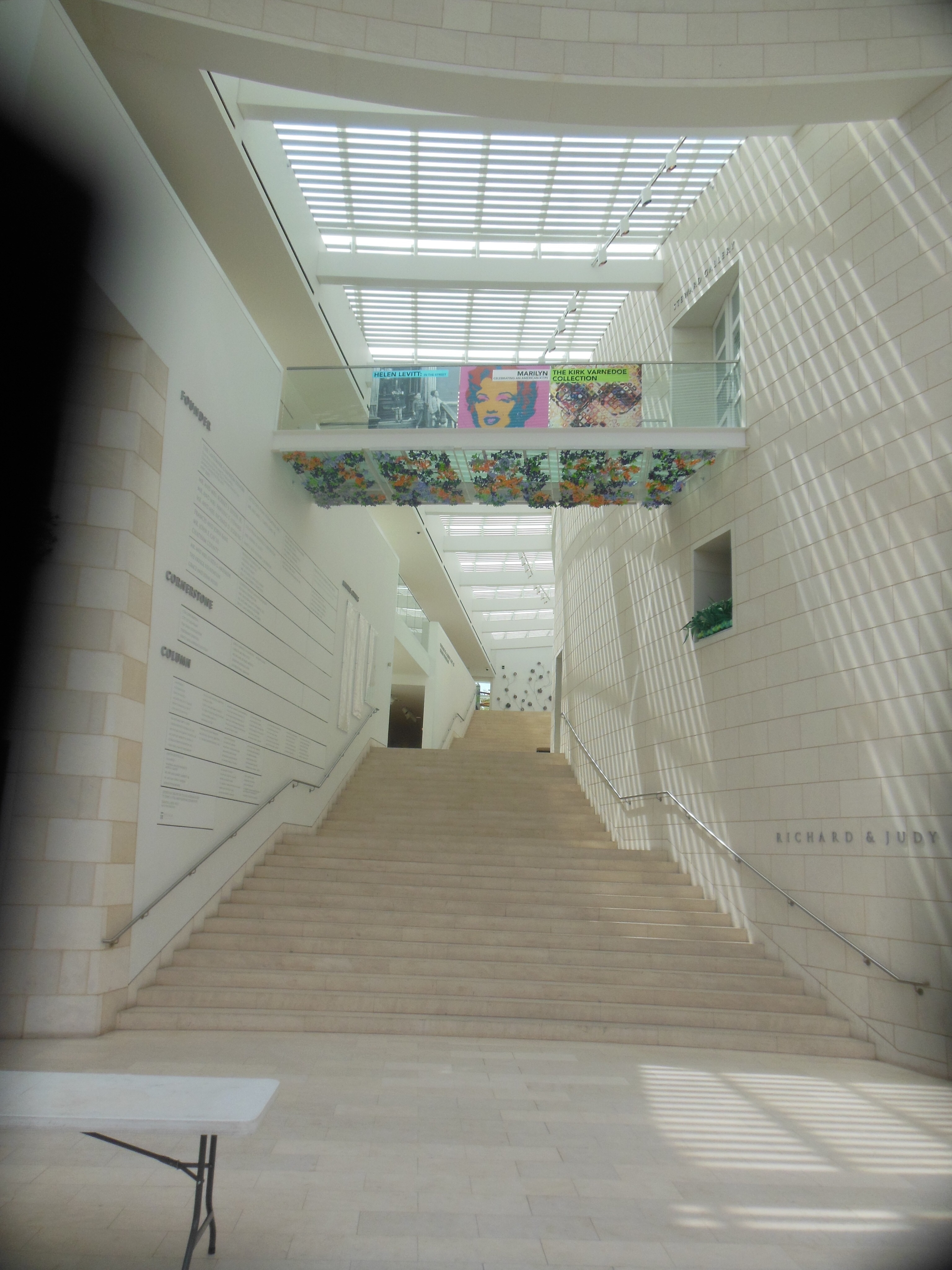
Interior staircase of Jepson Center

Interior staircase of Jepson Center

Our third stop was the Jepson Center, a new facility dedicated to contemporary art and art education. We had lunch at their cafe which had displays of docent art along the walls leading to the cafe. We met the owner of the cafe who has to make do without the use of an oven. The Jepson Center people were concerned about fire, smell, etc. Lunch was excellent, hope he can make a go of it without the oven.

The art here was so-so; an exhibit on Marilyn Monroe, a small room on digital art, a really boring exhibit of modern art, and a small room dedicated to slave history in Savannah-the best part of the center although it was mainly large boards of written history.

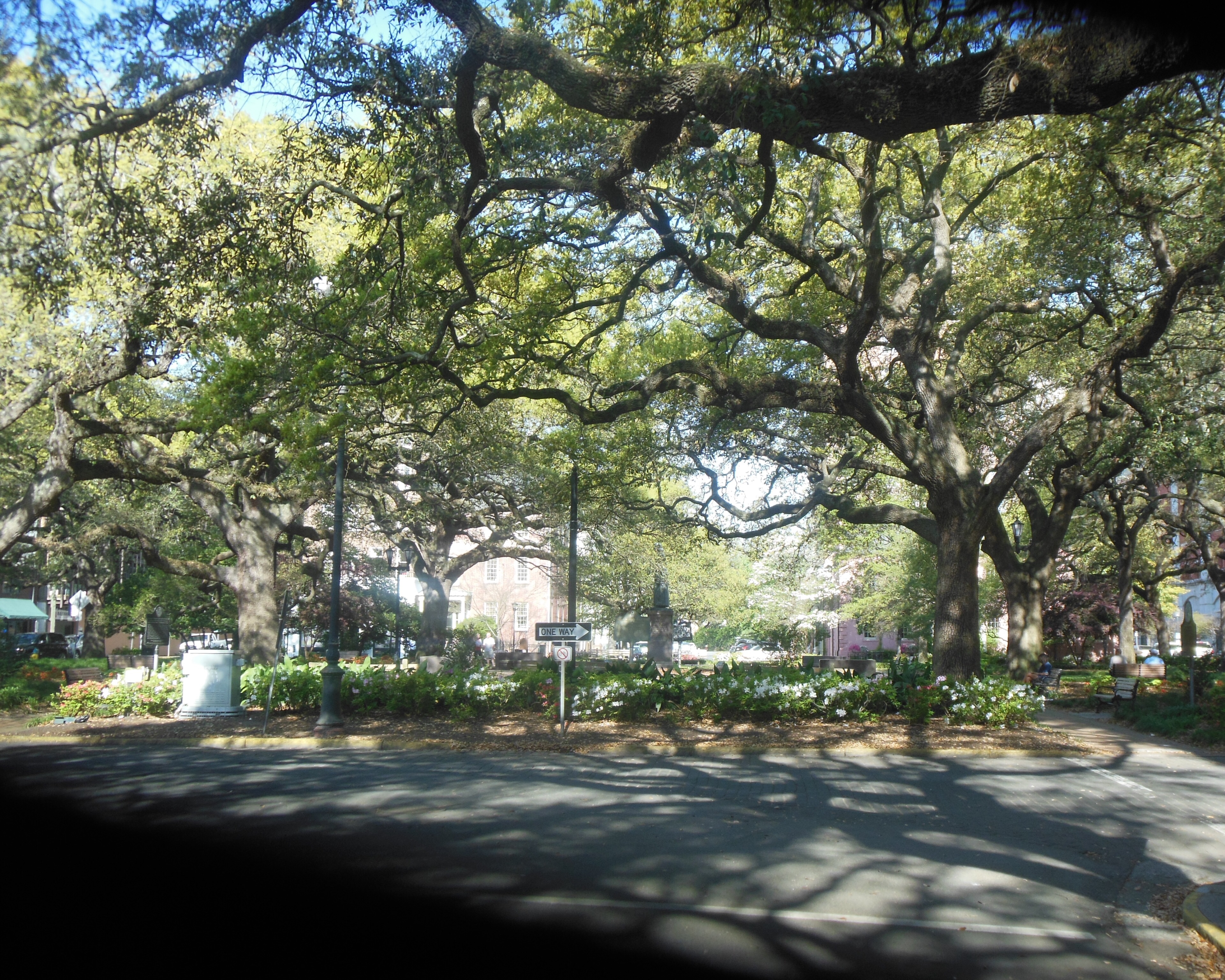
One of the squares in Savannah

One of the squares in Savannah

We left here and went walking for a while. As mentioned yesterday, the historic district is very walkable. The numerous squares have plenty of benches. People are out and about, even late in the evening. Tour trolleys are trundling around, horse drawn carriages are clip-clopping and pedi-cabs are waiting at most parks if you want to have someone take you directly to another location. Most squares have a buskar-musician playing an instrument, hoping passerbys will make a donation.

We stopped at Leopold’s, an ice cream establishment started in 1919. There was a long line, reminiscent of our experience at Stone Harbor on the New Jersey shore when the girls were still in school. We walked by later in the evening and they still had a long line.

Our evening entertainment was one of the functions of the Savannah Music Festival. This is its 25th year and is the largest musical arts event in Georgia. It offers an eclectic array including jazz, dance, chamber/symphonic, pop/rock, and American folk/traditional.

Stringband Spetacular

Stringband Spetacular

Our event was the Acoustic Music Seminar 2014 Finale: Stringband Spectacular. It was held at the Lucas Theater, one of those grand old theaters that had been renovated for $15,000,000 around the year 2000. The event featured 16 young adults aged 16-25 and their mentors playing mandolins, violins/fiddles, banjo, harp, guitar and bass. Many of the songs were composed by the students themselves and the group of players changed from composition to composition. The performance was excellent.

Ed and Chris April 6 12:10 am

Categories: road trip, travel | Tags: , , , , , , | Leave a comment

2014 Trip Two, April 3, Deep South

Savannah, GA Thursday April 3

We said good-bye to Folkston, GA and the Okefenokee Swamp and began our drive to Savannah. The drive to Savannah is only about 125 miles so we made an intermediate stop in St. Simons Island and took a trolley tour of the island.

St. Simons is one of the many barrier reef islands in GA which act to protect the mainland shoreline from tropical storms and high surf. Despite its relatively short ocean shoreline, Georgia has the most tidal salt marshes of any state.

Azaleas are blooming profusely

Azaleas are blooming profusely

James Oglethorpe was given a charter in the 1730s by King George II to establish a colony in America to act as a buffer against Spanish expansion from Florida and to provide a place where debtors in prison could go to discharge their debts. The colony was also supposed to only offer 50 acre lots to owners and to ban slavery to encourage self reliance. Catholicism was also banned due to Georgia’s closeness to Spanish Florida. Oglethorpe was able to develop positive relations with the American Indians in the area.

Like many endeavors, not all initial goals were achieved. Slavery was soon adopted and plantation owners became extremely wealthy. Most immigrants were skilled artisans and farmers, not debtors. A hundred years after Oglethorpe’s arrival, the Creek Indians had been forced to give up their lands and were forcibly moved to Oklahoma like other southeastern U.S. American Indians.

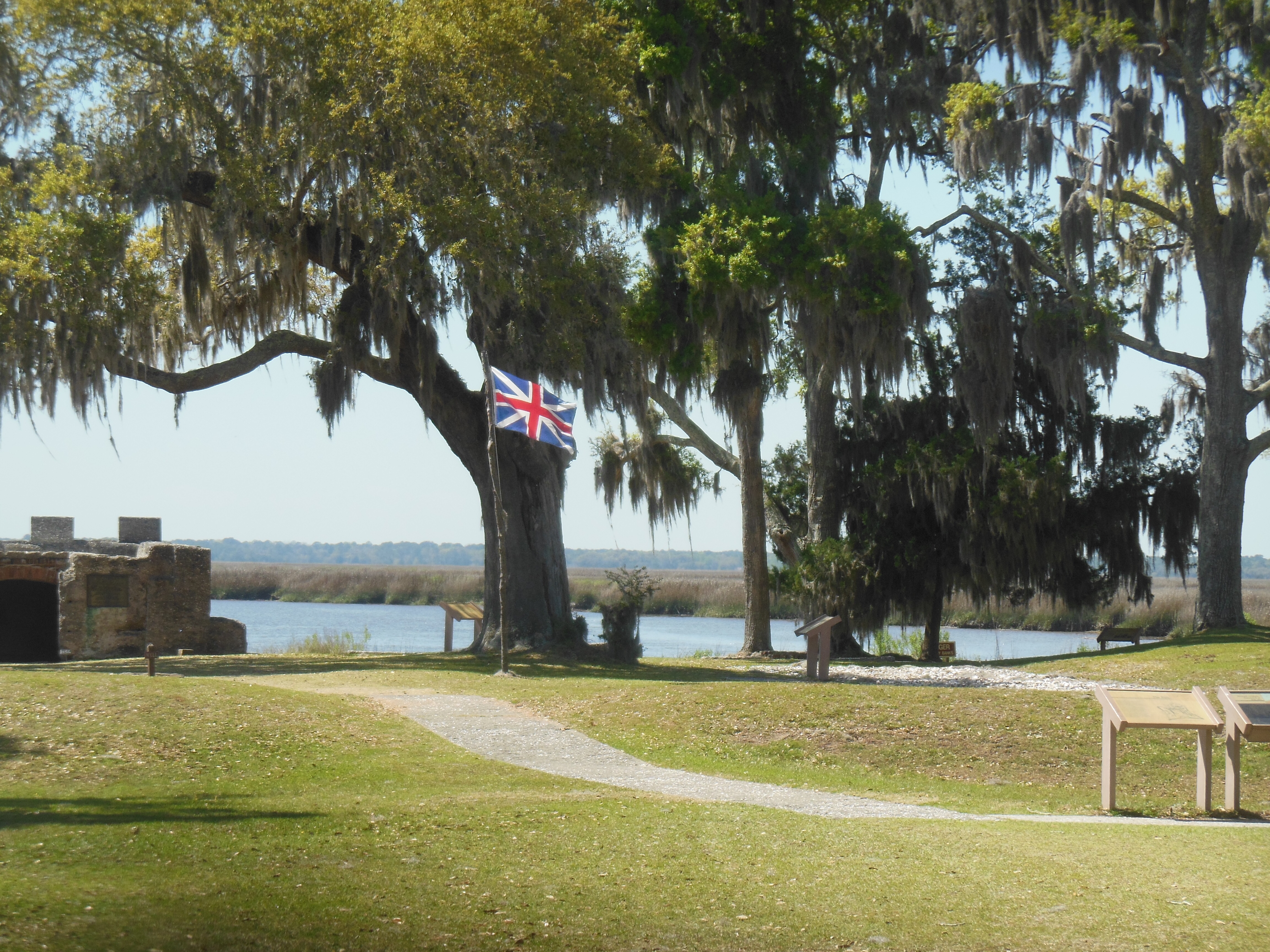
British flag flying at site of Fort Frederica, St Simons Island

British flag flying at site of Fort Frederica, St Simons Island

Oglethorpe’s colony of Georgia grew. St. Simons Island became the site of Fort Frederica, built to defend the fledgling colony from the Spanish. A thriving town called Frederica developed at the site of the fort. There were attacks between the English and the Spanish, as we had previously learned last year when we visited St. Augustine. The soldiers at Fort Frederica repulsed Spanish efforts to capture it and effectively stopped Spanish efforts to move up the coast. As the Spanish threat eased, the fort became useless, abandoned, and the town of Frederica died along with it. It was not until the early 1900s that efforts were made to recognize the significance of Fort Frederica.

One of many  distinctive live oak trees

One of many distinctive live oak trees

The island itself became the site of cotton and rice plantations. Sea Island cotton was grown here and is a specific type of cotton with very high quality. Timber production was a crop until over harvested. The live oak tree provided wood for ships, the hardness helped protect ships from shelling. Old Ironsides was built from live oak harvested from St. Simons. We continue to marvel at the size and various shapes the live oak trees take; their large branches curving in various artistic forms.

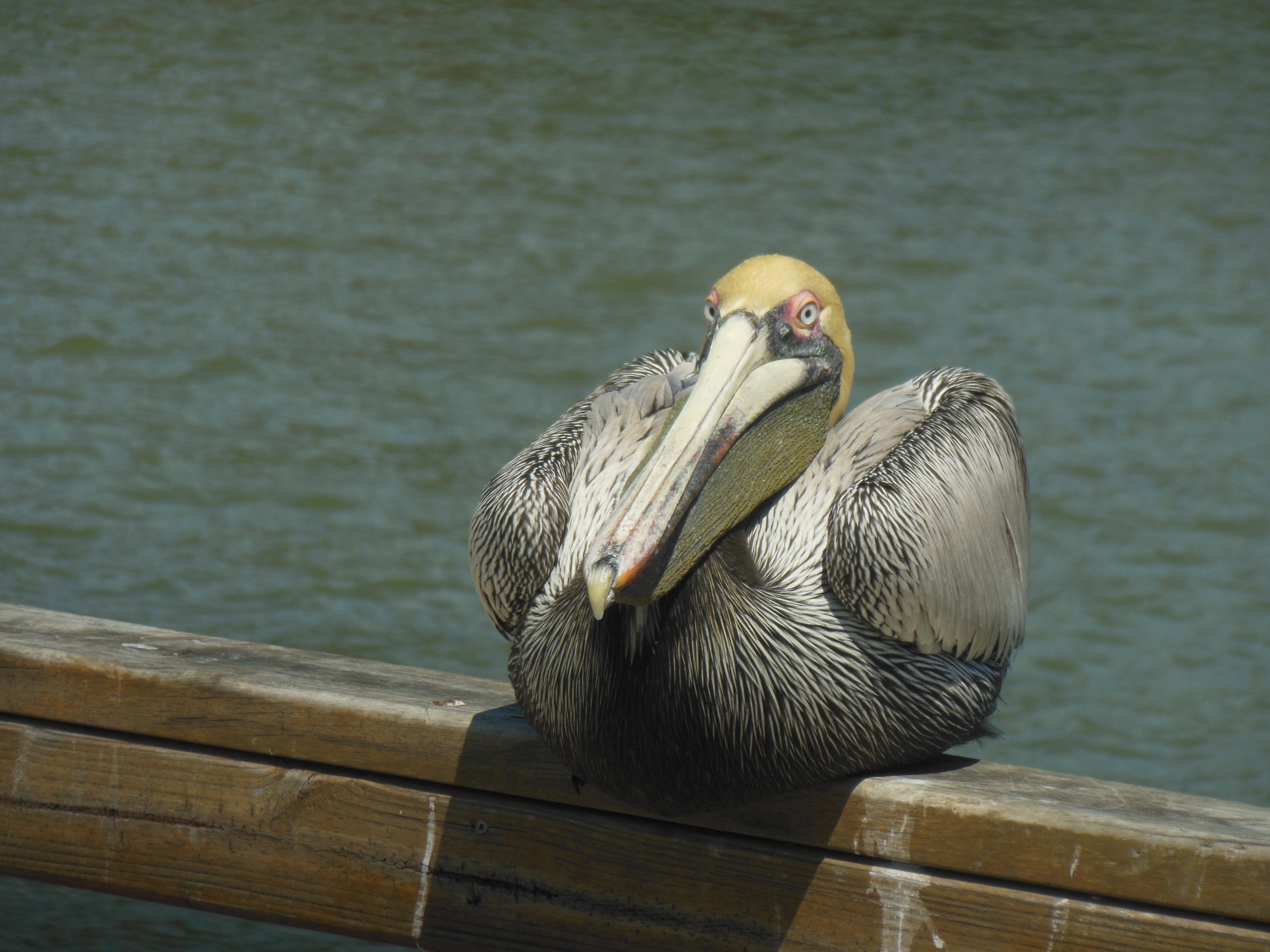
Pelican on  pier  at St. Simons Island

Pelican on pier at St. Simons Island

Several of the barrier islands, including St. Simons, became the site of wealthy Northeasterner’s winter homes. St. Simons continues to be an upscale resort and tourist area.

Our tour took us past several interesting areas. John Wesley, the Anglican minister who is credited with founding the Methodists, was a missionary here along with his brother Charles. The last slave ship to arrive on the island had a cargo of African slaves who walked off the ship in their chains and drowned themselves rather than be slaves. St. Simons Island is across from the port of Brunswick. The port here is the third largest port in the U.S. for the importation of automobiles.

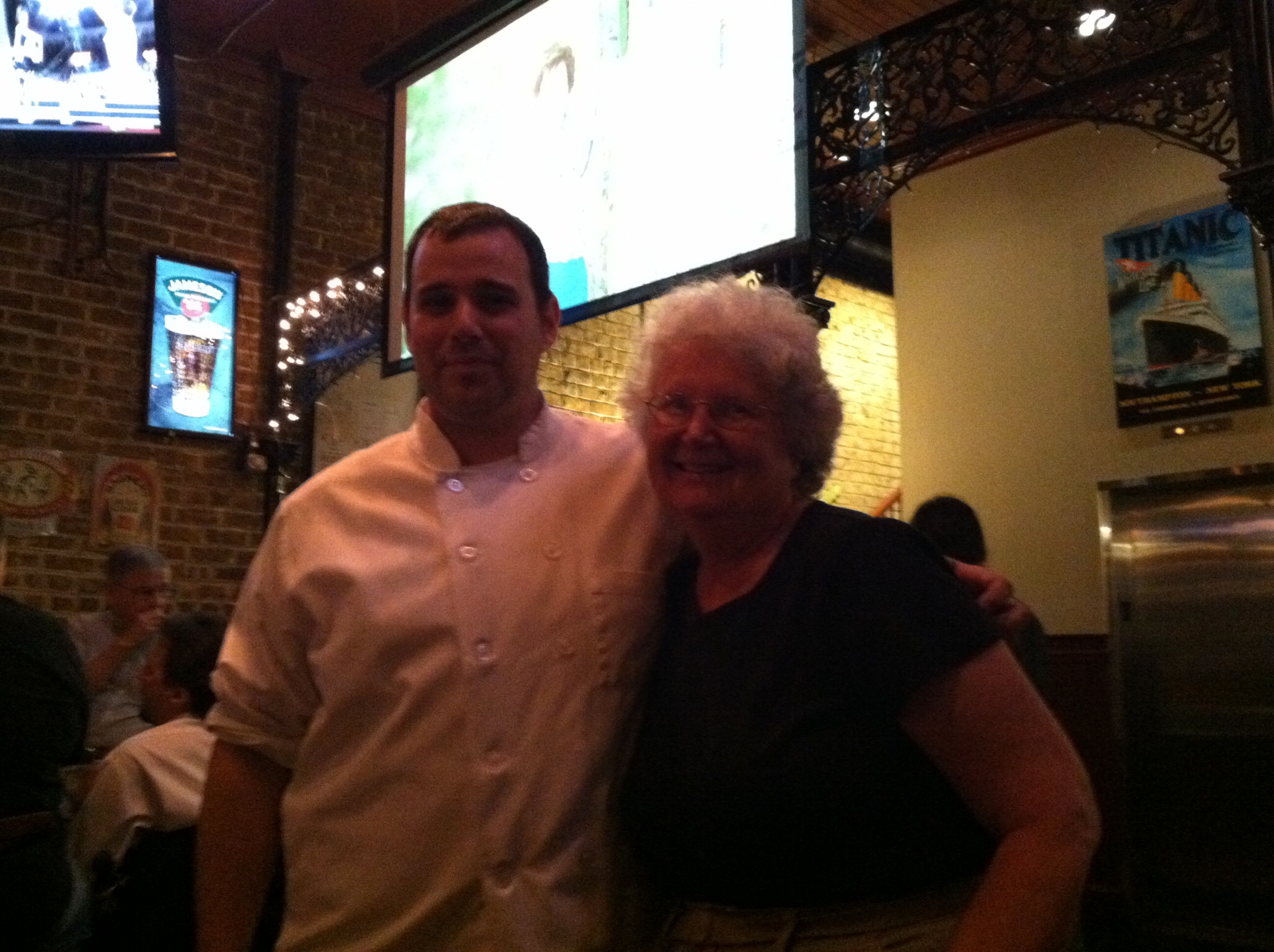
Chris and Chef Mike at Churchill's  Pub

Chris and Chef Mike at Churchill’s Pub

We arrived in Savannah in the late afternoon. Our hotel is downtown and we will begin our touring Friday. For dinner we walked down the street to Churchill’s Pub for dinner and to watch the Gopher’s win the NIT championship. Unbeknownst to us, the chef here had been chosen as one of the participants in “Hell’s Kitchen”, a reality TV show. The show was airing this evening and the local gang was all gathered to watch it. He did get bounced on this episode but was a good sport about it.

Ed and Chris April 4 7:20 AM

Categories: road trip, travel | Tags: , | 2 Comments

2014 Trip Two, April 2, Deep South

Wednesday, April 2, Folkston GA

What a glorious day!! Beautiful weather and great explorations.

Our breakfast at The Inn at Folkston was bacon,homemade banana nut waffles and fruit and granola. Plenty of energy for a full day of activities.

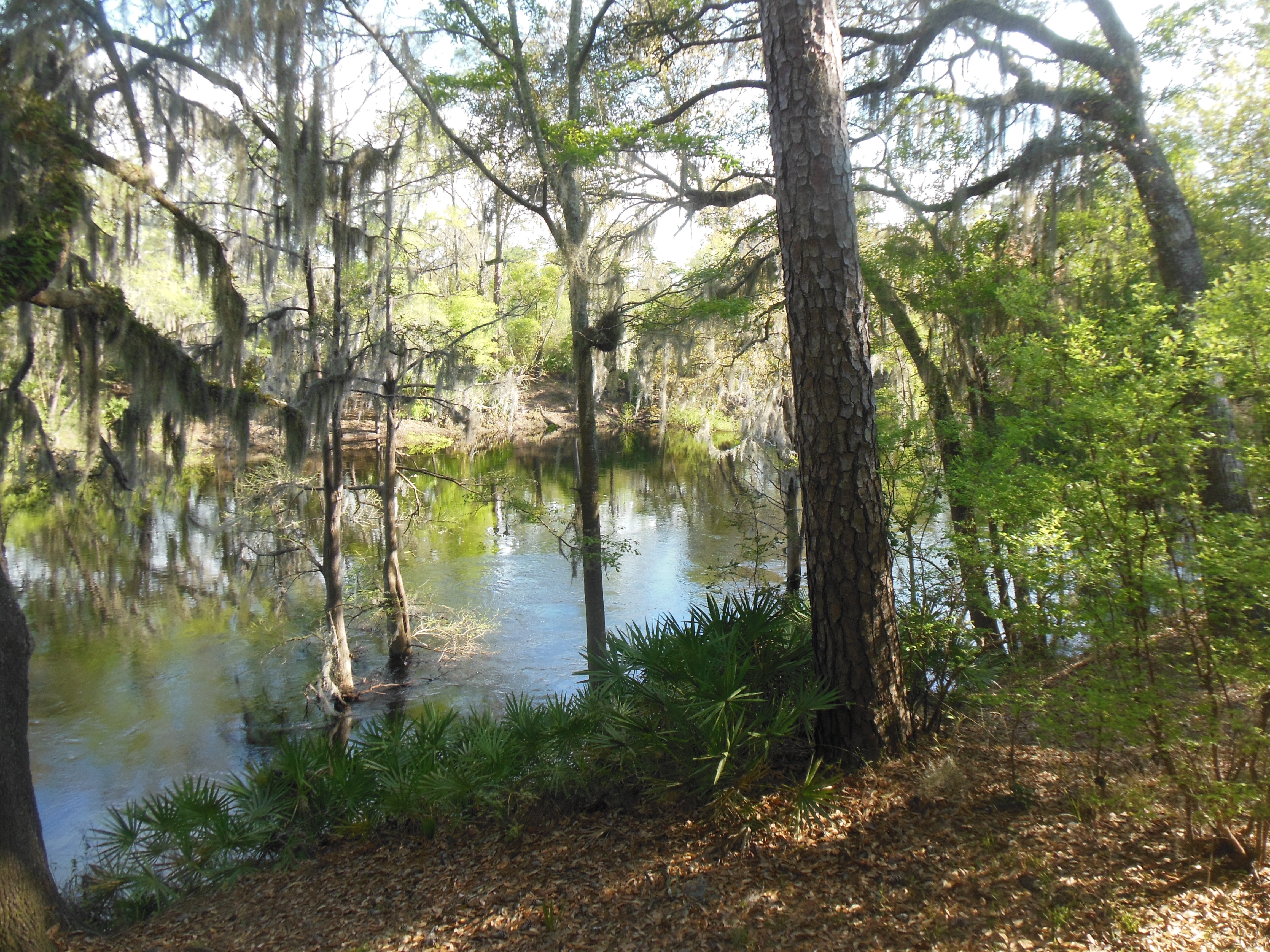
Okefenokee National  Wildlife Refuge

Okefenokee National Wildlife Refuge

The Okefenokee Wildlife Refuge was our destination for the day. The refuge protects the Okefenokee Swamp and covers 630 square miles in southeast Georgia. It extends 38 miles north to south and 25 miles east to west. There is no road through it. The terrain includes bogs, swamps, wetlands, lakes, uplands, etc. It is home to a vast array of animals and plant life. Much of the “bottom” is composed of peat; sometimes underwater and sometimes the peat has loosened and floated to the top where it acts like an island.

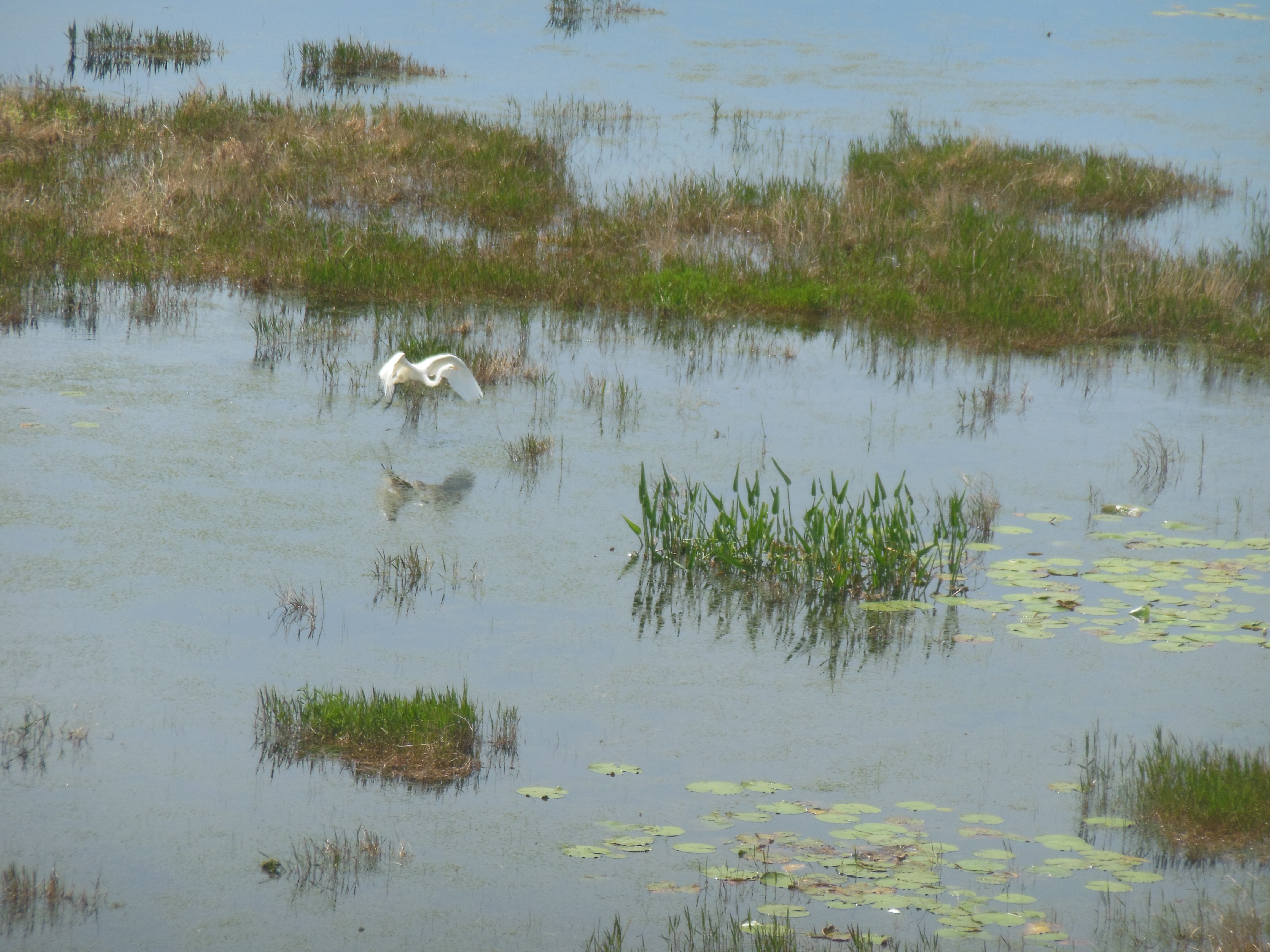
egret

egret

The refuge was established in 1937, primarily to protect waterfowl and birds. There had been attempts going back to the 1890s to drain the entire swamp to provide agricultural land and to harvest timber. Luckily the swamp was tougher to conquer than the investors had imagined, their funds ran out. Over the years, most of the longleaf pine was cut down and replaced with slash pine, which is harvested quickly for pulpwood. The refuge is trying to replant the longleaf which is more favorable for the diverse plant and animal life here.

image

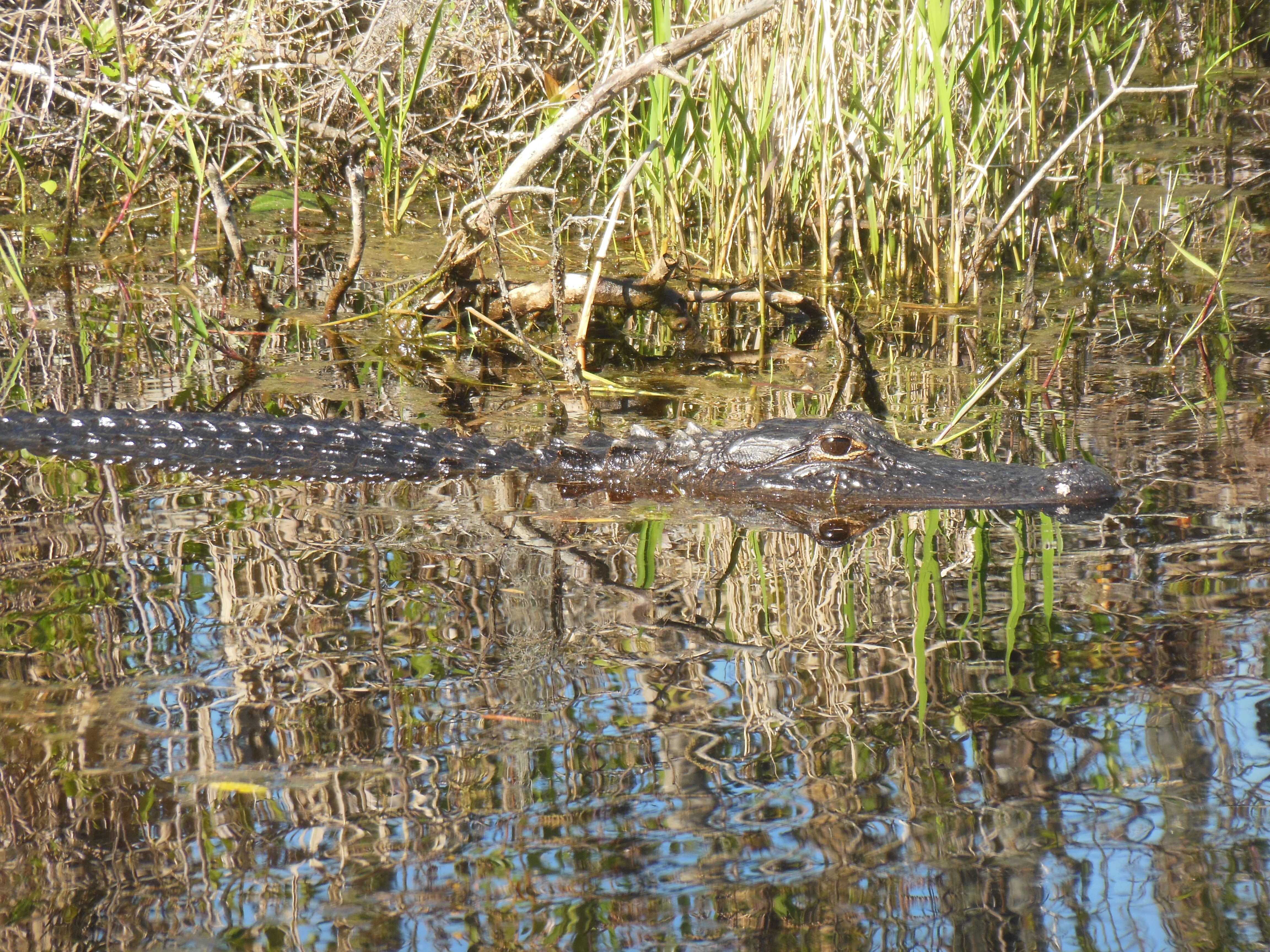
We started out on the Swamp Drive. At our first stop by a pond we saw our first alligators of the day. At the pond, we met two volunteers, one of whom is doing this full time for five months, then she will be off to a different wildlife refuge to repeat the process. We determined she was at the National Bison Refuge in Montana when we visited it in August of 2013. She also maintains a blog writing about her adventures as a vagabond volunteer.

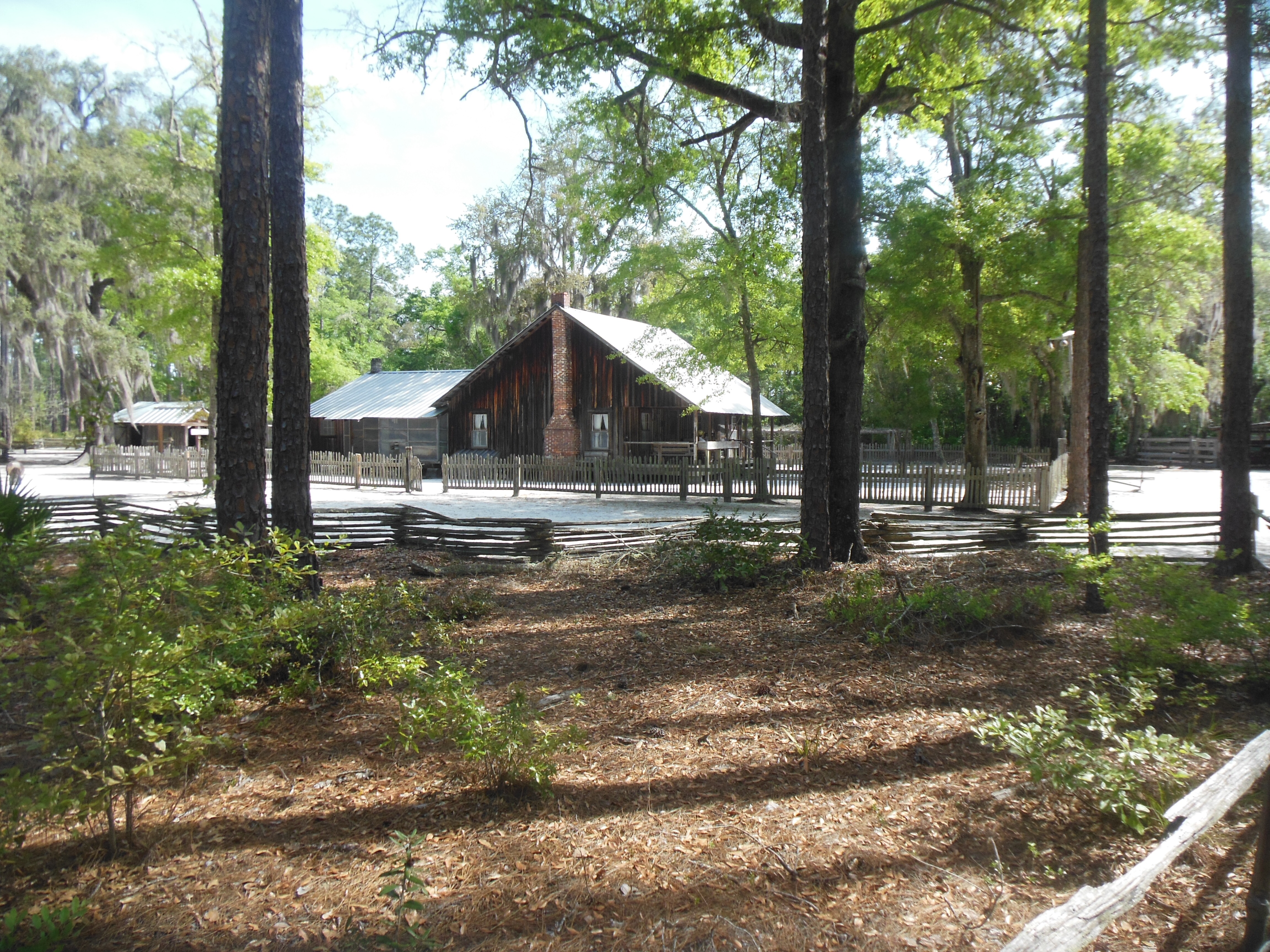
Chesser homestead

Chesser homestead

The Refuge maintains the original homestead of one of the families that lived in this part of the Okefenokee Swamp. The family moved out in the 1950s. They had 9 children and some of the extended family are employed or volunteer here. The yard was always sand swept very neatly. They kept it swept to reduce the fire hazard and to be able to observe any snakes or snake trails.

raccoon

raccoon

A boardwalk runs out 3/4 mile to an observation tower. Along the boardwalk we saw various birds, a raccoon, a snake, and a slider turtle. The boardwalk was recently rebuilt; in 2011 there were major fires that destroyed the previous boardwalk. Fire is a major component of life in the swamp. Lightning is the historical cause and fire plays an important role in the rejuvenation of the ecosystem-something we have learned at national parks previously visited.

prescribed burn under way

prescribed burn under way

The refuge management is frequently undertaking prescribed burns-although the 2011 fire was not prescribed. When we drove out for a late lunch, the area along the access road was being burned. The smoke and smell are noticeable for some distance even though the area involved was minor.

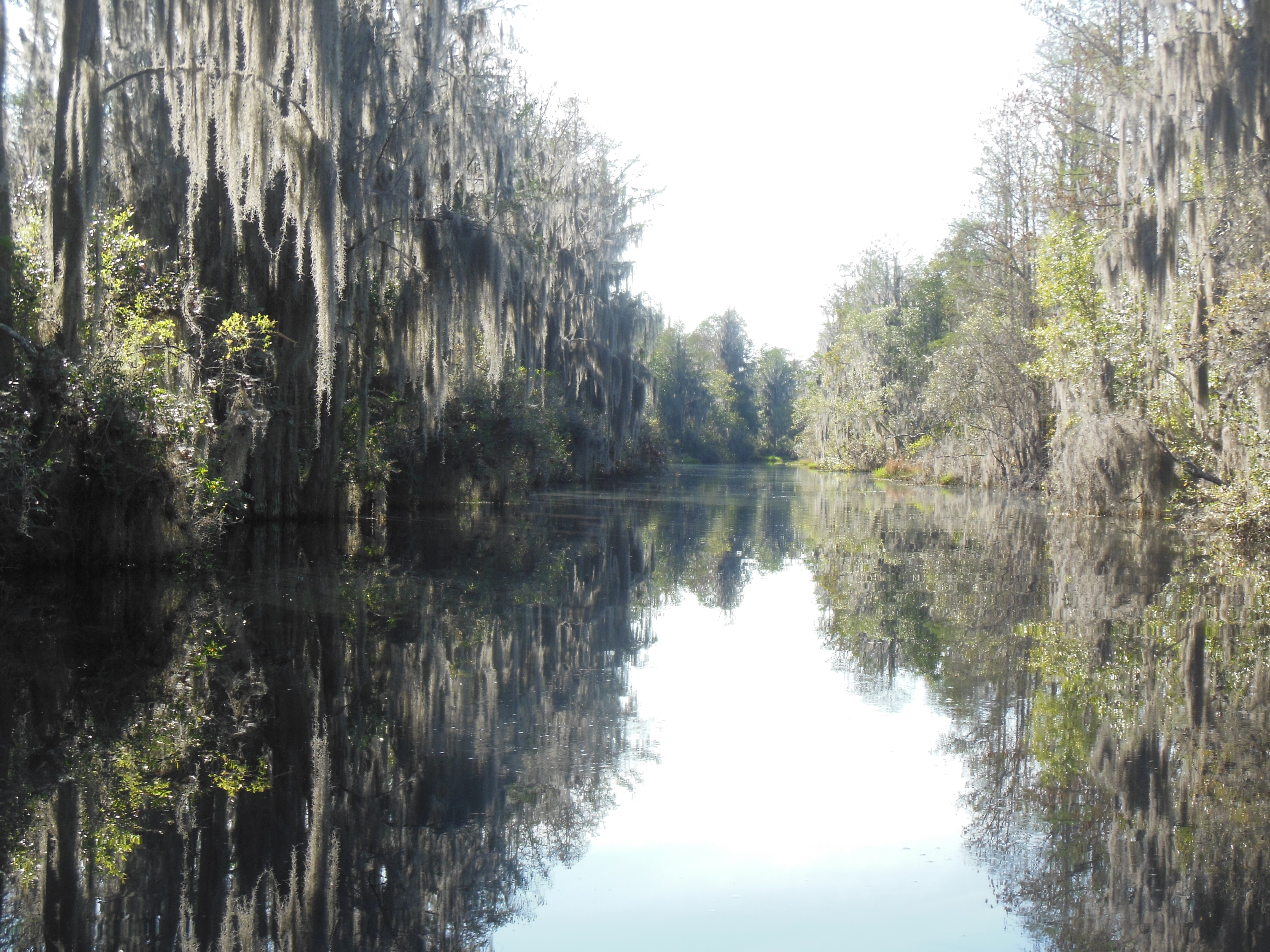
boat ride vista

boat ride vista

thicket along the boat reide

thicket along the boat ride

swamp iris

swamp iris


swamp prairie

swamp prairie

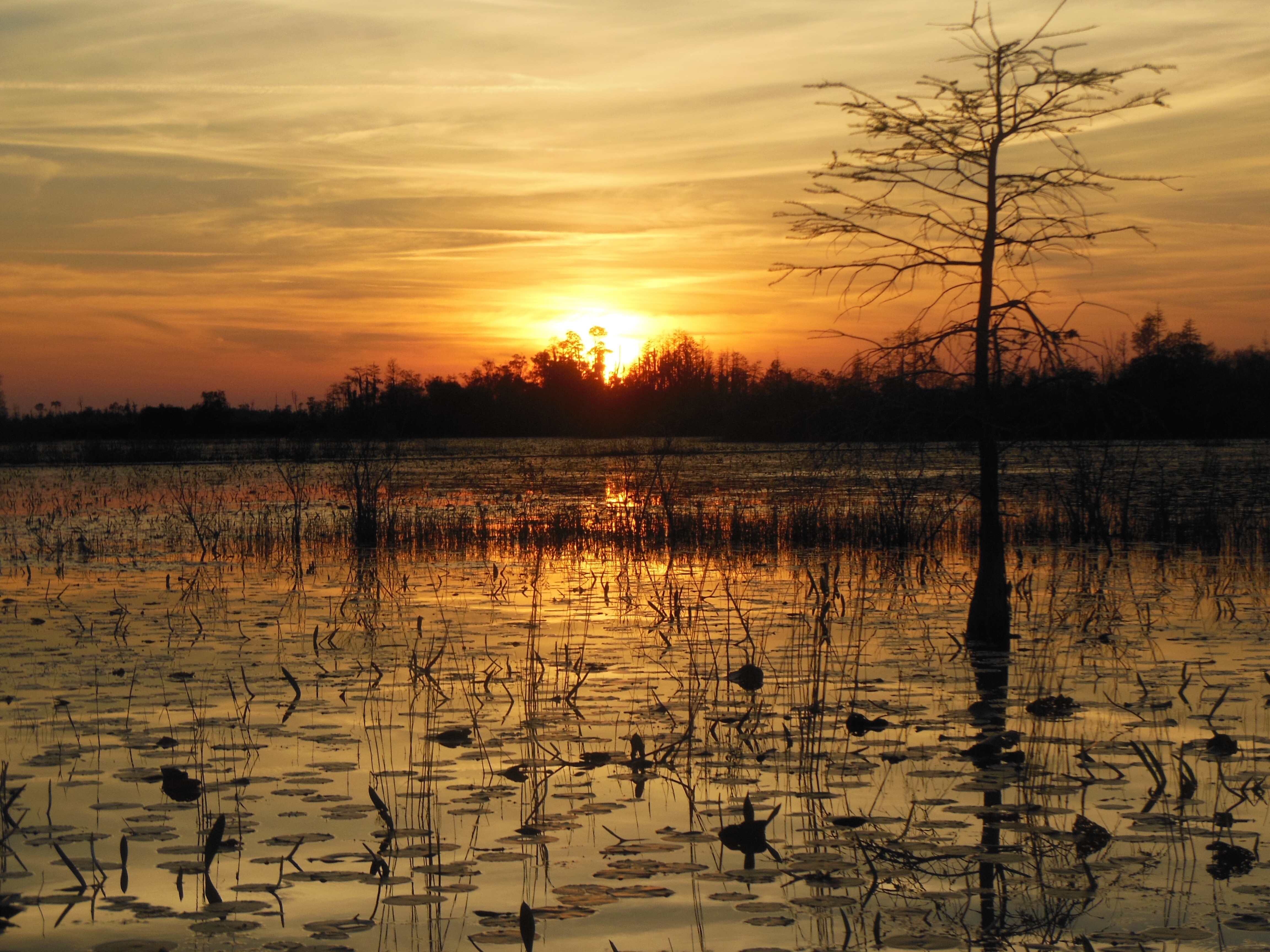
A four and a quarter hour boat ride on the swamp took up the late afternoon and early evening. Six of us went out on the swamp with a guide for an extended excursion. The guide turned out to be the co-owner of the concessionaire, Okefenokee Adventures. In a drawl that sounded like an backwoods swamper, he educated us for over four hours on a myriad of topics covering politics, ecology, geology, and biology. He identified plant life and birds, including the bittern which evidently is a rare sighting. He related tales of the Okefenokee, the role of fire, threats to the refuge driven by economics, etc. It was a fascinating and educational experience, compounded by the great weather, beautiful sunset, and almost complete lack of biting insects.

sunset on the swamp

sunset on the swamp

Chris and Ed 11:45 pm

Categories: road trip, travel | Tags: , , , , , | 2 Comments

2014 Trip Two, March 31, Deep South

White Springs, FL Monday March 31.

Let’s see. Population of Miami SMSA is about 5.5 million. Population of White Springs FL is about 775. Miami has the Atlantic Ocean, Intracoastal Waterway, and lots of beaches with jet skis and parasailing. White Springs has the Suwanee River which is currently flooded-no canoeing allowed. In the early 1900s, the town had over 2000 people and a thriving tourist trade revolving around sulphur springs. A 1911 fire destroyed most of the community. 400 miles brings us to a whole ‘nother world.

part of the porch at the cabin

part of the porch at the cabin

We are staying at the Stephen Foster Folk Culture Center State Park in White Springs, FL. There are five rental cabins here, we have cabin #1. It appears that two others are also rented. It is just a one night stand for us, most people stay a while. There is room for a family in the cabin and it is equipped with a fully equipped kitchen-but no washer/dryer. There is a long, screened-in, L-shaped porch. The screen is essential; even now the bees are out and flies are starting to be noticeable.

actual piano used by Foster

actual piano used by Foster

The state park was created to honor Stephen Foster (1826-1864). For young’uns and the forgetful, he was the composer of such songs as “Old Folks at Home (Way Down Upon the Swanee River)-Florida’s state song; “My Old Kentucky Home”-Kentucky’s state song; “Jeannie with the Light Brown Hair”; and “Beautiful Dreamer” (actually used in a Batman movie; “Camptown Races”. The movie “Gone with the Wind” has four of his songs in it. The correct spelling of the river is Suwanee; Foster abbreviated it for musical effect.

Flooded Suwanee River

Flooded Suwanee River

Foster never lived in Florida and may never have seen the river itself. However, the song became so connected with Florida that the state created a park just to honor Foster and his music. Foster lived most of his life in Pittsburgh where he was born. The park has a museum, a bell carillon, gift shop, and craft village with folk craft demonstrations and shops besides the normal camping, swimming, hiking, canoeing, etc.

Foster is described as a music pioneer. There was no real music business as there is today to make him a millionaire. He sold most of his songs to publishers; most songs were plagiarized with no fees received or acknowledgement as to the authorship. His songs became memorable descriptions of American life. He composed or collaborated on over 200 songs during his brief life and died at age 37 with 38 cents in his pocket. Foster sold many of his songs to Edwin Christy who ran a blackface performing group called the Christy Minstrels in the mid-1800s. The New Christy Minstrels, a folk group in the 1960s, tied in to that history.

Bell Carillon

Bell Carillon

We arrived in time to hear the carillon perform at 4 pm. It also sounds the quarter hours. The carillon is made of tubular bells, 97 of them. (Last November,we visited the School of the Ozarks which has a tubular bell carillon made by the same craftsmen, it is said to be larger although only 96 bells.) Supposedly tubular bells sound different from cast iron bells.

Stephen Foster museum

Stephen Foster museum

The carillon took more than a year to create, the tubular design was created by the company, the bell tower (campanile) is 200 feet high, and regular playing of Foster’s songs occur through live performances and through the use of an automatic electric player. (We heard the electric player.)

Tomorrow we will have to visit the crafts people since at this time of the year they are only here from 10-2. We were able to walk down to the river. Despite the signs, we did not see any alligators or poisonous snakes. The river is over its banks, but still short of the record flood that occurred here in 1973.

Suwanee River

Suwanee River

The song and the river were eloquently described many years ago by a New York editor as: “”The Real Suwanee River,” he wrote, “rises in the highest mountains of the human soul and is fed by the deepest springs in the human heart. It flows through the pleasant, sunny lands of memory; it empties into the glorious ocean of unfilled dreams..””

Ed and Chris March 31, 7:15 pm

Categories: road trip, travel | Tags: , , , , | 1 Comment

2014 Trip Two, March 29-30, Deep South

Sunday March 30, Miami Beach

Not a lot new to report. Two days at the beach, Saturday continued the windy and cloudy days. Today was almost perfect, sunny, slight breeze and temps around 80.

I am justing posting this to let you know we are doing fine.

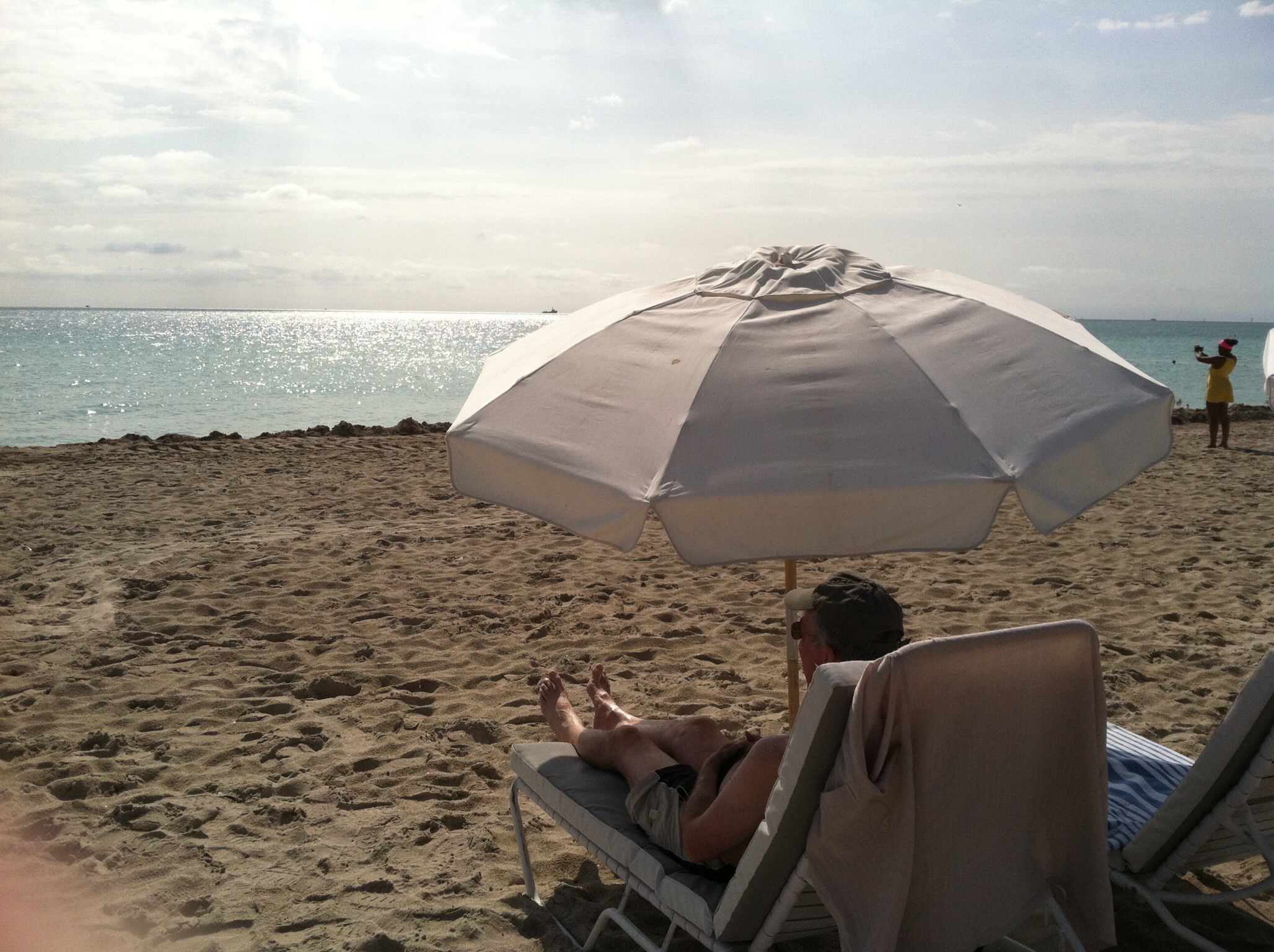
Early morning  at the beach

Early morning at the beach

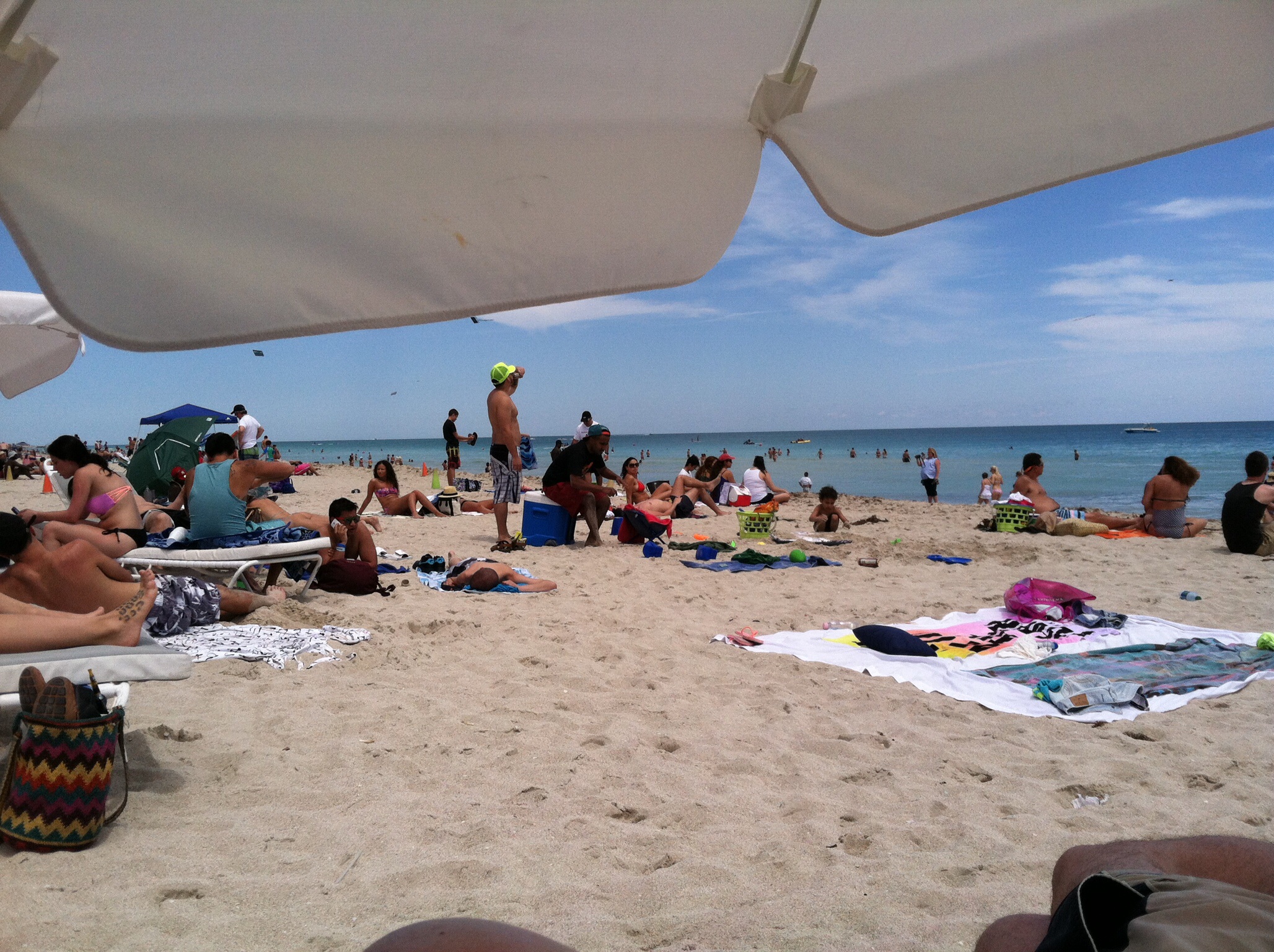
The crowd starts to build

The crowd starts to build

A view from the ocean

A view from the ocean

Ed and Chris 9:30 pm

Categories: road trip, travel | Tags: | Leave a comment

Blog at WordPress.com.