road trip

2014 Trip Six, Oct. 7, Fall in Canada and Deb and Rebecca’s Wedding

Lake George, NY Tuesday Oct. 7

Choices confront us all the time. Today we made several small decisions that enriched our day’s experience; initially planning only to visit the Saratoga National Historical Park. The first decision was to turn back to visit Lock #5 of the Champlain Canal. We all know of the Erie Canal and its major influence on the growth of the United States. Chris and I were unaware of the other connecting canals to the Erie Canal.

(side note–Our drive took us through Hudson Falls NY, a small town that had been home to a GE plant that dumped PCBs into the Hudson River for 30 years. Under a five year plan, GE is spending one billion dollars to dredge and remove soil with PCBs. We drove past part of the dredging work today.)
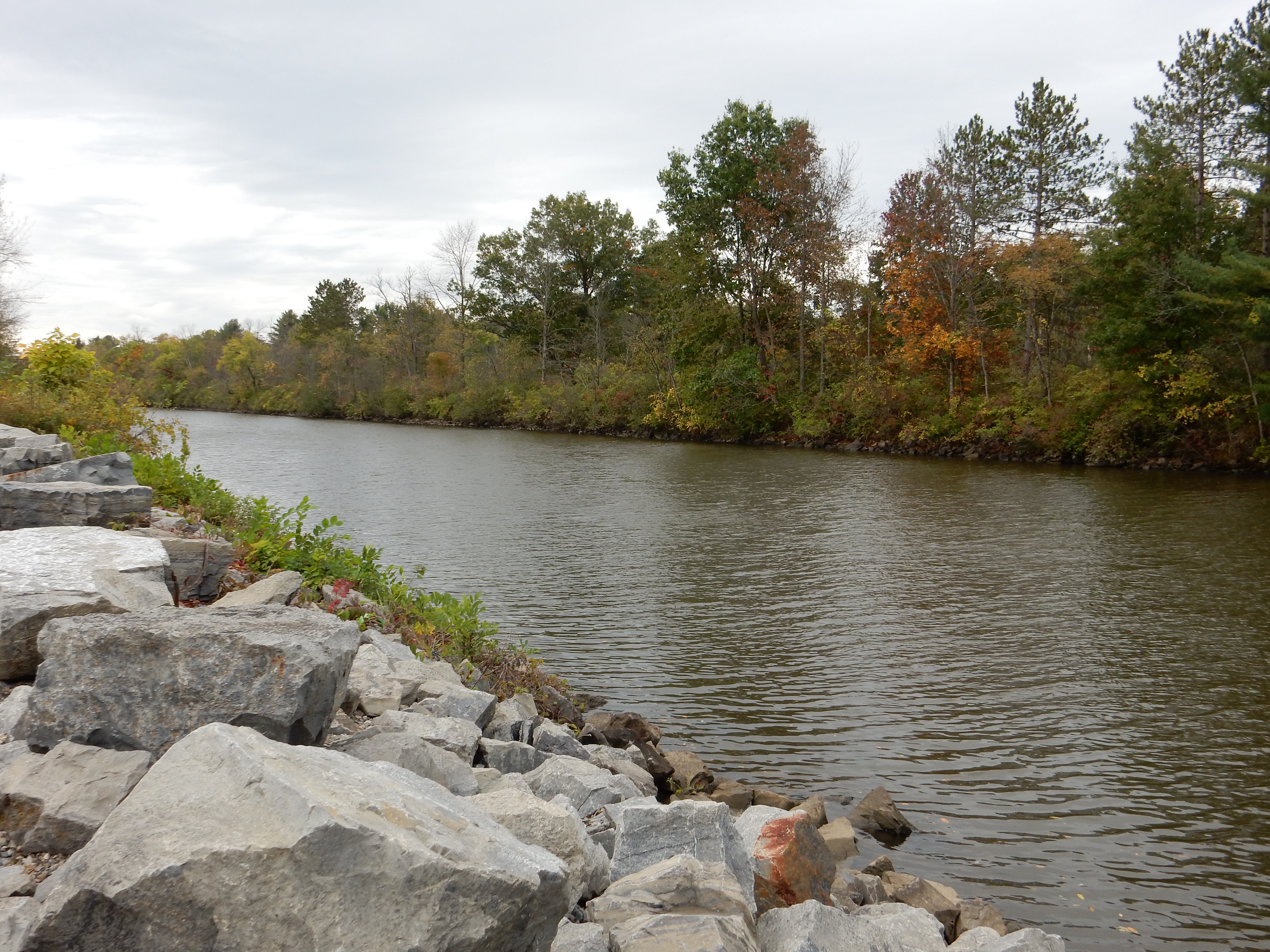
Champlain canal

Champlain canal

The Champlain Canal runs from just north of Troy NY to Whitehall NY where it connects with Lake Champlain. We first observed the canal at a roadside rest stop as we drove back roads from Lake George to the Saratoga Historical Park. The canal was built in 1843, pre-dating the Erie Canal by two years. The Champlain Canal allowed the timber and minerals of the Champlain Valley to be transported to Troy and onto the growing areas of the U.S. Today, barges still use the canal, as do recreational boaters.

Lock number 5 of the Champlain Canal
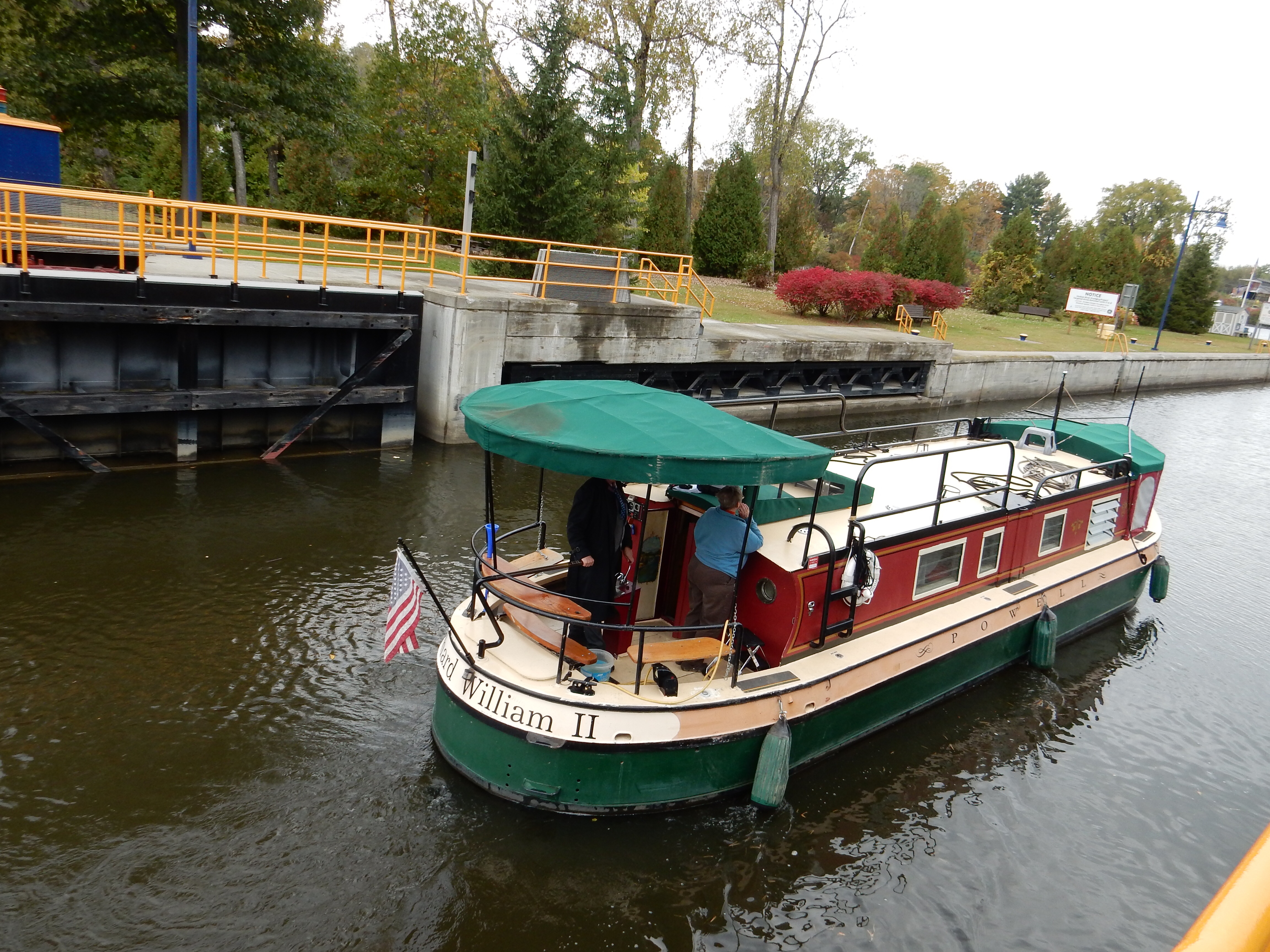
Lock number 5 of the Champlain Canal

Rented canal/house boat

Rented canal/house boat

Driving through Schuylerville, we zipped past a sign for the Visitor Center at Lock #5. We turned around and headed back. The canal tender on duty was most engaging, telling us stories of his experience on the locks as we watched a rented canal/house boat pass through the lock. He does have a distinct impression of French Canadian boaters that is not particularly favorable. The locks are open from April to November, depending on weather. The canal freezes during the winter.

Saratoga Monument

Saratoga Monument

Our second decision was to stop at the Saratoga Monument. As we had read, the monument was not open, it was closed for the season. We were not able to view the displays inside nor climb 154 feet to the top for a view of the area. However, the grounds were open, including a one mile trail through Victory Woods. The two experiences enhanced our enjoyment of the Historical Park.

So what is Saratoga Historical Park? Well, it is not in Saratoga Springs as we thought once upon a time. It is located in Schuylerville, which was once called Saratoga. At Saratoga, the U.S. Revolutionary Army completed a decisive defeat of the British Army. This victory is considered the turning point of the War for Independence.

In 1777, the British were not doing too badly. Other European countries were not willing to come to the aid of the U.S., however much they disliked England. The British believed that an important step would be to drive a wedge between the northern and southern “provinces”. To do that, an army would advance south from Montreal to Albany, along the Richieu River, Lake Champlain, Lake George, Hudson River route we have mentioned previously. They advanced to Fort Ticonderoga and took that.

Cannon overlooking the road and Hudson River

Cannon overlooking the road and Hudson River


Then things started turning sour. A side excursion to Bennington VT was defeated. The coordinating drives by British forces from the west and the south turned back or never materialized for various reasons. U.S.General Schuyler (who lived in this area) was able to slow down the advance. General Horatio Gates assumed command of the U.S. troops and fortified a position on heights commanding both the road and water route to Albany at a narrow point between the hills and the Hudson River. Col. Tadeusz Kosciuszko, a Polish military engineer, laid out the defenses and fortified the site.
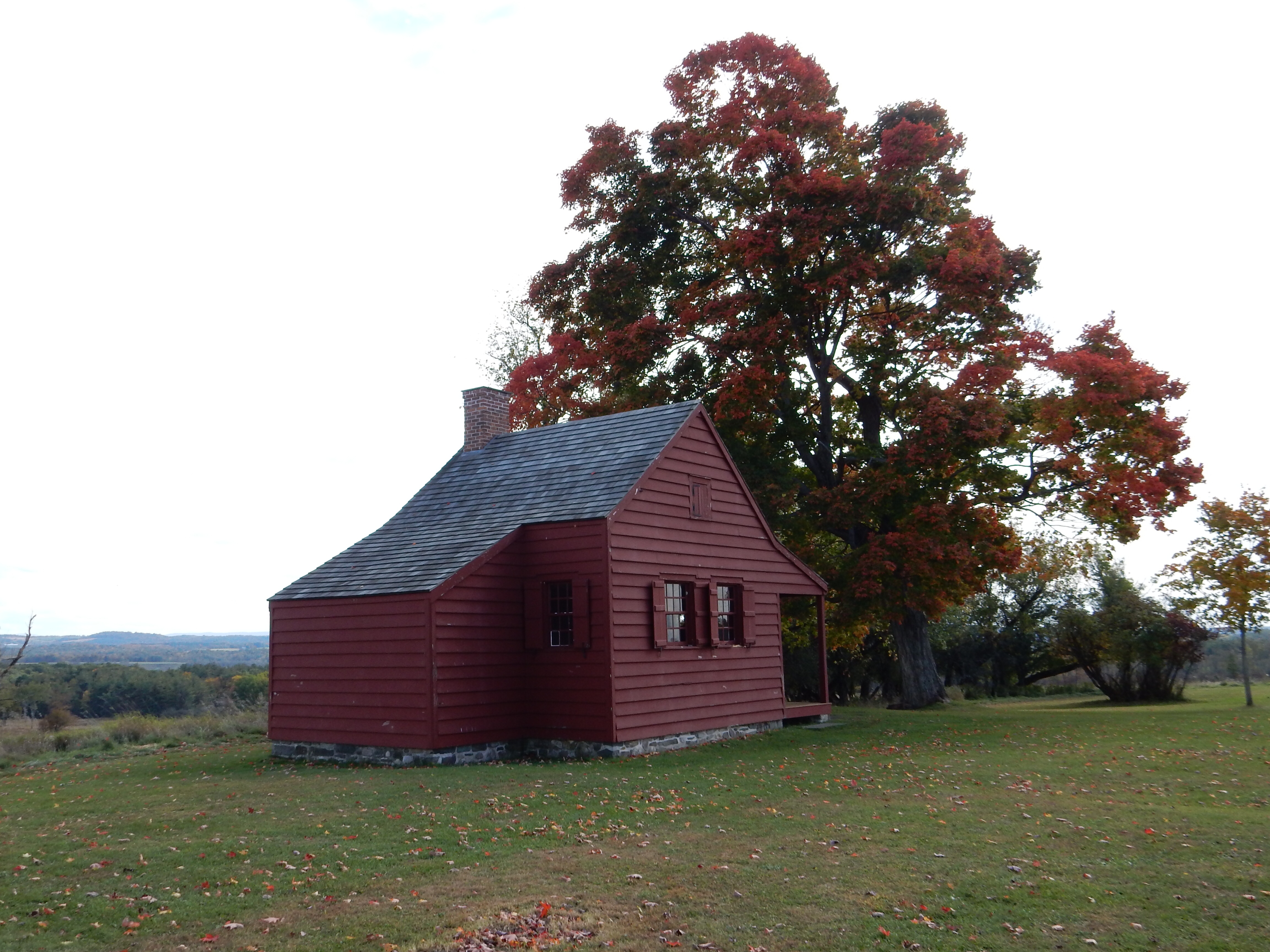
Neilson House-only remaining building dating back to 1777 in the park. It was one of the American headquarters during the battle

Neilson House-only remaining building dating back to 1777 in the park. It was one of the American headquarters during the battle

There were two major battles at Saratoga. On Sept. 19, the two forces engaged in a three hour battle that left the British in control of the battlefield but weakened and they did not reach the American fortifications. After Sept. 19, American forces were strengthened by new recruits; British support never arrived. On October 7 (today, 237 years later), the second battle occurred. British forces were defeated badly and forced to retreat.

The British army and accompanying women and children (women provided ancillary services for cooking, laundry, etc and officers families frequently came with them) retreated 8 miles (to Victory Woods). Gates’ troops followed, surrounded, and placed them under siege. On October 17, with few supplies and in lousy weather, the British General John Burgoyne surrendered.

Victory Woods today

Victory Woods today

This battle was the very first time a British army had been surrounded and forced to surrender; ever, not just in this war. When this news reached Europe, France (and later Spain and Holland) gave support to the U.S. and declared war against England. It was France’s ships and soldiers that helped make the final victory at Yorktown feasible. (The second time British forces were surrounded and surrendered. Singapore in WWII was the only other time.) Obviously that resulted in a new form of government, a modern democracy and the rise of the United States. It is not an idle statement to say that Saratoga turned the tide of the war and the course of history.

We spent four hours touring the sites and learning about the battle and many sub-plots. In Philadelphia in a week, we hope to visit the home of Col. Kosciuszko, the smallest national park. The story of Benedict Arnold, who was a hero here and at Fort Ticonderoga, before turning against the U.S. later, is another interesting story line. Numerous small circumstances, like the Burgoyne retreat order that never got delivered, all contribute to engaging tales.

Ed and Chris 10/7 9:30 pm

Categories: road trip, travel | Tags: , , , , , , , , , | Leave a comment

2014, Trip Six, Oct. 6, Fall in Canada and Deb and Rebecca’s Wedding

Lake George, NY Monday, Oct. 6

View of valley and low peaks from Mt. Arab

View of valley and low peaks from Mt. Arab

Our last Adirondack location. We drove to Lake George after a morning hike to Mt. Arab, another mountain similar to Mt. Jo. The elevation gain was about 100 feet higher and just slightly longer. BUT, the trail was much better marked, removing any questions of if we were on the correct trail.

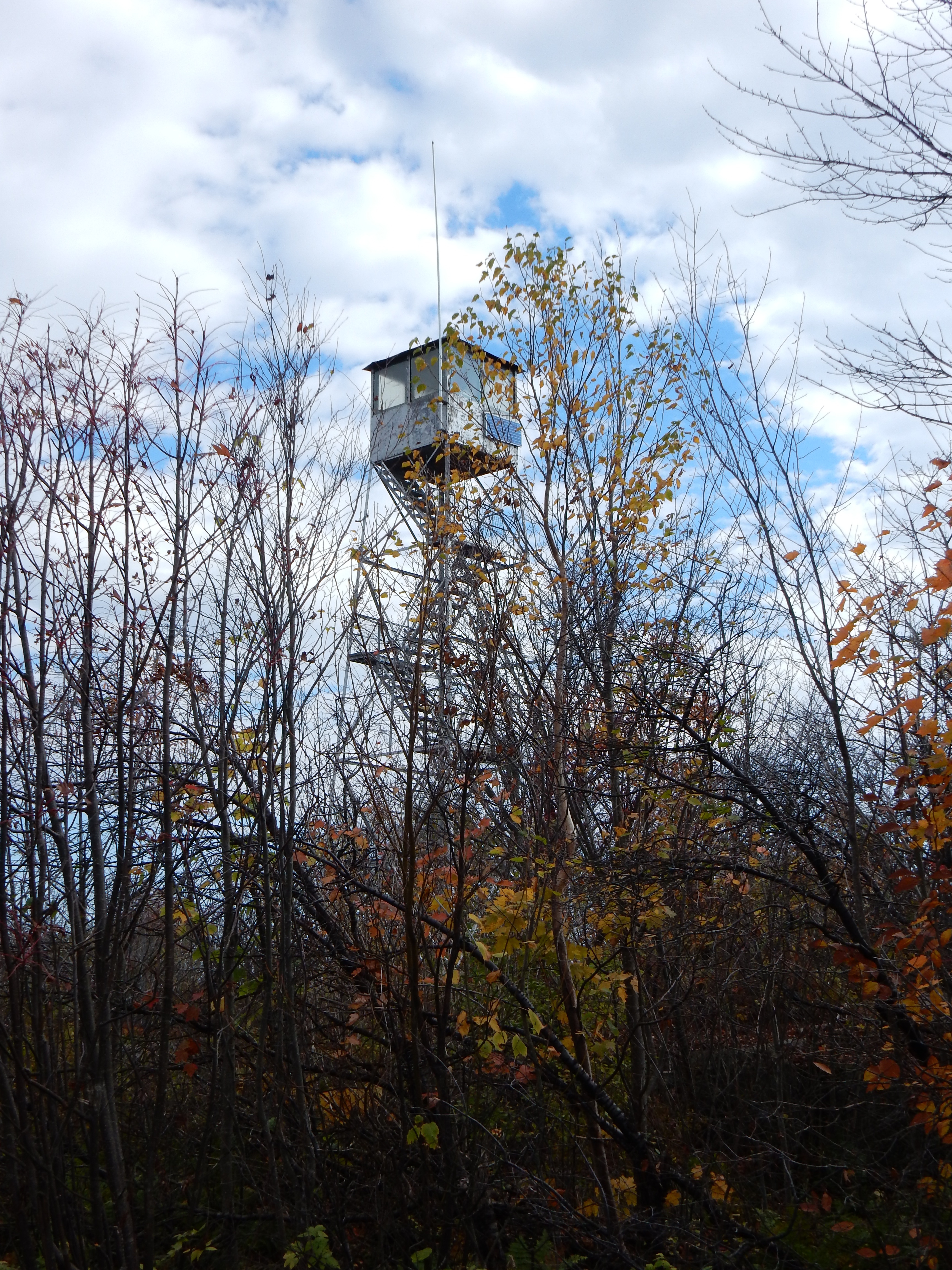
Fire tower on Mt. Arab

Fire tower on Mt. Arab

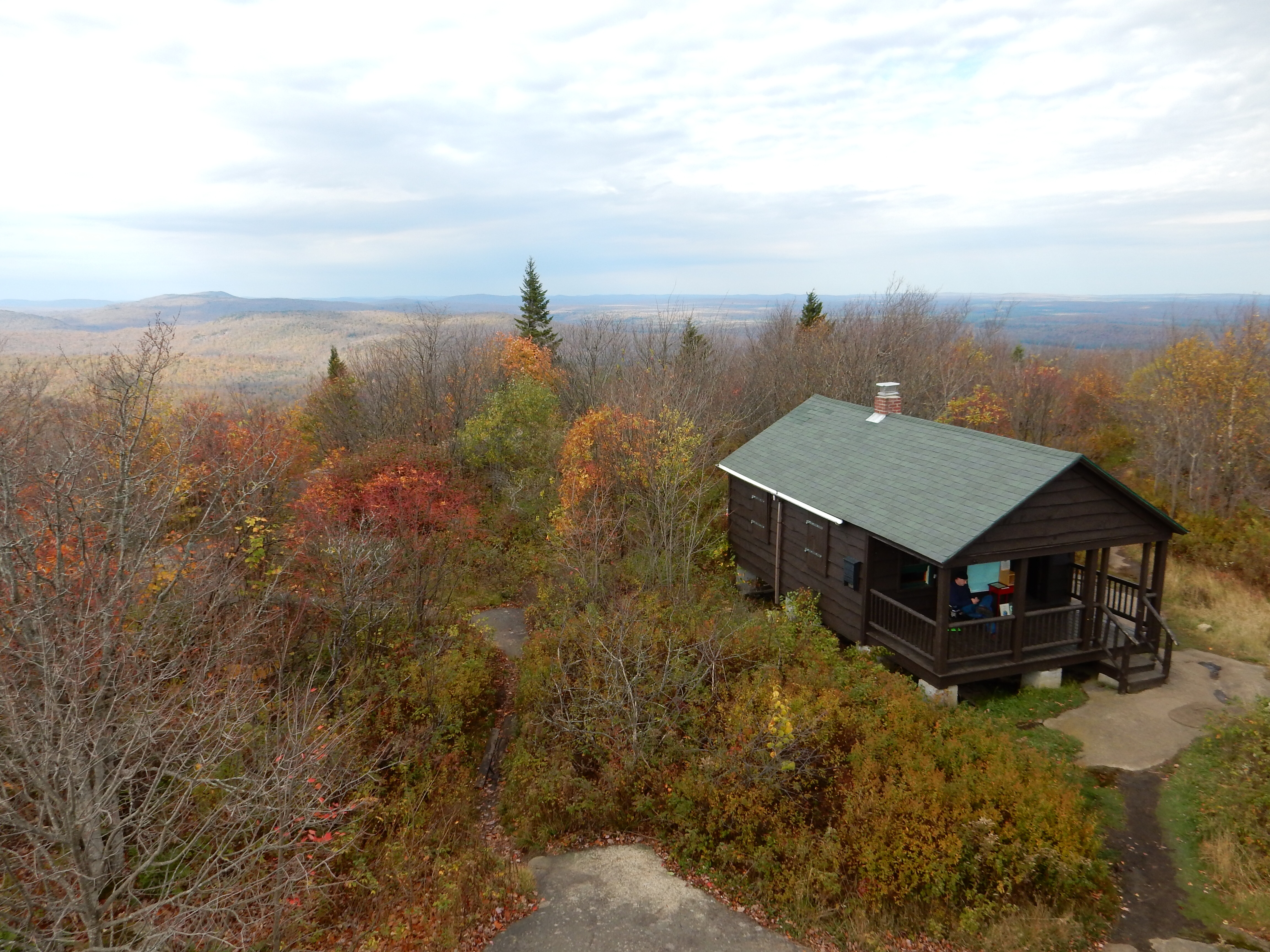
At the top of Mt. Arab is an abandoned fire tower built after over a million acres were burned in 1903 and 1908. Irresponsible logging practices were blamed for the fire. The state constructed fire towers all over the Adirondacks until they were made obsolete in the 1990s. A local nonprofit has been maintaining the fire tower and trail. They also staff a cabin at the top of the summit. Today’s staffer gave us several stories of the people who hike to the top.

View from the fire tower at Mt. Arab

View from the fire tower at Mt. Arab

The hills in this portion of the Adirondack are lower than the High Peaks area around Keene. The views are still impressive. This hike did not have the piney smell of several previous hikes. Instead the aroma was more of decaying plant material, pungent and earthy. The wind was strong, particularly at the top. On the hike down, the clouds rolled in and one was not sure if you were hearing the start of rain or just the wind rustling the leaves. We lucked out again. The rain portion held off until we reached the car and only intermittently spritzed the rest of the drive to Lake George.

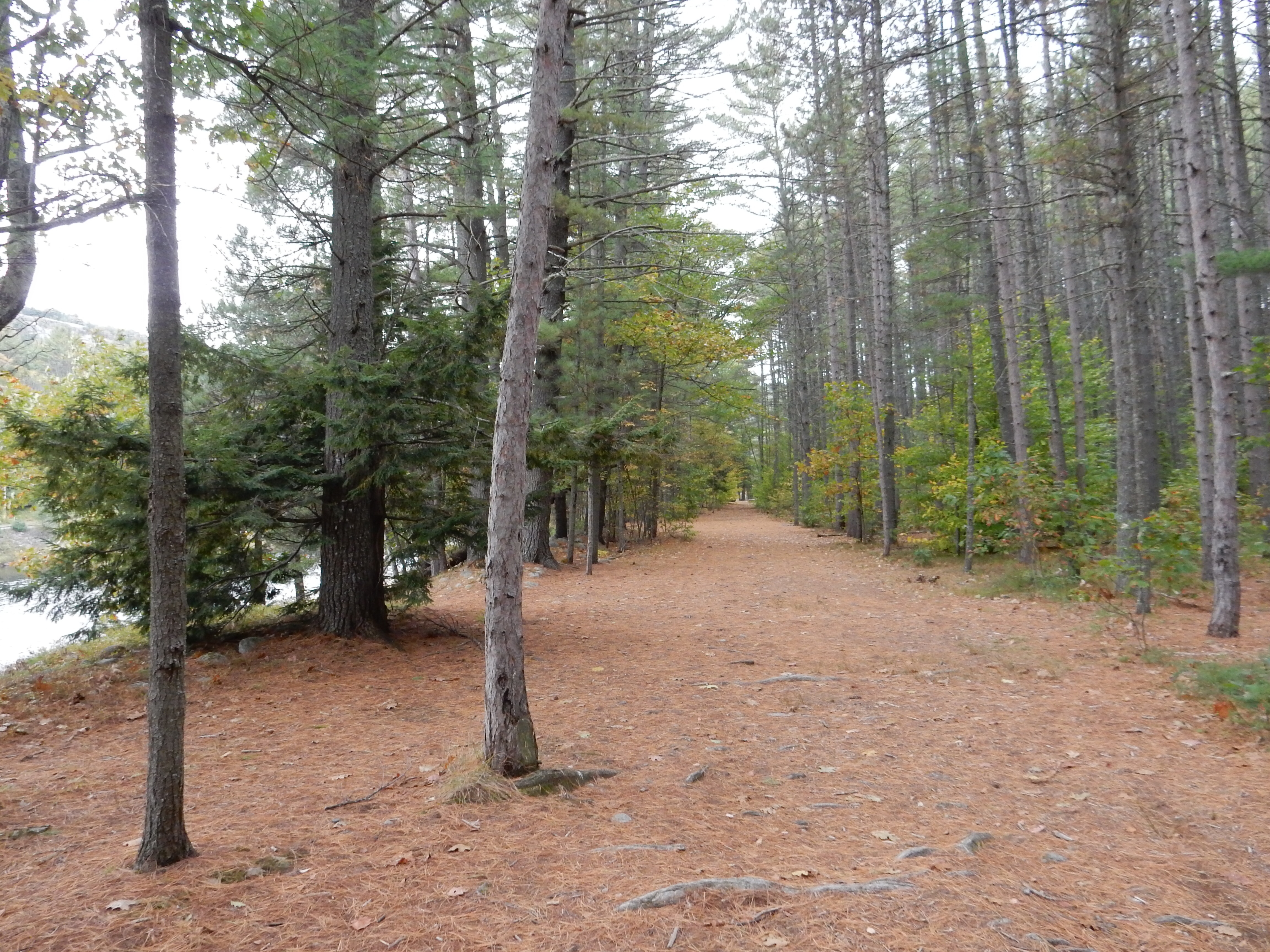
The afternoon hike, nice and easy along the Hudson

The afternoon hike, nice and easy along the Hudson

We made one other easy hike in the afternoon as we completed our drive to Lake George. The route we chose went along the early section of the Hudson River. It looked nothing like the impressive river further downstream.

Driving to Lake George on back roads

Driving to Lake George on back roads

Dinner in Lake George was at a local restaurant, the people here seeming more to be tourists or business people. In comparison, the small restaurant in Tupper Lake seemed populated entirely by locals who knew the staff.

Ed and Chris Monday Oct. 6 10:30 pm

another view

another view

Categories: road trip, travel | Tags: , , , , | 1 Comment

2014 Trip Six, Oct. 4-5, Fall in Canada and Deb and Rebecca’s Wedding

Tupper Lake, NY, Sunday Oct. 5

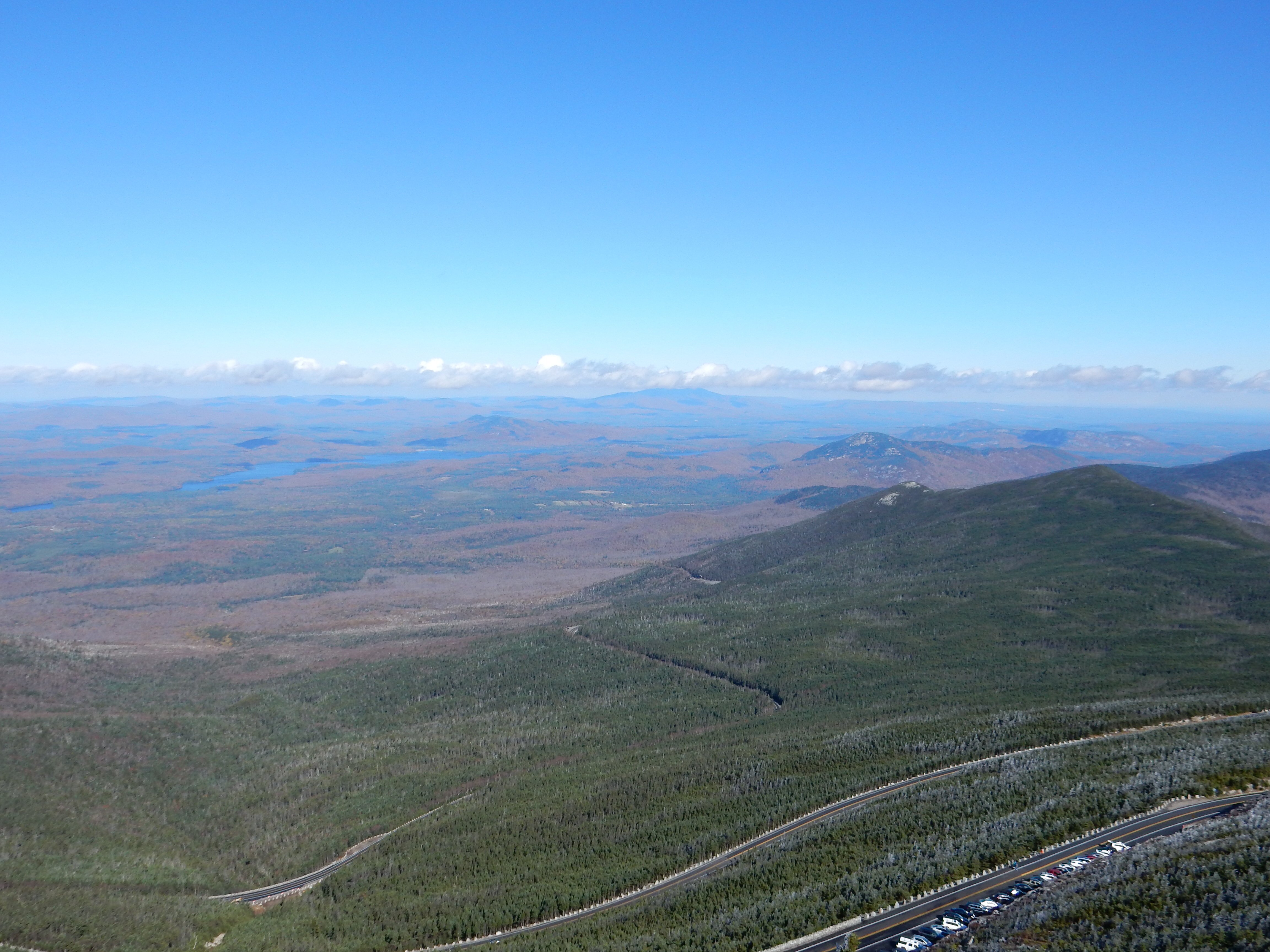
In order to get the view below,

View from Whiteface Mtn

View from Whiteface Mtn

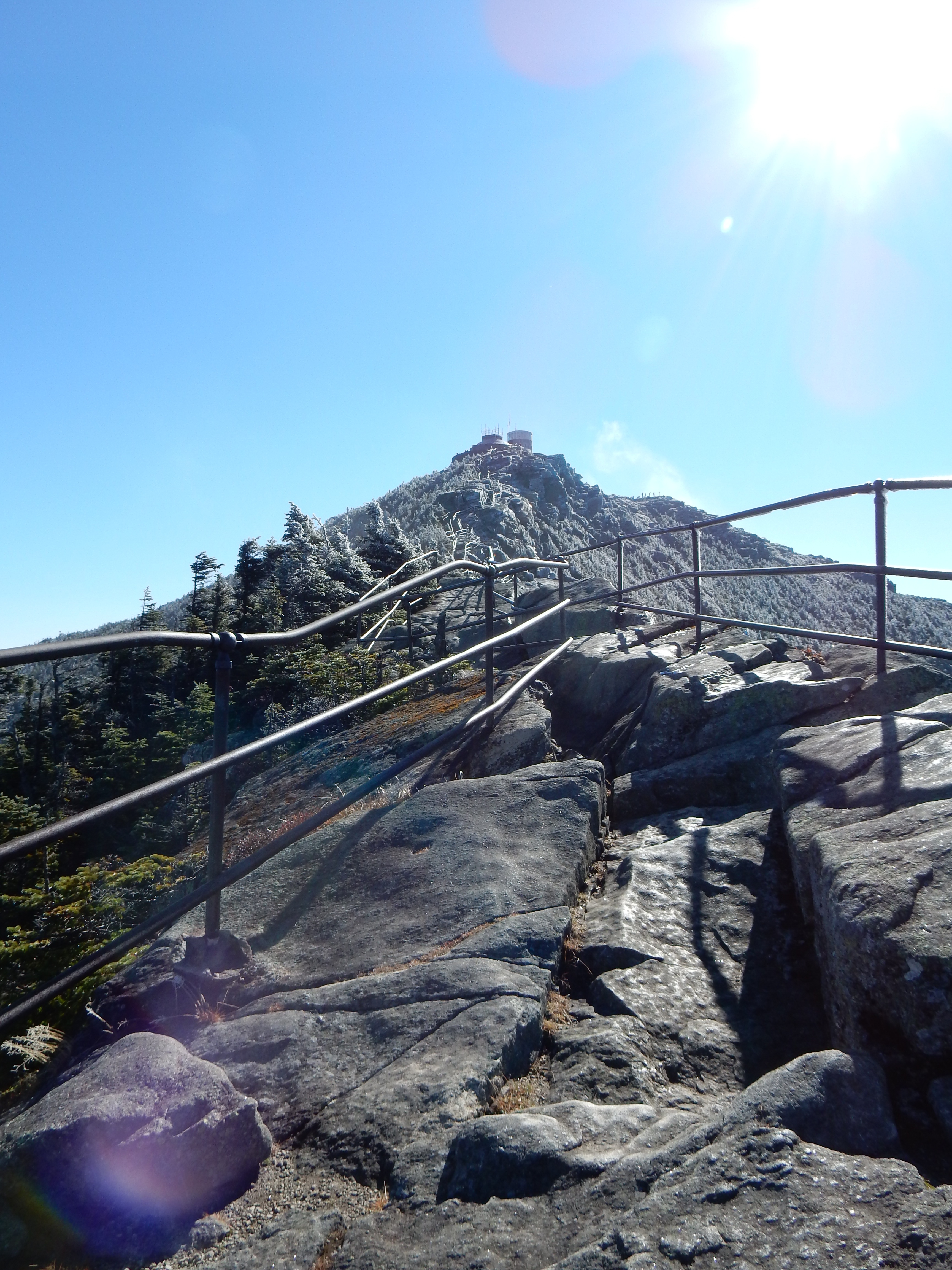
we climbed the rock/stair trail below, equivalent to 25 stories.

The 250' climb to the summit

The 250′ climb to the summit

Geographically, it made more sense if we went to Whiteface Mtn yesterday (Saturday). But Saturday was raining with low clouds. Whiteface Mountain, New York’s fifth highest peak, has a great viewing platform that you can drive (almost) to. Whiteface Mtn is 4867 feet in elevation. Why go there for the view if you can not see much? So Whiteface was saved for today, a drive of an hour from our new lodgings Saturday and Sunday in Tupper Lake.

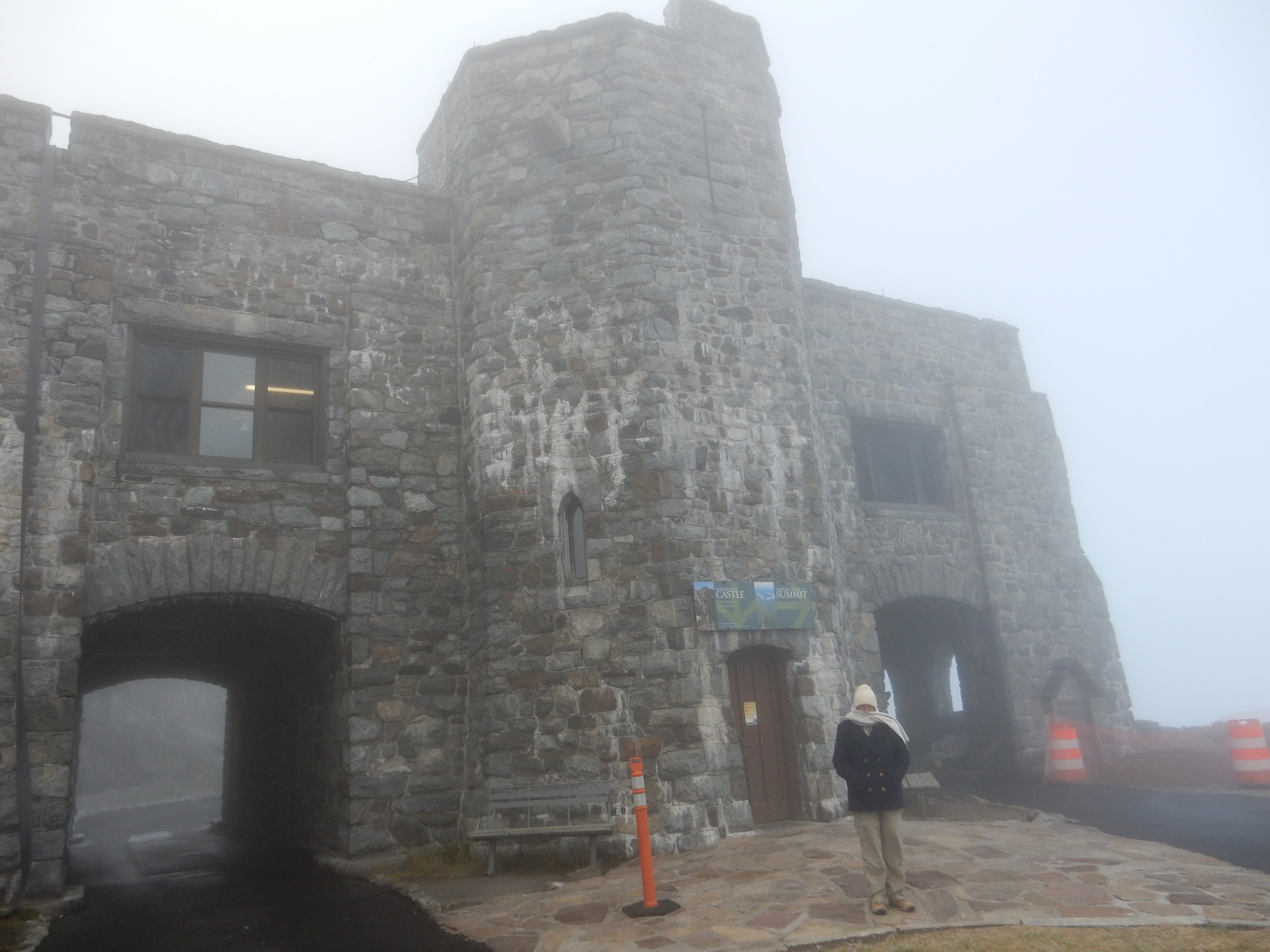
The top at Whiteface Mtn at 9:00 am

The parking lot and restaurant at Whiteface Mtn at 9:00 am

The road to the top of Whiteface was constructed in 1931-35 as a tribute to WWI veterans, as a means of employment during the Depression, and a means of bringing tourists to the area, including those with disabilities. It took until 1938 to complete a tunnel through 426 feet of rock and install a 25 story elevator to the summit. (We took the elevator down.)

Chris and Ed at Whiteface Mountain summit

Chris and Ed at Whiteface Mountain summit

We had heard stories of long waits to get into the elevator and to even enter the Memorial Highway. It has a toll and only a limited number of vehicles can access the mountain at one time due to limited parking at the top. Today’s weather called for a cooler day with sun between about 10 and 2. The gates open at 9 am. Do we go early and avoid the crowd or do we go later when the view is better and endure multiple waits? We decided on going early and waiting up there until the skies cleared.

We were the 6th car parked at the top a little after 9 AM. The clouds were present about one half way up the mountain. The sign at the gate indicated that summit was 31 degrees, 10-20 mph winds, and zero visibility. It was cold up there. Fortunately they have a building with rest rooms, gift shop, and restaurant. Unfortunately the kitchen opened at 11. We had passed on the continental breakfast at the hotel in order to avoid the crowds and figured we would eat at the restaurant while we were waiting. Eventually coffee was brewed and Chris had some and then goulash was hot and I had some. A little after 10 the skies had cleared.

The hike to the top was on a combination of stairs and stone outcroppings with metal railings. The railings were still ice-covered in most areas but the stairs/stones were usually dry.
The climb up was a challenge with the wind, the cold, and uneven footing but we made it. The top has a small weather station, the elevator, rock outcroppings you can stand on and a few constructed platforms. The view was fantastic.

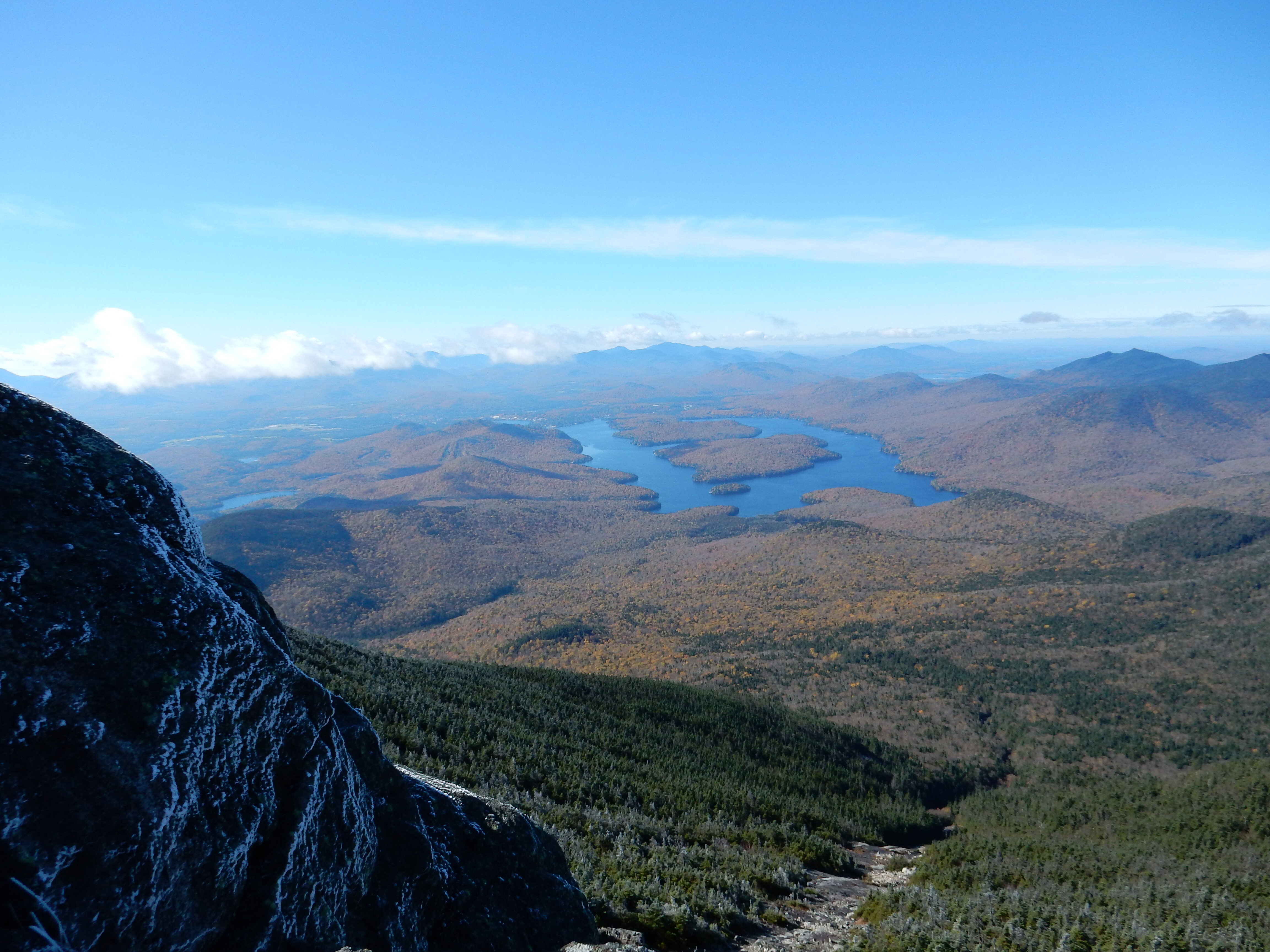
View from Whiteface Mountain

View from Whiteface Mountain

You can see in all directions, into Vermont, Montreal on really clear days, Lake Champlain, and the other peaks in the Adirondacks. The Adirondacks have several distinct sections. Keene, our first lodging location, is part of the High Peaks area where most of the mountains over 4,000 feet are. Tupper Lake where we are staying now, is considered more of the lakes and rivers section of the Adirondacks.

Our view from Whiteface Mountain allowed us to gaze on many of the “High Peaks” of the Adirondacks. We gazed at Mount Lyon in Canada, at 3829 feet the highest point between here and Siberia. There is a ski area on Whiteface also. It has the highest vertical drop in the east and compares very favorably with the big name western ski areas. The Adirondacks are steep slopes due to the Canadian Shield rocks that resist weathering well.

After enjoying the view and chatting with fellow travelers, we took the elevator down to the parking lot. As had been expected, the elevator, which only holds about 12 people, had a long line for people to come up to the top. Your eyes have to adjust from the bright sky of the summit, to the dim lights in the elevator and dark lighting in the tunnel cut through the rock to the bright light outside again.

As we left Whiteface Mountain, there were more than 30 cars waiting to go up the road. Adirondack Park receives numerous visitors from Canada. It is an easy drive from Montreal, Quebec and Ottawa. We have noticed some signs in English and French although not as many Americans in service industries speaking French to their visitors from Canada. Nothing as sophisticated as the museum in Montreal that had head sets with eight language options.

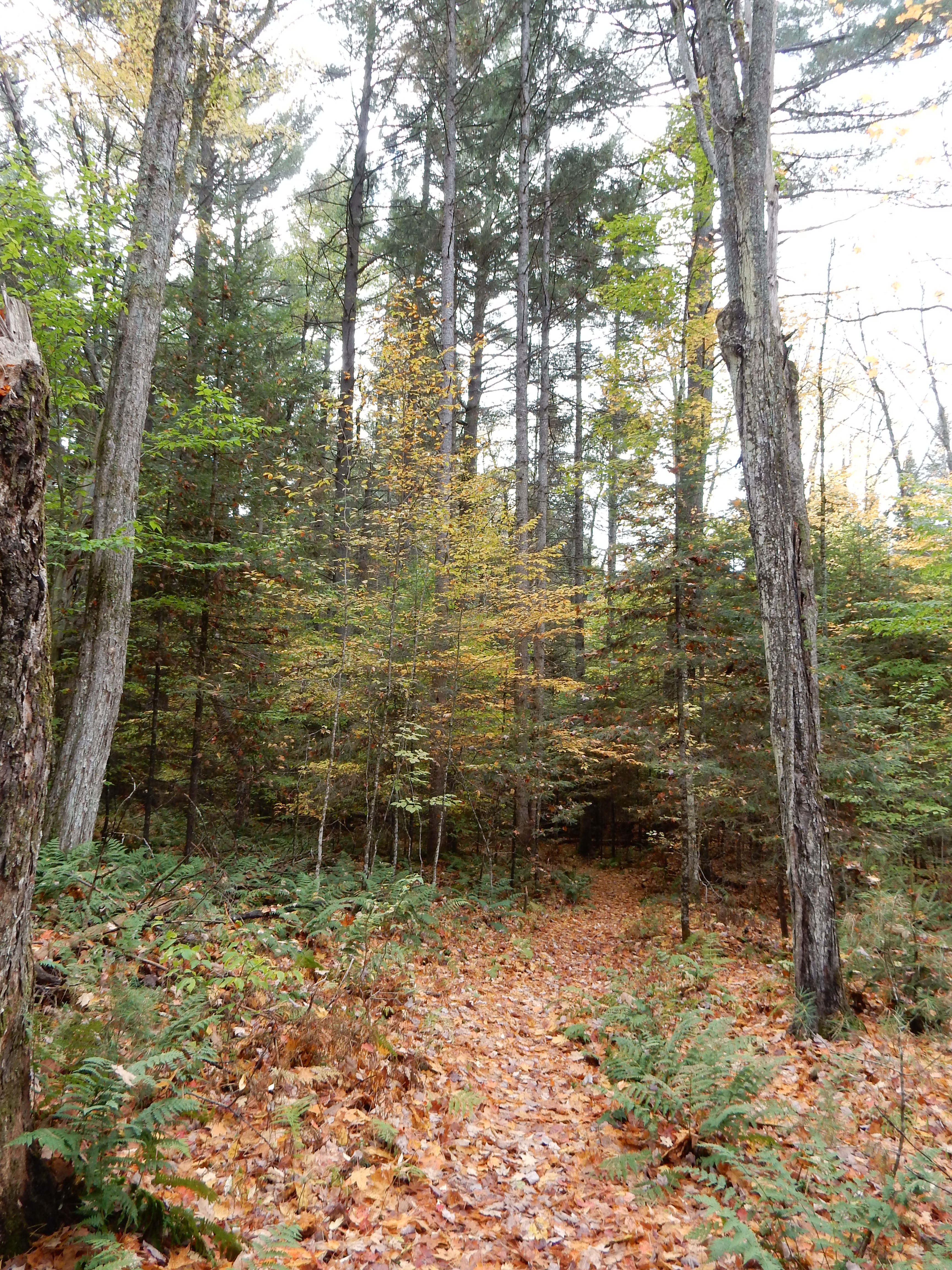
On one of our walks

On one of our walks

After lunch we did some modest hiking at several locations in the woods. One location was dedicated to New York State’s first forester. In an interesting side note, in his efforts to test new tree planting ideas, he upset some of the landowners in this area. They went to their legislators and had his department at Cornell de-funded. Later a new College of Forestry was established at Syracuse without him. It remains at Syracuse today.

Another walk in the Adirondack woods

Another walk in the Adirondack woods

It seemed to take us more time to find the spots than to hike them. New York State, at least in this area, uses very small signs, set back from the road, in the same color scheme as the signs indicating who volunteered to clean up trash on a section of road, to mark areas of interest or recreational use. In fact, the road signs thanking the people who pick up trash are larger.

The Wild Center in Tupper Lake NY

The Wild Center in Tupper Lake NY

On Saturday, since it rained most of the day, we drove to Tupper Lake and spent five hours at The Wild Center, aka the Natural History Museum of the Adirondacks. The center has been around for ten years and combines displays, animals, videos, demonstrations and hiking trails to demonstrate how people and nature can live together. The same firm that designed the Air and Space Museum in Washington designed this.

The Wild Center

The Wild Center

The Wild Center. I guess we have more leaves to see

The Wild Center. I guess we have more leaves to see

It happened that Saturday was a “Green Expo” day. This resulted in free admission (a savings of $32) but a larger than normal number of visitors. We skipped the vendor tables but did listen to one presentation detailing how one builder enhances the living world in his construction/remodeling of homes. Some ideas were basic, emphasizing the critical benefits of smart tree placement on a residential lot. Others were more radical, encouraging people to study the history of the lot they are building on (for hundreds of years) to determine the plantings that are native to the area. No mention of cost in the presentation.

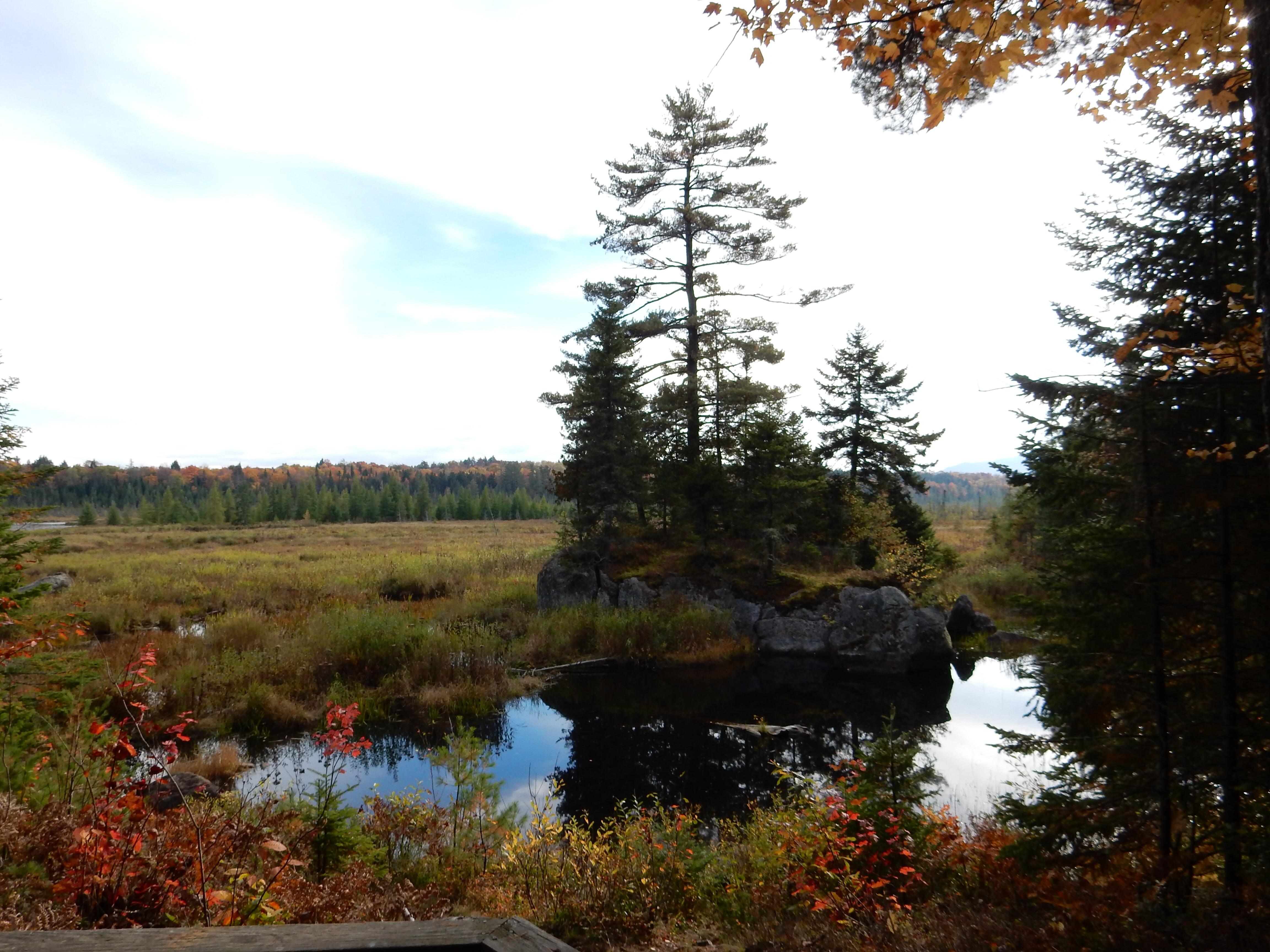
driving through the Adirondacks

driving through the Adirondacks

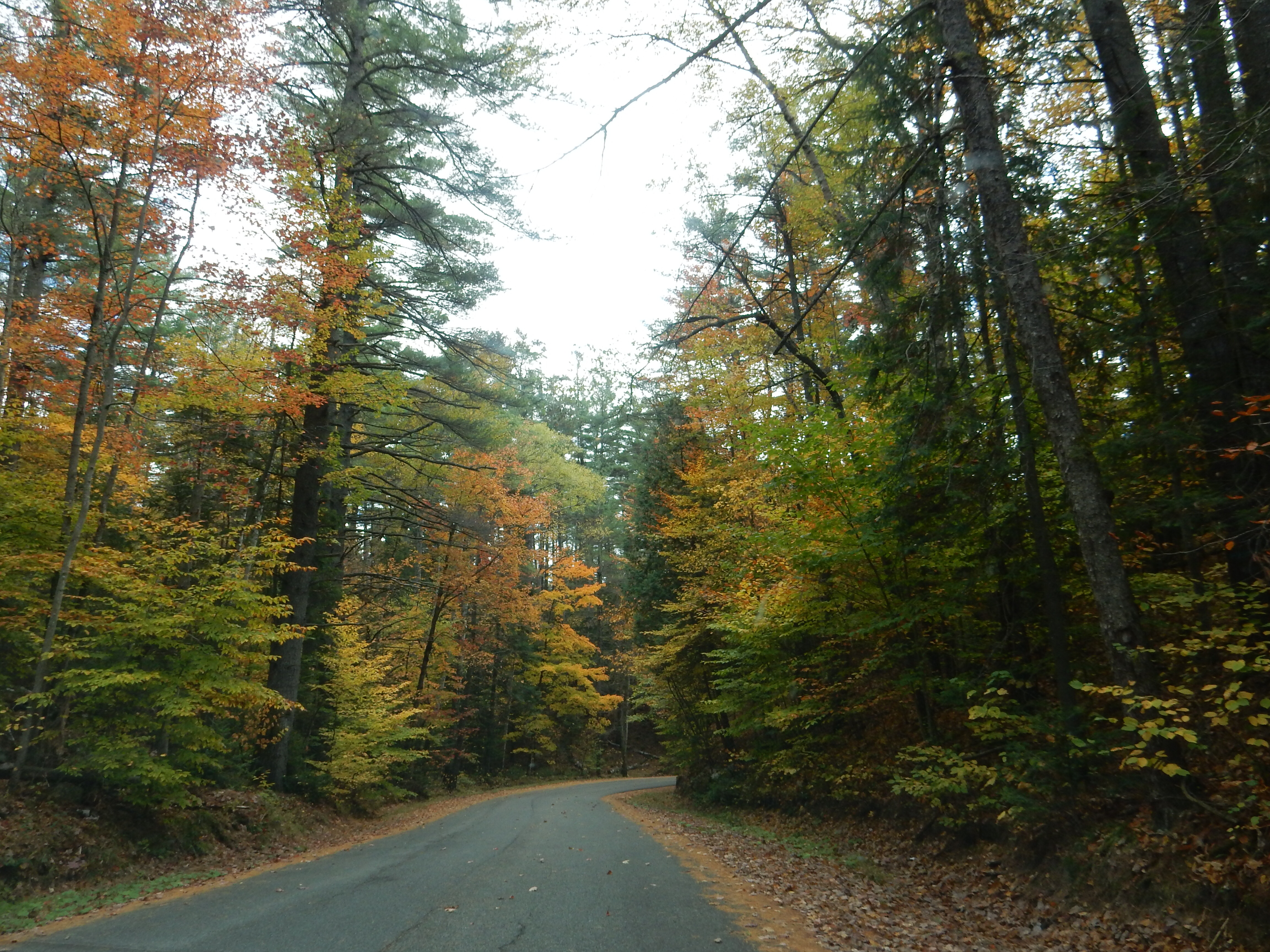
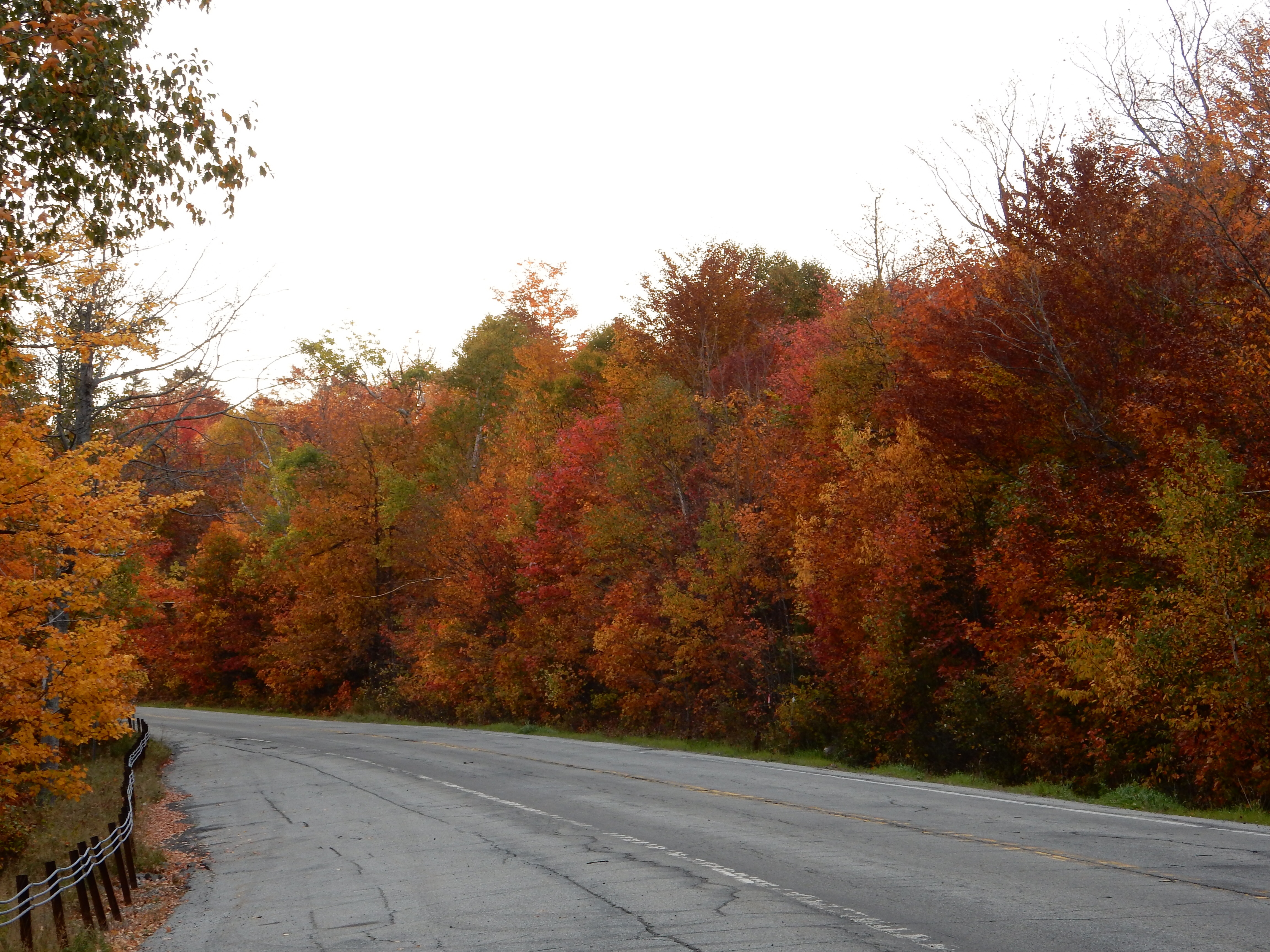
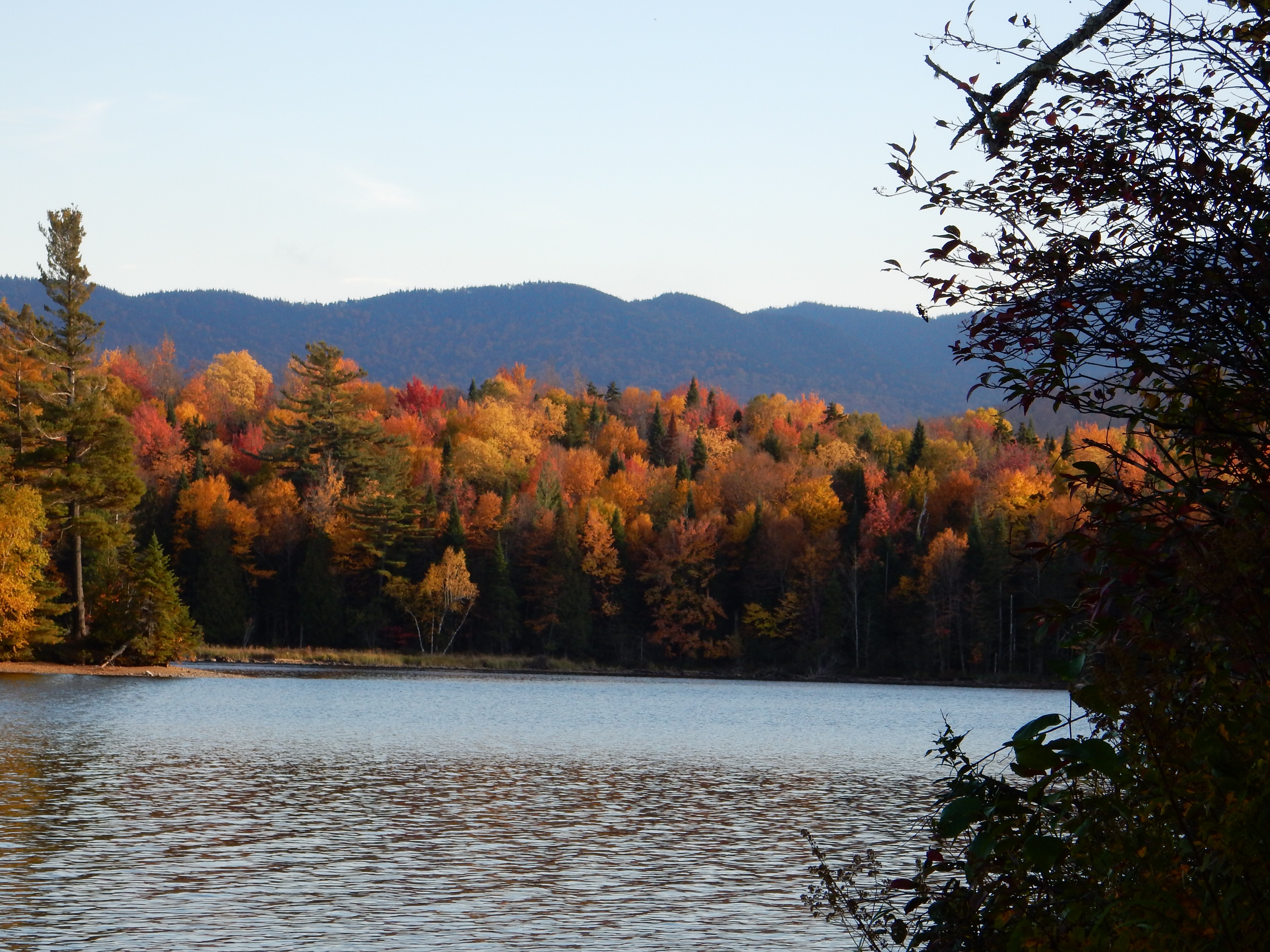
Between Saturday and Sunday, our drives to and fro, we have driven many back roads and enjoyed the scenery. As you might expect, the fall colors are starting to fade but beauty is still there. Monday we will head further south to Lake George.

Ed and Chris 10/5 9 pm

Categories: road trip, travel | Tags: , , , , | Leave a comment

2014 Trip Six, Oct. 3, Fall in Canada and Deb and Rebecca’s Wedding

Keene, NY Friday Oct. 3

So how many of you have heard of the fort at Crown Point? How many of you have heard of Fort Saint-Frederic? How many of you have heard of Fort Ticonderoga? Before today, we had only heard of Fort Ticonderoga.

Lake Champlain is less than an hour east of Keene and was our destination for the day. Lake Champlain extends for 125 miles north-south and up to 14 miles in width. For most of its length, it is the border between Vermont and New York states. It is named after Samuel Champlain, French explorer. Remember him from our Canada excursions?

More importantly, in the days before railroads, it was an integral part of the water superhighway connecting Montreal area to New York City area via the Richelieu River, Lake George, the Hudson River, Lake Champlain, and two relatively short portages.

When the French and British were both trying to add North America to their empires and to cut out the other country, this waterway was extremely vital. It was a main route for battles and skirmishes for two hundred years. It was also the area of battles between the Algonquin Indians and the combined Iroquois Confederacy of the Mohawk, Onondaga, Oneida, Cayuga, Seneca, and Tuscarora. As the Europeans tried to expand into this area, the Algonquins allied with the British and the Iroquois with the French.

area of Fort St. Frederic ruins

area of Fort St. Frederic ruins

The French out of New France (Canada) built Fort St. Frederic, starting in 1734, on a peninsula near the southern end of Lake Champlain to guard against British and colonial intrusion. It was the base for French settlers in the area. Fort St. Frederic was never attacked directly but was destroyed by the French in 1759 to avoid having it fall into the hands of the British.

ruins of fort at Crown Point NY

ruins of fort at Crown Point NY

Crown Point was a much larger fort built almost on top of the ruins of Fort St. Frederic. Crown Point was built by the British in 1759 and was the largest earthen fortress constructed in the U.S. It burnt due to a chimney fire in 1773. It was lightly guarded by the British after this and not reconstructed. In 1775, the Americans captured the fort, taking the cannon from here to fight the British in Boston.

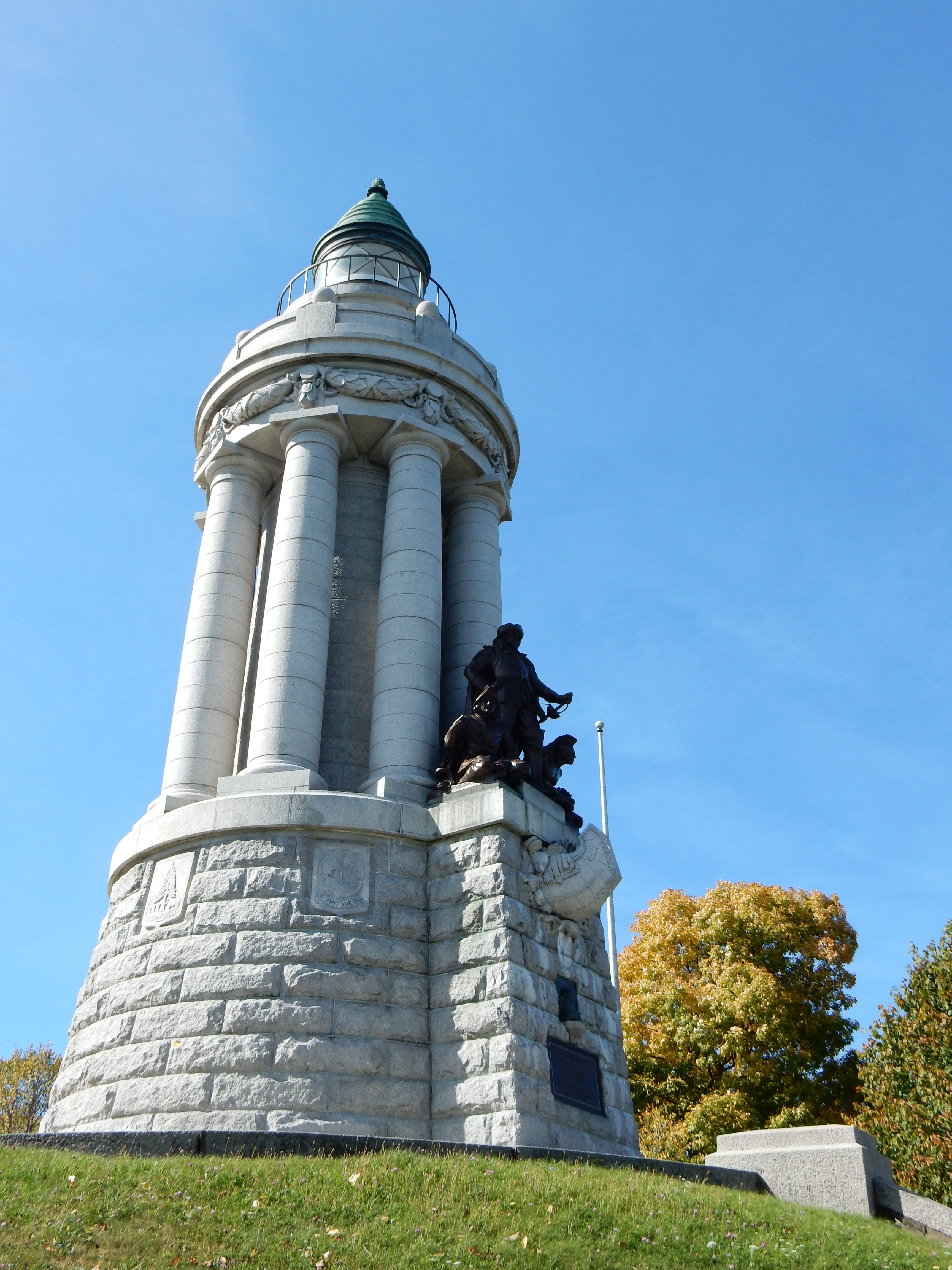
Chaplain Memorial Lighthouse, Crown Point NY

Champlain Memorial Lighthouse, Crown Point NY

There is obviously a lot more history to be recounted, but that is my summary. We toured the ruins of the two forts, the museum and the Champlain Memorial Lighthouse. The state historical park of Crown Point has been described as: “Crown Point Fort, in its ruined but unaltered state, is probably the finest existing architectural and archaeological type specimen in the United States of a superior example of 18th century military engineering.”

The lighthouse was built in 1759 and served for 70 years. The lighthouse has a statue of Champlain and a bust done by Auguste Rodin.

We had lunch in Vermont, crossing the Champlain Bridge to the Bridge Restaurant, a small family diner with home-cooked food. We passed on dessert because we noticed Fort Ticonderoga was only 15 miles away. Our original plans were to visit it when we were in Lake George next week. But the distance from Lake George to Fort Ticonderoga was one hour and it was a half hour from the Bridge Restaurant.

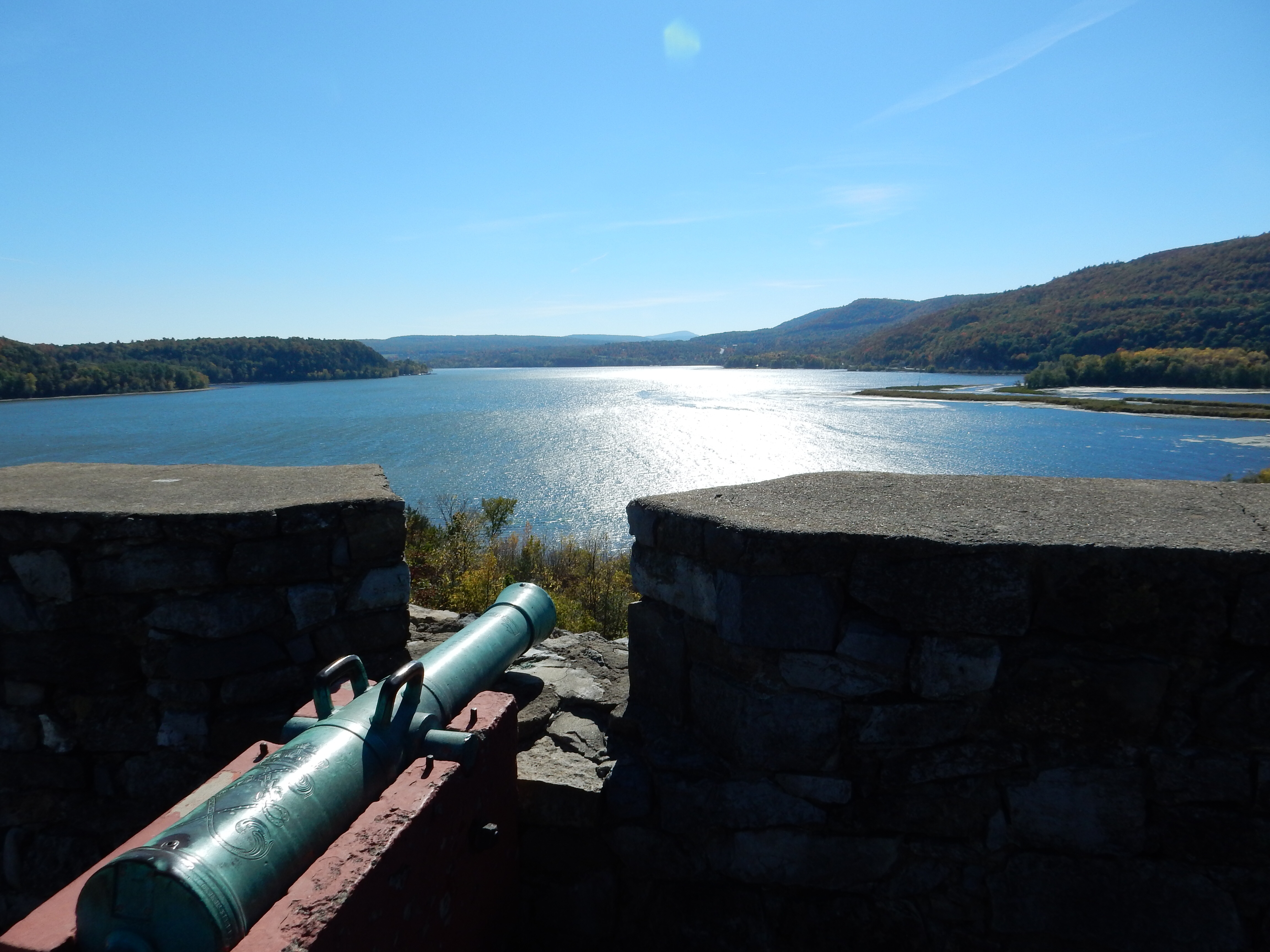
Looking south on Lake  Champlain from Fort Ticonderoga

Looking south on Lake Champlain from Fort Ticonderoga

Fort Ticonderoga was always associated in our minds with the battle to win its cannons for use in Boston. Today’s history lesson was that Ticonderoga was only one half of the cannons brought to Boston, Crown Point was the other half. Fort Ticonderoga could fit five times inside Crown Point and still have space left over.

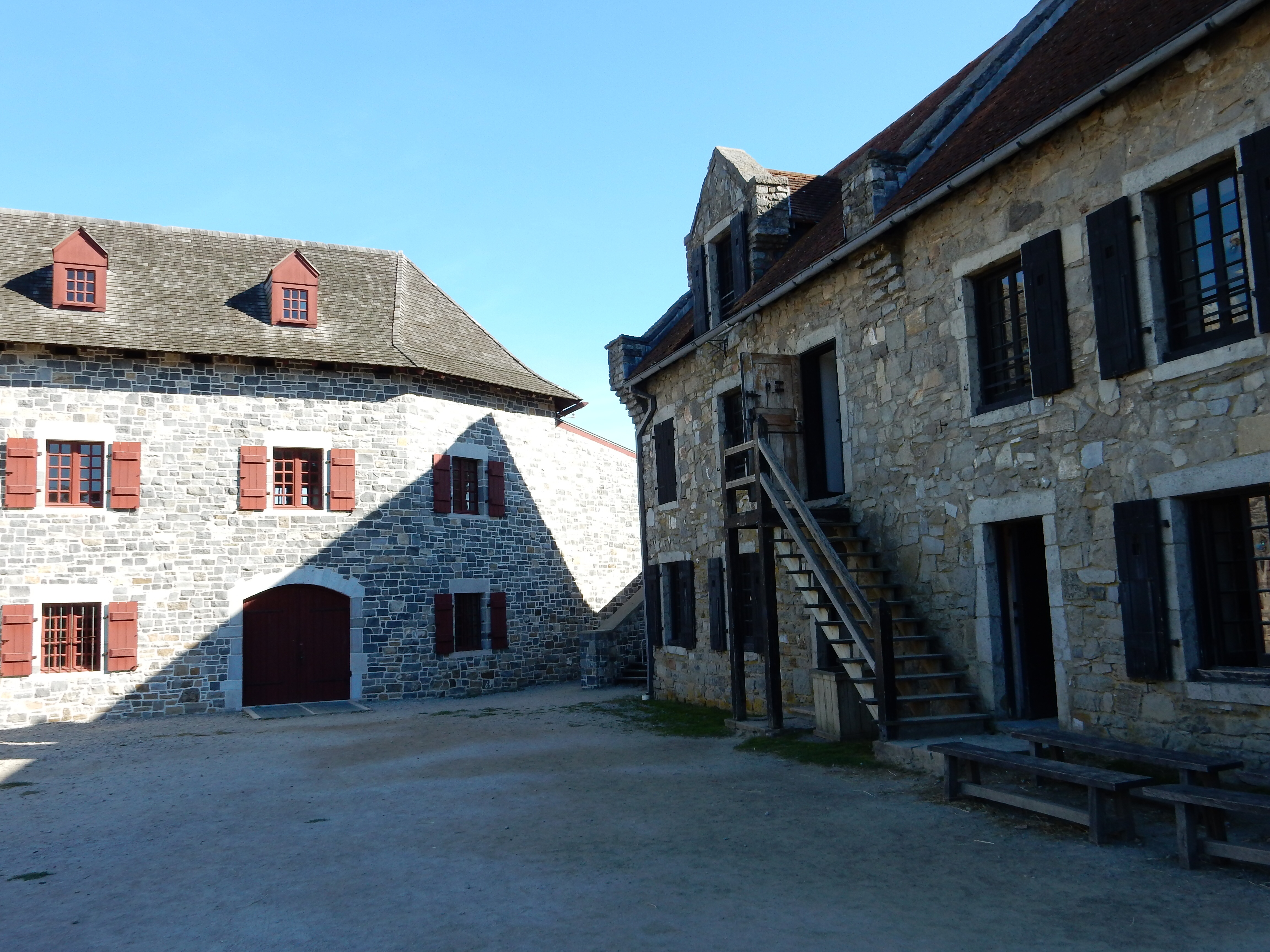
Reconstructed buildings at Fort Ticonderoga

Reconstructed buildings at Fort Ticonderoga

We spent several hours at Fort Ticonderoga. The Fort was destroyed by the British in 1777 prior to their abandoning the fort. Despite the hopes of some Americans, the focus of the war shifted to the south, Canada was not a major target, and this area was no longer of strategic value. After its destruction, it fell into ruin. Locals took most of the stone and brick to make their own buildings. It was stated that only 12% of the building today dates back to its original construction.

A wealthy family, the Pells, purchased the property in 1820, mainly for a summer residence. Over time, the descendants came up with the idea of making the fort a historical landmark. It opened as such in 1909; making their effort one of extreme foresight and generosity, since this pre-dated the U.S.income tax and tax deductions. It remains a tax-exempt educational institution today.

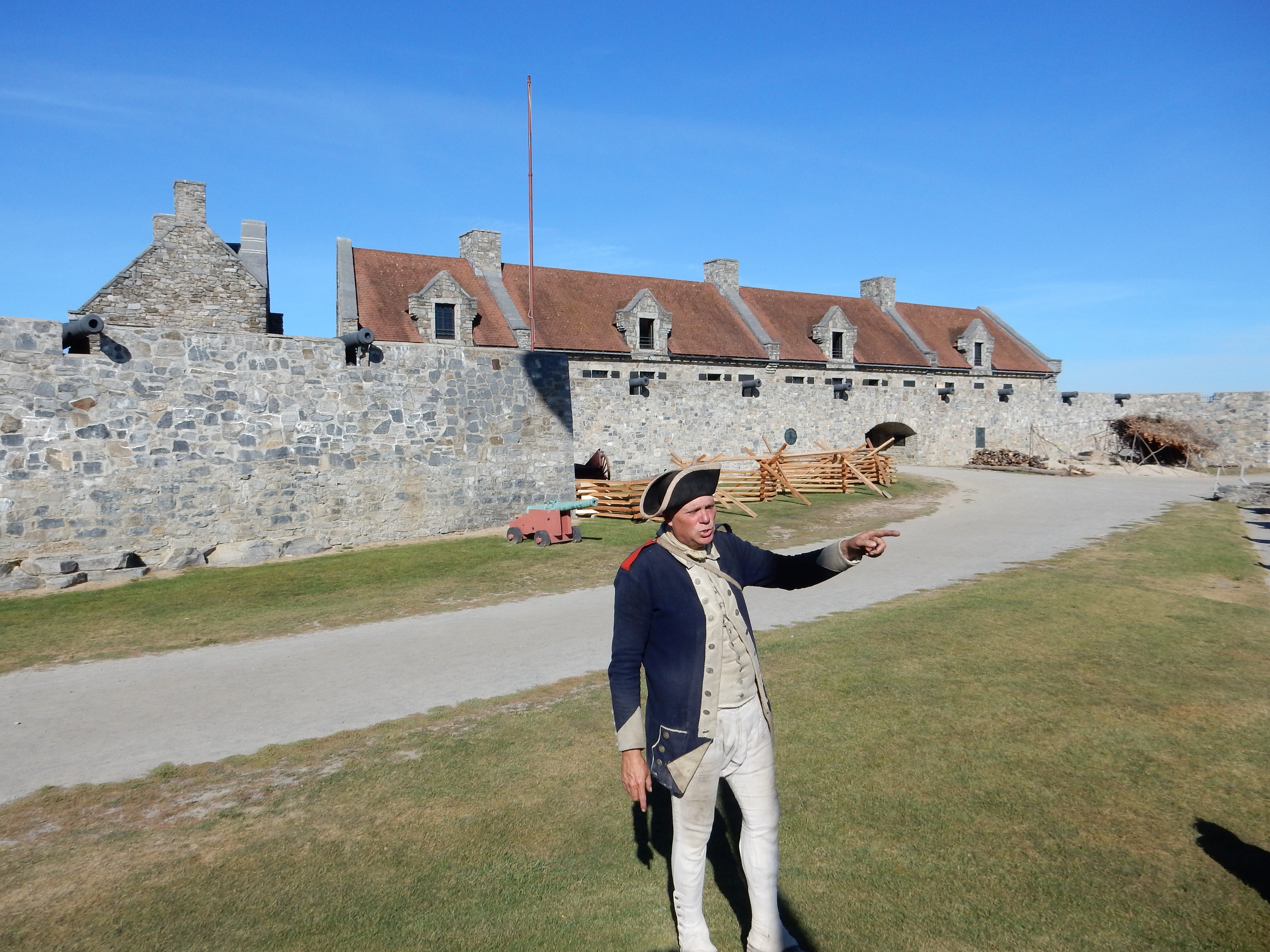
Our guide at Fort Ticondergoa

Our guide at Fort Ticondergoa

Besides our touring of the fort, we took an hour guided tour by a costumed guide. He gave a very interesting talk. I could go on about Benedict Arnold, the Green Mountain Boys, and other stories but will leave you with one tidbit. The guide told us that Fort Ticonderoga was the first fort built by the military architect. It should have been 200 yards closer to the water, the site selected did not give a clear view of any ships trying to sneak by. The architect also designed the barracks so they were higher than the walls, thus an easy target for the enemy.

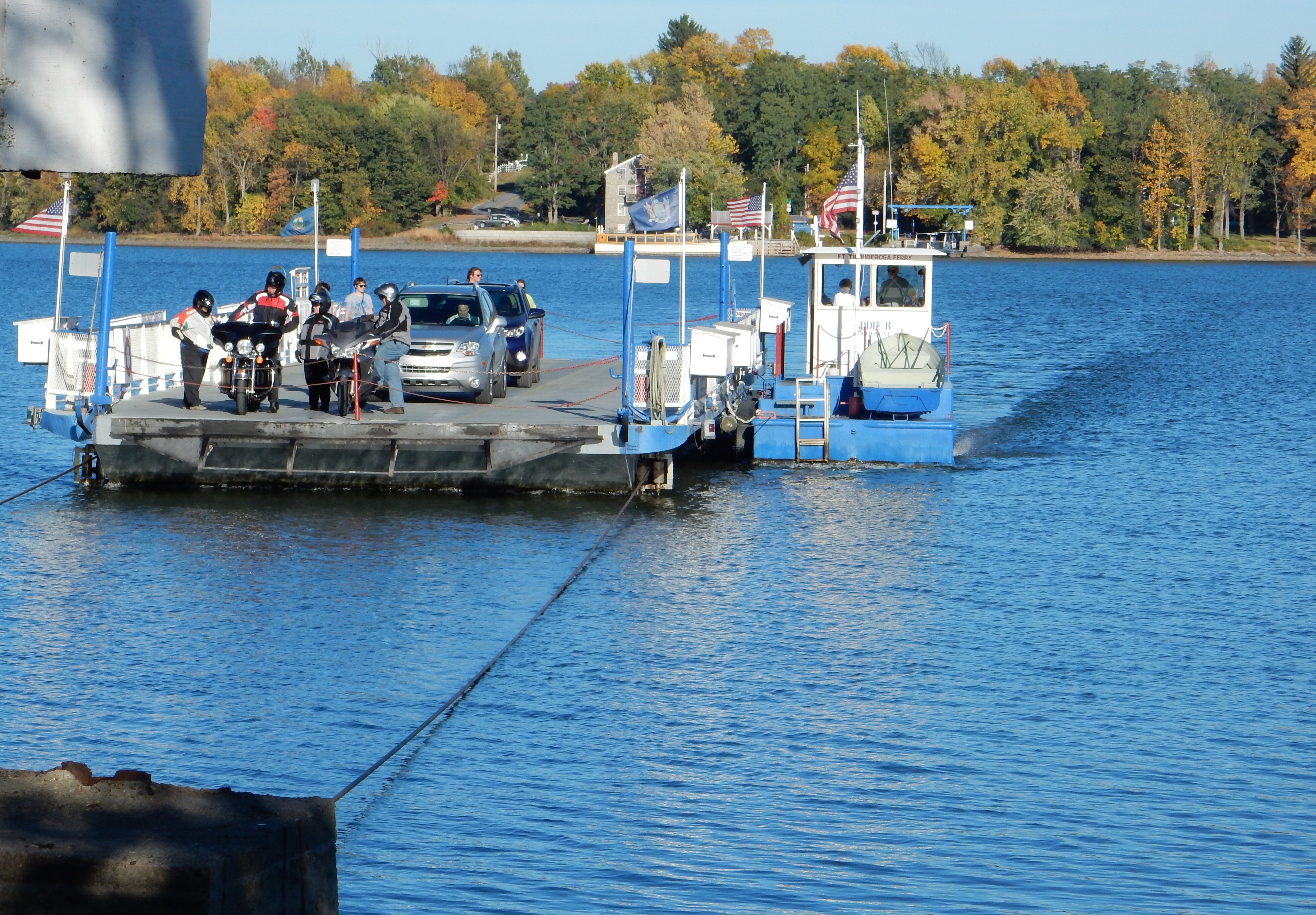
Fort Ti Cable  Ferry

Fort Ti Cable Ferry

To come back to Keene, we took a small car ferry over Lake Champlain to Vermont. The Fort Ti Cable Ferry has been operating since 1759-but today’s version does meet U.S. Coast Guard standards. We drove back to the Bridge Restaurant and had soup and dessert before completing our day back in Keene.

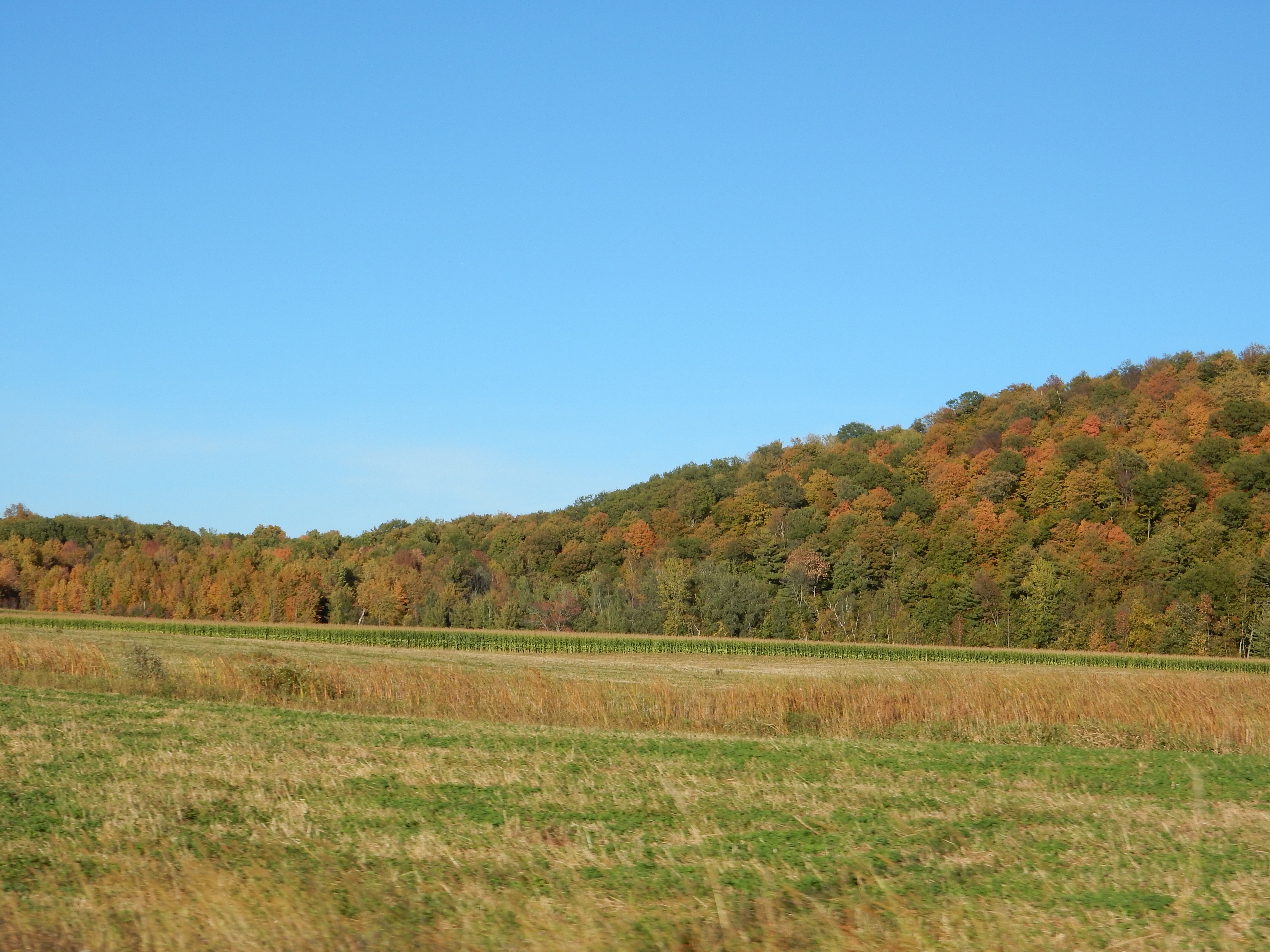
Vermont countryside

Vermont countryside

Ed and Chris 10/3 10 pm

Categories: road trip, travel | Tags: , , , | Leave a comment

2014 Trip Six, Oct. 2, Fall in Canada and Deb and Rebecca’s Wedding

Keene, New York, Thursday, Oct. 2

For all of the hiking we did today, the chocolate mousse for lunch dessert should have tasted better. Today was perfect. Sunny with a few clouds. Mild breezes. Temps in the 60s.

On top of Mt. Jo in the Adirondacks

On top of Mt. Jo in the Adirondacks

So our plan to climb Mt. Jo was a go. Mt. Jo is classified as a moderate hike. The peak is at 2876 feet, which is a 700 foot elevation gain. The round trip is 2.5 miles but the hiking up and down time took us about 2.5 hours. Once again, the trail reflects the Canadian Shield topography. Rocks, boulders, exposed tree roots, etc combine to make the hike an effort and watching one’s footing is critical.

Heart Lake at the bottom of Mt. Jo

Heart Lake at the bottom of Mt. Jo

The forest is a mixed hardwoods with coniferous and deciduous trees. The pine scent was not quite as noticeable today, maybe all of our senses were directed at our feet. Several times, we said, Are we on the right trail? Hasn’t it been a while since we saw a trail marker? Why does the trail go over all of these large boulders? Why when the summit is just a short ways does the trail disappear onto huge boulders without a clear means to ascend them?

This is a trail??

This is a trail??

There was a constant refrain of “Are you sure this is the trail? Yes, I am. How do you know? Because the leaves are more smooshed down than they are off to the side. What, we are basing the direction of our entire hike on smooshed leaves?? No response.”

From Mt. Jo; ALgonquin Mt and Heart Lake

From Mt. Jo; ALgonquin Mt and Heart Lake

Part of the trail to Mt. Jo

Part of the trail to Mt. Jo

But we persevered and succeeded. When we reached the summit, we were numbers five and six there. We spent about 30 minutes there resting and chatting with the other hikers who preceded and followed us. New arrivals kept coming and taking pictures for others was a popular past time. Chris had to work hard to get one family into focus with the parents, one young child held in the arms of a parent, and an infant riding in the back sling of the second parent. When a group of 20 school children (how in the world did they make it up here??) arrived for lunch and picture taking, a large number of the adults decided it was time to head down.

Most of the return hike was spent in the company of a couple from Houston. Going down was no piece of cake either. Footing on boulders and tree roots was a constant concern. I do not mind admitting that others passed us.

After that, a good lunch was definitely in order. We stopped at the Lake Placid Brewpub on the recommendation of a couple from the top of Mt. Jo. The meal was good. The chocolate mousse, chocolate for me and cookies and cream for Chris were not noteworthy enough to even finish them. This is the second time in a row that chocolate mousse has not been up to expectations. One in Montreal before we left was also not up to expectations.

The trail to Lake  Placid

The trail to Lake Placid

Lake Placid

Lake Placid

After lunch we found the Brewster Peninsula Nature Trails along Lake Placid. This area is sponsored by the Garden Club of Lake Placid and the Adirondack Ski Touring Council. Lake Placid does not allow motorized boats. The water is very clear and it turns out it is the source for the city’s water system. This trail was pretty level and not as rocky, although not as smooth as yesterday’s trail at the V.I.C run by Paul Smith’s College.

Our final hike was back by Mt. Jo around Heart Lake. The trail here was again rocky and rutted. We finished up the hike and since by now it was after 5 PM, we made a stop at a small store and picked up a few sandwiches for dinner.

A good day, tiring but rewarding. We can see that the leaves are starting to pass peak. It is likely to be rainy on Saturday, that may be the end of color here. We did meet a couple from Lake George NY, our destination for Monday-Wednesday night. They believed the leaf color there was likely to peak next week.

Ed and Chris 10/2 8:15 pm
Categories: road trip, travel | Tags: , , , | 1 Comment

2014 Trip Six, Oct. 1, Fall in Canada and Deb and Rebecca’s Wedding

Keene, NY Wednesday Oct. 1

Do you believe in miracles? Some of us do-and remember.

Lake Placid NY

Lake Placid NY

Today was going to be a hiking day but it started out cool, cloudy, and foggy. We thought we would go to Lake Placid first and then go for our hike. Lake Placid is only a 25 minute drive from our hotel. It is a small town, less than 3,000 people. But it has had a big impact on winter sports. The 1932 and 1980 Olympics were held here.

We toured the Olympic Center and then took a 1.5 hour tour with a guide who was on the planning committee for the 1980 Olympics and was the head of the Protocol Committee. The tour was fantastic. It is impossible to relate all of the stories and details he provided. We will try to relate a few highlights that you might find most interesting.

In 1980 the U.S. was in a funk. Iran hostage crisis, home mortgage rates around 15% or higher, the Soviets had invaded Afghanistan and we did nothing. The Winter Olympics were being held in Lake Placid in 1980 even though the US had egg on its Olympic face after Denver had won the rights for the 1976 Olympics and reneged on their pledge. The U.S. hockey team was facing the all-powerful Russian team that had won the last four Olympics and had defeated most of the NHL teams in exhibition matches. The U.S. was not expected to do well.

arena of 1980 Olympics hockey game

arena of 1980 Olympics hockey game

Well, as many of you know, the U.S. beat Russia and went on take the gold medal, beating Finland in the championship game. It is familiarly known as the Miracle on Ice. It is hard to over emphasize the impact this game had; on the future of the Winter Olympics, on hockey, on U.S. ego, and, as we heard today, on Russia.

Our tour guide has been doing these tours for 15 years. He has had 40-50 Russians on his tours who were alive at that time and who have uniformly told him that it was the beginning of the end of the Soviet empire in their minds. One young Russian woman told him that her parents made her promise to visit Lake Placid when they found out she was going to visit the U.S. for that same reason.

In 1980, Soviet propaganda consistently told its people that communism made them great, communism even made the hockey team great. It took two days before the official propaganda machine told the people that their invincible team had lost. It told them their team lost because the U.S. had bribed the officials. When the Soviet people found out the real details and realized how they had been lied to, it began people thinking. That was the story we heard.

Or we should say, one of the stories we heard. Our guide reminded us of Herb Brooks’ motivational messages to his team. In the Russian game, it was: “If you play the Soviets ten times, they will beat you nine times. But tonight, this is your time to win.” At the Finland championship game, after the second period when the U.S. was down 3-1, he said: “If you lose this game, you will take it to your F****** graves.” They won the Finland game 4-3.

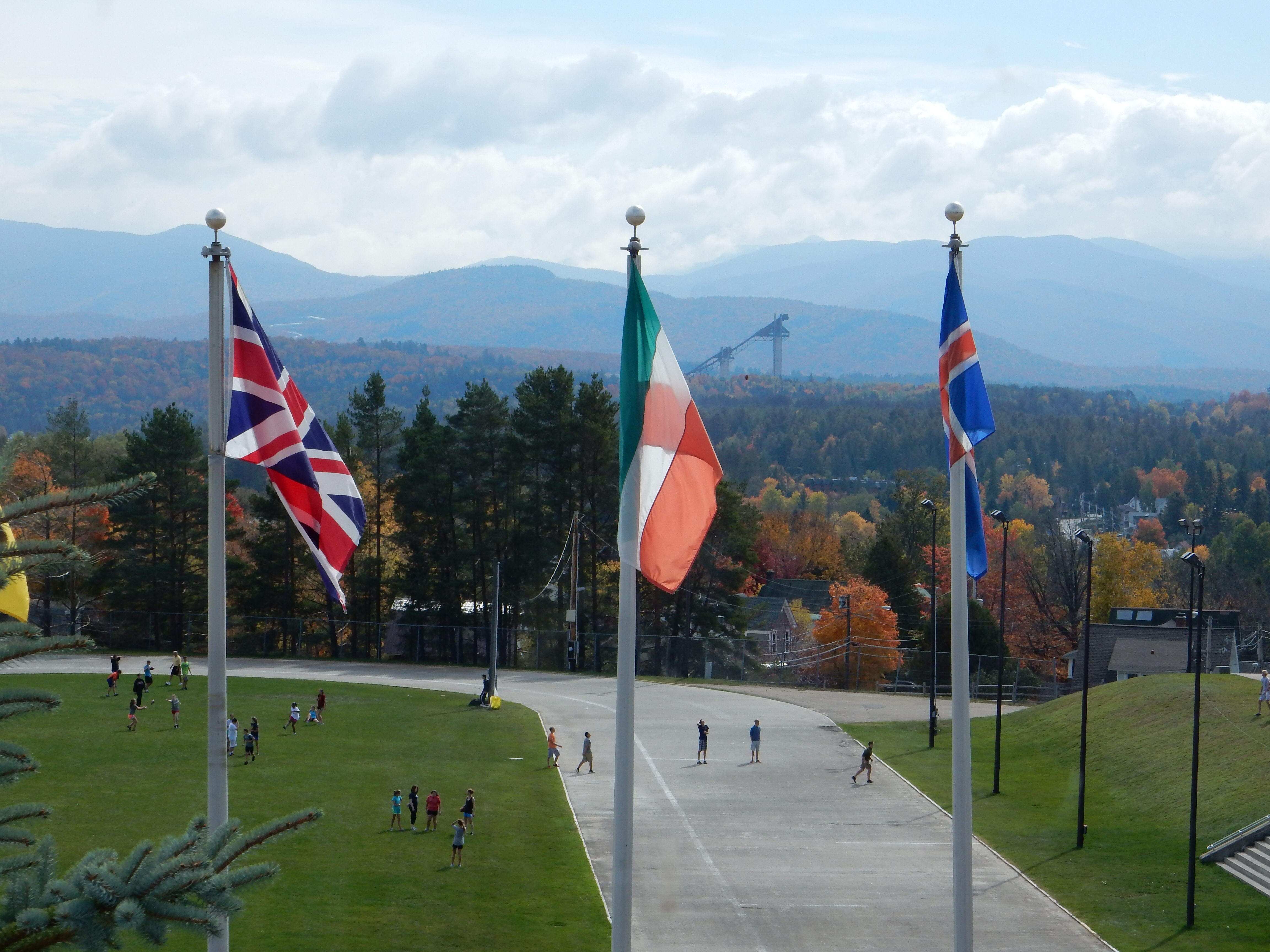
The concrete below was the site of the speed skating track in 1980, the ski jump is in the background

The concrete below was the site of the speed skating track in 1980, the ski jump is in the background

1980 was the year Eric Heiden won five individual gold medals. His sister Beth won a bronze. No one before or since has won five gold individual medals. He told us how classy a person Heiden was and it was unfortunate for him that the hockey game over-shadowed everything else. The silver and bronze medalists, not from the U.S., in the competition where Eric won his fifth gold medal, carried him from the stadium on their shoulders.

Lake Placid was probably the last of the small time Winter Olympics. The entire opening ceremony was 25 minutes long.The heads of the local committee were a minister, a dentist, a radio station manager, etc. They wanted this to be an Olympics for the athletes. They were offered an extra $250,000 (remember this was before huge TV sums for the games) to switch the time period for the U.S. and Russia game. They refused because it would upset the training plans of the teams. (The U.S. Russia game was shown in the U.S. on a three-hour tape delay, not live.)

U.S. Vice-President Walter Mondale made a last-minute change to watch the championship game on Sunday. Our guide told the local chairman who had planned to be at luge at that time to switch his plans and attend the hockey game. Despite his reluctance and his Republican affiliation, the local chair made the change and he and Fritz Mondale jumped for joy together when the U.S. won.

The local committee got NY State to construct a new penitentiary in the Lake Placid area. It was used to house the 1700 athletes for the Olympics and then modified to house prisoners. The speed skating rink was outside on the high school track with refrigerant pipes under the track, the high school was shut down for several weeks and became the media center.

Lake Placid has a winter sport culture. The first ever Winter Olympic gold medal was awarded to a speed skater from Lake Placid. There never has been a Winter Olympics without Lake Placid people. Vancouver had 14, Sochi had nine. The overwhelming percentage have been born in this area, although some do move here to train. For decades, the arena here was the home ice training facility for the figure skaters from the U.S. and Canada. Lake Placid is the only place that has erected a memorial to the figure skating team members that died in a plane crash in 1961. Three generations of one family have been Olympic contestants.

On our way around the Adirondacks

On our way around the Adirondacks

Well, there are more stories but you can come to Lake Placid and take the tour yourself. Time was moving on and a hike without a meal break did not seem wise. While looking for a restaurant, we ran into three gentlemen from Menasha, WI; one lived on Firelane 8. They were traveling with Nationwide Tours out of Appleton. We did not get their names, though. But by the time lunch was over, it also did not seem wise to start a mountain hike in mid to late afternoon. So we drove around the Adirondacks until we arrived at the Adirondacks Park Visitor Interpretive Center.

Along our hiking trail

Along our hiking trail

Hiking Trail

Hiking Trail

This used to be a state-run facility but with cutbacks, it is now run by Paul Smith’s College, a private four-year higher education institution with about 1,000 undergrads. It has a museum and a system of trails. We arrived there in time to learn that the school has a Wednesday evening buffet open to the public by reservation only; and then learnt that reservations had to be in by 2 PM. We missed the deadline. (So dinner was popcorn from a Lake Placid popcorn store; not as good as Candyland in St. Paul.)

Along the hiking trail

Along the hiking trail

Along the hiking trail

Along the hiking trail

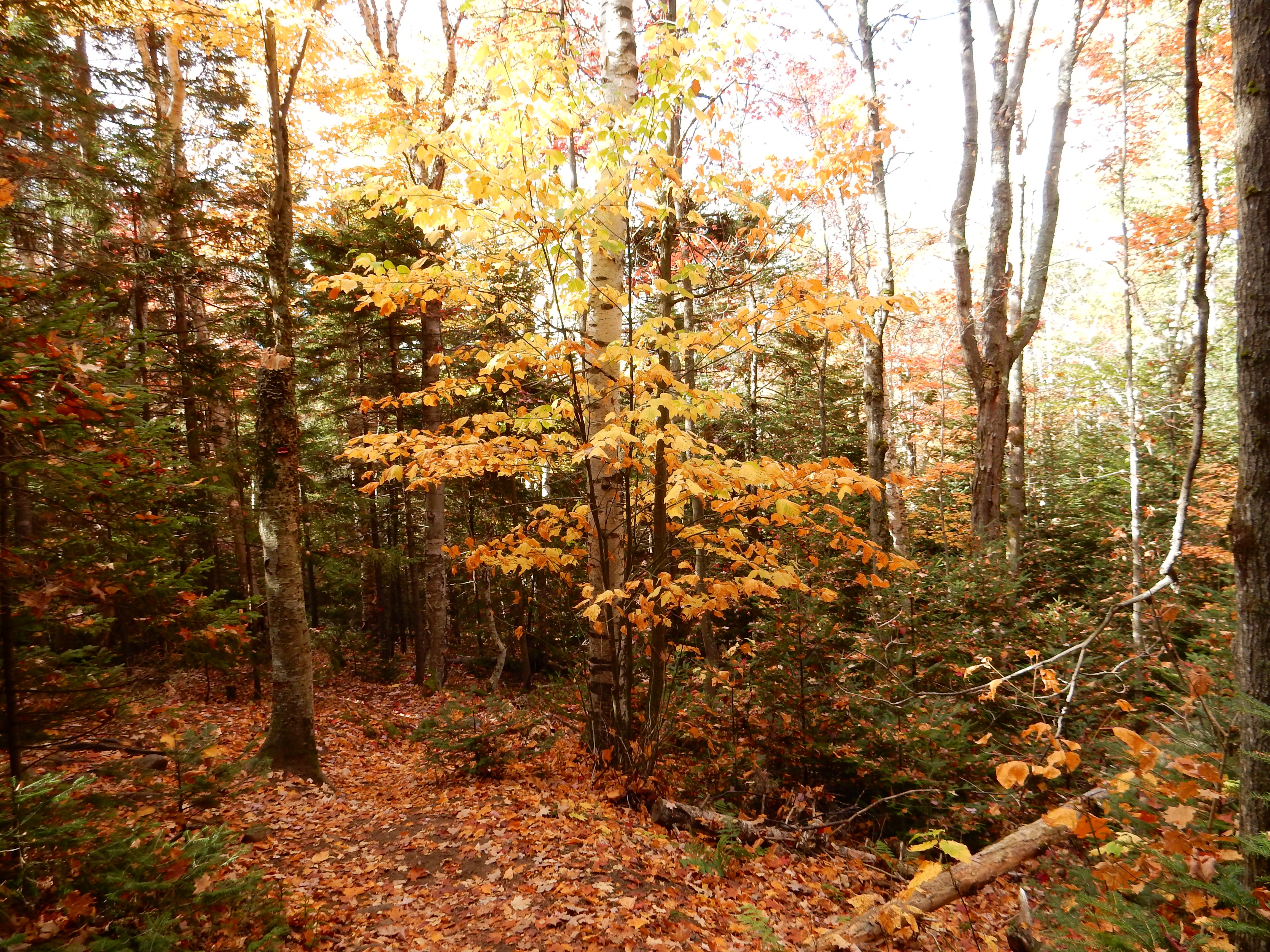
The trail system was smooth with a path lined with wood chips and plenty of identifying trail markers. This allowed us to enjoy the scenery and not be watching our feet all of the time. The colors were great and the scent of pine was frequently in the air. Locals tell us that this fall is the best in five years (yea) but that the peak was probably last Saturday (boo).

On the road heading back to our lodging

On the road heading back to our lodging

On the road

On the road

Our drive home took several interesting turns as we roamed the roads. We checked out Whiteface Mountain and first learned that the road to the top was closed due to road construction; then we learned that the road should be open on Saturdays and Sundays. So more about that on Saturday’s upcoming post.

Ed and Chris 10/1/14 10:45 pm

Categories: road trip, travel | Tags: , , | 2 Comments

2014 Trip Six, Sept. 30, Fall in Canada and Deb and Rebecca’s Wedding

Keene, NY, Tuesday Sept. 30

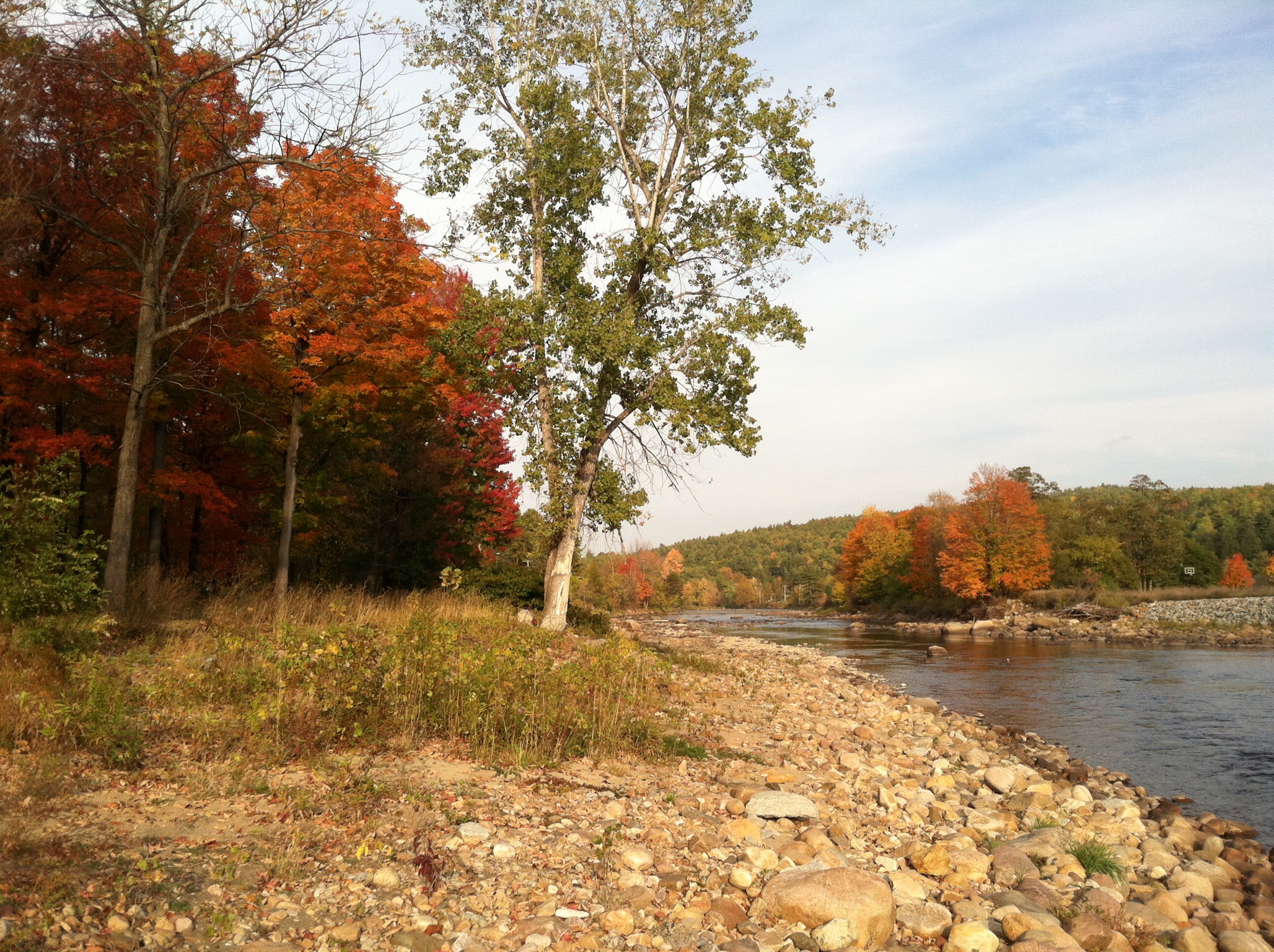
Road trip six of 2014 is about one-half over and we are back in the U.S. The next 9 nights we will be in the Adirondacks of New York State. During our five nights in Montreal, the fall colors in New York have also progressed.

Fall colors in New York

Fall colors in New York

We left Montreal and successfully dealt with detouring around a major ramp from one highway to the next critical highway that was closed to travelers in our direction. We successfully re-entered the U.S. without upsetting any border crossing guards. We successfully found a Best Buy to purchase a new camera since I dropped the camera as I was trying to put the strap around my wrist. It fell onto a granite sidewalk. It broke. This time I bought a service contract that covers drops and falls. Now I will never drop a camera again.

As mentioned in a previous post, the Adirondacks are an extension of the Canadian Shield. This is a unique area. It is not state or national park. It encompasses an area larger than Yosemite, Yellowstone and Glacier National Parks combined. But it is only 48 percent publicly owned, the rest is private. There is a regulatory body to control development. Adirondacks Park has a wide variety of topography but one notable fact is that it has 46 mountains over 4,000 feet in height. Over the next nine days we will drop in additional factoids.

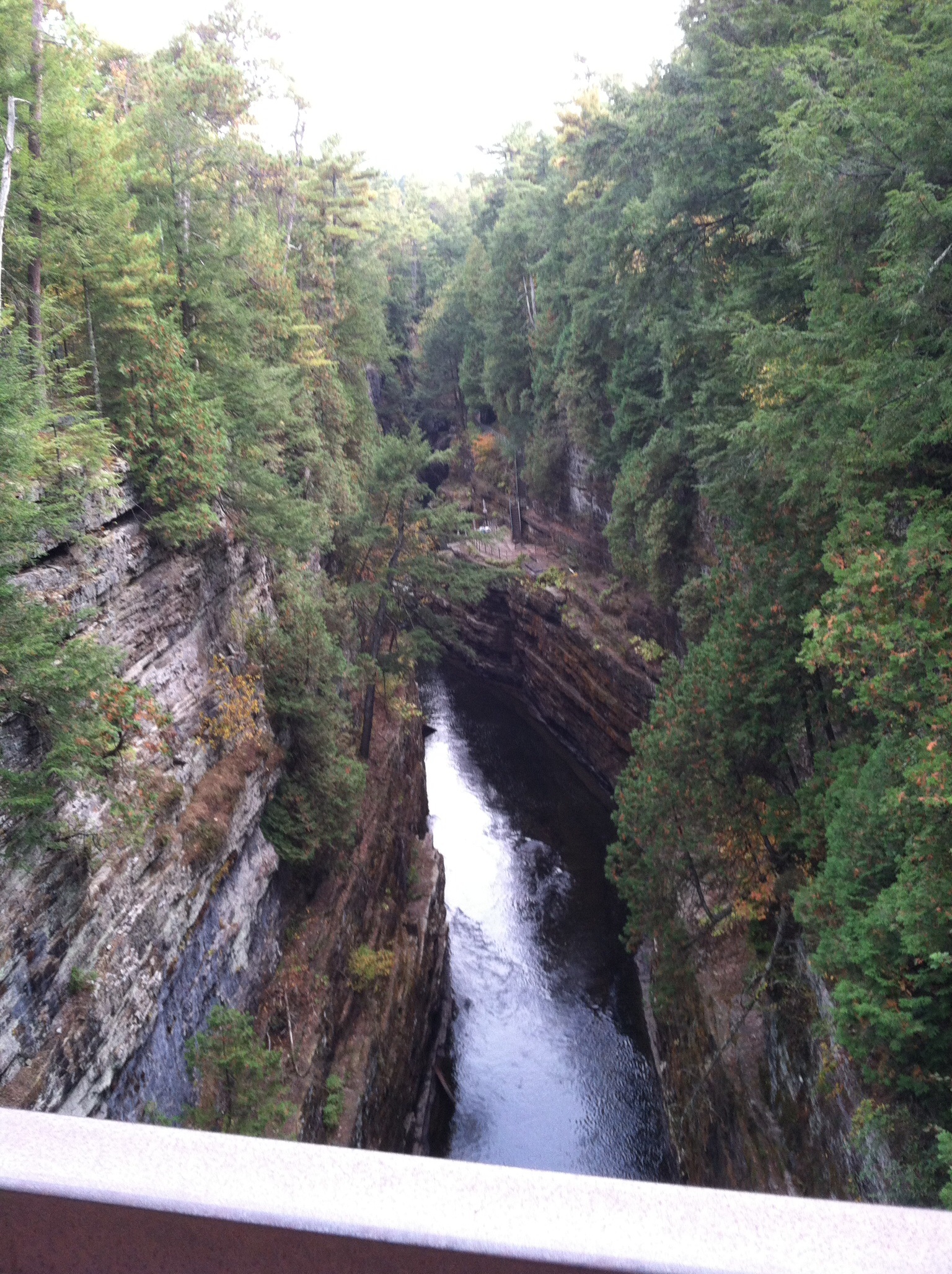
Ausable Chasm

Ausable Chasm

Plattsburgh NY was a stop before our night’s lodging. We ate here, gassed up the car,and re-filled a prescription at a local Walgreens. Our activity for this driving day was a visit to Ausable Chasm. The Ausable River flows from the Adirondacks to Lake Champlain. It is not a huge river but given the elevation drops from the mountains to the Lake, the river has carved a few gorges/chasms and created some waterfalls.

cairns along Ausable Chasm trail

cairns along Ausable Chasm trail

Ausable chasm

Ausable chasm

Ausable Chasm is one of those waterfalls and chasms. It is a privately owned tourist attraction dating back to 1870. It offers trails, scenic views, and a rafting trip through a short portion of the chasm. Our effort to take the raft trip was thwarted though. The falls here also provide hydro power and the power company turned off the tap a short while before we got there. So our trip was limited to hiking.

Ausable Chasm

Ausable Chasm

Ausable Chasm is also where I dropped the camera. This generated a return trip to Plattsburg. Tonight I will charge up the new camera.

We checked into our lodging, the ADK Trail Inn. Not much to comment on yet, it is of the Mom and Pop variety. The Auable River runs behind it and provides some scenic views for us. Dinner was at the ADK Cafe in Keene, down the road about 5 miles from our lodging. We heard their advertisements on Upper NY Public Radio when we were driving in Quebec Province. They are of the type that serves locally raised products, etc. Tonight’s meal was quite tasty.

Ed and Chris Sept. 30 10 pm

Categories: road trip, travel | Tags: , , , | 1 Comment

2014 Trip Six, Sept. 29, Fall in Canada and Deb and Rebecca’s Wedding

Montreal, Monday Sept. 29

The Montreal Underground was talked about as a marvel of shops, offices, and restaurants below ground level linking downtown buildings. Without having seen it, we envisioned something grand; some combination of Twin City skyways, Calgary Plus 15s, a San Antonio river walk only enclosed. Maybe we should have left our expectations behind and have just approached it without pre-conceptions.

Looking for underground entrance by convention center

Looking for underground entrance by convention center

There were areas of light, open shopping and restaurants. But they were more limited. We had difficulty finding the entrances. We had a map indicating where entrances were supposed to be. Even with that, signage (to us anyway) was difficult to find.

In the afternoon,we spent 15 minutes wandering around Montreal University’s Sherbrooke Hall where map indicated an entrance should be. Eventually we asked two service workers for assistance just to get out of the building and back onto the street. They directed us to a door we had not used, thinking it was only an emergency exit. Well, it did have French words that seemed to indicate that. Evidently, the alarms only rang at night and on weekends.

When we entered at the convention center first thing in the morning, another supposed entrance, we again needed to find a guide to inform us where it was. Here, the entrance led to a series of underground tunnels without shops, restaurants, or anything. The tunnels were wide and modern, but not many people. After several blocks of wrong turns and dead ends, we made our way to an area of shops, etc.

This, Place Villa Marie, was under a series of modern high-rises and was an obvious shopping area. It even had a Dunkin Donuts where we re-grouped. We decided to head outside and enjoy city architecture. This was the newer downtown, instead of Old Montreal of tourists, with offices, churches, plazas, etc. We wandered for quite a while, making our way up to McGill University and its Redpath Museum.

Redpath Museum

Redpath Museum

McGill is well-respected and large. Redpath Museum goes back to the early days of the institution when an wealthy trustee had the museum built as an inducement to keep the then President John Dawson from accepting an offer from Princeton. Evidently Dawson had a passion for science and was a collector of some renown at that time. Building the museum for Dawson’s collection was sufficient to keep him here. The museum is noted for a large collection of items but for a visitor it was less than exciting. But as a destination, it got us out walking for several hours to reach it and get back.

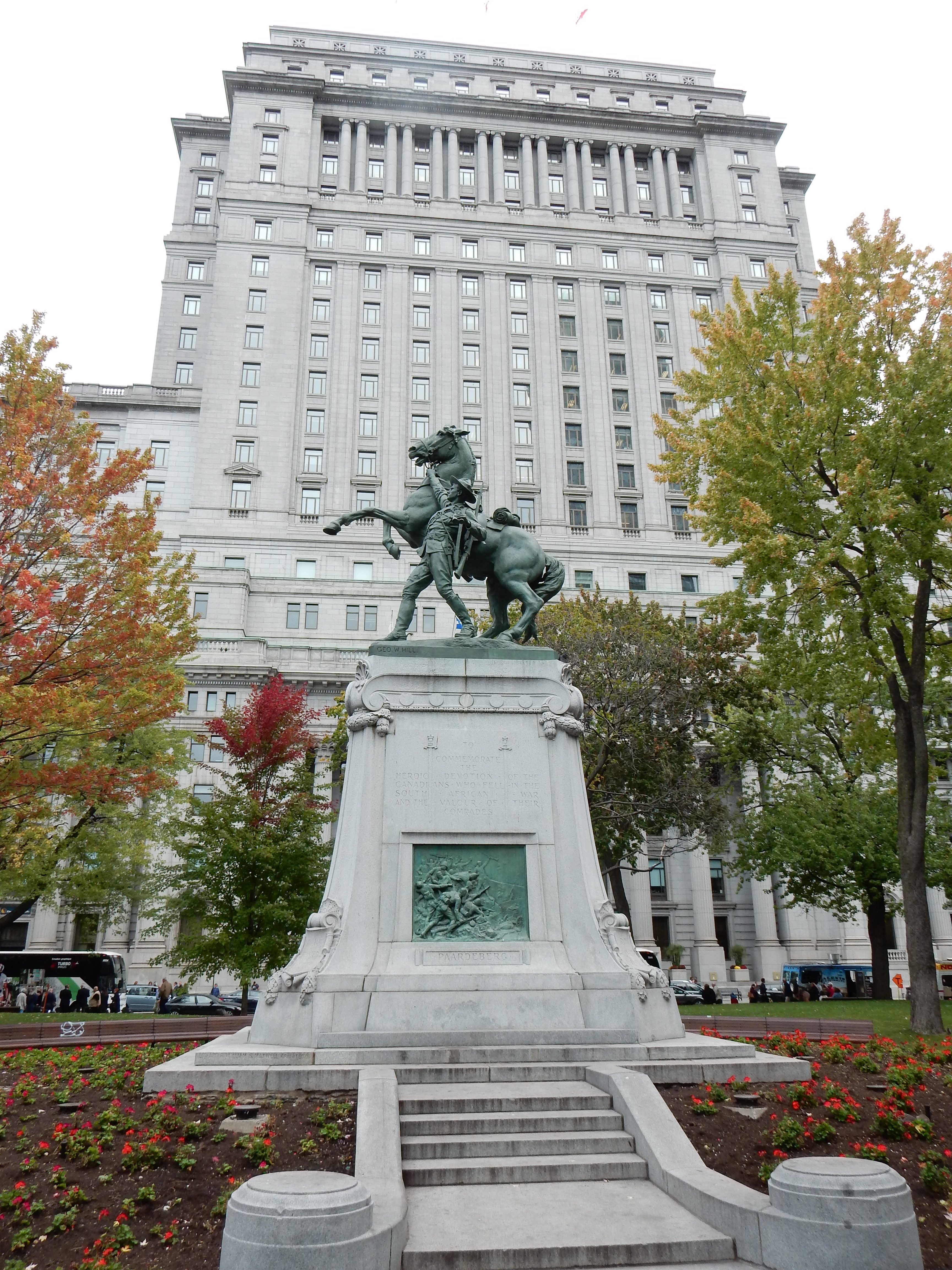
Sun Life Building in Montreal which in  WWII housed

Sun Life Building in Montreal which in WWII secretly housed Britain’s negotiable securities which were sold over time in NYC to pay for the war

Returning was going to be via the Underground and that Sherbrooke Hall entrance mentioned above. After that abortive effort, we went back outside and eventually found Complexe Desjardins, another complex of high-rise offices with a lower level of shops and restaurants. From here, we had better luck returning to the Convention Center which was only a few blocks away, again by underground tunnels without shops, etc.

So, our day was spent, kind of, doing as we expected, exploring the Montreal Underground. My advice to future visitors, forget it unless it is freezing outside. And check out maps in advance; unlike the Twin Cities skyways, the Underground leaves large swaths of the downtown area unconnected.

Mont  Royal cross

Mont Royal cross

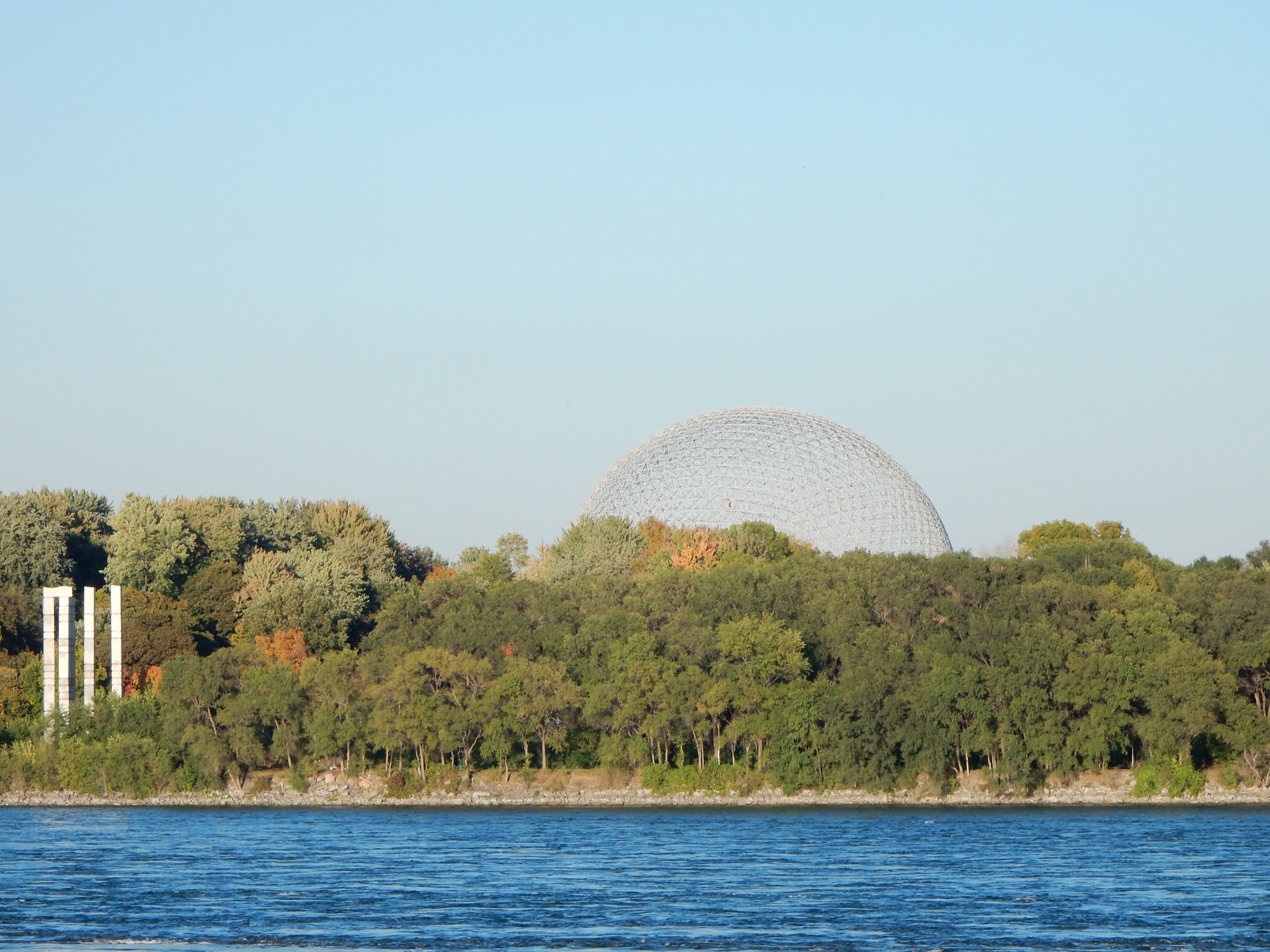
Biosphere

Biosphere

So ends our Montreal portion of the trip. We leave you with two photos of Montreal icons that we saw from a distance, without personally viewing it. The Biosphere is a dome left over from the 1967 Expo with environmental displays. The cross is 100 feet tall and is on top of Mont Royal, looking down on Montreal and McGill University.

Ed and Chris 9/29 10 pm

Categories: road trip, travel | Tags: , , | 1 Comment

2014 Trip Six, Sept. 28, Fall in Canada and Deb and Rebecca’s Wedding

Montreal, Sunday Sept. 28

This is Sunday. It must be time to visit another large church. In case you have not gathered, the French-Canadian history of the province includes a strong dose of Catholicism. It seems that every other town and every third street is named after some saint. And around every corner is another church, famous for some feature.

St. Joseph Oratory

St. Joseph Oratory

Today’s spectacle was St. Joseph Oratory. (An oratory is usually considered similar to a chapel and set aside by ecclesiastical authority for prayer and Mass, frequently for a private or semi-private use. We had to look it up.) St. Joseph Oratory, however, is huge, but not beautiful. Its dome is the second or third largest in the world for Catholic churches, surpassing St. Paul’s in London, Notre-Dame in Paris, St. Patrick’s in NYC, and Sainte-Anne de Beaupre up by Quebec. St. Peter’s in Rome is larger and possibly one in the Ivory Coast.

Inside of St  Joseph  Oratory

Inside of St Joseph Oratory

We went to 11:15 Mass in the crypt (basement) church which only holds about 750-900 people depending on how many you squeeze into the pew. It was in English, one of the few such available to us although the accent made listening a challenge. The main basilica seats 2,200 and supposedly can hold another 10,000 people standing. That last fact seems questionable to me, maybe it includes the outside terrace. The interior seems plain to me, although the sculptures and stained glass are praised.

The Oratory was built due to Brother Andre (now a saint) who joined the Congregation of Holy Cross in 1870 and became famed for extraordinary cures attributed to him. In 1904 a little chapel was built. Construction of the current building began in 1924 and completed in 1955.

Some of the crutches

Some of the crutches

In the votive chapel area of the Oratory are walls with crutches from grateful pilgrims who attribute their cure to him. These are just the ones up to the year 1937 when he died. The temperature in the votive chapel is markedly warmer than the area around it due to the number of candles burning. We did not notice any air-conditioning; not sure how warm the votive chapel gets in summer. This chapel can hold 10,000 votive candles. Not all are burning but we observed a constant stream of people lighting candles.

Pilgrim climbing the stairs

Pilgrim climbing the stairs

We observed a number of pilgrims climbing the 283 stairs on their knees. A center portion of the stairs are reserved for pilgrims. This keeps the pilgrims safe from the 2,000,000 visitors the Oratory receives each year.

Some of the creches on display

Some of the creches on display

At the museum, a display of creches from around the world lined the walls. The diversity and creativity was remarkable; many were made of simple materials indigenous to a region. The display was not heavy with fancy/expensive creches.

Some other interesting facts. The carillon have 56 bells originally made for the Eiffel Tower. Technical difficulties prevented that and generous pilgrims bought the bells and had them installed here. The organ has 5811 pipes. The oratory is named after St. Joseph, the patron saint of Canada.

View from Mont Royal

View from Mont Royal

After our visit, we went to Mont Royal. This park is situated on high ground just east of St. Joseph Oratory. Mont Royal was designed by Frederick Law Olmstead who is well-known for planning NYC’s Central Park. We stopped at one overlook to view Montreal but, frankly, we had walked enough yesterday and seen enough heights and were not impressed by any descriptions of the park to spend further time here. I know,it is ranked highly in travel guides but one needs to set your own priorities.

We turned our car back into the garage, happy to get off the roads and to stop commenting on bicyclists bad habits. But, we did comment to each other the near absolute absence of car horn honking. Given the traffic, the pedestrians, and the bicyclists, there was a wealth of opportunity to sound one’s car horn. But it did not happen. We do not know if it is illegal (for instance,red turns on red are illegal in Montreal) but found nothing to support this theory. Maybe it is just cultural.

Chris' poutine dinner

Chris’ poutine dinner

A late lunch was at a local dive serving poutine and smoked meat sandwiches. Both are local traditional foods and both are over-rated. Poutine is now available in the Twin Cities but we had not tried it before. It is french fries with gravy and cheese curds; Chris added pulled pork to hers. I had the smoked meat sandwich with fries and cole slaw. Smoked meat is basically pastrami. We can say we tried it and can put the memory behind us. This one at least was inside an open-air courtyard between two buildings. Many of the cafes stick a couple of tables on a wood frame floor constructed for this purpose and using 3/4 of the sidewalk. People get squeezed into the remaining 2 feet of sidewalk.

Ed and Chris 9/28 7 pm

Categories: road trip, travel | Tags: , , , , , , | Leave a comment

2014 Trip Six, Sept. 27, Fall in Canada and Deb and Rebecca’s Wedding

Montreal Saturday Sept.27

I wonder how many gazillion photos and videos are taken each day? We certainly took more than our share today. Another gorgeous day, sunny, slight wind, and temps ranging from 60-80. We were up and out to spend the day at the Olympic Park/Biodome/Olympic Tower/Botanical Garden all right next to each other.

The Olympic  Tower

The Olympic Tower

The 1976 Summer Olympics were held in Montreal, and as usual for such events, bunches of money were spent to spruce up the town and build new arenas, etc. Olympic Park was the host area for most of the games. The Tower was built as part of the stadium, the velodrome was converted to today’s Biodome, and other facilities were constructed in this Olympic Park area. When we visited today, construction maintenance was visible in many areas. I will not go into details about the stadium; it has had numerous construction issues and its major tenant, Major League Baseball Expos departed at the end of 2004 for Washington D.C.

View from  Tower towards downtown Montreal

View from Tower towards downtown Montreal

Our first stop was the Olympic Tower. We arrived in the parking lot at 9:07 A.M. and were the first car parked in this cavernous, underground parking garage. The Olympic Tower is the tallest inclined structure in the world-this claim is Guinness World Record certified. It is at a 45 degree angle! The Leaning Tower of Pisa is only 5 degrees. It is 540 feet high. The glass enclosed funicular that takes you to the top can hold 76 people. We were the only two in our ride up.

Olympic Tower and the funicular  that brings you to the top

Olympic Tower and the funicular that brings you to the top

Picture taking was great. The glass on the enclosed cabin was clean, although the glass at the observatory level 540 feet was pretty buggy. The windows do swing open and window cleaners attach a safety harness when they lean out to clean the glass. (I asked, not that we observed them doing it.) Smog in the area was quite visible over the downtown but still you could see in all directions.

Biodome: Macaw from tropical rainforest area

Biodome: Macaw from tropical rainforest area

Of course this is not cheap. Montreal must not subsidize its civic attractions. The cost to visit the Tower, the Biodome and the Botanical Garden was $50 for one person plus $15 for parking. We made sure to make a full day of activities here.

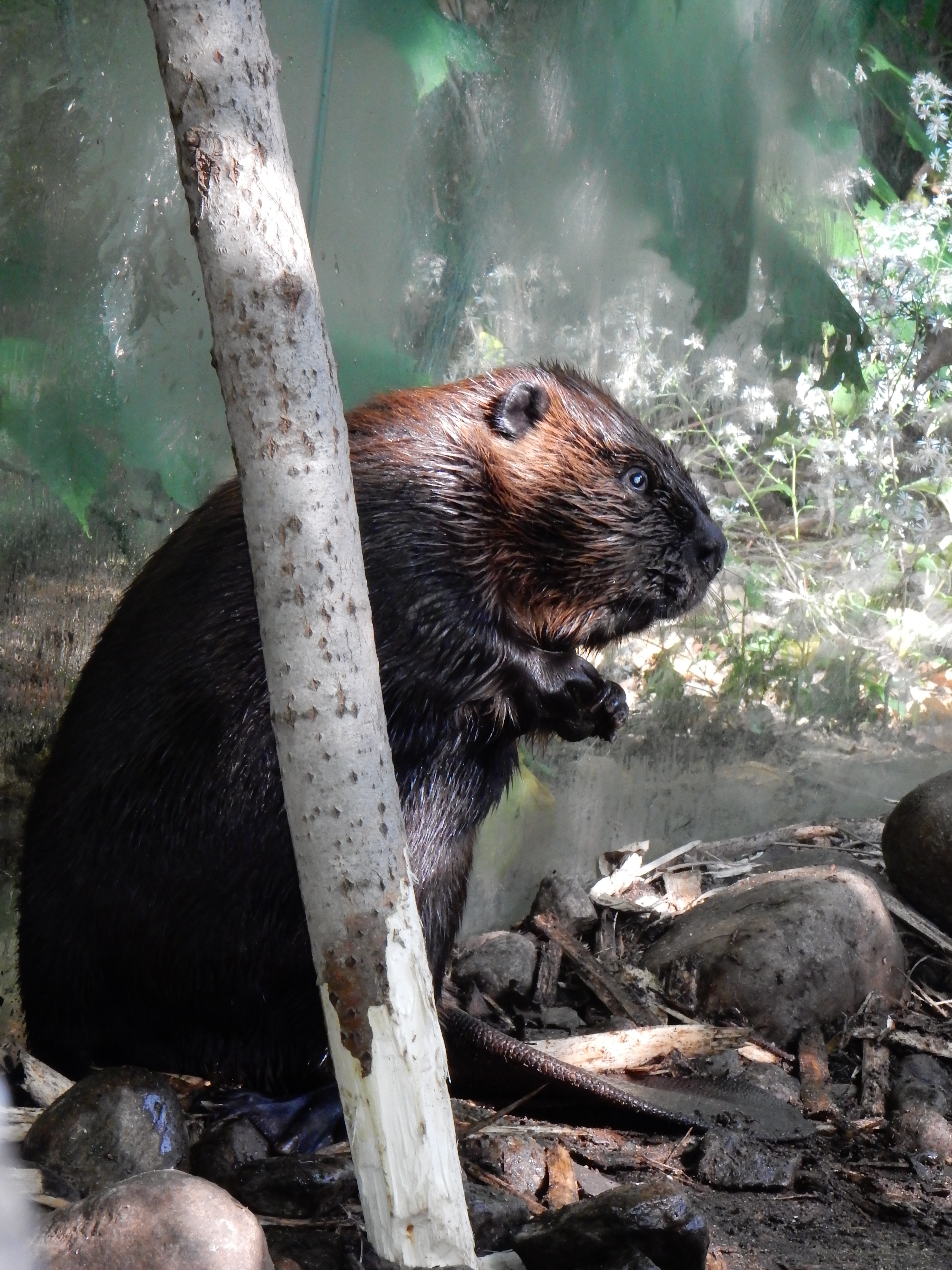
Biodome: Beaver posing for visitors

Biodome: Beaver posing for visitors

The Biodome could be summarized as an indoor conservatory and zoo. It has separate regions such as tropical rainforest, Canadian forest, sub-polar regions and a display about earth’s formation and fossils. As we walked along the pathway, we also watched the numerous families enjoying a day’s outing.

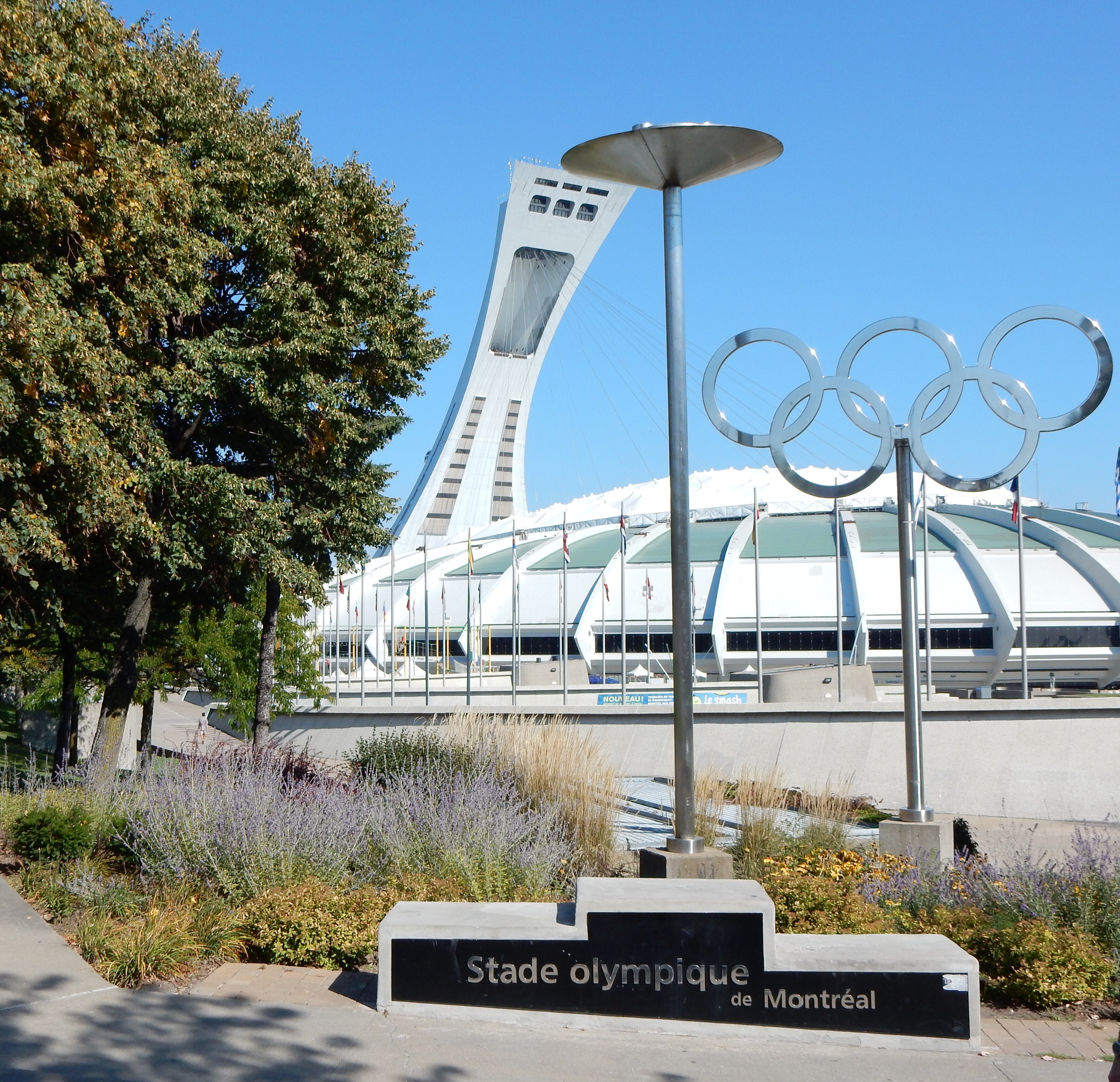
Olympic Tower, Stadium, RIngs, medals stand

Olympic Tower, Stadium, Rings, medals stand

Back outside, we wandered around Olympic Park. Olympic Park now consists of the Tower, Biodome, the stadium, planetarium, ice arena, outdoor stadium, tennis courts, sports clinics and outdoor entertainment areas, etc. We walked over to the corner where the Olympic Rings and logo were now located.

For lunch, we went exploring down the major street that brought us to Olympic Park. On our drive here we had not been focusing on restaurants, simply destination. We picked a direction and luckily came across a local restaurant within two blocks of Olympic Park. It was a nice combination of fast food burgers (Ed) and sit down breakfast service (Chris). I took one of the basic options listed on the display board and managed to order and pay without confusion. The place was crowded, one set of four guys who were in loading up on lunch were from a team working on setting up logistics for Sunday’s Montreal Marathon. We had just heard about it and will need to adjust our Sunday activities to not get caught in street closings.

Botanical Gardens

Botanical Gardens

Botanical Gardens

Botanical Gardens

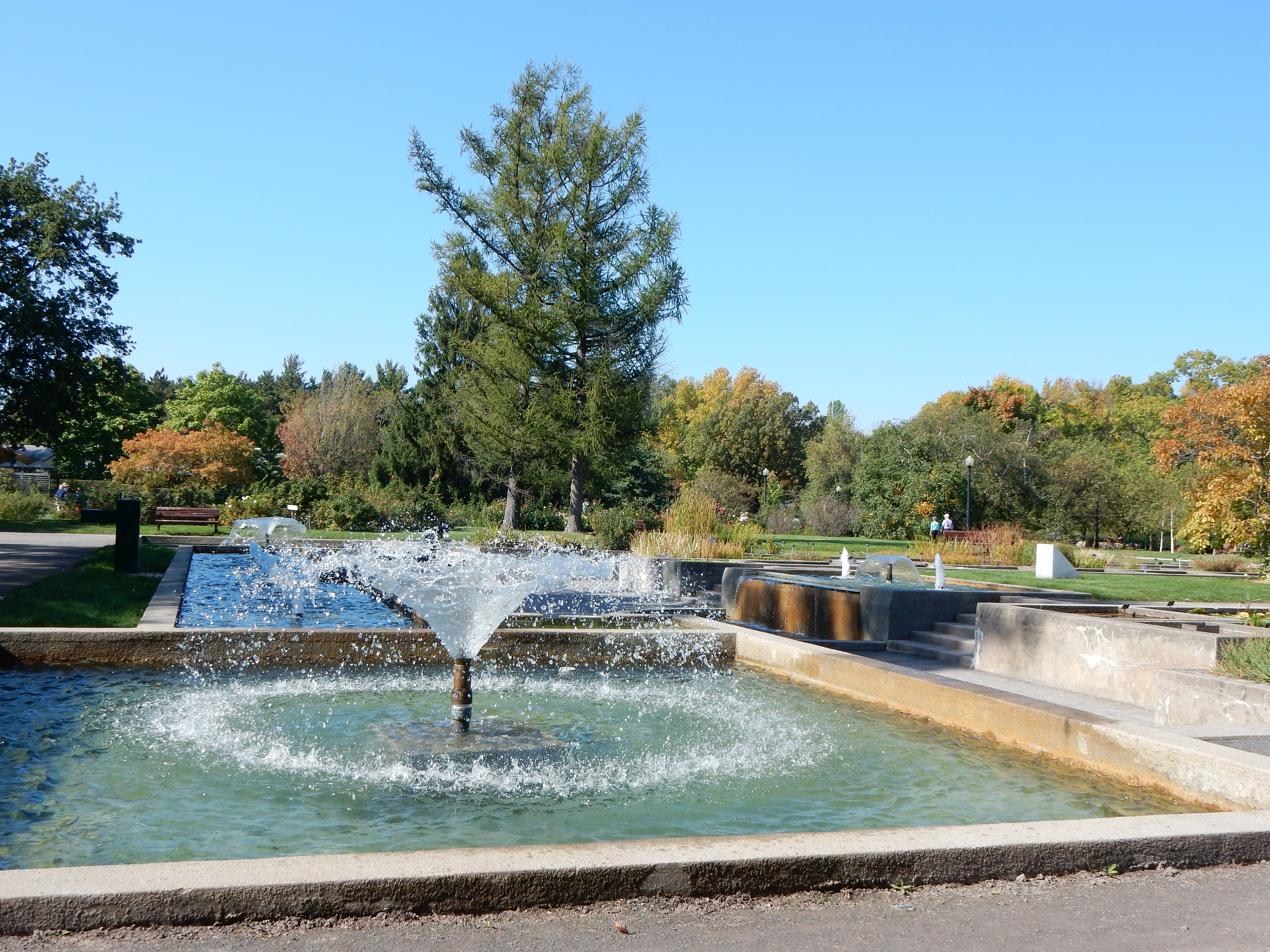
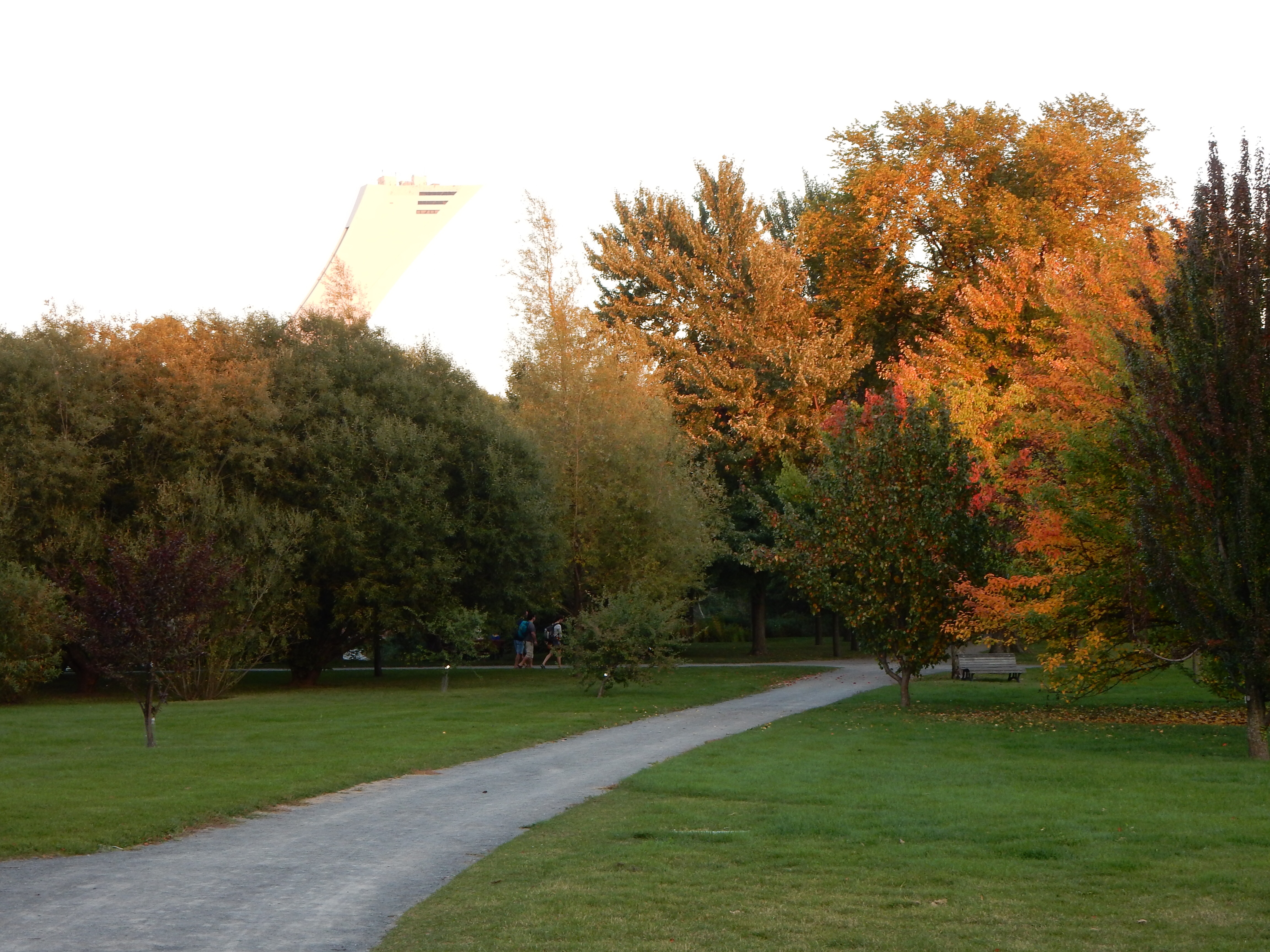
The Montreal Botanical Garden is across the street from Olympic Park. The largest area of display is more like an arboretum with walking paths through various species of trees and shrubs. Indoors, they have displays of bonsai, tropical plants, desert plants, etc. The University of Montreal has a section devoted to biodiversity.

Botanical Gardens

Botanical Gardens

Montreal Botanical Gardens

Montreal Botanical Gardens

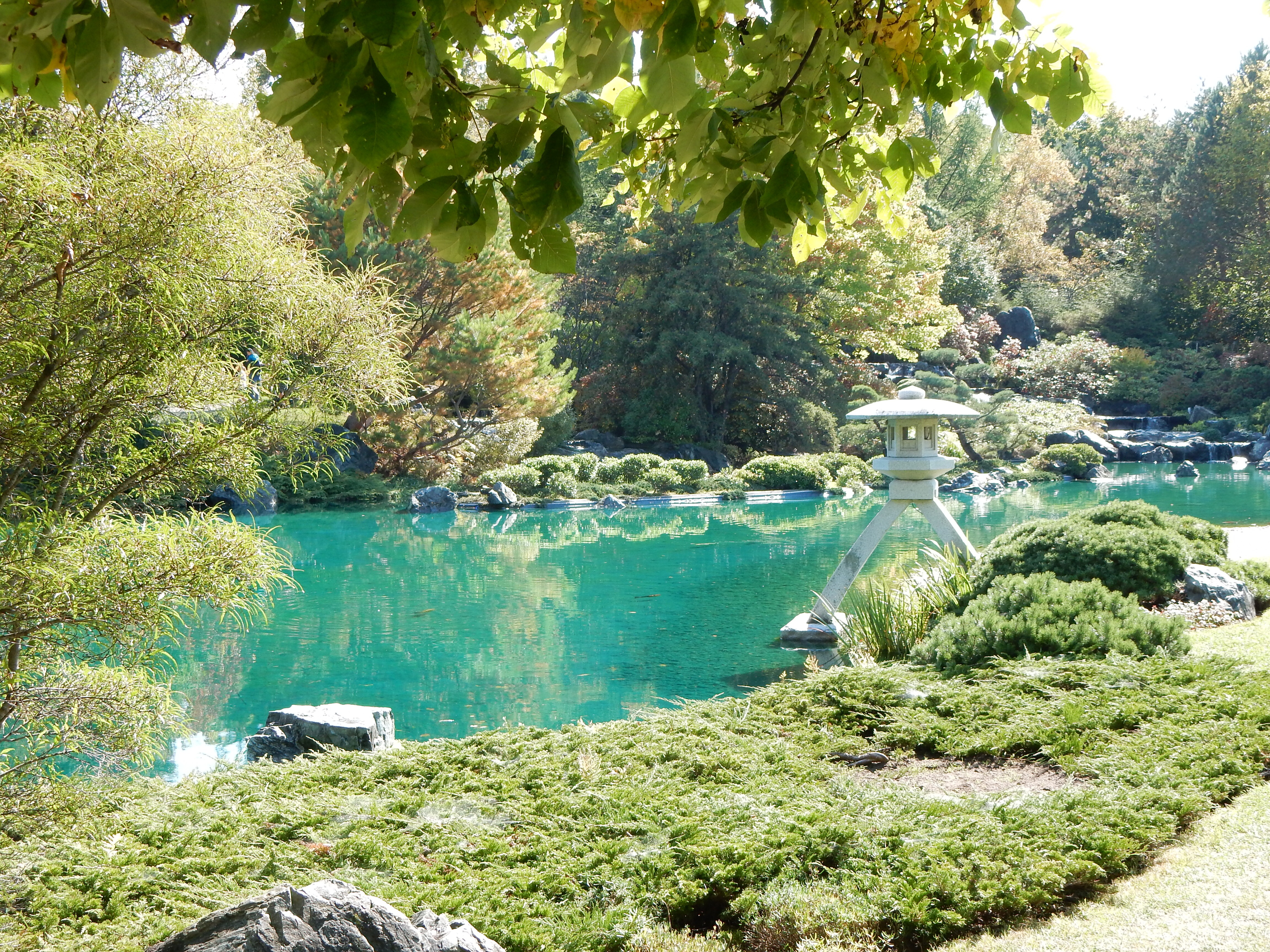
Back outside, the Gardens have a Japanese Garden, Chinese Garden, and First Nations Garden. Special display gardens included sections on toxic plants, medicinal plants, perennials, useful plants, shrubs, lilacs, etc. We spent several hours wandering around the gardens and under the tree-shaded canopy, periodically relaxing in the chairs and benches scattered throughout. Other people had the same idea, we came across individuals just sitting and reading in their favorite chair.

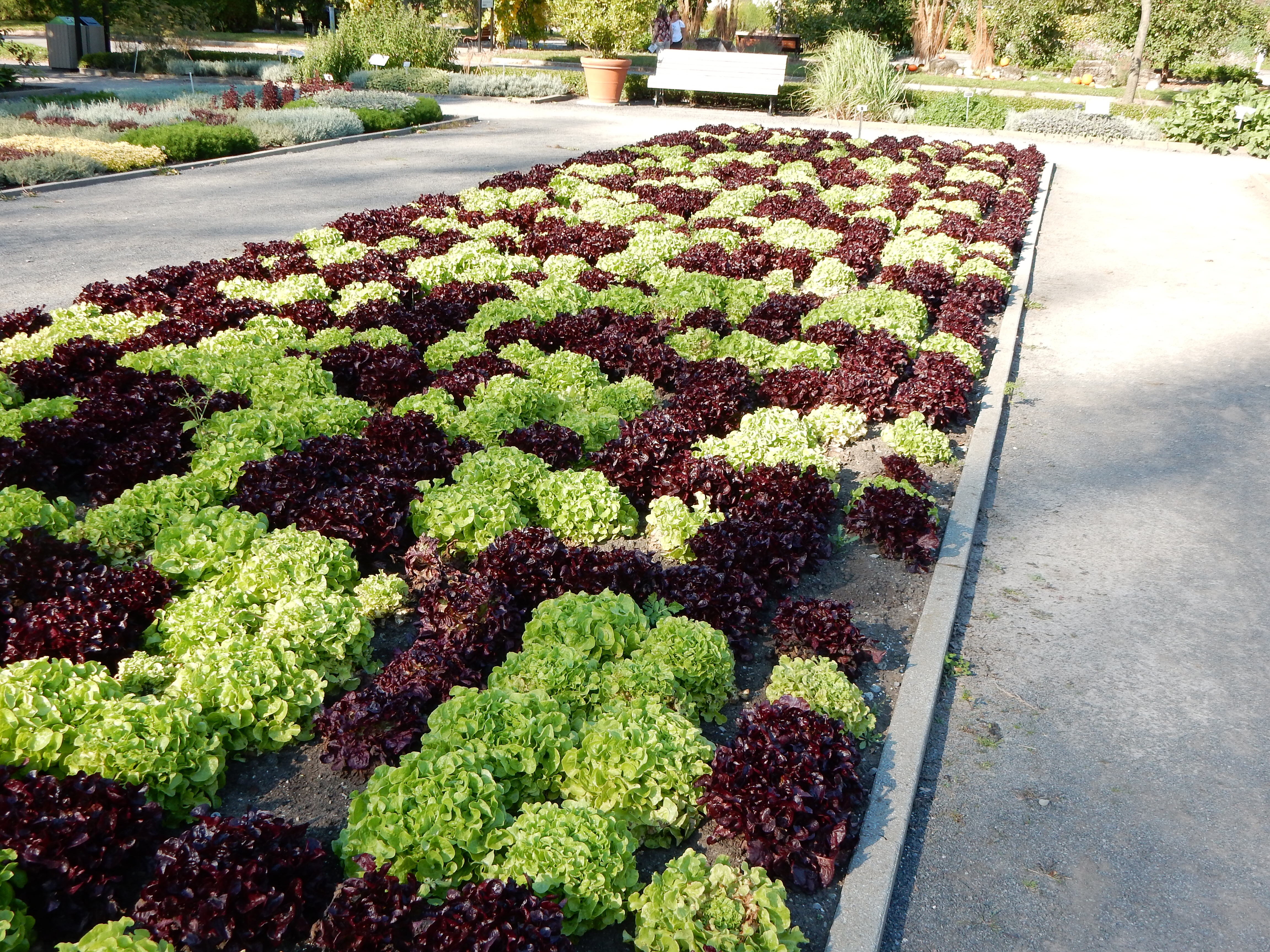
Montreal Botanical Gardens: What you can do with just leaf and red lettuce

Montreal Botanical Gardens: What you can do with just leaf and red lettuce

There was a dilemma though. The Gardens have an illuminated display in the Japanese and Chinese Gardens beginning at dusk. That was still a few hours away. In addition, the car was parked a few blocks away in the huge underground garage that might not be inviting to walk to when it was dark. We decided to walk to the car now, find another restaurant for a light snack and re-park the car in the Gardens parking lot.

Montreal Botanical Garden

Montreal Botanical Garden

Down the street in the other direction we found a Tim Horton’s and shared a sandwich and their hot kettle chips. Dessert was a donut and milk. Back at the Gardens, we parked in the lot easily and returned for more strolling and sitting. We chose a bench facing the setting sun and with many like-minded folks, most of whom had cameras, waited out the sunset.

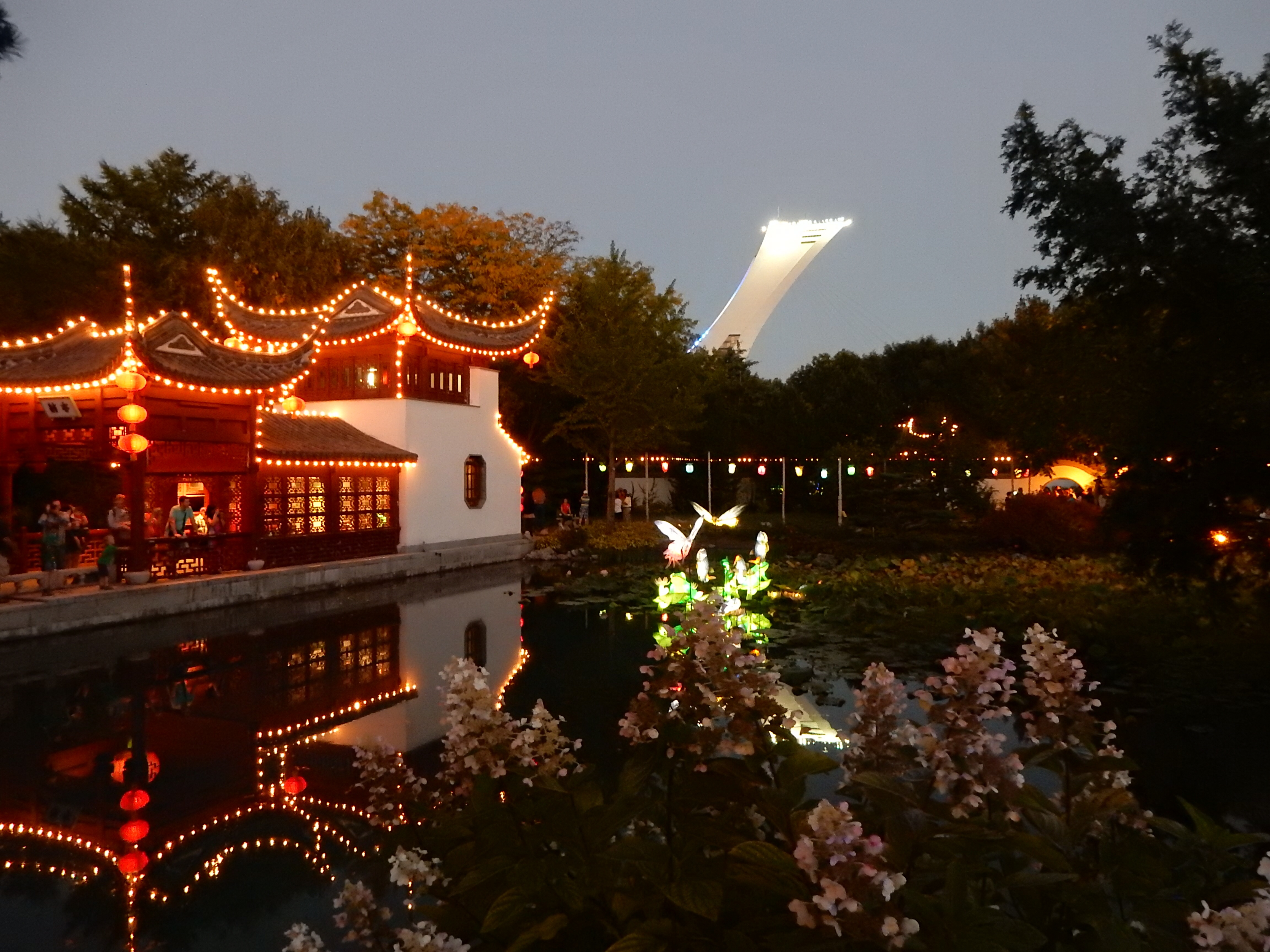
Chinese Garden at dusk

Chinese Garden at dusk

As dusk was coming on, we headed back to the Japanese and Chinese gardens. Wow. All of a sudden all of Montreal had arrived at the Gardens. This night of illuminations is a big deal. Throngs were crowding the paths. Where did they all come from? The areas we had just inhabited, while people were present, were nothing like this. Well, they were coming just for the evening display and paying full price. Even when we left at 8 P.M., there were several hundred people still lined up to get their tickets.

Montreal Botanical Gardens: Chinese Garden at sunset

Montreal Botanical Gardens: Chinese Garden at sunset

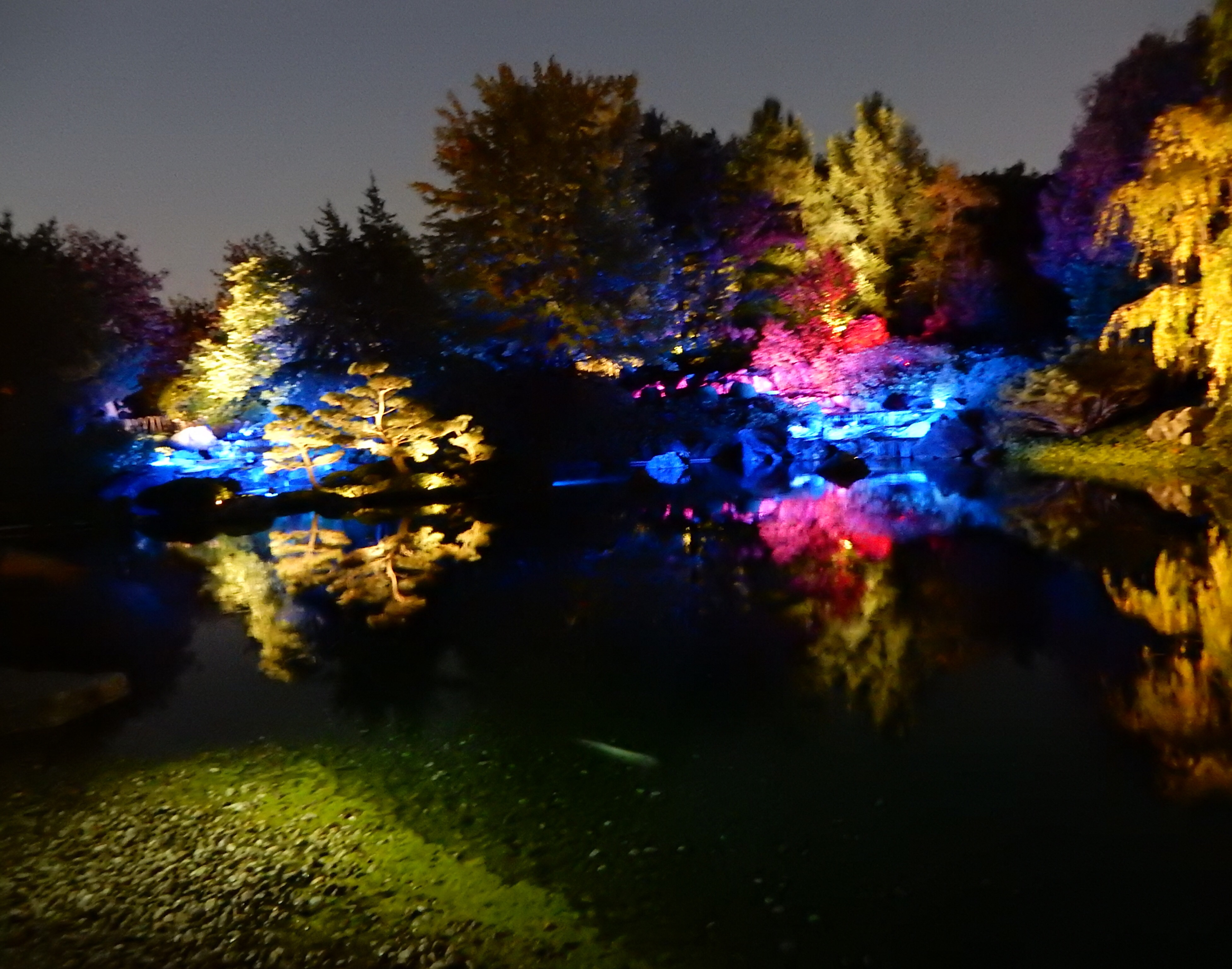
Japanese Garden at night at Montreal Botanical Gardens

Japanese Garden at night at Montreal Botanical Gardens

The Chinese garden area was bright and colorful with lighted lanterns and fanciful lighted animals decorating the pathways. We slogged along in the slow-moving crowd, taking our pictures and waiting for others to take theirs. The Japanese garden was shadows and light, soft music and lights fading in and out on trees and shrubs. The Garden website, listed below, has a brief video highlighting the illuminations that you might be interested in. (The show runs from Sept. 5 to Nov. 2.)

http://espacepourlavie.ca/en/botanical-garden

Moving our car was a smart decision. It was dark and the lot here was swarming with cars driving around the aisles waiting to pounce on an open spot. Our ride back to the hotel gave us a chance to experience urban traffic, including bicyclists (it was still 70 degrees out) of whom only two of 30-40 were using lights. Teamwork driving was essential to spot street names, bicyclists, road work, etc. Luckily we have practice at that.

Ed and Chris Sunday 9/28 9:30 A.M

Categories: road trip, travel | Tags: , , | Leave a comment

Blog at WordPress.com.