road trip

2014 Trip 7, Dec. 2, So. Cal and Thanksgiving in Flagstaff

Tuesday, December 2, Las Vegas NV

Well, this is likely to be the last post until February of 2015. We head for St. Paul tomorrow morning. For our last full day in Vegas, we visited the Springs Preserve in Las Vegas.

Desert vegetation growing around the pools and springs in the Springs Preserve

Desert vegetation growing around the pools and springs in the Springs Preserve Las Vegas

This is where Las Vegas began. Literally. “Las Vegas” in Spanish translates into “The Meadow”. This meadow area around the Springs Preserve was the home to several springs used by Native Americans and early settlers. Without the springs and the water they provide, Indians would not have gathered here. Without the water, the settlers would have kept going and not created a small village. Without the water, the early railroad, which ran on steam locomotives, would not have made Las Vegas a railroad yard for fifty years at this point halfway between Salt Lake City and Los Angeles. If there had not been a town in this area, the Hoover Dam water and power would have kept going to AZ and CA.

So the Springs Preserve is important. It encompasses the area where springs and pools existed. The actual springs no longer bubbled to the surface in the 1950s due to over pumping of the aquifer. Water wells for the Las Vegas area still exist in the preserve although Colorado River water provides the greater portion of the water for this metropolitan area of just under two million people.

the gardens area of the Springs Preserve in Las Vegas

the gardens area of the Springs Preserve in Las Vegas

The Preserve has many components. We spent four hours here enjoying buildings and grounds. History and geology of the area comprise a portion of the exhibits. Water conservation is another important focus. Landscape gardens that work in the desert area are showcased.
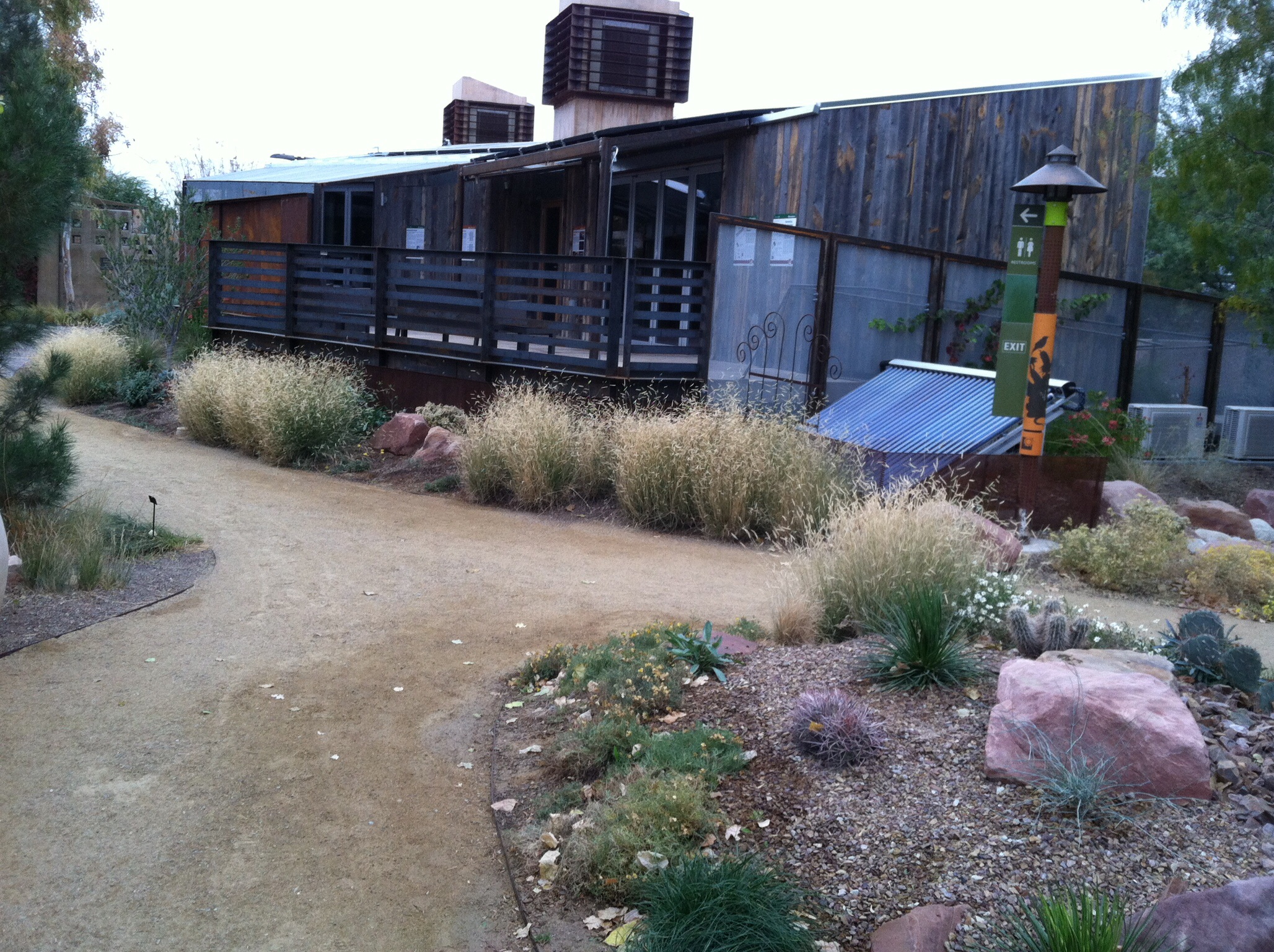
One view of the DesertSol winning house entry

One view of the DesertSol winning house entry

In 2013 the University of Nevada Las Vegas entered a student team in the Solar Decathlon competition sponsored by the U.S. Dept. of Energy. The Solar Decathlon challenges 20 college teams to design, build and operate solar powered houses that are cost-effective, energy-efficient, and attractive. Their house took first prize and went on to take second place in the global competition. The house has been moved onto a portion of the Springs Preserve where it can be an inspiration for others.

The Botanical Gardens, while not as colorful as botanical gardens elsewhere, did have a surprising amount of color. The beauty of the landscape layout was impressive after putting aside my preconceptions of gardens from a more water oriented approach. Today had a bit of drizzle that put a fresh scent into the air that enhanced the experience. (Of course, the small amount of moisture combined with dirt and oil dripped onto local roads made for numerous traffic accidents in the city this afternoon.)

The original spring mound on the left  and a derrick used to drill the water wells on the right

The original spring mound on the left and a derrick used to drill the water wells on the right

View of the "Strip" from the original spring mound at the Springs Preserve

View of the “Strip” from the original spring mound at the Springs Preserve

The trails at the Preserve took us out into the grounds to the original spring mound and pools. The juxtaposition of the now unused spring and the tall, over-sized buildings of the Strip in the distance clearly demonstrated the changes 100 years makes.

A recreation of the 1905 auction of land that created the city of Las Vegas

A recreation of the 1905 auction of land that created the city of Las Vegas

We hope you have enjoyed our recounting of this trip. Happy Holidays!

Ed and Chris Las Vegas Tues. Dec. 2 6 pm

Categories: road trip, travel | Tags: , | 1 Comment

2014 Trip 7, Nov. 29-30, So. Cal and Thanksgiving in Flagstaff

Flagstaff,AZ Saturday Nov. 29 and Sunday Nov. 30

The more relaxed pace of the second half of this trip continues. On Saturday we said good-bye to Jude and Lacey who returned home to NM. The four of us went to the Riordan mansion in Flagstaff. This is a state historic site. Flagstaff, like many towns along the 35th parallel in Arizona, was founded on the railroad and lumbering. The 35th parallel was chosen for the westward trail for emigrants on the way to CA as it passed through the area in the late 1850s because it was relatively free of snow and farther north from the rebel sympathizers in southern Arizona. In the late 1880s, the railroad followed the same basic route. The largest stand of Ponderosa pine in the U.S. is in this area; the pine was an integral part of the railroad expansion, used for ties and fuel for steam engines. Much of the remaining Ponderosa pine is in the Coconino National Forest and creates great vacationing opportunities. The San Francisco peaks, one of which at 12,633 feet is the highest in AZ, offer skiing in winter.

The eldest Riordan brother came to Flagstaff to take a job at the Ayer Lumber Company. This was later retitled the Arizona Lumber and Timber company. He managed the company and then bought it. His two younger brothers came out to join him from Chicago and subsequently bought the company from the eldest brother.

The three Reardon brothers represent another rags to riches story in the United States. The lumber company had the contract to supply railroad ties for what became the Santa Fe railroad. They parlayed that contract into the largest lumber mill in Flagstaff, and it became the main economic source of jobs in Flagstaff for over 50 years. Similar to many economic entrepreneurs in new communities, they also undertook major efforts to support the community. This included establishing a reservoir to provide drinking water for the city, providing financial support for the first churches, and providing land for what has become Northern Arizona University.

Riordan Mansion; this view  of the back  shows  the design better.

Riordan Mansion; this view of the back shows the design better.

Close up of one end of the Riordan mansion

Close up of one end of the Riordan mansion

The two younger brothers ended up marrying two sisters. The families got along well. They decided, after living in smaller first homes, to build what became a twin home with similar living units on each end with a common family room in the middle. This 13,000 square-foot combined unit was built in the Arts and Crafts style, also called Craftsman, which was designed by the same architect, Charles Whittlesey, who designed El Tovar lodge at the Grand Canyon. The home contained modern devices like electricity and plumbing, as well as utilizing native materials and unique concepts that maximized air flow in those days without air conditioning. The property, actually each of the two homes, was donated to the state by the heirs of the Riordans in 1978 and 1986.

We decided to have dinner out that evening and ate at Brix in Flagstaff for an excellent meal. Afterwards we walked among the brightly lit Christmas trees at the Little America motel, host to the North Pole Experience, a unique Christmas experience for families.

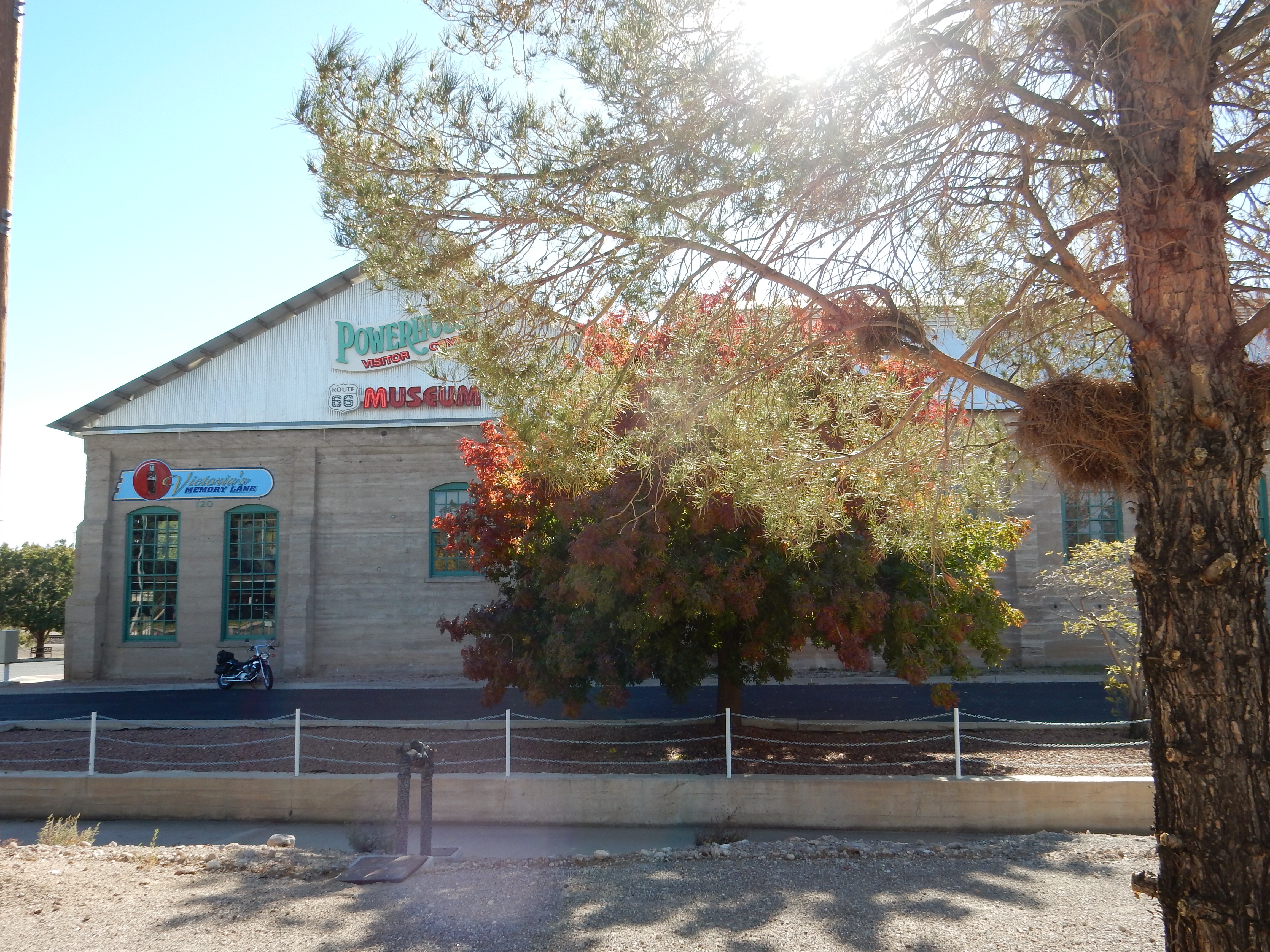
The Route 66 museum in Kingman AZ

The Route 66 museum in Kingman AZ

Sunday was our day to drive to Las Vegas, for the last three nights of trips seven. This drive retraced our steps to Kingman Arizona so we did visit the small route 66 museum in Kingman. Route 66 has become something of an American icon. Route 66 was one of the very first US national highway following a trail from Chicago Illinois to Los Angeles, California. It also followed the 35th parallel as it went through New Mexico and Arizona and parts of California.

The road has become famous, partially due to the song “Get your kicks on Route 66” and the TV show “Route 66” in the 1960s. It was also immortalized in John Steinbeck’s novel “The Grapes of Wrath” about the dust bowl in the southern U.S. We did discover in the museum that less than 10% of the people who migrated from the dust bowl area of Kansas, Oklahoma,Texas, etc to CA stayed in CA; most returning home within a few years. There are books and mementos and tours of the area Route 66 covered, as well as postings where the “historic” Route 66 exists, since the highway was replaced by Interstate 40 in most of the southern portions of the route. Route 66 also represents to many people the “Good Old Days” of road side diners, friendlier people, the initial era of family travel, etc.

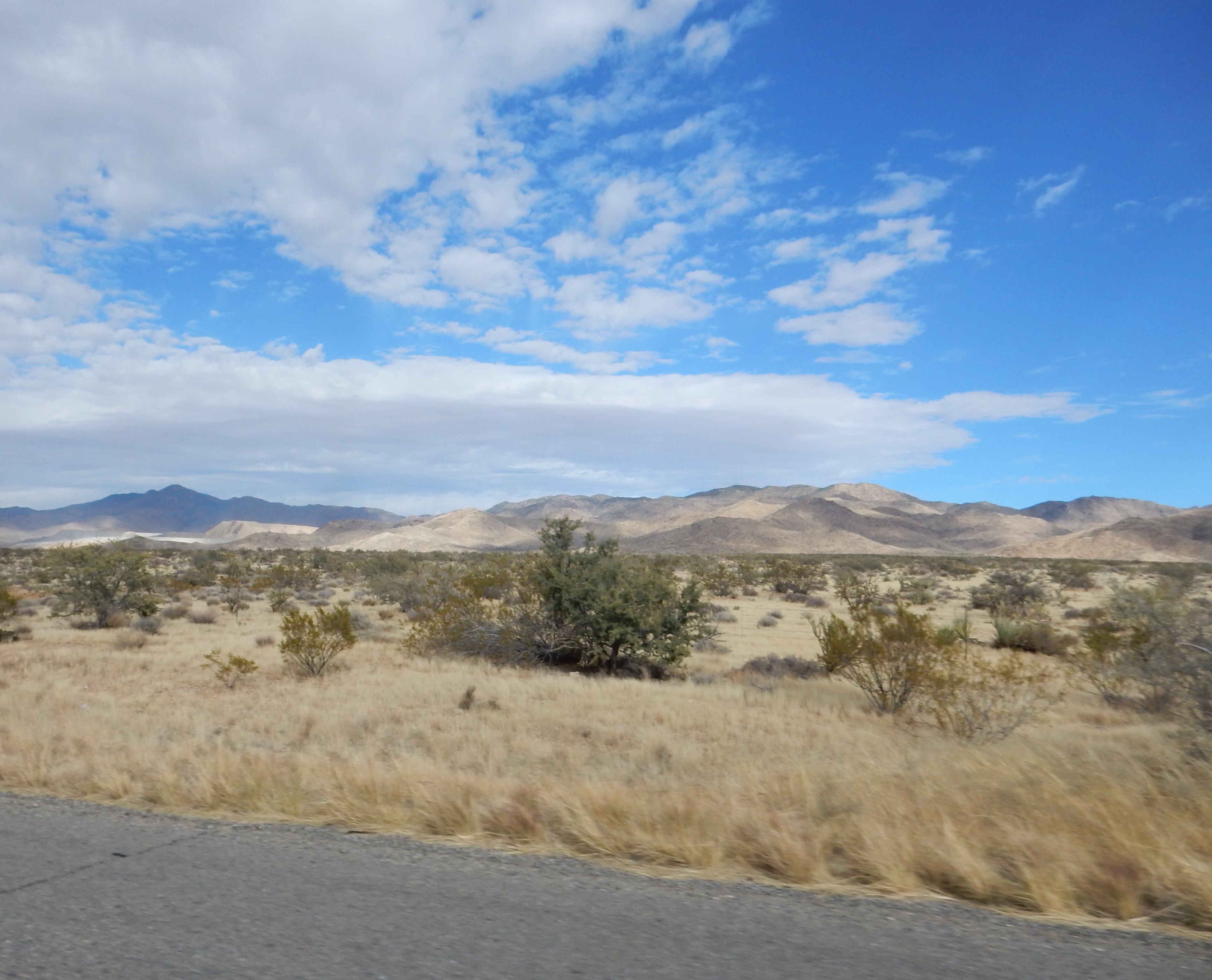
Driving to Vegas

Driving to Vegas

Leaving Kingman we drove through the desert again, watching the migration of cars from Las Vegas who were returning to the Phoenix area after the Thanksgiving weekend. Our journey took us through the Lake Mead National Recreation area, much larger than just Lake Mead-which was created by the Hoover Dam. In this area, they have created wildlife bridges similar to the ones we saw in Banff and Jasper National Parks in Canada. Here the primary wildlife being protected are the desert bighorn sheep.

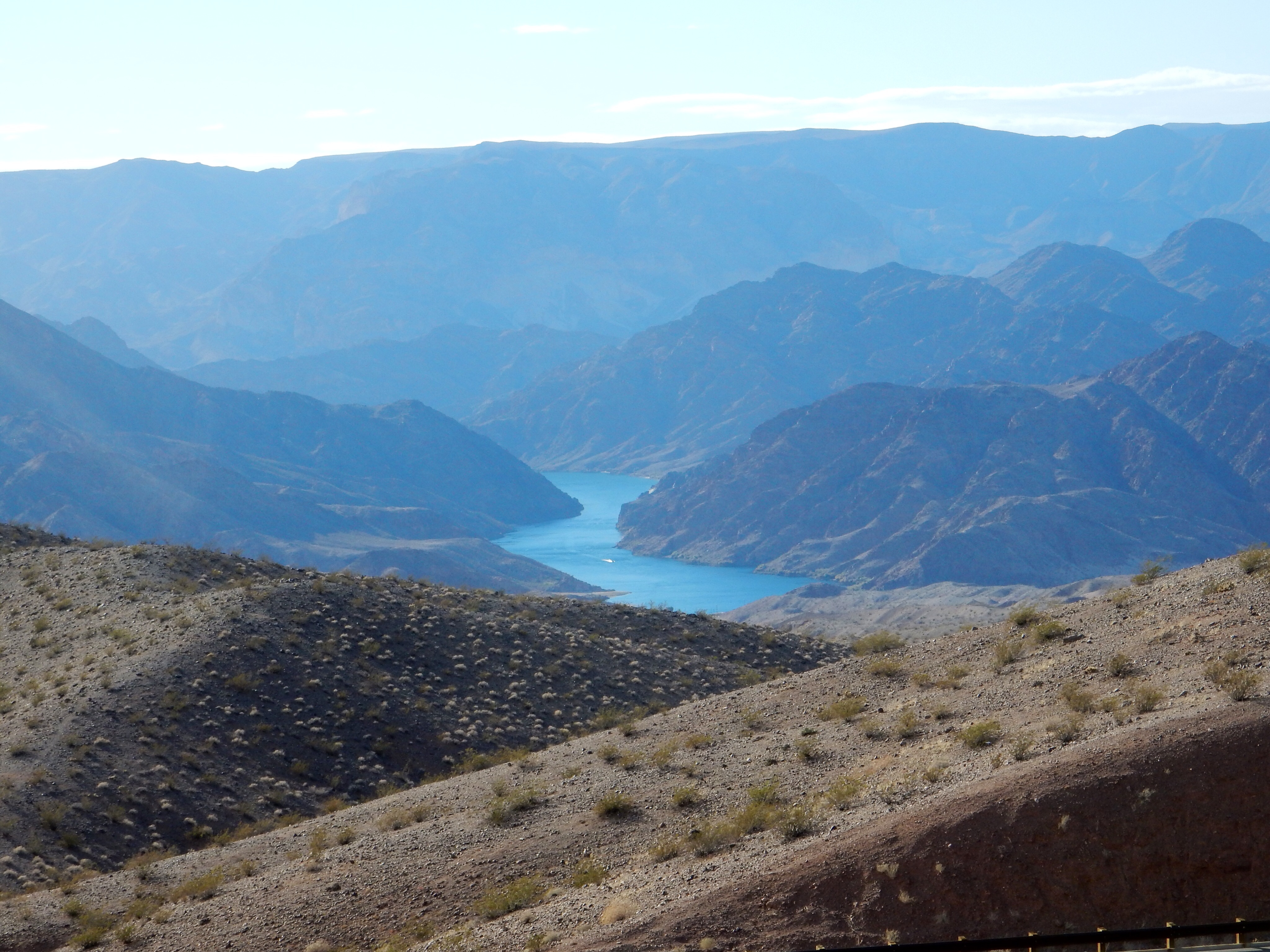
View of Colorado RIver south of Hoover Dam

View of Colorado RIver south of Hoover Dam

The new bridge over the Colorado River,avoiding the drive over the dam itself.

The new bridge over the Colorado River,avoiding the drive over the dam itself.

Lake Mead at much lower  level, note salt level on island and how far marina has been moved from plains to the left

Lake Mead at much lower level, note salt level on island and how far marina has been moved from plains to the left

We have visited and toured Hoover dam several times. Times have changed, however. We were not planning on a tour, since we had done that before, but we did drive through the area. The new bridge over the Colorado River means that the road over the dam is just used for access and parking. A few years ago, we had taken the back exit on the Arizona side of the dam and explored the desert area. Nowadays it has been sealed off. The parking garage and closest parking lot to the dam each charge $10 per vehicle. We passed on that opportunity and instead visited the Lake Mead National Recreation Area visitor center. Is a very nice visitor center, with a good video of the recreation area and great views. We picked up a trail map of a potential hike, depending on our schedule. Of course, Chris obtained a stamp for her national parks passport.

We are staying at the Trump Towers. This has been taken over extensively by Hilton Grand Vacation Club. We have a fantastic rate, the “price” also, however, includes a two-hour timeshare spiel this afternoon. Our one-bedroom unit with kitchen, jacuzzi, etc is on the 33rd floor that has a great view ranging from the Wynn casino over to the western mountains. The three TVs include one embedded in the bathroom mirror. The two terry cloth robes they provide are very soft and comfortable.

Ed and Chris Monday December 1 8:45 AM

Categories: road trip, travel | Tags: , , , | 2 Comments

2014 Trip 7, Nov. 26-28, So. Cal and Thanksgiving in Flagstaff

Friday, Nov. 28, Flagstaff AZ

Thanksgiving. It has always been a time for us, and for many other families, to celebrate with relatives. This year it is in Flagstaff AZ with Lou and Joyce, plus Jude who drove six hours from Santa Fe, NM to be with us. Sarah and Deb are in Houston, TX and Hartford, CT, respectively, to spend time with Sarah L’s and Rebecca’s families.

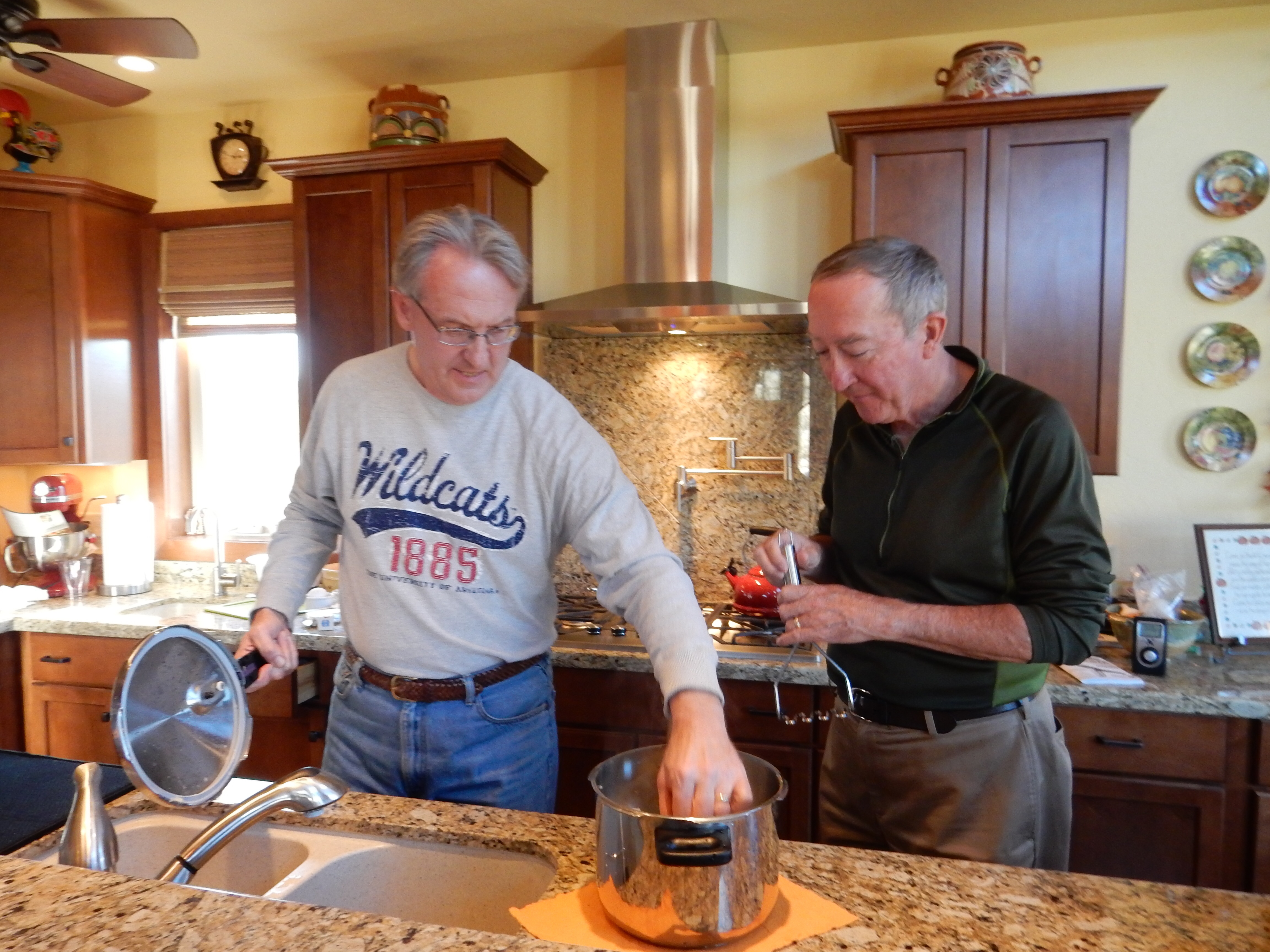
Getting our assignments for meal prep

Getting our assignments for meal prep

The work begins

The work begins

Jude and Lacey arrive

Jude and Lacey arrive

The Thanksgiving meal is a glorious event, more so with Joyce at the helm. As we remarked to our daughters, the meals here have sauces and seasonings besides salt and pepper. Chris and I are more bland in our meal preparations. Wednesday we spent helping with meal preparations, to the best of our ability. Generally we can follow assigned tasks pretty well, so Joyce was chef, Lou sous chef, and Chris, Jude and Ed junior helpers.

Lots of chopping to do

Lots of chopping to do

Wednesday we did meal prep and ran errands in the morning prior to lunch at Cuvee 928, Lou and Joyce’s favorite restaurant in Flagstaff. More meal prep in the afternoon; Jude arrived before sunset Wednesday so the first order of business was a dog walk, getting Manning and Lacey acquainted. The two dogs have generally gotten along, although sleeping in separate rooms and fed at separate times. Lou and Jude have been the dog walkers primarily although some walks have been joint affairs or with another person along. Since Lou and Joyce have 2.5 acres and border the Coconino National Forest, the walks have covered diverse terrain.

Joyce and Lou with the turkey

Joyce and Lou with the turkey

The spread

The spread

On Thanksgiving, the Macy’s Day parade was taped and watched as the final steps were undertaken for the meal at 2 P.M. In 1995, the girls were in the parade with the high school marching band. Chris, Jude, and I were on hand to watch it from the sidewalks of New York. Thus, the TV show, despite all of the commercials and product placements, still induces fond memories. No naps, but we all were in bed much earlier than usual.

Thanksgiving Day sunset

Thanksgiving Day sunset

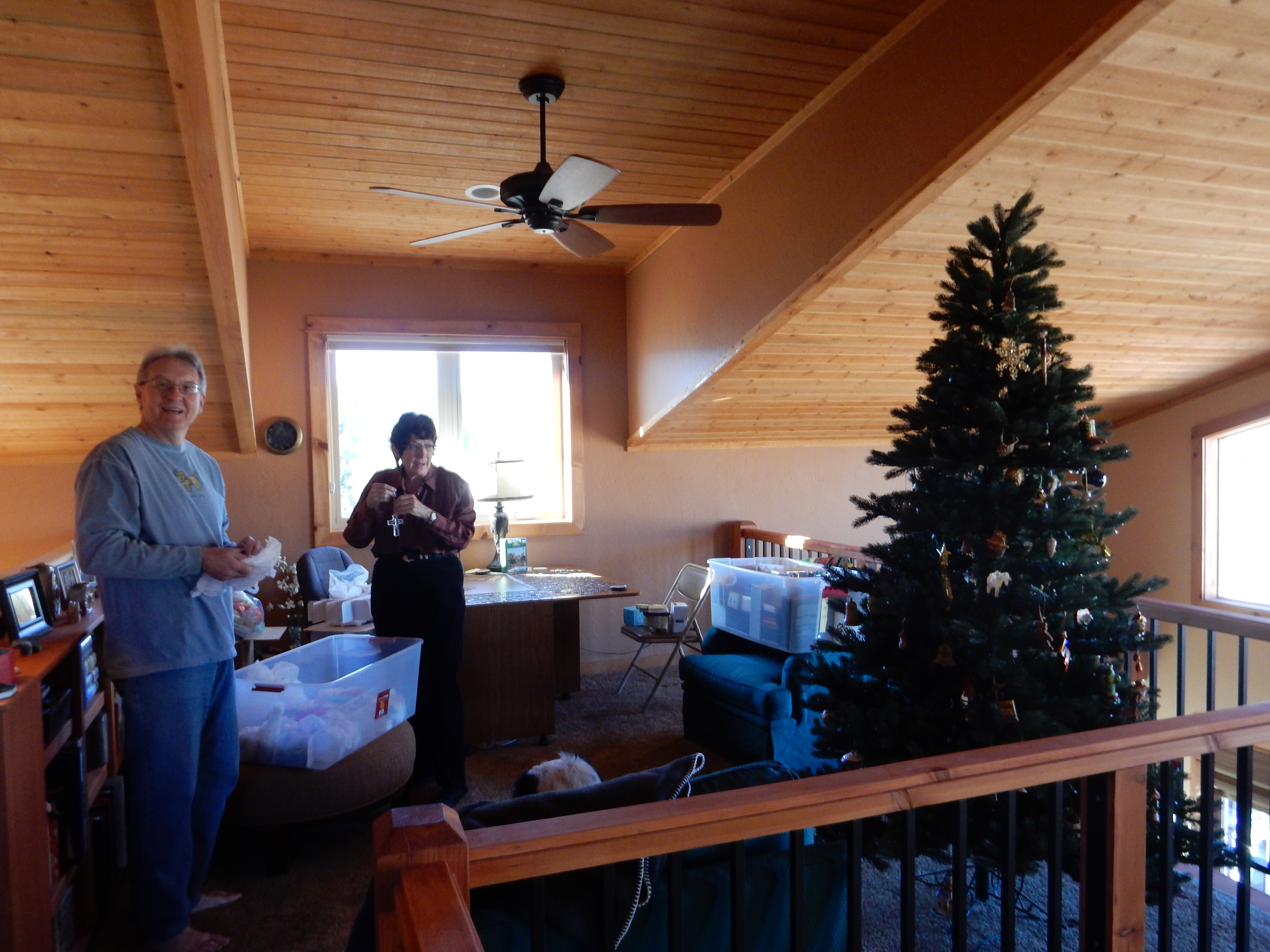
Friday Christmas tree decorating

Friday Christmas tree decorating

Shutterfly photo album lesson

Shutterfly photo album lesson

Black Friday is not a shopping day for us. The Friday after Thanksgiving has normally been the day to put up and decorate the Christmas tree. The tree here was up but had to be decorated with ornaments. In addition, a John Deere puzzle has been laying on a table and is slowly starting to take shape. Ed and Joyce have been working on a Shutterfly photo album for Joyce about her Portugal trip.

the hike begins at Picture Canyon

the hike begins at Picture Canyon

Lacey Jude and Ed

Lacey, Jude, and Ed

Lou, Joyce, and Manning

Lou Joyce and Manning

Picture Canyon hike

Picture Canyon hike

Picture Canyon hike

Picture Canyon hike

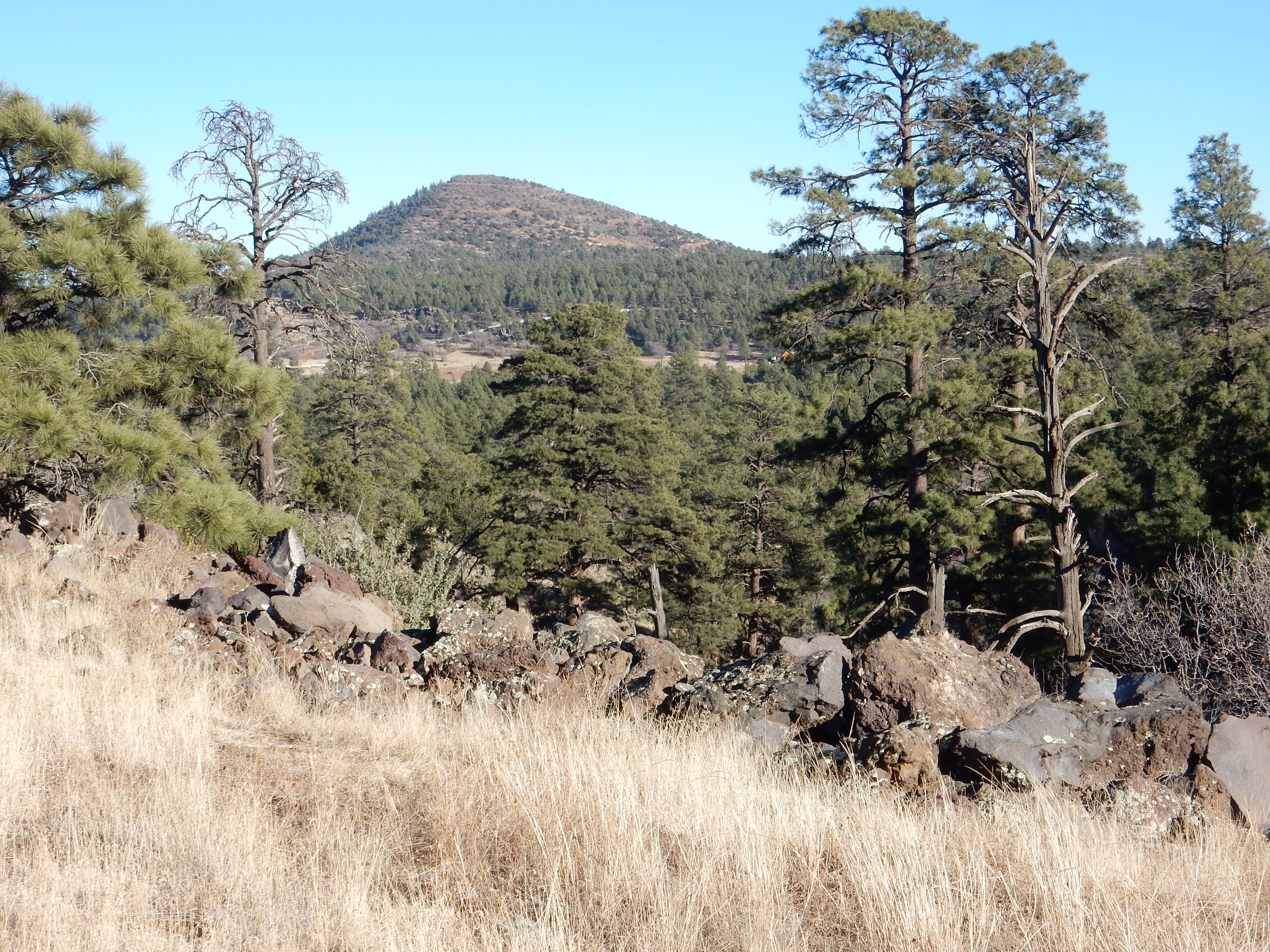
Today we also managed to squeeze in a walk in Picture Canyon. This is a new natural and cultural preserve owned by the City of Flagstaff. Besides a walk in the woods, the preserve is the site of Native American petroglyphs and a small waterfall on the Rio de Flag. The two dogs came along and managed the full hike, although once back at the ranch, they pretty much fell asleep.

For the evening, the five of us enjoyed leftovers and family story telling time.

Ed and Chris Flagstaff AZ Saturday Nov. 29 7:30 AM

Categories: road trip, travel | Tags: , | 1 Comment

2014 Trip 7, Nov. 25, So. Cal and Thanksgiving in Flagstaff

Flagstaff, AZ Nov. 25 Wednesday

For those who do not recall, Lake Havasu City gained renown when the guy building this city from scratch bought a bridge that crossed the river Thames in London that was being demolished. He had it disassembled and re-built here over a channel of the Colorado river to connect to an island that now is home to condos, apartment, etc. This London Bridge opened in 1971 and is a major tourist attraction.

London Bridge, Lake Havasu City, AZ

London Bridge, Lake Havasu City, AZ

We drove over it and took a few pictures. Other than that we did not spend time exploring Lake Havasu City. It seems like it could be a decent place to spend a week exploring the surrounding area. Spring breakers do flock here and congregate on boats in the lake.

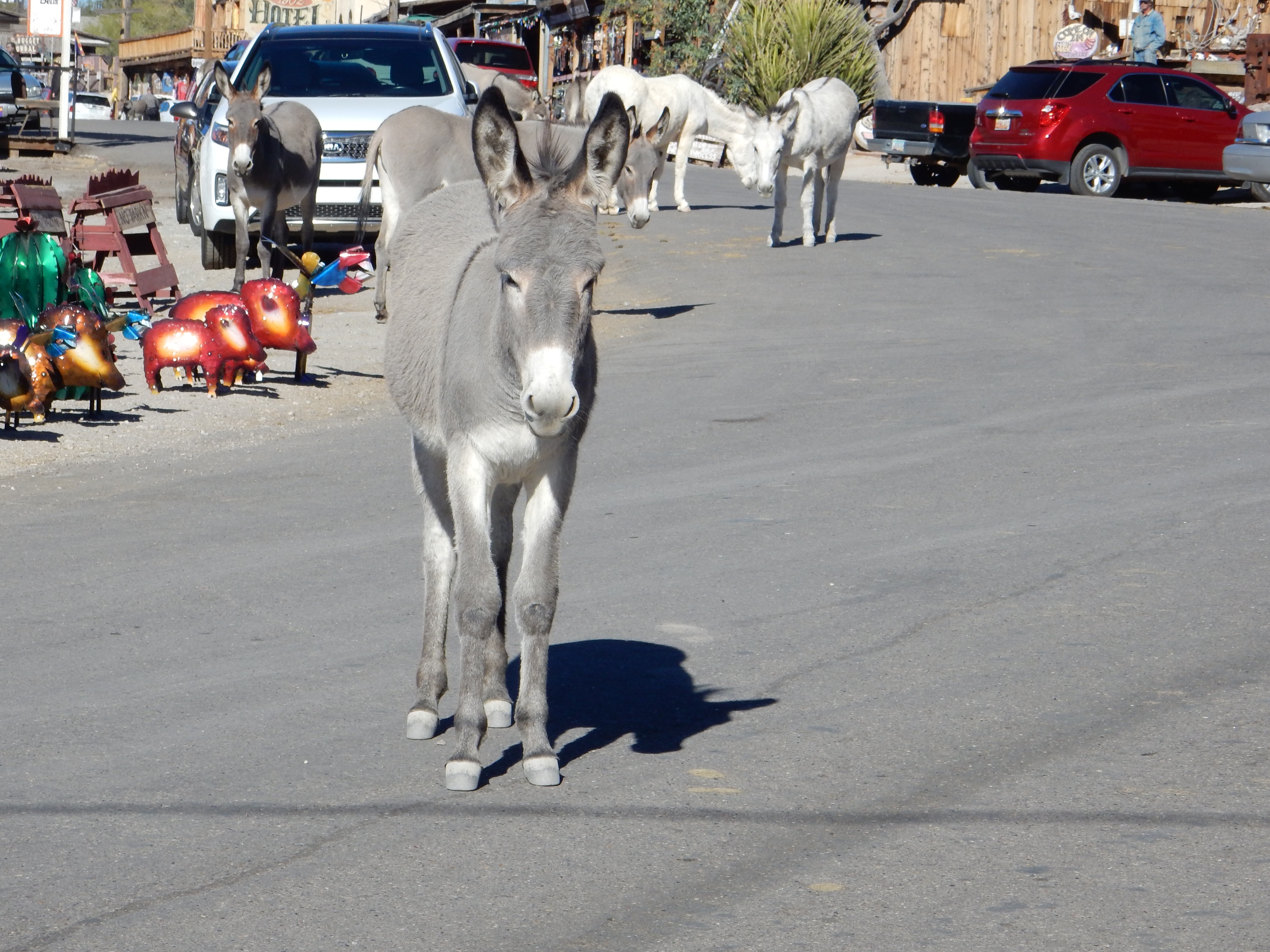
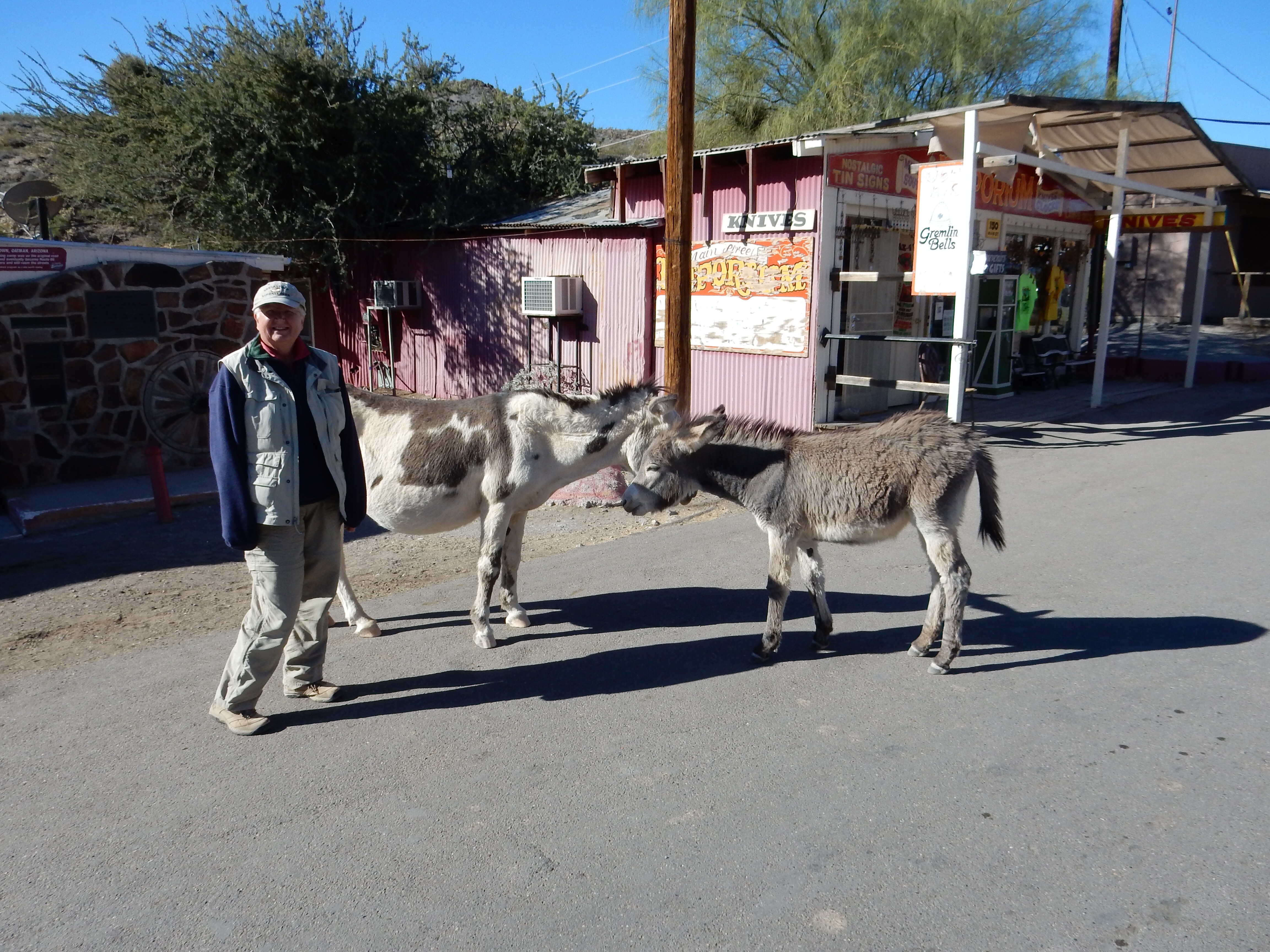
Wild burros in Oatman AZ

Wild burros in Oatman AZ

Wild burros at Oatman, AZ

Wild burros at Oatman, AZ

Oatman, AZ

Oatman, AZ

Oatman, AZ

Oatman, AZ

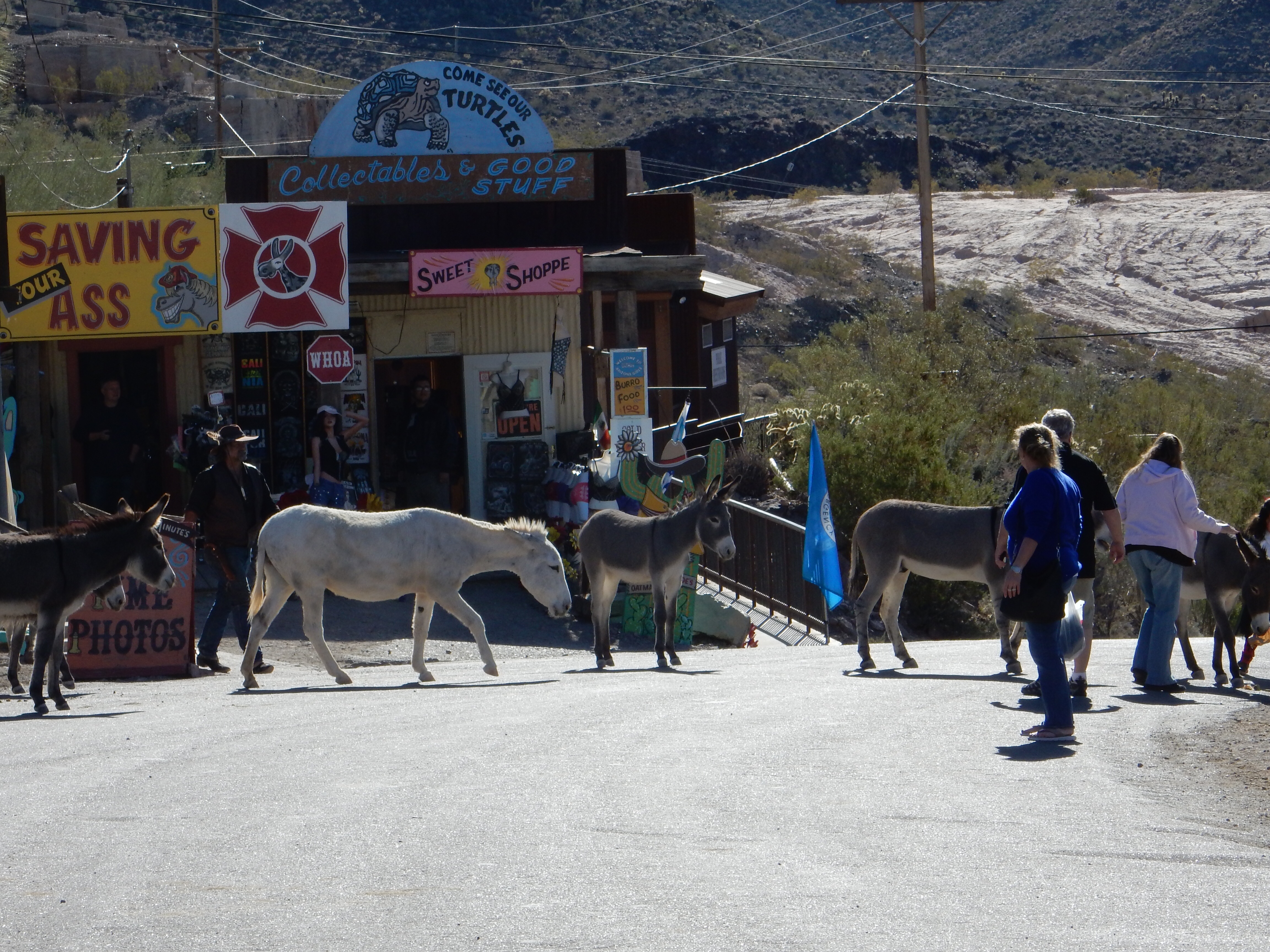
Our main stop on the way to Flagstaff was Oatman, AZ. Oatman is a town that time forgot. It is a tourist type destination but it certainly has not been gussied up. One of its unique attractions are the wild burros that freely roam the main street of town. These burros are descendants of the wild burros used by miners over a 100 years ago. They are still wild but act tame-until one starts to feed them. Then they gather around, pushing and shoving to get some food (sold in local stores so it is nutritious). We even saw one young girl get knocked over and had to be rescued by her mother. The stores have your usual tourist goods but I was able to find a Christmas ornament that was made in AZ.

Route 66 before Oatman

Route 66 before Oatman

One of the Christmas trees before Oatman

One of the Christmas trees before Oatman

A mountain view between Oatman and Kingman

A mountain view between Oatman and Kingman

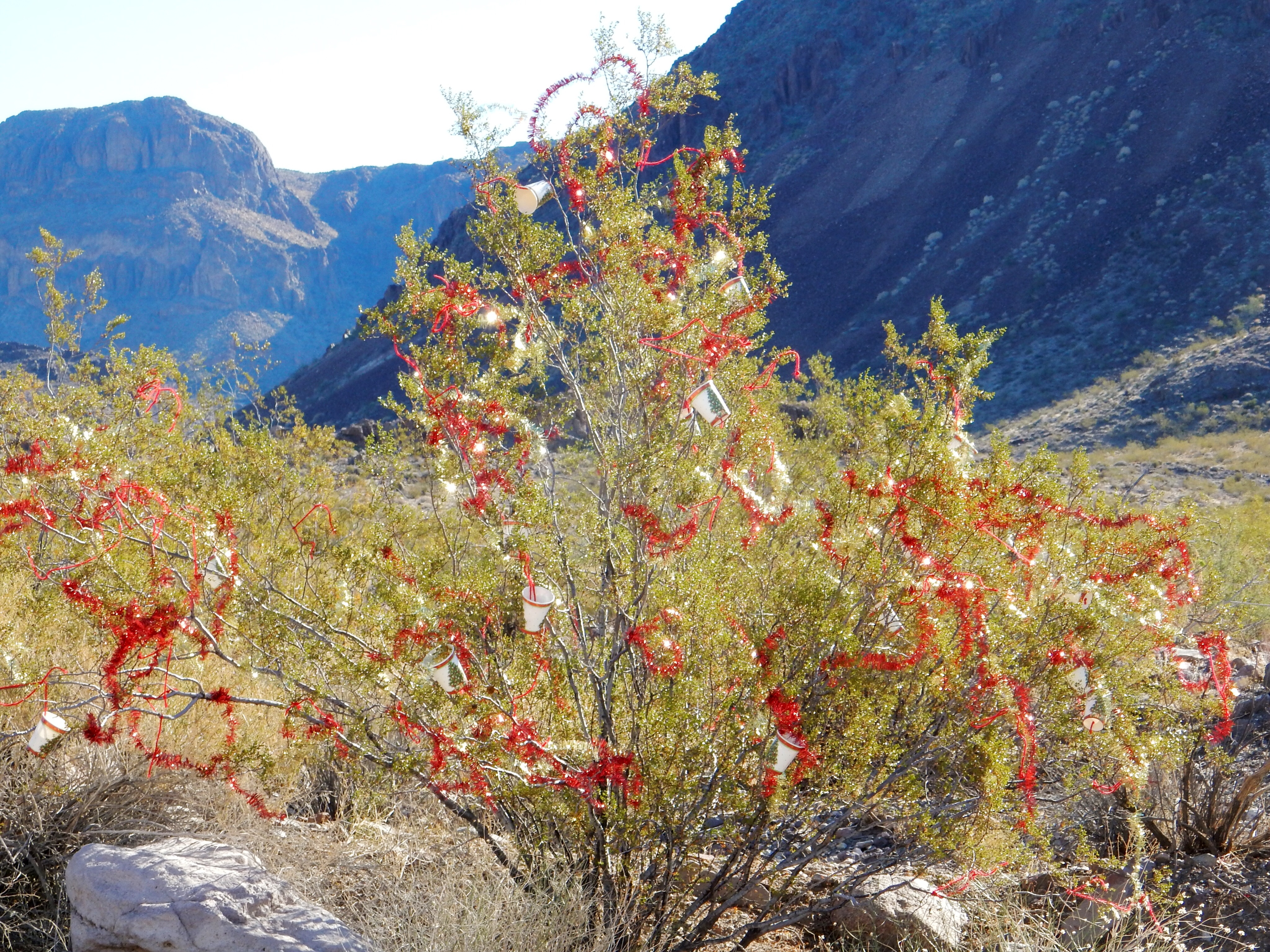
The drive to and from Oatman was on historic Route 66, across the flat plains and then up and down the Black Mountains, crossing Sitgreaves Pass at 3550 feet. Great vistas but few overlooks that seemed safe enough to hold a car and still let other cars pass. We had read about a location where there was supposed to be a pool of water above the road but did not have specific directions to find it-until we arrived in Flagstaff. Oh, well, we will try that hike next time. Coming from the south, before Oatman we came across a number of small trees decorated for Christmas lining the road.

Once again, like the area around Niland, CA, we crossed desert plains that were dotted with RVs and trailer homes off in the distance. I wondered if the Census Bureau finds all of these people for the decennial census.

Our plans had considered a stop at a museum in Kingman AZ also but figured we had visited enough museums, etc. After coming down from the mountains, we connected with I-40 and just Interstated it to Flagstaff.

Joyce and Lou made us welcome as usual and we re-acquainted ourselves with Manning, their Pembroke Welsh Corgi. Last time together was house-boating on Lake Powell this May. Manning is still shy but at least does not run away from me.

Thanksgiving will be here and Jude (her rescue dog Lacey) will join us. Two other Flagstaff friends of Joyce and Lou will be here. Hope you all enjoy your Thanksgiving.

Ed and Chris Wednesday Nov. 26 10:10 AM

Categories: road trip, travel | Tags: , , , | 2 Comments

2014 Trip 7, Nov. 24, So, Cal and Thanksgiving in Flagstaff

Monday, November 24, Lake Havasu City, AZ

Monday. A day of contrasts.

Cholla cactus garden

Cholla cactus garden


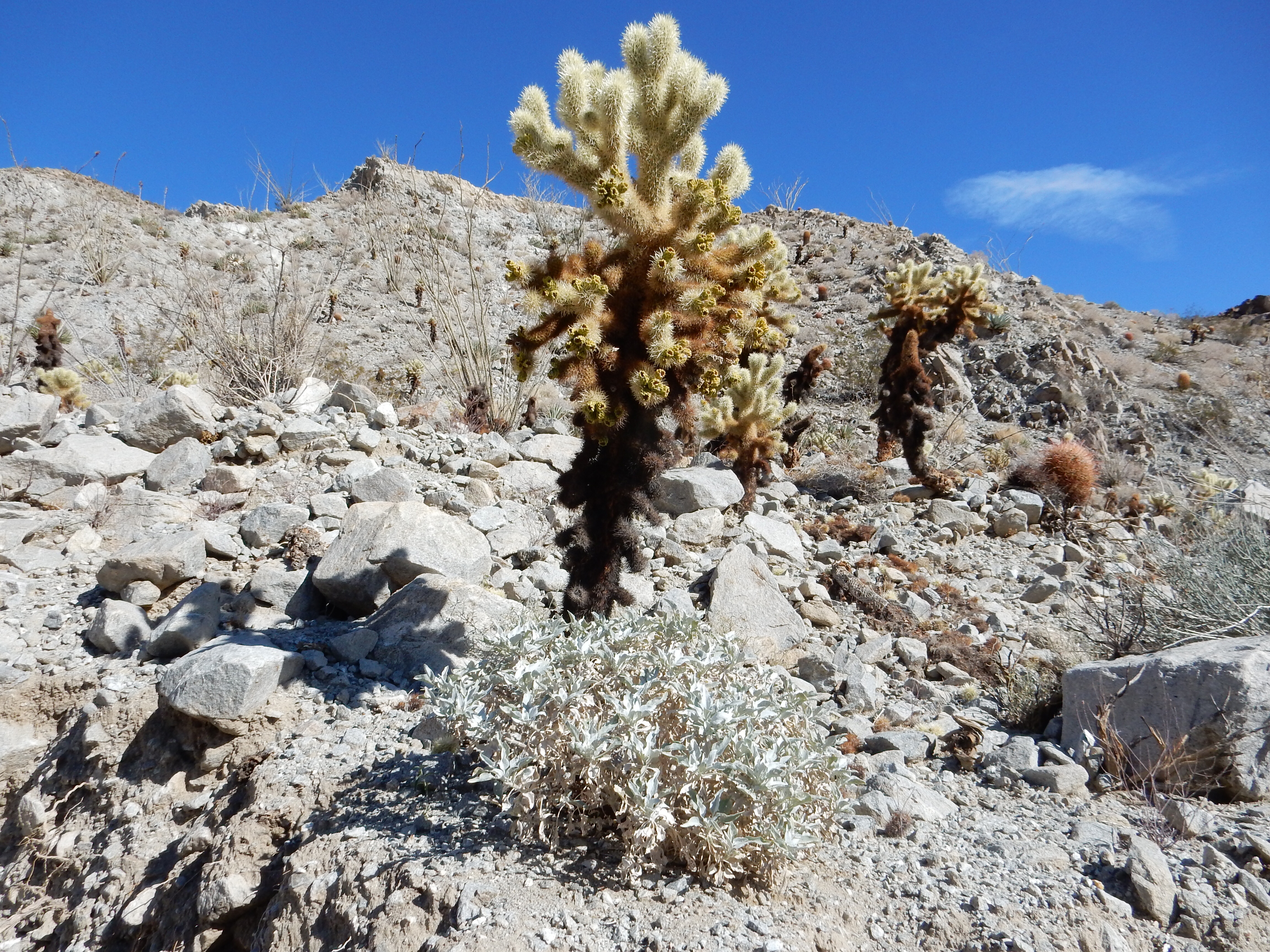
Cholla cactus up close

Cholla cactus up close

Joshua Tree National Park was not finished with us. We left the park through the southernmost entrance/exit. As we were driving down to a lower elevation, the Joshua trees disappeared. In one particular spot, a profusion of cholla (teddy-bear) cactus made a garden-like presentation with an easy walk through the area. But a visitor has to beware, the cholla cactus has microscopic barbs at the end of each spine which easily penetrate through your clothes into your skin. Removal of the barb is difficult and painful. This one particular spot has the right conditions for the cacti in grow in abundance. After the cholla, we came across a car stopped by the side of the road, with a group of young people protecting a tarantula as it made its way across the road. We drove around the trantula.

Imperial Valley agricultural view

Imperial Valley agricultural view


Our second destination was the Salton Sea. To get there, we drove southwest to Mecca, CA. Just before Mecca, the Imperial Valley begins and this green expanse unfolds before you. Agricultural products are on both sides of the road and a large lake (Salton Sea) appears in front of you. For my reference, the Salton Sea is larger than any lake entirely within Minnesota borders (excludes Lake Superior).

A brief history/geology lesson. The Colorado River way back when emptied into the Gulf of California (the waterway that goes up into NW Mexico). The land area from the Palm Springs area down to the Gulf of California over time has been inundated with water, building up the soil content. The Colorado, way back when, silted up and cut off the Imperial Valley from the Gulf of California, making it dry land at 200 feet below sea level.

In the late 1800s, a private company saw a chance to make an agricultural empire here, utilizing water siphoned off the Colorado River the irrigate the fertile, but dry, land. It worked. But, as things frequently happen, their irrigation canals were not properly constructed and in 1905 a higher than normal Colorado River broke through the canal and dumped ALL of its water into the area where the Salton Sea is now located. This went on for TWO years until the breach was filled. By then, the Salton Sea was created, the largest lake in California.

Birds flocked in. Tourists arrived. Everything was peachy keen. Until problems developed. The lake has no outlet so salts in agricultural run-off and evaporation have combined to make the water 25% saltier than the Pacific Ocean. Droughts have reduced the water flowing in from nature or from agricultural irrigation. Result, the lake is shrinking. Plus, in two years, the only two rivers that feed water into the lake are going to be diverted to provide water for San Diego-that eighth largest city in the U.S. Realistically, the lake will dry up, eliminating an important wildlife refuge in the Pacific flyway, leaving behind dead fish and toxic levels of fertilizers in an area with high winds that will blow the dust and smell around. This struck me as similar to Owen Lake (on our 2013 trip from Death Valley to Independence CA on the east side of the Sierra Nevada mountains) sucked dry by Los Angeles. (see 2013 Trip Four, May 9-10). Of course there is no fix planned at this point.

Salton Sea

Salton Sea

Salton Sea

Salton Sea

Back to our trip. We stopped at the Salton Sea state park and observed the waterfowl and the dead fish along the beach-there are still 3-4 million tilapia in the Sea supposedly. Further down the lake is the Sonny Bono National Wildlife Refuge. The refuge is home to thousands of birds and we hiked two miles out to the shore and back. It was amazing to see so many birds yet so close to desert lands. The refuge actually grows crops to keep the birds eating here and not on the agricultural lands all over the Imperial Valley.

Sonny Bono Wildlife refuge

Sonny Bono Wildlife refuge

Sonny Bono wildlife refuge

Sonny Bono wildlife refuge

Salton sea, wildlife refuge and power  plants

Salton sea, wildlife refuge and power plants

On our drive to the refuge, we passed 6-8 electric power generating plants. These are geothermal plants, drilling down to 8,000 feet below the surface to tap into the heat of the earth and generating power. The plants are also in the midst of the agricultural zone, intermixed between grazing sheep and fields of various crops, within sight of the Salton Sea. Again, a mix of uses in the middle of the desert.

Salvation Mountain

Salvation Mountain

Salvation Mountain

Salvation Mountain

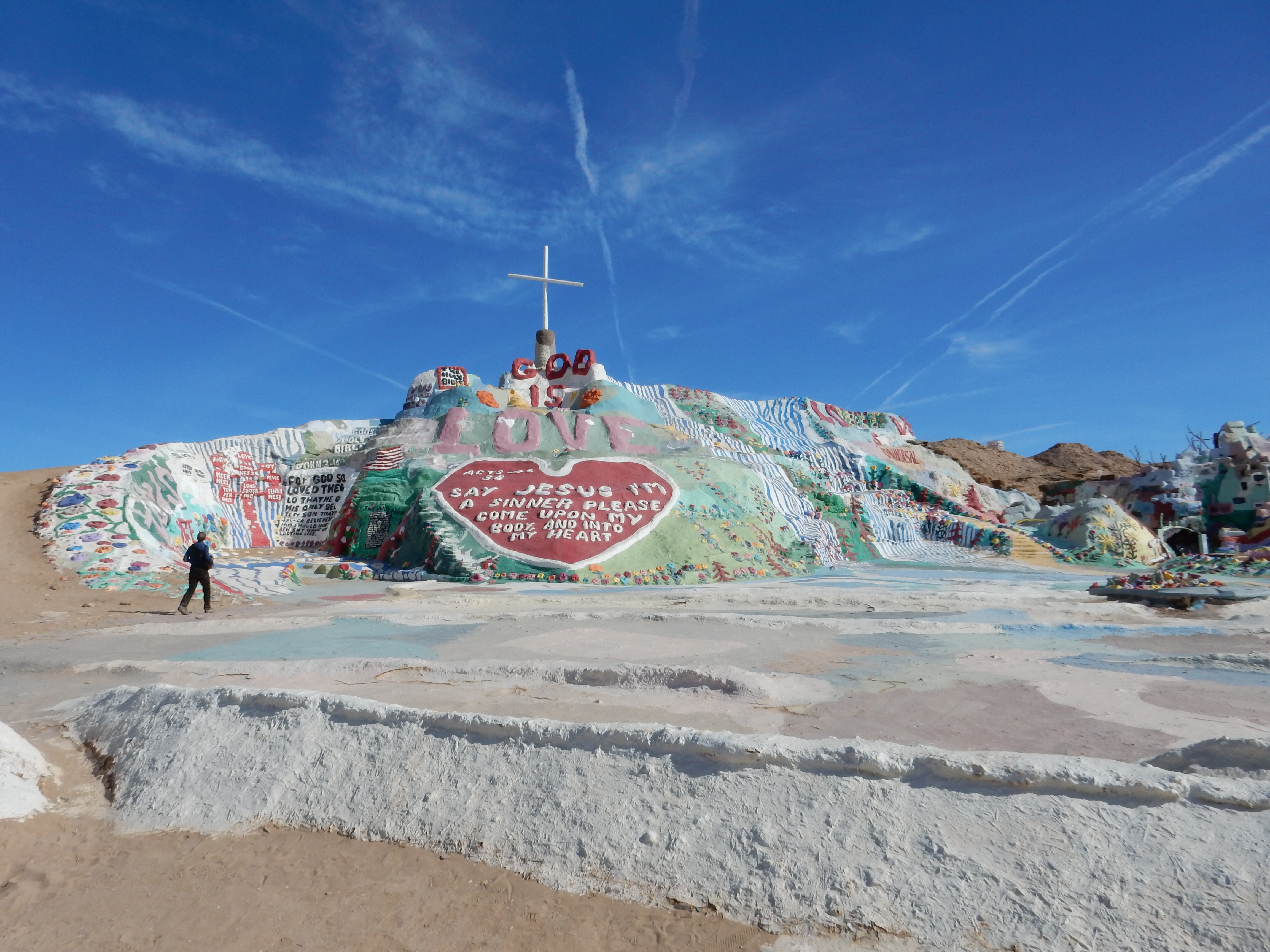
Between the state park and the national wildlife refuge was an even weirder experience. Salvation Mountain. Located in Niland, one of the poorest towns we have come across. Salvation Mountainn is one man’s tribute to God with its recurring message of “God is Love”. The “mountain” is 50 feet tall and 150 foot wide made with adobe clay and donated paint. The creator died earlier this year and so far volunteers have maintained the site. The Folk Art Society of America has deemed it a folk art site worthy of preservation.

Imperial Sand Dunes

Imperial Sand Dunes

Imperial Sand Dunes

Imperial Sand Dunes

Imperial Sand Dunes

Imperial Sand Dunes

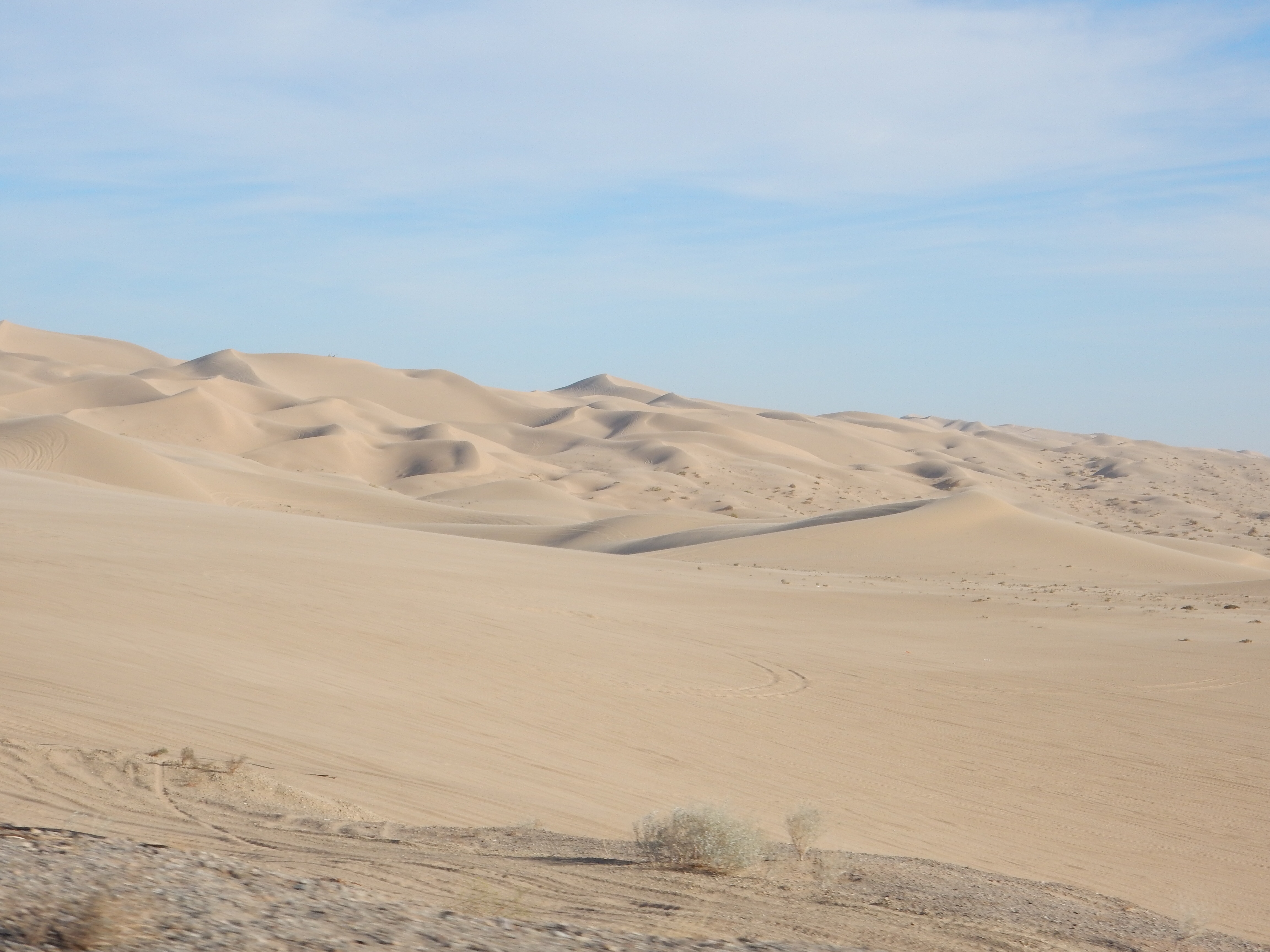
Our last experience of the day, on our 330 mile journey to Lake Havasu City AZ, was Imperial Sand Dunes in southeastern CA. Chris had discovered this location and we made this a stop to view. The sand dunes are part of the Algodones Dunes, the largest sand dunes in the U.S., and are a large, active dune field created by prevailing northwesterly and westerly winds. The Imperial Sand Dunes are managed by the Bureau of Land Management. One of the activities allowed is off highway vehicle riding. We passed camps of RVs and trailers of people staying here just to ride on the dunes.

Imperial Sand Dunes

Imperial Sand Dunes

Imperial Sand Dunes, trailers and RVs in background

Imperial Sand Dunes, trailers and RVs in background

The dunes were amazing. Think of your typical movie-style, African sand dunes with camels riding across them, only small motorized vehicles are zipping around and blasting off sand ridges. Today was windy here, so we had to keep our mouths shut and hope our eyes would not get too much sand in them. It looked like great fun, but not to be experienced by us today. These dunes were used by General Patton training his troops for battle in the North African campaign in WWII.

As we left the dunes, we passed a checkpoint where a uniformed man asked if we were U.S. citizens and then waved us on. Not sure if it was military, we were right across from a military gunnery range or if he was with the INS. But we were north of the border by a decent distance, well north of the “floating fence” constructed by the U.S. on sand dunes south of I-8 by the Mexican border. Anyway, we kept going and made it to the CA-AZ border in time for a quick bite as the sun set. Our drive up to Lake Havasu City was pretty much in the dark, so no sights seen.

Ed and Chris Monday Nov. 24 midnight

Categories: road trip, travel | Tags: , , , , , | 4 Comments

2014 Trip 7, Nov. 23, So. Cal and Thanksgiving in Flagstaff

Sunday, November 23, Twentynine Palms, CA

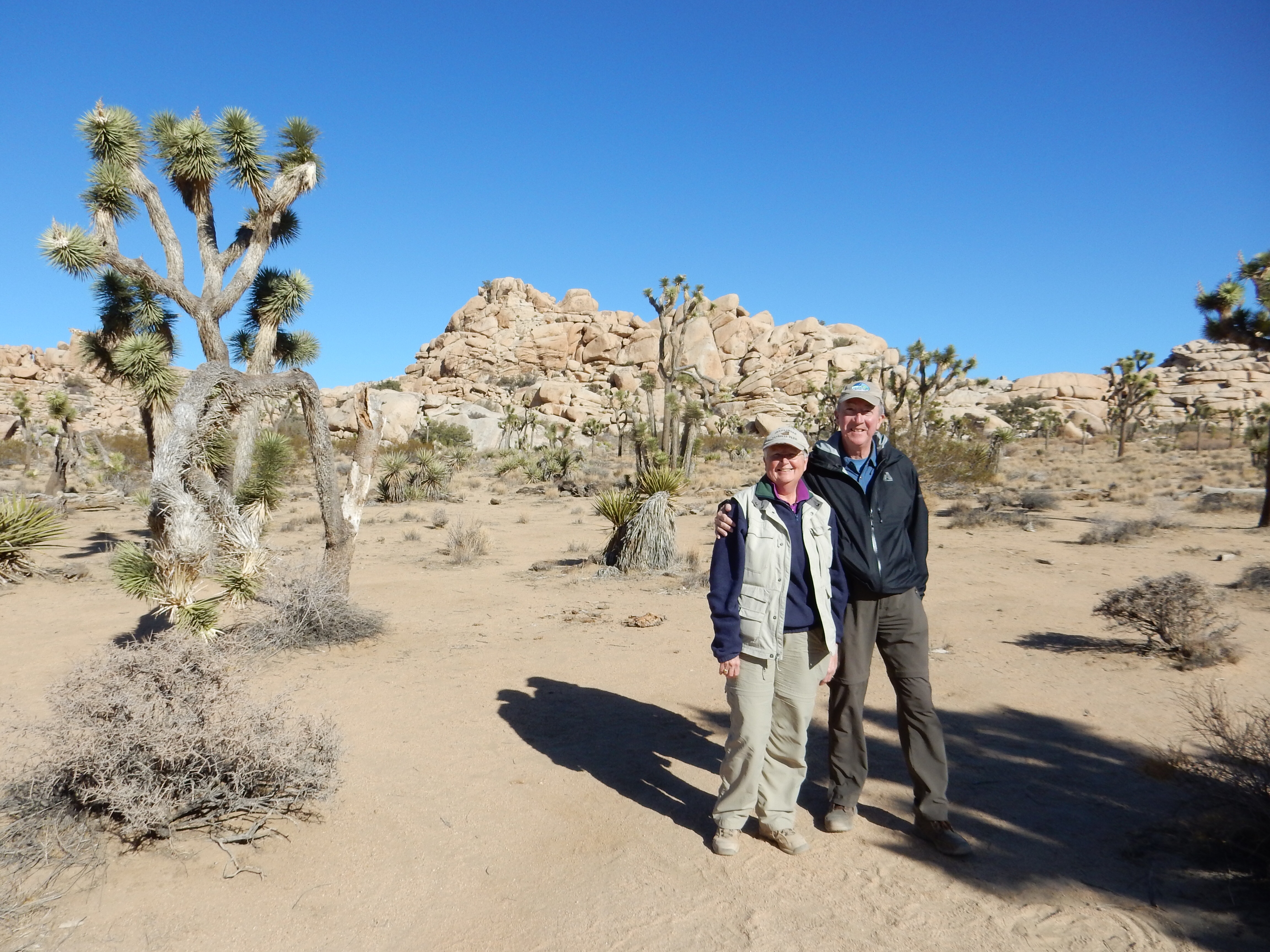
Hello from Joshua Tree National Park

Hello from Joshua Tree National Park

After breakfast and church, we spent the rest of the day hiking in Joshua Tree National Park, ending the day chasing the sunset as we hurried along the last hike to make sure we were out before dark. We did have a flashlight and we made it okay, although Chris stopped to talk to two young women as we were close to the end of the trail. They were just heading out for a quick walk on the second half of the trail and she offered them our flashlight. But they were prepared also; prepared with a flashlight and prepared to good-naturedly accept a mom’s advice to be careful on the trail.

The Oasis of Mara at Joshua Tree National Park

The Oasis of Mara at Joshua Tree National Park

The first hike was a short one; out to see the Oasis of Mara. The oasis was an important stop of The Butterfield Overland Mail route. This route was the first mail by stage from Memphis and St. Louis to San Francisco and began in 1858. (It also passed through the Anza-Borrego desert.) It was longer than a route through Denver and Salt Lake City but was pretty much snow free. The oasis has several fan palm trees; Joshua Tree NP has five such oases for these trees, the only palm trees native to the U.S. (Reality check-population growth in the area has lowered the aquifer at the oasis and the Park Service now pumps in water to keep the oasis thriving.)

There is a little bit of water behind the Barker Dam

There is a little bit of water behind the Barker Dam

area along the Barker Dam hike

area along the Barker Dam hike

Barker Dam was our second hike. A dam had been constructed here around 1900. We hiked out and there was a little water in the pond; like Lake Mead or Lake Powell, one could observe the rings on the rocks around the pond indicating how high the water had been previously. The trail goes through the rock formations and across open land with yuccas and Joshua trees. Towards the end of the trail are petroglyphs. However, these were painted over by a Disney crew years ago to make them more visible for the film that was shot here. At least I know I am not the only one who has trouble to get petroglyphs to be visible in pictures.

Hidden Valley at Joshua Tree National Park

Hidden Valley at Joshua Tree National Park

Hidden Valley

Hidden Valley

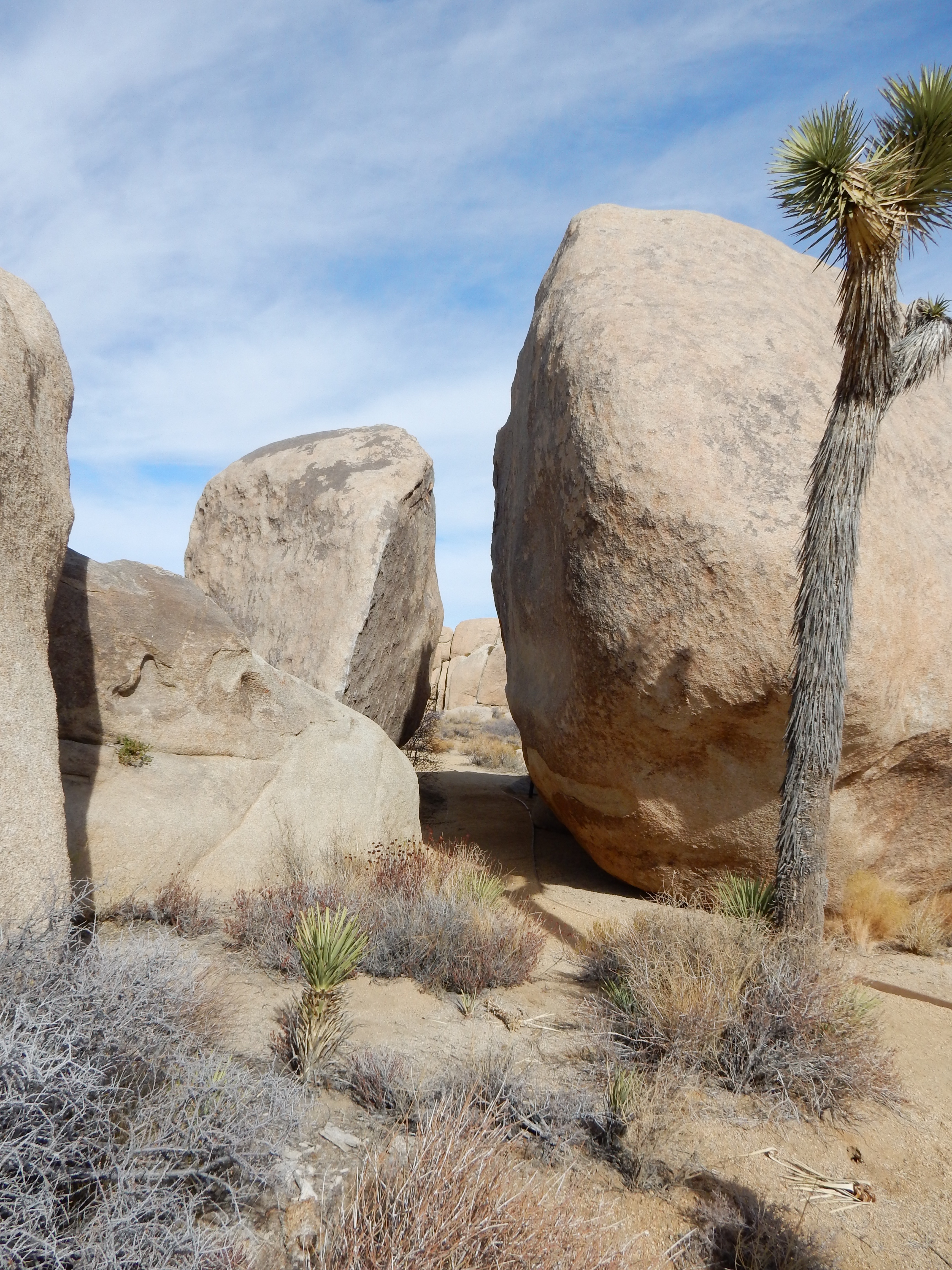
Hidden Valley was next. Hidden Valley was another of those areas supposedly beloved by cattle rustlers. It was evident why it might have been. The valley is not reachable except for one opening and it has a water source. The rock walls are high around the valley and provide natural visual obstruction from prying eyes. Trees and shrubs magically seem to grow in the middle of the rocks, finding some little bit of dirt to bury their roots in.

We headed back to Cap Rock in a vain attempt to find a “shrine”. In preparing yesterday’s post, I came across an item that a “shrine” to Graham Parsons, a singer who died of a drug overdose in 1973 at a motel in the town of Joshua Tree, was located on the north side of Cap Rock. A friend and road manager stole the body and cremated it near Cap Rock in the park. We did not see anything like that on our hike yesterday and on our return visit today, we still did not find it. We even checked out two other nearby rock formations. Nada. Not a problem, I had never heard of Graham Parsons prior to yesterday anyway.

Skull Rock

Skull Rock

Skull rok hike

Skull rock hike

Our last hike was Skull Rock. (You need a vivid imagination to consider this rock formation a skull.) We started the hike at 3:30 which should be plenty of time to finish a two-mile hike by sunset. But, rocks and enjoying the vistas took us up to 4:20 to finish the hike. We did wait for the sun to finish setting before we headed back to the motel.

Dinner was at a small mom and pop type restaurant with cheap, comfort food that was quite tasty and met our needs.

Ed and Chris 11/23 9 PM

Categories: road trip, travel | Tags: , | Leave a comment

2014 Trip 7, Nov. 22, So. Cal and Thanksgiving in Flagstaff

Twentynine Palms, CA Saturday Nov. 22

Joshua Tree National Park

Joshua Tree National Park

Joshua Tree National Park. Back in the desert today. This desert looks different from the others, there is more fractured rock piles than we have seen elsewhere, and along with the Joshua trees, makes for an interesting visit.

Joshua Tree National Park

Joshua Tree National Park

Joshua Tree was made a National Monument in the 1930s and upgraded to a National Park in the 1990s. Those pesky Californians were taking plants from the desert for their homes and a wealthy woman from LA began the successful push to make this area into a National Monument. Joshua Tree NP, like the other deserts we have seen lately, has low (below 3,000 feet elevation) and high (above 3,000 feet elevation) desert. The Joshua tree (actually a species of yucca plant) thrives more at the high desert elevation. We saw one species of Joshua tree in the Mojave Desert, the ones here are not the same. I will spare the details of the differences.

We left Escondido by 9:15, expecting a three-hour drive. It only took two, all freeway type driving. We had a 1:45 p.m. deadline to attend a two-hour ranger led tour of Keys Ranch. Only 25 people per tour, only 3 tours per week. Our first choice for Friday was already filled, thus necessitating our change in plans, spending two nights around Joshua Tree, and skipping El Centro and Yuma. Some have said skipping those two results in no real loss.

Cap  Rock area

Cap Rock area

Cap Rock area

Cap Rock area

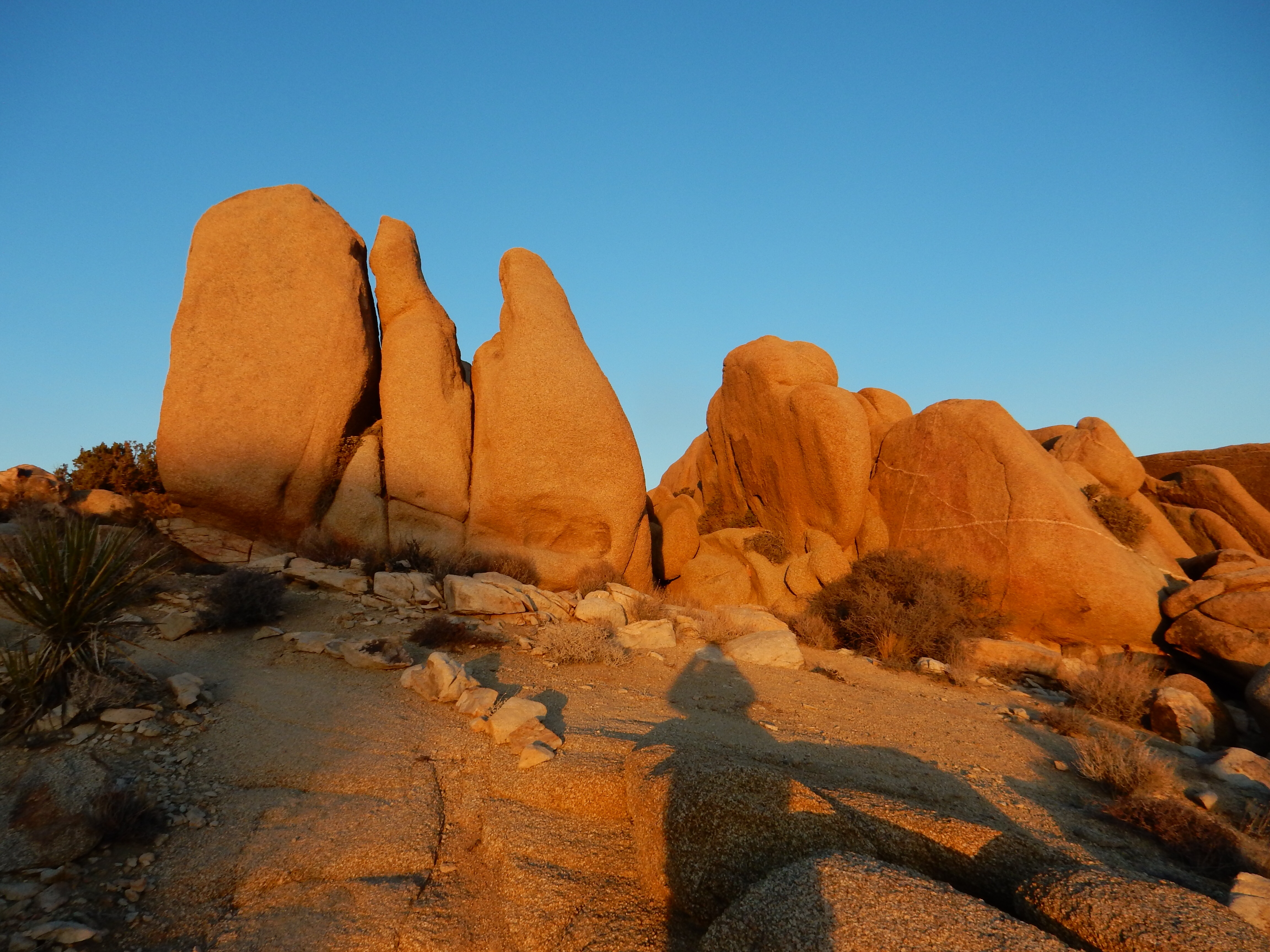
Given the drive, early sunsets, and tour, we had no major other goals for the day. Arriving early allowed us to stop in the visitor center and see their film. Then we headed to Cap Rock picnic area for a short hike and lunch (yup, PBJ sandwiches). At Cap Rock, and elsewhere, fault lines and weathering over millennia have created these rock piles, in the midst of otherwise flat landscapes. We saw numerous rock climbers, this is a destination site for rock climbing with climbing schools and guides in the area.

Keys Ranch at Joshua Tree National Park

Keys Ranch at Joshua Tree National Park

Our tour was at Keys Ranch. Bill and Frances Keys were among the few successful homesteaders in the area. The ranch is preserved and only accessible through docent or ranger led tours. The ranch’s history dates back to mining days in the 1800s when prospectors dug numerous mines in this expanse of wilderness. For a time, two brothers ran a cattle operation here that was supposedly more rustling than ranching.

For a while, ranching became a big business also. We were told that in the early 1900s, rainfall averaged 10 inches a year, enough to provide abundant grassland. Overgrazing and a series of droughts pretty much killed off the grass and the cattle ranching. Current annual rainfall is in the 2-4 inches per year range.

Before buying the ranch, Bill Keys began as the manager of the ranch and a prospector. Frances married him when she was 31 and came to his “beautiful” desert ranch sight unseen. They had 8 children, four survived to adulthood, 3 of them still living. The Keys survived by acquiring water rights and damming up pools of water; creating fertile gardens with manure,etc; leasing out prospecting rights (gold) to other miners; renting cabins to miners and WWI vets; and running a gold processing mill for the other miners.

Part of the scrap yard

Part of the scrap yard

another portion of the scrap yard

another portion of the scrap yard

Being a goodly distance from civilization, Bill learned multiple trades and kept a home-made salvage yard for necessary parts. He built part of his dams and retaining walls with granite, making the granite fit by manually drilling holes and inserting water-soaked burlap and wood (which would expand in the heat) into the holes to fracture the rock along the lines he needed. Frances “bribed” other parents to send their kids (otherwise busy doing chores around their own ranches) with fresh fruit and vegetables so there would be enough school children to justify a county paid school teacher.

Sunset view

Sunset view

Sunset view

Sunset view

Sunset view

Sunset view

The tour did not last the entire two hours so we had time to drive down to Keys View, at an elevation of 5100 feet providing an almost 360 degree view. We could observe the smog rolling in from L.A. through the pass in the mountains that Interstate 10 takes. We were able to view the Salton Sea (more on that in a day or two) to the south. We could view San Jacinto Mountain to the west, site of our hiking from the Palm Springs Aerial Tramway a few days ago. And, we were able to view large numbers of people who had also gathered here to watch the sunset and take pictures.

Dinner was at a nice restaurant attached to a local inn. It was refreshing to have a relaxing, fancy dinner for a change.

Ed and Chris Sunday Nov. 22 7 AM

Categories: road trip, travel | Tags: , , , | Leave a comment

2014 Trip 7, Nov. 21, So. Cal and Thanksgiving in Flagstaff

Escondido, CA Friday Nov. 21

I have read that shopping is the number one activity of travelers. So, we tried it today. Over-rated.

We drove up to Temecula, a town of less than 2000 people in 1980 and an estimated 106,000 people today. The town began as a Spanish mission settlement, and was run like an autocratic ranch. The Mexican government took away the mission land and passed it over to several large landowners. The U.S. took over the area by treaty, just weeks before gold was discovered at Sutters Mill. Settlers and miners came, the Indians were kicked out to a reservation, and ranching became a big business. I-15 was completed in the early 1980s and development skyrocketed. The area has kept a large portion set aside for agriculture and the Temecula Valley Wine corridor is a major tourist attraction with 38 wineries, and 7 breweries, in the area. The Native Americans now own the largest casino in CA, the Pechanga Casino. A very short history.

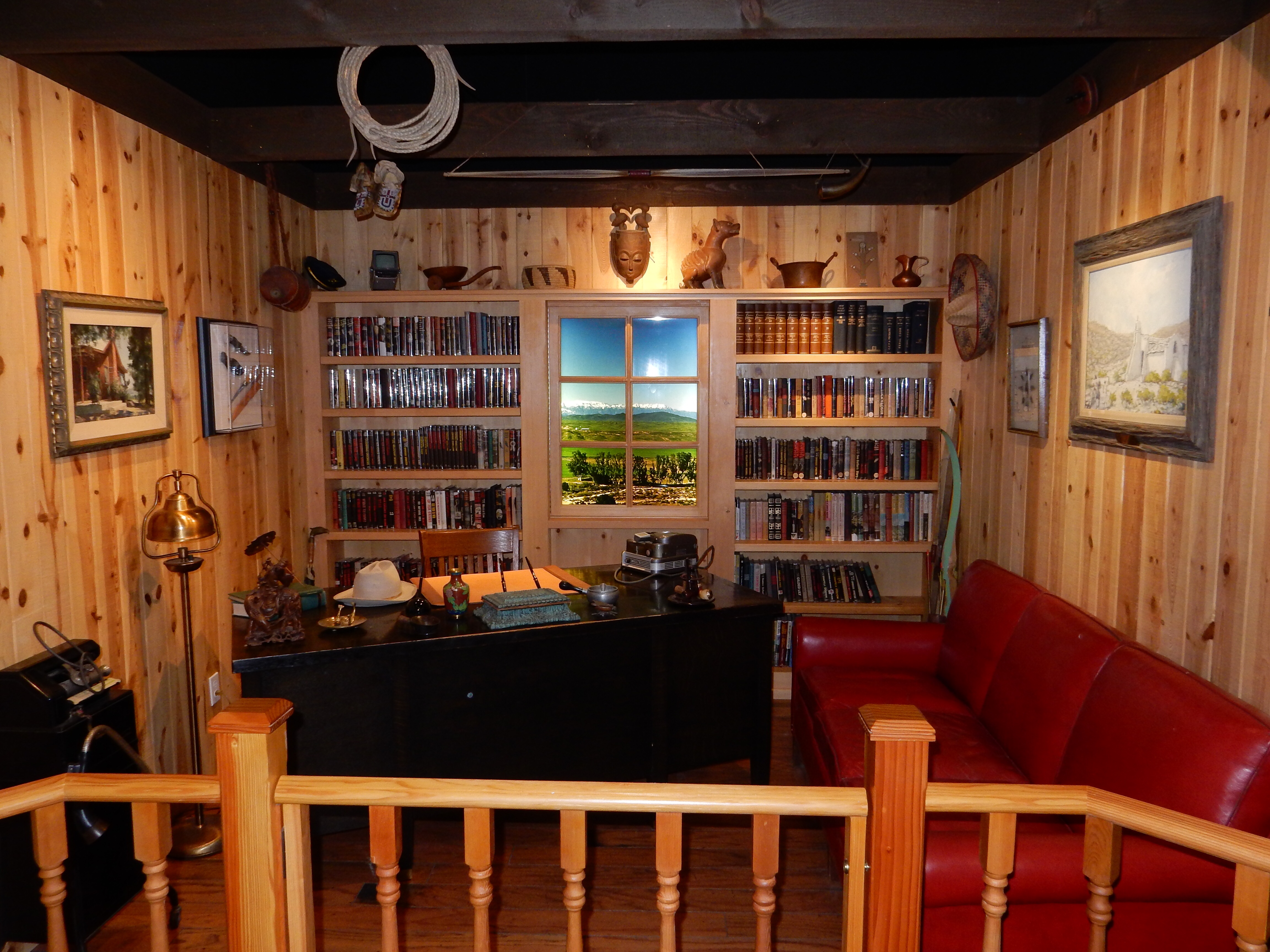
The Erle Stanley Gardner room at the local museum.

The Erle Stanley Gardner room at the local museum.

The downtown has kept an Old West ambience. We visited the local history museum and besides telling the history of the area, there was a tribute to Erle Stanley Gardner, the author of the Perry Mason books and TV series that ran from 1957 to 1966. Gardner lived in Temecula for 33 years.

We had lunch at a local Mexican restaurant, the Bank, which is in a bank building built in 1912. It had two claims to fame, it stayed open during the Depression and when it was robbed in 1930, the local citizens caught the robbers. After lunch, we spent time shopping, but no purchases were made. We really had nothing particular in mind and nothing new jumped out at us. I did inquire at several stores if they had any locally made Christmas ornaments but other than a few from Germany and Egypt, all ornaments were made in China.

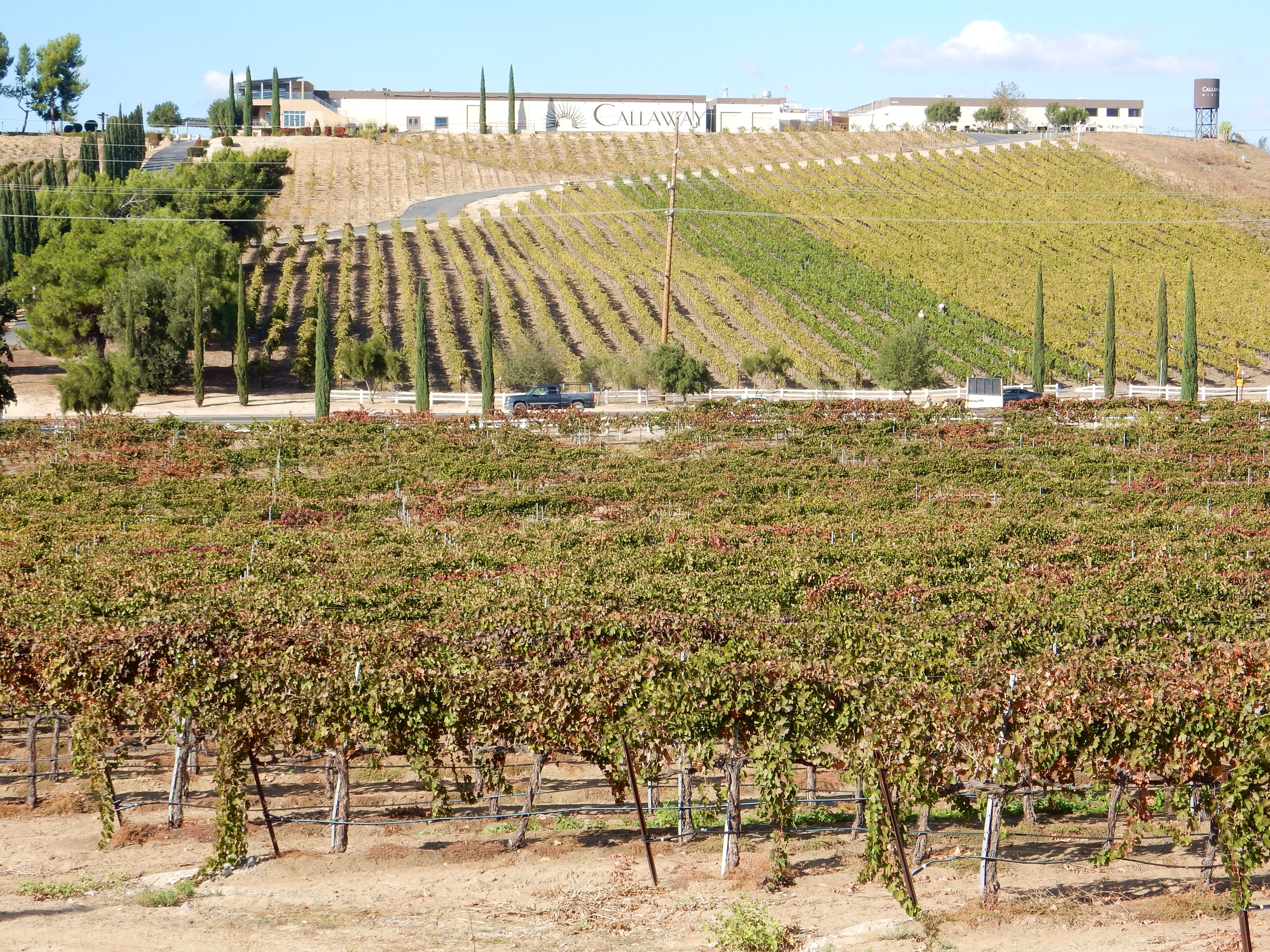
A view of some vineyards and a winery.

A view of some vineyards and a winery.

Not being wine drinkers, we made a cursory tour of the wine area and observed numerous wineries, many with large and ostentatious tasting rooms. The parking lots were large, but not terribly busy today. It seemed the weekends were prime times for visitors/buyers.

We were back in time to enjoy some rays in the sun. Tonight is music at the fire pit; solo guitar. A nice way to end the time here. Tomorrow it is off for two days at Joshua Tree National Park.

Ed and Chris Nov. 21 9:45 PM

Categories: road trip, travel | Tags: , , | 1 Comment

2014 Trip 7, Nov. 20, So. Cal and Thanksgiving in Flagstaff

Escondido Thursday Nov. 20

Driving to Anza Borrego Desert State Park

Driving to Anza Borrego Desert State Park

Sometimes I have given Chris grief that our hikes are not as frequent, long, or difficult as they were several years ago. Well, no grief today. We drove 60 miles over our usual two lane twisty roads to Borrego Springs, site of the visitor center for Anza-Borrego Desert State Park. This is the largest state park outside of Alaska. The park includes both high and low elevation desert areas. The route here again ascends and descends up various mountains, some new to us and some familiar by now, leading to a 10 mile descent to the park visitor center.

Anza-Borrego Visitor  center sign-but no center

Anza-Borrego Visitor center sign-but no center

Ah, the visitor  center is under the parking lot area

Ah, the visitor center is under the parking lot area

That is, once we found the visitor center entrance. The center is built into a hillside, facing away from the parking lot, to take advantage of the cooling effects of being underground. After all, this is the desert. We were told that the park will receive calls from people in the parking lot asking for directions to the visitor center entrance. We did find it on our own.

During the summer months, the park is only open on weekends and federal holidays due to the heat. This is the busy season. A park volunteer informed us that on New Year’s week, they can have 60-80,000 people camping out here. Luckily for us, today was quiet and pleasant, temperatures in the low 70s.

We watched the park film, showcasing the park in four seasons. Evidently it was produced by a local volunteer with Hollywood film making experience. For the music, since local orchestras were pricing their services for 25k and up, he flew to Bavaria and had the music scored for $7,000. It took 2.5 years to make the film. It was quite nice. However, the film states this park has 2/3 of the U.S. bighorn sheep. We did not see any. But, as I said, it is a big park.

Hike 1, the nature trail by the visitor center

Hike 1, the nature trail by the visitor center

There was no way we could see the entire park so three hikes in different areas were on our agenda. Two were a half hour or less. The third was 2.5 hours and we saw more on this hike than we had originally planned. I won’t say we were lost, we always were comfortable where we were and knew how to get back to our car. But, we were in locations that we had not planned to visit. The “extended” hike added time, distance, and elevation gain to our hike. It also added a little mystique, we are likely to recall this one from among the many we take.

Hike two exploring geology

Hike two exploring geology

The first two hikes were relatively flat and showcased some of the desert’s vegetation and geology. For instance, the second hike ran by several fault lines, evidence of plate movement. We did not feel the earth move while we were here.

Vegetation along hike three

Vegetation along hike three

Now where is the trail?

Now where is the trail?

For third hike, we drove to a spot that promised a year round spring just 1.5 miles away. That seemed cool, to see a spring in the middle of the desert. The spring had been vital to cattle ranching here in the late 1800s and early 1900s. There are no trees to mark the trail. Stone markers are not of much value, there are stones everywhere. There are no “smooshed” leaves or tan bark to mark the trail. So you try to go by rocks, and sand, and foot prints. This 1.5 mile trail leading to the spring was to have 14 markers along the path, highlighting various vegetation or geology. A brochure details the highlights at each marker.

We started hike three at the bottom of  this hill

We started hike three at the bottom of this hill

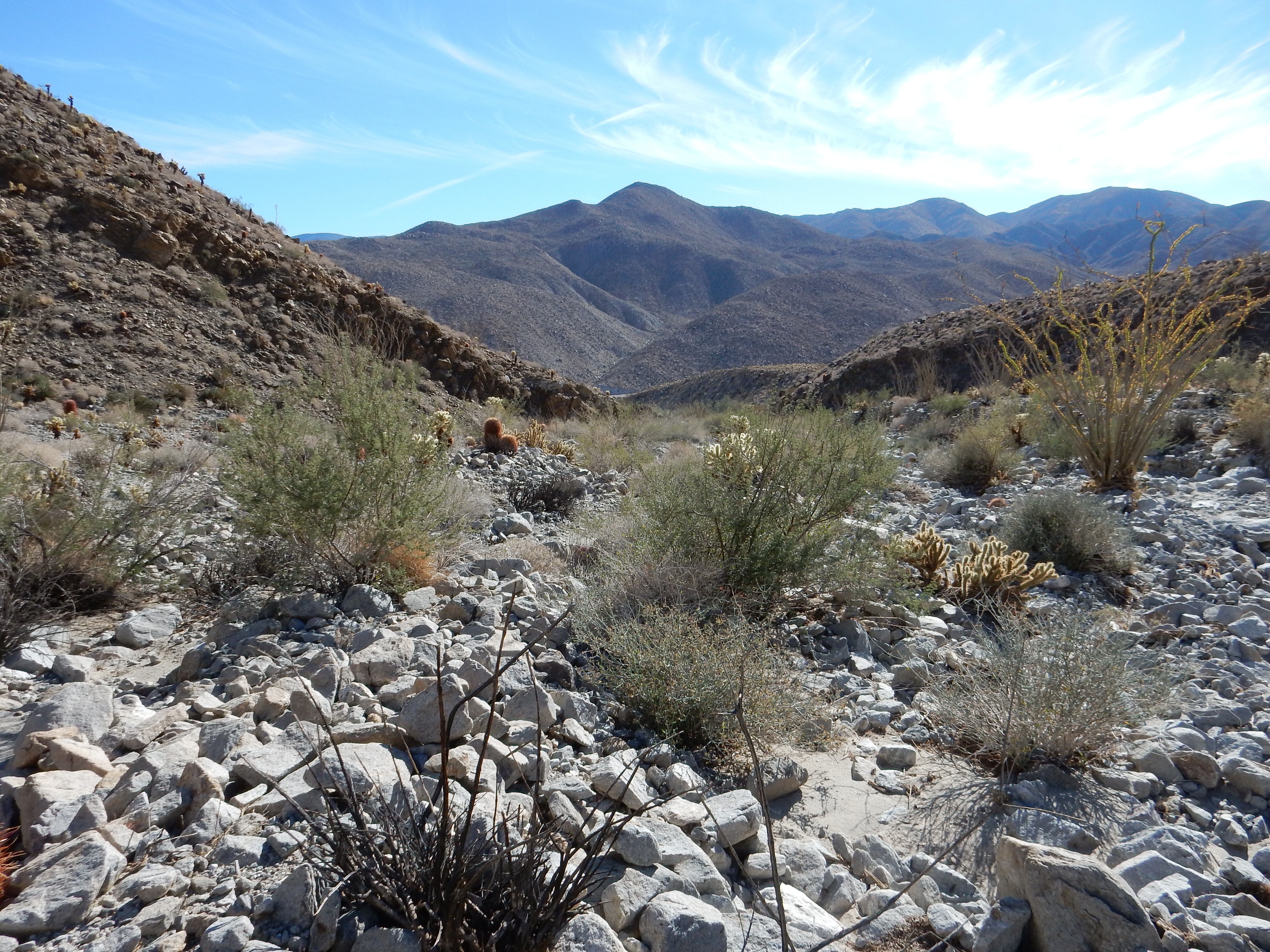
Along hike three in Anza-Borrego Desert State Park

Along hike three in Anza-Borrego Desert State Park

After marker 6, discussing the ocotillo shrub and its relationship with hummingbirds (we saw some), the trail took a turn that we missed. We continued along the wash, going uphill further and further, wondering if vandals had removed the other markers, looking for vegetation that might evidence a spring. Since we were comfortable in being able to find our way back, we did continue, stopping for lunch (PBJ sandwiches again) along the way.

The "spring'-the purpose of hike three

The “spring’-the purpose of hike three

Eventually we said enough is enough and headed back down. Somewhere along the way, Chris went exploring and picked up the trail we had missed. So now we continued to finish the rest of the hike. Up more hills and down we went, finding, at last, the spring! It was dry.

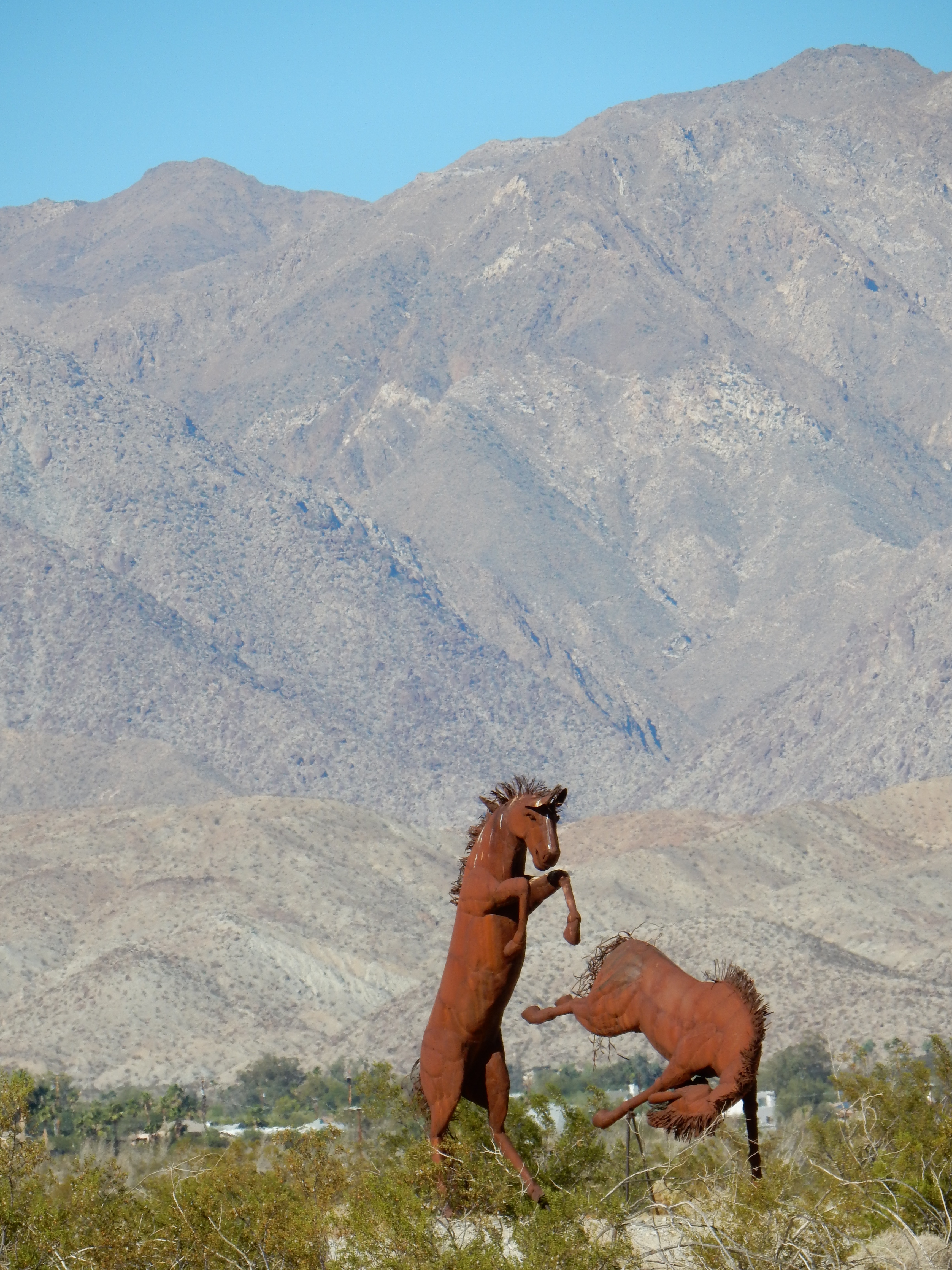
One of the Borrego Springs sculptures

One of the Borrego Springs sculptures

Still, we felt a sense of accomplishment, hiking farther than we planned and making it to the spring-and back. This time going back was just 1.5 miles. Not sure how far we went in getting to the spring. Once again clouds started forming and day was moving on. Borrego Springs, the community, has rust colored sculptures around town. We had seen several on our drive out to the hikes but our decision was to head back and forego visiting more sculptures.

Driving back home from Anza-Borrego Desert State Park

Driving back home from Anza-Borrego Desert State Park

The drive home was eventful. We had a nice “rest” while we waited 40 minutes to go through a construction zone. They just began paving this stretch yesterday, we had driven on this road Tuesday and had no difficulty.

Back at the resort, a well-earned shower was the reward for a solid day of hiking, followed by pizza and, yet to come, apple pie.

Ed and Chris Thursday Nov. 20 8:20 pm

Categories: road trip, travel | Tags: , , | 1 Comment

2014 Trip 7, Nov. 19, So. Cal and Thanksgiving in Flagstaff

Escondido CA Wednesday Nov. 19

Dudley Apple Walnut Strudel and Julian Apple Pie

Dudley Apple Walnut Strudel and Julian Apple Pie

Wednesday was our “food” day, out and about to visit some local food establishments. Of course, everything is a drive away. This area of Southern California is still a learning experience for us. Our drives take us through a variety of locales and topography, yet some items are a constant, although hard to fathom, experience.

Trees growing on an otherwise arid hillside

Trees growing on an otherwise arid hillside

We can be driving through steep hills on twisting, two lane roads and suddenly, in what seems the middle of nowhere, we come upon a valley with a town of 50,000 or 70,000 or even 100,000 people. There are 6 lane roads full of traffic, not interstates, with no housing anywhere in sight. Where are these people coming and going to? We can be driving through arid hillsides with only scrub brush and suddenly there are acres of nurseries, or orchards, or tree farms. Some of the plots are small, some are quite large. What distinguished the decision to plant on this hillside and not on another?

How does the water get allocated to certain plots? How are they irrigating these acres of plants and trees? How are the towns getting the water supply? I had read that Palm Springs and Palm Desert are sitting on a large aquifer of water and certainly there are some impounded bodies of water used for reservoirs. We know Colorado River water comes over here. We know snow from the Sierra Nevada Mountains is used for water in Southern California. The whole engineering, pricing, and allocation system must be complex.

We drove to Julian CA, about an hour away. The drive takes us from just under 700 feet in elevation to 4500 feet. Our first stop is at Bates Nut Farm in Valley Center. Bates is somewhat misnamed as while it started out raising walnuts in 1921; weather issues forced their switching to buying nuts from all over the world, roasting and re-packing them here. Still it was an opportunity to drive through some of the agricultural areas.

Julian Pie Company, Santa Ysabel location

Julian Pie Company, Santa Ysabel location

Our next stop is Santa Ysabel, home to Dudley Baking Company. We pick up an apple walnut strudel loaf for breakfast over the next few days. Lunch is at the Apple Country Restaurant, next to a Julian Pie Bakery. We had a piece of Julian’s apple pie for desert and wandered over to the pie shop itself to watch the baking process. A whole apple pie was crying out to us, and asking us to take it back to the Welk resort. Well, who can say no to an apple pie? So now it sits in our refrigerator, waiting for desert time tonight, and tomorrow, and the next night. We also picked up a small bag of cooked pie dough covered with cinnamon and sugar.

Julian Pies began in 1986 when Liz Smothers began working for a local pie shop. Then two others asked her to bake for them. Soon she set out on her own and bought an apple farm, planting 17,000 apple trees. They now have two locations and deliver pies to San Diego and Riverside counties.

Miner's Diner and Drug Store in Julian CA

Miner’s Diner and Drug Store in Julian CA

We did drive into Julian but it was sort of a let-down after the other stops. Julian began as a gold rush town in 1869. The gold petered out but apple trees had also been planted around this time and apple growing is still a major economic engine in the area. The historic Miner’s Diner and Soda Fountain, building dates back to 1886 and was the first brick building in town, sits on the main intersection of town (population 1500) so we stopped in and had ourselves a vanilla soda and a chocolate malt.

All in all, a fun drive in the country, exploring topography, food, and CA drivers.

Ed and Chris Thursday Nov. 20

Categories: road trip, travel | Tags: , , , | Leave a comment

Blog at WordPress.com.