road trip

2015 Trip 3, Isle Royale, June 26

Little Marais, MN June 26

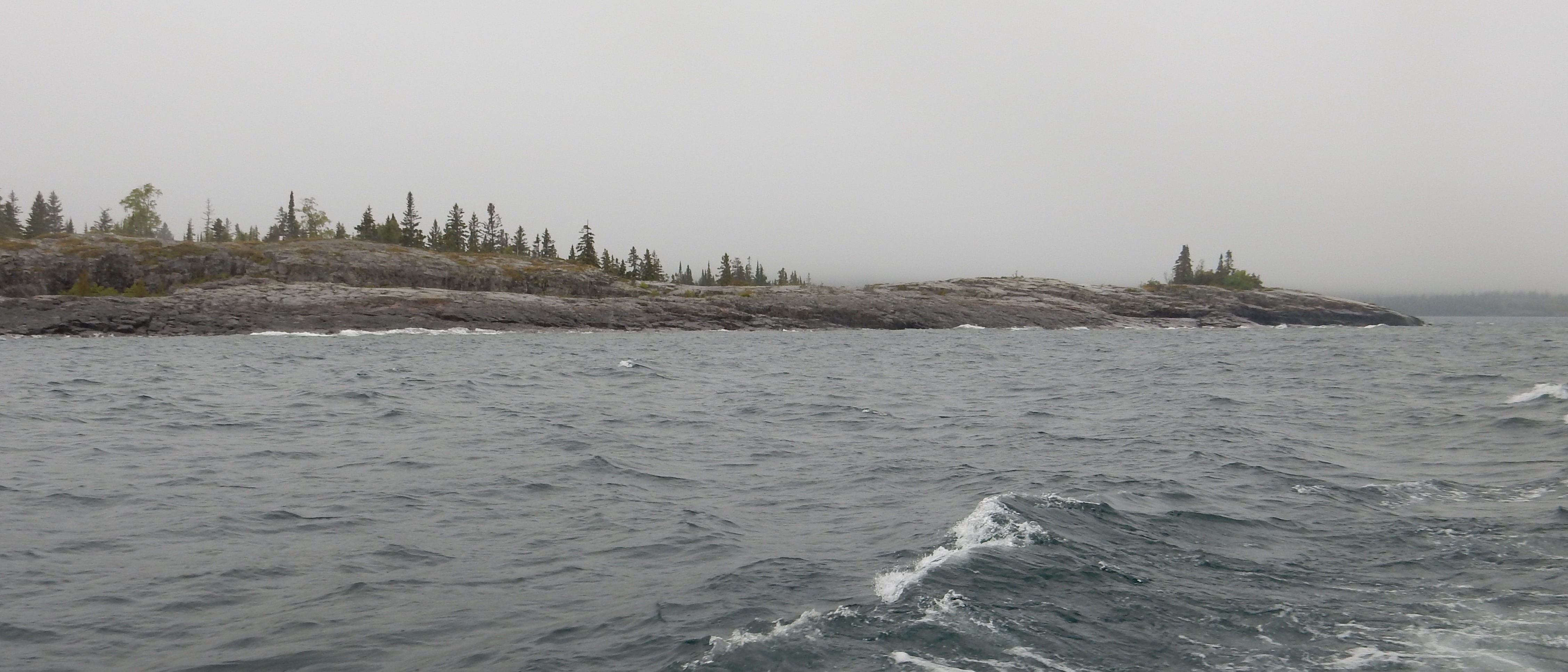
Not to beat a dead horse, but, fog is an ever-present condition in June along the North Shore. Recognize that our definition of North Shore is pretty much at the shore itself of Lake Superior. I would guess that the MN marketing definition includes many points further inland along this 170 mile stretch of Lake Superior from Duluth to the U.S.-Canada border.
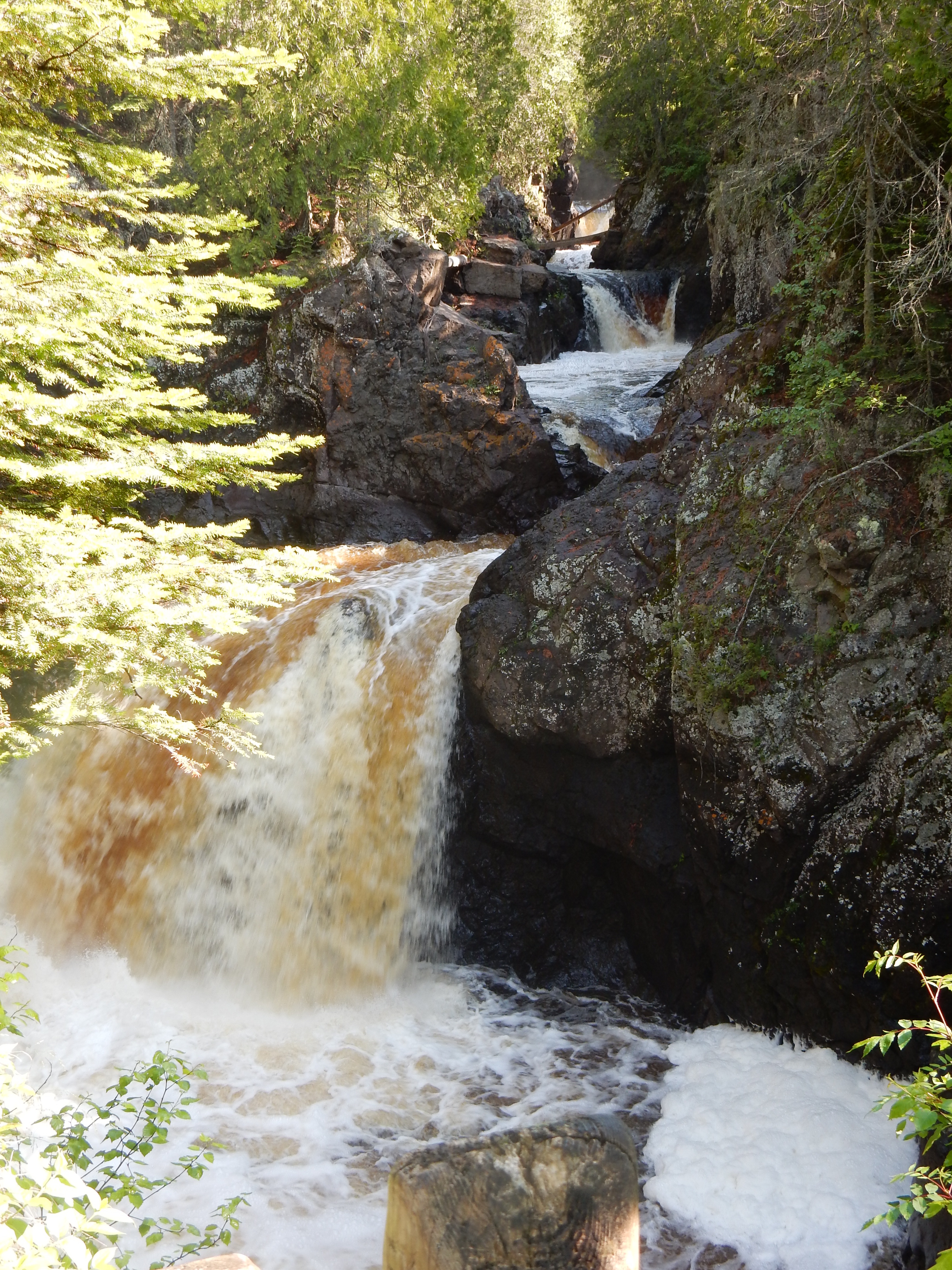
Cascade River Falls, North Shore of MN

Cascade River Falls, North Shore of MN

We began the day’s adventure at Cascade River State Park, near Lutsen MN, maybe 15 miles west of Grand Marais. I have to comment here on directions. The North Shore is an angle of land that generally is in a northeast to southwest direction. So, while you think of the U.S. and Canada, you think of driving north and south; in most cases here you are going more easterly. Given the road twists and turns, the actual direction at any one time could be just about any direction on the compass.
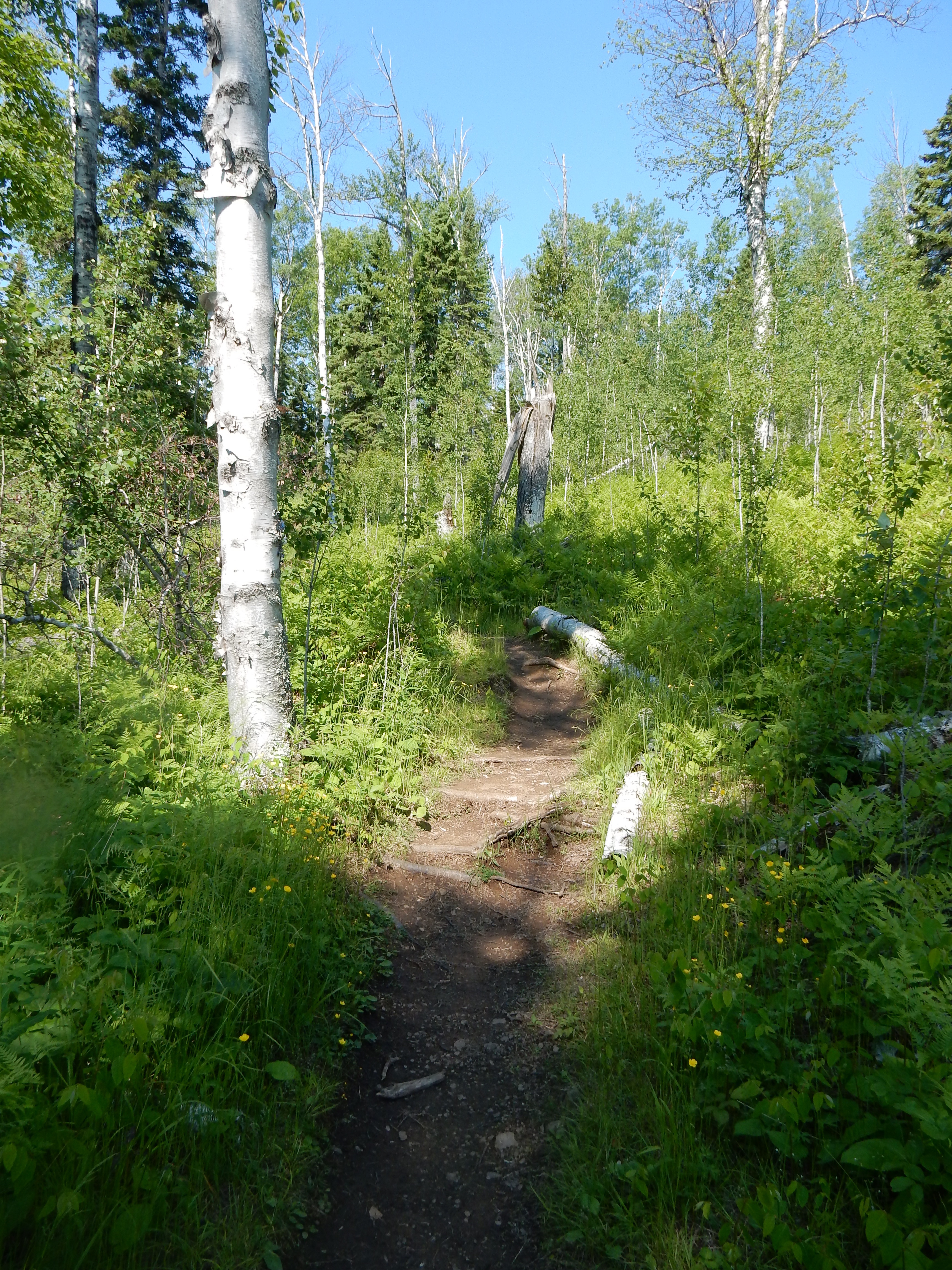
Hiking to Lookout Mountain

Hiking to Lookout Mountain

Back to Cascade River State Park. The park is 2865 acres of land stretching from the Lake Superior shore up into the Sawtooth mountains. The shore line is not sandy, it is covered with rocks and pebbles, including the Lake Superior agate. The geology of this area includes lava flows, sedimentary rock laid down by ancient oceans, glacial action and other geologic and erosive actions. The Lake Superior agate, the state gemstone, is noted for its rich red, orange and yellow coloring, created by the iron in this area. Agate hunting among the rocks is a popular pastime for visitors, much like shell hunting along ocean beaches.
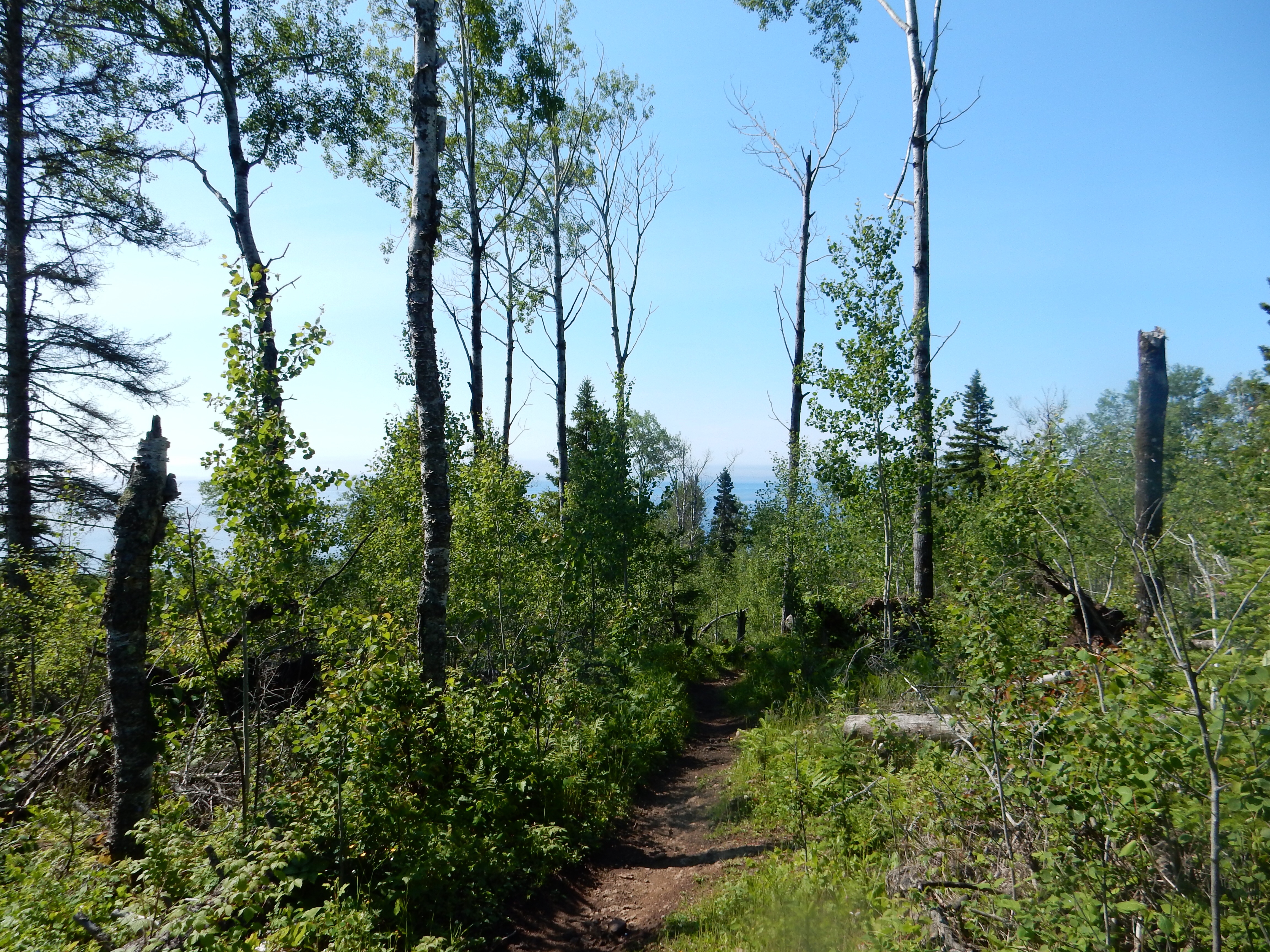
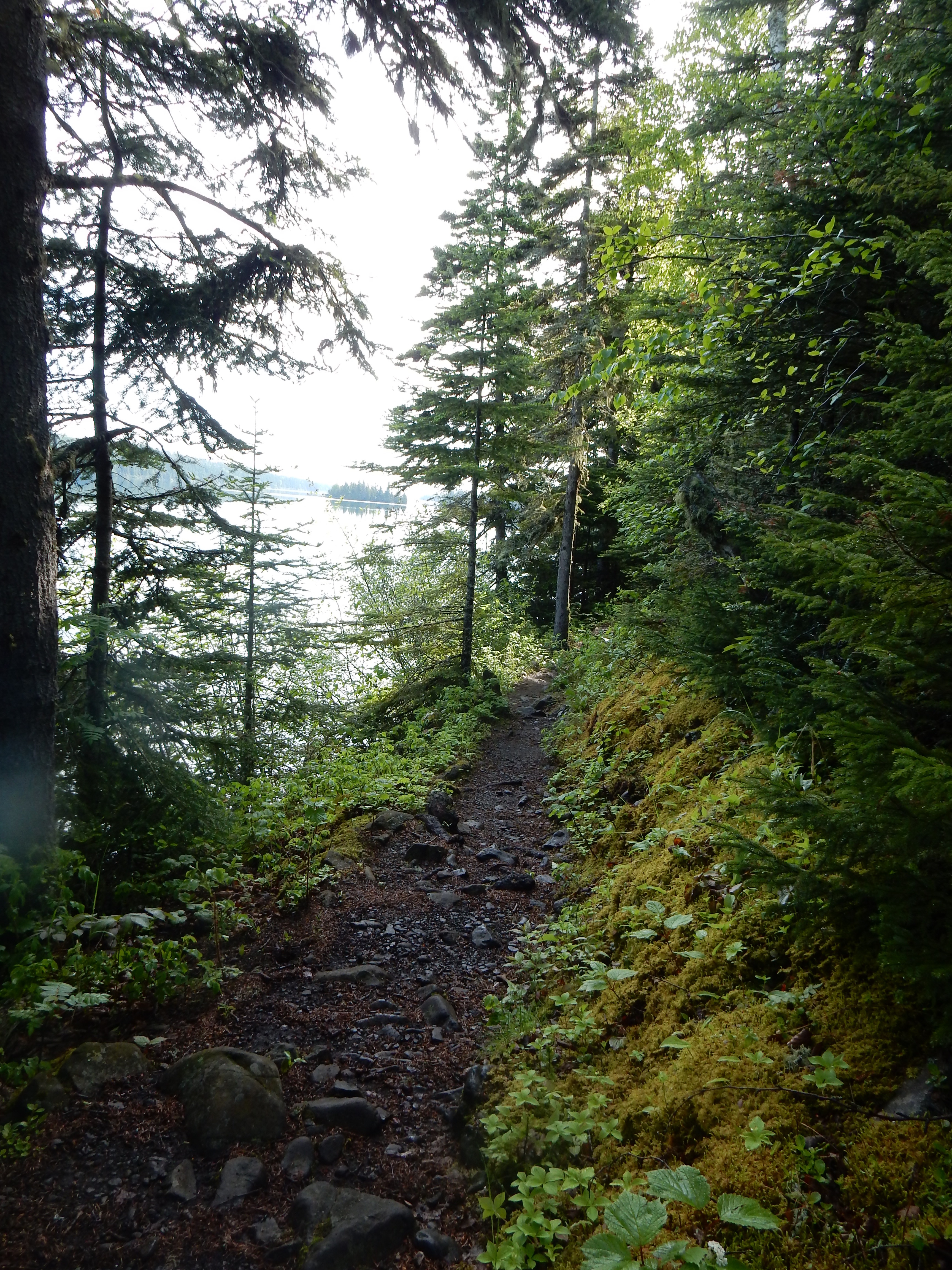
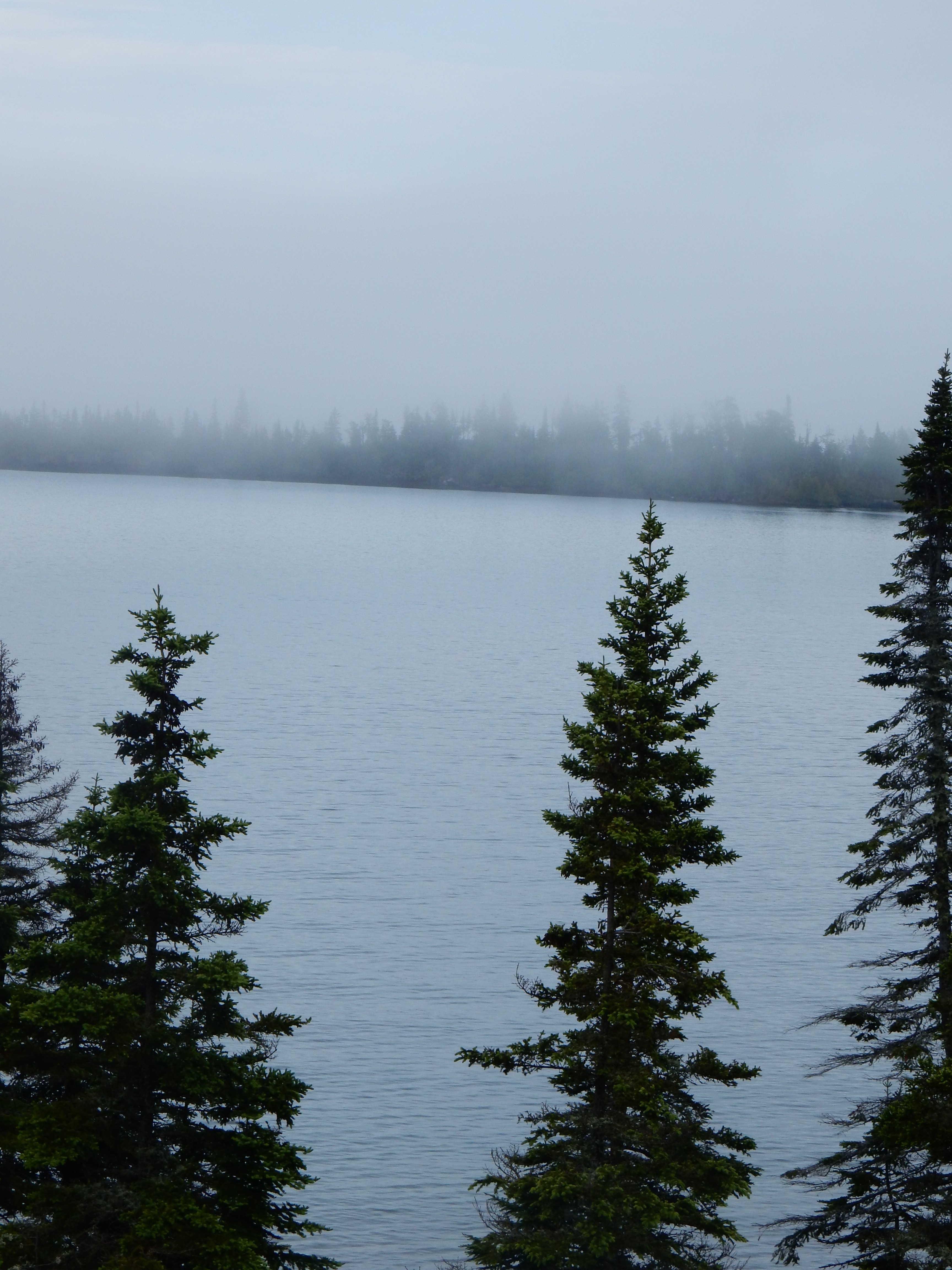
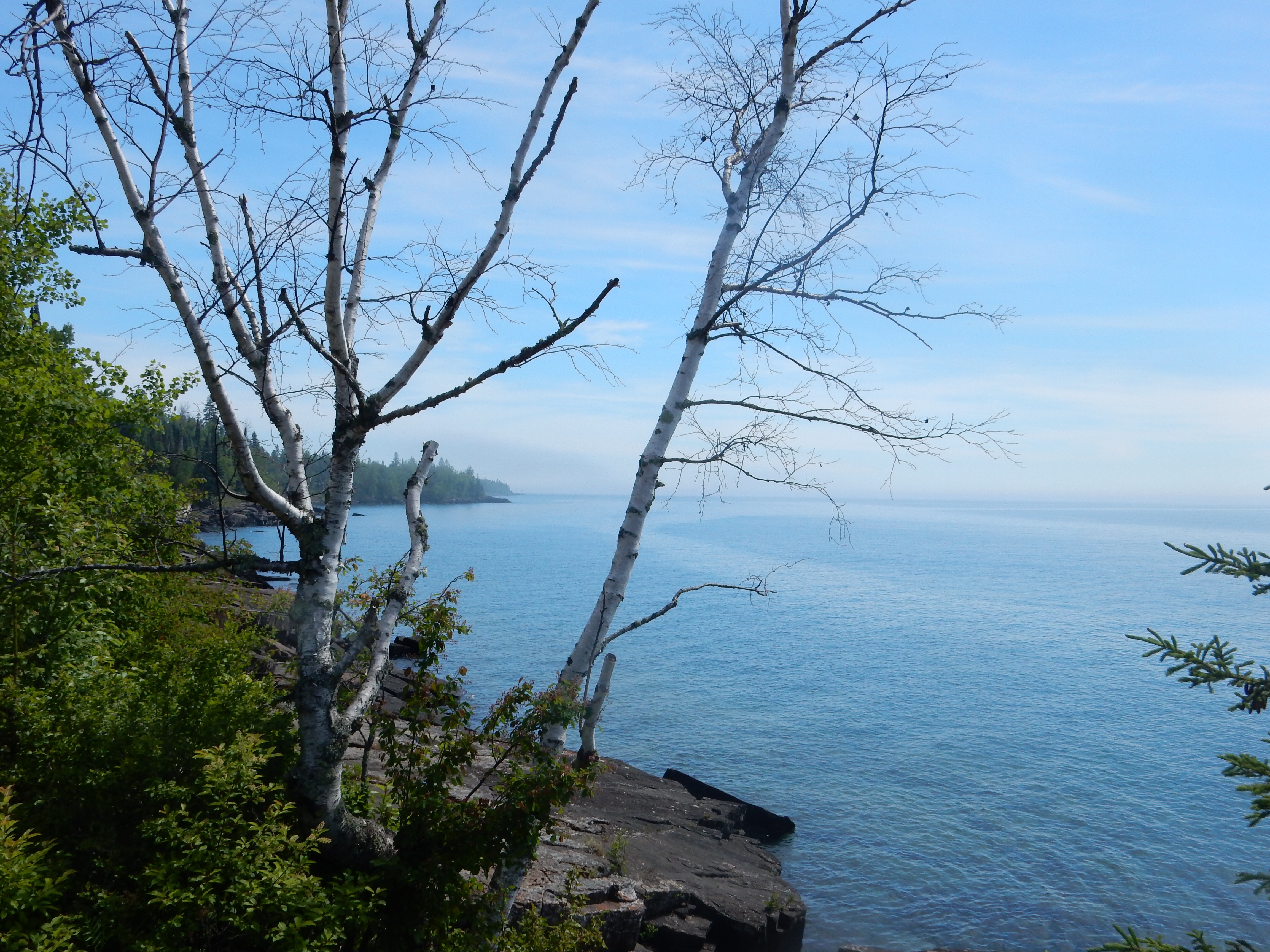
View of Lake Superior from the trail
View of Lake Superior from the trail

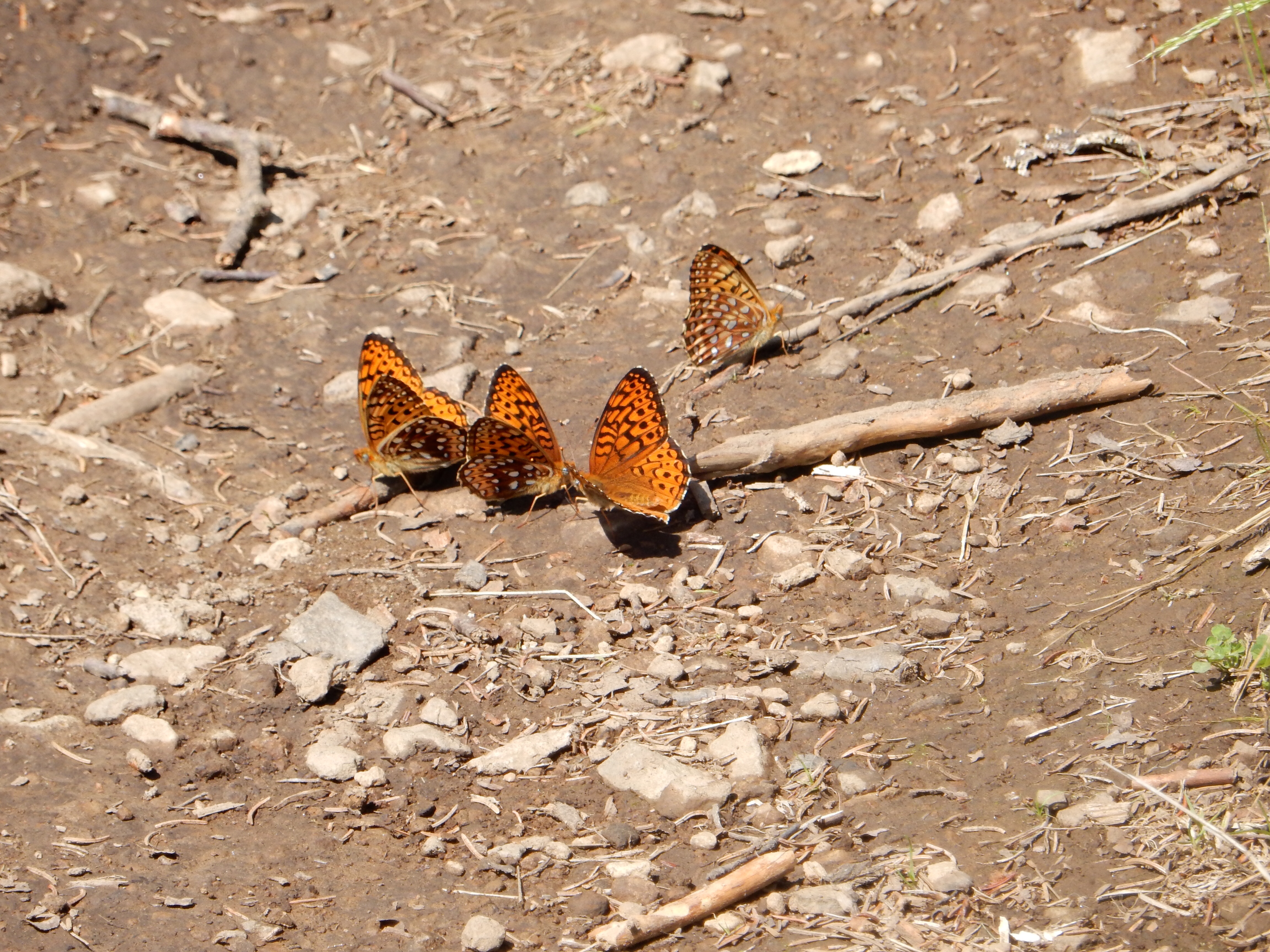
Butterflies along the trail

Butterflies along the trail

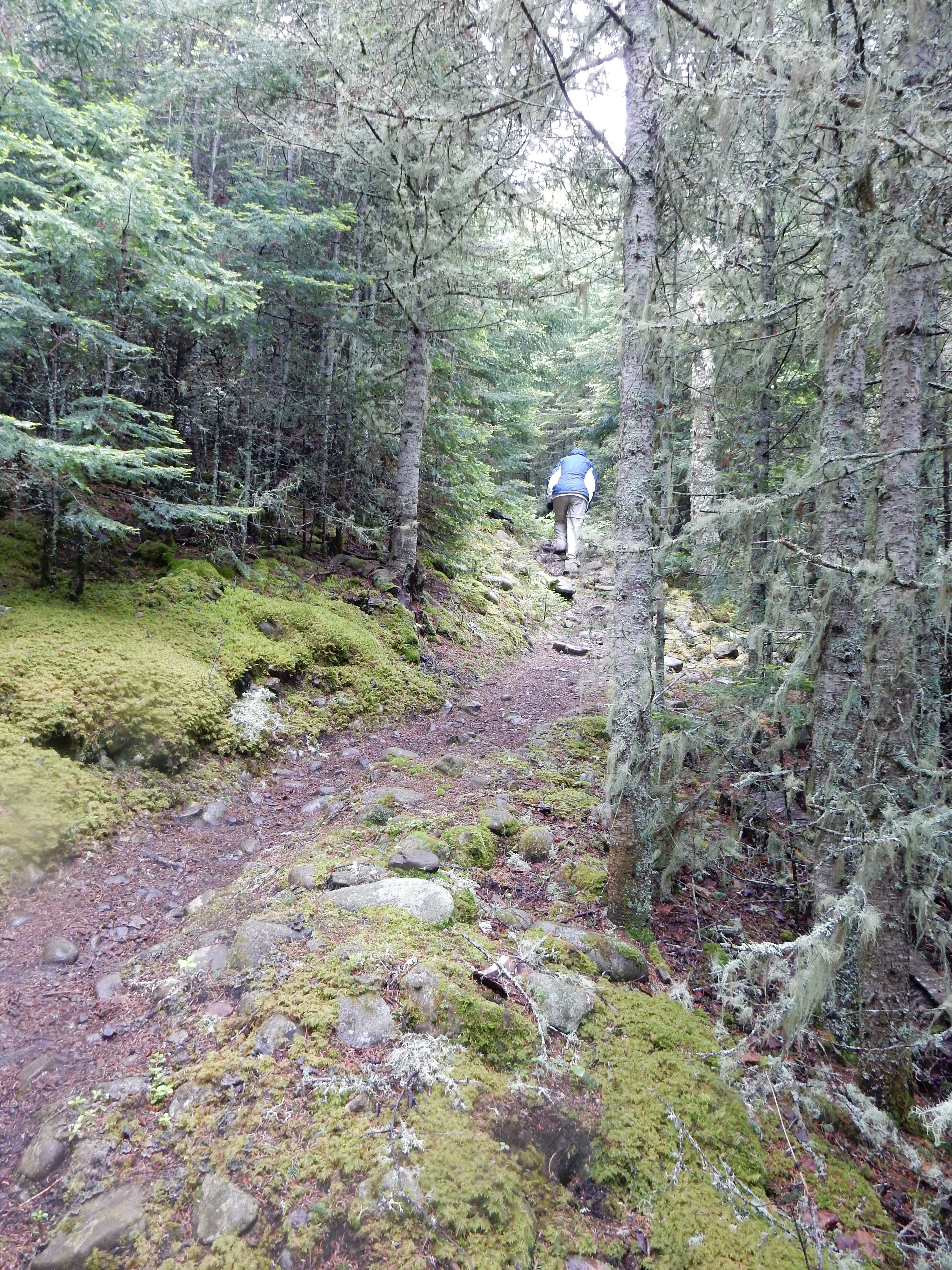
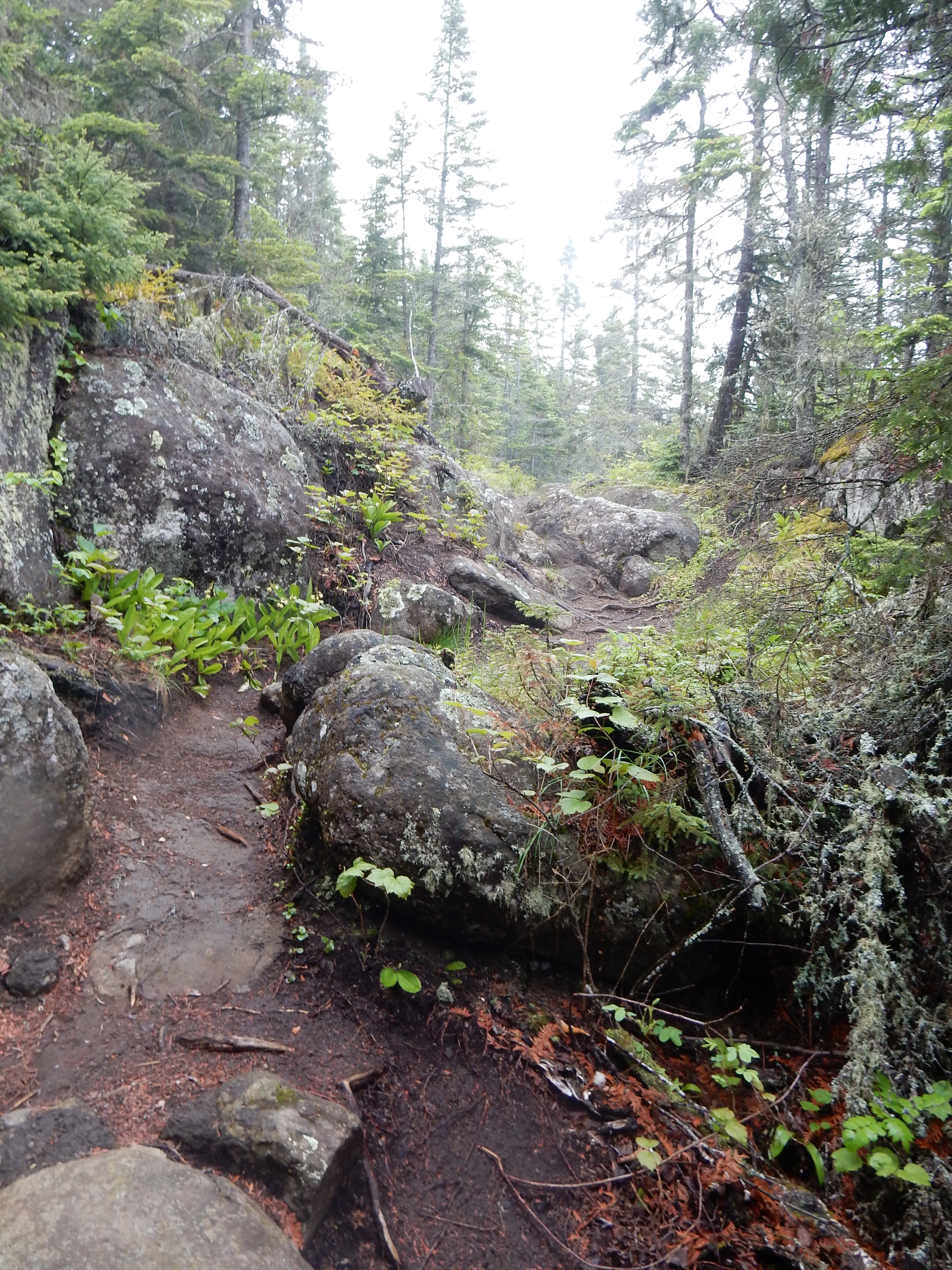
Our focus is more on tall rocks. Our first hike takes us on a 3.5 mile, 600 foot elevation gain trail to Lookout Mountain in the Sawtooth Mountains that create the spine along Lake Superior. The trail winds through birch, pine, fir and spruce trees with numerous wildflowers. The trail path varies from rocks, tree roots, and muddy areas-although not as muddy as Isle Royale. Mosquitoes are present but nowhere near as plentiful nor as hungry as the ones at Isle Royale. For us, the hike is doable and great exercise. The calves may be a little sore tomorrow though.

View from Lookout Mountain
View from Lookout Mountain

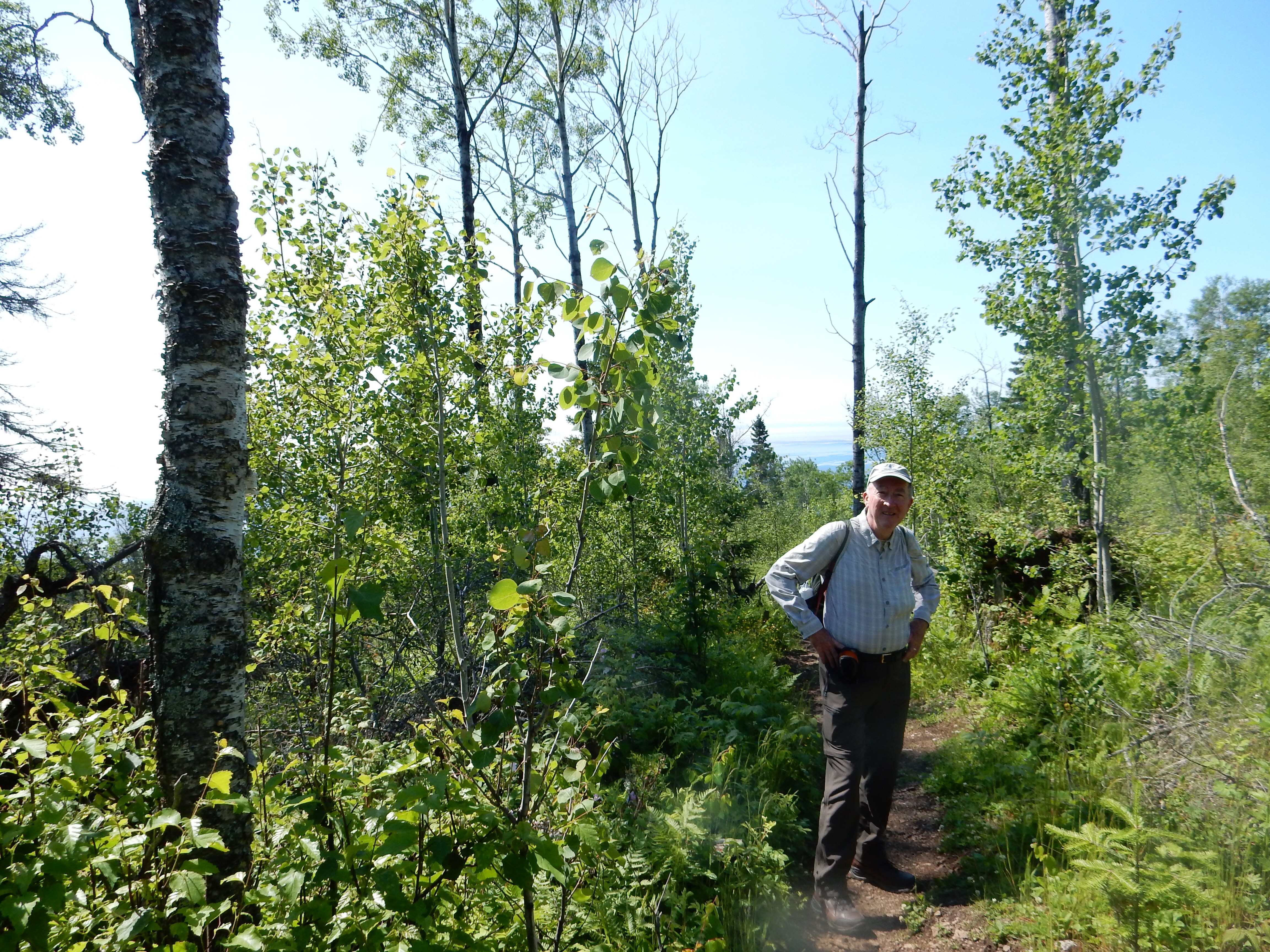
Ed on the trail heading back down

Ed on the trail heading back down

At the top of Lookout Mountain, the view is more of the trees and valleys of the Sawtooth Mountains. You can see Lake Superior down below but at an angle and the surface of the water merges into the skyline. Early on in the hike, we pass over and along the Cascade River. Here the falls and rapids are once again running fast and easy on the eyes.

Fog moves in while we eat our granola bar
Fog moves in while we eat our granola bar

Granola bar done, fog moves out

Granola bar done, fog moves out

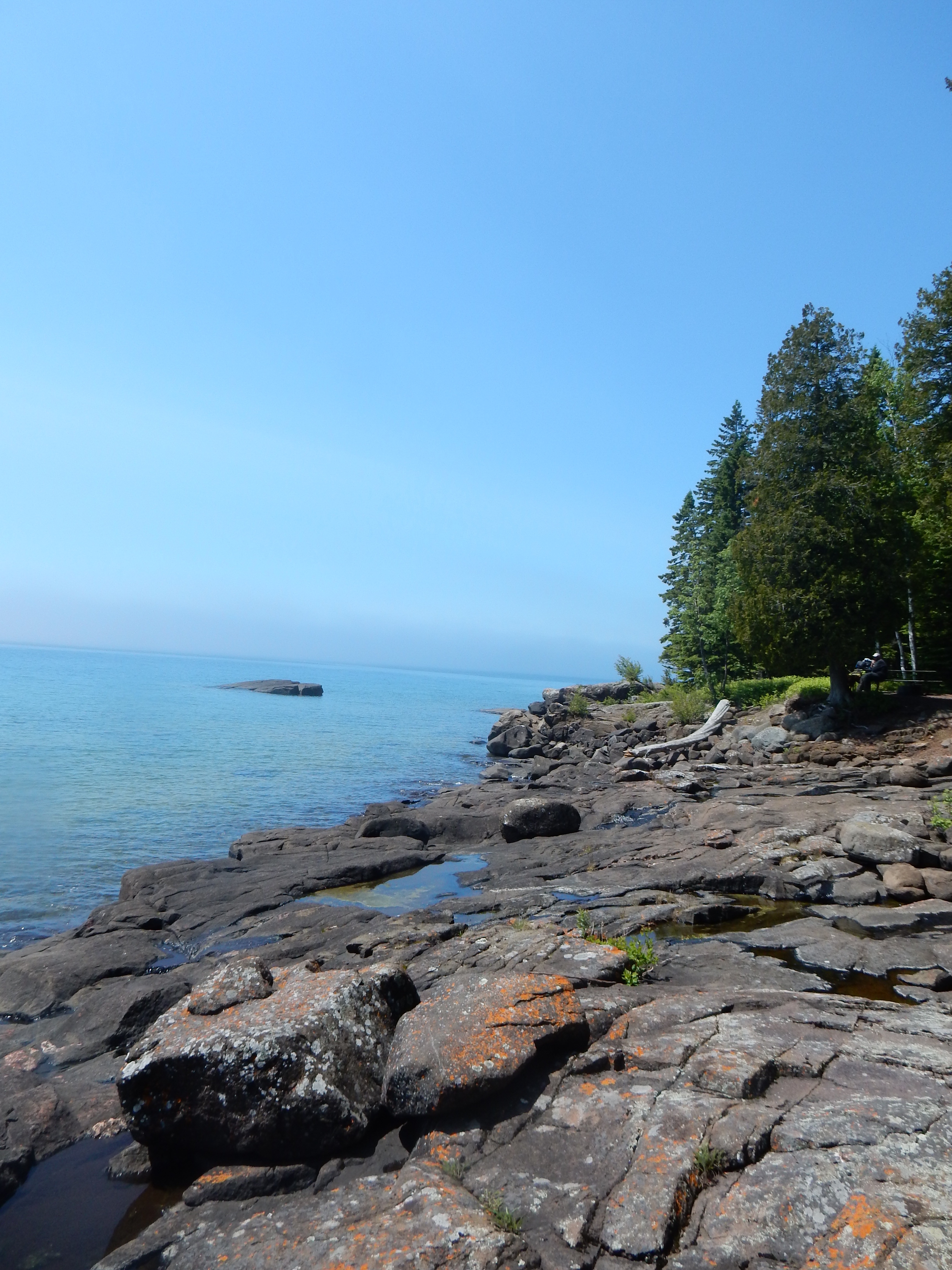
When we return from Lookout Mountain, we follow the trail along the river to view more falls and rapids before heading to the shoreline for a granola bar to fortify ourselves prior to the next park and hike. Here we meet the fog again, and the combination of fog, cold lake water, and shade along the shore produce a rapid drop in temperature. The fog comes and moves away, just in the time it takes to eat a granola bar.

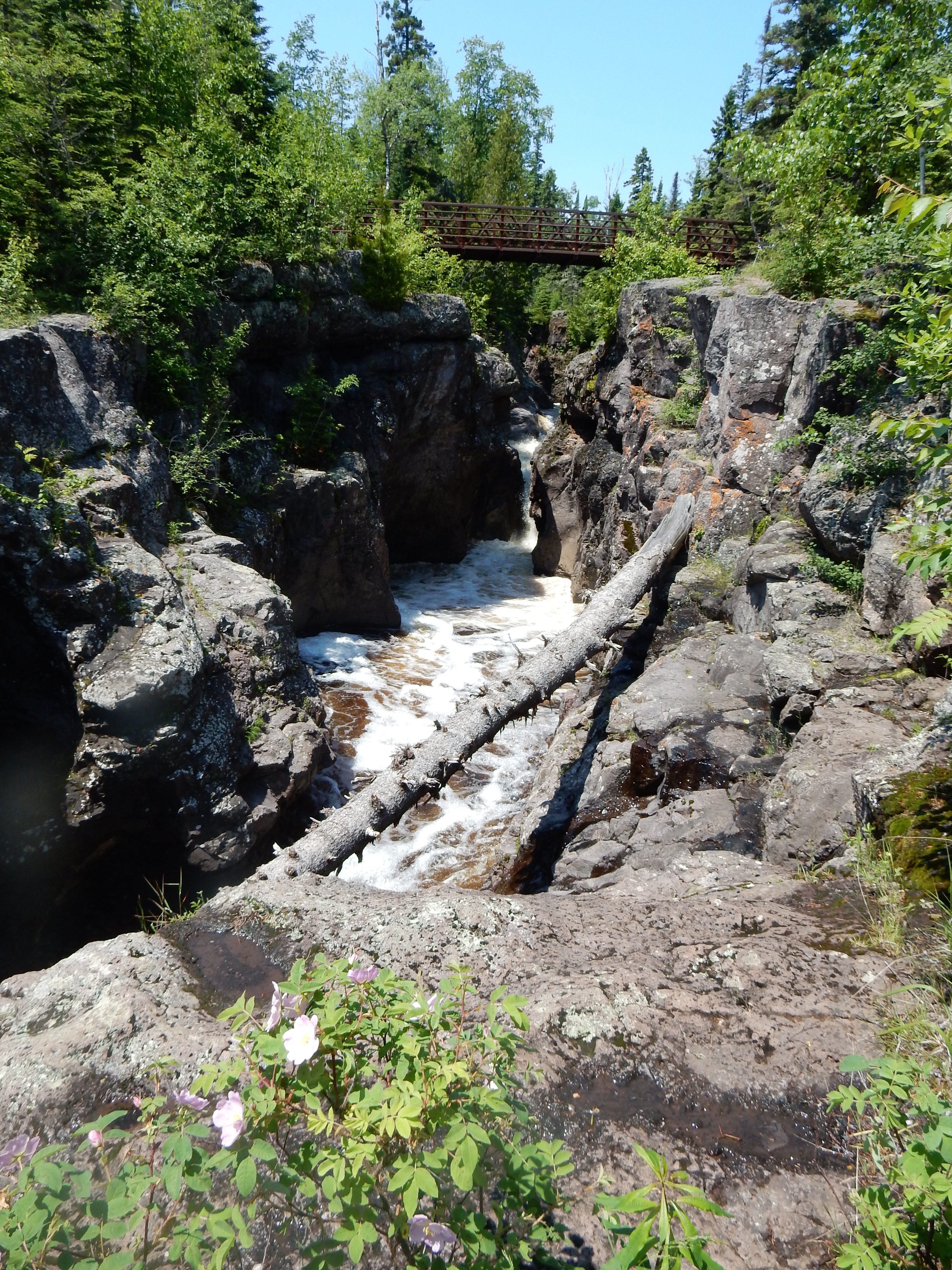
Our next park is Temperance River State Park, between Tofte and Schroeder, MN. The Temperance River is named due to the fact that there is no (sand) bar at its mouth. The park land is combined with the Cross River State Wayside to create 2700 acres of rock, forest and shoreline with both the Cross River and Temperance River to view and walk along. We skip the Cross River with its falls right at the highway and head for the Temperance River.
Temperance River

Temperance River

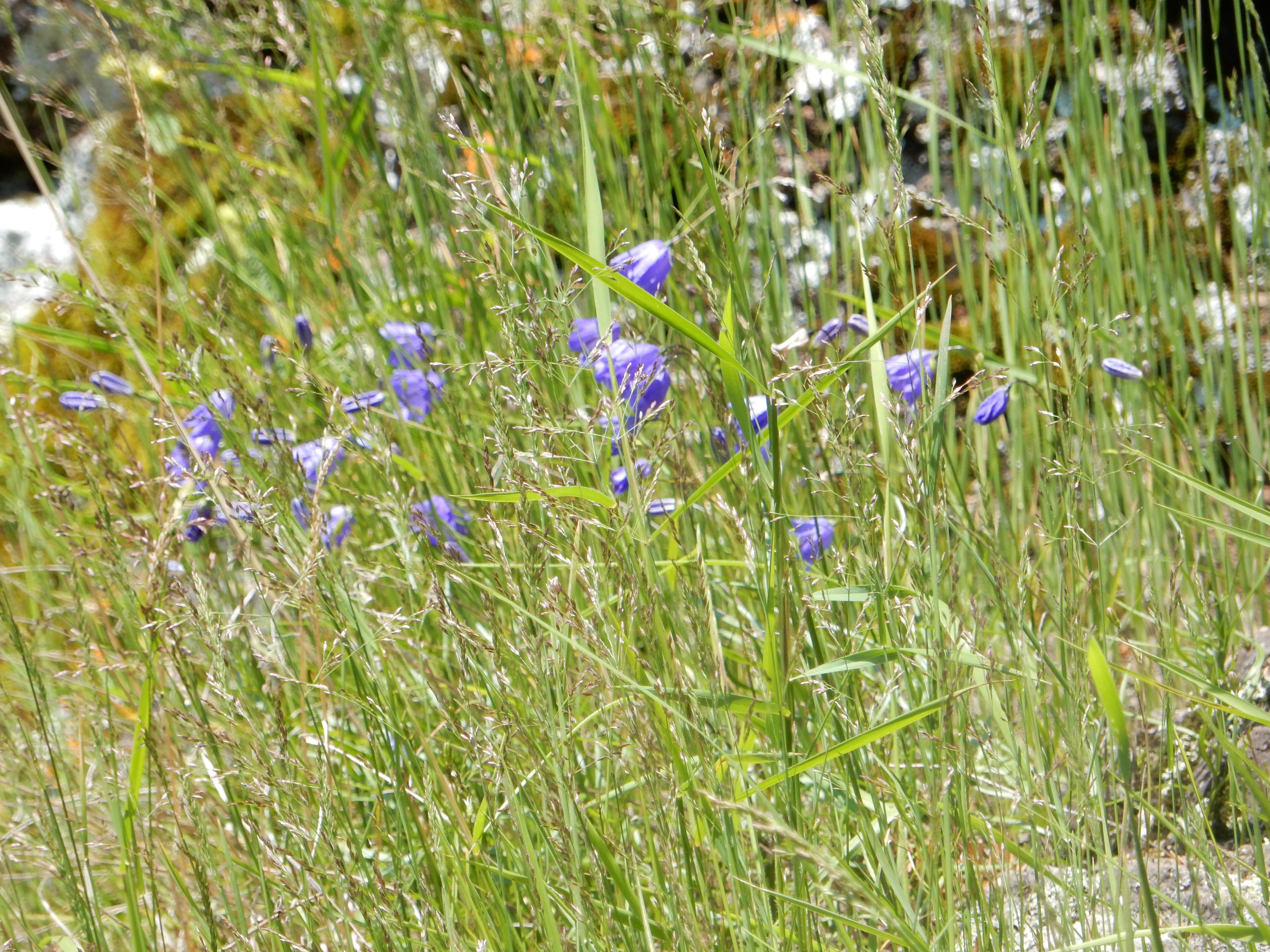
The Temperance River and its gorge create numerous waterfalls and potholes-those deep holes created by swirling waters cutting through the rock. Potholes aren’t rare but are not common either. For instance, one can view them along the St. Croix River at St. Croix Falls or along the Presque Isle River in the Upper Peninsula of Michigan.

Temperance River before the rapids
Temperance River before the rapids

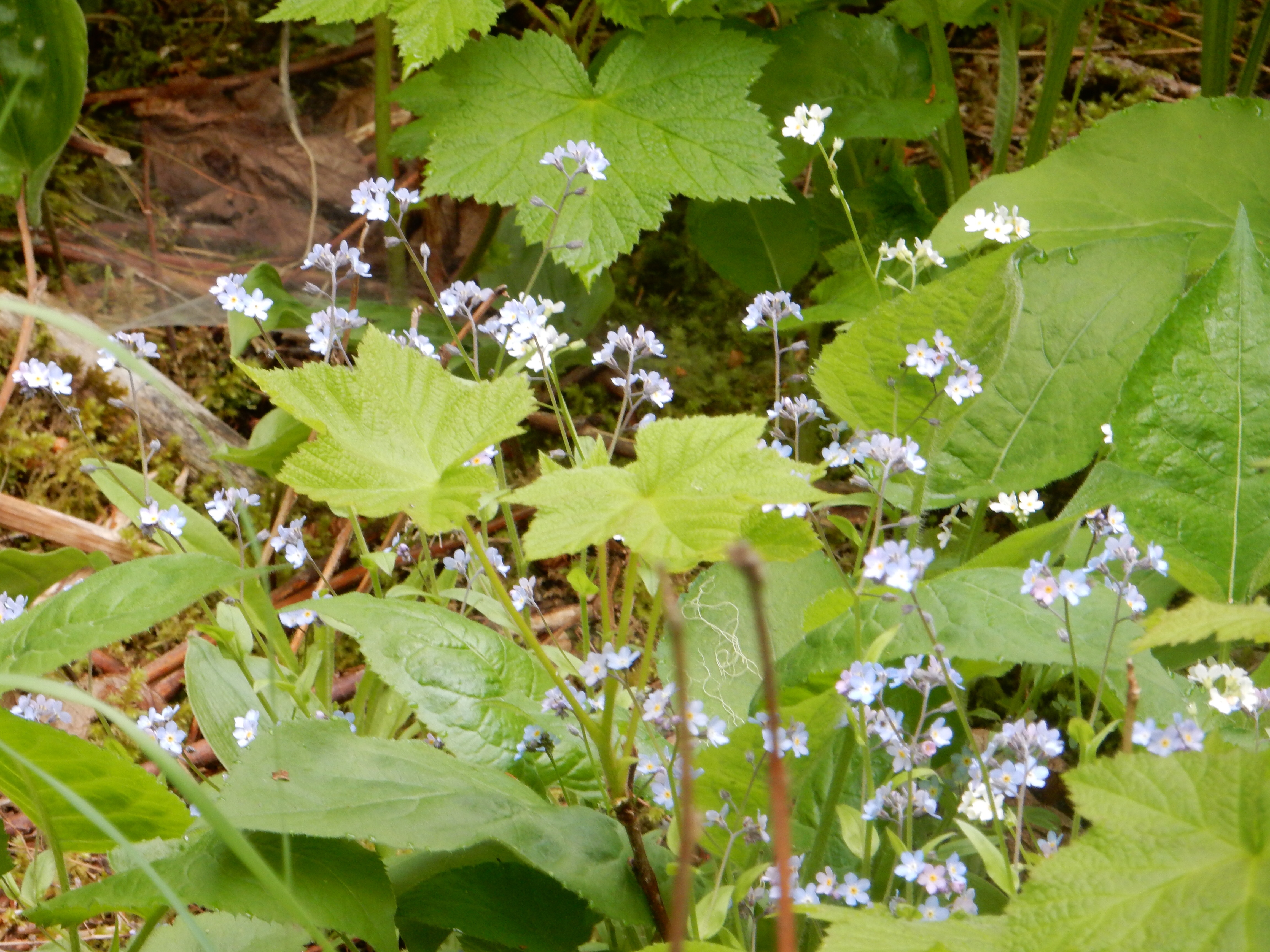
One shot of many of wildflowers along the trails

One shot of many of wildflowers along the trails

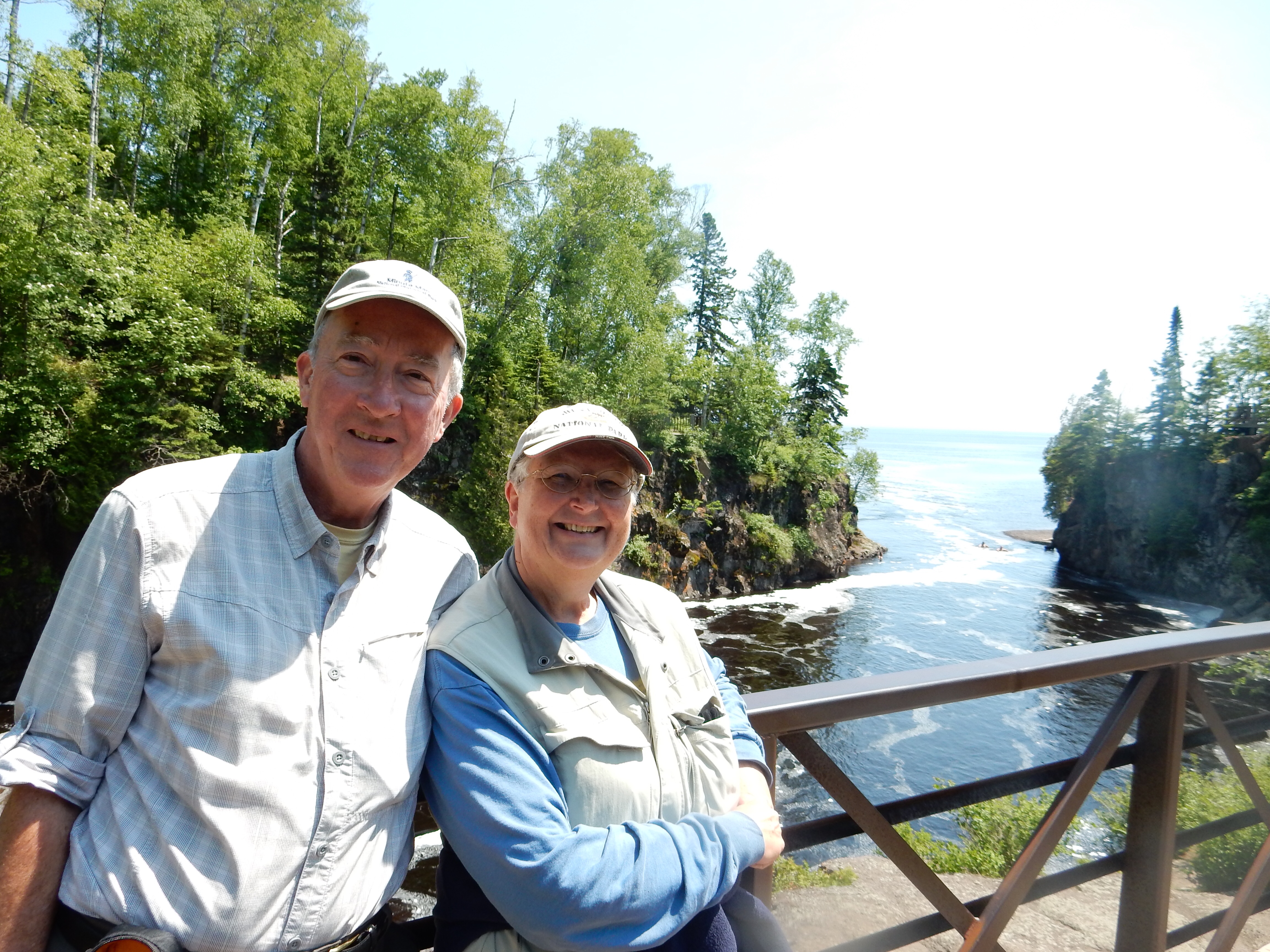
This hike is a popular one, lots of people and families. At many of the falls, Highway 61 and the parks provide for parking opportunities and easy access. The early part of the trail is steep and we observe people struggling with it. The views and rushing water make the effort worthwhile. We hike the river on both sides of Highway 61 since there are falls and rapids on both. Down near the shore, some teenage boys are swimming; they stay pretty much in the current of the river, the lake water is too cold.
Ed and Chris as the Temperance River flows into Lake Superior

Ed and Chris as the Temperance River flows into Lake Superior

Chris hiking down towards Lake Superior

Chris hiking down towards Lake Superior

Chris takes the picture of a couple from the Cities. He is planning, but may not, race in the 99er Bike Race at Lutsen, co-sponsored with LifeTime Fitness. This is 1500 trail bike riders traversing rocks and ridges for 99 miles in one day (although there are options for 19 and 39 miles also) through the forests of the Sawtooth Mountains. After talking with them, we start to notice the cars heading north with bicycles attached. Stopping for a snack of cheese quesadillas afterwards, we meet two guys from Madison WI who will be making the ride.

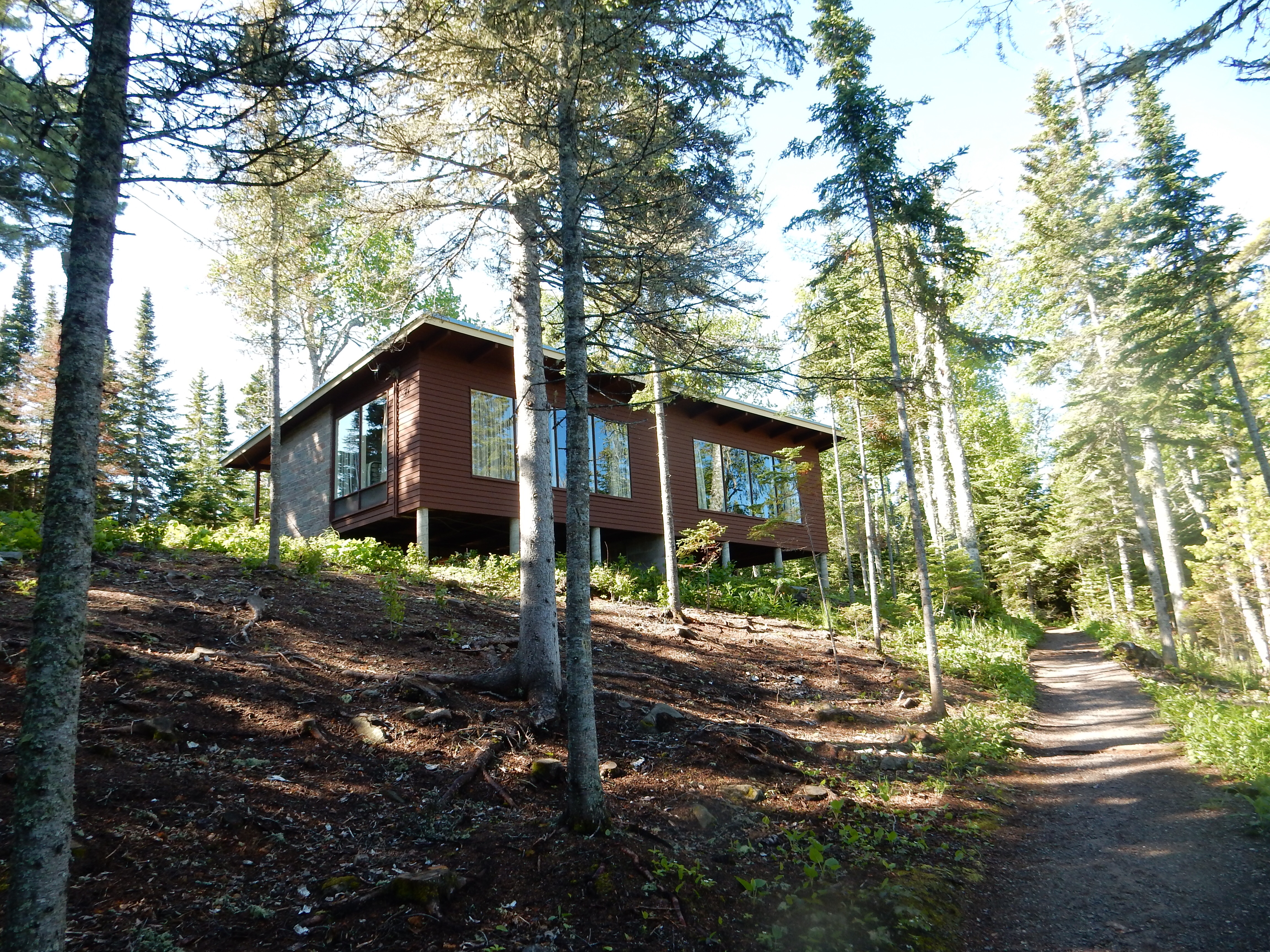
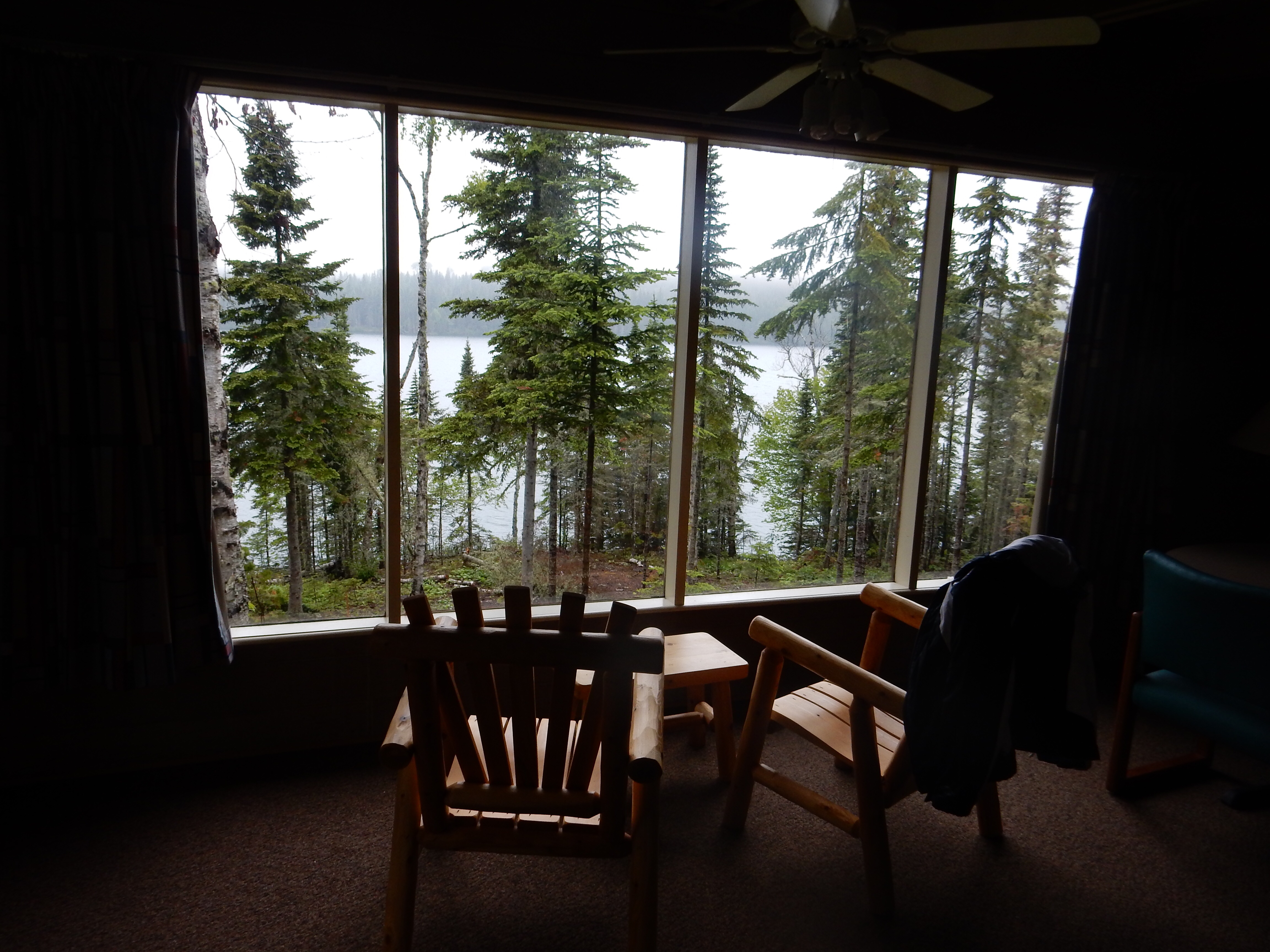
Our lodging for the next two nights is a small cabin between the highway and the shore in Little Marais. Little Marais is not even a town, just a “community” nestled along the highway. Lakeside Cabins and Colonial Estates has lakeshore cabins and log homes on the bluffs. We have a teeny, tiny cabin that has been renovated in a pleasant log cabin interior finish. This is good because the shell of the building dates back to the 1880s when it was the homestead of the Fenstads, one of the Finnish settlers in this region.

We drive up to Finland (Finnish settlers in the area, got it?) and purchase some groceries from the 100 year old cooperative grocery/hardware store. We drive down to Beaver Bay, 15 miles west (south) and have dinner at Lemon Wolf Cafe. We share the pecan chicken dinner-once again, North Shore eateries have produced great meals.

All in all, a pleasant day on the North Shore.

Ed and Chris June 27
Categories: road trip, travel | Tags: , , , , , , , | Leave a comment

2015 Trip 3, Isle Royale, June 25

2015 Trip 3, Isle Royale, June 25

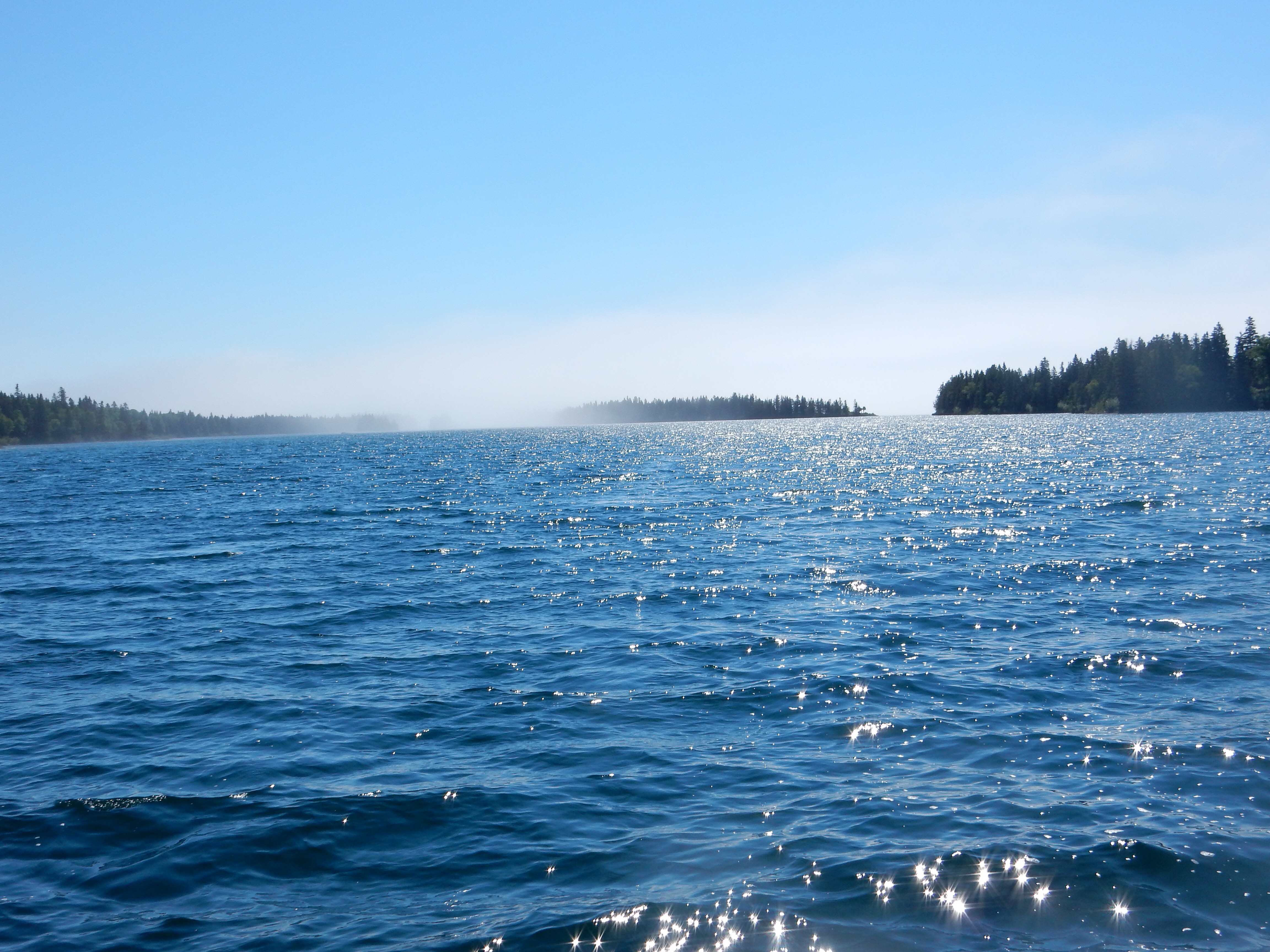
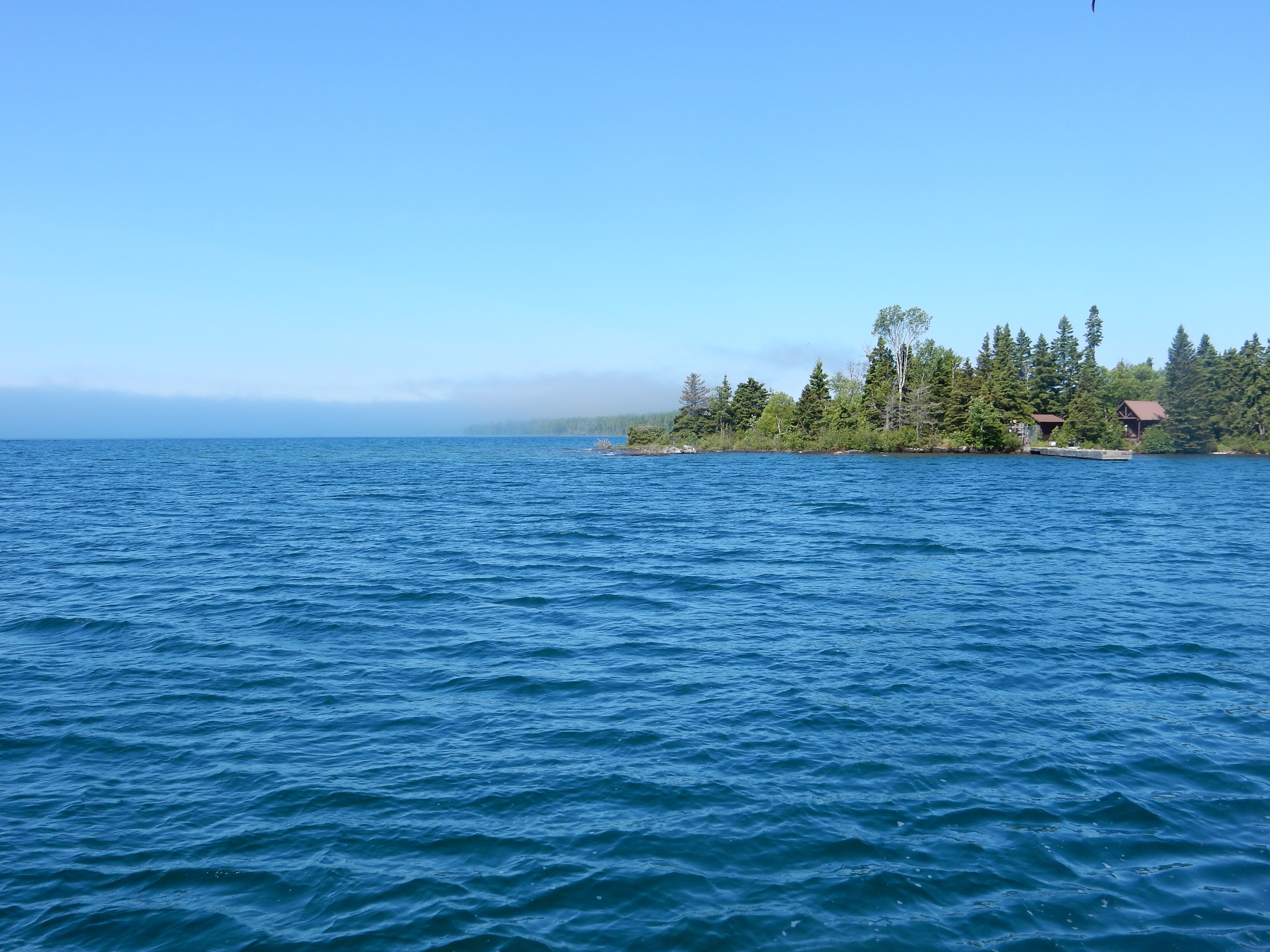
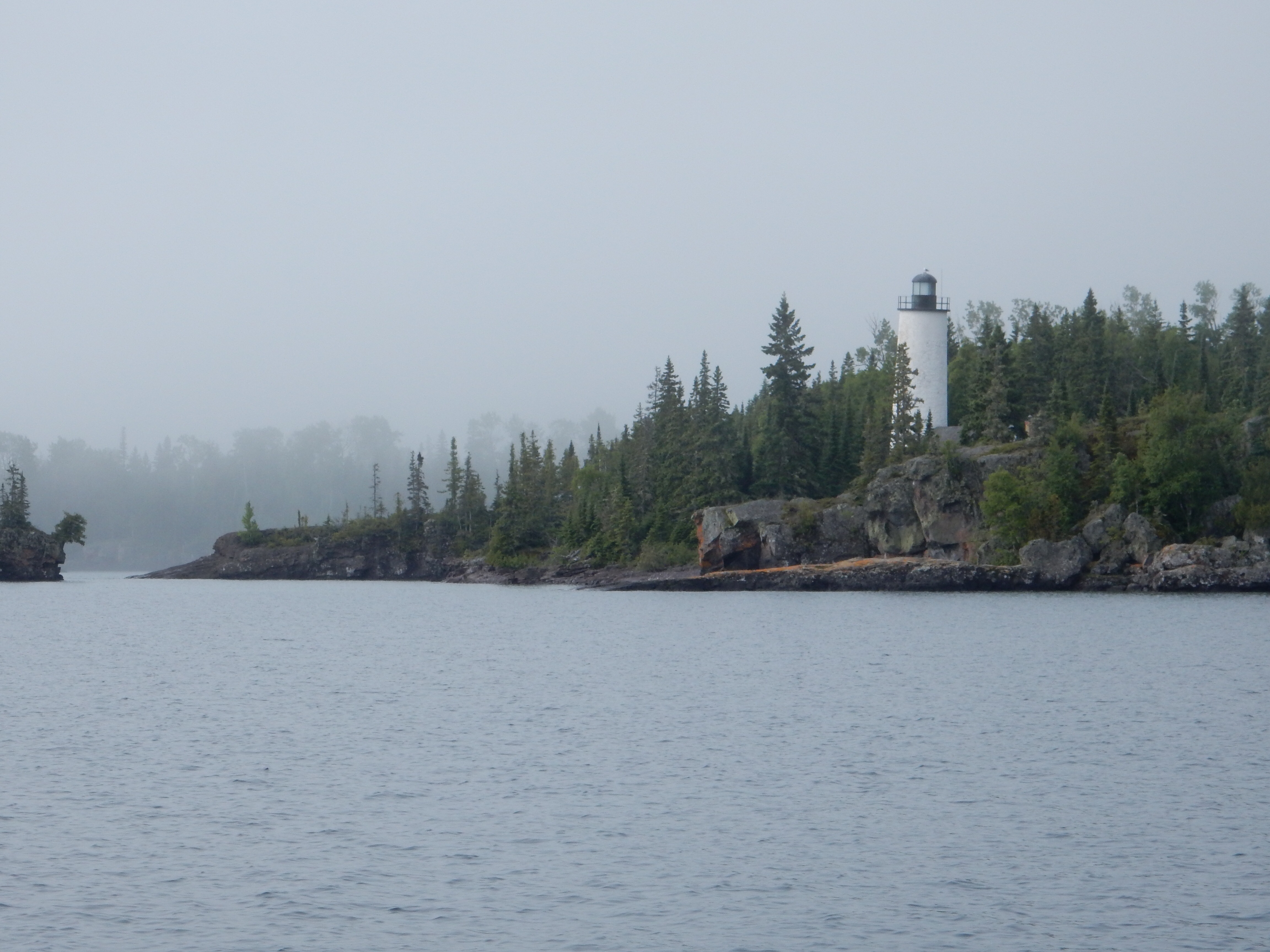
Fog in June on Lake Superior seems to be a constant. It comes, it goes, it re-forms and moves around. The cold water evidently interacts with the warmer air temperatures and, voila, fog. We have watched it from our cabin, from various hikes, from the shores of Rock Harbor, and from the deck of Voyageur II.

Rock Harbor Lighthouse in Lake Superior by Isle Royale

Rock Harbor Lighthouse in Lake Superior by Isle Royale

Fog banks moving around the islands

Fog banks moving around the islands

Today was no exception. All night long the fog was heavy outside our cabin. The Voyageur II left at 9 AM EDT and the harbor was socked in. As we traveled around the island, picking up stray backpackers from small, isolated docks, the fog eventually dissipated; the views of the rocks and forests of Isle Royale are much more spectacular with blue skies and bluer water. Then, as we arrive in Grand Marais this evening, the fog is present again as a light mist covering the ground.

Malone Bay- a pick up point for backpackers

Malone Bay- a pick up point for backpackers

Several of the people returning with us are like old friends; the couple from Minocqua, the Montana couple that ran in Grandma’s Marathon, the Iowa party getting on at Malone Bay after backpacking. We joke about the boat ride and hope today’s return trip will be smoother. It is. But the length of the journey has only increased. The pick up of backpackers from remote locations requires slower speeds in narrow channels and extra time to go in and out of pick-up points. All in all, we enjoy the smoother trip and better scenery. We congratulate ourselves for tackling another adventure.

Captain Ben spends some time with us chatting. We discover the boat was built in 1972, originally planned for commercial fishing. The back section, the noisier one that we have avoided, was to hold fish. The original owner died and the ferry people bought it and converted it. Both Ben and Kirk have been doing this for four years and sleep on board. We have smelled their lunches on each trip as Kirk makes something in the galley for them. Evidently, sometimes they use a Crockpot and the smell drives the travelers nuts.

On our way out of Windigo, going through Washington Harbor, Voyageur II stops at the site of the wreck of the steamship America which went down in 1928. The America was the mail, freight, and passenger delivery service to Isle Royale and much of the North Shore. In 1928, the 2nd in charge ran the boat aground, all passengers got off safely. The new Highway 61 in Minnesota was making the ship less profitable and the ship was left in the water to break up further rather than salvage it. We were able to see portions of the wreckage still under the water.

More than 25 ships have sunk around Isle Royale over the years. There are still four lighthouses around the island. We saw all of them and heard lots of foghorns. Isle Royale National Park does extend out into Lake Superior so park rangers have to patrol the waterways also.

You probably know that Lake Superior is the largest freshwater lake in the world by surface area and the third largest in the world by volume. We also wrote about Lake Superior in two previous trips: 2013 Trip 7, Sept. 7-12 (the Upper Peninsula of Michigan) and 2014 Trip 6,Sept. 8-11 (Ontario from Thunder Bay to Sault Ste Marie).

Skies darkening as we approach Grand Portage

Skies darkening as we approach Grand Portage

We arrive at Grand Portage and are able to leave (after getting our luggage and paying the parking fee) around 3:45 PM CDT. The skies in front of us are getting ominously dark. Our plan is to drive the short distance to the High Falls of the Pigeon River at Grand Portage State Park. Doing this hike now will save us 1.5 hours tomorrow of driving time by having to back track from Grand Marais.

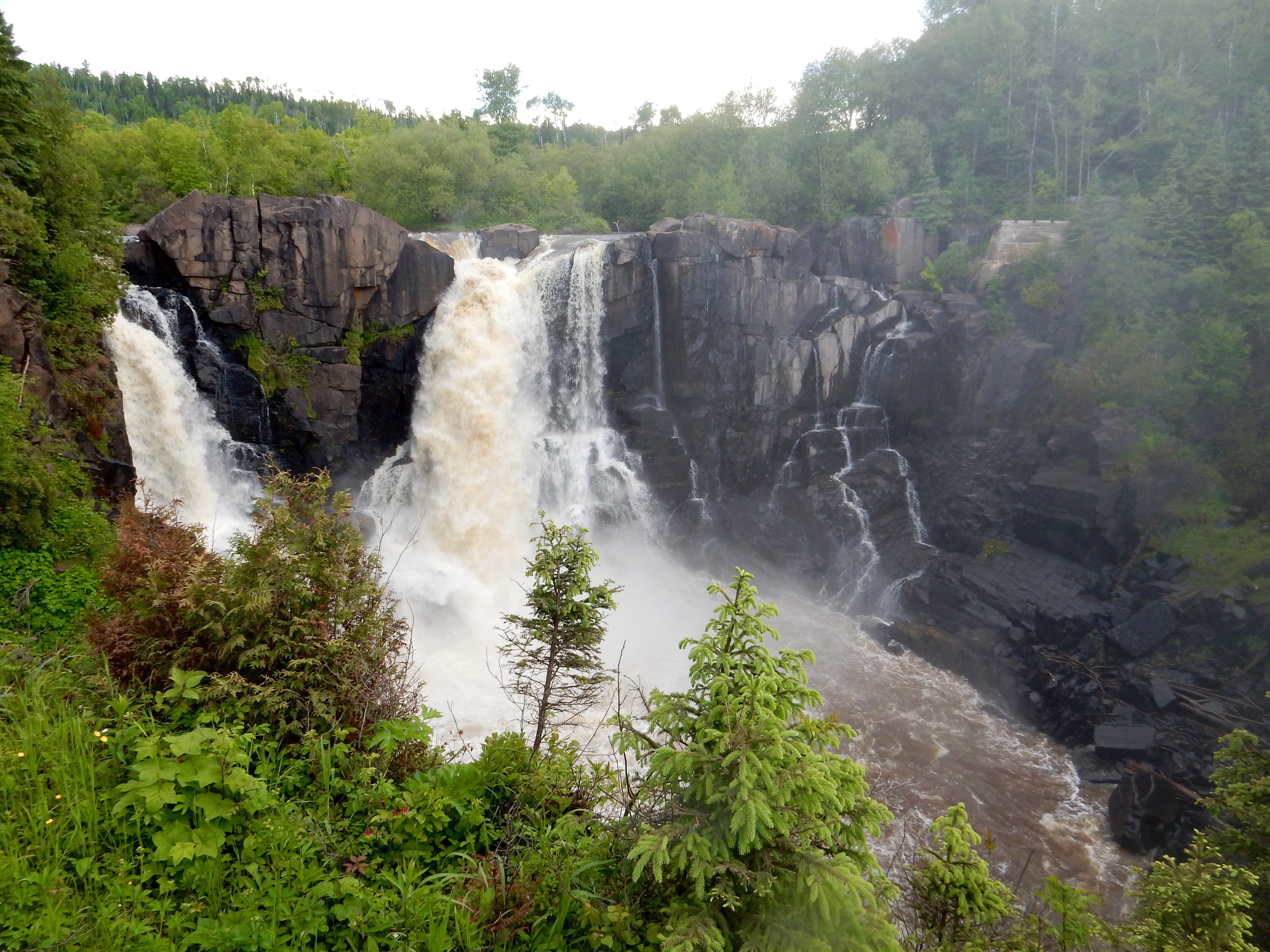
The High Falls are notable for several reasons. First, they are the tallest falls in Minnesota at 120 feet and with recent rains, should be impressive. Second, the falls and Pigeon River are on the boundary of the U.S. and Canada. One can view the falls from either country.

High Falls on the Pigeon RIver at Grand Portage State Park

High Falls on the Pigeon RIver at Grand Portage State Park

Third, the falls created an impediment for Indians and fur traders who traveled by canoe during the days of the fur trade. This required a nine mile portage around the falls. This “Grand Portage” lead to the creation of a trading post for decades; now it is memorialized in the Grand Portage National Monument. We have been here before and will not go into its history and significance in this post.

Fourth, the park land is owned by the Grand Portage Band of Chippewa and is leased by them to the state for use as a state park.

We reach the visitor center and hike at double-time speed to reach the falls before any rains come-and before the park closes. Success is ours; the falls are running fast and we manage to avoid rain.

Lodging is in Grand Marais MN, an upscale town along the North Shore. We are at the Best Western with great Lake Superior views. But first we have dinner at The Pie Place Cafe in downtown Grand Marais. The meatloaf dinner and the Black Bear Blueberry Salad are fantastic; almost as great as the Blueberry/Sour Cherry pie and the Raspberry/Rhubarb pie.

Ed and Chris June 26

Categories: road trip, travel | Tags: , , , , , , , , | Leave a comment

2015 Trip 3, Isle Royale, June 24

2015 Trip 3, Isle Royale National Park, June 24

With the drapes wide open, the early morning slowly greets us and the sky gets lighter and lighter. At 4:45, Chris decides to fight the mosquitoes and goes down to the dock and takes pictures of the early morning sunrise. I let her do it.

Sunrise on Tobin Harbor

Sunrise on Tobin Harbor, Isle Royale National Park

Early morning fog that comes and goes

Early morning fog that comes and goes

Isle Royale is about 50 miles long. Don’t expect us to hike the entire island. Rock Harbor Lodge is on a spit of land and I am guessing most of the moose population here is scattered around the island where the backpackers are more likely to observe them. Score one for the backpackers.

The trail to Suzy's Cave

The trail to Suzy’s Cave, Isle Royale National Park

The trail to Suzy's Cave

The trail to Suzy’s Cave

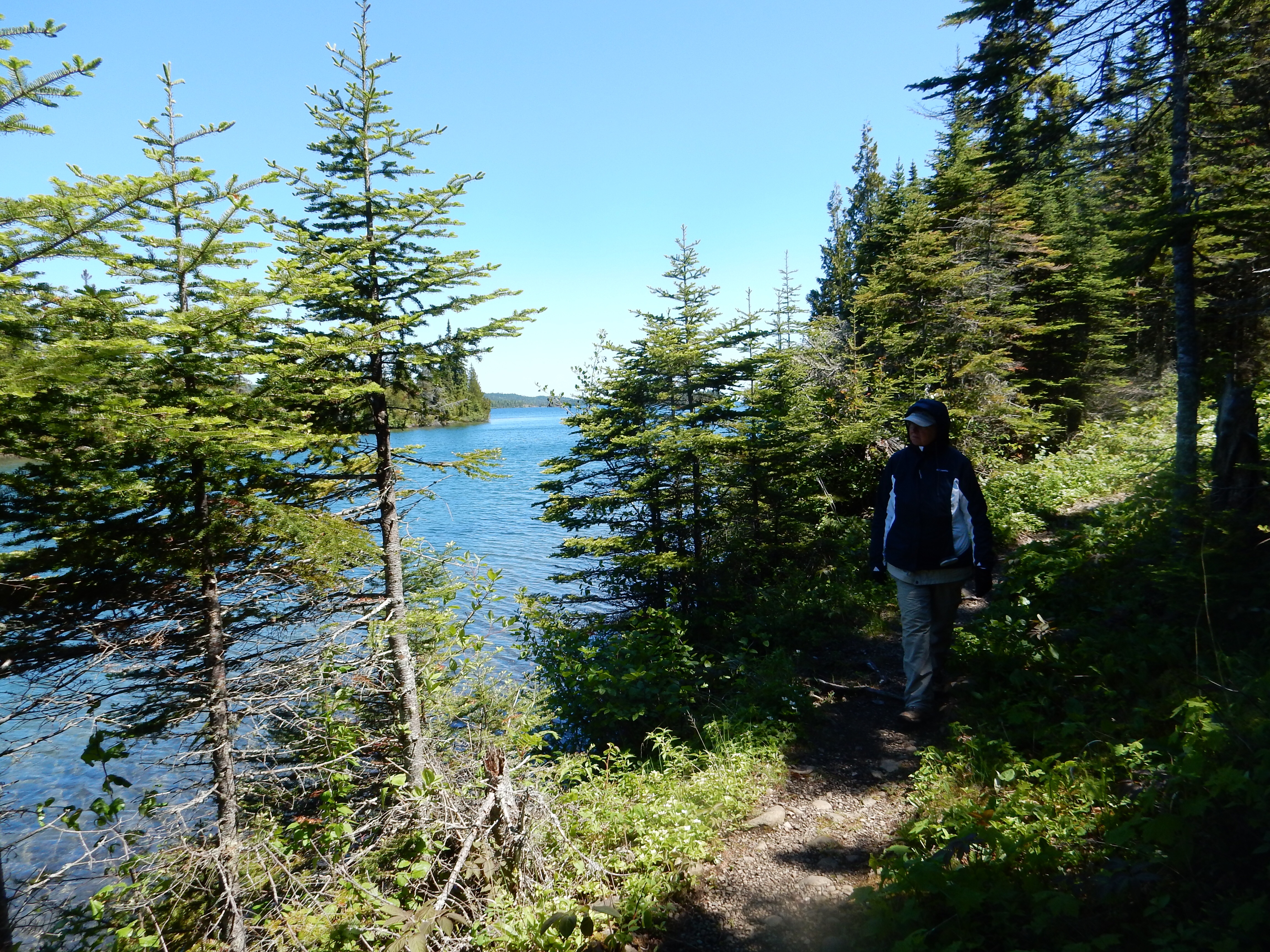
After breakfast in the grill, we headed out on a hike to Suzy’s cave to see how much water will be on the trails this morning. Theoretically, moose may be present on this trail but I will end your suspense early; we did not see any. Like yesterday’s trail, this is a loop that has one leg on Tobin Harbor (north side) and one leg on Rock Harbor (south side). The trail is rocky, after all this island is here because the rock formation has withstood erosive effects. The trail goes through forest, along water, over rock formations, and up and down the ridge as it crosses from the Tobin Harbor side to the Rock Harbor side.

Suzy's Cave

Suzy’s Cave, Isle Royale National Park

Suzy’s cave is a small cave that a young girl discovered and sought shelter in during a storm. Her family lived on one of the islands in Rock Harbor back before the park was formed. The cave is on the ridge between the two bodies of water. As we leave the cave and hike down to Rock Harbor, we notice that fog has started to develop on the water. Soon the islands begin to disappear and it is time to get a little nervous (Chris) as to whether the fog will develop enough to envelop the trail.

The fog starts to move in

The fog starts to move in

The trail coming back from Suzy's cave

The trail coming back from Suzy’s cave

Eventually light fog reaches the shore but our trail never disappears. We do meet two other couples out backpacking. One woman has a face mask of mosquito netting. My DEET spray this morning appears to be more effective than yesterday’s eco spray. We hike a little faster on the way back, but I soon realize that I am getting tired and need to be cautious so as to not lose my footing on the wet rocks or mud. We end up back to “civilization” in a little over two hours. Our reward is a snack of cinnamon, sticky buns at the grill.

Rock Harbor  with fog

Rock Harbor, Isle Royale National Park with fog

In the afternoon, we partake of a ranger hike focusing on wild flowers. Isle Royale has a short growing season and right now numerous plants are budding. Our ranger is here through the conservation corps and is a recent grad of Rutgers in environmental policy. This is a summer internship for him. The fact that this presentation only attracts the two of us doesn’t discourage him. It presents him with the opportunity to practice for the larger crowds that come after July 4th. In addition, the large boat that brings day hoppers over from Michigan does not run today. His talk is well done but unfortunately, like previous wild flower talks I have listened to, I don’t seem to retain a high degree of information. It was interesting to learn about a few flowers here that change colors over the period of several weeks. The white ones below can be seen in a yellow shade in other locations along our trails.

This flower changes from yellow to white

This flower changes from yellow to white

Wildflfowers at Isle Royale

Wildflfowers at Isle Royale

Wildflowers at Isle Royale National Park

Wildflowers at Isle Royale National Park

Ed and Chris June 26

Categories: road trip, travel | Tags: , , , , | Leave a comment

2015 Trip 3, Isle Royale, June 23

2015 Trip 3, Isle Royale National Park, June 23

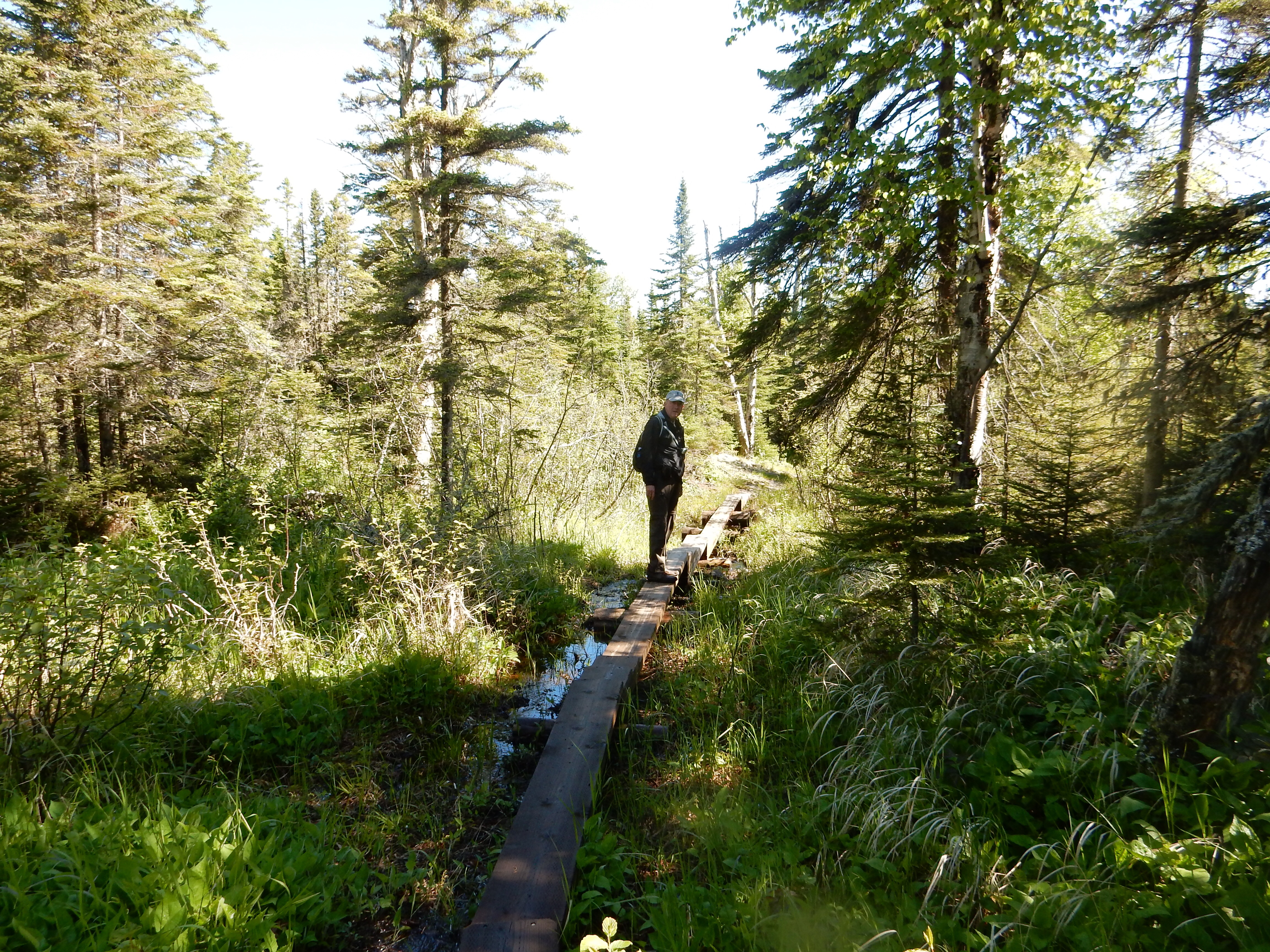
Me and my big mouth. We were hiking to Scoville Point, a five mile out and back loop. The southern loop of the trail had quite a few areas where yesterday’s rain had not yet disappeared from the trail, making us frequently walking around the water or carefully stepping on rocks. On the way back, we took the northern loop and I commented to Chris that this trail was drier then the southern one. Five minutes later, at one of the few boggy areas on the northern loop, I stepped off the trail into water deep enough to go over the tops and inside the shoe. The ground was mucky and the shoe almost came off. A shout out to Chris who helped me gain my balance without me getting completely wet. My second pair of shoes is in the trunk of the car-remember the ferry boat limitation on weight? The second pair probably weighs 10 pounds and I was saving them for North Shore hikes. Well, it is a sunny day and maybe the inside of the shoes will dry out.

But my attitude is still good. The day began early watching the skies clearing and the morning light starting to fill our room. The room faces north so we do not have a direct sunrise or sunset view. The clouds were still moving eastward as dawn came, so I did not see any sunrise colors.

Rock Harbor Tuesday morning

Rock Harbor, Isle Royale National Park Tuesday morning

The fancier restaurant only serves breakfast from 7 AM to 8:30 at the moment (their busy time is after July 4th, particularly August). We debated whether to go there or to the grill where we ate yesterday. We ran into the Edina couple going into the grill and we all agreed on the fancier dining room. This is a relative term, the atmosphere is not much different; but the menu options are more basic at the grill.
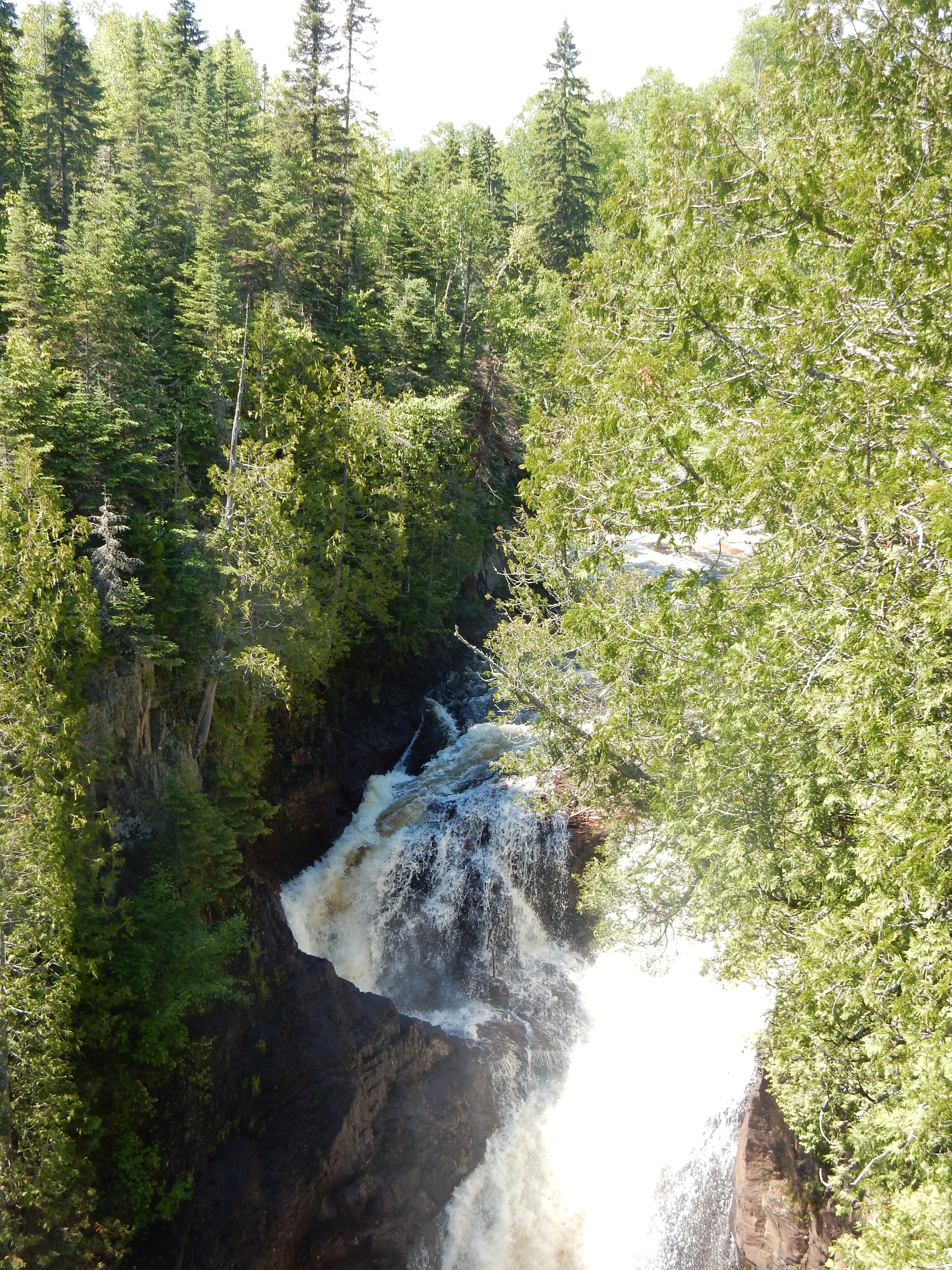
Once again the food was tasty. Our server was from Kentucky. It seems there are several friends from Kentucky working here this summer. We were the last ones out of the dining area, they had to flick the lights a few times before we got the hint to stop gabbing and get out enjoying the day.

And it is a beautiful day. Sunny sky, temps in the 60s it seems. Hard to tell with no Internet or cell coverage to check.

View from Scoville Point Trail

View from Scoville Point Trail, Isle Royale National Park

Scoville Point Trail

Scoville Point Trail

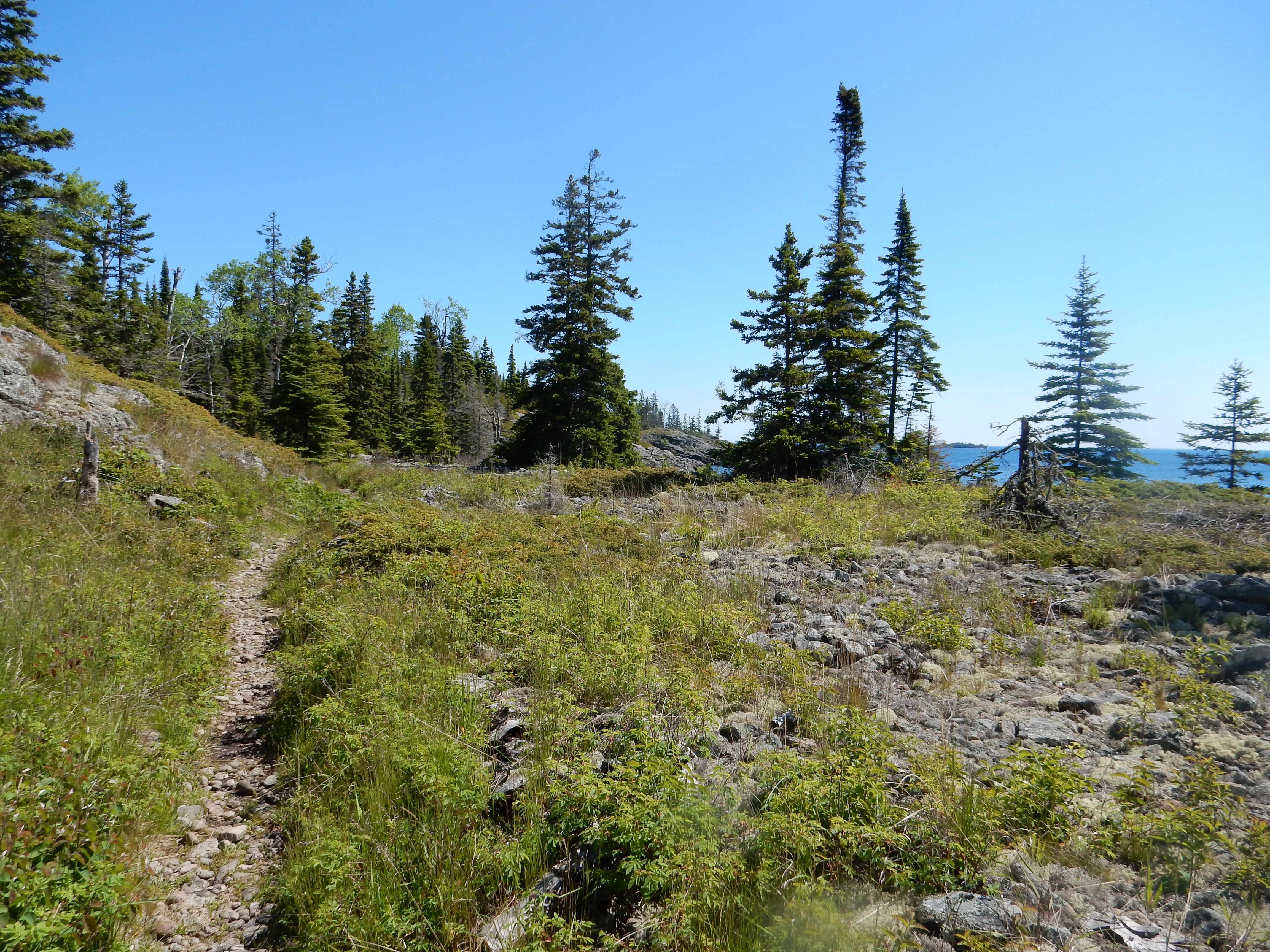
The trail to Scoville Point includes woods and some rocky shoreline. The trail is rocky and wet, as noted above, so the hike took us about three hours with a few stops. The mosquitoes are out in force, black flies not apparent. We tried the environmentally appropriate bug spray today. The mosquitoes loved it. There was one on my hand taking some blood less than three minutes after I sprayed the hand with the eco bug spray. Tomorrow is going to be a DEET bug spray day. We did have on long pants and long-sleeved shirts with a jacketed hood so the bugs only had limited skin area to attack. Chris, however, had her Isotoner gloves on and avoided bites there. My gloves were more for cold weather and were back at the cabin.

One of the copper mining locations

One of the copper mining locations

Scoville Point Trail

Scoville Point Trail

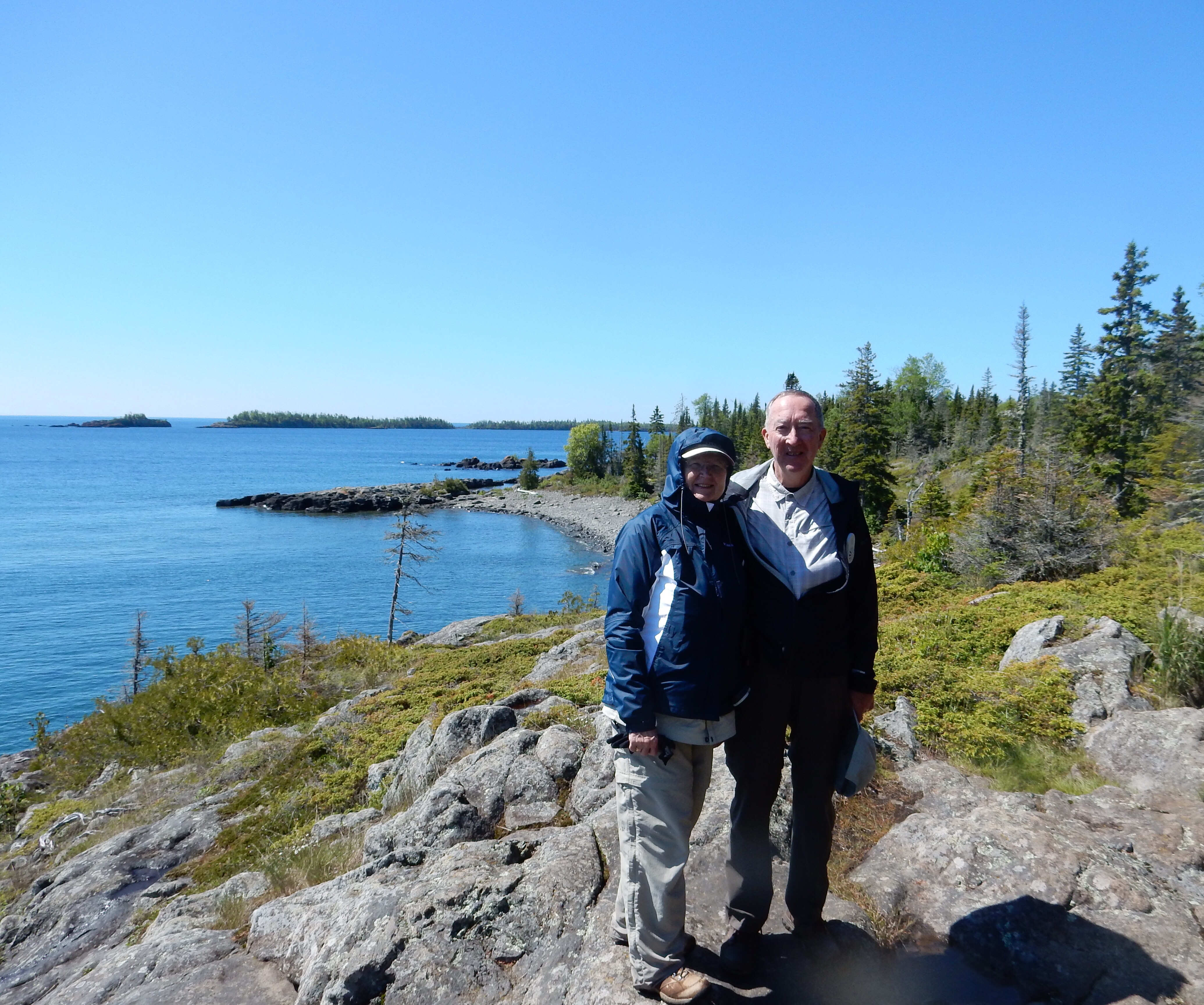
Chris and Ed along the trail

Chris and Ed along the Scoville Point Trail at Isle Royale National Park

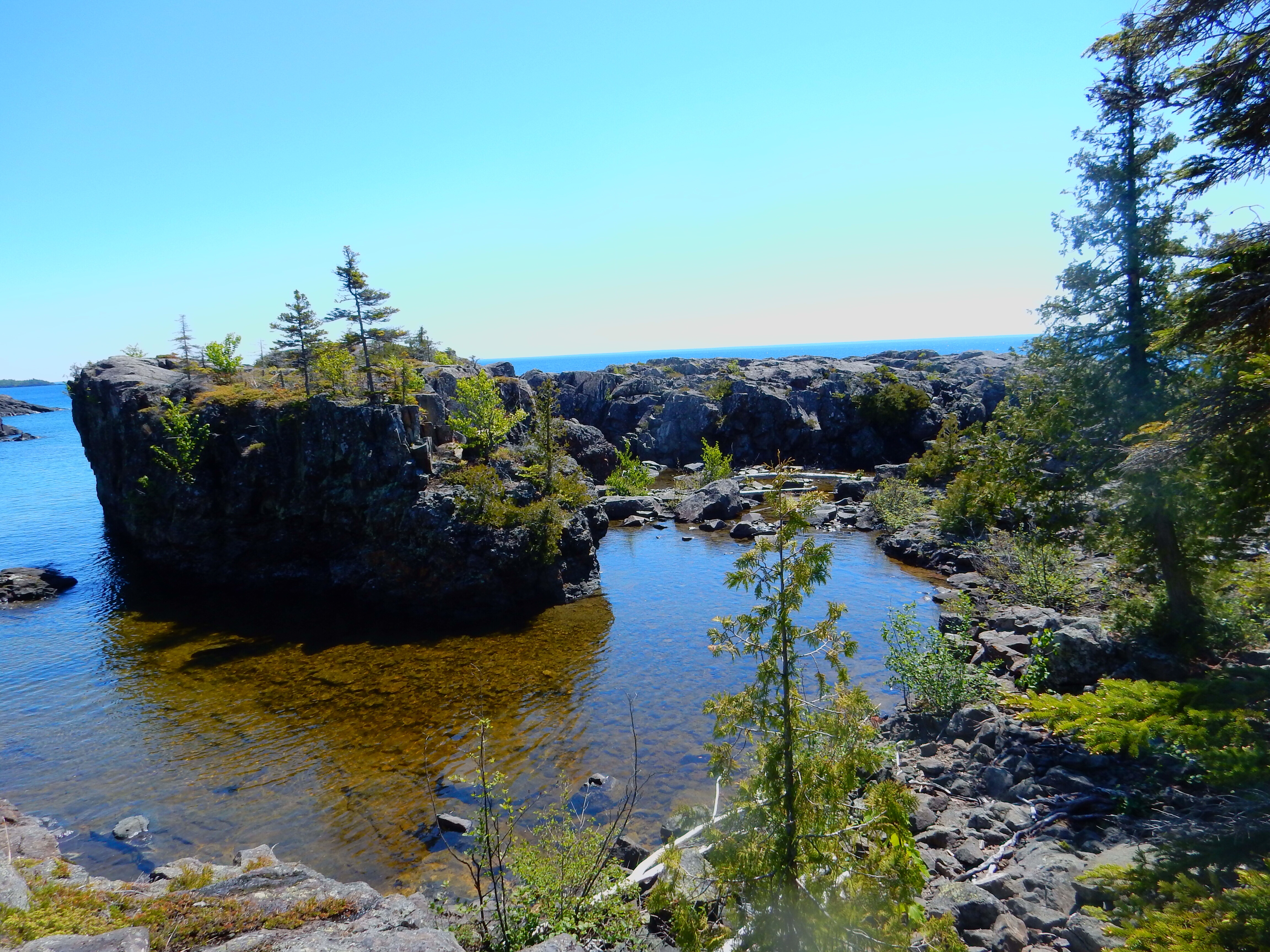
The views are great. Lake Superior is very clear and the blue water and blue sky made for great scenery with the rocky cliffs and green trees. There are numerous small islands off shore from Isle Royale so the view is not just endless water. We passed one old copper mine. Copper was mined here by Native Americans and traded all through the Northeast. European settlers began mining copper here in the mid-1800s and ended around 1900. It was never really profitable but resulted in the cutting of timber and establishment of some small, and brief, towns.

Chris on the return trail to our cabin

Chris on the return trail to our cabin

Scoville Point on Isle Royale National Park

Scoville Point on Isle Royale National Park

Fishing was successful for a much longer period of time. Commercial fishing had pretty much ended by the mid-1900s. Individual fishing still continues. Lake Superior whitefish is still a popular menu item. Resort use began in the early 1900s but the mass use of the auto diverted people away from boat trips to auto trips. In the 1920s there was initial discussion about making Isle Royale a national park, advocated heavily by Detroit newspapers. It was approved in the 1930s and the Civilian Conservation Corps made improvements here during the depression. It took until 1940 before all of the land transfers to the NPS occurred and the park was official.

We returned to our cabin around 1:30 PM and rested up. I worked on getting my shoes dry and clean; by 4:30 they were good enough to wear again. Thankfully the sun was out. So were the loons along with their unmistakable call.

Clouds moving in

Clouds moving in

Dinner was back at the grill where we reversed our orders from last night. We thought about taking a boat trip which would take us to a neighboring island where we could walk through more bogs and then watching the sunset from the boat. But the temperature was dropping, winds picking up, and cloud cover moving in. We chose to go back to the cabin and read while watching the skies.

Over the next two to three hours we had: a brief but intense wind and rain squall; dark clouds with no wind or rain; a sunny period with rain; dark clouds with drizzle; and a good downpour. Quite changeable weather.

Ed and Chris June 26

Categories: road trip, travel | Tags: , , | 2 Comments

2015 Trip 3, Isle Royale, June 22

2015, Trip 3, Isle Royale National Park, June 22

Seven hours on a continuous Disney ride: Chris’ description of the boat ride from Grand Portage MN to Rock Harbor Lodge at Isle Royale National Park, MI. Interpretation: Not a comfortable, relaxed ride.

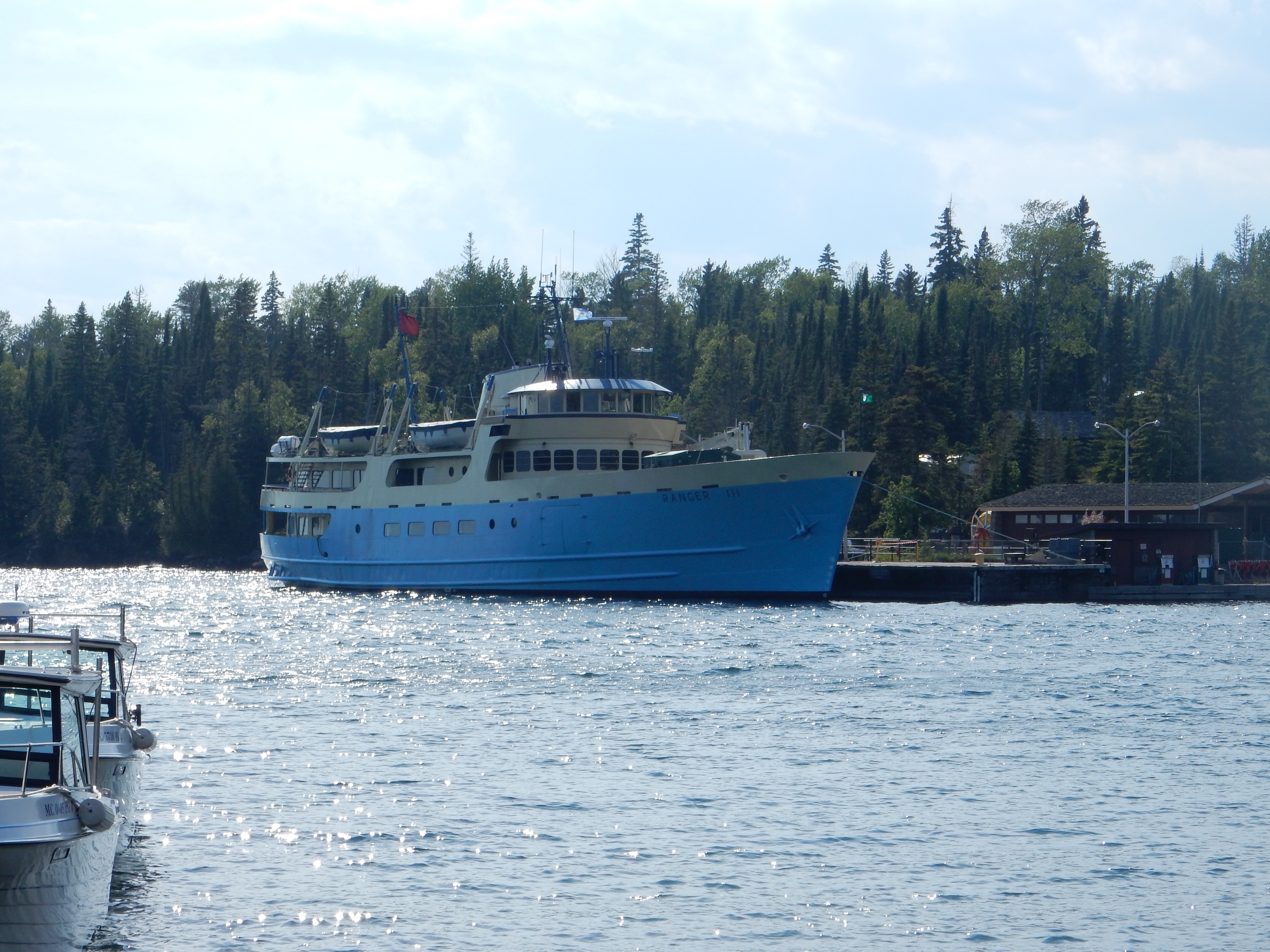
So which boat do you think we took??
image
image
image

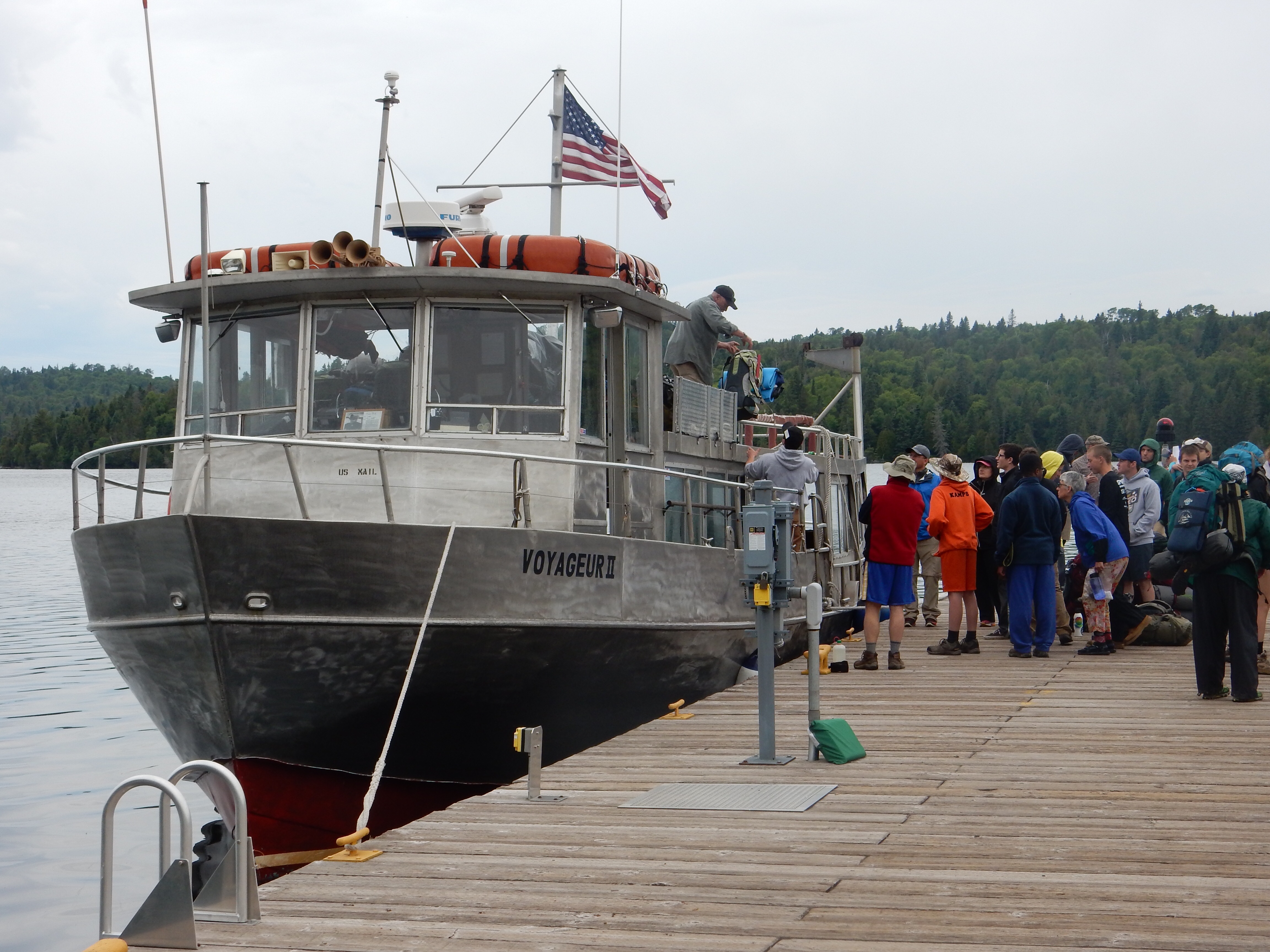
The Voyageur II, our transportation to the island, has been around a while. It is not heavy on the amenities. It did have coffee and two rest rooms and the seats were padded with backrests, though. Chris and I were the second group arriving this morning at 6:15 A.M. I met Kirk, the second in command (of two) who indicated we could stow our gear on the deck and be patient for the boarding process-which began about 6:45 AM.

While waiting at the dock, we met and talked with two couples that will also be staying at Rock Harbor Lodge with us. One is from Edina, MN and one from Minocqua, WI. The Edina couple seems to have traveled the globe. They had dog-sledded in Ely MN at the same place that we had done. This November they plan to visit Churchill Manitoba to watch polar bears-a trip similar to one that Chris has been dreaming about. The WI couple used to have a cabin cruiser that they had used to cruise around the Apostle Islands area of WI.

The Voyageur II holds about 50 people, today’s count was 47. Of those, most were people backpacking and camping out somewhere in the park. They generally got off the boat at Windigo, the first stop, at the southwest end of the island. When they got off, a park ranger met them and went over the rules and warnings; including that you need a specific type of water filter, iodine drops are not enough. The Voyageur II is the only ferry that goes completely around the island; dropping off backpackers at several remote locations.

Loading gear at Grand Portage

Loading gear at Grand Portage

There was a church group (many of them wearing shorts), a group of three from Wilmington DE, and a two-some with a boy of 11 and a woman about 30. The boy had done this before, not so for the woman. Most of the groups seemed to be going out for 5-6 nights. Supposedly there is a limit of 40 pounds per person of gear that can be carried on the boat. From the look and sounds of the two guys storing the gear, most backpackers had not read, or had ignored, the limitation.

Leaving Grand Portage

Leaving Grand Portage

The boat trip to Windigo was two hours. It would take us an additional five hours to reach Rock Harbor Lodge at the northeast side of the island. The day had started out cloudy and got cloudier as we approached the island. The temperature was in the low 50s(Fahrenheit). Soon it was drizzling and it alternated between a drizzle and a light rain for most of the rest of the day. At a second stop, two other couples got off and headed for their camping site. Those of us staying at the Lodge wished them well. We also thought: There are advantages to getting old; no false optimism or naive ideas about camping and backpacking in the rain.

East end of Isle Royale

East end of Isle Royale

Lake Superior can be very violent and stormy. It has a well-deserved reputation for dangerous waters. Our waters were probably relatively calm for the Lake, but the small boat was still tossing about on the waves. Chris and I both had “sea bands”- an acupuncture/pressure type device to help one avoid seasickness. We did not have breakfast and were not planning to eat or drink while on the boat. Before Windigo, I did have a brief spell where I sat out back to keep my stomach under control, and it worked. Chris did fine, stomach-wise.

Weather deteriorates

Weather deteriorates

The boat was traveling at about 12-14 miles per hour, according to Kirk. As we left Windigo, the waves increased and the tossing about increased a notch or two. All of the seats are inside, under cover, although there are two outdoor areas where people can stand and view the scenery. There was little to no heat and the engines make a loud racket. Some people napped, others read or talked. The scenery was so-so. The clouds, drizzle, fog etc dampened enthusiasm. After a while, the lake and the shoreline can only do so much to impress you. Chris was not enjoying the ride, but was able to keep conversing with various groups. I think it helped take her mind off the ride. She indicated she thought the ride was worse than the two nights of high winds on the Lake Powell adventure of a year ago; I thought she looked worse during the Lake Powell trip.

We finally reached Rock Harbor around 2:30 PM CDT, half an hour early. It was raining and our luggage got a little wet but the lodge provides a porter to bring your luggage to your room/cabin. For us this was a godsend since we had a house-keeping cabin at the far end of the “complex”. We have our own small kitchen, bathroom and a great view through large picture windows of Tobin Harbor. We did not bring food, though, we plan to eat here at the two restaurants and buy a few snacks at the store. A little more cost, a lot less hassle. We tried out the grill after we were settled in. The burger and tossed salad with chicken were both very tasty.

Our cabin, we have the right half

Our cabin (picture taken Tuesday), we have the right half

The view from our cabin

The view from our cabin

The cabin is like the Ritz Carlton. Well-built, heat, plenty of hot water, clean, pleasant kitchen area. But then it is not like the Ritz Carlton. The floor never seems to truly get warm, the space heater is noisy and has to run almost constantly, the bed is shorter than I am and the sheets are not fitted and seem too small for the bed. All in all, though, I prefer to think like the first sentence: The cabin is like the Ritz Carlton. Starting in the evening and until almost 3 AM, the winds are howling and the rain is heavier. I sit in one of the wood chairs and watch the storm and am thankful we are camping inside.

Tomorrow we hope for better weather and will be out hiking.

Ed and Chris June 25

Categories: road trip, travel | Tags: , , , | 1 Comment

2015 Trip 3, Isle Royale, June 21

2015 Trip 3, Isle Royale June 21
Hovland, MN

This trip is to visit Isle Royale National Park, an island located in Lake Superior. Technically the park is in the state of Michigan although it is closer to Minnesota and to Ontario. We have never been to this park; it is remote and not heavily visited. One can take a day’s ferry ride over from Michigan or from Minnesota and spend a few hours on the island. We chose a second, longer option of taking the ferry over and spending three nights on the island. If you have read this blog previously, you can probably guess that we are not camping. There is a lodge at Isle Royale and we will be staying at one of their cabins.

The ferry leaves from Grand Portage MN, just a few miles south of the U.S.-Canada border. It departs at 7:30 A.M. (and arrives at our lodge around 3 PM) so we have driven up to the North Shore region of Minnesota on Sunday. These remote areas of the North Shore and Isle Royale itself have little or no Internet and cell coverage (or the cell coverage might be in Canada and extremely expensive) so this post may not see the light of day until Thursday when we return from Isle Royale and are lodging in Grand Marais MN, a little farther south of the border.

We left St. Paul at 8 AM. The first half of the distance brings us to Duluth MN at the SW tip of Lake Superior. The road is all Interstate and other than abundant wildflowers along the edge of the Interstate, nothing too dramatic to report. Duluth is a pleasant town of about 85,000 people and we have visited here often and do not plan to discuss much about it here. Except, this was the weekend for Grandma’s Marathon.

Grandma’s Marathon has been running for 39 years and was originally sponsored by a local Duluth restaurant (Grandma’s) which is still in existence. The marathon has grown dramatically and now large, corporate sponsors provide the primary funding for the marathon. It runs along the shore of Lake Superior and has spectacular scenery. Lucky for us it ran Saturday since our route and the marathon’s route overlap for a number of miles. The only evidence we saw were the hordes of teenagers picking up trash along the route and the list of finishers in the local Duluth newspaper.

Minnesota's North Shore of Lake Superior

Minnesota’s North Shore of Lake Superior

The second half of the distance is on MN Highway 61 along the North Shore. This road is a scenic route with great vistas of the lake and of the “mountains” along the shoreline. Due to the mountains, there are over 20 waterfalls between Duluth and the Canadian border. As we drive farther past Duluth, the smell of pine trees is noticeable. Chris spotted a bald eagle just sitting in one of the trees. The drive here is slower but more enjoyable.

Bald Eagle along the North Shore

Bald Eagle along the North Shore

We stopped at an overlook north of Duluth and met a marathoner from Toronto. He has been trying to run marathons that are located around the Great Lakes. He has run 13 so far. He was taking pictures of the area and we took one for him with Lake Superior in the background. Another couple at the overlook were from Nebraska and we discussed with them the snow geese and sandhill cranes that throng the Kearney-Grand Island NE area in late March. We are contemplating visiting there next spring if we can figure out how to do that and make it to South Beach.

Brule River in Judge C.R. Magney State Park

Brule River in Judge C.R. Magney State Park

Our return journey starts Thursday and we will spend four more nights along the North Shore. This extended time will allow us to visit several of the waterfalls at that time. Today, we did visit one state park and its waterfall. Judge C.R. Magney state park is located along the Brule River (there also is a Brule River in Wisconsin.) We hiked the trail to Devil’s Kettle. (Atlas Obscura has an interesting video about Devil’s Kettle also. http://www.atlasobscura.com/places/devils-kettle)

Brule River falls

Brule River falls

Devil's Kettle; left side water disappears

Devil’s Kettle; left side water disappears

The Devil’s Kettle is a waterfall/rapids that is somewhat unique. As the river heads to Lake Superior, it passes a rapids where the north side of the river creates a water fall but the south half of the river falls into a pothole and the water disappears. Geologists have done various studies to figure out exactly where the water goes but no one has yet definitively answered the question.

Naniboujou  Lodge, view from Lake Superior

Naniboujou Lodge, view from Lake Superior

Our lodging for the evening is at Naniboujou Lodge, located across the street from the state park. The lodge was formed in 1929 by a group of wealthy men to create an exclusive hunting lodge. Original founders included Babe Ruth and Jack Dempsey. As you can imagine, the 1929 October stock market crash put the kibosh on the funding for the club. It changed hands over the years but the current owners have had it since the 1980s.

Naniboujou Lodge Dining Room

Naniboujou Lodge Dining Room


The dining room has the largest, free-standing native stone fireplace in the U.S. The dining room is painted in the Cree Indian style and the paint is as fresh and vibrant today as it was when it was originally painted in 1929-over 85 years ago. The food was excellent also; Lake Superior whitefish for me and spinach lasagna for Chris.

This far north the nights are longer and sunrise comes early. That won’t be a problem tomorrow since we have to be up early to make it to Grand Portage for the early departure of the ferry. There is a good potential for wind and rain-hopefully that won’t stop the ferry ride or make the journey too unpleasant.

Ed and Chris Thursday June 25

Categories: road trip, travel | Tags: , , , , , , , , | 1 Comment

2015 Trip 2, April 2, Boston at Easter

Boston MA Thursday April 2

Boston is such a great city to visit. Vibrant, loads of history and culture, wonderful streets on which to get lost over and over again. Seriously, there is no grid network of streets here, just curvy roads that change names every mile or so. Very few arterial streets that continue for more than a few miles. You have to constantly switch from one road to another in order to make your way across town. It must be an effort to keep Bostonians sharp, they have to constantly use their minds to remember how to get anywhere so the brain is constantly being exercised.

We are here to visit Deb and Rebecca at Easter in early April after one of the worst winters in Boston’s history. Much more snow than Minnesota. Many yards still are snow covered but streets are well clear of snow. Sidewalks frequently have a mound of encrusted snow piles blocking the path where someone just gave up trying to keep the path clear; usually on the south side of the street where a building blocked the southerly sun from any melting action. Since Deb and Rebecca are not retired, they had to go to work and a diversion/destination was necessary to be found. And, of course, success was had in finding diversions.

Chestnut Hill Reservoir

Chestnut Hill Reservoir

The Chestnut Hill Reservoir was today’s first destination. It is in Brookline and is an impound lake for water for the city’s municipal water supply. Actually, that is only somewhat correct. It is now part of their emergency back up system, but it had a trail around it and it seemed a nice location to take a hike on the way to another destination. The ice had only partially melted, but the trail was snowfree. The morning temp was 36 degrees, so walking was a good way to keep warm.

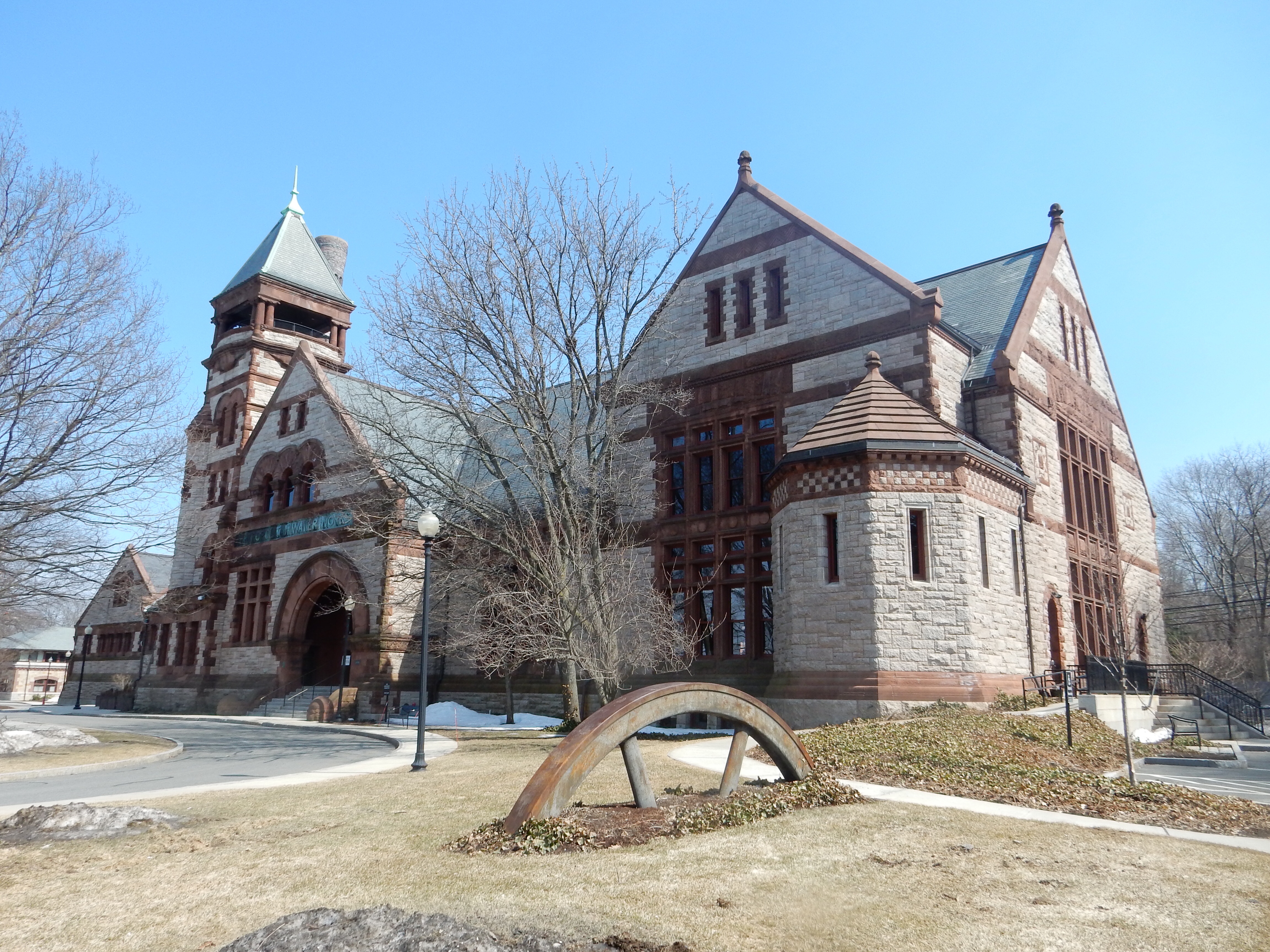
Metropolitan Waterworks Museum, Brookline

Metropolitan Waterworks Museum, Brookline

Half way around the 1.6 mile trail, I noticed a series of interesting buildings across the street. Upon closer inspection, there appeared a sign indicating this was the Waterworks Museum, open to the public beginning in half an hour. Well, hey, this was an opportunity to try something unscheduled and not on any tour list previously seen. So, the walk was resumed and completed (after a discussion with a local Bostonian about: his chronic fatigue syndrome, and how best for pedestrians to use the crosswalks, and his marriage) and the museum returned to by car.

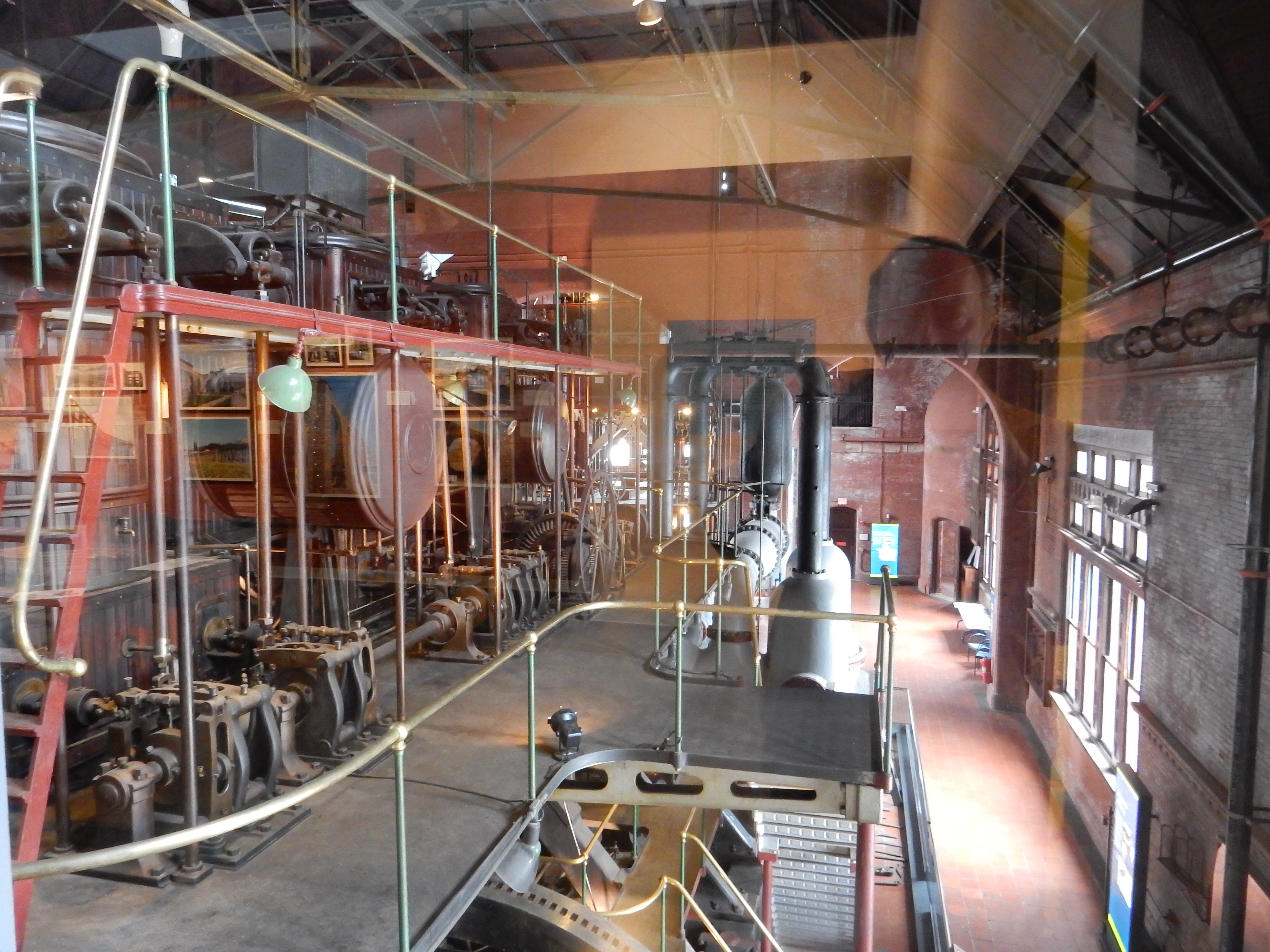
Inside the pumping station room at Waterworks Museum

Inside the pumping station room at Waterworks Museum

Pumps inside the building

Pumps inside the building

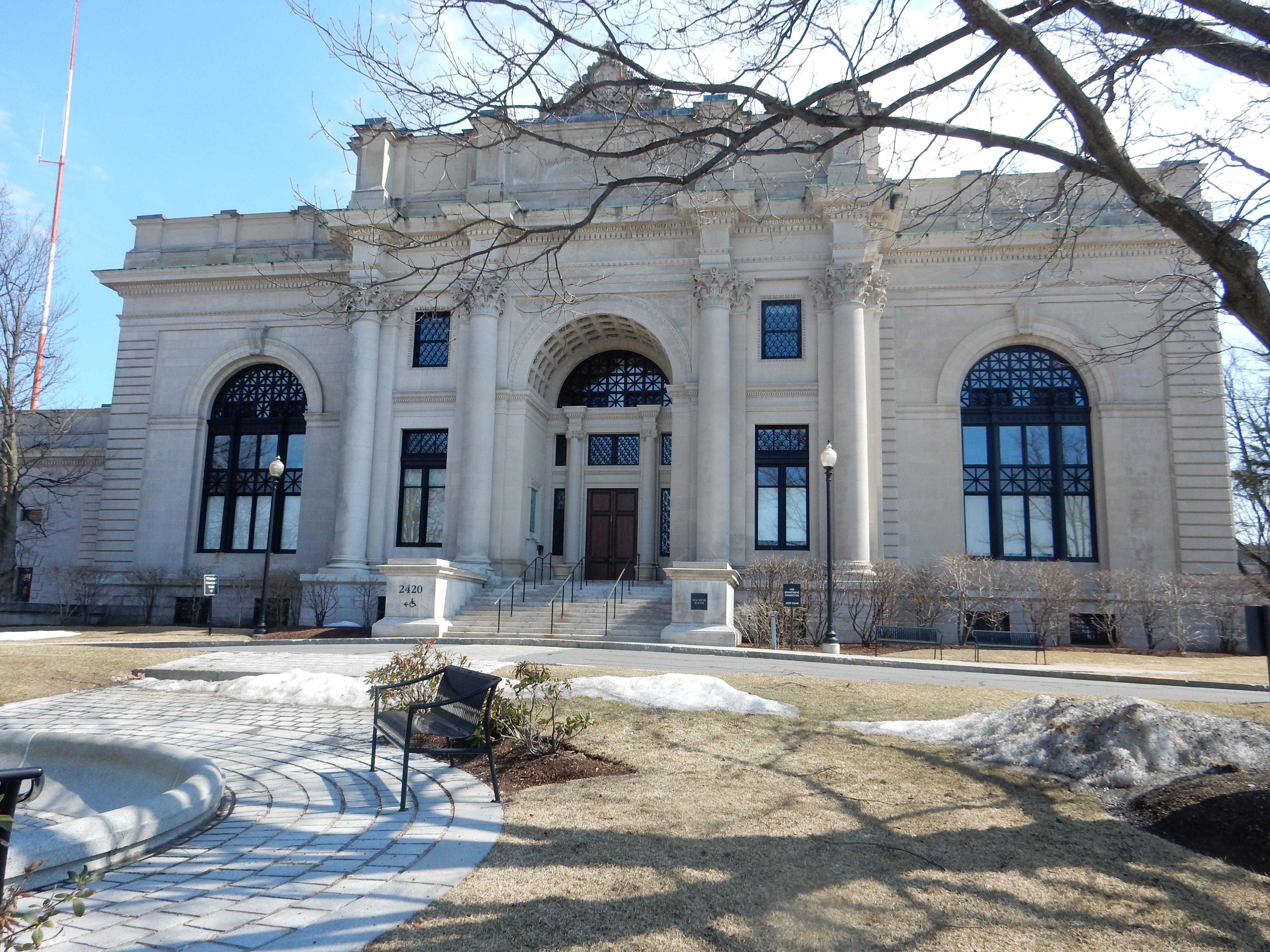
The museum is housed in the old High Pumping Station used to pump water into Boston’s water system. The museum staff were very friendly and eager to show one around. Technically, the Boston water now comes from the Massachusetts Water Resources Authority which serves 2.5 million Massachusetts residents. The system pumps an average of 215 million gallons of water a day. Most of the drinking water now comes from the Quabbin Reservoir in central Massachusetts, 60 miles away by South Hadley.

One of the former pumphouse buidlings now condos

One of the former pumphouse buidlings now condos

This pumping station was closed in the 1970s and after twenty years of neglect, people came up with a entrepreneurial way to restore the building and its massive equipment. Part of the museum building and two ancillary buildings were sold and converted into high-end condominiums. Part of the open land area was sold and another condominium built. The proceeds went into an endowment to restore the building. On an ongoing basis, each time a condo is sold, a portion (I do not know how much) of the price goes into the endowment to maintain the museum.

The museum itself does a nice job of education about the connection between clean water and health. Boston was the first municipal water company to have its own biological station to conduct research into water borne illnesses and water quality. Part of the incentive to build this large pumping station also germinated after a 1872 Boston fire which killed 30 people and burned out 65 acres of Boston’s downtown. All in all, a very nicely done museum and an enjoyable hour.

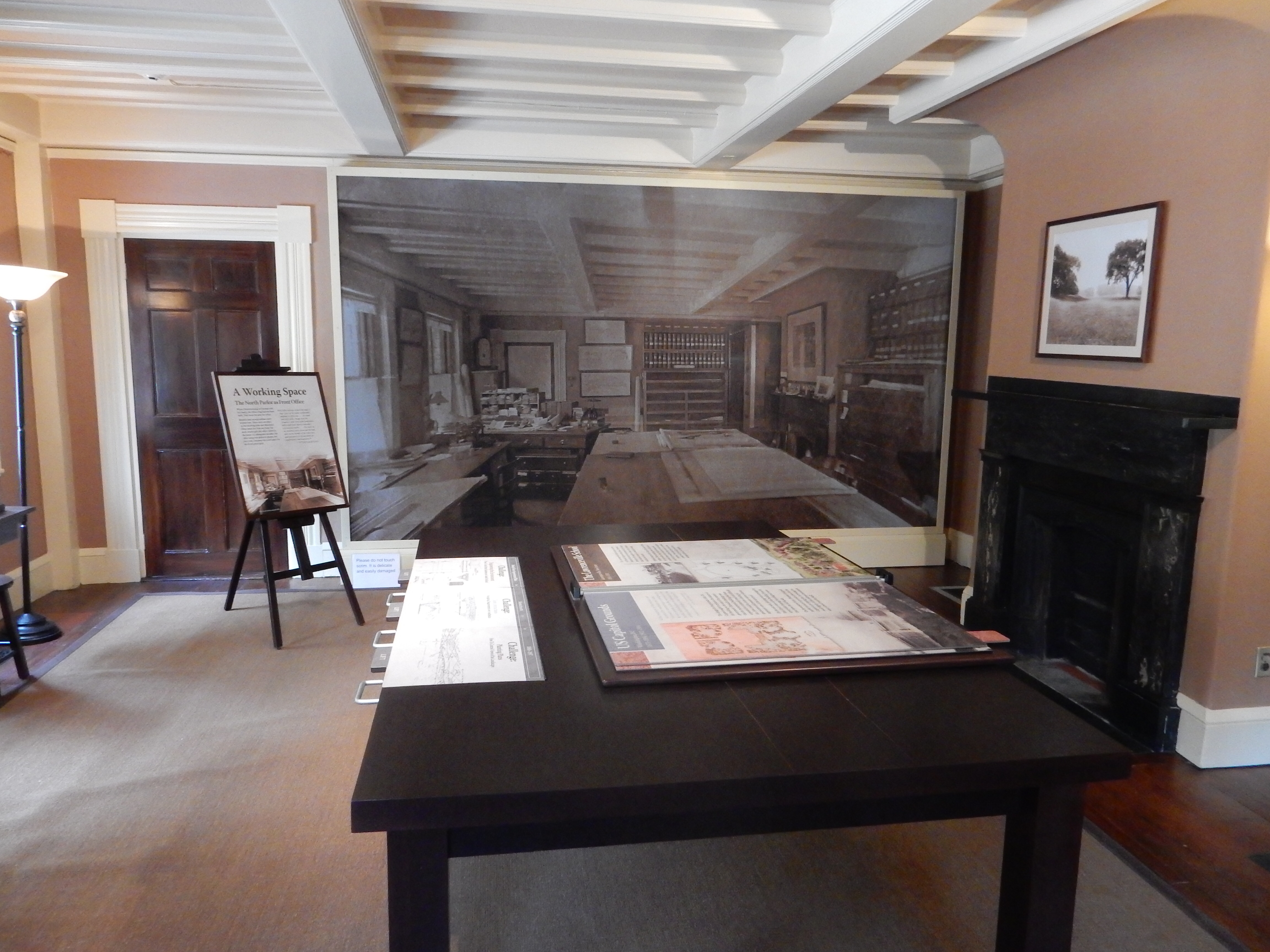
Olmsted office

Olmsted office

The second destination was the Frederick Law Olmsted National Historic site, also in Brookline. The first thing learned was that while Frederick Law Olmsted is considered the founder of landscape architecture in America, his work was continued by his two sons and the firm Frederick Sr. founded. Frederick Law Olmsted was born in 1822, retired in 1895, and died in 1903, so works discussed after his retirement are due to his sons (Charles and Frederick Jr.) and the firm.

The Frederick Law Olmsted National Historic Site

The Frederick Law Olmsted National Historic Site

Frederick Sr. designed Central Park in New York City, the grounds of the U.S. Capitol, the 1893 Chicago World’s Fair, and innumerable other projects. His vision allowed him to view an area of unlikely value and create a park system that also drained mosquito breeding swamps and provided a parkway to transport people and carriages. His ideas provided for multi-use large park areas in urban areas that previously had none. His ideas were borne less out of education than experience; seaman, walker, farmer, draftsman, clerk, engineer, and traveler in Europe and Asia. He was one of several influential citizens pushing for the creation of Yosemite Valley as a park. The National Historic Site is located in the building he moved into from New York City in 1883 and was his home and the office for the firm (with several additions) until 1980 when the Park Service took over the building and its archives of 120 years of drawings. Olmsted moved to Brookline because he had a major contract to design a series of parks and parkways for Boston that came to be known as the Emerald Necklace.

Drawing showing the site and size of the Waltham Watch factory

Drawing showing the site and size of the Waltham Watch factory

A poster for Waltham watches

A poster for Waltham watches

Today’s third destination was a walk along the Charles River in Waltham, passing by the former Waltham Watch factory. Like many other New England towns, Waltham was the home to early factories. In its case, it was the first factory to truly mass-produce watches. In its time, 1854-1957, the Waltham Watch Company made almost 40,000,000 watches. At its peak, it employed 4,000 workers. The 400,000 square foot factory site is now lofts and offices, aided I am sure by tax credits and subsidies. There is a small exhibit area in the building with displays relating to the history of the company and its workers. (All three numbers begin with 4, a co-incidence I am sure. The numbers come from the display in the exhibit area.)

This evening was the Holy Thursday service at the Paulist Center in downtown Boston. Deb and Rebecca know a lot ot people there so it is always refreshing to attend a service with them.

Ed and Chris April 2 10 pm

Categories: road trip, travel | Tags: , , , | Leave a comment

2015 Trip 1, March 22-27, Florida in Winter

Miami Beach, FL Wednesday, March 25

The blog has been quiet since we have been quiet, not doing much of any major notice. Not that Miami Beach (South Beach) has been quiet; that would really be unusual. No, Chris and I are in our laid back mode, letting the party goers and expense account people have a good time. Miami is host to a major tennis tournament now and a music festival, the Ultra Music festival, and the Winter Music Conference is also underway in Miami. There is tremendous spill-over to Miami Beach. The Ultra Music festival is for electronic music by DJs, etc. If you know what I am talking about, great. If not, I don’t understand it any better and can’t explain it more. But while it is not my style of music, it certainly keeps the place hopping.

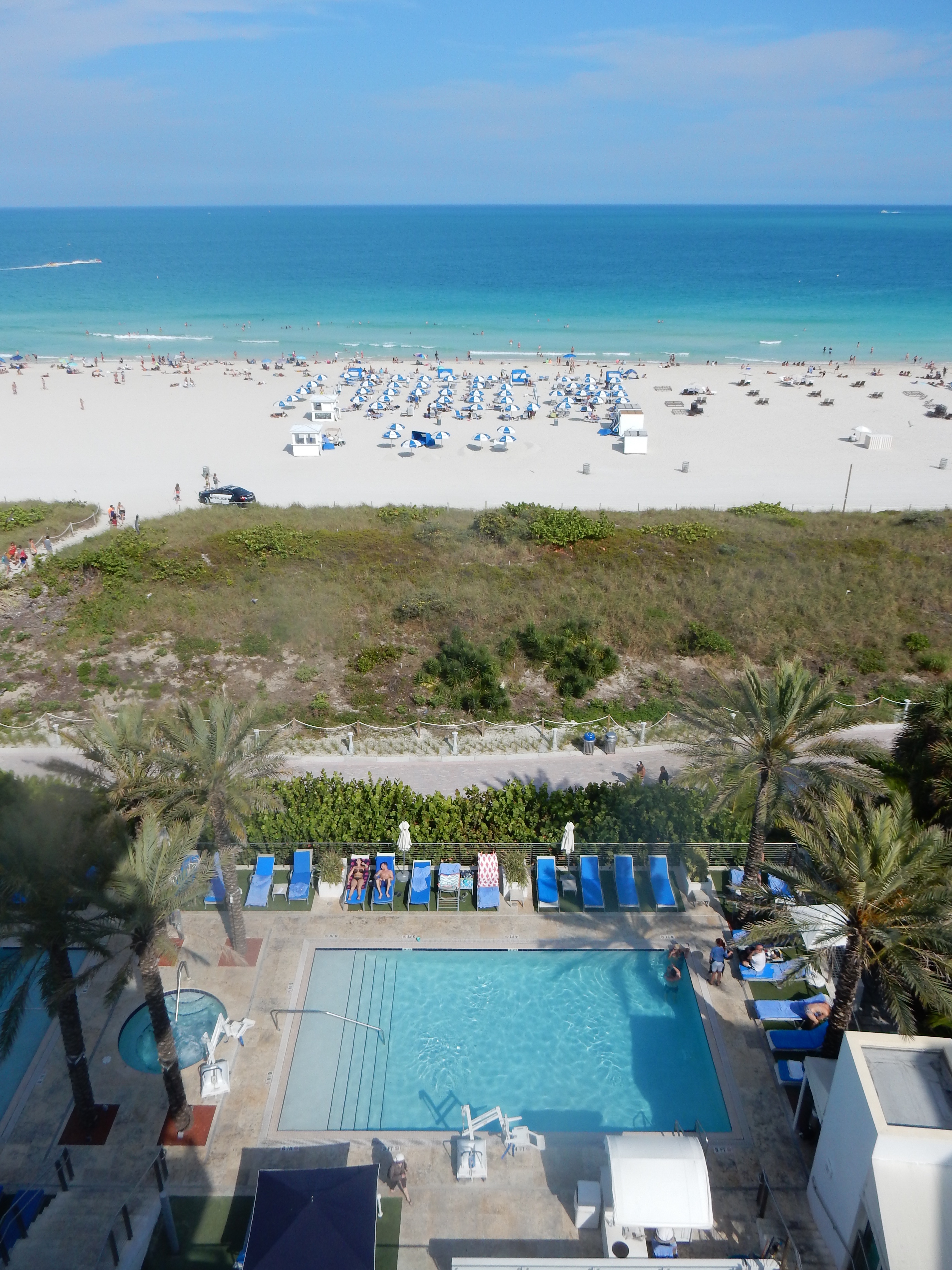
View from our room at Marriott Stanton

View from our room at Marriott Stanton

Tonight (March 25) we are at our second lodging in Miami Beach, the Marriott Stanton at about 2nd and Ocean Drive. The Marriott is on the beach and has an outdoor pool. After checking in this afternoon, we just lazed at the pool. We are likely to be doing the same thing Thursday during the day. Just a half block south of us is Nikki Beach, an outdoor party/event place that is rocking away and will probably be blasting through the night. No tickets needed for us to get the vibe.

HGVC on Ocean Drive

HGVC on Ocean Drive

Miami Beach life guard stand

Miami Beach life guard stand

We spent Saturday through this morning (March 21-25) at the Hilton Grand Vacations Club (HGVC) at about 14th and Ocean, about 12 blocks north of the Marriott. HGVC is across the street from the beach, there is a park across the street between us and the ocean. HGVC has no pool, we have spent the last four days at the beach under an umbrella. The days have been glorious, mid-80s with a slight breeze.

Our last blog posted mentioned that Miami Beach was founded 100 years ago so this is a new town. This was a slender sand spit, with New Jersey Quakers trying to grow coconuts and avocados. That failed and years of dredging up muck from Biscayne Bay to build up the island and the construction of a bridge from the mainland began the land rush of the 1920s. A 1926 hurricane and the 1929 stock market crash put an end to that. The advent of WWII with its Florida training camps for the military brought another boom after the war-aided by the advent of air-conditioning. The late 1960s and 70s brought another crash but its re-birth is credited to historic preservation of the old hotels, aided by artists and gays. Now it is a very hip place, a hub for many people from Europe and South America.

Tuesday night we attended two of the birthday celebratory events being held. The first was a Jackie Gleason marathon. Okay, just like I don’t understand electronic music, many of you may not have heard of Jackie Gleason. He was a comedian, radio, movie and TV show personality in the 1950s and early 1960s. Some of his shows were based out of Miami Beach and he helped publicize Miami Beach as a travel location. Obviously many of the people in Miami Beach don’t remember Jackie Gleason either. There were only about 25 people in attendance.

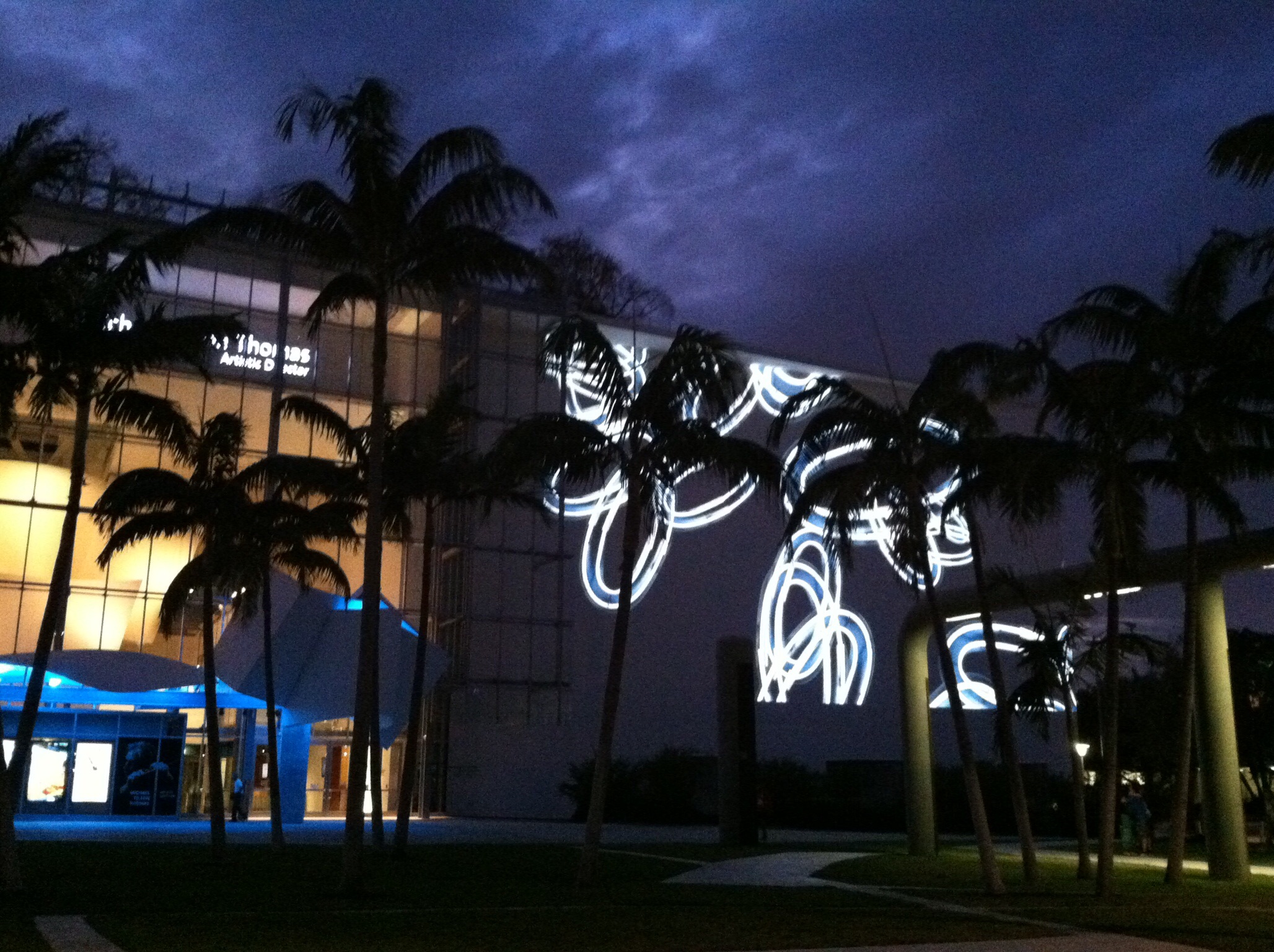
The wall cast at New World Symphony. We chose a spot with a back rest, even though it meant looking through the leaves

The wall cast at New World Symphony. We chose a spot with a back rest, even though it meant looking through the leaves

So, we went across the street to the New World Symphony. I won’t go into details about the Symphony but it has an 7,000 square foot outdoor wall that is used as a super sized movie screen. This evening the 90 minute pilot episode for the TV show “Miami Vice” was broadcast. At least this showing was slightly better attended, possibly 200 people. Miami Vice was a police show running from 1984 to 1989 that influenced popular music, dress, etc. Based in Miami Beach, the TV show actually primarily used South Beach locations which helped again to popularize South Beach.

Continued, Thursday March 26

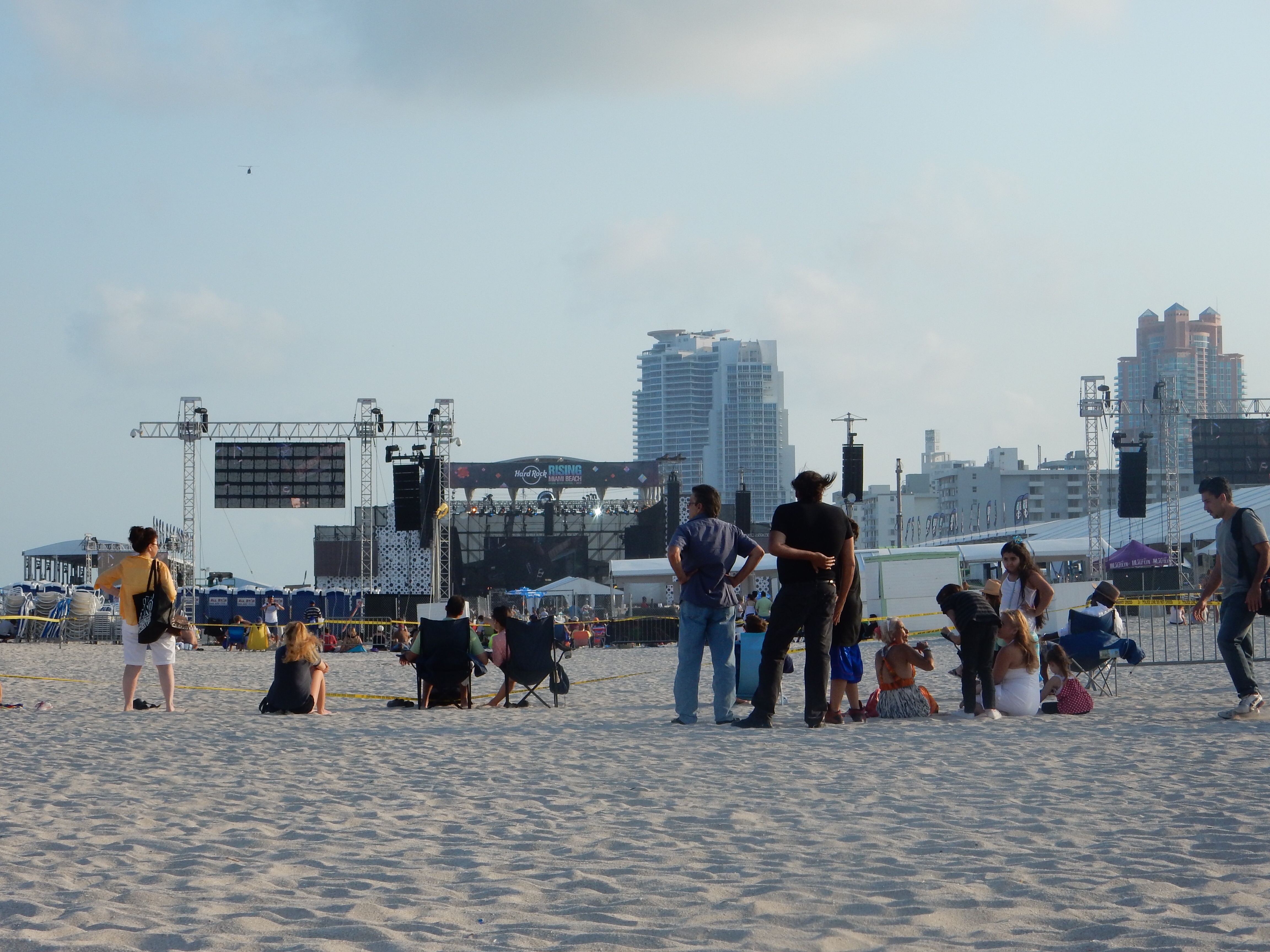
Our beach view of the music concert

Our beach view of the music concert

Ocean Drive street scene

Ocean Drive street scene

Tonight’s birthday celebration was a major music concert held on the beach at 8th and Ocean Drive from 5 pm to midnight. A huge music shell and seating was constructed on the beach; tickets ranged from $79 to over $1,000. We went early and just listened from the beach way far away where the sitting was free. A very few of the 40 musicians we had heard of (Gloria Estefan, Andrea Boccelli); most we had not (Afrobeta, DJ Zog). After 30-60 minutes we decided it was not worth it. We walked back along Ocean Drive, watching the people; the street had been closed for the event.

We have been coming to Miami Beach for 14 years, usually spending 7-10 days here in mid-March. It is impossible to say we know the Miami area (population 400,000, metro Miami going up to Palm Beach is 5.5 million) but we are comfortable knowing Miami Beach (population 90,000).

Beach scene

Beach scene

We have certain places we go most years, adding in some new places. Actually you have to try new places, changeover in restaurants is high. Property values have skyrocketed, forcing out most Mom and Pop restaurants. This year we discovered that Jerry’s Deli, just two blocks from HGVC, closed last summer. It’s old-fashioned, deli-style menu must not have resonated with the new crowds.

New construction is constant, to a degree. Year one a building is shuttered. Year two a sign is up listing some new condo or hotel will be built on the site. Year three some construction is underway. Year four, construction is almost done. Year five (if all has gone well), the building may be open and operating. Magazines and newspapers are advertising the newest and fanciest condos and apartments. Condos usually start at over $1,000,000. I saw one advertisement this time for condos in a new building priced from $5,000,000 to $40,000,000. Supposedly foreign buyers are providing much of the impetus.

Sunrise on the beach

Sunrise on the beach

But all of that is moot for us. We come, sit on the beach, walk a bit, go to some cultural events depending on the weather, and go back home. Which is what is happening this year. The weather has been great so it has been pretty much all beach and pool time, practically no walking around. Trip 1 draws to a close tomorrow as we fly home. It has been a pleasant two month excursion through a varied Florida landscape.

Ed and Chris March 26 10 pm

Categories: road trip, travel | Tags: , | 1 Comment

2015 Trip 1, March 20-21, Florida in Winter

Miami Beach Saturday March 21

Flat Florida landscape with cattle

Flat Florida landscape with cattle

Night and Day. We left quiet little Ruskin FL for Miami Beach. It is 250 miles in distance but a whole ‘nother world. We could have driven via the interstate but once again drove the two lane roads, east across the entire state and along the shore of Lake Okeechobee. Towns in the interior part of the state are few and far between. The area’s RV and mobile home parks are definitely not in the high rent district. Cattle and tomato growing transferred into sod and sugar farms.

Lake Okeechobee is the seventh largest freshwater lake in the United States. It is only about 10-15 feet deep and is an integral part of the process of keeping the Everglades fresh. There is a long history of how the water has been used and abused. Today there are watershed districts trying to manage competing demands for use of the water in addition to the need to not diminish the flow to the Everglades. There is a 30 foot high dike around the lake with a 110 mile long walking/biking path on top of the dike. I would not recommend it as a walking path. There is absolutely no shade and at Florida heat, it would be about the last hike I would want to undergo.

Arrival in the Miami area brings back the wide highways, speeders, high density of new skyscrapers, etc. The normal 10-15 minute drive into South Beach across the causeway next to the cruise ship harbor was bumper to bumper, 50-60 minutes of stop and go driving. Pedestrians are everywhere, never waiting for a light.

The next five days are probably beach days, depending on weather. 2015 is the 100th birthday of Miami Beach and there will be a few celebrations this week. Part of the allure of Miami Beach is the architecture. Art Deco for some of the oldest hotels from the 1920s; the Miami Modern movement from the 1950s with over-the-top hotels and motels.

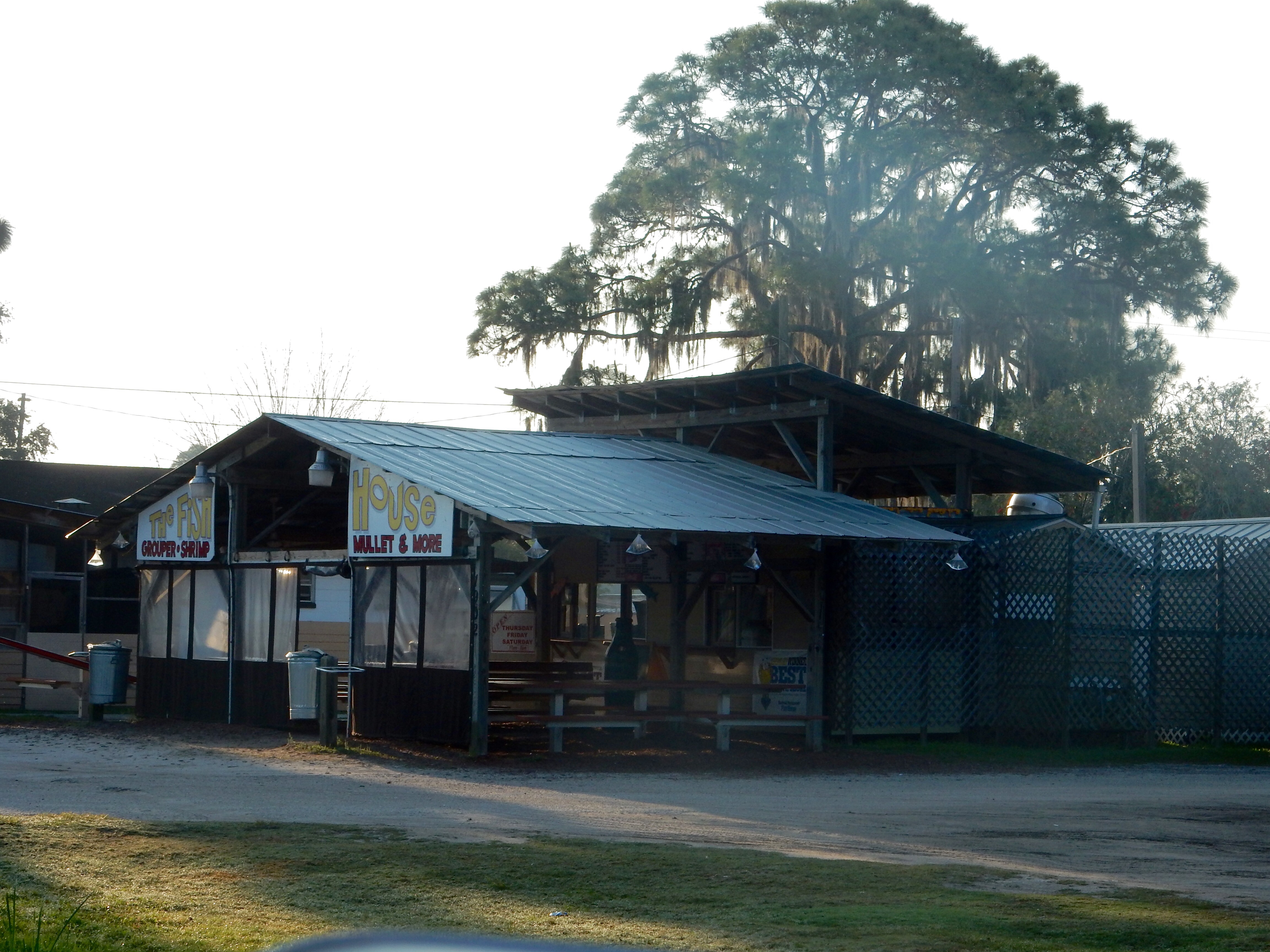
Fish Shack restaurant in Ruskin

Fish Shack restaurant in Ruskin

In contrast, little Ruskin began life in 1908, named after John Ruskin, a social critic and utopian. Tomato growing (Di Mare Fresh and Pacific Tomato are two big firms still operating in the area) was its major crop and activity until after WWII. Suburban development has occurred but there is no downtown, not even nice strip development. The two most popular and highest rated restaurants on TripAdvisor are a hot dog shack and a fish shack. And I do mean shack. The cooking facilities look like an enclosed car port; the dining area is picnic tables under a larger car port type enclosure. We did try the hot dog place, it was good barbecue. The crowds keep coming and the parking lots are always full. Not everything has to be artisanal with modern vibe architecture to be good.

Resort at Little Harbor

Resort at Little Harbor

The marina at The Resort at Little Harbor

The marina at The Resort at Little Harbor

Our lodging for the last three weeks, the Resort at Little Harbor combines hotel, timeshare, and townhouse condominiums. It has two restaurants, three pools, and a marina. The staff was always friendly. The beach area is on Tampa Bay, not the Gulf of Mexico so the wave action is less.

The Gulf beaches in this area have been highly rated consistently. However, we found them too highly priced. There were also articles in the Tampa paper how horrendous the traffic is going to Clearwater Beach. Clearwater Beach is on an island. There are less than 2,000 parking spaces. During Spring Break, 10,000 vehicles try to access the beach. One person we met in the elevator at Little Harbor went to the Gulf beaches and just had a horrendous drive. When we were at Siesta Key three weeks ago, there was little public beach access and no parking. Not for us this year.

Gambel mansion in Ellenton FL

Gambel mansion in Ellenton FL

Friday we drove into Ellenton and visited a state park memorial “mansion”. The building was home to an early pioneer. He moved here from the Tallahassee area in the 1840s and raised sugar cane primarily-with the major assistance of slaves. However, his luck was rotten. Storms, fires, diseases combined to force him to turn the plantation over to his creditors in 10 years. The home was the hiding place of the Secretary of State of the Confederacy when the Civil War ended and he escaped to Europe rather than facing charges.

The Tampa area (Clearwater, Tampa, Sarasota, Bradenton, etc) does offer numerous activities across a range of interests. We enjoyed the time here at little Ruskin.

Ed and Chris Saturday March 21, 11 pm

Categories: road trip, travel | Tags: , , | 1 Comment

2015 Trip 1, March 19, Florida in Winter

Ruskin FL Thursday, March 19

The weather people reported last night that the Tampa area weather has been 7-8 degrees warmer than usual for all of March. Temperatures that would normally be in the mid to high 70s have been in the low to mid 80s. We decided to take a chance and sit outside in the sun for two hours today and drove to Myakka City.

The drive was on two lane roads, suburbia giving way to cattle farms, tomato farms, and then horse farms with scattered housing developments cropping up here and there. The destination was Herrmann’s Royal Lipizzan Stallions Horse Farm. As you probably know, Lipizzan stallions were a special horse bred in Austria in the 16th century to perform special movements in aid of the cavalry. These jumps involve long training and great strength.

Our Myakka City destination

Our Myakka City destination

The Herrmann horses are direct descendants of the Austrian horses. The background given by the web site is short on substantive details and long on a connection to the Disney movie in 1963, The Miracle of the White Stallions. The movie tells the story of how the Lipizzans were saved at the end of WWII by the actions of Colonel Herrmann and General George Patton. The movie is not the best source for historical accuracy and I have no quick access to a more detailed and accurate history. Whoever was a hero or a villain is not crucial to our day, but the idea that the horses might have died out does give some greater pizzazz to the event.

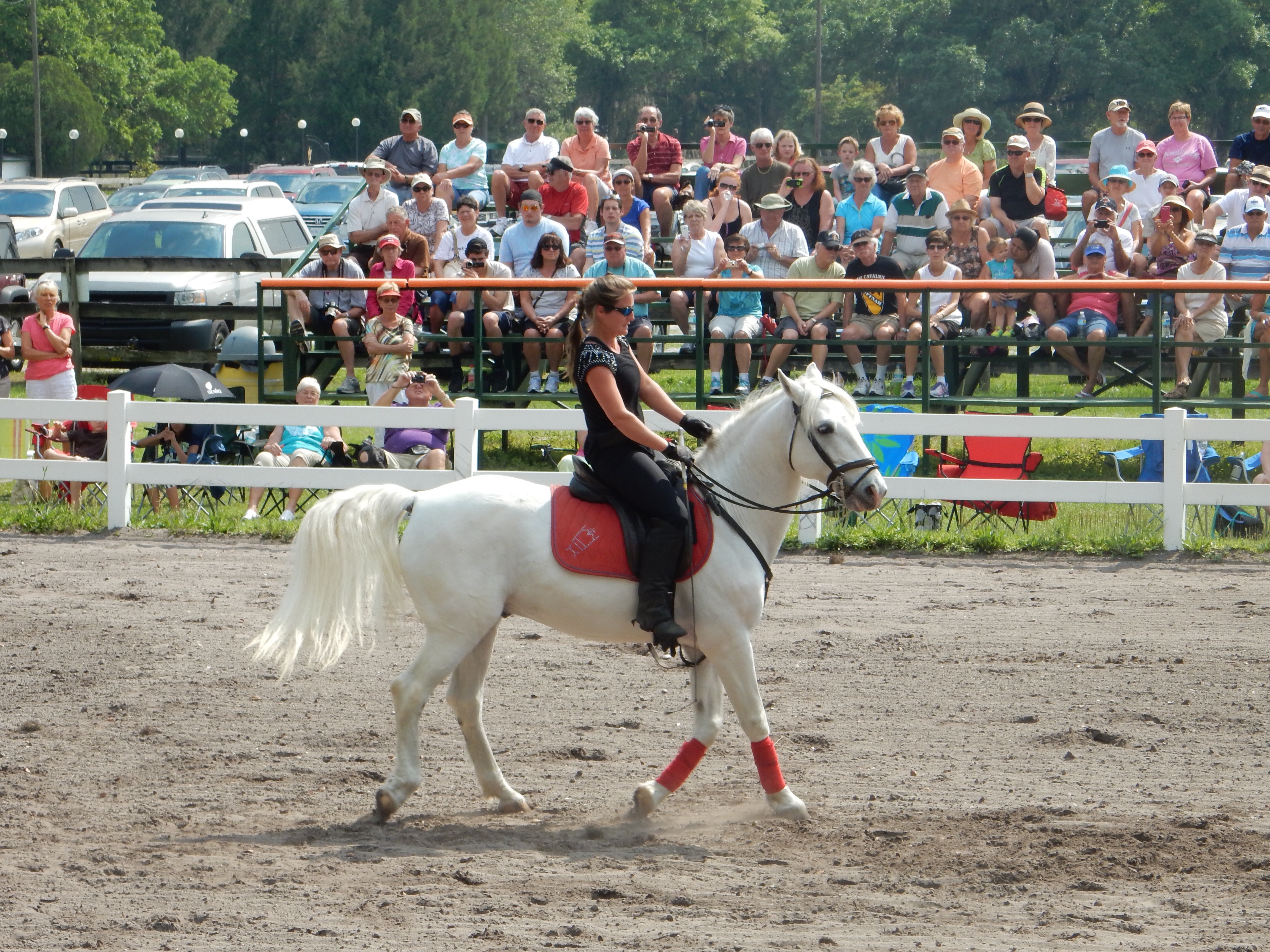
A young stallion being trained

A young stallion being trained

We went to Herrmann’s to watch the outdoor training session of the horses, sort of spring training for Lipizzans before they take to the road for a summer of shows around the U.S. We arrived about an hour early since we had read on TripAdvisor that most seats were in the sun. We managed to snag two top row bleacher seats (so support for our backs) primarily in the shade. My quick count indicated about 500 people were in attendance, including three bus loads of people.

image

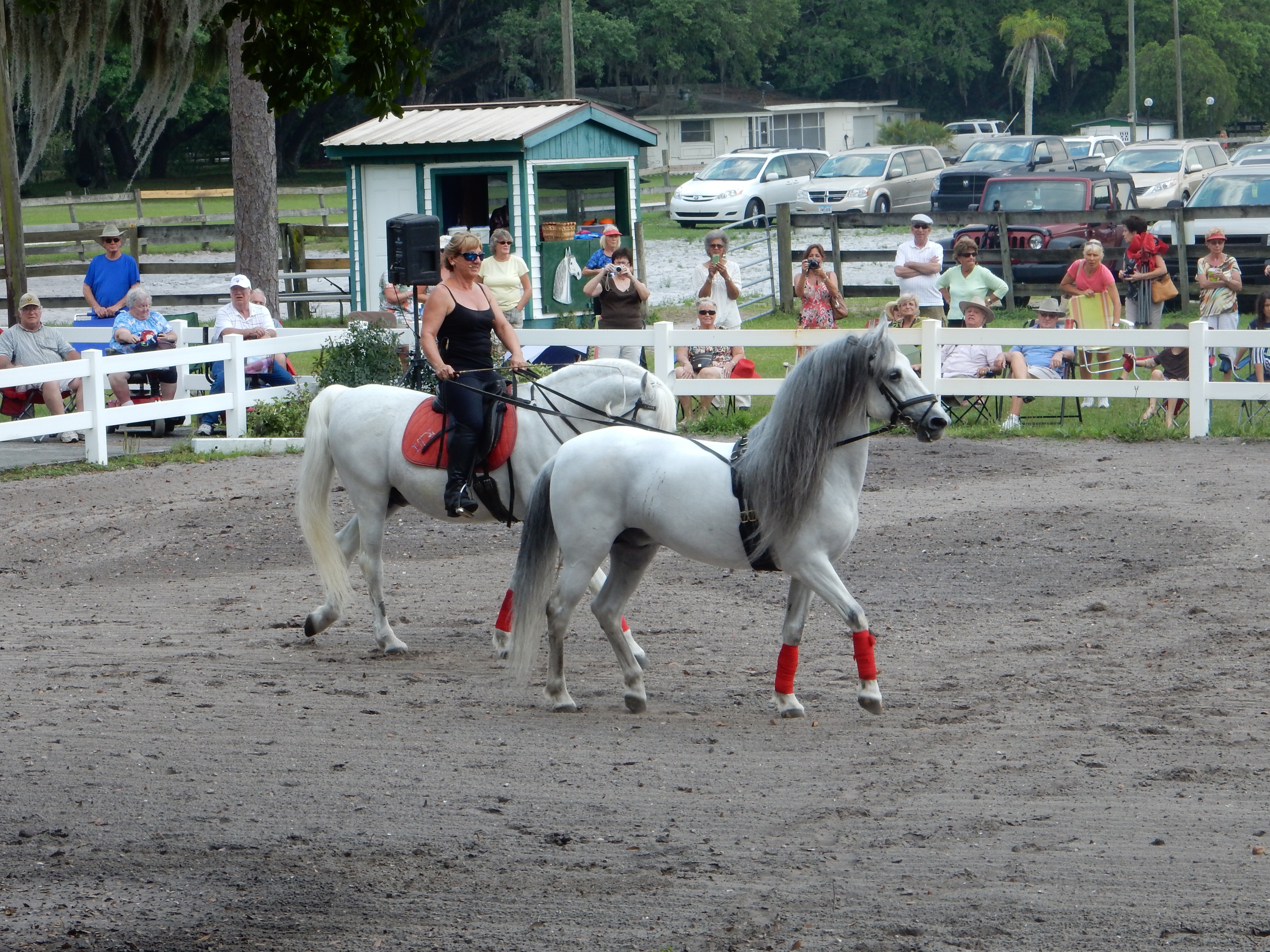
My sister is the dressage expert in the family, dressage being the type of movements described as where horse and rider are expected to perform from memory a series of predetermined movements. We watched four horses performing during the show. The highlight is when a Lipizzan does one of its special jumps in the air. My descriptions are not as visually great as you may need but one involves a backward kick while the other is a straight up jump.

image

Two mares putting on a riding demonstration

Two mares putting on a riding demonstration

Since this was training also, we heard the riders talking to the horses. Evidently in competition, no verbal commands are allowed. The horses were treated at the end of each session, each time with sugar. The announcer mentioned that carrots and apples are given also but since the carrots can make the stallions froth from their mouth look red (almost bloody to us in the stands) they only use sugar during these public trainings.

image

image

We learned that: only stallions are used for the “Airs above Ground” movements that require great strength; their mares usually birth four foals before being retired; the Lipizzans live longer than most breeds, usually 35-40 years old; that the standard white coat of the Lipizzan takes seven years to grow out from the dark birth color; and that the stables here also house several rescue horses.

Ed and Chris March 19 10:15 pm

Categories: road trip, travel | Tags: , | Leave a comment

Blog at WordPress.com.