road trip

2016 Trip Four, Southwest Discoveries, May 22

Santa Fe, NM Sunday May 22

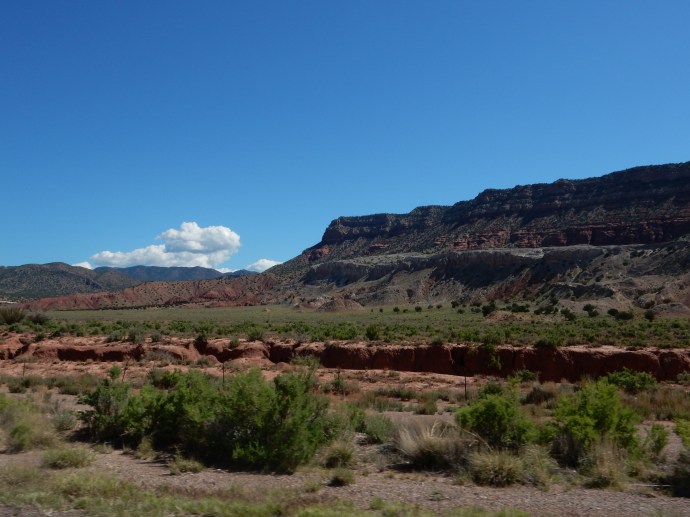
Abiquiu NM rock formation

Abiquiu NM rock formation

It isn’t just Sedona AZ that has red rocks.

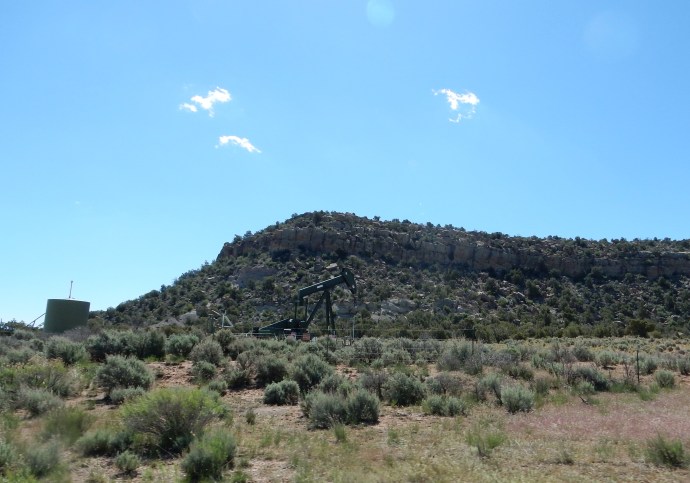
Oil drilling in NM

Oil drilling in NM

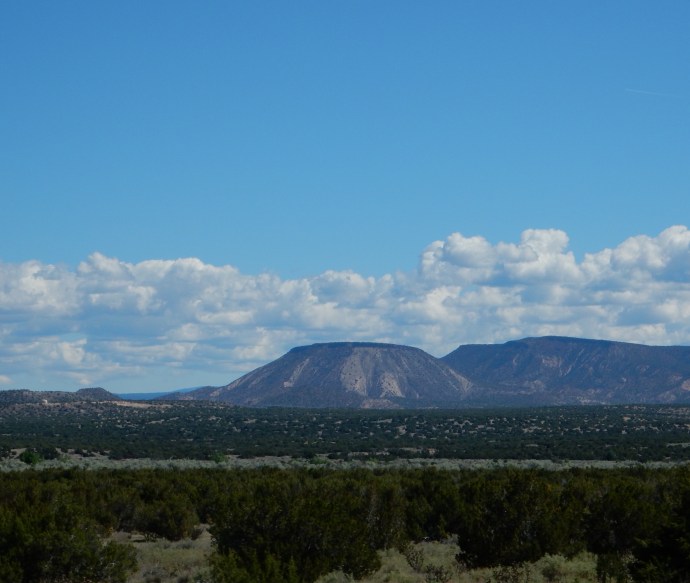
This was a travel day; a day to return to Santa Fe via a new road, exploring northern western and north central New Mexico. The area is still arid, but we drove from high elevation desert to high elevation almost forested land. We left Farmington and continued almost due east to Chama on US 64, usually less than 20 miles from the Colorado border. From Chama the drive was southerly on US 64 and then US 84, through a mix of privately owned land, Indian reservations, and national forests.

Cowboys rounding up cattle

Cowboys rounding up cattle

The oil and gas drilling continued until Chama and then pretty much disappeared. Horse and cattle raising were big users of the land, with a much heavier proportion of horse raising than we had seen previously.

Echo Amphitheater rock formatiion in NM

Echo Amphitheater rock formatiion in NM

We believed the scenery to be worthy of a state designated scenic byway, although it is not so labeled. As we drove east, the valleys were wide and green. The mountains started having actual trees on them, not just rock and scrub brush. In the distance, we could see mountains with snow still on them; usually the snow-covered mountains were in Colorado although north of Santa Fe there was still a bit of snow on the top of the Sange de Cristo mountains.

Towns are small to non-existent. The largest two were Chama at a population of 1,000 and Dulce at 2,500. Chama is one end of the Cumbres and Toltec steam train ride that is a round trip into southern Colorado through the mountains. Dulce is the tribal headquarters of the Jicarilla Apache reservation.

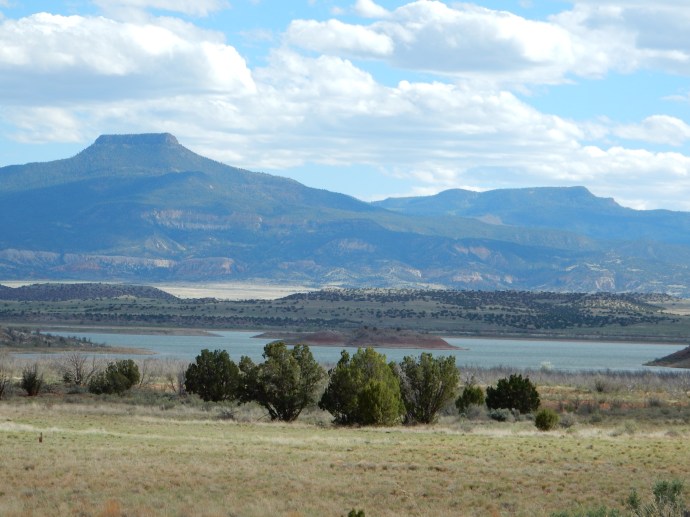
Abiquiu Lake in NM

Abiquiu Lake in NM

The top scenery though was around Abiquiu. Some of you may recognize the name as the location made famous in many of Georgia O’Keefe’s paintings. O’Keeffe (1887-1986) came here in 1934, returning for many summers, and then moved here permanently in 1949. Ghost Ranch was her initial living location.

Ghost House at Ghost Ranch

Ghost House at Ghost Ranch

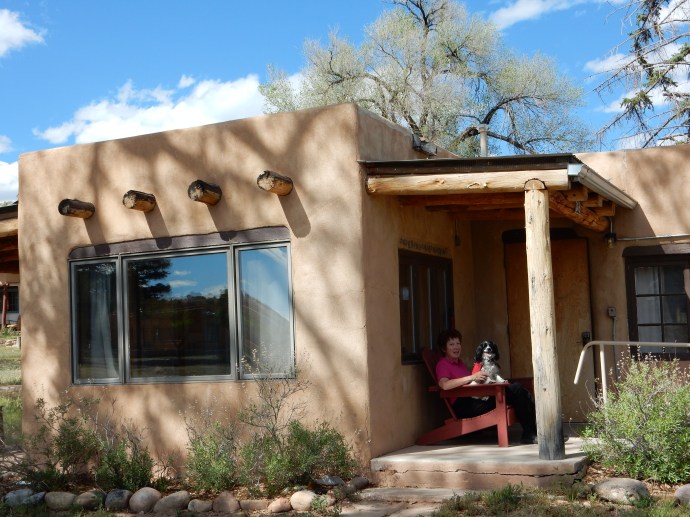
Jude and Lacey at O'Keeffe Cottage

Jude and Lacey at O’Keeffe Cottage

Ghost Ranch dates back to the 1766 land grant of the Spanish King, with large tracts of land given to individuals to encourage settlement. Land was divided, sold, inherited, lost in poker games and today the community recognizes this mixed settlement of Native American, Spanish, Mexican Indian, Portuguese, and Anglo people.

Mesa view from O'Keefe Cottage

Mesa view from O’Keeffe Cottage

O’Keeffe came here when Ghost Ranch was a dude ranch, catering to wealthy and famous Easterners. She returned over summers, eventually buying two properties reflecting summer and winter homes. Today it is a retreat and educational center run by the Presbyterian Church which preserves the land from development.

Rock formation around Ghost Ranch

Rock formation around Ghost Ranch

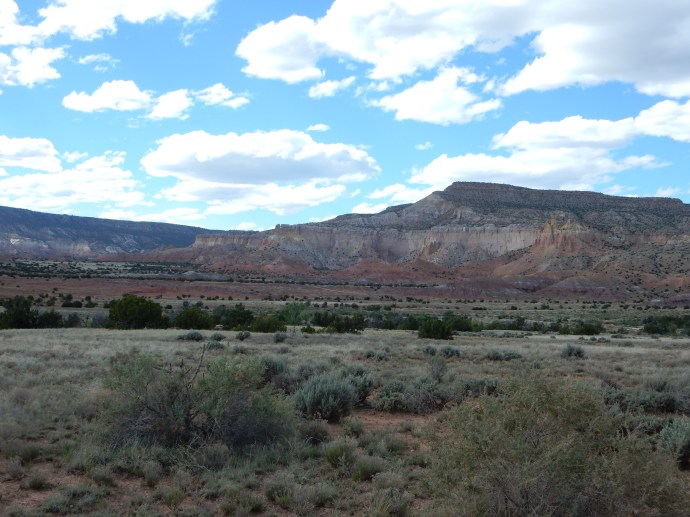
Red Rocks around Ghost Ranch and Abiquiu

Red Rocks around Ghost Ranch and Abiquiu

In Abiquiu the red rock formations jump out at you. Yes, yellow and white cliffs exist also, sometimes right alongside the vibrant red cliffs and all of them topped by a bright blue sky. We stopped at Ghost Ranch and spent time wandering around and taking pictures. We could have gone hiking on numerous trails, but the drive from Farmington was once again slow and we ended up spending the full day driving and viewing the sights from Farmington to Santa Fe. Thus, most of today’s post is pictures.

Ghost Ranch area

Ghost Ranch area

Panoramic view looking towards Ghost Ranch

Panoramic view looking towards Ghost Ranch

Ed and Chris

Categories: road trip, travel | Tags: , , , | Leave a comment

2016 Trip Four, Southwest Discoveries, May 21

Farmington, NM. May 21

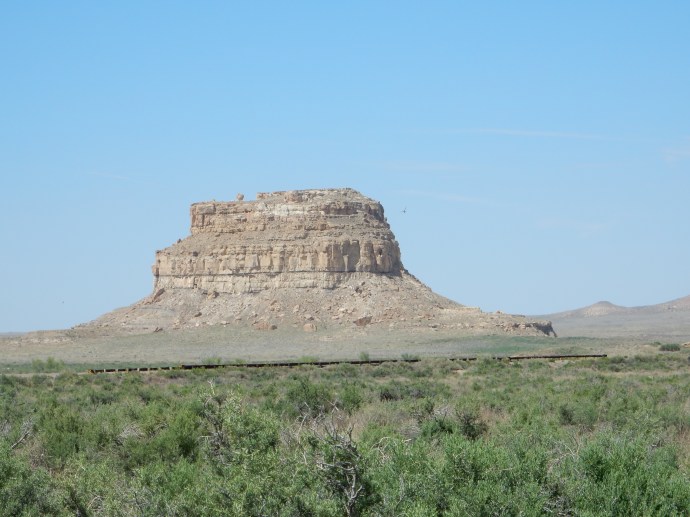
Fajada Butte in Chaco Canyon rises 300 feet from canyon floor-used to mark equinoxes and solstices

Fajada Butte in Chaco Canyon rises 300 feet from canyon floor-used to mark equinoxes and solstices

Another rocky road with washboard type ruts was the reason we are spending two nights at the TownePlace Suites in Farmington (which has been a great place to stay). When we planned this visit to Chaco Culture National Historical Park, all of the literature and advice mentioned the 13 miles of dirt road leading into the park. Travel time from Santa Fe to this park would be 3.5 hours one way. If we were going to enjoy the park, an overnight stay of at least one night would be necessary. As you know now, we decided to spend two nights in Farmington.

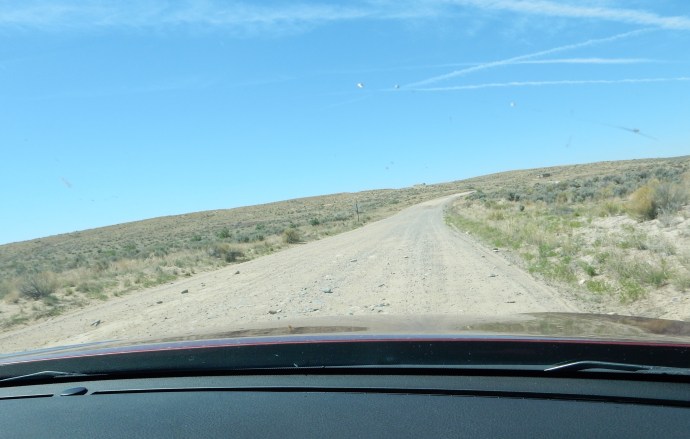
Viewing the dirt road portion of our trip

Viewing the dirt road portion of our trip

The drive from Farmington to the park turnoff is only 50 miles along US 550. Easy. After the turnoff is about 8 miles of paved county road. Not bad. Then comes the 13 miles of rutted dirt road which took us 42 minutes to drive; no stops along the way. Average driving sped was thus less than 20 mph. Jude was driving her Subaru which we hope will not need an alignment or suspension work after the trip in and then out. Road pictures do not show the washboard effect very well; the road did not have huge holes or rocks threatening the undercarriage but the washboard effect made the ride a real jarring experience. Once you get inside the park boundaries, the roads are all paved. Overall, the 24 miles from the turnoff takes another hour.

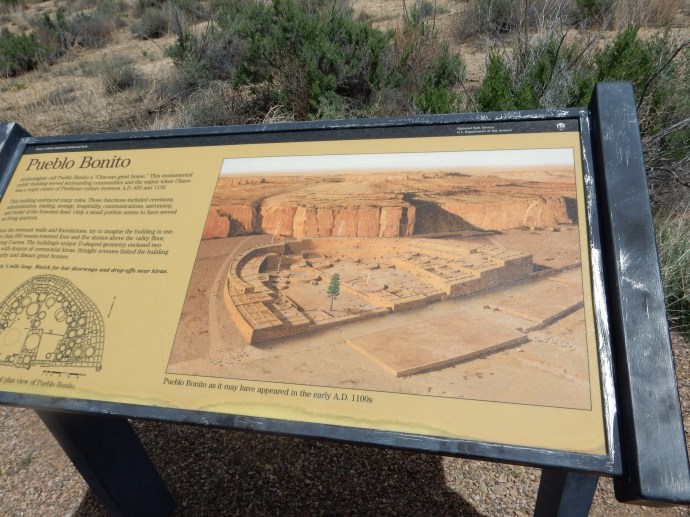
Drawing attempting to show Pueblo Bonito as it would have been around 1100

Drawing attempting to show Pueblo Bonito as it would have been around 1100

Chaco was the epicenter of this area as the native people here constructed roads, great houses, kivas, etc. of monumental proportions to support their far-reaching commerce and social organizations. Do we know why it started or why it ended? No. Archaeology and oral traditions only go so far in answering the myriad of questions raised when one views these excavated ruins (more are underground and unexcavated). The great houses, like Pueblo Bonito, began rising in the mid-800s and were emptied by the late 1100s.

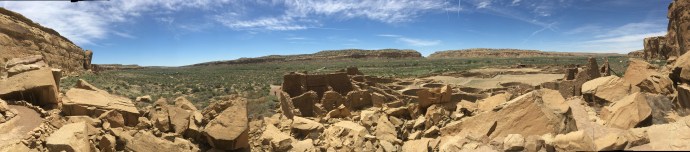
Panoramic view of Chaco Canyon

Panoramic view of Chaco Canyon

Oral tradition says that Chaco represents a place where various Indian clans stopped and lived during their sacred migrations. Migration patterns seem to be a continuing theme; that the Pueblo people are on a continual migration and the “abandonment” of various locales is just part of their life journey. Archaeologists do know that Chaco was an important center for a collection of great houses in this part of New Mexico. Trade to the Pacific and Mexico seemed to be centered here as well-constructed roads and paths lead out into all directions. For over 300 years, Chaco seemed to unify and attract numerous diverse peoples.

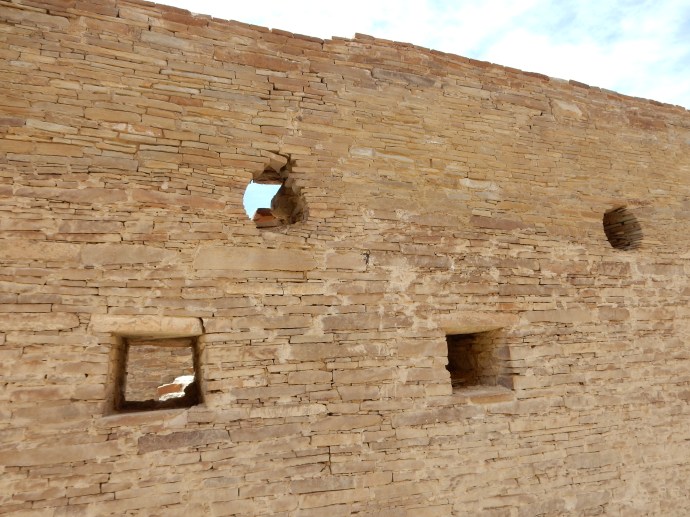
Detail of wall construction with windows and openings where roof beam had been

Detail of wall construction with windows and openings where roof beam had been

The architecture of the buildings shows that a central plan was created and followed for decades to complete the community. Pueblo Bonito was four stories high and had 600 rooms. The walls we observed were three feet thick with varying pieces of sandstone laid in a mud mortar; then finished with carefully selected and shaped stones. Evidently, plaster was applied as a finish coat but this layer has eroded away over time. Still, looking at these ruins makes one appreciate the great efforts at planning and control that would have been necessary to construct them.

View looking down into a plaza area of Peublo Bonito; huge rock in foreground collapsed from the canyon wall in 1941, destroying 30 rooms.

View looking down into a plaza area of Peublo Bonito; huge rock in foreground collapsed from the canyon wall in 1941, destroying 30 rooms.

The food supply for this vast area was little discussed. It is obviously arid but native tribes had success in low water agriculture. It seems doubtful that enough food could be grown in the neighboring area for the many people who lived here and food must have been imported.

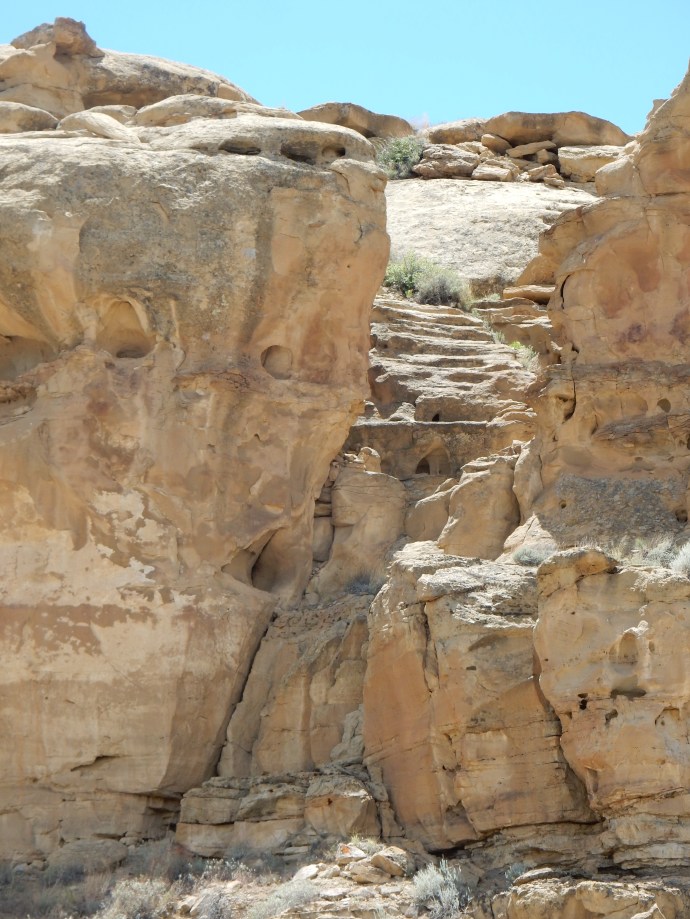
Stairs carved into canyon walls to facilitate foot traffic

Stairs carved into canyon walls to facilitate foot traffic

Current theories are that these great houses and numerous kivas were built to support the large number of visitors for trading and ceremonial activities; that the actual number of year round residents was much less than the number of rooms would indicate. Food storage and importation would have been necessary to feed the visitors. From oral traditions, it appears that visitors to Chaco came from Hopi, Zuni, Acoma, Zia, Laguna and other Rio Grande pueblos, as well as interaction with Navajo peoples.

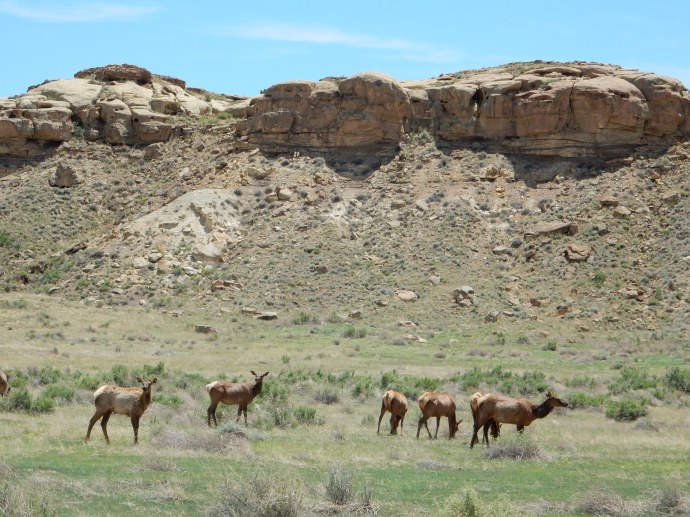
Elk herd living in the canyon

Elk herd living in the canyon

As noted at Aztec Ruins, wood beams used for roof construction came from forests 40 to 60 miles away. It is estimated that as many as 225,000 trees were cut for the buildings in Chaco Canyon. They must have cut them there, peeled off the bark, and allowed them to dry to make them easier to carry all the way back to Chaco Canyon. What social structure was in place to organize this and get cooperation from people to erect these massive buildings over hundreds of years??

Chaco is now, and must have been at an earlier time, considered a sacred place where various tribes could come together peacefully to trade, pray, and interact.

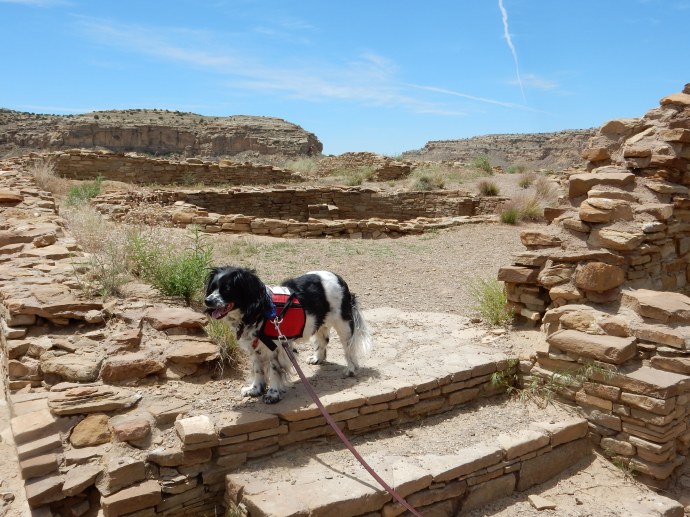
Jude's dog Lacey

Jude’s dog Lacey

I will admit we hiked less than usual. We could have climbed to the top of cliffs and looked down on the ruins but did not. I think the time to get here did dampen our enthusiasm to undertake longer, steeper hikes. In any event, we came away better informed and deeply impressed.

Ed and Chris

Categories: road trip, travel | Tags: | Leave a comment

2016 Trip Four, Southwest Discoveries, May 20

Farmington, New Mexico. May 20

Along US 550

Along US 550

Utah gets all of the love and attention about its great scenery and national parks. However, our drive today up US 550 from Bernalillo to Farmington New Mexico was a dramatic expanse of mountains, rock formations, and high desert vegetation. The scenery was not our goal, but since the ride was four hours with a picnic lunch, beautiful scenery made the drive so much more pleasant.

Along US 550 in NM

Along US 550 in NM

Along US 550 in New Mexico

Along US 550 in New Mexico

The route generally runs up and down between 6,000 feet above sea level and 7,000 feet above sea level. A few small towns, a few Native American casinos, but plenty of views. Most of the human habitation was less than dramatic. The economy seems to run on oil and gas mining and cattle ranching. Farmington, our host community for the next two nights, has a population of 45,000 and is the major shopping and services center for the Four Corners (where Arizona, Utah, New Mexico, and Colorado join) region.

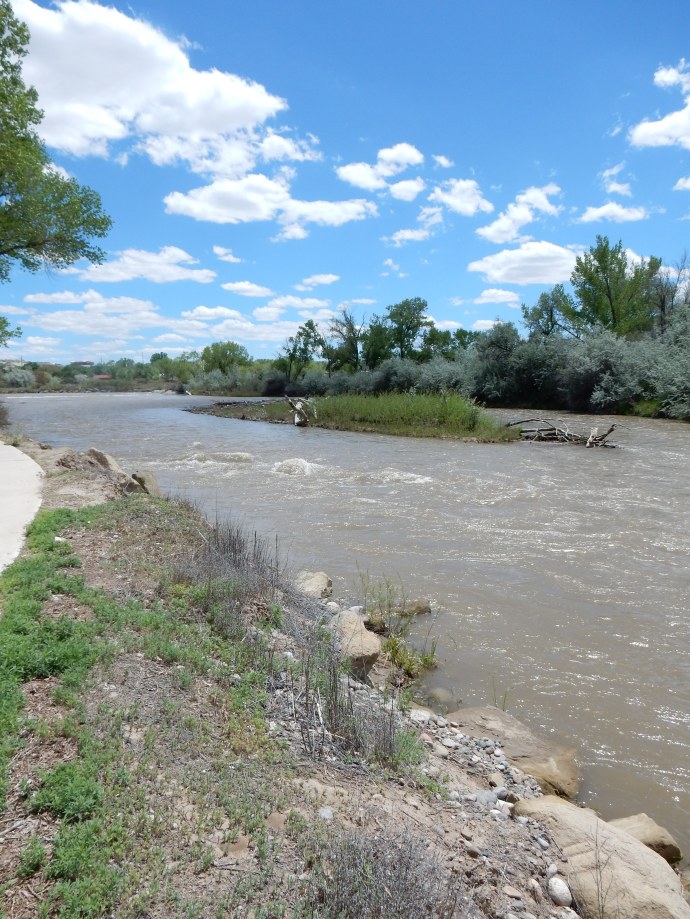
We had packed a lunch and sought out a pleasant site to have it. Aztec NM seemed a likely spot. The Animas River flows through town and Google Maps showed a large park along the river downtown. Jude reminded us though that the Animas River was the location of that major EPA mine reclamation spill last August. The spill occurred during mine reclamation when 3 million gallons of toxic waste were dumped into the Animas and San Juan rivers. The rivers turned orange.

The Animas River in NM

The Animas River in NM

Local news here still debates how well the Animas River has recovered and the long term impact of the spill. Water for irrigating Navajo nation farms has not yet been turned on. Last year their crops were a total loss. Local communities have not been fully reimbursed for their costs to try to control and mitigate the spill effects. In a sad commentary, other newspaper articles today reported that the bankruptcy of major coal companies threatens mine reclamation projects. States like NM have allowed coal companies to fund reclamation projects out of current cash rather than advance funding of the projected reclamation costs. Bankruptcies threaten the future ability to control environmental damage and restore the land.

I had talked with a park ranger at Salinas Pueblo the other day who discussed how lucky NM, a poor state, was to have mining and oil/gas companies paying royalties to keep taxes down. I wonder how excited she will be when the minerals are gone, the school kids are not educated, and the landscape is destroyed. (New Mexico high school graduation rates for 2012-13, as quoted by Governing magazine, were the second lowest state rate in the country.) If you give away your mineral riches without using them to educate your young, what kind of crime is that to your descendants?

But we still had lunch along the river. The water was brownish but I did not know if that is its normal hue. We saw several people fishing in a pond that seemed to be a backwater of the river. I guess the issue is beyond us. The picnic table was sheltered, clean flush bathrooms were nearby, and the setting peaceful.

Inside the reconstructed Great Kiva at Aztec ruins

Inside the reconstructed Great Kiva at Aztec ruins

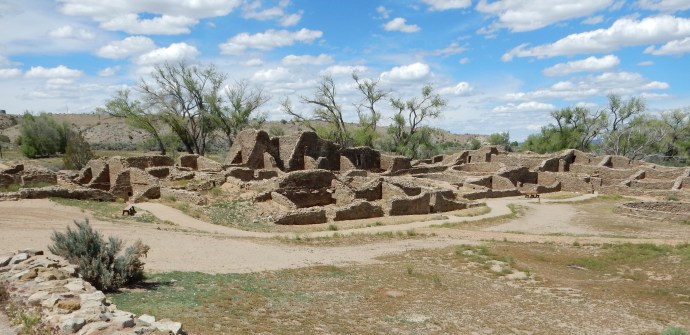
Aztec Ruins

Aztec Ruins

Our major reason for coming this way is to visit Chaco Culture National Historical Park. We will do that tomorrow. Today we visited Aztec Ruins National Monument. Hopefully you are saying: “But the Aztecs were nowhere near northern New Mexico.” You are correct, the Aztecs never came this way. Early Anglo settlers made the mistake, knowing only popular stories about the Aztecs and thinking they built the structures here, they called the area Aztec. The name has remained.

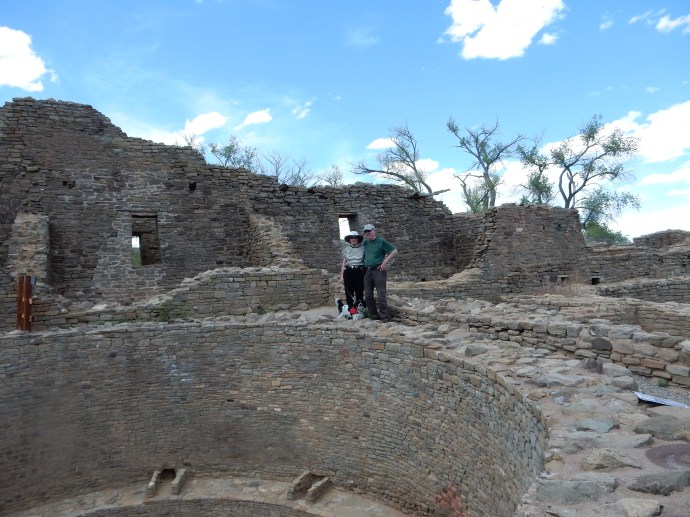
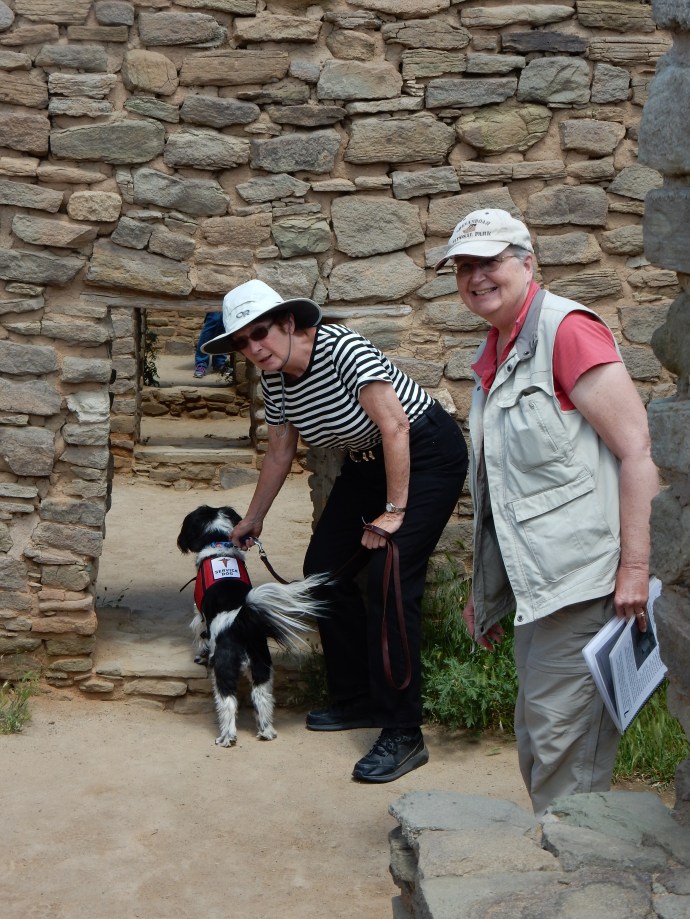
Jude and Ed at Aztec Ruins

Jude,Lacey and Ed at Aztec Ruins

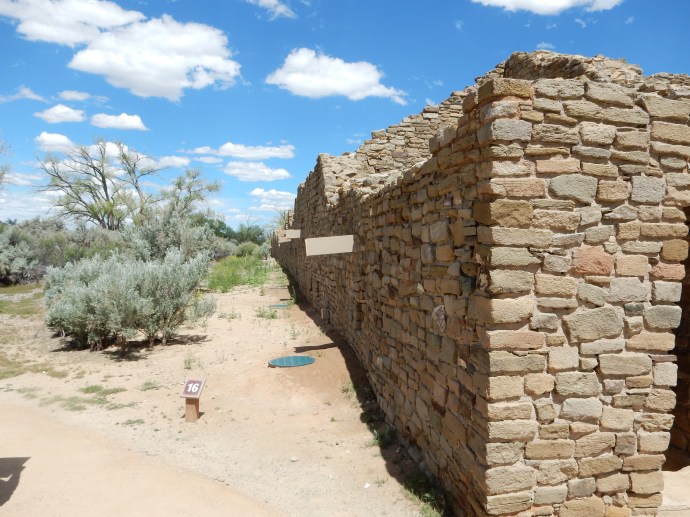
The buildings here were the work of ancestral Puebloan people, constructed between the late 1000s and late 1200s. By the late 1200s, the people had moved on. Again, we do not know the reason. They left behind a well-preserved planned community of great houses, kivas, roads, small residential pueblos, etc. Great detail and organization was necessary to complete this community. The largest of the houses had at least 500 rooms rising to three stories. They hand carried special logs at least 30 miles for the great roof beams. Some of the roofs are still intact after 900 years. The north wall of the West Ruin lines up precisely with the sunrise of the summer solstice and sunset of the winter solstice.

The north wall of the West Ruin

The north wall of the West Ruin

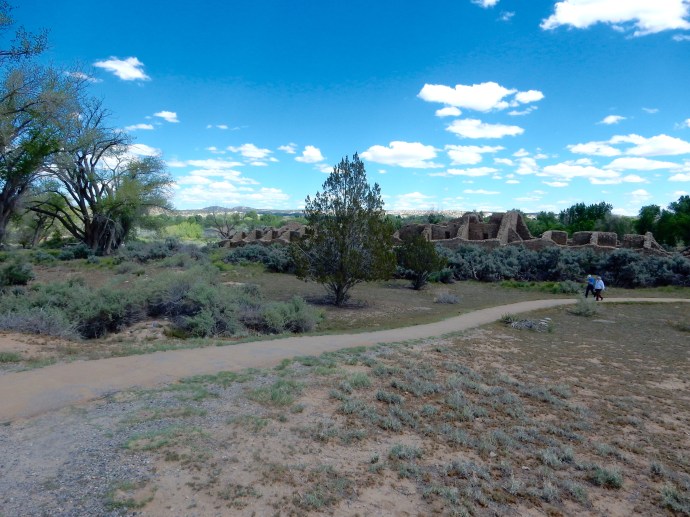
The West Ruin at Aztec Ruins

The West Ruin at Aztec Ruins

The ruins were re-discovered by Europeans (Native Americans never considered them “lost”) in 1859. The West Ruin was in a fair shape of preservation with some walls 25 feet tall and many rooms undisturbed. Luckily the first Europeans here recorded what they saw as Anglo settlers looted the area for building material over the next forty years. Under private ownership starting in 1889, the site began to be preserved. In 1916 the New York American Museum of Natural History began excavations. Most of the buildings we see were simply excavated and stabilized, The Great Kiva was reconstructed. In 1923, Aztec Ruins was designated a National Monument.

Going through the first of many low doorways at Aztec Ruins

Going through the first of many low doorways at Aztec Ruins

After watching the introductory video, we explored the site, amazed at the size, complexity, and preservation. Our exploration included walking through two foot wide doorways that are less than four feet high. We escaped without hitting our heads or scraping our backs. All in all, it was an enriching experience, a great way to prepare us for the larger Chaco Culture site we visit tomorrow.

Categories: road trip, travel | Tags: , , , , | Leave a comment

2016 Trip Four, Southwest Discoveries, May 19

Santa Fe, New Mexico May 19

Petroglyphs

Petroglyphs

Petroglyphs up close and personal. Numerous national and state parks trumpet their collection of petroglyphs, including Petrified Forest National Park that we just visited. However, today we saw as many, clearly defined petroglyphs in one space as any other location we have visited. La Cienguilla Petroglyph site is a little known location along the El Camino Real de Tierra Adentro National Historic Trail. The site was just 15 minutes from Jude’s house and made for an easy morning trip.

Climbing to the Petroglyph site

Climbing to the Petroglyph site

One of many collections of petroglyphs

One of many collections of petroglyphs

The petroglyphs are located along a cliff; reaching them involves hiking a rock-strewn path that challenges your footing more than your endurance. We were the only people looking at them today. The views of the nearby mountains are also great. The ‘glyphs are clearly defined and easy to recognize. Interpretation of meaning is still difficult, though.

Chris, Beth, and Ed

Chris, Beth, and Ed

Our afternoon excursion was truly interesting. We had not been to the New Mexico History Museum in downtown Santa Fe before. We were blessed by having a personal, docent tour by a friend of Jude’s, Beth. Our hour-long tour covered only a portion of the museum but was organized to give us a snapshot of life lived in New Mexico by “normal” people up until 1912. Of course, the hour-long tour was a little longer than her usual tour due to our peppering Beth with questions.

New Mexico has a long and involved history. According to a Pueblo elder, for the Native Americans, this landscape (which we consider as a desert) was “their Walmart”. The land and animals provided food, shelter and clothing. When the Spanish arrived, their whole world changed.

The rest of the US probably forgets about the early exploration by the Spanish in the 1500s, including a settlement near today’s Espanola NM in 1539. The Puebloans were willing to make adjustments to their lifestyle to secure the new implements and animals brought to this continent by the Spanish. The adjustments soon became one-sided and the 1680 Pueblo revolt succeeded in kicking the Spanish out. But in 1692, the Spanish returned with a vengeance and re-conquered the land and its people. They were not in favor of “Anglos” coming down into New Mexico, so the state remained a blend of Spanish/Mexican/Indian people and cultures.

Beth mentioned a new exhibit opening next week which will discuss the role of “Jewish” immigration to the New World. Spain had a multi-religious tolerance under the Moors but when the Spanish Monarchy was re-established, Jews became increasingly unwelcome. Eventually they were forced to convert, practice their religion underground, or leave. Many Jews converted under pressure and a large number of them moved to the New World where opportunities seemed greater.

A reduced scale model of the wagons used to transport goods on the Santa Fe Trail

A reduced scale model of the wagons used to transport goods on the Santa Fe Trail

In 1821, Mexico successfully threw off the Spanish yoke. Mexico was more open to Anglos and increased trade with the US and settlers from the US was a new chapter in the future state’s history. Trade was mainly along the Santa Fe Trail, with ox drawn carts the main method of transportation. By 1846 (this is a quick summary of history you are gathering), hostilities broke out into the Mexican-American War. The US won and in 1848 New Mexico was part of the United States. Due to US uncertainties about this land full of Catholics, Indians,and former Mexicans, the territory did not become a state until 1912.

Railroad expansion was the next dramatic change agent here. More immigrants, increased trading opportunities, and the making or breaking of communities by where railroad tracks were laid set the current population pattern in the state. Mining and cattle raising became strong forces in the state’s economy.

I think our next trip to Santa Fe may involve a second visit to this museum to add to our basic level of understanding of this rich and varied state.

The Santa Fe Animal Shelter and Humane Society complex nestled under the mountain view (the white building is not part of the complex)

The Santa Fe Animal Shelter and Humane Society complex nestled under the mountain view (the white building is not part of the complex)

On the way back to Jude’s, we stopped at the Santa Fe Animal Shelter and Humane Society. Jude does volunteer work for this group and her service dog “Lacey” came from here. We were given a detailed tour by the Adoption Director and came away overwhelmed by the complex and forward-thinking operations undertaken here. They run: an adoption program; a veterinary clinic; a dog behavior modification facility; a home for stray and homeless animals; and a “trap-spay/neuter-release” program for feral cats. The Shelter has modified its procedures to make sure the animal enclosures are large. The larger enclosures, along with several daily exercise activities for cats and dogs produces a healthier population which ends up being adopted more quickly than is average for a US animal shelter. Quite impressive.

On our way into the buildings, we observed an adoption counselor advising a new pet owner about proper care of his pet. The counselor was providing the owner with a new owner orientation package that was one of Jude’s first tasks here as a volunteer.

Dinner at Jude's

Dinner at Jude’s

At the end of the long day, dinner was at Jude’s: a baked salmon, broccoli, quinoa, and pecan dish. Very tasty and good for us also.

Ed and Chris.

Categories: road trip, travel | Tags: , , , , | 2 Comments

2016 Trip Four, Southwest Discoveries, May 17-18

Santa Fe, New Mexico May 18

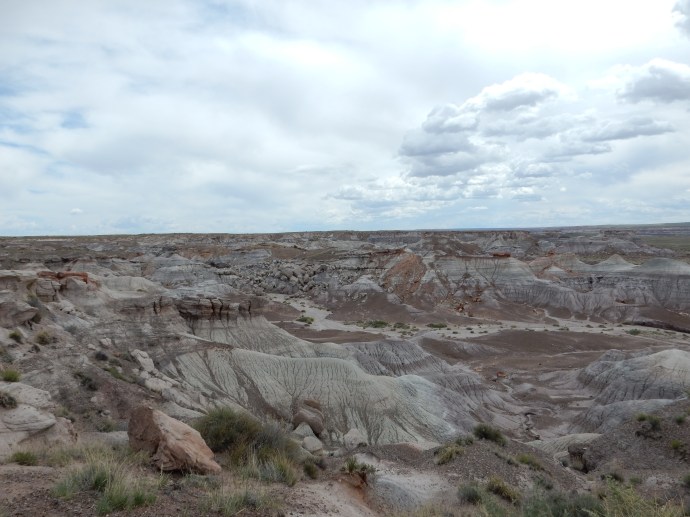
View at Blue Mesa, Petrified Forest National Park

View at Blue Mesa, Petrified Forest National Park

We are back on-line after spending Tuesday night in Ramah New Mexico at a small RV and cabin park. And yes, you urban dwellers, there are parts of the U.S.without Internet and with poor cell connections. Our Verizon wi-fi connection was very weak and we kept losing coverage. So, you get two days for the price of one.

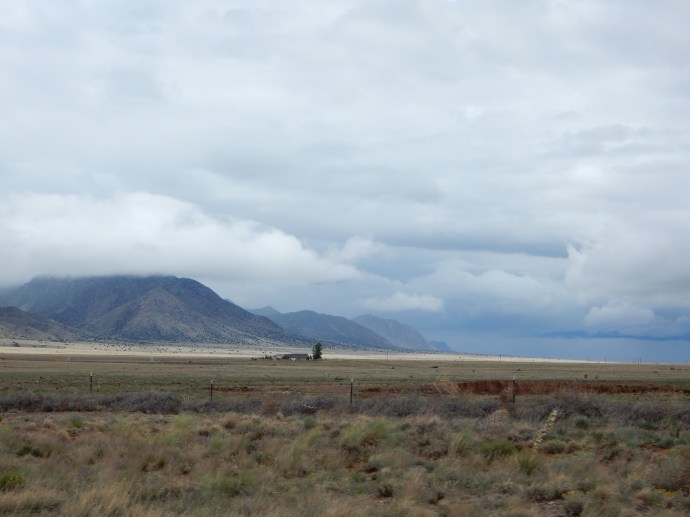
It is a good thing we travel for the adventure and not the weather. The temperature was warmer and the skies were clearer back home in St. Paul. We left Show Low Tuesday morning and drove north on the two lane roads through high desert land alternating between scrub brush, rock, and piñon/juniper trees. Tuesday morning was partly cloudy but around us on all sides were rain clouds. Periodically the sun would break through, luckily for some of the pictures at our first stop, Petrified Forest National Park. Petrified Forest was not our main destination for the day but was directly on our route so we made a stop here.

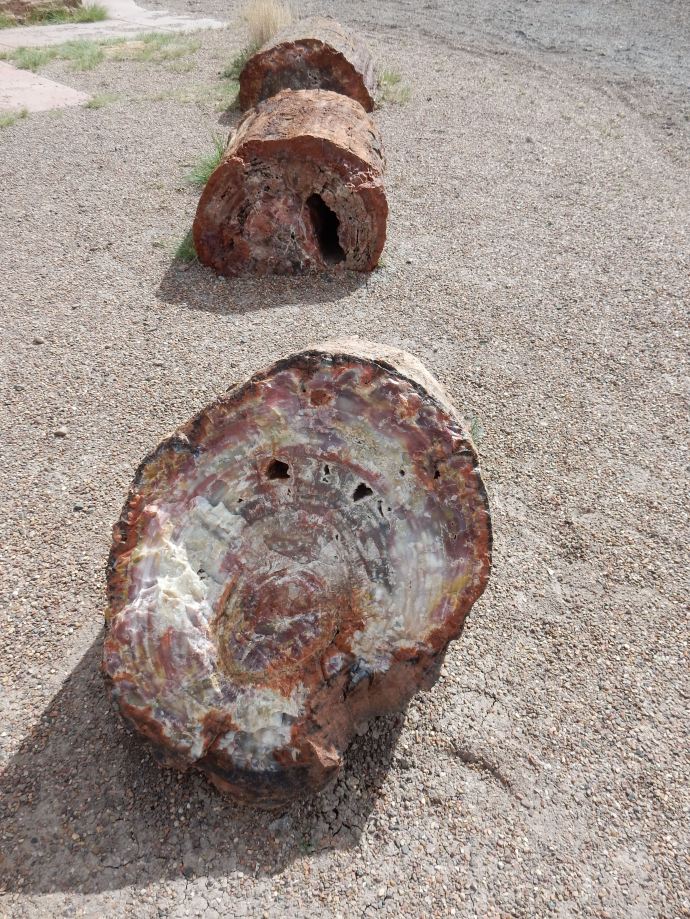
Petrified logs at Petrified Forest National Park

Petrified logs at Petrified Forest National Park

In December of 2013 we made our first visit to Petrified Forest National Park and its Painted Desert area. On this second visit, we ventured into a few areas we had passed by in 2013. 225 million years ago, Arizona was a lush tropical rainforest. As continents moved and climate changed, Arizona became the desert state that we now experience. However, remnants of an ancient forest died and their trunks were carried to locations where they were buried by sediment. Over time, the logs absorbed water and silica and then crystallized into quartz. These remnants are visible throughout the park in stunning displays. One unique example was at agate bridge where an ancient tree trunk, now petrified, crossed over a dry stream bed and acts as a bridge-although the park now forbids anyone to walk on it.

Another view at Blue Mesa

Another view at Blue Mesa

However, while we visited the petrified wood sections, we spent more time looking at some of the rock formations that we missed previously. Blue, grey, purple and green bands of rock deposits are showcased at the Blue Mesa area of the park. We hiked down into the lower levels to get a closer view. The rock coloring here is a sharp contrast to the gray, red and white seen in other parts of Arizona.

Blue Mesa

Blue Mesa

From Petrified Forest we drove up to Hubbell Trading Post in Ganado AZ. Same topography mix but the road here was normally straight as an arrow, while driving up and down canyons and valleys. Hubbell Trading Post is a National Monument preserving the trading post era of the late 1870s to the 1960s, with a unique twist. As a national monument, the trading post had to continue as a functioning general store to the Navajo of the area. When we arrived here, we were surprised at the number of visitors up here in remote Arizona; later we realized many of them were shoppers at the trading post.

Hubbell Trading Post

Hubbell Trading Post

John Hubbell opened the trading post at the invitation of Navajo Chief Totsonii Hastiim (Ganado Mucho). The Navajo were trying to resurrect their lives in their home lands after having been forced to walk to New Mexico and being imprisoned for four years after being defeated by the US Army. Most Indian agents, missionaries, and teachers tried to force their white culture and beliefs on the Navajo. Hubbell was one of the honest traders and was respected by the Indians. He bridged the two cultures and did not force changes. His post continued operating through his descendants until the 1967 when the family and National Park service came to agreement for NPS to operate it. We toured the family’s home with a park ranger and walked the site. The log building, barn, and outbuildings are still in good shape.

Our Tuesday lodging was at the Ancients Ways RV Park and cabins near Ramah NM and El Morro National Monument. We stayed at Ancient Ways in December 2013. It is a funky place and inexpensive. Our cabin was nice, clean, and warm. The trip there, however, was long and tiring. The rains came and made driving more of a challenge. We even chose to use the Interstate for a portion of the drive.

We came across a group of 21 bicyclists at the New Mexico Welcome Center. They were riding from Los Angeles to Boston, having left LA May 6 and plan to reach Boston in mid-June. Due to the cold (41 degrees), wind, and rain, the group was deciding if they would wait for a transport car or continue the ride to Gallup NM where they had lodging for the evening. The bikers are scheduled to average 85 miles a day, paid for the experience, and had to train in advance to make sure they could complete the journey. To each their own–but not on our future plans.

Driving to Salinas Pueblo Missions

Driving to Salinas Pueblo Missions

Our only scheduled location for today (Wednesday) was the Salinas Pueblo Missions. This is a series of four spots in a valley 70 miles southeast of Albuquerque. There is a main visitor center in Mountainair NM and three pueblos north, south, and east of Mountainair. We did skip the southern most pueblo.

While archaeologists have found evidence of nomadic peoples dating back nearly 20,000 years, the pueblos represent the last group here, with possibly 10,000 people living in the Salinas Valley in the 1600s. The Mogollan and Anasazi peoples inhabited the area starting in the 900s. The Spanish came around 1600 and what had been a self-sustaining community that traded with its neighbor’s underwent strains that ended up devastating the area and resulting in the complete abandonment of the pueblos by 1670.

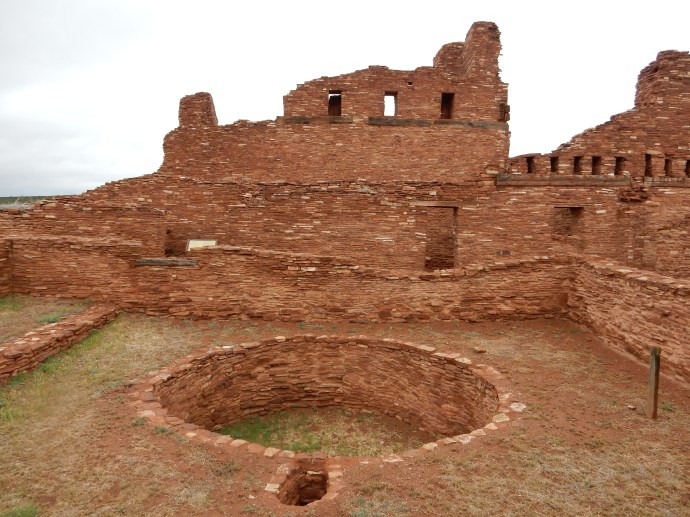
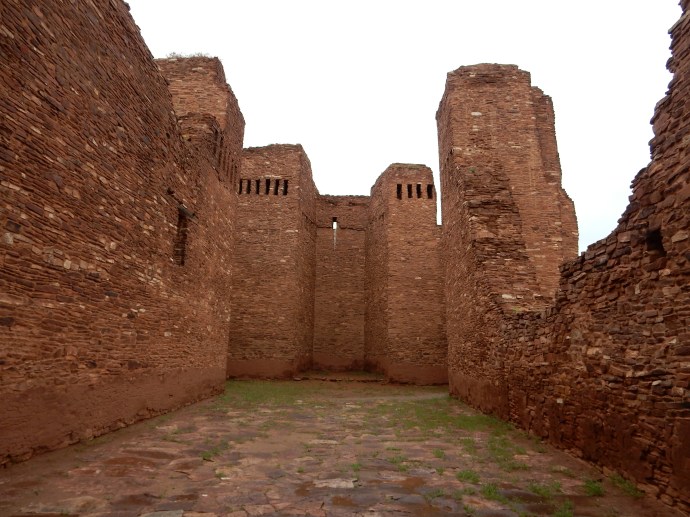
Abo mission ruins. Note the circular kiva in front of the church walls-did the Franciscans accept this Indian practice? Who knows?

Abo mission ruins. Note the circular kiva in front of the church walls-did the Franciscans accept this Indian practice? Who knows?

The Spanish, with their own internal conflicts between the wealth seeking military and settlers and the Franciscans who wanted to convert the Indians, expected the Pueblo Indians to help build the pueblo mission buildings, pay tribute in corn and labor to the military, and continue to provide for themselves. Compounding the problems were the Apache who used to trade on a friendly basis, now raiding as retribution for Spanish slave raids. Finally, new diseases and drought resulted in the Pueblo Indians leaving the area and moving to live with cultural relatives in other pueblos.

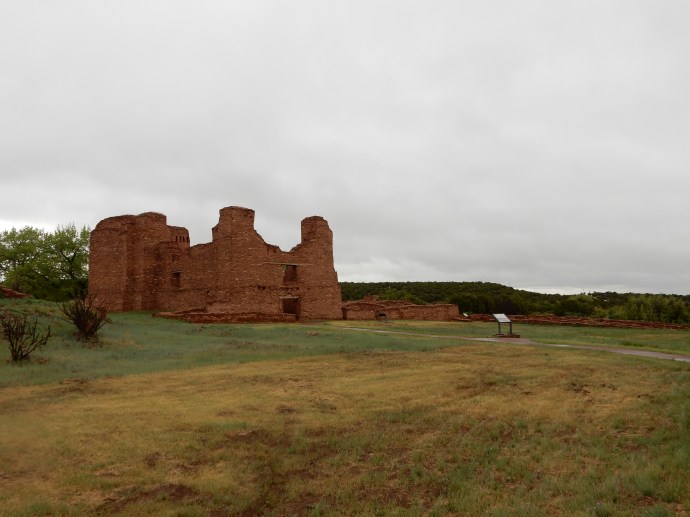
Quarai Mission

Quarai Mission

We visited Abo and Quarai missions (in the rain) which still have numerous well-preserved buildings and foundations. These are not re-constructed missions, but ones that have stood the test of time-with some rehabilitation. The displays tell the story of the clash of cultures. The Indians were willing to absorb one new spiritual story; the Franciscan emphasis on nature and the interweaving of all facets of life was not dissimilar to their own spirituality. However, 17th century Christianity was not one to accept alternate religious beliefs. It was all or nothing. The Indians moved out and even after the Spanish reconquered the land after the 1680 Pueblo Revolt, never came back to these missions.

Another photo of the Quarai Mission Church

Another photo of the Quarai Mission Church

I did purchase my Christmas ornament to memorialize this trip. I usually make sure it is locally made. I asked the origin of the one I wanted. It was not made locally. It was made by Dineen Pottery-of St. Paul MN. I just had to buy it.

From Mountainair we drove to Jude’s in Santa Fe which will be our base of operations for the next week or so. We will make side overnight trips to Farmington and Raton NM to explore those areas.

Ed and Chris

Categories: road trip, travel | Tags: , , , , , , , , , | 1 Comment

2016 Trip Four, Southwest Discoveries, May 13-16

Show Low, Arizona, Monday May 16, 2016

Well we are back on the road, with a trip of just under four weeks scheduled. I say scheduled since for each of the last two years, we had some medical issue that forced changes to our travels scheduled for this time of the year. Hopefully not this year. The planned route takes us from Scottsdale AZ to Santa Fe NM to Las Vegas NV. Numerous side trips and excursions are planned, particularly in Arizona and New Mexico.

This trip is 1/3 family and 2/3 adventure. We started out on Friday with a flight to Phoenix (Scottsdale) to spend the weekend with Lou and Joyce. Minnesota was 41 degrees (F) when we departed. Scottsdale was 102 degrees F when we landed. So what do you do in hot weather? Jump in the pool!

Lou and Joyce have moved and are living in a community of condos, townhouses, homes, etc. Their community has several pools, along with other amenities. We enjoyed the pool Saturday and Sunday afternoons. The community does have a number of owners who are only there for the winter months so the pool, despite the high temperatures, was not crowded, had shade and sun areas, and was just the right temperature to cool off without being cold.
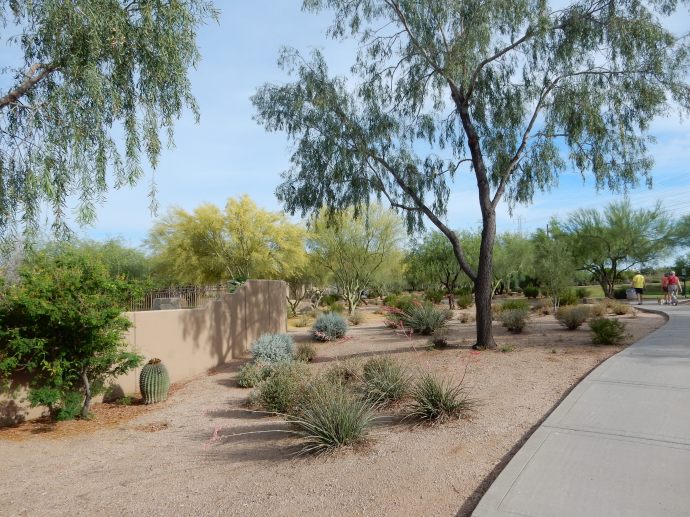
Saturday morning walk

Saturday morning walk

Saturday morning (early, before the heat) the four of us went for an hour walk with Manning, their Corgi. Flowers are blooming everywhere; oleander and bougainvillea being particularly overwhelming. Saguaro, and other, cacti are flowering also.

Remember our houseboat ‘adventure’ on Lake Powell with Lou and Joyce in May 2014? Well,their friends Dave and Toni had joined us on the houseboat for that 2014 weekend and on this trip we met them for lunch on Saturday. We went to Ted’s Hot Dogs in Tempe where we were able to get burnt, grilled hot dogs for Chris and a chocolate malt for Ed. Great!!
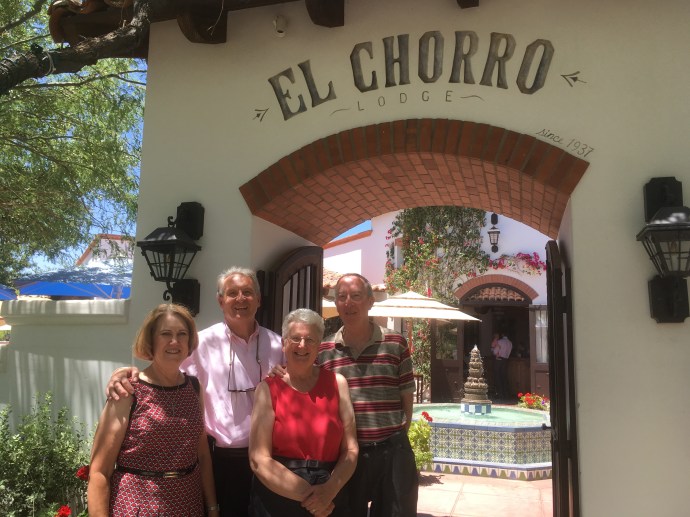
Sunday brunch at El Charro

Sunday brunch at El Chorro

Sunday was Pentecost Sunday and we went to services, coffee and danish, and a pre-service discussion at Lou and Joyce’s church, Christ Church of the Ascesion. Brunch afterwards was at a Scottsdale landmark, El Chorro. Dinner was at The Thumb, a BarBQ restaurant located in a gas station. Like the gas station restaurants in Lee Vining CA and Franklin NC, the food was worth the stop.

Monday morning we were on the road by 7:30 AM. Monday night’s stop is in Show Low, Arizona. We had a stop at Dunkin Donuts for Chris to get her fix before we tackled the Apache Trail. The Apache Trail is the scenic route from the Phoenix area up to Lake Roosevelt and Tonto National Monument. However, every time I tried to schedule a trip on Mapquest or Google Maps, this road would be ignored and the infinitely more intelligent computer routing system would refuse to use this road. It really is not that bad.
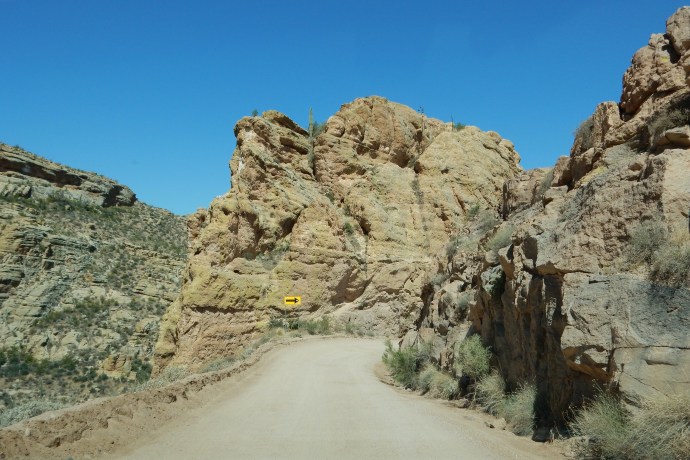
The Apache Trail

The Apache Trail

The Apache Trail goes over the Superstition Mountains northeast of Phoenix. It had its beginnings centuries ago as an aboriginal highway through the mountains and was used as a horse trail for settlers and Indians. In 1905 construction began on the Roosevelt Dam and the Bureau of Reclamation “improved” the road so supplies could be brought to the site.

The Apache Trail is a scenic byway, is 39 miles long, winds through awe-inspiring scenery, and is unpaved for much of its length. Portions are narrow, slightly more than one lane, with steep elevation drops. The Trail is within the Tonto Natonal Forest, one of the largest national forests in the US with nearly 3 million acres. The forest encompasses desert, mountain forests, mining regions and some lumbering.

We took the route and enjoyed it. We have experienced many roads which were more narrow, with bumpier road surfaces, and had scarier cliff side drops. Luckily the gravel portion did not have huge ruts or rocks jutting up that might threaten the under carriage of your vehicle. That said, I was glad we were using a rental car. The road surface was like an old-fashioned washboard and even at low speeds was extremely rough. Two Germans who tried to ride it on motorcycles had to turn back. I would have turned back also if I had been driving our old Saturn with the much worn suspension. It took us three hours to drive the 40 miles but that included numerous stops for hikes and pictures.

While the trail was not crowded, we encountered a few cars at each major vista. Some of the people we kept seeing for the next four hours. Most of them had heard of the horror stories about the Apache Trail, but all of us had also heard so many positive opinions on the scenery that we were bound to take the road anyway. While cell phone coverage was spotty, if there had been a problem, other people would have been driving by shortly.
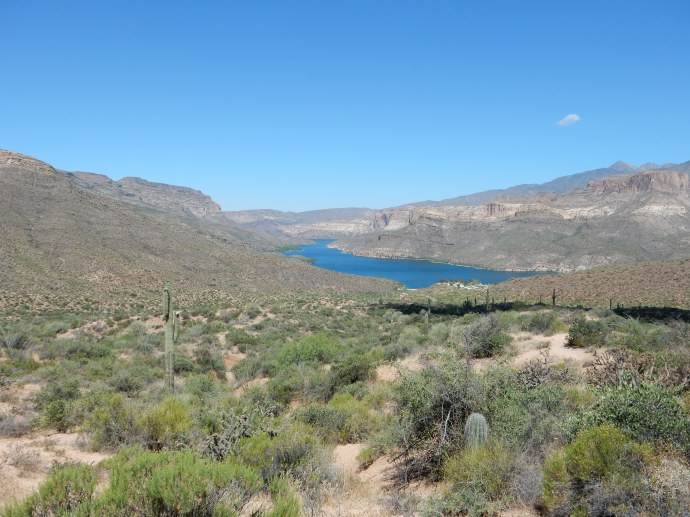
Apache Lake

Apache Lake

The Apache Trail parallels portions of the Salt River that begins in the White Mountains. The Salt River Project is a cooperative utility providing power and water to areas in central Arizona. They manage Roosevelt Dam (and two others) on the Salt River that create Canyon Lake, Apache Lake, and Roosevelt Lake. All three lakes provide for recreational use even though their earliest purpose was for agricultural irrigation and water supply to further the development of the West. We took advantage of numerous vistas to view and photograph the lakes and canyons. Roosevelt Dam at its completion in 1911 was the largest masonry constructed dam in the world. It was renovated and heightened in the 1990s due to concerns that the floods it was designed to control might actually be greater than had been projected in the early 1900s. With 4,000,000 people in the Phoenix area, this could cause problems. Currently the water level in the lake behind the dam is at about 50% of its capacity.
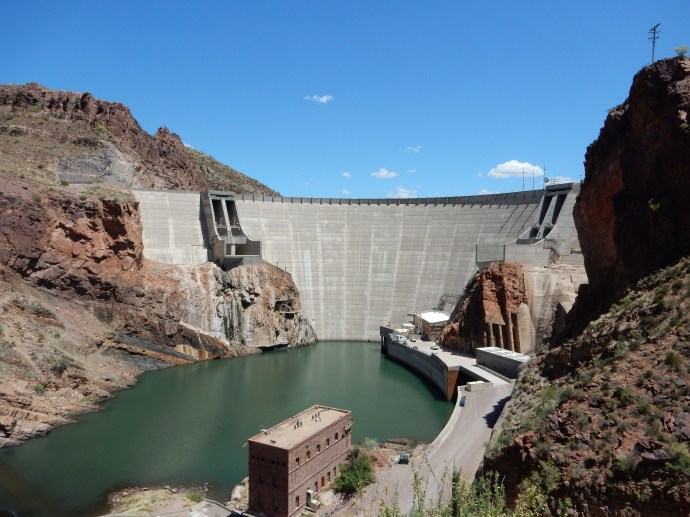
Theodore Roosevelt Dam

Theodore Roosevelt Dam

Lou works for Salt River Project so we wanted to make sure we saw the dam on our way up to Show Low. Technically we could reach Roosevelt Dam by taking a quicker, longer route which would have avoided the Apache Trail but the journey is half (or more) of the experience. Right?

After completion of the Apache Trail and seeing Roosevelt Dam, we visited Tonto National Monument. Luckily we had packed granola bars and cold (thanks Lou and Joyce) water since the Roosevelt Dam area is basically a no food zone. Tonto National Monument preserves two examples of cliff dwellings belonging to what is called the Saloda people. The cliff dwellings are 700 years old.

The creators of the cliff dwellings are long gone although they may have migrated and become part of other Native American groups in the area. This area of the Tonto Basin underwent growth and contraction as flooding, drought, and plant and animal depletion impacted on the ability to live in the area. It is thought that the earliest inhabitants arrived around 100 CE. By 1250, the inhabitants were reacting a form of pottery now called Salado pottery which was traded widely. By 1450 the area was basically deserted.
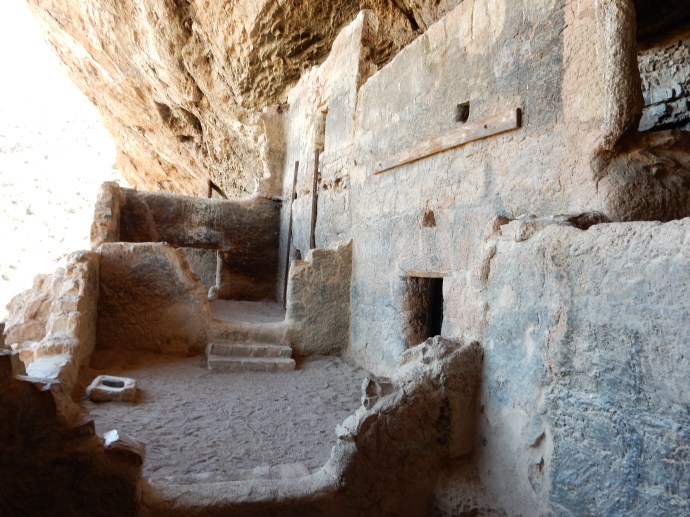
Part of the cliff dwellings at Tonto National Monument

Part of the cliff dwellings at Tonto National Monument

Two hikes to two different cliff areas are part of the National Monument. We took the shorter one-it was the only one open today. The hike is only a half mile one way but has 350 feet in elevation gain. The day was warm, temperatures in the mid-80s so we made sure we had plenty of water. Original portions of the dwellings can still be seen although vandals did destroy portions of the dwellings before the monument was created in 1907.
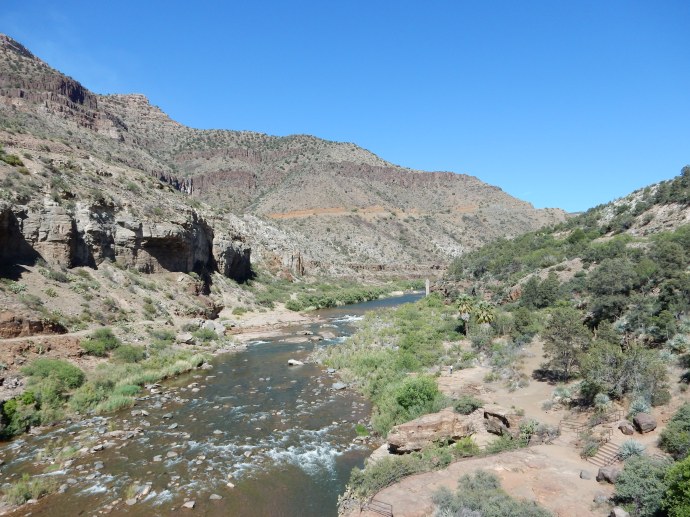
Salt River flowing from the White Mountains

Salt River flowing from the White Mountains

From Tonto we drove to Show Low. Show Low is a resort community in the White Mountains, about 200 miles northeast of Phoenix. Show Low is at an elevation of about 6350 feet. This makes it a cool retreat from the scorching temperatures in Phoenix, elevation about 1100 feet above sea level. The route from Roosevelt Lake follows much of the Salt River, through two Indian reservations, and another national Forest. This road, while paved, also is curvy with frequent, significant elvation gains. Road speed at times is listed at 25, 35 and 45 mph. Smoother surface than Apache Trail but still a slow go if you obey the speed limit (we did).
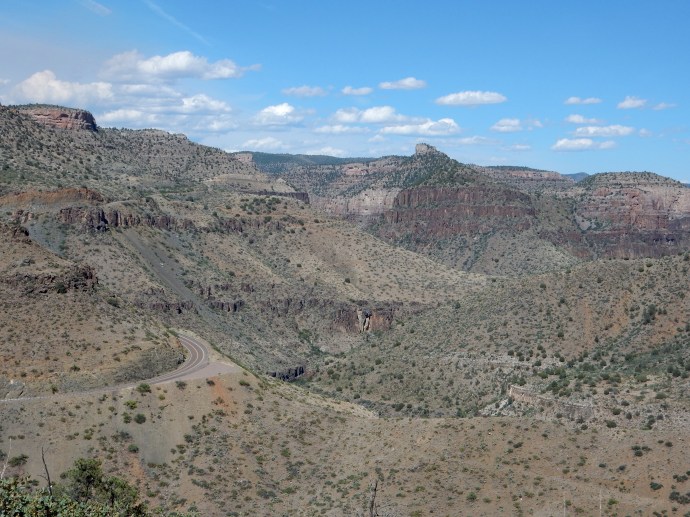
Salt River Valley

Salt River Valley

Dinner tonight was as the Lion’s Den in Pinetop, another resort community maybe 10 miles south of Show Low. A great burger place, just what we were seeking. It was quiet, no music tonight and the worm crawl is not scheduled until May 29th. Sorry, I did not ask the rules for the worm crawl.

Tomorrow we drive to Ramah NM.

Ed and Chris

Categories: road trip, travel | Tags: , , , , , , , , , | 1 Comment

2016 Trip Three, Boston, April 29-May 1

Boston, Sunday May 1

Boston is a great city to visit. I do not intend to try to cover the city in detail, our blog posts only cover our current activities. Since we have been here often, we keep searching out activities we have not done before. Three National Park Service units fell into this category; one, Blackstone River, we covered in the previous post.

Friday, Deb took the day off from work and joined us as we toured the Boston African-American National Historic Site. Through exhibits, video, walks, and ranger talks we learned about the role Boston played in the early days of abolition; and by implication, the mixed history of advances and retreats in how America has dealt with slavery. For while recent history is not the focus of this historic site, one can not help but remember the difficult days in Boston of the 1970s when school integration and busing showed the undercurrent of bias still present in American society.

An important stop on the Underground Railroad in Boston

An important stop on the Underground Railroad in Boston

But the focus here is the 1700 and 1800s. Boston can rightly be proud of the steps taken to end slavery and discrimination. A small population of African-Americans were at the core of the efforts, individually and as a group. Due to the efforts of one slave, Quok Walker who sued for his freedom, Massachusetts was the first state to abolish slavery, in 1783.

Interior of African Meeting House

Interior of African Meeting House

While slavery was abolished, discrimination was not. Schools were segregated until 1855. Until then, separate but unequal schools were the norm. This National Historic site occupies the site of the first public school, Abiel Smith School, which was the first black public school opened in 1835. Before that, the community educated their children at the African Meeting House, next door to Abiel Smith.

Black Americans were strong in their efforts to bring slaves north through the Underground Railroad. Writers were an important source of protest throughout the country. The African Meeting House, another part of this historic site, was the center of speakers and activists. White churches, however, were not necessarily the leaders in integration. When one member of the Third Baptist Church of Boston invited black friends to join him in his pew, he was expelled from the church.

In 1863, two years after the start of the Civil War, Massachusetts formed the first all-black regiment raised in the north. Most of its member came from Boston. The regiment was the basis of the 1989 film “Glory” that won Academy Awards.

After all of that learning, we replenished our spirit at Legal Sea Foods and decided to call it a day.

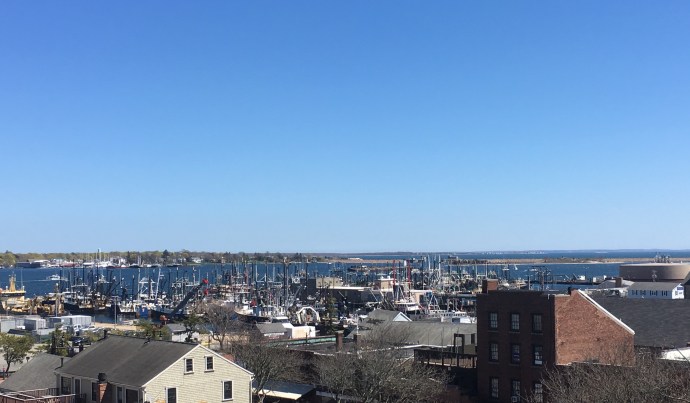
New Bedord Massachusetts harbor today

New Bedord Massachusetts harbor today

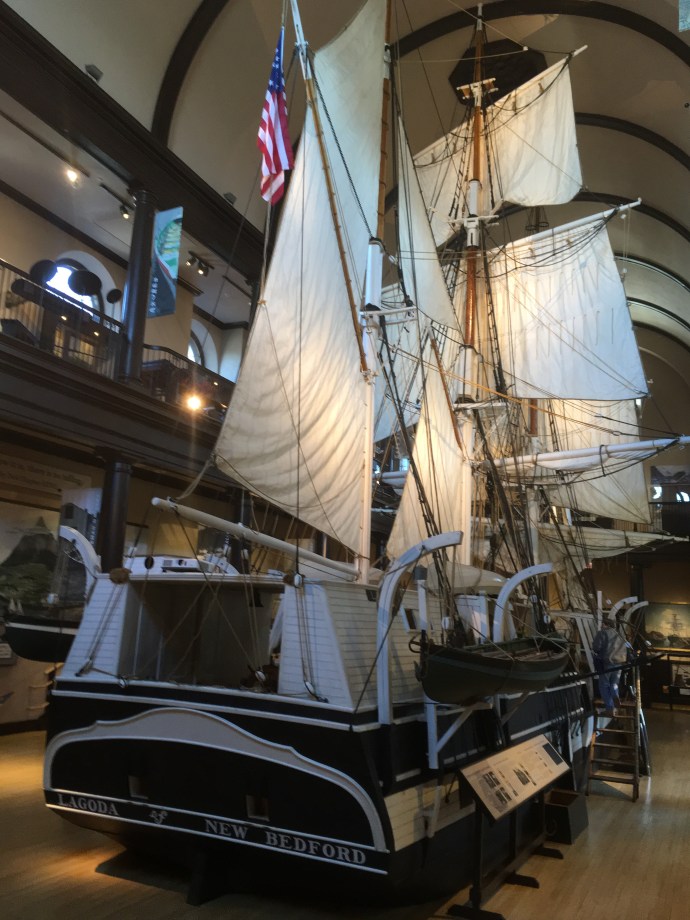
Saturday Rebecca joined the three of us and we headed an hour south to New Bedford. Last year Chris and I visited Salem, a city that was the center of international shipping for the U.S.beginning after the Revolutionary War and continuing to about the time of the Civil War. New Bedford, in contrast, was a whaling center. From 1780 to 1920, ships from many countries hunted whales for their oil. Whale oil was used for lighting homes and lubricating machinery. Whales were hunted in the North Atlantic, Pacific, and Arctic Oceans. While petroleum started to be produced in the 1860s in Pennsylvania, whale oil continued to be used for several decades.

1/2 scale model of whaling vessel

1/2 scale model of whaling vessel

During the first half of the 1800s, New Bedford became the whaling capital of the world. Fortunes were made, and lost. The work was hard and unglamorous. The men who worked on the ships made their pay only if the ship was succesful in finding whales and in getting it back to New Bedford safely. The owners of the ships made the big bucks and while, as usual, hard work was part of the foundation of their wealth; the role of luck and the hard work of low paid men always seemed to be glossed over.

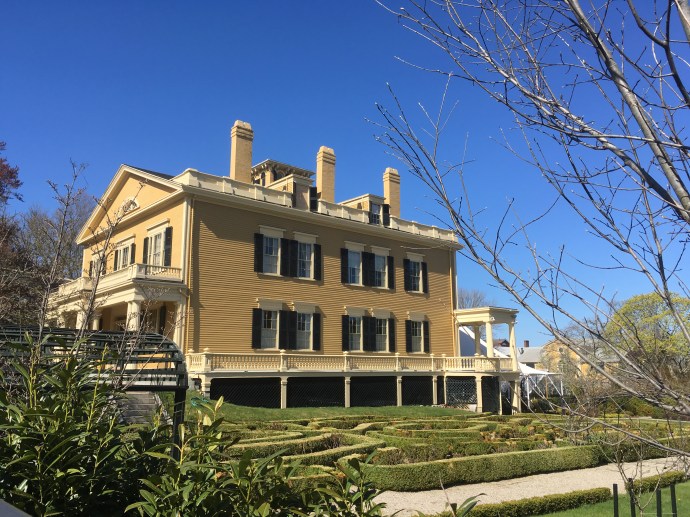
Rotch-Jones-Duff home in New Bedford MA

Rotch-Jones-Duff home in New Bedford MA

We toured the home of one such lucky, wealthy family, the Rotch-Jones-Duff house. It features the usual ornate fireplaces, high ceilings, delicate wallpaper, and ornate china and glass dishes. The gardens were not blooming yet, it seems that MA is blooming slower than MN this year. The original builder would have been a billionaire in today’s dollars. Rotch was wise enough to move his operations from Nantucket to New Bedford and to vertically integrate the whale oil business; sort of a precursor to the Standard Oil concept for petroleum.

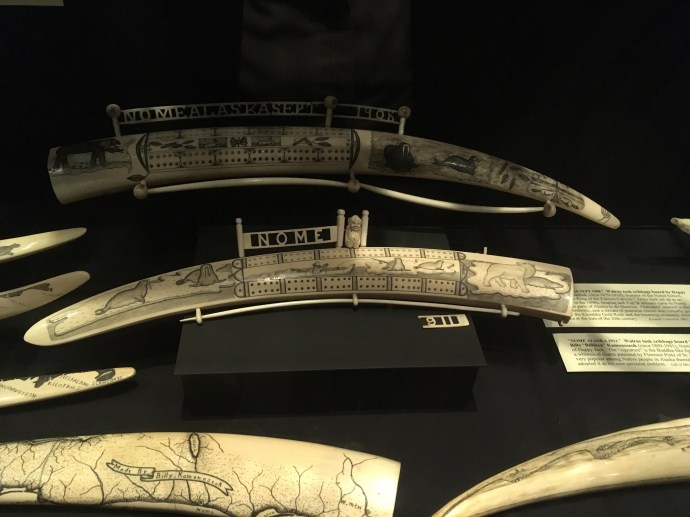
Scrimshaw cribbage boards

Scrimshaw cribbage boards

The exhibits at the New Bedford Whaling National Historical Park and at the privately owned New Bedford Whaling Museum presented well the diverse people who made whaling a success. The ships were at sea for 4-6 years. The crews became a mix of men from the U.S. but also from the Azores, Cape Verde Islands, Pacific Islands, and Hawaii. The ships became, by default, U.S. ambassadors by making international ports of call and intermingling people, ideas, and trade goods all across the globe. Barrow Alaska and New Bedford developed a connection due to the whale hunting in the Arctic Ocean.

Whale skeleton at New Bedford Whaling museum

Whale skeleton at New Bedford Whaling museum

New Bedford as a community was founded by Quakers who led the city for many years and shaped its development. Their more pacificist attitudes and advocacy of abolition made the community an important stop in the Underground Railroad. Blacks were able to work on whaling ships. Frederick Douglas, the black abolitionist orator and writer, lived in New Bedford for a number of years.

After the Civil War, as petroleum started to supplant whale oil, forward-looking merchants began to diversify and New Bedford moved from a whaling center to an industrial center. Textile and glass manufacturing was a major industry but numerous other manufacturing factories kept the town thriving for decades.

On our way out of town, we made our expected stop at Dunkin Donuts before dinner in downtown Waltham. Biaggio’s, an Italian restaurant, served us well in wrapping up the day in fashion.

Ed and Chris
Sunday May 1, 10 PM

Categories: road trip, travel | Tags: , , , , , , | 1 Comment

2016 Trip Three, Boston, April 27-28

April 28, Boston MA

So when you visit a big city, where do you head first? A cemetery, right? Well that was our first stop Wednesday April 27th as we returned to visit Boston again. Well, technically we went to Cambridge.

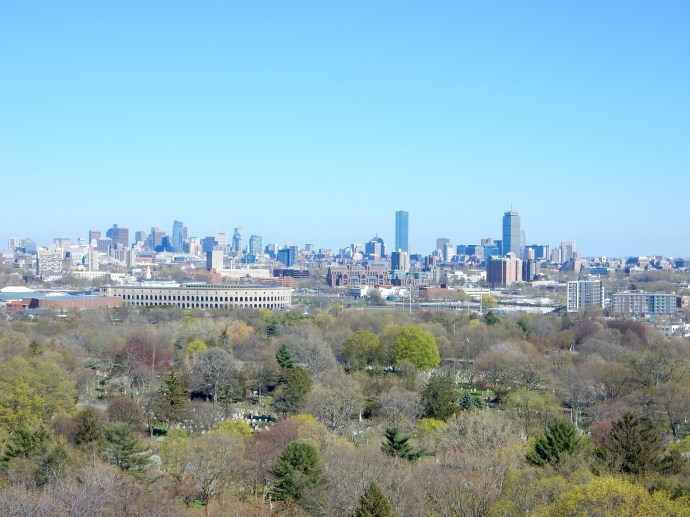
Boston skyline from Washington Tower at Mt. Auburn Cemetery

Boston skyline from Washington Tower at Mt. Auburn Cemetery

Mount Auburn Cemetery is ranked first on TripAdvisor for things to do in Cambridge, ahead of Harvard, MIT, the Peabody, Longfellow House, etc. Chris actually was searching re: spring flowers and the cemetery came up. I was checking Atlas Obscura for places to go and Mount Auburn came up. It is on the way from the airport to Deb and Rebecca’s so we made it our destination of the day for Wednesday after landing at 2 PM at the airport.

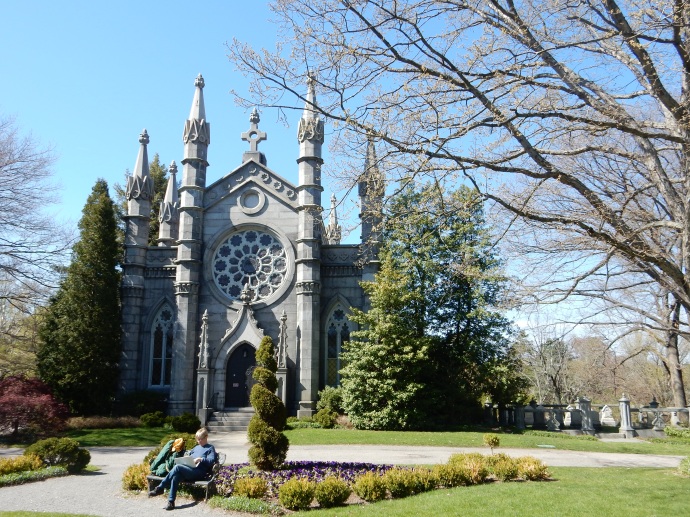
Bigelow chapel at Mt. Auburn cemetery

Bigelow chapel at Mt. Auburn cemetery

Mount Auburn is 175 acres of more than 98,000 dead bodies in a park-like setting. It was founded in 1831 as America’s first landscaped cemetery and the first large-scale designed green space that was open to the public. It creates a tranquil place where families could commemorate their loved ones in a natural setting in an urban area. The cemetery influenced the advance of art and architecture as families vied to erect suitable monuments to family members.

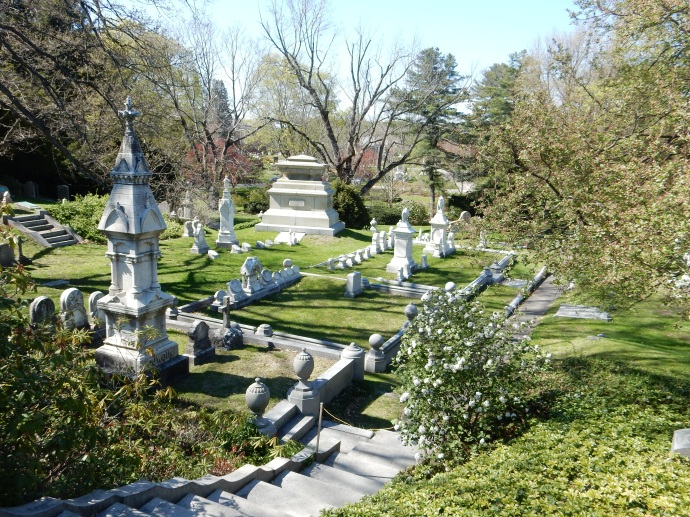
Family plot at Mt. Auburn cemetery

Family plot at Mt. Auburn cemetery

In early times, families bought a plot of land and were responsible for the design, erection of monuments, and maintenance of the plot. Later on, Mount Auburn pioneered the concept of perpetual care and later still, the requirement that the cemetery handle all arrangements and landscaping. Now the grounds are an internationally renowned arboretum and botanical garden. It is a bird sanctuary, is on the National Register of historic Places, and has over 60,000 monuments spanning three centuries. Some of the U.S.and Boston notables buried here include Henry Cabot Lodge, William Wadsworth Longfellow, Charles Bullfinch, Mary Baker Eddy, Buckminster Fuller, Isabella Stewart Gardner, B.F. Skinner, I.F. Stone, Julia Ward Howe, and many others.

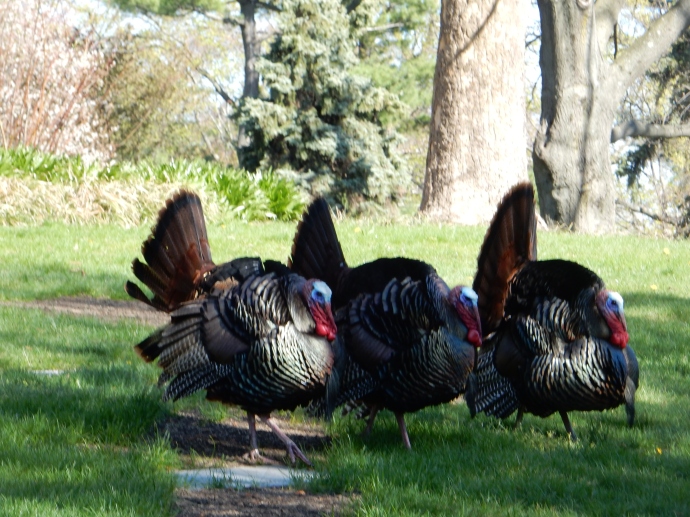
3 Turkeys strutting their stuff at Mt. Auburn cemetery

3 Turkeys strutting their stuff at Mt. Auburn cemetery

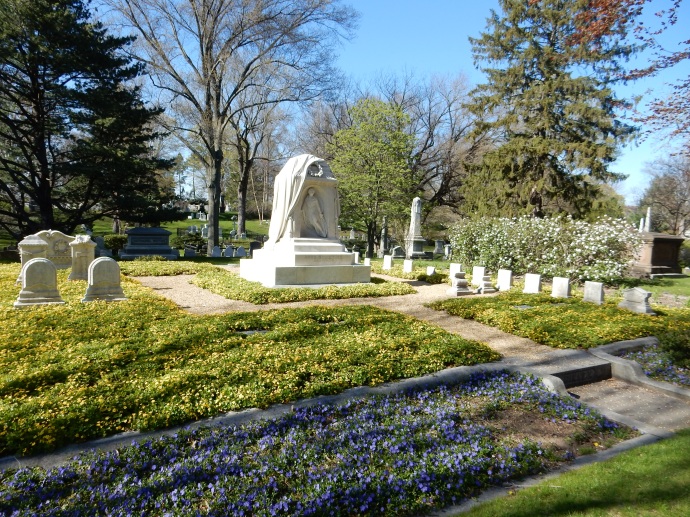
Mt. Auburn cemetery

Mt. Auburn cemetery

We spent two hours wandering the grounds. The only notable we really searched out was Longfellow. Otherwise we hiked around, saw birds, wondered at various family plots, admired sculptures, climbed Washington Tower, and generally enjoyed the day. First time I can remember us ever just walking through a cemetery without having a family member grave as a destination.

Deb and Rebecca were working late so we had dinner in Waltham at the Moody’s Delicatessen and Provisions. This place has been open about a year and specializes in preparing its own cheeses and cured meats. I had their pastrami sandwich and potato salad while Chris had their gnocchi. Each item was crafted with their own touch and was excellent.

Thursday morning, today, we headed 30 miles west to Blackstone River Valley National Historic Park. This is a new unit (2014) to the National Park Service. In my mind, it aims to enhance the previously existing Blackstone River Valley National Historic Corridor. National Corridors are a type of national historic site but are not part of the US National Park Service. Upgrading the Blackstone River Corridor to a national park gives it greater status but like the Pullman site we just visited, more money and time are needed before this national park really creates its own identity. For now, it is a partnership park and we set out to visit a few of the sites making up the partners.

The Blackstone River Valley illustrates the major revolution in America of the Industrial Revolution. America’s first factory was built on the banks of the Blacksone River which runs from Worcester Massachusetts to Narrangansett Bay in Rhode Island. The 46 mile corridor has a history of farming, water power, mills, and factories. The change from farming to wage labor began here as mill owners provided and controlled the jobs, housing, schools, roads and stores in exchange for 60 hour work weeks and more security.

Ethnic diversity followed. The first settlers were English and Anglican but were followed by Quakers, Puritans, Baptists, Catholics, and Jews. Later the English were joined by Irish, French Canadians, Germans, Dutch, and Swedes. The Blackstone River Valley was enriched in the latter part of the 1800s and early 1900s by Italians, Portuguese, Greeks, Ukranians, Polish, Armenians and Syrians. Finally after WWII, a new wave of African-Americans came with later immigrants from South and Central America and Southeast Asia.

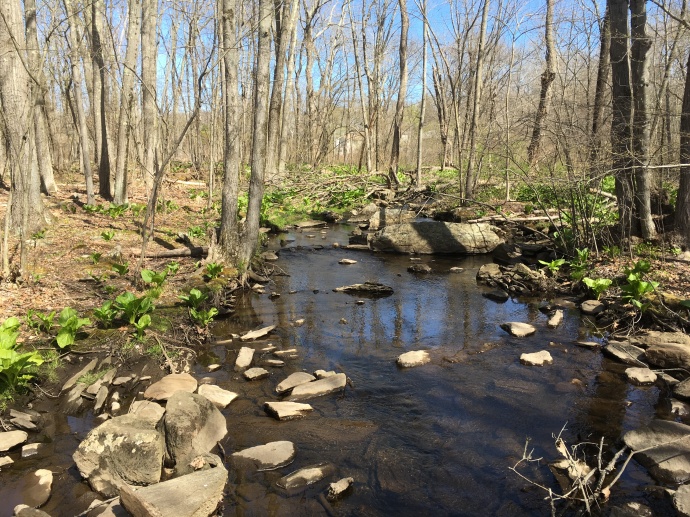
Broad Meadow Brook

Broad Meadow Brook

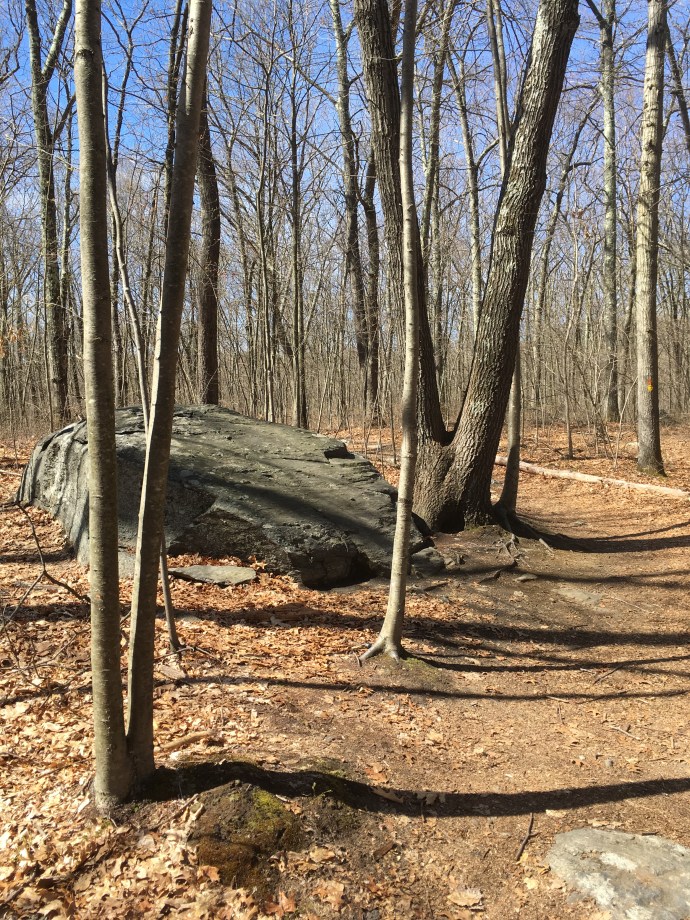
Hiking at Broad Meadow Brook

Hiking at Broad Meadow Brook

The Broad Meadow Brook Conservation Center and Wildlife Sanctuary in Worcester is one of the partners and supposed to act as a visitor center. Well, they had one pamphlet and no NPS stamps. They did have trails and birds so we hiked for an hour.

We moved on to downtown Worcester and stopped at the Worcester Historical Museum. They were more aware of the NPS program but also did not have the “official” NPS stamp that Chris prefers. We exercised our flexibility and changed our plans; deciding to make a second visit to Worcester sometime in the future and visit the Historical Museum and Art Museum then. Instead, we had lunch at a nearby cafe and drove half an hour to Uxbridge and to the Blackstone River and Canal Heritage State Park.

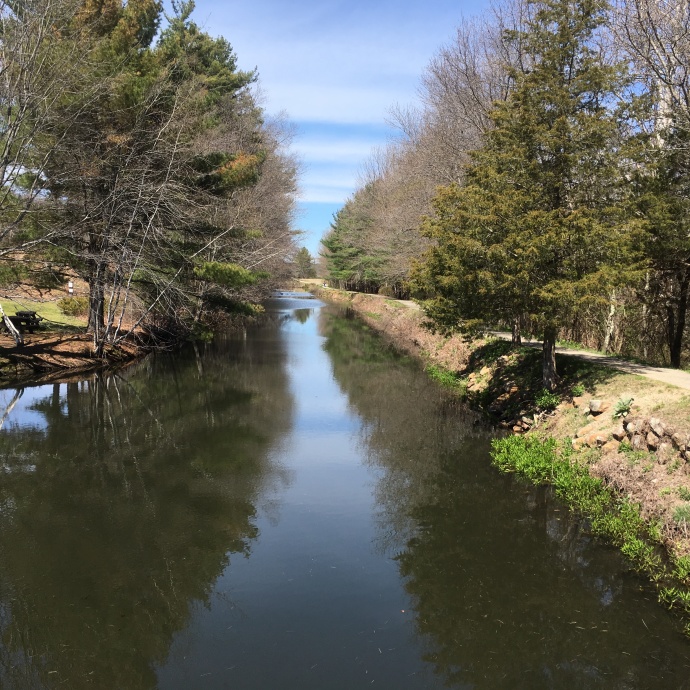
A remnant of the old canal at Blackstone River & Canal Heritage State park

A remnant of the old canal at Blackstone River & Canal Heritage State park

Here was nirvana: exhibits about the area, portions of the canal that connected Worcester and Providence, hiking trails, and the “official” NPS stamp. The exhibits discussed the change in transportation from mud roads, to improved roads, to canals, to railroads,and back to improved roads of today. Each new transportation improvement disrupted the old; changing habits, making some people wealthy and others bankrupt, allowing some towns to die and others to grow. Similar changes occurred in farming, industry, home-making, education, etc.

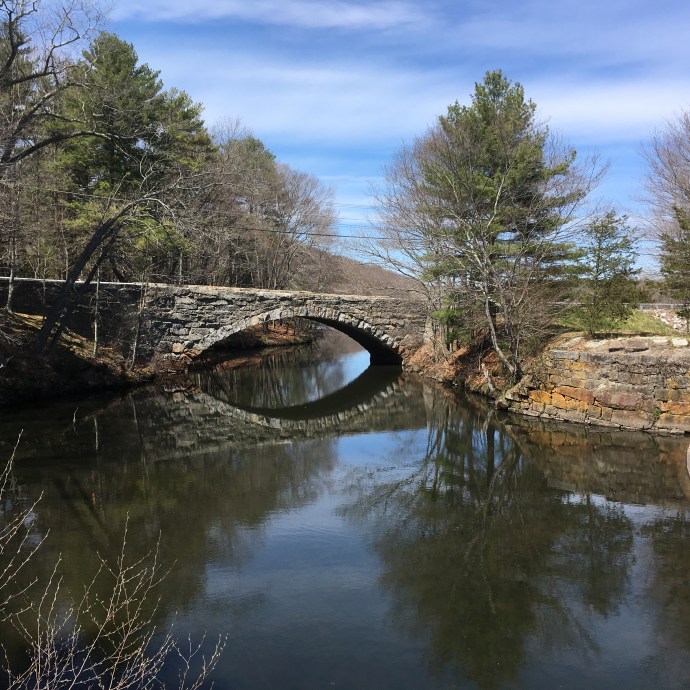
Stone arch bridge at Blackstone River

Stone arch bridge at Blackstone River

Chris and I hiked along the canal. Instead of the numerous birds we heard and saw at Mt. Auburn, the animal highlight was hordes of turtles sunning themselves on rocks and tree limbs suspended over the water.

In Sutton, we stopped at an old mill building that has been converted into offices and visited the Vaillancourt folk art shop. Here hand-painted collectible Chalkware figures are moulded from antique chocolate moulds. The originator of the business, Judi Vallaincourt, has a collection of antique European chocolate moulds that were used for making chocolate but now she uses them for making the Chalkware figures. The moulds are tin and brass and work well for this new purpose. The local artists paint the figures in the style designed by Vallaincourt. It was interesting but the figures did not appeal to me-and they were priced out of our comfort zone.

The excursion ended at Christopher’s Ice Cream Parlor in Millbury. Millbury was another farming community that saw changes due to the Industrial Revolution. It was a crossroads for traffic between Boston, Hartford, Worcester, and Providence. While its heyday was probably in the early to mid-1800s, it seems to be transforming again. Christopher’s was housed in another old mill that had been converted into offices abd retail.

Dinner was home-made chicken pot pie at Deb and Rebecca’s.

Chris and Ed. 11 PM

Categories: road trip, travel | Tags: , , , , , | 3 Comments

2016 Trip Two, Day Three, Southwest Minnesota, April 22

St. Paul, MN

It was obvious we had arrived home when the bumper to bumper traffic on I-494 in Eden Prairie had replaced the easy driving along two lane county and state highways in the southwest corner of the state. But that is alright, we will be heading out to greater traffic in Boston on Wednesday making the Twin Cities traffic seem easy in comparison.

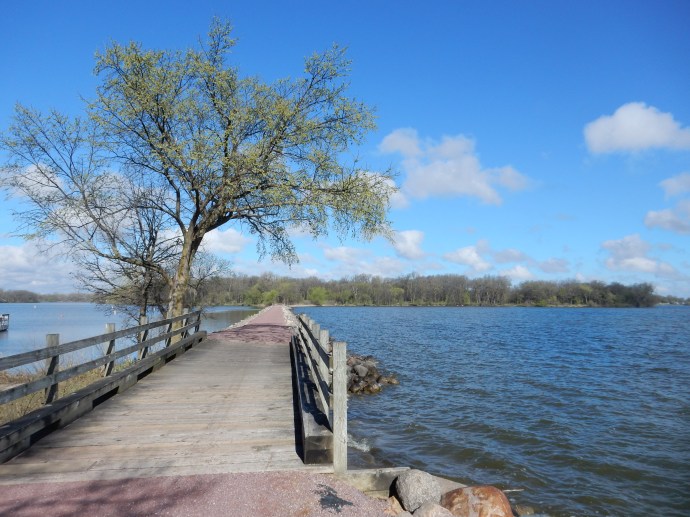
Causeway leading to Loon Island, part of Lake Shetek State Park

Causeway leading to Loon Island, part of Lake Shetek State Park

Despite our pleasure at the Slayton Bakery for breakfast, we tried the “Grain Exchange” in Slayton for breakfast this morning. It opens at 5 AM so you know they are serious about breakfast. Once again, good food and prices and we were the only non-locals present. The temp was in the mid-40s with a breeze so our first walk at Lake Shetek State Park was a brisk one. Campers were starting to show up for the weekend.

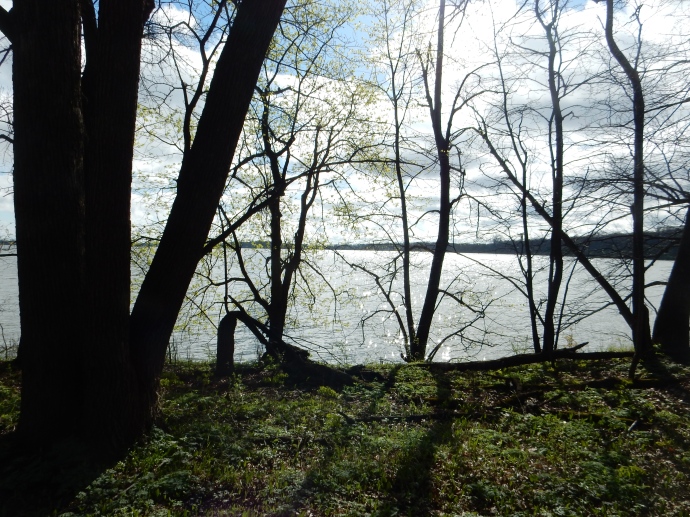
Hiking at Lake Shetek State Park

Hiking at Lake Shetek State Park

This is an 1100 acre park with several camping areas. It forms the headwaters of the Des Moines River. It had its day of fame(infamy) during the US Dakota War of 1862 as several settlers were killed in this area during the conflict. This happened during the US Civil War and is little noted outside of Minnesota and among Native American tribes. For the last 140 years it seemed all that was written concerned the Indian uprising and the settlers that were killed. In the last decade the white population has come to acknowledge that the uprising occurred due to the United States consistent breaking of treaties and killing of Native Americans. The US government in this case continued for several years to allow settlers to encroach on Native American land and did not delivery the money and food promised in the treaties so Indian families were starving. When the Native Americans fought back including the killing of settlers, the militia put down the uprising, hung 38 Dakota men, and forced women and children to march to a camp near Fort Snelling where many died before being shipped out of state to South Dakota. A monument was erected in 1925 commemorating the valor of the militia. Obviously there are more details and nuances but this is a good summary.

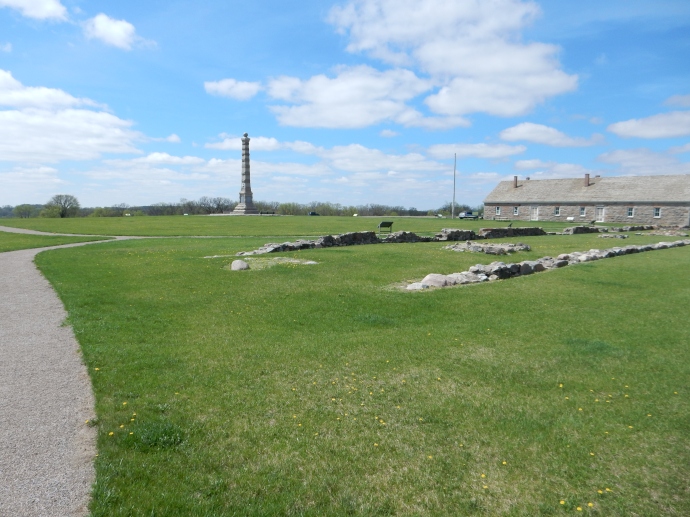
Fort Ridgely State Park

Fort Ridgely State Park

Fort Ridgely, our second park of the day, was also involved in the Dakota Conflict. It was a garrison erected in 1853 to protect the Native Americans from encroaching settlers but it was powerless to stop the broken treaties and encroachment. Settlers fled to the fort for protection when the Native Americans rose up and started fighting for their land and food. The fort was able to hold out until additional troops arrived to end the battle. Today only a recreated commissary and recreated stone foundations of the barracks,e tc exist to mark the site. A state interpretative center is only open during warmer months-not today.

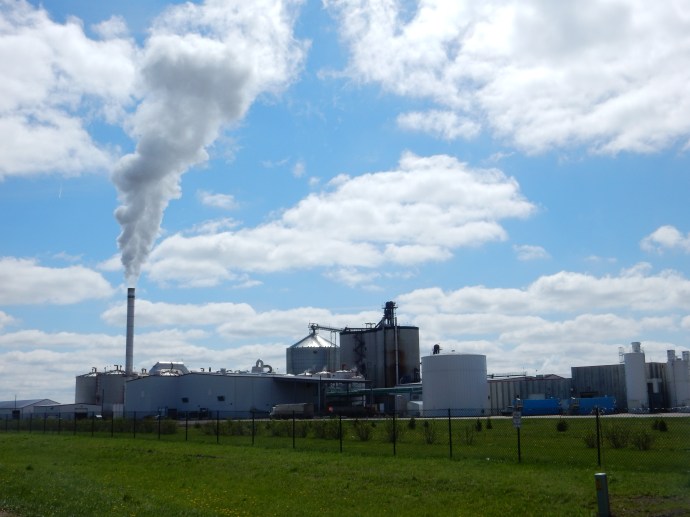
Ethanol plant Lamberton MN

Ethanol plant Lamberton MN

The drive home was uneventful except for the heavy traffic.

Ed and Chris 8 PM

Categories: road trip, travel | Tags: , , , | 1 Comment

2016 Trip Two, SW Minnesota, Day Two, April 21

Slayton MN April 21

“Adventures can begin in your own backyard.” Ann Bancroft, Arctic and Antarctic explorer.

While this trip is not exactly in our backyard, it is certainly more “backyardy” than most of our trips. Even then, most of our trips are in the US, not to the Taj Mahal, or the Pyramids, or the Great Wall of China. So the above quote was a welcome sight this morning at the Jim Brandenburg Gallery in Luverne MN. Luverne is a small town of under 5,000 souls in the far SW corner of Minnesota. Brandenburg grew up here although he now resides in Ely, MN, in the far NE corner of Minnesota. Two different nature areas but from both he has created a vast mosaic of nature photography.

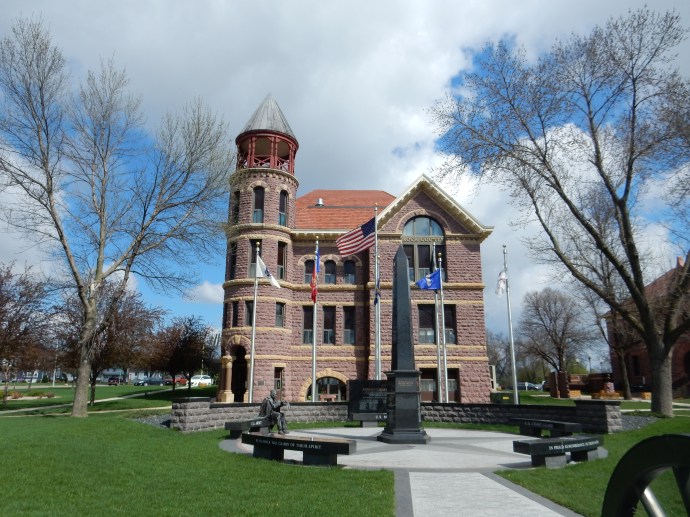
Rock County courthouse in Luverne constructed of Sioux quartzite stone

Rock County courthouse in Luverne constructed of Sioux quartzite stone

Brandenburg spent three decades on long-term assignments around the globe for the National Geographic magazine and has been honored many times over for his incredible photography. In 2010, the International League of Conservation Photographers selected the 40 top nature photographs of all time. Brandenburg had 4 of the 40, more than any other photographer.

He is now focusing on his own goals, some of which have been showcased in National Geographic also. There is a Brandenburg gallery in Luverne. We made it our first stop of the day (after breakfast at the Slayton Bakery where we were spotted immediately as not one of the locals but given the same warm hospitality and good cooking.)

We watched a video about the creation of Brandenburg’s first, solo goal project. For 90 days, he went out in the woods around his home near Ely, MN and took only one picture. No, he did not shoot many and then select just one; he took just one. Sometimes it was shot early in the day, sometimes at last light on the way back home wondering if the project would fall apart on that day. Many of the photos are of small, narrow focused shots, not the broad vistas I tend to take. The impact of seeing the individual shots and of the cumulative collection of 90 shots taken from the fall equinox to the winter Equinox was overwhelming.

Well you know we are not major shoppers. Today was different. The gallery did not have the book “Chasing the Light” that was later printed from this project-we will have to shop for that later. They did have framed posters and prints of over 100 of his photos – from the 90 days project as well as some of his other photos, particularly of wolves. The prints were sharper but the framed posters were more reasonably priced and we bought two posters. We also bought the CD of the video we viewed-watch out daughters, your turn to view it is coming soon!

To see more and to view his 2016 project of one nature video each day, you can go to:

Jimbrandenburg.blogspot.com or to
Nature365.tv

2016 is the 100th birthday of the U.S. National Park System. It is also the 125th birthday of the Minnesota State Park System. Our travels around Minnesota are usually focused around the state parks. This trip is no exception. Today we visited three state parks. Chris has a state park passport book and our goal is to reach 72 of the 76 parks real soon. We are at 35, having started one year ago. The state gives you a pat on the back if you visit 71-4 of the parks are either in development or require a boat to reach.

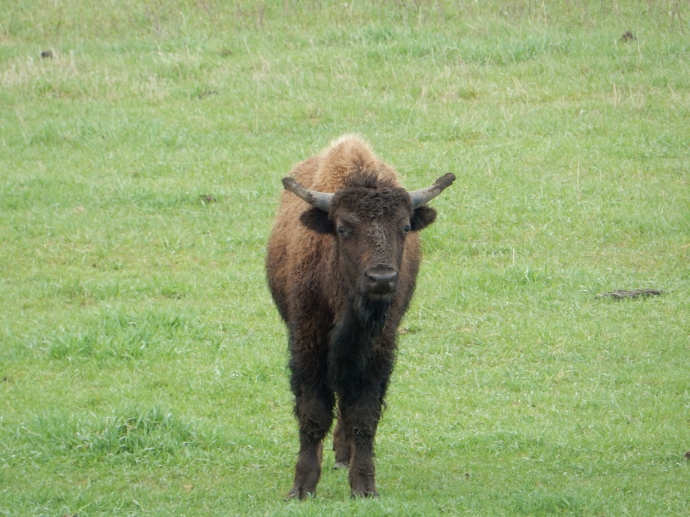
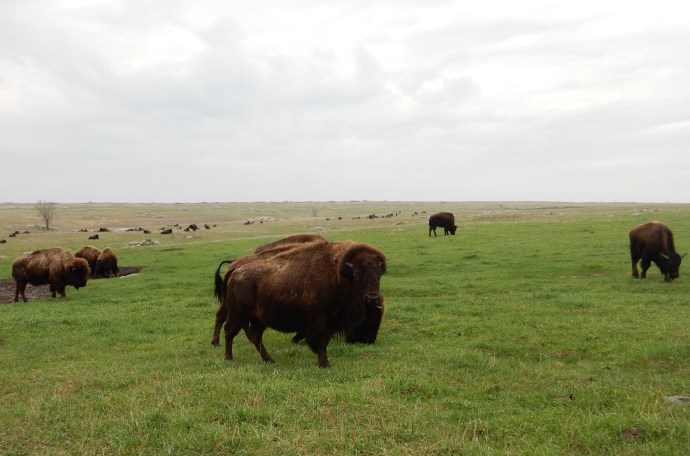
Bison at Blue Mounds State Park

Bison at Blue Mounds State Park

image

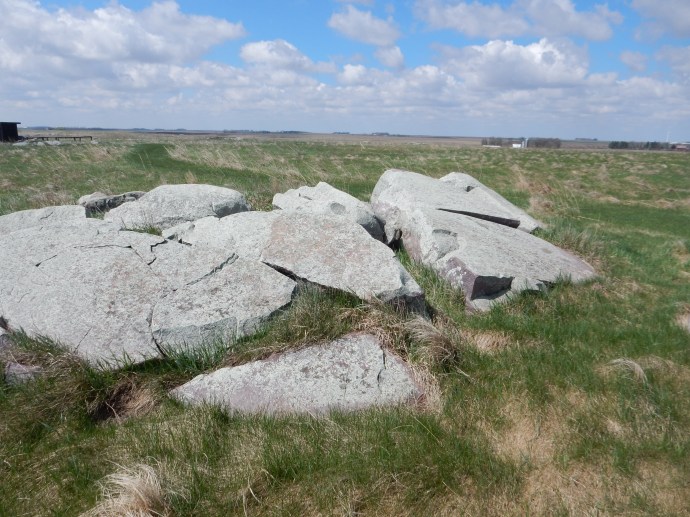
Today’s first park was Blue Mounds State Park. This park has two unique features. First, the Sioux quartzite rock forms cliffs and outcroppings giving the park its unique look. The Rock County Courthouse in Luverne is made from this rock. Second, a herd of slightly over 100 bison roam the park. Introduced in 1961 from the Fort Niobara Wildlife Refuge near Valentine, NE (which we visited about 4 years ago), the initial three bison have expanded to the point that not only are some auctioned off each fall, the state transplanted some of the bison from here to a second MN state park, Mineopa near Mankato.

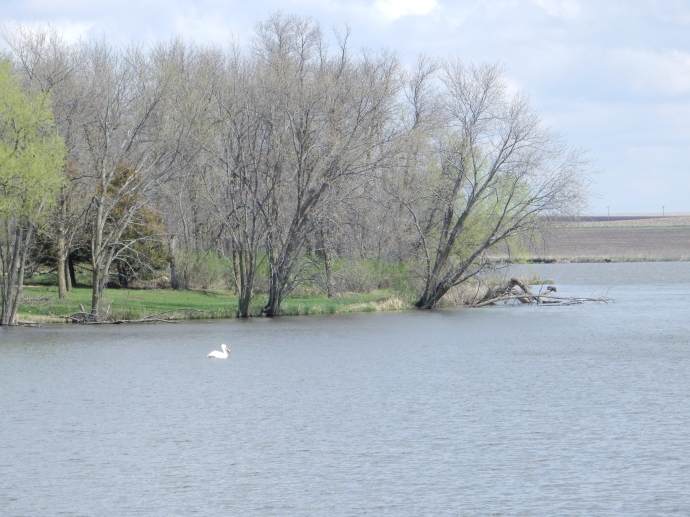
Pelican at Split Rock Creek State Park

Pelican at Split Rock Creek State Park

Park number two was Split Rock Creek State Park. Split Rock Creek was dammed in the 1930s by a WPA (Works Progress Administration) project. The dam forms the only sizable body of water in Pipestone County and birds and waterfowl flock here. In fact, we considered the park “noisy” because of the numerous birds squeaking and chirping along with the sound of the water rushing over the dam and reverberating off the rock cliffs below the dam.

It is sobering to reflect how many of the state park structures were created during the Depression by the people unemployed who were put to work on federal work details. The Civilian Conservation Corps, the Works Progress Administration, Public Works Administration, Veterans Conservation Corps, etc. created a public infrastructure across the country. Nearly 100 years later, these buildings, dams, roads, etc. are still functioning-although many are showing their age and need some maintenance.

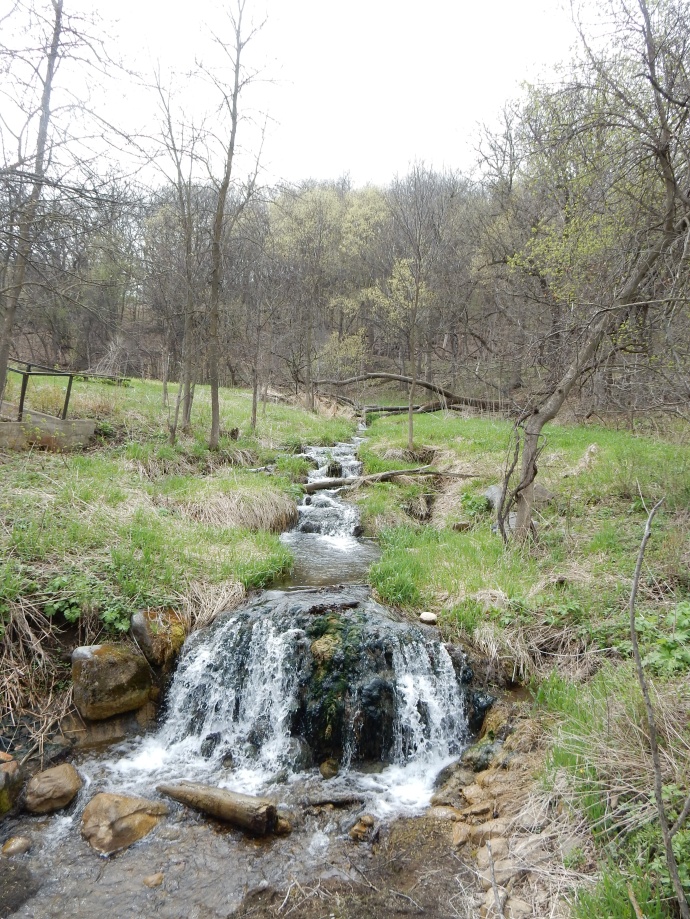
Spring fed creek at Camden State Park

Spring fed creek at Camden State Park

Our third park was Camden State Park. In particular, Chris wanted to see the beach and swimming pond that is created from a spring fed stream. Camden started as a community formed by settlers from Camden NJ. When the railroad came through, it located its depot several miles from Camden and the town dried up. However, Camden’s location along the Redwood River adjacent to the prairies has made a pleasant park with picnicking and camping. Chris was denied her desire; the spring fed stream was dumping its water into the river, it is not diverted into the swimming pond until later in the spring.

Touch the Sky prairie

Touch the Sky prairie

Lastly, while our drive focused on parks, we always manage to squeeze in other sights, like Brandenburg and Spomer. This is prairie land and we visited the Touch the Sky prairie, a preserved parcel sponsored by the Brandenburg Foundation. The “Prairie Passage” route is a cooperative effort of multiple states and federal agencies; it encompasses this and other locations to preserve portions of the prairie that once existed all across the broad middle plains of the US. Some small preserved areas avoided the farmers plow; others areas are plots of land being replanted with native prairie grasses to support wildfowl, butterflies, water retention, etc. The “Touch the Sky” piece is 972 acres of untilled land. Less than 1% of the original Upper Tallgrass prairie of the Upper Midwest is intact.

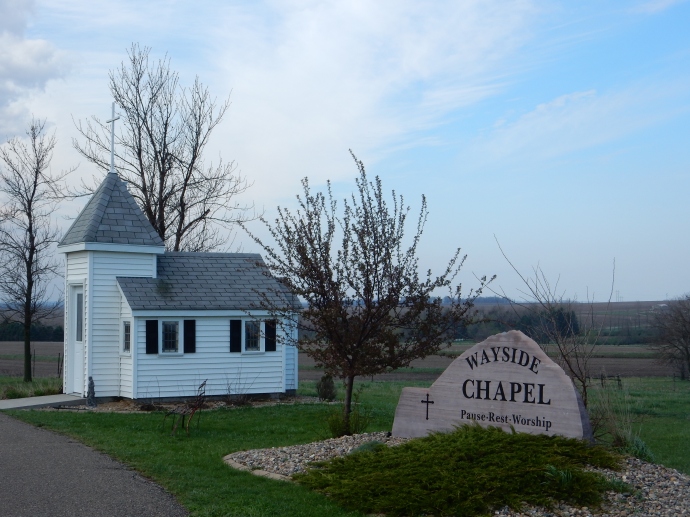
Smallest chapel north of Luverne MN

Smallest chapel north of Luverne MN

In other quick stops we visited (another) smallest wayside church/chapel. This one was north of Luverne. We visited a park with rock garden folk art sculptures dating to 1940.

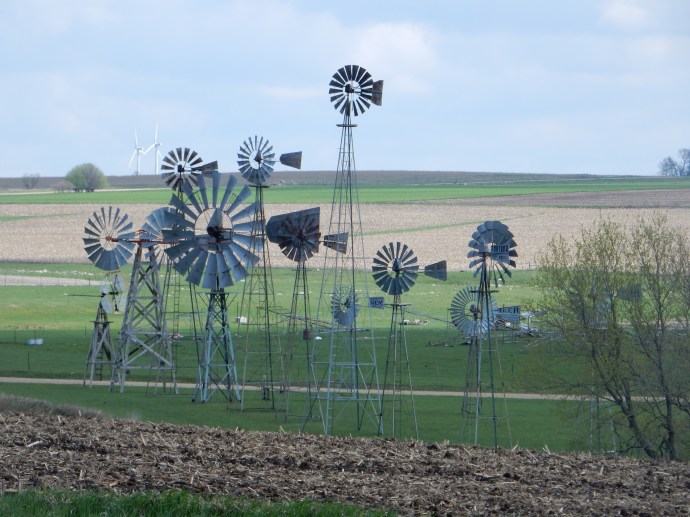
Windmill collection in Jasper MN with wind turbines in background

Windmill collection in Jasper MN with wind turbines in background

We drove by a piece of ground where a farmer has restored a number of old windmills. This is in contrast to the hundreds of large wind turbines standing over 350 feet tall that seem to be everywhere over Buffalo Ridge, a geologic formation in southwest Minnesota which has enhanced winds running more frequently that most other parts of the country.

Lunch was at Lange’s Cafe and Bakery in Pipestone, a 60 year old diner written up in “Roadfoods”. We took our pieces of pie to go and ate them along the shore of Lake Yankton on the way home. Dinner was back at KeyLargo next door. Good food.

Ed and Chris
April 21. 10 PM

Categories: road trip, travel | Tags: , , , , , , , , , , , | Leave a comment

Blog at WordPress.com.