road trip

2018 Trip 3: KY and TN: March 25

Nashville, TN. March 25

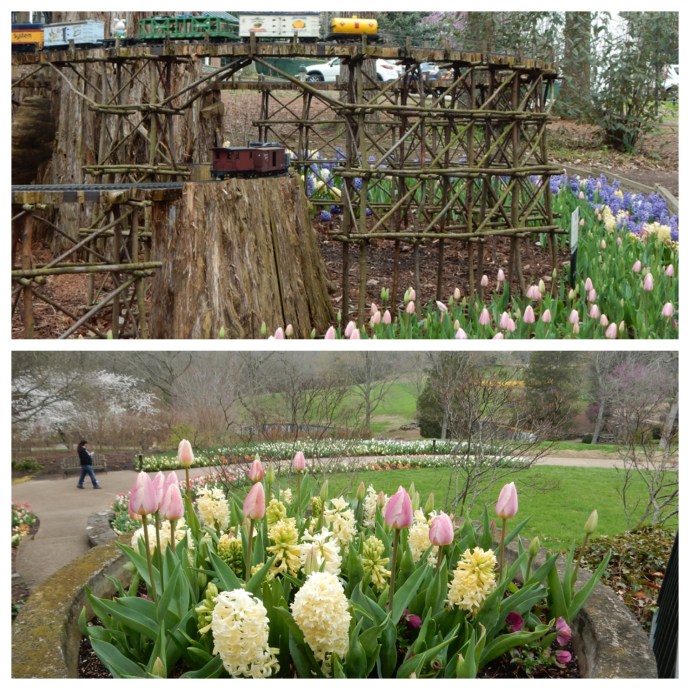
Flowers at Cheekwood Estate and Botanical Garden

Day 10 of a 41 day trip and we have rarely seen the sun. Prognosis for the near future is not rosy either. Ah, well, ‘tis but a minor drawback.

Today is Palm Sunday, a day that normally means a long church service. St. Edward Catholic Church came through on that expectation. The choir was large and talented; Chris had hoped maybe we would see a bunch of Nashville musicians but I believe they were just “normal” folks. The congregation, however, was one of the most broadly diverse I have experienced in a long time. Not only with a sprinkling of various obvious ethnic groups, but each group was well-represented numerically. Hurray! The priest and lector spoke clearly, slowly (maybe a little too slow if truth be told), and with great emotion. Made for a great service, even if it did last 100 minutes.

Cheekwood Mansion in Nashville TN

Since we went to a 10:30 AM service, we limited our Sunday activities to visiting Cheekwood Estate and Botanical Gardens. Cheekwood is the estate built by a wholesale grocery magnate (Creator of Maxwell House Coffee also) and his wife, Leslie Cheek and Mabel Wood Cheek. The two of them only lived here for three years together after its construction in 1932 before Leslie died. Mabel lived here for another ten years before she died and the children passed the building on to a non-profit 22 years later. When the Nashville Art Museum closed, the works were passed to Cheekwood and the current facility has art, gardens, and the restored building to view.

Cheekwood gardens in Nashville TN

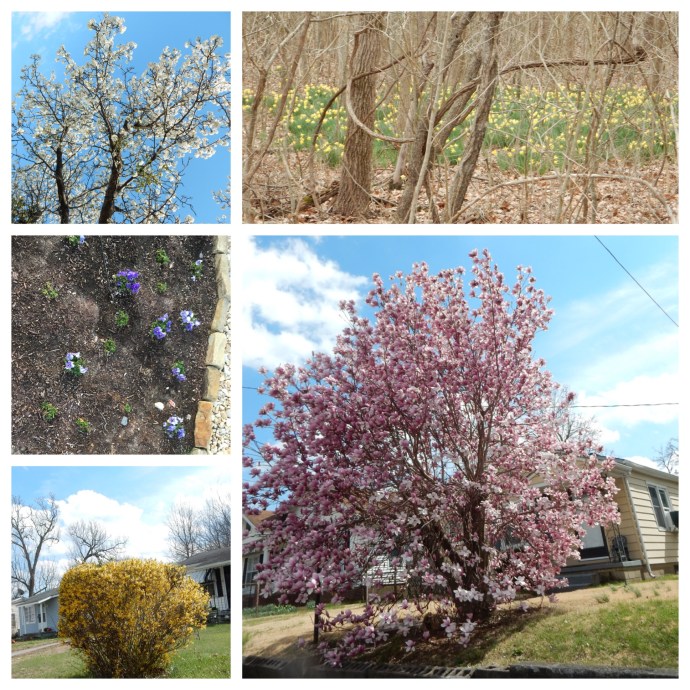
The two of us spent two hours here on a cool, gray Sunday afternoon. The place was busy, if next Sunday, Easter Sunday, is nice, I would imagine they will be jammed. Spring flowers are blooming and with the temperature for the next week supposed to be in the 60s, those flowering trees are just ready to pop out.
The walking trails are pleasant but most of the many steps are comprised of a stone material that flakes and disintegrates easily, making walking more of a challenge than necessary.

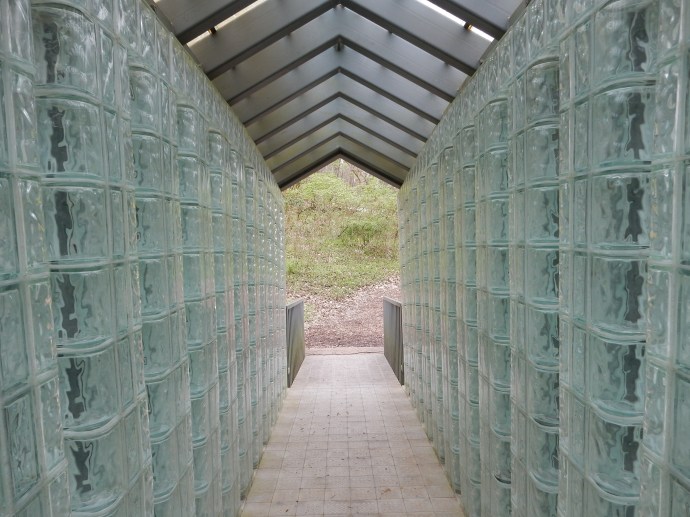
The art galleries were modest and quickly walked through. The outdoor sculpture was interesting; we particularly liked the glass bridge by Siah Armajani, an Iranian-born artist now living in Minneapolis. The gardens gathered most of our attention and appreciation.

The glass bridge by Siah Armajani

We made it back to our lodging in time to see the final seconds when Villanova beat Texas Tech and now Duke and University of Kansas are in overtime. Nashville had been the host for some of the regional games. Nashville has a proposal to increase sales and lodging taxes to pay for a proposed massive transit system. The vote will be held in early May. Nashville might go from just being one the higher taxed locales for visitors to the number 2 or 3 in the U.S. Liquor, sales and lodging taxes aimed at those non-Tennessee visitors could fund over 40% of the cost. If you come to Nashville to visit, be prepared for expensive lodging and high tourist taxes.

Ed and Chris. March 25

Epilogue: Snippets on life in America from Chris
Day 10: How did we get all these strip malls? Some national chains with regional stores compete on both sides of the road. How do people make a living at some of these mom and pop ventures? Maybe having a Dollar General to shop at is just fine.

Categories: road trip, travel | Tags: , , , | Leave a comment

2018 Trip 3: March 24: KY and TN

Nashville, TN. March 24

The renovated Ryman Auditorium

Today we continued our overdosing on all things musical in Nashville. The Ryman Auditorium gained a national reputation as the first home of the Grand Ole Opry or as some called it: “The Mother Church of Country Music”. But the Ryman had a storied history pre-dating the Grand Ole Opry.

Its root begin with a capitalist and a preacher. Tom Ryman was a riverboat captain and successful entrepreneur who profited from the wild days of Nashville in the post-Civil War era. Evangelist Sam Jones came to Nashville to encourage its citizens to repent and he denounced the wild, wicked ways of drinking, gambling, etc. Ryman decided to attend a gathering and attempt to squelch the influence of Jones. Instead, Ryman was converted and decided to raise the funds to provide Jones with a permanent location to preach. In 1892 the Union Gospel Tabernacle was finished.

When Ryman died in 1904, Jones had the Tabernacle renamed in Ryman’s honor. The Ryman served Nashville as the location for religious revivals, operas, traveling minstrels, famous orators, etc. Over time, under the direction of one of the few women engaged in obtaining acts for large theaters around the country, Lula Naff, the Ryman was a destination for top acts and remained profitable doing so.

On a separate track to destiny, WSM radio, one of the early 50,000 watt clear channel radio stations in country, was broadcasting a radio program called the Grand Ole Opry. The Opry had been kicked out of four venues due to its loud and boisterous audiences. In 1943, Naff agreed to allow the Opry to use the Ryman on Saturday nights for its radio performance. A marriage that was made in heaven. The Opry boomed,particularly after Bill Monroe and his new band mates Lester Flatts and Earl Scruggs, played on the show in 1943.

The Opry made the Ryman its home base until 1974 when the show just outgrew the older facilities at the Ryman and decamped for the new digs we visited Friday. For twenty years, the Ryman sat basically empty until the musicians and community came together with extensive renovations that returned the Ryman as a valued performing arts theater. Today, it is a popular tour stop for visitors and country music fans from around the world.

Our tour was self-guided and includes a series of videos and displays relating to its history and the musicians who played there. It was well-done and the building was not so overwhelmed by tourists to make the self-guided tour a bust.

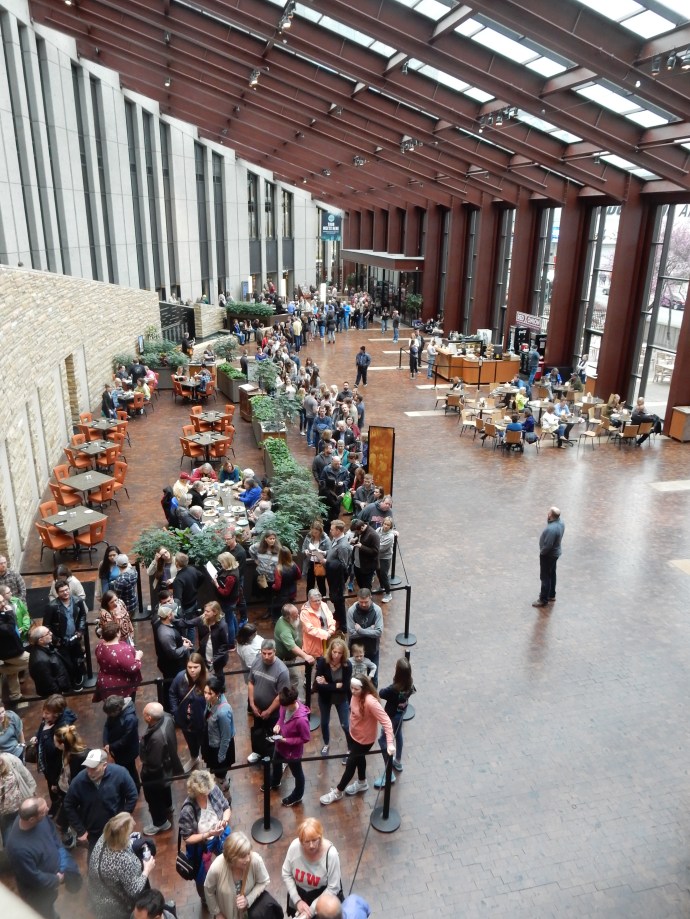
The line to buy tickets extends from the bottom center to the doors at the upper right.

Not so at the Country Music Hall of Fame just down the street from the Ryman. This was one of the most unpleasant museum experiences I have encountered. We had to wait twenty minutes to buy our tickets due to the long lines in front of us. (The line grew even longer behind us.) It took another ten minutes to wait for an elevator to bring us to floor three where the experience officially begins. Once in the museum, the throngs of people made it both difficult and time-consuming to view and/or read the displays.

The museum seemed to have good material. Numerous stars and variations of country music were discussed. Examples of musical instruments associated with particular musicians were on display. Changing special exhibits spent considerable space highlighting several top stars. If you were truly committed to country music, maybe you could overlook the conditions. We found it to be a drag and it turned us off. We left much earlier than we normally would have a museum of this size. Maybe it is less crowded during the week. If you plan to visit, plan your time wisely.

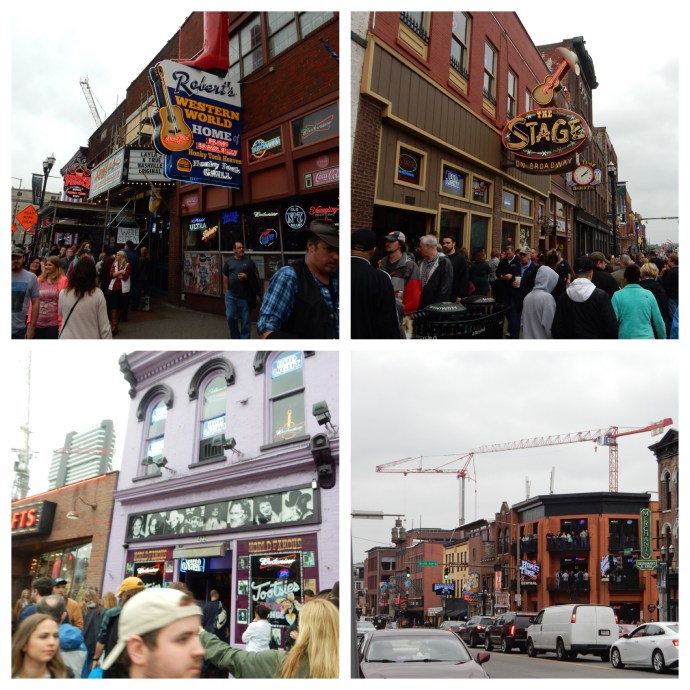
The Honky Tonk area around country music museums

The area around the country music museums was crowded with people drinking, walking, eating, etc. Most restaurants had a line outside of the door. Beyond the music venue area, the downtown sidewalks were less crowded. Our first restaurant choice, Roberts Western World was jammed. We listened to music for a while but when no wait staff appeared within 20 feet of us, we left and went back to Puckett’s. A thirty minute wait was projected there so we went back to our Airbnb lodging and bought dinner at Publix. We put the Grand Ole Opry live radio show on the iPhone and will listed to it tonight.

Ed and Chris. March 24

Epilogue: Snippets on life in America from Chris
Day 9: Do you remember the early battles against “Big Tobacco”? We do. Small groups formed to prohibit smoking in public places. Gun violence is a major public health issue. The NRA, however, is a well-funded, entrenched lobbying force for the status quo. But there are voices of opposition. These kids are our future.

Categories: road trip, travel | Tags: , , , | Leave a comment

2018 Trip 3: KY and TN: March 23: Caves and Crafts, Booze and Bluegrass (Music and Horses)

Nashville, KY. March 23

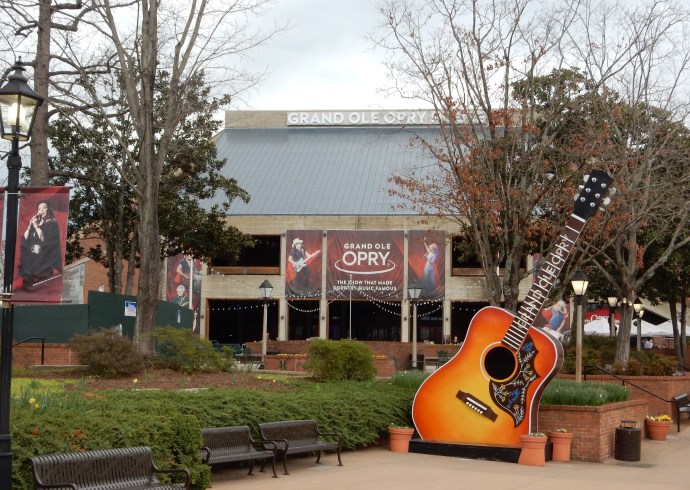
Grand Ole Opry Building in Nashville

Music. Music. Music. Friday was a music day. A paddle wheel boat excursion began the day. The General Jackson showboat is based in the Grand Ole Opry/Gaylord Opryland hotel/Opry Mills shopping area. We arrived at 11 AM for a lunch, cruise, and show. Friday was the first cruise show day of 2018.

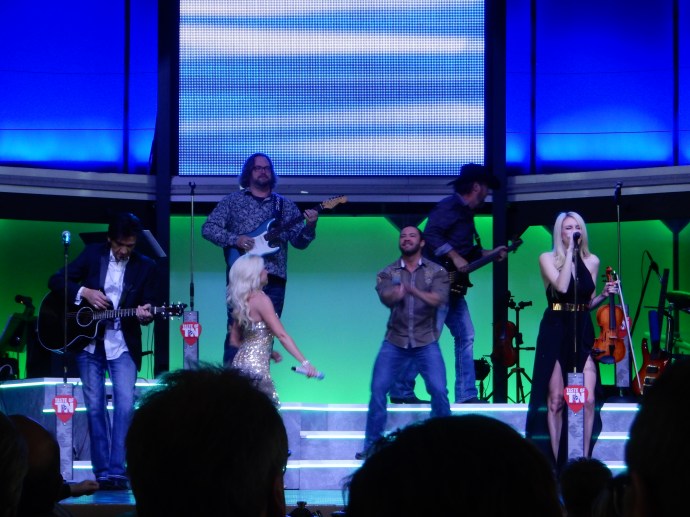
“Taste of Tennessee is an energetic stage show showcasing the many songs and stylings made famous right here in Tennessee. A versatile and virtuoso show band guides the audience on this exciting journey through the Volunteer State supported by gorgeous costumes, lights, and multimedia.” So sayeth their brochure and the show lived up to its hype.

Taste of Tenessee show on the General Jackson Showboat

The show lasted for about an hour. When it ended we went on deck to stretch our legs and enjoy the cruise views. The ship turned around shy of making it all the way to downtown Nashville. The river views were blah, the banks showing scrub brush and leafless trees. A section of the river was industrial; it made for the most interesting portion as we were able to watch sand and gravel being unloaded and transported to the storage area by truck and conveyor belt. Back inside, two of the performers took requests and entertained with songs and banter. The boat landed back at the dock at 2:30.

Views of the Cumberland River

The General Jackson was well-maintained and in good shape. We probably had about 250 people on board, roughly half of what it could hold at its peak. Our table companions were from Seattle, London Ontario (more Toronto Maple Leaf fans), and Kansas City and provided companionable conversation. The buffet lunch was good, a cut above normal buffet lunches at entertainment venues.

Gaylord Opryland Hotel

After the cruise, we moved the car closer to the Grand Ole Opry. We knew we would be getting back to the car late and we lucked out as the afternoon event was ending (possibly a high school show choir competition) and parking spaces opened up. We walked over to the Gaylord Opryland Hotel and Convention Center. I knew this place would be big, and it was. Think of a Vegas-style resort without the skyscraper aspect. The hotel has about 3,000 rooms with several covered atriums with flowers, waterfalls, a flowing river, etc. In 2010, flood waters from the Cumberland River devastated Nashville and this resort was not spared. It closed for five months for renovations.

We enjoyed the scenery and climate controlled atmosphere at Opryland but when we discovered they only offered gelato and frozen yogurt on the premises we headed over to the Opry Mills shopping complex for an ice cream fix and a snack at Johnny Rockets. The wait staff put on an impromptu dance skit while we were there so our food came with entertainment without a cover charge. We had time to kill before attending the Grand Ole Opry evening performance so Johnny Rockets came in handy.

While we had heard of the Grand Ole Opry, we had never listened to it so the experience was brand new to us. Four half hour live radio shows are produced in sequence. Each half hour show has its own host and three acts, including the host, perform. It appears two numbers are allotted to each act. With introductory banter and on-air commercials, the thirty minutes are completed, the curtain comes down and then the curtain goes back up for the next show. There is a fifteen minute intermission between shows two and three; I am not sure what happens on the radio stations during that time.

Ricky Skaggs at Grand Ole Opry

We had only heard of one of the performers that night but, given our low knowledge level of any music performers, that was to be expected. The 4,400 seat auditorium was almost full, we were up high. As is usual nowadays, there were three jumbo TV screens providing an up close and personal view also. Our favorite performers were Striking Matches, a male-female duo paying guitars and singing. Ricky Skaggs had a smiling, thirteen year old boy paying guitar that was entertaining also. A 14-year-old girl “phemom’, Tegan Marie, did not impress us.

Overall, it was enjoyable although Chris said she would even prefer opera. Frequently the lyrics were not distinguishable. It was comfortable; as one stated later, music performers have fans but Grand Ole Opry is family. The audience, many of whom were first-timers and included groups of show choir youngsters, responded enthusiastically all night. For me, too many of the performers always asked “how are you doing”, “are you having a good time”, “where are you from”, etc. We were glad we made this a priority. Some of the tunes are still reverberating in our heads this morning.

Number 18 dressing room at Grand Ole Opry

After the show, we went on the backstage tour. There were groups of 25-30 people who had paid extra for this. Originally we were to attend an afternoon tour; evidently it was canceled in favor of hosting the show choir tournament. The back stage tour covered the TV recording studio-where Hee Haw had been filmed, the 20 or so individual dressing rooms for performers, the stage with the performers circle of old wood which is a remnant of the stage at the Ryman Theater in downtown Nashville where the Grand Ole Opry started, etc. The 2010 flood damaged this facility also, bring water waist deep to the old dressing rooms and higher than the stage. When renovations were made, the dressing rooms were improved and each had a particular theme. Performers are assigned to the rooms based on the theme and/or their preference (for big name performers).

We arrived back at our lodging at 11:30 PM, satisfied with a full day of Nashville music experiences.

Ed and Chris. March 24

Epilogue: Snippets on life in America from Chris
Day 8: How many iconic American performance venues have you been to: NYC’s Carnegie Hall, nope. The Hollywood Bowl, nope. Nashville’s Grand Ole Opry, yes!

Categories: road trip, travel | Tags: , , , | Leave a comment

2018 Trip 3: KY andTN: March 22

Nashville, TN. March 22

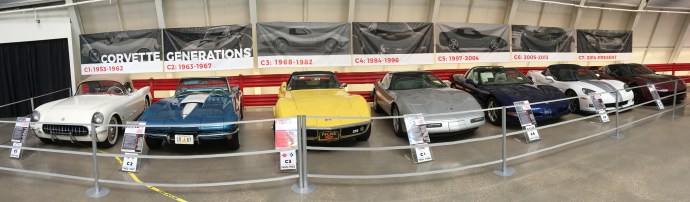
Corvette National Museum in Bowling Green KY

Well we crossed the border from Kentucky to Tennessee and traded bluegrass for blues; Daniel Boone for Davy Crockett, the 15th state admitted to the Union for the 16th, and a state that did not secede from the Union for one that did (although both were bitterly divided).

Before we left Kentucky though, we made a stop in Bowling Green to visit the National Corvette Museum. It is a private, non-profit organization devoted to the Chevrolet Corvette; as they say, America’s only true sports car. First produced in 1953, it was named after the British warships that were designed to be light and fast. The Corvette automobile did not gain immediate popularity until Zora Argus-Duntov wrote a three page internal memo telling the big brass that the Corvette should be re-focused as a true sports car. Zora was a Russian emigre who had worked for auto companies in England and later joined GM. His passion for quality in sports cars had a lasting impact on the success of the Corvette. The Corvette is now known around the world and has a stunning list of race victories.

The Corvette sinkhole of 2014

Even non-sports car fans generally have heard of the Corvette. even more people heard of the car on Feb. 12, 2014 when a large sinkhole opened up under the showroom of the National Corvette Museum in Bowling Green. Eight Corvettes valued at over $1,000,000 dropped into a sinkhole 40 feet wide and 30 feet deep. Several of the cars were deemed a total loss. Others were repaired. The Museum, besides repairing the damage, soon added a new feature: The Sinkhole Exhibit where you listen to the sound of a sinkhole roof collapsing, can stand where the sinkhole occurred and see tape outlining the edge of the hole, observe the cars in all of their smashed glory, and even buy a small container of dirt from the sinkhole.

It took us 90 minutes to go through the museum. I am sure Corvette and car aficionados spend much more time. The time spent was enjoyable to recollect on an American icon, the various models designed, and various tidbits of information about the Corvette. I had to make sure Chris did not sit down somewhere and sign on the dotted line to buy one.

Nashville was just a quick hour trip down the interstate through the rolling hills of Kentucky and Tennessee. We are staying south of the city in an Airbnb townhouse. Nashville hotels are extremely pricey and the one timeshare exchange located in the area had no openings from January through May of this year when we were trying to book a room. So we drive a bit more.

Tennessee State Capitol

Before coming to our lodging, we visited the Tennessee State Museum and State Capitol. The State Museum will be moving to a new facility later this year assuming the work is completed timely. Nashville is undergoing a construction boom and workers are in short supply. The current facility is twice as big as the new one but shares space with other state offices and performing arts organizations. The new facility is proposed to have more advanced displays using technology and multi-media displays.

I find it hard to well describe the State Museum. You know how sometimes you gather an impression early and may not give later reactions a full consideration? I felt that about the Tennessee State Museum. It covered the time up to about the First World War. Most topics had a display but they struck me as brief, general, covering the clichés. Maybe I have seen too many museums and historical sites. It overdid the “We as Tennesseans are just the common man with our roots in the 1800s”. After 90 minutes here, we moved on to the State Capitol a few blocks away.

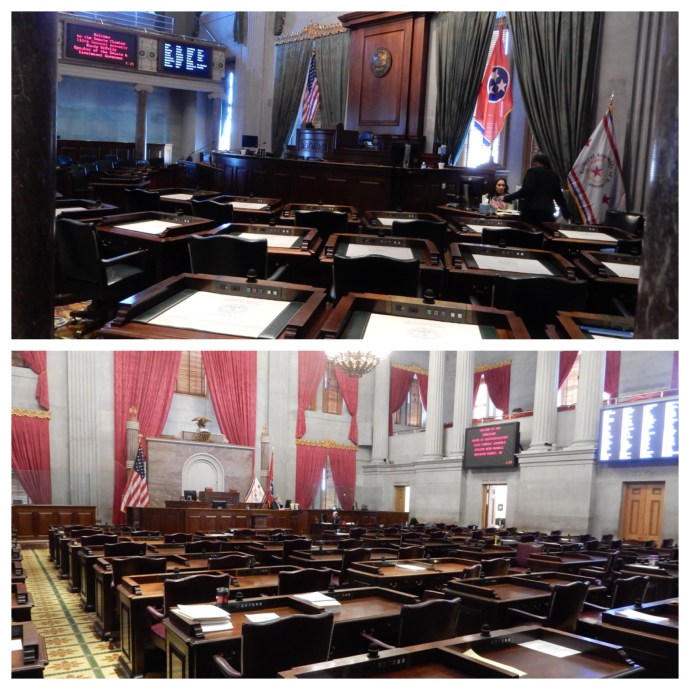
Tennessee Senate Chambers on top; House Chambers at botom

The State Capitol was completed just before the Civil War. It is small, with most officials, including legislators, having offices and meeting rooms in nearby buildings. The marble and granite are from Tennessee and are attractive, with nice ceiling decorations. There is no outstanding art, generally the walls are bare or have pictures of past Governors or early state leaders, complemented with marble busts of similar types of famous people. The Supreme Court has moved to its own building and the Senate and House Chambers are pleasant but not notable.

We did learn on a tour that the state flag shows three stars, indicating East Tennessee, Middle Tennessee, and West Tennessee. It seems there is a strong identification with each area, and the Supreme Court judges have to reflect a degree of balance between the regions. The Capitol is also notable that two people are buried within its walls, the architect and the head of the original Capitol Building Commission. President James Polk was from Kentucky and he and his wife are buried outside on the Capitol Grounds. This is the only U.S. State Capitol to serve as a mausoleum and a cemetery.

The tour guide refreshed our memory about the role Tennessee played in the passage of the 19th Amendment for Women’s Suffrage. The Amendment came to a vote in Tennessee, where if Tennessee approved it, the Amendment would become the law of the land. In the process of passage, an attempt was made to table (and thus kill) the Amendment. The vote was a tie. If a motion to table is voted on three times with all being a tie, the motion dies and the whole Amendment would not have passed. The second vote was also a tie, no one was changing their vote. On the third vote, the newest and youngest representative received a note from his mother telling him she expected him to vote for passage. He had not voted for passage on the previous two attempts. On the third vote, he voted for passage, the Amendment was approved and the Governor quickly signed it before any other action could be attempted. Can you imagine the media and social media attention today if that occurred?

We had an early dinner downtown, along with many visitors from Toronto who were in town for the Predators-Maple Leafs NHL game (the Maple Leafs won). Puckett’s has been serving food downtown for over fifty years and we both had a barbecue special. Quite tasty. After a ride through rush hour traffic, we landed at our Airbnb location. In the last two reported years, Nashville ranked 19th and 23rd worst for rush hour traffic, not out of line with its ranking as 25th largest U.S. city.

Ed and Chris

Epilogue: Snippets on life in America from Chris
Day 7: Visual art is all around us. The beautiful quilts made into intricate patterns with thousands of pieces of fabric. Magnificent detailed paintings of birds in their environment by Audubon. Stone buildings constructed by the CCC workers in the 1930s. What is tacked on your refrigerator door?

Categories: road trip, travel | Tags: , , , | Leave a comment

2018 Trip 3: KY and TN: March 21: Caves and Crafts, Booze and Bluegrass (Music and Horses)

Munfordville, KY March 21

On a two lane road headed to Mammoth Cave

Welcome to Spring. We woke up to 2-3 inches of beautiful, fluffy, yet sticky snow. This allowed the snow to adhere to tree branches causing beautiful landscapes. The temperature was about 33 degrees Fahrenheit, so the snow melted on the roads without getting icy or slippery. By the end of the afternoon, the snow had melted. If all snowstorms were like this one, everyone would be happy to have it snow frequently.

There were six of us at breakfast at the Country Girl at Heart Farm B and B; a couple from KY who visit here frequently; a young couple from Georgia on their way to Chicago and us. Besides the scrambled free range eggs, we had bacon, fresh fruit, biscuits, and home-made danish from a local Amish couple.

Mammoth Cave was our destination for the day. The National Park site was a 45 minute drive from the B and B through a combination of narrow two-lane roads and interstate. The park offers nine different tour options, we had chosen two of them, each two hours long, and ordered our tickets a few weeks ago. Mammoth Cave had suggested ordering tickets in advance for summer tours and for tours during spring break (now). We had to keep re-checking the web site though since they did not replace their winter schedule with the summer schedule until about two weeks ago.

The historic entrance to Mammoth Cave.

The historic tour covers the original entrance and showcases the parts of the cave seen by the earliest cave explorers. Mammoth Cave was “found” by American settlers as far back as the 1780s and even by the Civil War tourists were coming here to explore the cave. The early tourists saw less than 12 miles of cave. Mammoth Cave was established as a National Park in 1941; only 40 miles had been mapped by then. This tour goes over two miles, has 440 stairs, and has elevation gain and loss of 300 feet.

Historic tour at Mammoth Cave National Park

There are over 400 separate caves within this national park and more are privately owned and available to tour outside it. Over time, cave exploration at Mammoth has continued and more miles of cave have been discovered and mapped. One major discovery in the 1970s connected Mammoth Cave to another large cave system, quickly increasing the total length. Today 412 miles with 27 different entrances of interconnected passages have been identified in Mammoth Cave. It is the longest cave system in the world. (To be connected, an opening has to be able to be traversed by a human without artificially widening or expanding openings.)

Descending the 280 stairs at the beginning of the Domes and Dripstones tour

The Domes and Dripstones tour is about one mile long with 280 of the 500 stairs on this tour coming in one quick burst right at the start of the tour. The 280 steps take you down several domes (cylindrical openings) and you slowly work your way back up for the rest of the tour. The big finale is an indoor waterfall with a large collection of stalactites and stalagmites.

Domes and Dripstones tour at Mammoth Cave

Domes and Dripstones tour at Mammoth Cave National Park

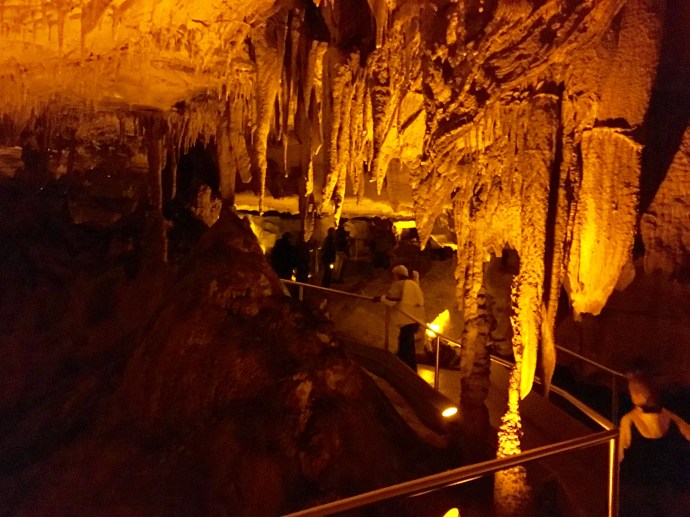
In our opinion, the Mammoth Cave System is more impressive than beautiful. Our two tours were not duplicative and we saw less than 1% of the cave miles. Numerous cave passages are extremely wide, one long passageway on the historic tour was forty feet high and probably just as wide. Certainly we had our share of narrow passages and low overhangs-more so for tall people than children. But overall, many passages impressed us by their spaciousness. I have never been satisfied with my ability to effectively show the view of a cave with either of my camera options. I include some photos here, you will have to use your imagination to complete the picture.

The cave system has five different levels caused by different geological periods when the water level of the Green River, the end spot for water flowing through the cave, eroded and lowered its channel. Only the lowest, newest level has water in it periodically. Our tours were all on dry land. Part of that is also caused by the sandstone capstone above the limestone formations in the cave which direct water to flow away rather than down into the cave.

The Park Rangers leading the tours do a nice job of providing historical background and explaining the geology behind the caves. Our Domes and Dripstones guide was able to go into more detail as we only had 26 people on the tour; this tour is frequently run with 100 participants.

We spent the entire day at Mammoth. Besides the two tours, there is a museum with exhibits and video presentations. We talked with Rangers at an informal talk and peppered questions to the Rangers at the information desk. We bought a few souvenirs. We ate a quick lunch after our first tour and had a sit down meal at the lodge in the park after our late afternoon tour. And we sat for a bit waiting for the last tour to begin. We could have gone on walks above ground but the two tours were taxing enough. While the tour description said the tours in total would be about three miles, the walking app on my iPhone said we went over five miles today. I will take the iPhone total. Add on the almost 1000 stairs and the crab walking in low overhead areas, we got plenty of exercise.

One of the barn buildings at our B and B

We were not impressed with the hotel options near Mammoth Cave but this B and B in Munfordville has been quite pleasant. It is 45 minutes away but the drive is part of the experience. The owner moved here from Connecticut, bought the 140 acre farm and added a B and B section to the farmhouse. She has been running it for nine years now. Our room is spacious and while we did not use it, there is a basement with TV, pool table etc. There are goats and chickens. Guests are welcome to join in feeding the animals to make a complete farm experience. We passed on that option.

Ed and Chris March 22

Epilogue: Snippets on life in America from Chris.
Day 6: Where to find beauty. An end of season snowstorm. Two hundred feet below the ground. The setting sun. By saying hello.

Categories: road trip, travel | Tags: , , , , , , | Leave a comment

2018 Trip 3, March 20, KY and TN

Munfordville, KY. March 20

Ed working on the blog at our B and B

As we sit in a B and B in Munfordville, KY, yesterday’s rain has now become snow. One to three inches by tomorrow noon. Luckily we should be underground for much of that time as we will be touring Mammoth Cave. A horse and carriage from a local Amish farmer drove by a few minutes ago, hopefully they will get home before snow accumulates-if it does. The temperature is around 35 degrees Fahrenheit.

We were able to sleep in today. Our first stop at the International Bluegrass Museum in Owensboro did not open until 10 AM. While there is a botanical garden in town, the weather did not portend a blooming sight for our eyes so we passed on trying to visit the garden first. Bill Monroe, considered one of the primary founders of bluegrass music, was born in Rosine KY, a short 35 mile drive from Owensboro so that seemed to be the inspiration for founding a museum here.

The museum opened in 1995 and has expanded once already. We were lucky to visit now; the museum will be opening a new facility around October of this year with three times the exhibit space. The current space is likely to close in May to accommodate the move to the expanded digs.

Inside the International Bluegrass Museum in Owensboro,KY

We spent an hour touring the museum. Displays are well done and cover such topics as the pioneers of the music genre; Bluegrass’ Classic Band of Bill Monroe, Lester Flatt, Earl Scruggs, Chubby Wise, and Howard Watts; historically significant bluegrass instruments, Hall of Fame, etc. They define bluegrass as “ bluegrass has a unique singing style. It is tight-throated, high-pitched, piercing and full of lonesome yearning for the good, simple life. In Bluegrass the bass fiddle typically thumps out a steady foundation rhythm and outlines the harmony. The mandolin, when not soloing, provides a characteristic chopping accent on the offbeat – called syncopation – giving the music rhythmic drive. Melody instruments such as bango, fiddle, mandolin, are free to layer new rhythmic patterns over this background pulse.” Numerous opportunities exist to listen classic songs. It was a reasonable introduction to bluegrass music.

Kentucky maps show 11 parkways. Coming in to the state, I did not know if these were toll roads or slow, scenic roads. It turns out the parkways used to be toll roads but as the bonds used to finance construction were paid off, the parkways converted to free roads. Normally, they match interstate standards as limited access highways. We discovered the quality of the roads by purposely choosing to drive two of the parkways instead of two lane roads as we headed to our second stop, the Abraham Lincoln Birthplace National Historical Park in Hodgenville, KY.

Hodgenville has a population of 3,200 and Chris managed to find a local restaurant with good food. Chain fast food places seem to be driving many of these out of business. We had lunch here, although the Hodgenville Grill is just over into the Eastern time zone so our lunch was almost a mid-afternoon snack. For $6.49 we had an entrée and two sides. We enjoyed the vegetable options choosing baked beans, lima beans, beets, and coleslaw from among about 16 or so choices. And yes, the food was good. In contrast, our evening meal at a different local restaurant was mainly fried food, the place could have been cleaner, and we heard one of the staff discussing how sick she was this weekend. Maybe there is a reason fast food chains with standardized quality and cleanliness are taking over.

The memorial at the Abraham Lincoln Birthplace National Historical Park

The replica log cabin inside of the memorial at Abraham Lincoln Birthplace National Historical Park

The Abraham Lincoln Birthplace National Historical Park is located on the site called Sinking Spring where Abraham Lincoln was born. The first U.S. memorial to Lincoln was constructed here in 1911. The neoclassical marble and granite memorial houses a simple, symbolic log cabin inside represent the humble beginnings with the monumental achievements of our 16th President. Lincoln was born on this site and lived here for three years. His family moved ten miles away to Knob Creek where he lived for five years before moving again to Indiana and later Illinois. Land disputes, due primarily to faulty or non-existent land surveys, caused the moves from Sinking Spring and Knob Creek.

We visited both sites, talked to rangers, watched a video and bought some souvenirs before heading to our B and B lodging for the next two nights.

Ed and Chris

Epilogue: Snippets on life in America from Chris.
Day 5: He was born in Kentucky. While not poor, Abe Lincoln had come from modest means with a young life marked with tragedies. He became one of our best Presidents as well as founding the Republican Party. And now we have Trump.

Categories: road trip, travel | Tags: , , , | Leave a comment

2018 Trip 3, March 19, KY and TN

Owensboro, KY. March 19

Museum at John James Audubon State Park

“Rain Rain Go Away, Come Again Some Other Day” we sang as we drove from Paducah KY to Henderson KY to Owensboro KY. It worked, sort of. The rain that was supposed to start at 10 and be thunderstorms at 1 PM held off until after our outdoor activities. It helped that we modified our schedule also. We dropped a nature conservancy site with a trail to a funny rock along the Trail of Tears. Instead we just drove to Henderson for the major activity of the day, the John James Audubon State Park and Museum.

Ohio RIver near Henderson KY

Henderson KY was an early town on the Ohio River, part of the Cherokee Nation. European settlers, Richard Henderson prominent among them, came to the area to settle and Kentucky became the 15th state admitted into the Union. Agriculture was and is important in the area and in 1810, John James Audubon moved his young family here to operate a mercantile business. Initial success eventually turned into business failure, but Audubon lived here from 1810 to 1819.

Audubon had developed an interest in art and birds at an early age. During his time in Henderson, he spent considerable time hunting and stuffing birds and perfecting his artistic technique. After his financial failure, he decided to devote his efforts to produce the monumental work “Birds of America”. This work was the first life-sized realistic drawings of North American birds along with their natural settings. It took Audubon until 1838 to see the book printed.

Along the way, Audubon and his wife Lucy worked jobs such as dance and art teacher, naturalist, and giving lectures. He exhibited his work in the U.S. and overseas and eventually gathered sufficient praise and backing from Europeans to allow the work to proceed. His drawings were engraved in scrupulous detail and then hand colored individually. Each page was 39.5” tall and 28.5” wide. He utilized assistants, including his children, to gather specimens and draw background settings. The effort was all-encompassing and there were periods of time when he would not see his wife for several years as he went to Europe and traveled around the U.S. to get specimens. He continued his travels almost until his death in 1851.

Audubon was born in Haiti in 1785 and returned to France due to his fathers concerns over a possible slave insurrection. His father sent him to America at age 18 where his father had purchased land northwest of Philadelphia near Valley Forge. It was here that he met his wife Lucy, daughter of a neighbor. He died in New York and Lucy ended up selling his belongings and engraving plates to fend off bankruptcy. Today, however, most of what is remembered of Audubon is his monumental influence on ornithology and natural history.

Blue Crane by John James Audubon

Obviously this is a very brief summary of his life and his impact. But his importance is why we stopped at Henderson to visit the museum there dedicated to his life and works. The museum is housed in a building styled after a French chateau as a nod to his French heritage. It was built during the 1930s after civic minded local women raised the funds for an Audubon Museum: the Civilian Conservation Corps and Works Progress Administration provided the labor. Once again, no pictures allowed but we did buy a postcard of one of his works to reproduce here to demonstrate the detail included in his drawings. The museum also had two 15 minute videos on Audubon and a wing dedicated to his life’s history and drawings.

Hiking at Audubon State Park in KY

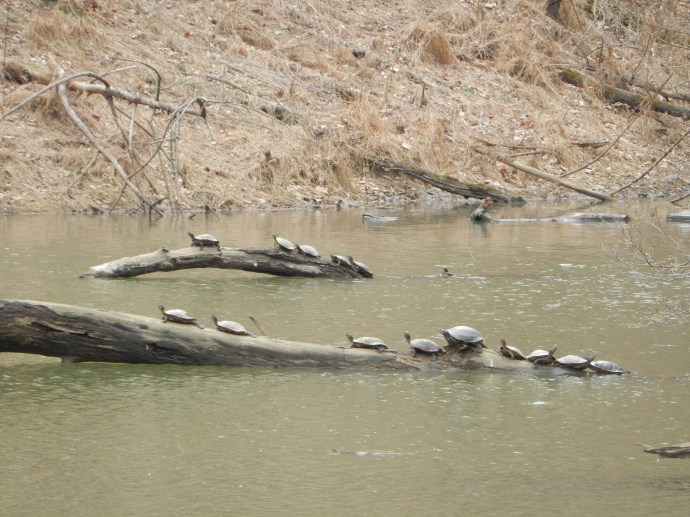
Turtles at Audubon State Park

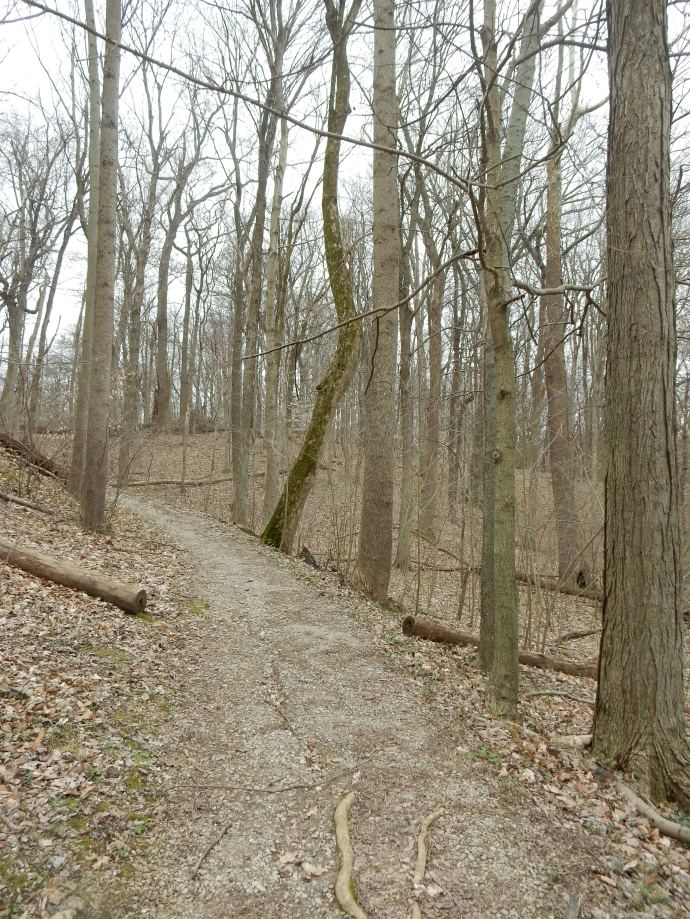
Before the museum tour, we spent an hour walking around the park trails. As you know we are not birders, but it was pleasant to listen to the birds calling back and forth to each in their spring mating ritual. The parks in KY do not charge admission-nice. We did observe several Eagle Scout projects to replace bridges and boardwalks.

Driving Kentucky back roads

The drive to Henderson took us once again on two lane roads. Of course many roads are smooth and well-maintained. The ones that are not are more interesting and those seem to be the ones we frequently find on back roads. The lack of shoulders was the most notable occurrence. Once we coming upon the top of a rise in the road when we saw the top of a large farm tractor coming towards us. At 55 mph, it was a challenge to not go off the road as the tractor did its best to keep its large wheels on the grass and just a little bit onto our lane. Another time we came up to a bridge just as a truck pulling a boat trailer came off the bridge, with the wheels of the trailer solidly in our lane. Another narrow escape.

Ed and Chris

Epilogue: Snippets on Life in America from Chris
Day 4: Cracker Barrel: biscuits, please. Dunkin Donuts: glazed chocolate donut and coffee. Panera: soup and salad. McDonald’s: egg McMuffin. Predictability is sometimes good when one is traveling.

Categories: road trip, travel | Tags: , , | 1 Comment

2018 Trip 3: KY & TN: March 17

Paducah, KY. March 17

The first signs of spring occurred in southern Illinois.

We were on the road early this morning. Last night provided extra incentive to make sure we arrived at breakfast early. When we had checked in, we noted our hotel had as guests numerous families with young people. Champaign was the host site for the Illinois State wrestling tournament for boys ten and under. Evidently when you have wrestlers under age ten, the whole family comes along for the event. Our assumption was that if we were downstairs for breakfast by 6:30 AM, we would be in good shape.

Wrong. Evidently our assumption was based on when our daughters would prefer to get up. Wrestlers are up early and on their way to the tournament which started at 8:30 AM. There were three people for every two seats in the meal area when we arrived at 6:30 AM. A glass of orange juice was our sole take-away and we set out on the road. Breakfast ended up being at a local restaurant located inside of the IGA grocery store in Effingham Illinois, an hour south of Champaign.

Our daily journey was projected at 280 miles, most of it on two lane, 55 mph roads below Effingham, but that allowed us to make several stops today. First off was the “Garden of the Gods” Recreation Area in Shawnee National Forest. The journey there did take us by oil fields and coal mining locations. Illinois was supposedly the first state in which Europeans discovered coal. Today, it is still the fifth largest coal-producing state, but the amount of coal shipped is decreasing and the number of miners has dropped dramatically.

A view from the Garden of the Gods Recreation Area in Shawnee National Forest

A close-up of rock formations in Garden of the Gods Recreation Area

Located in extreme southeast Illinois just above the Ohio River, Garden of the Gods provides some of the most photographed outdoor locations in Illinois. We opted for the Observation Trail that contains unique rock formations and outstanding views of the valleys and hills that line the southern most portions of Illinois.

Trails abound in the forest and wilderness area surrounding the observation trail but today was not meant to be a major hiking day. After we saw the sights, we drove the Ohio River Scenic Byway to Paducah, KY. Unfortunately, the scenery was not all that spectacular with only one view of the Ohio River. While daffodils became abundant, few other trees were blooming. The temperature increased nicely though, from 32 degrees in Champaign to 68 degrees around the Shawnee Forest.

While Effingham appeared prosperous, the smaller towns we passed through on our way to Paducah seemed poorer and passed over. There appeared to be a more liberal attitude of what was permissible to store outside your house along with the quantity of what was stored in the yard. Possibly the decrease in coal mining jobs led to this but agriculture still seemed to be strong economic factor.

We made it to Paducah in time to visit the River Discovery Center, also called the River Heritage Museum. It is not open Sunday so we had to ensure our arrival allowed us to visit it today. The museum focuses on several rivers in this area, the Ohio, Tennessee, and Cumberland also with the Mississippi. Paducah has a long history with the Ohio River, and its location at the confluence of the Ohio and the Tennessee has led to the city having boat building and maintenance facilities.

The museum educated us about the 1937 Ohio River flood where 90% of Paducah was flooded, 30,000 people here were evacuated, the river was seven miles wide with flood waters, and the flood was so extensive along the Ohio that it led to the building of new levies to try to limit flooding. A new factoid for me was the use of “snagboats”, steel covered boats that would ram submerged trees and tree trunks (snags) to remove them or to use it’s on board cranes to lift the snags out of the river.

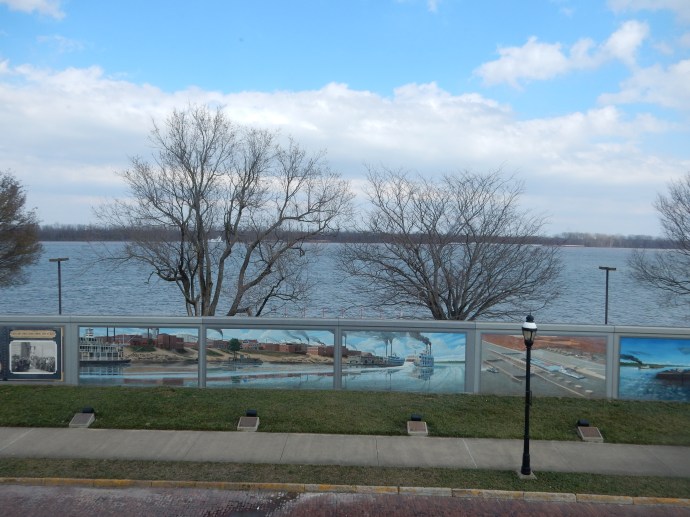
A view of some of the murals and the Ohio River from the River Discovery Center.

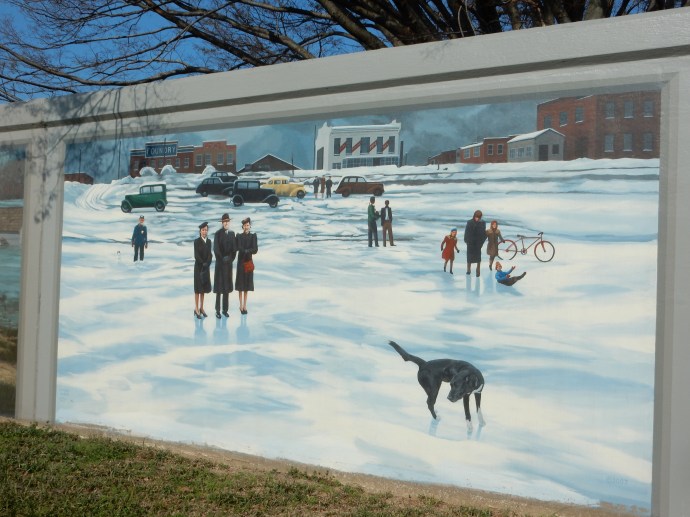
A close-up of just one of the murals, this one depicts a rare occurrence when the Ohio River froze over.

After the museum, we walked along the riverfront to enjoy the river murals. The murals, sponsored by local businesses or individuals, portrayed notable events in the history of Paducah. We had observed similar murals in Vicksburg TN, but the murals in Paducah seemed smaller. The murals here have the advantage of being located still in the downtown district; in Vicksburg who have to walk a few blocks out of the downtown to see the murals up close. Robert Dafford is the painter; well-known for his murals and having created murals in several other Ohio river towns.

Wacinton statue in Paducah KY

Our final stop was at the 35 foot tall wood carving of Wacinton. This carving started with a 56,000 pound red oak and was completed over thirty years ago. The statue is meant to honor the Chickasaw Indians who lived in the area prior to the arrival of European settlers. The sculptor is Peter Wolf Toth who has completed statues in each of the fifty states-although not all are still standing. His message is to honor the indigenous peoples of America.

Ed and Chris March 17

Epilogue: Snippets on life in America from Chris

Day 2: Driving along the 2 lane road at the posted 55 MPH (or a little above), one sees on either side acres and acres of farmland. Houses, barns and silos are off in the distance as the deep brown soil lies quietly near the road, prepped for spring planting. We are alerted to a speed change to 35 MPH; an assortment of houses close to the road announces a town. No traffic signals, no sidewalks, no schools, some boarded stores, no green park space. In a minute or two, after the Dollar General store, we are back to 55 MPH, passing again part of America’s farmlands.

Categories: road trip, travel | Tags: , , , , , , , , , | Leave a comment

2018 Trip 3: KY and TN: Caves and Crafts, Booze and Bluegrass (Music and Horses): March 16

Champaign, IL. March 16, 2018

This trip will last six weeks, possibly to be our longest of 2018. The primary goal is to spend more time in Kentucky and Tennessee with a week in Miami Beach, FL. We are calling the trip: “Caves (Mammoth Cave) and Crafts (handmade Appalachian crafts), Booze (for bourbon distilleries) and Bluegrass (for the music and Thoroughbred horses).

Approximate route for 2018 Trip 3.

Today, Friday is a travel day with no real stops to sightsee; that will begin tomorrow. Our initial route is an old familiar one, I-94 out of the Twin Cities down through Illinois on I-39. Thus, breakfast was on the road and lunch was at the largest Culver’s in Edgerton WI (which we had been at before). Dinner was different, a lenten fish fry at St.Patrick’s Church in Champaign. The fish for dinner was one of the tastiest we have experienced this Lenten season.

Only incident of note, stopping at a rest stop in north central Illinois, we came out of the rest room to observe two young college students, men, examining our car, even looking under the car. Our first thought: “Oh, s***, they hit our car and damaged it.” We went over to talk with them and to understand their concern. They were discussing how the car was making a strange sound and the young men thought a piece of the car was hitting the front passenger tire. It took several minutes for them to realize they might be right about the sound but they had the wrong car. Evidently the young men were riding with another student, a woman, and could not well identify the car they were riding in.

The guys were tossing swords back and forth, evidently props from their circus studies at Illinois State University at Normal. Evidently the intent on catching the swords disrupted their car identification skills. We passed pleasantries after the clarification and headed back on the road.

Ed and Chris

Chris has decided to add a daily addition to our travel blog.
Epilogue: Snippets on life in America from Chris
Day 1: We decided to start this trip early today and get breakfast on the road. Around 9, we stopped for breakfast at a fast-food restaurant in WI. We went in and 8 elderly women were seated around a table enjoying morning coffee and conversation. Around the corner from them was a group (eventually 12) of elderly men with coffee and occasional breakfast sandwich; jeans, working boots, occasional military cap and an exciting conversation at one end of the tables was about bees. Welcome to McDonald’s.

Categories: road trip, travel | Leave a comment

2018 Trip Two: Boston Again

Boston, January 22-29

Another trip to Boston. Well I never wrote up this trip to Boston and since we leave in 10 days for another six-week trip down through Kentucky and Tennessee, I thought I’d better get caught up. Much of the trip was family related but this blog will cover the sites that we saw in the Boston area. We have been to Boston numerous times, but we are still able to find a few things that are new to us.

One of the Map Room maps

Our plan was to leave on Monday, January 15 for about a week. However, a major snowstorm was projected and Delta was offering free flight changes, so we took them up on their offer and left on Sunday the 14th. Hertz rental car company was not as agreeable. Changing our reservation and adding one day would’ve doubled the cost. Instead, Deb picked us up on Sunday at the airport. Monday morning Rebecca gave us a ride to downtown Boston. We spent the morning going through the Boston Public Library. That might seem a strange way to spend the morning but the library is home to numerous famous murals. Chartered in 1848 as the first large, free American municipal library, it was so successful it outgrew its home.

The current Boston Public Library, built in 1895 and expanded in 1972, has three sets of murals of dramatic import and size which are noteworthy. However, our first stop was at the Map Room. The Leventhal Map Center is primarily a research center but has a changing exhibit of maps. The exhibit expands one’s understanding of the numerous varieties of maps depending on the material to be presented. The area had children sized nooks and desks also to allow kids the opportunity to explore at a less overwhelming level of detail. As we headed on to the murals, we passed an interesting wall mounted art piece that upon closer inspection was a mural/painting/composition created by various book covers.
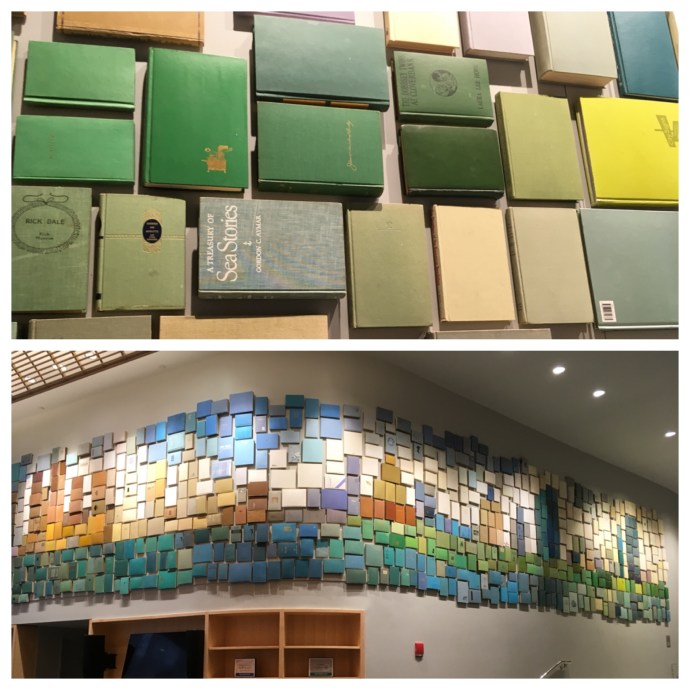
The book collage at the Boston Public Library

From the map room we headed to the murals. The murals are all located in the McKim Building, the 1895 building. Edwin Austin Abbey was an American who worked primarily in Europe. His mural is entitled “Sir Galahad’s Quest for the Holy Grail” and was installed in 1902. It is installed on all four walls below the ceiling in the Abbey Room on the 2nd floor. The 15 paintings depict the Arthurian legend.
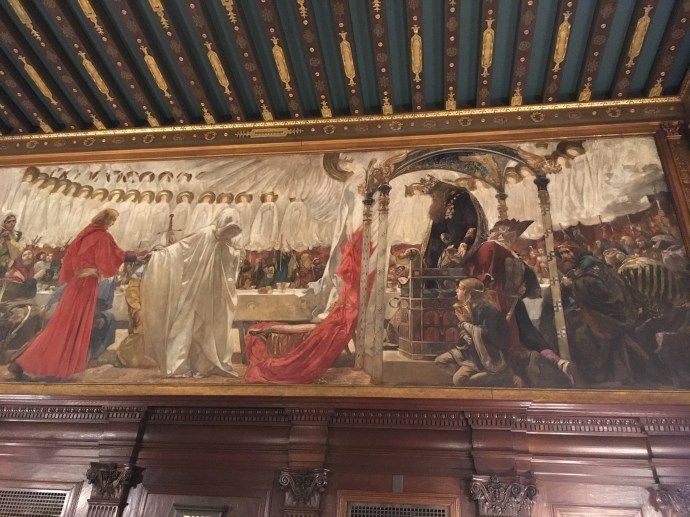
One of the Abbey murals at Boston Public Library
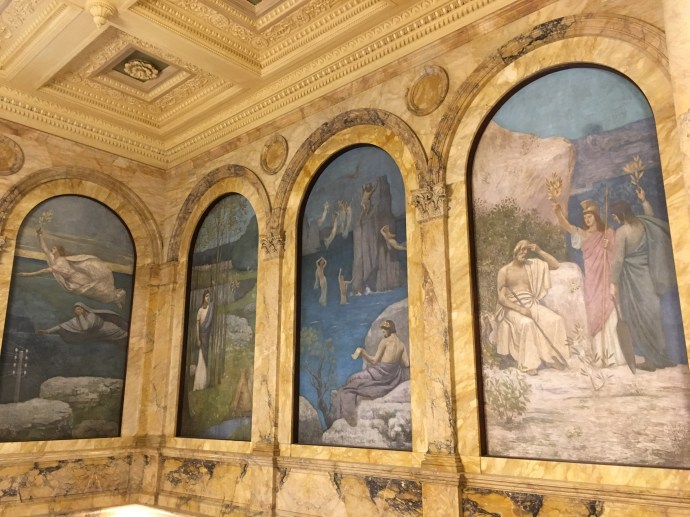
Pierre de Chavannes mural at Boston Public Library

Part of the Sargent murals at Boston Public Library

The French Artist Pierre de Chavannes’ “Muses of Inspiration” was completed in 1895 and is installed outside of Bates Hall on the second floor and on the grand stairway leading from the first floor to the second. Finally, John Singer Sargent’s “Triumph of Religion” was completed during the period of 1895-1919 and is installed in the Sargent Gallery on the third floor of the McKim building. During our time in the library, numerous people and even groups came in to examine the murals. Given that my art knowledge is rudimentary, if you are interested there are numerous on-line articles that provide greater detail regarding the murals. While at the library, we made a stop in the Bates Room which had genealogical records and looked up some family names but had no luck in finding anyone halfway related to our ancestors.

From Copley Plaza we hopped on an airport shuttle that took us directly to Logan airport and the rental center where we picked up our rental car and managed to avoid the heavy penalty Hertz would have charged us for coming in a day early.

Tuesday was a wet, rainy day, excellent for inside activities so we visited The Boston Museum of Fine Arts (MFA) which is the fifth largest museum in the United States. Obviously one does not see the entire museum in one visit. Our plan was to partake of docent tours; a.) Three Masterpieces from Asia (30 minutes); b.)Art of the Americas (60 minutes); and c.) Art of Europe (60 minutes). Seven different tours are available; docents have to be able to lead all seven. After training, a docent is active for only four years, providing for a rotation of new docents and greater opportunities to lead. After the four years are over, a docent can provide sporadic tours. A little different than most museums we have visited. All three of our docents were knowledgeable and easy to understand.

Our Asia tour talked about Buddha and the development of Buddhism. Evidently the first portrait of Buddha in art did not allow for a human visage. The next development allowed for the image of a footprint and it was not until the third phase that Buddha himself was portrayed. Interestingly, even though Buddhism started in India, the real development and current strength of Buddhism is in China; India is primarily Hindu.

Art of the Americas exhibit

Art of the Americas took us into the newest wing of the museum. We found it notable that the galleries are not white and glass like so many new museum galleries, but are painted in a series of shades that I would call neutral naturals contrasting with wall fabrics to break up the gallery features. After lunch, the third tour was the Art of Europe. It was a good way to spend a rainy day in Boston.

Tuesday evening we attended the open house for REACH, the domestic violence center and shelter for which our daughter Deb is the Associate Executive Director. The organization was finally able to move to a new administrative office where they are able to provide individual advocacy, run support groups, offer child art therapy and a safe place to meet. It was exciting to see an arrangement that provides a proper working environment.
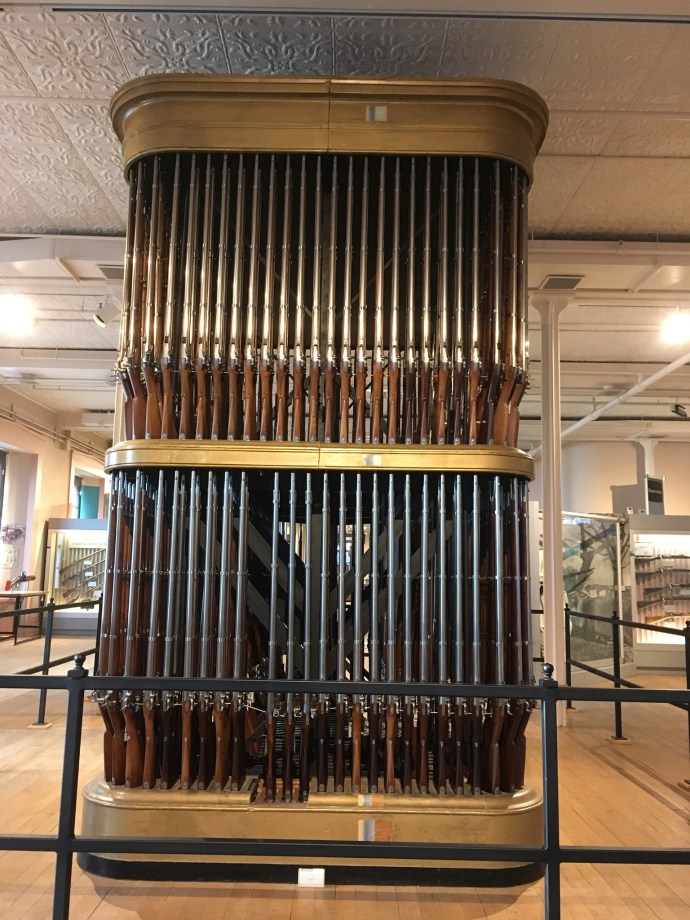
Exhibit at the Springfield Armory

Our travels for family and a funeral also took us to Springfield Massachusetts. This town of 150,000 is home to numerous museums and attractions. We revisited (actually Chris does not remember us being here but I am certain we visited decades ago) the Springfield Armory, part of the National Park Service. The Armory was established in 1794 to manufacture muskets so that the new country would not be dependent on foreign countries for its arms. A second armory was established at Harpers Ferry VA (think John Brown’s raid of 1859). The Armory was a large facility; the NPS site is reduced to one building while the rest of the buildings and grounds are home to the Springfield Technical Community College with over 7,500 students.

Exhibit at the Springfield Armory

Until 1968, the Armory was the pivotal point for the manufacture, research and development of military weapons (pistols and rifles). Along the way, the military arms development also developed advancements in manufacturing processes and the inventiveness of Springfield employees flowed also to other industries. One of the creative geniuses at Springfield was instrumental in developing early manufacturing replicating machinery to produce exact copies of each gun, in creating an automobile, and a steamboat.

Chris and I got a little over exposed to gun models but did note a display covering the development of the Lyle Life Saving Cannon which we had seen at other NPS sites. It was used to rescue sailors at sea. “These line guns are used primarily for shore based rescue operations. The Lyle Gun was hauled to the shoreline usually by U.S.L.L.S. surfmen in specially made beach carts. The iron wheels that supported the cart had wide bands outside the wheel to keep it from sinking into soft sand. The Surfmen would set up and fire the Lyle gun, aiming over the stranded or wrecked vessel and then pull the line within reach of the victims. The line fired to the ship in distress was a messenger line that was in turn tied to a heavier line, the Tally Board (with instruction in English and French), and a Tail block designed to support the breeches buoy. Once the breeches buoy lines and the Crotch Pole(an A frame) assembled, the survivors could be removed from the vessel by hand hauling the breeches buoy lines. The Lyle Gun could shoot the projectile about 700 yards (640 m), although in actual rescues the practical range was much less. Rescues at greater distances were to be accomplished by lifeboats.” (Wikipedia)

In 1964 the decision was made to close the Armory, ostensibly to save money despite local cost/benefit studies that deemed the Defense report inaccurate. Closing went ahead due to “the basic evolution” of Defense Department policies that were never explained. By then, Rock Island Illinois was performing administrative functions and private manufacturers were producing our weapons. (Note that the Colt firearms company facility in Hartford CT has also closed and another NPS site has been proposed there. As usual, Congressional approval for the site was relatively easy and funding to create the site almost impossible.)
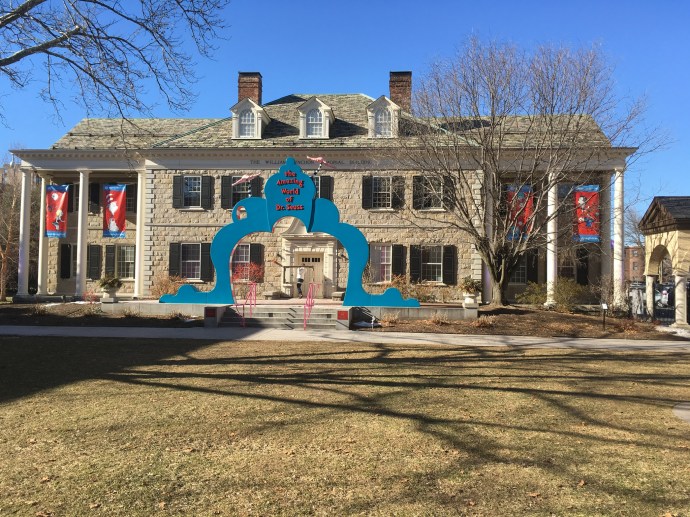
Dr. Seuss museum in Springfield MA

Friday before returning to Boston we visited the Springfield Museums with Chris’ cousin and her husband. The Museum complex includes a science museum, a history museum, two art museums and the Dr. Seuss museum. Our first stop was the delightful, although small, “Amazing World of Dr. Seuss Museum”. Theodor Seuss Geisel was born in Springfield MA in 1904 and while he moved to CA after WWII, many of the ideas, locations, and concepts in his childrens’ books are based on Springfield images and occurrences. Even though he died in 1991, his books are still popular. Chris frequently looks for his books as a gift idea. He is ranked in the top ten fiction authors of all time by the number of books sold.

Dr. Seuss museum in Springfield MA

Part of the museum recounts his life through photos, displays and personal letters and while we enjoyed learning more about him, it was the exhibits based on characters in his books that tugged at the emotions. Good memories all around.
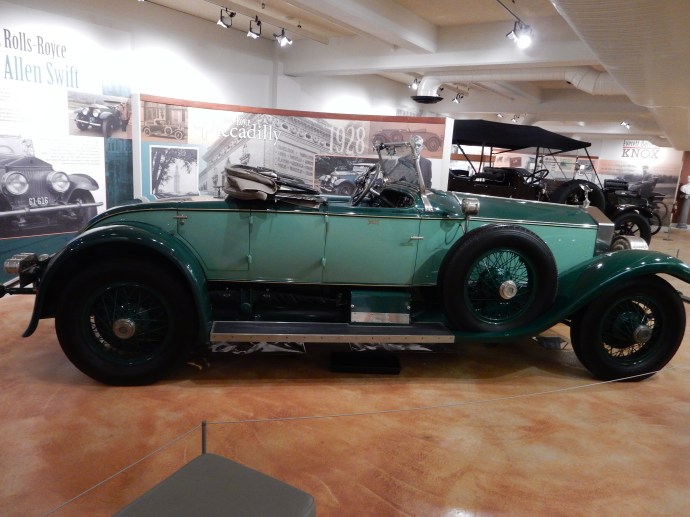
A Rolls Royce Phantom built in Springfield MA

After Dr. Seuss, we visited the Museum of Springfield History. Even Chris’ cousin was not aware of the extent of Springfield’s history and the number of companies that began here. Springfield was home to Breck shampoo, Milton Bradley games, Merriam Webster books (think dictionary), Fisk (Uniroyal) rubber, Indian motorcycles, Knox automobiles, and the only U.S. manufacturing facility of Rolls Royce back in the 1920s, among others. The museum is new, well laid out and was a pleasure to visit.

Replica of U.S. Senate at Sen. Edward Kennedy Institute

The rest of the weekend was family oriented with one visit to the Edward Kennedy Institute for the United States Senate on the University of Massachusetts Boston campus. The Institute is less about his life and more designed to educate people about the role and processes of the U.S. Senate. Sen. Kennedy had served from 1962 to 2009. The Institute includes a full size replica of the U.S. Senate and visitors are encouraged to take part in a mock debate and vote on rotating issues.

The displays are all electronic with each visitor touring with a tablet computer around the building. Frankly, it turned me off, the information struck me as limited and pre-packaged. Evidently, my impression is not unique, the attendance numbers for this institute are well below projections.
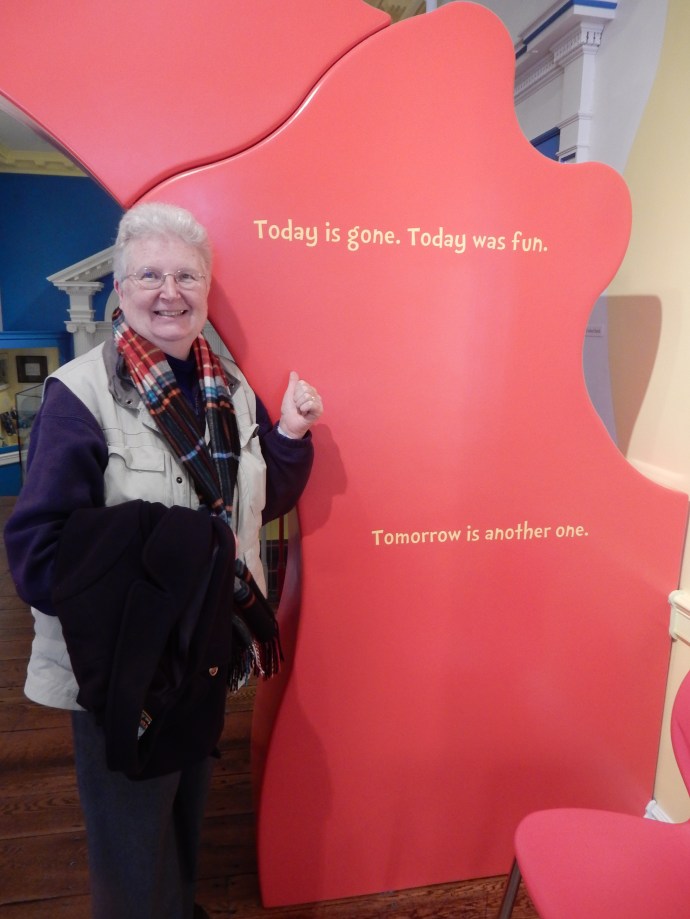
Chris and Dr. Seuss message

Ed and Chris
March 6, 2018

Categories: road trip, travel | Tags: , , , , , , , , , , , | Leave a comment

Blog at WordPress.com.