road trip

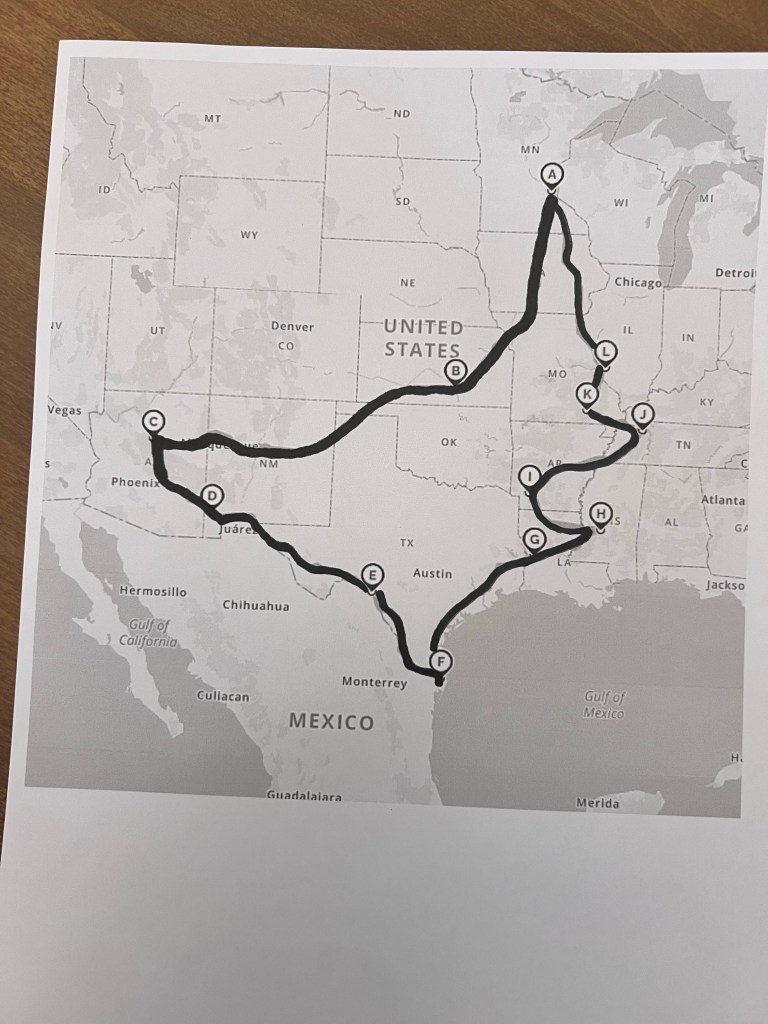
2023 Trip 8: Flag, South Texas and Mississippi River: December 18

Bethany, Missouri, December 18, 2023 Traveling to a Southwest Christmas

Hi family, When we retired and starting traveling in 2013, Ed would do blog posts to let family and friends know about our travels as well as to be a journal for us. We are spending Christmas this year with my brother Lucien and his wife Joyce and are driving down starting today. My sister Kathy is flying down later in the week to join us. Ed said that he would not be doing a blog until our return trip since he we are “just driving” down to Flagstaff. I said something like…the journey is the destination and I would blog some stuff…so here goes. Chris

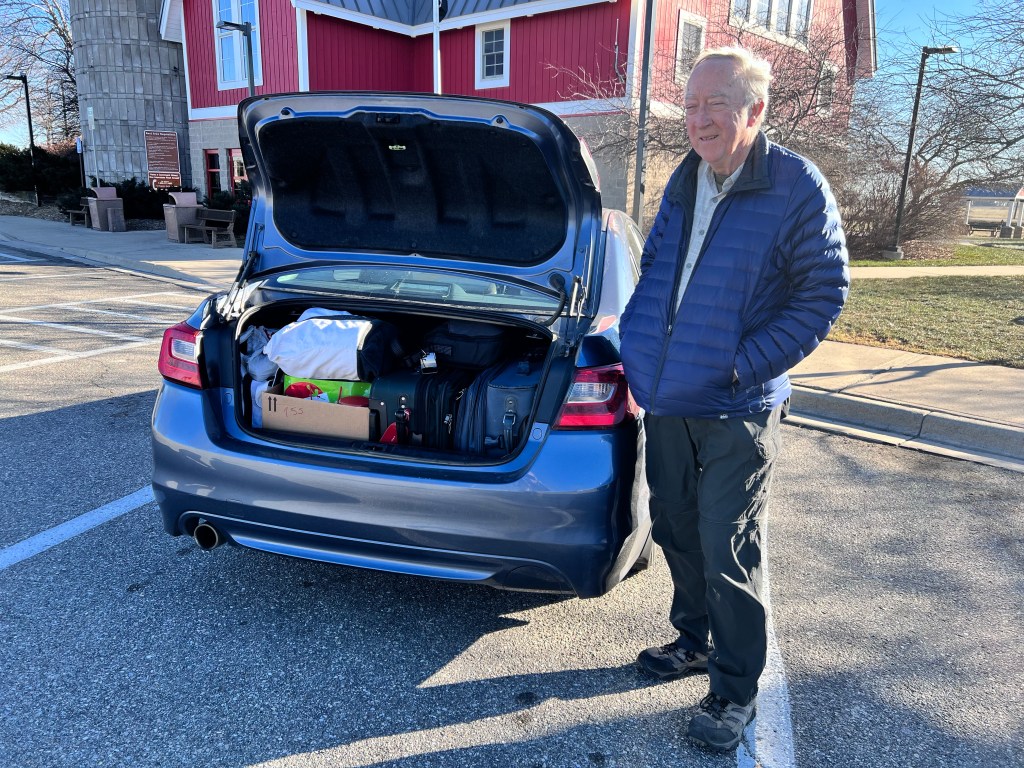
It’s Christmas, so we have lots of stuff to take down which Ed has successfully put in the trunk.

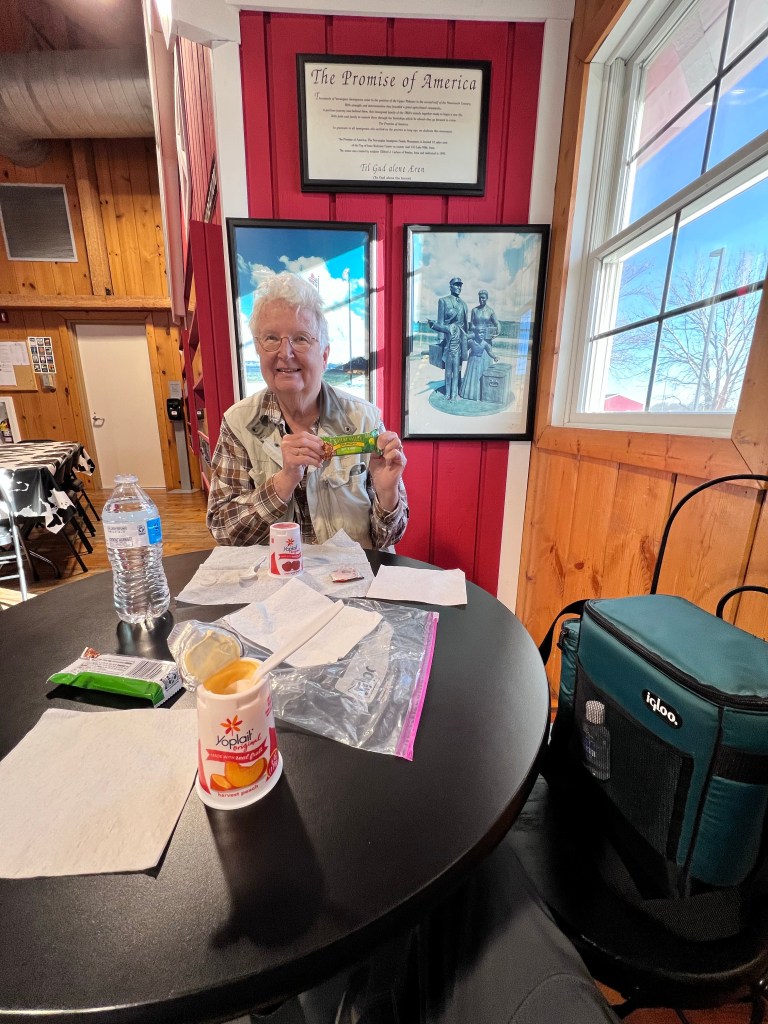
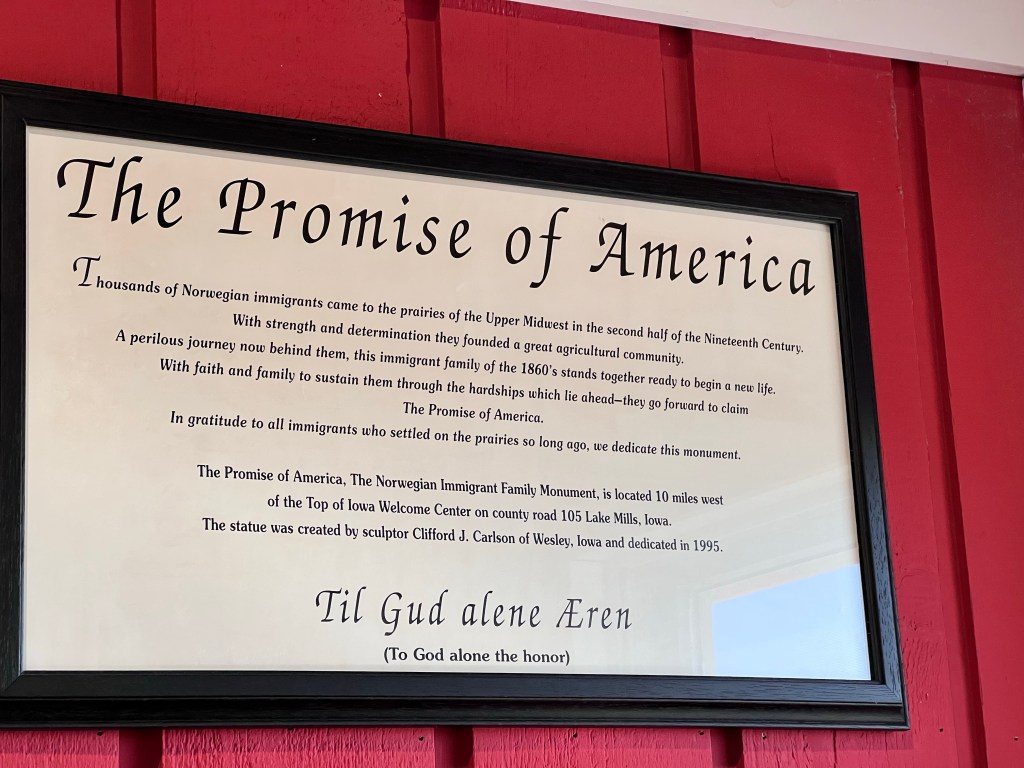
We stopped for lunch of our usual yogurt and granola bars at the first rest/tourist info stop in Iowa. The sign above me celebrates immigrants. Many today including evil Trump have forgotten that our ancestors for most Americans were immigrants.

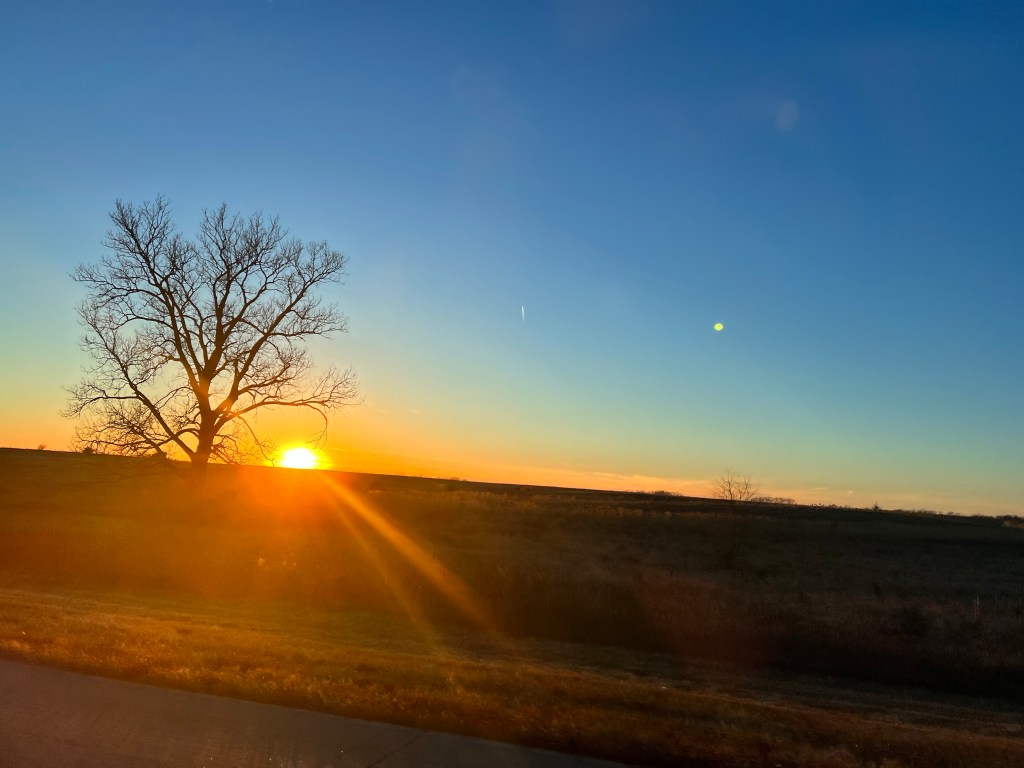
Sun was setting as we drove 35 thru Iowa; we gassed up the car right before entering Missouri.

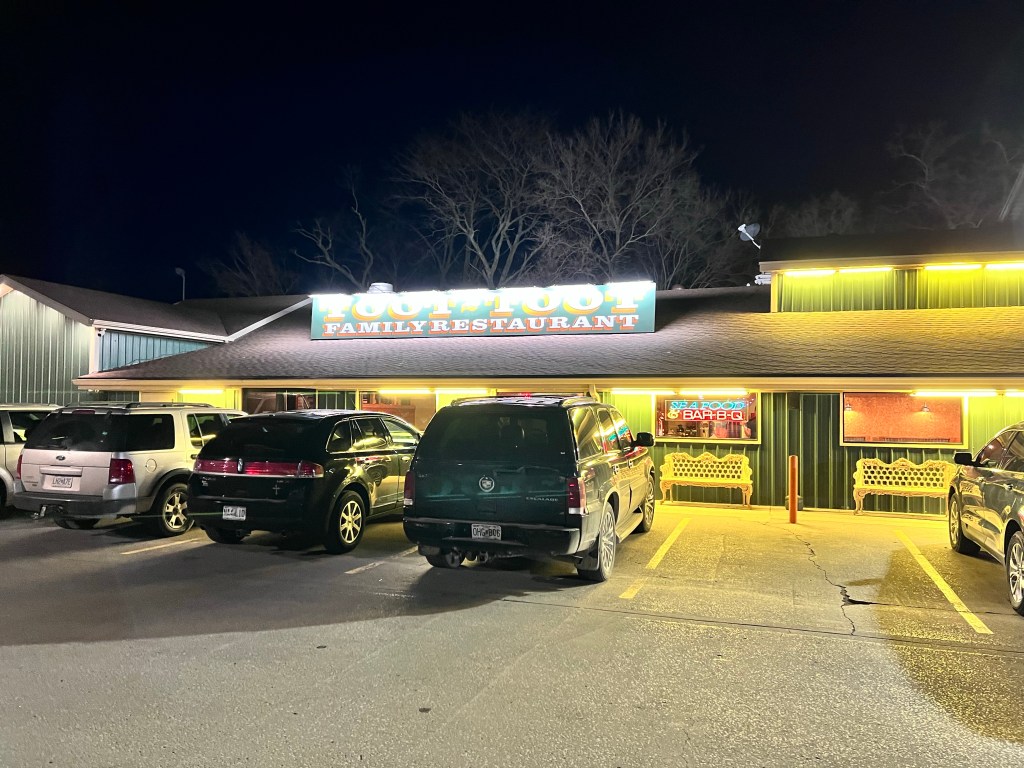
During one of their trips to visit us this year, Lucien and Joyce stopped in Bethany, Missouri for a meal at Toot Toot Restaurant; operating since 1984. We had dinner tonight there from their yummy buffet.

On to Kansas tomorrow.

Chris and Ed

Categories: road trip, travel | Tags: , , | 1 Comment

2023 Trip 6: Crossing the Border to Winnipeg, July 12-13

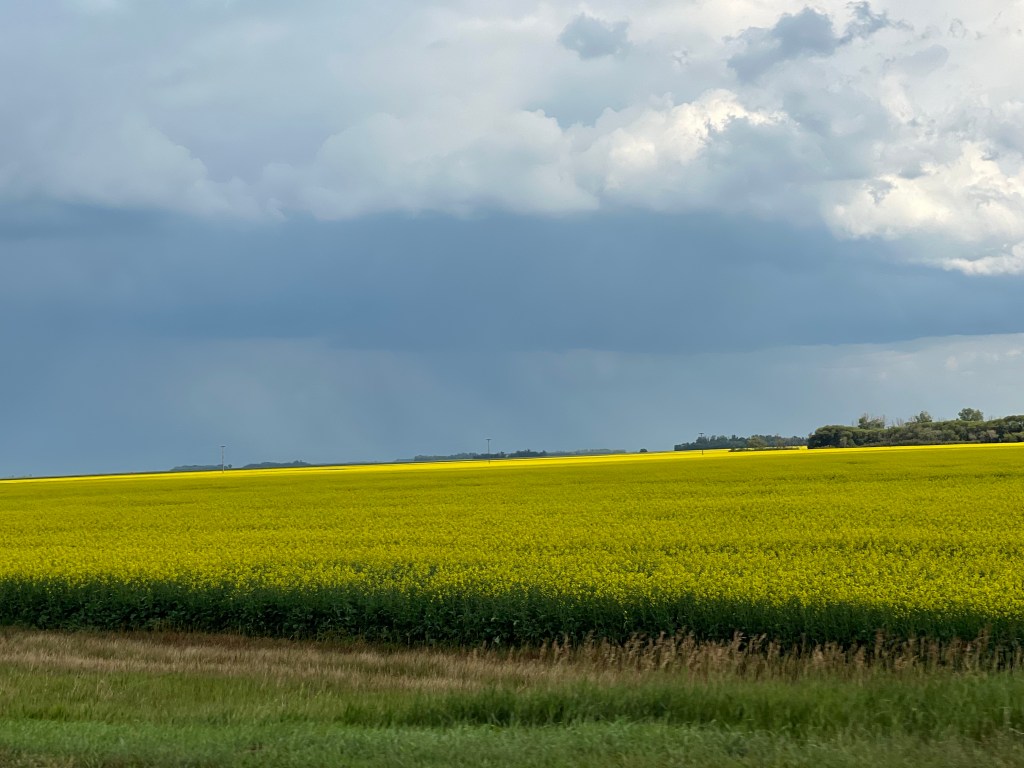
Canola flowering in North Dakota

Winnipeg, Manitoba July 13,2023

In 2020 I turned 70 and was planning to celebrate my July birthday with a trip to Winnipeg. As we all know, Covid happened and the planned trip never materialized. Three years later I am no longer 70 but the birthday celebration is under way.

Out trip began in a roundabout way. The International Peace Garden is on the North Dakota-Manitoba border but about 130 miles west of the route we would take from St. Paul to Winnipeg. We had frequently thought about visiting it but it was always too far out of the way to justify the effort to visit. This year we made the accommodation by leaving half a day earlier than we had planned for Winnipeg. The extra hours would allow us to make it to the peace garden without sacrificing our Winnipeg time.

We spent Wednesday night in Grand Forks ND and Thursday morning left for the International Peace Garden. Of course, we didn’t go directly to the garden, we made a stop at White Horse Hill National Game Preserve, a sort of offshoot of a National Wildlife Refuge. Our drive on U.S. 2 took us through an agricultural area with topography ranging from flat to rolling hills with numerous “prairie potholes”, small lakes, ponds, and marshes that fill depressions left over from glacial action.

Highway rest area along U.S. 2 in North Dakota

A particularly pleasant view is of the crop of canola which is hitting its peak blooming period. This time of summer is when canola flowers before the seeds are produced. The yellow canola blooms are a bright contrast to the green of many other crops. The yellow blooms continued when we journeyed into Canada as the Canadian prairies produce more canola than the U. S. North Dakota is the leading canola producer among U. S. states.

White Horse Hill is on the south side of Devil’s Lake, North Dakota’s largest natural lake. Devil’s Lake is interesting. Like the Great Salt Lake, it normally has no natural outlet. The size and depth of Devil’s Lake can vary greatly. Unlike southwestern U.S., ND has seen an increase in precipitation in the last fifty years and the lake has expanded, forcing the relocation of hundreds of homes.

White Horse Hill is at a higher elevation and not threatened by the expanding lake. Unfortunately for us, our drive through the preserve only provided glimpses of prairie dogs, none of the native elk or bison were visible.

White Horse Hill National Game Preserve

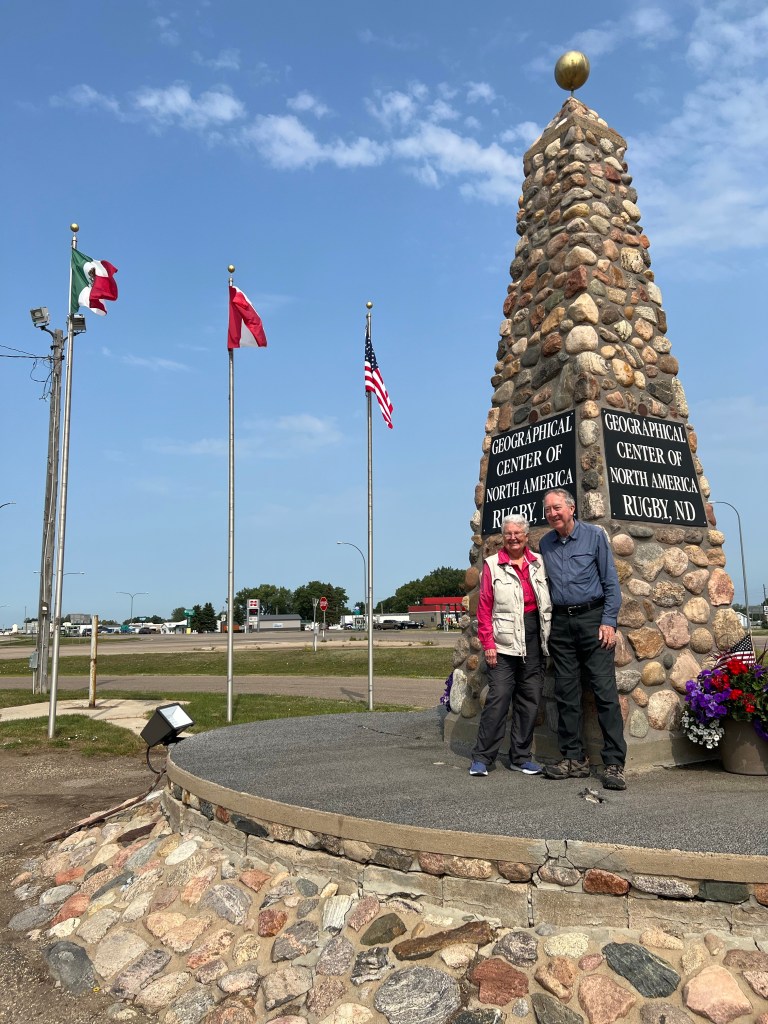
Our next stop was Rugby, North Dakota which advertises itself as the geographical center of North America. This claim goes back to the 1930s and a calculation by a National Geographic staffer.Two later efforts moved the geographic center of North America to other North Dakota cities but Rugby has longevity and better marketing behind its claim. The marker is but a stone monument in the parking lot of a Mexican restaurant but there were two other groups of people taking pictures while we were there.

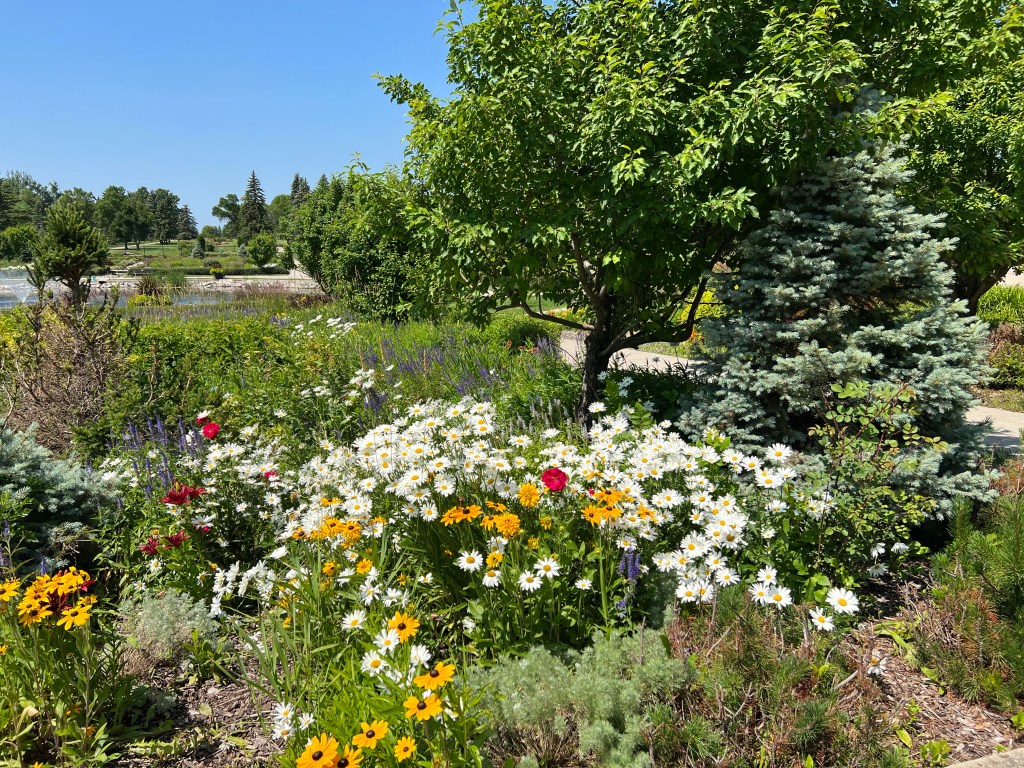
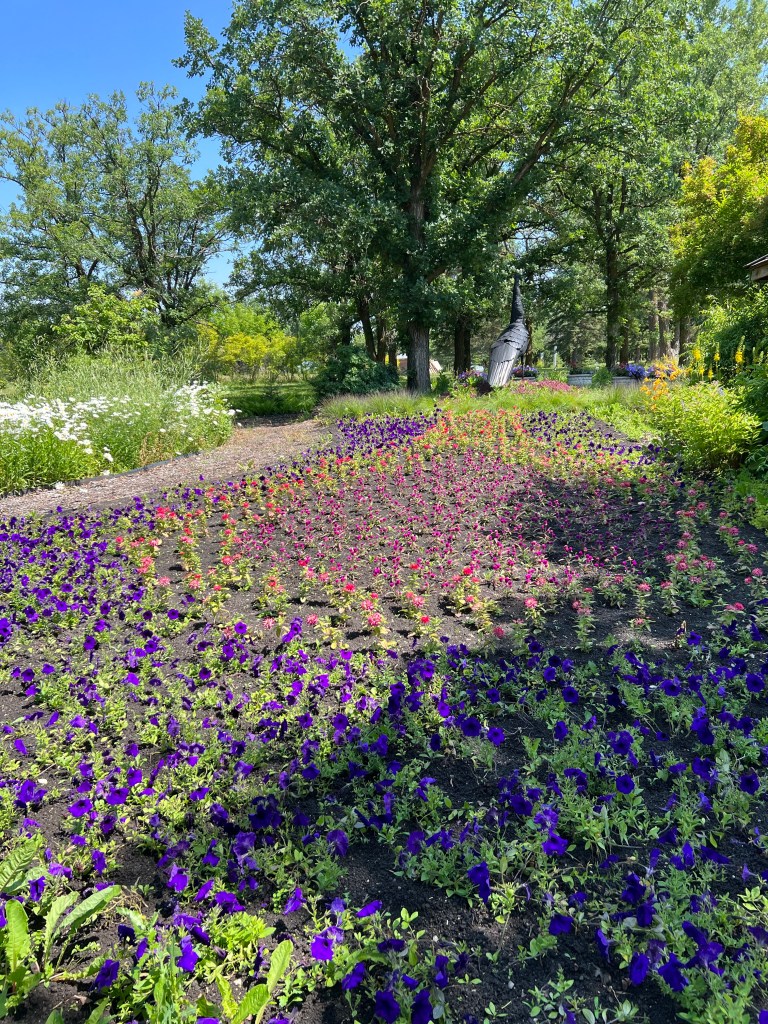
From Rugby it is just a forty minute drive north to the border and the International Peace Garden (IPG). The IPG opened in 1932 as a symbol of peace and international collaboration. We had a picnic lunch here and then spent 90 minutes exploring the formal gardens. Sculptures, fountains, flowering plants, green plants, trees, and terraced hillsides made for a relaxing and colorful interlude. As a bonus, our membership to the Minnesota Arboretum waived the $25 admission fee.

International Peace Garden

Zipping through the border checkpoint and simple questions, we continued our drive through agricultural Manitoba on our way to Winnipeg. The IPG is located in the Turtle Mountains which are more like tall hills but in contrast to the surrounding flat plains, one can forgive the people of Manitoba and North Dakota in calling these mountains.

Winnipeg bursts upon you as urban sprawl is contained and you go from farmland directly to city. We are staying at a Homewood Suites outside of downtown Winnipeg. Tomorrow we begin our touring.

More canola
Turtle Mountain mascot

Ed and Chris, Winnipeg, Manitoba July 14

Categories: road trip, travel | Tags: , , , , | Leave a comment

2023 Trip 2: San Francisco: March 3-5

Burlingame, CA March 5

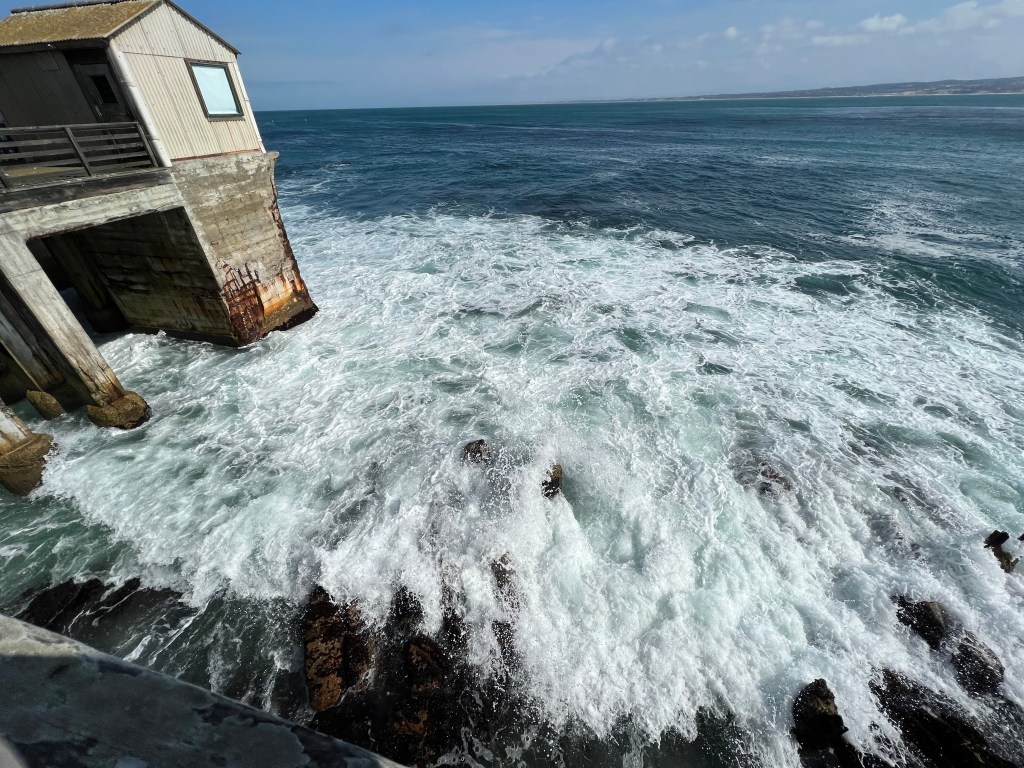
Tomorrow we fly home from San Francisco Airport. This last blog will cover the Monterey Peninsula area, from noon Friday to Sunday afternoon (today). We left the Calla lilies and came north up the coast to Monterey. Not for us the 17 mile drive or Monterey Aquarium. Instead we went to discover the history of the area.

Our learning started at the Monterey Historical Park. This is the area of old Monterey, where California began its transition from being part of Mexico to the 31st American state. In 1542 Spanish explorers first discovered Monterey Bay, a large sheltered bay capable of receiving large ships. It was not until 1770 that settlers, military, and missionaries arrived to establish up a more permanent settlement. In 1776 Spain named Monterey the capital of upper and lower California. In 1822, control shifted from Spain to Mexico after Mexico won its independence from Spain. From this point, the population, trading, and development of ranches increased.

The Custom House in Monterey

In 1827, the old Custom House was built by Mexico to collect tariffs on the shipping of goods into and out of California. This building still stands today. The warehouse for the Custom house is used as a museum whose exhibits we viewed. The Custom House is the oldest surviving government building in California. The exhibits helped us understand the history of this area, from the earliest Native Americans living here to the statehood period. An excellent docent tour Friday afternoon deepened our understanding and knowledge.

In 1846, war between the U.S. and Mexico broke out and most of the fighting occurred in Texas and Mexico. On July 7, 1846 U.S. Commodore John Drake Sloat landed in Monterey and with marines and sailors seized Monterey and proclaimed California to be part of the United States. When the war was over, with the Treaty of Guadalupe Hidalgo signed on Feb. 2, 1848, this large and poorly defined area of “California” became part of the U.S. Just in time for the U.S. Gold was discovered in California on January 24, 1848. News of this did not reach the U.S. or Mexico until after the treaty was signed. Would not have life been different for the U.S. if Mexico retained not only California but those parts of Nevada, Utah, Arizona, New Mexico, Colorado and Wyoming that became part of the U.S. also?

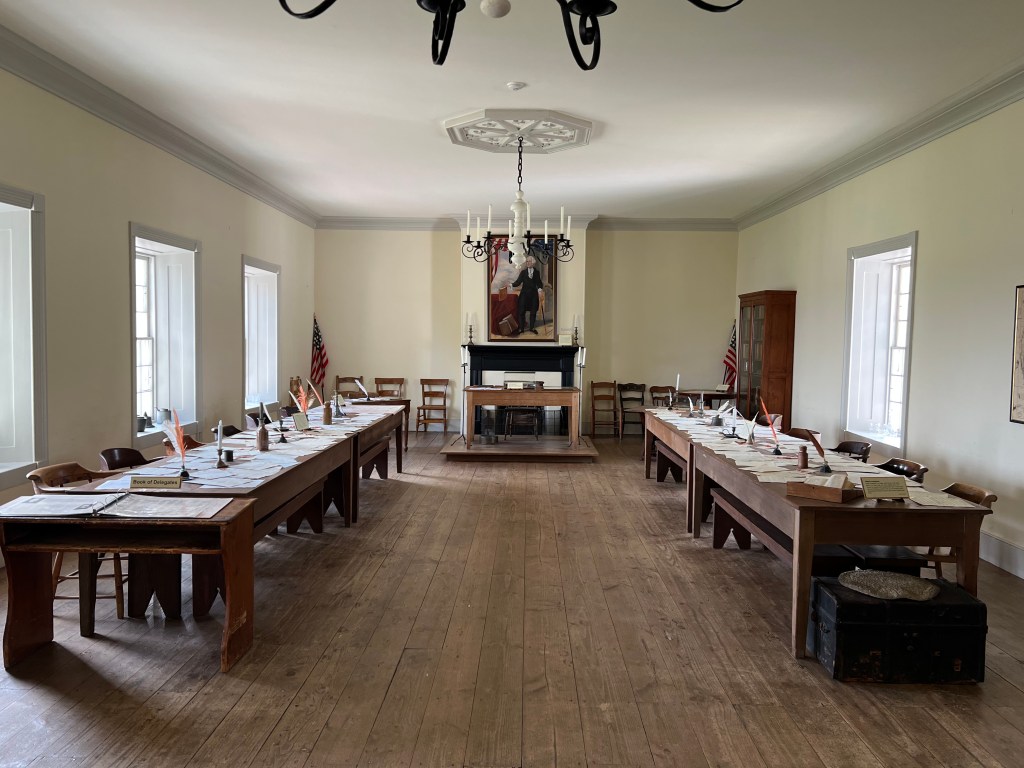
The inside of Colton Hall where the California Constitution was debated

In 1849 the first American built government building was constructed. Colton Hall, still standing, was built “out of the slender proceeds of town lots, labor of convicts, taxes on liquor shops and fines on gamblers.” This is where the constitution of California was debated and approved. Note that: California went directly from a province of Mexico to a U.S. state without first being a territory, has a constitution that outlawed slavery and guaranteed married women could keep the property they had before they got married, and the first capital was in San Jose. Monterey never was the capital of California.

The docent tour started at the Custom House and the docent explained the history of Monterey. We walked among sections of the historic area; seeing portions of a sidewalk constructed from whale bone, and two other buildings dating from the mid to late 1800s. We saw another example of papel picado, a Mexican folk art which cuts elaborate designs into tissue paper. Our docent explained different designs and colors would be used to celebrate various holidays and celebrations. Earlier we had seen them in the bar of the hotel at San Juan Bautista.

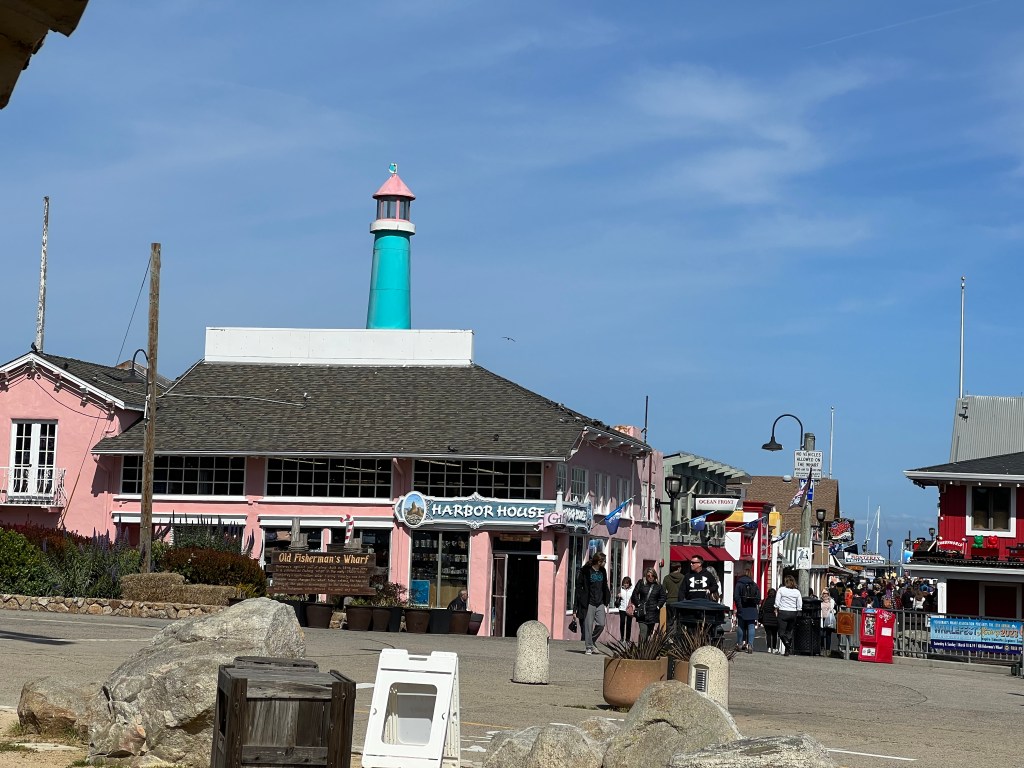
Fisherman’s Wharf

Lunch/dinner was at a fancy restaurant along Fishermans Wharf. The clam chowder was excellent.

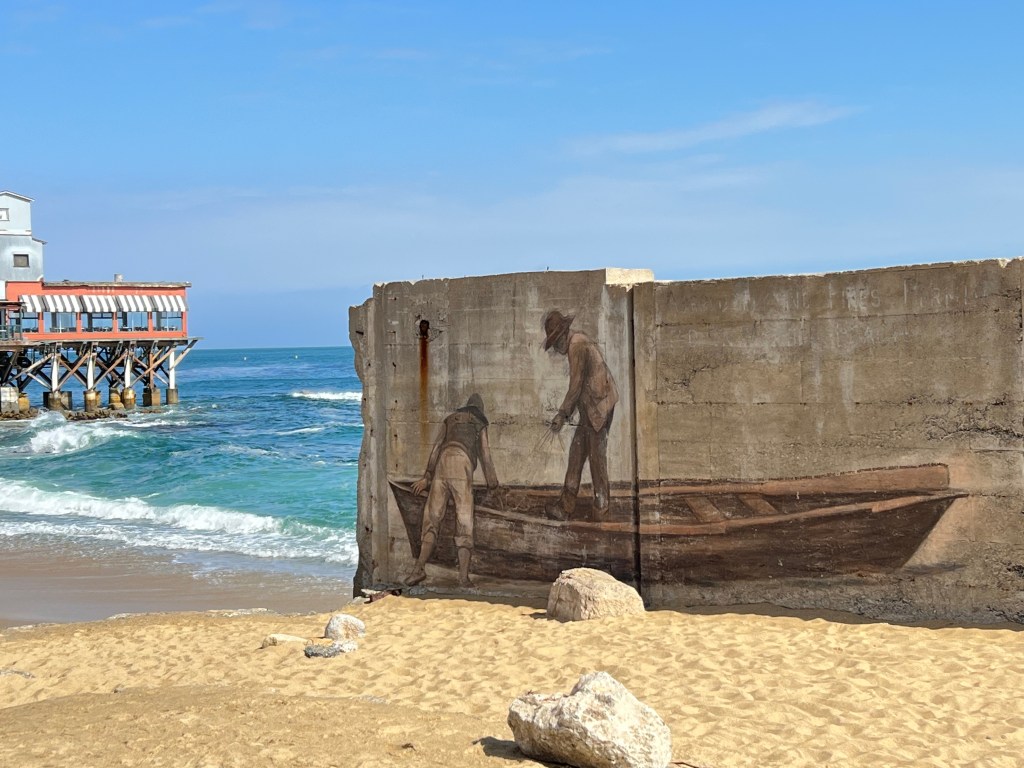
Saturday we visited Cannery Row, the area of Monterey where fishing, particularly for sardines, was a huge business from about 1915 to 1955 when the sardines were either overfished or just at natural down cycle in their existence. Cannery Row was made famous by John Steinbeck’s novel of the same name. We wandered around the Cannery Row area, mainly tourist shops except for the Monterey Aquarium. After that, we did our tour of Coltan Hall and old Monterey Jail, finishing up as the afternoon rains kicked in.

San Carlos Cathedral

Church was at San Carlos Cathedral, originally the chapel for the Monterey Presidio. It is the second smallest cathedral in the U.S. (after the one in St. Louis.) and the oldest continually operating parish in California. Dinner was at a very popular Italian restaurant downtown, we were lucky church was at 4 PM and we arrived at the restaurant before the hordes.

Sunday we had one destination in mind. The National Steinbeck Center is in Salinas, just 15 minutes from Monterey. First though, Chris had us stop and walk over the dunes to have a last look at the Pacific Ocean. Then we drove over to Salinas. In case you have a good memory, yes we spent the night here earlier this week but the Steinbeck Center was not open at that time. I had not realized that John Steinbeck, the author, grew up in Salinas. Towns and locales we have been visiting or driving through the last few days are the sites of many of his books. His life here gave him a perspective on working people and their experiences, thus his books are based on people he knew and their lives. Not for him the well off life in the books of Sinclair Lewis for instance. Some of his novels include: Of Mice and Men, Grapes of Wrath, East of Eden, Cannery Row, and Tortilla Flat. Steinbeck won one Pulitzer Prize and one Nobel Prize.

The National Steinbeck Center is a museum devoted to his life and his works. We spent two and a half hours viewing videos, listening to recordings of actors reading his works, viewing the exhibits, realizing that during WWII he experienced the war firsthand and wrote about it for wide spread circulation, and in general, re-acquainting ourselves with his literary works and impact. It was time well spent and a fitting end to our time in the south bay of San Francisco.

The camper used by John Steinbeck when traveling around the U.S. gathering insights for his book “Travels with Charley” The truck was named after Don Quixote’s horse-Rocinante.

Ed and Chris Burlingame CA-just south of the San Francisco airport March 5

Categories: road trip, travel | Tags: , , , , , , | 1 Comment

2019 Trip 6: Voyageurs National Park: Wrap-Up

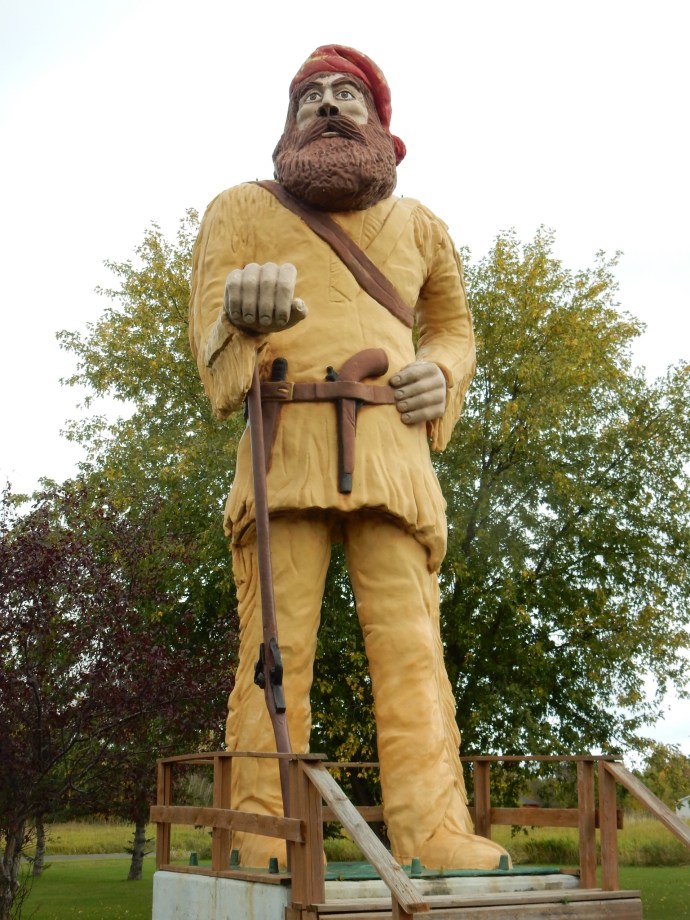
Voyageur statue at Ranier MN between International Falls and Rainy Lake Visitor Center

International Falls, MN Friday Oct. 25

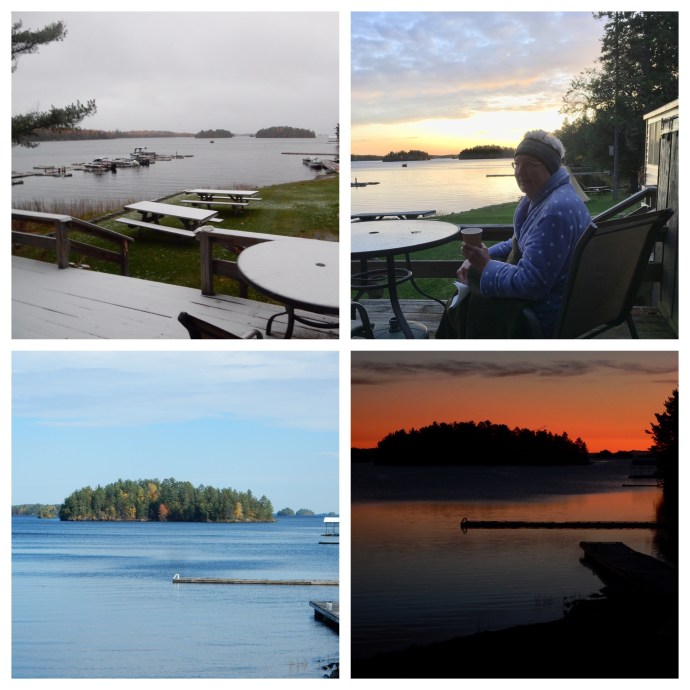
Morning views from our deck at Thunderbird Lodge in International Falls, MN

Tonight is our last night at the Thunderbird Lodge and in International Falls. Our administrative tasks for the headquarters at Voyageurs National Park have been completed. A little wrapup seemed in order to summarize the almost 4 weeks we have spent here.

Thunderbird Lodge, International Falls MN

We would definitely stay at the Thunderbird Lodge again. Our room was spacious with a great view out onto the lake. The staff was friendly, informative, and helpful. The food in the restaurant was delicious whether that was breakfast, lunch, or dinner. There had been recent renovations at least to our room and we believe others and we could see renovations being made to several of the cabins outside the main lodge building. Boat and fishing guides were available had the weather been cooperative.

Our car gave us some difficulties which have been resolved with a new battery. Nothing too dramatic, however. The difficulties provided an opportunity to meet people and enjoy small town connections. We have managed to dodge the almost constant presence of deer foraging along the roadside, particularly at this eastern area away from International Falls and closer to the National Park.

Tamarack trees at Lake Bemidji State Park

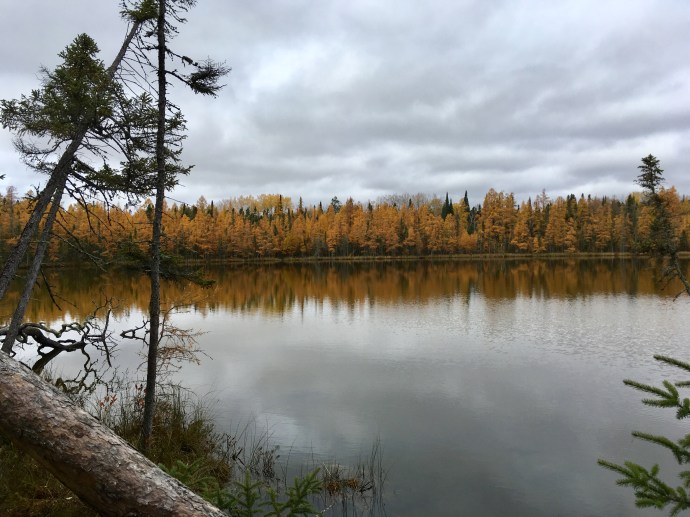
For plant and animal viewing, we were able to observe our first experience with tamarack trees turning yellow and dropping their needles. Fall colors were good enough to be enjoyable. Our first observations of a male deer with antlers, a family of river otters, and grouse occurred on this trip.

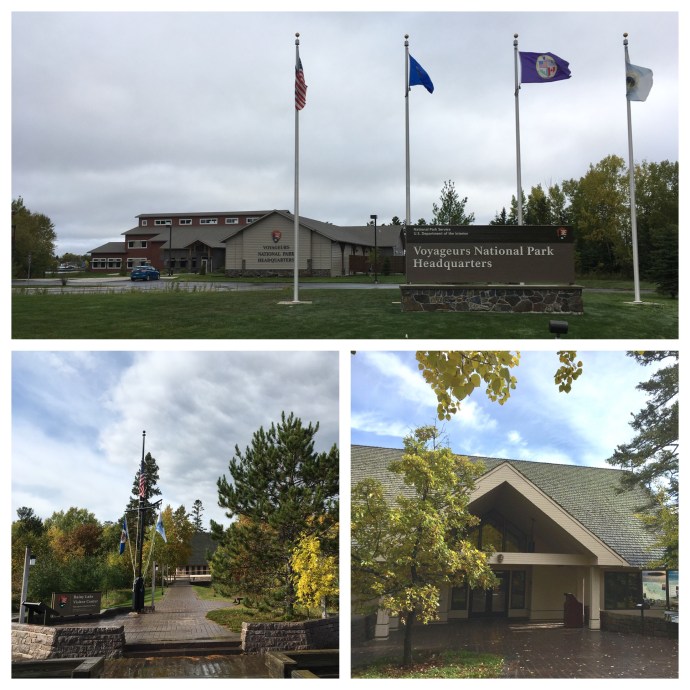
Voyageurs National Park headquarters (top) and Rainy Lake Visitor Center (bottom)

Our four weeks of volunteering with Voyageurs National Park was both a positive learning adventure and a rewarding experience helping visitors to the park. Our knowledge of the north woods, the history of northern Minnesota and the voyageurs’ experience has been enhanced immensely. Our time here at the park meant that numerous visitors were able to be assisted since the interpretive staff was shorthanded and would not have been able to staff the Rainy Lake Visitor Center without us. The visitors at Voyageurs have always expressed their thanks that we were here for them.

The experience for us has been so positive that we are considering the possibility of returning next fall. We are not sure we would want to commit for three months like many parks request of their summer volunteers. In most parks, volunteers only get housing if they stay for three months and work 32 hours per week. We decided this volunteering experience at Voyageurs might be valuable enough that we would pay for our own housing while volunteering in lieu of a fall travel experience. For 2020, we might stretch our time to six weeks and see what housing options can be arranged.

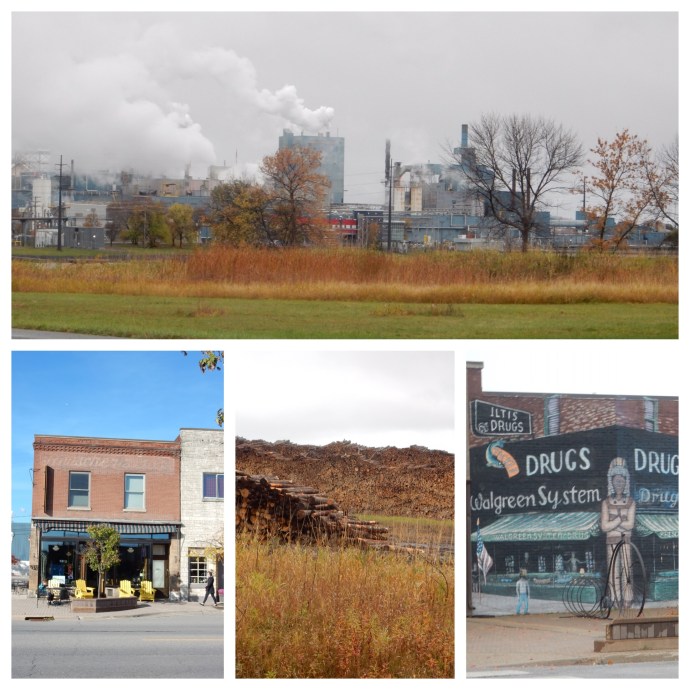
Images from International Falls, MN

When we have driven around the country, Chris has frequently stated she would not like to live in a small town. That may still be true but the small-town experience here in International Falls has been fun for the time in which we have stayed here. People have been constantly friendly and reaching out to us before we could reach out to them. One observes the constant interaction of friends and neighbors in the stores. I am sure there are difficulties and stressors which we did not observe but still, all in all, the small-town atmosphere was welcoming.

We had not previously reported that yesterday we had a 90 minute tour of the library and museum located in the headquarters building of Voyageurs National Park. Most of us think of grandiose open spaces when the idea of U.S. National Parks comes up. Yet a major component of the park system is to preserve and educate about historical and cultural treasures in the country. Sometimes that occurs at a park site devoted to history, such as Gettysburg National Battlefield. Yet most parks have that obligation as part of their mission.

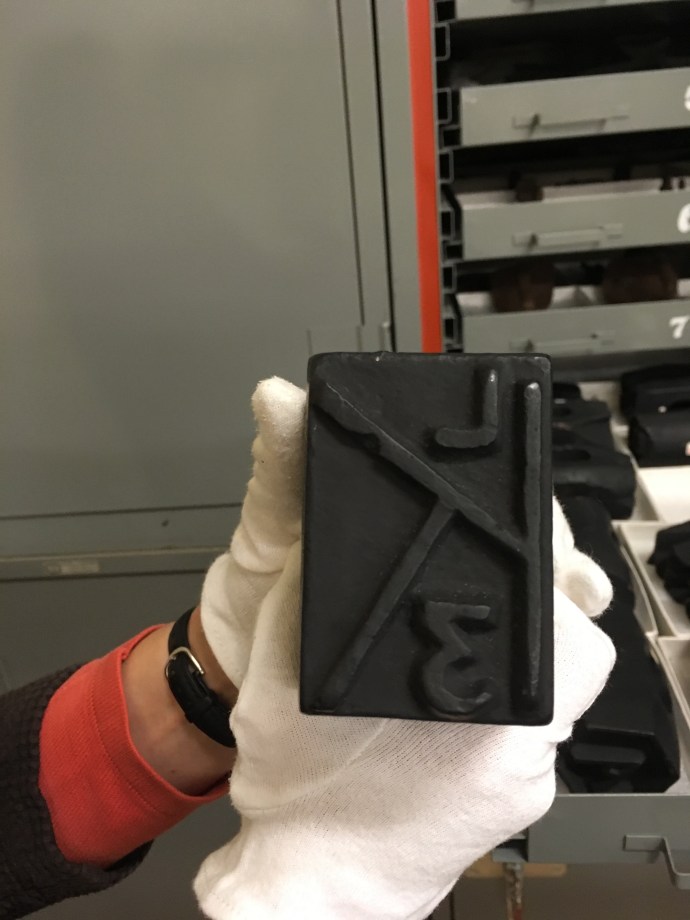
Lumber company brands archived at Voyageurs National Park

Here at Voyageurs, the museum and library house oral histories of early settlers; artifacts from the Ojibwe culture and its predecessors, lumbering tools, mining machinery, etc. One item that was particularly notable to me was the drawer of 25 or so lumber company markers used to brand the company logo to the end of a felled log. Like cattle brands, the logos indicated which lumber company would receive payment when the log was sawed at one of several saw mills in Minnesota. There was also a cut piece from the end of a log with the logo clearly visible. I talk about this concept when volunteering with Mississippi National River and Recreation Area.

Our grandiose plans to visit Winnipeg and to hike in numerous state parks had to be revised, primarily due to the weather on our off days. In its place, we found out about entirely new experiences with the NOvA Laboratory and the Koochiching County museum. Our museum tour at the headquarters of the Voyageurs National Park and the presentation about the hybrid invasive cattails in the park were unexpected treasures.

Over the years, Chris and I said we make a great married couple but really did not think we could work together. These last four weeks have disapproved that concern. We backed each other up, helped cover gaps in knowledge, and supported each other when one was uncertain of the task or procedures to be followed. And we co-existed for four weeks in a space 1/3 the size of our condo.

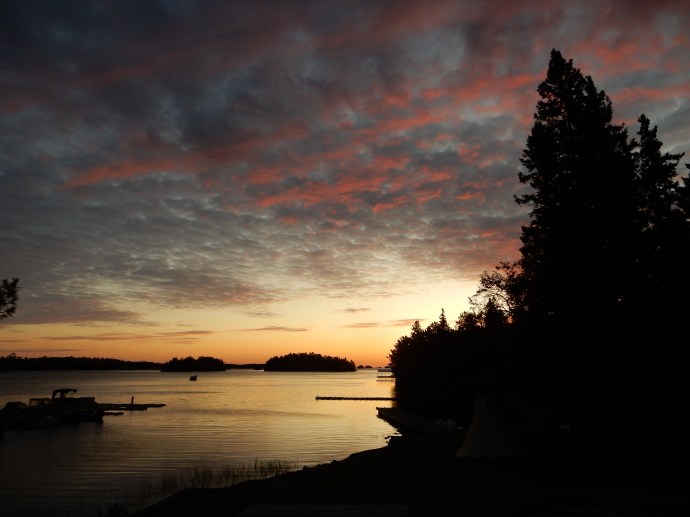
Sunset from our deck October 25, 2019

Ed and Chris. International Falls MN 8:15 PM

Categories: road trip, travel | Tags: , , , | 1 Comment

2019 Trip 6: Voyageurs National Park: Oct. 17-21

Taken outside the Rainy Lake Visitor Center of Voyageurs National Park on Oct. 6, 13, and 20.

International Falls, MN. Monday Oct. 21

Sunday was the last day of our stint staffing the Rainy Lake Visitor Center of Voyageurs National Park. We were sad to leave it; our presence allowed the visitor center to be open for the long MEA weekend in Minnesota when schools are closed for two days and families can enjoy a long weekend. The visitors had great weather and enjoyed their time here.

Last Thursday night, the non-profit arm of Voyageurs National Park sponsored a talk in Ranier, a small town next to International Falls. The topic was cattails. May sound simple and basic but the talk symbolized the behind the scenes work done by national parks around the country. Let me give a very brief summary as I understood it.

https://www.voyageurs.org/news/2017/06/21/restoring-native-plants-voyageurs. Link to more detailed report on the cattail study.

A portion of Black Bay where one of the cattail efforts is being undertaken

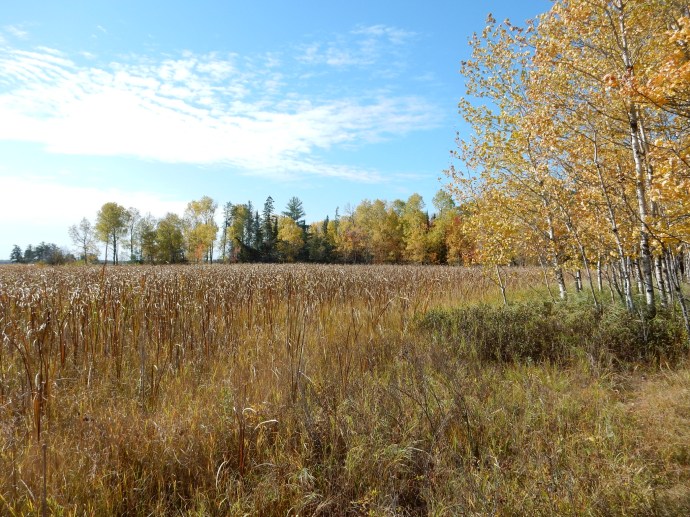
Native cattails have been here for millennia. Invasive cattails probably came over on the ballasts of European based ships. The two have interacted and created a hybrid that is choking out native habitat, negatively impacting the plants (like wild rice), fish, animals and birds that call this marvelous place home. Mats of hybrid cattails can break from their roots and float around the lakes, affecting local residents and park visitors by clogging channels and docking areas. Voyageurs is breaking new ground in trying to determine how to eliminate the hybrid cattail, encourage the native cattail, and restore as much as possible the original interaction between lake, plants, fish, animals and birds. No one else has done this yet, so original research and methods are being used and studied to reach their goal.

A map of the range of the wolf packs being studied by the Voyageurs National Park Wolf Project.

The talk was well-presented and informative. We met some previous acquaintances from our brief time up here and met new people. Voyageurs is to be commended for this work. If you were not aware, Voyageurs also is conducting a long term wolf study. They have produced some fascinating videos of wolves in the wild, including one of wolves fishing! See http://www.voyageurswolfproject.org or follow them on Facebook. Somehow I doubt the cattail project will stimulate as much video interest but cattail control is still important for long term impacts on the park.

The Rainy River and Ontario on the far side of the river

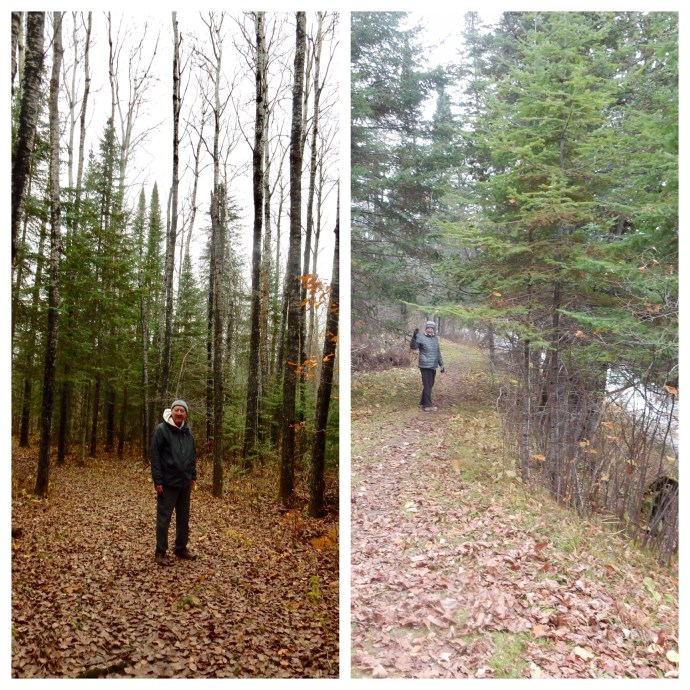
Scenes along the trail at Franz Jevne State Park

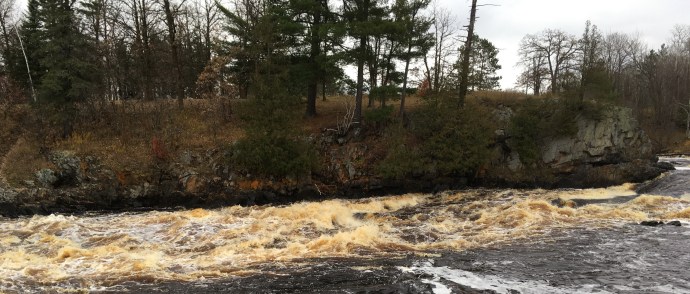
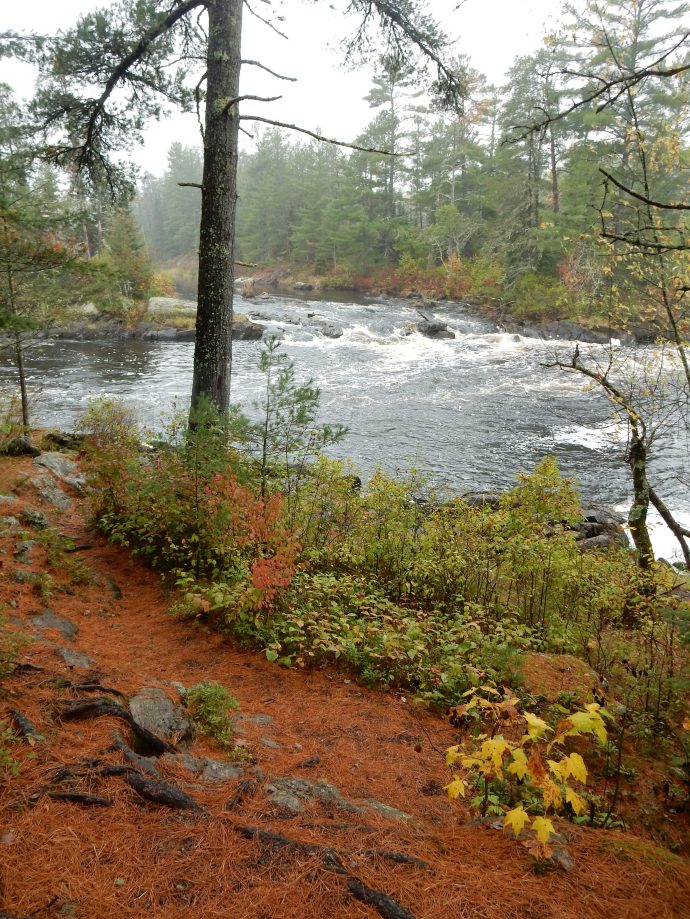
Today was our sole day off this week, tomorrow we will begin work on administrative projects for the park. We took advantage of the weather forecast and made a hiking trip to Franz Jevne State Park before the rains arrived. Franz Jevne is only 118 acres but it occupies a beautiful site along the Rainy River, 40 miles west of International Falls. We hiked along the river, which is the border between Ontario and Minnesota. The woods were quiet but the river was running high. We saw several bald eagle nests high in the trees.

The Rapid River just east of Baudette MN

To return to International Falls, we continued driving west to Baudette MN where we crossed the border into Canada. Our trip back east to International Falls was uneventful but it gave us the opportunity to at least say we visited Canada once again. We contemplated shopping in Fort Frances, across the border from International Falls, but did not see any stores that piqued our curiosity.

We wrapped up the night doing laundry once again. The small town vibe continues as the only other person in the laundromat asked us if we were from International Falls since we did not look familiar. A 30 minute discussion followed.

Ed and Chris hiking at Franz Jevne State Park

Ed and Chris. Monday October 21. 9:15 PM

Categories: road trip, travel | Tags: , , , , , , , | 1 Comment

2019 Trip 6: Voyageurs National Park: Oct. 15-16

Tamarack trees on the drive to Bemidji MN

International Falls, MN. Thursday October 17

Two days off and once again the weather has not been advantageous. On the positive side, it should be relatively nice this weekend for visitors and our car’s new battery seems to be working fine.

Tuesday was a true experience although part of the day is still beyond my comprehension. We started off visiting NOvA Far Detector Lab. Say what??? Well, and I quote here: “The NOvA Experiment is a liquid scintillator detector experiment searching for electron neutrino appearance in the NuMI muon neutrino and antineutrino beam. A 300 ton near detector is set up at Fermilab. 500 miles north, the 14,000 ton far detector at NOvA Far Detector Lab is operated by the University of Minnesota at Ash River, Minnesota.” If that does not explain it for you, I am not sure what will. But I will give my short description.

Did you learn this in physics?

Neutrinos are extremely small particles, way smaller than atoms. They do not have electric charge. Neutrinos change into different types. We know very little about them even though supposedly they are the most common particle in the universe. Knowing more about them will help us better understand the universe and matter. A previous experiment ending at Soudan MN tried to measure neutrinos sent in a straight line. This experiment tried to measure neutrinos that diverge from the straight line.

NOvA Far Detector Lab, Ash River MN

Ash River, about 40 miles south of International Falls, was chosen due to its distance from Fermilab in the Chicago area and the fact it has just about the last infrastructure before the Canadian border. It was stunning to drive through forests with few buildings to come upon this massive building. Once inside, the amazement continues. The largest free standing PVC structure in the world is inside, crammed with 10,752 extruded PVC modules. Inside the modules are fiber cables and an oil that reacts with ionizing radiation. When a neutrino hits the module, a series of electronics attached to the fibers records the important data. (Don’t ask me what that data is.)

The site offers tours during the summer. We called and asked for a tour even though it would be just the two of us. Request granted. The building and complex took two years to build, with the first neutrinos detected in 2013. The experiment is due to continue until 2025. A new experiment designed to build on the information discovered here is set to begin in 2021 in Lead SD. For further understanding of NOvA, try watching videos on YouTube.

We left Ash River and had lunch at the Coffee Landing in International Falls. Coffee Landing roasts its own coffee and serves meals until 5 PM. Chris and I both had a breakfast meal which was quite tasty. Coffee Landing is just a block from two museums sharing one space. The Koochiching County Historical Museum relates the history of the area from its earliest formation. The museum is open daily and has wonderful exhibits for a small town. Even the display cases have been hand crafted locally based on the curator’s design. We learned more about the minor gold rush at Rainy Lake, lumbering, and the development of a paper milling empire that continues in a reduced form today.

Painting and model of Virginia, luxury cruiser on Rainy Lake

Lunch baskets from early 1900s on top, Ojibwe baskets on bottom

A few of the notable exhibits included: models of boats used on the lakes from steamers to personal luxury boats to commercial fishing boats; vintage snowmobiles; examples of baskets from the Ojibwe culture and from paper mill lunch boxes. The curator told us a story about the paper mill lunch boxes. The operators of the paper making machines could not leave the machines during their shift. The company sent a person to the operator’s home where the wife would put the husbands’s lunch in a lunch basket woven from birch, etc. The husband would bring the lunch basket home with him. Soon everyone recognized that carrying a lunch basket symbolized a position of importance and the use of a woven lunch basket spread to most workers. Some local people specialized in the creation of the woven baskets for mill employees.

Bronco in retirement

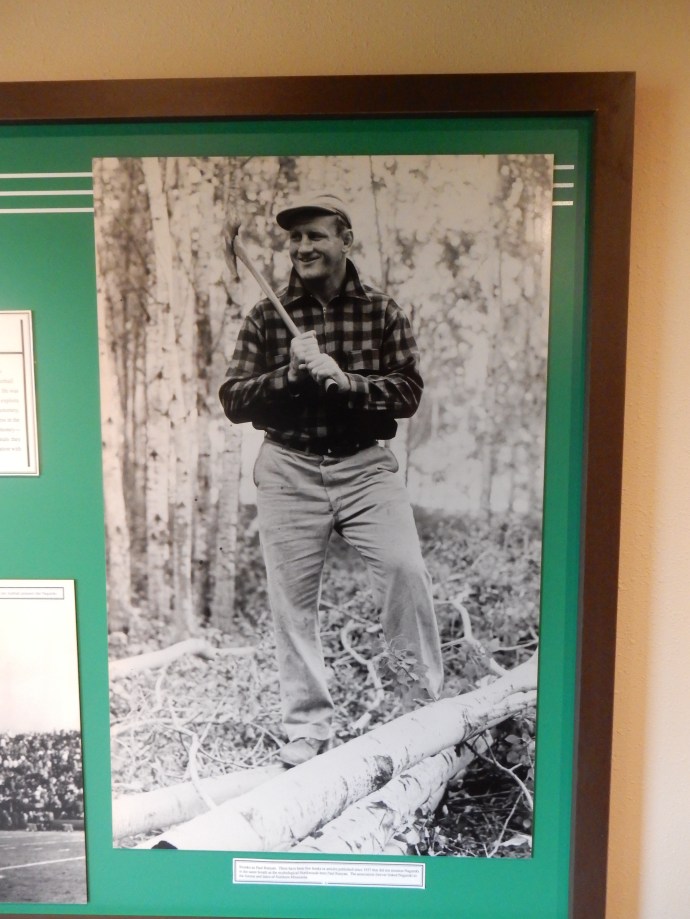
The other half of the museum was devoted to Bronco Nagurski. Young’uns might not recognize his name. He was famous in the 1920s and 1930s as a football player for the Minnesota Gophers and Chicago Bears. Just one indication of his greatness is that he is the only football player named an All American at both defensive and offensive positions in the same year. He was inducted into the Collegiate Hall of Fame and the NFL Hall of Fame in their inaugural years.

Nagurski was born in Canada but came to International Falls at an age five. He married his local high school sweetheart and lived out his life in International Falls after retirement. Like many families up here, relatives still live in the area.

Walking around International Falls after the museum, I was struck by two items. First, the town must have made a commitment several years ago to plant new trees with glorious fall color. Along the Main Street, one observes short trees with brilliant red, orange and yellow colors. Colors not noticed in such abundance on the side streets or in the natural forested areas. Second, like numerous downtowns, probably in the name of civic improvement, the sidewalks are not concrete but some form of brick pavers. As seems inevitable to me, the pavers pop out of plumb, creating tripping hazards or deep ponds of water during rainy periods. Haven’t landscape architects figured this out yet??

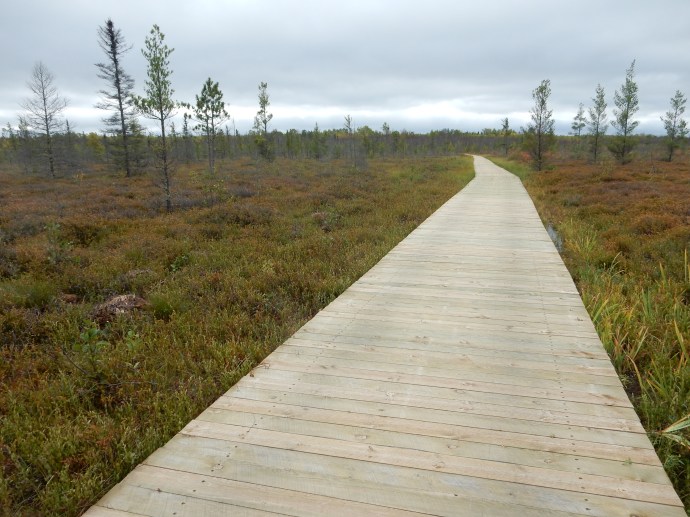
Wednesday we drove the two hours to Bemidji. Our goal was to pick up two prescriptions and visit a state park or two. Early morning rain caused us to reduce our park visitation to just one, Lake Bemidji State Park. Here we hiked, partially out to a bog on a boardwalk. Big Bog State Park nearby has a longer boardwalk through a more varied terrain but that will have to wait for another trip.

Both in the park and along the highway, we finally observed first hand the autumn presentation of tamarack trees. Over the years we have frequently heard tamarack trees described as the only conifers (pine trees) which have needle like leaves that turn yellow in autumn and fall off, leaving the tree looking dead until spring time. Tamaracks are a northern tree type whose range just barely reaches to the Twin Cities. As green conifers, Chris and I would not be able to distinguish them. Right now, the trees have turned yellow and the needles are starting to fall. Soon they will be bare and again unrecognizable to us.

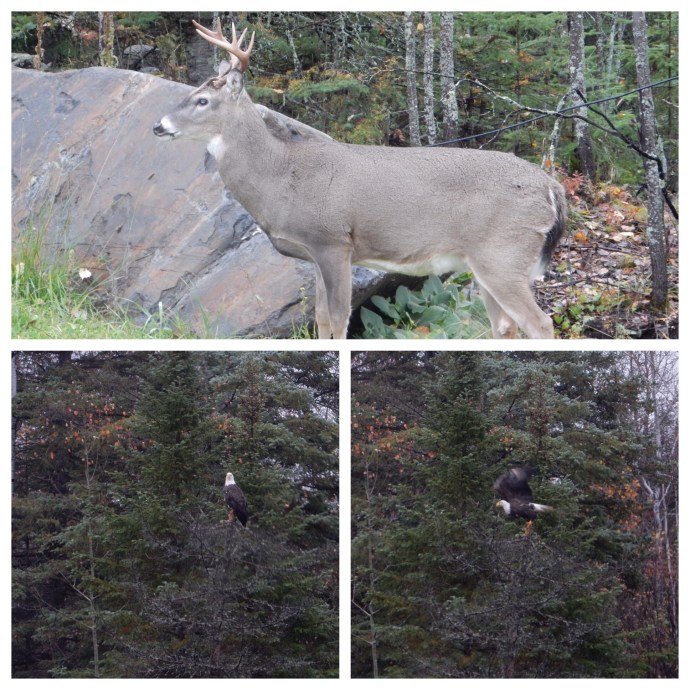
Recent Animal sightings

In other notable animal sightings, we observed our first sighting of river otters. A group of five otters were frolicking in Rainy Lake. While not unusual for Minnesotans, Chris spotted a bald eagle in a tree along the road to Bemidji. We also saw our first buck. Deer have been plentiful but always does and fawns until Tuesday afternoon.

Big Bog Lake at Lake Bemidji State Park, MN

Ed and Chris. International Falls Thursday Oct. 17 9:30 PM

Categories: road trip, travel | Tags: , , , , , , , , , | 1 Comment

2019 Trip 6: Voyageurs: Oct. 9-14

International Falls MN. Tuesday October 15

Inside of the Rainy Lake Visitor Center at Voyageurs National Park

We have completed our second four day weekend volunteering at Voyageurs National Park along the border between Minnesota and Ontario. The weather has been less than spectacular, primarily gray, windy, and rainy with some snow showers along with periodic patches of blue sky. Visitors have been positive however, most still hoping to go camping, hiking, or canoeing. For those visitors who are interested, we have been able to offer them some camping options they can reach by car.

First arrival

October 5

October 8

Now

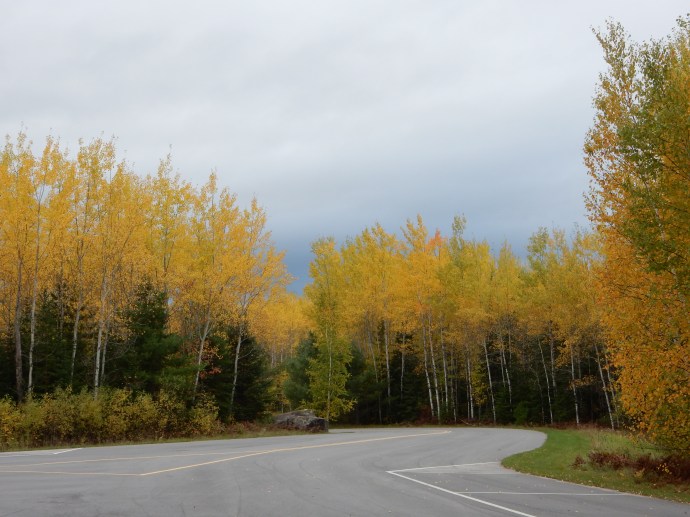
In the two weeks we have been here, the deciduous trees have portrayed the complete cycle of green to yellow/orange/red to falling off the tree. There are still locations of beautiful color but are much fewer and even then, usually only a portion of the tree. The rain and wind have played out their role in the cycle of life; I expect soon the green of the conifers will be mixing with brown tree trunks and blue waters. The forecast for the next ten days does not call for any appreciable snow. From pictures and past experience though, the white of the frozen lakes and snow covered ground offers a new beauty option to look forward to.

Last Wednesday, our final day of our three days off, we accepted an offer from the couple we met at the Great Decisions meeting. They took us on a boat ride around the some of the islands in Rainy Lake outside of the national park. If you were to look at a map, you would note that Voyageurs National Park only includes a portion of Rainy Lake. The lake extends west to International Falls and includes numerous privately owned islands. The lake also extends north into Ontario where the landscape includes even more lakes and waterways than Minnesota.

Taking off for the boat ride

Along the way

A boys camp on an island

Approaching our hosts island

Our boat trip provided us not only with splendid views of the lake and islands but our hosts’ personal perspective of the resort based history of this area. Resorts were started here in the early 1900s. The first resorts did not have electricity or indoor plumbing but visitors came here from all over for the scenery, relaxation, boating, and fishing. As time marched on, indoor plumbing and electricity made it to the islands. Island habitation rotated between resorts, camps and private residences.

Some island inhabitants had a second land based home; others lived on the islands year round. Spring and fall would have short periods of time between open water and solidly frozen ice when one waited out the change or used a variety of transportation options to reach shore. The boat ride truly demonstrated that the love of place rang deep in the inhabitants of the Minnesota north woods and lakes.

View towards Kabetogama Peninsula from Rainy Lake Visitor Center at Voyageurs National Park

Ed and Chris Tuesday, Oct. 15

Categories: road trip, travel | Tags: | Leave a comment

2019 Trip 6: Voyageurs National Park: Oct.4-8

Sunrise looking at one of the many inlets of Rainy Lake from our deck at Thunderbird Lodge

International Falls, MN. Tuesday Oct. 8

We have completed our first four day stint as volunteers at the Rainy Lake Visitor Center of Voyageurs National Park. Initial trepidation has been replaced with a growing sense of confidence. Our mentor has gone from explaining everything to allowing us to tackle our assignments, checking in and verifying our work as needed.
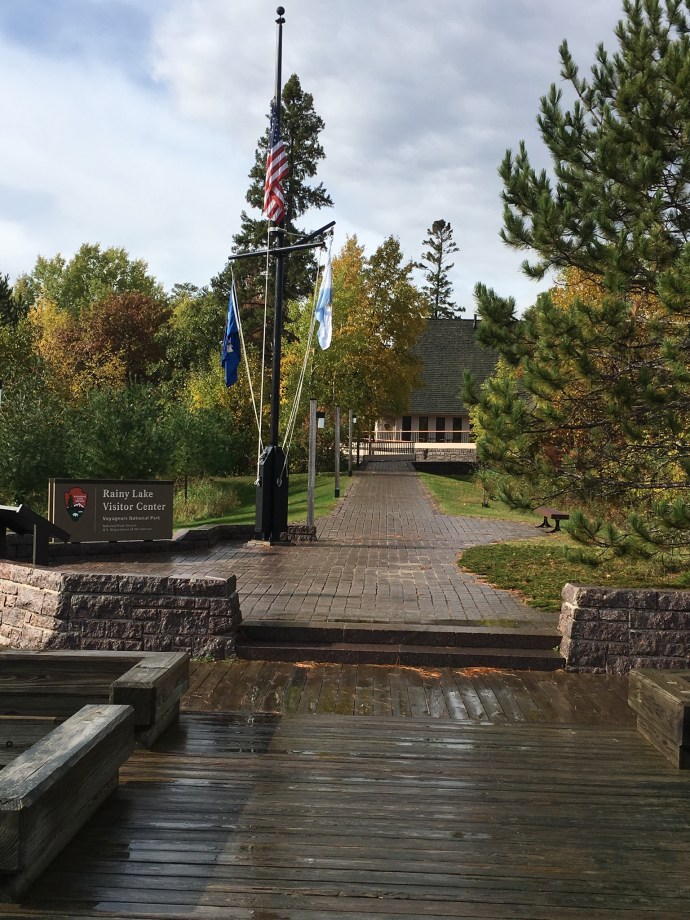
Rainy Lake Visitors Center view from lakeside

For those of you who have been to a National Park, the tasks are pretty standard. Greet visitors, explain the exhibit area, run the park movie on demand, sell items from the bookstore, and discuss various national parks around the country. Since Voyageurs is a water based park with much of the land only accessible after you boat over to an island, the challenge is to explain camping sites and how to reach them. Luckily for us, it is not peak season so we have time to look up answers and obtain assistance.

I apologize here to two visitors that I gave inaccurate information. The local paper mill does make paper (Boise Cascade brand-buy it if you see it, will help the local economy) and not cardboard. And to the couple driving into Canada, one no longer needs the separate Canadian proof of insurance. Chris and I keep reading and learning, we have already picked up a great store of local knowledge.

The weather for our four working days has been cloudy and/or rainy. Most visitors already had Voyageurs as a planned destination so the weather has not stopped them. We, however, were stopped once again by a dead battery on Friday afternoon as our shift ended, less than 48 hours since the first problem. Instead of waiting for our scheduled appointment on this upcoming Wednesday; after a jump re-started our car, we bought a new battery at O’Reilly’s Auto which was still open and installing batteries on a Friday late afternoon. It has now been 96 hours without a problem so I am feeling a little more confident-although I still park the car in a manner that would allow for an easy jump if needed.

Sights along the trails

In the Woodenfrog state forest area

The car issue has meant that we are spending our days off closer to International Falls than we initially expected. Visiting state parks within a two hour range was part of our initial plans. So, we are hiking locally. Luckily our three days off appear to hold promise for the best days weather-wise for the next ten days. On one of our hikes we visited the Woodenfrog State Forest campground on Lake Kabetogoma. It is the nearest public campground accessible by car, a good 50 minute drive from the Visitor Center and one we mention to visitors. The name Woodenfrog comes from a local Ojibwe Indian Chief. We had lunch on a point jutting out into Lake Kabetogoma and then enjoyed the day by walking through the woods and along the shoreline.

Some more hiking shots

Leaving Woodenfrog we stopped at Echo Bay, a series of hiking and cross-country ski trails just minutes away. The trails were wet from all of the rain over the weekend so this hike was probably only 45 minutes or so. However, it does add to our background knowledge of the park when visitors ask about hiking trails.

A gift store that was having end of season sales was our next stop. The owner was of Finnish descent and discussed how the area is losing its stock of Finns. I bought a nice Christmas ornament at 40% off. The gift store owner referred us to another retail establishment down the road, one his parents had started. We stopped there and discovered that their ice cream was 50% off. Ice cream season has ended and they need to make space for the soup and stew season. Chris and I enjoyed a dish of ice cream each while listening to the local chatter in the background.

Along the Rainy Lake Recreation Trail

Todays hike took us back around the Rainy Lake Visitor Center. We walked the four miles round trip from the Thunderbird Lodge and then added on some distance as we went off into the woods on the Oberholzer Trail. For Minnesotans it is not a big deal but we saw a bald eagle soaring above us.

Besides hiking during the last few days, we attended the local International Falls City Council meeting Monday afternoon. Some highlights included the proclamation honoring a local woman on her 100th birthday. She emigrated here with her GI husband after WWII, still plays the harmonica in a traveling band, and speaks three languages. On the touchy side, there was a debate whether to agree with the state’s recommendation that a traffic signal be removed on a stretch of road to be repaired over the next two years. The state: is paying 90% of the almost $14,000,000 road cost, would not share the cost of a replacement traffic signal, and would make I.F. shoulder all ongoing maintenance and replacement cost for the traffic signal in the future. I felt sorry for the council members; local people always believe that a traffic signal will enhance safety. Studies have shown that is not the case for low volume intersections like the one being discussed in I.F. The state won. The traffic signal will be removed and not replaced.
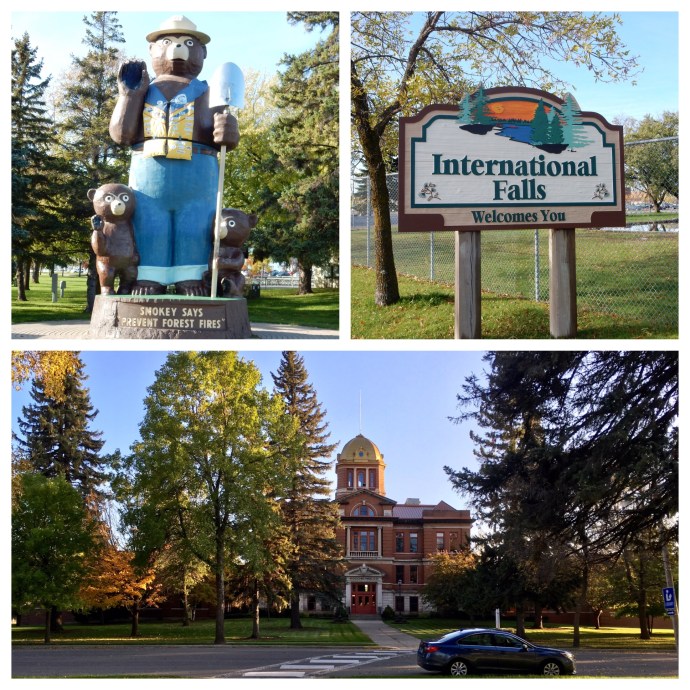
26 foot tall statue of Smokey the Bear in International Falls and Koochiching County Courthouse

Spending considerable time in an unfamiliar small town has its ups and downs. On the up side, after a visit or two you are recognized. We are on a first name basis with the head of the local visitor center. Our waitress at the Thunderbird this morning gave us two carmel rolls she had made for the staff to take back to our room-after we discussed her and her husband’s day off journeys on Monday. People give you knowledgable recommendations, such as the guy in the laundromat (wearing a MN Wild hockey team T-shirt hand drawn by his niece) who told us about two places to eat. One, Almost Lindy’s Swill and Grill, by its name seem doubtful but proved to be quite decent. People wave to you as you are out hiking. You do not get lost.

Tuesday afternoon, we attended a local session of Great Decisions. It was among a long list of local activites published in the twice weekly newspaper; hospital gift shop open, city council meeting, narcotic anonymous, card playing at the senior center, etc. Great Decisions is a national group that encourages discussion of important topics. The group publishes a book giving background on each topic and sends along a 30 minute video providing more information. (We have attended some of their discussions in the Cities.) The group of attendees then discuss the topic. This month’s topic was migration on a world wide basis.

I mention this not to go into the topic of migration, interesting though it is. But we were welcomed warmly at a group that did not know us. At the end of the meeting, the couple leading the discussion invited us to go out to dinner with them at the local Mexican restaurant. We accepted and had a grand time. As in many discussions with new people, there were a number of interconnections between us, them, and various family members on both sides. Their ties to International Falls provided us with a rich background to the community.

On the down side to being in a small town, most restaurants serve the same menu. There are not a lot of exciting things to do. (Hence the city council meeting.) And, employment opportunities are fewer.

We have one more nice weather day to explore the area before we return to “work”.

Lake Kabetogoma and shoreline from Kabetogoma Visitor Center in Voyageurs National Park

Ed and Chris Wednesday October 9

Categories: road trip, travel | Tags: , , , , , , | Leave a comment

2019 Trip 6: Voyageurs National Park Sept. 30-Oct.3

Lake Kabetogama at Voyageurs National Park

October 1. International Falls MN

We are in northern Minnesota. Land of water and forests. Home to a long, unheralded history of three major economic impacts for America. Fur trapping was one of the major drivers of the early American economy, an activity not forbidden by the English and which produced early riches. From there, by 1900, Minnesota produced one third of the timber cut in the United States. Huge swaths of forest were clear cut with no re-planting to produce the homes and buildings of a growing population. Finally, the iron ore mines of Minnesota fueled the rise of skyscrapers and then the armaments of the Second World War.

Lake views

Today, the area still produces lumber and iron ore. But the heydays are gone and tourism has become a new economic support for the people who live here. From Lake Superior to Lake of the Woods, the northeast section of Minnesota is home to canoeing, fishing, lake cabins, and wilderness adventures. We are here, again, because of Voyageurs National Park. (For other info, visit our 2015 Trip Five travel blog for Aug. 21-23.)

Over the next month, we will cover and discuss the area. Our underlying reason for being here is to volunteer at Voyageurs National Park. Four days a week will be spent assisting with park activities. Three days a week will be spent discovering the area.

Vermillion Falls in Superior National Forest in northern Minnesota

Our 300 mile drive up Monday from Saint Paul was under gray skies with periodic rain and drizzle. Not a spectacular way to begin the journey but even so, we found unexpected beauty. The fall colors were muted on the roads we took but on the back roads of Superior National Forest we came across Vermillion Falls, a quick flowing, short falls jammed into a rocky embrace. Superior National Forests 2,000,000 plus acres stretch west from Lake Superior and includes hundreds of lakes and streams. It includes the BWCA or Boundary Waters Canoe Area, a wilderness of water and wood devoted to non-motorized travel.

Vermillion Falls is on Vermillion River which flows out of Lake Vermillion. In this area of Minnesota, the waters flow north into Canada’s Hudson Bay, an important fact that lies behind the existence of Voyageurs National Park. So I guess you could say we are exporting to Canada, free of charge, some of the pristine waters that this part of the state is noted for.

Remnants of old railroad trestle used to carry pine logs out of northern MN forests

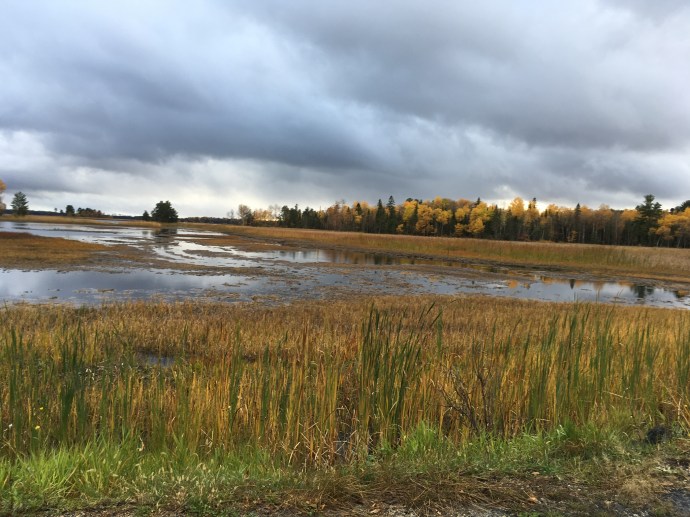
The rest of the back roads drive covered forests of pine and deciduous trees, beaver lodges, lakes and streams, wild rice patties, bogs, and remnants of early logging days. We visited the Crane Lake ranger station and visitor center, closed for the season, at Crane Lake at the southeastern tip of Voyageurs National Park. It is a long drive from the Rainy Lake visitor center we will be volunteering at, so we wanted to stop by while we were, somewhat, in the area. It is just good to be able to visualize multiple areas of the national park.

We arrived at Thunderbird Lodge in International Falls, our home away from home for the next 3-4 weeks. Our room is spacious with a deck and view of Rainy Lake. The microwave and fridge will allow us to eat breakfast at home and prepare lunches for our days volunteering. The lodge has a full-service dining room available also.

Tuesday was busy with a full day’s schedule of orientation activities and visits to various sections of Voyageurs National Park. Over 1/3 of the park’s 218,000 acres is water, and much of the land mass can only be reached via water. There are four visitors centers but after the summer season, only Rainy Lake Visitor Center is open.

Hiking

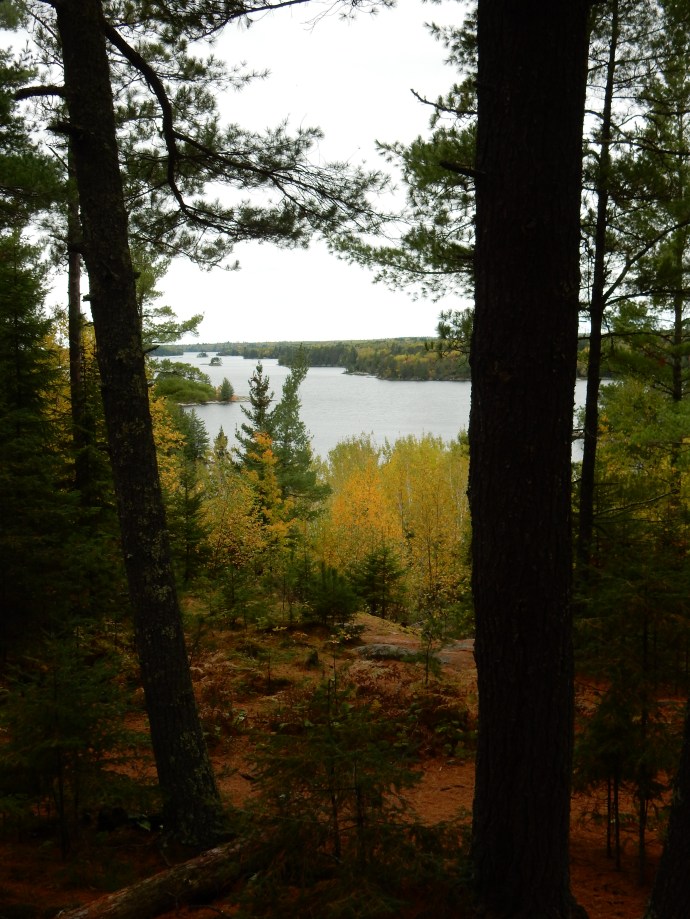
As part of the orientation on Tuesday, and again on our own Wednesday, we visited the Ash Lake Visitor Center area and Lake Kabetogama Visitor Center area. We hiked several trails that are on the land portion of the national park. For the first time we can recall, we spotted ruffed grouse several times as we walked along backwoods trails. They scampered into the woods, blending into the underbrush and foiling my attempts at a picture.

The Canadian Shield (also known as Laurentian Plateua) is a term for ancient rocks from the most ancient periods of geologic history of the earth. These rocks have been scoured by glaciers so, unlike southern Minnesota, the topsoil is thin. The impact for us is that hiking trails on higher land are laden with exposed tree roots and rocks/boulders that have as their sole aim to trip any unwary hiker. We have managed to avoid that problem so far.

Walking through a bog area

Other trails went through wetlands. We observed a huge beaver dam and lodge at one wetland. We passed by many bogs; spongy wetland ground too soft to walk on with an acidic base of decaying plant material frequently resulting in peat. (Fens are similar but alkaline with more nutrients and a broader plant collection.)

The weather has been cool and damp. As we exited our last hike near Kabetogama Visitor Center and got into our car, we discovered it did not want to start. AAA was not much help; evidently their supply of service stations in northern MN is not very large. We made some calls on our own and small town cooperation resulted in us getting a jump from two park rangers. We followed them the 30 miles back to International Falls before continuing on to the Thunderbird Lodge. The car was parked with its front end pointing out in case we needed a jump again Thursday morning. However, the car was fine on Thursday; we stopped by a local repair shop at 8 AM and made an appointment for next Wednesday to have the battery and electrical system checked out.

Yellow is the primary fall color up here with splashes of red and orange.


Ed and Chris. Thursday Oct. 3. 9 PM
Categories: road trip, travel | Tags: , , , , , , , | Leave a comment

2019 Trip 5: Alaska: Sept. 11-13
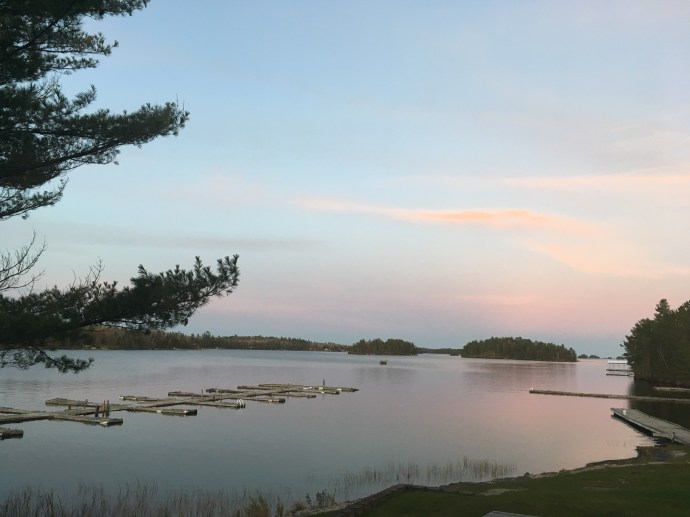
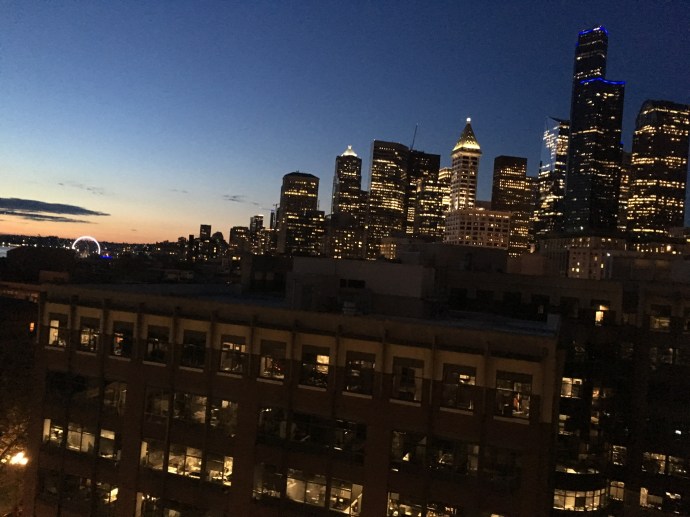
An evening Seattle shot

Havre Montana Thursday Sept. 12

King Street Station in Seattle

The Embassy Suites in Seattle was our overnight lodging Tuesday night. It is across the street from the Amtrak station and two blocks from the National Park Service’s Klondike Gold Rush National Historical Park. With the delay in leaving Anchorage airport, we only had time for dinner Tuesday night. Wednesday morning though we walked around the Embassy Suite area, very close to the football and baseball stadiums. After breakfast, we brought two of our bags over to the Amtrak station. We checked them through to St. Paul, and then stored the last suitcase and backpacks at Embassy Suites until later in the afternoon.

When we were in Alaska, Seattle and its businessmen were portrayed as feasting off the natural resources of Alaska without local decision making and certainly no plowing profits back into Alaska or its peoples. In Seattle, the portrayal was the ingenuity and entrepreneurial skills of Seattle in its dealing with Alaska caapualted the town into a major urban hub. Even before the gold rushes, the profits from Alaskan natural resources paid for the purchase price in under ten years. When the gold rushes occurred, Seattle’s population and importance surged.

Minot ND, 7 hours later

The Chilkoot Trail and imitation gold bars.

The gold of the Klondike Gold Rush was located in Canada but the “easiest” routes to the Klondike went through the U.S. The Klondike Gold Rush National Historical Park related the stories of the people who were adventurous enough to tackle the arduous journey. It is estimated that 100,000 prospectors started out for the Klondike and about 300 struck it rich.

The Canadian Mounties enforced a rule that each prospective prospector had to have a year’s worth of supplies before they would allow them access to the country. This meant each prospector had to carry about 2,000 pounds of miscellaneous tools, food, shelter, etc. This requirement necessitated multiple trips to move a portion of the supplies to a drop spot, or cache, and then return again and again until the full load was moved each short leg of the journey.

One optional route involved the Chilkoot Pass. It generally took each prospector three months of slogging to move the required 2,000 pounds of goods over the pass. The last obstacle on the Pass involved a quarter mile hike gaining 1,000 feet in elevation. Famous pictures show an endless line of people walking one behind the other to reach the top-only to return to the bottom and bring up another load. By the time most new prospectors reached the Yukon, the good claims were taken or used up.

Puget Sound

Seattle’s King Street train station has been renovated but is still relatively small and featureless. It is busier, however, than Union Depot in St. Paul. The Empire Builder left on time and first heads north along the Puget Sound. Around Everett the train moves east and we started going through mountains. Since we left at 4:40 P.M and sun sets at 8 PM, the view ended early. Luckily, tonight was almost a full moon and for several hours one could look out the windows and watch the moon shine on the hills and valleys.

Some of the Thursday morning views

We selected a larger sized sleeper compartment, all meals are included as part of the package. Amtrak meals, I find, are reasonable and since the price is included, we made sure to partake of each one during our 40 hour journey. I had planned to spend time in the observation car and we did for an hour Thursday morning after breakfast. While those views are nice, they were not much better than the views from our sleeper so we returned to the sleeper and spent most of our tine there.

Napping in the sleeper car

Sleeping in the sleeper depends on the person. Neither Chris nor I were bothered by the rocking motion of the train. I found it difficult to fit into a comfortable position and did not sleep that well. When the lower bed is out, maneuvering around is very tight. If you are sleeping, not a problem. If you are awake and trying to do anything else, it is a challenge. when the bed is back into being a couch, there is plenty of room to stretch, nap, read, etc.

Big Sky Country-Montana

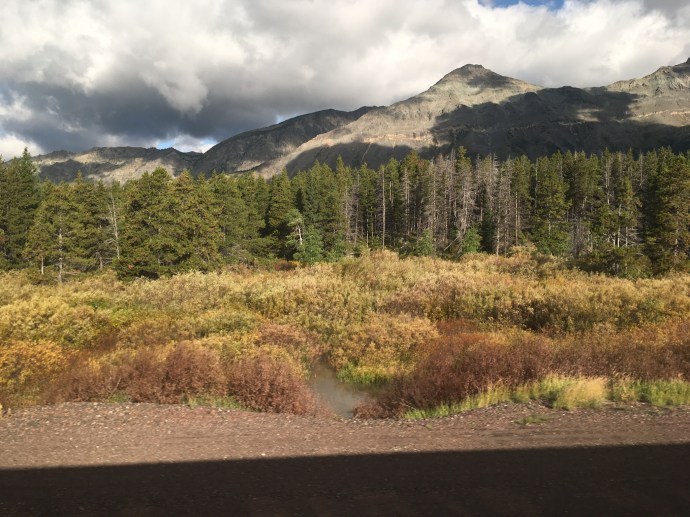
Thursday’s route took us around the boundaries of Glacier National Park and eastward through northern Montana and North Dakota. One understands the motto “Big Sky Country” for Montana after riding for hours along this route. Once you cross the border into ND, the oil wells, flares, and processing facilities are front and center.
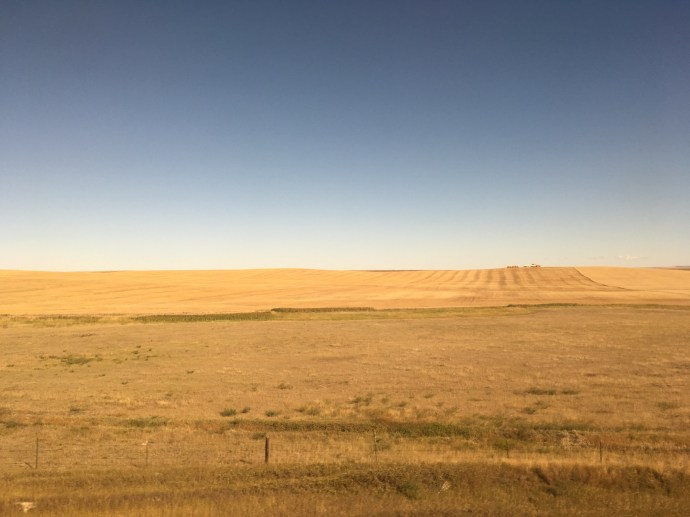
Currently we are 30 minutes behind schedule but Amtrak has means to make up the time and I expect we will arrive on time in St. Paul Friday morning. We did some reading, some napping, some talking with fellow travelers, and a lot of just looking out the window. After all, if we were driving this would be pretty much the same route and I would not be as able to enjoy the view. So, we relaxed, enjoyed the ride, and ended another great trip seeing the U.S. Next scheduled experience: the month of October volunteering at Voyageurs National Park.

Outside Amtrak #8 in Havre MT

Ed and Chris. September 13. Somewhere between Grand Forks and Fargo ND. 2 AM

Categories: road trip, travel | Tags: , , , | Leave a comment

Blog at WordPress.com.