Author Archives: Ed Heimel and Chris Klejbuk, MN travel bloggers; ckeh72@comcast.net

Unknown's avatar

About Ed Heimel and Chris Klejbuk, MN travel bloggers; ckeh72@comcast.net

We are a husband and wife team living in St. Paul MN. Both of us retired by the end of 2012 and decided to travel and visit areas of the U.S. and Canada that we had not seen before. Most of the time we head out for 3-7 weeks; usually by driving, first in our 2001 Saturn and then when it hit 225,000 miles we traded it in for our 2016 Subaru Legacy . This travel blog is written to help us remember the great places we have visited and people we have met as well as to inform family and friends of our whereabouts. Contact us at ckeh72@comcast.net In 2013 we took the following trips: Trip 1-January--2 weeks in Florida to visit Orlando, St. Augustine, Jacksonville, Amelia Island. Trip 2-February and March-4 weeks in Hawaii, visiting the four major islands. Trip 3-March and April--several weeks in New Mexico visiting family followed by traveling cross-country to VA for VA Garden week. Trip 4-May and June--6-7 weeks driving to Las Vegas, the Sierra Nevada Mtns, Yosemite, Kings Canyon, Sequoia N.P, Salt Lake City, Grand Tetons, Yellowstone, Devils Tower and home. Trip 5-June- a quick trip to Boston to visit family. Trip 6-July and August-a 6-7 week trip to Calgary, Banff, Mt. Ranier and Mt. St. Helens, Olympic N.P., North Cascades N.P., Victoria, Vancouver, Whistler, Revelstoke, Jasper, Yoho,Whitefish lake, Theodore Roosevelt N.P. Trip 7-August and September- our daughters wedding in MD and returning home through the Upper Peninsula of Michigan. Trip 8-October and November-3-4 weeks in the Ozarks, Arkansas, Missouri. Trip 9-December and January 2014-Christmas in Santa Fe and New Years in Flagstaff and points in between. In 2014 we took the following trips: Trip 1--a week in Ely MN, most of it dog-sledding in late Feb. Trip 2--6 weeks in the Deep South including LA, MS, AL, GA and FL in March and April. Trip 3--a trip to Boston to visit family Trip 4--May and June houseboating on Lake Powell followed by Monument Valley, Arches and Canyonlands N.P, Black Canyon of the Gunnison N.P, San Juan Mtns of CO Trip 5--time spent in MN and the Midwest Trip 6--visiting Ontario, Ottawa, Montreal, Quebec, the Adirondack Mtns of NY, our daughters wedding in CT and home through Philly and Ohio, 7 weeks in September and October. Trip 7--Southern California including Joshua Tree and Mojave Desert N.P, Anza Borrego Desert State Park, and then to Flagstaff for Thanskgiving for three weeks in November. In 2015, we took the following trips: Trip 1- 8 weeks traveling around FL in February and March, most of it on the panhandle, penninsula and Gulf Coast. Trips 2 and 4 to Boston in April and July. Trip 3 was to Isle Royale National Park in Lake Superior. Trip 5 was to southern MN. Trip 6 was to Voyageurs National Park and northwestern MN. Trip 7 was to the Great Smoky Mountains and neighboring areas. In 2016 Trip 1 was to Chicago IL. Trip 2 was to southwestern MN. Trip 3 was to Boston. Trip 4 was to southwestern United States. Trip 5 was to Lake Superior. Trip 6 was to Winona MN. Trip 7 to western Massachusetts (the Berkshire Mountains). Trip 8 to the Rocky Mountains in Colorado. Trip 9 to Boston and Rhode Island. In 2017, Trip 1 was to the Mississippi River Headwaters. Trip two will be a month long tour of Texas and another month traveling to and from Texas across the southern US. Image

2023 Trip 7: Northwest U.S.: History and Adventure: Sept.17-19

Snake River from Hells Canyon Dam area

Cascade, ID Sept. 19

Finally, we have decent Internet. Not knocking the last locations, we chose them for the area’s scenic beauty and accessibility to planned activities. However, it did make preparing the blog practically impossible. We are now in Cascade, Idaho at a Hilton property with excellent Internet. Hotel NoBo. I believe the NoBo stands for northbound, which seems to be a marketing phrase for this area.

But the big item for recording is Monday’s activity of a jet boat ride down the Snake River. The Snake River has the deepest river gorge of any in North America at 7,993 feet. In comparison, the Grand Canyon is measured at 6093 feet. Zion Canyon at 2640 feet. The New River gorge in West Virginia is only 1600 feet. Black Canyon of the Gunnison is about 2722 feet. The Salmon River in Idaho is rated over 7000 feet.

We only had to drive 10 minutes to reach Killgore Adventures, the people running the jet boat ride. We got there early in order to sign our life away on their liability waiver form. There was an option to drive to the landing site or to take a shuttle. We chose to take the shuttle.
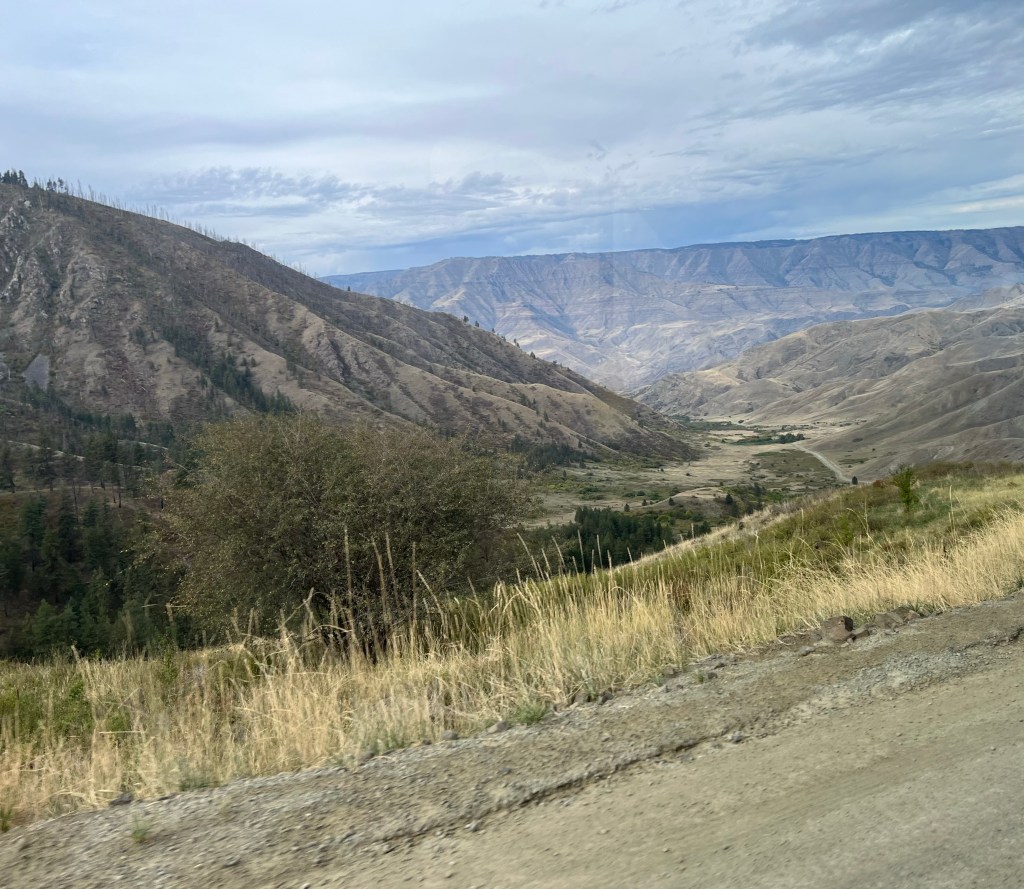
On the way down to the river

To reach the starting point on the Snake River, the shuttle had to go up several thousand feet in elevation on narrow, curvy roads. Then it went back down that several thousand feet plus some extra in order to reach the river. It was nice to be able to sit back and observe the scenery and not worry about driving off the cliff. It takes about 45 to 60 minutes to make the trip from the river to Killgore Adventures and vice versa.

A postcard view

This was an actual steel hulled boat, not a raft or a pontoon. Big engines allow the boat to blast up river at 32 miles an hour and down river at 40 mph. The boat starts from Pittsburg Landing, goes 30 miles up to Hells Canyon Dam. The ride back on the river is faster and splashier since the dam releases more water in the afternoon to generate more Hydro power when it’s needed. The boat ride is 30 miles one way and it goes through two sets of class four rapids and several of class three.

Our boat held about 28 people. We had 16 passengers and two crew. Plenty of room to sit. Although, there was no ability to avoid waves when they came flying over the sides of the boat. And yes, we did get soaked.

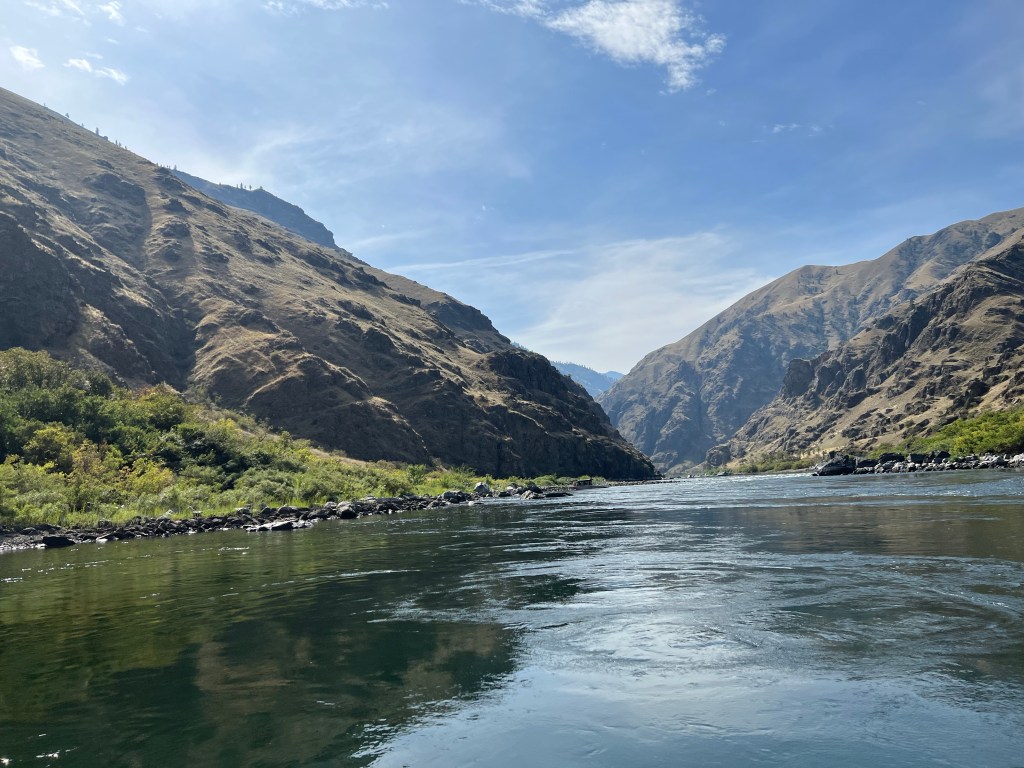
Our pictures are not dramatic. The boat ride is bumpy and there are railings for safety that interfere with the view. Plus, you really don’t want to lose your camera or phone when you hit a bump or there’s water on the floor of the boat. Safety first.

On the ride up, you make two pit stops. One is viewing a small museum along the river that’s part of a historic ranch. We learned that these river ranches were established long ago and still get mail service once a week by a mail boat out of Lewiston Idaho. There are only a few private properties left along the river as most of it was purchased to be part of the national recreation area, or were consumed by the multiple dams built along the Snake river. The Snake actually has 22 dams between its headwaters and its confluence with the Columbia.

Lunch is at the visitors center of Hells Canyon Dam. Killgore provides very nice box lunches and it was a refreshing break from the bumpy ride. The visitor center also has some exhibits and films about the dam, its construction, and the area.
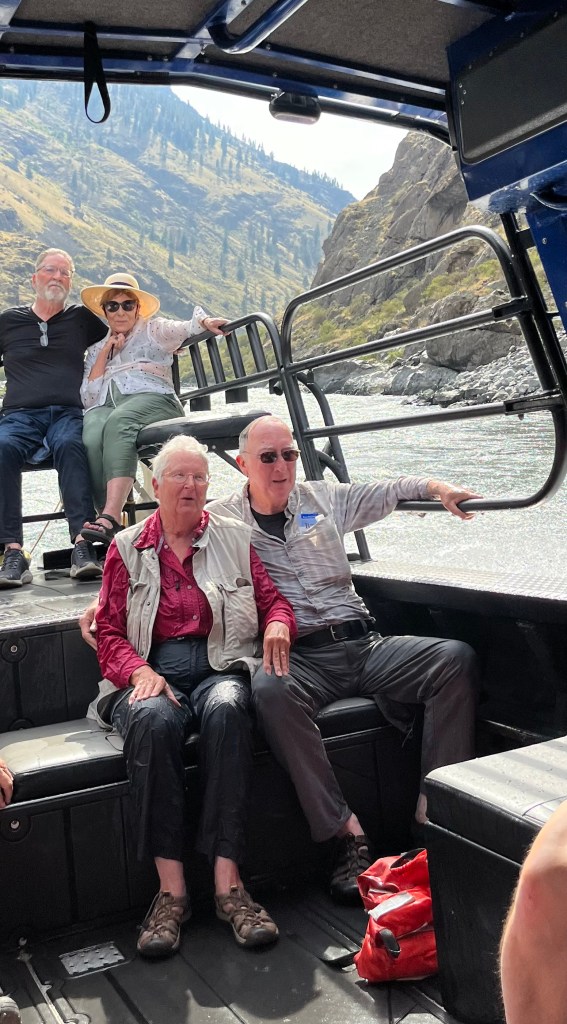
It may be hard to tell, but we are soaked from the head down

As mentioned, the ride back is faster and designed to be more exciting. Oh, and wet. There are rocks in many sections of the river, and the jet boat works its way around the rocks and the rapids and the shoreline. It really was pretty thrilling. Oh, and wet. Luckily, we were wearing sandals and clothes that would dry out quickly on the way back.

Several years ago, we did a jet boat ride on the Rogue River in Oregon. On that ride, we chose a seat a little higher up and got soaked . On that trip, I lost a hat and had to get a new camera as the one we were using got completely wet and did not function. We chose a seat this time that was forward-looking, not sideways; it was supposed to be a little smoother. Didn’t make any difference, we got wet, soaked. We would do it again.
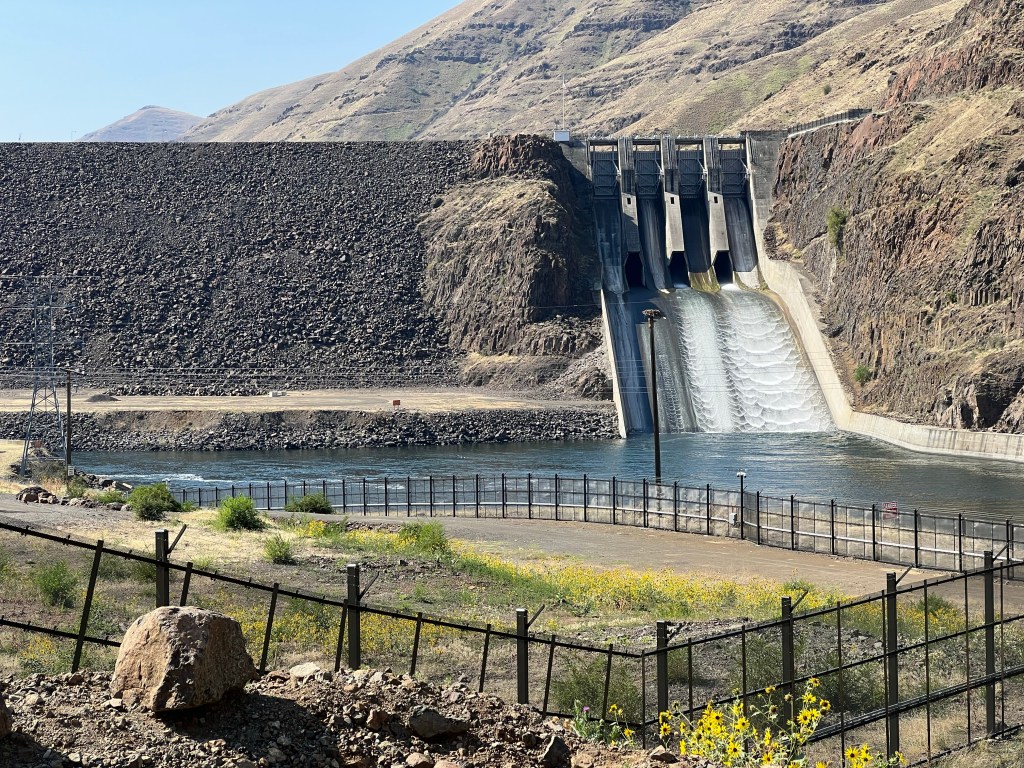
That was Monday. Sunday was basically church and a scenic drive from Ontario OR to the Steelhead Inn. We made a side journey to the Brownlee Dam and Reservoir along the Snake River. This also involves a curvy, hilly ride down to the dam, but not as bad as the one for the Hells Canyon boat ride.

Today, Tuesday, was scenic driving again along with a stop at a cultural museum that explained the heritage of this region. It was presenting information about Native Americans, European Americans, Mexican Americans, and Japanese Americans. All four groups came here under different circumstances and had varying acclimating experiences.

One specific European American group discussed was the Basque from the Pyrenees region of France and Spain. We knew the Basque were heavily involved in the sheep raising business here. However, it was not because that’s their skill set from back in Europe. The Basque were generally involved in sailing and shipping. When they arrived here, the only jobs available were in the sheep herding and raising business. So they took those jobs.

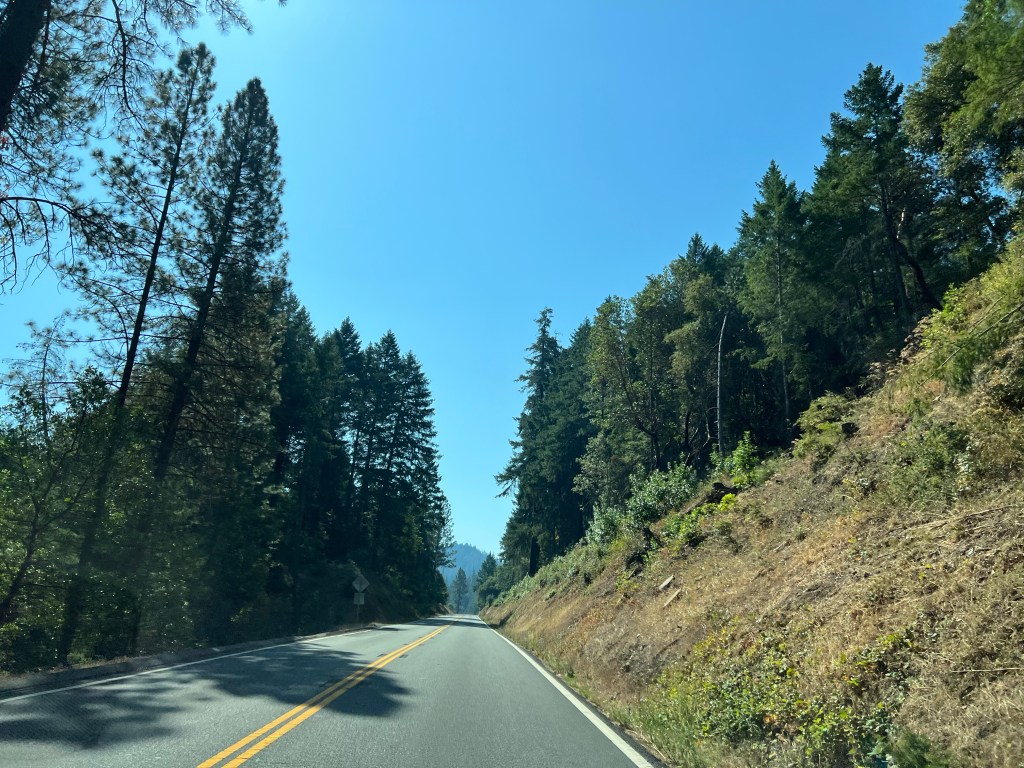
Typical drive

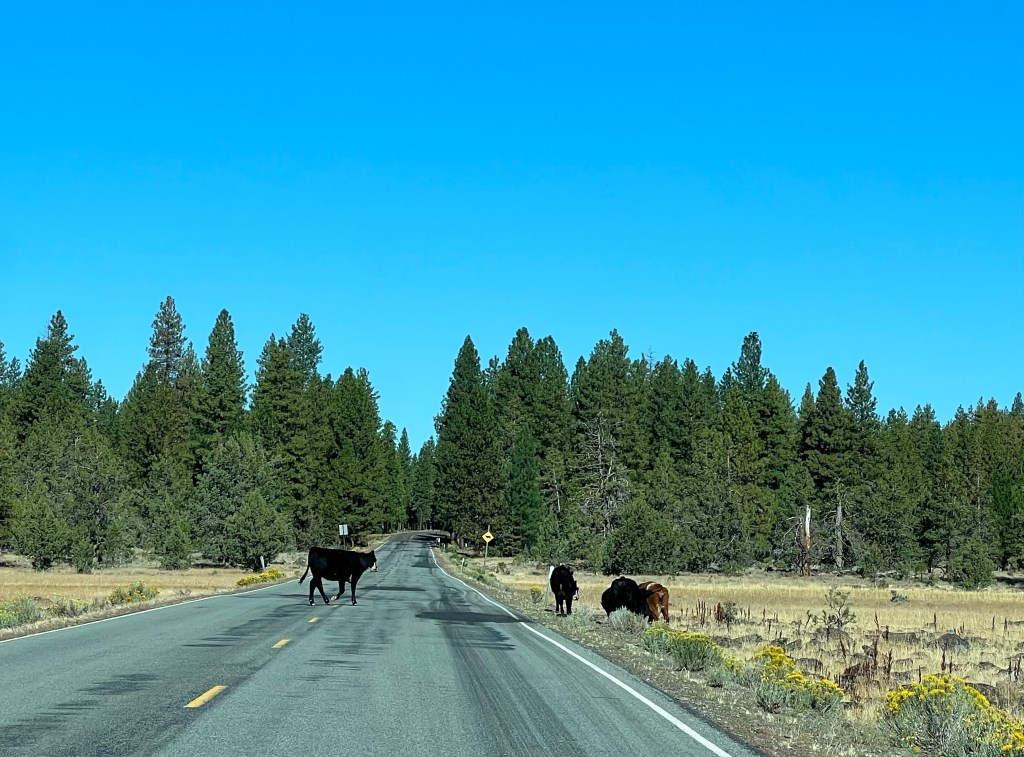
This northern section of Idaho is heavily forested and mountainous. The scenery is spectacular and we are getting used to small towns, curvy roads and cattle roaming on the road. There are usually creeks or rivers running alongside the roads. Given that roads are narrow and two lane, we aren’t able to stop frequently for a photo op.

Most of the towns are small with populations ranging from 150 to 3000 people. At breakfast this morning the proprietor was explaining how three restaurants in town have closed and most hotels have changed owners. There’s plenty of business, the problem is sufficient staff to keep the restaurants open. Most restaurants are closed 2 to 4 days per week.

Ed and Chris, Cascade ID Sept.19 Happy Birthday Jude.

Sidenote. We mentioned Lava Beds National Monument in an earlier post. I forgot to mention that the Antelope wildfire of 2021 also caused significant damage to Lava Beds. Thus three of the national parks we visited recently have been heavily impacted by wildfire.
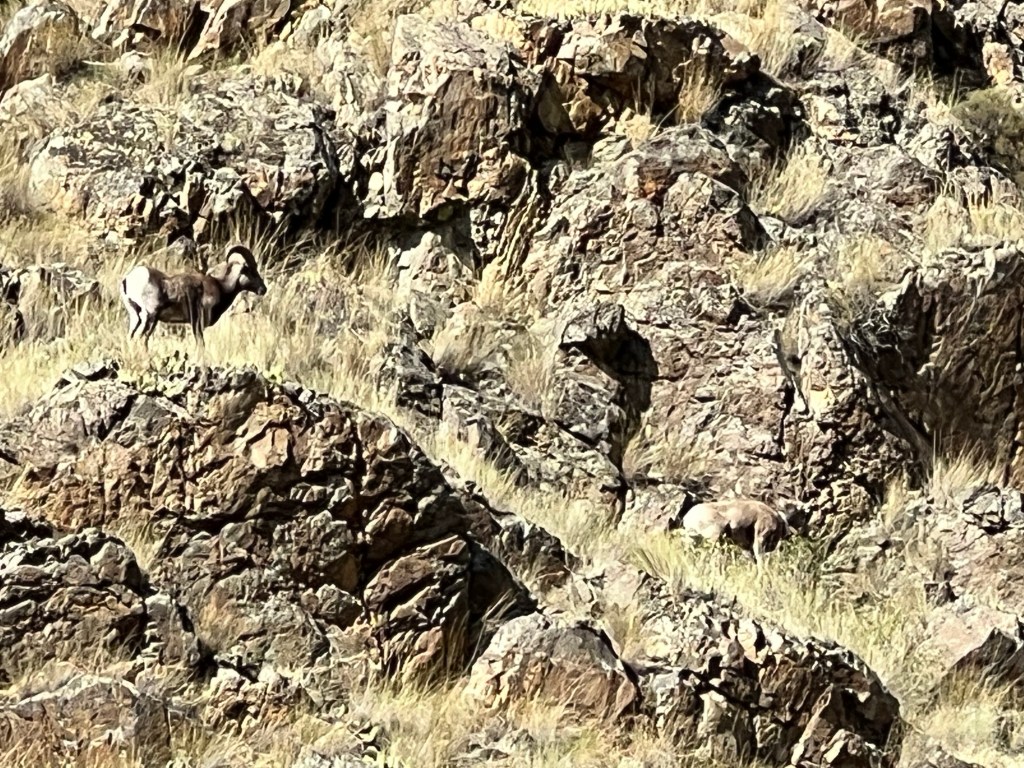
Despite this photo, we have not seen a lot of wildlife
Categories: travel | Tags: , , , , , , | Leave a comment

2023 Trip 7: Northwest U. S.: History and Adventure: Sept. 15-16

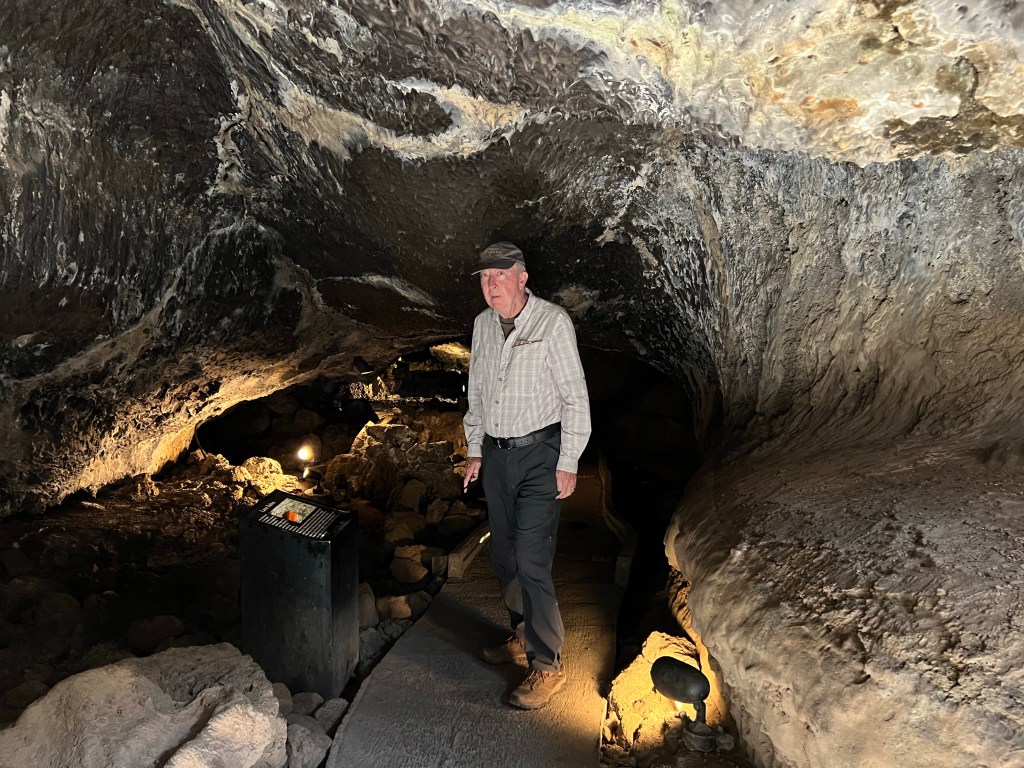
Inside a lava tube cave

Ontario, Oregon September 16

Chris was not excited about visiting Lava Beds National Monument. When she heard it had lava tube caves, she was even less excited. When we left the national monument on Friday afternoon, she had reversed herself, but not because of the caves.

McDonald’s was our breakfast source Friday morning since the local motel did not serve breakfast with the room charge. We managed to walk in just before the rush began and threw the staff into a tizzy. We felt sorry for the many workers who were delayed trying to get their meal and off to work.

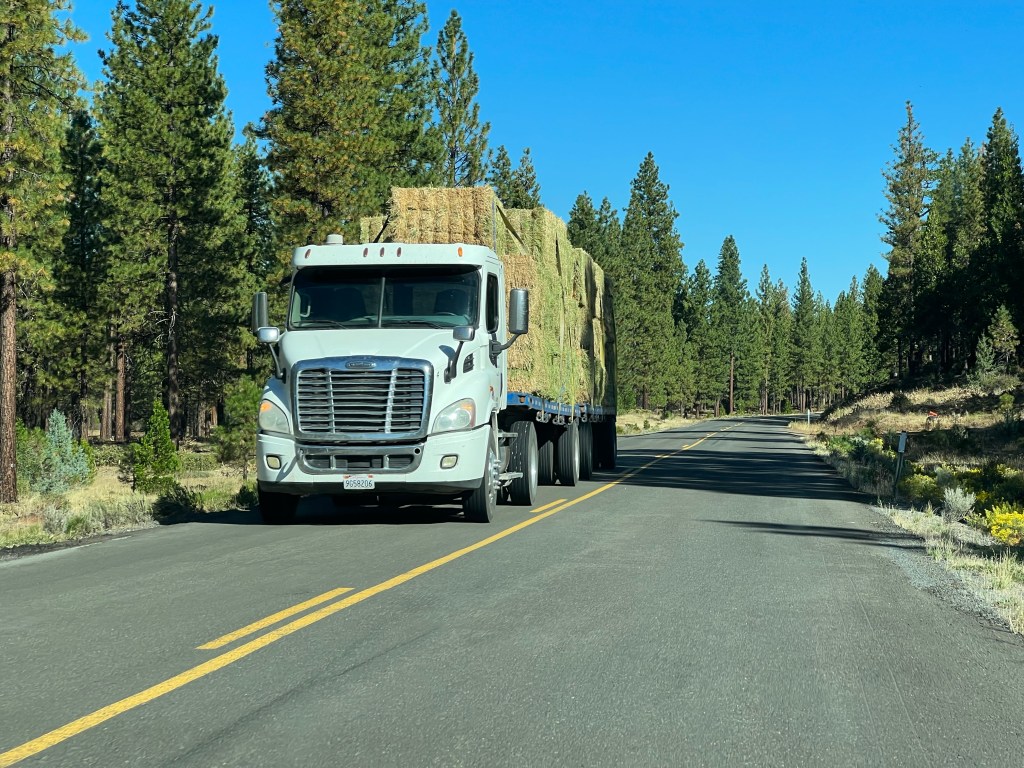
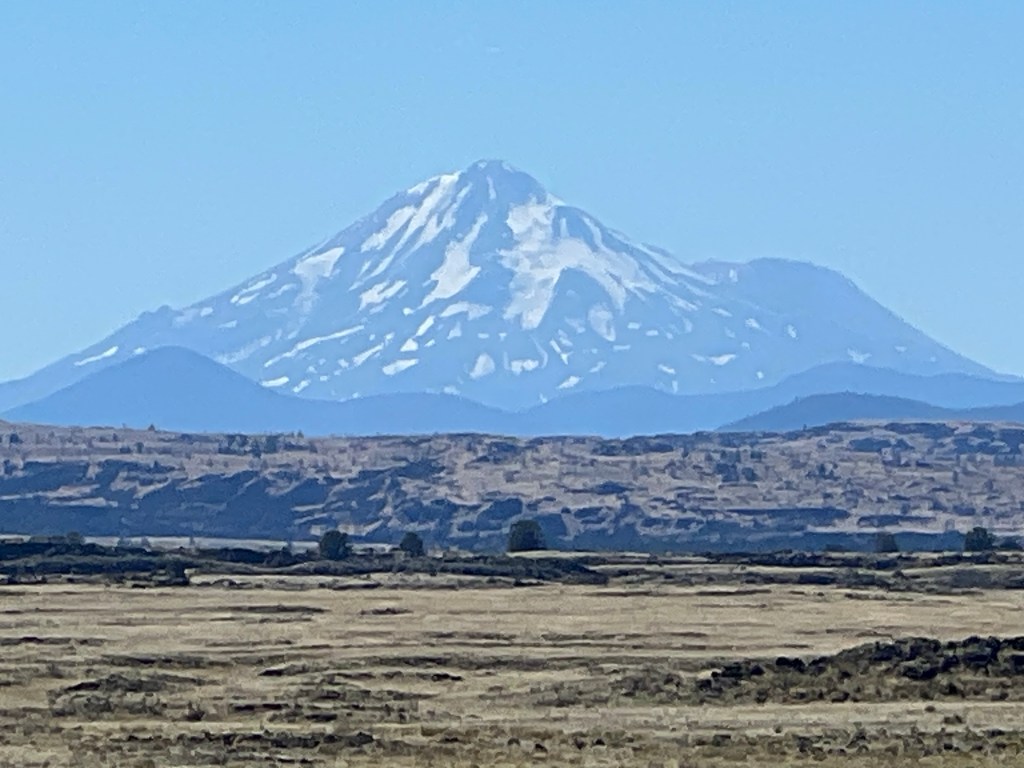
The drive to lava beds continued on the Volcanic Scenic Byway that we mentioned yesterday. Our road companions were frequently trucks full of hay or of huge logs, and periodically cattle crossing the road, usually very slowly. Every now and then through the trees we saw glimpses of Mount Shasta, the tallest mountain in California at 14,180 feet.

When we reached Lava Beds National Monument, Chris kept interrupting me and the Ranger to re-state she did not want to see more caves. If we were going to see caves, we had to decontaminate our shoes since we have been to other caves in the recent past. Decontamination is necessary to prevent the spread of white nose syndrome which kills bats.

What are lava tube caves? As one of the park documents describes it, “in areas of lower elevation, such as valleys, the lava moves faster, and takes longer to cool, creating a network of lava rivers and tributaries. Eventually, in much the same way that a river of water can freeze over with ice, the surfaces of these lava rivers cool and harden into rock. This rock insulates the lava that continues to flow inside. When the supply of lava stops, the tube drains, leaving behind a hollow cast known as a lava tube.“

The lit lava tube cave

I finally managed to convince Chris to visit the one lava tube cave which is lit. The others require flashlights and frequent duck walking. Ours had a smooth bottom. These caves are unique and not your normal caverns with formations. The process of lava flowing from different types of volcanoes periodically produces a tube-like chamber that one can walk or crawl through. The walk-through was satisfactorily concluded, and the educational lesson learned for both of us. No need to see more of the same thing so we moved on to other portions of the national monument.

Lava Beds National Monument is built on the site of the Medicine Lake shield volcano, which is the largest volcano by volume in the Cascade Range. Shield volcanoes are broad, gently sloping mountains that form from many dispersed, low energy eruptions of very fluid, molten rock. These liquid rock flows are able to travel great distances before hardening and result in a large low profile volcano.

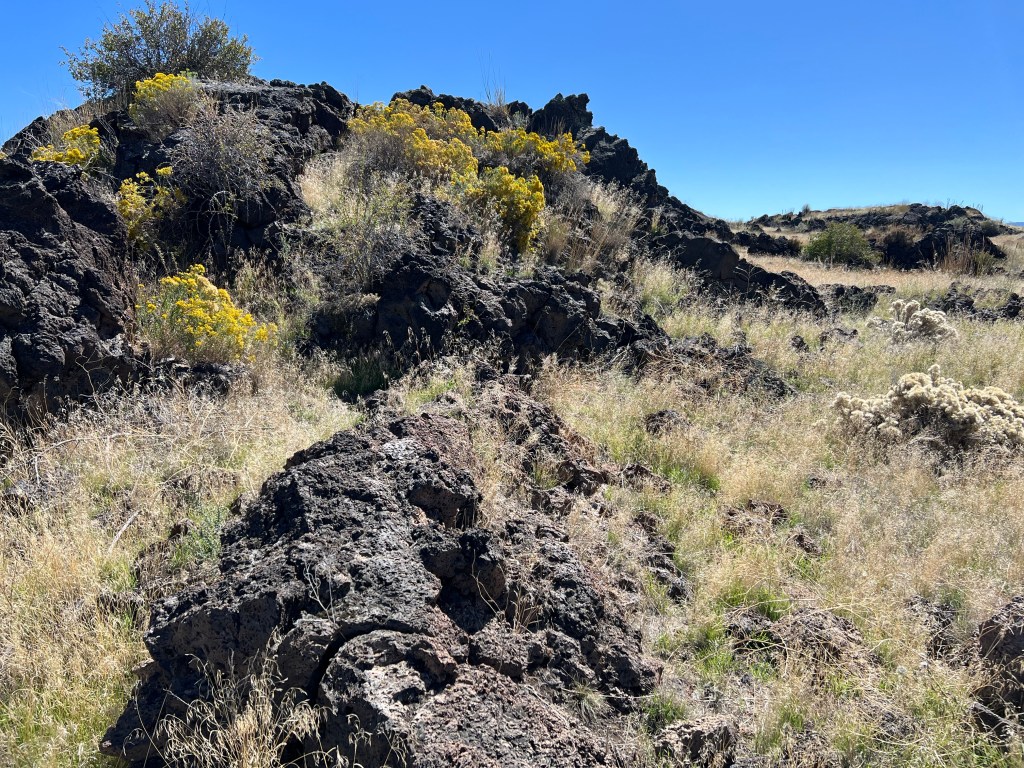
Lava rock bed

Continuing around the National Monument we observed multiple examples of different types of lava. Most interesting were those conglomerations of lava boulders with their rough, sharp, edges piled high across an extended portion of the valley floor.

Part of the stronghold

Unfortunately, as one begins to expect traveling around any of these areas, the local tribes of Native Americans went through the usual decimation by guns and germs and the loss of promised reservation land. Here the broken treaties led to what is called the Modoc War. This was a six month conflict beginning in late 1872. Notably, the Battle of the Stronghold was held in a portion of Lava Beds National Monument. The Modoc warriors were able to hold out for six months, keeping at bay a much larger US Army force. The final result follows the all too familiar pattern of the Modoc people being forced to move to either Washington State or Oklahoma State, although over time, some returned to this area on their own.

From Native Americans being mistreated to Japanese Americans being mistreated, was the second stop of the day for us. Tule Lake Segregation Center is part of the WWII Valor in the Pacific National Monument. Tule Lake started as a War Relocation Center and housed 15,000 Japanese Americans who were forced on short notice to move out of their homes to a series of relocation centers. Of course, this was not required of Italian Americans, nor German Americans.

Each family relocated here occupied one room ranging in size from 16 x 20‘ to 24 x 20‘. It was furnished with a single light bulb, a coal stove and up to eight army cots. Meals were served in community mess halls. Latrines were set up military style with no dividers between toilets or shower stalls. Barbed wire fences, guard towers, tanks, etc. were all part of the security of the area.

Tule Lake was re-categorized in 1943 as a segregation center to handle disloyal individuals. This really was a problem as the one size fits all loyalty oaths could not apply to some in varying stages of citizenship. Without going into a ton of details, the camp existed until the end of World War II. Some individuals were deported to Japan. Others went out to try and reestablish their lives in the United States. The facility itself was basically torn down and today a small visitor center is all that really remains.

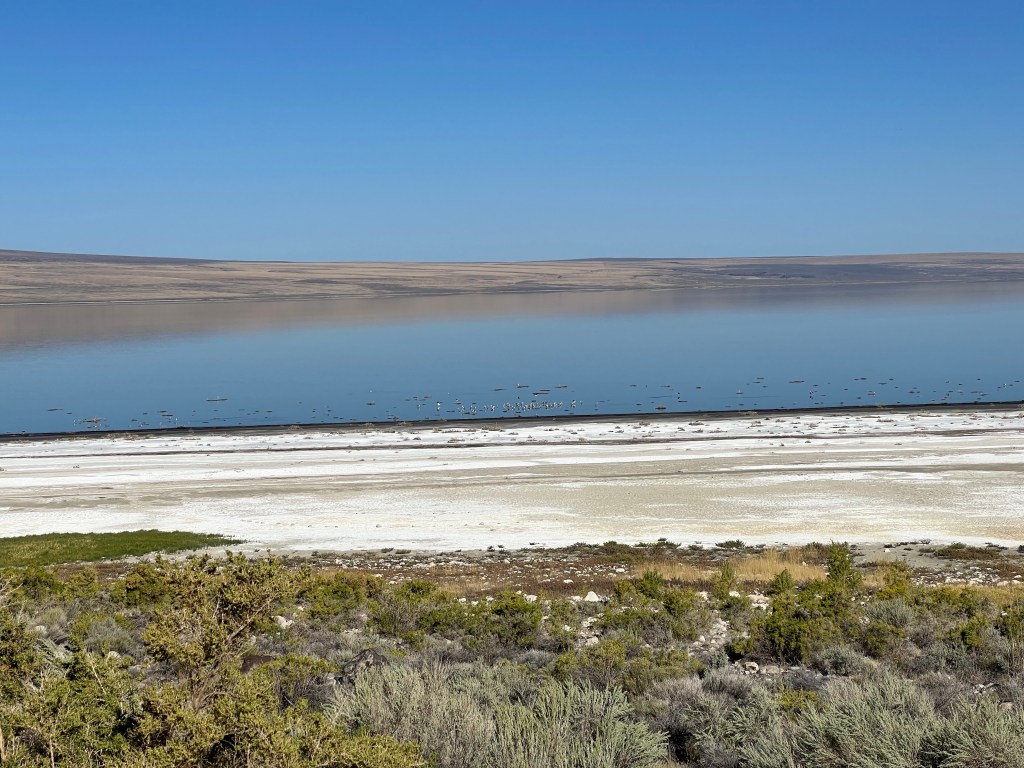
We spent the night in Lakeview, Oregon, a jumping off point for our trip to the eastern side of Oregon on Saturday. The lake view name seems a stretch as the nearby lake, Goose Lake, seems to suffer dramatically from contraction and expansion even to the point of disappearing for a while, depending upon precipitation.

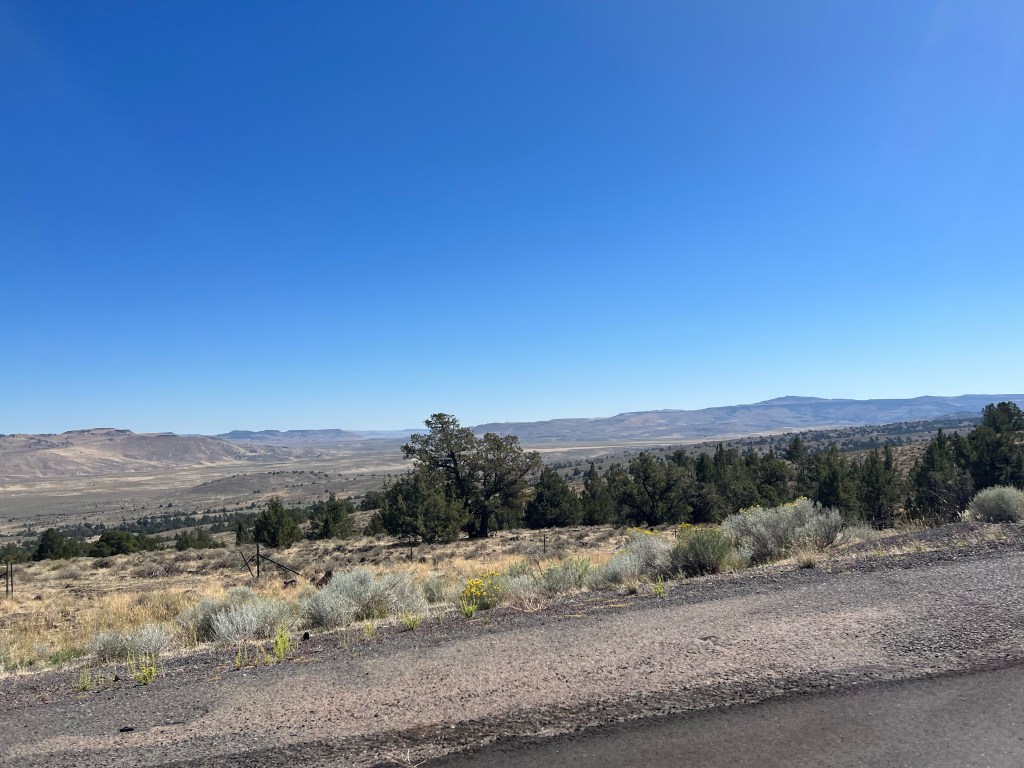
Saturday’s drive was from southwest Oregon to east central Oregon. The terrain was familiar as we experienced valleys, rocky buttes, cattle, juniper, shrubs, and grazing land. One of the counties we went through is the largest county in the state by size as well as the lowest in population. Cell coverage was frequently nonexistent. We crossed our fingers that we would not have a problem and have to wait for someone to come along and stop. The only issue we did encounter were slow moving recreational vehicles that couldn’t keep up to the speed limit.

At our lodging in Ontario, we picked up a local paper that discussed the special festival occurring this weekend: the tater tot festival. It seems that the founders of the Ore-Ida potato company developed tater tots back in 1953 and so the little festival today is to honor that introduction. We stopped by but we could’ve missed it.

Ed & Chris, Ontario, Oregon, September 16.

Mt. Shasta, about 60 miles away
Categories: travel | Tags: , , , , | Leave a comment

2023 Trip 7: Northwest U S: History and Adventure: Sept. 13-14

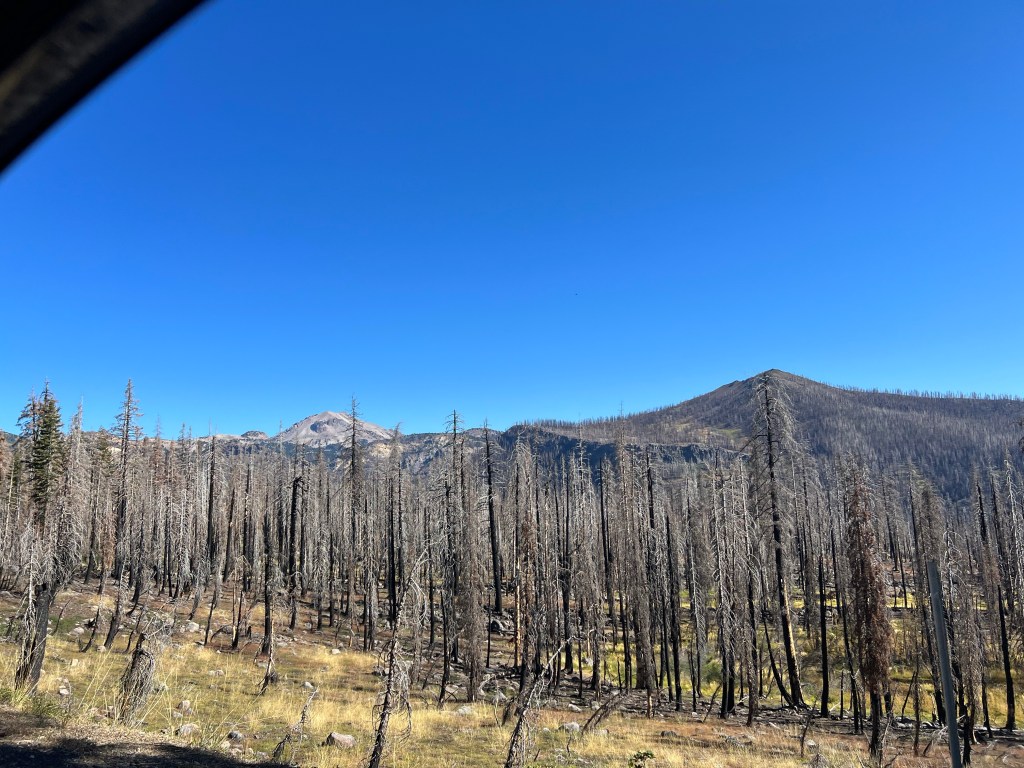
Lassen Peak National Park-fire damage

Lakeview OR, Sept. 15

Fire in United States National Parks. Wednesday and Thursday we visited two national parks in California that were heavily, heavily impacted by wildfire. It was quite an eye-opening experience.

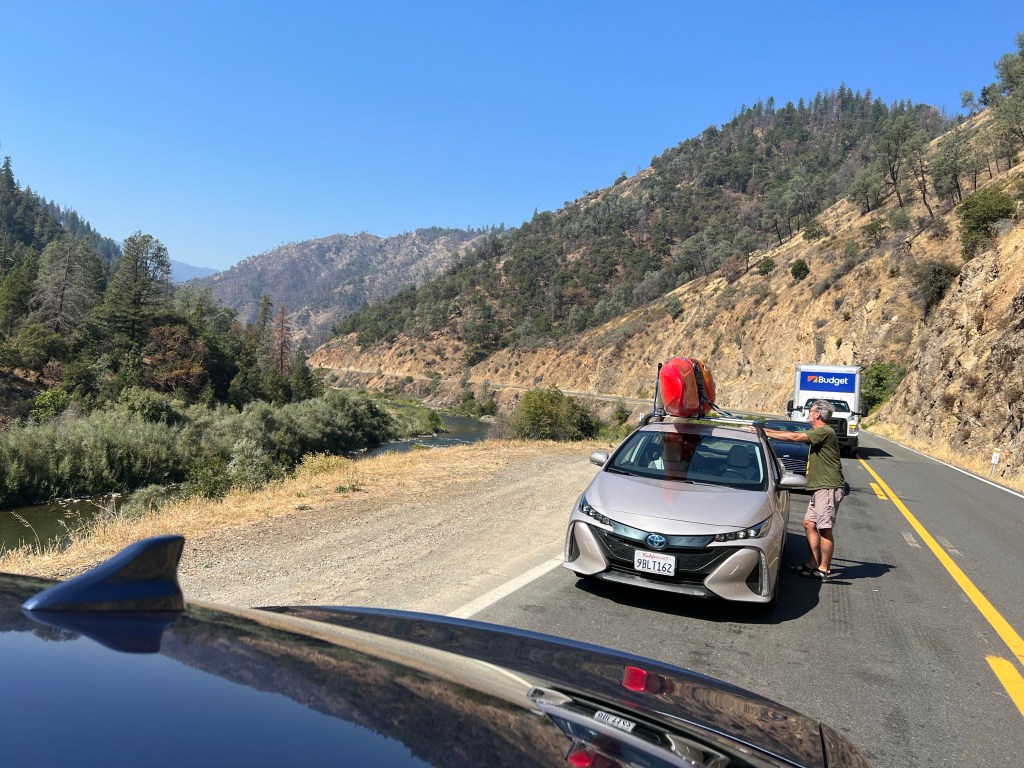
Wednesday morning started with having breakfast with our hosts at the bed and breakfast in Arcata California. Not only was the food delicious, the conversation was politically interesting and pleasant. We left around 10 AM and drove over the Coast Mountains once more. The cooling ocean breezes were left behind, and we greeted the hot, hot temperatures of interior California. Road construction and smoke from the Smith River Complex fires were our companions.

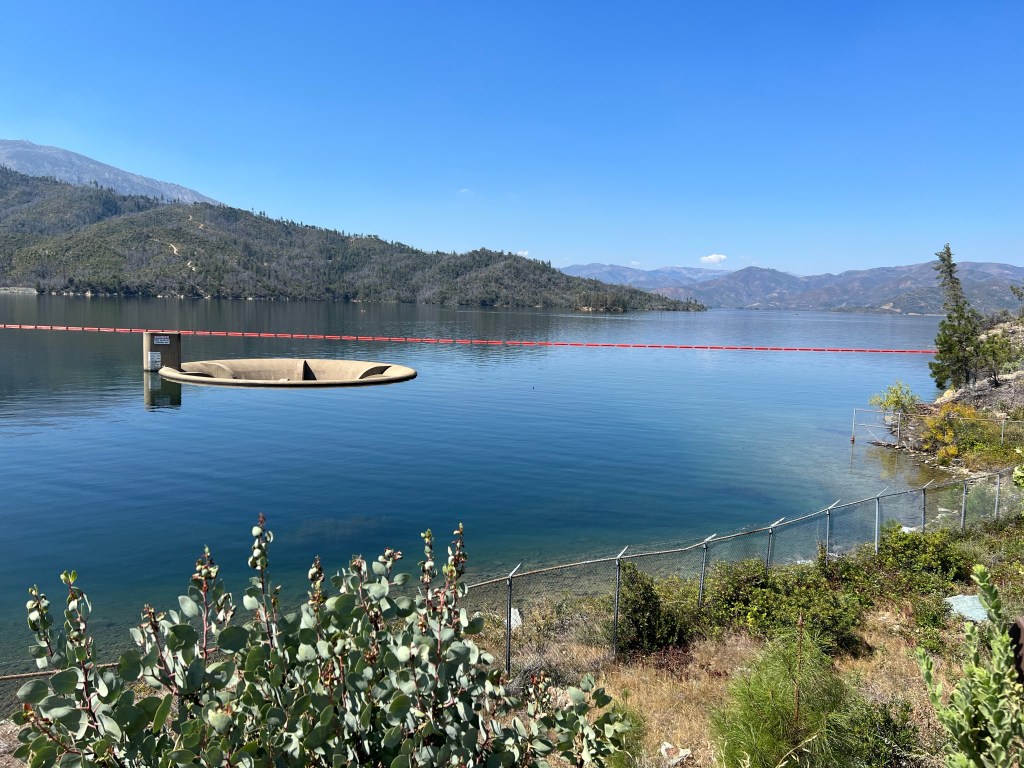
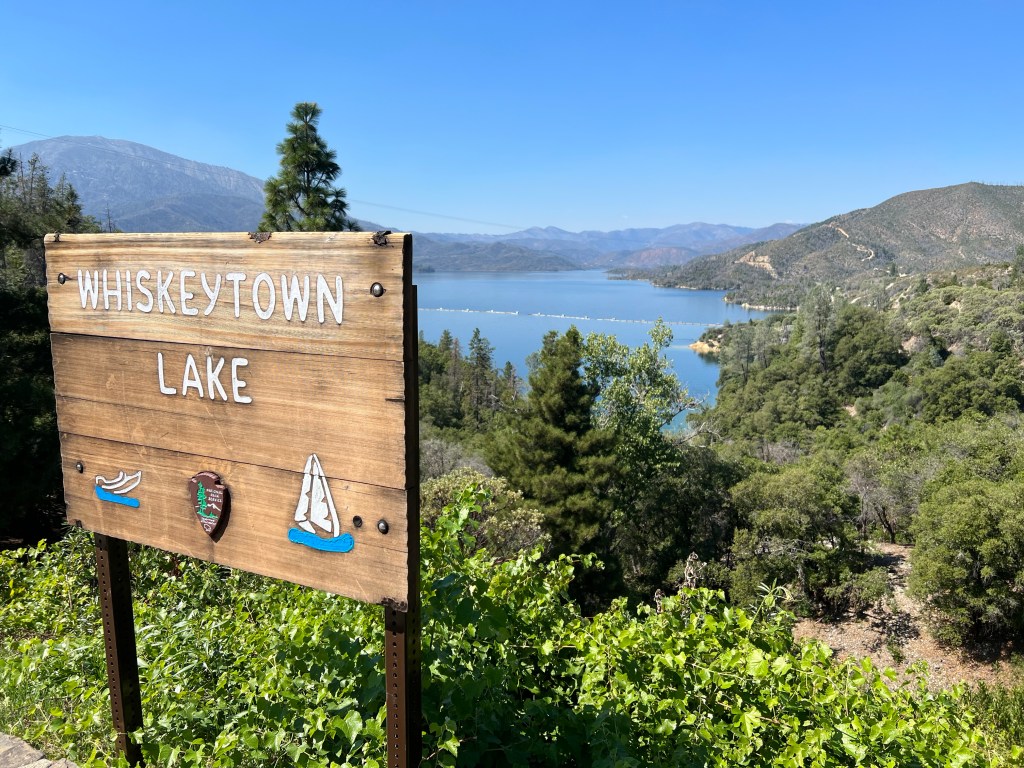
Whiskeytown was an area of California populated by Native Americans, the Wintu. Gold fever brought immigrants who through guns and germs decimated the local Indians. The small amount of gold present was mined and removed. With gold gone, most of the people left also. Eventually, only a small town remained, and that was moved and covered up by the Whiskeytown dam.

Starting with the construction of the Shasta Dam and Lake in the 1940s, part of the Trinity River water system was diverted to central California via the Sacramento River, rather than its normal endpoint of the Pacific Ocean. Whiskeytown Lake and Dam were a 1960s addition to that water movement system. The final result was hydroelectric power, a dependable water supply for central California, a flood control system, and opportunities for recreation. Whiskeytown’s official name is Whiskeytown-Shasta-Trinity National Recreation Area. Only the Whiskeytown unit is managed by the National Park Service, the Shasta and Trinity units are part of the US Forest Service.

As we drove east from the Pacific Ocean, we came across dramatic evidence of the July 2018 Carr Fire. Over 97% of the park had fire damage, much of it severe. Prescribed burns have been done in this park for three decades, and that was able to mitigate the damage in a number of areas. But in the Carr Fire, three firefighters and four civilians died. At times while fighting the fire, temperatures reached 113°. Over 1000 homes were destroyed. Part of the park has been reopened, numerous sections are still closed, however. Leaving Whiskeytown, we had a greater appreciation for the damage fire can cause.

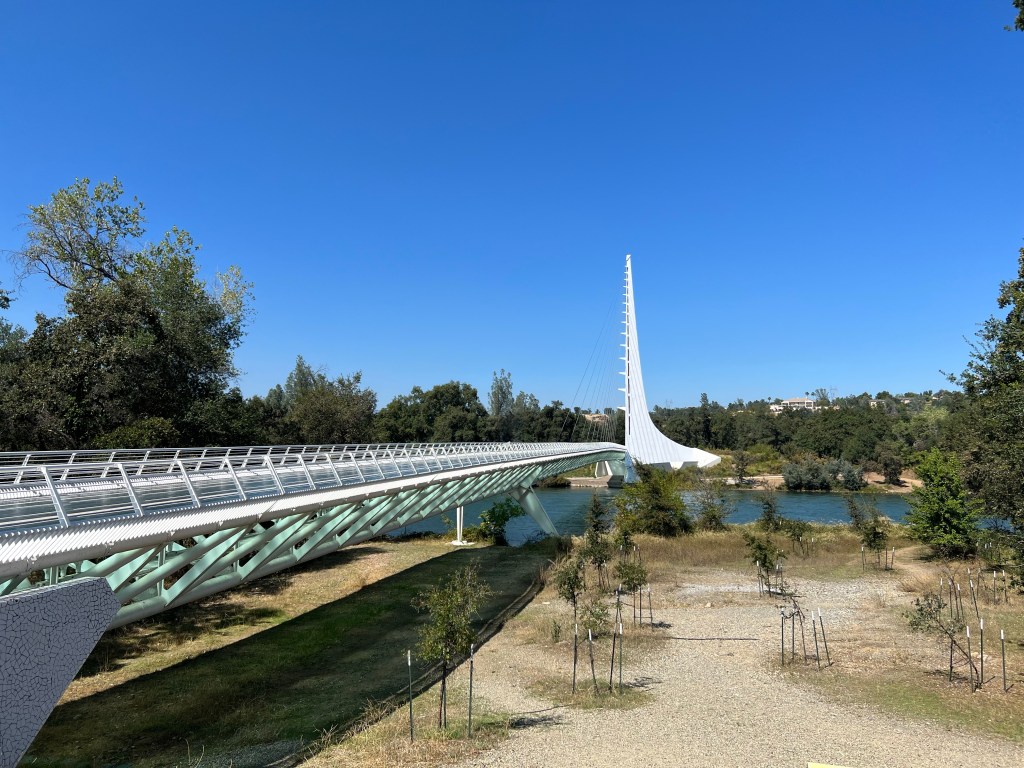
Sundial Bridge, Redding CA

Next stop, Redding, California where we are to spend the evening. We stopped at the Sundial Bridge. This is a 2004 constructed pedestrian bridge over the Sacramento River that connects to parts of a park, museum, and botanical garden. We only looked at the bridge, walking over it and taking pictures of the river down below.

We went onto our Home 2 Suites lodging and chose not to do a blog post for this day, thinking that we would combine Wednesday and Thursday into one post. Little did we know that for the next 36 hours, we would have practically no Internet and no cell service due to the terrain we were driving through, walking through, and staying at.

Thursday was to be spent at Lassen Volcanic National Park, one of the few places in the world where all four types of volcanoes are present: plugged dome volcanoes, cinder cone volcanoes, composite volcanoes, and shield volcanoes. Lassen Peak is one of the largest plugged dome volcanoes in the world. Its last eruptions were between 1914 and 1921.

Miles before we reached the park, we could see cinder cone volcanoes and lava rocks throughout the rolling plains, leading up to the park itself.

As one enters the park, it becomes more mountainous and more forested. Then you come across burnt areas. Yes, Lassen was also subject to a tremendous California wildfire.

The 2021 Dixie fire, started on July 13, became the largest single fire in California history. Despite spending 30 years on fuel reduction, the park still suffered traumatic loss. Recovery efforts will continue throughout 2023. We hiked over 4 miles here even though Lassen Park has a high elevation and mountainous terrain. We did not walk to the top of Lassen Peak, 10,463 feet. There’s a limit.

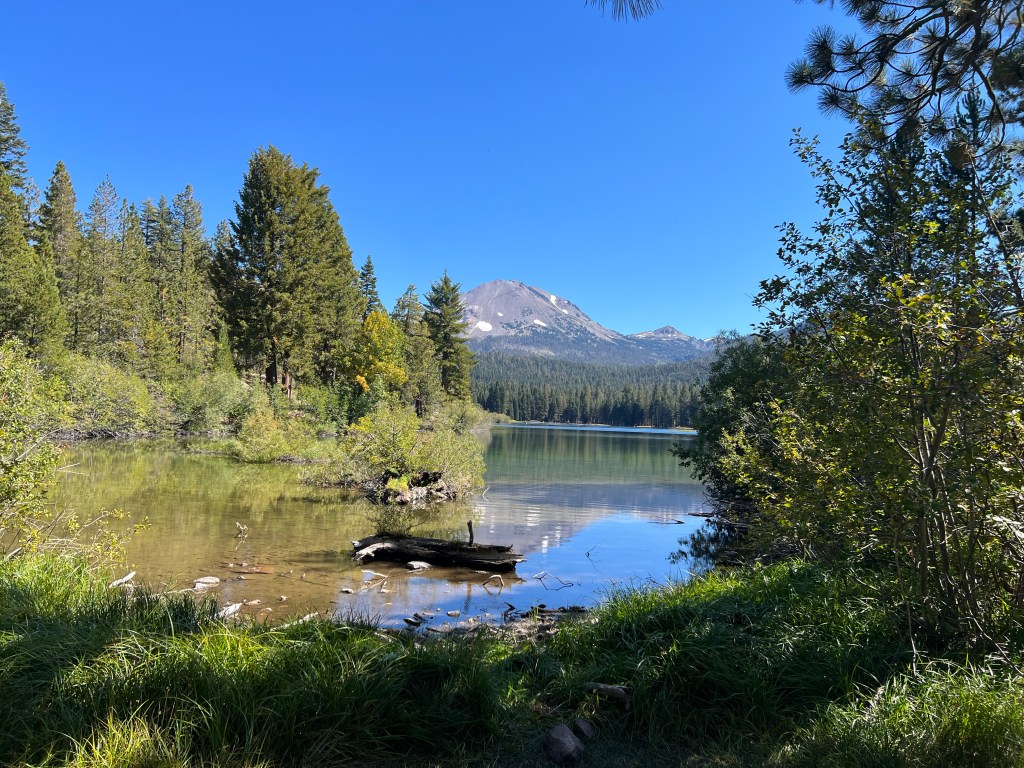
Manzanita Lake at Lassen
Rock strewn trail at Lassen
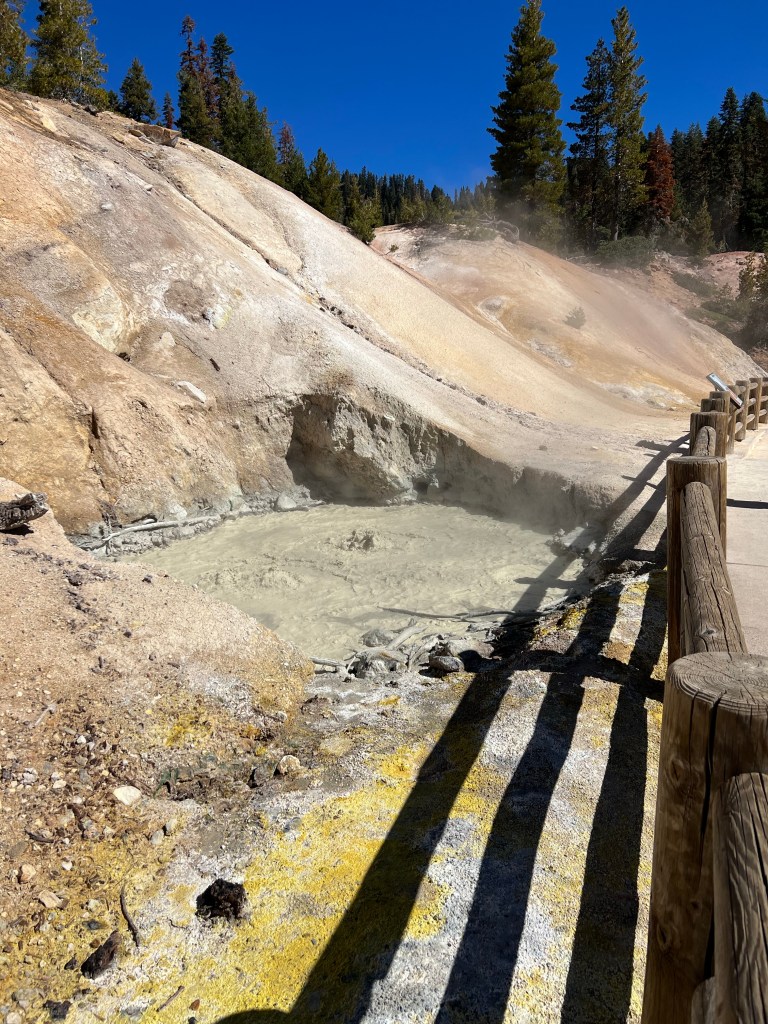
Lassen has mud pots

Lassen does not have glaciers, but there is still snow at some locations year around. There are meadows, lakes, creeks, forests, and of course, lots of rocks and mountainsides. The park road reaches a high elevation of 8500 feet and is part of 500 mile Volcanic Legacy Scenic Byway, connecting Lassen and Crater Lake National Parks. It is only one of 42 designated All American roads. We will end up driving a good portion of this scenic byway as we go to Lava Beds National Monument on Friday.

We spent the evening in a mom and pop hotel in the small town of Burney California, population 3000. We had a 20 minute delay getting into town due to road construction. Road construction blocked off access to many restaurants so we walked next-door to a small Chinese place. Neither the Chinese restaurant or the hotel were fantastic but they did in a pinch. Internet service was so slow it might as well not been offered. Cell coverage was nonexistent in the park and elsewhere while it too was practically nonexistent in the town. No blog post this night either.

Ed and Chris, Lakeview Sept 15

Lassen Peak
Categories: travel | Tags: , , , , , , , | Leave a comment

2023 Trip 7: Northwest U S: History and Adventure: Sept. 12

Yes, that is Chris at the lower center of the photo.

Arcata, CA Sept. 12

We woke up to a day with more smoky haze than the previous two days. The haze was more prevalent, and the odor stronger. After a hearty breakfast at the Hiouchi Café, we departed the small town of Hiouchi. It had been a pleasant interlude. We were not leaving the combined national and state redwood parks. Our goal was to move down to those parks south of the Klamath River.

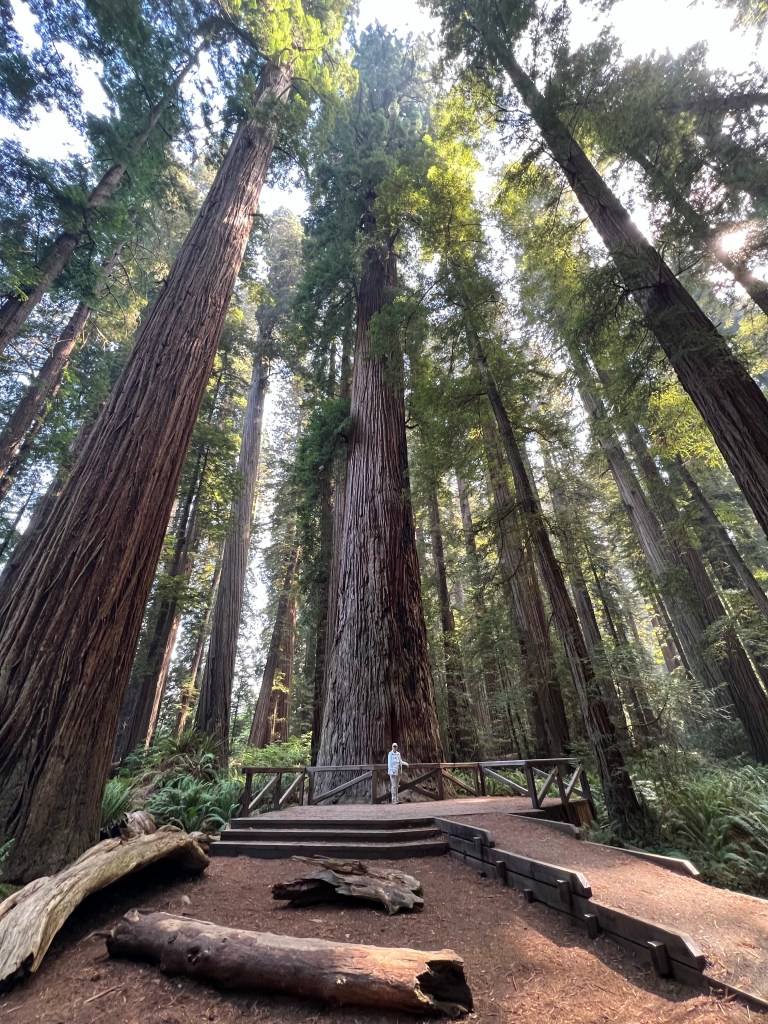
Redwood forests are not composed only of redwood trees. They have multiple layers of trees. The redwoods of course at around 300 to 375 feet are the tallest. The next layer down would be composed of Douglas fir. The third layer would be the mixed hardwoods with a fourth layer being shrubs and groundcover. It makes for constantly changing scenery.

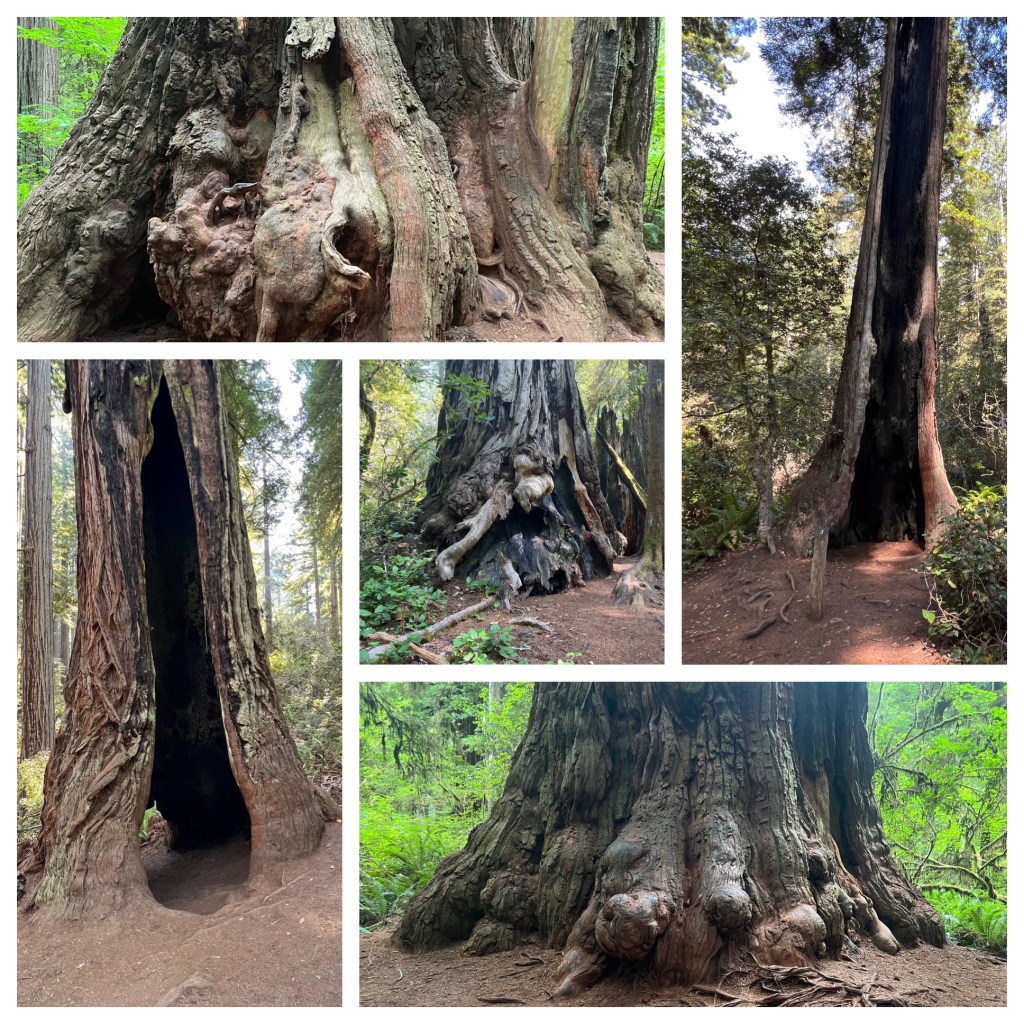
Redwood trees

An additional two hikes today provided new views. One does not tire of observing the base of trees with their lightning damage, fire scars, multiple growths at the base, and large openings. Even at higher levels, there are interesting views. You will find not just large branches, but whole trees, growing from the side of the redwood.

Our b and b in Arcata

After a stop for ice cream, we arrived in the town of Arcata California. Arcata is a town of about 20,000 people and home to Cal Poly Humboldt University. Previously Humboldt University, the university has an opportunity for expansion and focusing on sciences due to a recent initiative by the state. We are staying at a bed-and-breakfast here in a home dating back to the 1880s.

Arcata is just a stopover, a town that positions us more closely to reach our destination of Redding California tomorrow night. Today’s weather has been delightful, with the highs around 70 under clear skies-after we left the smoky haze behind us. Tomorrow, however, the temperatures will be in the mid 90s and maybe even 100 as we drive over the Coastal Mountains towards interior California.

Ed and Chris, Arcata CA Sept. 12

Yes, that is Ed at the lower center of the photo
Categories: travel | Tags: , , | Leave a comment

2023 Trip 7: Northwest U S: History and Adventure: Sept. 10-11

Us at Chris’ Hobbit waterfall

Hiouchi, CA Sept. 11

Sunday and Monday have been days of scenery. No informative museums, no historical events to understand. But the drama of wildfire did impact our travel.

When we were planning this trip, people told us to make sure we kept an eye out for news about wildfires. Saturday night we went to bed, wondering if our planned route to visit Oregon Caves south of Ashland Oregon was the wisest decision. Highway 199 travels from Crescent City California up to Grants Pass Oregon. This would’ve been the most direct route from the National Park sites of Oregon Caves to Redwoods National Park in California. We debated that option or going directly west to the Oregon coast, and then south to Redwoods, skipping entirely the Oregon Caves location.

The Smith River Complex wildfires were directly across the 199 route, although not a huge fire. The fire has been going on for two months and the road was supposed to be open, although periodically with a pilot car to lead the way. We went to bed, uncertain, but when we woke up Sunday morning, decided to be cautious and go directly west, and then south along the coast. This would mean we would miss the Oregon Caves National Park site, but we have seen a lot of caves already.

When we checked into the motel Sunday afternoon, we found out our decision was wise. Route 199 was closed for a period of time completely, other times had a one hour delay in travel. In this case, the wildfires triggered a rock slide to close the road completely. When it reopened on Monday, there was still a one hour delay due to the wildfires.

In the background, 293 foot Watson Falls.

Of course, we won’t know what we missed at Oregon Caves. However, the road west from Bend over to the Oregon coast and then down Route 101 to Crescent City California was a gorgeous route. Going west, we traversed the Cascade Mountains, stopping to see a lake and two waterfalls in the Umpqua National Forest. One waterfall was the highest in southwest Oregon, the other a cute falls Chris labeled the Hobbit waterfall. Chris did a fantastic job on the curvy, mountainous roads, since my legs were acting up and she drove this entire section.

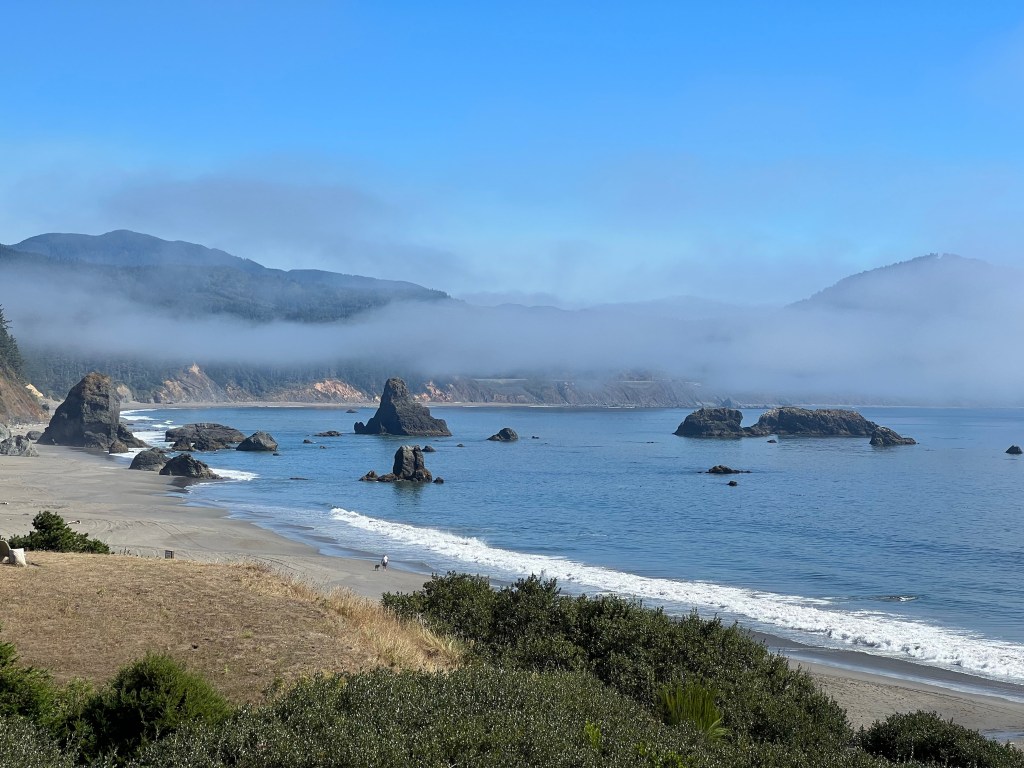
When we reached the coast of the Pacific Ocean, we stopped in Port Orford, a town we had visited and lodged at in 2010. The views were still fantastic. The fog and clouds alternately lifted and returned as we drove from Port Orford all the way down into California.

Redwoods National Park is a cooperative effort between the National Park Service, and the California Department of Parks and Recreation as the state and national parks here run together. The two park services work to inform visitors and to conserve the redwood trees along the coast of California.

We are spending two nights at the Hiouchi Motel in the small town of Hiouchi California, population just under 300 people. The Smith River Wildfire Complex had caused the power to be out for several hours, but was expected to be restored later that evening. We went to Crescent City, California, about 15 minutes away to have dinner instead. When we returned, power was on. It has been on ever since.

Today we went on a hike through the redwoods by ourselves, hiked down to an ocean portion of the park, and participated in a Ranger led hike in the afternoon among the redwoods.

Dinner, like breakfast, has been next-door at the Hiouchi café. The café has been here since the 1930s. Once again, good food in a very small town. Some of the other customers included firefighters and support personnel. We passed numerous pieces of fire fighting equipment, fire staging areas with tents and RVs, and signs along the roadway expressing appreciation for their work.

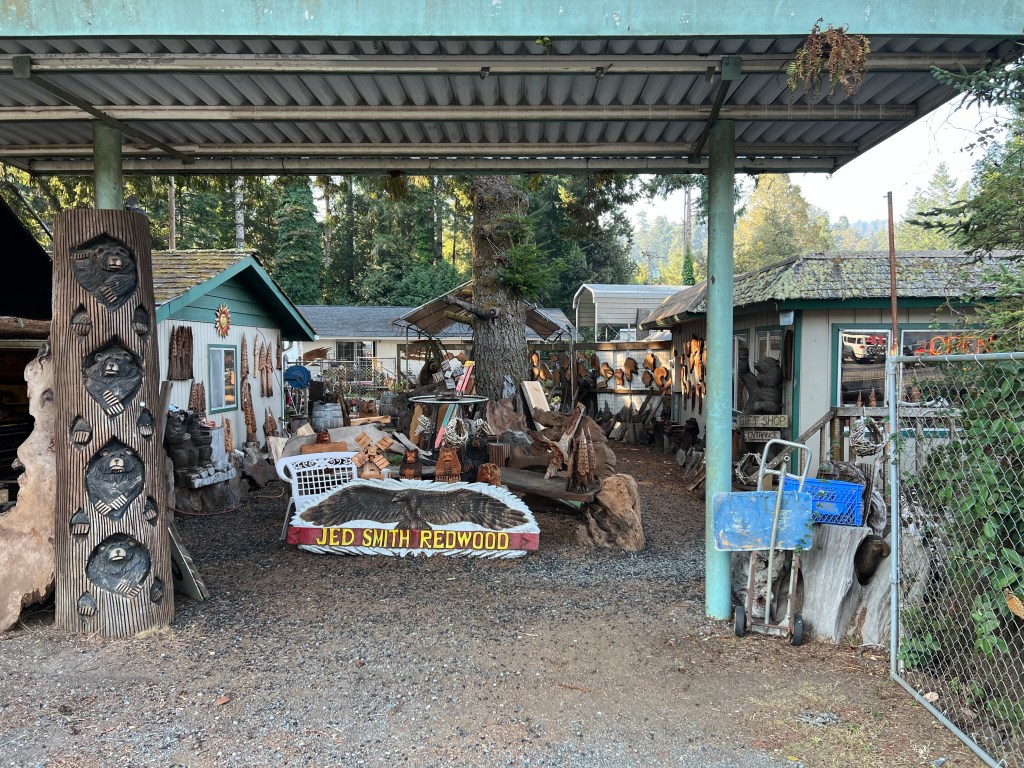
After breakfast, we stopped at a local wood carving shop next door to the motel. The business has been around for 40 years, and is finding it more difficult to get newer people interested in the skill. I will admit we did make a purchase or two.

Ed and Chris, Hiouchi CA Sept 11

Pacific Ocean at Port Orford, Oregon
Categories: travel | Tags: , , , , , , | Leave a comment

2023 Trip 7: Northwest U S: History and Adventure: Sept. 9

Painted Hill section, John Day Fossil Beds

La Pine, Oregon September 9, Saturday

September 9 is our wedding anniversary, 51 years. It was a day of travel; scenery that was widely and wildly different in just the space of one day.

Leaving Pendleton, I thought the first part of the route would be on relatively flat agricultural land on eastern Oregon’s high desert plains. The reality was different. Agriculture yes as fields of hay and herds of cattle were evident. The road, however, while smooth as those of the entire day were, was curvy and hilly. We left Pendleton at an elevation of 1200 feet and climbed to an elevation of 4700 feet.

Even on the high plains, the terrain remained hilly and the road hugged the curvy sides of hillsides, requiring you to constantly lower your speed from the posted 55 mph. The elevation went up and down, slowly making wide changes.

Then, bang, you’re entering a forested, mountainous, without being dramatic mountains, region. The road maintained that curvy aspect, this time with steeper drop offs. Overall, the roads did not have that nerve shattering hairpin, really steep drop offs that we have experienced elsewhere.

We did two separate regions like this, with sign posts that called them a scenic byway. In a side note, we picked up a Oregon brochure listing state scenic roads and only about five percent of today’s journey was a listed scenic road-and that publication listed 29 scenic roads.

In the forested regions, that recognizable pine tree smell added to the journey. The CD player was put to use as we listened to Pete Seeger and Simon and Garfunkel. Other than the fact we were in a very lightly populated area in case something happened, it was quite pleasant.

After about three hours of this, we were deciding if we should stop and eat the bagels we packed. We had gone through two small towns, really small towns, and the local cafes were shuttered. We came to Dayville, population 133. There was a cafe, it was open, even if the sign out front said business for sale.
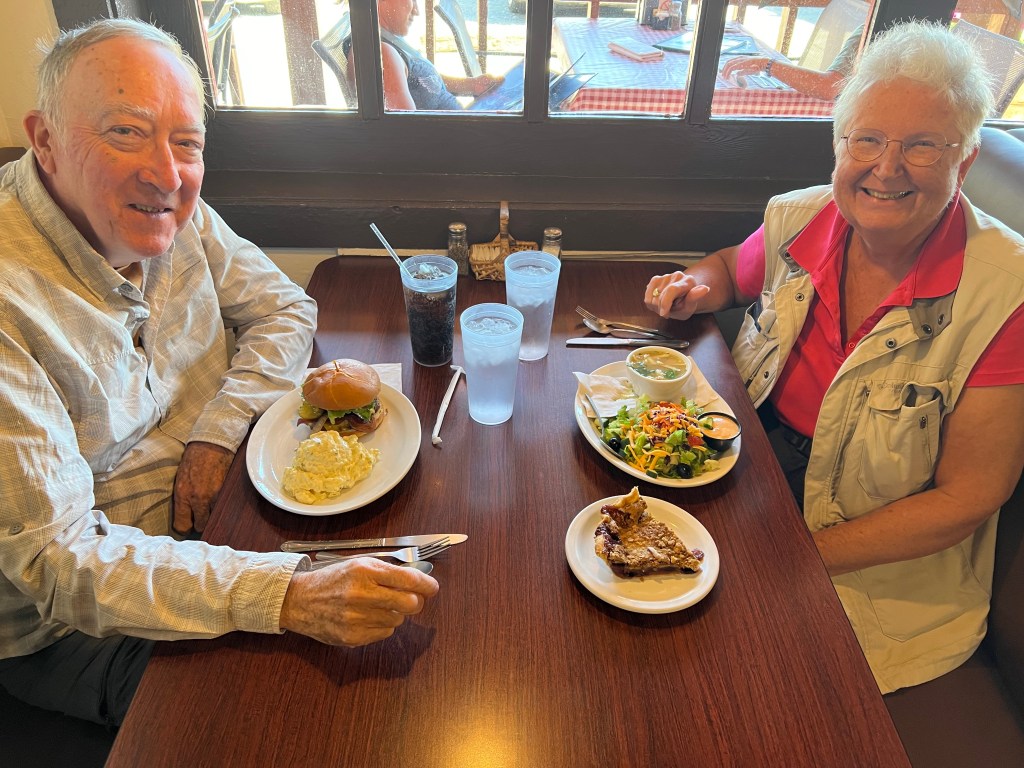
What the heck, we took a chance. The Dayville Cafe would be our big anniversary meal. It was a good stop. The clientele was a mix of travelers who like us decided to take a chance and of locals who knew each other and the staff. The food was good and the wide selection of pies were all homemade. I had rhubarb and Chris had blueberry peach. Yummy. We even considered taking an extra piece with us but finally decided not to.

On the way to John Day

On to our one site to visit for the day. John Day Fossil Beds is a National Park National Monument. Central Oregon has wide expanses of land that have been covered by a series of volcanic actions from lava flows to ash deposition. This happened over millions of years, after the age of the dinosaurs. Through a series of actions by state and federal officials, a small portion of this expense of land has been created as a national monument where further paleontology work is being done.

John Day Fossil Beds is unique. Most fossil sites around the world capture a narrow span of time. John Day Fossil Beds is more like a photo album, chronicling how life has changed over 40 million years. Fossil hunting started here in 1862. Fossils and paleontology were studied here by numerous universities and fossils from here are all over the world. Beginning in 1927, the state of Oregon was wise enough to start protecting some of the land as state parks. In 1975 the national monument was officially established, incorporating several of those state parks.

We came for the scenery and the fossil viewing. Both were gorgeous. The Park film gave a good introduction to the national monument. The exhibits in the visitor center have displays depicting life as it might’ve been at that time as well as actual fossils. The park has paleontologists on staff and during the week visitors can observe their work through a glass walled viewing area.

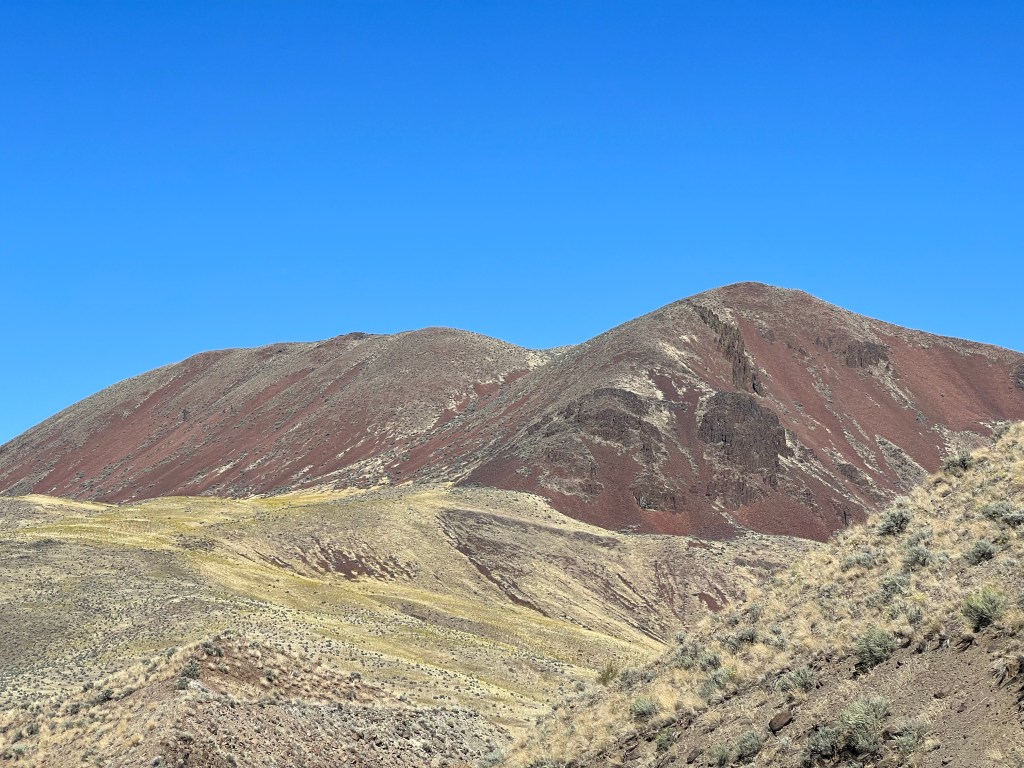
The scenery on the way to the visitor center is gorgeous, but the real highlight is visiting the section called Painted Hills. Here the hill sides are a combination of green, white, and red, along with the usual bits of brown. Once we finished, taking our usual, too many pictures, we continued our drive to just south of Bend Oregon to spend the night.

The final change in scenery happened south of Bend as we rolled along the highway through forested areas in the middle of lava fields. We had visited this portion of Oregon before and did not stop this time to revisit any of those lava fields.

Ed and Chris, La Pine OR Sept. 10

Categories: travel | Tags: , , , | Leave a comment

2023 Trip 7: Northwest US: History and Adventure: Sept. 8

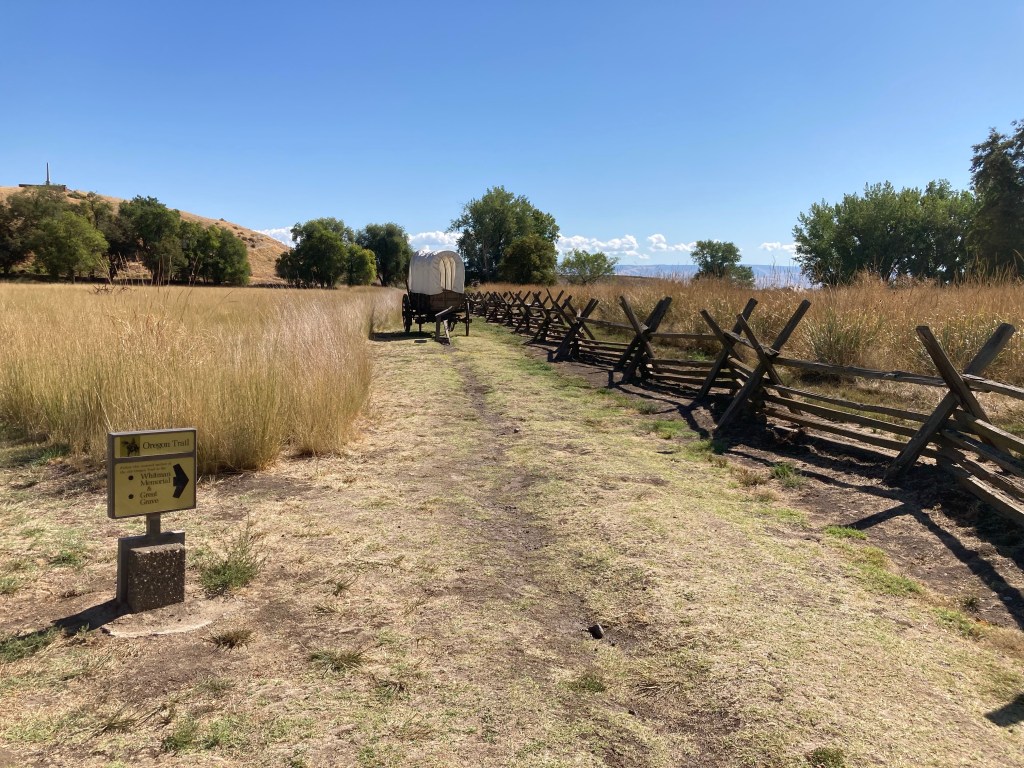
The Oregon Trail went through the Whitman Mission

Pendleton, Oregon Friday September 8

Finally we are on the Columbia Plateau, having left Idaho, driven through Washington state, and now resting in northern Oregon. Thankfully our waitress gave us a tip last night. Gas up in Idaho, she said. Gas is more expensive in Washington. Boy, what an understatement! Gas was a dollar more per gallon in Washington. When we gassed up tonight in Oregon, it was only twenty cents more expensive than Idaho and still eighty cents less expensive than Washington. I just can’t wait to see the gas prices in California.

We leave the Snake River behind us—for now

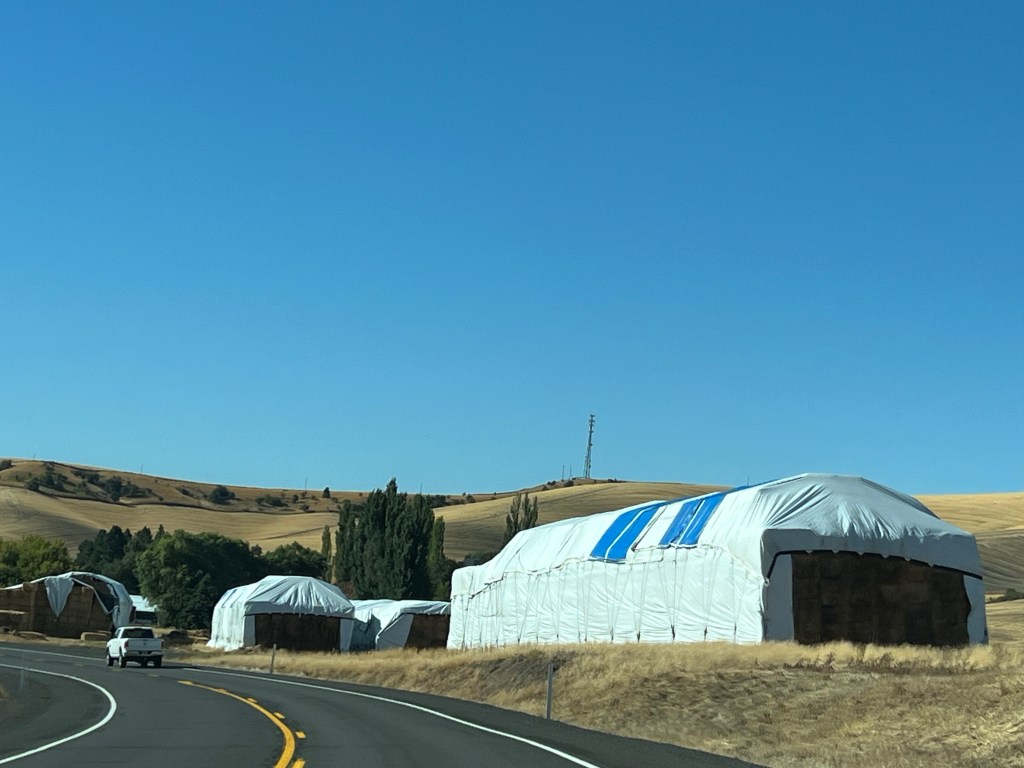
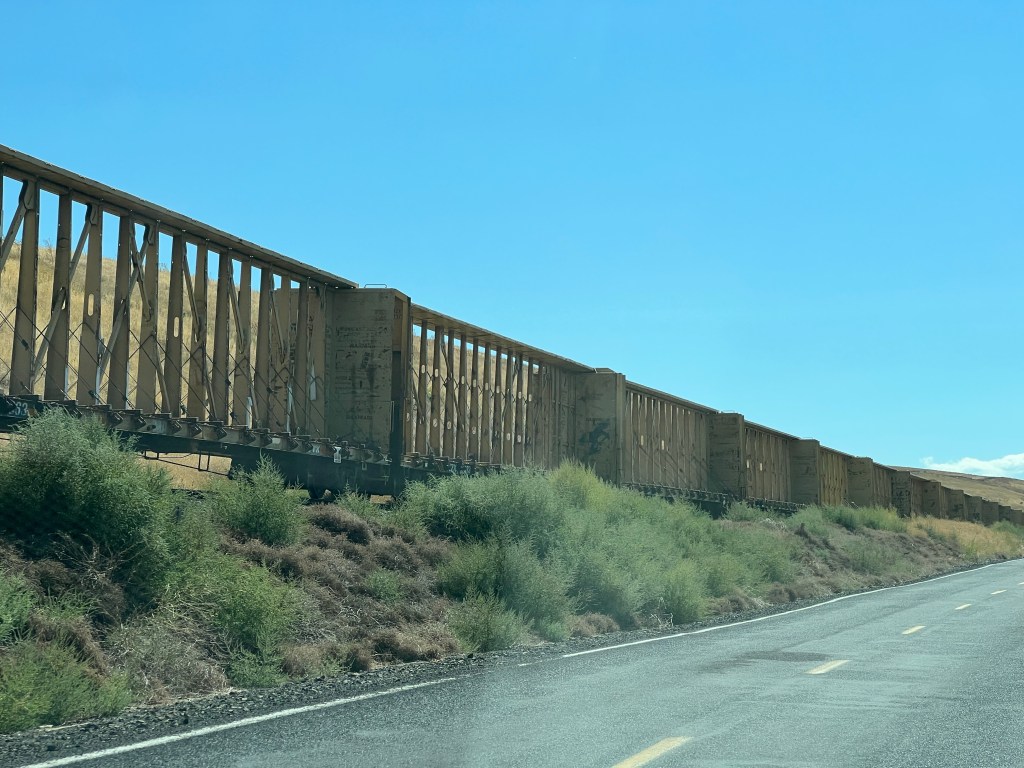
It was only 100 miles from Lewiston to Walla Walla Washington. Initially we still had the Palouse type scenery and hills but it seemed like hay/alfalfa was the only crop being grown. Farms had huge stacks of hay everywhere you looked. As is standard now, we came across another long line of empty railroad cars stacked on an unused rail line. These were center beam flat cars.

Our first stop was the Whitman Mission National Historic Site just outside Walla Walla WA. Marcus and Narcisa Whitman left New York in 1836 for Oregon with a missionary zeal to convert the heathens. They had some success but not overwhelming. As more immigrants came to Oregon, they served more of that community.

However in 1847 came a turning point. Marcus Whitman was a medical doctor. Measles struck the community extremely hard. Marcus was able to save most immigrants who came down with it. However, the Cayuse people, particularly the children, had no immunities and the majority of them that Marcus treated, died.

The Cayuse, already skeptical of the immigrants and the mission, believed Marcus was poisoning their children while saving those of the immigrants. They killed Marcus, Narcissa, and 11 others. The Cayuse War followed as the remaining Cayuse were killed or scattered. The NPS site here explores how the mission changed the way of life in this region in ways initially unimagined.

Tamastslikit

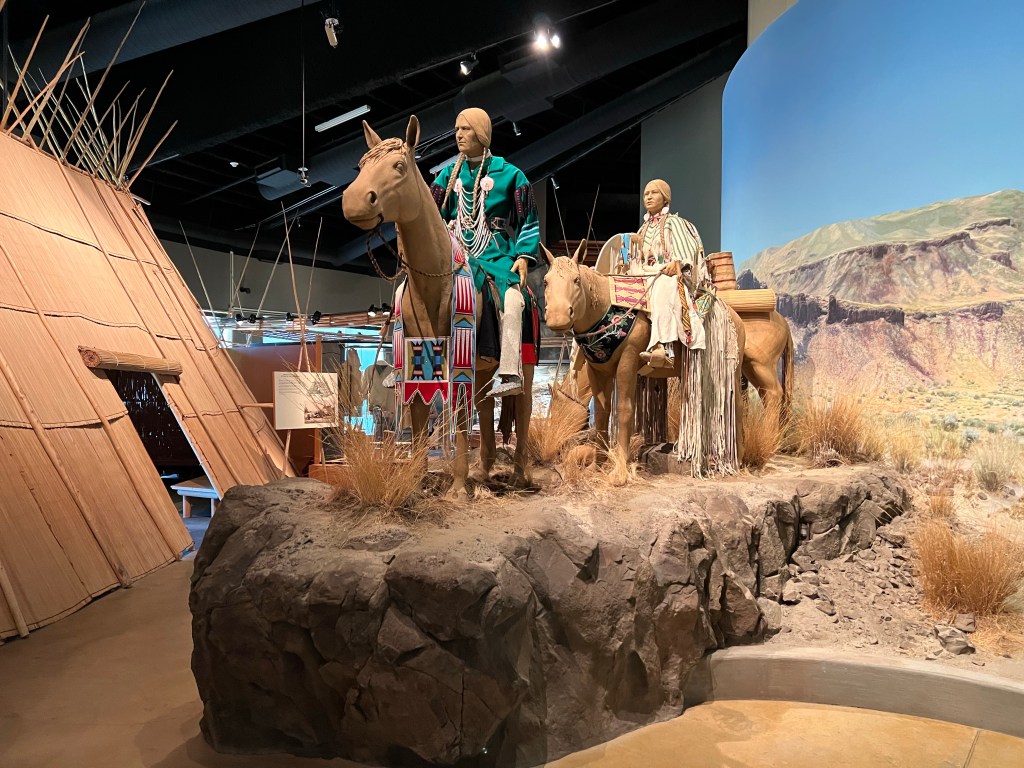
We left the Whitman Mission and drove to Pendleton Oregon. The Tamastslikt Cultural Institute is run by the Confederated Tribes of the Umatilla Indian Reservation, the Cayuse, Umatilla, and Walla Walla. The Institute is organized around the themes: We Were, We Are, We Will Be and the 16,000 year culture of the combined tribes. Perspectives look back, telling the story of westward expansion of the U.S. from a tribal viewpoint, and forward, explaining how the Tribes are leaders in salmon, lamprey, and mussel restoration and fueling the regional economy.

The history of the Oregon tribal nations is rich and complex. I doubt we will leave this trip with a deep understanding, probably just an initial and shallow one. I don’t remember even thinking about it in the two week trip we took around Oregon about a dozen years ago.

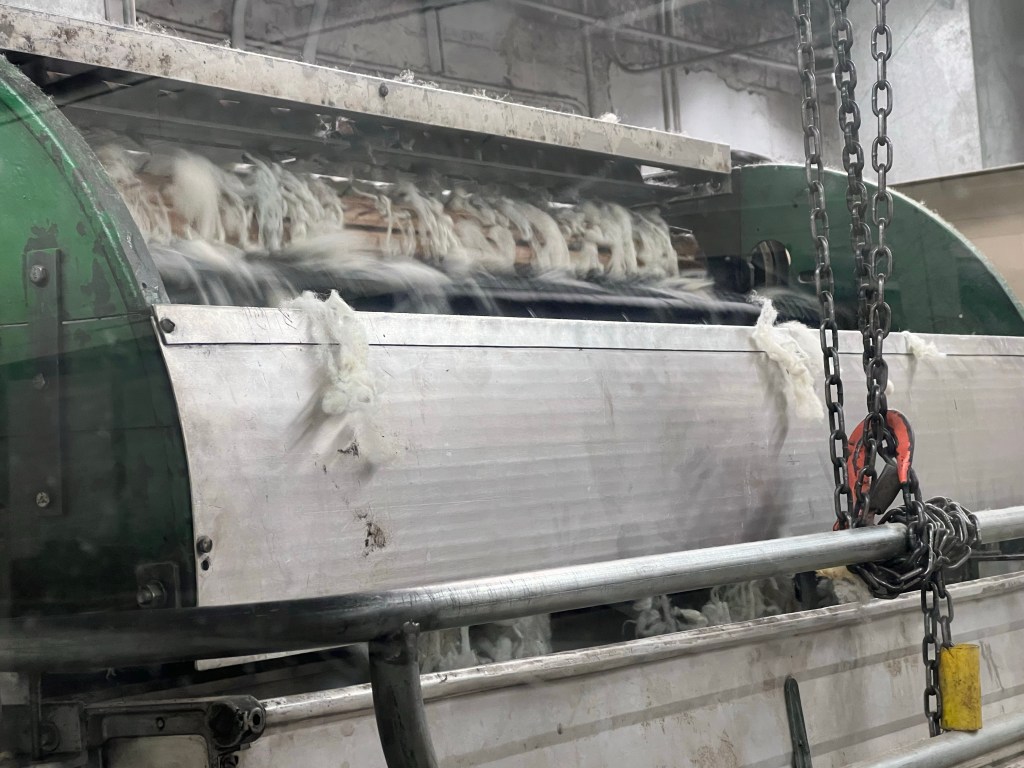
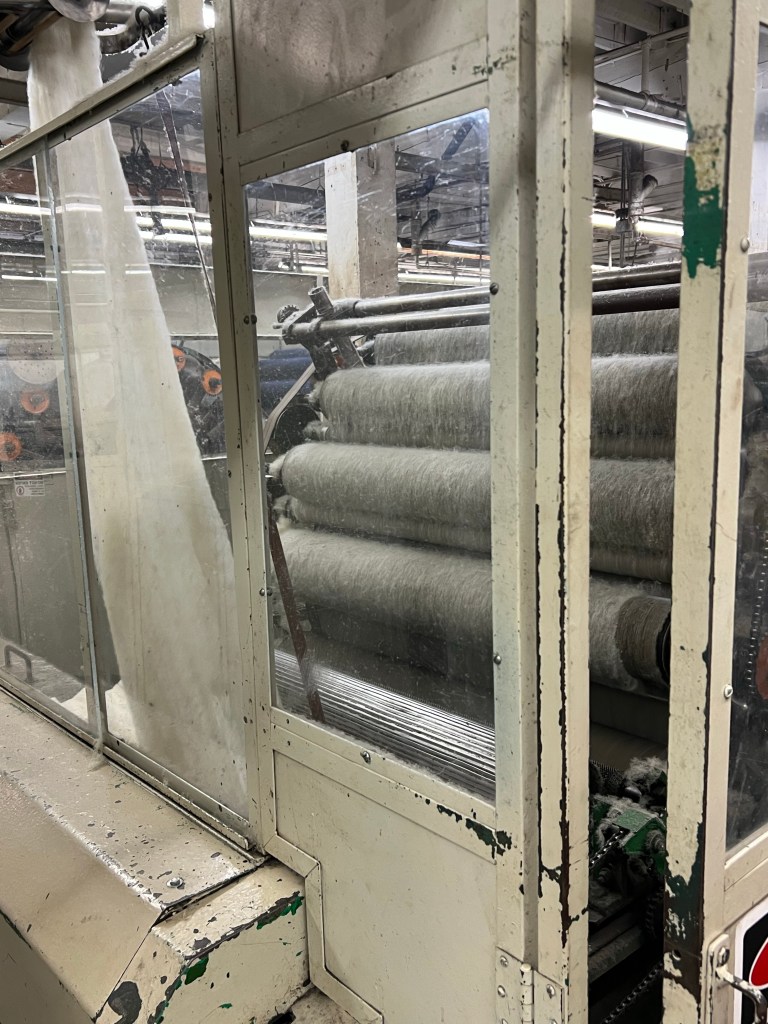
Pendleton is, of course, the home of the Pendleton woolen mills, makers of beautiful blankets and clothing.The company is still family owned and has two major mills, one here and one along the Columbia River in Washington state not far from Portland Oregon. Both offer tours and we had requested two of the eight slots available for the 3 pm tour at Pendleton. We got them.

Our tour guide has been giving tours for seven years. She explained the milling process and how the two mills complement each other. For instance, this mill takes the raw wool and works it into finished yarn but the second mill does all of the dying.

The variety of styles available in Pendleton blankets

Blankets are the specialty of this mill. The rich colors and expressive designs are all made here. Each blanket is visually inspected before it leaves the mill. The mill has been operating here since 1909. Some of the machinery is brand new, others decades old. The mill runs 24 hours a day, five days per week.

Ed and Chris Pendleton OR Sept 9 Happy 51st Anniversary to us

Center beam flat cars alongside a deserted two lane road
Categories: travel | Tags: , , , | Leave a comment

2023 Trip 7: Northwest US: History and Adventure: Sept. 6-7

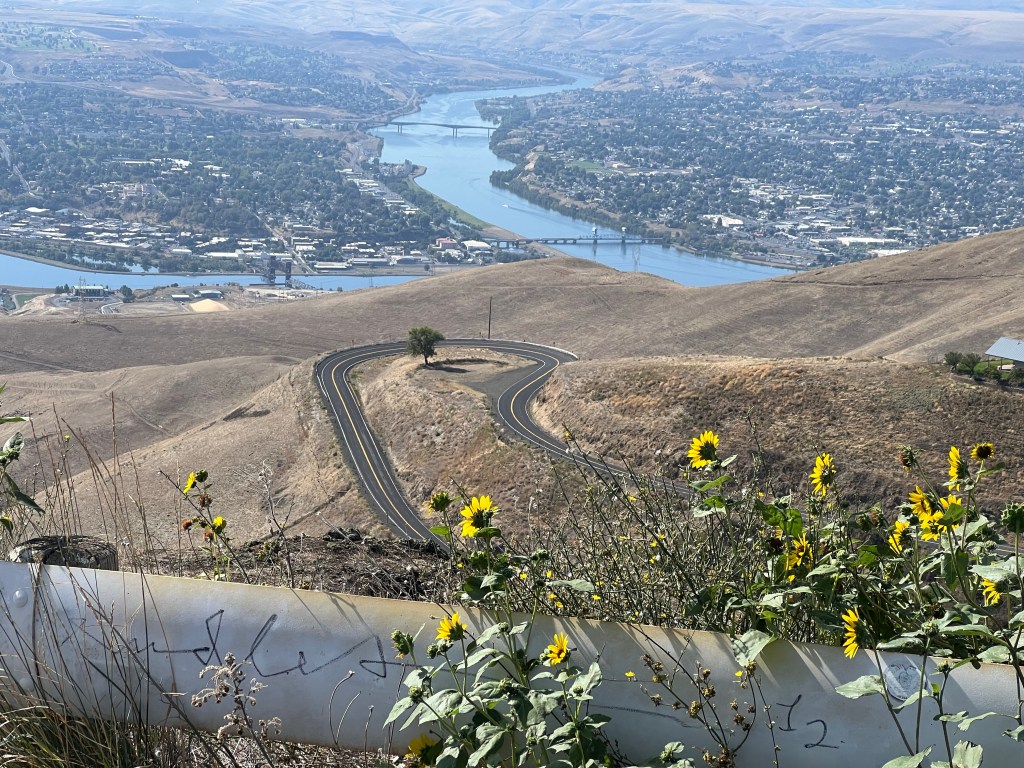
Lewiston, Idaho (upper left) at the confluence of the Snake and Clearwater rivers from Lewiston Hill

Lewiston, Idaho, Sept. 7

Wednesday the journey was the destination with two historical bookends to highlight the time. After leaving the Fairfield Inn in Missoula, we drove half an hour to the Travelers Rest State Park in Lola Montana. This state park is the only proven campsite used by Lewis and Clark and the Corps of Discovery in 1805 and 1806. They actually stopped here twice, both going out, and coming back.

At Traveler’s Rest, archaeologists have discovered items from that time, and core samples indicate three of the trees were here in 1805. This location was a well-known resting place and trail crossing for Native Americans. Lewis and Clark‘s people communicated with the local tribes and gained food and information before heading over the steep and forbidding Bitterroot Mountains.

Leaving Travelers Rest, for the next several hours we followed, at least pretty closely, the trail used both by Lewis and Clark, and by the Nez Perce in their efforts in 1877 to avoid the US Army.

Lolo Trail and the Bitterroots
Lolo Pass
Middle Fork Clearwater River

We stopped at several overlooks, including one at Lolo Pass, marking the easiest crossing point for a portion of the Bitterroots. The Clearwater River follows US 12 and us most of the way. Another stop was the Forest Service Ranger station at Fenn Valley, a historic building constructed by the Civilian Conservation Corps in the 1930s. This building is in the Selway River Wild and Scenic River area.

The latter portion of our drive was through the Nez Perce reservation. The National Park Service staffs an official visitor center for the Nez Perce National Historical Park. We watched the video, examined displays and talked with the rangers here, We ended the day at our Hampton Inn and had a fancy meal out at Tomato Brothers.

We had not quite realized that Washington state is right across the border from Lewiston. This was driven home as we went to dinner at Tomato Brothers and drove across the Snake river into Washington state. We also had not realized, but the town in Washington is called Clarkston. So we have Lewiston Idaho named after Meriwether Lewis across the river from Clarkston, Washington named for William Clark.

This is the area where the Corps of Discovery transferred from the horses to canoes, and traveled down the Snake and Columbia rivers to the Pacific Ocean. It was only due to the assistance of the Native Americans that the Corps of Discovery was able to make it over the Bitterroots, survive other challenges, and make it on to the Pacific Ocean. We won’t go onto the entire story, you can look that up.

The Palouse

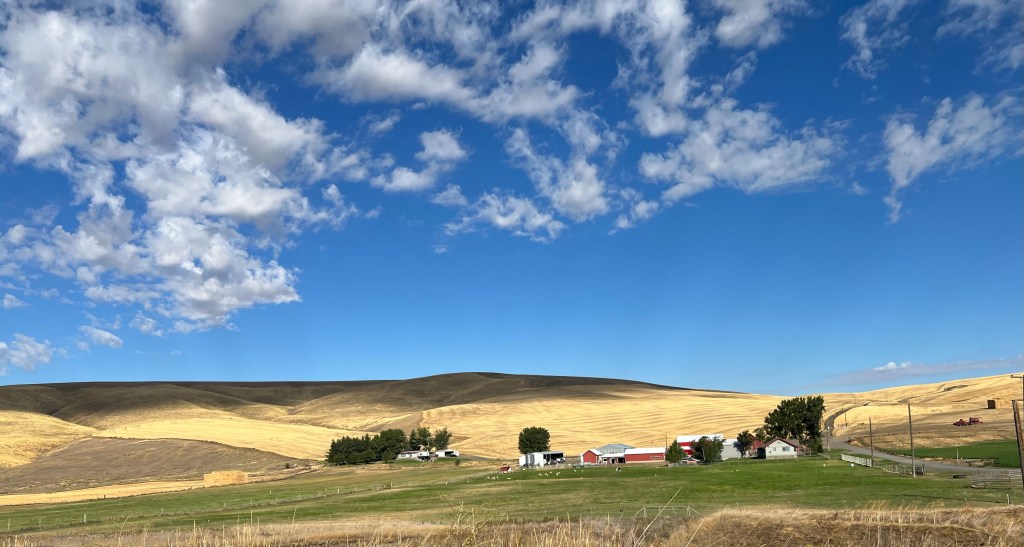
Today, Thursday, we drove up the Lewiston Hill, the 2,000 foot elevation gain across the Clearwater River, into the region called the Palouse. The geology is unique with fields of wheat, peas, and lentils. Our destination was Moscow, Idaho. In Moscow, we visited the Appaloosa Museum. I thought this museum dedicated to the Appaloosa horse would be interesting and a worthwhile trip. It was only so-so.

Returning to the Lewiston area, we went to Hells Gate State Park. The park is located along the Snake River, and had more displays about the Lewis and Clark expedition and the Nez Perce Indians. We had lunch here along the river, took a 2 mile hike, and visited the Jack O’Connor Hunting Heritage and Education Center.

Ed and Chris, Lewiston Sept. 7

Working on the blog from the patio of the Hampton Inn, looking at the Lewiston Hills.
Categories: travel | Tags: , , , , , , , | 3 Comments

2023 Trip 7: Northwest U.S.: History and Adventure: September 5

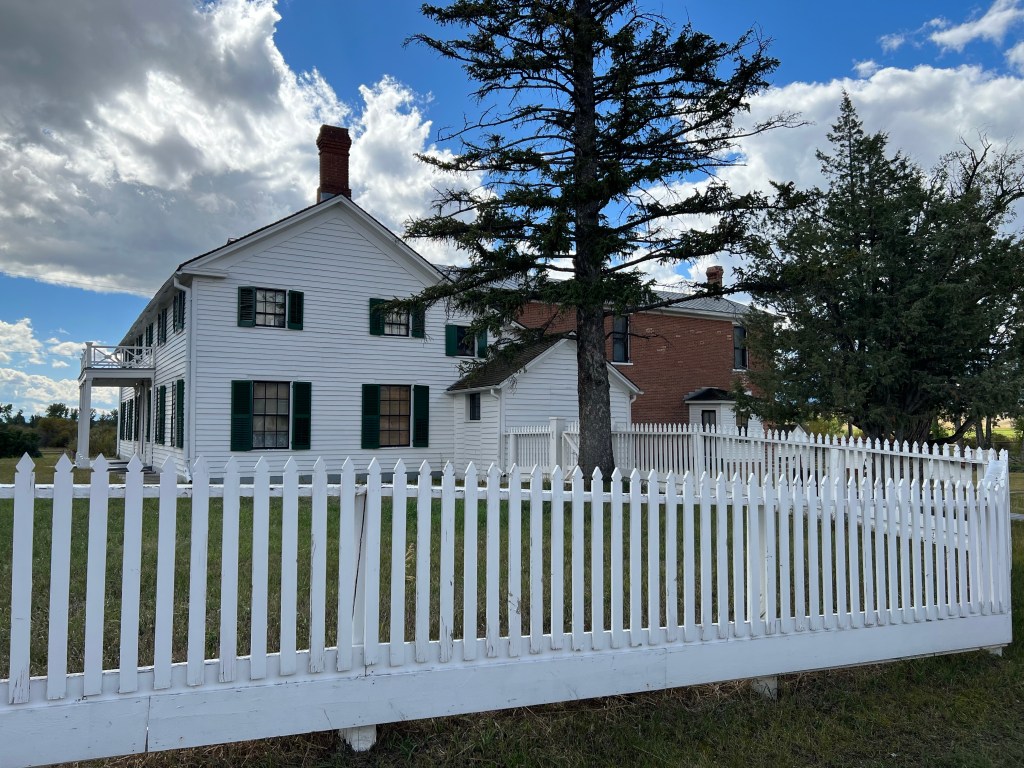
Part of Grant Kohrs

Missoula, Montana

Tonight we were supposed to be staying in Butte, MT. Yesterday as we reviewed our upcoming plans, we made a mid course correction. Given the narrowness of the northern section of Idaho, we found it easier to drive back and forth between the two both today and again later in the trip.

The objective for today was to visit Grant-Kohrs Ranch, a NPS National Historic Site in Deer Lodge, Montana. Originally, we had planned to go to Butte to spend the night, just 40 minutes away from Deer Lodge. If we had time, there were one or two other places to visit. Then tomorrow we would drive back to Idaho over the mountains on scenic route US 12. But driving back to Missoula tonight instead would save us 90 minutes of driving time tomorrow before we even started on U.S. 12

The drive on U.S. 12 is supposed to be very scenic, curvy, slow, two lanes, with scenic overlooks, and some Nez Perce historic stops also. It was the drive most difficult to predict how long it would take. Extra time could not hurt. We canceled our Hampton Inn reservation for Butte and made one for Fairfield Inn, Missoula.

Driving to Grant Kohrs

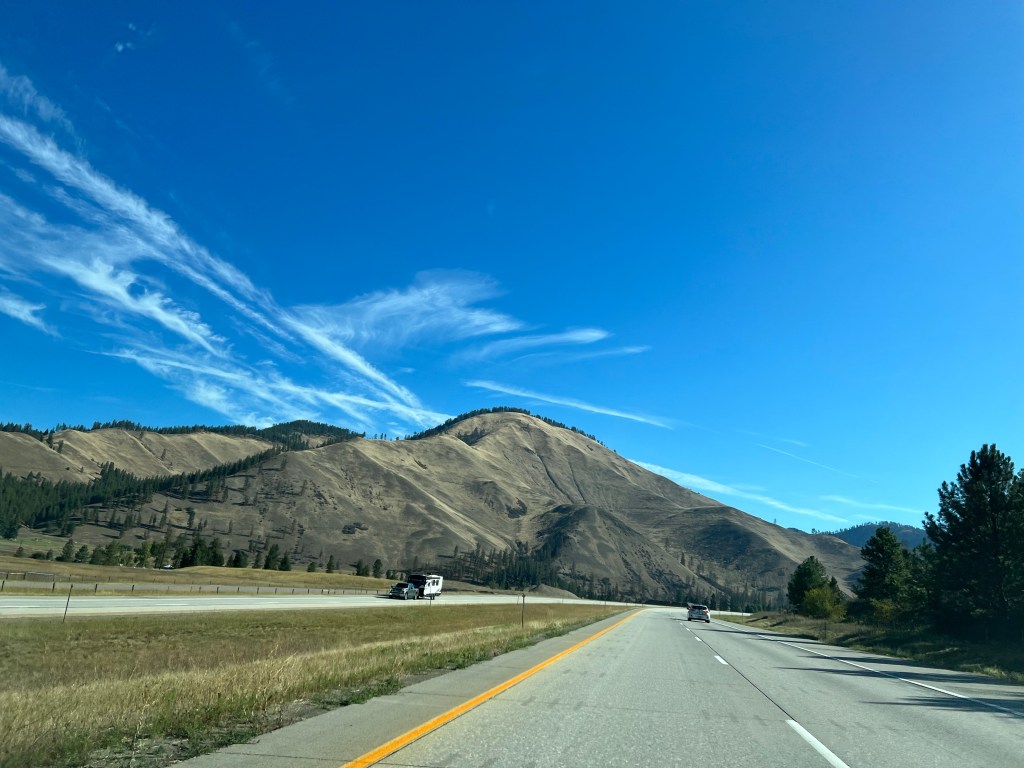
Leaving Kellogg we were driving on I-90 with steep-sided Bitterroot Mountains on either side of us. Low hanging clouds were just slightly above our car. It took about an hour of driving until we were out of the mountains and down into the high plains of Montana. It was another 2 1/2 hours, plus an hours worth of time zone change, until we reached Grant Kohrs.

This national historic site is dedicated to the preservation and memory of the open range time in Montana. From 1860 until about 1900, the open range cattle raising system switched to the new fenced in cattle raising method. A very major factor prompting this change was the terrible winter of 1886–1887. A hard snow, a thaw, followed by another hard snow and freeze left the range covered with ice. The cattle were unable to break the snow and ice in order to reach the grass beneath. Bison, the previous grazers on the open range, did not have difficulty with these types of conditions. However, they had been pretty much exterminated by this time.

A beaverslide haystacker

Ranchers realized they needed a better knowledge of the location of their cattle and greater supplies of hay to feed them in difficult times. In order to do this, fenced in land started to sprout up along the range, reducing the open areas for cattle, and cutting off the cattle trails.

Johnny Grant was of Metis ancestry and knew the area. He realized this valley would provide a luxuriant grassy valley for winter grazing of cattle. He convinced others from a variety of backgrounds to join him and the town of Deer Lodge was begun. As times changed and new people moved in, Grant moved back to Canada.

Grant sold his land and holdings to Conrad Kohrs, a German immigrant. Kohrs, his wife, and brother worked hard, diversified their holdings, and eventually amassed ten million acres of ranch land across three states. They conquered the challenges of the great winter, as well as normal business challenges. They bred horses. They began shipping cattle directly to market in Chicago. Their heirs continued the ranch, eventually selling off the land and dedicating 1600 acres to the National Park Service, along with family furniture and mementos. The ranch is managed actively by the Park Service with cattle, horses, chickens, etc.

We were lucky enough to have an hour long tour of the home begun by Johnny Grant and expanded by Conrad Kohrs. The park ranger provided background and historical setting for the two families in greater detail than what we have discussed here. I came here, uncertain of what to expect, but walked away with greater knowledge and appreciation for the area than I had before hand.

Ed and Chris, Missoula, Montana Sept. 5

Categories: travel | Tags: , , | 1 Comment

2023 Trip 7: Northwest U.S. : History and Adventure: September 4

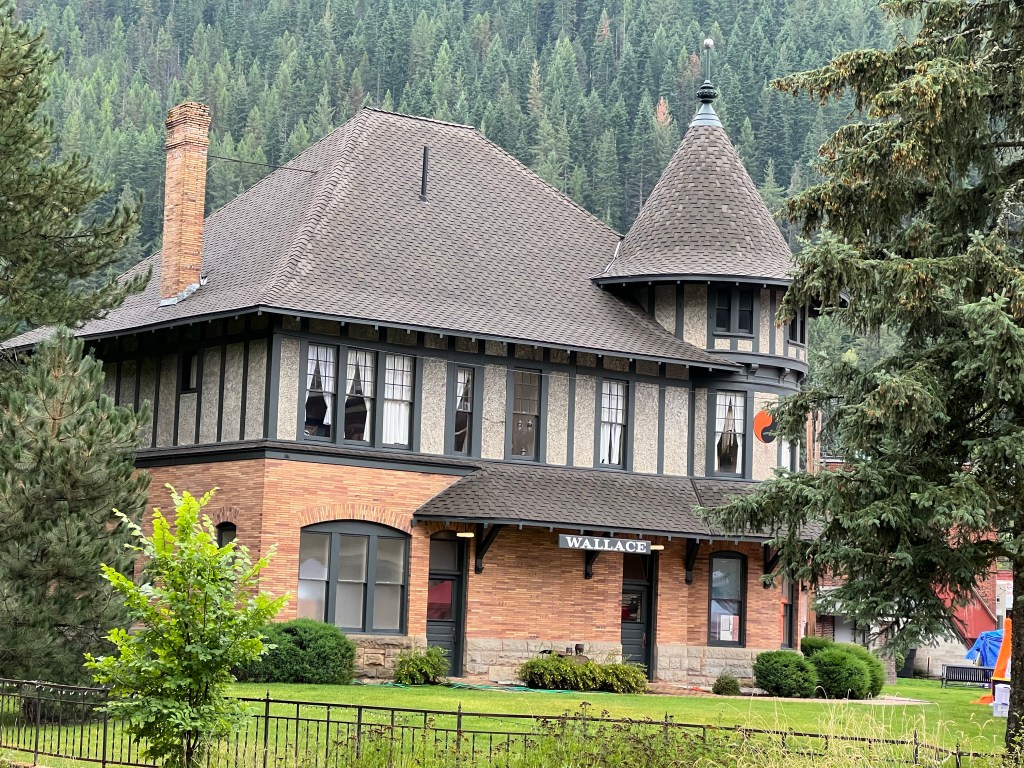
Northern Pacific Railroad

Kellogg, ID September 4

Staying in the Silver Valley, we journeyed a full 10 miles to Wallace Idaho, population 800. Over the next several hours we learned that Wallace is the Center of the Universe, a party town, and the town that fought the feds and won. Of course we only discovered this because the day was rainy and we dumped our planned bike ride to avoid being splattered with mud. The Ride the Hiawatha trail could have been amazing under better conditions. Possibly we could have completed this 14 mile, mainly downhill ride thru tunnels on a gravel trail, but it would have been something we endured, rather than enjoyed. The trail is an abandoned railroad line.

Our first stop was the Northern Pacific Railway Depot. The NP was a major player in the history of the West. The depot is now a museum with interesting displays on the Northern Pacific and life in Wallace. Several tidbits were picked up here. First, the term “closing the loop”. Telegrams for people on trains passing by, but which were not stopping in Wallace, were put on a pole with a loop on it, the train would slow down, and the message grabbed by a train employee and given to the passenger.

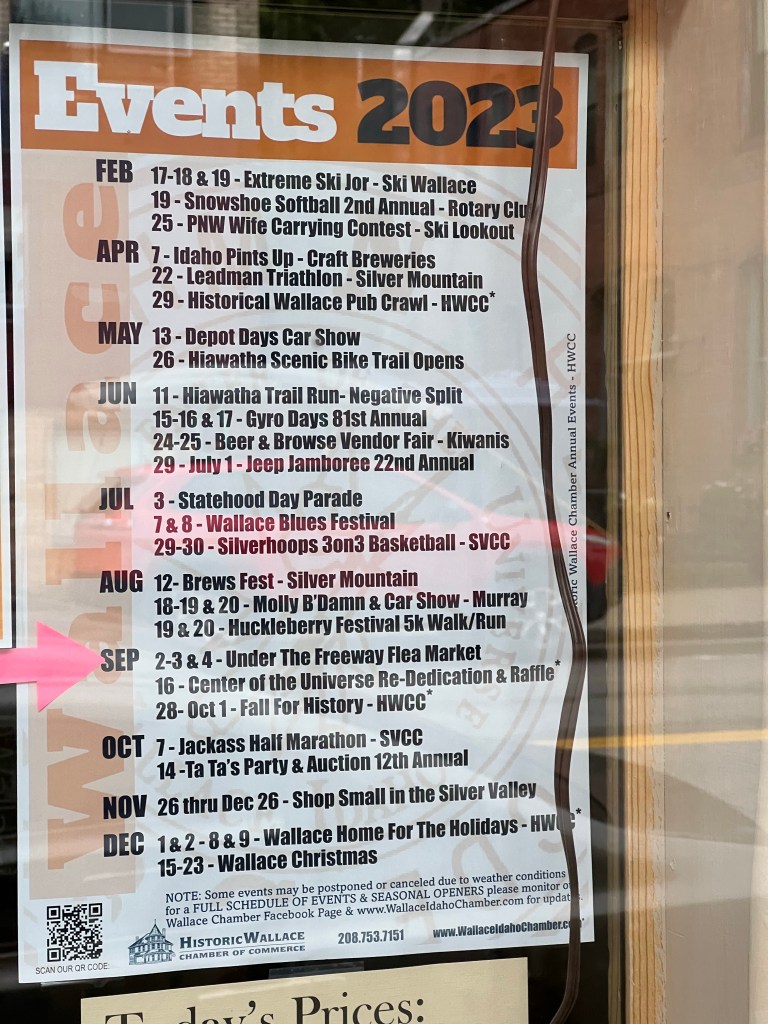
Wallace, with only 800 residents, sponsors 23 festivals and events during the year. The numerous events keeps the bars and restaurants hopping. This Labor Day weekend was one of them, The Under the Freeway Flea Market is a fund raiser for the NP Depot Foundation. Over 80 vendors were lined up underneath the Interstate 90 freeway bridge, which runs continuously for 4500 feet.

Under the Freeway Flea Market

We walked from one end of the vendor line up to the other. While we did buy a few minor items, the merchandise best reflected items from Grandma’s attic and Grandpa’s barn. Given the rainy weather, the viaduct was an appreciated protection from the elements.

The interstate highway system was authorized in 1956. Interstate 90 would run from Boston to Seattle, 3081 miles long. The initial planning for Interstate 90 through Idaho started in the 1960s. In 1970, construction was nearing both ends of Wallace. I-90 was originally planned to run right where Wallace is situated. The town would be bought out, probably not costing all that much. Residents would be relocated and most likely there would have been a nice plaque somewhere. People in Wallace were not pleased. They undertook a two pronged battle plan. First, lawsuits and injunctions were filed to give them some time to implement phase two.

Phase two was getting every single building in Wallace on the National Register of Historic Places. The Federal Highway Administration has to minimize impact to such places and the vast number of historic properties in Wallace resulted in an elevated highway that only needed one building to be moved- the Northern Pacific Depot. The people here are quite proud of that. Prior to the completion of the elevated highway in 1991, this one mile segment necessitated interstate drivers to exit the freeway, drive through town, probably stop at the only traffic signal on Interstate 90 between Boston and Seattle, and return to the interstate. That last traffic signal? It was removed in a grand ceremony involving pall bearers and a glass hearse is now on display in a local museum (which was closed today).

Wallace has two nearby ski resorts and numerous biking trails. I thought it was fascinating that one of them, the Trail of the Couer d’Alene’s, is quite clear that one should stay on the paved trail to be healthy. In their words: “Common industry practices of the time and natural processes like flooding, caused heavy metal contaminants to be spread throughout the Basin. Environmental cleanup has been ongoing for decades. … Heavy metals that pose a risk to human health are still encountered along shorelines, floodplains, and historic mine and mill sites.”

We had lunch at the Blackboard Cafe-and bakery and bookstore. Chris of course struck up a conversation with a Canadian woman who is doing some traveling after selling her home in Vancouver before settling down near her daughter in Edmonton.

Another unusual Wallace feature was the purple manhole in the intersection of two streets that is “The Center of the Universe”. In 2004, the Mayor of Wallace declared it to be the center of the universe because it can’t be proven otherwise. This little bit of whimsy is celebrated each year, In 2023 the celebration will be held Sept. 16.

Center of the Universe manhole

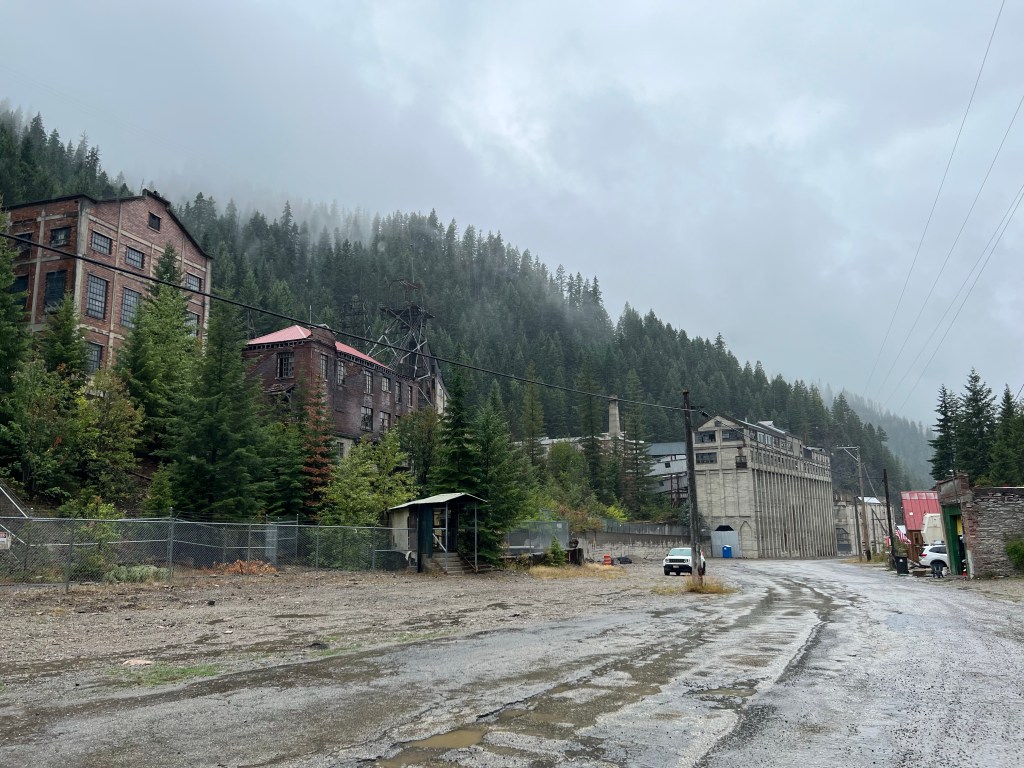
After lunch we drove along one short highway up into the mountains, Burke Canyon, where the reclamation process is still ongoing. The town of Burke is extremely narrow. During mining days in the late 1800s, the Tiger Hotel in Burke had to be built over the creek and a set of railroad tracks and the only highway had to be built through the hotel.

Burke Idaho

Returning to Wallace we viewed several of the wooden stairs that were constructed to allow people to reach homes built on the mountain sides where it was too narrow to construct streets. The public stairs were first constructed in 1909 and are still maintained and used today.

Wallace wooden stairs

Ed and Chris, Kellogg ID Sept. 4

Chris”closing the loop”
Categories: travel | Tags: , , , , , | Leave a comment

Blog at WordPress.com.