

Sacramento CA, May 28
Can you imagine it?! Immigrants built the transcontinental railroad! Immigrants from all over the world! Immigrants worked in the California gold mines! Immigrants from Chile were among the first and arrived with extensive mining experience! Chinese immigrants took over mines Americans from the east coast abandoned and were very successful in extracting gold! Can you imagine that?? In case you could not tell, those sentences were meant as sarcasm in an America that once again is demonizing immigrants.
Today’s two museums, the Sacramento History Museum and the California Railroad Museum, were informative and interesting. Both were located in Old Sacramento. We started at the Sacramento History Museum and also took their underground tour.
Sacramento should not have been built where it stands. It was low lying land at the confluence of the American and Sacramento Rivers which flooded often. The first real settler, John Sutter, listened to the Native Americans and located his farm and property several miles away on higher ground. Once gold was found in the area, newcomers wanted to be near the river and its availability to shipping.

A scene from Old Sacramento
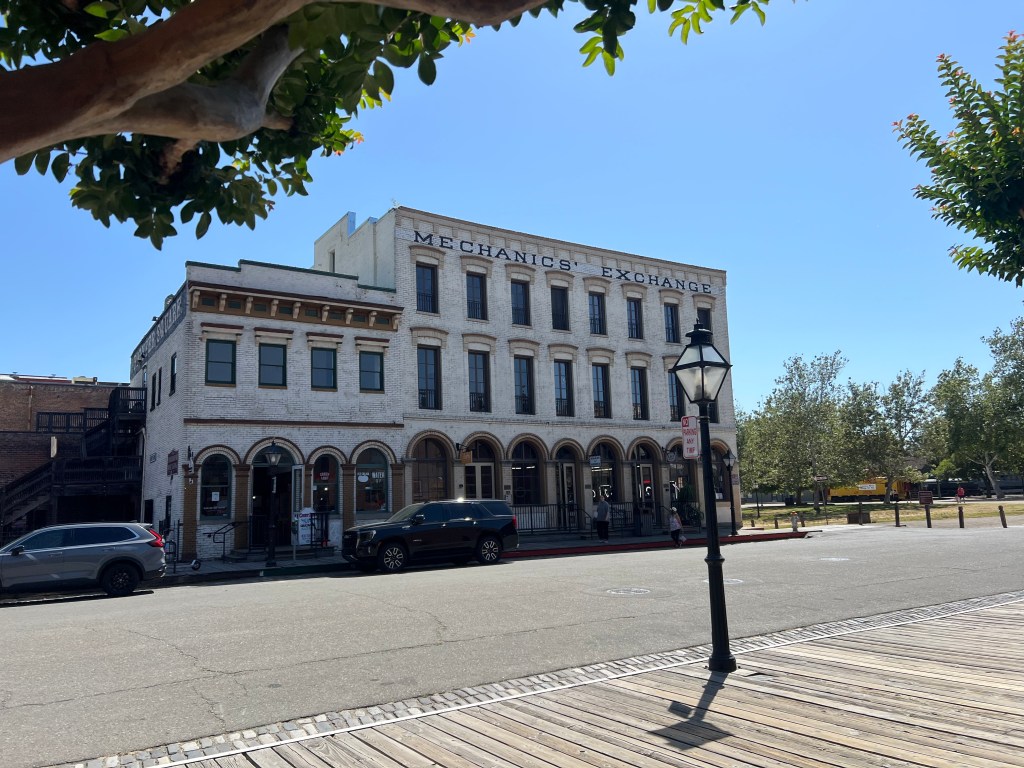
Early Sacramento suffered from a major conflagration that burned 90% of the town. Floods destroyed the town also. The levees that were built to protect it ended up later causing more damage when water from the next floods got behind the levees and had no way to return to the river.
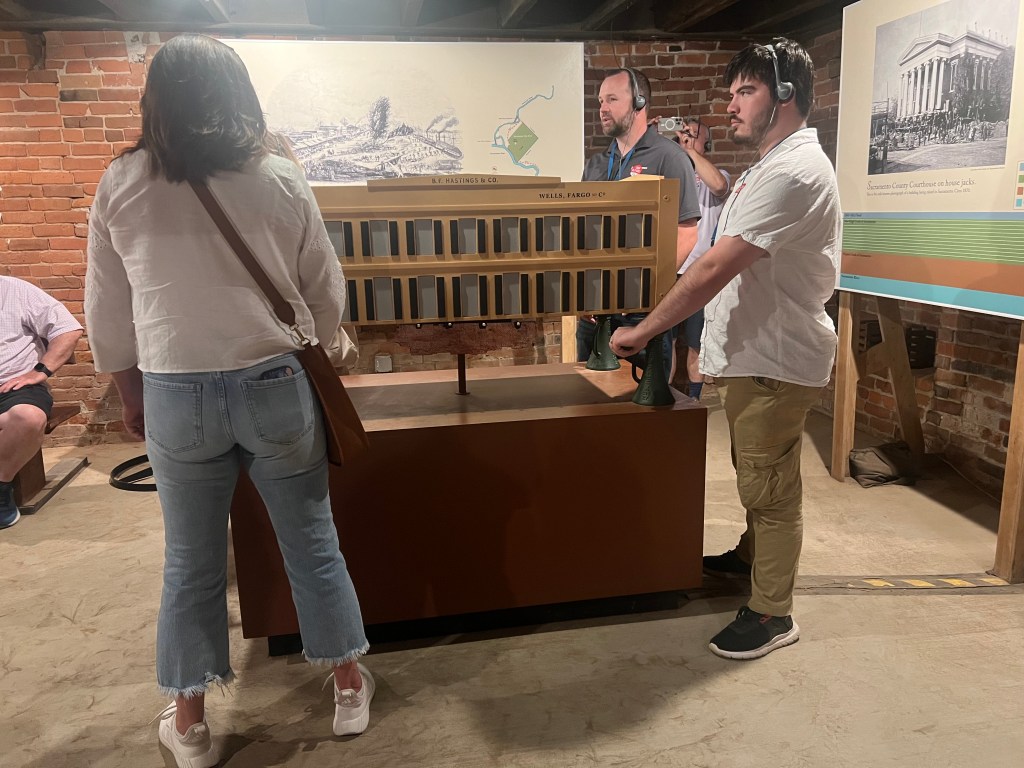
Tour participants doing a mock jacking up of a building
The people here did not want to move to higher ground so they did two things. They moved the American River channel so it met the Sacramento farther from the city center. Second, they raised the town. Yup, they raised most of the town about 23 feet. It took over a decade and was paid by each business. The tour explained the process of excavation, jacking up buildings, and constructing new foundations. Amazing. Sacramento has grown since then, protected partially by levees. Yet the chance of severe flooding still exists as this is lowland surrounded by mountains and traversed by numerous streams and rivers.
Other exhibits at the Sacramento History Museum explained the growth of agriculture, canning of food products, and the impact of railroads in encouraging the continued growth of agriculture, canning, and transportation. While not mentioned here, yesterday’s museum explained how the growers mandated the use of short-handled hoes in weeding fields of crops. The short handled hoe caused back pain and injury as the worker was forced to stoop continuously. The hoe was mandated because it made it easier for overseers to determine if a worker was vigorous enough in their tasks. If the worker was standing up, the overseer would be able to yell at them to get back to work. The short handled hoe mandate was not abolished until 1975.
A new exhibit focused on the role of Campbell Soup company, its employees, and its impact on the community. Sacramento made a concerted effort to attract Campbell’s to open a factory here. After all, this part of California is a major producer of fruits and vegetables. After WWII, Sacramento was successful and Campbell’s operated a major plant here for almost 70 years.

The California Railroad Museum exhibits numerous examples of locomotives and a few specialty cars such as a diner and a railway post office car. Exhibits once again discussed how the transcontinental railroad was built and displays one of the two golden spikes used at Promontory Point in Utah. The role of women and minorities in railroading was displayed frequently.
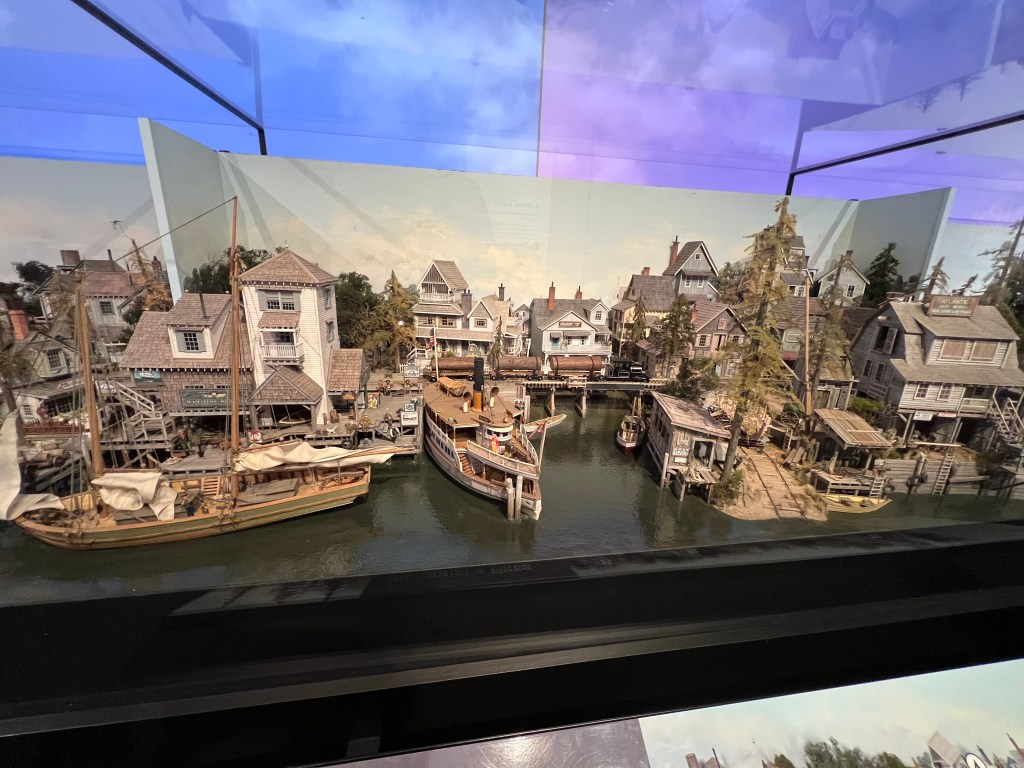
There was an area of model railroads, most of which was devoted to displays of collections of various model equipment. The sample of model railroads running was small. We have seen much better layouts. Their collection of hand constructed villages was impressive.
Tomorrow we fly back to St. Paul. There may not be a further blog post.
Sacramento, May 28
Ed and Chris
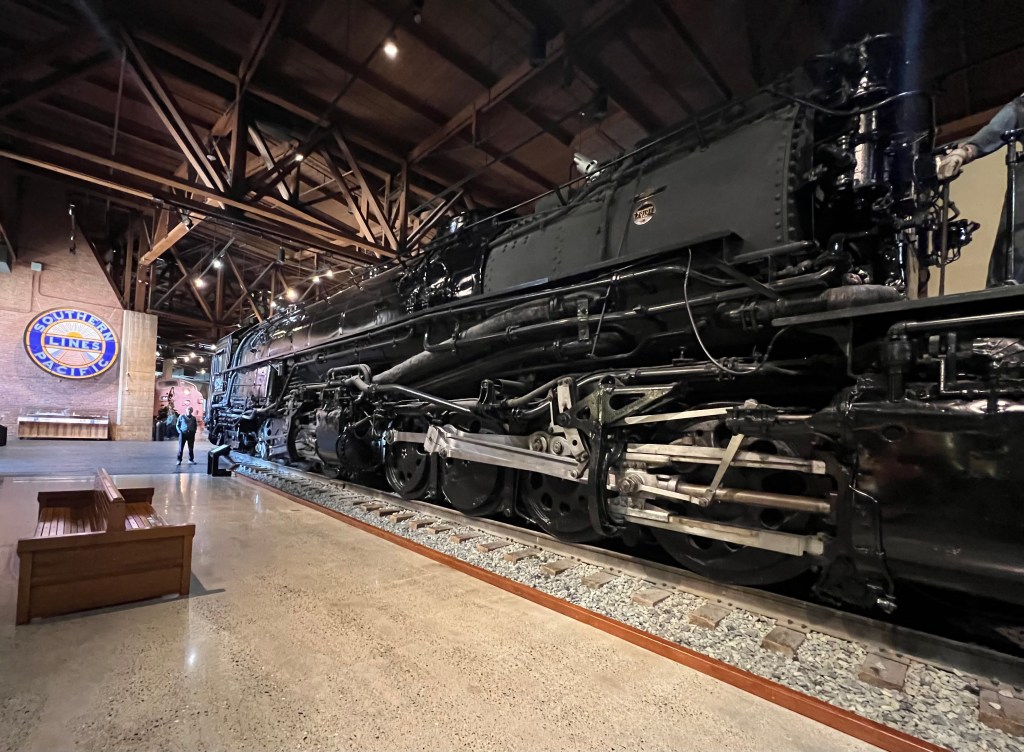
Ed and a Southern Pacific steam locomotive. The cab was in the front to shield the engineers from the smoke that would have choked them in tunnels
 Chris Klejbuk and Ed Heimel travel adventure
Recent Comments