
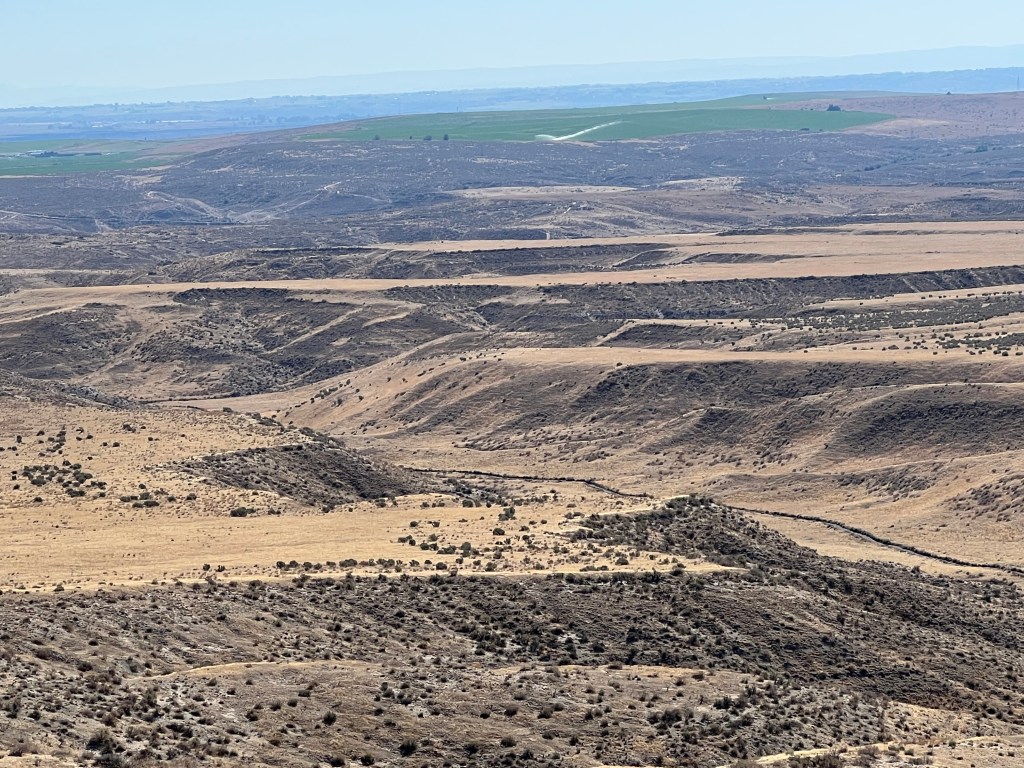
The dark wavy line in about the center of the photo is the Oregon Trail.
Boise, Idaho, September 23.
Hagerman fossil beds is a quick hour drive east of Boise along Interstate 84. It was actually kind of fun taking an interstate and zipping along at 80+ miles per hour. Fossil research started here in the 1920s and 1930s. A local rancher was the first to find the fossils. It is one of the best locations for fossil hunting from the period of three to four million years ago.
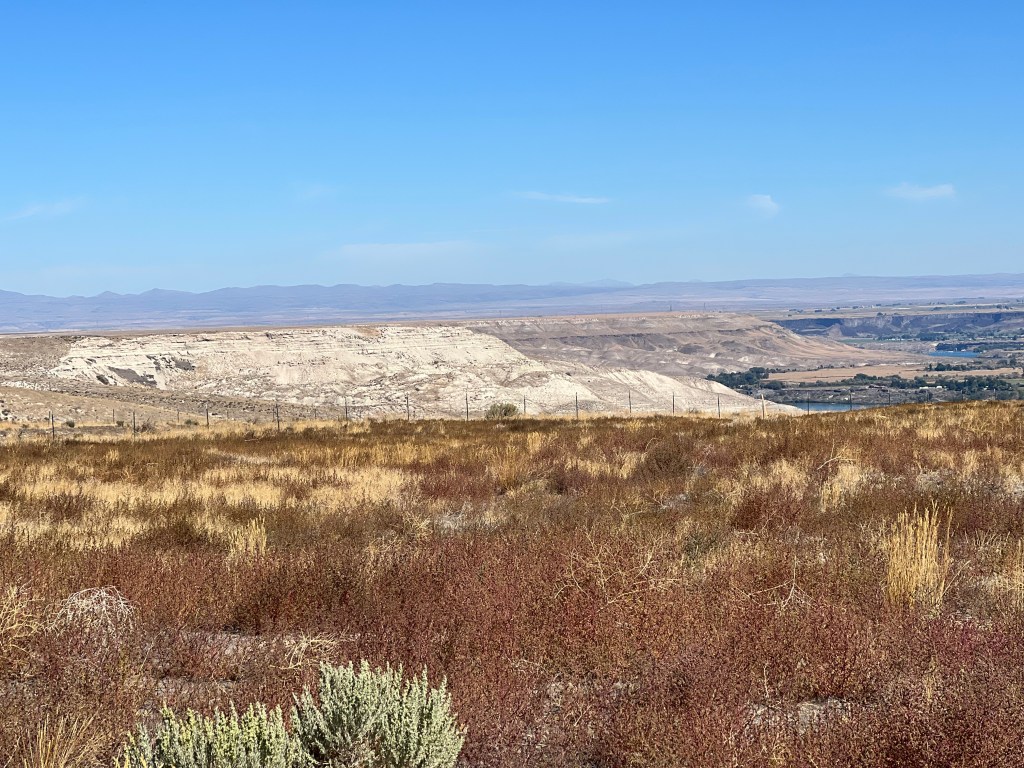
The cliffs that are typical of the Hagerman Fossil Bed area
The geology of this area was impacted by lava, volcanic ash, sediment from river floods, and ancient Lake Idaho. Now the Snake River crosses the southern portion of Idaho, in a basin like, high desert plains that are much distinct from the mountains and forests of the north, and in its terrain are cliffs revealing layers of fossils.
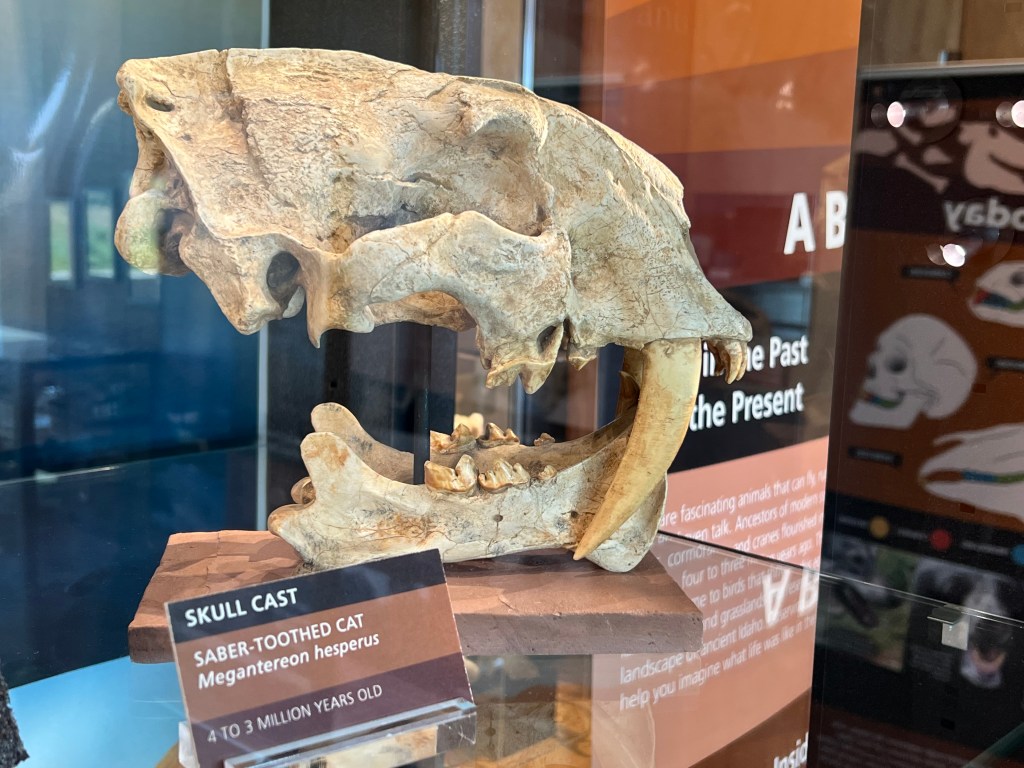
Hagerman Fossil Beds, are famous for the Hagerman horse, the initial and unique findings of the existence of horses here, many millennia ago. The Hagerman horse was unique because it most resembles the current horse with a single toed hoof. But there are fossils here of over 200 different animals, including 45 species first described here and eight not yet found elsewhere.
This is a new visitor center but the number and extent of real fossils are limited. Many of the fossils from this area were distributed to universities and the Smithsonian decades ago. The fossils in their archives have yet to be organized and arranged once new cabinets and display cases are prepared. The Hagerman horse on display, for instance, is a replica.
This National Park Service national monument also includes portions of the Oregon Trail, that heavily used path taken by tens of thousands of immigrants traveling from the East out to the Northwest. We have written many times about what has happened to the Native Americans as settlers came from the East. However, let’s also recognize the tremendous hardship and determination shown by the people traveling on foot, horse, or covered wagon, thousands of miles through a strange territory with limited supplies. As we looked down on the rutted path, still visible from over 150 years ago, we were utterly amazed at their struggles, and how easy we have it in comparison.
After a picnic lunch, at an overlook by the Oregon trail, we went to Bruneau Dunes State Park. These dunes are unique in that they represent the highest single structured sand dunes in the United States. They have one dune that is 470 feet tall, towering above the desert floor. The park also has smaller dunes as well as two lakes and associated marshes.
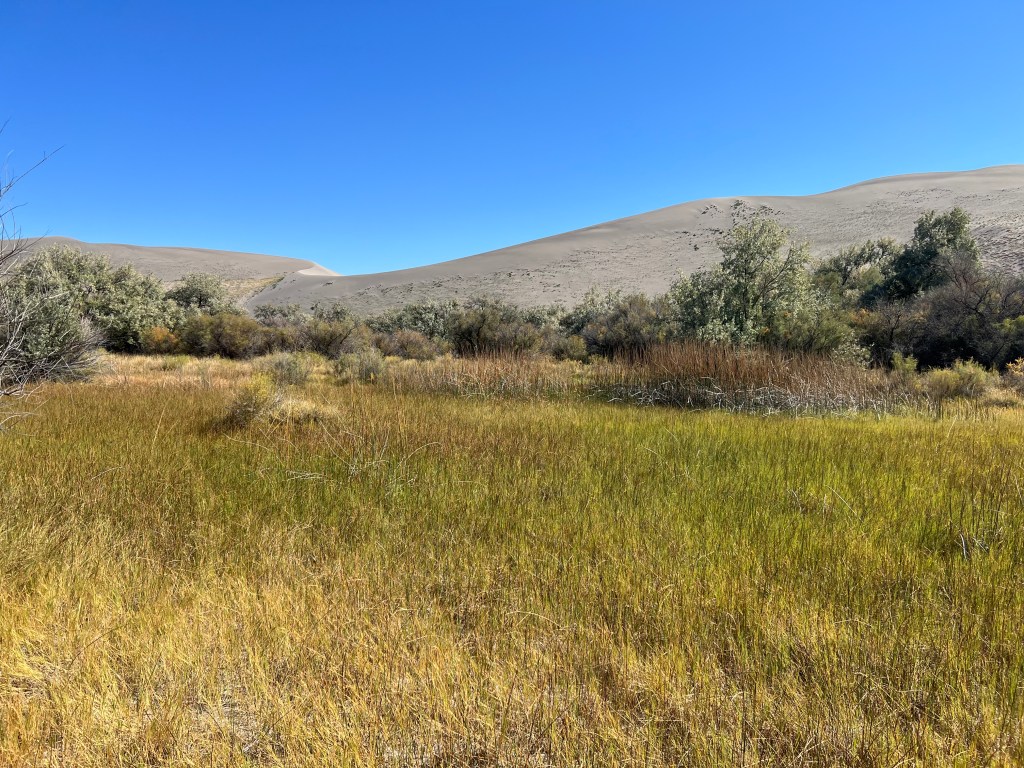
The dunes were created during the time of the Bonneville flood about 14,500 years ago. Lake Bonneville in northern Utah spilled over resulting in the flood the followed the approximate path of the Snake River canyon. This area received a slower moving back waters of the flood which deposited large amounts of clay, silt, and sand. The arrangement of the dunes and the neighboring mountains creates winds which are relatively equivalent from all compass points throughout the year, making the sand dunes relatively stable.


We did not climb the dunes, but enjoyed watching others do so. The day ended with church and laundry and a nice barbecue meal.
Ed and Chris, Boise Idaho Sept. 23

Replica of the Hagerman horse
 Chris Klejbuk and Ed Heimel travel adventure
Recent Comments