Follow Ed Heimel and Chris Klejbuk as we explore the USA and Canada. Trips began in 2013. See sidebar. Since Jan. 2013, over 220,000 miles traveled and 1100 days on the road. Over 700 blog posts written. 2023-We are closing in on 350th National Park unit. Photo below is Pacific Ocean by Big Sur, CA
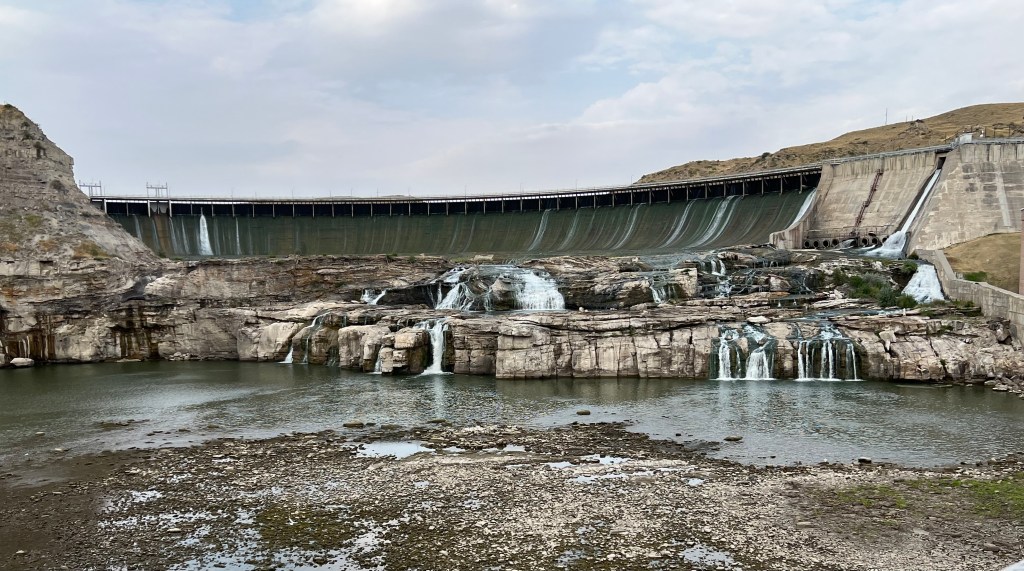
The Great Falls of the Missouri River at Ryan’s Dam
Great Falls, MT August 31
Great Falls Montana was the location of one of the longest delays encountered by Lewis and Clark’s Corps of Discovery on their journey of exploration to the Pacific Ocean in 1805-1806. The Missouri River actually has five waterfalls in a short distance. Native American tribes had warned Lewis and Clark of the Great Falls, but had not mentioned the others. Lewis and Clark had planned on a portage of a day; it took them nearly a month.
Four of the falls are closer to the city of Great Falls. Great Falls, the highest waterfall, is northeast of the city and reached by back roads. There are dams and hydroelectric facilities all over the river and one today can not appreciate the majesty of what was once a free flowing 80-90 foot waterfall (Great Falls), nor the impact of five waterfalls so close together. We made our way to the Great Falls which have been topped with an extra 50 feet of concrete to produce more hydropower. Even with the concrete, we admired the rock canyon and the small stream of water coming over the dam. We could understand why the portage would have taken so long back in 1805.
There are scads of Lewis and Clark Trail interpretive centers around the U.S. The city of Great Falls is home to one of the largest, run by the U. S. Forest Service. Displays and videos here cover not only the portage around great falls, but the entirety of the total expedition. We were amazed at the amount of planning that went into this expedition and the quantity of supplies, material, and gifts to Native American tribes that they took with them. They even cached quantities of supplies to have on the return journey; hiding them so the supplies were not found by animals or Indians, yet discoverable by themselves on that return journey.
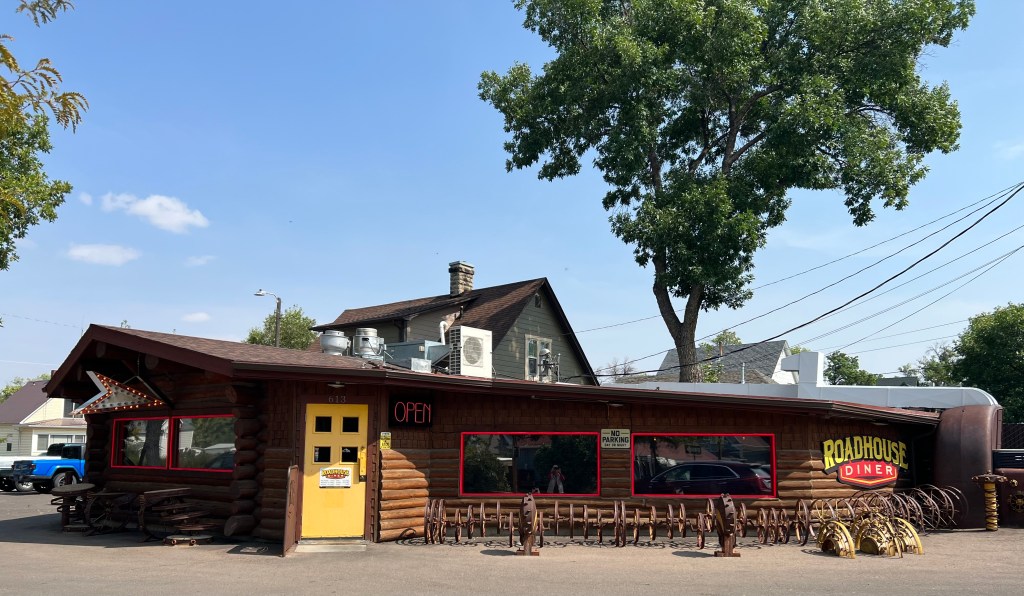
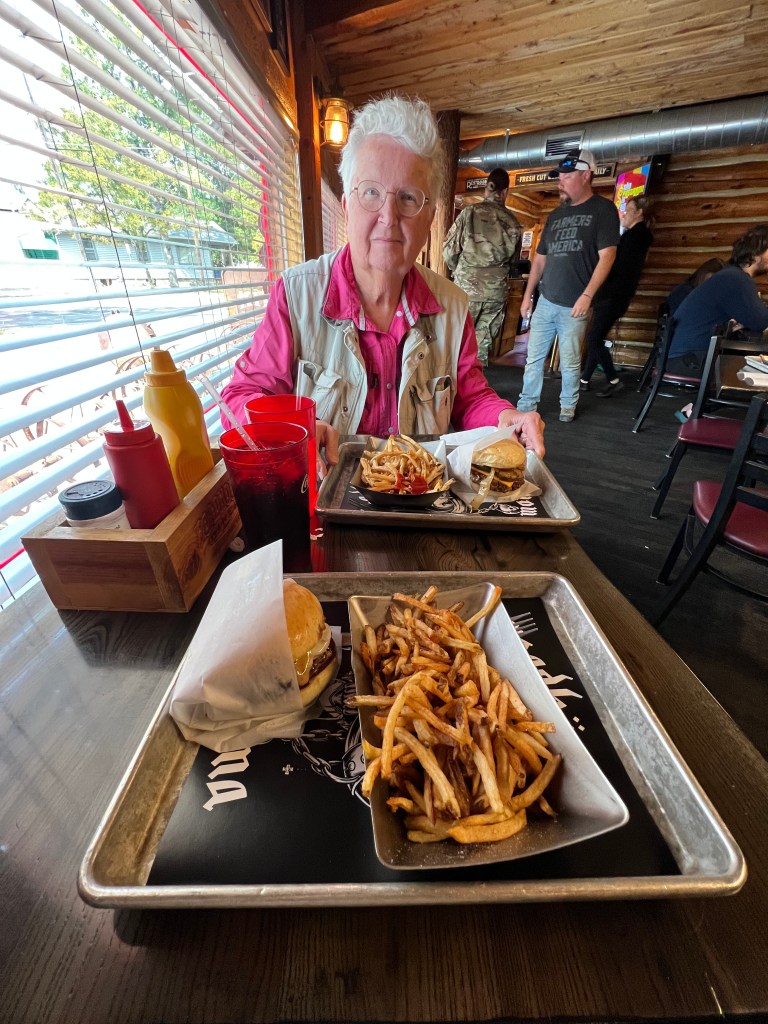
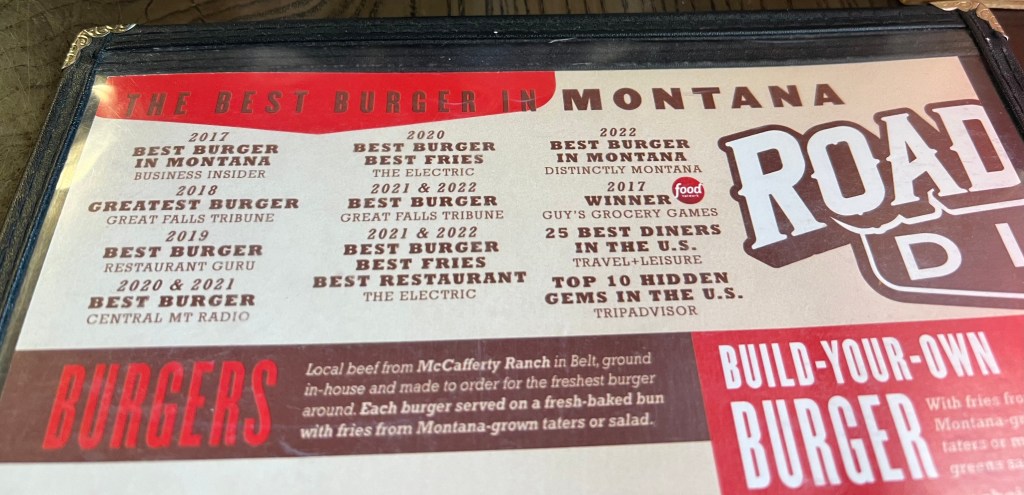
Looking for lunch, we noticed the Roadhouse Diner. Thinking it would be a typical diner with an extensive menu, we stopped there. Turns out it basically serves burgers and fries, plus a few salads and miscellaneous items. But what a burger! They were fantastic! The buns are baked especially for them every day. This place has seemingly won every burger award in the State of Montana. Sometimes you plan where you are going to eat and sometimes you just get lucky.
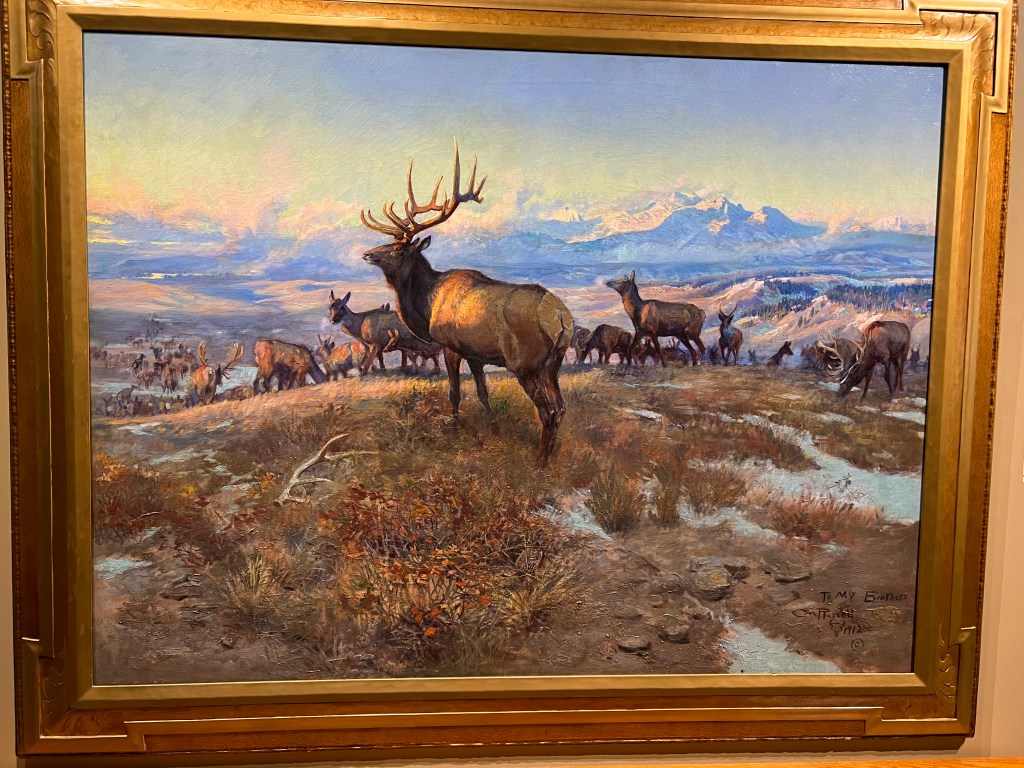
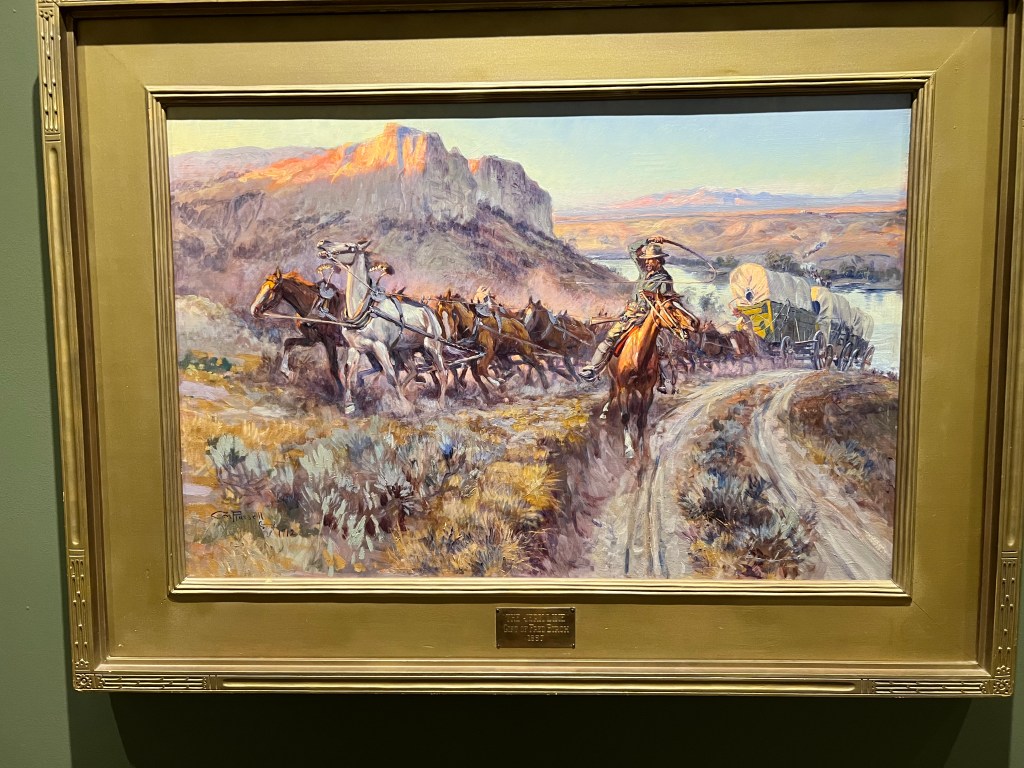
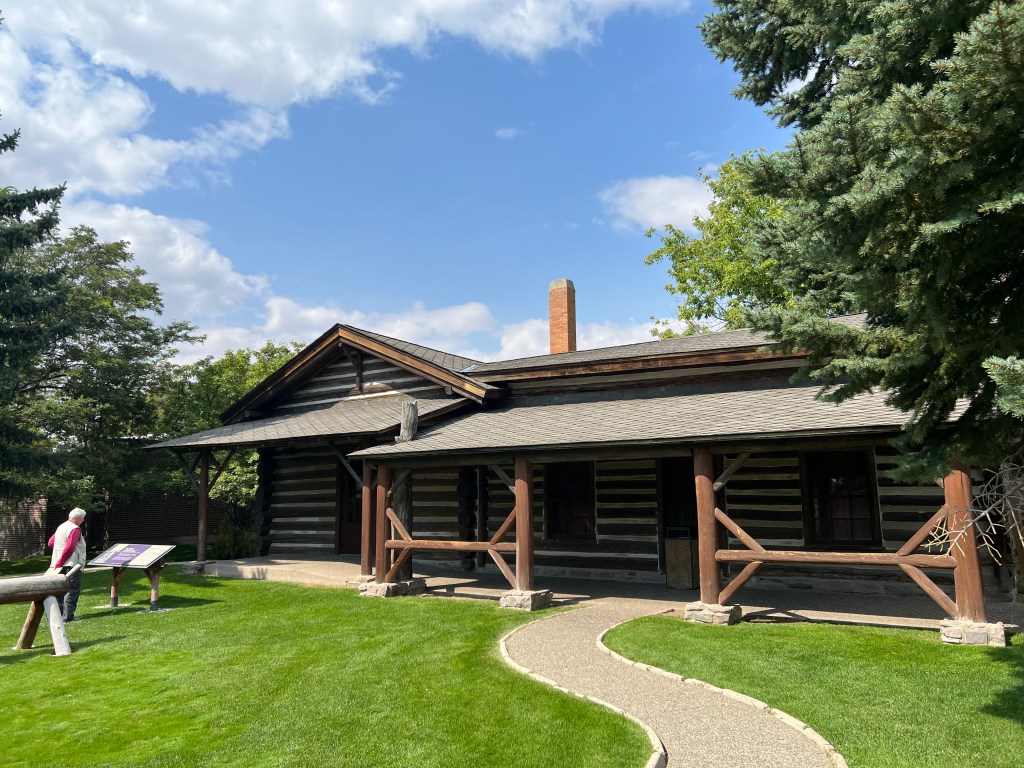
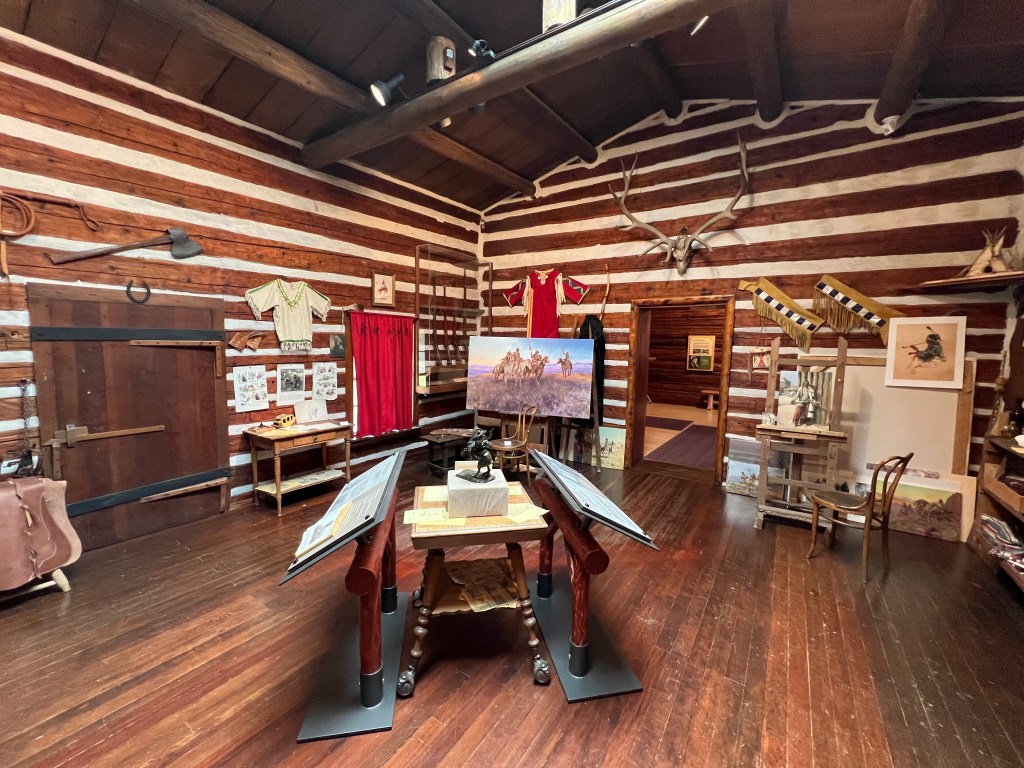
Our afternoon activity was the Charles Russell Museum.
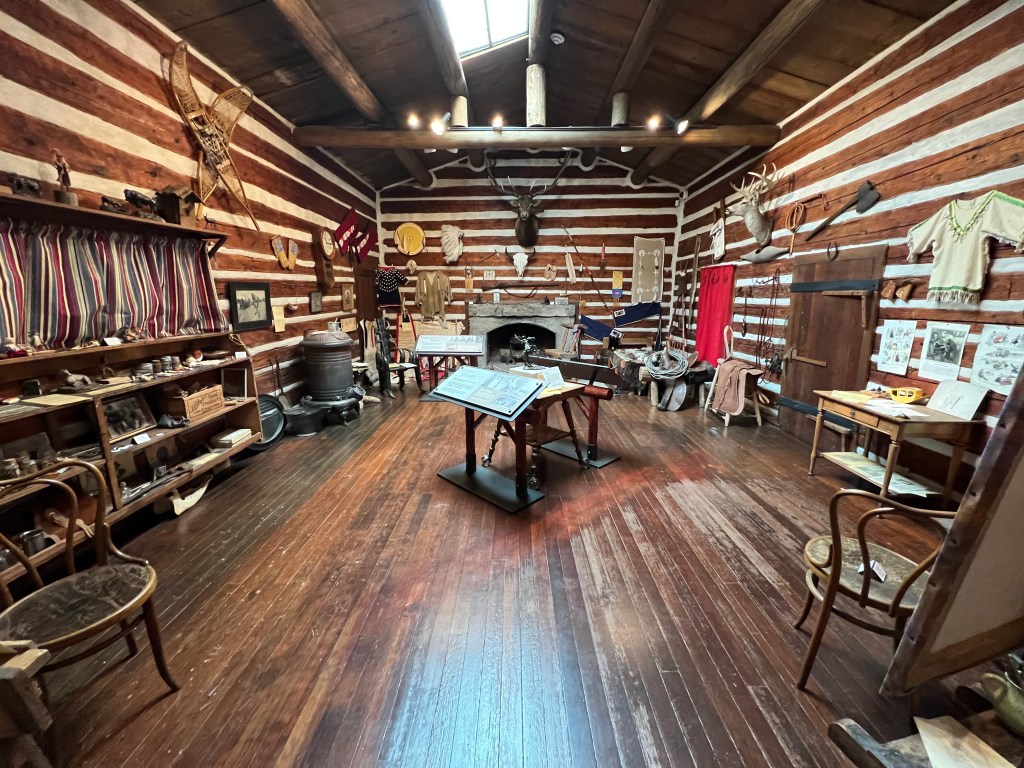
Russell was a prolific artist specializing in paintings and sculptures of the Old West with landscapes, cowboys, bison, Native Americans, etc. The museum is a complex with multiple galleries and his home and studio. Russell was self-taught but received the praise of critics world wide. He produced over 4,000 works of art. We spent two hours here and enjoyed our time.
Above, a few of the many paintings on display. Below, this painting is set coming up the hill from Fort Benton that we drove up Thursday morning on our way to Great Falls.
Above, Russell’s studio in Great Falls Montana
Today is laundry night and Friday we head for Idaho.
It was pure serendipity. Five minutes after we walked in to the Blaine County Museum in Chinook MT, National Park Service Ranger Austin walked in. We had pretty much decided we were not going to drive down the 19 miles to the Bear Paw Battlefield and stand in an open field in 95° weather. The Blaine County Museum was supposed to have an exhibit about the Bear Paw battlefield. We thought we might settle for that.
The Bear Paw battlefield was the ending location of the Nez Perce trail. This is the 1170 mile trail followed by the Nez Perce (Nee-Me-Poo in their language) tribe. They tried to make their way from the Oregon/Idaho border to Canada and safety from the US Army. It is a long story, but in essence, the Nez Perce treaty of 1855 guaranteed them a 5000 mi.² reservation. Then gold was discovered and the US cut their reservation land by 90%. Some of the Nez Perce refused to move to the new, reduced reservation area within the 30 days mandated by the US Army. This began the 1170 mile journey with constant battles between the Nez Perce and the US Army.
Then we lucked upon Ranger Austin, who gave us a personal interpretation of the battle and the history of the Nez Perce. Combined with a 20 minute excellent video in the museum, we probably got much more from this experience at the Blaine County Museum than we would have by going down to the battlefield.
This journey of the Nez Perce in 1877 is frequently remembered by a famous saying of Chief Joseph, who is not actually the major warrior chief for the group, but who surrendered the group at the end by saying: “From where the sun now stands, I will fight no more forever. “
The Blaine County Museum also had interesting displays on the development of the area into a ranching territory, as well as some of the geological precursors to the terrain that we see now. One interesting factoid was the creation of wheat houses. There are few building materials on these plains. Prepackaged lumber for small tarpaper shacks were sold to prospective homesteaders. The enterprising farmers would create bales of wheat, which they stacked around the shack for insulation and for protection from the wind. We had never heard of this before. Sod houses yes, wheat houses no.
We left Chinook and continued our journey, heading for Fort Benton. Today’s travel surprise was six miles of empty railroad flat cars, the type that piggyback semi-trailers from coastal ports to inland locations. We passed Decision Point, the confluence of the Missouri and Marias Rivers. Lewis and Clark spent ten days here trying to decide which river was the true Missouri. The Marias was as muddy as the Missouri consistently had been. However, Lewis and Clark figured the Missouri must come from the mountains and that water would be cleaner. They chose the correct branch and continued the journey.
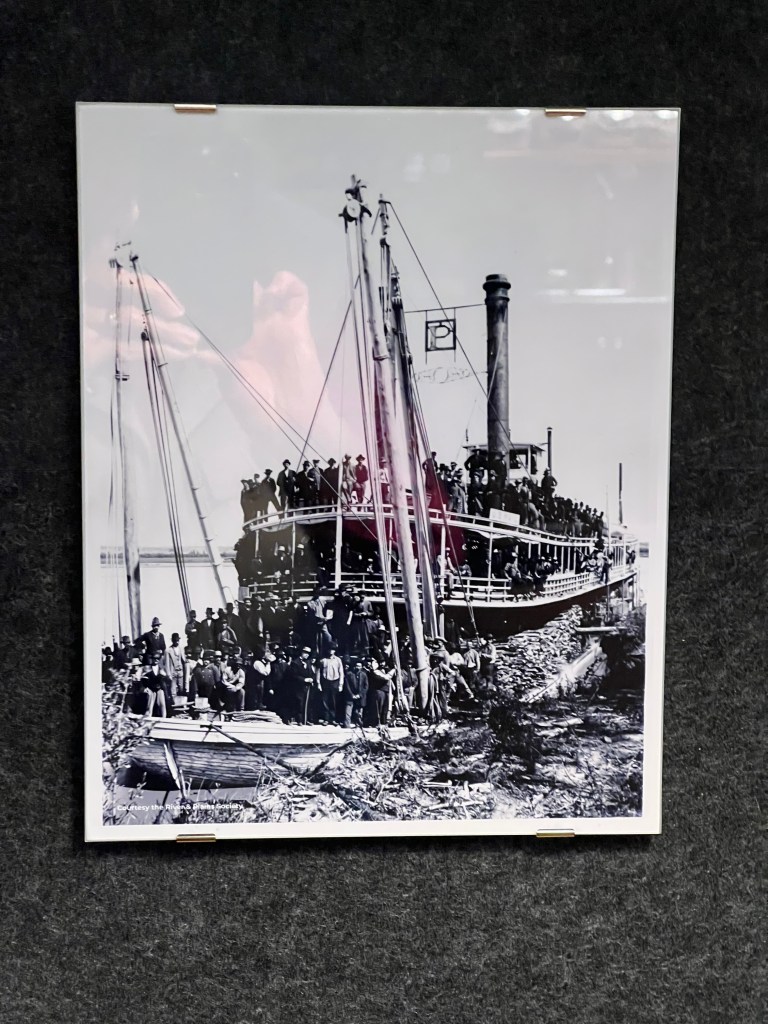
Fort Benton is a town of 1,500 and we are spending two nights here. The town proclaims itself as the Birthplace of Montana. Early traders, settlers, and miners came up the Missouri on steamboats. Fort Benton was as far as the river was navigable so they disembarked and took stage coaches, etc. to their final destination. The town continued to prosper until the railroads ended the days of river transportation for rail transportation.
But we are here due to several museums located here, a mini-museum city. We have an Airbnb close to downtown, the museums, and the river. We had sufficient time Tuesday afternoon to visit one museum and we chose The Museum of the Upper Missouri. It’s focus is on the early stages of the town’s development. The museum is right along the river and it was easy to visualize trappers and settlers coming up the Missouri and then taking various trails out to the Pacific Coast, to Canada for furs and liquor, to Helena for mining, or to St. Paul for supplies to sell. The usual tales of bad behavior and vigilante justice were displayed along the walls.
Our Airbnb is a whole house, our host has several properties and the person previously in our scheduled, smaller location wanted to extend a long rental so we got bumped. Can’t complain, this is much nicer. We wandered the downtown where a gift shop owner gave us meal recommendations and we chose the local VFW hall. Busy place and once again we had a tasty meal.
The Missouri River and the Breaks
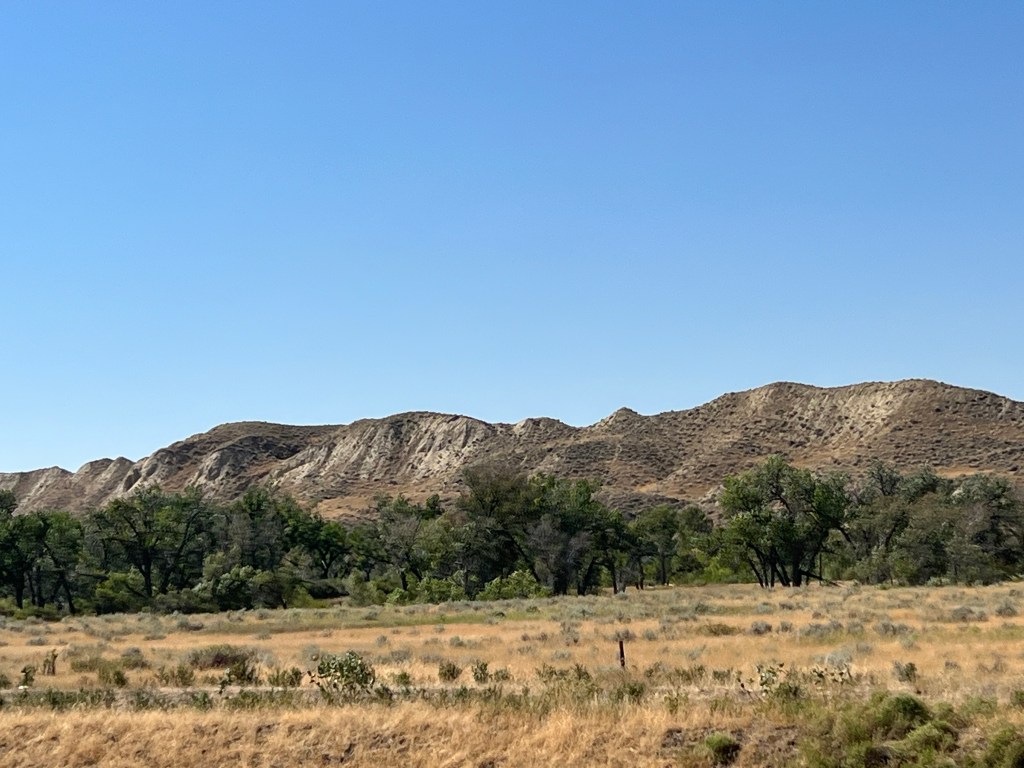
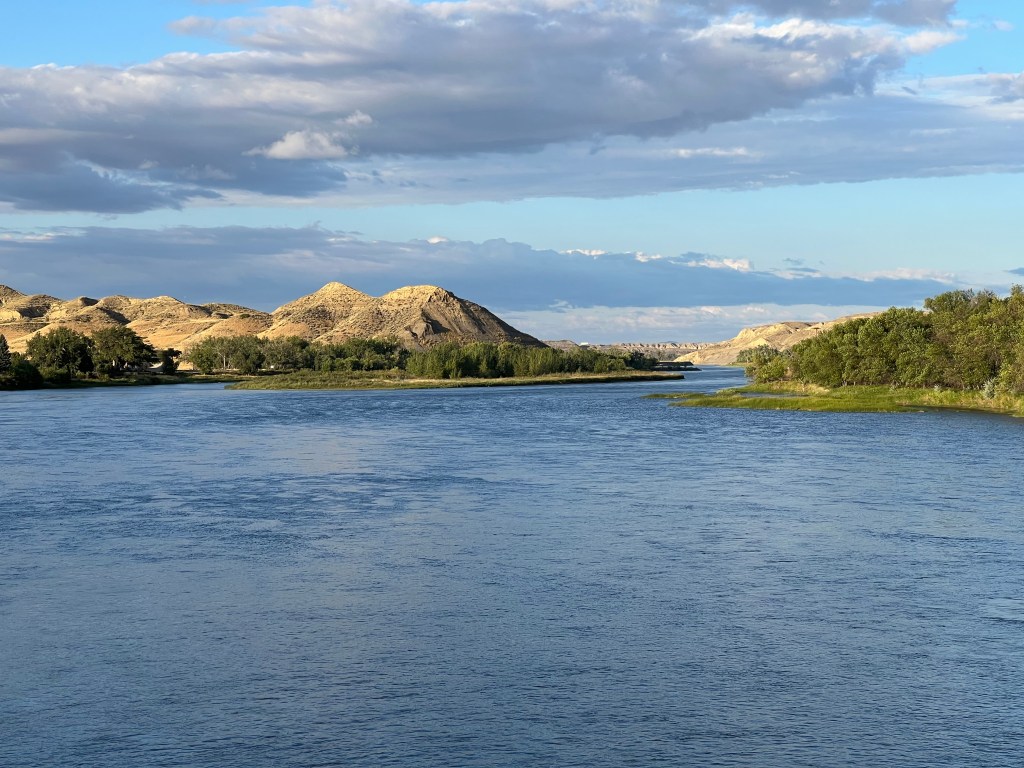
Wednesday the weather was perfect. Sunny skies and temperatures in the 70s. So of course we spent most of the day inside museums, other than short walks to and from the museums. First off was the Missouri Breaks Interpretive Center of the Upper Missouri River Breaks National Monument operated by the U.S. Bureau of Land Management. Like us, you are probably asking: What are “breaks”? The Breaks are the rugged and remote valleys, badlands, and coulees that surround this section of the Upper Missouri. In 1976, a 149 mile stretch of the Missouri River through north central Montana was designated as wild and scenic. The Upper Missouri River Breaks National Monument was established in 2001 on both sides of the wild and scenic river although there are numerous privately owned parcels within this national monument.
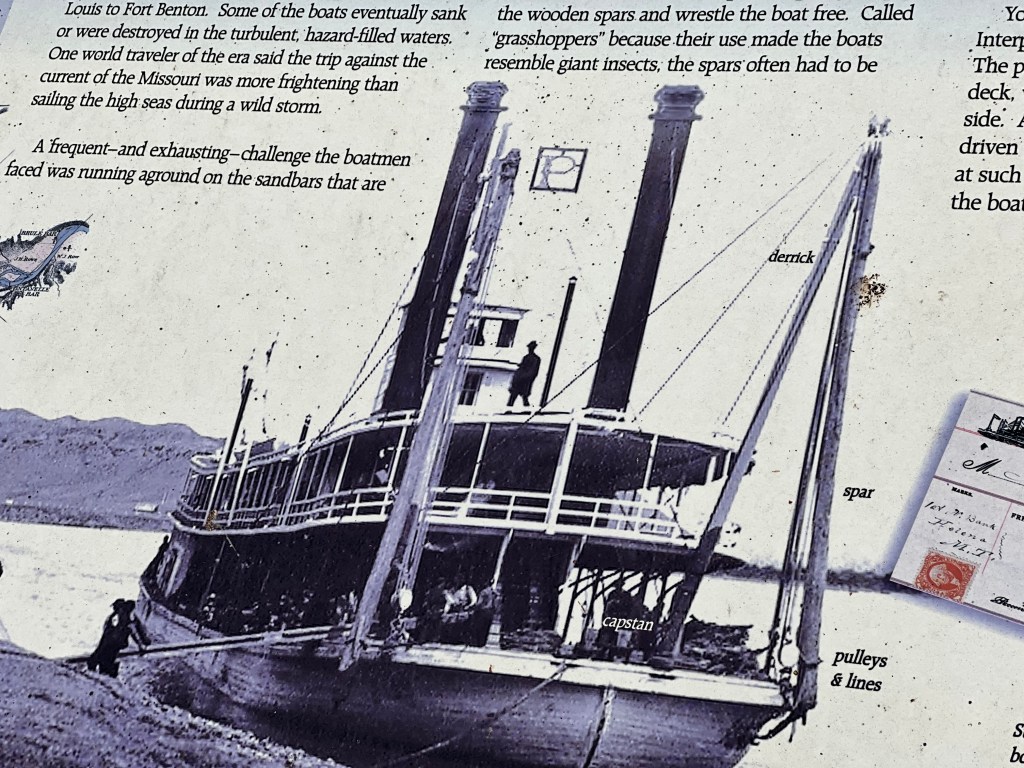
Inside the Interpretive Center, we watched a film, read about local wildlife, and listened to bird songs of the local area. Three particular items stood out. First, the rifle Chief Joseph handed over at Bear Paw Battlefield is on display. Second, the Fort Benton municipal water system was the first in the country to utilize ultraviolet light to disinfect their water supply. Third, we learned about grasshoppers. This was the term used for a series of ropes, pulleys, and tall wood spars on the front of the boat that were repeatedly driven into sandbars while the paddlewheels pushed forward; foot by foot the steamboat moved over the sandbar it had been stuck on.
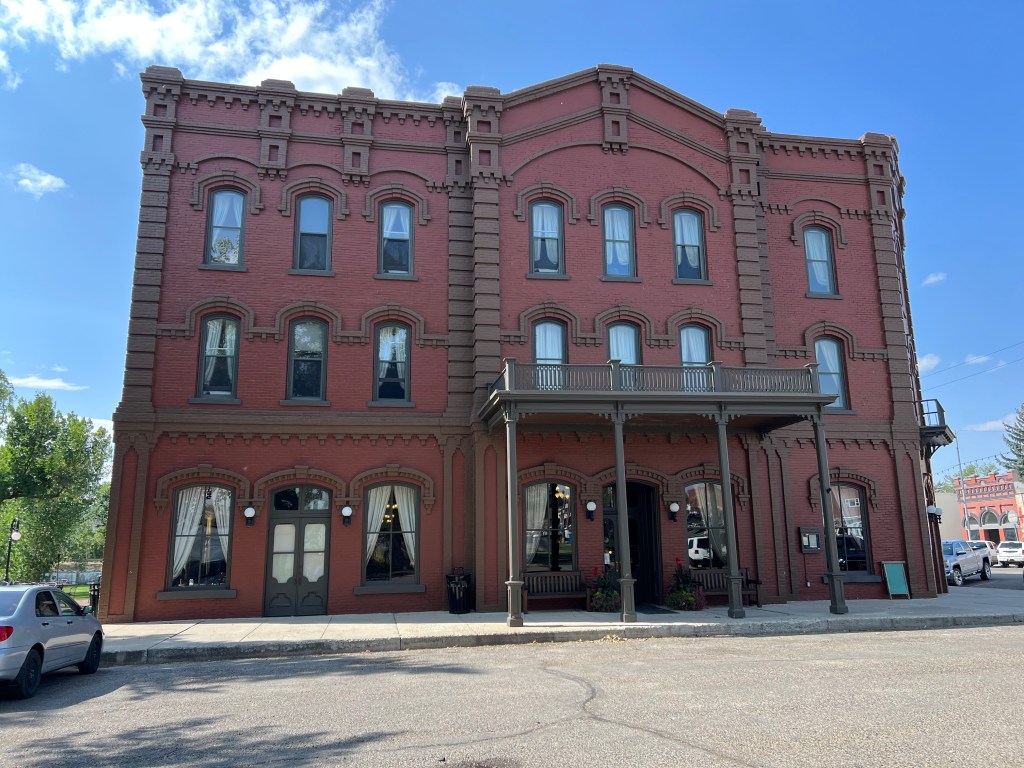
After the Interpretive Center, we had lunch at the Grand Union Hotel. Built in 1882 just prior to the economic collapse of the area due to the railroads, the hotel was a derelict for about 100 years. For the last 20 years it has regained its beauty and prominence.
During the afternoon we visited our last two museums. Old Fort Benton had been constructed for the fur trade era for about 30 years beginning in 1846. Furs for beaver hats were on the decline but buffalo skins were the new cash crop and there were plenty of those for a while. As the head of navigation for the Missouri River, the fort did a brisk business in the shipment of goods. Abandoned by 1877, the fort was purchased and restored.
In the old trading displays we discovered that blankets, like the famous Hudson’s Bay Company blankets, had clearly marked trading prices. 4.5 inch stripes were marked on the blanket with values from one to four. Each stripe was valued at one beaver pelt.
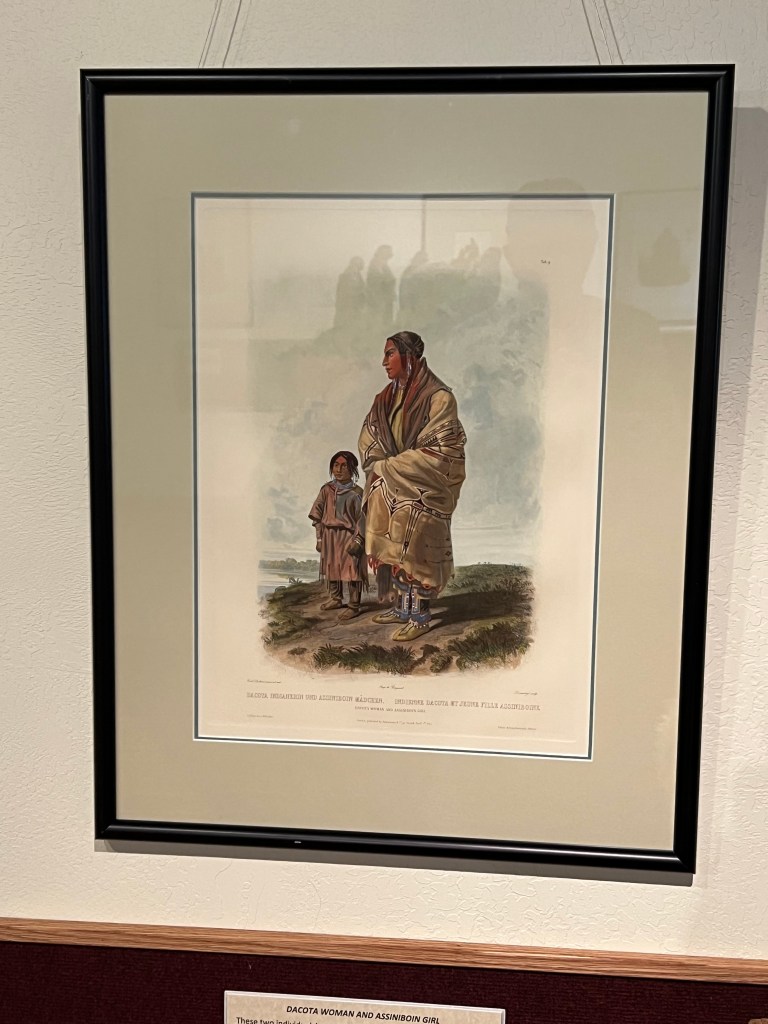
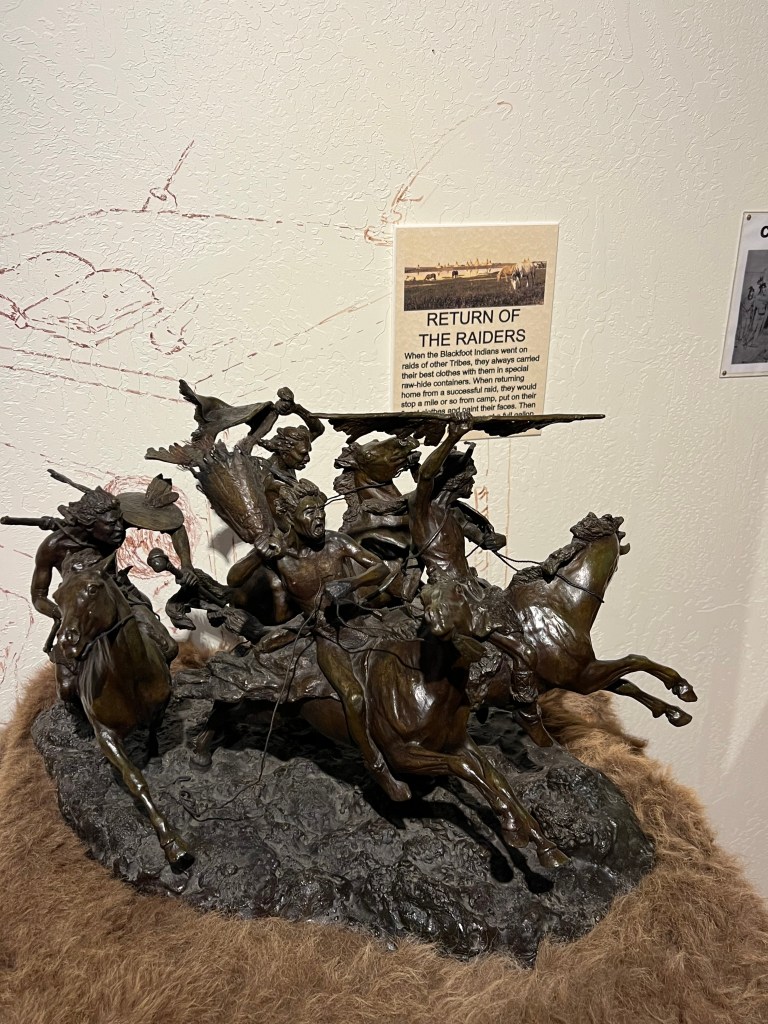
Another building was an art gallery. Remington bronzes and Charles Russell paintings were intermingled in the displays although the focus were bronze sculptures by the Blackfoot artist Robert Macfie Scriver and the paintings of Swiss artist Karl Bodmer.
The final museum was the Museum of the Great Northern Plains. (Other than the Missouri Breaks Center, the three museums are all operated by volunteers without government assistance for operations.) This museum’s focus is to document the last 100 plus years of life on Montana’s plains. Farming, ranching and small town life are on display.
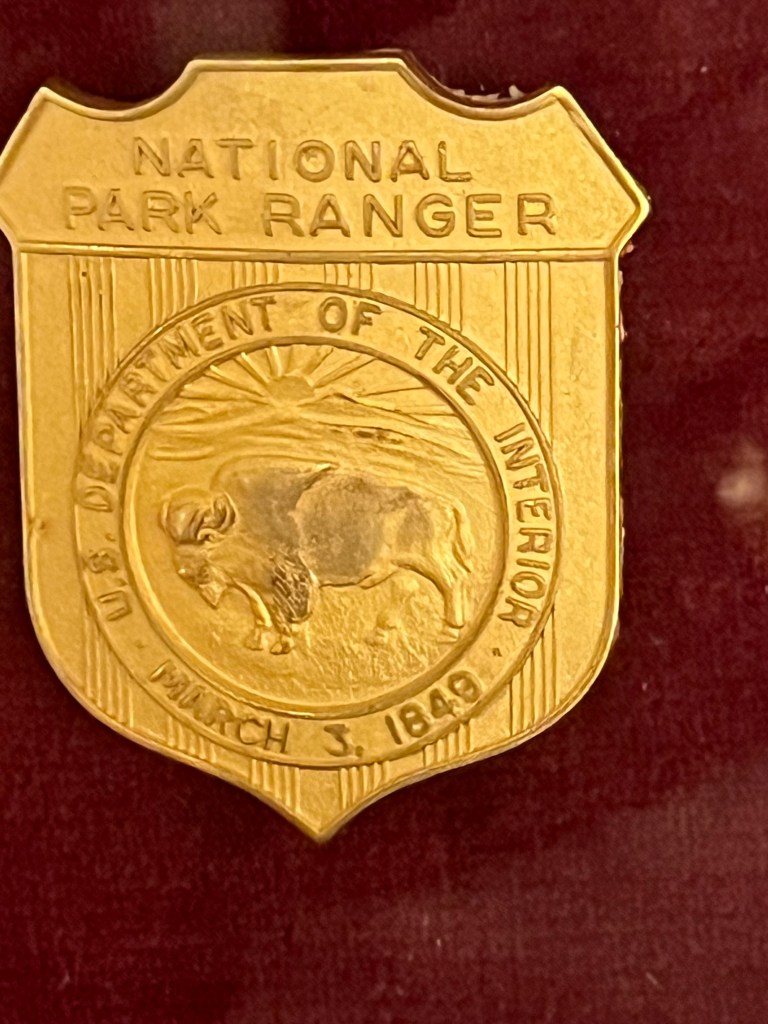
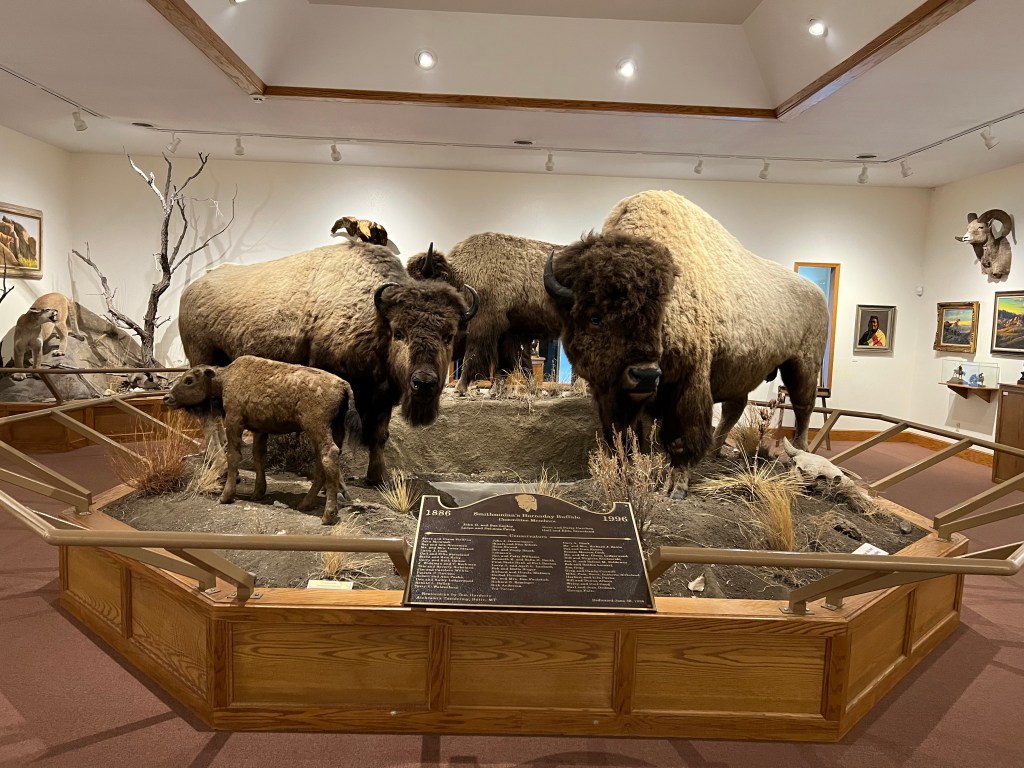
Two items were notable here. First was the Hornaday Bison. This is a group of six bison hunted in 1866 and on display at the Smithsonian for 70 years and then put in storage. They were rediscovered and restored and put on display here in Fort Benton, the last and most successful buffalo robe trading post along the upper Missouri. The bull in the display inspired the Great Seal of the Department of the Interior and the National Park Service badge bears his likeness.
The second item was a display critical of James J Hill, the founder of the Great Northern Railway. The display discussed the grandiose promises made to attract settlers along the path of Hill’s railway. The reality was flat, endless, windswept plains which had hot, dry summers and frigid winters.At its peak in 1912, 3.4 million acres were under cultivation. Less than 10 years later, in 1921, only 1.45 million acres were under cultivation. The land could not produce as the advertisements promised and 100,000 homesteaders had departed.
The day finished on a pleasant note. We walked over the old railroad bridge that is now solely for pedestrian use and got a very nice view of the river and the breaks. Dinner was at the second recommended restaurant and we drove up to a scenic overlook to try to get a view of the Supermoon rising. That effort was partially successful. We were just able to view the moon before it disappeared behind clouds for the night but the wind was so strong, holding the camera steady for an evening shot was challenging. The resulting photos were only so-so.
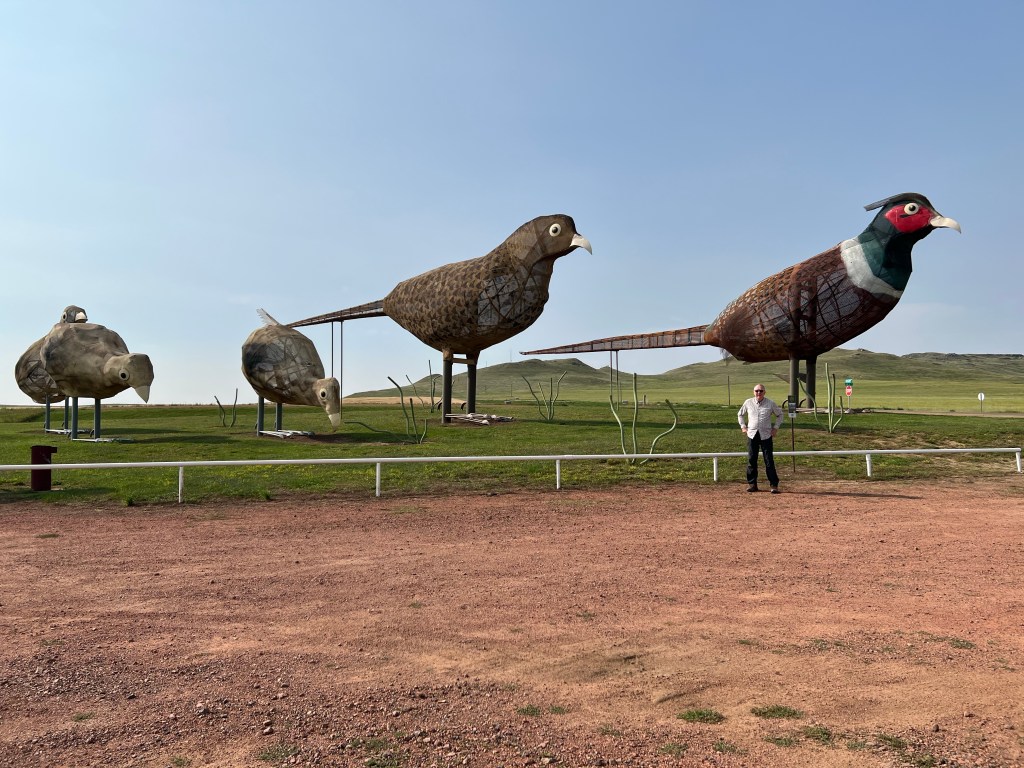
The Enchanted Highway was a spur of the moment diversion. We had left Bismarck and were heading west on interstate 94 when we saw small signs promoting the Enchanted Highway. Then we came upon a humongous (110 feet tall and 150 feet wide) scrap metal sculpture along one of the exits in sparsely populated western North Dakota. We pulled off the interstate to inspect the sculpture. A local artist, Gary Greff, had worked with numerous farmers in this area to create an attraction that would draw visitors to his small town of Regent North Dakota.(Population 170) The metal sculptures would utilize the welding skills so many farmers have developed.
Geese in Flight along I-94
We took a chance to follow this 30 mile, one way, diversion, hoping it was worth the time and would not make us reach Fort Peck dam and Charles Russell wildlife refuge interpretive center past its closing time of 4 PM. In the end, yes the 90 minutes or so it took us to drive to Regent and back was time well spent. Our photos of seven of the sculptures will bring back pleasant memories of this bit of quirky Americana. Greff’s goal was achieved, we gassed up in Regent and bought a memento or two. And we made it to Fort Peck at 2:45 pm.
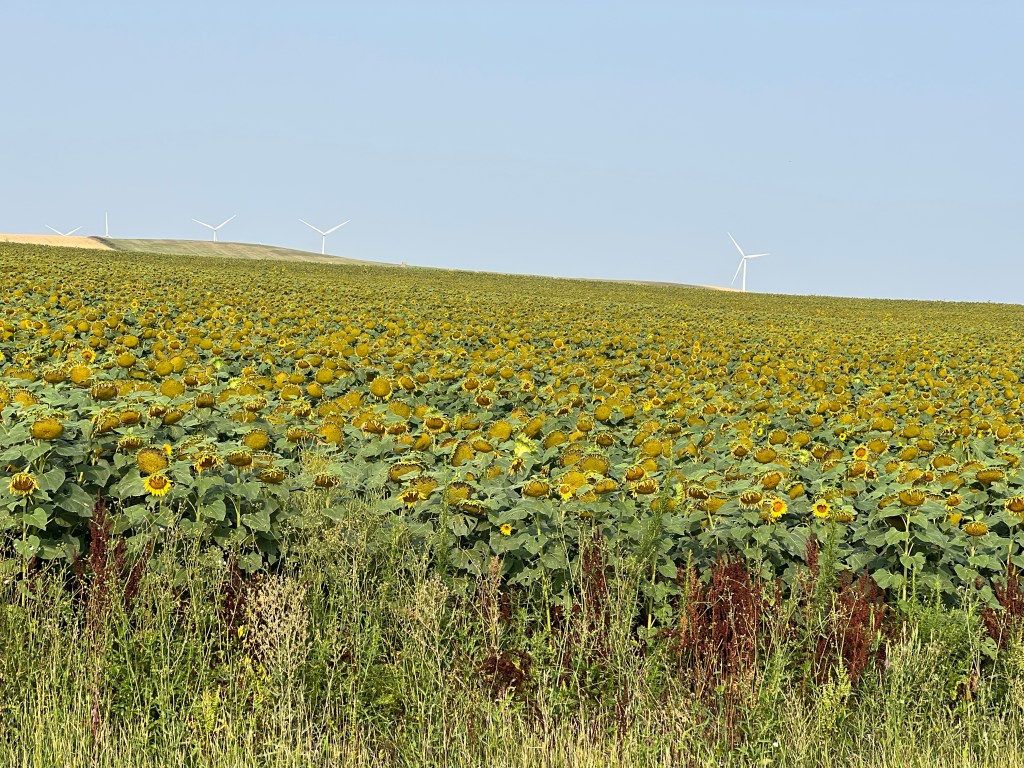
Sunflowers waking up on left, showing their blooms on right
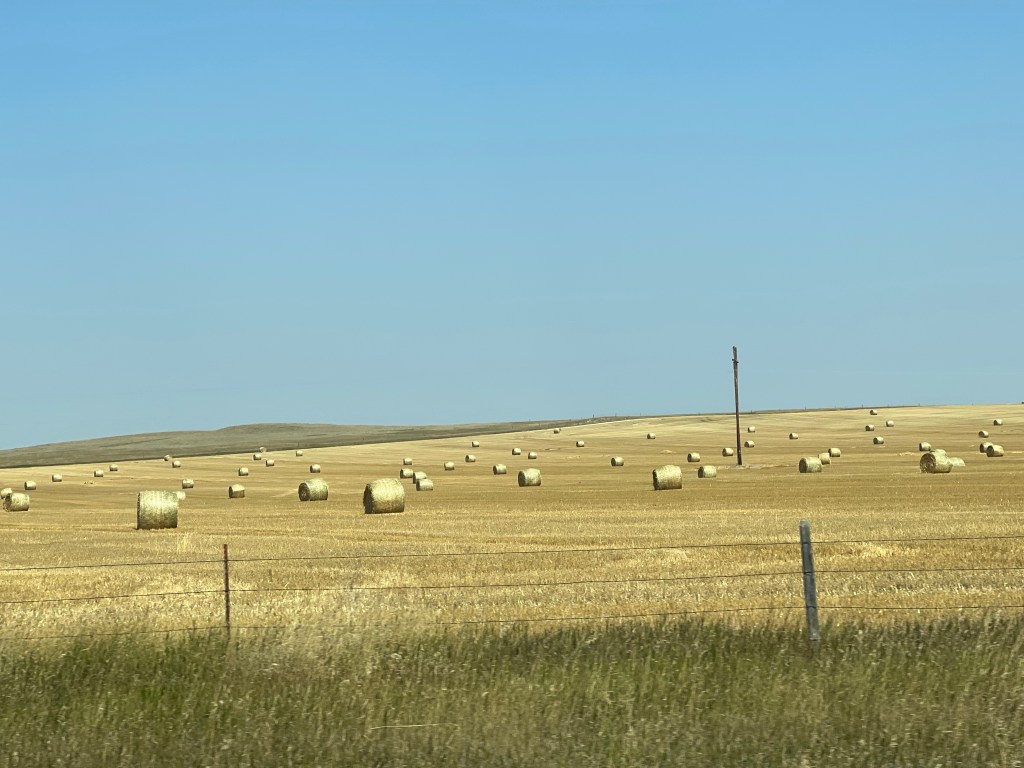
The drive to Fort Peck took us through portions of the badlands of North Dakota with its exposed rock formations, ridges and valleys. Fields of sunflowers were still curled up in the morning until unfolding later in the day as the sun brought forth the yellow flowers. Wheat fields were in the process of being harvested. Round bales of hay were lying in fields everywhere. Cattle grazed singly and in small groups on scraggly looking open pasture. Miles of empty hopper cars from BNSF Railway lined the tracks, possibly stored here until enough grains had been harvested for the cars to be useful.
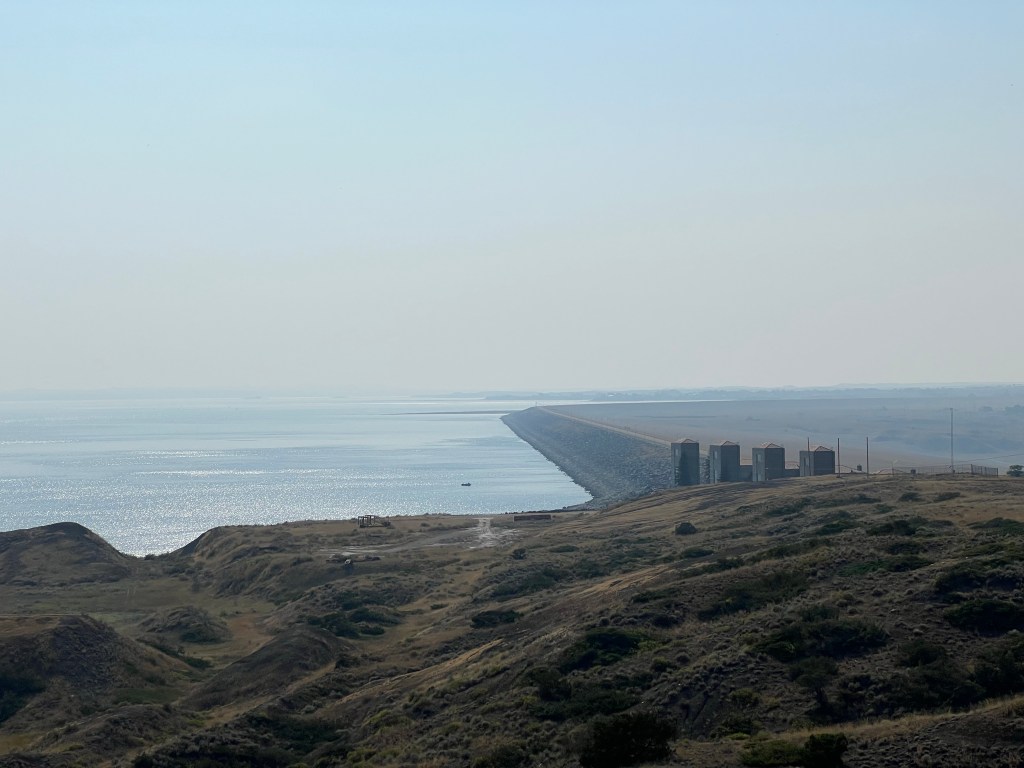
Fort Peck Dam
Our destination was the Fort Peck Interpretive Center, a joint project for the Forest Service and the Corps of Engineers. Fort Peck Dam was built during the Depression, damming the Missouri River and creating Lake Peck and later the Charles Russell National Wildlife Refuge. The dam is an earthen embankment dam, 250 feet high and just under four miles long. It took four years to build and the earth of the dam was dredged from the area, sent by a slurry pipeline to the dam site and dewatered and compacted. This is a frequent process for long dams filling a valley. Many people see the concrete spillway built to handle emergency overflows and erroneously believe that is the dam. The dam is the largest hydraulically constructed dam in the US and fifth largest reservoir in the US.
The Missouri River is frequently dammed. Six dams are in Montana and the Dakotas with two of those six creating reservoirs longer and larger than Lake Peck. The Corps of Engineers has to balance multiple and conflicting interests in managing the flows into and out of the reservoirs. Flood control, hydroelectric power, recreation, irrigation, water supply, water quality and fish and wildlife all have different constituents. It makes for a guaranteed conflict when water levels are high or low, and when the dam is built.
Lake Peck, the backed up Missouri River, is 134 miles long. The Charles Russell Wildlife Refuge dates back to 1934 and surrounds Lake Peck. Undergoing numerous changes over the years as to management, size, and designation, the refuge protects over 900,000 acres and is the second largest National Wildlife Refuge in the lower 48 states. Unfortunately for us, access is primarily by boat and we will not truly explore it. The interpretive center gave us the best feel for it that we are likely to experience.
Staff at the center were both helpful and knowledgeable. We took advantage of both of those attributes as we peppered them with questions. It took us a while to grasp the dam’s construction, how the river flows through it, and the location of the spillway versus the dam. I should have spent more time examining the fish displays. It would have helped me with my volunteer stints back at Mississippi National River and Recreation Area.
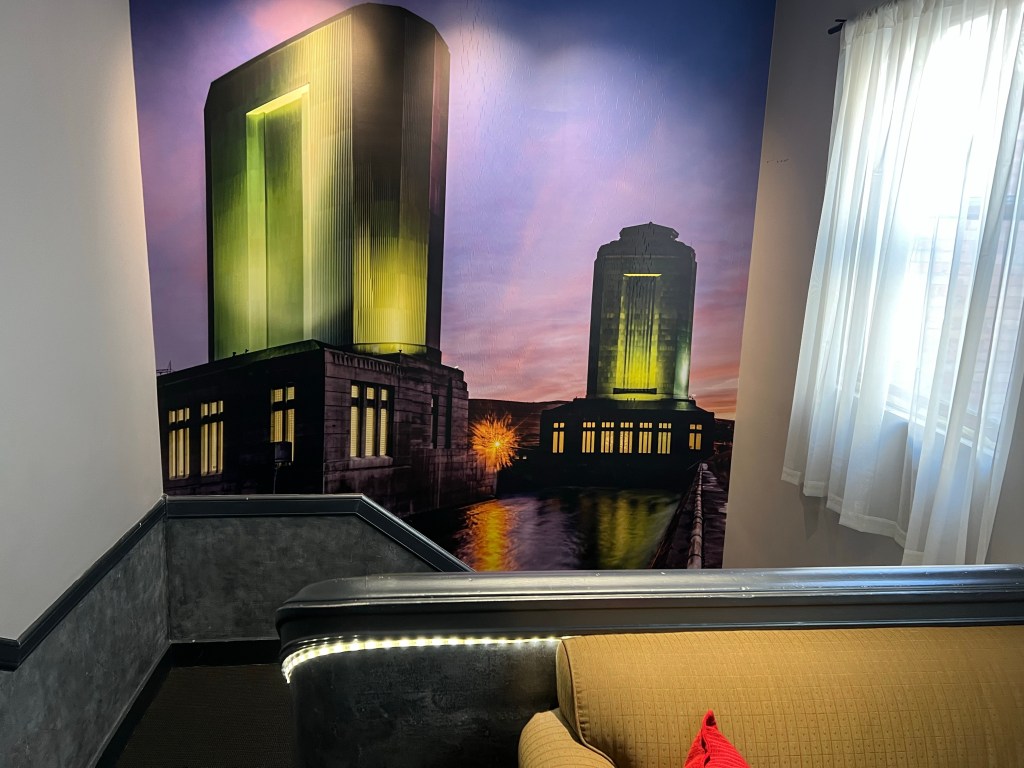
Rundle Suites, Glasgow MT
Glasgow Montana is the location of our overnight lodging. The town has 3200 people and is the largest city for 100 miles. We are staying in the Rundle Suites in downtown Glasgow. The building began its life around the time of WWI and has seen a variety of commercial and residential uses. The rooms are newly remodeled and other than a small and old fashioned elevator, the place is quite nice.
Small towns may not always have the widest variety of restaurants but over the years we have found the meals to be quite good. Glasgow did not disappoint. Eugene’s Pizza offered much more than pizza. Each dinner meal came with jo-jos; dressed up fancy potato wedges. Breakfast was at the Oasis, a small restaurant attached to a downtown casino that did not offer a lot of curbside appeal. However our breakfasts were large, tasty, and inexpensive. Plus the milk was cold and the waitress did not need to be told to bring the milk with the meal.
10 AM Sunday service at the Cathedral of the Holy Spirit was a surprise. A full house and about 40% of the attendees were children and teenagers. No special service, evidently just the usual crowd. We are more used to seeing the gray hairs vastly predominant.
The delicious caramel roll at Little Cottage Cafe
Our next surprise was breakfast at The Little Cottage Cafe. The line was out the door but we were assured the wait was worth it and the line would move quickly. All of the tables were for 2s and 4s. While waiting, we chatted a bit with two couples, one our age and one in their 20s and sat next to each other and the conversation continued. Major good advice: Order the caramel roll as an appetizer. We did and it was fantastic; sweet with extra caramel, warm, soft and fluffy, not heavy like some others are. The entire breakfast was tasty and inexpensive. Put it on your list next time you are in Bismarck.
Another bit of advice was to visit the North Dakota Heritage Center and State Museum. We had it on our secondary list in case we finished the State Capitol tour early. We decided to move it up and visit the Capitol second. Wise choice, as we got to the museum, we were informed the Capitol tours were not being held this weekend due to repairs-even though the Capitol web site had not mentioned that.
Native American drum with four colors of the medicine wheel
The Heritage Center and Museum was either new or recently renovated. The displays were well done with a nice mix of new technology and old style but new display boards. The information presented covered an extensive catalog of topics; obviously not comprehensively but reasonably thorough. The information on Native Americans was substantial.
We re-learned ND’s legacy of fighting the early domination of the state by railroads and wheat magnates out of Minneapolis. ND’s geologic history lead to several exhibits about fossils, bison, and dinosaurs. Agriculture, coal, and fracking were several hot topics also.
North Dakota is an immigrant state and the pattern of immigrants from European countries forming their own enclaves and keeping their heritage alive was discussed, although I did not observe any displays of Indian boarding schools and their negative impact on Indian cultures.
Admission to the museum is free so people are able to come back often. I find it more and more difficult to retain much of the new information I pick up at museums but I keep trying.
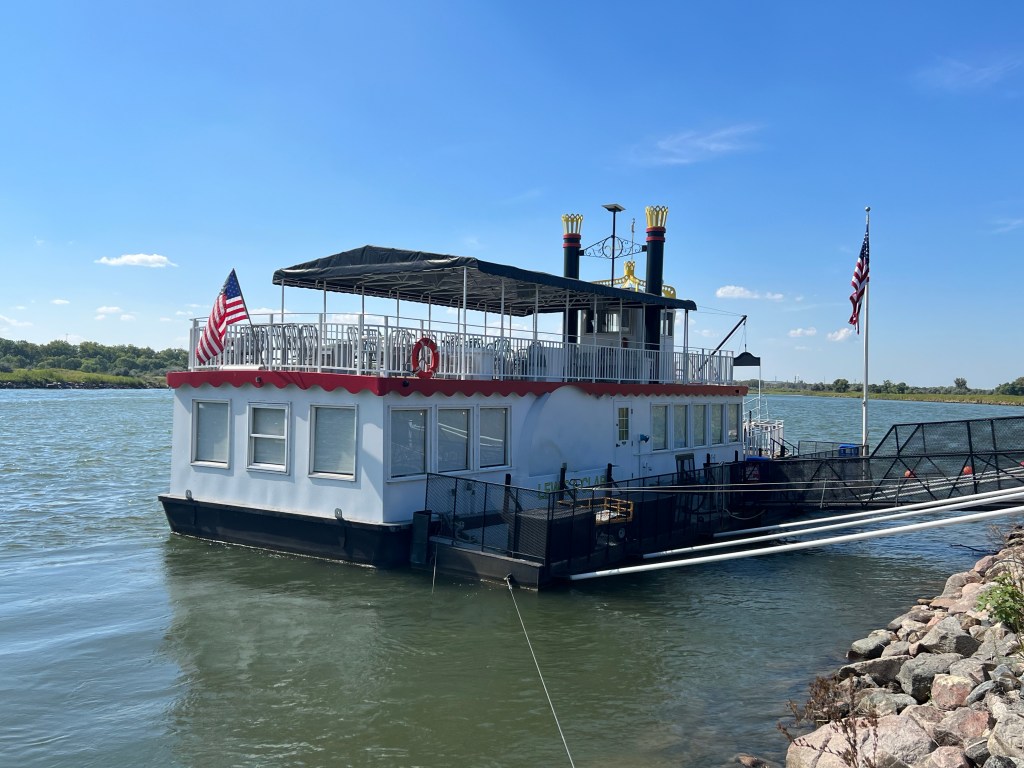
Lewis and Clark Riverboat
An afternoon cruise on the Missouri River was next on our agenda. The Missouri has been frequently dammed in ND, SD, and MT, creating water recreation opportunities. Pontoon boats were the most numerous type of vessels we observed. Our excursion boat could probably seat 150 people and was about one-half full.
This section of the Missouri River is part of the Northern Plains National Heritage Area. National Heritage Areas are created by Congress and coordinated with the National Park Service. They are not an official unit of NPS. My personal interpretation is that these are local efforts to market their communities tying into the cachet of the National Park Service. The official verbiage is: Through public-private partnerships, NHA entities support historic preservation, natural resource conservation, recreation, heritage tourism,and educational projects.
I think the people on the boat were just having a relaxing boat ride. However, there was a recorded narration on the cruise lasting about 20 minutes. If you listened to it, you heard most of the presentation expressing the Native American perspective of the dams on the Missouri. Creation of the dams led to to the destruction of the Indian villages that had been up and down the Missouri River. One statement was: “ my birthplace is 20 feet below the surface of the river”.
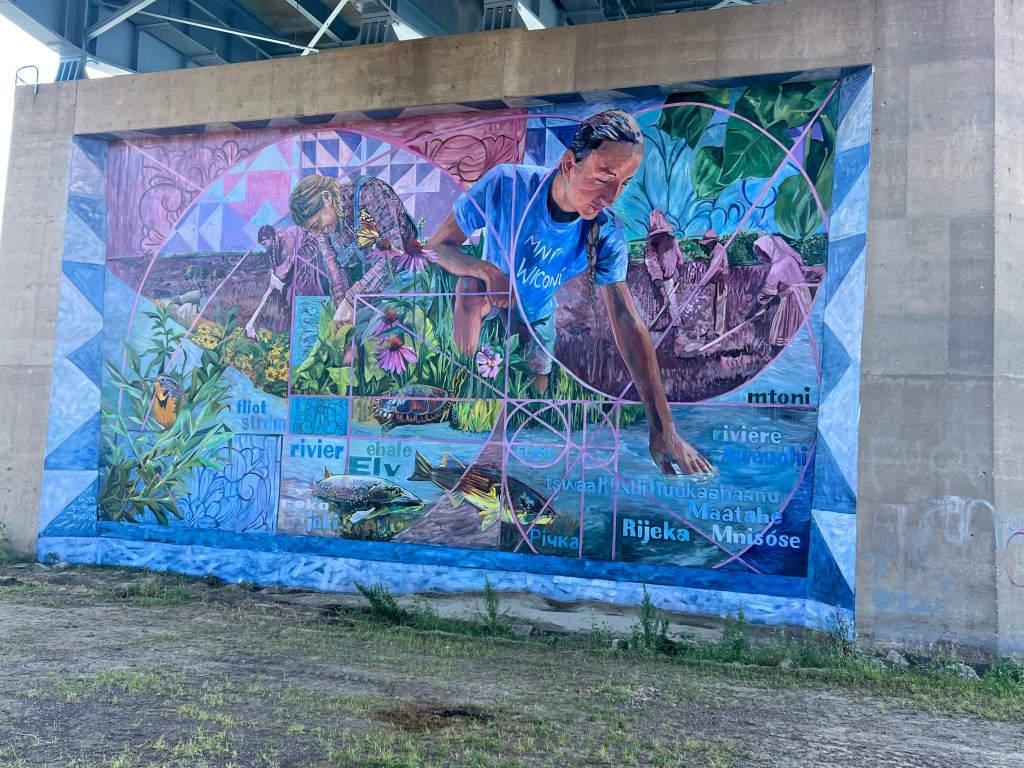
As we left the boat, we came across a large mural. It was a project just completed that had as its goal to bring together partners within the National Heritage Area to share stories about how and why the Missouri River was and continues to be meaningful. Some of the themes included the role of immigrant settler women in agriculture, the state flower (Prairie Rose) and state bird (the Meadowlark), role of cottonwood trees, the river as a source of life, and the three tribes of the area (Mandan, Arikara, and Hidatsa).
On a related note, some of the words from languages used in the area for river are: Fluss (German), Elv (Norwegian), Mnishoshe (Lakota), Joki (Finnish), and Maatahe (Mandan).
View from overlook-Chief Looking Village Park
Before dinner, we finished up the day by driving to an overlook on the bluffs overlooking the river for a beautiful view of the Missouri. Dinner was at The Lodge, a nearby restaurant recommended by our brunch companions.
We are back on the road for an extensive seven week road trip. This started out as a planned trip to Idaho, a state we have only visited minimally. As time went on, we added parts of Oregon and northern California, as well as a few more stops in Montana. If the federal government does not shut down on October 1, we will spend two nights in Yellowstone National Park and two nights in Badlands National Park. The end result is the map you see above.
Regular readers of the blog will know that we are seeking to visit most of the 420+ units of the National Park Service. Currently we are over 320 and this trip should add 15 more units that are new to us.
We had to schedule our time for this trip with sufficient days to be able to see the critical items on our list. In addition, we wanted to make sure we could get into the Minnesota State Fair before we left on our journey. That was accomplished by going to the fair on its opening day, Thursday, two days ago. I managed to fit in a volunteer stint with Mississippi National River And Recreation Area from 10 to 2. The rest of the time was spent eating and wandering the fairgrounds with Chris.
Interstate 94 to the North Dakota/Minnesota border was a routine run. Starting west from Fargo, we were back on an interstate highway we have not visited for probably eight or nine years. The terrain was similar to the North Dakota plains we passed through on our trip to Winnipeg in the middle of July, without any fields of canola. And, despite the fact that North Dakota has less than 100 dairy farms, milk is the designated state beverage. All of the cows we saw on the farms along the highway looked like beef cattle, not dairy cattle.
We decided to break up the day’s journey with a stop in Jamestown North Dakota. Jamestown is a community of about 15,000 people with a kitschy tourist attraction called Heritage Village/ National Buffalo Museum. You can tell the attraction is older, since it still uses the term of buffalo rather than bison in its name. However, within the museum itself, it utilizes space to explain the difference between the bison of North America and the water buffalo of Asia.
We picked up a few new factoids about bison. For instance, I had not remembered that there are two types of bison in North America. The plains bison are primarily found in the United States. The wood bison are primarily found in Canada and are 10 to 15% larger than bison found in the U.S. Nor did I remember that bison only require water every three or four days. I was pleased to see that the museum, while not highlighting the fact, did at least make it known that the killing of bison was also a tactic to subjugate Native Americans.
Lucky for us we have seen bison in numerous locations around the United States. The bison at the museum, according to one staff member, generally leave the area of the museum around the time visitors arrive at the door, and return from wooded areas after the visitors have left. For over fifty years, the museum has had a sculpted 26 foot tall, 60 ton bison on display outside. Of course, we got a picture of it.
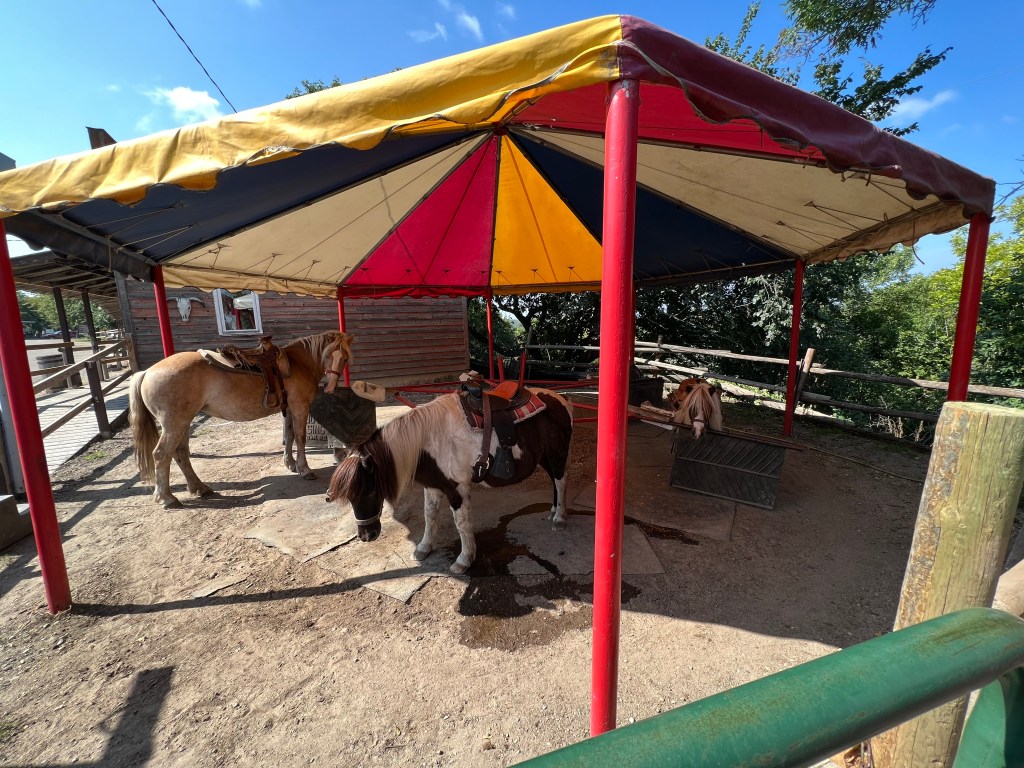
Heritage Village is a collection of pioneer day buildings, and businesses. The general store was doing a brisk business by the selling of ice cream and had a seven piece band playing on the porch outside the store. Heritage village even had a stage coach ride and pony rides for the young in age and size. I had to take a picture and send it to my sisters. We used to assist neighbors with Shetland pony rides when we kids were young.
By this time, we were ready to head out and so left the Buffalo Museum thinking to stop at a wildlife refuge prior to stopping in Bismarck. 2/3 of the way to the wildlife refuge we decided enough was enough, and just continued on to our Airbnb where we will stay in Bismarck for two nights. Dinner was takeout from a local grocery store.

























 Chris Klejbuk and Ed Heimel travel adventure
Recent Comments