Monthly Archives: March 2022

2022 Trip 1: Searching for our 300th National Park Site, March 30

Framingham, MA March 31

Wednesday started out lousy. Rain, 29 degrees F, driving over central Pennsylvania mountains with their curves and hills—and very aware of the crash on Interstate 81 Monday a little east of here with a 80 car/truck pile up that killed six people. Chris and I are very familiar with that stretch of I-81, we always knew that if fog was around, it could be found in that stretch. In Monday’s situation, though, it was a sudden snow squall. For us, our drive had no problems although we drove a bit slower and left later to try to reach above freezing temps. It was not until we reached Scranton, three hours later, that the temperature was above freezing.

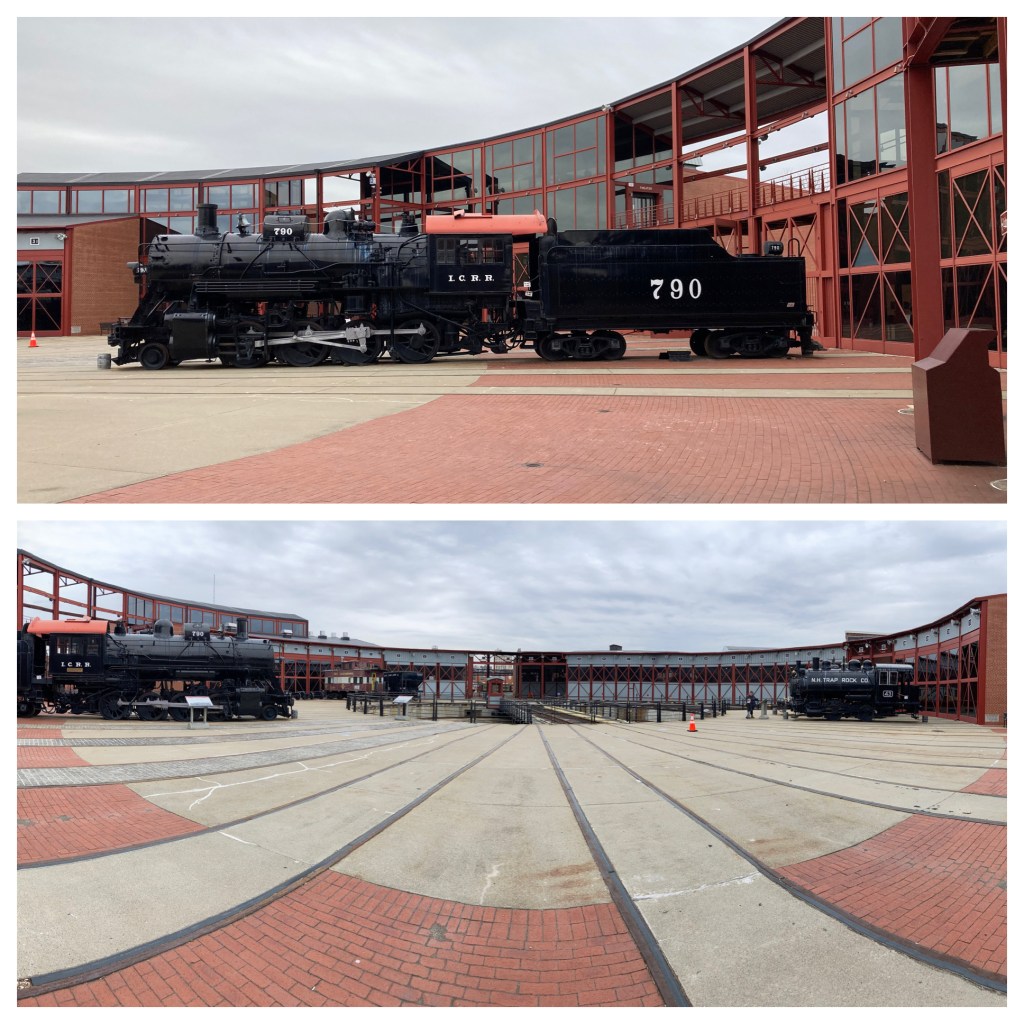
Our one stop of the day was at the Steamtown National Historic Site, a National Park Service (NPS) unit. I had thought we had been here before many years ago but it did not look familiar. Chris was sure she had never been here. In any event, the complex is large and impressive. The major focus of the exhibit is railroading, specifically the Delaware Lackawanna and Western railroad. This railroad was a major connector between New York and the anthracite coal mines of northern Pennsylvania. Like many other railroads, it was the result of the merger of several smaller, local rail lines.

The National Park Service’s role at this site is to interpret the role of railroads in the development of the United States. In particular, Steamtown focuses on the industrial development of the Lehigh Valley around Scranton, the steel factories and coal mines, and the role of immigrants newly arrived in the US who filled jobs in this location. Steamtown has a 18 minute video, and a wonderful series of exhibits surrounding a central Roundhouse. The buildings have been well restored, as have the railroad locomotives on display. During warmer times of the year, train rides are offered.
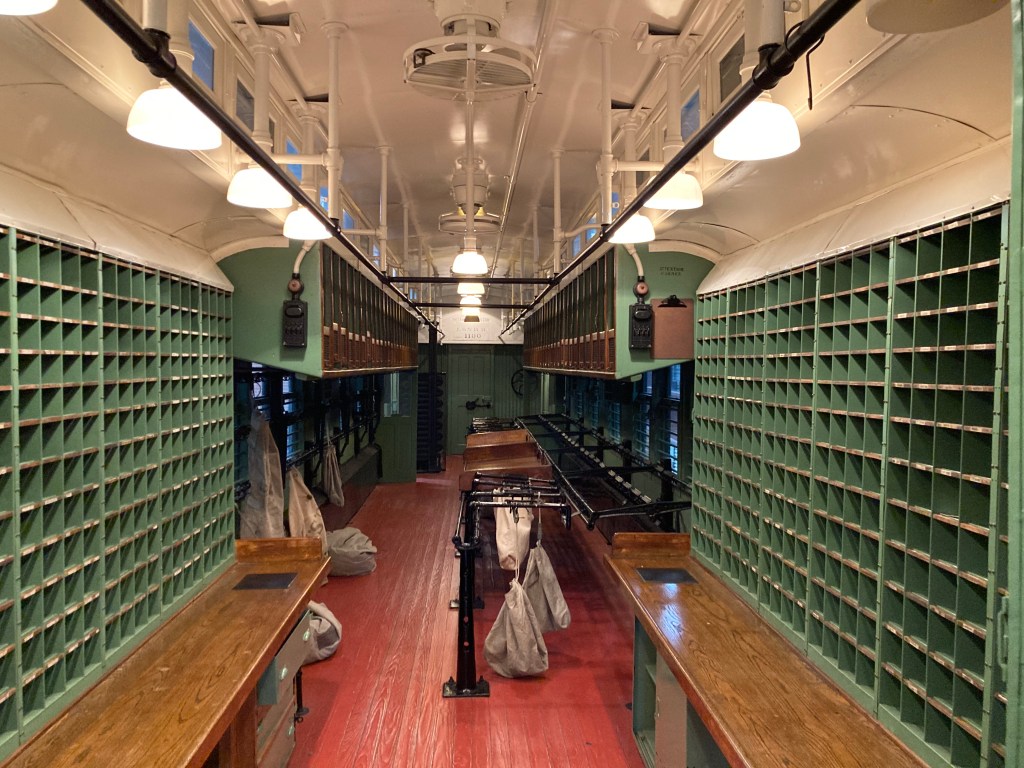
I found one display of particular interest. There was a Railroad post office car included in the collection of train equipment. These cars were used for sorting mail along the train route, even to the point of dropping off mail at locations without a formal stop by means of a bag tied to a hook. In my talks for the NPS Trails and Rails program on the Amtrak Empire Builder, I try to mention this old time process while speaking in the observation car.

The park ranger we met, a woman originally from Hagerstown Maryland, was gracious and accommodated my request to pick up Junior Ranger booklets. If you are not aware of these, most National Park Service sites have a booklet designed for young visitors to help them explore and learn about the purpose of that specific NPS site. While called Junior Ranger booklets, they can be used by people of any age.

The Ranger responsible for these booklets at my park site, Mississippi National River And Recreation Area in the Twin Cities, will be receiving a packet of Junior Ranger booklets that I will be picking up as we visit 30 or so NPS sites during this trip. Here at Steamtown, the Park Rangers have developed a series of four booklets designed for different ages. One booklet is for ages five and under, one for ages 6 to 8, one for ages 9 to 12, and the last one for people like me, ages 13 to 130. The Steamtown booklets are less fancy, printed with a color printer. In contrast, the Junior Ranger book at Flight 93 National Memorial was printed by a commercial printer on heavy, glossy paper.

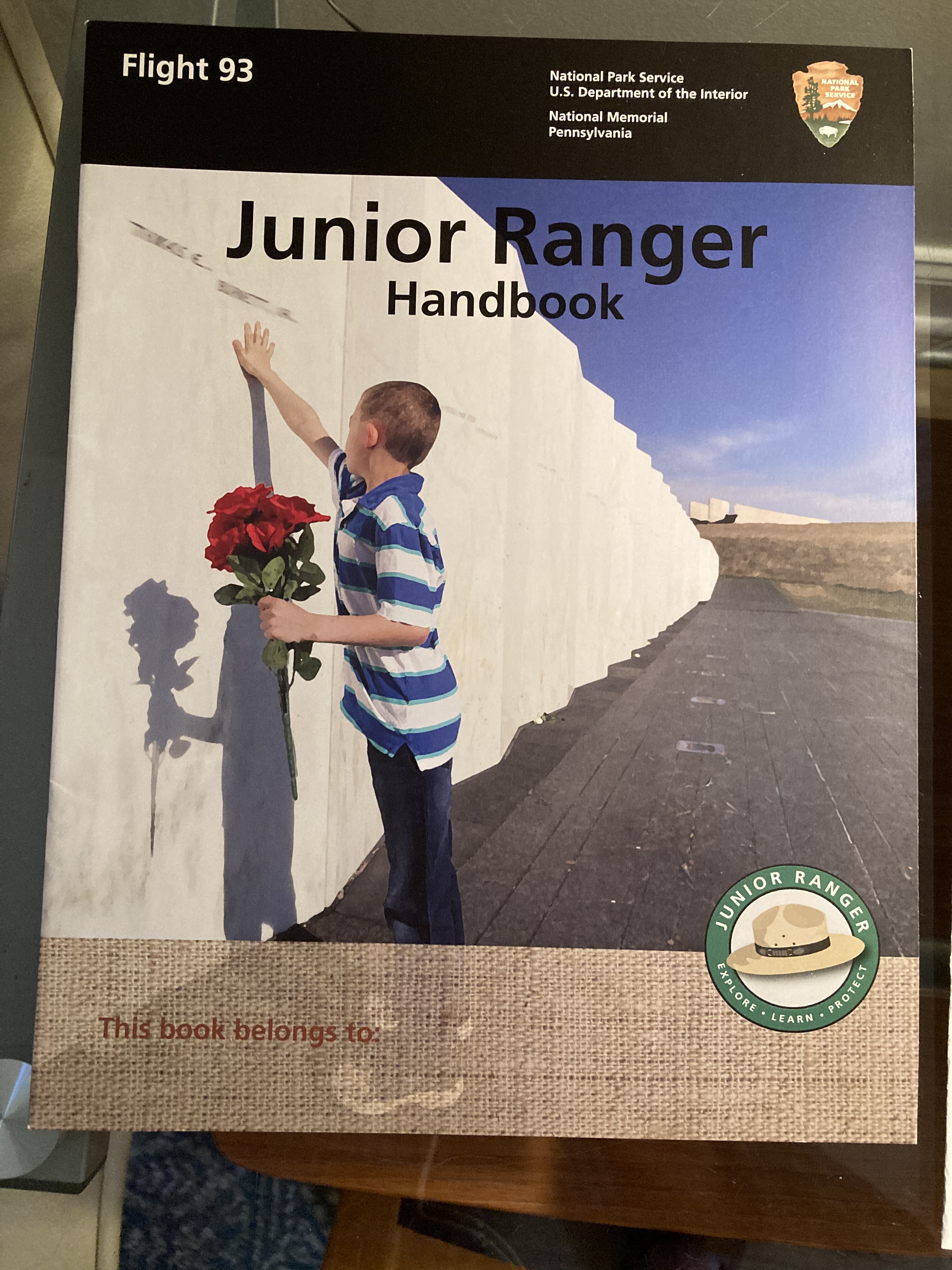
Each booklet requires the user to answer questions, draw pictures, and in general interact with the knowledge presented at the NPS site. Completion of the booklet allows the person to be sworn in as a junior ranger and receive a badge. We have found that it can be quite popular with people interested in learning about American history and culture.

The rest of the drive was uneventful. Heavy traffic once we hit New York, then really heavy through the usual traffic jam around Danbury Connecticut. Over the years, most of our visits to Boston from Minnesota have been by air. It was nice to drive old familiar territory, even being surprised by local restaurants that are still in existence from 30 and 40 years ago. When we stopped at the first rest stop in Connecticut, we recollected that this was a dramatic improvement to the trip we used to take from Minnesota and then Pennsylvania to visit Chris’s parents in Connecticut. The rest stop was completed in 1971, a year before we were married. It has an older style than what is now common Interstate rest stops design, but it still was a nostalgic and useful stop. One new addition was a vending machine, see picture, that we have not come across previously. Either it is new or we are just out of touch.

For the next several days we will be in the Boston area. Lodging is a Airbnb, a former garage apparently converted into an attached dwelling unit. I still usually prefer a nice Hampton Inn. There are two people on this trip and cooperation in lodging choices must be made.. The Hampton Inn Monday night in Crawfordsville IN, offered dinner for guests from 5 to 7 pm. We took advantage of it. Over the course of this month, we will be staying at three Airbnb‘s, about a dozen Hampton Inns, a Hilton Grand Vacations Club offering in downtown Washington DC, and three nights at a West Virginia state park resort.

Ed and Chris, Framingham MA March 31.

Categories: travel | Tags: , , , , | Leave a comment

2022 Trip: Trip 1; Searching for our 300th National Park Site: March 28-29

Altoona PA, Tuesday March 29, 2022

On this first major trip of 2022, we will be visiting over 30 National Park Service (NPS) units along the Eastern Shore of the U.S. By the time this 30 day trip is completed, we will have a total visitations from 278 to over 300 National Park Service sites. Most of these NPS sites are fill in, that is, we have visited other sites in these states but have not been to the ones on our current list.

While we lived in Pennsylvania for almost 30 years, it was not until after we moved back to MN that we seriously began trying to visit National Park sites. Thus, there are many sites that are worth visiting, but were not on our agenda 20-30 years ago. In addition, some NPS sites are new since 2000. Our task will be made more difficult since some sites are not open until this summer, or only open certain days of the week-which might not match our travel schedule.

Our first day starts with a drive that is one of the most frequently traveled by us, I-94 and I-90 from St. Paul to Rockford, IL. As we were driving, Chris and I figured we must have made round trips on this section of Interstate once or twice a year for over 50 years. Past Rockford, the options split between through Chicago (ugh!) or southerly towards Indianapolis.

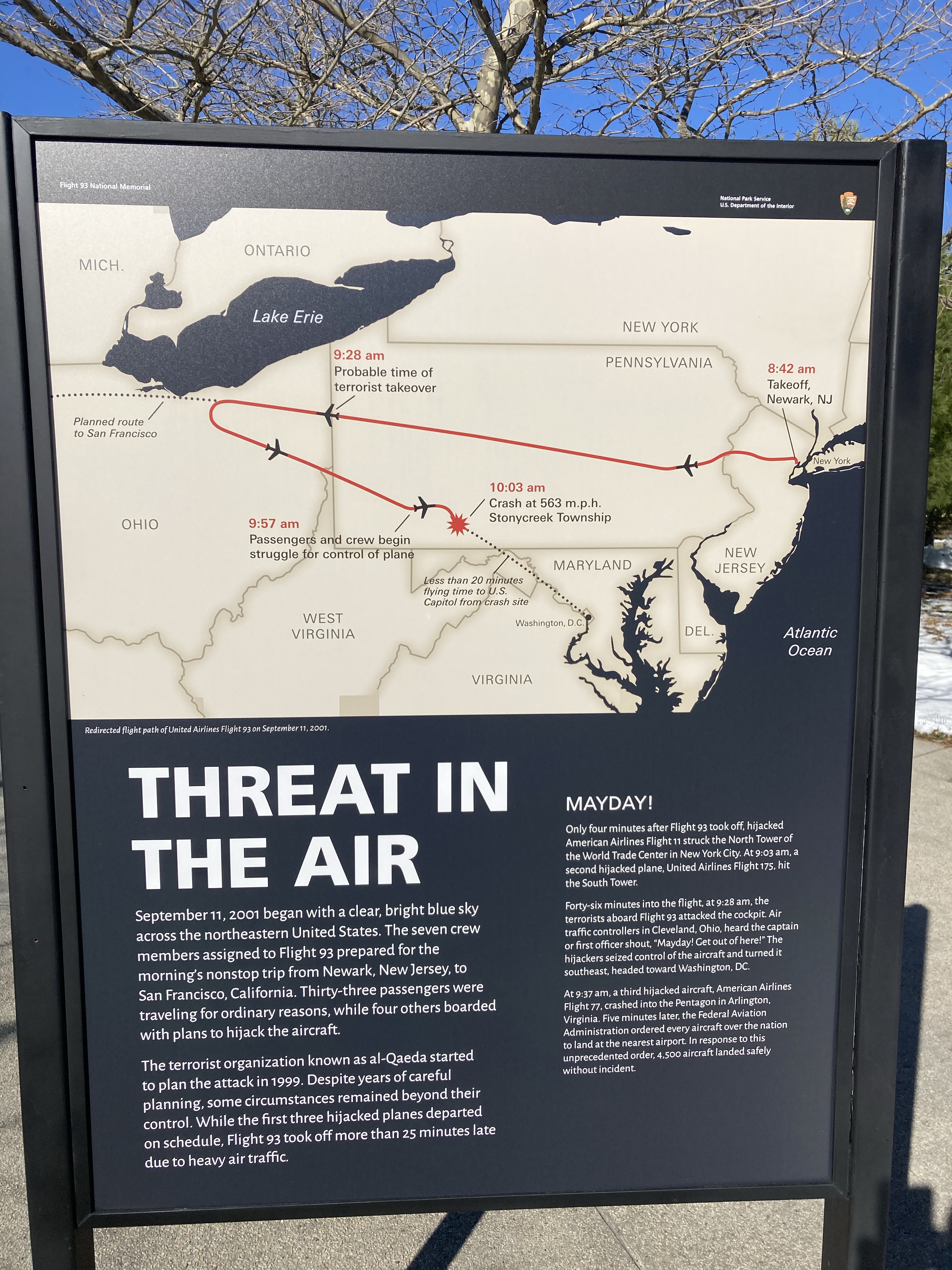
This trip is through the southerly route. While our first major goal of this trip is visiting Deb and Rebecca in the Boston area, on day two we are stopping at Flight 93 National Memorial in southwestern Pennsylvania. Unless you were born recently, you probably know United Flight 93 was bound to San Francisco from Newark. On 9/11/2001, this flight was hijacked by four terrorists who planned to crash the plane into an unknown to us federal government building in D.C.

Flight 93 was the fourth flight on 9/11 that was going to be crashed into iconic U.S. buildings. The other three flights hit the World Trade Towers and the Pentagon. Flight 93 National Memorial honors the 40 passengers and crew who stormed the cockpit and forced the plane to be crashed into a field in the Allegheny Highlands of PA. Their sacrifice saved the lives of countless others who might have been in the U.S. Capitol or White House. The crash occurred but 20 minutes flying time to D.C.

Our visit started at the Visiotr Center. Exhibits re-create the day, a beautiful sunny day quickly marred by news reports out of New York City about the World Trade Towers. The crash into the Pentagon clearly makes known that the first crash was not a horrendous accident, but a planned act by terrorists. Flight 93 was delayed at departure, giving time for news of the other crashes to reach the passengers on the plane. When the plane is hijacked and turned around from its planned route, the people on board formulate plans. While the specifics are not clear, it is known they stormed the cockpit and disrupted the hijackers’ plans. The hijackers crashed the plane here in Pennsylvania, rather than in D.C. Each passenger and crew member is memorialized in the exhibit.

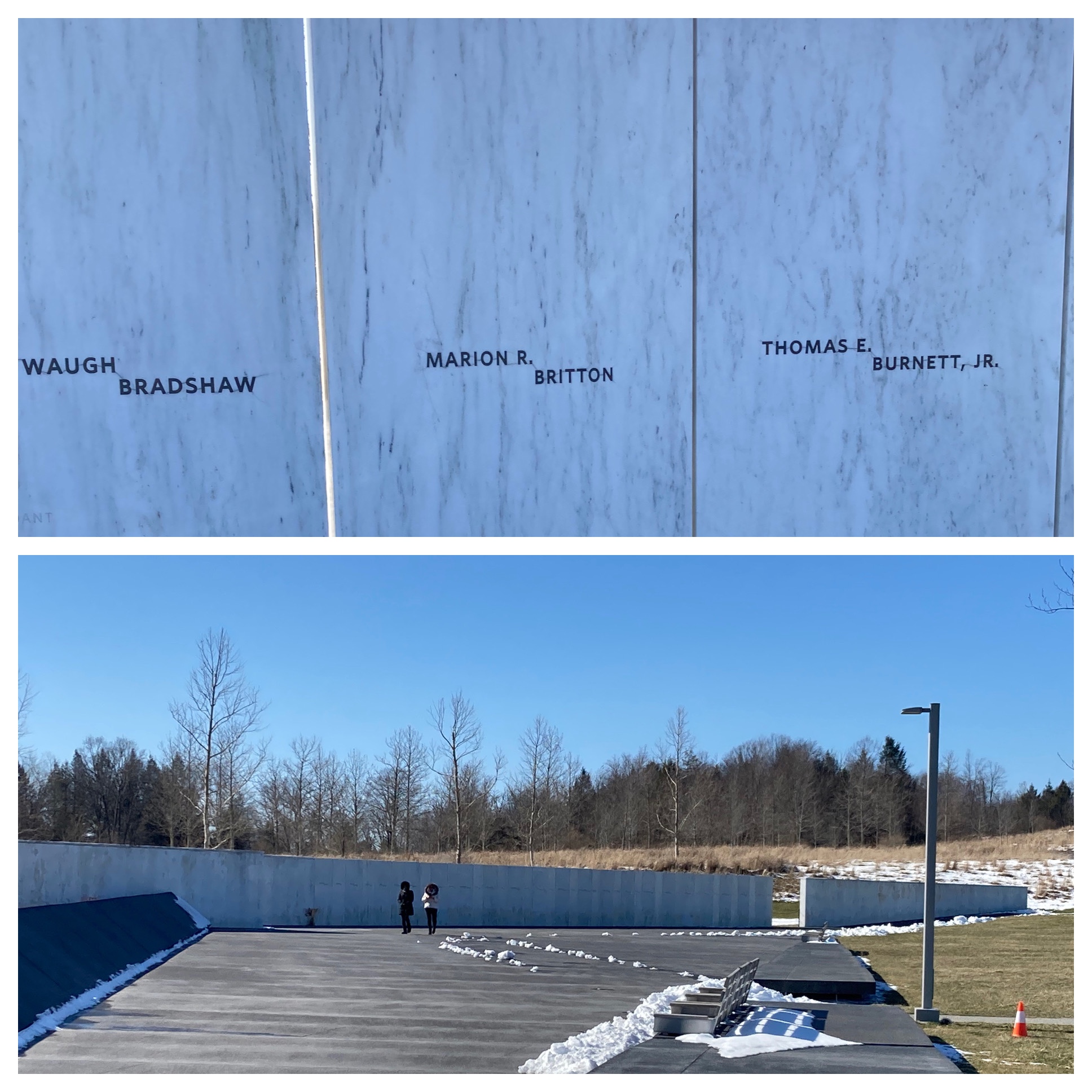
Outside, the visitor center has a walkway that simulates the flight path of the plane before its impact. The crash site itself is off limits, only family members are allowed within the gates during the month of September. The visitor center overlooks the crash site and impact zone. 40 groves of trees line a memorial drive that leads to an overlook of the crash site. At the closest public area to the crash site is a memorial wall. The wall looks solid, although it is made from 40 separate marble blocks, one for each person. The theme is of 40 people working together as one.

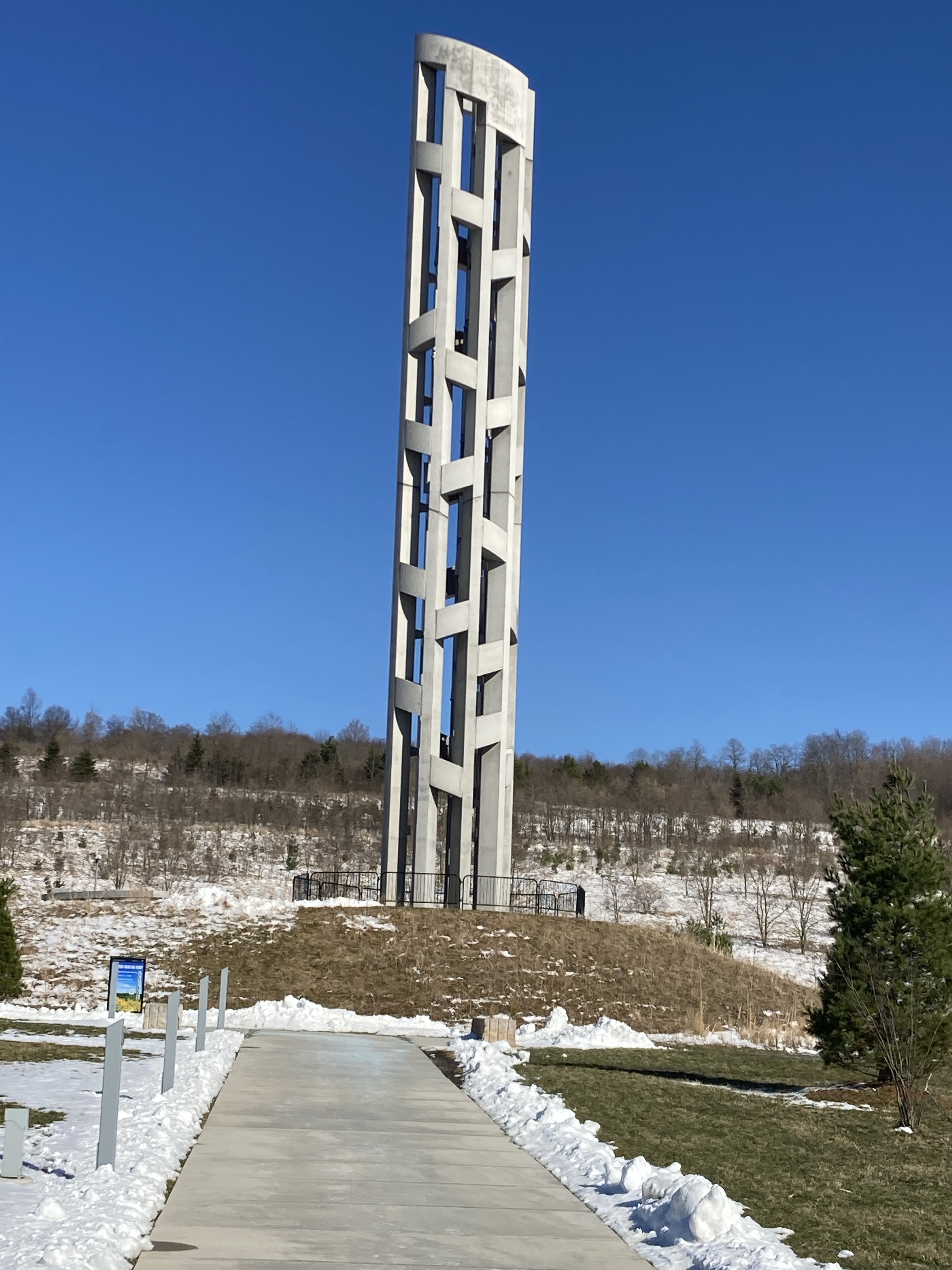
The final outdoor portion of the national memorial is the Tower of Voices. The 93 foot tall tower is a unique musical instrument, comprised of 40 chimes, each with a unique sound. Activated solely by the wind, the sounds change based on the wind patterns. (One can see wind turbines in the distance, so the musical instrument is sure to play often. We could hear it easily when we visited today.

The book store sells books about 9/11 and Flight 93. I thought it encouraging that next to books about this tragedy was a book of heart warming friendship. The book “The Day the World Came to Town” tells tales from Gander Newfoundland where 42 airline flights were forced to land on 9/11 as U.S.airspace was closed after the terrorist attacks. Chis and I both read the book and would recommend it to others.

This small town had an airport that became ignored as modern planes no longer needed to refuel here on their way to Europe. On 9/11, however, the town of 11,000 people became the emergency home for almost 6,700 people. It took days for airspace to open up and flights to be re-scheduled. The people of Gander opened their arms and their hearts. As we hear news of unspeakable horrors and tragedies, let us not forget the goodness in people also.

Ed and Chris

Altoona, PA Tuesday March 29, 2022

Categories: travel | Tags: , , , | Leave a comment

Another 2022 Winter Getaway in Northern Minnesota, March 8

Grand Rapids, MN March 8, 2022

Our hosts here at the Green Heron admitted they had to stop having breakfast with their guests or they would be gaining weight all the time. I can understand that. Our breakfast of wild rice quiche and homemade cappuccino rolls fuels us up for hiking and allows us to skip a meal later. The wild rice in the omelette was harvested by the hosts and then sent to the Fond du Lac Indian nation near Duluth for processing. Soon they will be making their own maple syrup.

One of my volunteer activities is as a National Park Service (the Mississippi National River and Recreation Area) docent at St. Anthony Falls Lock and Dam visitor center on the Mississippi River in Minneapolis. I have known that the Army Corps of Engineers constructed a series of six dams on the Mississippi River in northern Minnesota to regulate water flow for navigation between St. Paul MN and Prairie du Chen WI. The dams were built between 1884 and 1913. However, Chris and I had never observed one of these dams.

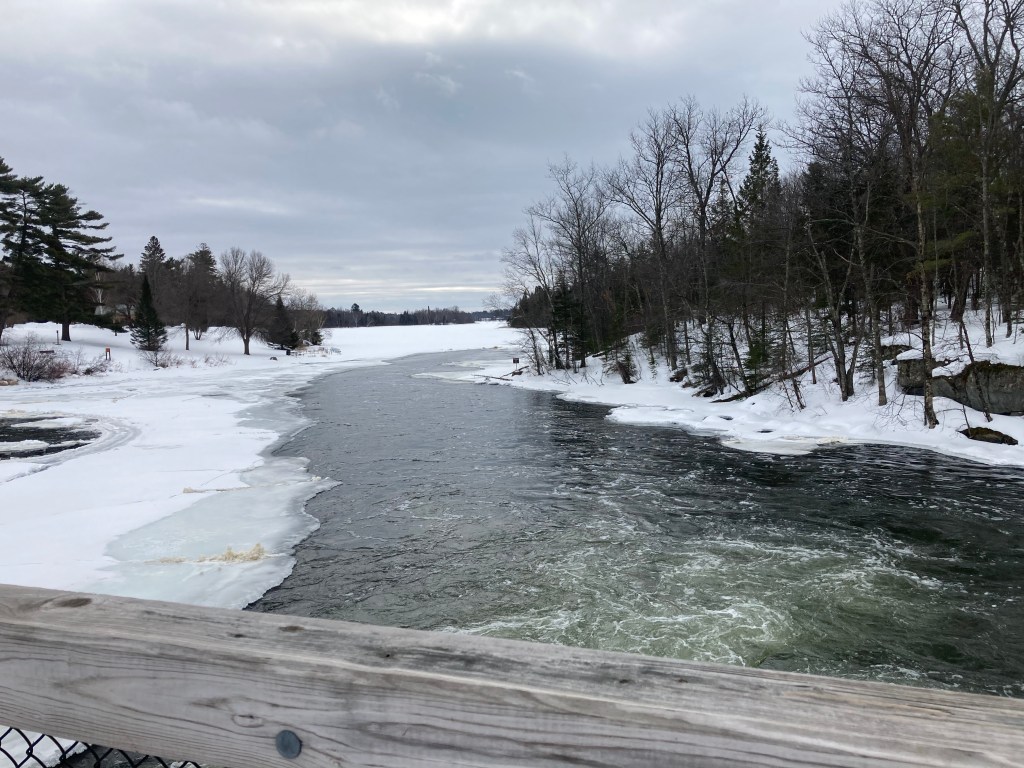
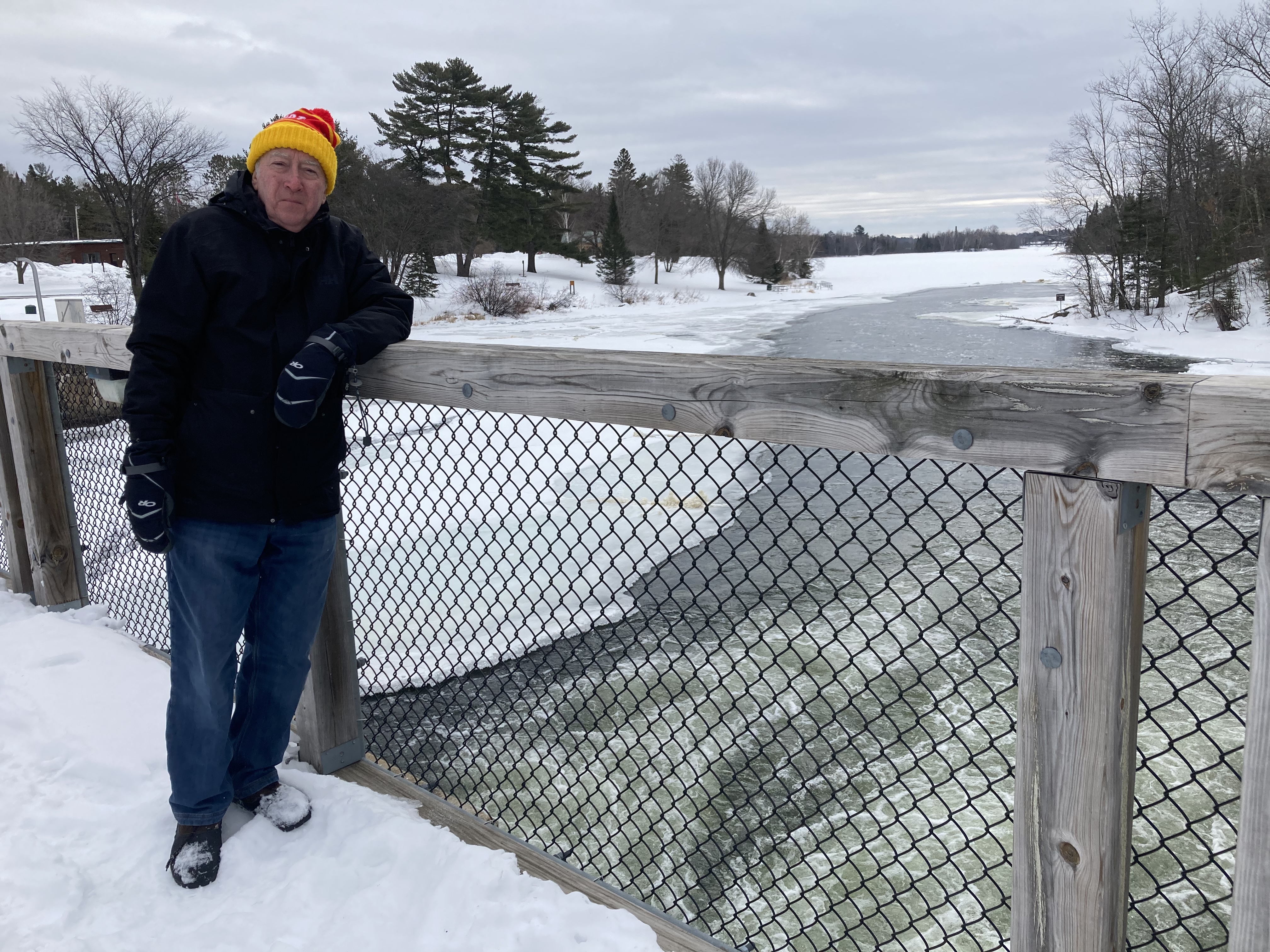
We eliminated that oversight today, visiting Pokegama Dam just upstream from Grand Rapids. The dam is not as dramatic as the dams located at most of the locks south of Minneapolis. The Corps has stated that the dams’ original purpose for water flow regulation has been less important since the Corps increased the depth of the navigation channel between St. Paul and St. Louis from 6 feet to 9 feet in the 1930s. Recreation, flood mitigation, and environmental purposes are now more important.

The dam stop was a nice adjunct to our visit in February to the headwaters of the Mississippi River. At the headwaters, the river flows out from under the ice covered lake and runs free until eventually the river has its wintry ice cover. At Pokegama Dam, the upstream river surface is frozen and then the water runs free for a short spell on the downstream side of the dam.

Our second stop was at Schoolcraft State Park. Henry Schoolcraft and his Native America guide Ozawindib are credited with making known the true source of the Mississippi River at Lake Itasca. This small state park along the Mississippi is named after him. We took a morning hike here; the two mile trail was quite clear but uneven due to the previous hikers path over the snow. Our first trip here in 2017 had been in August. No bugs this time of the year. While we did not see deer, evidence of their presence was obvious by depressions made by resting deer, tracks leading across the river, and deer scat abundant on the trail.

Our final stop of the day was at the Itasca County Historical Society. The museum had nice displays of the area with special exhibits covering topics such as local high schools, mining, logging, the river, and veterans from the area. The director checked their records and sent me a digital photo of the Pokegama Falls from the late 1800s. Then it was back to the B and B for a late afternoon snack and discussion with our hosts.

Chris and Ed, Grand Rapids MN March 9

Categories: travel | Tags: , , , , | Leave a comment

Another 2022 Northern Minnesota Getaway, March 6-7

Sunday, March 6, 2022 Grand Rapids MN

Chris wanted to ”Get out of Dodge” one more time before we leave on a 30 day trip at the end of March. We settled on Grand Rapids, MN and the Green Heron B and B. Back in 2017 we had stayed at the Green Heron and found it enjoyable and memorable, so we booked it again. It is a delightful house with only two guest rooms. Our hosts, Johnnie and Chris, have been very accommodating. Our getaway started Sunday and we will return home Wednesday afternoon.

The journey Sunday started slowly as the weather had been a mix of rain and snow Saturday evening. The roads closest to the metro area were the worst. As we went north, the roads improved since there had been less rain and snow up there. Our path was circuitous as we wanted to enjoy the trip and not just drive the almost 200 miles. Our first stop, after a McDonalds breakfast, was at the Sax Zim bog.

Sax Zim is a well known birding area about an hour west of Duluth and an hour east of Grand Rapids. Birders visit here year round, it has a welcome center with naturalists on hand. Sax Zim is a mix of public and private land, totaling over 300 square miles. We have never been here before but have heard about and read about it extensively. Not being birders, we dabble in bird watching, just enjoying what we see rather than seeking out specific species. We are also not patient enough to be true birders.

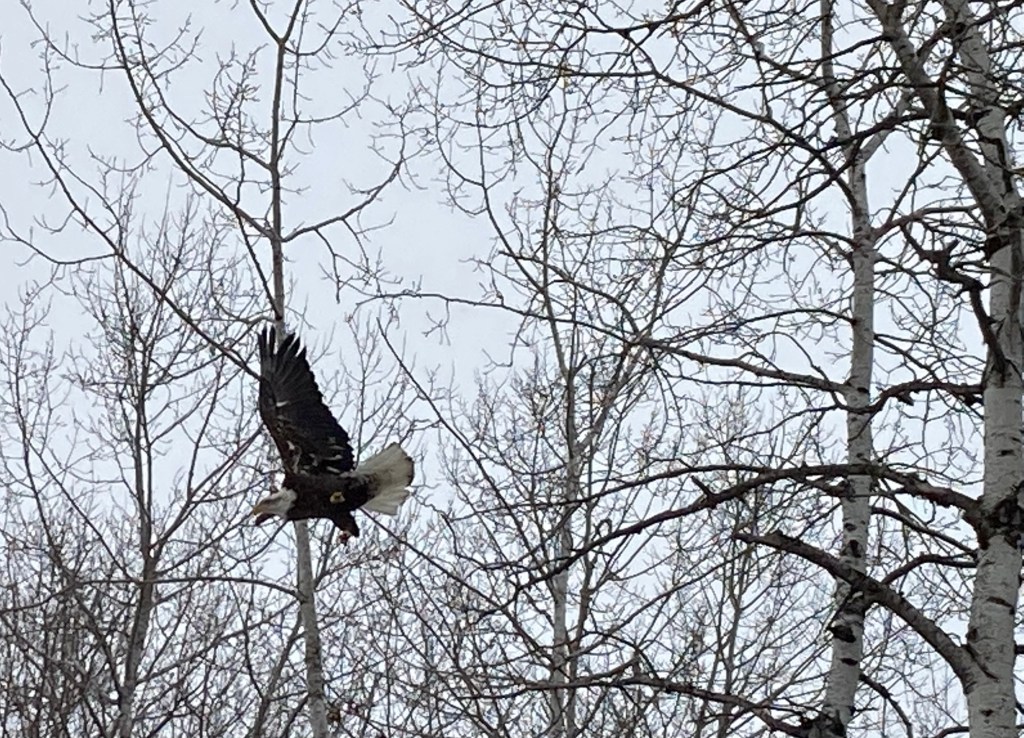
So what do we do? Well Sunday we drove a portion of the auto route. At one stop we saw our first redpolls-maybe. I say maybe because now that I saw them here, I have to recheck some of the birds that have been outside our condo recently. They might be the same species. We also saw one of the largest eagles we have ever seen. Finally, we stopped at the welcome center and met the naturalist. We did not spend time and effort trying to find great grey owls, a frequent visitor here. Then we left, thinking we might return in the future.

Just north of the Sax Zim Bog is the town of Eveleth. Eveleth is one of a series of mining towns on “The Range”. The Iron Range is, and was, home to the largest concentration of iron ore and taconite in the United States. Current operating and used up mines dot the region, one being in Eveleth. Previous blog posts have discussed and shown the mines on the Range, so I am not covering it again.

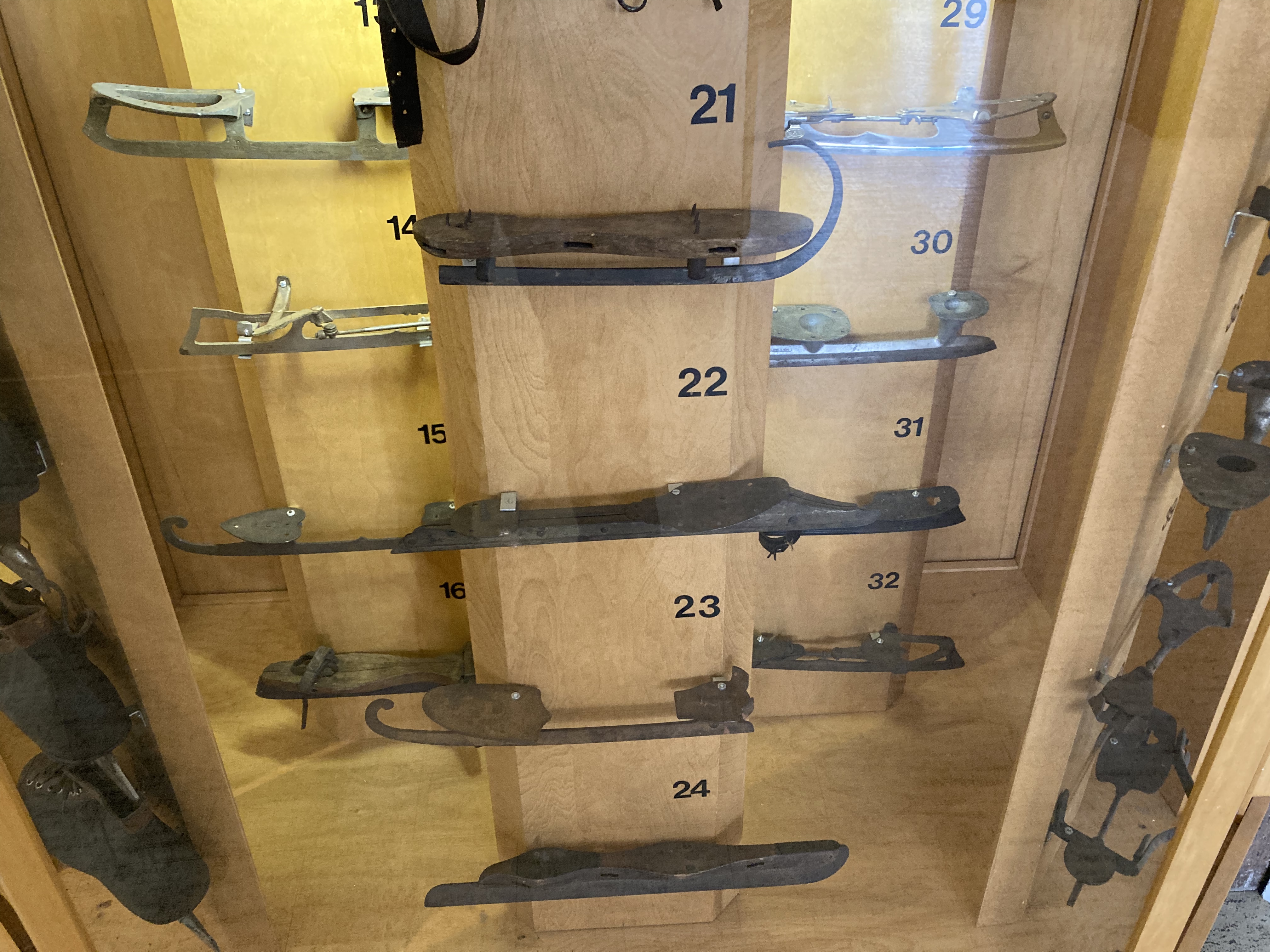
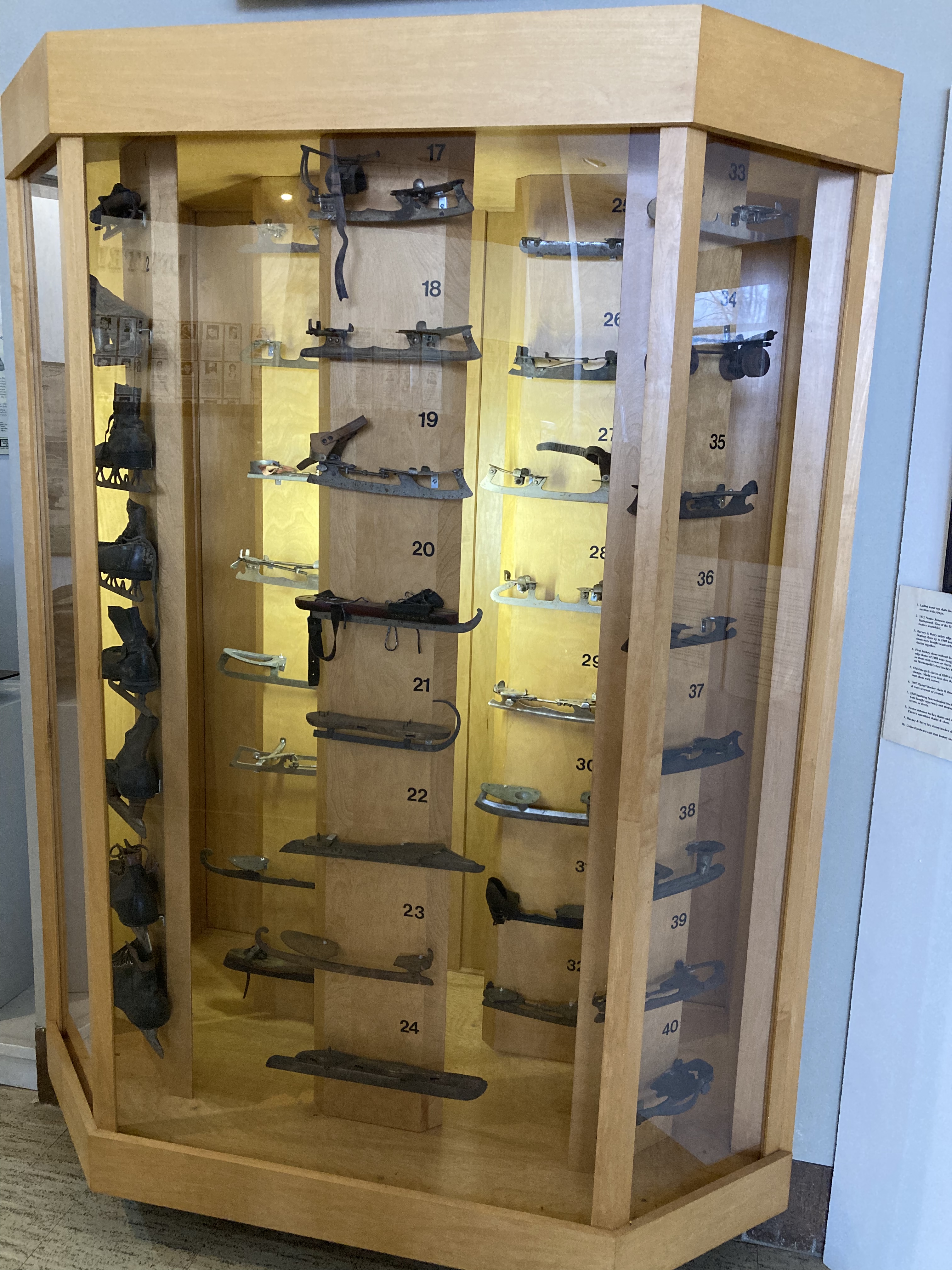
What Eveleth does have is the U.S. Hockey Hall of Fame. Hockey was big on the Range and in the early days of the Minnesota State High School Hockey Tournament, Range teams were frequent winners. Now as the population on the Range decreases and metro area high schools have more students than Range towns have population, state champions from the Range are few and far between. The Hockey Hall of Fame has been in Eveleth since 1972.

The museum showcases the history of hockey along with displays pertaining to high school, collegiate and professional teams. The 1980 ”Miracle on Ice” whereby the underdog U.S. team, comprised of collegiate players, defeated the USSR team, comprised of professional level players, on its way to winning the Olympic Gold Medal is prominently featured. The fourth Zamboni ice resurfacer ever made is on display here.

The museum is pleasant but probably more of interest to people in MN. Even though there are displays from around the country, there is no doubt there is a preponderance of items relating to MN. Of course, that may be appropriate since Minnesota is ”The State of Hockey”.

Monday morning our hosts made a fantastic breakfast with a fruit/yogurt/honey dish, multi-ingredient omelet, hash brown potatoes, thick bacon, and toast. Then we were off to Big Bog State Recreation Area, about two hours northwest of Grand Rapids. This was our second time here. We are making our second tour of all Minnesota state parks, having already been to each of them at least once. Minnesota is home to the largest peat bog (500 square miles) outside of Alaska. What is a bog? Generally speaking a bog is a wet, spongy area, poorly drained with acidic soil rich with accumulated plant material and having a specific flora.

There is not space here to cover all of this area’s interesting history. In brief, the Indian lands here were subject to various takings by which lies and broken promises were the main ingredients. The counties in the area borrowed money to drain the area to sell it to non-Indian settlers. The land did not drain and the soil is not good for farming. Since the land ended up being worthless, the counties defaulted and the State of MN bailed them out and took over ownership of the land.

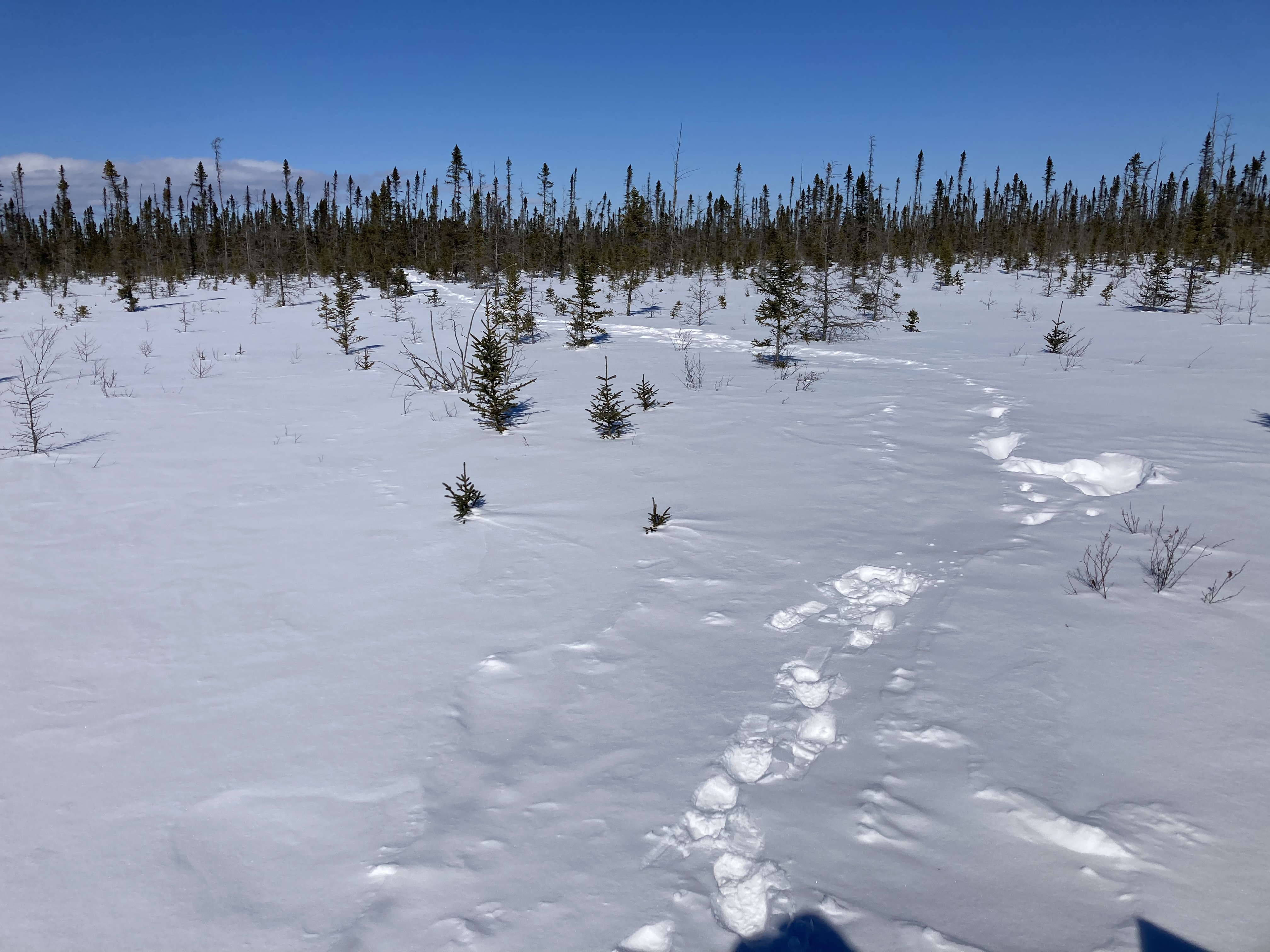
Now there is a state park here with camping by the shores of Red Lake and a boardwalk at this section of the park with its concentration of peat bog. The boardwalk is a mile long and we hoped that it would be reasonable to walk on. The first half of the boardwalk was not too bad, as the center part was pretty well packed down. This section of the bog is primarily black spruce trees of varying heights. As we reached about the halfway point where the drainage ditches had been 100 years ago, the trail disappeared. We decided not to continue on and risk stepping off the boardwalk into deep snow on the side. The second half of the bog is more tall grasses and sedges.

By this time it was early afternoon and we decided to have lunch in a small town of Waskish at a local bar and fishing resort. We had eaten here five years ago and repeated our menu choices of that time; wild rice soup, cheeseburger and onion rings. Our drive home continued our pattern of circuitous driving and we enjoyed the back roads with snow covered fields and forests with a mix of coniferous and deciduous trees. Generally the roads were clear with no snow but the best views were on the roads with snow and little traffic.

Ed and Chris, Monday March 7, 2022

Categories: travel | Tags: , , , , | 1 Comment

Blog at WordPress.com.