
St. Paul, Minnesota August 16, 2019
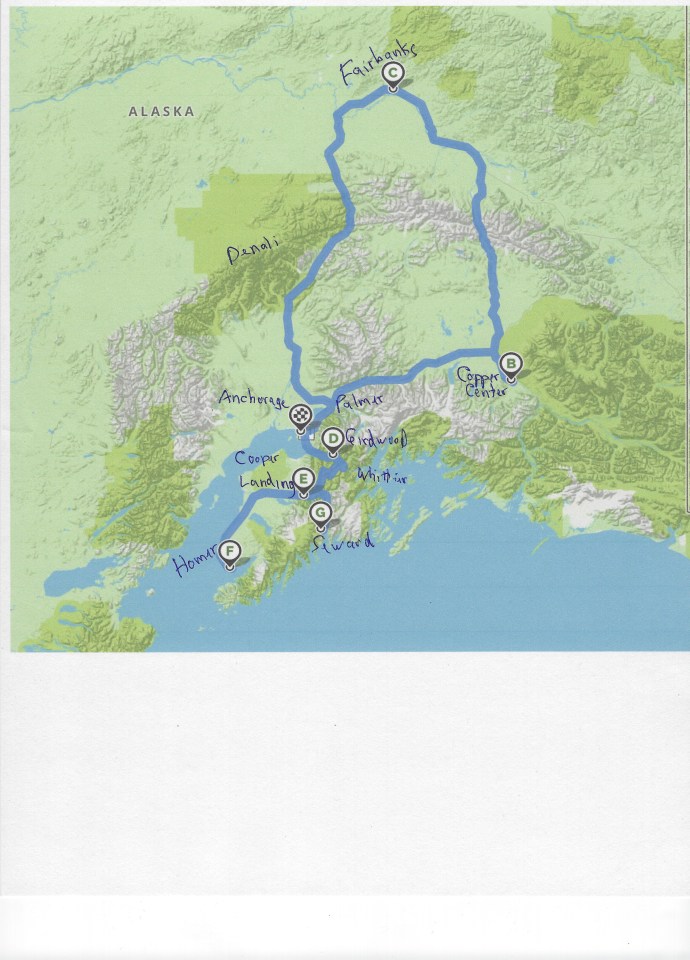
Well, our next trip starts this Friday, as we leave for Anchorage and 3.5 weeks driving around Alaska, wrapped up with an Amtrak train ride from Seattle home to St. Paul. As usual, planning is detailed and finished.
Anchorage, Saturday 17, 2019
A five hour and 45 minute plane ride brought us to Anchorage. We were unable to view much from the plane windows (hint for future travelers: Should the weather cooperate, choose the “F’ window seat for a view of the mountains.). The ride to our hotel at sunset (9:30 PM-no longer daylight for 24 hours but the sun is still setting later than it did back home) just showcased the business side of Anchorage.
We were a little embarrassed on this trip. We packed an additional suitcase in addition to our two carry-ons and backpacks and used the baggage check service. This is the first time in eons we have done this but with the variety of weather, outdoor conditions, and tours we are taking, it seemed essential.
Our Jeep arrives at 9 AM and after packing it so our usual tools of the trade are close to hand, we will be off. Our first stop is Palmer, a town of about 7,000 people. We will be in Palmer for two nights. (Hint to travelers: We rented a Jeep from Alaska 4 x 4 and obtained a great rate; ability to drive roads Hertz, etc. would not allow; and the drop-off at the hotel avoids about $300 in airport rental car fees).
Anchorage we will visit in more detail at the end of the trip. We did discover that the Anchorage airport is the second busiest U.S. airport for cargo, and the fifth busiest cargo airport in the world. Population here is just under 300,000; so the weather and population are not dissimilar from that of St. Paul. Anchorage’s winter weather is less dramatic than much of Alaska.
An article in a local Alaska business magazine spotlighted greenhouses/nurseries and the impact climate change has on them. Plants are being started 2-4 weeks earlier than the historical average. Another current article highlights the negative impact salmon are facing due to the higher summer heat. Draw your own conclusions.
Ed and Chris. Much more to come.
 Chris Klejbuk and Ed Heimel travel adventure
Recent Comments